

Evidence on physical activity and falls prevention for people aged 65+ years: systematic review to inform the WHO guidelines on physical activity and sedentary behaviour
Open accessThe DOI matches its Crossref record; 24 of the 24 references it cites were found in a registry or an index.
Abstract
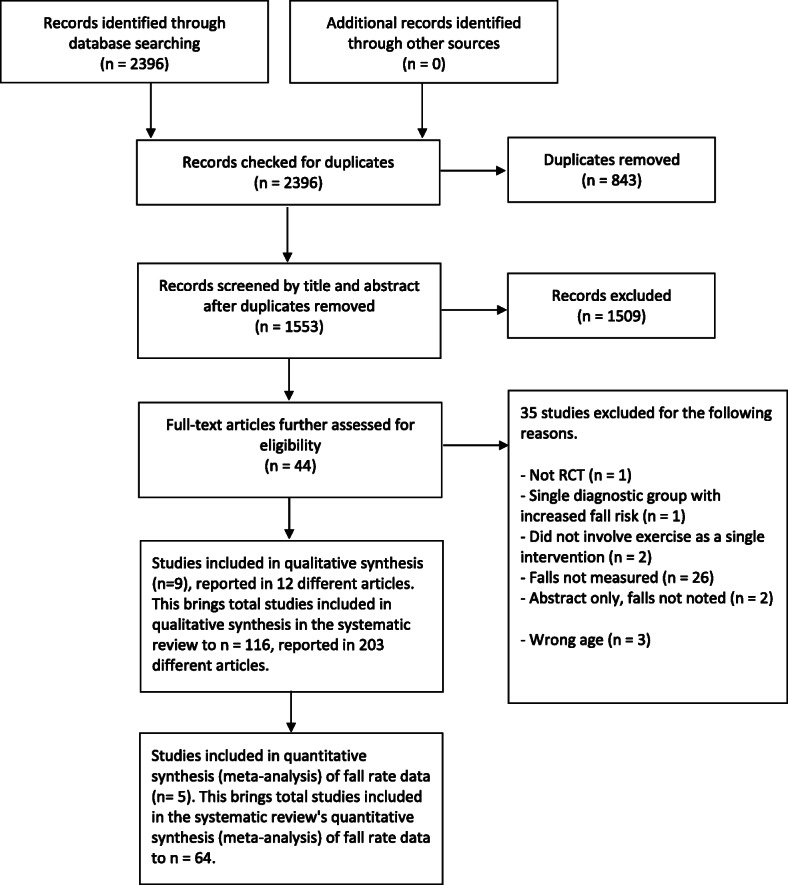
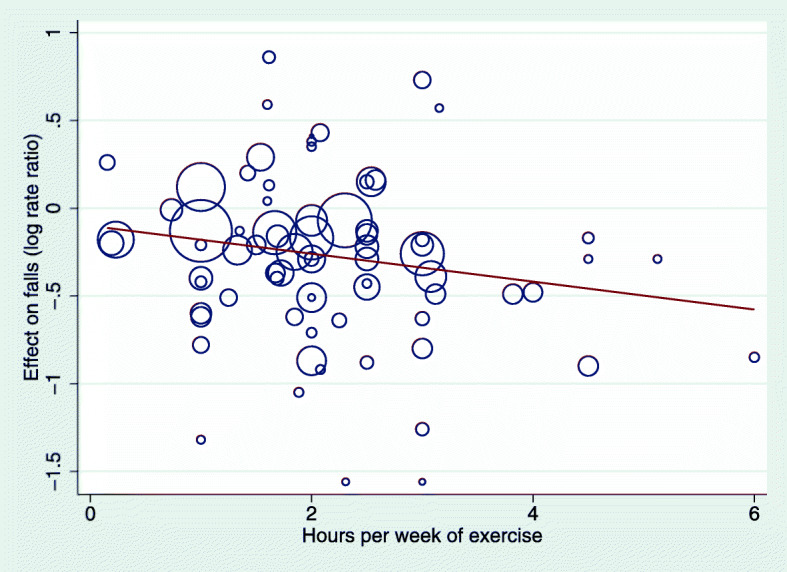
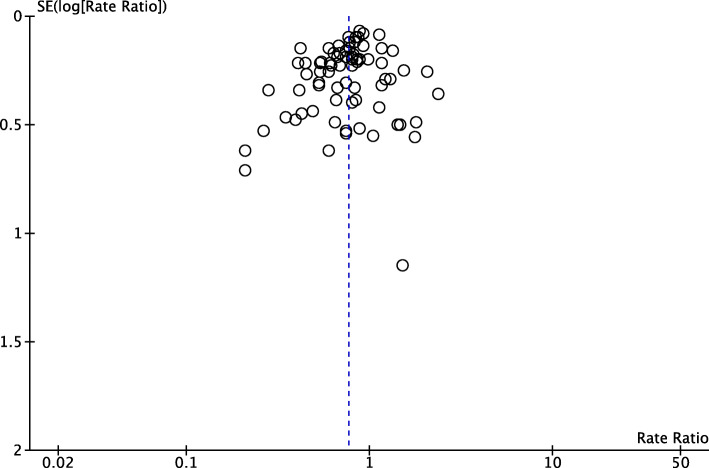
Background: Exercise prevents falls in older adults. Regular updates of estimated effects of exercise on falls are warranted given the number of new trials, the increasing number of older people globally and the major consequences of falls and fall-related injuries. Methods: This update of a 2019 Cochrane Review was undertaken to inform the World Health Organization guidelines on physical activity and sedentary behaviour. Searches were conducted in six databases. We included randomised controlled trials evaluating effects of any form of physical activity as a single intervention on falls in people aged 60+ years living in the community. Analyses explored dose-response relationships. The certainty of the evidence was assessed using Grading of Recommendations Assessment, Development and Evaluation (GRADE). Results: This review included 116 studies, involving 25,160 participants; nine new studies since the 2019 Cochrane Review. Exercise reduces the rate of falls by 23% (pooled rate ratio (RaR) 0.77, 95% confidence interval (CI) 0.71 to 0.83, 64 studies, high certainty evidence). Subgroup analysis showed variation in effects of different types of exercise ( p < 0.01). Rate of falls compared with control is reduced by 24% from balance and functional exercises (RaR 0.76, 95% CI 0.70 to 0.82, 39 studies, high certainty evidence), 28% from programs involving multiple types of exercise (commonly balance and functional exercises plus resistance exercises, RaR 0.72, 95% CI 0.56 to 0.93, 15 studies, moderate certainty evidence) and 23% from Tai Chi (RaR 0.77, 95% CI 0.61 to 0.97, 9 studies, moderate certainty evidence). The effects of programs that primarily involve resistance training, dance or walking remain uncertain. Interventions with a total weekly dose of 3+ h that included balance and functional exercises were particularly effective with a 42% reduction in rate of falls compared to control (Incidence Rate Ratio (IRR) 0.58, 95% CI 0.45 to 0.76). Subgroup analyses showed no evidence of a difference in the effect on falls on the basis of participant age over 75 years, risk of falls as a trial inclusion criterion, individual versus group exercise, or whether a health professional delivered the intervention. Conclusions: Given the strength of this evidence, effective exercise programs should now be implemented at scale.
Overview
The claims and statistics of this paper haven’t been checked yet.
Free: it reads the open-access text and checks the first 5 claims that cite a source we can check. Create a free account to check every claim.
Integrity signals
Registry
Cites
Statistics
Figures
Verification
Claims the paper makes
The claims and statistics of this paper haven’t been checked yet.
Free: it reads the open-access text and checks the first 5 claims that cite a source we can check. Create a free account to check every claim.
Claims other papers make about this one
Each is checked against this paper’s own text: does it say what the citing paper says it does?
The source backs part of the claim, not all of it — or backs it for a different population, condition or comparison.
In the citing paper
“the largest benefits for falls are generally seen with the combination of moderate to high intensity PRT and challenging balance training in sufficient quantities [123].”
From Global consensus on optimal exercise recommendations for enhancing healthy longevity in older adults (ICFSR) (2025) · cites this paper as [123]
Experimental — accuracy not yet measuredThe source backs part of the claim, not all of it — or backs it for a different population, condition or comparison.
In the citing paper
“and the largest benefits for falls are generally seen with the combination of moderate to high intensity PRT and challenging balance training in sufficient quantities [123].”
From Global consensus on optimal exercise recommendations for enhancing healthy longevity in older adults (ICFSR) (2025) · cites this paper as [123]
Experimental — accuracy not yet measuredThe cited source says what the claim attributes to it.
In the citing paper
“On the other hand, multicomponent exercise programs that incorporate PRT, balance, and functional exercises [84,123,130,131], have been demonstrated to effectively reduce the incidence of falls in older adults compared to control groups”
From Global consensus on optimal exercise recommendations for enhancing healthy longevity in older adults (ICFSR) (2025) · cites this paper as [123]
The cited source says what the claim attributes to it.
In the citing paper
“Multicomponent exercise programs that combine PRT, balance plus functional exercises such as transferring from a chair and using steps [84,123,130,131], programs involving balance and functional exercises [123], or an alternative exercise intervention such as Tai Chi [[127], [128], [129]] have been shown to reduce falls compared with control in older adults by 20−40%.”
From Global consensus on optimal exercise recommendations for enhancing healthy longevity in older adults (ICFSR) (2025) · cites this paper as [123]
The check wasn’t confident either way, so it gives no verdict — never disputed.
In the citing paper
“Similarly, while isolated balance training leads to improved balance [123,124], and is associated with reduced falls and fall-related injuries, as well as improved functional mobility [110,125,126], as does Tai Chi in some studies [[127], [128], [129]], these do not address aerobic capacity or sarcopenia.”
From Global consensus on optimal exercise recommendations for enhancing healthy longevity in older adults (ICFSR) (2025) · cites this paper as [123]
Experimental — accuracy not yet measured
8 more claims about this paper
Create a free account to see every claim other papers make about this one.
Self-check
Percentages, sums and reported differences re-computed from the paper’s own numbers.
The self-check needs the paper’s full text.
Citations
Cites
Sensitivity and False Alarm Rate of a Fall Sensor in Long-Term Fall Detection in the Elderly
Kangas, M., Korpelainen, R., Vikman, I., Nyberg, L., & Jämsä, T. (2015) · Gerontology · doi:10.1159/000362720 · Cited by 18,909
World Health Organization 2020 guidelines on physical activity and sedentary behaviour
Bull, F. C., Al-Ansari, S. S., Biddle, S., Borodulin, K., Buman, M. P., Cardon, G., Carty, C., Chaput, J.-P., Chastin, S., Chou, R., et al. (2020) · British Journal of Sports Medicine · doi:10.1136/bjsports-2020-102955 · Cited by 11,657 · cited 8×
“Methods: This update of a 2019 Cochrane Review was undertaken to inform the World Health Organization guidelines on physical activity and sedentary behaviour.”
BackgroundInfluentialSelf-citationHao (2015) · doi:10.1002/14651858 · Cited by 11,321
Risk Factors for Falls among Elderly Persons Living in the Community
Tinetti, M. E., Speechley, M., & Ginter, S. F. (1988) · New England Journal of Medicine · doi:10.1056/nejm198812293192604 · Cited by 6,509 · cited 1×
“years fall each year [1, 2] with the rate of fall-related injuries increasing with age [3].”
BackgroundInterventions for preventing falls in older people living in the community
Gillespie, L. D., Robertson, M. C., Gillespie, W. J., Sherrington, C., Gates, S., Clemson, L., & Lamb, S. E. (2012) · Cochrane Database of Systematic Reviews · doi:10.1002/14651858.cd007146.pub3 · Cited by 3,966
Self-citationLamb, S. E., Jørstad‐Stein, E. C., Hauer, K., Becker, C., & on behalf of the Prevention of Falls Network Europe and Outcomes Consensus Group (2005) · Journal of the American Geriatrics Society · doi:10.1111/j.1532-5415.2005.53455.x · Cited by 2,073 · cited 8×
“Components of studies in categories of exercise not found to prevent falls Abbreviations CI: Confidence interval; GRADE: Grading of Recommendations Assessment, Development and Evaluation; IQR: Interquartile range; ProFaNE: Prevention of Falls Network Europe; RaR: Pooled rate ratio; RCTs: Randomised controlled trials A…”
MethodInfluentialExercise for preventing falls in older people living in the community
Sherrington, C., Fairhall, N. J., Wallbank, G. K., Tiedemann, A., Michaleff, Z. A., Howard, K., Clemson, L., Hopewell, S., & Lamb, S. E. (2019) · Cochrane Database of Systematic Reviews · doi:10.1002/14651858.cd012424.pub2 · Cited by 1,282 · cited 6×
“This systematic review was undertaken to inform the World Health Organization guidelines on Physical Activity and Sedentary Behaviour [10] and involved an update of the Cochrane Review of randomised controlled trials published in 2019 [11] that found high certainty evidence that exercise interventions reduced the rate…”
BackgroundMethodResultInfluentialSelf-citationExercise to prevent falls in older adults: an updated systematic review and meta-analysis
Sherrington, C., Michaleff, Z. A., Fairhall, N., Paul, S. S., Tiedemann, A., Whitney, J., Cumming, R. G., Herbert, R. D., Close, J. C. T., & Lord, S. R. (2017) · British Journal of Sports Medicine · doi:10.1136/bjsports-2016-096547 · Cited by 1,095
Self-citationHarbord, R. M., & Higgins, J. P. T. (2008) · The Stata Journal: Promoting communications on statistics and Stata · doi:10.1177/1536867x0800800403 · Cited by 897
CAMPBELL, A. J., BORRIE, M. J., SPEARS, G. F., JACKSON, S. L., BROWN, J. S., & FITZGERALD, J. L. (1990) · Age and Ageing · doi:10.1093/ageing/19.2.136 · Cited by 803
Research works printed but not linked: 5
- World Health Organization Guidelines for physical activity and sedentary behaviour 2020 Geneva World Health Organization
- Higgins JPT Green S Cochrane Collaboration. Cochrane handbook for systematic reviews of interventions 2011 Chichester and Hoboken Wiley-Blackwell 649
- Schünemann HJOA Higgins JP Vist GE Glasziou P Akl E on behalf of the Cochrane GRADEing Methods Group (formerly Applicability and Recommendations Methods Group) and the Cochrane Statistical Methods Group Chapter 11: Completing ‘Summary of findings’ tables and grading the confidence in or quality of the evidence Cochrane handbook for systematic reviews of interventions [internet]. The Cochrane Collaboration 2017
- Norway C How to write a plain language summary of a Cochrane intervention review 2017
- Review Manager (Revman) [Computer program] Version 5.3. Copenhagen: The Nordic Cochrane Centre, The Cochrane Collaboration 2014
Cited by
Items 301–400 of 421
Xu, T. (2023) · Journal of Geriatric Medicine · doi:10.30564/jgm.v6i2.6339
“A total weekly dose of 3 + hours of exercise interventions (including balance and functional exercises) is recommended to reduce the rate of falls [17] .”
BackgroundIntroductory Chapter: Exercise Medicine – Past, Present, and Future
Hamasaki, H. (2024) · IntechOpen eBooks · doi:10.5772/intechopen.1003736
Ang, G., Tan, C. S., Teerawattananon, Y., Müller‐Riemenschneider, F., & Chen, C. (2023) · doi:10.2196/preprints.46178
Neuroscience of Yoga for Mood and Cognitive Disorders of Aging
Nguyen, S. A., & Lavretsky, H. (2024) · Springer eBooks · doi:10.1007/978-981-97-2855-8_3
Shi, Y., Yang, Y., Feng, M., & Wu, H. (2024) · BMC Cardiovascular Disorders · doi:10.1186/s12872-024-04269-0 · Cited by 1
“In this study, non-elderly people (young and middle-aged) were defined as ≤ 65 years old based on the World Health Organization (WHO) criteria [35].”
MethodFalls prevention in older adults: How can primary care pave the way?
Davies, K., & Stanmore, E. (2024) · InnovAiT Education and inspiration for general practice · doi:10.1177/17557380241303676
“These activities should take place at least three times a week, they should be tailored to the individual and progressively more challenging over at least 12 weeks (Sherrington et al., 2020).”
Physical activity to prevent older adult falls: an Aotearoa New Zealand approach
Vlietstra, L., Bryant, K. P., Hale, L. A., Dando, M., & Waters, D. L. (2025) · Revista Brasileira de Atividade Física & Saúde · doi:10.12820/rbafs.29e0366 · Cited by 1
Contribution of Virtual Reality (Nintendo Wii) for Exercise Training and Rehabilitation
Hiraga, C. Y., Tonello, M. G. M., Ferracioli, M. D. C., & Pellegrini, A. M. (2024) · Springer eBooks · doi:10.1007/978-3-031-74123-4_27
Ivko, O. M., Сергеевна, Н. И., Ильницкий, А. Н., Пономарев, А. С., Гехаев, А. У., Veys, E. E., & Владимировна, С. В. (2025) · Успехи геронтологии · doi:10.34922/ae.2024.37.6.014
Sawa, R., Tanaka, B., Yamamoto, J., & Yamada, M. (2025) · Cureus · doi:10.7759/cureus.80924 · Cited by 3
“Given that the effects of exercise intervention on fall prevention in people aged ≥75 years are limited [35], home modifications are essential for older adults with age-related functional limitations to achieve safe and independent living in their own homes.”
Senesi, G., Massini, M. S., Zinno, R., Davalli, A., Romano, L., Barone, G., Pinelli, E., & Bragonzoni, L. (2025) · BMJ Open Sport & Exercise Medicine · doi:10.1136/bmjsem-2025-002613
Smit, F., Franco, M. R., Sherrington, C., Cullati, S., Blyth, F., van Zwieten, A., & Khalatbari‐Soltani, S. (2025) · medRxiv · doi:10.1101/2025.05.13.25327493
“Regarding behavioural factors, higher SEP is associated with increased leisure-time physical activity (153), and exercise is known to reduce the rate of falls (154).”
InfluentialSelf-citationGharibnezhad, R., & Shariati, M. (2025) · Zahedan Journal of Research in Medical Sciences · doi:10.5812/zjrms-158841
“Exercising as we get older is a key part of staying healthy Zahedan J Res Med Sci. 2025; 27(3): e158841 (5-7).”
Lavoie, A., Truchot-Cardot, D., & Dubé, V. (2025) · CIN Computers Informatics Nursing · doi:10.1097/cin.0000000000001339
Older adults’ lived experiences with bamboo bed handicrafts in improving their quality of life
Sangsuk, N., Meethien, N., Khamenkan, K., Wongkruasorn, W., Pongprathet, J., & Shangyom, D. (2024) · Jurnal Keperawatan Padjadjaran · doi:10.24198/jkp.v12i3.2534
Fall prevention interventions for Hispanic/Latino older adults: a scoping review protocol
Lopez, J., Diño, M. J. S., Banarjee, C., & Thiamwong, L. (2025) · Frontiers in Public Health · doi:10.3389/fpubh.2025.1615837
Falls Prevention in Older Adults with Cardiovascular Disease: Systematic Review
Mofirra, R., Martinho, E. S., Casanova, N., Peralta, M., Serpa, J., Santos, V., Flôres, F. S., & Marconcin, P. (2025) · Activities Adaptation & Aging · doi:10.1080/01924788.2025.2529097
“Several systematic reviews and meta-analyses have demonstrated that exercise approaches reduce the risk of falls in older adults (Caristia et al., 2021; Dautzenberg et al., 2021; Sherrington et al., 2008, 2017, 2020).”
Hicks, C., Tiedemann, A., Sherrington, C., Sturnieks, D. L., & Lord, S. R. (2025) · Springer eBooks · doi:10.1007/978-3-642-27830-3_236-1
Self-citationRoger-Silva, D., Santos, V. S., Ma, J., Vershoor, C. P., Phillips, S. M., Zargoush, M., Beauchamp, M., Carlesso, L. C., & Macedo, L. G. (2025) · Archives of Gerontology and Geriatrics · doi:10.1016/j.archger.2025.105976 · Cited by 1
Staying Connected for Cognitive Stimulation
Astell, A. J., & Clayton, D. (2025) · Synthesis lectures on technology and health · doi:10.1007/978-3-031-87031-6_7
Liljeroos, M., Bååthe, K. S., Tonkonogi, M., & Arkkukangas, M. (2025) · Age and Ageing · doi:10.1093/ageing/afaf218
Muscle Strength and Fatness on Falls and Fear of Falling Among Older Adults
Agostinis‐Sobrinho, C., Rúa-Alonso, M., Vaz, C., Pires, N., Marques, E. M. G. B., Serra, N. C., & Vila-Chã, C. J. F. (2025) · Journal of Aging and Physical Activity · doi:10.1123/japa.2024-0146 · Cited by 2
Liang, H., Wang, B., Qin, X., Meng, J., & Liu, E. (2025) · Research Square · doi:10.21203/rs.3.rs-7319199/v1
Lu, J., Ngo, J. K., Devonport, T. J., & Wyon, M. A. (2025) · Ageing International · doi:10.1007/s12126-025-09623-x · Cited by 1
“…methods for promoting general health (Liu et al., 2019 ; Stewart & Irons, 2018) and psychological well-being (Bischoff et al., 2019 ; Gregory & Watson, 2009; Mansfield et al., 2018); Sherrington et al., 2020 ; Šumec et al., 2015; Sweeting et al., 2020 ; Vanderlinden et al., 2020 ).”
Physical Activity Patterns and Their Impact on Fall Risk in Older Adults: A Latent Class Analysis
Oh, S.-E., Choe, J.-P., & Kang, M. (2025) · Journal of Aging and Physical Activity · doi:10.1123/japa.2024-0354
Hallin, J., Arola, A., Domellöf, M., Zingmark, M., Taylor, M., Sandlund, M., & Toots, A. (2025) · BMC Geriatrics · doi:10.1186/s12877-025-06522-3
Ogonowska-Słodownik, A., Faria, J. O., Tokarska, J., & Mansfield, A. (2025) · BMC Medical Education · doi:10.1186/s12909-025-08030-9
Groß, M., & Schöne, D. (2025) · neuroreha · doi:10.1055/a-2618-3709
Brazeau, S., Corriveau, H., Lapierre, J., Ricard, G., Pagé, C., & Breton, É. (2025) · Advances in Geriatric Medicine and Research · doi:10.20900/agmr20250022
“Also, the intensity of strengthening exercises has the potential to better prevent falls, as improvements in strength and physical capacity appear to be key factors in the trend of reducing falls [33].”
How Much Is Enough? Dosing Balance Exercise to Achieve Long-term Fall Risk Reduction
Allison, L. K., & Schrodt, L. A. (2025) · Topics in Geriatric Rehabilitation · doi:10.1097/tgr.0000000000000484
CausalFall: Fall prediction wearing motion sensors from a causal perspective
Liao, G., Xie, H., Li, J., Liao, J., Wang, S., Liang, X., & Liu, L. (2025) · Expert Systems with Applications · doi:10.1016/j.eswa.2025.130218
Olovsson, J., Ekstedt, M., Fagerström, C., Bergman, P., & Backåberg, S. (2025) · JMIR Formative Research · doi:10.2196/73527
“According to the World Health Organization, adults aged 65 years and above should complement their daily activities with individualized interventions that enhance balance, mobility, and strength [5,8].”
Pullinen, P., Parkkari, J. P., Kaprio, J. A., Sillanpää, E., Sievänen, H. T., Kujala, U. M., & Waller, K. L. (2025) · Journal of Aging and Health · doi:10.1177/08982643251395871 · Cited by 2
“Physical activity plays an important role in maintaining mobility (Morie et al., 2010; Visser et al., 2005) and preventing falls among older adults (Lee, 2020; Sherrington et al., 2020; Vieira et al., 2016).”
James, S., & Samuel, J. (2025) · INTI JOURNAL. · doi:10.61453/intij.202548
Said, C. M., Ramage, E. R., Sharma, H., Batchelor, F., Bicknell, E., Bongiovanni, L., Brijnath, B., Cahill, P., Callisaya, M. L., Celestino, S., et al. (2025) · BMJ Open · doi:10.1136/bmjopen-2025-105995
Self-citationZhang, Q., Yu, M., Huang, Z., Shen, Y., Zhu, X., Yun, J., Ding, J., Chen, R., Shi, L., & Wang, L. (2025) · Frontiers in Nutrition · doi:10.3389/fnut.2025.1677335 · Cited by 1
Pettersson, B., Lundell, S., Audulv, Å., Lundin‐Olsson, L., & Sandlund, M. (2025) · BMC Geriatrics · doi:10.1186/s12877-025-06776-x
“From a clinical perspective, it becomes crucial to determine an effective but feasible amount of balance and strength exercise per week, considering that older adults should engage in various physical activities as part of a healthy lifestyle [1].”
Schoene, D., Groß, M., Finger, B., Lahmann, N., Raeder, K., Vorwerg, S., König, H., Grochtdreis, T., Stöger, D., Handschuh, A., et al. (2025) · BMJ Open · doi:10.1136/bmjopen-2025-105969 · Cited by 2
Arie, L., Cosetti, M. K., Kelly, J., Harel, D., Morris, B., Scigliano, K., & Lubetzky, A. V. (2025) · Gerontology · doi:10.1159/000549842
“Physical activity is fundamental to healthy aging [29, 30].”
Arkkukangas, M., Bååthe, K. S., Tonkonogi, M., Bower, E. S., & Larsson, U. (2025) · Clinical Interventions in Aging · doi:10.2147/cia.s550506
Is the answer for health always “more”?
Loenneke, J. P. (2025) · Journal of Trainology · doi:10.17338/trainology.14.2_21
Park, J., & Shon, C. (2025) · PLoS ONE · doi:10.1371/journal.pone.0338875
“Despite these well-established benefits, walking practice has declined among Korean adults, especially in the context of the COVID-19 pandemic [16,17].”
Shahtahmassebi, B., Hatton, J., Hébert, J. J., Hecimovich, M. D., Correia, H., & Fairchild, T. J. (2022) · Figshare · doi:10.6084/m9.figshare.21077633
Shahtahmassebi, B., Hatton, J., Hébert, J. J., Hecimovich, M. D., Correia, H., & Fairchild, T. J. (2022) · Figshare · doi:10.6084/m9.figshare.21077627
O’Malley, N., Clifford, A. M., Conneely, M., Casey, B., & Coote, S. B. (2021) · Figshare · doi:10.6084/m9.figshare.16703203
Tomaz, S. A., Ryde, G. C., Swales, B., Neely, K. C., Andreis, F., Coffee, P., Connelly, J., Kirkland, A., McCabe, L., Watchman, K., et al. (2022) · Figshare · doi:10.6084/m9.figshare.20222534
Jansen, C.-P., Nerz, C., Labudek, S. E., Gottschalk, S., Kramer-Gmeiner, F., Klenk, J., Dams, J., König, H.-H., Clemson, L. M., Becker, C., et al. (2021) · Figshare · doi:10.6084/m9.figshare.16570148
Jung, J., 박승연, & Lee, C. G. (2023) · Figshare · doi:10.6084/m9.figshare.22602497
Additional file 1 of A survey of Israeli physical therapists regarding reactive balance training
Margalit, N., Kurz, I., Wacht, O., Mansfield, A., & Melzer, I. (2023) · Figshare · doi:10.6084/m9.figshare.24309964
Tomaz, S. A., Ryde, G. C., Swales, B., Neely, K. C., Andreis, F., Coffee, P., Connelly, J., Kirkland, A., McCabe, L., Watchman, K., et al. (2022) · Figshare · doi:10.6084/m9.figshare.20222537
O’Malley, N., Clifford, A. M., Conneely, M., Casey, B., & Coote, S. B. (2021) · Figshare · doi:10.6084/m9.figshare.16703194
Yuan, Y., Li, J., Fu, P., Jing, Z., Wang, Y., & Zhou, C. (2022) · Figshare · doi:10.6084/m9.figshare.19204361
Jansen, C.-P., Nerz, C., Labudek, S. E., Gottschalk, S., Kramer-Gmeiner, F., Klenk, J., Dams, J., König, H.-H., Clemson, L. M., Becker, C., et al. (2021) · Figshare · doi:10.6084/m9.figshare.16570151
Shahtahmassebi, B., Hatton, J., Hébert, J. J., Hecimovich, M. D., Correia, H., & Fairchild, T. J. (2022) · Figshare · doi:10.6084/m9.figshare.21077630
Shahtahmassebi, B., Hatton, J., Hébert, J. J., Hecimovich, M. D., Correia, H., & Fairchild, T. J. (2022) · Figshare · doi:10.6084/m9.figshare.21077636
James, E., Oman, P., Ali, M., Court, P., Goodall, S., Nichols, S. J., & O’Doherty, A. F. (2022) · Figshare · doi:10.6084/m9.figshare.20418205
Binns, E. E., Bright, F. A. S., Parsons, J. G. M., Peri, K., Taylor, L. M., Kerse, N., & Taylor, D. (2024) · Figshare · doi:10.6084/m9.figshare.26560757
Yuan, Y., Li, J., Fu, P., Jing, Z., Wang, Y., & Zhou, C. (2022) · Figshare · doi:10.6084/m9.figshare.19204370
van Gameren, M., Hoogendijk, E. O., van Schoor, N. M., Bossen, D., Visser, B., Bosmans, J. E., & Pijnappels, M. A. G. M. (2022) · Figshare · doi:10.6084/m9.figshare.20545729
Shahtahmassebi, B., Hatton, J., Hébert, J. J., Hecimovich, M. D., Correia, H., & Fairchild, T. J. (2022) · Figshare · doi:10.6084/m9.figshare.21077624
Wang, Y., Shen, Z., Xing, X., Ge, L., Pan, F., & Cai, G. (2024) · Figshare · doi:10.6084/m9.figshare.26384651
Jansen, C.-P., Nerz, C., Labudek, S. E., Gottschalk, S., Kramer-Gmeiner, F., Klenk, J., Dams, J., König, H.-H., Clemson, L. M., Becker, C., et al. (2021) · Figshare · doi:10.6084/m9.figshare.16570154
Pettersson, B., Lundell, S., Lundin‐Olsson, L., & Sandlund, M. (2023) · Figshare · doi:10.6084/m9.figshare.23706860
Yuan, Y., Li, J., Fu, P., Jing, Z., Wang, Y., & Zhou, C. (2022) · Figshare · doi:10.6084/m9.figshare.19204367
Yuan, Y., Li, J., Fu, P., Jing, Z., Wang, Y., & Zhou, C. (2022) · Figshare · doi:10.6084/m9.figshare.19204364
Stanmore, E., Fisher, K., Dewick, P. M., Choi, N., & Munford, L. A. (2025) · doi:10.2196/preprints.84368
Hezel, N., Buchner, T., Becker, C., Bauer, J. M., Steib, S., & Werner, C. (2026) · Aging Clinical and Experimental Research · doi:10.1007/s40520-025-03320-0
Mermerkaya, G., Sevencan, N. Ö., Mermerkaya, H. H., & Sağlam, M. (2026) · Topics in Geriatric Rehabilitation · doi:10.1097/tgr.0000000000000498
Pourmanaf, H., Sari-Sarraf, V., Rashidpour, A., & Ghojazadeh, M. (2026) · Sport Sciences for Health · doi:10.1007/s11332-026-01646-4
“The implementation of fall-prevention strategies is an effective approach to reducing the incidence of fractures and hospitalizations, while also enhancing overall quality of life [8–11].”
Бобунов, Д. Н., Дидур, М. Д., Карташова, В. И., Шамин, Д. А., Попадюк, А. И., Голикова, Е. Л., Чередник, С. О., Попадюк, М. А., Болдырева, Е. П., & Юрченко, Ю. Е. (2026) · Успехи геронтологии · doi:10.34922/ae.2025.38.5.003
Malatyali, A., Xie, R., Ojo, E. O., Lopez, J., Diniz, B. S., Kim, D., Cidav, T., & Thiamwong, L. (2026) · BMC Geriatrics · doi:10.1186/s12877-026-07127-0
“For example, a systematic review demonstrated that interventions that incorporated balance and functional exercises for at least 3 h per week were particularly effective in preventing fall incidence [6].”
Fitzgerald, C. P., Burley, C. V., Wright, K. E., McLeod, K. A., Asadi, S., & Parmenter, B. J. (2026) · Osteoporosis International · doi:10.1007/s00198-026-07876-z · Cited by 4
“Exercise reduces the rate of falls for people over 65 years, particularly when programmes include both balance and functional exercises [31].”
Designing an effective fall preparedness and recovery program for older adults: an e-Delphi study
Dudash, S., Ickert, E. C., Ward, R., Ge, W., & Campbell, M. (2026) · BMC Geriatrics · doi:10.1186/s12877-026-07203-5
“[3] Falls are multifactorial in origin and are commonly associated with lower extremity weakness, balance impairments, polypharmacy, cognitive changes, and environmental hazards [4, 5].”
Sadura-Sieklucka, T., Sokołowska, B., Sikora, J. A., Kądalska, E., Sokołowska, E., & Targowski, T. (2026) · Reumatologia/Rheumatology · doi:10.5114/reum/213410
“Since coordination and balance, both static and dynamic, have a huge impact on the frequency of falls in seniors, special attention should be paid to improving these components in this group [11, 12].”
Tuncer, Ö., Sakallı, A. A., ÖKSÜZ, S., & Tekın, N. (2026) · Risk Management and Healthcare Policy · doi:10.2147/rmhp.s588151
“20 This protective effect is explained by exercise creating resistance against loss of balance by increasing neuromuscular control and physiological reserve (intrinsic capacity).”
Falls prevention - identification and intervention of risk factors
Greplová, K. (2024) · Clinical Osteology · doi:10.36290/clo.2024.002 · Cited by 1
Nakamura, M., Imai, T., Hirata, A., Tabira, K., Manabe, T., Kikuchi, K., Ito, T., Hirakawa, K., Ando, Y., Saito, Y., et al. (2026) · Contemporary Clinical Trials · doi:10.1016/j.cct.2026.108283
Jia, S., Wang, L., Li, F., Shi, Y., Liu, C., Gang, S., & Wang, X. (2026) · BMC Geriatrics · doi:10.1186/s12877-026-07329-6
“Global epidemiological data indicate that the annual incidence of falls among adults aged ≥ 65 years ranges from 28% to 35% [2].”
Organizational perspectives on fall prevention exercise services in Ontario: a qualitative analysis
Tibert, N., Tomasone, J. R., Thabane, L., Veroniki, A. A., Chilibeck, P. D., Weston, Z. J., Sale, J. E. M., Watt, J., & Giangregorio, L. (2026) · Applied Physiology, Nutrition, and Metabolism · doi:10.1139/apnm-2025-0302
Noviana, M., & Ilmy, A. S. (2026) · KnE Social Sciences · doi:10.18502/kss.v11i3.20863
B̀ouchard, D. R., Leadbetter, B., Diaz, M. F. F., Shannon, C. S., & Sibley, K. M. (2026) · Health & Social Care in the Community · doi:10.1155/hsc/5554842
Burin-Chu, S., Agbangla, N. F., Caby, I., & Bossede, F. (2026) · BMJ Open · doi:10.1136/bmjopen-2025-114665
“3 It contributes to the maintenance of mobility and autonomy, 4 prevents and manages chronic diseases, 5 reduces the risk of falls 6 and improves quality of life 4 and social participation.”
Heinrich, S., Schwarz, A., & Staudacher, D. (2026) · Geriatric Nursing · doi:10.1016/j.gerinurse.2026.104021
Provider Perspectives on Fall Prevention Exercise Services in Ontario: A Qualitative Analysis
Tibert, N., Tomasone, J. R., Veroniki, A. A., Chilibeck, P. D., Weston, Z., Sale, J. E. M., Watt, J. A., & Giangregorio, L. (2026) · Canadian Journal on Aging / La Revue canadienne du vieillissement · doi:10.1017/s0714980826100646
“To prevent falls, exercise programs that incorporate balance and functional movement reduce fall rates by 23 per cent (Bennie et al., 2019; Sherrington et al., 2019, 2020).”
Audsley, S., Adams, N., Barry, G., Court, P., Haridas, S., Harrison, R., Hemmings, A., Laventure, B., Mercer, V., Moore, S. A., et al. (2026) · Health Psychology and Behavioral Medicine · doi:10.1080/21642850.2026.2662110
“Falls impair quality of life (Montero-Odasso et al., 2022), yet meta-analyses show 24–42% of falls are preventable through strength and balance exercise interventions (Sherrington et al., 2020).”
Impulspapier: Digitale Angebote zur Sturzprävention für ältere Menschen
Groß, M., Schoene, D., Roigk, P., Schwenk, M., Dresel, U., Gordt, K., Wollesen, B., & unter Beteiligung der Bundesinitiative Sturzprävention, B. I. S. (2026) · Das Gesundheitswesen · doi:10.1055/a-2825-1609
Madden, A. M., Soepnel, L. M., Africa, C., Rhoda, J. L., Morar, Z., Lambert, E. V., Gutterman, S., Millard, F., Bolnick, H. J., Davies, J. C., et al. (2026) · BMC Geriatrics · doi:10.1186/s12877-026-07541-4 · Cited by 1
Breuer, C., & Breuer, T. (2026) · Sports economics, management and policy · doi:10.1007/978-3-032-21510-9_6
Li, Y., Andre, E., Agnew, A., Kim, D., Xie, R., Li, D., Ng, B. P., & Thiamwong, L. (2026) · Journal of Applied Gerontology · doi:10.1177/07334648261457981
Branthwaite, H. R., Chockalingam, N., & Chatzistergos, P. (2026) · The Foot · doi:10.1016/j.foot.2026.102268
Quinn, É., Bosner, L., Logullo, P., Murray, K., Saif‐Ur‐Rahman, K., Young, C., Stewart, D. C., Smith, M., Holt, J., Treweek, S. P., et al. (2026) · PLoS ONE · doi:10.1371/journal.pone.0337017
“It can also enhance overall physical health [27,28], lower the risks of falls [29], and improve mental health in older adults [21,30–32].”
Tian, Z., & Gao, G. (2026) · Journal of Substance Use · doi:10.1080/14659891.2026.2688263
Hicks, C., Tiedemann, A., Sherrington, C., Sturnieks, D. L., & Lord, S. R. (2026) · Springer eBooks · doi:10.1007/978-3-032-05988-8_236
Self-citationThasuwanain, T., Thongprachum, A., Boripuntakul, S., & Boonchieng, W. (2026) · BMC Geriatrics · doi:10.1186/s12877-026-07895-9 · Cited by 1
“Cognitive processes are essential for hazard recognition, movement planning, and balance control [53, 54].”
Daniels, K., Quadflieg, K., Bergs, J., Spooren, A. I. F., Hansen, D., & Bonnechère, B. (2026) · BMC Global and Public Health · doi:10.1186/s44263-026-00295-6
Melzer, I., Freiberger, E., Britting, S., Lattanzio, F., Corsonello, A., Melzer, Y., Artzi‐Medvedik, R., Roller‐Wirnsberger, R., Wirnsberger, G. H., Mattace-Raso, F. U. S., et al. (2026) · European Geriatric Medicine · doi:10.1007/s41999-026-01555-2
“Data suggest that while improving balance and gait function is important specifically for P-fallers, all groups can benefit from such interventions [36]; however, T-Fallers in particular may benefit from increased awareness of their balance reactive abilities and attention to environmental hazards.”
Huaracayo-Campos, J. A., Rojas-Astorayme, C., Rojas-Carranza, V. Y., Salazar-Talla, L., Alcantara-Diaz, A. L., Bendezú-Quispe, G., Urrunaga‐Pastor, D., Runzer-Colmenares, F. M., & Parodi, J. F. (2026) · BMC Geriatrics · doi:10.1186/s12877-026-07909-6
“The adjusted model included confounders identified a priori based on existing literature: sex, age group, marital status, educational level, comorbidities and cognitive impairment [23, 26, 36, 37].”
Stronk, A., & Lipert, A. (2026) · Journal of Clinical Medicine · doi:10.3390/jcm15145471
Tang, Y., Shi, J., Meng, Z., & Zhang, Y. (2026) · Healthcare · doi:10.3390/healthcare14142187
“In addition, Sherrington et al. [61], in a systematic review conducted to inform the WHO guidelines on physical activity and sedentary behavior, used participant age above 75 years as a subgroup factor when examining the effects of exercise on fall prevention.”
Jacquemot, A.-F., Cogordan, C., Fressard, L., Maradan, G., Riabi, C., Bocquier, A., Tréhard, H., Hervieu, V., Dubois, C., Danthony, S., et al. (2026) · BMC Geriatrics · doi:10.1186/s12877-026-07999-2
“It was not assessed at T1 as 7-weeks would not be long enough to observe an effect on LLMS [22, 23] (Table 1).”
Metadata
- Authors
- Sherrington, C., Fairhall, N., Kwok, W., Wallbank, G., Tiedemann, A., Michaleff, Z. A., Ng, C. A. C. M., & Bauman, A.
- Affiliations
- The University of Sydney (AU)
- Bond University (AU)
- The University of Western Australia (AU)
- Corresponding author
- Sherrington, Catherine
- ORCID
- Venue
- International Journal of Behavioral Nutrition and Physical Activity
- Published
- 2020-11-26
- Volume
- 17
- Issue
- 1
- ISSN
- 1479-5868 (ISSN-L)
- PMC
- PMC7689963
- OpenAlex
- W4213292530
- Cited by
- 420
- References
- 24
- Citations by year
- 2026: 70 · 2025: 111 · 2024: 78 · 2023: 62 · 2022: 66 · 2021: 31 · 2020: 2
- FWCI
- 9.45
- Type
- journal article
- Language
- en
- Open access
- gold
- doi.org
- Licence
- cc-by
- creativecommons.org/licenses/by/4.0/ (tdm)
- creativecommons.org/licenses/by/4.0/ (vor)
- Locations
- International Journal of Behavioral Nutrition and Physical Activity (publishedVersion, cc-by)
- Bond University Research Portal (Bond University) (publishedVersion, cc-by)
- UWA Profiles and Research Repository (UWA) (publishedVersion, cc-by)
- Funders
- The World Health Organisation
- Topics
- Health Sciences › Health Professions › Physical Therapy, Sports Therapy and Rehabilitation › Balance, Gait, and Falls Prevention
- Health Sciences › Medicine › Public Health, Environmental and Occupational Health › Physical Activity and Health
- Health Sciences › Medicine › Geriatrics and Gerontology › Frailty in Older Adults
- Keywords
- fall prevention, physical activity, older adults, balance training, functional training, resistance training, Tai Chi, sedentary behavior, WHO physical activity guidelines, dose-response relationship, fall-related injuries, community-dwelling older adults, walking, dance, fall risk, exercise frequency, exercise intensity, exercise duration, exercise adherence, exercise safety
About these checks
Registry, retraction, Cites and statistics results are computed, not judged, with one exception: a printed reference that no index lists is read once by a model before it counts as a citation error. Claims are extracted by a model and kept only when their quote appears verbatim in the text; each cited source is then checked, with a model’s help, for whether it says what the claim relies on. Those verdicts can be wrong — read the claim’s quote and the cited source before relying on one.
Statistics and arithmetic are recomputed, not judged.
Confidence bands are shown only for fields calibrated on our annotated test set. None is calibrated yet, so no band is shown.
What counts as a claim ›How we measure confidence ›How we check this ›
Are you an author, or do you see a problem with this page? Request a review
Data sources
Bibliographic data: Semantic Scholar, OpenAlex, Crossref.
Contains information from the Semantic Scholar Academic Graph Datasets, made available under the ODC Attribution License (ODC-BY 1.0).
Semantic Scholar’s data is described in: Kinney, R., et al. (2023). The Semantic Scholar Open Data Platform. arXiv:2301.10140.
