

Evidence on physical activity and falls prevention for people aged 65+ years: systematic review to inform the WHO guidelines on physical activity and sedentary behaviour
Open accessThe DOI matches its Crossref record; 24 of the 24 references it cites were found in a registry or an index.
Abstract
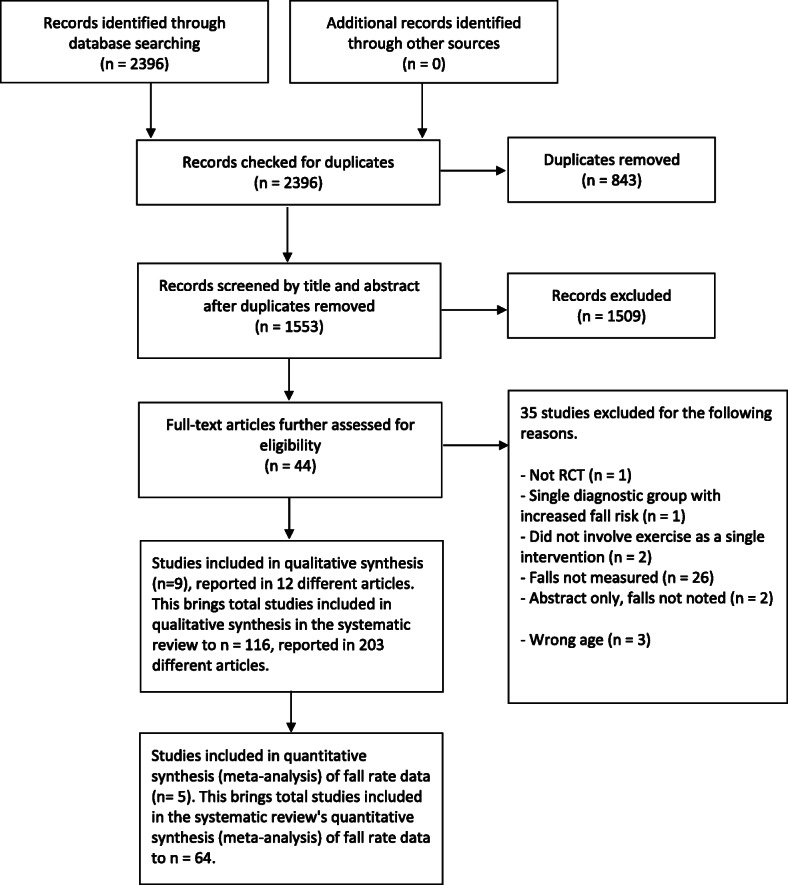
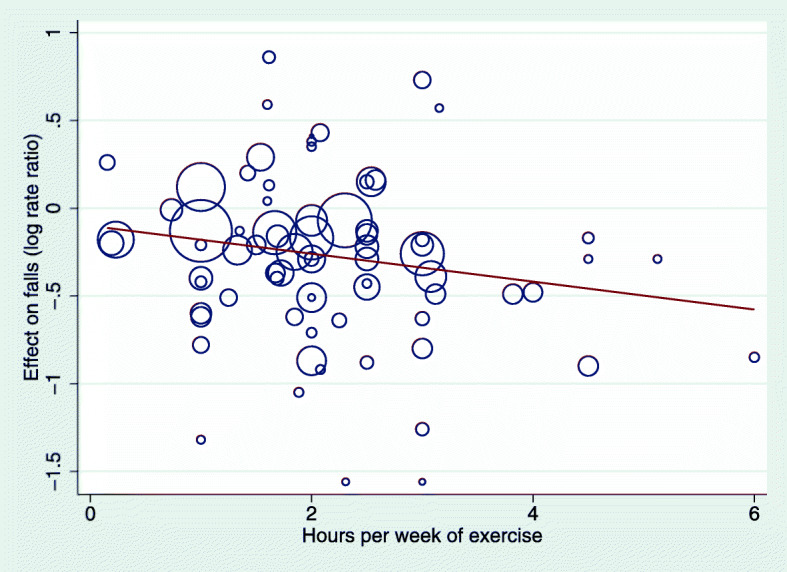
Background: Exercise prevents falls in older adults. Regular updates of estimated effects of exercise on falls are warranted given the number of new trials, the increasing number of older people globally and the major consequences of falls and fall-related injuries. Methods: This update of a 2019 Cochrane Review was undertaken to inform the World Health Organization guidelines on physical activity and sedentary behaviour. Searches were conducted in six databases. We included randomised controlled trials evaluating effects of any form of physical activity as a single intervention on falls in people aged 60+ years living in the community. Analyses explored dose-response relationships. The certainty of the evidence was assessed using Grading of Recommendations Assessment, Development and Evaluation (GRADE). Results: This review included 116 studies, involving 25,160 participants; nine new studies since the 2019 Cochrane Review. Exercise reduces the rate of falls by 23% (pooled rate ratio (RaR) 0.77, 95% confidence interval (CI) 0.71 to 0.83, 64 studies, high certainty evidence). Subgroup analysis showed variation in effects of different types of exercise ( p < 0.01). Rate of falls compared with control is reduced by 24% from balance and functional exercises (RaR 0.76, 95% CI 0.70 to 0.82, 39 studies, high certainty evidence), 28% from programs involving multiple types of exercise (commonly balance and functional exercises plus resistance exercises, RaR 0.72, 95% CI 0.56 to 0.93, 15 studies, moderate certainty evidence) and 23% from Tai Chi (RaR 0.77, 95% CI 0.61 to 0.97, 9 studies, moderate certainty evidence). The effects of programs that primarily involve resistance training, dance or walking remain uncertain. Interventions with a total weekly dose of 3+ h that included balance and functional exercises were particularly effective with a 42% reduction in rate of falls compared to control (Incidence Rate Ratio (IRR) 0.58, 95% CI 0.45 to 0.76). Subgroup analyses showed no evidence of a difference in the effect on falls on the basis of participant age over 75 years, risk of falls as a trial inclusion criterion, individual versus group exercise, or whether a health professional delivered the intervention. Conclusions: Given the strength of this evidence, effective exercise programs should now be implemented at scale.
Overview
The claims and statistics of this paper haven’t been checked yet.
Free: it reads the open-access text and checks the first 5 claims that cite a source we can check. Create a free account to check every claim.
Integrity signals
Registry
Cites
Statistics
Figures
Verification
Claims the paper makes
The claims and statistics of this paper haven’t been checked yet.
Free: it reads the open-access text and checks the first 5 claims that cite a source we can check. Create a free account to check every claim.
Claims other papers make about this one
Each is checked against this paper’s own text: does it say what the citing paper says it does?
The source backs part of the claim, not all of it — or backs it for a different population, condition or comparison.
In the citing paper
“the largest benefits for falls are generally seen with the combination of moderate to high intensity PRT and challenging balance training in sufficient quantities [123].”
From Global consensus on optimal exercise recommendations for enhancing healthy longevity in older adults (ICFSR) (2025) · cites this paper as [123]
Experimental — accuracy not yet measuredThe source backs part of the claim, not all of it — or backs it for a different population, condition or comparison.
In the citing paper
“and the largest benefits for falls are generally seen with the combination of moderate to high intensity PRT and challenging balance training in sufficient quantities [123].”
From Global consensus on optimal exercise recommendations for enhancing healthy longevity in older adults (ICFSR) (2025) · cites this paper as [123]
Experimental — accuracy not yet measuredThe cited source says what the claim attributes to it.
In the citing paper
“On the other hand, multicomponent exercise programs that incorporate PRT, balance, and functional exercises [84,123,130,131], have been demonstrated to effectively reduce the incidence of falls in older adults compared to control groups”
From Global consensus on optimal exercise recommendations for enhancing healthy longevity in older adults (ICFSR) (2025) · cites this paper as [123]
The cited source says what the claim attributes to it.
In the citing paper
“Multicomponent exercise programs that combine PRT, balance plus functional exercises such as transferring from a chair and using steps [84,123,130,131], programs involving balance and functional exercises [123], or an alternative exercise intervention such as Tai Chi [[127], [128], [129]] have been shown to reduce falls compared with control in older adults by 20−40%.”
From Global consensus on optimal exercise recommendations for enhancing healthy longevity in older adults (ICFSR) (2025) · cites this paper as [123]
The check wasn’t confident either way, so it gives no verdict — never disputed.
In the citing paper
“Similarly, while isolated balance training leads to improved balance [123,124], and is associated with reduced falls and fall-related injuries, as well as improved functional mobility [110,125,126], as does Tai Chi in some studies [[127], [128], [129]], these do not address aerobic capacity or sarcopenia.”
From Global consensus on optimal exercise recommendations for enhancing healthy longevity in older adults (ICFSR) (2025) · cites this paper as [123]
Experimental — accuracy not yet measured
8 more claims about this paper
Create a free account to see every claim other papers make about this one.
Self-check
Percentages, sums and reported differences re-computed from the paper’s own numbers.
The self-check needs the paper’s full text.
Citations
Cites
Sensitivity and False Alarm Rate of a Fall Sensor in Long-Term Fall Detection in the Elderly
Kangas, M., Korpelainen, R., Vikman, I., Nyberg, L., & Jämsä, T. (2015) · Gerontology · doi:10.1159/000362720 · Cited by 18,909
World Health Organization 2020 guidelines on physical activity and sedentary behaviour
Bull, F. C., Al-Ansari, S. S., Biddle, S., Borodulin, K., Buman, M. P., Cardon, G., Carty, C., Chaput, J.-P., Chastin, S., Chou, R., et al. (2020) · British Journal of Sports Medicine · doi:10.1136/bjsports-2020-102955 · Cited by 11,657 · cited 8×
“Methods: This update of a 2019 Cochrane Review was undertaken to inform the World Health Organization guidelines on physical activity and sedentary behaviour.”
BackgroundInfluentialSelf-citationHao (2015) · doi:10.1002/14651858 · Cited by 11,321
Risk Factors for Falls among Elderly Persons Living in the Community
Tinetti, M. E., Speechley, M., & Ginter, S. F. (1988) · New England Journal of Medicine · doi:10.1056/nejm198812293192604 · Cited by 6,509 · cited 1×
“years fall each year [1, 2] with the rate of fall-related injuries increasing with age [3].”
BackgroundInterventions for preventing falls in older people living in the community
Gillespie, L. D., Robertson, M. C., Gillespie, W. J., Sherrington, C., Gates, S., Clemson, L., & Lamb, S. E. (2012) · Cochrane Database of Systematic Reviews · doi:10.1002/14651858.cd007146.pub3 · Cited by 3,966
Self-citationLamb, S. E., Jørstad‐Stein, E. C., Hauer, K., Becker, C., & on behalf of the Prevention of Falls Network Europe and Outcomes Consensus Group (2005) · Journal of the American Geriatrics Society · doi:10.1111/j.1532-5415.2005.53455.x · Cited by 2,073 · cited 8×
“Components of studies in categories of exercise not found to prevent falls Abbreviations CI: Confidence interval; GRADE: Grading of Recommendations Assessment, Development and Evaluation; IQR: Interquartile range; ProFaNE: Prevention of Falls Network Europe; RaR: Pooled rate ratio; RCTs: Randomised controlled trials A…”
MethodInfluentialExercise for preventing falls in older people living in the community
Sherrington, C., Fairhall, N. J., Wallbank, G. K., Tiedemann, A., Michaleff, Z. A., Howard, K., Clemson, L., Hopewell, S., & Lamb, S. E. (2019) · Cochrane Database of Systematic Reviews · doi:10.1002/14651858.cd012424.pub2 · Cited by 1,282 · cited 6×
“This systematic review was undertaken to inform the World Health Organization guidelines on Physical Activity and Sedentary Behaviour [10] and involved an update of the Cochrane Review of randomised controlled trials published in 2019 [11] that found high certainty evidence that exercise interventions reduced the rate…”
BackgroundMethodResultInfluentialSelf-citationExercise to prevent falls in older adults: an updated systematic review and meta-analysis
Sherrington, C., Michaleff, Z. A., Fairhall, N., Paul, S. S., Tiedemann, A., Whitney, J., Cumming, R. G., Herbert, R. D., Close, J. C. T., & Lord, S. R. (2017) · British Journal of Sports Medicine · doi:10.1136/bjsports-2016-096547 · Cited by 1,095
Self-citationHarbord, R. M., & Higgins, J. P. T. (2008) · The Stata Journal: Promoting communications on statistics and Stata · doi:10.1177/1536867x0800800403 · Cited by 897
CAMPBELL, A. J., BORRIE, M. J., SPEARS, G. F., JACKSON, S. L., BROWN, J. S., & FITZGERALD, J. L. (1990) · Age and Ageing · doi:10.1093/ageing/19.2.136 · Cited by 803
Research works printed but not linked: 5
- World Health Organization Guidelines for physical activity and sedentary behaviour 2020 Geneva World Health Organization
- Higgins JPT Green S Cochrane Collaboration. Cochrane handbook for systematic reviews of interventions 2011 Chichester and Hoboken Wiley-Blackwell 649
- Schünemann HJOA Higgins JP Vist GE Glasziou P Akl E on behalf of the Cochrane GRADEing Methods Group (formerly Applicability and Recommendations Methods Group) and the Cochrane Statistical Methods Group Chapter 11: Completing ‘Summary of findings’ tables and grading the confidence in or quality of the evidence Cochrane handbook for systematic reviews of interventions [internet]. The Cochrane Collaboration 2017
- Norway C How to write a plain language summary of a Cochrane intervention review 2017
- Review Manager (Revman) [Computer program] Version 5.3. Copenhagen: The Nordic Cochrane Centre, The Cochrane Collaboration 2014
Cited by
Items 201–300 of 421
Jones, C. M. P., Bowden, J. L., Cameron, C. M., Comachio, J., MARCH, L. M., McLachlan, H., & Tiedemann, A. (2024) · Critical Public Health · doi:10.1080/09581596.2024.2439485 · Cited by 2
“For example, Australian-led research has informed global guidelines on fall prevention (Sherrington et al., 2020), increasing physical activity to reduce age-related functional decline (Oliveira et al., 2023; Wallbank et al., 2021), and delivered a National Strategy for prevention and management of…”
Self-citationBatcir, S., Gimmon, Y., Kurz, I., Edelman, S., Levitsky, N., Adar, R., Rabaev, E., Debi, R., Shani, G., Shapiro, A., et al. (2025) · Gerontology · doi:10.1159/000545480 · Cited by 2
Belimbegovski, W., Schaap, L. S., Linn, A. J., Medlock, S. K., van Weert, J. C. M., van der Velde, N., & van Schoor, N. M. (2025) · Archives of Gerontology and Geriatrics · doi:10.1016/j.archger.2025.105936 · Cited by 2
Su, S., Liu, J.-Y., Yu, C. C.-W., Ngai, S. P. C., & Fu, S. N. (2025) · European Review of Aging and Physical Activity · doi:10.1186/s11556-025-00381-y · Cited by 4
“Specifically, the WHO advises at least 150 to 300 minutes of moderate aerobic exercise or an equivalent combination of moderate-and vigorous-intensity activity weekly, which is associated with various health benefits [2–6].”
Cho, O., Kim, H., & Hwang, K. (2025) · Healthcare · doi:10.3390/healthcare13212695 · Cited by 2
KOMONSKI, A., Meunier, C., & Boureau, A. (2026) · BMC Sports Science Medicine and Rehabilitation · doi:10.1186/s13102-026-01696-8 · Cited by 2
“When individuals withdraw due to concurrent health issues or caring duties, they should be encouraged to return, and programs should be adapted to ensure appropriate difficulty and exercise dose [45, 46].”
Morrison, R. T., Mannion, L., & MacDonncha, C. (2026) · Systematic Reviews · doi:10.1186/s13643-025-03049-x · Cited by 6
Ramage, E. R., Sharma, H., Batchelor, F., Bicknell, E., Bongiovanni, L., Brijnath, B., Cahill, P., Callisaya, M. L., Chudecka, A., Cursio-Barcham, R., et al. (2026) · Health Research Policy and Systems · doi:10.1186/s12961-025-01435-4 · Cited by 2
Self-citationvan Gameren, M., Voorn, P. B., Bossen, D., Frazer, S. W. T., Bosmans, J. E., Visser, B., & Pijnappels, M. A. G. M. (2026) · BMC Geriatrics · doi:10.1186/s12877-025-06967-6 · Cited by 4
“…such an implemented fall prevention intervention in the Netherlands is the In Balance intervention, which is based on the core elements of fall prevention, including balance and strength training, education on fall risk, home environment modifications, and promoting continuity of exercise [14–16].”
Physical activity, falls, and dementia risk in adults aged ≥ 60: evidence from three cohorts
Yang, J., Zhang, M., Hou, M., Liu, H., & Fan, H. (2026) · International Journal of Behavioral Nutrition and Physical Activity · doi:10.1186/s12966-026-01926-9 · Cited by 2
“Importantly, physical activity also plays a central role in maintaining balance, muscle strength, and functional independence, thereby reducing the likelihood of falls [18, 19].”
Song, J., Chen, Y., Fang, Y., Zhao, G., Zhang, Y., & Fu, J. (2026) · Geriatrics and gerontology international/Geriatrics & gerontology international · doi:10.1111/ggi.70716 · Cited by 2
“…that adults accumulate 150–300 min per week of moderate-intensity physical activity, 75–150 min per week of vigorous-intensity physical activity, or an equivalent combination of MVPA [43], while also reducing sedentary time and replacing it with movement of any intensity when feasible [44].”
Oberholster, C. K., Taylor, C., Huynh, M., & Gordon, B. A. (2024) · PLoS ONE · doi:10.1371/journal.pone.0299146 · Cited by 6
Panato, D., Longen, W. C., Minetto, A. I., & Soratto, J. (2024) · Arquivos de Ciências da Saúde da UNIPAR · doi:10.25110/arqsaude.v28i1.2024-11093 · Cited by 2
Boekhout, J. M., Hut, R., van Uffelen, J. G. Z., Czwikla, G., & Peels, D. A. (2024) · Geriatrics · doi:10.3390/geriatrics9050113 · Cited by 3
“Numerous PA interventions for older adults have been developed and proven effective in Randomized Clinical Trials (RCTs) [7–9].”
BackgroundKuo, F.-L., Liao, Z.-Y., Liao, P.-C., & Wang, H.-H. (2024) · BMC Geriatrics · doi:10.1186/s12877-024-05422-2 · Cited by 6
Bajraktari, S., Sandlund, M., Pettersson, B., Rosendahl, E., & Zingmark, M. (2024) · European Journal of Ageing · doi:10.1007/s10433-024-00828-8 · Cited by 4
“Intervention effects were evaluated for exercise intervention in general versus control but also for specific types of exercises, e.g. effect of balance and functional exercise versus control (Sherrington et al. 2020).”
BackgroundMethodInfluentialAlsaleh, H. M., Alsaad, S. M., AlAbdulwahab, S. S., Vennu, V. S., & Bindawas, S. M. (2024) · Risk Management and Healthcare Policy · doi:10.2147/rmhp.s495695 · Cited by 3
“13,14 There is also recent evidence that using artificial intelligence to analyze fall risk data has proven to be an effective method for developing fall risk prediction models.”
BackgroundThe Association of Regular Dog Walking With Mobility, Falls, and Fear of Falling in Later Life
Gallagher, E., Lavan, A. H., Kenny, R. A., & Briggs, R. (2025) · The Journals of Gerontology Series A · doi:10.1093/gerona/glaf010 · Cited by 4
“Engaging in physical activity in late life has also been shown to reduce the risk of falls (8) and is protective against mobility loss and the development of fear of falling (9).”
Economic autonomy as a determinant of physical activity behavior in Chinese older adults
Liu, Y., Luo, X., & Xu, H. (2025) · Frontiers in Public Health · doi:10.3389/fpubh.2024.1466710 · Cited by 4
Xiao, W., Wang, B., Bai, X., Tang, S., & Zhang, Y. (2023) · Frontiers in Public Health · doi:10.3389/fpubh.2023.1308375 · Cited by 3
Lebeau, J.-C., Myers, K., Kappelmann, K., Vann, S. E., Gabler, T., Wright, A., & Gretton, T. W. (2024) · Journal of Cognitive Enhancement · doi:10.1007/s41465-024-00287-0 · Cited by 2
Taylor, S., Barker, K. L., Stephensen, D., & Williamson, E. M. (2024) · Haemophilia · doi:10.1111/hae.14972 · Cited by 2
Arkkukangas, M. (2020) · European Journal of Physiotherapy · doi:10.1080/21679169.2020.1864160 · Cited by 2
Multicomponent Physical Exercise Training in Multimorbid and Palliative Oldest Adults
Blasco-Lafarga, C., Sanchís-Soler, G., & Llorens, P. (2021) · International Journal of Environmental Research and Public Health · doi:10.3390/ijerph18178896 · Cited by 1
“Notwithstanding, current exercise recommendations [24,29,30] present some complexity in training programs addressed to very unfit ill seniors [12,23,25,31].”
BackgroundYu, G., Yang, P., Kim, M.-H., Jin, M., Jang, E., Yu, H. T., Kim, T., Pak, H., Lee, M., & Joung, B. (2022) · Reviews in Cardiovascular Medicine · doi:10.31083/j.rcm2305153 · Cited by 1
“The participants were stratified according to their total weekly levels of physical activity as follows: (1) highly active group: physical activity exceeding the guideline target range (≥1000 MET-min/week); (2) active group: physical activity within the guideline target range (500–999 MET-min/week); (3) insufficiently…”
Sandberg, A., Nordanstig, J., Cider, Å., Jivegård, L., Hagströmer, M., & Bäck, M. (2023) · Physical Therapy · doi:10.1093/ptj/pzad086 · Cited by 2
“6 Substantial evidence demonstrates the health benefits of regular PA in the general population, 8–10 and a primary rehabilitation goal for older adults is often to maintain or increase PA to achieve health benefits.”
Rodrigues, F. F., Jacinto, M., Antunes, R., Morouço, P., Monteiro, A. M., Forte, P. M., & Monteiro, D. (2023) · Cuadernos de Psicología del Deporte · doi:10.6018/cpd.567251 · Cited by 2
Schene, M. R., Wyers, C. E., Driessen, J. H. M., Vranken, L., Meijer, K., van den Bergh, J. P., & Willems, H. C. (2024) · Journal of Personalized Medicine · doi:10.3390/jpm14040337 · Cited by 1
“Our results are also in contrast with studies in the general older population associating poor physical performance (including both PC and PA measures) with future falls [12,25], subsequent fractures [42–44], and mortality [39,45–48].”
ResultHansen, R., Jochum, E., Egholm, D., Villumsen, S., & Hirata, R. P. (2024) · Frontiers in Sports and Active Living · doi:10.3389/fspor.2024.1384387 · Cited by 6
Recreational older ballet dancers adapt faster to repeated standing-slips than older non-dancers
Simpkins, C., & Yang, F. (2025) · Complementary Therapies in Clinical Practice · doi:10.1016/j.ctcp.2025.101950 · Cited by 1
Physiotherapy and Health Promotion
Fryer, C. E., & van Kessel, G. (2025) · Springer eBooks · doi:10.1007/978-981-92-1288-0_106 · Cited by 1
Koh, V. J. W., Matchar, D. B., Visaria, A., Lai, W. X., Goh, J. W., Poh, J. S., Ginting, M. L., Ho, V., Hosain, H., Ismail, N. H. B., et al. (2025) · Age and Ageing · doi:10.1093/ageing/afaf021 · Cited by 3
Abel-Adegbite, I., Sibley, K. M., B̀ouchard, D. R., & Kehler, D. S. (2025) · BMJ Open · doi:10.1136/bmjopen-2024-095157 · Cited by 1
“18 22 23 Touchette et al reported that only 6% of 140 Canadian exercise programmes identified in a survey of instructors were evidence-informed.”
Nguyen, T. M., Kim, D., Li, Y., Emrich, C. T., Crook, J., Thiamwong, L., & Xie, R. (2025) · Information · doi:10.3390/info16060442 · Cited by 1
“This aligns with prior research emphasizing the benefits of PA in maintaining balance, strength, and overall mobility in older adults [12,15,57].”
Martínez-Gómez, N., Martínez‐Velilla, N., Duggan, E., & Romero‐Ortuño, R. (2025) · Journal of Frailty Sarcopenia and Falls · doi:10.22540/jfsf-10-108 · Cited by 1
“Additionally, physical activity interventions totalling three or more hours per week, including balance and functional exercises, have demonstrated a 42% reduction in falls compared to controls 16 .”
The Effect of Muscle Strength and Visual Contrast Sensitivity on Fall Risk Sway Velocity Index
Hackney, K. J., Bradley, M. L., Mahoney, S. J., Johnson, N., Kotarsky, C. J., Bradley, A. P., Stastny, S., McGrath, R. P., & McCourt, M. E. (2025) · Journal of Frailty Sarcopenia and Falls · doi:10.22540/jfsf-10-054 · Cited by 1
“Exercise training is also efficacious across the lifespan to improve strength when consistently performed 41 and can reduce fall rates by 23% 46 .”
Dietz, R. J., van de Berg, N. J., van der Vegt, A., van den Berg, C. B., van der Marel, I. C., van Wijk, F. H., Maliepaard, M., van Beekhuizen, H. J., & van Doorn, H. C. (2025) · Maturitas · doi:10.1016/j.maturitas.2025.108651 · Cited by 1
Levinger, P., Hall, J., & Hill, K. (2025) · Archives of Public Health · doi:10.1186/s13690-025-01668-3 · Cited by 1
Doi, T., Haruna, R., Kamioka, N., Bonkohara, S., & Hongu, N. K. (2025) · Sensors · doi:10.3390/s25154546 · Cited by 2
Importance of physical activity in people with multiple sclerosis
Nedeljković, U., Vujadinović, S. T., Krstić, N., & Ilic, N. V. (2025) · Medicinska istrazivanja · doi:10.5937/medi0-56932 · Cited by 1
Kwok, W. S., Oliveira, J. S., Nyman, S. R., Tiedemann, A., Pinheiro, M. B., Khalatbari‐Soltani, S., & Sherrington, C. (2025) · Journal of Physical Activity and Health · doi:10.1123/jpah.2024-0830 · Cited by 3
Self-citationCetinkaya, O., Nalbant, Ö., ÖDEMİŞ, M., & Gülsoy, H. (2025) · Journal of Bodywork and Movement Therapies · doi:10.1016/j.jbmt.2025.09.009 · Cited by 2
Nationwide assessment of fall risk and protective factors among older adults in Saudi Arabia
Alharbi, A. A., Albalwi, A. A., Amer, H. S. A., Alamrani, S. A., Albalawi, H., Alrashedi, F. D., Muthaffar, M. Y., Albalwi, M. A., Alshehre, Y. M., Bakhsh, H. R., et al. (2025) · PLoS ONE · doi:10.1371/journal.pone.0332900 · Cited by 3
“This finding is consistent with that of previous reviews showing that long-term moderate-intensity exercise performed two to three times per week, combined with balance training, reduces fall risk and injury rates in older adults [47,48].”
Faria, J. O., Favretto, M. E. C., Bezerra, I. S., Santos, T. F., de Lemos, T. W., Villalba, M. M., Junqueira, E. B., Santiago, P. R. P., & Moraes, R. (2025) · Human Movement Science · doi:10.1016/j.humov.2025.103415 · Cited by 4
Salimi, K., Richard, E., Laliberté, M., Pion, C. H., Stephanie, D. L., Courtay, A., Hammad, R., Gaudreau, P., Morais, J., Bélanger, M., et al. (2025) · European Journal of Applied Physiology · doi:10.1007/s00421-025-06004-9 · Cited by 1
Abdullah, A., Mathiyakom, W., Asai, T., Ali, I., Ullah, S., & Tantisuwat, A. (2025) · BMC Geriatrics · doi:10.1186/s12877-025-06450-2 · Cited by 5
“Regression analysis confirmed [46].”
KEMMLER, W. K., Schoene, D., Kohl, M., Thomasius, F. E., Jakob, F. J., Kerschan‐Schindl, K., Lange, U., Becker, C., Peters, S., & von Stengel, S. (2025) · Die Orthopädie · doi:10.1007/s00132-025-04731-7 · Cited by 2
Ooi, T. C., Rivan, N. F. M., Shahar, S., & Singh, D. K. A. (2025) · BMC Public Health · doi:10.1186/s12889-025-25080-2 · Cited by 2
“…activity in older adults demonstrate a reciprocal relationship, whereby reduced activity levels contribute to greater fall risk through declines in strength and balance [11], while experiencing a fall often triggers fear-related activity restriction, thereby per-petuating a detrimental cycle [16].”
Luo, Y., Jiang, Y., Tan, S., Yang, H., Xie, Y., Cui, X., Ju, W., Lyu, H., & Zhang, L. (2025) · International Journal of Surgery · doi:10.1097/js9.0000000000004055 · Cited by 3
Park, D., Koh, H.-S., Kim, S. K., Park, J., Han, K., & Choi, Y. (2025) · Osteoporosis International · doi:10.1007/s00198-025-07766-w · Cited by 1
“…consistent yet cautious PA is critical; we recommend walking 3–7 days/week, moderate-intensity exercise 3–5 days/week, and vigor-ous-intensity activities strictly limited to 1–3 days/week due to elevated fracture risks at higher frequencies, refining general osteoporosis guidelines [36, 38].”
Bogen, B. E., Hellevik, M. M., Tangen, G. G., Bovim, L. P., Øye, N., & Taraldsen, K. (2025) · Frontiers in Sports and Active Living · doi:10.3389/fspor.2025.1665943 · Cited by 2
Kwag, E., Luca, A. D., Marchesi, G., Squeri, V., Ramm, P., Hochheim, M., Wunderlich, M., Zijlstra, W., & Morat, T. (2025) · Trials · doi:10.1186/s13063-025-09380-x · Cited by 1
“Moreover, these enhancements appear to exceed those documented in preceding systematic reviews [16, 56].”
InfluentialMahalingasivam, A. A., Bech, A. A., Vestergaard, P., Jørgensen, M. G., & Rasmussen, N. H. (2026) · Aging Clinical and Experimental Research · doi:10.1007/s40520-026-03328-0 · Cited by 1
“While early evidence indicates that fall-prevention interventions can reduce healthcare costs [ 16 , 40 ], such outcomes will be considered secondary to the primary evaluation of intervention efficacy.”
Simpson, D. B., Haracz, K., Southgate, K., Newberry‐Dupé, J., Hasnain, M. G., de Carteret, N., Preece, J., Colvin, D., Bird, M., Johnson, L., et al. (2026) · Disability and Rehabilitation · doi:10.1080/09638288.2025.2612460 · Cited by 1
“To improve balance and reduce falls risk, around three hours per week of balance and functional training for up to 6-months duration is required [44].”
KEMMLER, W. K., Schoene, D., Kohl, M., Thomasius, F. E., Jakob, F., Kerschan‐Schindl, K., Lange, U., Peters, S., & von Stengel, S. (2026) · BMC Endocrine Disorders · doi:10.1186/s12902-026-02194-1 · Cited by 1
“Strong recommendation, Grade A [86, 107, 143”
Solbakken, S. M., Aga, R., Matheswaran, S. L., Holvik, K., Omsland, T. K., Dahl, C., Nielsen, C. S., Søgaard, A. J., & Meyer, H. E. (2026) · Osteoporosis International · doi:10.1007/s00198-026-07909-7 · Cited by 1
“While physical activity is beneficial to bone health and crucial to fall prevention [23, 24], results from previous studies are somewhat disparate regarding physical activity level and risk of humerus fracture [25, 26].”
Smit, F., Franco, M. R., Sherrington, C., Cullati, S., Blyth, F., van Zwieten, A., & Khalatbari‐Soltani, S. (2026) · Journal of Epidemiology & Community Health · doi:10.1136/jech-2025-225014 · Cited by 1
Self-citationIvers, R., Clapham, K. F., Ryder, C., Macniven, R., Hill, A., Moeller, H., Haynes, B., Gidgup, M. J. R., McCarthy, L., Mackean, T., et al. (2026) · Age and Ageing · doi:10.1093/ageing/afag264 · Cited by 1
“Improved functional mobility and dynamic balance are associated with reduced falls risk in other trials [ 34], so while we were unable to assess the impact of falls in this trial, it seems likely that the program would have benefits for fall prevention.”
Self-citationFrench, C., Parchment, A., Odebiyi, B., Shi, C., Bashir, S., Dowding, D., Kislov, R., Thompson, A., Skelton, D. A., Clarke, M., et al. (2026) · Age and Ageing · doi:10.1093/ageing/afag291 · Cited by 2
von Stengel, S., Kohl, M., Jakob, F. J., Kerschan‐Schindl, K., Lange, U., Peters, S., Thomasius, F. E., Uder, M., Fröhlich, M., Schöne, D., et al. (2023) · Osteologie/Osteology · doi:10.1055/a-2070-7512 · Cited by 1
Development of a Digital Solution to Support Physical Exercises and Cognitive Training Interventions
Baptista, F., Ursine, B. L., Andias, R., Martins, A. I., Silva, A. G., & Rocha, N. P. (2022) · International Conference on Software Development and Technologies for Enhancing Accessibility and Fighting Info-exclusion (DSAI) · doi:10.1145/3563137.3563142 · Cited by 1
“In this respect, a recent systematic review comprising more than one hundred studies and twenty-five thousand participants showed that general physical activity reduces the rate of falls by 23 % when compared with control and that this ratio increases up to 28 % when multiple modalities of exercise are included [5].”
BackgroundObesity in the elderly: peculiarities of treatment in outpatient practice
Суплотова, Л. А., Alieva, O. O., Сергеевна, Д. Т., & Makarova, O. B. (2023) · Obesity and metabolism · doi:10.14341/omet12919 · Cited by 5
Breaking Up Sedentary Time Reduces Recurrent Fall Risk, but Not Incident Fracture Risk in Older Men
Roe, L. S., Harrison, S. L., Cawthon, P. M., Ensrud, K. E., Gabriel, K. P., Kado, D. M., & Cauley, J. A. (2023) · JBMR Plus · doi:10.1002/jbm4.10803 · Cited by 1
Suherman, A., Rahayu, N. I., Jajat, J., & Muktiarni, M. (2023) · Journal of Advanced Research in Applied Sciences and Engineering Technology · doi:10.37934/araset.32.1.227237 · Cited by 4
Whitten, J., Barrett, R., Carty, C. P., Tarabochia, D. S., MacDonald, D. A., & Graham, D. (2023) · Journal of Aging and Physical Activity · doi:10.1123/japa.2022-0355 · Cited by 2
Relação entre risco e medo de queda em idosas participantes de um projeto social
da Silva, I. C., de Oliveira, D. V., Júnior, J. R. A. D. N., Fidélix, Y. L., Nogueira, G., Bennemann, R. M., & Acêncio, F. R. (2023) · Acta Fisiátrica · doi:10.11606/issn.2317-0190.v30i2a196937 · Cited by 6
Bercovitch, D., Rindlisbacher, A. R., Ng, H., Mulvihill, S., Sum, B., Patel, S., Aitken, L., Marques, M., Aravind, G., & Salbach, N. M. (2024) · Physiotherapy Canada · doi:10.3138/ptc-2023-0049 · Cited by 2
Buckinx, F., Leroy, Z., & Bruyère, O. (2024) · Journal of Public Health · doi:10.1007/s10389-024-02233-y · Cited by 1
“In this regard, it is important to offer muscle strengthening and balance activities in addition to massages (Sherrington et al. 2020).”
Safe Fall Recovery Education for Older Adults
Arena, S. K., Wilson, C. M., Boright, L. E., Cassidy, B., Fedorow, S., Hallman, S., & Rager, H. (2024) · Home Healthcare Now · doi:10.1097/nhh.0000000000001253 · Cited by 1
Akinrolie, O., Strachan, S. M., Webber, S. C., Chan, H., Messner, K., & Barclay, R. (2024) · Applied Psychology Health and Well-Being · doi:10.1111/aphw.12551 · Cited by 3
Weiss, S. M., Kalocsai, C., Liu, B., & Norris, M. (2024) · Canadian Geriatrics Journal · doi:10.5770/cgj.27.722 · Cited by 2
“…review identified no significant difference between group and individualized exercise sessions in terms of their success preventing falls, (20) our study corroborated the World Guidelines for Falls Prevention that recommend smaller group numbers, while also recognizing that the importance…”
ResultAPPLICATION OF DIFFERENT EXERCISE PROGRAMS IN THE PREVENTION OF FALLS IN PEOPLE OF THE THIRD AGE
Zlatičanin, R., Jaganjac, A., & Kraljević, B. (2024) · Homosporticus · doi:10.61886/1840-4324.2024.26.1.48 · Cited by 3
Increasing Reported Physical Activity Among Australian Adults: Progress Toward a Healthy Older Age
Halim, N. K., Owen, K. B., Smith, B. J., Thomas, M. M., Tiedemann, A., Sherrington, C., & Bauman, A. E. (2024) · Journal of Aging and Physical Activity · doi:10.1123/japa.2023-0426 · Cited by 1
Self-citationOsteoporosis in Older Men: Informing Patient Management and Improving Health-Related Outcomes
Ruggiero, C., Caffarelli, C., Calsolaro, V., Tafaro, L., Riuzzi, F., Bubba, V., Napoli, N., Ferracci, M., Mecocci, P., Giusti, A., et al. (2025) · Drugs & Aging · doi:10.1007/s40266-024-01163-4 · Cited by 1
“Recently, high-intensity physical activity with high serum vitamin D levels was associated with a lower prevalence of osteopenia and osteoporosis [141], and a systematic review confirmed that exercise reduces the risk of falls by 23% [142].”
Han, K.-S., & Ko, M.-H. (2025) · Geriatrics · doi:10.3390/geriatrics10010023 · Cited by 2
“Enhancing balance and the performance of strengthening exercises have been shown to reduce fall rates in older adults by 21% [6,7].”
Jiang, Y., Oide, K., Chow, Y. E., Chen, C., Zhang, M., Chua, M. C. H., & Yoong, S. Q. (2025) · Journal of the American Medical Directors Association · doi:10.1016/j.jamda.2025.105701 · Cited by 1
Müller, A., Kob, R., Sieber, C. C., Freiberger, E., Rohleder, N., & Britting, S. (2025) · Comprehensive Psychoneuroendocrinology · doi:10.1016/j.cpnec.2025.100315 · Cited by 3
“They help prevent or delay age-related conditions like sarcopenia [12], reduce fall incidence [13], and improve quality of life in older adults [14].”
Tsushima, S., Watanabe, K., Hirohashi, S., Yoshimi, T., Fujino, Y., Tabuchi, T., & Zaitsu, M. (2025) · medRxiv · doi:10.1101/2025.02.16.25321430 · Cited by 1
Exercise with Older People who have Activity Limitations
Cameron, I. D. (2021) · Journal of the American Medical Directors Association · doi:10.1016/j.jamda.2021.02.015
Physical Activity, Exercise, and Physical Rehabilitation
Lima, C. A., dos Santos, R. B., & Perracini, M. R. (2021) · Perspectives in nursing management and care for older adults · doi:10.1007/978-3-030-63892-4_14
Fall prevention programmes for older adults in the community: impact on rate of falls
Harrison, J., Phoong, K. Y., & Hill, J. E. (2021) · British Journal of Community Nursing · doi:10.12968/bjcn.2021.26.11.540
Bermejo, L. M., My works are correct, B. M. I. A. A. I. S. R. L. M. T. I. D. A.-M., Carlos‐Vivas, J., Mendoza-Muñoz, M., Pastor-Cisneros, R., Merellano-Navarro, E., Gianikellis, K., & Adsuar, J. C. (2022) · Biology · doi:10.3390/biology11020290
Body Composition Status of a Physically Independent 86-Year-Old Man: A Case Report
Moris, J. M., Curtis, R., Fitzgibbons, A., Burnam, B., & Koh, Y. (2022) · Journal of Sports Research · doi:10.18488/90.v9i2.3072
“For example, a recent systematic review included 116 randomized controlled trials as part of an update to disseminate the effectiveness of the World Health Organization guidelines on physical activity in preventing falls for people over the age of 65 (Sherrington et al., 2020).”
BackgroundEvidenz körperlicher Trainings-programme zur Sturzprävention bei älteren Menschen
Huberty, S., Mattle, M., Theiler, R., & Freystaetter, G. (2022) · Praxis · doi:10.1024/1661-8157/a003922
de Mello, E. C. (2022) · Digital Library of Theses and Dissertations (Universidade de São Paulo) · doi:10.11606/t.58.2022.tde-06122022-114711
Оцінювання ризику падінь у осіб похилого та старечого віку
Лазарєва, О., & Shevchuk, Y. V. (2023) · Спортивна медицина фізична терапія та ерготерапія · doi:10.32652/spmed.2022.2.132-137
Impact of Exercise Guidance Timing on Physical and Cognitive Function in Older Adults: A Pilot Study
Lampropoulou, S., Kellari, A., & Sakellari, V. (2023) · Applied Sciences · doi:10.3390/app13179526 · Cited by 1
Voelcker‐Rehage, C., Janssen, T. I., Cordes, T., & Wollesen, B. (2023) · Springer eBooks · doi:10.1007/978-3-662-67020-0_13 · Cited by 1
Rommers, E., Petrović, M., Pauw, R. D., BLADEL, A. V., & Cambier, D. C. (2023) · Acta Clinica Belgica · doi:10.1080/17843286.2023.2268916
Shevchuk, Y. V. (2023) · Art of Medicine · doi:10.21802/artm.2023.4.28.168
Effect of physical exercise on fall episodes in the elderly: a meta-analysis
de Figueiredo, J. A., Garcia, M. C., & de Oliveira, A. J. (2023) · Sport Sciences for Health · doi:10.1007/s11332-023-01145-w
“The literature suggests that regular physical exercise decreases the risk of falling [14].”
Kuder, R., Mandrysch, J., & Kahlert, D. (2023) · B&G Bewegungstherapie und Gesundheitssport · doi:10.1055/a-2185-8115 · Cited by 1
“Beide Faktoren reduzieren maßgeblich das Risiko zu stürzen [8].”
BackgroundExploring a Deep Learning Approach for Video Analysis Applied to Older Adults Fall Risk
Aldunate, R. G., Martín, D. S., & Manzano, D. (2024) · Lecture notes in networks and systems · doi:10.1007/978-3-031-45648-0_21
Geriatrische Syndrome: Mobilität und Sturz
Benzinger, P., & Rapp, K. (2024) · Springer Reference Medizin · doi:10.1007/978-3-642-54676-1_445-3
Siegrist, M., Schaller, N., Weiß, M., Isaak, J., Schmid, V., Köppel, E., Weichenberger, M., Mende, E., Haller, B., & Halle, M. (2023) · Figshare · doi:10.6084/m9.figshare.24002730
Telemedicine as a measure to prevent falls in older people in their homes: literature review
Miranda, D. R. (2024) · Enfermería Cuidándote · doi:10.51326/ec.7.7019787 · Cited by 1
Metadata
- Authors
- Sherrington, C., Fairhall, N., Kwok, W., Wallbank, G., Tiedemann, A., Michaleff, Z. A., Ng, C. A. C. M., & Bauman, A.
- Affiliations
- The University of Sydney (AU)
- Bond University (AU)
- The University of Western Australia (AU)
- Corresponding author
- Sherrington, Catherine
- ORCID
- Venue
- International Journal of Behavioral Nutrition and Physical Activity
- Published
- 2020-11-26
- Volume
- 17
- Issue
- 1
- ISSN
- 1479-5868 (ISSN-L)
- PMC
- PMC7689963
- OpenAlex
- W4213292530
- Cited by
- 420
- References
- 24
- Citations by year
- 2026: 70 · 2025: 111 · 2024: 78 · 2023: 62 · 2022: 66 · 2021: 31 · 2020: 2
- FWCI
- 9.45
- Type
- journal article
- Language
- en
- Open access
- gold
- doi.org
- Licence
- cc-by
- creativecommons.org/licenses/by/4.0/ (tdm)
- creativecommons.org/licenses/by/4.0/ (vor)
- Locations
- International Journal of Behavioral Nutrition and Physical Activity (publishedVersion, cc-by)
- Bond University Research Portal (Bond University) (publishedVersion, cc-by)
- UWA Profiles and Research Repository (UWA) (publishedVersion, cc-by)
- Funders
- The World Health Organisation
- Topics
- Health Sciences › Health Professions › Physical Therapy, Sports Therapy and Rehabilitation › Balance, Gait, and Falls Prevention
- Health Sciences › Medicine › Public Health, Environmental and Occupational Health › Physical Activity and Health
- Health Sciences › Medicine › Geriatrics and Gerontology › Frailty in Older Adults
- Keywords
- fall prevention, physical activity, older adults, balance training, functional training, resistance training, Tai Chi, sedentary behavior, WHO physical activity guidelines, dose-response relationship, fall-related injuries, community-dwelling older adults, walking, dance, fall risk, exercise frequency, exercise intensity, exercise duration, exercise adherence, exercise safety
About these checks
Registry, retraction, Cites and statistics results are computed, not judged, with one exception: a printed reference that no index lists is read once by a model before it counts as a citation error. Claims are extracted by a model and kept only when their quote appears verbatim in the text; each cited source is then checked, with a model’s help, for whether it says what the claim relies on. Those verdicts can be wrong — read the claim’s quote and the cited source before relying on one.
Statistics and arithmetic are recomputed, not judged.
Confidence bands are shown only for fields calibrated on our annotated test set. None is calibrated yet, so no band is shown.
What counts as a claim ›How we measure confidence ›How we check this ›
Are you an author, or do you see a problem with this page? Request a review
Data sources
Bibliographic data: Semantic Scholar, OpenAlex, Crossref.
Contains information from the Semantic Scholar Academic Graph Datasets, made available under the ODC Attribution License (ODC-BY 1.0).
Semantic Scholar’s data is described in: Kinney, R., et al. (2023). The Semantic Scholar Open Data Platform. arXiv:2301.10140.
