

Evidence on physical activity and falls prevention for people aged 65+ years: systematic review to inform the WHO guidelines on physical activity and sedentary behaviour
Open accessThe DOI matches its Crossref record; 24 of the 24 references it cites were found in a registry or an index.
Abstract
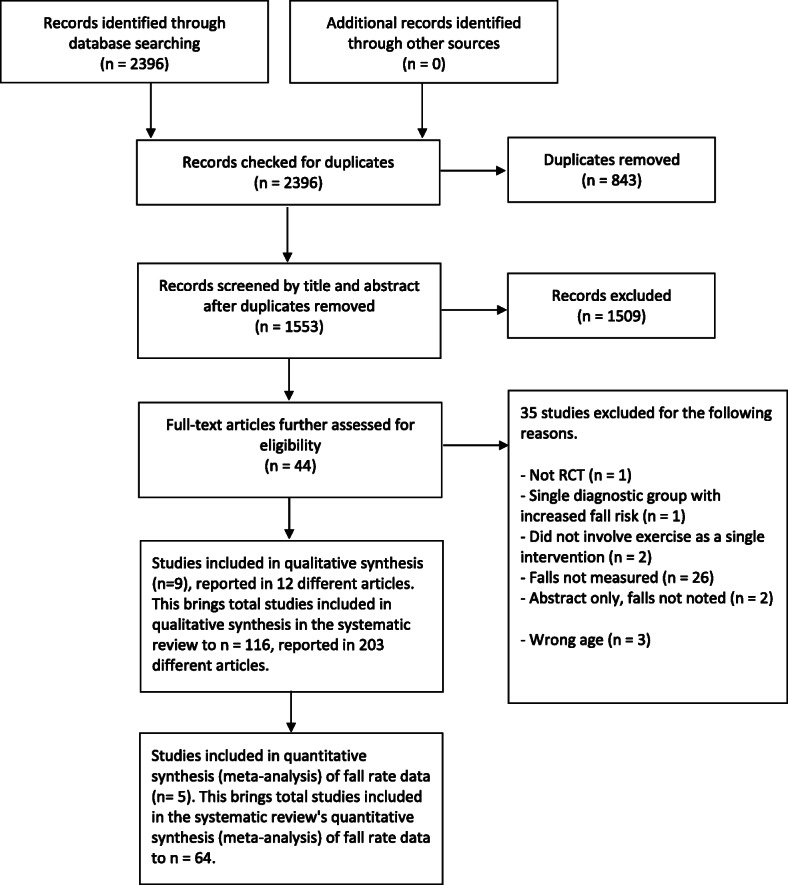
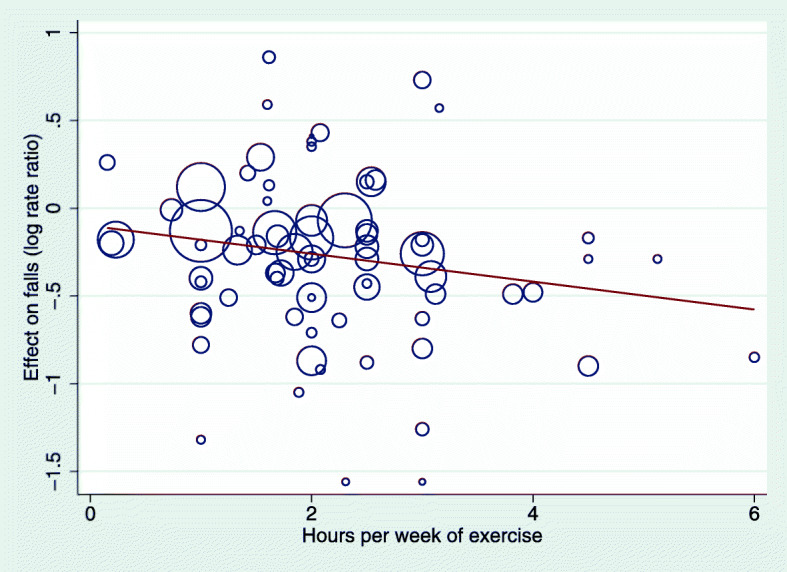
Background: Exercise prevents falls in older adults. Regular updates of estimated effects of exercise on falls are warranted given the number of new trials, the increasing number of older people globally and the major consequences of falls and fall-related injuries. Methods: This update of a 2019 Cochrane Review was undertaken to inform the World Health Organization guidelines on physical activity and sedentary behaviour. Searches were conducted in six databases. We included randomised controlled trials evaluating effects of any form of physical activity as a single intervention on falls in people aged 60+ years living in the community. Analyses explored dose-response relationships. The certainty of the evidence was assessed using Grading of Recommendations Assessment, Development and Evaluation (GRADE). Results: This review included 116 studies, involving 25,160 participants; nine new studies since the 2019 Cochrane Review. Exercise reduces the rate of falls by 23% (pooled rate ratio (RaR) 0.77, 95% confidence interval (CI) 0.71 to 0.83, 64 studies, high certainty evidence). Subgroup analysis showed variation in effects of different types of exercise ( p < 0.01). Rate of falls compared with control is reduced by 24% from balance and functional exercises (RaR 0.76, 95% CI 0.70 to 0.82, 39 studies, high certainty evidence), 28% from programs involving multiple types of exercise (commonly balance and functional exercises plus resistance exercises, RaR 0.72, 95% CI 0.56 to 0.93, 15 studies, moderate certainty evidence) and 23% from Tai Chi (RaR 0.77, 95% CI 0.61 to 0.97, 9 studies, moderate certainty evidence). The effects of programs that primarily involve resistance training, dance or walking remain uncertain. Interventions with a total weekly dose of 3+ h that included balance and functional exercises were particularly effective with a 42% reduction in rate of falls compared to control (Incidence Rate Ratio (IRR) 0.58, 95% CI 0.45 to 0.76). Subgroup analyses showed no evidence of a difference in the effect on falls on the basis of participant age over 75 years, risk of falls as a trial inclusion criterion, individual versus group exercise, or whether a health professional delivered the intervention. Conclusions: Given the strength of this evidence, effective exercise programs should now be implemented at scale.
Overview
The claims and statistics of this paper haven’t been checked yet.
Free: it reads the open-access text and checks the first 5 claims that cite a source we can check. Create a free account to check every claim.
Integrity signals
Registry
Cites
Statistics
Figures
Verification
Claims the paper makes
The claims and statistics of this paper haven’t been checked yet.
Free: it reads the open-access text and checks the first 5 claims that cite a source we can check. Create a free account to check every claim.
Claims other papers make about this one
Each is checked against this paper’s own text: does it say what the citing paper says it does?
The source backs part of the claim, not all of it — or backs it for a different population, condition or comparison.
In the citing paper
“the largest benefits for falls are generally seen with the combination of moderate to high intensity PRT and challenging balance training in sufficient quantities [123].”
From Global consensus on optimal exercise recommendations for enhancing healthy longevity in older adults (ICFSR) (2025) · cites this paper as [123]
Experimental — accuracy not yet measuredThe source backs part of the claim, not all of it — or backs it for a different population, condition or comparison.
In the citing paper
“and the largest benefits for falls are generally seen with the combination of moderate to high intensity PRT and challenging balance training in sufficient quantities [123].”
From Global consensus on optimal exercise recommendations for enhancing healthy longevity in older adults (ICFSR) (2025) · cites this paper as [123]
Experimental — accuracy not yet measuredThe cited source says what the claim attributes to it.
In the citing paper
“On the other hand, multicomponent exercise programs that incorporate PRT, balance, and functional exercises [84,123,130,131], have been demonstrated to effectively reduce the incidence of falls in older adults compared to control groups”
From Global consensus on optimal exercise recommendations for enhancing healthy longevity in older adults (ICFSR) (2025) · cites this paper as [123]
The cited source says what the claim attributes to it.
In the citing paper
“Multicomponent exercise programs that combine PRT, balance plus functional exercises such as transferring from a chair and using steps [84,123,130,131], programs involving balance and functional exercises [123], or an alternative exercise intervention such as Tai Chi [[127], [128], [129]] have been shown to reduce falls compared with control in older adults by 20−40%.”
From Global consensus on optimal exercise recommendations for enhancing healthy longevity in older adults (ICFSR) (2025) · cites this paper as [123]
The check wasn’t confident either way, so it gives no verdict — never disputed.
In the citing paper
“Similarly, while isolated balance training leads to improved balance [123,124], and is associated with reduced falls and fall-related injuries, as well as improved functional mobility [110,125,126], as does Tai Chi in some studies [[127], [128], [129]], these do not address aerobic capacity or sarcopenia.”
From Global consensus on optimal exercise recommendations for enhancing healthy longevity in older adults (ICFSR) (2025) · cites this paper as [123]
Experimental — accuracy not yet measured
8 more claims about this paper
Create a free account to see every claim other papers make about this one.
Self-check
Percentages, sums and reported differences re-computed from the paper’s own numbers.
The self-check needs the paper’s full text.
Citations
Cites
Sensitivity and False Alarm Rate of a Fall Sensor in Long-Term Fall Detection in the Elderly
Kangas, M., Korpelainen, R., Vikman, I., Nyberg, L., & Jämsä, T. (2015) · Gerontology · doi:10.1159/000362720 · Cited by 18,909
World Health Organization 2020 guidelines on physical activity and sedentary behaviour
Bull, F. C., Al-Ansari, S. S., Biddle, S., Borodulin, K., Buman, M. P., Cardon, G., Carty, C., Chaput, J.-P., Chastin, S., Chou, R., et al. (2020) · British Journal of Sports Medicine · doi:10.1136/bjsports-2020-102955 · Cited by 11,657 · cited 8×
“Methods: This update of a 2019 Cochrane Review was undertaken to inform the World Health Organization guidelines on physical activity and sedentary behaviour.”
BackgroundInfluentialSelf-citationHao (2015) · doi:10.1002/14651858 · Cited by 11,321
Risk Factors for Falls among Elderly Persons Living in the Community
Tinetti, M. E., Speechley, M., & Ginter, S. F. (1988) · New England Journal of Medicine · doi:10.1056/nejm198812293192604 · Cited by 6,509 · cited 1×
“years fall each year [1, 2] with the rate of fall-related injuries increasing with age [3].”
BackgroundInterventions for preventing falls in older people living in the community
Gillespie, L. D., Robertson, M. C., Gillespie, W. J., Sherrington, C., Gates, S., Clemson, L., & Lamb, S. E. (2012) · Cochrane Database of Systematic Reviews · doi:10.1002/14651858.cd007146.pub3 · Cited by 3,966
Self-citationLamb, S. E., Jørstad‐Stein, E. C., Hauer, K., Becker, C., & on behalf of the Prevention of Falls Network Europe and Outcomes Consensus Group (2005) · Journal of the American Geriatrics Society · doi:10.1111/j.1532-5415.2005.53455.x · Cited by 2,073 · cited 8×
“Components of studies in categories of exercise not found to prevent falls Abbreviations CI: Confidence interval; GRADE: Grading of Recommendations Assessment, Development and Evaluation; IQR: Interquartile range; ProFaNE: Prevention of Falls Network Europe; RaR: Pooled rate ratio; RCTs: Randomised controlled trials A…”
MethodInfluentialExercise for preventing falls in older people living in the community
Sherrington, C., Fairhall, N. J., Wallbank, G. K., Tiedemann, A., Michaleff, Z. A., Howard, K., Clemson, L., Hopewell, S., & Lamb, S. E. (2019) · Cochrane Database of Systematic Reviews · doi:10.1002/14651858.cd012424.pub2 · Cited by 1,282 · cited 6×
“This systematic review was undertaken to inform the World Health Organization guidelines on Physical Activity and Sedentary Behaviour [10] and involved an update of the Cochrane Review of randomised controlled trials published in 2019 [11] that found high certainty evidence that exercise interventions reduced the rate…”
BackgroundMethodResultInfluentialSelf-citationExercise to prevent falls in older adults: an updated systematic review and meta-analysis
Sherrington, C., Michaleff, Z. A., Fairhall, N., Paul, S. S., Tiedemann, A., Whitney, J., Cumming, R. G., Herbert, R. D., Close, J. C. T., & Lord, S. R. (2017) · British Journal of Sports Medicine · doi:10.1136/bjsports-2016-096547 · Cited by 1,095
Self-citationHarbord, R. M., & Higgins, J. P. T. (2008) · The Stata Journal: Promoting communications on statistics and Stata · doi:10.1177/1536867x0800800403 · Cited by 897
CAMPBELL, A. J., BORRIE, M. J., SPEARS, G. F., JACKSON, S. L., BROWN, J. S., & FITZGERALD, J. L. (1990) · Age and Ageing · doi:10.1093/ageing/19.2.136 · Cited by 803
Research works printed but not linked: 5
- World Health Organization Guidelines for physical activity and sedentary behaviour 2020 Geneva World Health Organization
- Higgins JPT Green S Cochrane Collaboration. Cochrane handbook for systematic reviews of interventions 2011 Chichester and Hoboken Wiley-Blackwell 649
- Schünemann HJOA Higgins JP Vist GE Glasziou P Akl E on behalf of the Cochrane GRADEing Methods Group (formerly Applicability and Recommendations Methods Group) and the Cochrane Statistical Methods Group Chapter 11: Completing ‘Summary of findings’ tables and grading the confidence in or quality of the evidence Cochrane handbook for systematic reviews of interventions [internet]. The Cochrane Collaboration 2017
- Norway C How to write a plain language summary of a Cochrane intervention review 2017
- Review Manager (Revman) [Computer program] Version 5.3. Copenhagen: The Nordic Cochrane Centre, The Cochrane Collaboration 2014
Cited by
Items 101–200 of 421
Zhang, Y.-K., Wang, J., Ge, Y.-Z., Wang, Z.-B., Zhang, Z.-G., Zhang, Z., & Chang, F. (2025) · PLoS ONE · doi:10.1371/journal.pone.0318494 · Cited by 11
Shahtahmassebi, B., Hatton, J., Hébert, J. J., Hecimovich, M. D., Correia, H., & Fairchild, T. J. (2022) · BMC Geriatrics · doi:10.1186/s12877-022-03435-3 · Cited by 14
“Therefore, we performed a secondary analysis using data from our randomized controlled trial [3] to explore whether the exercise-induced improvements in physical function and balance [3] would be translated into increased levels of physical activity [7, 31] and reductions in perceived fear-of-falling, anxiety, and dep…”
BackgroundMethodHandgrip strength is associated with risk of falls in physically active older women
Villamizar-Pita, P. C., Fonseca, A. A., de Souza, H. C. D., Martínez-Rueda, R., Villamizar, M. C., & Delgado, J. C. S. (2022) · Health Care For Women International · doi:10.1080/07399332.2022.2055759 · Cited by 10
“Overall, the literature was found to indicate that physically active older women have a lower risk of falls (Sherrington et al., 2020).”
BackgroundAccidental Falls in Patients with Hyperkinetic Movement Disorders: A Systematic Review
Homann, C. N., Homann, B., Ivanic, G. M., & Urbanic-Purkart, T. (2022) · Tremor and Other Hyperkinetic Movements · doi:10.5334/tohm.709 · Cited by 11
Schoene, D., Groß, M., von Stengel, S., Kohl, M., Kladny, B., Gosch, M., Sieber, C. C., Peters, S., Kiesswetter, E., Becker, C., et al. (2023) · Osteologie/Osteology · doi:10.1055/a-2110-7105 · Cited by 11
“In Bezug auf die Sturzprävention haben mehrere Studien den po-tenziellen Nutzen des ICMT untersucht und fanden inkonsistente Ergebnisse.”
BackgroundInfluentialDemand analysis of public sports service for older adults using Kano model
Yang, X., Leng, Z., Ma, C., & Yang, G. (2025) · Frontiers in Public Health · doi:10.3389/fpubh.2025.1525447 · Cited by 10
In their own words: older persons’ experiences of participating in co-creation
Arola, A., Sandlund, M., Domellöf, M. E., Taylor, M. E., & Toots, A. (2025) · Research Involvement and Engagement · doi:10.1186/s40900-025-00725-z · Cited by 8
Pettersson, B., Lundell, S., Lundin‐Olsson, L., & Sandlund, M. (2023) · European Review of Aging and Physical Activity · doi:10.1186/s11556-023-00322-7 · Cited by 10
“Efforts can, however, be made to decrease older adults’ risk of falling by providing exercise programs targeting balance and muscle strength [7, 8].”
BackgroundTonchoy, P., Seangpraw, K., Ong-Artborirak, P., Kantow, S., Auttama, N., Choowanthanapakorn, M., & Boonyathee, S. (2024) · Heliyon · doi:10.1016/j.heliyon.2024.e37306 · Cited by 8
“Regular participants in such activities have shown a 25 percent reduction in fall incidents [32].”
Loureiro, V., Gomes, M., & Alves, A. R. (2021) · Retos · doi:10.47197/retos.v43i0.88588 · Cited by 15
Hsieh, C.-Y., Huang, H.-Y., Liu, K.-C., Liu, C.-P., Chan, C.-T., & Hsu, S. J.-P. (2021) · Sensors · doi:10.3390/s21093302 · Cited by 9
“Furthermore, the elders may develop anxiety, depression, and fear of repeated falling after fall events occur, which significantly influences the ability to live independently, social isolation, and the quality of life [3].”
BackgroundJames, E., Oman, P., Ali, M., Court, P., Goodall, S., Nichols, S., & O'Doherty, A. (2022) · BMC Public Health · doi:10.1186/s12889-022-13832-3 · Cited by 8
“Furthermore, pooled evidence from randomised controlled trials supports the use of exercise interventions to improve muscle strength, balance, and gait speed [7] and reduce incidence of fall in adults aged ≥ 60 years [8].”
BackgroundKramer, P. A., Zamora, E., Barnes, H. N., Strotmeyer, E. S., Glynn, N. W., Lane, N. E., Coen, P. M., Cawthon, P. M., Goodpaster, B. H., Newman, A. B., et al. (2024) · The Journals of Gerontology Series A · doi:10.1093/gerona/glae018 · Cited by 9
Kwok, W. S., Khalatbari‐Soltani, S., Dolja‐Gore, X., Byles, J., Oliveira, J. S., Pinheiro, M. B., Tiedemann, A., & Sherrington, C. (2024) · British Journal of Sports Medicine · doi:10.1136/bjsports-2024-108262 · Cited by 7
Self-citationA Nationwide Physical Activity Intervention for 654,500 Adults in Singapore: Cost-Utility Analysis
Ang, G., Tan, C. S., Teerawattananon, Y., Müller‐Riemenschneider, F., & Chen, C. (2024) · JMIR Public Health and Surveillance · doi:10.2196/46178 · Cited by 8
“Increased physical activity can reduce falls among older adults [74] and also reduce the incidence of the common cold [75].”
BackgroundSarcopenia: an Aging Perspective and Management Options
Teixeira, A. M., Nosrani, S. E., Parvani, M., Viola, J., & Mohammadi, S. (2025) · International Journal of Sports Medicine · doi:10.1055/a-2577-2577 · Cited by 10
Arkkukangas, M. (2021) · BMC Research Notes · doi:10.1186/s13104-021-05792-5 · Cited by 8
“Several functions are closely associated with risk for falls, especially strength and balance functions, highlighted and well documented in the fall prevention research literature [3, 4].”
BackgroundTomaz, S. A., Ryde, G. C., Swales, B., Neely, K. C., Andreis, F., Coffee, P., Connelly, J., Kirkland, A., McCabe, L., Watchman, K., et al. (2022) · European Review of Aging and Physical Activity · doi:10.1186/s11556-022-00295-z · Cited by 10
Li, Z., Ma, Y.-J., Zhuang, J., Tao, X.-C., Guo, C., Liu, S.-T., Zhu, R.-R., Wang, J., & Fang, L. (2022) · Frontiers in Medicine · doi:10.3389/fmed.2022.936314 · Cited by 11
Bae, M., Ku, B., VanNostrand, M., & Kasser, S. L. (2024) · Archives of Physical Medicine and Rehabilitation · doi:10.1016/j.apmr.2024.05.019 · Cited by 7
Ferreira, C. R., Mascarenhas‐Melo, F., Rodrigues, A. R., Lima, M. J., Pinheiro, J. P., Chaves, C., Teixeira‐Lemos, E., & Bell, V. (2022) · Pharmacy Practice · doi:10.18549/pharmpract.2022.4.2717 · Cited by 7
Age-related differences in reactive balance control and fall-risk in people with chronic stroke
Purohit, R., Wang, S., Dusane, S., & Bhatt, T. S. (2023) · Gait & Posture · doi:10.1016/j.gaitpost.2023.03.011 · Cited by 11
The Physical Activity Vital Sign for Older Adults: Time for an Update
Schlicht, J. A., Wingood, M., Heled, Y., Weitzel, K. J., Rogers, M. E., & Seffens, P. R. (2024) · Journal of the American Medical Directors Association · doi:10.1016/j.jamda.2024.105020 · Cited by 8
Kulkarni, S., & Nagarkar, A. (2023) · Geriatric Nursing · doi:10.1016/j.gerinurse.2022.12.022 · Cited by 7
Mennella, C., Maniscalco, U., Pietro, G. D., & Esposito, M. (2025) · Computers in Biology and Medicine · doi:10.1016/j.compbiomed.2025.110550 · Cited by 11
Prospective evaluation of balance and mobility tests as part of the World Falls Guidelines algorithm
Saunders, S., Speechley, M. R., Griffith, L. E., Kuspinar, A., Sibley, K. M., Raina, P., D’Amore, C., Richardson, J. A., Noble, T., & Beauchamp, M. (2026) · Age and Ageing · doi:10.1093/ageing/afag028 · Cited by 9
Arkkukangas, M., Bååthe, K. S., Ekholm, A., & Tonkonogi, M. (2022) · International Journal of Environmental Research and Public Health · doi:10.3390/ijerph192215140 · Cited by 8
Older People’s Descriptions of Their Engagement in Fall Prevention
Kiyoshi‐Teo, H., McMahon, S., Northrup‐Snyder, K., & Cohen, D. J. (2023) · Western Journal of Nursing Research · doi:10.1177/01939459231211803 · Cited by 6
Differences in Falls and Physical Activity in Older Women From Two Generations
Kwok, W. S., Khalatbari‐Soltani, S., Dolja‐Gore, X., Byles, J., Oliveira, J. S., Pinheiro, M. B., & Sherrington, C. (2024) · The Journals of Gerontology Series A · doi:10.1093/gerona/glae033 · Cited by 10
“Structured exercise, a form of physical activity, reduces falls (9,10).”
BackgroundSelf-citationTiming of emergency medical services activations for falls
Sheridan, E., Wiseman, J. M., & Quatman, C. E. (2024) · Archives of Gerontology and Geriatrics Plus · doi:10.1016/j.aggp.2024.100020 · Cited by 8
“Reduced physical activity and associated decline in physical strength and balance is likely to increase the risk for falls and fall-related injury (Sherrington et al., 2020).”
BackgroundJoy, E. A., Briesacher, M., & Wiegand, B. (2024) · American Journal of Lifestyle Medicine · doi:10.1177/15598276241256878 · Cited by 7
“19 Additionally, physical activity interventions have been shown to improve bone mineral density in women with osteoporosis, 20 reduce symptoms of osteoarthritis, 17 and reduce falls.”
Minino, R., Liparoti, M., Romano, A., Mazzeo, F., Sorrentino, P., Tafuri, D., & Lopez, E. T. (2024) · Journal of Biomechanics · doi:10.1016/j.jbiomech.2024.112222 · Cited by 7
The Level and Limitations of Physical Activity in Elderly Patients with Diabetes
Biernat, K., Marciniak, D. M., Mazurek, J., Kuciel, N., Hap, K., Kisiel, M., & Sutkowska, E. (2024) · Journal of Clinical Medicine · doi:10.3390/jcm13216329 · Cited by 10
“The clinical advantages of PA are well documented and encompass various aspects, including the attenuation of decline in muscle function and cardiorespiratory fitness, as well as the preservation of functional ability and management of chronic diseases [3,4].”
BackgroundHuang, T.-C., Li, C. L., & Hsieh, C.-Y. (2025) · Healthcare · doi:10.3390/healthcare13020124 · Cited by 10
Exercise in the Prevention of Age-Related Fragility Fractures (Narrative Review)
Kerschan‐Schindl, K., & Hasenoehrl, T. (2025) · Gerontology · doi:10.1159/000543377 · Cited by 8
“It seems that not a single exercise modality but exercise interventions with multiple components may be the best real-life strategy to reduce fall risk [22, 23].”
Do, N. M., & Tolos, C. (2025) · American Journal of Lifestyle Medicine · doi:10.1177/15598276251316830 · Cited by 14
“54 These combined exercise modalities help improve balance and muscle strength, which are essential for 54 To support the practical integration of fall prevention strategies, the following actionable acronym has been developed.”
Parry, S. M., Morris, P. E., Larkin, J., Beach, L. J., Mayer, K. P., Oliveira, C. C., McGinley, J. L., Puthucheary, Z., Koye, D. N., Lamb, K. E., et al. (2025) · Critical Care Medicine · doi:10.1097/ccm.0000000000006668 · Cited by 12
Local Object Tracking Using Infrared Array for Bed-exit Behavior Recognition
Lin, C., Shih, C., Wei, T., Liu, P.-T., & Shih, C.-Y. (2022) · Sensors and Materials · doi:10.18494/sam3647 · Cited by 6
Bed-Exit Behavior Recognition for Real-Time Images within Limited Range
Lin, C., Wei, T., Liu, P.-T., Chen, B., & Shih, C. (2022) · Sensors · doi:10.3390/s22155495 · Cited by 8
Cammisuli, D. M., Franzoni, F., Fusi, J., Scarfò, G., & Castelnuovo, G. (2023) · Frontiers in Psychology · doi:10.3389/fpsyg.2023.1135433 · Cited by 8
“, 2019) and may prevent falls (Sherrington et al., 2020) in the elderly.”
BackgroundInvolvement of Older Adults, the Golden Resources, as a Primary Measure for Fall Prevention
Arkkukangas, M. (2023) · Clinical Interventions in Aging · doi:10.2147/cia.s430309 · Cited by 7
“In the current global guidelines as well as in previous systematic reviews, 7,9 the importance of physical activity, especially specific fall-prevention exercises, is highlighted as one of the most effective fall-prevention strategies.”
BackgroundMartínez‐Rodríguez, A., Cuestas-Calero, B. J., Frutos, J. M. G.-D., & Marcos-Pardo, P. J. (2021) · Healthcare · doi:10.3390/healthcare9121665 · Cited by 10
Lim, S. E. R., Meredith, S. J., Agnew, S., Clift, E., Ibrahim, K., & Roberts, H. C. (2022) · BMJ Open · doi:10.1136/bmjopen-2021-052631 · Cited by 8
Jung, J., Park, S., & Lee, C. G. (2023) · Archives of Public Health · doi:10.1186/s13690-023-01043-0 · Cited by 8
“Those over 65 years of age are also more likely to experience fallrelated accidents, which can cause injuries and limit PA engagement [14].”
BackgroundBlomqvist, M., Nuotio, M. S., Sääksjärvi, K., BSc, J. P., Koskinen, S. V. P., & Stenholm, S. (2025) · Aging Clinical and Experimental Research · doi:10.1007/s40520-025-03229-8 · Cited by 6
“While no clinical trials have been conducted to conclude the effectiveness of targeted treatment of sarcopenia on reducing falls or fractures, exercise in general substantially reduces falls in those aged 60 and older [21].”
Falls in older people: A global public health concern
Chalise, H. N. (2025) · American Journal of Aging Science and Research. · doi:10.46439/aging.5.023 · Cited by 5
Wende, M. E., Lohman, M. C., Friedman, D. B., McLain, A. C., LaMonte, M. J., Whitsel, E. A., Shadyab, A. H., García, L., Chrisinger, B. W., Pan, K., et al. (2023) · Women s Health Issues · doi:10.1016/j.whi.2023.03.009 · Cited by 7
Siegrist, M., Schaller, N., Weiß, M., Isaak, J., Schmid, V., Köppel, E., Weichenberger, M., Mende, E., Haller, B., & Halle, M. (2023) · BMC Geriatrics · doi:10.1186/s12877-023-04176-7 · Cited by 5
Community emergency medical services approaches to fall prevention: a systematic review
Friend, T. H., Thomas, H. M., Ordoobadi, A. J., Bain, P. A., & Jarman, M. P. (2024) · Injury Prevention · doi:10.1136/ip-2023-045110 · Cited by 6
Labott, B. K., Herold, F., Langhans, C., Halfpaap, N., Grässler, B., Hökelmann, A., Müller, N. G., & Hamacher, D. (2025) · Gait & Posture · doi:10.1016/j.gaitpost.2025.04.033 · Cited by 5
Innovative approaches to fall prevention in community‐dwelling older adults
Delbaere, K., Sherrington, C., Said, C. M., & Naganathan, V. (2025) · The Medical Journal of Australia · doi:10.5694/mja2.52714 · Cited by 6
Self-citationMarcos-Pardo, P. J., González-Gálvez, N., Vaquero‐Cristóbal, R., Romero, L. S., Pavón, D. J., Baeza, A. C., Cornejo, I. E., GONZÁLEZ, J. G. P., Díaz, D. V., García, G., et al. (2021) · Cultura Ciencia y Deporte · doi:10.12800/ccd.v16i48.1743 · Cited by 22
Bourke, E., Maddison, R., & Blakely, T. A. (2023) · International Journal of Epidemiology · doi:10.1093/ije/dyad107 · Cited by 5
“4 Strong evidence suggests that activity protects against falls in older people 6 to a greater extent than any increased risk from initiating activity, by improving balance, coordination and muscle tone, in turn decreasing fracture risk.”
BackgroundWhen physical activity increases risk of injurious falls: right activity, right person, right time
Skelton, D. A. (2023) · Age and Ageing · doi:10.1093/ageing/afad209 · Cited by 8
Alsobhi, M. G., Gmmash, A., Aldhabi, R., Almaddah, M. R., Ameen, A., Almotairi, F., Basuodan, R., & Khan, F. R. (2024) · Healthcare · doi:10.3390/healthcare12070718 · Cited by 5
“Many studies have investigated fall prevention programs for older adults [13–15].”
BackgroundWhitten, J., O’Leary, B., Graham, D., Grocke-Dewey, M., Riley, J., Harper, D., & Tarabochia, D. S. (2024) · Gerontology and Geriatric Medicine · doi:10.1177/23337214241246843 · Cited by 5
“Early reports on PBT indicated it may be highly effective for preventing falls in older adults and required a substantially lower training dose than CBT (Pai et al., 2010; Sherrington et al., 2020).”
BackgroundTeng, B., Rosbergen, I. C. M., Gomersall, S. R., Hatton, A. L., & Brauer, S. (2022) · Journal of Aging and Physical Activity · doi:10.1123/japa.2021-0192 · Cited by 9
Fehlings, M. G., Evaniew, N., Kurpad, S. N., Skelly, A. C., Tetreault, L. A., & Kwon, B. K. (2025) · Journal of Neurosurgery Spine · doi:10.3171/2024.9.spine241083 · Cited by 5
Zheng, Y., Pengfei, W., Wu, J., & Chen, S. (2024) · BMC Public Health · doi:10.1186/s12889-024-21051-1 · Cited by 5
Yildirim, A., Hoşbay, Z., & Uçgun, H. (2025) · Medicine · doi:10.1097/md.0000000000042360 · Cited by 6
“[20,22] Collectively, the evidence underscores Baduanjin value in holistic health improvement and fall prevention for older populations, making it an essential component of community-based interventions aimed at maintaining independence and reducing injury risks.”
Delfgaauw, J., van Gameren, M., Voorn, P. B., Bossen, D., Olij, B. F., Visser, B., Pijnappels, M. A. G. M., & Bosmans, J. E. (2025) · PLoS ONE · doi:10.1371/journal.pone.0339497 · Cited by 5
“Previous studies have shown that such interventions are effective in reducing the number of falls and improving quality of life in community-dwelling older adults [10,11].”
Rice, J., Falck, R. S., Seo, Y. S., Dian, L., Davis, J. C., Jehu, D. A., Parmar, N., Madden, K., Guy, P., Roffey, D. M., et al. (2026) · Maturitas · doi:10.1016/j.maturitas.2026.108832 · Cited by 5
Liu, Y., Liu, C., Ni, L., Zhang, W., Chen, C., Lopez, J., Zheng, H., Thiamwong, L., & Xie, R. (2025) · Mathematics · doi:10.3390/math13030516 · Cited by 4
“Studies indicate that technology-enhanced interventions, including apps and wearable devices, improve adherence to exercise regimens by offering continuous feedback and reinforcing behavior change [3,15,16].”
Homma, D., Imai, N., Miyasaka, D., Yamato, M., Ishisaki, M., Sugahara, T., Horigome, Y., Suzuki, H., Dohmae, Y., Endo, N., et al. (2025) · Journal of Clinical Medicine · doi:10.3390/jcm14031023 · Cited by 4
“Per previous studies [23,24], participants aged ≥ 65 years were classified into the older group ( n = 60), while those aged 65 years or younger were assigned to the control group ( n = 71). to the control group ( n = 71).”
More Than Just Exercise: Older Adults’ Experience of the Peer-Led Group-Based FallFitness Program
Arkkukangas, M., Bååthe, K. S., Tonkonogi, M., & Liljeroos, M. (2025) · Clinical Interventions in Aging · doi:10.2147/cia.s527142 · Cited by 5
Thacker, M. (2025) · Otolaryngologic Clinics of North America · doi:10.1016/j.otc.2025.06.003 · Cited by 7
Binns, E. E., Bright, F. A. S., Parsons, J. G. M., Peri, K., Taylor, L. M., Kerse, N. M., & Taylor, D. (2023) · BMC Geriatrics · doi:10.1186/s12877-022-03722-z · Cited by 5
“Using unregistered healthcare professionals to deliver falls prevention exercise is not uncommon in the community and can be effective [36, 37].”
BackgroundXue, Y., Li, L., Xie, F. X., & Wang, Z. (2023) · Open Medicine · doi:10.1515/med-2023-0748 · Cited by 6
The genetics of falling susceptibility and identification of causal risk factors
Smith, M. C., O’Loughlin, J., Karageorgiou, V., Casanova, F., Williams, G., Hilton, M. P., & Tyrrell, J. (2023) · Scientific Reports · doi:10.1038/s41598-023-44566-w · Cited by 7
Knoop, V., Costenoble, A., Debain, A., der Meulen, K. E. Y. V., VRIENDT, P. D., Gorus, E., Bravenboer, B., Jansen, B., Scafoglieri, A., Bautmans, I., et al. (2023) · Journal of Aging and Physical Activity · doi:10.1123/japa.2021-0366 · Cited by 4
Boekhout, J. M., Hut, R., Lechner, L., & Peels, D. A. (2024) · Geriatrics · doi:10.3390/geriatrics9030080 · Cited by 6
Simpkins, C., & Yang, F. (2025) · Experimental Brain Research · doi:10.1007/s00221-025-07021-y · Cited by 4
“Some success has been reported in reducing fall risk for older individuals via traditional exercise interventions (Sherrington et al. 2017), most of which require high demands of physical exercise and lead to low training adherence rates (Grabiner et al. 2014; Sherrington et al. 2020).”
Audiologists should not fail with falls: A call to commit to prevention of falls in older adults
Rogers, C. (2021) · South African Journal of Communication Disorders · doi:10.4102/sajcd.v68i1.841 · Cited by 5
“A systematic review by Sherrington et al. (2020) was undertaken to inform the WHO guidelines on PA and sedentary behaviour, which re-affirmed the value of exercise, particularly balance-related activities including Tai Chi, to reduce the risk of falls in older adults (Sherrington et al., 2020).”
MethodPark, J. H., & Kim, H. (2022) · Journal of Korean Gerontological Nursing · doi:10.17079/jkgn.2022.24.1.65 · Cited by 4
“해외에서 수행된 문헌고찰 연구의 경우는 주로 운동 중재의 효과를 분석하였고 [15,16], 한국인에 대한 연구결과가 포함되지 않았다.”
Schene, M. R., Meijer, K., Cheung, D., Willems, H. C., Driessen, J. H. M., Vranken, L., van den Bergh, J. P., & Wyers, C. E. (2023) · Calcified Tissue International · doi:10.1007/s00223-023-01090-3 · Cited by 6
“Importantly, low PC is potentially modifiable; exercise intervention to improve strength and balance reduce the rate of falls among older persons by approximately 25% [16].”
BackgroundResultInfluentialA survey of Israeli physical therapists regarding reactive balance training
Margalit, N., Kurz, I., Wacht, O., Mansfield, A., & Melzer, I. (2023) · BMC Geriatrics · doi:10.1186/s12877-023-04356-5 · Cited by 4
“…to reduce the rate of falls by 40–46% compared to other exercise interventions [19–25]; this is almost twice the effect of ‘conventional’ balance and functional training, which include exercises that may or may not cause an unexpected loss of balance during the training sessions [15–17 , 21 ].”
BackgroundExercise and physical activity after an osteoporotic vertebral fracture
Ponzano, M., & Giangregorio, L. (2023) · British Journal of Sports Medicine · doi:10.1136/bjsports-2023-107157 · Cited by 4
Bates, A., Furber, S. E., Gilchrist, H., Sherrington, C., Jones, N., Kershaw, M., Franco, L., Muir, K.-L., & Tiedemann, A. (2025) · International Journal of COPD · doi:10.2147/copd.s502082 · Cited by 3
Self-citationGeraldi, M. V., Brättemark, E., & Lorentzon, M. (2026) · Osteoporosis International · doi:10.1007/s00198-026-07861-6 · Cited by 3
“This interpretation is consistent with previous evidence showing limited or inconsistent skeletal benefits of walking and neutral or adverse associations between cycling and BMD [34, 35].”
Lower back muscle activity during weight-shifting is affected by ageing and dual-tasking
de Rond, V., Hulzinga, F., Baggen, R. J., de Vries, A., de Xivry, J. O., Pantall, A., & Nieuwboer, A. (2023) · Experimental Gerontology · doi:10.1016/j.exger.2023.112271 · Cited by 4
“…this question is important, as so far clinical guidelines on exercise for fall risk tended to emphasize lower limb muscle function, thereby omitting the trunk muscles (Tiedemann et al., 2011; Sherrington et al., 2020) and thus a potentially important contributor to balance problems and falls.”
van Scherpenseel, M. C., van Veenendaal, L. J., Velde, S. J. T., Volk, E., Barten, D., Veenhof, C., Emmelot‐Vonk, M. H., & Ronteltap, A. (2024) · International Journal of Environmental Research and Public Health · doi:10.3390/ijerph21060704 · Cited by 6
Wang, Y., Shen, Z., Xing, X., Ge, L., Pan, F., & Cai, G. (2024) · BMC Musculoskeletal Disorders · doi:10.1186/s12891-024-07710-9 · Cited by 3
Gatica-Rojas, V., Camoglino-Escobar, M. I., Carrillo-Bestagno, H., & Cartes‐Velásquez, R. (2025) · Multimodal Technologies and Interaction · doi:10.3390/mti9010007 · Cited by 3
“Studies have shown that traditional physical activity (PA), such as balance and strength training, as well as Tai Chi, can help reduce fall risk by improving flexibility, standing, and walking performance and counteracting their age-related decline in neuromotor and somatosensory functions [5,6].”
Tsushima, S., Watanabe, K., Hirohashi, S., Yoshimi, T., Fujino, Y., Tabuchi, T., & Zaitsu, M. (2025) · Scientific Reports · doi:10.1038/s41598-025-05204-9 · Cited by 3
Crockett, R. A., Falck, R. S., Dao, E. A., Hsu, C. L., Tam, R. C., Alkeridy, W. A., & Liu-Ambrose, T. Y. L. (2021) · Frontiers in Human Neuroscience · doi:10.3389/fnhum.2021.671464 · Cited by 3
da Silva, L. P., Biernaski, V. M., Santi, P. M., & Moreira, N. B. (2021) · Fisioterapia e Pesquisa · doi:10.1590/1809-2950/21005928032021 · Cited by 7
Arnold, C. M., Lanovaz, J. L., & Banman, D. (2022) · Journal of Applied Gerontology · doi:10.1177/07334648221095623 · Cited by 4
“Exercise programs focused on balance, strength, and functional mobility are known to decrease the fall risk in community-dwelling older adults (McLaughlin et al., 2020; Sherrington et al., 2020).”
BackgroundJung, S., Yoon, S., & Kim, Y. (2022) · Archives of Craniofacial Surgery · doi:10.7181/acfs.2022.00794 · Cited by 3
“This may result from reduced bone strength, increased bone fragility, and decreased bone flexibility due to micro-architectural deterioration of bone tissue, low bone mineral density, and enlargement of the internasal angle with aging [1416,22-24].”
BackgroundNg, Y. L., Hill, K., & Burton, E. (2023) · Journal of Aging and Physical Activity · doi:10.1123/japa.2022-0131 · Cited by 4
Orlando, J. F., Beard, M., Guerin, M., & Kumar, S. (2023) · PLoS ONE · doi:10.1371/journal.pone.0292648 · Cited by 3
“…for LBP or sciatica in older workers who are physically conditioned and experienced in performing their work duties [33, 53] likely indicates that functional capacity and fitness modify the effects of ageing, which is consistent with the literature [61– 63], countering the risks of hospitalisation.”
ResultLiu, M., Kang, N., Zhang, Y., Wen, E., Mei, D., Hu, Y., Chen, G., & Wang, D. (2024) · Heliyon · doi:10.1016/j.heliyon.2024.e28114 · Cited by 3
“None-theless, regular physical activity proves beneficial for older individuals, enhancing physical function and reducing the risk of age-related loss of physical capacity and falls [81,82].”
BackgroundMoon, S. H., Doshi, K. B., & Lockhart, T. E. (2024) · Frontiers in Digital Health · doi:10.3389/fdgth.2024.1387193 · Cited by 6
“Physical activity level is an important factor that in fl uences fall risk, with past studies indicating that individuals who exercise more have a lower fall rate (27).”
BackgroundHuang, Z., Xu, T., Huang, Y., Zhao, Q., Dong, W., Xu, J., Liu, X., Fu, Y., Wang, Y., & Chen, C. (2024) · Journal of Applied Gerontology · doi:10.1177/07334648241257799 · Cited by 7
“Recent research has demonstrated that PA (Sherrington et al., 2020) has a signi fi cant effect on QoL in older adults.”
InfluentialThe effects of age and physical activity status on muscle synergies when walking down slopes
Nash, L., Cheung, V. C. K., Gupta, A., Cheung, R. T. H., He, B., Liston, M. B., & Thomson, D. (2024) · European Journal of Applied Physiology · doi:10.1007/s00421-024-05679-w · Cited by 3
“Further, physical activity has shown to influence muscle strength, balance, gait speed and gait variability (Daly et al. 2008; Ciprandi et al. 2017) and is recommended to be undertaken regularly to preserve function and prevent falls in older adults (Izqui-erdo et al. 2021; Sherrington et al. 2020).”
Shelton, A. D., Allen, J. L., Mercer, V. S., Crenshaw, J. R., & Franz, J. R. (2024) · PLoS ONE · doi:10.1371/journal.pone.0315368 · Cited by 3
The Efficacy of “Pre-habilitation” in Primary Care for Geriatric Fall Prevention: A Narrative Review
Alanazi, W. M., Alshamrani, A. H., Algadmi, M. S., Alkandari, A. A., Husain, F. S. H., Banoon, H. J., Aljohani, L. B. S., Aljohani, S. B., Mokhtar, M. W., Sanaullah, R., et al. (2025) · World Journal of Environmental Biosciences · doi:10.51847/096ulf7q8r · Cited by 3
Wollesen, B., & Brach, M. (2021) · German Journal of Exercise and Sport Research · doi:10.1007/s12662-021-00781-z · Cited by 6
“…have confirmed positive effects of physical and balance training on the reduction of risks related to falls, number of falls (Chang et al., 2004; Chan et al., 2015; Sherrington et al., 2020), and benefits for daily activities (Chou, Hwang, & Wu, 2012; Tak, Kuiper, Chorus, & Hopman-Rock, 2013).”
BackgroundContributing factors to postural stability in Prader-Willi syndrome
Rubin, D. A., Rose, D. J., Escano, D., Holmes, S. C., Garcia, S. A., & Pamukoff, D. N. (2023) · Human Movement Science · doi:10.1016/j.humov.2023.103125 · Cited by 4
Fehlings, M. G., Evaniew, N., Kurpad, S. N., Skelly, A. C., Tetreault, L. A., & Kwon, B. K. (2025) · Neurosurgery · doi:10.1227/neu.0000000000003328 · Cited by 3
Teixeira, M., Luís, M. H., Reis, M., Carvão, C., & Martins, A. C. (2024) · International Journal of Environmental Research and Public Health · doi:10.3390/ijerph21081026 · Cited by 2
“These costs are estimated to be around EUR 25 billion per year in the European Union [11,12,14,16,18,19].”
Background
Metadata
- Authors
- Sherrington, C., Fairhall, N., Kwok, W., Wallbank, G., Tiedemann, A., Michaleff, Z. A., Ng, C. A. C. M., & Bauman, A.
- Affiliations
- The University of Sydney (AU)
- Bond University (AU)
- The University of Western Australia (AU)
- Corresponding author
- Sherrington, Catherine
- ORCID
- Venue
- International Journal of Behavioral Nutrition and Physical Activity
- Published
- 2020-11-26
- Volume
- 17
- Issue
- 1
- ISSN
- 1479-5868 (ISSN-L)
- PMC
- PMC7689963
- OpenAlex
- W4213292530
- Cited by
- 420
- References
- 24
- Citations by year
- 2026: 70 · 2025: 111 · 2024: 78 · 2023: 62 · 2022: 66 · 2021: 31 · 2020: 2
- FWCI
- 9.45
- Type
- journal article
- Language
- en
- Open access
- gold
- doi.org
- Licence
- cc-by
- creativecommons.org/licenses/by/4.0/ (tdm)
- creativecommons.org/licenses/by/4.0/ (vor)
- Locations
- International Journal of Behavioral Nutrition and Physical Activity (publishedVersion, cc-by)
- Bond University Research Portal (Bond University) (publishedVersion, cc-by)
- UWA Profiles and Research Repository (UWA) (publishedVersion, cc-by)
- Funders
- The World Health Organisation
- Topics
- Health Sciences › Health Professions › Physical Therapy, Sports Therapy and Rehabilitation › Balance, Gait, and Falls Prevention
- Health Sciences › Medicine › Public Health, Environmental and Occupational Health › Physical Activity and Health
- Health Sciences › Medicine › Geriatrics and Gerontology › Frailty in Older Adults
- Keywords
- fall prevention, physical activity, older adults, balance training, functional training, resistance training, Tai Chi, sedentary behavior, WHO physical activity guidelines, dose-response relationship, fall-related injuries, community-dwelling older adults, walking, dance, fall risk, exercise frequency, exercise intensity, exercise duration, exercise adherence, exercise safety
About these checks
Registry, retraction, Cites and statistics results are computed, not judged, with one exception: a printed reference that no index lists is read once by a model before it counts as a citation error. Claims are extracted by a model and kept only when their quote appears verbatim in the text; each cited source is then checked, with a model’s help, for whether it says what the claim relies on. Those verdicts can be wrong — read the claim’s quote and the cited source before relying on one.
Statistics and arithmetic are recomputed, not judged.
Confidence bands are shown only for fields calibrated on our annotated test set. None is calibrated yet, so no band is shown.
What counts as a claim ›How we measure confidence ›How we check this ›
Are you an author, or do you see a problem with this page? Request a review
Data sources
Bibliographic data: Semantic Scholar, OpenAlex, Crossref.
Contains information from the Semantic Scholar Academic Graph Datasets, made available under the ODC Attribution License (ODC-BY 1.0).
Semantic Scholar’s data is described in: Kinney, R., et al. (2023). The Semantic Scholar Open Data Platform. arXiv:2301.10140.
