

The GLP-1 receptor agonists exenatide and liraglutide activate Glucose transport by an AMPK-dependent mechanism
Open accessThe DOI matches its Crossref record; 56 of the 57 references it cites were found in a registry or an index.
Abstract
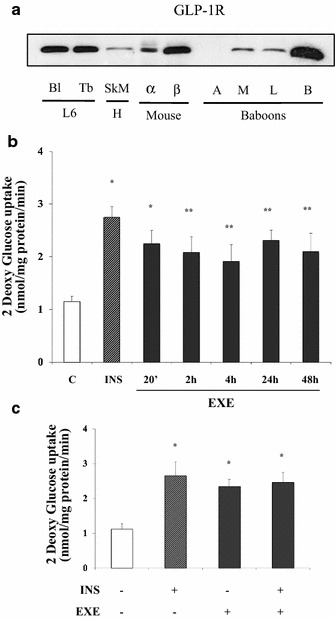
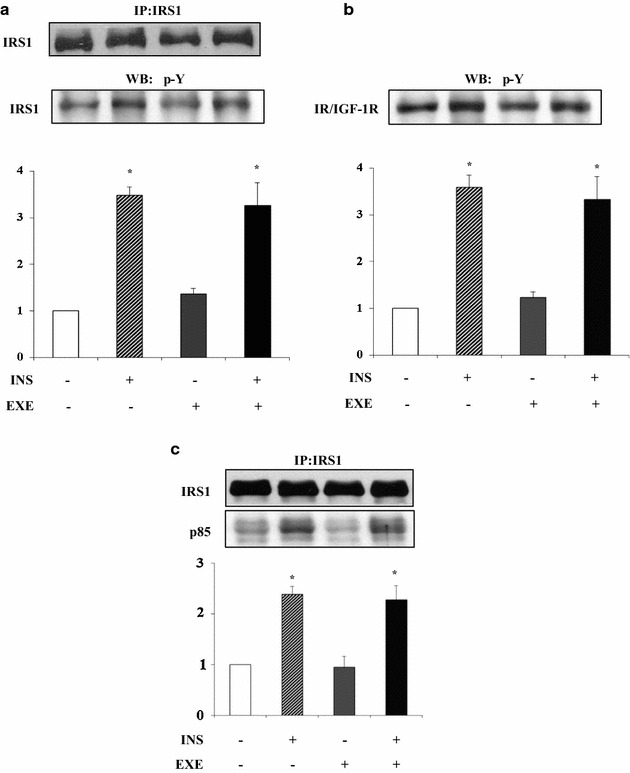
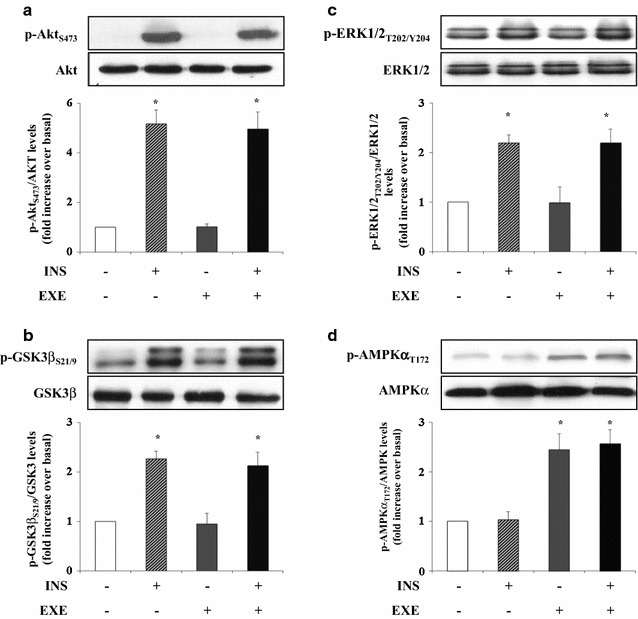
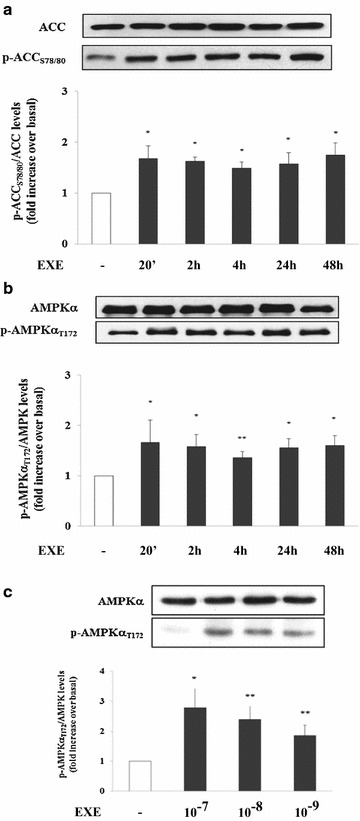
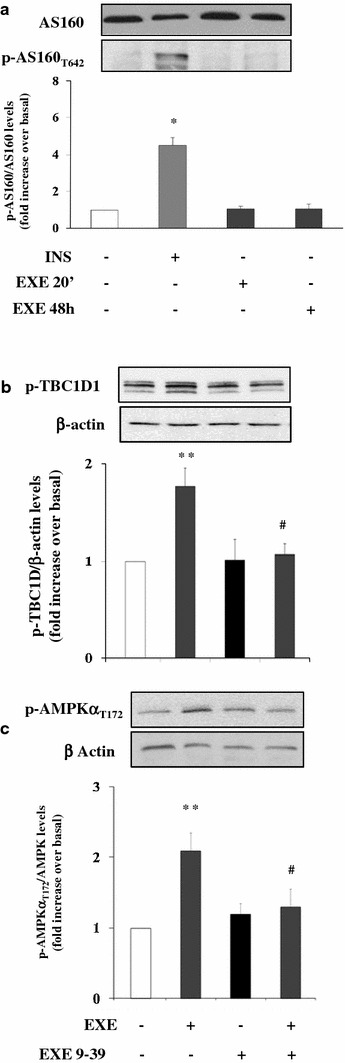
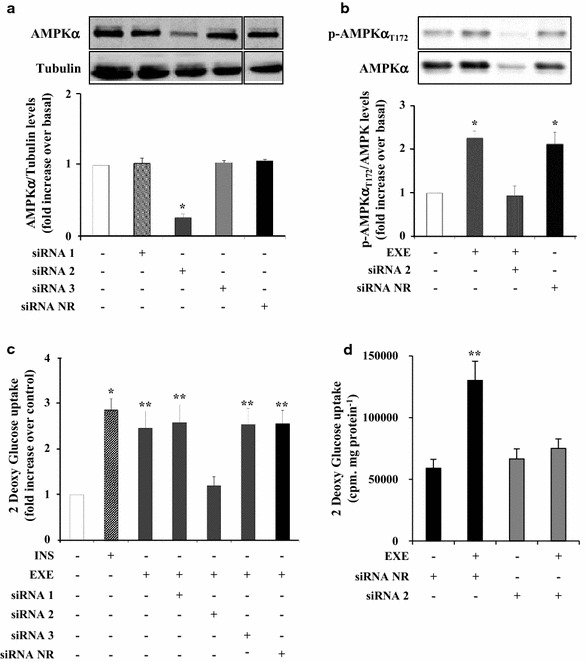
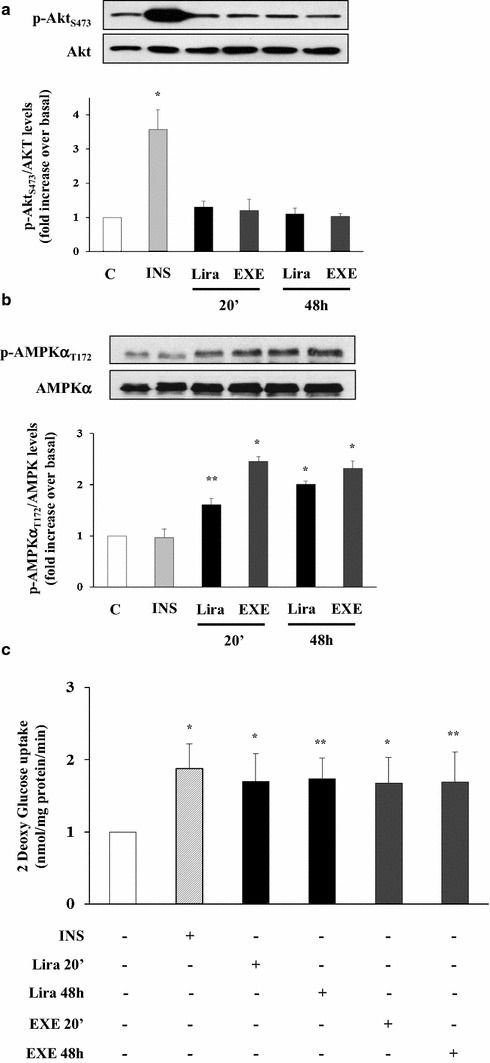
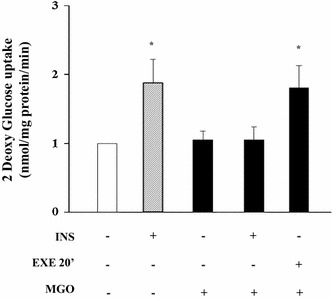
AIMS/HYPOTHESIS: Potentiation of glucose-induced insulin secretion is the main mechanism of exenatide (EXE) antidiabetic action, however, increased glucose utilization by peripheral tissues has been also reported. We here studied the effect of EXE on glucose uptake by skeletal muscle cells. METHODS: 2-deoxy-glucose (2DG) uptake and intracellular signal pathways were measured in rat L6 skeletal muscle myotubes exposed to 100 nmol/l EXE for up to 48 h. Mechanisms of EXE action were explored by inhibiting AMPK activity with compound C (CC, 40 μmol/l) or siRNAs (2 μmol/l). RESULTS: Time course experiments show that EXE increases glucose uptake up to 48 h achieving its maximal effect, similar to that induced by insulin, after 20 min (2- vs 2.5-fold-increase, respectively). Differently from insulin, EXE does not stimulate: (i) IR β-subunit- and IRS1 tyrosine phosphorylation and binding to p85 regulatory subunit of PI-3kinase; (ii) AKT activation; and (iii) ERK1/2 and JNK1/2 phosphorylation. Conversely, EXE increases phosphorylation of α-subunit of AMPK at Thr172 by 2.5-fold (p < 0.01). Co-incubation of EXE and insulin does not induce additive effects on 2DG-uptake. Inhibition of AMPK with CC, and reduction of AMPK protein expression by siRNA, completely abolish EXE-induced 2DG-uptake. Liraglutide, another GLP-1 receptor agonist, also stimulates AMPK phosphorylation and 2DG-uptake. Moreover, EXE stimulates 2DG-uptake also by L6 myotubes rendered insulin-resistant with methylglyoxal. Finally, EXE also induces glucose transporter Glut-4 translocation to the plasma membrane. CONCLUSIONS/INTERPRETATION: In L6 myotubes, EXE and liraglutide increase glucose uptake in an insulin-independent manner by activating AMPK.
Overview
The claims and statistics of this paper haven’t been checked yet.
Free: it reads the open-access text and checks the first 5 claims that cite a source we can check. Create a free account to check every claim.
Integrity signals
Registry
Cites
Statistics
Figures
Verification
Claims the paper makes
The claims and statistics of this paper haven’t been checked yet.
Free: it reads the open-access text and checks the first 5 claims that cite a source we can check. Create a free account to check every claim.
Claims other papers make about this one
Each is checked against this paper’s own text: does it say what the citing paper says it does?
The cited source says what the claim attributes to it.
In the citing paper
“GLP-1 can also enhance the uptake and utilization of glucose in muscle and adipose tissues.207–209”
From Glucagon-like peptide-1 receptor: mechanisms and advances in therapy (2024) · cites this paper as [208]
In the citing paper
“On the other hand, studies in rodents showed that GLP1 receptor agonists may increase microvascular blood volume and glucose transport in skeletal muscle cells, leading to increased delivery of oxygen, nutrients and hormones, such as insulin, to myocytes207,208.”
From Sarcopenic obesity in older adults: a clinical overview (2024) · cites this paper as [207]
Self-check
Percentages, sums and reported differences re-computed from the paper’s own numbers.
The self-check needs the paper’s full text.
Citations
Cites
1 retracted
Condorelli, G., Vigliotta, G., Trencia, A., Maitan, M. A., Caruso, M., Miele, C., Oriente, F., Santopietro, S., Formisano, P., & Beguinot, F. (2001) · Diabetes · doi:10.2337/diabetes.50.6.1244 · Cited by 72
Self-citationRetractedAMPK: a nutrient and energy sensor that maintains energy homeostasis
Hardie, D. G., Ross, F. A., & Hawley, S. A. (2012) · Nature Reviews Molecular Cell Biology · doi:10.1038/nrm3311 · Cited by 4,602 · cited 2×
“The heterotrimeric protein AMPK, consisting of a catalytic α and regulatory β and γ subunits, is ubiquitously expressed and it is regulated by a variety of physiological stimuli and drugs such as metformin and thiazolidinediones and plays a pivotal role in the regulation of mitochondrial biogenesis, fatty acid synthes…”
Watterson, K. R., Bestow, D., Gallagher, J., Hamilton, D. L., Ashford, F. B., Meakin, P. J., & Ashford, M. L. J. (2013) · Neurosignals · doi:10.1159/000334144 · Cited by 3,389
The selectivity of protein kinase inhibitors: a further update
Bain, J., Plater, L., Elliott, M., Shpiro, N., Hastie, C. J., Mclauchlan, H., Klevernic, I., Arthur, J. S. C., Alessi, D. R., & Cohen, P. (2007) · Biochemical Journal · doi:10.1042/bj20070797 · Cited by 2,520
Pharmacology, physiology, and mechanisms of incretin hormone action.
Campbell, J. E., & Drucker, D. J. (2013) · Cell Metabolism · doi:10.1016/j.cmet.2013.04.008 · Cited by 1,500 · cited 8×
“Exenatide (EXE) is the synthetic analog of exendin-4, a GLP-1 homologous originally purified from the salivary glands of the lizard Heloderma suspectum, and it is currently employed in the treatment of type 2 diabetes (T2D) [3, 4].”
InfluentialBuse, J. B., Henry, R. R., Han, J., Kim, D. D., Fineman, M. S., Baron, A. D., & for the Exenatide-113 Clinical Study Group (2004) · Diabetes Care · doi:10.2337/diacare.27.11.2628 · Cited by 1,346
Thorens, B. (1992) · Proceedings of the National Academy of Sciences · doi:10.1073/pnas.89.18.8641 · Cited by 906 · cited 2×
“The antibodies used were: anti-GLP-1 receptor (kind gift of Drs. Wanda Dolci and Bernard Thorens [10, 23], anti-insulin receptor (IR), anti-p-tyrosine (Biosource, Camarillo, CA), anti-IRS-1 (Millipore, Billerica, MA, USA), anti-p85 subunit of PI3-kinase, antiAkt, anti-p-Akt S473, anti-p-AMPK T172, anti-AMPK, anti-p-AC…”
Mojsov, S., Weir, G. C., & Habener, J. F. (1987) · Journal of Clinical Investigation · doi:10.1172/jci112855 · Cited by 882
Gutniak, M., Ørkov, C., Holst, J. J., Ahrén, B., & Efendić, S. (1992) · New England Journal of Medicine · doi:10.1056/nejm199205143262003 · Cited by 868 · cited 1×
“Generally recognized mechanisms of GLP-1 and GLP1R agonists action are potentiation of glucose-induced insulin secretion, reduction of glucagon secretion, inhibition of gastric emptying and decreased appetite [3, 4, 8, 9], however, insulin sensitizing effects have been also described.”
Young, A. A., Gedulin, B. R., Bhavsar, S., Bodkin, N., Jodka, C., Hansen, B., & Denaro, M. (1999) · Diabetes · doi:10.2337/diabetes.48.5.1026 · Cited by 440
Cited by
Glucagon-like peptide-1 receptor: mechanisms and advances in therapy
Zheng, Z., Zong, Y., Ma, Y., Tian, Y., Pang, Y., Zhang, C., & Gao, J. (2024) · Signal Transduction and Targeted Therapy · doi:10.1038/s41392-024-01931-z · Cited by 1,036
Sarcopenic obesity in older adults: a clinical overview
Prado, C. M., Batsis, J. A., Donini, L. M., Gonzalez, M. C., & Siervo, M. (2024) · Nature Reviews Endocrinology · doi:10.1038/s41574-023-00943-z · Cited by 355
“On the other hand, studies in rodents showed that GLP1 receptor agonists may increase microvascular blood volume and glucose transport in skeletal muscle cells, leading to increased delivery of oxygen, nutrients and hormones, such as insulin, to myocytes 207,208 .”
Pleiotropic Effects of GLP-1 and Analogs on Cell Signaling, Metabolism, and Function
Rowlands, J., Heng, J., Newsholme, P., & Carlessi, R. (2018) · Frontiers in Endocrinology · doi:10.3389/fendo.2018.00672 · Cited by 302
“Although, it should be noted that the difference in signaling pathways from these latest studies may result from the extended duration of exposure to the GLP-1R agonist (122, 123).”
BackgroundKarakasis, P., Patoulias, D., Fragakis, N., & Mantzoros, C. S. (2025) · Metabolism · doi:10.1016/j.metabol.2024.156113 · Cited by 242
Longo, S., Rizza, S., & Federici, M. (2023) · Acta Diabetologica · doi:10.1007/s00592-023-02088-x · Cited by 194
“Chronic administration of exenatide increases cell replication, reduces apoptosis and cellular stress, and increases insulin sensitivity in a nonhuman primate [25].”
BackgroundBlood-Brain Glucose Transfer in Alzheimer’s disease: Effect of GLP-1 Analog Treatment
Gejl, M., Brock, B., Egefjord, L., Vang, K., Rungby, J., & Gjedde, A. (2017) · Scientific Reports · doi:10.1038/s41598-017-17718-y · Cited by 163
Blüher, M., Rosenstock, J., Hoefler, J., Manuel, R., & Hennige, A. M. (2024) · Diabetologia · doi:10.1007/s00125-023-06053-9 · Cited by 138
Mechanism of action of the bile acid receptor TGR5 in obesity
Lun, W., Yan, Q., Guo, X., Zhou, M., Bai, Y., He, J., Cao, H., Che, Q., Guo, J., & Su, Z. (2023) · Acta Pharmaceutica Sinica B · doi:10.1016/j.apsb.2023.11.011 · Cited by 132
Sattar, N., Neeland, I. J., Dahlqvist Leinhard, O., Fernández Landó, L., Bray, R., Linge, J., & Rodriguez, A. (2025) · The Lancet Diabetes & Endocrinology · doi:10.1016/s2213-8587(25)00027-0 · Cited by 131
Glucagon-like peptide 1 receptor is a T cell-negative costimulatory molecule
Ben Nasr, M., Usuelli, V., Dellepiane, S., Seelam, A. J., Fiorentino, T. V., D’Addio, F., Fiorina, E., Xu, C., Xie, Y., Balasubramanian, H. B., et al. (2024) · Cell Metabolism · doi:10.1016/j.cmet.2024.05.001 · Cited by 102
Self-citationMolecular mechanisms by which GLP-1 RA and DPP-4i induce insulin sensitivity
Yaribeygi, H., Sathyapalan, T., & Sahebkar, A. (2019) · Life Sciences · doi:10.1016/j.lfs.2019.116776 · Cited by 102
Molecular mechanisms of semaglutide and liraglutide as a therapeutic option for obesity
Tamayo‐Trujillo, R., Ruiz‐Pozo, V. A., Cadena-Ullauri, S., Guevara‐Ramírez, P., Paz‐Cruz, E., Zambrano-Villacres, R., Simancas‐Racines, D., & Zambrano, A. K. (2024) · Frontiers in Nutrition · doi:10.3389/fnut.2024.1398059 · Cited by 100
Diabetes pharmacotherapy and effects on the musculoskeletal system
Kalaitzoglou, E., Fowlkes, J. L., Popescu, I., & Thrailkill, K. M. (2019) · Diabetes/Metabolism Research and Reviews · doi:10.1002/dmrr.3100 · Cited by 100
Zhang, Y. P., Ling, Y., Yang, L., Cheng, Y., Yang, P., Song, X., Tang, H., Zhong, Y., Tang, L., He, S., et al. (2017) · Molecular and Cellular Endocrinology · doi:10.1016/j.mce.2017.03.029 · Cited by 87
Volpe, S., Lisco, G., Fanelli, M., Racaniello, D., Colaianni, V., Lavarra, V., Triggiani, D., Crudele, L., Triggiani, V., Sabbà, C., et al. (2023) · Frontiers in Endocrinology · doi:10.3389/fendo.2023.1240263 · Cited by 73
Possidente, C., Fanelli, G., Serretti, A., & Fabbri, C. (2023) · Neuroscience & Biobehavioral Reviews · doi:10.1016/j.neubiorev.2023.105298 · Cited by 72
Bifari, F., Manfrini, R., Dei Cas, M., Berra, C., Siano, M., Zuin, M., Paroni, R., & Folli, F. (2018) · Pharmacological Research · doi:10.1016/j.phrs.2018.09.025 · Cited by 69
Self-citationTirzepatide prevents neurodegeneration through multiple molecular pathways
Fontanella, R. A., Ghosh, P., Pesapane, A., Taktaz, F., Puocci, A., Franzese, M., Feliciano, M. F., Tortorella, G., Scisciola, L., Sommella, E., et al. (2024) · Journal of Translational Medicine · doi:10.1186/s12967-024-04927-z · Cited by 67
“In the brains of AD patients, a significant reduction in the expression of GLUT1, GLUT3, and GLUT4 was observed, impacting neuronal activity [61], progressive neuronal loss, and neurodegeneration [58, 62].”
BackgroundMolecular Mechanisms Underlying the Cardiovascular Benefits of SGLT2i and GLP-1RA
Khat, D. Z., & Husain, M. (2018) · Current Diabetes Reports · doi:10.1007/s11892-018-1011-7 · Cited by 66
(2019) · Europe PMC (PubMed Central)
Jiao, R., Lin, C., Cai, X., Wang, J., Wang, Y., Lv, F., Yang, W., & Ji, L. (2025) · Diabetes, Obesity and Metabolism · doi:10.1111/dom.16012 · Cited by 60
Tao, X., Cai, L., Chen, L., Ge, S., & Deng, X. (2019) · Journal of Ovarian Research · doi:10.1186/s13048-019-0555-8 · Cited by 58
Marrano, N., Biondi, G., Borrelli, A., Cignarelli, A., Perrini, S., Laviola, L., Giorgino, F., & Natalicchio, A. (2021) · Biomolecules · doi:10.3390/biom11020286 · Cited by 56
Direct effects of glucagon on glucose uptake and lipolysis in human adipocytes
Pereira, M. J., Thombare, K., Sarsenbayeva, A., Kamble, P. G., Almby, K., Lundqvist, M., & Eriksson, J. W. (2020) · Molecular and Cellular Endocrinology · doi:10.1016/j.mce.2019.110696 · Cited by 54
Ozeki, Y., Masaki, T., Kamata, A., Miyamoto, S., Yoshida, Y., Okamoto, M., Gotoh, K., & Shibata, H. (2022) · Medicines · doi:10.3390/medicines9090047 · Cited by 53
“GLP1-RAs activate glucose delivery in skeletal muscle through an AMP-activated protein kinase (AMPK) [39,40].”
BackgroundUchiyama, S., Sada, Y., Mihara, S., Sasaki, Y., Sone, M., & Tanaka, Y. (2023) · Journal of Clinical Medicine Research · doi:10.14740/jocmr4987 · Cited by 52
Zhou, R., Lin, C., Cheng, Y., Zhuo, X., Li, Q., Xu, W., Zhao, L., & Yang, L. (2021) · Frontiers in Pharmacology · doi:10.3389/fphar.2020.600175 · Cited by 52
Fiorentino, T. V., Casiraghi, F., Davalli, A. M., Finzi, G., La Rosa, S., Higgins, P. B., Abrahamian, G. A., Marando, A., Sessa, F., Perego, C., et al. (2019) · JCI Insight · doi:10.1172/jci.insight.93091 · Cited by 51
Self-citationCurrent Therapeutic Landscape for Metabolic Dysfunction-Associated Steatohepatitis
Devasia, A. G., Ramasamy, A., & Leo, C. H. (2025) · International Journal of Molecular Sciences · doi:10.3390/ijms26041778 · Cited by 48
Pozzi, M., Mazhar, F., Peeters, G. G. A. M., Vantaggiato, C., Nobile, M., Clementi, E., Radice, S., & Carnovale, C. (2019) · Journal of Affective Disorders · doi:10.1016/j.jad.2019.05.044 · Cited by 47
Yu, W., Chen, Y., Hwang, P., Chen, T., & Chou, T. (2017) · Molecular Nutrition & Food Research · doi:10.1002/mnfr.201700136 · Cited by 47
Usage of Glucagon-Like Peptide-1 for Obesity in Children; Updated Review of Clinicaltrials.gov
Alorfi, N. M., & Alshehri, F. S. (2023) · Journal of Multidisciplinary Healthcare · doi:10.2147/jmdh.s419245 · Cited by 43
Ishii, S., Nagai, Y., Sada, Y., Fukuda, H., Nakamura, Y., Matsuba, R., Nakagawa, T., Kato, H., & Tanaka, Y. (2019) · Journal of Clinical Medicine Research · doi:10.14740/jocmr3647 · Cited by 41
Rodrigues, T., Borges, P., Mar, L., Marques, D., Albano, M., Eickhoff, H., Carrêlo, C., Almeida, B., Pires, S., Abrantes, M., et al. (2020) · Pharmacological Research · doi:10.1016/j.phrs.2020.105198 · Cited by 40
Mitophagy: A potential therapeutic target for insulin resistance
Ning, P., Jiang, X., Yang, J., Zhang, J., Yang, F., & Cao, H. (2022) · Frontiers in Physiology · doi:10.3389/fphys.2022.957968 · Cited by 40
Marked weight loss on liraglutide 3.0 mg: Real‐life experience of a Swiss cohort with obesity
Santini, S., Vionnet, N., Pasquier, J., Gonzalez‐Rodriguez, E., Fraga, M., Pitteloud, N., & Favre, L. (2023) · Obesity · doi:10.1002/oby.23596 · Cited by 39
GLP-1 mimetics as a potential therapy for nonalcoholic steatohepatitis
Chen, Y., Xu, Y.-N., Ye, C.-Y., Feng, W., Zhou, Q., Yang, D., & Wang, M. (2021) · Acta Pharmacologica Sinica · doi:10.1038/s41401-021-00836-9 · Cited by 36
Zhang, Z., Liang, X., Lv, Y., Yi, H., Chen, Y., Bai, L., Zhou, H., Liu, T., Li, R., & Zhang, L. (2019) · Journal of Functional Foods · doi:10.1016/j.jff.2019.103664 · Cited by 36
Mechanisms of action of incretin receptor based dual- and tri-agonists in pancreatic islets
Folli, F. B., Finzi, G., Manfrini, R., Galli, A., Casiraghi, F., Centofanti, L., Berra, C., Fiorina, P., Davalli, A. M., Rosa, S. L., et al. (2023) · American Journal of Physiology-Endocrinology and Metabolism · doi:10.1152/ajpendo.00236.2023 · Cited by 35
Self-citationNguyen, T. T. N., Choi, H., & Jun, H.-S. (2020) · Frontiers in Pharmacology · doi:10.3389/fphar.2020.00090 · Cited by 34
Rochira, V., Greco, C., Boni, S., Costantino, F., Dalla Valentina, L., Zanni, E., Itani, L., & El Ghoch, M. (2024) · Diseases · doi:10.3390/diseases12090204 · Cited by 34
Lee, J., Hong, S., Kim, M.-J., Kwon, H., Park, S. E., Rhee, E., & Lee, W. (2020) · Biochemical and Biophysical Research Communications · doi:10.1016/j.bbrc.2020.07.136 · Cited by 34
Gastrointestinal Motility Effects of GLP-1 Receptor Agonists
Bellavance, D. R., Chua, S. G., & Mashimo, H. L. (2025) · Current Gastroenterology Reports · doi:10.1007/s11894-025-00995-3 · Cited by 33
Lixisenatide Reduces Chylomicron Triacylglycerol by Increased Clearance
Whyte, M. B., Shojaee-Moradie, F., Sharaf, S. E., Jackson, N. C., Fielding, B., Hovorka, R., Mendis, J., Russell-Jones, D., & Umpleby, A. M. (2019) · The Journal of Clinical Endocrinology & Metabolism · doi:10.1210/jc.2018-01176 · Cited by 32
Unlocking the multifaceted roles of GLP-1: Physiological functions and therapeutic potential
AL-Noshokaty, T. M., Abdelhamid, R., Abdelmaksoud, N. M., Khaled, A., Hossam, M., Ahmed, R., Saber, T., Khaled, S., Elshaer, S. S., & Abulsoud, A. I. (2025) · Toxicology Reports · doi:10.1016/j.toxrep.2025.101895 · Cited by 30
“It is key in controlling processes like mitochondrial biogenesis, fatty acid synthesis, and glucose uptake [66, 67].”
Anastasiou, I. A., Argyrakopoulou, G., Dalamaga, Μ., & Kokkinos, A. D. (2025) · Current Obesity Reports · doi:10.1007/s13679-025-00623-1 · Cited by 29
Exenatide Improves Bone Quality in a Murine Model of Genetically Inherited Type 2 Diabetes Mellitus
Pereira, M., Gohin, S., Roux, J.-P., Fisher, A., Cleasby, M. E., Mabilleau, G., & Chenu, C. (2017) · Frontiers in Endocrinology · doi:10.3389/fendo.2017.00327 · Cited by 29
Li, B., Fu, L., Kojima, R., Yamamoto, A., Ueno, T., & Matsui, T. (2021) · Journal of Functional Foods · doi:10.1016/j.jff.2021.104702 · Cited by 29
Engineered GLP-1R-targeting nanoplatforms: multimodal therapeutics in human diseases
Zeng, J., Tang, X., Qin, D., Yu, L., Zhou, X., Chi, F., Mi, J., Pan, H., Wu, J., Huang, B., et al. (2025) · Journal of Nanobiotechnology · doi:10.1186/s12951-025-03677-4 · Cited by 28
Abdelkawy, Y. S., Elharoun, M., Sheta, E., Abdel-Raheem, I. T., & Nematalla, H. A. (2024) · European Journal of Pharmacology · doi:10.1016/j.ejphar.2024.176525 · Cited by 24
Durak, A. T., Akkuş, E., Canpolat, A. G., Tuncay, E., Çorapçıoğlu, D., & Turan, B. (2021) · Clinical and Experimental Pharmacology and Physiology · doi:10.1111/1440-1681.13590 · Cited by 24
Oguntibeju, O. O., Aboua, Y. G., & Kachepe, P. (2020) · Heliyon · doi:10.1016/j.heliyon.2020.e03817 · Cited by 24
González-Luis, A., Llinares-Arvelo, V., Martínez‐Alberto, C. E., Hernández-Carballo, C., Fernández, C. M., Navarro‐González, J. F., & Donate‐Correa, J. (2025) · European Journal of Endocrinology · doi:10.1093/ejendo/lvaf223 · Cited by 23
Sarcopenia‐related changes in serum GLP‐1 level affect myogenic differentiation
Huang, H., Wang, Y., Jiang, H., Yu, H. W., Chen, Y., Chiou, A., & Kuo, J. (2024) · Journal of Cachexia, Sarcopenia and Muscle · doi:10.1002/jcsm.13524 · Cited by 22
Brown, J. D., McAnally, D., Ayala, J. E., Burmeister, M. A., Morfa, C. J., Smith, L. H., & Ayala, J. E. (2018) · American Journal of Physiology-Regulatory, Integrative and Comparative Physiology · doi:10.1152/ajpregu.00459.2017 · Cited by 21
ALFORD, F. P., Henriksen, J. E., Rantzau, C., & Beck‐Nielsen, H. (2018) · Diabetes/Metabolism Research and Reviews · doi:10.1002/dmrr.2989 · Cited by 20
Exendin‐4 enhances radiation response of prostate cancer
He, W., & Li, J. (2018) · The Prostate · doi:10.1002/pros.23687 · Cited by 20
Shadboorestan, A., Tarighi, P., Koosha, M., Faghihi, H., Ghahremani, M. H., & Montazeri, H. (2021) · Drug Research · doi:10.1055/a-1345-7890 · Cited by 20
Liraglutide Treatment Ameliorates Neurotoxicity Induced by Stable Silencing of Pin1
Bianchi, M., Doria, V., Braghini, M. R., Petrini, S., & Manco, M. (2019) · International Journal of Molecular Sciences · doi:10.3390/ijms20205064 · Cited by 17
Impact of Incretin-Based Therapy on Skeletal Muscle Health
Koceva, A., Janež, A., & Jensterle, M. (2025) · Medicina · doi:10.3390/medicina61091691 · Cited by 16
Therapeutic Properties of Polyphenols Affect AMPK Molecular Pathway in HyperlipidemiaPreprint
Sotoudeheian, M., Hoseini, S., & Mirahmadi, S. (2023) · Preprints.org · doi:10.20944/preprints202301.0528.v1 · Cited by 16
Maihemuti, A., Cui, C., Wang, Q., Amuti, R., Chau, W., Chai, S., Zhang, N., Wong, R. M. Y., Ko, H., Kwok, T. C. Y., et al. (2025) · Aging and Disease · doi:10.14336/ad.2025.1165 · Cited by 16
Targeting Sarcopenia in CKD: The Emerging Role of GLP-1 Receptor Agonists
Llinares-Arvelo, V., Martínez‐Alberto, C. E., González-Luis, A., Macía-Heras, M., Siverio-Morales, O., Navarro‐González, J. F., & Donate‐Correa, J. (2025) · International Journal of Molecular Sciences · doi:10.3390/ijms26168096 · Cited by 15
Tawfik, M. K., Badran, D. I., Keshawy, M. M., Makary, S., & Abdo, M. (2023) · Archives of Medical Science · doi:10.5114/aoms/158534 · Cited by 15
Li, J., Zhang, Y., Yu, F., Pan, Y., Zhang, Z., He, Y., Yang, H., & Zhou, P. (2023) · ACS Omega · doi:10.1021/acsomega.3c03513 · Cited by 15
Alnaser, R. I., Alassaf, F. A., & Abed, M. N. (2024) · Journal of Bone Metabolism · doi:10.11005/jbm.24.739 · Cited by 14
Zhao, X., Liu, Y., Wang, D., Li, T., Xu, Z., Li, Z., Bai, X., & Wang, Y.-C. (2025) · International Journal of Molecular Medicine · doi:10.3892/ijmm.2025.5515 · Cited by 12
Biomarkers of Cardiac Metabolic Flexibility in Health, HFrEF and HFpEF
Yun, H. R., Singh, M. K., Han, S., Ranbhise, J. S., Ha, J., Kim, S. S., & Kang, I. (2026) · International Journal of Molecular Sciences · doi:10.3390/ijms27020879 · Cited by 12
The expanding role of semaglutide: beyond glycemic control
Zarei, M., Sabetkasaei, M., Mozafari, M., & Zaeri, S. (2025) · Journal of Diabetes & Metabolic Disorders · doi:10.1007/s40200-025-01663-z · Cited by 11
Wójcicka, G., Zaręba, M., Warpas, A., Jamróz-Wiśniewska, A., Rusek, M., Czechowska, G., & Bełtowski, J. (2019) · European Journal of Pharmacology · doi:10.1016/j.ejphar.2019.02.014 · Cited by 10
Glucagon-like peptide-1 analog, liraglutide, regulates Sertoli cell energy metabolism
Dasso, M. E., Centola, C. L., Galardo, M. N., Meroni, S. B., & Riera, M. F. (2024) · Journal of Endocrinology · doi:10.1530/joe-24-0274 · Cited by 10
Huang, Q., Liu, C., Li, J., Zhang, L., Huang, F., Wang, D., & Luo, Y. (2019) · Experimental and Therapeutic Medicine · doi:10.3892/etm.2019.7148 · Cited by 10
Schmidt, M. R., Ebert, M. L., Kiechle, M. A., Zöller, K., Laffleur, F., & Bernkop‐Schnürch, A. (2025) · International Journal of Pharmaceutics · doi:10.1016/j.ijpharm.2025.125711 · Cited by 9
Fernandes, L. S., dos Santos, N. A. G., Emerick, G. L., & dos Santos, A. C. (2018) · Neurotoxicity Research · doi:10.1007/s12640-018-9941-z · Cited by 9
AMPK-Mediated Multi-Organ Protective Effects of GLP-1 Receptor Agonists
Wang, X., & Wang, L. (2025) · Health and Metabolism · doi:10.53941/hm.2025.100004 · Cited by 8
Hypothalamic neuroinflammation induced by obesity and the effect of Liraglutide
Batarseh, N., Khalil, R., & Al-Domi, H. A. (2022) · Journal Of Advanced Pharmacy Education And Research · doi:10.51847/n1hvob1ans · Cited by 8
Vargas-Vargas, M. A., González-Montoya, M., Torres‐Isidro, O., Garcia‐Berumen, C. I., Ortiz‐Avila, O., Calderón‐Cortés, E., & Cortés‐Rojo, C. (2024) · World Journal of Clinical Pediatrics · doi:10.5409/wjcp.v13.i2.91478 · Cited by 8
Tsou, S., Luo, K.-S., Huang, C., Kornelius, E., Cheng, I.-T., Hung, H., Hung, Y.-C., Lin, C., & Hsu, M. (2025) · International Journal of Molecular Sciences · doi:10.3390/ijms26083704 · Cited by 8
Aboushouk, A. A., Saad, H. M., Rohiem, A. H., & El-Karim, D. R. S. G. (2024) · International Immunopharmacology · doi:10.1016/j.intimp.2024.113469 · Cited by 8
Harby, S. A., Fathelbab, M. H., Nawwar, B. M., Sheta, E., Halwag, D. I., Elneily, D., & Habiba, E. S. (2025) · Journal of Molecular Histology · doi:10.1007/s10735-025-10355-0 · Cited by 7
Asemi, Z., Salami, R., Salami, M., Mafi, A., Aarabi, M. H., & Vakili, O. (2022) · Current Molecular Pharmacology · doi:10.2174/1874467215666220829102020 · Cited by 7
Shi, W., Zhang, L., Zhao, Y., & Li, X. (2024) · Insects · doi:10.3390/insects15070503 · Cited by 7
Matafome, P. N. (2020) · Diabetology · doi:10.3390/diabetology1010004 · Cited by 7
Barilar, J. O., Knezović, A., Homolak, J., Perhoč, A. B., & Šalković‐Petrišić, M. (2022) · International Journal of Molecular Sciences · doi:10.3390/ijms23010548 · Cited by 6
Mukai, R., Kojima, A., Morisasa, M., Tawara, W., Mori, T., & Goto‐Inoue, N. (2025) · Bioscience Biotechnology and Biochemistry · doi:10.1093/bbb/zbaf060 · Cited by 5
Effects of Hypoglycemic Agents on The Musculoskeletal System: A Comprehensive Review
Zhao, J., Lv, S.-S., Qi, L., Cong, X., & Zhang, X. (2025) · Drug Design Development and Therapy · doi:10.2147/dddt.s517101 · Cited by 5
Knezović, A., Hosch, M., Hamann, C. S., Popp, S., Ortega, G., Barilar, J. O., Grünblatt, E., Monoranu, C., Riederer, P. F., Šalković‐Petrišić, M., et al. (2025) · Journal of Neural Transmission · doi:10.1007/s00702-025-02979-z · Cited by 5
Effectiveness of Oral Semaglutide in Management of Type 2 Diabetes: A Real-World Study from India
Dutta, A., Mahendru, S., Sharma, R., & Mithal, A. (2024) · Indian Journal of Endocrinology and Metabolism · doi:10.4103/ijem.ijem_266_24 · Cited by 5
Oyabambi, A. O., Boluwatife, A. B., Awolola, A. M., Adebayo, A. Y., Iluromi, I. B., & Olorunniyi, K. S. (2024) · Endocrine and Metabolic Science · doi:10.1016/j.endmts.2024.100191 · Cited by 5
Effects of GLP-1 receptor agonists on pituitary and adrenal hormones
Heinla, K. (2023) · DSpace repository (University of Tartu) · Cited by 4
Akl, M. M., & Ahmed, A. K. K. (2025) · Advanced Pharmaceutical Bulletin · doi:10.34172/apb.025.43911 · Cited by 4
Larsen, A. T., Melander, S. A., Mohamed, K. E., Petersen, E. A., Benmarce, M., Karsdal, M. A., & Henriksen, K. (2025) · Biomedicine & Pharmacotherapy · doi:10.1016/j.biopha.2025.118388 · Cited by 3
Colin, I. M., Knoops, B., & Gérard, A.-C. (2022) · International Journal of Obesity · doi:10.1038/s41366-022-01114-2 · Cited by 3
Integrating bile acid metabolism into precision nutrition strategies for improved swine performance
Li, S., He, Y., Shaoyong, W., Wang, Y., & Jin, M. (2025) · Animal nutrition · doi:10.1016/j.aninu.2025.05.013 · Cited by 3
Peptide drugs for obesity and type 2 diabetes mellitus: an overview of clinical trials
Barzgar, H., Darmadi, D., Nafisa, J., Narkulov, S., & Sviridova, M. B. (2025) · Clinica Chimica Acta · doi:10.1016/j.cca.2025.120772 · Cited by 2
Short bouts of hypoxia improve insulin sensitivity in adults with type 2 diabetes
Zhao, J., Massoudian, S. D., Stray-Gundersen, S. O., Wojan, F., & Lalande, S. (2025) · Journal of Applied Physiology · doi:10.1152/japplphysiol.00932.2024 · Cited by 2
Geraniin: A Promising Multifunctional Nutraceutical for Diabetes Management
Goh, B. H., & Tan, J. B. L. (2024) · Food Reviews International · doi:10.1080/87559129.2024.2406419 · Cited by 2
Pharmacotherapeutic options for the management of obesity in children
Aldhafiri, A. J. (2023) · Journal of advanced Biomedical and Pharmaceutical Sciences · doi:10.21608/jabps.2023.225432.1194 · Cited by 2
Glucagon-like peptide-1 and beta cell glucose sensitivity - a glucose ramp study in mice
Åhrén, B. (2021) · Peptides · doi:10.1016/j.peptides.2021.170650 · Cited by 2
Akl, M. M., & Ahmed, A. K. K. (2024) · Qeios · doi:10.32388/l6amnd · Cited by 2
Metadata
- Authors
- Andreozzi, F., Raciti, G. A., Nigro, C., Mannino, G. C., Procopio, T., Davalli, A. M., Beguinot, F., Sesti, G., Miele, C., & Folli, F.
- Affiliations
- The University of Texas at San Antonio Health Science Center (US)
- Institute for Experimental Endocrinology and Oncology (IT)
- Magna Graecia University (IT)
- IRCCS Ospedale San Raffaele (IT)
- Corresponding author
- Andreozzi, Francesco
- Folli, Franco
- ORCID
- Venue
- Journal of Translational Medicine
- Published
- 2016-07-30
- Volume
- 14
- Issue
- 1
- Pages
- 229-229
- ISSN
- 1479-5876 (ISSN-L)
- PMC
- PMC4967343
- OpenAlex
- W2496216273
- Cited by
- 102
- References
- 57
- Citations by year
- 2026: 3 · 2025: 24 · 2024: 20 · 2023: 10 · 2022: 8 · 2021: 7 · 2020: 6 · 2019: 11 · 2018: 9 · 2017: 4
- FWCI
- 4.16
- Type
- journal article
- Language
- en
- Open access
- gold
- doi.org
- Licence
- cc-by
- Locations
- Journal of Translational Medicine (publishedVersion, cc-by)
- Europe PMC (PubMed Central) (publishedVersion, cc-by)
- PubMed Central (publishedVersion, cc-by)
- PubMed (publishedVersion)
- LA Referencia (Red Federada de Repositorios Institucionales de Publicaciones Científicas) (publishedVersion, other-oa)
- Archivio Istituzionale della Ricerca (Universita Degli Studi Di Milano) (submittedVersion, other-oa)
- Americanae (AECID Library) (submittedVersion, other-oa)
- IRIS Research product catalog (Sapienza University of Rome) (submittedVersion)
- Funders
- Ministero dell’Istruzione, dell’Università e della Ricerca (FIRB-MERIT)
- Società Italiana di Diabetologia (Scholarship by FO.DI.RI. and MSD 2014)
- Topics
- Life Sciences › Biochemistry, Genetics and Molecular Biology › Molecular Biology › Metabolism, Diabetes, and Cancer
- Health Sciences › Medicine › Endocrinology, Diabetes and Metabolism › Diabetes Treatment and Management
- Health Sciences › Medicine › Endocrinology, Diabetes and Metabolism › Natural Antidiabetic Agents Studies
- Keywords
- exenatide, liraglutide, GLP-1 receptor agonists, AMPK, glucose uptake, skeletal muscle, insulin-independent glucose transport, GLUT4 translocation, insulin resistance, methylglyoxal, insulin signaling, L6 myotubes
- MeSH terms
- Glucagon-Like Peptide-1 Receptor, Liraglutide, Exenatide, Glucagon-Like Peptide-1 Receptor Agonists, Animals, Biological Transport, Cell Line, Deoxyglucose, Enzyme Activation, Glucose, Humans, Insulin Resistance, Papio, Peptides, Phosphorylation, Pyruvaldehyde, Time Factors, Venoms, Signal Transduction, Muscle Fibers, Skeletal, Gene Silencing, Gene Expression Profiling, Proto-Oncogene Proteins c-akt, Mice, Rats, AMP-Activated Protein Kinases
About these checks
Registry, retraction, Cites and statistics results are computed, not judged, with one exception: a printed reference that no index lists is read once by a model before it counts as a citation error. Claims are extracted by a model and kept only when their quote appears verbatim in the text; each cited source is then checked, with a model’s help, for whether it says what the claim relies on. Those verdicts can be wrong — read the claim’s quote and the cited source before relying on one.
Statistics and arithmetic are recomputed, not judged.
Confidence bands are shown only for fields calibrated on our annotated test set. None is calibrated yet, so no band is shown.
What counts as a claim ›How we measure confidence ›How we check this ›
Are you an author, or do you see a problem with this page? Request a review
Data sources
Bibliographic data: Semantic Scholar, OpenAlex, Crossref.
Contains information from the Semantic Scholar Academic Graph Datasets, made available under the ODC Attribution License (ODC-BY 1.0).
Semantic Scholar’s data is described in: Kinney, R., et al. (2023). The Semantic Scholar Open Data Platform. arXiv:2301.10140.
