

Antibiotics-induced depletion of mice microbiota induces changes in host serotonin biosynthesis and intestinal motility
Open accessThe DOI matches its Crossref record; 37 of the 37 references it cites were found in a registry or an index.
Abstract
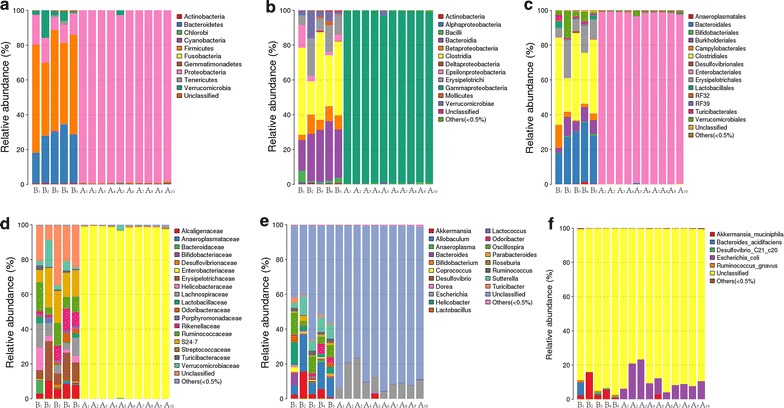
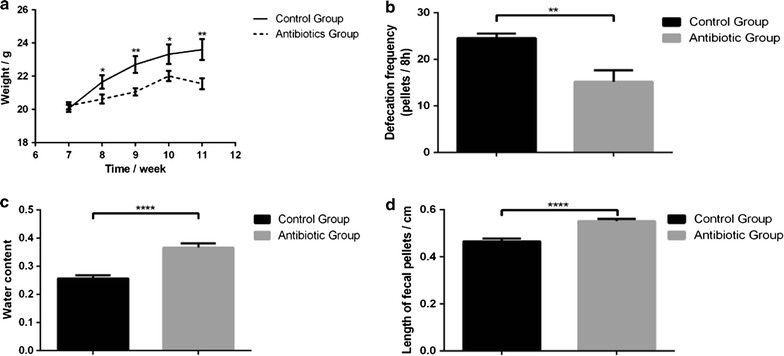
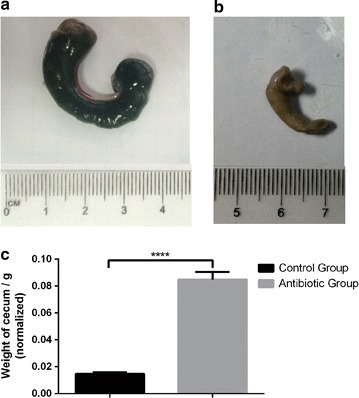
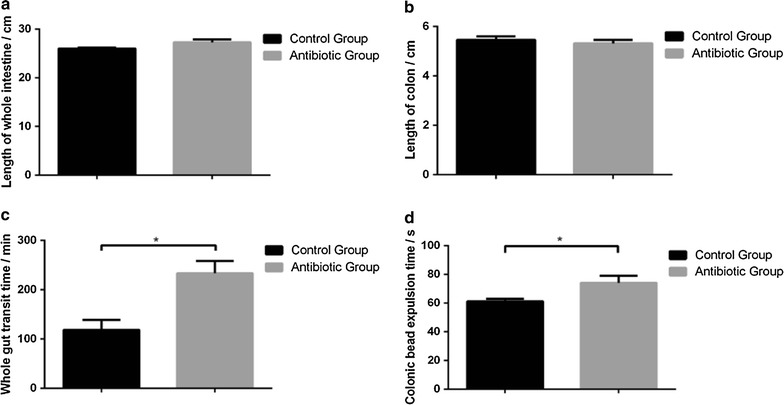
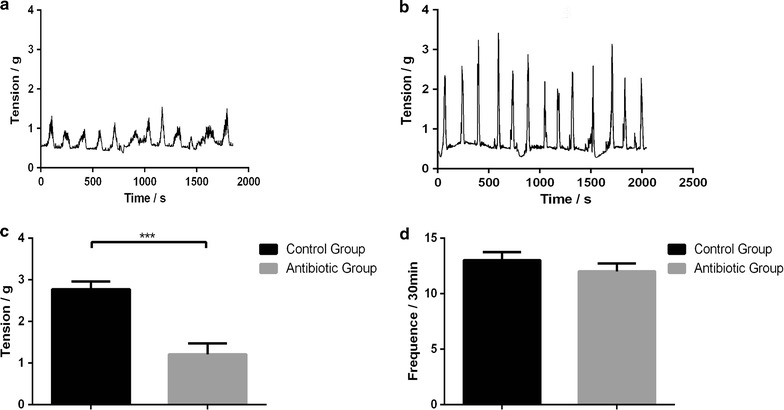
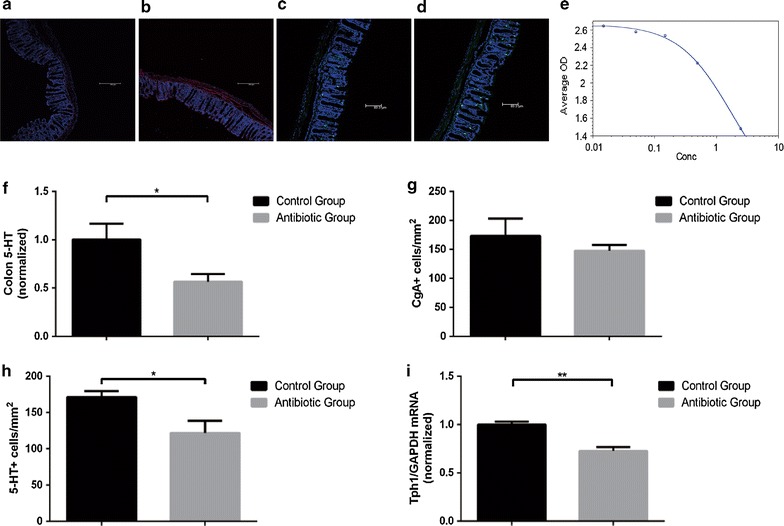
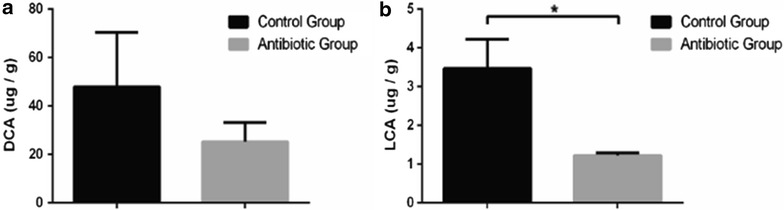
BACKGROUND: The gastrointestinal motility is affected by gut microbiota and the relationship between them has become a hot topic. However, mechanisms of microbiota in regulating motility have not been well defined. We thus investigated the effect of microbiota depletion by antibiotics on gastrointestinal motility, colonic serotonin levels, and bile acids metabolism. METHODS: After 4 weeks with antibiotics treatments, gastrointestinal and colon transit, defecation frequency, water content, and other fecal parameters were measured and analyzed in both wild-type and antibiotics-treated mice, respectively. Contractility of smooth muscle, serotonin levels, and bile acids levels in wild-type and antibiotics-treated mice were also analyzed. RESULTS: After antibiotics treatment, the richness and diversity of intestinal microbiota decreased significantly, and the fecal of mice had less output (P < 0.01), more water content (P < 0.01), and longer pellet length (P < 0.01). Antibiotics treatment in mice also resulted in delayed gastrointestinal and colonic motility (P < 0.05), and inhibition of phasic contractions of longitudinal muscle from isolated proximal colon (P < 0.01). In antibiotics-treated mice, serotonin, tryptophan hydroxylase 1, and secondary bile acids levels were decreased. CONCLUSION: Gut microbiota play an important role in the regulation of intestinal bile acids and serotonin metabolism, which could probably contribute to the association between gut microbiota and gastrointestinal motility as intermediates.
Overview
The claims and statistics of this paper haven’t been checked yet.
Free: it reads the open-access text and checks the first 5 claims that cite a source we can check. Create a free account to check every claim.
Integrity signals
Registry
Cites
Statistics
Figures
Verification
Claims the paper makes
The claims and statistics of this paper haven’t been checked yet.
Free: it reads the open-access text and checks the first 5 claims that cite a source we can check. Create a free account to check every claim.
Self-check
Percentages, sums and reported differences re-computed from the paper’s own numbers.
The self-check needs the paper’s full text.
Citations
Cites
Schloss, P. D., Westcott, S. L., Ryabin, T., Hall, J. R., Hartmann, M., Hollister, E. B., Lesniewski, R. A., Oakley, B. B., Parks, D. H., Robinson, C. J., et al. (2009) · Applied and Environmental Microbiology · doi:10.1128/aem.01541-09 · Cited by 19,549
Enterotypes of the human gut microbiome
MetaHIT Consortium (additional members), Arumugam, M., Raes, J., Pelletier, E., Le Paslier, D., Yamada, T., Mende, D. R., Fernandes, G. R., Tap, J., Bruls, T., et al. (2011) · Nature · doi:10.1038/nature09944 · Cited by 7,548
Recognition of Commensal Microflora by Toll-Like Receptors Is Required for Intestinal Homeostasis
Rakoff-Nahoum, S., Paglino, J., Eslami-Varzaneh, F., Edberg, S., & Medzhitov, R. (2004) · Cell · doi:10.1016/j.cell.2004.07.002 · Cited by 4,251 · cited 1×
“after antibiotics To determine the importance of commensal microbiota in gut motility, mice were subjected to a 4-week oral administration of antibiotics combination (ampicillin, neomycin sulfate, metronidazole, and vancomycin) [17, 18, 20, 28, 29].”
MethodThe gut microbiota--masters of host development and physiology
Sommer, F., & Bäckhed, F. (2013) · Nature Reviews Microbiology · doi:10.1038/nrmicro2974 · Cited by 3,681
Indigenous bacteria from the gut microbiota regulate host serotonin biosynthesis
Yano, J. M., Yu, K., Donaldson, G. P., Shastri, G. G., Ann, P., Ma, L., Nagler, C. R., Ismagilov, R. F., Mazmanian, S. K., & Hsiao, E. Y. (2015) · Cell · doi:10.1016/j.cell.2015.02.047 · Cited by 3,614 · cited 7×
“In antibiotics-treated mice, the 5-HT levels in colon was lower, which was consistent with that in a previous study [12].”
InfluentialMICROBIAL ECOLOGY OF THE GASTROINTESTINAL TRACT
Savage, D. C. (1977) · Annual Review of Microbiology · doi:10.1146/annurev.mi.31.100177.000543 · Cited by 2,436
TLR4 enhances TGF-β signaling and hepatic fibrosis
Seki, E., De Minicis, S., Österreicher, C. H., Kluwe, J., Osawa, Y., Brenner, D. A., & Schwabe, R. F. (2007) · Nature Medicine · doi:10.1038/nm1663 · Cited by 1,942
A G Protein-coupled Receptor Responsive to Bile Acids
Kawamata, Y., Fujii, R., Hosoya, M., Harada, M., Yoshida, H., Miwa, M., Fukusumi, S., Habata, Y., Itoh, T., Shintani, Y., et al. (2003) · Journal of Biological Chemistry · doi:10.1074/jbc.m209706200 · Cited by 1,628 · cited 10×
“Abbreviations GALT: gut-associated lymphoid tissue; 5-HT: 5-hydroxytryptamine; ECs: enterochromaffin cells; TPH: tryptophan hydroxylase; CGRP: calcitonin gene-related peptide; DCA: deoxycholic acid; LCA: lithocholic acid; BAs: bile acids; BSS: Bristol Stool Form Scale; STC: slow transit constipation; FMT: fecal microb…”
BackgroundInfluentialGut/brain axis and the microbiota
Mayer, E. A., Tillisch, K., & Gupta, A. (2015) · Journal of Clinical Investigation · doi:10.1172/jci76304 · Cited by 1,503
Microbiota regulates immune defense against respiratory tract influenza A virus infection
Ichinohe, T., Pang, I. K., Kumamoto, Y., Peaper, D. R., Ho, J. H., Murray, T. S., & Iwasaki, A. (2011) · Proceedings of the National Academy of Sciences · doi:10.1073/pnas.1019378108 · Cited by 1,502 · cited 1×
“after antibiotics To determine the importance of commensal microbiota in gut motility, mice were subjected to a 4-week oral administration of antibiotics combination (ampicillin, neomycin sulfate, metronidazole, and vancomycin) [17, 18, 20, 28, 29].”
Method
Cited by
Items 101–200 of 277
Antibiotics Effects on the Fecal Metabolome in Preterm Infants
Patton, L., Li, N., Garrett, T. J., Ruoss, J. L., Russell, J. T., de la Cruz, D., Bazacliu, C., Polin, R. A., Triplett, E. W., & Neu, J. (2020) · Metabolites · doi:10.3390/metabo10080331 · Cited by 25
Self-citationProbiotic Escherichia coli Ameliorates Antibiotic-Associated Anxiety Responses in Mice
Park, K., Park, S.-H., Nagappan, A., Ray, N., Kim, J., Yoon, S., & Moon, Y. (2021) · Nutrients · doi:10.3390/nu13030811 · Cited by 29
Goulding, D. R., Myers, P., Dickerson, A. B., Comins, M. M., Wiltshire, R. A., & Blankenship-Paris, T. L. (2021) · Comparative Medicine · doi:10.30802/aalas-cm-21-000023 · Cited by 24
Neonatal antibiotics have long term sex‐dependent effects on the enteric nervous system
Poon, S., Hung, L. Y., Wu, Q., Parathan, P., Yalçınkaya, N., Haag, A. M., Luna, R. A., Bornstein, J. C., Savidge, T., & Foong, J. P. P. (2022) · The Journal of Physiology · doi:10.1113/jp282939 · Cited by 30
Tang, N., Yu, Q., Mei, C., Wang, J., Wang, L., Wang, G., Zhao, J., & Chen, W. (2023) · Nutrients · doi:10.3390/nu15051146 · Cited by 29
Liu, M., Yuan, J., Hu, W., Ke, C., Zhang, Y., Ye, Y., Zhong, D., Zhao, G.-R., Yao, S., & Liu, J. (2018) · Acta Pharmacologica Sinica · doi:10.1038/s41401-018-0011-0 · Cited by 26
What we need to know about the germ-free animal models
Aghighi, F., & Salami, M. (2024) · AIMS Microbiology · doi:10.3934/microbiol.2024007 · Cited by 33
Luteolin ameliorates loperamide-induced functional constipation in mice
Wang, Y., Jiang, H., Wang, L., Gan, H., Xiao, X., Huang, L., Li, W., & Li, Z. (2023) · Brazilian Journal of Medical and Biological Research · doi:10.1590/1414-431x2023e12466 · Cited by 24
Kiełbik, P., & Witkowska‐Piłaszewicz, O. (2024) · Animals · doi:10.3390/ani14142048 · Cited by 33
Liu, C., Wong, P. Y., Barua, N., Li, B., Wong, H. Y., Zhang, N., Chow, S. K., Wong, S. H., Yu, J. Q., Ip, M., et al. (2025) · Aging Cell · doi:10.1111/acel.14485 · Cited by 29
Jia, X., Chen, Q., Zhang, Y., & Asakawa, T. (2023) · Frontiers in Cellular and Infection Microbiology · doi:10.3389/fcimb.2023.1296713 · Cited by 22
“Animal experiments demonstrated that after administration of antibiotics in GF mice, the levels of 5-HT in colon and feces decreased, nevertheless reconstruction of gut microbiota restored 5-HT levels in these animals (Yano et al., 2015; Ge et al., 2017).”
BackgroundZißler, J., Rothhammer, V., & Linnerbauer, M. (2024) · Cells · doi:10.3390/cells13060497 · Cited by 25
Roussin, L., Gry, E., Macaron, M., Ribes, S., Monnoye, M., Douard, V., Naudon, L., & Rabot, S. (2024) · The FASEB Journal · doi:10.1096/fj.202400334r · Cited by 22
Ku, K., Park, I., Kim, D., Kim, J., Jang, S., Choi, M., Choe, H. K., & Kim, K. (2020) · PubMed Central · doi:10.14348/molcells.2020.2309 · Cited by 24
Evaluation of antibiotic-induced behavioral changes in mice
Kwon, H., Mohammed, A. E., Eltom, K. H., Albrahim, J. S., & Alburae, N. A. (2020) · Physiology & Behavior · doi:10.1016/j.physbeh.2020.113015 · Cited by 25
Zhang, K., Liu, G., Wu, Y., Zhang, T., Guo, M., Yu, L., Cao, X., Suo, L., Brügger, D., Wang, X., et al. (2023) · Microbiology Spectrum · doi:10.1128/spectrum.02955-22 · Cited by 26
Lin, S., Zhao, S., Liu, J., Zhang, J., Zhang, C., Hao, H., Sun, Y., Cai, J., Yang, Y., Ma, Y., et al. (2019) · Food & Function · doi:10.1039/c9fo01583c · Cited by 23
Circulating LPS from gut microbiota leverages stenosis-induced deep vein thrombosis in mice
Liu, C., Zhou, Y., Gao, H., Zhang, Z., Zhou, Y., Xu, Z., Zhang, C., Xu, Z., Zheng, H., & Ma, Y. (2023) · Thrombosis Journal · doi:10.1186/s12959-023-00514-2 · Cited by 19
Interaction between the Gut Microbiota and Intestinal Motility
Liu, Q., Luo, Y., & Ke, X. (2022) · Evidence-based Complementary and Alternative Medicine · doi:10.1155/2022/3240573 · Cited by 22
Impact of tuberculosis disease on human gut microbiota: a systematic review
Baral, T., Kurian, S. J., Thomas, L., Kudru, C. U., Mukhopadhyay, C., Saravu, K., Manu, M. K., Singh, J., Munisamy, M., Rai, A. K., et al. (2022) · Expert Review of Anti-infective Therapy · doi:10.1080/14787210.2023.2162879 · Cited by 16
Wei, G., Ye, Y., Yan, X., Chao, X., Yang, F., Wang, M., Zhang, W., Yuan, C., & Zeng, Q. (2020) · Journal of Food Biochemistry · doi:10.1111/jfbc.13362 · Cited by 19
The interplay of gut microbiota and intestinal motility in gastrointestinal function
Bai, X., Ihara, E., Tanaka, Y., Minoda, Y., Wada, M., Hata, Y., Esaki, M., Ogino, H., Chinen, T., & Ogawa, Y. (2025) · Journal of Smooth Muscle Research · doi:10.1540/jsmr.61.51 · Cited by 17
Liu, Y., Hu, Y., Wang, Y., Huang, K., Chen, G., Zhou, H., Liu, C., & Yang, T. (2022) · Journal of Ethnopharmacology · doi:10.1016/j.jep.2022.115224 · Cited by 17
Jačan, A., Kashofer, K., Zenz, G., Fröhlich, E. E., Reichmann, F., Hassan, A. M., & Holzer, P. D. (2019) · European Journal of Nutrition · doi:10.1007/s00394-019-02035-z · Cited by 20
The Genetic Background Is Shaping Cecal Enlargement in the Absence of Intestinal Microbiota
Bolsega, S., Smoczek, A., Meng, C., Kleigrewe, K., Scheele, T., Meller, S., Glage, S., Volk, H. A., Bleich, A., & Basic, M. (2023) · Nutrients · doi:10.3390/nu15030636 · Cited by 16
Wu, L., Jin, X., Zheng, C., Ma, F., Zhang, X., Gao, P., Gao, J., & Zhang, L. (2023) · Foods · doi:10.3390/foods12040854 · Cited by 15
Towards the Development of a Digital Twin for Endoscopic Medical Device Testing
Kalozoumis, P. G., Marino, M., Carniel, E. L., & Iakovidis, D. K. (2022) · Studies in systems, decision and control · doi:10.1007/978-3-030-96802-1_7 · Cited by 17
Wang, J., Yin, L., Zheng, W., Shi, S., Hao, W., Liu, C., & Zheng, L. (2022) · World Journal of Microbiology and Biotechnology · doi:10.1007/s11274-022-03409-y · Cited by 15
Lee, J. M., Mayall, J., Chevalier, A., McCarthy, H., Helden, D. F. V., Hansbro, P. M., Horvat, J. C., & Jobling, P. (2020) · American Journal of Physiology-Endocrinology and Metabolism · doi:10.1152/ajpendo.00513.2019 · Cited by 15
Model systems to study tumor-microbiome interactions in early-onset colorectal cancer
Richter, K. M., Wrage, M., Krekeler, C., Oliveira, T. D., Conradi, L., Menck, K., & Bleckmann, A. (2025) · EMBO Molecular Medicine · doi:10.1038/s44321-025-00198-3 · Cited by 13
Vicentini, F., Fahlman, T., Raptis, S. G., Wallace, L. E., Hirota, S. A., & Sharkey, K. A. (2022) · Advances in experimental medicine and biology · doi:10.1007/978-3-031-05843-1_6 · Cited by 14
Pandey, U., Tambat, S., & Aich, P. (2023) · Advanced Biology · doi:10.1002/adbi.202300089 · Cited by 16
The 5-HT-related gut-brain axis in obesity
Jiang, C., Zhan, Q., & Zeng, C. (2024) · Life Sciences · doi:10.1016/j.lfs.2024.123171 · Cited by 14
Impact of gastrointestinal dysbiosis on tryptophan metabolism and neurological cancer progression
Kiran, N. S., Yashaswini, C., Chatterjee, A., & Prajapati, B. G. (2025) · Medical Oncology · doi:10.1007/s12032-025-02972-2 · Cited by 14
Ferraz-Bannitz, R., Ozturk, B., Cummings, C., Efthymiou, V., Casanova Querol, P., Poulos, L., Wang, H., Navarrete, V., Saeed, H., Mulla, C. M., et al. (2024) · Journal of Clinical Investigation · doi:10.1172/jci180157 · Cited by 12
“This concept is supported by several studies demonstrating that the intestinal microbiome plays a critical role in serotonin metabolism, bile acid production, and even intestinal motility (59–61).”
Massara, M., Ballabio, M., Dolfi, B., Morad, G., Wischnewski, V., Lamprou, E., Lourenço, J., Claudinot, S., Gallart‐Ayala, H., Méndez, R. S., et al. (2025) · iScience · doi:10.1016/j.isci.2025.111874 · Cited by 12
Zhu, S., Yu, Q., Xue, Y., Li, J., Huang, Y. C., Liu, W., Wang, G., Wang, L., Zhai, Q., Zhao, J., et al. (2025) · Food & Function · doi:10.1039/d4fo05835f · Cited by 16
Self-citationMicrobial Indoles: Key Regulators of Organ Growth and Metabolic Function
Xing, P. Y., Agrawal, R., Jayaraman, A., Martin, K. A., Zhang, G. W., Ngu, E.-L., Faylon, L. E., Kjelleberg, S. J., Rice, S. A., Wang, Y., et al. (2024) · Microorganisms · doi:10.3390/microorganisms12040719 · Cited by 11
Pyatchenkov, M. O., Markov, A. G., & Rumyantsev, A. S. (2022) · Nephrology (Saint-Petersburg) · doi:10.36485/1561-6274-2022-26-1-10-26 · Cited by 11
Tilahun, Y., Quijada, J., Johnson, F., Lett, C., Smith, K. E., Gipson, T. A., McCallum, M. L., Hoyt, P. R., Tritt, A., Yadav, A., et al. (2022) · Scientific Reports · doi:10.1038/s41598-022-08939-x · Cited by 11
Arctiin alleviates functional constipation by enhancing intestinal motility in mice
Wang, Y., Jiang, H., Wang, L., Gan, H., Xiao, X., Huang, L., Li, W., & Li, Z. (2023) · Experimental and Therapeutic Medicine · doi:10.3892/etm.2023.11898 · Cited by 10
Butts, C. A., Paturi, G., HEDDERLEY, D. I., Martell, S., Dinnan, H., Stoklosinski, H. M., & Carpenter, E. A. (2021) · Food & Function · doi:10.1039/d0fo02950e · Cited by 13
Lakosa, A., Rahimian, A., Tomasi, F., Marti, F., Reynolds, L. M., Tochon, L., David, V., Danckaert, A., Canonne, C., Tahraoui, S., et al. (2023) · Neuropsychopharmacology · doi:10.1038/s41386-023-01563-x · Cited by 10
“1A) [29], dramatically decreased fecal DNA concentration (Fig.”
BackgroundCheng, L., Wu, C.-C., Wei, Y.-H., Wen, P.-J., Hsu, C.-C., Tsai, Y.-C., & Wang, S. (2024) · Experimental Gerontology · doi:10.1016/j.exger.2024.112529 · Cited by 11
Possible application of Akkermansia muciniphila in stress management
Misera, A., Marlicz, W. M., Podkówka, A., Łoniewski, I., & Skonieczna‐Żydecka, K. (2024) · Microbiome Research Reports · doi:10.20517/mrr.2023.81 · Cited by 11
Wang, S., Qin, Y., Wen, Q., Xia, Q., Gu, R., Wang, S., Chen, G., Tan, C., Shen, C., & Song, S. (2022) · Drug Metabolism and Pharmacokinetics · doi:10.1016/j.dmpk.2022.100458 · Cited by 16
Császár-Nagy, N., Bob, P., & Bókkon, I. (2022) · Journal of Integrative Neuroscience · doi:10.31083/j.jin2105148 · Cited by 13
Wang, J., Wang, L., Shi, S., Cao, Y., Feng, J., Liu, C., & Zheng, L. (2022) · Food & Function · doi:10.1039/d2fo01511k · Cited by 10
Liu, Q., Liu, Y., Zhang, J., Guan, Y., Zhou, Q., Yan, Y., Li, W., An, J., & He, M. (2024) · Food and Chemical Toxicology · doi:10.1016/j.fct.2024.114564 · Cited by 11
Psychology and Pathophysiological Outcomes of Eating
Takada, A., & Himmerich, H. (2021) · IntechOpen eBooks · doi:10.5772/intechopen.92917 · Cited by 13
Probiotics for functional constipation in children: an overview of overlapping systematic reviews
Zhang, Y., Li, A., Qiu, J., Wen, H., Zhang, H., & Sun, X. (2024) · Frontiers in Cellular and Infection Microbiology · doi:10.3389/fcimb.2023.1323521 · Cited by 13
Indole dysbiosis and mucosal inflammation
Kim, J. Y., Cartwright, I. M., & Colgan, S. P. (2025) · Microbiota and Host · doi:10.1530/mah-25-0004 · Cited by 10
Zhu, C.-H., Gong, H., Luo, P., Li, D., Zhang, G., Shi, X., & Rong, W. (2020) · Frontiers in Physiology · doi:10.3389/fphys.2020.605982 · Cited by 9
Gut dysbiosis leads to cognitive decline through CNTF-mediated activation of microglia in mice
Krishnapriya, Rishikesh, R., Kishanchand, D. K., Haack, I., Hosseini, S., Deepti, A., Sudhadevi, T., Michaelsen‐Preusse, K., Sivan, U., Körte, M., et al. (2025) · BMC Biology · doi:10.1186/s12915-025-02454-x · Cited by 8
Babu, A. K. S., Petersen, C., Paz, H. A., Iglesias‐Carres, L., Li, Y., Zhong, Y., Neilson, A. P., Wankhade, U. D., & Babu, P. V. A. (2023) · Molecular Nutrition & Food Research · doi:10.1002/mnfr.202300386 · Cited by 10
Faecal Microbiota Microsphere Contributed to Relieving Gut Barrier Damage in Colitis
Zhen, S., Zhao, C., Zhao, X., Wu, J., & Li, J. (2020) · Macromolecular Research · doi:10.1007/s13233-020-8078-0 · Cited by 8
Self-citationYuu, E. Y., Bührer, C., Eckmanns, T., Fulde, M., Herz, M., Kurzai, O., Lindstedt, C., Panagiotou, G., Piro, V. C., Radonić, A., et al. (2024) · Gut Pathogens · doi:10.1186/s13099-024-00616-w · Cited by 10
Periodontitis Exacerbates Colorectal Cancer by Altering Gut Microbiota–Derived Metabolomics in Mice
Wang, X., Li, Z., Zhou, H., Liu, Q., Zhang, X., & Hu, F. (2025) · Journal of Periodontal Research · doi:10.1111/jre.13380 · Cited by 10
Park, S.-H., Lee, M.-R., Yang, S. Y., Lee, J., Lee, H. H., Seong, Y., Kim, B., Kim, H., Jin, H. Z., Johnston, T. V., et al. (2022) · Food Science and Biotechnology · doi:10.1007/s10068-022-01159-z · Cited by 9
The role of the enteric nervous system in the pathogenesis of Clostridioides difficile infection
Costa, D. V. D. S., Thomasi, B. B. D. M., Brito, G. A. D. C., Gulbransen, B. D., & Warren, C. A. (2025) · Nature Reviews Gastroenterology & Hepatology · doi:10.1038/s41575-025-01071-x · Cited by 10
Ruan, S.-F., Li, Y., Ning, Z., Li, Y., Liu, Q., Fang, W., Jiang, X., Luo, J., Gao, H., To, W. L. W., et al. (2025) · Pharmacological Research · doi:10.1016/j.phrs.2025.107810 · Cited by 6
Li, G., Li, F., Tang, Y., Guo, S., Yao, Y., Yuan, F., Zhang, B., Jiang, Y. Y., Wang, J., Wu, D., et al. (2025) · MedComm · doi:10.1002/mco2.70556 · Cited by 8
Excretion of Amyloid-β in the Gastrointestinal Tract and Regulation by the Gut Microbiota
Wu, S., Hu, L., Lin, J., Li, K., Ye, S., Zhu, S., & Liu, Z. (2022) · Journal of Alzheimer s Disease · doi:10.3233/jad-220705 · Cited by 7
Dissanayake, W. M. N., Ch, M. R., Lee, S., Heo, J. M., & Yi, Y. (2023) · Animal Bioscience · doi:10.5713/ab.23.0052 · Cited by 6
Varela, J. A. C., Reyes‐Corral, M., Lao, M., Fernández‐Santos, B., Montenegro-Elvira, F., Sempere, L., & Ybot‐González, P. (2023) · Nutrients · doi:10.3390/nu15234944 · Cited by 7
Pulmonary Hypertension and the Gut Microbiome
Mason, T., Mukherjee, B., & Marino, P. S. (2024) · Biomedicines · doi:10.3390/biomedicines12010169 · Cited by 10
The effect of sodium carboxymethyl starch with high degree of substitution on defecation
Lu, W.-D., Wu, M., Zhang, J., Huang, T., Du, S., & Cao, Y.-X. (2021) · PLoS ONE · doi:10.1371/journal.pone.0257012 · Cited by 7
Symbiotic microbiota: A class of potent immunomodulators
Sharma, S., Kk, C., Singh, S. V., & Gupta, S. (2022) · ScienceAsia · doi:10.2306/scienceasia1513-1874.2022.139 · Cited by 9
Neufeld, K. M., Mao, Y., West, C. L., Ahn, M., Hameed, H. A. A., Iwashita, E., Stanisz, A. M., Forsythe, P., Barbut, D., ZASLOFF, M. A., et al. (2024) · Communications Biology · doi:10.1038/s42003-023-05623-2 · Cited by 7
Oki, K., Ward, J. A., Ward, S. M., Plamper, M. L., Henderson, C. G., Mayer, T. A., Caldwell, A. R., & Leon, L. R. (2023) · Journal of Applied Physiology · doi:10.1152/japplphysiol.00368.2023 · Cited by 5
Intestinal-region-specific functions of AHR in intrinsic enteric neurons during infections
Sun, Z., Wang, Y., Liu, S., Li, H., He, D., & Xu, H. (2025) · Cell Reports · doi:10.1016/j.celrep.2025.115524 · Cited by 5
Wan, M., Liu, W., Liu, Y., Jiang, X., Jiang, S., & Duan, J. (2025) · Pathology - Research and Practice · doi:10.1016/j.prp.2025.156236 · Cited by 7
Serotonin and the gut microbiome: Pathways, functions, and health implications
Abubaker, S., Miri, S., & Hammami, R. (2026) · The Microbe · doi:10.1016/j.microb.2026.100668 · Cited by 8
Gut microbial ammonia enhances colonic acetylcholine levels to regulate intestinal motility
Chen, H., Wang, Z., Zhao, Y., Yang, W., Huang, J., & Yu, Z. (2026) · Nature Microbiology · doi:10.1038/s41564-026-02269-8 · Cited by 6
Exploring the Role of Mentha in Gut Microbiota: A Modern Perspective of an Ancient Herb
Arora, S., & Sharma, A. K. (2023) · Recent Advances in Food Nutrition & Agriculture · doi:10.2174/2772574x14666230411101712 · Cited by 9
Chaoran, L. I., Yang, Y., Feng, C., Heng, L. I., Yuanyuan, Q. U., Yulin, W., Delong, W., Qingyong, W., Guo, J., Tianyu, S., et al. (2023) · PubMed Central · doi:10.19852/j.cnki.jtcm.20231018.004 · Cited by 9
In vivo pharmacokinetics of ginsenoside compound K mediated by gut microbiota
Deng, M., Huang, S.-T.-Z., Xu, Y., Shao, L., Wang, Z.-G., Liang-jian, C. H. E. N., & Huang, W. (2024) · PLoS ONE · doi:10.1371/journal.pone.0307286 · Cited by 5
Murayama, R., Liu, G., Zhao, M., Xu, D., Zhu, T., Cai, Y., Yue, Y., Nakamura, H., & Hashimoto, K. (2024) · Pharmacology Biochemistry and Behavior · doi:10.1016/j.pbb.2024.173946 · Cited by 6
Remodelling the gut ecosystem: a dysbiosis model to elucidate gut-organ axis dynamics in mice
Krishnapriya, Kishanchand, D. K., Rishikesh, R., Venkatachalam, S., Alikunju, A. P., Deepti, A., Sivan, U., & Sasidharan, B. C. P. (2025) · Physiology & Behavior · doi:10.1016/j.physbeh.2025.115000 · Cited by 6
Zhu, Y., Mei, Y., Baby, N., Teo, H. Y., Hanafi, Z. B., Salleh, S. N. M., Sajikumar, S., & Liu, H. (2023) · Communications Biology · doi:10.1038/s42003-023-05036-1 · Cited by 5
Gastrointestinal and Microbiome Profiling in Rodent Models of Neurological and Psychiatric Disorders
Kong, G., Gubert, C., & Hannan, A. J. (2023) · Methods in molecular biology · doi:10.1007/978-1-0716-3307-6_7 · Cited by 6
Su, S., Ren, Y., Zhang, Y., Zhao, Y., & Xiao, E. (2020) · Stem Cells International · doi:10.1155/2020/5154707 · Cited by 4
Aoki, A., Aoki, R., Yatagai, M., & Kawasumi, T. (2021) · Bioscience Biotechnology and Biochemistry · doi:10.1093/bbb/zbab112 · Cited by 5
Intestinal Microbiota Shapes Gut Physiology and Regulates Enteric Neurons and GliaPreprint
Vicentini, F., Keenan, C. M., Wallace, L. E., Woods, C., Cavin, J., Flockton, A. R., Macklin, W. B., Belkind‐Gerson, J., Hirota, S. A., & Sharkey, K. A. (2020) · Research Square · doi:10.21203/rs.3.rs-117423/v1 · Cited by 8
Zhou, S., Li, Y., Qiu, X., Li, B., Hu, L., Tang, Z., Li, H., Li, S., Fang, Z., & Chen, H. (2024) · Journal of the Science of Food and Agriculture · doi:10.1002/jsfa.13571 · Cited by 5
Bosi, A., Banfi, D., Capó, J. D., Ponti, A., Faggin, S., Moro, E., Caputi, V., Bresesti, I., Crema, F., Giron, M. C., et al. (2025) · Biomedicine & Pharmacotherapy · doi:10.1016/j.biopha.2025.118263 · Cited by 4
Sanchez, S. B., Bahl, M. I., Hansen, E. B., Licht, T. R., & Laursen, M. F. (2025) · FEMS Microbiology Ecology · doi:10.1093/femsec/fiaf003 · Cited by 6
Early-life antibiotic exposure, the gut microbiome, and disease in later life
Rautava, S. (2020) · Elsevier eBooks · doi:10.1016/b978-0-12-818097-6.00006-7 · Cited by 8
Antimicrobial drug use and the risk of glioma: A case–control study
Haedenkamp, T. M., Leitzmann, M. F., Linker, R. A., Meier, C. R., Becker, C., Jick, S. S., Hau, P., & Seliger, C. (2022) · Cancer Medicine · doi:10.1002/cam4.5222 · Cited by 4
Green, M., & Ratcliffe, E. M. (2024) · Elsevier eBooks · doi:10.1016/b978-0-323-99971-7.00004-7 · Cited by 5
Intestinal Microbiota Shapes Gut Physiology and Regulates Enteric Neurons and GliaPreprint
Vicentini, F., Keenan, C. M., Wallace, L. E., Woods, C., Cavin, J., Flockton, A. R., Macklin, W. B., Belkind‐Gerson, J., Hirota, S. A., & Sharkey, K. A. (2021) · Research Square · doi:10.21203/rs.3.rs-117423/v2 · Cited by 6
Gut-larynx axis and its contribution to laryngeal immunity
An, R., Xie, E., Binns, J., Rey, F. E., Kendziorski, C. M., & Thibeault, S. L. (2025) · mSystems · doi:10.1128/msystems.01044-25 · Cited by 3
Antibiotic-induced gut microbiota depletion enhances glucose tolerance linked to GLP-1 signaling
Kellenberger, A., Dewal, R. S., d’Oplinter, A. D. W., Sichert, A., Heine, M., Fuh, M. M., Slack, E. M. C., Challa, T. D., & Wolfrum, C. (2025) · Frontiers in Endocrinology · doi:10.3389/fendo.2025.1684155 · Cited by 6
Fiber and the gut microbiome and its impact on inflammation
Duman, H., & Karav, S. (2024) · Elsevier eBooks · doi:10.1016/b978-0-443-18979-1.00004-6 · Cited by 5
Qin, S., Zhu, Y., Tian, G., Jensen, M. B., Zhang, K., Ding, X., Bai, S., Wang, J., Xuan, Y., & Zeng, Q. (2025) · Poultry Science · doi:10.1016/j.psj.2025.105213 · Cited by 4
Characterization of serotonin following exposure to antibiotics in white-tailed deer
Martinez, A., Subbiah, S., Stonum, P., Brooks, T. A., Anderson, S. C., Osemwegie, O., & Smith, E. E. (2019) · General and Comparative Endocrinology · doi:10.1016/j.ygcen.2019.113265 · Cited by 3
Microbiota–Gut–Brain Axis and Neurodegenerative Disorder
Soni, A., Verma, A., & Gupta, P. (2022) · Nutritional neurosciences · doi:10.1007/978-981-19-4530-4_3 · Cited by 3
He, Z., Guo, N., yu, C., Zou, T., Lu, H., Lv, Y., Wang, T., & Dong, H. X. (2026) · Animal Microbiome · doi:10.1186/s42523-026-00518-z · Cited by 2
Wang, Y. C., Fu, J., Zhan, J., Liang, Y., Chen, R., Su, L., Zhou, Q., Zhang, Y., Cong, W., & Xu, F. (2026) · Frontiers in Cardiovascular Medicine · doi:10.3389/fcvm.2026.1773819 · Cited by 2
Chinese Yam Polysaccharide Alleviates DSS-Induced Ulcerative Colitis After Antibiotic Pretreatment
Qian, Y., Leng, F., Yu, Y., Wu, Y., Zhang, J., Cheng, L., Shen, M., & Xie, J. (2026) · Foods · doi:10.3390/foods15101633 · Cited by 3
Metadata
- Authors
- Ge, X., Ding, C., Zhao, W., Xu, L., Tian, H., Gong, J., Zhu, M., Li, J., & Li, N.
- Affiliations
- Nanjing General Hospital of Nanjing Military Command (CN)
- Model Animal Research Center (CN)
- Nanjing University (CN)
- Corresponding author
- Gong, Jianfeng
- Li, Ning
- Venue
- Journal of Translational Medicine
- Published
- 2017-01-13
- Volume
- 15
- Issue
- 1
- Pages
- 13-13
- ISSN
- 1479-5876 (ISSN-L)
- PMC
- PMC5237163
- OpenAlex
- W2575984858
- Semantic Scholar
- 9db76f33cfaf0f649af0caf0745bee890496a963
- Cited by
- 274
- References
- 37
- Citations by year
- 2026: 24 · 2025: 34 · 2024: 41 · 2023: 36 · 2022: 36 · 2021: 27 · 2020: 32 · 2019: 21 · 2018: 14 · 2017: 9
- FWCI
- 21.76
- Type
- journal article
- Language
- en
- Open access
- gold
- doi.org
- Licence
- cc-by
- Locations
- Journal of Translational Medicine (publishedVersion, cc-by)
- PubMed Central (publishedVersion, cc-by)
- PubMed (publishedVersion)
- Funders
- National Natural Science Foundation of China (81270006)
- National Gastroenterology Research Project (2015BAI13B07)
- Topics
- Health Sciences › Medicine › Gastroenterology › Gastrointestinal motility and disorders
- Life Sciences › Biochemistry, Genetics and Molecular Biology › Molecular Biology › Gut microbiota and health
- Health Sciences › Medicine › Surgery › Congenital gastrointestinal and neural anomalies
- Keywords
- gut microbiota, antibiotic-induced microbiota depletion, intestinal motility, colonic motility, serotonin synthesis, tryptophan hydroxylase 1, secondary bile acids, smooth muscle contractility, fecal transit, gut-brain axis
- MeSH terms
- Gastrointestinal Microbiome, Animals, Anti-Bacterial Agents, Bile Acids and Salts, Cecum, Feces, Gastrointestinal Motility, Male, Mice, Inbred C57BL, Muscle Contraction, Organ Size, Serotonin, Metabolome, Microbiota
About these checks
Registry, retraction, Cites and statistics results are computed, not judged, with one exception: a printed reference that no index lists is read once by a model before it counts as a citation error. Claims are extracted by a model and kept only when their quote appears verbatim in the text; each cited source is then checked, with a model’s help, for whether it says what the claim relies on. Those verdicts can be wrong — read the claim’s quote and the cited source before relying on one.
Statistics and arithmetic are recomputed, not judged.
Confidence bands are shown only for fields calibrated on our annotated test set. None is calibrated yet, so no band is shown.
What counts as a claim ›How we measure confidence ›How we check this ›
Are you an author, or do you see a problem with this page? Request a review
Data sources
Bibliographic data: Semantic Scholar, OpenAlex, Crossref.
Contains information from the Semantic Scholar Academic Graph Datasets, made available under the ODC Attribution License (ODC-BY 1.0).
Semantic Scholar’s data is described in: Kinney, R., et al. (2023). The Semantic Scholar Open Data Platform. arXiv:2301.10140.
