

Antibiotics-induced depletion of mice microbiota induces changes in host serotonin biosynthesis and intestinal motility
Open accessThe DOI matches its Crossref record; 37 of the 37 references it cites were found in a registry or an index.
Abstract
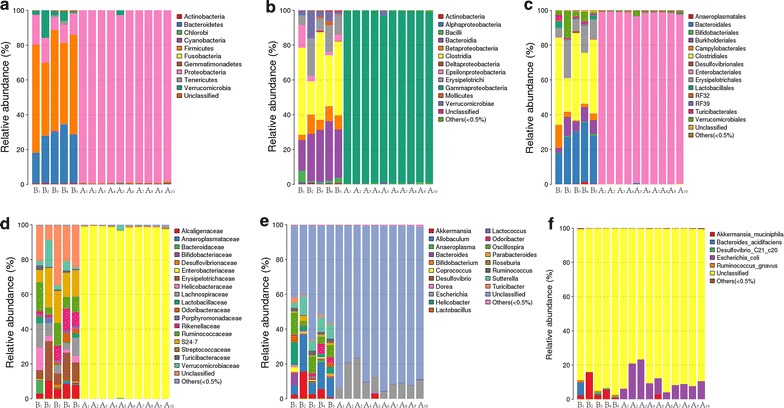
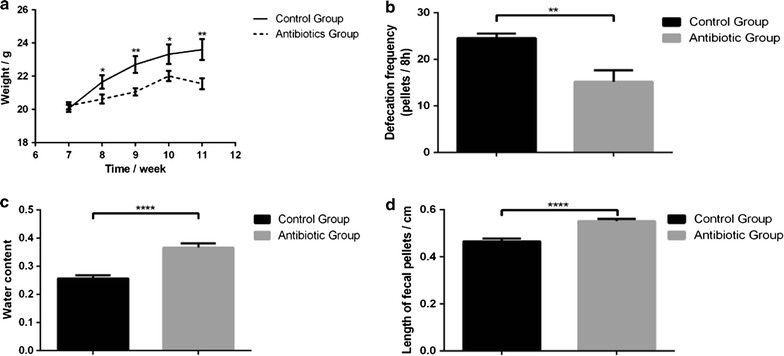
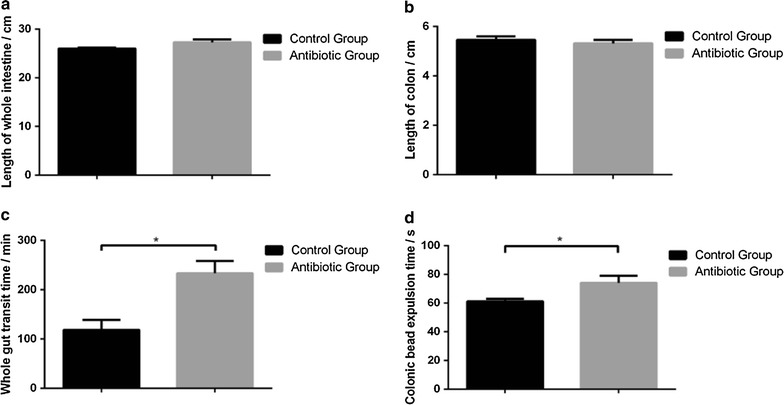
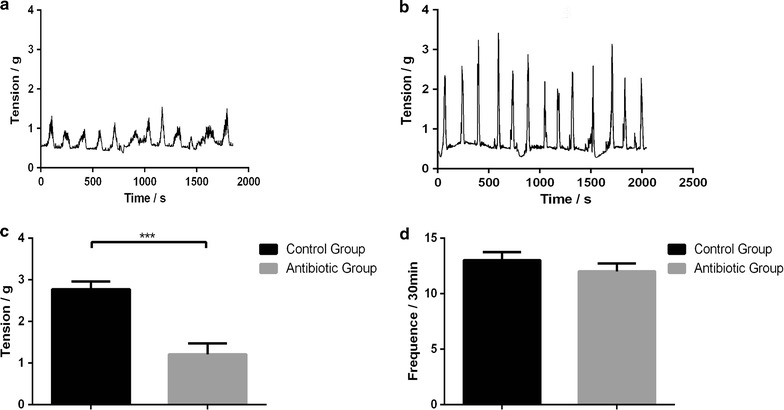
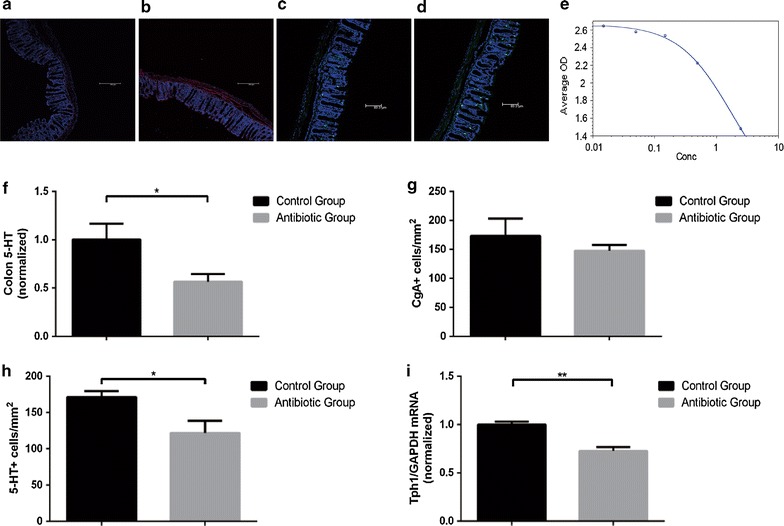
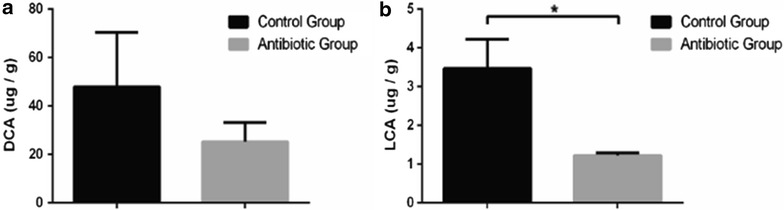
BACKGROUND: The gastrointestinal motility is affected by gut microbiota and the relationship between them has become a hot topic. However, mechanisms of microbiota in regulating motility have not been well defined. We thus investigated the effect of microbiota depletion by antibiotics on gastrointestinal motility, colonic serotonin levels, and bile acids metabolism. METHODS: After 4 weeks with antibiotics treatments, gastrointestinal and colon transit, defecation frequency, water content, and other fecal parameters were measured and analyzed in both wild-type and antibiotics-treated mice, respectively. Contractility of smooth muscle, serotonin levels, and bile acids levels in wild-type and antibiotics-treated mice were also analyzed. RESULTS: After antibiotics treatment, the richness and diversity of intestinal microbiota decreased significantly, and the fecal of mice had less output (P < 0.01), more water content (P < 0.01), and longer pellet length (P < 0.01). Antibiotics treatment in mice also resulted in delayed gastrointestinal and colonic motility (P < 0.05), and inhibition of phasic contractions of longitudinal muscle from isolated proximal colon (P < 0.01). In antibiotics-treated mice, serotonin, tryptophan hydroxylase 1, and secondary bile acids levels were decreased. CONCLUSION: Gut microbiota play an important role in the regulation of intestinal bile acids and serotonin metabolism, which could probably contribute to the association between gut microbiota and gastrointestinal motility as intermediates.
Overview
The claims and statistics of this paper haven’t been checked yet.
Free: it reads the open-access text and checks the first 5 claims that cite a source we can check. Create a free account to check every claim.
Integrity signals
Registry
Cites
Statistics
Figures
Verification
Claims the paper makes
The claims and statistics of this paper haven’t been checked yet.
Free: it reads the open-access text and checks the first 5 claims that cite a source we can check. Create a free account to check every claim.
Self-check
Percentages, sums and reported differences re-computed from the paper’s own numbers.
The self-check needs the paper’s full text.
Citations
Cites
Schloss, P. D., Westcott, S. L., Ryabin, T., Hall, J. R., Hartmann, M., Hollister, E. B., Lesniewski, R. A., Oakley, B. B., Parks, D. H., Robinson, C. J., et al. (2009) · Applied and Environmental Microbiology · doi:10.1128/aem.01541-09 · Cited by 19,549
Enterotypes of the human gut microbiome
MetaHIT Consortium (additional members), Arumugam, M., Raes, J., Pelletier, E., Le Paslier, D., Yamada, T., Mende, D. R., Fernandes, G. R., Tap, J., Bruls, T., et al. (2011) · Nature · doi:10.1038/nature09944 · Cited by 7,548
Recognition of Commensal Microflora by Toll-Like Receptors Is Required for Intestinal Homeostasis
Rakoff-Nahoum, S., Paglino, J., Eslami-Varzaneh, F., Edberg, S., & Medzhitov, R. (2004) · Cell · doi:10.1016/j.cell.2004.07.002 · Cited by 4,251 · cited 1×
“after antibiotics To determine the importance of commensal microbiota in gut motility, mice were subjected to a 4-week oral administration of antibiotics combination (ampicillin, neomycin sulfate, metronidazole, and vancomycin) [17, 18, 20, 28, 29].”
MethodThe gut microbiota--masters of host development and physiology
Sommer, F., & Bäckhed, F. (2013) · Nature Reviews Microbiology · doi:10.1038/nrmicro2974 · Cited by 3,681
Indigenous bacteria from the gut microbiota regulate host serotonin biosynthesis
Yano, J. M., Yu, K., Donaldson, G. P., Shastri, G. G., Ann, P., Ma, L., Nagler, C. R., Ismagilov, R. F., Mazmanian, S. K., & Hsiao, E. Y. (2015) · Cell · doi:10.1016/j.cell.2015.02.047 · Cited by 3,614 · cited 7×
“In antibiotics-treated mice, the 5-HT levels in colon was lower, which was consistent with that in a previous study [12].”
InfluentialMICROBIAL ECOLOGY OF THE GASTROINTESTINAL TRACT
Savage, D. C. (1977) · Annual Review of Microbiology · doi:10.1146/annurev.mi.31.100177.000543 · Cited by 2,436
TLR4 enhances TGF-β signaling and hepatic fibrosis
Seki, E., De Minicis, S., Österreicher, C. H., Kluwe, J., Osawa, Y., Brenner, D. A., & Schwabe, R. F. (2007) · Nature Medicine · doi:10.1038/nm1663 · Cited by 1,942
A G Protein-coupled Receptor Responsive to Bile Acids
Kawamata, Y., Fujii, R., Hosoya, M., Harada, M., Yoshida, H., Miwa, M., Fukusumi, S., Habata, Y., Itoh, T., Shintani, Y., et al. (2003) · Journal of Biological Chemistry · doi:10.1074/jbc.m209706200 · Cited by 1,628 · cited 10×
“Abbreviations GALT: gut-associated lymphoid tissue; 5-HT: 5-hydroxytryptamine; ECs: enterochromaffin cells; TPH: tryptophan hydroxylase; CGRP: calcitonin gene-related peptide; DCA: deoxycholic acid; LCA: lithocholic acid; BAs: bile acids; BSS: Bristol Stool Form Scale; STC: slow transit constipation; FMT: fecal microb…”
BackgroundInfluentialGut/brain axis and the microbiota
Mayer, E. A., Tillisch, K., & Gupta, A. (2015) · Journal of Clinical Investigation · doi:10.1172/jci76304 · Cited by 1,503
Microbiota regulates immune defense against respiratory tract influenza A virus infection
Ichinohe, T., Pang, I. K., Kumamoto, Y., Peaper, D. R., Ho, J. H., Murray, T. S., & Iwasaki, A. (2011) · Proceedings of the National Academy of Sciences · doi:10.1073/pnas.1019378108 · Cited by 1,502 · cited 1×
“after antibiotics To determine the importance of commensal microbiota in gut motility, mice were subjected to a 4-week oral administration of antibiotics combination (ampicillin, neomycin sulfate, metronidazole, and vancomycin) [17, 18, 20, 28, 29].”
Method
Cited by
Introduction to the human gut microbiota
Thursby, E., & Juge, N. (2017) · Biochemical Journal · doi:10.1042/bcj20160510 · Cited by 3,600
Tryptophan Metabolism: A Link Between the Gut Microbiota and Brain
Gao, K., Mu, C.-L., Farzi, A., & Zhu, W.-Y. (2020) · Advances in Nutrition · doi:10.1093/advances/nmz127 · Cited by 1,029
“As evidenced by the down-regulation of the key synthase TPH1 in the colon (38), this study points to the possible role of commensal microbiota in the modulation of the intestinal serotonin synthesis.”
BackgroundIntestinal barrier and gut microbiota: Shaping our immune responses throughout life
Takiishi, T., Fenero, C. I. M., & Câmara, N. O. S. (2017) · Tissue Barriers · doi:10.1080/21688370.2017.1373208 · Cited by 1,009
Impact of antibiotics on the human microbiome and consequences for host health
Patangia, D. V., Anthony Ryan, C., Dempsey, E., Paul Ross, R., & Stanton, C. (2022) · MicrobiologyOpen · doi:10.1002/mbo3.1260 · Cited by 754
Factors affecting the composition of the gut microbiota, and its modulation
Hasan, N., & Yang, H. (2019) · PeerJ · doi:10.7717/peerj.7502 · Cited by 755
Kennedy, E. A., King, K. Y., & Baldridge, M. T. (2018) · Frontiers in Physiology · doi:10.3389/fphys.2018.01534 · Cited by 602
Anxiety, depression, and the microbiome: A role for gut peptides
Lach, G., Schellekens, H., Dinan, T. G., & Cryan, J. F. (2018) · Neurotherapeutics · doi:10.1007/s13311-017-0585-0 · Cited by 573
Neuronal programming by microbiota regulates intestinal physiology
Obata, Y., Castaño, Á., Boeing, S., Bon-Frauches, A. C., Fung, C., Fallesen, T., de Agüero, M. G., Yilmaz, B., Lopes, R., Huseynova, A., et al. (2020) · Nature · doi:10.1038/s41586-020-1975-8 · Cited by 352
Beyond a neurotransmitter: The role of serotonin in inflammation and immunity
Wu, H., Denna, T. H., Storkersen, J. N., & Gerriets, V. A. (2019) · Pharmacological Research · doi:10.1016/j.phrs.2018.06.015 · Cited by 338
Intestinal microbiota shapes gut physiology and regulates enteric neurons and glia
Vicentini, F. A., Keenan, C. M., Wallace, L. E., Woods, C., Cavin, J.-B., Flockton, A. R., Macklin, W. B., Belkind-Gerson, J., Hirota, S. A., & Sharkey, K. A. (2021) · Microbiome · doi:10.1186/s40168-021-01165-z · Cited by 326
The role of gut dysbiosis in Parkinson’s disease: mechanistic insights and therapeutic options
Wang, Q., Luo, Y., Ray Chaudhuri, K., Reynolds, R., Tan, E.-K., & Pettersson, S. (2021) · Brain · doi:10.1093/brain/awab156 · Cited by 281
Xiao, W., Su, J., Gao, X., Yang, H., Weng, R., Ni, W., & Gu, Y. (2022) · Microbiome · doi:10.1186/s40168-022-01255-6 · Cited by 252
“FPM was performed as described previously [82].”
The ever-changing roles of serotonin
Jones, L. A., Sun, E. W., Martin, A. M., & Keating, D. J. (2020) · The International Journal of Biochemistry & Cell Biology · doi:10.1016/j.biocel.2020.105776 · Cited by 240
Uzan-Yulzari, A., Turta, O., Belogolovski, A., Ziv, O., Kunz, C., Perschbacher, S., Neuman, H., Pasolli, E., Oz, A., Ben-Amram, H., et al. (2021) · Nature Communications · doi:10.1038/s41467-020-20495-4 · Cited by 215
Wang, S.-Z., Yu, Y.-J., & Adeli, K. (2020) · Microorganisms · doi:10.3390/microorganisms8040527 · Cited by 207
The enteric nervous system in gastrointestinal disease etiology
Holland, A. M., Bon-Frauches, A. C., Keszthelyi, D., Melotte, V., & Boesmans, W. (2021) · Cellular and Molecular Life Sciences · doi:10.1007/s00018-021-03812-y · Cited by 161
RNA Sensing by Gut Piezo1 Is Essential for Systemic Serotonin Synthesis
Sugisawa, E., Takayama, Y., Takemura, N., Kondo, T., Hatakeyama, S., Kumagai, Y., Sunagawa, M., Tominaga, M., & Maruyama, K. (2020) · Cell · doi:10.1016/j.cell.2020.06.022 · Cited by 159
Clostridium ramosum regulates enterochromaffin cell development and serotonin release
Mandić, A. D., Woting, A., Jaenicke, T., Sander, A., Sabrowski, W., Rolle-Kampcyk, U., von Bergen, M., & Blaut, M. (2019) · Scientific Reports · doi:10.1038/s41598-018-38018-z · Cited by 150
Saturated long-chain fatty acid-producing bacteria contribute to enhanced colonic motility in rats
Zhao, L., Huang, Y., Lu, L., Yang, W., Huang, T., Lin, Z., Lin, C., Kwan, H., Wong, H. L. X., Chen, Y., et al. (2018) · Microbiome · doi:10.1186/s40168-018-0492-6 · Cited by 144
Tryptophan‐derived serotonin‐kynurenine balance in immune activation and intestinal inflammation
Haq, S., Grondin, J. A., & Khan, W. I. (2021) · The FASEB Journal · doi:10.1096/fj.202100702r · Cited by 155
The Gut, Its Microbiome, and Hypertension
Richards, E. M., Pepine, C. J., Raizada, M. K., & Kim, S. (2017) · Current Hypertension Reports · doi:10.1007/s11906-017-0734-1 · Cited by 143
The Relationship Between the Serotonin Metabolism, Gut-Microbiota and the Gut-Brain Axis
Stasi, C., Sadalla, S., & Milani, S. (2019) · Current Drug Metabolism · doi:10.2174/1389200220666190725115503 · Cited by 127
Wang, J., Xu, W., Wang, R., Cheng, R., Tang, Z., & Zhang, M. (2021) · Food & Function · doi:10.1039/d1fo00115a · Cited by 127
Gut microbiota-motility interregulation: insights from in vivo, ex vivo and in silico studies
Waclawiková, B., Codutti, A., Alim, K., & Aidy, S. E. (2022) · Gut Microbes · doi:10.1080/19490976.2021.1997296 · Cited by 148
Gut microbes in neurocognitive and mental health disorders
Halverson, T., & Alagiakrishnan, K. (2020) · Annals of Medicine · doi:10.1080/07853890.2020.1808239 · Cited by 125
Antibiotic-induced dysbiosis of the microbiota impairs gut neuromuscular function in juvenile mice
Caputi, V., Marsilio, I., Filpa, V., Cerantola, S., Orso, G., Bistoletti, M., Paccagnella, N., De Martin, S., Montopoli, M., Dall'Acqua, S., et al. (2017) · British Journal of Pharmacology · doi:10.1111/bph.13965 · Cited by 124
“These findings are in agreement with other reports showing the occurrence of macroscopic changes in the intestine of germ-free or antibiotic-treated mice (Reikvam et al., 2011; Grasa et al., 2015; Ge et al., 2017).”
ResultLeaky Gut in IBD: Intestinal Barrier–Gut Microbiota Interaction
Yu, S., Sun, Y., Shao, X., Zhou, Y., Yu, Y., Kuai, X., & Zhou, C. (2022) · Journal of Microbiology and Biotechnology · doi:10.4014/jmb.2203.03022 · Cited by 142
Liu, D., Huang, J., Luo, Y. L., Wen, B., Wu, W., Zeng, H., & Zhonghua, L. (2019) · Journal of Agricultural and Food Chemistry · doi:10.1021/acs.jafc.9b05833 · Cited by 132
Ogawa, Y., Miyoshi, C., Obana, N., Yajima, K., Hotta-Hirashima, N., Ikkyu, A., Kanno, S., Soga, T., Fukuda, S., & Yanagisawa, M. (2020) · Scientific Reports · doi:10.1038/s41598-020-76562-9 · Cited by 118
Tirelle, P., Breton, J., Riou, G., Déchelotte, P., Coëffier, M., & Ribet, D. (2020) · BMC Microbiology · doi:10.1186/s12866-020-02018-9 · Cited by 130
Direct and indirect mechanisms by which the gut microbiota influence host serotonin systems
Legan, T. B., Lavoie, B. A., & Mawe, G. M. (2022) · Neurogastroenterology & Motility · doi:10.1111/nmo.14346 · Cited by 132
Restoration of dysbiotic human gut microbiome for homeostasis
Dixit, K. K., Chaudhari, D. S., Dhotre, D. P., Shouche, Y. S., & Saroj, S. D. (2021) · Life Sciences · doi:10.1016/j.lfs.2021.119622 · Cited by 128
Antibiotic Persistence as a Metabolic Adaptation: Stress, Metabolism, the Host, and New Directions
Cabral, D. J., Wurster, J. I., & Belenky, P. A. (2018) · Pharmaceuticals · doi:10.3390/ph11010014 · Cited by 117
Hussein, J., El-Banna, M., Razik, T. A., & El‐Naggar, M. E. (2017) · International Journal of Biological Macromolecules · doi:10.1016/j.ijbiomac.2017.09.056 · Cited by 92
Interactions between the microbiota and enteric nervous system during gut-brain disorders
Fried, S. G., Wemelle, E., Cani, P. D., & Knauf, C. (2021) · Neuropharmacology · doi:10.1016/j.neuropharm.2021.108721 · Cited by 102
Role of gut microbiota-derived signals in the regulation of gastrointestinal motility
Zheng, Z., Tang, J., Hu, Y., & Zhang, W. (2022) · Frontiers in Medicine · doi:10.3389/fmed.2022.961703 · Cited by 103
The Gut–Brain Axis in Schizophrenia: The Implications of the Gut Microbiome and SCFA Production
Ju, S., Shin, Y., Han, S., Kwon, J., Choi, T. G., Kang, I., & Kim, S. S. (2023) · Nutrients · doi:10.3390/nu15204391 · Cited by 108
The gut-eye-lacrimal gland-microbiome axis in Sjögren Syndrome
Trujillo-Vargas, C. M., Schaefer, L., Alam, J., Pflugfelder, S. C., Britton, R. A., & de Paiva, C. S. (2019) · The Ocular Surface · doi:10.1016/j.jtos.2019.10.006 · Cited by 97
Neuroimmune Interactions in the Intestine
Wallrapp, A., & Chiu, I. M. (2024) · Annual Review of Immunology · doi:10.1146/annurev-immunol-101921-042929 · Cited by 100
Intestinal Macrophages in Resolving Inflammation
Hine, A. M., & Loke, P. (2019) · The Journal of Immunology · doi:10.4049/jimmunol.1900345 · Cited by 93
Xu, H., Wang, S., Jiang, Y., Wu, J., Chen, L., Ding, Y., Zhou, Y., Deng, L., & Chen, X. (2023) · International Journal of Molecular Sciences · doi:10.3390/ijms24021423 · Cited by 94
Gut Microbiota as an Endocrine Organ: Unveiling Its Role in Human Physiology and Health
Pires, L., Gonzaléz‐Paramás, A. M., Heleno, S. A., & Calhelha, R. C. (2024) · Applied Sciences · doi:10.3390/app14209383 · Cited by 95
Enteric Microbiota-Mediated Serotonergic Signaling in Pathogenesis of Irritable Bowel Syndrome
Mishima, Y., & Ishihara, S. (2021) · International Journal of Molecular Sciences · doi:10.3390/ijms221910235 · Cited by 88
THE INTESTINAL MICROBIOME IN HUMAN HEALTH AND DISEASE.
DuPont, H. L., Jiang, Z., Dupont, A. W., & Utay, N. S. (2020) · Transactions of the American Clinical and Climatological Association · Cited by 103
He, Y., Wang, K., Su, N., Yuan, C., Zhang, N., Hu, X., Fu, Y., & Zhao, F. (2024) · Journal of Cellular and Molecular Medicine · doi:10.1111/jcmm.70099 · Cited by 88
Liu, D., Wen, B., Zhu, K., Luo, Y. L., Li, J., Li, Y., Lin, H., Huang, J., & Liu, Z. (2019) · Applied Microbiology and Biotechnology · doi:10.1007/s00253-019-09764-5 · Cited by 72
Self-citationAntibiotics and the nervous system: More than just the microbes?
Champagne-Jorgensen, K., Kunze, W. A., Forsythe, P., Bienenstock, J., & McVey Neufeld, K.-A. (2019) · Brain, Behavior, and Immunity · doi:10.1016/j.bbi.2018.12.014 · Cited by 92
Gut/rumen-mammary gland axis in mastitis: Gut/rumen microbiota–mediated “gastroenterogenic mastitis”
Hu, X., He, Z., Zhao, C., He, Y., Qiu, M., Xiang, K., Zhang, N., & Fu, Y. (2023) · Journal of Advanced Research · doi:10.1016/j.jare.2023.02.009 · Cited by 77
Luk, B., Horvath, T. D., Engevik, K. A., Ruan, W. H., Haidacher, S. J., Hoch, K. M., Oezguen, N., Spinler, J. K., Haag, A. M., Versalovic, J. A., et al. (2021) · Biomolecules · doi:10.3390/biom11081091 · Cited by 72
Shaw, C. A., Hess, M., & Weimer, B. C. (2023) · Microorganisms · doi:10.3390/microorganisms11071825 · Cited by 77
Zhang, X., Tian, H., Gu, L., Nie, Y., Ding, C., Ge, X., Yang, B. K., Gong, J., & Li, N. (2018) · Science China Life Sciences · doi:10.1007/s11427-017-9229-1 · Cited by 68
Self-citationXu, Y., Wang, J., Wu, X., Jing, H., Zhang, S., Hu, Z., Rao, L., Chang, Q., Wang, L., & Zhang, Z. (2023) · Gut Microbes · doi:10.1080/19490976.2023.2168101 · Cited by 61
“Serotonin functions critically in maintaining normal intestinal peristalsis, and its biosynthesis is reported to be controlled by fecal bacteria, for example reduced serotonin level in fecal bacteria depleted mice and germ-free mice.(14,15) However, the roles of microbial metabolites and serotonin in PCD remain unknow…”
BackgroundSieving through gut models of colonization resistance
Mullineaux-Sanders, C., Suez, J., Elinav, E., & Frankel, G. M. (2018) · Nature Microbiology · doi:10.1038/s41564-017-0095-1 · Cited by 66
Simpson, S., Kimbrough, A., Boomhower, B., Mclellan, R., Hughes, M., Shankar, K., de Guglielmo, G., & George, O. (2020) · eNeuro · doi:10.1523/eneuro.0312-19.2020 · Cited by 61
van der Eijk, J. A. J., Rodenburg, T. B., de Vries, H., Kjær, J. B., Smidt, H., Naguib, M., Kemp, B., & Lammers, A. (2020) · Scientific Reports · doi:10.1038/s41598-020-59125-w · Cited by 69
Gut Microbial-Derived Metabolites as Immune Modulators of T Helper 17 and Regulatory T Cells
Calvo‐Barreiro, L., Zhang, L., Abdel‐Rahman, S. A., Naik, S. P., & Gabr, M. T. (2023) · International Journal of Molecular Sciences · doi:10.3390/ijms24021806 · Cited by 69
Al-Khafaji, A. H., Jepsen, S. D., Christensen, K. R., & Vigsnæs, L. K. (2020) · Journal of Functional Foods · doi:10.1016/j.jff.2020.104176 · Cited by 67
Gut Microbiota and Neuroplasticity
Murciano-Brea, J., García-Montes, M. E., Geuna, S., & Herrera‐Rincon, C. (2021) · Cells · doi:10.3390/cells10082084 · Cited by 68
Functional Constipation and the Gut Microbiome in Children: Preclinical and Clinical Evidence
Rodriguez, D. A., Popov, J., Ratcliffe, E. M., & Monjaráz, E. M. T. (2021) · Frontiers in Pediatrics · doi:10.3389/fped.2020.595531 · Cited by 62
Çalışkan, G., French, T., Lacalle, S. E., del Ángel, M., Steffen, J., Heimesaat, M. M., Dunay, I. R., & Stork, O. (2021) · Brain Behavior and Immunity · doi:10.1016/j.bbi.2021.10.007 · Cited by 59
Christofi, T., Panayidou, S., Dieronitou, I., Michael, C., & Apidianakis, Y. (2019) · Scientific Reports · doi:10.1038/s41598-019-51058-3 · Cited by 65
Hayeeawaema, F., Wichienchot, S., & Khuituan, P. (2019) · Nutrition · doi:10.1016/j.nut.2019.110715 · Cited by 53
Qiu, W., Fang, M., Magnuson, J. T., Greer, J. B., Chen, Q., Zheng, Y., Xiong, Y., Luo, S., Zheng, C., & Schlenk, D. (2020) · Journal of Hazardous Materials · doi:10.1016/j.jhazmat.2020.123009 · Cited by 54
Post-antibiotic gut dysbiosis-induced trabecular bone loss is dependent on lymphocytes
Rios‐Arce, N. D., Schepper, J. D., Dagenais, A., Schaefer, L., Daly-Seiler, C. S., Gardinier, J. D., Britton, R. A., McCabe, L. R., & Parameswaran, N. (2020) · Bone · doi:10.1016/j.bone.2020.115269 · Cited by 59
Lentinan improves intestinal inflammation and gut dysbiosis in antibiotics-induced mice
Ji, X., Su, L., Zhang, P., Yue, Q., Zhao, C., Sun, X., Li, K., Liu, X., Zhang, S., & Zhao, L. (2022) · Scientific Reports · doi:10.1038/s41598-022-23469-2 · Cited by 54
Yan, S., Zhu, H., Cheng, R., Tang, Z., & Zhang, M. (2022) · Physiology & Behavior · doi:10.1016/j.physbeh.2022.114023 · Cited by 51
Lactobacillus rhamnosus: An emerging probiotic with therapeutic potential for depression
Feng, J. B., Cen, Q., Cui, Y., Hu, X., Li, M., Wang, L., Wei, J., Sun, N., Wang, J., & Zhang, A. (2024) · Pharmacological Research · doi:10.1016/j.phrs.2024.107541 · Cited by 56
The protective effects of yellow tea extract against loperamide-induced constipation in mice
Cao, P.-Q., Li, X., Ouyang, J., Jiang, R., Huang, F.-F., Wen, B., Zhang, X.-N., Huang, J., & Liu, Z. (2021) · Food & Function · doi:10.1039/d0fo02969f · Cited by 49
The intestinal microenvironment shapes macrophage and dendritic cell identity and function
Filardy, A. A., Ferreira, J. R. M., Rezende, R. M., Kelsall, B. L., & de Oliveira, R. P. (2023) · Immunology Letters · doi:10.1016/j.imlet.2023.01.003 · Cited by 56
Deng, Y., Li, M., Lü, M., Cong, L., Liu, Y., Zhang, B., He, C., Zheng, P., & Yuan, J. (2018) · Beneficial Microbes · doi:10.3920/bm2017.0062 · Cited by 46
Hung, L. Y., Parathan, P., Boonma, P., Wu, Q., Wang, Y., Haag, A., Luna, R. A., Bornstein, J. C., Savidge, T. C., & Foong, J. P. P. (2020) · American Journal of Physiology-Gastrointestinal and Liver Physiology · doi:10.1152/ajpgi.00088.2020 · Cited by 43
Updates on the biology of serotonin and tryptophan hydroxylase
Swami, T., & Weber, H. C. (2017) · Current Opinion in Endocrinology Diabetes and Obesity · doi:10.1097/med.0000000000000383 · Cited by 50
Prebiotic oligosaccharides from dragon fruits alter gut motility in mice
Khuituan, P., K-da, S., Bannob, K., Hayeeawaema, F., Peerakietkhajorn, S., Tipbunjong, C., Wichienchot, S., & Charoenphandhu, N. (2019) · Biomedicine & Pharmacotherapy · doi:10.1016/j.biopha.2019.108821 · Cited by 54
Heat-killed Lactobacillus casei subsp. casei 327 promotes colonic serotonin synthesis in mice
Hara, T., Mihara, T., Ishibashi, M., Kumagai, T., & Joh, T. (2018) · Journal of Functional Foods · doi:10.1016/j.jff.2018.05.050 · Cited by 42
Szőke, H., Kovács, Z., Bókkon, I., Vagedes, J., Erdöfi-Szabó, A., Hegyi, G., Sterner, M.-G., Kiss, Á., & Kapócs, G. (2020) · Reviews in the Neurosciences · doi:10.1515/revneuro-2019-0095 · Cited by 50
Linking serotonin homeostasis to gut function: Nutrition, gut microbiota and beyond
Jiang, L., Han, D., Hao, Y., Song, Z., Sun, Z., & Dai, Z. (2023) · Critical Reviews in Food Science and Nutrition · doi:10.1080/10408398.2023.2183935 · Cited by 48
Waitzberg, D. L., Guarner, F., Hojsak, I., Ianiro, G., Polk, D. B., & Sokol, H. (2024) · Advances in Therapy · doi:10.1007/s12325-024-02783-3 · Cited by 56
Changes in intestinal microbiota and their effects on allogeneic stem cell transplantation
Shallis, R. M., Terry, C., & Lim, S. H. (2017) · American Journal of Hematology · doi:10.1002/ajh.24896 · Cited by 42
Guo, Y., Chen, M., Li, S. H. A. O., Zhang, W., Rao, T., Zhou, H., & Huang, W. (2019) · Chinese Journal of Natural Medicines · doi:10.1016/s1875-5364(19)30026-3 · Cited by 53
Gut-brain axis: gut dysbiosis and psychiatric disorders in Alzheimer’s and Parkinson’s disease
Denman, C. R., Park, S. M., & Jo, J. (2023) · Frontiers in Neuroscience · doi:10.3389/fnins.2023.1268419 · Cited by 47
Serotonin signaling to regulate energy metabolism: a gut microbiota perspective
Li, G., Dong, S., Liu, C., Yang, J., Rensen, P. C. N., & Wang, Y. (2024) · Life Metabolism · doi:10.1093/lifemeta/loae039 · Cited by 45
Microbial modulation of tryptophan metabolism links gut microbiota to disease and its treatment
Zhao, P., Chen, Y., Zhou, S., & Li, F. (2025) · Pharmacological Research · doi:10.1016/j.phrs.2025.107896 · Cited by 49
Keski‐Rahkonen, P., Kolehmainen, M., Lappi, J., Micard, V., Jokkala, J., Rosa‐Sibakov, N., Pihlajamäki, J., Kirjavainen, P. V., Mykkänen, H. M., Poutanen, K. S., et al. (2019) · American Journal of Clinical Nutrition · doi:10.1093/ajcn/nqy394 · Cited by 43
Gubert, C., Kong, G., Uzungil, V., Zeleznikow-Johnston, A., Burrows, E. L., Renoir, T., & Hannan, A. J. (2020) · Frontiers in Cell and Developmental Biology · doi:10.3389/fcell.2020.582320 · Cited by 42
Yang, W., Ansari, A. R., Niu, X., Zou, W., Lu, M., Dong, L., Li, F., Chen, Y., Yang, K., & Song, H. (2022) · Microbiological Research · doi:10.1016/j.micres.2022.127047 · Cited by 41
Winiarska‐Mieczan, A., Tomaszewska, E., Donaldson, J., & Jachimowicz-Rogowska, K. (2022) · Nutrients · doi:10.3390/nu14122498 · Cited by 43
Engineered 5-HT producing gut probiotic improves gastrointestinal motility and behavior disorder
Li, B., Li, M., Luo, Y., Li, R., Li, W., & Liu, Z. (2022) · Frontiers in Cellular and Infection Microbiology · doi:10.3389/fcimb.2022.1013952 · Cited by 49
Ma, T., Xue, X., Tian, H., Zhou, X., Wang, J.-K., Zhao, Z., Wang, M., Song, J., Feng, R., Li, L., et al. (2023) · Journal of Translational Medicine · doi:10.1186/s12967-023-04215-2 · Cited by 45
Self-citationThe Role and Mechanism of Gut Microbiota in Pulmonary Arterial Hypertension
Chen, Y.-H., Wen, Y., Meng, L., Zhong, J., & Liu, X.-Y. (2022) · Nutrients · doi:10.3390/nu14204278 · Cited by 43
Regulation of serotonin production by specific microbes from piglet gut
Liu, Z., Ling, Y., Peng, Y., Han, S., Ren, Y., Jing, Y., Fan, W., Su, Y., Mu, C., & Zhu, W. (2023) · Journal of Animal Science and Biotechnology/Journal of animal science and biotechnology · doi:10.1186/s40104-023-00903-7 · Cited by 40
Diet1, bile acid diarrhea, and FGF15/19: mouse model and human genetic variants
Lee, J. M., Ong, J. R., Vergnes, L., Vallim, T. Q. D. A., Nolan, J., Cantor, R. M., Walters, J. F., & Reue, K. (2018) · Journal of Lipid Research · doi:10.1194/jlr.m078279 · Cited by 32
Antibiotic Driven Changes in Gut Motility Suggest Direct Modulation of Enteric Nervous System
Delungahawatta, T., Amin, J. Y., Stanisz, A. M., Bienenstock, J., Forsythe, P., & Kunze, W. (2017) · Frontiers in Neuroscience · doi:10.3389/fnins.2017.00588 · Cited by 37
He, Y., Yang, C. K., Wang, P., Liu, Y., Wu, H., Liu, H., Qi, M., Guo, Z., Li, J., Shi, H., et al. (2019) · Journal of Ethnopharmacology · doi:10.1016/j.jep.2019.111953 · Cited by 30
Self-citationEarly exposure to food contaminants reshapes maturation of the human brain-gut-microbiota axis
Sarron, E., Pérot, M., Barbezier, N., Delayre‐Orthez, C., Gay‐Queheillard, J., & Anton, P. M. (2020) · World Journal of Gastroenterology · doi:10.3748/wjg.v26.i23.3145 · Cited by 37
Interactions between gut microbiota and parkinson’s disease: the role of tryptophan metabolism
Fan, X., Xiao, Z., Chen, Y., Yang, H., Diao, M., Hu, W., & Wang, S. (2025) · Cell Communication and Signaling · doi:10.1186/s12964-025-02393-8 · Cited by 39
Polyunsaturated fatty acids-rich dietary lipid prevents high fat diet-induced obesity in mice
Haneishi, Y., Furuya, Y., Hasegawa, M., Takemae, H., Tanioka, Y., Mizutani, T., Rossi, M., & Miyamoto, J. (2023) · Scientific Reports · doi:10.1038/s41598-023-32851-7 · Cited by 37
Tryptophan‐synthesizing bacteria enhance colonic motility
Legan, T. B., Lavoie, B. A., Norberg, E. S., Ley, I. C., Tack, S., Tompkins, T. A., Wargo, M. J., & Mawe, G. M. (2023) · Neurogastroenterology & Motility · doi:10.1111/nmo.14629 · Cited by 30
Chen, Y., Pan, R., Mei, L., Tian, P., Wang, L., Zhao, J., Chen, W., & Wang, G. (2023) · Nutrients · doi:10.3390/nu15194282 · Cited by 30
Zhu, L., Zhang, Z., Luo, T. F., Li, H., Deng, Z., Li, J., Zheng, L., Liao, J., Wang, M., & Zhang, B. (2025) · Microbiome · doi:10.1186/s40168-025-02094-x · Cited by 34
Self-citationMoretti, C. H., Grasset, E., Zhu, J., Yang, G., Olofsson, L. E., Khan, M. T., Bergh, P., Oh, J., Lundqvist, A., Gils, T. V., et al. (2025) · Cell Reports · doi:10.1016/j.celrep.2025.116434 · Cited by 35
Metadata
- Authors
- Ge, X., Ding, C., Zhao, W., Xu, L., Tian, H., Gong, J., Zhu, M., Li, J., & Li, N.
- Affiliations
- Nanjing General Hospital of Nanjing Military Command (CN)
- Model Animal Research Center (CN)
- Nanjing University (CN)
- Corresponding author
- Gong, Jianfeng
- Li, Ning
- Venue
- Journal of Translational Medicine
- Published
- 2017-01-13
- Volume
- 15
- Issue
- 1
- Pages
- 13-13
- ISSN
- 1479-5876 (ISSN-L)
- PMC
- PMC5237163
- OpenAlex
- W2575984858
- Semantic Scholar
- 9db76f33cfaf0f649af0caf0745bee890496a963
- Cited by
- 274
- References
- 37
- Citations by year
- 2026: 24 · 2025: 34 · 2024: 41 · 2023: 36 · 2022: 36 · 2021: 27 · 2020: 32 · 2019: 21 · 2018: 14 · 2017: 9
- FWCI
- 21.76
- Type
- journal article
- Language
- en
- Open access
- gold
- doi.org
- Licence
- cc-by
- Locations
- Journal of Translational Medicine (publishedVersion, cc-by)
- PubMed Central (publishedVersion, cc-by)
- PubMed (publishedVersion)
- Funders
- National Natural Science Foundation of China (81270006)
- National Gastroenterology Research Project (2015BAI13B07)
- Topics
- Health Sciences › Medicine › Gastroenterology › Gastrointestinal motility and disorders
- Life Sciences › Biochemistry, Genetics and Molecular Biology › Molecular Biology › Gut microbiota and health
- Health Sciences › Medicine › Surgery › Congenital gastrointestinal and neural anomalies
- Keywords
- gut microbiota, antibiotic-induced microbiota depletion, intestinal motility, colonic motility, serotonin synthesis, tryptophan hydroxylase 1, secondary bile acids, smooth muscle contractility, fecal transit, gut-brain axis
- MeSH terms
- Gastrointestinal Microbiome, Animals, Anti-Bacterial Agents, Bile Acids and Salts, Cecum, Feces, Gastrointestinal Motility, Male, Mice, Inbred C57BL, Muscle Contraction, Organ Size, Serotonin, Metabolome, Microbiota
About these checks
Registry, retraction, Cites and statistics results are computed, not judged, with one exception: a printed reference that no index lists is read once by a model before it counts as a citation error. Claims are extracted by a model and kept only when their quote appears verbatim in the text; each cited source is then checked, with a model’s help, for whether it says what the claim relies on. Those verdicts can be wrong — read the claim’s quote and the cited source before relying on one.
Statistics and arithmetic are recomputed, not judged.
Confidence bands are shown only for fields calibrated on our annotated test set. None is calibrated yet, so no band is shown.
What counts as a claim ›How we measure confidence ›How we check this ›
Are you an author, or do you see a problem with this page? Request a review
Data sources
Bibliographic data: Semantic Scholar, OpenAlex, Crossref.
Contains information from the Semantic Scholar Academic Graph Datasets, made available under the ODC Attribution License (ODC-BY 1.0).
Semantic Scholar’s data is described in: Kinney, R., et al. (2023). The Semantic Scholar Open Data Platform. arXiv:2301.10140.
