

COX-2 expression positively correlates with PD-L1 expression in human melanoma cells
Open accessThe DOI matches its Crossref record; 64 of the 64 references it cites were found in a registry or an index.
Abstract
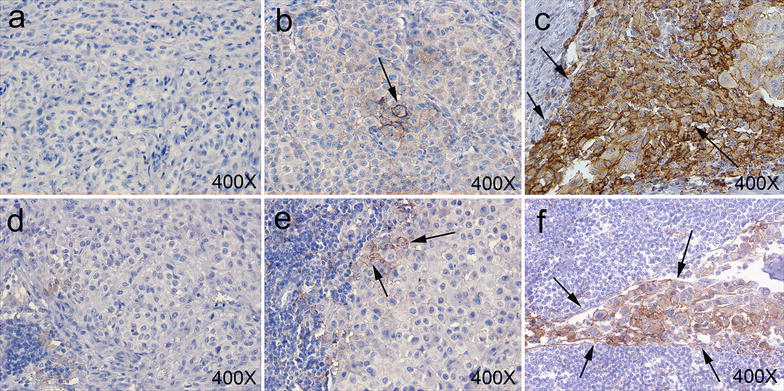
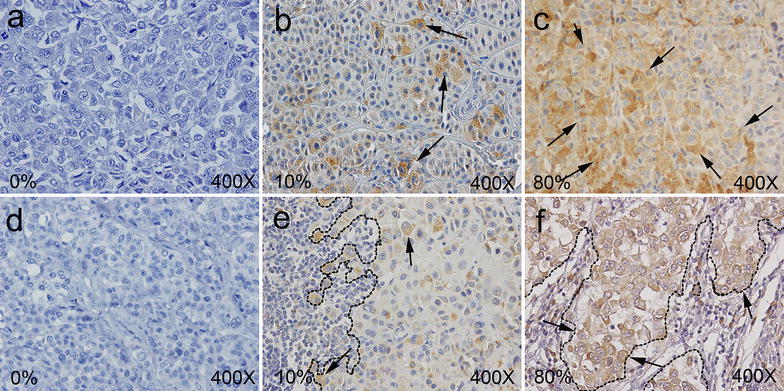
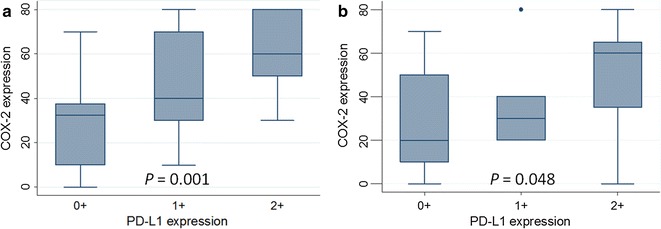
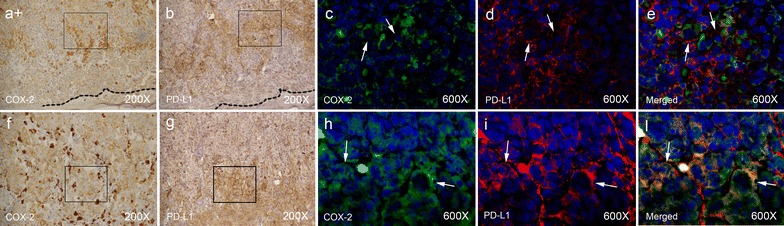
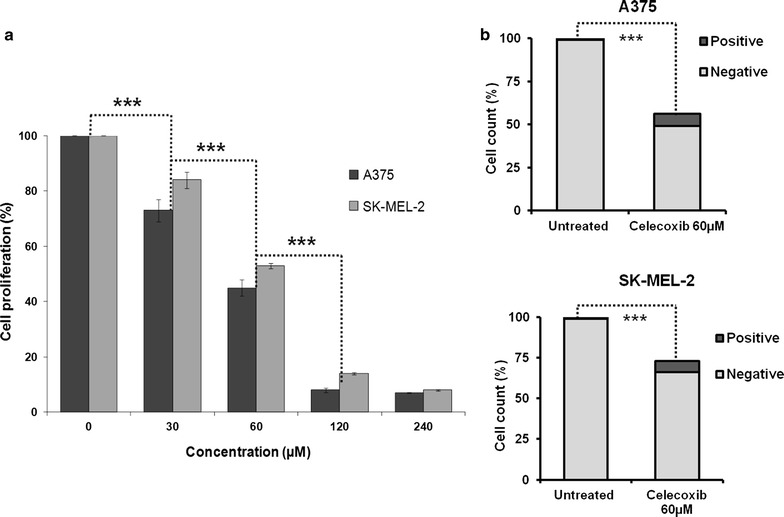
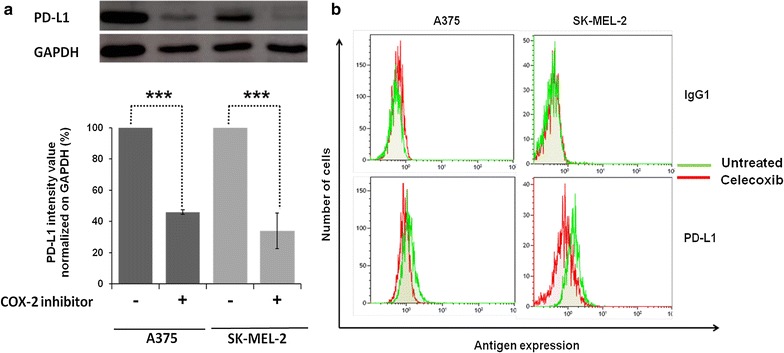
The resistance to PD-1/PD-L1 inhibitors for the treatment of melanoma have prompted investigators to implement novel clinical trials which combine immunotherapy with different treatment modalities. Moreover is also important to investigate the mechanisms which regulate the dynamic expression of PD-L1 on tumor cells and PD-1 on T cells in order to identify predictive biomarkers of response. COX-2 is currently investigated as a major player of tumor progression in several type of malignancies including melanoma. In the present study we investigated the potential relationship between COX-2 and PD-L1 expression in melanoma. Tumor samples obtained from primary melanoma lesions and not matched lymph node metastases were analyzed for both PD-L1 and COX-2 expression by IHC analysis. Status of BRAF and NRAS mutations was analyzed by sequencing and PCR. Co-localization of PD-L1 and COX-2 expression was analyzed by double fluorescence staining. Lastly the BRAF V600E A375 and NRAS Q61R SK-MEL-2 melanoma cell lines were used to evaluate the effect of COX-2 inhibition by celecoxib on expression of PD-L1 in vitro. BRAF V600E/V600K and NRAS Q61R/Q61L were detected in 57.8 and 8.9% of the metastatic lesions, and in 65.9 and 6.8% of the primary tumors, respectively. PD-L1 and COX-2 expression were heterogeneously expressed in both primary melanoma lesions and not matched lymph node metastases. A significantly lower number of PD-L1 negative lesions was found in primary tumors as compared to not matched metastatic lesions ( P = 0.002). COX-2 expression significantly correlated with PD-L1 expression in both primary ( P = 0.001) and not matched metastatic ( P = 0.048) lesions. Furthermore, in melanoma tumors, cancer cells expressing a higher levels of COX-2 also co-expressed a higher level of PD-L1. Lastly, inhibition of COX-2 activity by celecoxib down-regulated the expression of PD-L1 in both BRAF V600E A375 and NRAS Q61R SK-MEL-2 melanoma cell lines. COX-2 expression correlates with and modulates PD-L1 expression in melanoma cells. These findings have clinical relevance since they provide a rationale to implement novel clinical trials to test COX-2 inhibition as a potential treatment to prevent melanoma progression and immune evasion as well as to enhance the anti-tumor activity of PD-1/PD-L1 based immunotherapy for the treatment of melanoma patients with or without BRAF/NRAS mutations.
Overview
The claims and statistics of this paper haven’t been checked yet.
Free: it reads the open-access text and checks the first 5 claims that cite a source we can check. Create a free account to check every claim.
Integrity signals
Registry
Cites
Statistics
Figures
Verification
Claims the paper makes
The claims and statistics of this paper haven’t been checked yet.
Free: it reads the open-access text and checks the first 5 claims that cite a source we can check. Create a free account to check every claim.
Claims other papers make about this one
Each is checked against this paper’s own text: does it say what the citing paper says it does?
In the citing paper
“Cyclooxygenase-2 (COX-2) expression is also correlates with PD-L1 expression in primary melanomas, and inhibition of COX-2 by celecoxib downregulates PD-L1 in melanoma cells113.”
From Mechanisms and prevention of UV‐induced melanoma (2018) · cites this paper as [113]
Self-check
Percentages, sums and reported differences re-computed from the paper’s own numbers.
The self-check needs the paper’s full text.
Citations
Cites
Adverse Renal Effects of Immune Checkpoint Inhibitors: A Narrative Review
Wanchoo, R., Karam, S., Uppal, N. N., Barta, V. S., Deray, G., Devoe, C., Launay-Vacher, V., Jhaveri, K. D., & on behalf of Cancer and Kidney International Network Workgroup on Immune Checkpoint Inhibitors (2017) · American Journal of Nephrology · doi:10.1159/000455014 · Cited by 15,256
Improved Survival with Ipilimumab in Patients with Metastatic Melanoma
Hodi, F. S., O'Day, S. J., McDermott, D. F., Weber, R. W., Sosman, J. A., Haanen, J. B., Gonzalez, R., Robert, C., Schadendorf, D., Hassel, J. C., et al. (2010) · New England Journal of Medicine · doi:10.1056/nejmoa1003466 · Cited by 15,155
Mutations of the BRAF gene in human cancer
Davies, H., Bignell, G. R., Cox, C., Stephens, P., Edkins, S., Clegg, S., Teague, J., Woffendin, H., Garnett, M. J., Bottomley, W., et al. (2002) · Nature · doi:10.1038/nature00766 · Cited by 10,674 · cited 1×
“The full coding sequences and splice junctions of NRAS (exons 1 and 2) and the entire sequence of the BRAF (exon 15) [24, 25] were screened for mutations.”
Self-citationCombined Nivolumab and Ipilimumab or Monotherapy in Untreated Melanoma
Larkin, J., Chiarion-Sileni, V., Gonzalez, R., Grob, J. J., Cowey, C. L., Lao, C. D., Schadendorf, D., Dummer, R., Smylie, M., Rutkowski, P., et al. (2015) · New England Journal of Medicine · doi:10.1056/nejmoa1504030 · Cited by 8,157
Self-citationIpilimumab plus Dacarbazine for Previously Untreated Metastatic Melanoma
Robert, C., Thomas, L., Bondarenko, I., O'Day, S., Weber, J., Garbe, C., Lebbe, C., Baurain, J.-F., Testori, A., Grob, J.-J., et al. (2011) · New England Journal of Medicine · doi:10.1056/nejmoa1104621 · Cited by 4,496
Nivolumab plus Ipilimumab in Advanced Melanoma
Wolchok, J. D., Kluger, H., Callahan, M. K., Postow, M. A., Rizvi, N. A., Lesokhin, A. M., Segal, N. H., Ariyan, C. E., Gordon, R.-A., Reed, K., et al. (2013) · New England Journal of Medicine · doi:10.1056/nejmoa1302369 · Cited by 4,230
Hauschild, A., Grob, J.-J., Demidov, L. V., Jouary, T., Gutzmer, R., Millward, M., Rutkowski, P., Blank, C. U., Miller, W. H., Kaempgen, E., et al. (2012) · The Lancet · doi:10.1016/s0140-6736(12)60868-x · Cited by 2,989
Combined BRAF and MEK inhibition in melanoma with BRAF V600 mutations
Flaherty, K. T., Infante, J. R., Daud, A., Gonzalez, R., Kefford, R. F., Sosman, J., Hamid, O., Schuchter, L., Cebon, J., Ibrahim, N., et al. (2012) · New England Journal of Medicine · doi:10.1056/nejmoa1210093 · Cited by 2,810
Nivolumab and ipilimumab versus ipilimumab in untreated melanoma
Postow, M. A., Chesney, J., Pavlick, A. C., Robert, C., Grossmann, K., McDermott, D., Linette, G. P., Meyer, N., Giguere, J. K., Agarwala, S. S., et al. (2015) · New England Journal of Medicine · doi:10.1056/nejmoa1414428 · Cited by 2,781
Trypan Blue Exclusion Test of Cell Viability
Strober, W. (2015) · Current Protocols in Immunology · doi:10.1002/0471142735.ima03bs111 · Cited by 2,597 · cited 1×
“Following a 24 h incubation at 37 °C in a 5% CO2 atmosphere, cell viability was evaluated utilizing the trypan blue assay which was carried out as reported elsewhere [32].”
MPDL3280A (anti-PD-L1) treatment leads to clinical activity in metastatic bladder cancer
Powles, T., Eder, J. P., Fine, G. D., Braiteh, F. S., Loriot, Y., Cruz, C., Bellmunt, J., Burris, H. A., Petrylak, D. P., Teng, S.-L., et al. (2014) · Nature · doi:10.1038/nature13904 · Cited by 2,381 · cited 1×
“Results were graded as negative (0+), light positive (1+) and positive (2+) when the PD-L1 score in an entire lesion was 0, 1–5, and >5% respectively [29, 30].”
Hla, T., & Neilson, K. (1992) · Proceedings of the National Academy of Sciences · doi:10.1073/pnas.89.16.7384 · Cited by 1,465 · cited 1×
“Two COX isoenzymes have been identified: COX-1 is constitutively expressed in most tissues and mediates the synthesis of prostaglandins in normal physiological processes, whereas COX-2 is not detectable in most normal tissues but is rapidly induced by various stimuli such as inflammatory reactions [15].”
Trypan Blue Exclusion Test of Cell Viability
Strober, W. (1997) · Current Protocols in Immunology · doi:10.1002/0471142735.ima03bs21 · Cited by 1,345
PD-1 and PD-1 ligands: from discovery to clinical application
Okazaki, T., & Honjo, T. (2007) · International Immunology · doi:10.1093/intimm/dxm057 · Cited by 1,310 · cited 1×
“Interaction of PD-1 with PD-L1 (B7-H1) or PD-L2 (B7-DC) represents one of the major mechanisms of tumor immune escape [13].”
Cyclooxygenase-Dependent Tumor Growth through Evasion of Immunity
Zelenay, S., van der Veen, A. G., Böttcher, J. P., Snelgrove, K. J., Rogers, N., Acton, S. E., Chakravarty, P., Girotti, M. R., Marais, R., Quezada, S. A., et al. (2015) · Cell · doi:10.1016/j.cell.2015.08.015 · Cited by 1,128 · cited 1×
“This effect are in line with previous work [21, 52, 53], providing COX-2 inhibition as an additional valid option in order to inhibit melanoma cell progression.”
McArthur, G. A., Chapman, P. B., Robert, C., Larkin, J., Haanen, J. B., Dummer, R., Ribas, A., Hogg, D., Hamid, O., Ascierto, P. A., et al. (2014) · The Lancet Oncology · doi:10.1016/s1470-2045(14)70012-9 · Cited by 977
Self-citationAspirin and the Risk of Colorectal Cancer in Relation to the Expression of COX-2
Chan, A. T., Ogino, S., & Fuchs, C. S. (2007) · New England Journal of Medicine · doi:10.1056/nejmoa067208 · Cited by 781
Regulation of PD-L1: a novel role of pro-survival signalling in cancer.
Chen, J., Jiang, C. C., Jin, L., & Zhang, X. D. (2016) · Annals of Oncology · doi:10.1093/annonc/mdv615 · Cited by 767 · cited 2×
“Several mechanisms have been implicated in the regulation of PD-L1 expression by cancer cells such as activation of mitogenic and pro-survival pathways including MAPK and PI3K/AKT, increased activity of transcriptional factors HIF-1, STAT-3 and NF-κB, and presence of epigenetic modulators including miR-513, miR-570, m…”
Hino, R., Kabashima, K., Kato, Y., Yagi, H., Nakamura, M., Honjo, T., Okazaki, T., & Tokura, Y. (2010) · Cancer · doi:10.1002/cncr.24899 · Cited by 667
Prima, V., Kaliberova, L. N., Kaliberov, S., Curiel, D. T., & Kusmartsev, S. (2017) · Proceedings of the National Academy of Sciences · doi:10.1073/pnas.1612920114 · Cited by 494 · cited 1×
“describe that COX-2 and the PGE2 pathway regulates PD-L1 expression in tumor-associated macrophages and myeloid-derived suppressor cells [43].”
Jiang, X., Zhou, J., Giobbie-Hurder, A., Wargo, J., & Hodi, F. S. (2013) · Clinical Cancer Research · doi:10.1158/1078-0432.ccr-12-2731 · Cited by 485
Big opportunities for small molecules in immuno-oncology
Adams, J. L., Smothers, J., Srinivasan, R., & Hoos, A. (2015) · Nature Reviews Drug Discovery · doi:10.1038/nrd4596 · Cited by 471
BRAF/NRAS Mutation Frequencies Among Primary Tumors and Metastases in Patients With Melanoma
Colombino, M., Capone, M., Lissia, A., Cossu, A., Rubino, C., De Giorgi, V., Massi, D., Fonsatti, E., Staibano, S., Nappi, O., et al. (2012) · Journal of Clinical Oncology · doi:10.1200/jco.2011.41.2452 · Cited by 471 · cited 2×
“Primer sets were designed as described [26].”
Self-citationLee, J.-H., Choi, J.-W., & Kim, Y.-S. (2011) · British Journal of Dermatology · doi:10.1111/j.1365-2133.2010.10185.x · Cited by 419 · cited 1×
“The full coding sequences and splice junctions of NRAS (exons 1 and 2) and the entire sequence of the BRAF (exon 15) [24, 25] were screened for mutations.”
Cyclooxygenase-2 promotes tumor growth and suppresses tumor immunity
Liu, B., Qu, L., & Yan, S. (2015) · Cancer Cell International · doi:10.1186/s12935-015-0260-7 · Cited by 415
The Role of Cyclooxygenase-2 in Cell Proliferation and Cell Death in Human Malignancies
Sobolewski, C., Cerella, C., Dicato, M., Ghibelli, L., & Diederich, M. (2010) · International Journal of Cell Biology · doi:10.1155/2010/215158 · Cited by 354 · cited 4×
“Representative results are shown A body of evidence indicates a role for COX-2 in the development/modulation of different steps of cancer progression and several mechanisms may underlie this pro-tumorigenic activity of COX-2 including (i) production of reactive oxygen species responsible for DNA damage, (ii) aberrant…”
InfluentialPD-L1 expression in nonclear-cell renal cell carcinoma
Choueiri, T. K., Fay, A. P., Gray, K. P., Callea, M., Ho, T. H., Albiges, L., Bellmunt, J., Song, J., Carvo, I., Lampron, M., et al. (2014) · Annals of Oncology · doi:10.1093/annonc/mdu445 · Cited by 302
Expression of cyclooxygenase 2 in human malignant melanoma.
Denkert, C., Köbel, M., Berger, S. M., Siegert, A., Leclere, A., Trefzer, U., & Hauptmann, S. (2001) · PubMed · Cited by 287
PD-L1 Expression Is Increased in a Subset of Basal Type Breast Cancer Cells
Soliman, H., Khalil, F., & Antonia, S. (2014) · PLoS ONE · doi:10.1371/journal.pone.0088557 · Cited by 245
Darb-Esfahani, S., Kunze, C. A., Kulbe, H., Sehouli, J., Wienert, S., Lindner, J., Budczies, J., Bockmayr, M., Dietel, M., Denkert, C., et al. (2016) · Oncotarget · doi:10.18632/oncotarget.6429 · Cited by 244
Gowrishankar, K., Gunatilake, D., Gallagher, S. J., Tiffen, J., Rizos, H., & Hersey, P. (2015) · PLOS ONE · doi:10.1371/journal.pone.0123410 · Cited by 230
Zhang, Y., Wang, L., li, Y., Pan, Y., Hu, H., Li, H., Luo, X., Ye, T., sun, Y., chen, H., et al. (2014) · OncoTargets and Therapy · doi:10.2147/ott.s59959 · Cited by 213
Kondo, A., Yamashita, T., Tamura, H., Zhao, W., Tsuji, T., Shimizu, M., Shinya, E., Takahashi, H., Tamada, K., Chen, L., et al. (2010) · Blood · doi:10.1182/blood-2009-12-255125 · Cited by 201
CSPG4 Protein as a New Target for the Antibody-Based Immunotherapy of Triple-Negative Breast Cancer
Wang, X., Osada, T., Wang, Y., Yu, L., Sakakura, K., Katayama, A., McCarthy, J. B., Brufsky, A., Chivukula, M., Khoury, T., et al. (2010) · JNCI: Journal of the National Cancer Institute · doi:10.1093/jnci/djq343 · Cited by 188 · cited 1×
“Western blot assay for signaling-related proteins was carried out as described [33].”
Survival of patients with advanced metastatic melanoma: The impact of novel therapies
Ugurel, S., Röhmel, J., Ascierto, P. A., Flaherty, K. T., Grob, J. J., Hauschild, A., Larkin, J., Long, G. V., Lorigan, P., McArthur, G. A., et al. (2016) · European Journal of Cancer · doi:10.1016/j.ejca.2015.09.013 · Cited by 174 · cited 1×
“Background The recent introduction of new and more effective therapies, including treatments based on the stimulation of immune response and targeted therapies, has partially changed the prognosis of metastatic melanoma patients [1].”
Self-citationChen, J. H., Perry, C. J., Tsui, Y.-C., Staron, M. M., Parish, I. A., Dominguez, C. X., Rosenberg, D. W., & Kaech, S. M. (2015) · Nature Medicine · doi:10.1038/nm.3831 · Cited by 172 · cited 1×
“Evidences available in the literature have shown that COX-2 can modulate PD-L1 expression in breast cancer cells [22] and its inhibition by the selective COX-2 inhibitor celecoxib enhances the effects of cytotoxic T lymphocyte (CTL) function by PD-L1 blocking in chronic viral infections [23].”
Essential role of HDAC6 in the regulation of PD‐L1 in melanoma
Lienlaf, M., Perez-Villarroel, P., Knox, T., Pabon, M., Sahakian, E., Powers, J., Woan, K. V., Lee, C., Cheng, F., Deng, S., et al. (2016) · Molecular Oncology · doi:10.1016/j.molonc.2015.12.012 · Cited by 170
Cancer Treatment with Anti-PD-1/PD-L1 Agents: Is PD-L1 Expression a Biomarker for Patient Selection?
Festino, L., Botti, G., Lorigan, P. C., Masucci, G. V., Hipp, J., Horak, C. E., Melero, I., & Ascierto, P. A. (2016) · Drugs · doi:10.1007/s40265-016-0588-x · Cited by 153 · cited 1×
“Furthermore PD-L1 expression by cancer cells is currently investigated as a potential biomarker in order to predict clinical responses to anti-PD-1 and -PD-L1 based immunotherapy in several malignancies [35].”
Self-citationAnalysis of Cyclooxygenase 2 (COX-2) Expression During Malignant Melanoma Progression
Goulet, A.-C., Einsphar, J. G., & Alberts, D. S. (2003) · Cancer Biology & Therapy · doi:10.4161/cbt.2.6.627 · Cited by 141 · cited 1×
“In melanoma COX-2 is shown to be expressed in both primary and metastatic lesions and its expression correlates with pathological features of primary tumors and patient’s prognosis [28, 50, 51].”
PD-L1 expression as a potential predictive biomarker
Fusi, A., Festino, L., Botti, G., Masucci, G. V., Melero, I., Lorigan, P. C., & Ascierto, P. A. (2015) · The Lancet Oncology · doi:10.1016/s1470-2045(15)00307-1 · Cited by 121 · cited 1×
“Nevertheless, some patients not expressing PD-L1 in their tumors also benefit from PD-1/PD-L1 based immunotherapy [36].”
Self-citationInflammation and Cancer: An Epidemiological Perspective
Thun, M. J., Henley, S. J., & Gansler, T. (2004) · Novartis Foundation Symposia · doi:10.1002/0470856734.ch2 · Cited by 120 · cited 1×
“COX-2 isoform is shown to be up-regulated during both inflammation and cancer [16, 19].”
Reckamp, K. L., Krysan, K., Morrow, J. D., Milne, G. L., Newman, R. A., Tucker, C., Elashoff, R. M., Dubinett, S. M., & Figlin, R. A. (2006) · Clinical Cancer Research · doi:10.1158/1078-0432.ccr-06-0112 · Cited by 117
Immune biomarkers PD-1/PD-L1 and TLR3 in malignant pleural mesotheliomas
Combaz-Lair, C., Galateau-Sallé, F., Leer, A. M., Stang, N. L., David‐Boudet, L., Duruisseaux, M., Ferretti, G., Brambilla, E. M., Lebecque, S., & Lantuéjoul, S. (2016) · Human Pathology · doi:10.1016/j.humpath.2016.01.010 · Cited by 97 · cited 1×
“Results were graded as negative (0+), light positive (1+) and positive (2+) when the PD-L1 score in an entire lesion was 0, 1–5, and >5% respectively [29, 30].”
Liao, Z. X., Komaki, R. U., Milas, L., Yuan, C., Kies, M. S., Chang, J. Y., Jeter, M. D., Guerrero, T. M., Blumenschien, G., Smith, C. M., et al. (2005) · Clinical Cancer Research · doi:10.1158/1078-0432.ccr-04-1741 · Cited by 88
Cicco, P. D., Panza, E., Ercolano, G., Armogida, C., Sessa, G., Pirozzi, G., Cirino, G., Wallace, J. L., & Ianaro, A. (2016) · Pharmacological Research · doi:10.1016/j.phrs.2016.10.019 · Cited by 87 · cited 2×
“Some works reported a relationship between COX-2 and activation of AKT/ STAT3 or NF-κB pathways [44, 45] which are known to regulate PD-L1 expression [46–49].”
Self-citationBronger, H., Kraeft, S., Schwarz-Boeger, U., Cerny, C., Stöckel, A., Avril, S., Kiechle, M., & Schmitt, M. (2012) · Breast Cancer Research · doi:10.1186/bcr3115 · Cited by 76
Penas-Prado, M., Hess, K. R., Fisch, M. J., Lagrone, L. W., Groves, M. D., Levin, V. A., De Groot, J. F., Puduvalli, V. K., Colman, H., Volas-Redd, G., et al. (2015) · Neuro-Oncology · doi:10.1093/neuonc/nou155 · Cited by 76
Cyclooxygenases: Mediators of UV-Induced Skin Cancer and Potential Targets for Prevention
Elmets, C. A., Ledet, J. J., & Athar, M. (2014) · Journal of Investigative Dermatology · doi:10.1038/jid.2014.192 · Cited by 75 · cited 2×
“This effect are in line with previous work [21, 52, 53], providing COX-2 inhibition as an additional valid option in order to inhibit melanoma cell progression.”
Markosyan, N., Chen, E. P., Evans, R. A., Ndong, V. N., Vonderheide, R. H., & Smyth, E. M. (2013) · Breast Cancer Research · doi:10.1186/bcr3469 · Cited by 67 · cited 2×
“[22] describe a cause effect relationship between COX-2 and PD-L1 expression in breast cancer cells.”
Yang, M., Lee, H., Chen, C., Shen, C., & Ma, H. (2014) · International Journal of Molecular Sciences · doi:10.3390/ijms150611013 · Cited by 63 · cited 1×
“Some works reported a relationship between COX-2 and activation of AKT/ STAT3 or NF-κB pathways [44, 45] which are known to regulate PD-L1 expression [46–49].”
Simultaneous Targeting of COX-2 and AKT Using Selenocoxib-1-GSH to Inhibit Melanoma
Gowda, R., Madhunapantula, S. V., Desai, D. H., Amin, S., & Robertson, G. P. (2013) · Molecular Cancer Therapeutics · doi:10.1158/1535-7163.mct-12-0492 · Cited by 56 · cited 1×
“This effect are in line with previous work [21, 52, 53], providing COX-2 inhibition as an additional valid option in order to inhibit melanoma cell progression.”
Differential expression of cyclooxygenase-2 in metastatic melanoma affects progression free survival
Panza, E., Cicco, P. D., Ercolano, G., Armogida, C., Scognamiglio, G., Anniciello, A. M., Botti, G., Cirino, G., & Ianaro, A. (2016) · Oncotarget · doi:10.18632/oncotarget.10976 · Cited by 51 · cited 2×
“Staining was graded as a semi-quantitative variable ranged from 0 to 100% [28].”
Self-citationScognamiglio, G., Chiara, A. D., Bonito, M. D., Tatangelo, F., Losito, S., Anniciello, A., Cecio, R. D., D’Alterio, C., Scala, S., Cantile, M., et al. (2016) · International Journal of Molecular Sciences · doi:10.3390/ijms17050790 · Cited by 48
Self-citationWhat’s new in melanoma? Combination!
Ascierto, P. A., Marincola, F. M., & Atkins, M. B. (2015) · Journal of Translational Medicine · doi:10.1186/s12967-015-0582-1 · Cited by 47 · cited 1×
“Conclusions Over the past years the possibility to combine different therapies, such as biological therapy and immunotherapy, has contributed to completely change the setting of treatment plans [58].”
Self-citationDisarming suppressor cells to improve immunotherapy
Whiteside, T. L. (2011) · Cancer Immunology Immunotherapy · doi:10.1007/s00262-011-1171-7 · Cited by 47
Functional expression cloning identifies COX-2 as a suppressor of antigen-specific cancer immunity
Göbel, C., Breitenbuecher, F., Kalkavan, H., Hähnel, P. S., Kasper, S., Hoffarth, S., Merches, K., Schild, H., Lang, K. S., & Schuler, M. (2014) · Cell Death & Disease · doi:10.1038/cddis.2014.531 · Cited by 46
Antitumor Activity of BRAF Inhibitor and IFNα Combination in BRAF-Mutant Melanoma
Sabbatino, F., Wang, Y., Scognamiglio, G., Favoino, E., Feldman, S. A., Villani, V., Flaherty, K. T., Nota, S. P. F. T., Giannarelli, D., Simeone, E., et al. (2016) · JNCI Journal of the National Cancer Institute · doi:10.1093/jnci/djv435 · Cited by 45
Self-citationYu, L., Favoino, E., Wang, Y., Ma, Y., Deng, X., & Wang, X. (2011) · Immunologic Research · doi:10.1007/s12026-011-8232-z · Cited by 42 · cited 1×
“Cell proliferation was evaluated at the indicated time point utilizing the MTT assay which was carried out as reported elsewhere [31].”
Zhang, H., Li, Z., & Wang, K. (2014) · Oncology Reports · doi:10.3892/or.2014.3026 · Cited by 41
Ahmed, M., Hussain, A. R., Siraj, A. K., Shahab Uddin, M. S., Al-Sanea, N. A., Al‐Dayel, F., Alassiri, M., Beg, S., & Al-Kuraya, K. S. (2015) · Molecular Cancer · doi:10.1186/s12943-015-0406-1 · Cited by 36
Relative risk of malignant tumors in analgesic abusers. Effects of long-term intake of aspirin.
Bucher, C. M., Jordan, P. H., Nickeleit, V., Torhorst, J. K. H., & Mihatsch, M. J. (1999) · PubMed · Cited by 35
Lee, C. S., Ramirez, J. A., Guitart, J., & Diaz, L. K. (2008) · Journal of Cutaneous Pathology · doi:10.1111/j.1600-0560.2007.00939.x · Cited by 34 · cited 1×
“Moreover, a potential role of COX-2 in melanoma development is also not unlikely, since COX-2 is frequently expressed in malignant melanomas [20] and its inhibition may prevent melanoma progression [21].”
Lustberg, M. B., Povoski, S. P., Zhao, W., Ziegler, R. M., Sugimoto, Y., Ruppert, A. S., Lehman, A. M., Shiels, D. R., Mrózek, E., Ramaswamy, B., et al. (2011) · Clinical Breast Cancer · doi:10.1016/j.clbc.2011.03.022 · Cited by 30
Subverting the B7-H1/PD-1 Pathway in Advanced Melanoma and Kidney Cancer
Harshman, L. C., Choueiri, T. K., Drake, C. G., & Hodi, F. S. (2014) · The Cancer Journal · doi:10.1097/ppo.0000000000000055 · Cited by 21
Cited by
Mechanisms and prevention of UV‐induced melanoma
Sample, A., & He, Y. (2018) · Photodermatology, Photoimmunology & Photomedicine · doi:10.1111/phpp.12329 · Cited by 372
De Cicco, P., Ercolano, G., & Ianaro, A. (2020) · Frontiers in Immunology · doi:10.3389/fimmu.2020.01680 · Cited by 332
Self-citationIntratumor and Intertumor Heterogeneity in Melanoma
Grzywa, T. M., Paskal, W., & Włodarski, P. K. (2017) · Translational Oncology · doi:10.1016/j.tranon.2017.09.007 · Cited by 299
“[154] observed heterogeneous expression of both PD-L1 and COX-2 in primary tumors and lymph node metastases.”
BackgroundCortellini, A., Tucci, M., Adamo, V., Stucci, L. S., Russo, A., Tanda, E. T., Spagnolo, F., Rastelli, F., Bisonni, R., Santini, D., et al. (2020) · Journal for ImmunoTherapy of Cancer · doi:10.1136/jitc-2020-001361 · Cited by 275
Self-citationCyclooxygenase-2-Prostaglandin E2 pathway: A key player in tumor-associated immune cells
Jin, K., Qian, C., Lin, J., & Liu, B. (2023) · Frontiers in Oncology · doi:10.3389/fonc.2023.1099811 · Cited by 182
Metadata
- Authors
- Botti, G., Fratangelo, F., Cerrone, M., Liguori, G., Cantile, M., Anniciello, A. M., Scala, S., D’Alterio, C., Trimarco, C., Ianaro, A., Cirino, G., Caracò, C., Colombino, M., Palmieri, G., Pepe, S., Ascierto, P. A., Sabbatino, F., & Scognamiglio, G.
- Affiliations
- Istituto Nazionale Tumori IRCCS "Fondazione G. Pascale" (IT)
- University of Naples Federico II (IT)
- National Research Council (IT)
- University of Salerno (IT)
- Corresponding author
- Sabbatino, Francesco
- Scognamiglio, Giosuè
- ORCID
- Venue
- Journal of Translational Medicine
- Published
- 2017-02-23
- Volume
- 15
- Issue
- 1
- Pages
- 46-46
- ISSN
- 1479-5876 (ISSN-L)
- PMC
- PMC5324267
- OpenAlex
- W2590837684
- Cited by
- 104
- References
- 64
- Citations by year
- 2026: 5 · 2025: 9 · 2024: 8 · 2023: 13 · 2022: 9 · 2021: 15 · 2020: 20 · 2019: 12 · 2018: 8 · 2017: 5
- FWCI
- 5.43
- Type
- journal article
- Language
- en
- Open access
- gold
- doi.org
- Licence
- cc-by
- Locations
- Journal of Translational Medicine (publishedVersion, cc-by)
- PubMed Central (publishedVersion, cc-by)
- PubMed (publishedVersion)
- UnissResearch (Università degli Studi di Sassari) (submittedVersion)
- Topics
- Health Sciences › Medicine › Oncology › Cancer Immunotherapy and Biomarkers
- Life Sciences › Biochemistry, Genetics and Molecular Biology › Molecular Biology › Melanoma and MAPK Pathways
- Health Sciences › Medicine › Oncology › Cutaneous Melanoma Detection and Management
- Keywords
- OMA, cyclooxygenase-2, PD-L1, PD-1/PD-L1 inhibitors, celecoxib, COX-2 inhibition, BRAF V600E mutation, NRAS Q61R, lymph node metastasis, tumor immune evasion, predictive biomarkers, immunotherapy resistance, A375 cells, protein colocalization
- MeSH terms
- Celecoxib, Humans, Immunohistochemistry, Lymphatic Metastasis, Melanoma, Membrane Proteins, Mutation, Down-Regulation, GTP Phosphohydrolases, Cell Line, Tumor, Proto-Oncogene Proteins B-raf, Cell Proliferation, Cyclooxygenase 2, B7-H1 Antigen
About these checks
Registry, retraction, Cites and statistics results are computed, not judged, with one exception: a printed reference that no index lists is read once by a model before it counts as a citation error. Claims are extracted by a model and kept only when their quote appears verbatim in the text; each cited source is then checked, with a model’s help, for whether it says what the claim relies on. Those verdicts can be wrong — read the claim’s quote and the cited source before relying on one.
Statistics and arithmetic are recomputed, not judged.
Confidence bands are shown only for fields calibrated on our annotated test set. None is calibrated yet, so no band is shown.
What counts as a claim ›How we measure confidence ›How we check this ›
Are you an author, or do you see a problem with this page? Request a review
Data sources
Bibliographic data: Semantic Scholar, OpenAlex, Crossref.
Contains information from the Semantic Scholar Academic Graph Datasets, made available under the ODC Attribution License (ODC-BY 1.0).
Semantic Scholar’s data is described in: Kinney, R., et al. (2023). The Semantic Scholar Open Data Platform. arXiv:2301.10140.
