

Tumor microenvironment differences between primary tumor and brain metastases
Open accessThe DOI matches its Crossref record; 117 of the 117 references it cites were found in a registry or an index.
Abstract
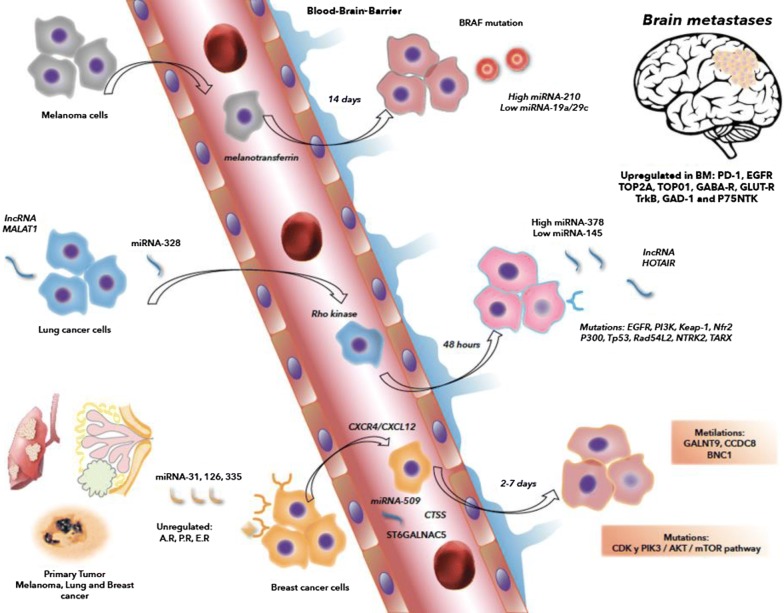
The present review aimed to discuss contemporary scientific literature involving differences between the tumor microenvironment (TME) in melanoma, lung cancer, and breast cancer in their primary site and TME in brain metastases (BM). TME plays a fundamental role in the behavior of cancer. In the process of carcinogenesis, cells such as fibroblasts, macrophages, endothelial cells, natural killer cells, and other cells can perpetuate and progress carcinogenesis via the secretion of molecules. Oxygen concentration, growth factors, and receptors in TME initiate angiogenesis and are examples of the importance of microenvironmental conditions in the performance of neoplastic cells. The most frequent malignant brain tumors are metastatic in origin and primarily originate from lung cancer, breast cancer, and melanoma. Metastatic cancer cells have to adhere to and penetrate the blood–brain barrier (BBB). After traversing BBB, these cells have to survive by producing various cytokines, chemokines, and mediators to modify their new TME. The microenvironment of these metastases is currently being studied owing to the discovery of new therapeutic targets. In these three types of tumors, treatment is more effective in the primary tumor than in BM due to several factors, including BBB. Understanding the differences in the characteristics of the microenvironment surrounding the primary tumor and their respective metastasis might help improve strategies to comprehend cancer.
Overview
The claims and statistics of this paper haven’t been checked yet.
Free: it reads the open-access text and checks the first 5 claims that cite a source we can check. Create a free account to check every claim.
Integrity signals
Registry
Cites
Statistics
Figures
Verification
Claims the paper makes
The claims and statistics of this paper haven’t been checked yet.
Free: it reads the open-access text and checks the first 5 claims that cite a source we can check. Create a free account to check every claim.
Claims other papers make about this one
Each is checked against this paper’s own text: does it say what the citing paper says it does?
The check wasn’t confident either way, so it gives no verdict — never disputed.
In the citing paper
“However, previous studies suggest that not all individuals are willing to accept the use of medical AI devices [10].”
From Use of AI-based tools for healthcare purposes: a survey study from consumers’ perspectives (2020) · cites this paper as [10]
Experimental — accuracy not yet measuredIn the citing paper
“Theoretical and qualitative study results demonstrate some factors that contribute to risk beliefs and individuals’ withdrawal from using AI clinical devices [10].”
From Use of AI-based tools for healthcare purposes: a survey study from consumers’ perspectives (2020) · cites this paper as [10]
In the citing paper
“Due to the intelligence nature of AI systems, regulatory agencies should establish new requirements, official policy, and safety guidelines regarding AI rollout in healthcare [10].”
From Use of AI-based tools for healthcare purposes: a survey study from consumers’ perspectives (2020) · cites this paper as [10]
Self-check
Percentages, sums and reported differences re-computed from the paper’s own numbers.
The self-check needs the paper’s full text.
Citations
Cites
Hallmarks of Cancer: The Next Generation
Hanahan, D., & Weinberg, R. A. (2011) · Cell · doi:10.1016/j.cell.2011.02.013 · Cited by 66,590 · cited 2×
“Two scenarios are proposed for the nature of these platelet aggregations surrounding the CTCs: [1] platelets completely engulf the tumor cells or [2] platelets form homotypic aggregates in the center of the clusters that are surrounded by CTCs in the periphery [39].”
BackgroundThe Epithelial-Mesenchymal Transition Generates Cells with Properties of Stem Cells
Mani, S. A., Guo, W., Liao, M.-J., Eaton, E. N., Ayyanan, A., Zhou, A. Y., Brooks, M., Reinhard, F., Zhang, C. C., Shipitsin, M., et al. (2008) · Cell · doi:10.1016/j.cell.2008.03.027 · Cited by 8,672
Microenvironmental regulation of tumor progression and metastasis
Quail, D. F., & Joyce, J. A. (2013) · Nature Medicine · doi:10.1038/nm.3394 · Cited by 7,994 · cited 1×
“, endothelial cells, pericytes, fibroblasts, and immune cells) [56].”
Macrophage Diversity Enhances Tumor Progression and Metastasis
Qian, B.-Z., & Pollard, J. W. (2010) · Cell · doi:10.1016/j.cell.2010.03.014 · Cited by 5,188
Twist, a Master Regulator of Morphogenesis, Plays an Essential Role in Tumor Metastasis
Yang, J., Mani, S. A., Donaher, J. L., Ramaswamy, S., Itzykson, R. A., Come, C., Savagner, P., Gitelman, I., Richardson, A., & Weinberg, R. A. (2004) · Cell · doi:10.1016/j.cell.2004.06.006 · Cited by 3,855
Daneman, R., & Prat, A. (2015) · Cold Spring Harbor Perspectives in Biology · doi:10.1101/cshperspect.a020412 · Cited by 3,437
Fundamental Mechanisms of Immune Checkpoint Blockade Therapy
Wei, S. C., Duffy, C. R., & Allison, J. P. (2018) · Cancer Discovery · doi:10.1158/2159-8290.cd-18-0367 · Cited by 3,088
Tumour heterogeneity and cancer cell plasticity
Meacham, C. E., & Morrison, S. J. (2013) · Nature · doi:10.1038/nature12624 · Cited by 2,446
Holmgren, L., O'Reilly, M. S., & Folkman, J. (1995) · Nature Medicine · doi:10.1038/nm0295-149 · Cited by 1,878
Genes that mediate breast cancer metastasis to the brain
Bos, P. D., Zhang, X. H.-F., Nadal, C., Shu, W., Gomis, R. R., Nguyen, D. X., Minn, A. J., van de Vijver, M. J., Gerald, W. L., Foekens, J. A., et al. (2009) · Nature · doi:10.1038/nature08021 · Cited by 1,863 · cited 1×
“In breast cancer, the N-acetylgalactosaminidase α-2,6-sialyltransferase 5 (ST6GALNAC5) has been identified as a facilitator of tumor cell/brain endothelial adhesion [46].”
Background
Research works printed but not linked: 2
- Ursini-Siegel J, Siegel PM. Cancer Lett. 2015;1-8 (article in press).
- Han CH, Brastianos PK. Genetic characterization of brain metastases in the era of targeted therapy. Front Oncol. 2017;7:230. · DOI
Cited by
Items 101–200 of 311
Kotecha, R. R., Tonse, R., Menendez, M. A. R., Williams, A., Diaz, Z., Tom, M. C., Hall, M. D., Mehta, M. P., Alvarez, R., Siomin, V. E., et al. (2022) · Scientific Reports · doi:10.1038/s41598-022-08507-3 · Cited by 22
Noh, M., Kim, S. S., Kim, Y. J., Jung, T., Jung, S., Rhee, J. H., Lee, J.-H., Lee, J. S., Cho, J.-H., Moon, K., et al. (2021) · Cancers · doi:10.3390/cancers13194895 · Cited by 23
“The TME is necessary for invasion, metastasis, and settling in a distant location [14,15].”
BackgroundRethinking the chemokine cascade in brain metastasis: Preventive and therapeutic implications
Maurya, S. K., Κhan, P., Rehman, A. U., Kanchan, R. K., Perumal, N., Mahapatra, S., Chand, H. S., Santamaria‐Barria, J. A., Batra, S. K., & Nasser, M. W. (2021) · Seminars in Cancer Biology · doi:10.1016/j.semcancer.2021.12.009 · Cited by 23
Andalib, E., Faghani, M., Ziabari, S. M. Z., Shenagari, M., Salehiniya, H., Keivanlou, M., & Rafat, Z. (2022) · Frontiers in Public Health · doi:10.3389/fpubh.2022.828845 · Cited by 23
Layer-by-layer assembly: advancing skin repair, one layer at a time
Hasan, E., Lewis, C. J., Girón‐Hernández, J., Gentile, P., & Ferreira, A. M. (2025) · RSC Advances · doi:10.1039/d4ra08115c · Cited by 23
González‐Parra, G., & Arenas, A. J. (2021) · Computational and Applied Mathematics · doi:10.1007/s40314-021-01592-6 · Cited by 20
Hu, G., Hu, H., Aziz, T. A., Shao, H., Yang, Z., Alharbi, M., Albekairi, T. H., & Alasmari, A. F. (2023) · Journal of Food Measurement & Characterization · doi:10.1007/s11694-023-02283-y · Cited by 21
Forces at play: exploring factors affecting the cancer metastasis
Riaz, F., Zhang, J., & Pan, F. (2024) · Frontiers in Immunology · doi:10.3389/fimmu.2024.1274474 · Cited by 25
Jena, B. C., Rout, L., Dey, A., & Mandal, M. (2021) · Journal of Cellular Physiology · doi:10.1002/jcp.30419 · Cited by 20
Benchama, O., Tyukhtenko, S. I., Malamas, M. S., Williams, M. K., Makriyannis, A., & Avraham, H. K. (2022) · Scientific Reports · doi:10.1038/s41598-022-09358-8 · Cited by 24
Machine Learning-Based Prediction of COVID-19 Mortality Using Immunological and Metabolic Biomarkers
Tulu, T. W., Wan, T. K., Chan, C. L., Wu, C. H., Woo, P. Y. M., Tseng, C. Z. S., Vodenčarević, A., Menni, C., & Chan, K. H. K. (2022) · BMC Digital Health · doi:10.1186/s44247-022-00001-0 · Cited by 19
The “Self-eating” of cancer-associated fibroblast: A potential target for cancer
Chen, Y., Zhang, X., Yang, H., Liang, T., & Bai, X. (2023) · Biomedicine & Pharmacotherapy · doi:10.1016/j.biopha.2023.114762 · Cited by 22
Boosting the Immune Response—Combining Local and Immune Therapy for Prostate Cancer Treatment
Karwacki, J., Kiełbik, A., Szlasa, W., Sauer, N. J., Kowalczyk, K., Krajewski, W. R., Saczko, J., Kulbacka, J., Szydełko, T., & Małkiewicz, B. (2022) · Cells · doi:10.3390/cells11182793 · Cited by 58
Ganiny, S., & Nisar, O. (2021) · Modeling Earth Systems and Environment · doi:10.1007/s40808-020-01080-6 · Cited by 20
Fusion of AI techniques to tackle COVID-19 pandemic: models, incidence rates, and future trends
Shah, H., Shah, S., Tanwar, S., Gupta, R., & Kumar, N. (2021) · Multimedia Systems · doi:10.1007/s00530-021-00818-1 · Cited by 26
Hypoxic miRNAs expression are different between primary and metastatic melanoma cells
Hino, Y., Rahman, M. M., Lai, Y., Husna, A. A., Chen, H.-W., Hasan, M. N., Nakagawa, T., & Miura, N. (2021) · Gene · doi:10.1016/j.gene.2021.145552 · Cited by 21
Kantapan, J., Paksee, S., Duangya, A., Sangthong, P., Roytrakul, S., Krobthong, S., Suttana, W., & Dechsupa, N. (2021) · BMC Complementary Medicine and Therapies · doi:10.1186/s12906-021-03363-6 · Cited by 20
Targeting the Tumor Microenvironment in EGFR-Mutant Lung Cancer: Opportunities and Challenges
Lim, J. U., Jung, J., Kim, Y. W., Kim, C. Y., Lee, S. H., Park, D. W., Choi, S. I., Ji, W., Yeo, C. D., & Lee, S. H. (2025) · Biomedicines · doi:10.3390/biomedicines13020470 · Cited by 24
Zhai, Y., Zhao, B., Wang, Y., Li, L., Li, J., Li, X., Chang, L., Chen, Q., & Liao, Z. (2021) · BMC Cancer · doi:10.1186/s12885-021-07911-8 · Cited by 18
“Increasing evidence suggested that tumor microenvironment (TME) which is composed of tumor cells, immune cells, stromal cells, inflammatory mediators and extracellular matrix [2], taking part in the tumor progression and drug resistance [3, 4].”
BackgroundNeoadjuvant immune checkpoint inhibition in the management of glioblastoma: Exploring a new frontier
Frederico, S. C., Darling, C., Bielanin, J. P., Dubinsky, A. C., Zhang, X., Hadjipanayis, C. G., & Kohanbash, G. (2023) · Frontiers in Immunology · doi:10.3389/fimmu.2023.1057567 · Cited by 15
“Additionally, the spatial diversity that was observed in this study was recapitulated in T-cell clone distribution as some GBMs possessed highly expanded yet spatially restricted clonotypes as compared to less spatially restricted clonotypes for brain metastases (77).”
BackgroundFocused ultrasound for brain metastases: an update on global clinical trials
Chen, Y.-H., Moore, D., Lee, C., & Su, Y.-H. (2023) · Journal of Neuro-Oncology · doi:10.1007/s11060-023-04492-3 · Cited by 17
“Cancer cells need certain mutations, such as VEGF and alpha-2,6, sialyltrans-ferase gene, to penetrate the protection of BBB and survive unique microenvironment in CNS [3].”
BackgroundRoda, E., Luca, F. D., Locatelli, C., Ratto, D., Iorio, C. D., Savino, E., Bottone, M. G., & Rossi, P. (2020) · Molecules · doi:10.3390/molecules25225400 · Cited by 18
“Immunotherapy is a recent approach in cancer therapy, specifically addressed on TME [12].”
BackgroundCT findings of 795 COVID-19 positive cases: a multicenter study in Egypt
Sabri, Y. Y., Fawzi, M. M. T., Nossair, E. Z., El-Mandooh, S. M., Hegazy, A. A., & Tadros, S. F. (2020) · The Egyptian Journal of Radiology and Nuclear Medicine · doi:10.1186/s43055-020-00351-7 · Cited by 14
Impact of COVID-19 Lockdown on Children’s Health in North Africa
Benmerzoug, M., Djoudi, B., Debbache, A., Harbouche, A., Dehmani, I. D., Djekkoun, N., Abdelkader, R., Vitiello, D., & Rouabah, L. (2022) · Maternal and Child Health Journal · doi:10.1007/s10995-022-03441-2 · Cited by 15
Pruchniewski, M., Sawosz, E., Sosnowska, M., Ostrowska, A., Łojkowski, M., Koczoń, P., Nakielski, P., Kutwin, M., Jaworski, S., & Strojny, B. (2023) · Nanoscale · doi:10.1039/d3nr03581f · Cited by 14
Systematic review of fatigue severity in ME/CFS patients: insights from randomized controlled trials
Park, J., Park, B., Lee, J., Lee, E., Ahn, Y., & Son, C. (2024) · Journal of Translational Medicine · doi:10.1186/s12967-024-05349-7 · Cited by 19
Naderi, E., Crijns, A. P. G., Steenbakkers, R. J. H. M., van den Hoek, J. G. M., Boezen, H. M., Alizadeh, B. Z., & Langendijk, J. A. (2021) · Journal of Translational Medicine · doi:10.1186/s12967-021-03145-1 · Cited by 16
Correlation Between 18F-FDG Uptake and Immune Cell Infiltration in Metastatic Brain Lesions
An, Y., Kim, S.-H., Roh, T. H., Park, S. H., Kim, T.-G., & Kim, J. (2021) · Frontiers in Oncology · doi:10.3389/fonc.2021.618705 · Cited by 14
“Since TAM density is associated with poor prognosis in breast cancer patients andeliminatingmacrophages fromthe tumor site inmouse models of breast cancer induced a delay of tumor progression, targeting TAM in brain metastases from the breast may provide a new therapeutic strategy (25, 40, 41, 46).”
BackgroundInfluentialZhu, T., Pan, Q., Xiao, K., Zuo, C., Liu, Q., Zhou, D., & Tu, K. (2024) · Food & Function · doi:10.1039/d3fo04076c · Cited by 13
Why Tumor Genetic Heterogeneity May Require Rethinking Cancer Genesis and Treatment
Gottlieb, B., Trifiro, M. A., & Batist, G. (2020) · Trends in cancer · doi:10.1016/j.trecan.2020.10.013 · Cited by 15
Next-generation immunotherapies for brain metastatic cancers
Vázquez, M. L., Du, W., Kanaya, N., Kitamura, Y., & Shah, K. (2021) · Trends in cancer · doi:10.1016/j.trecan.2021.02.003 · Cited by 16
Katzendobler, S., Do, A., Weller, J., Rejeski, K., Dorostkar, M. M., Albert, N. L., Forbrig, R., Niyazi, M., Egensperger, R., Tonn, J., et al. (2022) · Frontiers in Oncology · doi:10.3389/fonc.2022.1014711 · Cited by 18
“Still, there may be discrepancies between the actionable mutations of the primary tumor and their respective BM (17) and thus tissue-based analyses of BM can be necessary to guide therapy.”
BackgroundAggressive local therapy for de novo metastatic breast cancer: Challenges and updates (Review)
Liu, B., Liu, H., & Liu, M. (2023) · Oncology Reports · doi:10.3892/or.2023.8600 · Cited by 16
“Under certain incentives, such as hypoxia, tumor cells develop epithelial-interstitial transformation and increase their invasive ability (77).”
Liao, L., Wang, Y., Fan, S.-S., Hu, Y., Wang, X.-C., & Zhang, X. (2025) · Frontiers in Oncology · doi:10.3389/fonc.2025.1571583 · Cited by 18
Li, C., Nie, W., Guo, J., Xiong, A., Zhong, H., Chu, T., Zhong, R., Xu, J., Lü, J., Zheng, X., et al. (2021) · Respiratory Research · doi:10.1186/s12931-021-01741-9 · Cited by 12
“For example, unlike in non-BM lesions, BM lesions acquired anti-oxidant gene mutations related to cellular stress response, including Keap-1, Nrf2, and P300, which are key factors for the promotion of secondary metastasis [16, 17].”
BackgroundA Multi-graph Deep Learning Model for Predicting Drug-Disease Associations
Zhao, B.-W., You, Z., Hu, L., Wong, L., Ji, B., & Zhang, P. (2021) · Lecture notes in computer science · doi:10.1007/978-3-030-84532-2_52 · Cited by 12
Kim, M.-S., & Jung, B.-M. (2021) · 대한지역사회영양학회지 · doi:10.5720/kjcn.2021.26.4.259 · Cited by 13
COVID-19 Classification Using Medical Image Synthesis by Generative Adversarial Networks
Abirami, R. N., Vincent, P. M. D. R., Rajinikanth, V., & Kadry, S. (2022) · International Journal of Uncertainty Fuzziness and Knowledge-Based Systems · doi:10.1142/s0218488522400128 · Cited by 16
Pharmacological Targeting of Epithelial-to-Mesenchymal Transition in Colorectal Cancer
Zafari, N., Velayati, M., Nassiri, M., Khazaei, M., Hassanian, S. M., Ferns, G. A., & Avan, A. (2022) · Current Pharmaceutical Design · doi:10.2174/1381612828666220728152350 · Cited by 13
Rezaei, A., Moqadami, A., Khalaj‐Kondori, M., & Feizi, M. A. H. (2024) · Molecular Biology Reports · doi:10.1007/s11033-024-09380-1 · Cited by 13
Badiuk, S. R., Thiessen, J. D., Vareki, S. M., Foster, P. J., Chen, J. Z., & Wong, E. (2022) · Physics and Imaging in Radiation Oncology · doi:10.1016/j.phro.2022.02.016 · Cited by 17
“Furthermore, the TME of brain metastases is different among primary cancers (reviewed in[48]).”
BackgroundBorm, K. J., Behzadi, S. T., Hörner‐Rieber, J., Krug, D. A., Baumann, R., Corradini, S., Duma, M. N., Dunst, J., Fastner, G., Feyer, P., et al. (2024) · Strahlentherapie und Onkologie · doi:10.1007/s00066-024-02202-0 · Cited by 13
Gurung, S. K., Shevde, L. A., & Rao, S. S. (2024) · Biochemical and Biophysical Research Communications · doi:10.1016/j.bbrc.2024.150142 · Cited by 12
Phytosomes Loaded with Mastoparan-M Represent a Novel Strategy for Breast Cancer Treatment
Zhao, H., Bao, S., Chen, S., Yang, Q., Lou, K., Gai, Y.-T., Lin, J., Liu, C., Liu, H., Zhang, C., et al. (2025) · International Journal of Nanomedicine · doi:10.2147/ijn.s481871 · Cited by 13
Immune Profiling of Syngeneic Murine and Patient GBMs for Effective Translation of Immunotherapies
Khalsa, J. K., & Shah, K. (2021) · Cells · doi:10.3390/cells10030491 · Cited by 13
“Since metastatic brain tumors do not have the same cellular composition as primary brain tumors, it is not surprising that their leukocyte composition is distinct [9].”
BackgroundXu, J., Wang, P., Li, Y., Shi, X., Yin, T., Yu, J., & Teng, F. (2024) · Frontiers in Immunology · doi:10.3389/fimmu.2024.1373330 · Cited by 13
Adaptive human behavior and delays in information availability autonomously modulate epidemic waves
Mahmud, M. S., Eshun, S., Espinoza, B., & Kadelka, C. (2025) · PNAS Nexus · doi:10.1093/pnasnexus/pgaf145 · Cited by 17
Ko, V., Goess, M. C., Scheel-Platz, L., Yuan, T., Chmyrov, A., Jüstel, D., Ruland, J., Ntziachristos, V., Keppler, S. J., & Pleitez, M. A. (2023) · npj Imaging · doi:10.1038/s44303-023-00003-1 · Cited by 17
Hua, H., Zhou, Y., Li, W., Zhang, J., Deng, Y., & Khoo, B. L. (2024) · Biomicrofluidics · doi:10.1063/5.0172146 · Cited by 12
Pourhadi, M., Zali, H., Ghasemi, R., & Vafaei‐Nezhad, S. (2022) · Molecular Neurobiology · doi:10.1007/s12035-022-02951-y · Cited by 11
Nanomaterials for brain metastasis
Zhao, Z., Chen, Y., Sun, T., & Jiang, C. (2023) · Journal of Controlled Release · doi:10.1016/j.jconrel.2023.12.001 · Cited by 12
Skok, K., Gradišnik, L., Čelešnik, H., Milojević, M., Potočnik, U., Jezernik, G., Gorenjak, M., Sobočan, M., Takač, I., Kavalar, R., et al. (2021) · Cells · doi:10.3390/cells11010117 · Cited by 12
“This is all the more true as it is known that isolates from metastatic tissue do not always show the same characteristics as the primary tissue despite possible overlaps of some specific phenotypic markers [100].”
BackgroundVroegindeweij, A., Swart, J. F., Houtveen, J. H., Eijkelkamp, N., van de Putte, E. M., Wulffraat, N. M., & Nijhof, S. L. (2022) · Trials · doi:10.1186/s13063-022-06620-2 · Cited by 16
Molecular landscape and emerging therapeutic strategies in breast cancer brain metastasis
Xiong, S., Tan, X., Wu, X., Wan, A., Zhang, G., Wang, C., Liang, Y., & Zhang, Y. (2023) · Therapeutic Advances in Medical Oncology · doi:10.1177/17588359231165976 · Cited by 9
“28 A growing body of evidence shows that the brain microenvironment is closely related to the development of BCBM. Analyzing how tumor cells cross the BBB and interact with various components of the brain microenvironment can help in understanding BCBM development.”
BackgroundHou, L., Chen, X., Qiu, G., Qi, X., Zou, Y., He, J., & Bu, H. (2023) · Journal of Neuro-Oncology · doi:10.1007/s11060-023-04428-x · Cited by 10
“The cellular and molecular mechanisms have been reported in several studies [7, 8].”
BackgroundChen, P., Chen, M., Bu, Y., Che, G., Cheng, C., & Wang, Y. (2024) · Pathology & Oncology Research · doi:10.3389/pore.2024.1611844 · Cited by 9
Immune related biomarkers for cancer metastasis to the brain
Chen, W., Chu, T. S. M., Xu, L., Zhao, C., Poon, W. S., Leung, G., & Kong, F. (2022) · Experimental Hematology and Oncology · doi:10.1186/s40164-022-00349-z · Cited by 14
“Overall role of the immune system in brain metastasis Brain metastasis is a multi-step bi-directional process, where cancer cells interact with the immune system and influence each other, both locally and systemically [22].”
BackgroundShahzad, S., & Willcox, M. D. P. (2022) · Journal of Molecular Evolution · doi:10.1007/s00239-022-10054-4 · Cited by 9
Thakur, V. R., Jamwal, S., Kumar, M., Rahi, V., & Kumar, P. (2020) · Neurotoxicity Research · doi:10.1007/s12640-020-00231-y · Cited by 9
Hierarchical Clustering of Cutaneous Melanoma Based on Immunogenomic Profiling
Yu, J., Xie, M., Ge, S., Chai, P., Zhou, Y., & Ruan, J. (2020) · Frontiers in Oncology · doi:10.3389/fonc.2020.580029 · Cited by 12
“The infiltration of immune cells as well as stromal cells in the tumor microenvironment has an impact on tumor progression and prognosis (22, 23).”
BackgroundProbiotics and functional foods in metabolic disease: emerging solutions for obesity and diabetes
Maqsood, S., Asif, M., Alvi, T., Shakoor, S., & Zahir, A. (2025) · Journal of Diabetes & Metabolic Disorders · doi:10.1007/s40200-025-01694-6 · Cited by 11
Dhangadamajhi, G., & Singh, S. (2021) · Human Cell · doi:10.1007/s13577-021-00513-3 · Cited by 8
Joe, N., Hodgdon, C., Kraemer, L., Redmond, K. J., Stearns, V., & Gilkes, D. M. (2021) · npj Breast Cancer · doi:10.1038/s41523-021-00326-5 · Cited by 10
Koga, S. F., Hodges, W. B., Adamyan, H., Hayes, T., Fecci, P. E., Tsvankin, V., Pradilla, G., Hoang, K. B., Lee, I. Y., Sankey, E. W., et al. (2024) · Frontiers in Neurology · doi:10.3389/fneur.2023.1322815 · Cited by 7
Artificial Intelligence in Cardiovascular Diseases
Bashir, S., Ahanger, A. N., Assad, A., Bhat, M. R., & Macha, M. A. (2025) · Springer eBooks · doi:10.1007/978-981-96-8176-1_10 · Cited by 11
The effect of MicroRNAs variants on idiopathic recurrent pregnancy loss
Guo, C., Yin, X., & Yao, S. (2023) · Journal of Assisted Reproduction and Genetics · doi:10.1007/s10815-023-02827-7 · Cited by 7
Immunogenomic-Based Analysis of Hierarchical Clustering of Diffuse Large Cell Lymphoma
Wang, L., Yuan, W., Li, L., Shen, Z., Geng, Q., Zheng, Y., & Zhao, J. (2022) · Journal of Immunology Research · doi:10.1155/2022/9544827 · Cited by 7
“In the meanwhile, immune cells and stromal cells in tumor microenvironment also play a significant part in prognosis at the same time and tumor progression [21, 22].”
BackgroundMolecular mechanism(s) of regulations of cancer stem cell in brain cancer propagation
Swati, K., Agrawal, K., Raj, S., Kumar, R., Prakash, A., & Kumar, D. (2022) · Medicinal Research Reviews · doi:10.1002/med.21930 · Cited by 7
The early recognition and diagnosis of neoplastic meningitis
Pellerino, A., Bertero, L., Pronello, E., Rudà, R., & Soffietti, R. (2023) · Expert Review of Neurotherapeutics · doi:10.1080/14737175.2023.2295999 · Cited by 28
“…hematogenous or neural routes, or by contiguity from brain parenchyma to leptomeninges) and require longer periods, as demonstrated by some experimental models, due to a predilection to invade gravity-dependent sites with slow CSF flow, such as basal and lumbar cisterns or posterior fossa [11].”
BackgroundHuang, T., Wu, D., Jiang, L., Wu, Z., Zhao, Y., Tang, F., Mou, Z., Pan, C., Liu, Y., Tong, A., et al. (2025) · International Journal of Cancer · doi:10.1002/ijc.35421 · Cited by 7
“9,10 Neurons and astrocytes, key components of the brain tumor microenvironment, assist tumor cells in regulating, adapting, and surviving through direct contact, secretion of cytokines, and metabolic factors.”
Raimundo, B. S., Leitão, P. M., Vinhas, M., Pires, M. V., Quintas, L. B., Carvalheiro, C., Barata, R., Ip, J., Coelho, R. D., Granadeiro, S., et al. (2025) · Cancers · doi:10.3390/cancers17101685 · Cited by 9
“In those individuals with LC, VOCs can originate additionally from within the tumor or its microenvironment [38–40].”
Hybrid Attention-Enhanced Xception and Dynamic Chaotic Whale Optimization for Brain Tumor Diagnosis
Ibrahim, A. T., Hassan, I. H., Abdullahi, M., Kana, A. F. D., Abubakar, A. H., Mohammed, M. T., Gabralla, L. A., Rusydi, M., & Chiroma, H. (2025) · Bioengineering · doi:10.3390/bioengineering12070747 · Cited by 9
Okdahl, T., Wegeberg, A., Jensen, M. M., Quist, J. S., & Brock, C. (2025) · Diabetology & Metabolic Syndrome · doi:10.1186/s13098-025-01834-1 · Cited by 6
Allam, A. T., El‐Dessouki, A. M., El‐Shiekh, R. A., Abou-Hussein, D., Mahmoud, M. A., Marcus, W. H., & Ruby, H. A. (2025) · Naunyn-Schmiedeberg s Archives of Pharmacology · doi:10.1007/s00210-025-04658-y · Cited by 18
Hossain, A., Chowdhury, S. I., Sarker, S., & Ahsan, M. S. (2021) · Annals of Nuclear Medicine · doi:10.1007/s12149-021-01676-7 · Cited by 6
Olajide, J. S., Qu, Z., Yang, S., Yang, B., Xu, X. J., Wang, J., & Cai, J. (2023) · Parasites & Vectors · doi:10.1186/s13071-023-05906-x · Cited by 6
The Biological Role of Macrophage in Lung and Its Implications in Lung Cancer Immunotherapy
Wang, C., Gao, Q. S., Wu, J., Lu, M., Wang, J., & Ma, T. (2024) · Advanced Biology · doi:10.1002/adbi.202400119 · Cited by 9
Therapeutic Opportunities for Biomarkers in Metastatic Spine Tumors
Schroeder, C., Campilan, B., Leary, O. P., Arditi, J., Michles, M. J., Ramos, R. D. L. G., Akinduro, O. O., Gokaslan, Z. L., Martinez-Moreno, M., & Sullivan, P. Z. (2024) · Cancers · doi:10.3390/cancers16183152 · Cited by 7
“The bone microenvironment is quite distinct from that of primary tumor tissues in metastatic disease, consisting of a variety of cell types with which cancer cells must necessarily interact [116].”
BackgroundIPD 2.0: To derive insights from an evolving SARS-CoV-2 genome
Desai, S., Rane, A., Joshi, A., & Dutt, A. (2021) · BMC Bioinformatics · doi:10.1186/s12859-021-04172-x · Cited by 6
Ren, S., Qin, Y.-F., Qin, H., Wang, H.-D., Li, G.-M., Zhu, Y.-L., Sun, C.-L., Shao, B., Zhang, J.-Y., Hao, J.-P., et al. (2022) · International Journal of General Medicine · doi:10.2147/ijgm.s351815 · Cited by 7
“The TME was the primary environment for tumor occurrence and development, a dynamic and complex system composed of various immune cells, stromal cells, cytokines, and chemokines.(41,42) The intricacy of TME may be the critical factor of HCC immune escape.”
BackgroundSung, I., Lee, S., Pak, M., Shin, Y., & Kim, S. (2022) · BMC Bioinformatics · doi:10.1186/s12859-022-04679-x · Cited by 7
Latifi, A. (2020) · Infectious Diseases Research and Treatment · doi:10.1177/1178633720977488 · Cited by 6
Immunonutrition effects on coping with COVID-19
Ferreira, R. D. S., dos Santos, C., Mendonça, L. A. B. M., Carvalho, C. M. E., & Franco, O. L. (2021) · Food & Function · doi:10.1039/d1fo01278a · Cited by 9
Jia, H., Liu, X., Wang, G., Yu, Y., Wang, N., Zhang, T., Hao, L., Zhang, W., & Yu, G. (2025) · BioFactors · doi:10.1002/biof.70012 · Cited by 6
Parvaneh, M., Jamaluddin, R., Ebrahimi, M. M., Karimi, G., & Sabran, M. R. (2024) · Journal of Bone and Mineral Metabolism · doi:10.1007/s00774-024-01512-8 · Cited by 5
King, S. B., & Singh, M. (2021) · PLoS Computational Biology · doi:10.1371/journal.pcbi.1009560 · Cited by 7
Thakur, S., Kasliwal, Y., Kothambawala, T., & Katarya, R. (2021) · Lecture notes in networks and systems · doi:10.1007/978-981-16-2641-8_44 · Cited by 5
Zhou, Z., Wang, Y., & Hu, P. (2022) · International Journal of Nanomedicine · doi:10.2147/ijn.s356202 · Cited by 5
Allahyari, A., Maharati, A., Jafari‐Nozad, A. M., & Zangooie, A. (2023) · Journal of Medical Case Reports · doi:10.1186/s13256-023-03753-z · Cited by 5
“In addition, these malignant cells behavior and fate are profoundly influenced by evolving interplay with microenvironment [19], which can affect critical signaling pathways and eventually give rise to other primary malignancies.”
BackgroundNaidoo, L., Arumugam, T., & Ramsuran, V. (2024) · Infectious Disease Reports · doi:10.3390/idr16020029 · Cited by 9
Proteomic insights into breast cancer response to brain cell-secreted factors
Ahuja, S., & Lazar, I. M. (2024) · Scientific Reports · doi:10.1038/s41598-024-70386-7 · Cited by 6
Nanostructures in non-invasive prenatal genetic screening
Sadeghi, S., Rahaie, M., & Ostad-Hasanzadeh, B. (2021) · Biomedical Engineering Letters · doi:10.1007/s13534-021-00208-6 · Cited by 5
Impact of CAR-T cell therapy on treating viral infections: unlocking the door to recovery
Mukerjee, N., Maitra, S., Ghosh, A., & Sharma, R. (2023) · Human Cell · doi:10.1007/s13577-023-00942-2 · Cited by 6
Hosseini, F., Soltani, B. M., Baharvand, H., & Hosseinkhani, S. (2020) · Biochemical Journal · doi:10.1042/bcj20190619 · Cited by 6
DEAD-box RNA helicases in the multistep process of tumor metastasis
Li, S., Feng, T., Yuan, H., Li, Q., Zhao, G., & Li, K. (2024) · Molecular Biology Reports · doi:10.1007/s11033-024-09912-9 · Cited by 7
Cheng, H., Shao, Y., Zhang, A., Li, C., Li, X., Fu, Y., & Ming, J. (2025) · Scientific Reports · doi:10.1038/s41598-025-01868-5 · Cited by 7
Najjary, S., al Amery, N., Huang, M., Vadgama, D., van Akkooi, A. C. J., Gilhuis, H. J., Belcaid, Z., Mustafa, D. A. M., & Kros, J. M. (2025) · Frontiers in Immunology · doi:10.3389/fimmu.2025.1578986 · Cited by 5
Sepsis mortality prediction using machine learning and deep learning - a systematic review
AbuHaweeleh, M. N., Chowdhury, A. T., Newaz, M., Saha, P., Islam, K. R., Kumar, J., Chowdhury, M. E. H., & Pedersen, S. (2025) · BMC Medical Informatics and Decision Making · doi:10.1186/s12911-025-03286-z · Cited by 6
Fan, Z., Zhang, L., Yang, G., Li, S., Guo, J., Bai, J.-J., Wang, B., Yan, L., Wang, L., & Wang, X. (2023) · Abdominal Radiology · doi:10.1007/s00261-023-04028-3 · Cited by 5
Jaff, S., Gubari, M. I. M., Shab‐Bidar, S., & Djafarian, K. (2024) · Nutrition & Metabolism · doi:10.1186/s12986-023-00778-5 · Cited by 6
Metadata
- Authors
- Cacho-Díaz, B., García-Botello, D. R., Wegman-Ostrosky, T., Reyes-Soto, G., Ortiz-Sánchez, E., & Herrera-Montalvo, L. A.
- Affiliations
- Instituto Nacional de Cancerología (MX)
- ORCID
- Cacho-Díaz, Bernardo
- Venue
- Journal of Translational Medicine
- Published
- 2020-01-03
- Volume
- 18
- Issue
- 1
- Pages
- 1-1
- ISSN
- 1479-5876 (ISSN-L)
- PMC
- PMC6941297
- OpenAlex
- W2997096971
- Cited by
- 310
- References
- 117
- Citations by year
- 2026: 5 · 2025: 39 · 2024: 40 · 2023: 52 · 2022: 55 · 2021: 90 · 2020: 29
- FWCI
- 7.95
- Type
- journal article
- Language
- en
- Open access
- gold
- doi.org
- Licence
- cc-by
- creativecommons.org/licenses/by/4.0/ (tdm)
- creativecommons.org/licenses/by/4.0/ (vor)
- Locations
- Journal of Translational Medicine (publishedVersion, cc-by)
- Europe PMC (PubMed Central) (publishedVersion, cc-by)
- PubMed Central (publishedVersion, cc-by)
- PubMed (publishedVersion)
- DOAJ (DOAJ: Directory of Open Access Journals) (submittedVersion)
- Topics
- Health Sciences › Medicine › Oncology › Brain Metastases and Treatment
- Health Sciences › Medicine › Oncology › Cancer Cells and Metastasis
- Health Sciences › Medicine › Oncology › Glioma Diagnosis and Treatment
- Keywords
- tumor microenvironment, brain metastases, primary tumor, melanoma, lung cancer, breast cancer, blood-brain barrier, angiogenesis, tumor-associated macrophages, cytokines and chemokines, therapeutic target
- MeSH terms
- Brain Neoplasms, Humans, Neovascularization, Pathologic, Endothelial Cells, Tumor Microenvironment, Carcinogenesis
About these checks
Registry, retraction, Cites and statistics results are computed, not judged, with one exception: a printed reference that no index lists is read once by a model before it counts as a citation error. Claims are extracted by a model and kept only when their quote appears verbatim in the text; each cited source is then checked, with a model’s help, for whether it says what the claim relies on. Those verdicts can be wrong — read the claim’s quote and the cited source before relying on one.
Statistics and arithmetic are recomputed, not judged.
Confidence bands are shown only for fields calibrated on our annotated test set. None is calibrated yet, so no band is shown.
What counts as a claim ›How we measure confidence ›How we check this ›
Are you an author, or do you see a problem with this page? Request a review
Data sources
Bibliographic data: Semantic Scholar, OpenAlex, Crossref.
Contains information from the Semantic Scholar Academic Graph Datasets, made available under the ODC Attribution License (ODC-BY 1.0).
Semantic Scholar’s data is described in: Kinney, R., et al. (2023). The Semantic Scholar Open Data Platform. arXiv:2301.10140.
