

Tumor microenvironment differences between primary tumor and brain metastases
Open accessThe DOI matches its Crossref record; 117 of the 117 references it cites were found in a registry or an index.
Abstract
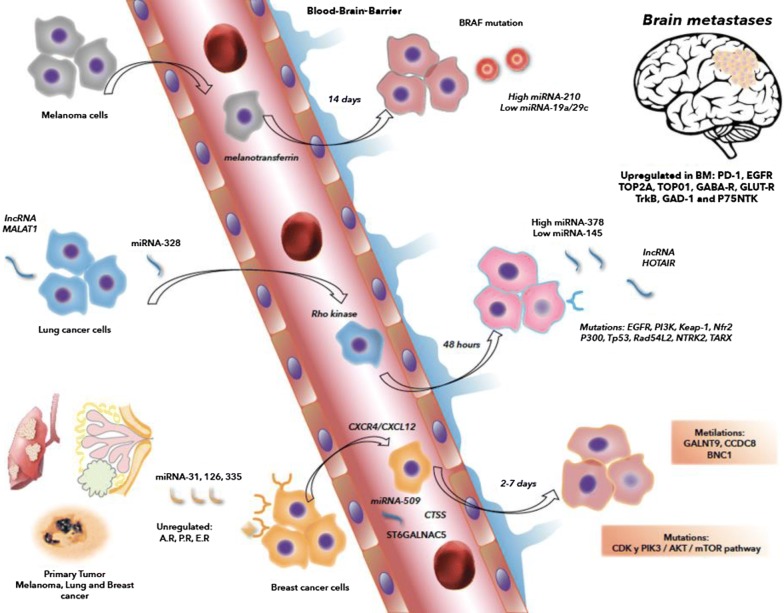
The present review aimed to discuss contemporary scientific literature involving differences between the tumor microenvironment (TME) in melanoma, lung cancer, and breast cancer in their primary site and TME in brain metastases (BM). TME plays a fundamental role in the behavior of cancer. In the process of carcinogenesis, cells such as fibroblasts, macrophages, endothelial cells, natural killer cells, and other cells can perpetuate and progress carcinogenesis via the secretion of molecules. Oxygen concentration, growth factors, and receptors in TME initiate angiogenesis and are examples of the importance of microenvironmental conditions in the performance of neoplastic cells. The most frequent malignant brain tumors are metastatic in origin and primarily originate from lung cancer, breast cancer, and melanoma. Metastatic cancer cells have to adhere to and penetrate the blood–brain barrier (BBB). After traversing BBB, these cells have to survive by producing various cytokines, chemokines, and mediators to modify their new TME. The microenvironment of these metastases is currently being studied owing to the discovery of new therapeutic targets. In these three types of tumors, treatment is more effective in the primary tumor than in BM due to several factors, including BBB. Understanding the differences in the characteristics of the microenvironment surrounding the primary tumor and their respective metastasis might help improve strategies to comprehend cancer.
Overview
The claims and statistics of this paper haven’t been checked yet.
Free: it reads the open-access text and checks the first 5 claims that cite a source we can check. Create a free account to check every claim.
Integrity signals
Registry
Cites
Statistics
Figures
Verification
Claims the paper makes
The claims and statistics of this paper haven’t been checked yet.
Free: it reads the open-access text and checks the first 5 claims that cite a source we can check. Create a free account to check every claim.
Claims other papers make about this one
Each is checked against this paper’s own text: does it say what the citing paper says it does?
The check wasn’t confident either way, so it gives no verdict — never disputed.
In the citing paper
“However, previous studies suggest that not all individuals are willing to accept the use of medical AI devices [10].”
From Use of AI-based tools for healthcare purposes: a survey study from consumers’ perspectives (2020) · cites this paper as [10]
Experimental — accuracy not yet measuredIn the citing paper
“Theoretical and qualitative study results demonstrate some factors that contribute to risk beliefs and individuals’ withdrawal from using AI clinical devices [10].”
From Use of AI-based tools for healthcare purposes: a survey study from consumers’ perspectives (2020) · cites this paper as [10]
In the citing paper
“Due to the intelligence nature of AI systems, regulatory agencies should establish new requirements, official policy, and safety guidelines regarding AI rollout in healthcare [10].”
From Use of AI-based tools for healthcare purposes: a survey study from consumers’ perspectives (2020) · cites this paper as [10]
Self-check
Percentages, sums and reported differences re-computed from the paper’s own numbers.
The self-check needs the paper’s full text.
Citations
Cites
Hallmarks of Cancer: The Next Generation
Hanahan, D., & Weinberg, R. A. (2011) · Cell · doi:10.1016/j.cell.2011.02.013 · Cited by 66,590 · cited 2×
“Two scenarios are proposed for the nature of these platelet aggregations surrounding the CTCs: [1] platelets completely engulf the tumor cells or [2] platelets form homotypic aggregates in the center of the clusters that are surrounded by CTCs in the periphery [39].”
BackgroundThe Epithelial-Mesenchymal Transition Generates Cells with Properties of Stem Cells
Mani, S. A., Guo, W., Liao, M.-J., Eaton, E. N., Ayyanan, A., Zhou, A. Y., Brooks, M., Reinhard, F., Zhang, C. C., Shipitsin, M., et al. (2008) · Cell · doi:10.1016/j.cell.2008.03.027 · Cited by 8,672
Microenvironmental regulation of tumor progression and metastasis
Quail, D. F., & Joyce, J. A. (2013) · Nature Medicine · doi:10.1038/nm.3394 · Cited by 7,994 · cited 1×
“, endothelial cells, pericytes, fibroblasts, and immune cells) [56].”
Macrophage Diversity Enhances Tumor Progression and Metastasis
Qian, B.-Z., & Pollard, J. W. (2010) · Cell · doi:10.1016/j.cell.2010.03.014 · Cited by 5,188
Twist, a Master Regulator of Morphogenesis, Plays an Essential Role in Tumor Metastasis
Yang, J., Mani, S. A., Donaher, J. L., Ramaswamy, S., Itzykson, R. A., Come, C., Savagner, P., Gitelman, I., Richardson, A., & Weinberg, R. A. (2004) · Cell · doi:10.1016/j.cell.2004.06.006 · Cited by 3,855
Daneman, R., & Prat, A. (2015) · Cold Spring Harbor Perspectives in Biology · doi:10.1101/cshperspect.a020412 · Cited by 3,437
Fundamental Mechanisms of Immune Checkpoint Blockade Therapy
Wei, S. C., Duffy, C. R., & Allison, J. P. (2018) · Cancer Discovery · doi:10.1158/2159-8290.cd-18-0367 · Cited by 3,088
Tumour heterogeneity and cancer cell plasticity
Meacham, C. E., & Morrison, S. J. (2013) · Nature · doi:10.1038/nature12624 · Cited by 2,446
Holmgren, L., O'Reilly, M. S., & Folkman, J. (1995) · Nature Medicine · doi:10.1038/nm0295-149 · Cited by 1,878
Genes that mediate breast cancer metastasis to the brain
Bos, P. D., Zhang, X. H.-F., Nadal, C., Shu, W., Gomis, R. R., Nguyen, D. X., Minn, A. J., van de Vijver, M. J., Gerald, W. L., Foekens, J. A., et al. (2009) · Nature · doi:10.1038/nature08021 · Cited by 1,863 · cited 1×
“In breast cancer, the N-acetylgalactosaminidase α-2,6-sialyltransferase 5 (ST6GALNAC5) has been identified as a facilitator of tumor cell/brain endothelial adhesion [46].”
Background
Research works printed but not linked: 2
- Ursini-Siegel J, Siegel PM. Cancer Lett. 2015;1-8 (article in press).
- Han CH, Brastianos PK. Genetic characterization of brain metastases in the era of targeted therapy. Front Oncol. 2017;7:230. · DOI
Cited by
CAR T cells in solid tumors: challenges and opportunities
Marofi, F., Motavalli, R., Safonov, V. A., Thangavelu, L., Yumashev, A. V., Alexander, M., Shomali, N., Chartrand, M. S., Pathak, Y., Jarahian, M., et al. (2021) · Stem Cell Research & Therapy · doi:10.1186/s13287-020-02128-1 · Cited by 582
Use of AI-based tools for healthcare purposes: a survey study from consumers’ perspectives
Esmaeilzadeh, P. (2020) · BMC Medical Informatics and Decision Making · doi:10.1186/s12911-020-01191-1 · Cited by 507
Neophytou, C. M., Panagi, M., Stylianopoulos, T., & Papageorgis, P. (2021) · Cancers · doi:10.3390/cancers13092053 · Cited by 456
Ranjbarzadeh, R., Caputo, A., Tirkolaee, E. B., Jafarzadeh Ghoushchi, S., & Bendechache, M. (2023) · Computers in Biology and Medicine · doi:10.1016/j.compbiomed.2022.106405 · Cited by 333
Three-dimensional in vitro culture models in oncology research
Jubelin, C., Muñoz-Garcia, J., Griscom, L., Cochonneau, D., Ollivier, E., Heymann, M.-F., Vallette, F. M., Oliver, L., & Heymann, D. (2022) · Cell & Bioscience · doi:10.1186/s13578-022-00887-3 · Cited by 264
Cancer nanotechnology: current status and perspectives
Kemp, J. A., & Kwon, Y. J. (2021) · Nano Convergence · doi:10.1186/s40580-021-00282-7 · Cited by 266
Neurological manifestations of long-COVID syndrome: a narrative review
Stefanou, M.-I., Palaiodimou, L., Bakola, E., Smyrnis, N., Papadopoulou, M., Paraskevas, G. P., Rizos, E., Boutati, E., Grigoriadis, N., Krogias, C., et al. (2022) · Therapeutic Advances in Chronic Disease · doi:10.1177/20406223221076890 · Cited by 263
Wang, R., Chen, J., Gao, K., Hozumi, Y., Yin, C., & Wei, G.-W. (2021) · Communications Biology · doi:10.1038/s42003-021-01754-6 · Cited by 202
Zebin, T., & Rezvy, S. (2021) · Applied Intelligence · doi:10.1007/s10489-020-01867-1 · Cited by 166
Simani, L., Ramezani, M., Darazam, I. A., Sagharichi, M., Aalipour, M. A., Ghorbani, F., & Pakdaman, H. (2021) · Journal of NeuroVirology · doi:10.1007/s13365-021-00949-1 · Cited by 156
Myalgic Encephalomyelitis/Chronic Fatigue Syndrome (ME/CFS): An Overview
Deumer, U.-S., Varesi, A., Floris, V., Savioli, G., Mantovani, E., López-Carrasco, P., Rosati, G. M., Prasad, S., & Ricevuti, G. (2021) · Journal of Clinical Medicine · doi:10.3390/jcm10204786 · Cited by 181
Cell-free DNA maps COVID-19 tissue injury and risk of death and can cause tissue injury
Andargie, T. E., Tsuji, N., Seifuddin, F., Jang, M. K., Yuen, P. S. T., Kong, H., Tunc, I., Singh, K., Charya, A., Wilkins, K., et al. (2021) · JCI Insight · doi:10.1172/jci.insight.147610 · Cited by 137
Song, S. G., Kim, S., Koh, J., Yim, J., Han, B., Kim, Y. A., Jeon, Y. K., & Chung, D. H. (2021) · Cancer Immunology Immunotherapy · doi:10.1007/s00262-020-02840-0 · Cited by 133
COVID-19 Self-quarantine and Weight Gain Risk Factors in Adults
Zeigler, Z. (2021) · Current Obesity Reports · doi:10.1007/s13679-021-00449-7 · Cited by 138
Emerging digital PCR technology in precision medicine
Zhang, L., Parvin, R., Fan, Q., & Ye, F. (2022) · Biosensors and Bioelectronics · doi:10.1016/j.bios.2022.114344 · Cited by 127
SeyedAlinaghi, S., Mirzapour, P., Dadras, O., Pashaei, Z., Karimi, A., MohsseniPour, M., Soleymanzadeh, M., Barzegary, A., Afsahi, A. M., Vahedi, F., et al. (2021) · European journal of medical research · doi:10.1186/s40001-021-00524-8 · Cited by 126
Ghazy, R. M., Almaghraby, A. M., Shaaban, R., Kamal, A., Beshir, H., Moursi, A., Ramadan, A., & Taha, S. H. N. (2020) · Scientific Reports · doi:10.1038/s41598-020-77748-x · Cited by 119
Gamage, A. M., Tan, K. S., Chan, W. O. Y., Liu, J., Tan, C. W., Ong, Y. K., Thong, M. K. T., Andiappan, A. K., Anderson, D. E., Wang, D. Y., et al. (2020) · PLoS Pathogens · doi:10.1371/journal.ppat.1009130 · Cited by 113
Hiremath, S. S., Kumar, H. D. V., Nandan, M., Mantesh, M., Shankarappa, K. S., Venkataravanappa, V., Basha, C. R. J., & Reddy, C. N. L. (2021) · 3 Biotech · doi:10.1007/s13205-020-02578-7 · Cited by 110
Haddad, C., Zakhour, M., Bou kheir, M., Haddad, R., Al Hachach, M., Sacre, H., & Salameh, P. (2020) · Journal of Eating Disorders · doi:10.1186/s40337-020-00317-0 · Cited by 95
Mesenchymal stem cell-derived exosomes as a new therapeutic strategy in the brain tumors
Ghasempour, E., Hesami, S., Movahed, E., Keshel, S. H., & Doroudian, M. (2022) · Stem Cell Research & Therapy · doi:10.1186/s13287-022-03212-4 · Cited by 103
Mitochondrial oxidative phosphorylation in cutaneous melanoma
Kumar, P. R., Moore, J. A., Bowles, K. M., Rushworth, S. A., & Moncrieff, M. D. (2021) · British Journal of Cancer · doi:10.1038/s41416-020-01159-y · Cited by 90
Chen, Y., Stavropoulou, C., Narasinkan, R., Baker, A., & Scarbrough, H. (2021) · BMC Health Services Research · doi:10.1186/s12913-021-06861-y · Cited by 87
Transcriptional enhancers and their communication with gene promoters
Ray-Jones, H., & Spivakov, M. (2021) · Cellular and Molecular Life Sciences · doi:10.1007/s00018-021-03903-w · Cited by 81
Liquid biopsies to occult brain metastasis
Rehman, A. U., Κhan, P., Maurya, S. K., Siddiqui, J. A., Santamaria‐Barria, J. A., Batra, S. K., & Nasser, M. W. (2022) · Molecular Cancer · doi:10.1186/s12943-022-01577-x · Cited by 78
Vasiyani, H., Mane, M., Rana, K., Shinde, A., Roy, M., Singh, J., Gohel, D., Currim, F., Srivastava, R., & Singh, R. K. (2022) · APOPTOSIS · doi:10.1007/s10495-022-01763-8 · Cited by 77
“The tumor microenvironment (TME) of solid tumors plays a significant role in progression and metastasis [1, 2].”
BackgroundKolokotroni, O., Mosquera, M. C., Quattrocchi, A., Heraclides, A., Demetriou, C. A., & Philippou, E. (2021) · BMC Public Health · doi:10.1186/s12889-021-10863-0 · Cited by 81
Ultrasound-mediated disruption of the blood tumor barrier for improved therapeutic delivery
Arsiwala, T. A., Sprowls, S. A., Blethen, K. E., Adkins, C. E., Saralkar, P. A., Fladeland, R. A., Pentz, W. H., Gabriele, A., Kielkowski, B. N., Mehta, R. I., et al. (2021) · Neoplasia · doi:10.1016/j.neo.2021.04.005 · Cited by 63
Park, H.-R., Shiva, A., Cummings, P., Kim, S., Kim, S., Lee, E., Leong, A., Chowdhury, S., Shawber, C. J., Carvajal, R. D., et al. (2023) · Cancer Research · doi:10.1158/0008-5472.can-22-2838 · Cited by 67
“In addition, given the different TMEs associated with primary and metastatic tumors, including their immunologic properties (61, 62), further investigation is required to fully understand our findings in the context of metastatic disease.”
Becerril-Rico, J., Alvarado-Ortiz, E., Toledo-Guzmán, M. E., Pelayo, R., & Ortíz-Sánchez, E. (2021) · Stem Cell Research & Therapy · doi:10.1186/s13287-021-02562-9 · Cited by 66
“This involves various cell populations, extracellular matrix, hormones, growth factors, pathogens, among others, under a dynamic and multidirectional relationship between tumor cells, immune system, and microenvironment, which is decisive for establishment and tumor progression [30].”
BackgroundYang, L., Li, W., Zhao, Y., Wang, Y., & Shang, L. (2024) · Journal of Nanobiotechnology · doi:10.1186/s12951-024-02765-1 · Cited by 59
Mutational spectra of SARS-CoV-2 isolated from animals
Elaswad, A., Fawzy, M., Basiouni, S., & Shehata, A. A. (2020) · PeerJ · doi:10.7717/peerj.10609 · Cited by 60
“Several cases of SARS-CoV-2 infections in animal hosts (cat, dog, mink, and tiger) have been reported (Gollakner & Capua, 2020; Tazerji et al., 2020), although none of them developed typical clinical features as COVID-19 patients.”
BackgroundRole of Cytokines and Chemokines in NSCLC Immune Navigation and Proliferation
Ramachandran, S., Verma, A. K., Dev, K., Goyal, Y., Bhatt, D., Alsahli, M. A., Rahmani, A. H., Almatroudi, A., Almatroodi, S. A., Alrumaihi, F., et al. (2021) · Oxidative Medicine and Cellular Longevity · doi:10.1155/2021/5563746 · Cited by 61
“The CTCs are invited by compelling ME using a premetastatic site to aid as an organotropism chaperon.”
BackgroundInfluentialCOVID-Nets: deep CNN architectures for detecting COVID-19 using chest CT scans
Alshazly, H. A., Linse, C., Abdalla, M., Barth, E., & Martinetz, T. (2021) · PeerJ Computer Science · doi:10.7717/peerj-cs.655 · Cited by 64
Trace Elements as Immunoregulators in SARS-CoV-2 and Other Viral Infections
Dharmalingam, K., Birdi, A., Tomo, S., Sreenivasulu, K., Charan, J., Yadav, D., Purohit, P., & Sharma, P. (2021) · Indian Journal of Clinical Biochemistry · doi:10.1007/s12291-021-00961-6 · Cited by 68
Berrío, A., Gartner, V., & Wray, G. A. (2020) · PeerJ · doi:10.7717/peerj.10234 · Cited by 67
Avagliano, A., Fiume, G., Ruocco, M. R., Martucci, N., Vecchio, E., Insabato, L., Russo, D., Accurso, A., Masone, S., Montagnani, S., et al. (2020) · Cancers · doi:10.3390/cancers12061697 · Cited by 67
Novizio, N., Belvedere, R., Pessolano, E., Morello, S., Tosco, A., Campiglia, P., Filippelli, A., & Petrella, A. (2021) · International Journal of Molecular Sciences · doi:10.3390/ijms222011018 · Cited by 56
Knorst, J. K., Brondani, B., Tomazoni, F., Vargas, A. W., Cósta, M. D., Godois, L. D. S., Mendes, F. M., Ardenghi, D. M., & Ardenghi, T. M. (2021) · Quality of Life Research · doi:10.1007/s11136-021-02757-w · Cited by 59
SOX2 Promotes Brain Metastasis of Breast Cancer by Upregulating the Expression of FSCN1 and HBEGF
Xiao, W., Zheng, S., Xie, X., Li, X., Zhang, L., Yang, A., Wang, J., Tang, H., & Xie, X. (2020) · Molecular Therapy — Oncolytics · doi:10.1016/j.omto.2020.03.001 · Cited by 53
“Previous studies have suggested that brain metastatic tumors are very different from their primary tumors in terms of gene mutations and expression.(12,13) In addition, some studies have shown that therapeutically induced mutations can be present in metastatic tumors rather than in primary tumors.”
BackgroundNayak, A., Warrier, N. M., & Kumar, P. (2022) · Stem Cell Reviews and Reports · doi:10.1007/s12015-022-10426-9 · Cited by 57
“While the environment of the secondary site does play a role in this differentiation, there is also involvement of the interactions a circulating tumor cell (CTC) undergoes when migrating towards a parenchymal site among distant tissues [34, 36].”
BackgroundUllah, M. S., Khan, M. A., Albarakati, H. M., Damaševičius, R., & Alsenan, S. A. (2024) · Computers in Biology and Medicine · doi:10.1016/j.compbiomed.2024.109183 · Cited by 57
A review of machine learning-based methods for predicting drug–target interactions
Shi, W., Yang, H. T., Xie, L., Yin, X.-X., & Zhang, Y. (2024) · Health Information Science and Systems · doi:10.1007/s13755-024-00287-6 · Cited by 61
A pan-cancer study of selenoprotein genes as promising targets for cancer therapy
Wu, W., Li, D., Feng, X., Zhao, F., Li, C., Zheng, S., & Lyu, J. (2021) · BMC Medical Genomics · doi:10.1186/s12920-021-00930-1 · Cited by 52
Zhang, L., Wang, L., Yang, H., Li, C., & Fang, C. (2021) · Bioscience Reports · doi:10.1042/bsr20211615 · Cited by 48
Kumar, P. R., Saad, M., Hellmich, C., Mistry, J. J., Moore, J. A., Conway, S., Morris, C. J., Bowles, K. M., Moncrieff, M. D., & Rushworth, S. A. (2022) · British Journal of Cancer · doi:10.1038/s41416-022-01783-w · Cited by 44
“Primary cutaneous melanoma comprises a distinctly heterogeneous population of both cancerous and non-cancerous cells [5, 6], including fibroblasts, adipocytes and other niche cells such as mesenchymal stromal cells (MSCs), which make up the extracellular matrix, endothelial cells of the microvasculature, and immune ce…”
BackgroundMosharaf, M. P., Reza, M. S., Kibria, M. K., Ahmed, F. F., Kabir, M. H., Hasan, S., & Mollah, M. N. H. (2022) · Scientific Reports · doi:10.1038/s41598-022-08073-8 · Cited by 52
de León, U. A.-P., Vázquez-Jiménez, A., Matadamas-Guzman, M. L., Pelayo, R., & Reséndis-Antonio, O. (2021) · Frontiers in Immunology · doi:10.3389/fimmu.2021.642842 · Cited by 46
“Overall, we postulate that the behavior of these macrophages hybrids is malignant, given their characteristics they could promote carcinogenesis and regulate the immune system in favor of tumor phenotype (58, 59).”
BackgroundTan, K., & Naylor, M. J. (2022) · Frontiers in Oncology · doi:10.3389/fonc.2022.876451 · Cited by 48
“During the initial formation of any metastatic foci, the cancer cells remain close to existing vasculature before stimulating angiogenesis for its own blood supply (68).”
BackgroundZeng, P., Zhang, X., Xiang, T., Ling, Z., Lin, C., & Diao, H. (2022) · Bioengineered · doi:10.1080/21655979.2021.2020391 · Cited by 40
“Currently, pan-cancer analysis employs the widely used ESTIMATE method to obtain immune and stromal scores in the tumor microenvironment, and to understand tumor prognosis [43,44].”
MethodAdvances in the Molecular Landscape of Lung Cancer Brain Metastasis
Souza, V. G. P., de Araújo, R. P., Santesso, M. R., Seneda, A. L., Minutentag, I. W., Felix, T. F., Filho, P. T. H., Pewarchuk, M. E., Brockley, L. J., Marchi, F. A., et al. (2023) · Cancers · doi:10.3390/cancers15030722 · Cited by 44
“There is a complex reciprocal communication between metastatic tumor cells and their TME, which primes the successful outgrowth of cancer cells to form metastasis [45,49].”
BackgroundInfluentialNing, S., Zheng, Y., Qiao, K., Li, G., Bai, Q., & Xu, S. (2021) · Journal of Nanobiotechnology · doi:10.1186/s12951-021-01023-y · Cited by 39
Markers Associated with COVID-19 Susceptibility, Resistance, and Severity
Fakhroo, A. D., Thani, A. A. A., & Yassine, H. M. (2020) · Viruses · doi:10.3390/v13010045 · Cited by 42
Skariyachan, S., Gopal, D., Deshpande, D., Joshi, A., Uttarkar, A., & Niranjan, V. (2021) · Infection Genetics and Evolution · doi:10.1016/j.meegid.2021.105155 · Cited by 41
CXCR2 Mediates Distinct Neutrophil Behavior in Brain Metastatic Breast Tumor
Safarulla, S., Madan, A., Xing, F., & Chandrasekaran, A. (2022) · Cancers · doi:10.3390/cancers14030515 · Cited by 38
Primary Melanoma Characteristics of Metastatic Disease: A Nationwide Cancer Registry Study
Zhou, C., Louwman, M. W. J., Wakkee, M., Veldt, A. A. M. V. D., Grünhagen, D. J., Verhoef, C. K., Mooyaart, A. L., Nijsten, T. E. C., & Hollestein, L. M. (2021) · Cancers · doi:10.3390/cancers13174431 · Cited by 41
“Additionally, the different microenvironmental conditions in the brain make it so that melanoma cells need to modify in order to survive [47].”
BackgroundRigg, E., Wang, J., Xue, Z., Lunavat, T. R., Liu, G., Hoang, T., Parajuli, H., Han, M., Bjerkvig, R., Nazarov, P. V., et al. (2023) · Journal of Extracellular Vesicles · doi:10.1002/jev2.12363 · Cited by 40
“Astrocytes are the most abundant cell type in the central nervous system (CNS), where they exert vital roles in glial-neuronal homeostasis and blood-brain barrier (BBB) maintenance (Cacho-Diaz et al., 2020).”
BackgroundVella, V., Francesco, E. M. D., Lappano, R., Muoio, M. G., Manzella, L., Maggiolini, M., & Belfiore, A. (2020) · Frontiers in Cell and Developmental Biology · doi:10.3389/fcell.2020.608412 · Cited by 43
Maternal microbiota and gestational diabetes: impact on infant health
Singh, P., Elhag, D. A., Ibrahim, I., Abdullahi, H., & Khodor, S. A. (2023) · Journal of Translational Medicine · doi:10.1186/s12967-023-04230-3 · Cited by 45
Differences in Tumor Immune Microenvironment in Metastatic Sites of Breast Cancer
Lee, H., Na, K. J., & Choi, H. (2021) · Frontiers in Oncology · doi:10.3389/fonc.2021.649004 · Cited by 43
“In the brain, one of the most common organs of hematogenous metastasis, metastasis is associated with different cellular populations such as astrocytes, microglia, and macrophages, which play a role in cancer cell infiltration and survival (15, 16).”
BackgroundDong, H., Xie, C., Jiang, Y., Li, K., Lin, Y., Pang, X., Xiong, X., Zheng, J., Ke, X., Chen, Y., et al. (2021) · Frontiers in Cell and Developmental Biology · doi:10.3389/fcell.2021.703537 · Cited by 36
Breaking boundaries: role of the brain barriers in metastatic process
Izadi, N., Solar, P., Hašanová, K., Zamani, A., Akbar, M. B., Mrázová, K., Bartošík, M., Kazda, T., Hrstka, R., & Joukal, M. (2025) · Fluids and Barriers of the CNS · doi:10.1186/s12987-025-00618-z · Cited by 43
“These include the RAS-RAF-MEK-MAPK, PI3K-AKT-mTOR, PLC-γ-Ca2 + /PKC, and JAK-STAT3 pathways, which collectively promote the expression of genes associated with the progression of BMs [126].”
Inflammatory biomarkers in pregnant women with COVID-19: a retrospective cohort study
Lombardi, A., Duiella, S. F., Piani, L. L., Comelli, A., Ceriotti, F., Oggioni, M., Muscatello, A., Bandera, A., Gori, A., & Ferrazzi, E. M. (2021) · Scientific Reports · doi:10.1038/s41598-021-92885-7 · Cited by 38
Li, P., Lin, Z., Liu, Q., Chen, S., Gao, X., Guo, W., Gong, F., Wei, J., & Lin, H. (2021) · Frontiers in Oncology · doi:10.3389/fonc.2021.743840 · Cited by 37
“As a cellular environment, the TME is composed of endothelial cells, immune cells, mesenchymal cells, inflammatory mediators, and extracellular matrix molecules (17).”
BackgroundRetractedChoi, S.-J., Chung, J., Cho, M., Park, D., & Choi, S. S. (2021) · Journal of Translational Medicine · doi:10.1186/s12967-021-03154-0 · Cited by 38
Zawada, D. M., Kornherr, J., Meier, A. B., Santamaria, G., Dorn, T., Nowak‐Imialek, M., Ortmann, D., Zhang, F., Lachmann, M., Dreßen, M., et al. (2023) · Nature Communications · doi:10.1038/s41467-023-36764-x · Cited by 45
Rahman, T., Chowdhury, M. E. H., Khandakar, A. A., Mahbub, Z. B., Hossain, M. S. A., Alhatou, A., Abdalla, E. O. I., Muthiyal, S., Islam, K. F., Kashem, S. B. A., et al. (2023) · Neural Computing and Applications · doi:10.1007/s00521-023-08606-w · Cited by 38
Comprehensive profiling of immune-related genes in soft tissue sarcoma patients
Hu, C., Chen, B., Huang, Z., Liu, C., Ye, L., Wang, C., Tong, Y., Yang, J., & Zhao, C. (2020) · Journal of Translational Medicine · doi:10.1186/s12967-020-02512-8 · Cited by 35
Kavyani, B., Lidbury, B. A., Schloeffel, R., Fisher, P. R., Missailidis, D., Annesley, S. J., Dehhaghi, M., Heng, B., & Guillemin, G. J. (2022) · Cellular and Molecular Life Sciences · doi:10.1007/s00018-022-04380-5 · Cited by 34
Expanding CAR-T cell immunotherapy horizons through microfluidics
Kim, H., Kim, S., Lim, H., & Chung, A. J. (2024) · Lab on a Chip · doi:10.1039/d3lc00622k · Cited by 34
Cellular based immunotherapy for primary liver cancer
Zheng, Y., Li, Y., Feng, J., Li, J., Ji, J., Wu, L., Yu, Q., Dai, W., Wu, J., Zhou, Y., et al. (2021) · Journal of Experimental & Clinical Cancer Research · doi:10.1186/s13046-021-02030-5 · Cited by 34
Population-scale dietary interests during the COVID-19 pandemic
Gligorić, K., Chioléro, A., Kıcıman, E., White, R. W., & West, R. (2022) · Nature Communications · doi:10.1038/s41467-022-28498-z · Cited by 37
An Integrated Data Analysis of mRNA, miRNA and Signaling Pathways in Pancreatic Cancer
Sohrabi, E., Rezaie, E., Heiat, M., & Heris, Y. S. (2021) · Biochemical Genetics · doi:10.1007/s10528-021-10062-x · Cited by 34
Liquid biopsy for brain metastases and leptomeningeal disease in patients with breast cancer
Morganti, S., Parsons, H. A., Lin, N., & Grinshpun, A. (2023) · npj Breast Cancer · doi:10.1038/s41523-023-00550-1 · Cited by 36
A computational approach to aid clinicians in selecting anti-viral drugs for COVID-19 trials
Mongia, A., Saha, S. K., Chouzenoux, É., & Majumdar, A. (2021) · Scientific Reports · doi:10.1038/s41598-021-88153-3 · Cited by 35
Engineered models of tumor metastasis with immune cell contributions
Graney, P. L., Tavakol, D. N., Chramiec, A. G., Ronaldson-Bouchard, K., & Vunjak‐Novakovic, G. (2021) · iScience · doi:10.1016/j.isci.2021.102179 · Cited by 33
Influence of COVID-19 on the sustainability of livestock performance and welfare on a global scale
Rahman, M. T., Islam, M. S., Shehata, A. A., Basiouni, S., Hafez, H. M., Azhar, E. I., Khafaga, A. F., Bovera, F., & Attia, Y. A. (2022) · Tropical Animal Health and Production · doi:10.1007/s11250-022-03256-x · Cited by 28
Chen, Y., Wu, H., Jiao, A., Tong, J., Zhu, J., Zhang, M., Li, Z., & Li, P. (2022) · ONCOLOGIE · doi:10.32604/oncologie.2022.022116 · Cited by 27
Graphene- and MXene-based materials for neuroscience: diagnostic and therapeutic applications
Zarepour, A., Karasu, Ç., Mir, Y., Nematollahi, M. H., Iravani, S., & Zarrabi, A. (2023) · Biomaterials Science · doi:10.1039/d3bm01114c · Cited by 28
Jahangiri, B., Khalaj‐Kondori, M., Asadollahi, E., Saei, A. K., & Sadeghizadeh, M. (2023) · Journal of Cell Communication and Signaling · doi:10.1007/s12079-023-00794-3 · Cited by 31
Kachroo, N., Monga, M., & Miller, A. W. (2022) · Urolithiasis · doi:10.1007/s00240-022-01314-5 · Cited by 31
Immune Checkpoint Inhibitors in the Treatment of Breast Cancer Brain Metastases
Schlam, I. M., & Gatti-Mays, M. E. (2022) · The Oncologist · doi:10.1093/oncolo/oyac064 · Cited by 38
Spinal cord dysfunction after COVID-19 infection
Sampogna, G., Tessitore, N., Bianconi, T., Leo, A., Zarbo, M., Montanari, E., & Spinelli, M. (2020) · Spinal Cord Series and Cases · doi:10.1038/s41394-020-00341-x · Cited by 29
Raji-Amirhasani, A., Khaksari, M., Mahani, F. D., & Hajializadeh, Z. (2021) · Clinical and Experimental Nephrology · doi:10.1007/s10157-021-02057-0 · Cited by 26
Metformin counteracts stimulatory effects induced by insulin in primary breast cancer cells
Scordamaglia, D., Cirillo, F., Talia, M., Santolla, M. F., Rigiracciolo, D. C., Muglia, L., Zicarelli, A., Rosis, S. D., Giordano, F., Miglietta, A., et al. (2022) · Journal of Translational Medicine · doi:10.1186/s12967-022-03463-y · Cited by 30
Musca, B., Russo, M. G., Tushe, A., Magri, S., Battaggia, G., Pinton, L., Bonaudo, C., Puppa, A. D., & Mandruzzato, S. (2023) · Frontiers in Immunology · doi:10.3389/fimmu.2023.1236824 · Cited by 27
Immunotherapeutics for Covid-19 and post vaccination surveillance
Kumar, N. S. S., Chintagunta, A. D., Kumar, S., Roy, S., & Kumar, M. (2020) · 3 Biotech · doi:10.1007/s13205-020-02522-9 · Cited by 25
Immune-Based Therapy for COVID-19
Esmaeilzadeh, A., Jafari, D., Tahmasebi, S., Elahi, R., & Khosh, E. (2021) · Advances in experimental medicine and biology · doi:10.1007/978-3-030-63761-3_26 · Cited by 28
Fernandes, S., Sosa‐Napolskij, M., Lobo, G., & da Silva, I. C. B. (2021) · PLoS ONE · doi:10.1371/journal.pone.0260322 · Cited by 35
Zhang, X., Wang, Y., Cui, W., Li, D., Song, J., Liu, Y., Liu, Y., & Yang, S. (2025) · Drug Resistance Updates · doi:10.1016/j.drup.2025.101273 · Cited by 30
Nanoparticles as a novel and promising antiviral platform in veterinary medicine
Fawzy, M., Khairy, G. M., Hesham, A., Rabaan, A. A., El-Shamy, A. G., & Nagy, A. (2021) · Archives of Virology · doi:10.1007/s00705-021-05177-w · Cited by 29
Burgos‐Panadero, R., Moukhtari, S. H. E., Noguera, I., Rodríguez‐Nogales, C., Martín-Vañó, S., Vicente‐Munuera, P., Cañete, A., Navarro, S., Blanco‐Prieto, M. J., & Noguera, R. (2021) · International Journal of Pharmaceutics · doi:10.1016/j.ijpharm.2021.121058 · Cited by 25
“Primary tumor stiffness was found to be greater than in normal tissues and has been linked to cancer progression and metastasis, justifying its use as a potential therapeutic target (Cacho-Díaz et al., 2020; Handorf et al., 2015).”
BackgroundTailoring biomaterials for biomimetic organs-on-chips
Sun, L., Bian, F., Xu, D., Luo, Y., Wang, Y., & Zhao, Y. (2023) · Materials Horizons · doi:10.1039/d3mh00755c · Cited by 27
A randomized open-label clinical trial on the effect of Amantadine on post Covid 19 fatigue
Harandi, A. A., Pakdaman, H., Medghalchi, A., Kimia, N., Kazemian, A., Siavoshi, F., Barough, S. S., Esfandani, A., Hosseini, M. H., & Sobhanian, S. A. (2024) · Scientific Reports · doi:10.1038/s41598-024-51904-z · Cited by 32
CD44 cross-linking increases malignancy of breast cancer via upregulation of p-Moesin
Hu, S. N., Shi, X., Liu, Y., He, Y., Du, Y., Zhang, G., Yang, C., & Gao, F. (2020) · Cancer Cell International · doi:10.1186/s12935-020-01663-4 · Cited by 23
Zheng, H., Ford, B. N., Kuplicki, R., Burrows, K., Hunt, P. W., Bodurka, J., Teague, T. K., Irwin, M. R., Yolken, R. H., Paulus, M. P., et al. (2021) · Translational Psychiatry · doi:10.1038/s41398-021-01558-6 · Cited by 23
Scola, E., Desideri, I., Bianchi, A., Gadda, D., Busto, G., Fiorenza, A., Amadori, T., Mancini, S., Miele, V., & Fainardi, E. (2022) · La radiologia medica · doi:10.1007/s11547-022-01470-z · Cited by 23
“In any case, the higher CTP nPS values we found in metastases compared to high-grade gliomas may be related to the well-known heterogeneity of tumor brain microenvironment that is different between primary tumors and metastases and likely promotes distinct level of blood–brain barrier (BBB) leakage [32, 33].”
BackgroundXu, C., Liu, Y., Zhang, Y., & Gao, L. (2022) · Frontiers in Genetics · doi:10.3389/fgene.2022.928105 · Cited by 27
Meißner, A.-K., Gutsche, R., Galldiks, N., Köcher, M., Jünger, S. T., Eich, M., Nogová, L., Araceli, T., Schmidt, N. O., Ruge, M. I., et al. (2023) · Journal of Neuro-Oncology · doi:10.1007/s11060-023-04367-7 · Cited by 25
“Similarly, differences in the tumor microenvironment in the brain may also be a predictive marker for response to immunotherapy [30, 31, 32].”
BackgroundExtracellular vesicle-enriched miRNA profiles across pregnancy in the MADRES cohort
Foley, H. B., Howe, C. G., Eckel, S. P., Chavez, T., Gevorkian, L., Reyes, E. G., Kapanke, B., Martinez, D., Xue, S., Suglia, S. F., et al. (2021) · PLoS ONE · doi:10.1371/journal.pone.0251259 · Cited by 28
Metadata
- Authors
- Cacho-Díaz, B., García-Botello, D. R., Wegman-Ostrosky, T., Reyes-Soto, G., Ortiz-Sánchez, E., & Herrera-Montalvo, L. A.
- Affiliations
- Instituto Nacional de Cancerología (MX)
- ORCID
- Cacho-Díaz, Bernardo
- Venue
- Journal of Translational Medicine
- Published
- 2020-01-03
- Volume
- 18
- Issue
- 1
- Pages
- 1-1
- ISSN
- 1479-5876 (ISSN-L)
- PMC
- PMC6941297
- OpenAlex
- W2997096971
- Cited by
- 310
- References
- 117
- Citations by year
- 2026: 5 · 2025: 39 · 2024: 40 · 2023: 52 · 2022: 55 · 2021: 90 · 2020: 29
- FWCI
- 7.95
- Type
- journal article
- Language
- en
- Open access
- gold
- doi.org
- Licence
- cc-by
- creativecommons.org/licenses/by/4.0/ (tdm)
- creativecommons.org/licenses/by/4.0/ (vor)
- Locations
- Journal of Translational Medicine (publishedVersion, cc-by)
- Europe PMC (PubMed Central) (publishedVersion, cc-by)
- PubMed Central (publishedVersion, cc-by)
- PubMed (publishedVersion)
- DOAJ (DOAJ: Directory of Open Access Journals) (submittedVersion)
- Topics
- Health Sciences › Medicine › Oncology › Brain Metastases and Treatment
- Health Sciences › Medicine › Oncology › Cancer Cells and Metastasis
- Health Sciences › Medicine › Oncology › Glioma Diagnosis and Treatment
- Keywords
- tumor microenvironment, brain metastases, primary tumor, melanoma, lung cancer, breast cancer, blood-brain barrier, angiogenesis, tumor-associated macrophages, cytokines and chemokines, therapeutic target
- MeSH terms
- Brain Neoplasms, Humans, Neovascularization, Pathologic, Endothelial Cells, Tumor Microenvironment, Carcinogenesis
About these checks
Registry, retraction, Cites and statistics results are computed, not judged, with one exception: a printed reference that no index lists is read once by a model before it counts as a citation error. Claims are extracted by a model and kept only when their quote appears verbatim in the text; each cited source is then checked, with a model’s help, for whether it says what the claim relies on. Those verdicts can be wrong — read the claim’s quote and the cited source before relying on one.
Statistics and arithmetic are recomputed, not judged.
Confidence bands are shown only for fields calibrated on our annotated test set. None is calibrated yet, so no band is shown.
What counts as a claim ›How we measure confidence ›How we check this ›
Are you an author, or do you see a problem with this page? Request a review
Data sources
Bibliographic data: Semantic Scholar, OpenAlex, Crossref.
Contains information from the Semantic Scholar Academic Graph Datasets, made available under the ODC Attribution License (ODC-BY 1.0).
Semantic Scholar’s data is described in: Kinney, R., et al. (2023). The Semantic Scholar Open Data Platform. arXiv:2301.10140.
