

Animal to human translation: a systematic scoping review of reported concordance rates
Open accessThe DOI matches its Crossref record; 88 of the 88 references it cites were found in a registry or an index; 12 of the 39 sources its claims cite were checked for support.
Abstract
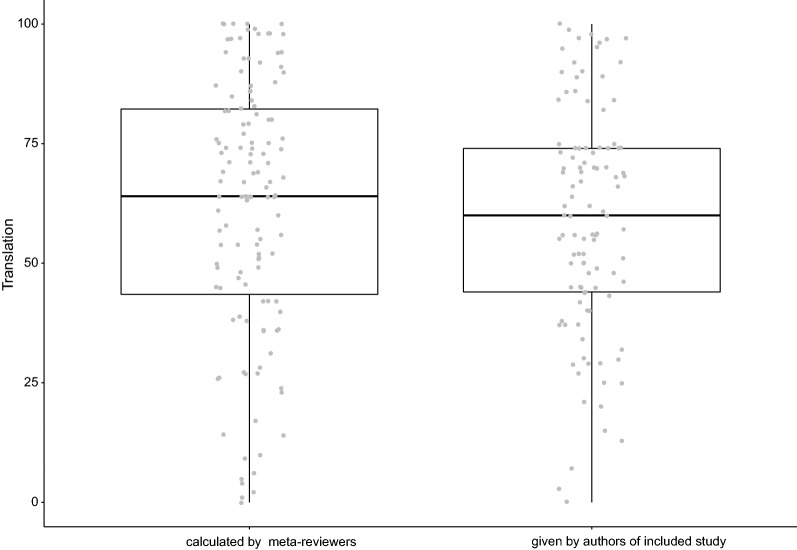
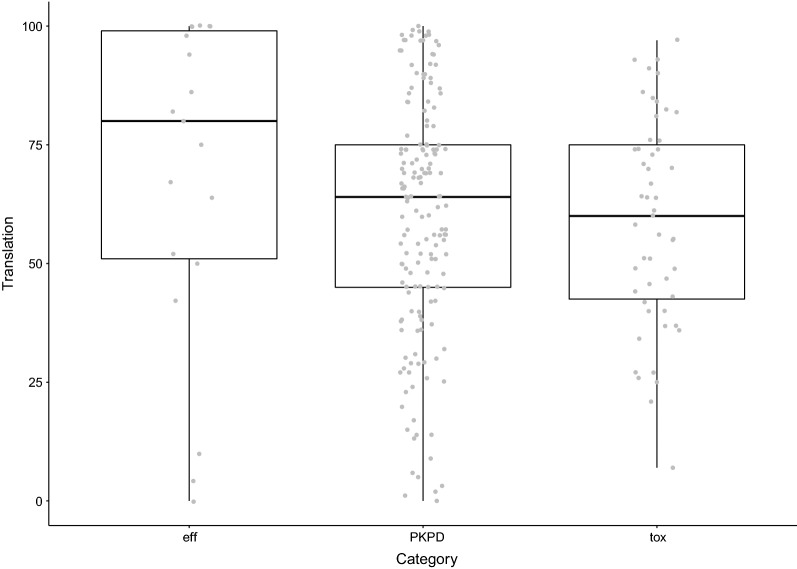
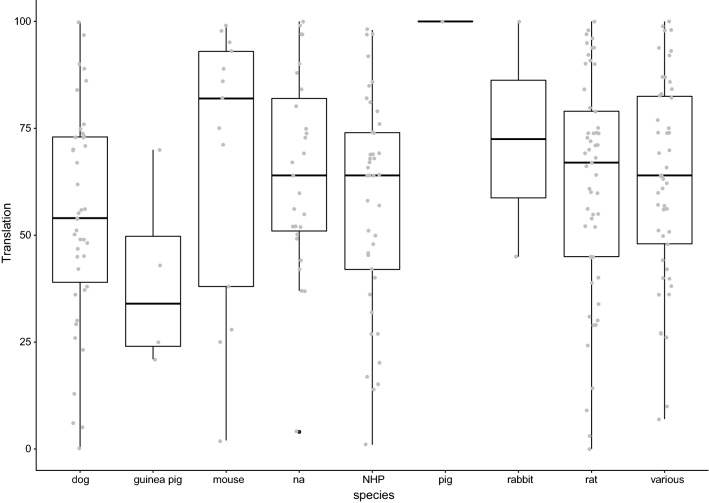
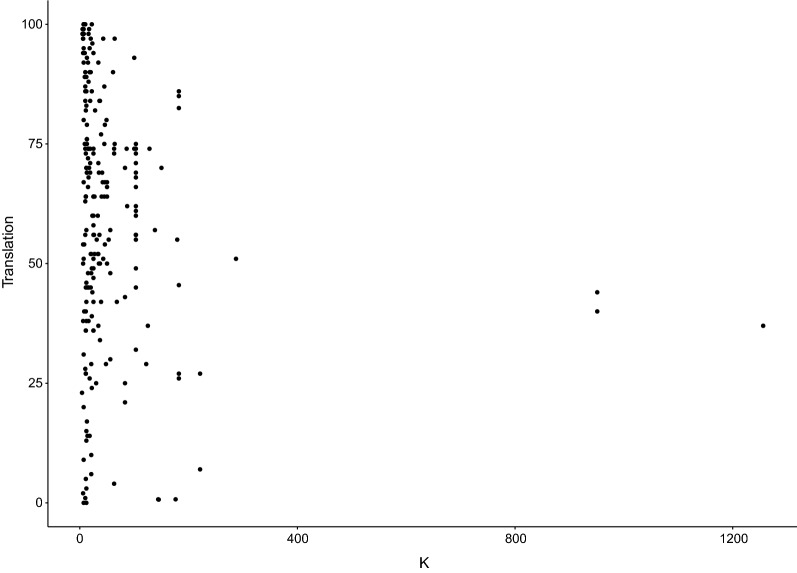
Drug development is currently hampered by high attrition rates; many developed treatments fail during clinical testing. Part of the attrition may be due to low animal-to-human translational success rates; so-called “translational failure”. As far as we know, no systematic overview of published translational success rates exists. The following research question was examined: “What is the observed range of the animal-to-human translational success (and failure) rates within the currently available empirical evidence?”. We searched PubMed and Embase on 16 October 2017. We included reviews and all other types of “umbrella”-studies of meta-data quantitatively comparing the translational results of studies including at least two species with one being human. We supplemented our database searches with additional strategies. All abstracts and full-text papers were screened by two independent reviewers. Our scoping review comprises 121 references, with various units of measurement: compound or intervention (k = 104), study/experiment (k = 10), and symptom or event (k = 7). Diagnostic statistics corresponded with binary and continuous definitions of successful translation. Binary definitions comprise percentages below twofold error, percentages accurately predicted, and predictive values. Quantitative definitions comprise correlation/regression (r 2 ) and meta-analyses (percentage overlap of 95% confidence intervals). Translational success rates ranged from 0 to 100%. The wide range of translational success rates observed in our study might indicate that translational success is unpredictable; i.e. it might be unclear upfront if the results of primary animal studies will contribute to translational knowledge. However, the risk of bias of the included studies was high, and much of the included evidence is old, while newer models have become available. Therefore, the reliability of the cumulative evidence from current papers on this topic is insufficient. Further in-depth “umbrella”-studies of translational success rates are still warranted. These are needed to evaluate the probabilistic evidence for predictivity of animal studies for the human situation more reliably, and to determine which factors affect this process.
Overview
CoChat Summary
TL;DR
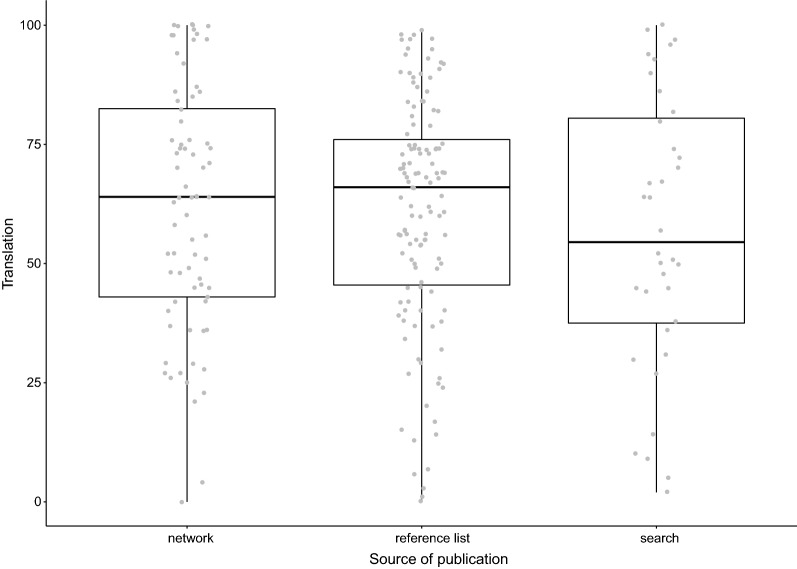
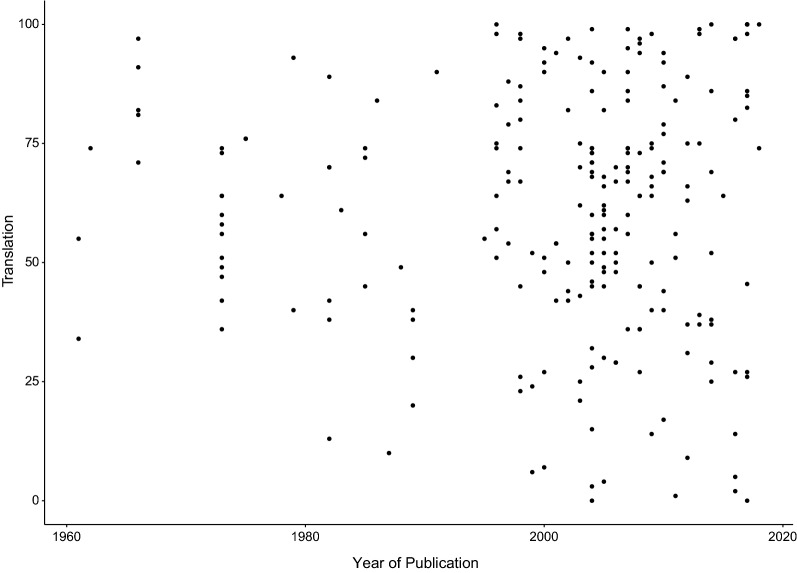
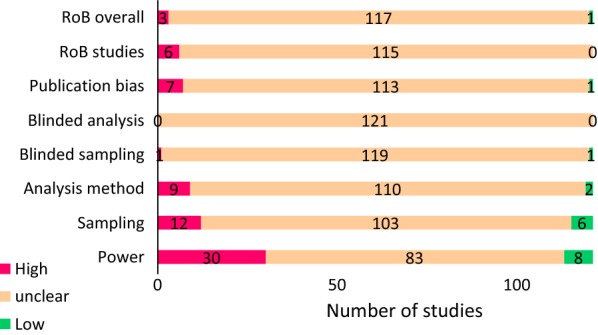
This systematic scoping review of 121 references found that reported animal-to-human translational success rates ranged from 0% to 100%, with no clear differences by definition, unit of analysis, research category, species, source, or publication date. The authors conclude the cumulative evidence is inconclusive because of high risk of bias and poor reporting, and that further umbrella studies are warranted.
Key findings
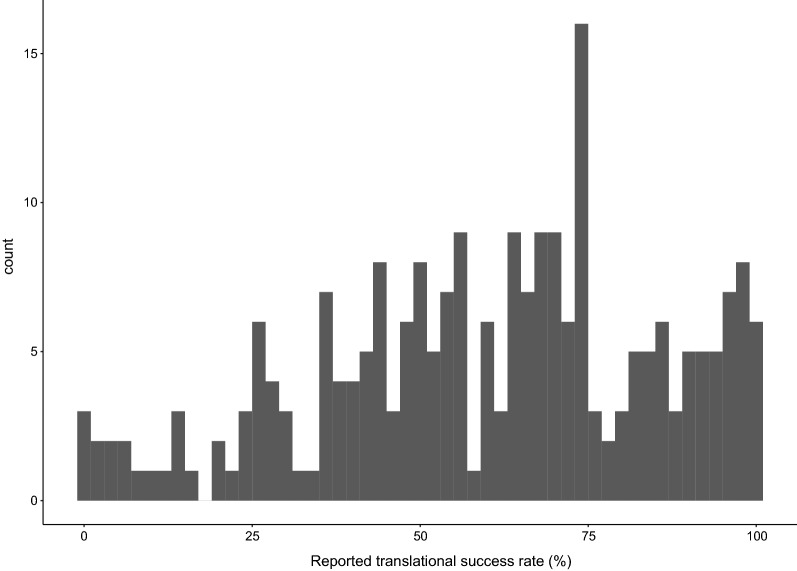
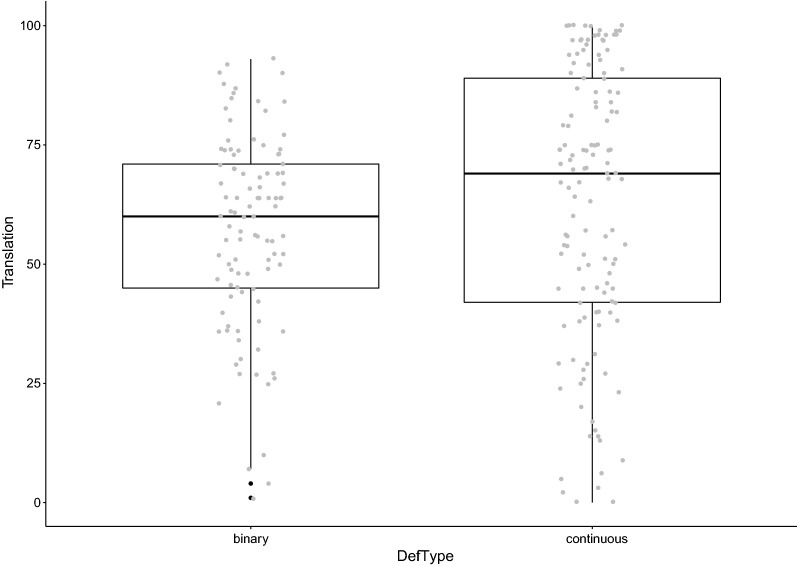
- Across 121 included references, translational success rates ranged from 0% to 100%; binary definitions ranged from 0% to 93%, and continuous definitions from 0% to 100%.
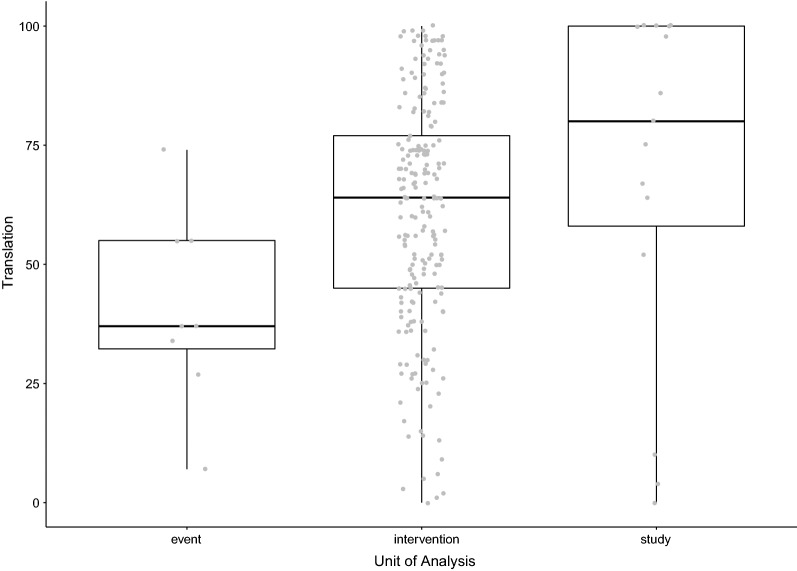
- Units of measurement were compound/intervention (k = 104), study/experiment (k = 10), and symptom/event (k = 7); event-based studies ranged from 7% to 74%, while the other units spanned 0–100%.
- No clear differences were observed between toxicology, PKPD, and efficacy studies, between species, by paper source, or between binary and continuous definitions; studies with n > 200 were all toxicology studies using binary definitions.
- Risk of bias was overall unclear; high risk of funding bias was scored for 81 of 121 references, high risk for underpowered studies for 30 of 121, and specific eligibility criteria were described in 31 of 121 references (26%) and limitations in 37 of 121 (31%).
Methods
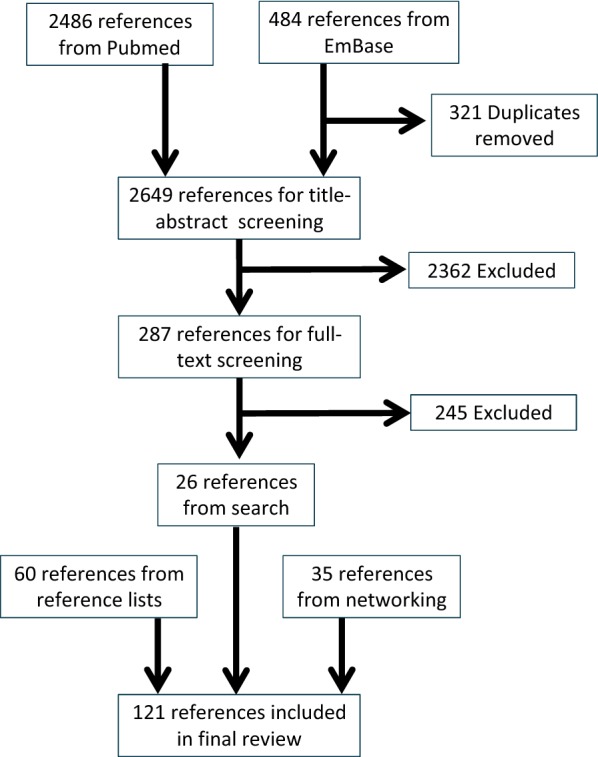
- Systematic scoping review searching PubMed and Embase on 16 October 2017, supplemented by reference-list screening and contacting experts/authors; included reviews and umbrella studies quantitatively comparing at least two species with one being human, yielding 121 references.
- Two independent reviewers screened titles/abstracts and full texts, resolving discrepancies by discussion; the protocol was posted on the SYRCLE website on 27 December 2017 after searches but before paper selection.
- All translation values were expressed as percentages using binary definitions (fold error, accuracy, PPV/NPV) or continuous definitions (r², percentage overlap of 95% CIs); data were tabulated and visualised in R version 3.5.0 with histograms and boxplots, and risk of bias/PRISMA reporting was assessed.
Limitations
- Stated by the authors: the search used MeSH/title words only, omitted modelling/scaling terms, was performed in October 2017, and stopped snowballing after second-line reference lists; data extraction/analysis were unblinded; included measures used different definitions; datasets overlapped; dosing and event incidence were often disregarded; publication bias and high/unclear risk of bias limit the evidence, which is old and should be considered hypothesis-generating only.
- Evident from the text: the included studies are highly heterogeneous in definitions, units, and diagnostic statistics, many included references did not claim to be systematic reviews and showed poor PRISMA compliance, and the authors did not perform a quantitative meta-analysis of the reported rates.
Model-written summary. Check it against the paper before relying on it.
Integrity signals
Registry
Cites
Statistics
Figures
Verification
Claims the paper makes
8 Valid · 5 Not valid · 15 Not checked · 94 Own results and interpretations
The sources with a verdict support this claim; the rest weren’t checked yet, have no full text we could read, or their verdicts aren’t rated yet.
In the paper
“Several scatterplots of pharmacokinetic parameters for a set of drugs in animals versus humans show low correspondence rates, i.e. they do not show an apparent relationship between animal and human data (e.g. [72, 73].”
§ Animal to human translation: a systematic scoping review of reported concordance rates > Results > Studies addressing translational success rates
What the sources say
- Not checked — no full text of the sourcecites [72] Grass GM Sinko PJ Physiologically-based pharmacokinetic simulation modelling Adv Drug Deliv Rev 2002 54 3 433 451 10.1016/S0169-409X(02)00013-3 11922957 source
- Supportedcites [73] Musther H Olivares-Morales A Hatley OJ Liu B Rostami Hodjegan A Animal versus human oral drug bioavailability: do they correlate? Eur J Pharm Sci 2014 57 280 291 10.1016/j.ejps.2013.08.018 23988844 PMC4107270 source
The Results section reports a poor overall correlation between animal and human oral drug bioavailability (R² = 0.342), and the Conclusion states that the data do not show strong predictive linear correlations. The claim is supported as an example concerning oral bioavailability, rather than pharmacokinetic parameters generally. (LLM, conf=0.88)
plain- Asserted: passes — The authors put it forward as true.
- Checkable: passes — It can be checked against evidence.
- Load-bearing: unclear — It is unclear whether the paper’s conclusions depend on it.
- Based: passes — The paper gives a reason why it holds.
The cited sources support only part of this claim — read each source’s verdict below.
In the paper
“As described in our methods, for the included meta-analyses, only one set of CIs, from rats and humans, did not overlap [65].”
§ Animal to human translation: a systematic scoping review of reported concordance rates > Conclusion > Data quality and risk of bias
What the sources say
- Partly supportedcites [65] Sultan SR Millar SA England TJ O’Sullivan SE A systematic review and meta-analysis of the haemodynamic effects of cannabidiol Front Pharmacol. 2017 8 81 10.3389/fphar.2017.00081 28286481 PMC5323388 sourceExperimental — accuracy not yet measured
The Methods (Data analysis; page unavailable) say the meta-analyses were subgrouped by species, including humans and rats, and reported 95% confidence intervals. The Results (Blood pressure and heart rate; page unavailable) report analyses involving both species. Our copy does not state that only one set of their CIs failed to overlap; that appears to be the citing authors’ own comparison. (LLM, conf=0.78)
plain- Asserted: passes — The authors put it forward as true.
- Checkable: passes — It can be checked against evidence.
- Load-bearing: unclear — It is unclear whether the paper’s conclusions depend on it.
- Based: passes — The paper gives a reason why it holds.
- Partly supported
Every source the paper cites for this claim was checked and supports it.
In the paper
“Besides these factors, publication bias (i.e. the relative underreporting of primary studies with negative and neutral results) can obscure translational failure rates [13].”
§ Animal to human translation: a systematic scoping review of reported concordance rates > Conclusion > Data quality and risk of bias
What the sources say
- Supportedcites [13] Martic-Kehl MI Schibli R Schubiger PA Can animal data predict human outcome? Problems and pitfalls of translational animal research Eur J Nucl Med Mol Imaging. 2012 39 9 1492 1496 10.1007/s00259-012-2175-z 22790876 PMC3411287 source
The Publication bias section defines the bias as favoring positive results over negative or inconclusive results and says it leads to overestimated effects in reviews. The Conclusion says reducing publication bias would make analyses more reliable for identifying why animal models fail to predict clinical outcomes. Together, these support the paraphrase that publication bias can obscure translational failure rates. (LLM, conf=0.90)
plainstates a cause- Asserted: passes — The authors put it forward as true.
- Checkable: passes — It can be checked against evidence.
- Load-bearing: passes — The paper’s conclusions depend on it.
- Based: passes — The paper gives a reason why it holds.
- Supported
A result the paper reports from its own data — it cites no other source for it, so there is none to check. The quote shows it is in the paper.
In the paper
“Translational success rates ranged from 0 to 100%.”
§ Animal to human translation: a systematic scoping review of reported concordance rates > Abstract > Systematic scoping review
plain- Asserted: passes — The authors put it forward as true.
- Checkable: passes — It can be checked against evidence.
- Load-bearing: passes — The paper’s conclusions depend on it.
- Based: passes — The paper gives a reason why it holds.
A result the paper reports from its own data — it cites no other source for it, so there is none to check. The quote shows it is in the paper.
In the paper
“However, the risk of bias of the included studies was high”
- Also stated in: § General considerations · plain
“However, the risk of bias of the included studies was high”
§ Animal to human translation: a systematic scoping review of reported concordance rates > Abstract > Conclusion
plain- Asserted: passes — The authors put it forward as true.
- Checkable: passes — It can be checked against evidence.
- Load-bearing: passes — The paper’s conclusions depend on it.
- Based: passes — The paper gives a reason why it holds.
- Also stated in: § General considerations · plain
41 more claims
Create a free account to see all 122 claims and to verify the 2 references still open.
- Probably not a substantial claim. 46
- It may state two separate claims as one. 47
Self-check
Percentages, sums and reported differences re-computed from the paper’s own numbers.
Each contradiction between two passages listed here was confirmed by an independent check.
Rated major: it would touch a result — a value a result rests on, reported and recomputed p-values on opposite sides of the significance level, two passages that conflict with no sign which is right, or a cited work retracted before this paper was published.
In the paper
§ Animal to human translation: a systematic scoping review of reported concordance rates > Results > Studies addressing translational success rates
“Tamaki_2013 | Adverse events | 37% of adverse drug reactions in humans were predicted from animal studies”
§ Animal to human translation: a systematic scoping review of reported concordance rates > Results > Studies addressing translational success rates
“Tamaki et al. studied 1256 adverse drug reactions after administration of 142 drugs that were approved in Japan from 2001 to 2010 [71]. 48% of the adverse drug reactions could be predicted from the animal data.”
Rated minor: it would not touch a result — a value no result rests on, a p-value that stays on the same side of the significance level, or a conflict that is clerical, resolved elsewhere in the paper, or outside its own findings.
In the paper
§ Animal to human translation: a systematic scoping review of reported concordance rates > Conclusion > Data quality and risk of bias
“81 out of the 122 included references”
§ Animal to human translation: a systematic scoping review of reported concordance rates > Results > Characteristics of the included papers
“Of the 121 included references, 119 were in English, one was in German, and one was in French.”
Citations
Cites
PRISMA Extension for Scoping Reviews (PRISMA-ScR): Checklist and Explanation
Tricco, A. C., Lillie, E., Zarin, W., O'Brien, K. K., Colquhoun, H., Levac, D., Moher, D., Peters, M. D. J., Horsley, T., Weeks, L., et al. (2018) · Annals of Internal Medicine · doi:10.7326/m18-0850 · Cited by 43,565
Wickham, H. (2016) · Use R! · doi:10.1007/978-3-319-24277-4 · Cited by 33,115
ggplot2: Elegant Graphics for Data Analysis
Wickham, H. (2009) · doi:10.1007/978-0-387-98141-3 · Cited by 14,447
Improving Bioscience Research Reporting: The ARRIVE Guidelines for Reporting Animal Research
Kilkenny, C., Browne, W. J., Cuthill, I. C., Emerson, M., & Altman, D. G. (2010) · PLoS Biology · doi:10.1371/journal.pbio.1000412 · Cited by 7,300
Improving bioscience research reporting: The ARRIVE guidelines for reporting animal research
Kilkenny, C., Browne, W. J., Cuthill, I. C., Emerson, M., & Altman, D. G. (2010) · Journal of Pharmacology and Pharmacotherapeutics · doi:10.4103/0976-500x.72351 · Cited by 6,277
Can the pharmaceutical industry reduce attrition rates?
Kola, I., & Landis, J. (2004) · Nature Reviews Drug Discovery · doi:10.1038/nrd1470 · Cited by 4,167
Clinical development success rates for investigational drugs
Hay, M., Thomas, D. W., Craighead, J. L., Economides, C., & Rosenthal, J. (2014) · Nature Biotechnology · doi:10.1038/nbt.2786 · Cited by 2,536
Concordance of the toxicity of pharmaceuticals in humans and in animals
Olson, H., Betton, G., Robinson, D., Thomas, K., Monro, A., Kolaja, G., Lilly, P., Sanders, J., Sipes, G., Bracken, W., et al. (2000) · Regulatory Toxicology and Pharmacology · doi:10.1006/rtph.2000.1399 · Cited by 2,050
Diagnosing the decline in pharmaceutical R&D efficiency
Scannell, J. W., Blanckley, A., Boldon, H., & Warrington, B. (2012) · Nature Reviews Drug Discovery · doi:10.1038/nrd3681 · Cited by 1,981
Believe it or not: how much can we rely on published data on potential drug targets?
Prinz, F., Schlange, T., & Asadullah, K. (2011) · Nature Reviews Drug Discovery · doi:10.1038/nrd3439-c1 · Cited by 1,888
Research works printed but not linked: 2
- Shanks N Greek CR Animal model in light of evolution 2009 Boca Raton BrownWalker Press
- Menon JM, Kouwenaar C, Stafleu F, De Vries RBM, Ritskes-Hoitinga, Meijboom FLB, et al. Quantification of translational success: rates of concordance between the results of animal experiments and human trials—a systematized review [protocol posted online on http://www.SYRCLE.nl]. Nijmegen: SYRCLE; 2017.
Cited by
Items 201–296 of 296
Toward a roadmap for addressing today's health dilemma–The 101-statement consensus report
Wirnitzer, K., Motevalli, M. S., Tanous, D., Drenowatz, C. J., Moser, M., Cramer, H., Rosemann, T. J., Wagner, K., Michalsen, A., Knechtle, B., et al. (2025) · Frontiers in Nutrition · doi:10.3389/fnut.2025.1676080 · Cited by 4
Self-citationMicrofluidic engineering of immune-competent organs-on-chips and their applications
Liang, X., Bu, X., Yuan, S., Wu, C., Liu, D., & Deng, J. (2026) · Frontiers in Immunology · doi:10.3389/fimmu.2026.1743806 · Cited by 6
“Although animal models offer systemic complexity, they are often hampered by species-speci fi c differences in immune receptor expression, cytokine pro fi les, and immune system architecture, limiting their clinical translatability and contributing to late-stage drug development failures (10).”
Rafi, M. S. H., Sarker, M. T., Joy, F.-U.-H., Shams, S. M., Foyez, T., Mazid, M. A., & Dewan, S. M. R. (2026) · Animal Models and Experimental Medicine · doi:10.1002/ame2.70236 · Cited by 2
Roffel, A. F., van Lier, J. J., Rozema, G., & van Hoogdalem, E. (2021) · Current Clinical Pharmacology · doi:10.2174/1574884716666210309103625 · Cited by 3
Drug Repurposing: An Advance Way to Traditional Drug Discovery
Joon, P., Dahiya, M., Sharma, G., Sharma, K., Ray, E., Kadian, M., Sobti, R. C., Puri, S., & Kumar, A. (2023) · Springer eBooks · doi:10.1007/978-981-19-5399-6_1 · Cited by 2
Leenaars, C. H. C., Häger, C., Stafleu, F. R., Nieraad, H., & Bleich, A. (2023) · Diagnostics · doi:10.3390/diagnostics13193098 · Cited by 3
“Preceding work from our group has shown that the predictive value of preclinical animal studies for human treatments ranges from 0% to 100% [13].”
BackgroundSelf-citationCamones, M. Á. I., Arroyo, G. C. A., López, O. F., Capcha-Siccha, M. F., Bravo-Araujo, G. T., & Ayala, J. J. Z. (2024) · Brazilian journal of food technology/Brazilian Journal of Food Technology · doi:10.1590/1981-6723.13722 · Cited by 2
Paiva, T. O., Buades‐Rotger, M., Baskin-sommers, A. R., & Brazil, I. A. (2024) · Aggression and Violent Behavior · doi:10.1016/j.avb.2024.102002 · Cited by 2
ERICH4 is not involved in the assembly and secretion of intestinal lipoproteins
Visser, A., Zwol, W. H.-V., Kloosterhuis, N., Huijkman, N., Smit, M., Koster, M. H., Bloks, V. W., Hussain, M. M., van de Sluis, B., & Kuivenhoven, J. A. (2024) · Atherosclerosis · doi:10.1016/j.atherosclerosis.2024.118635 · Cited by 2
A tutorial for model‐based evaluation and translation of cardiovascular safety in preclinical trials
Kulesh, V., Vasyutin, I., Volkova, A., Peskov, K. V., Kimko, H. H. C., Sokolov, V., & Alluri, R. V. (2023) · CPT Pharmacometrics & Systems Pharmacology · doi:10.1002/psp4.13082 · Cited by 1
Liu, W., Jiang, D., Schulz, M., Figueiredo, C., Dondossola, D. E., Meister, F., Tihanyi, D. K., Mehrabi, A., Tolba, R. H., Czigány, Z., et al. (2024) · PLoS ONE · doi:10.1371/journal.pone.0297942 · Cited by 2
Assessment of quality of life and wellbeing in mouse preclinical research – A scoping review
Sanz‐Moreno, A., da Silva‐Buttkus, P., Terwee, C. B., Raess, M., Fuchs, H., Gailus‐Durner, V., & de Angelis, M. H. (2024) · Neuroscience Applied · doi:10.1016/j.nsa.2024.104058 · Cited by 5
“Although we are aware of discrepancies in both the biology (Howe et al., 2018; Leenaars et al., 2019) and the possibility to self-report of mice and humans, with this review we intend to raise awareness for the unfavorable “ translational methodological gap ” between mouse experiments and clinical…”
Silva, G. R., Miranda, L. T. G., da Silva, S. A. D. C. A., de Andrade, L. R., de Souza, N. C., Sá, B. S., de Santana, E. R., Vasconcelos, A. G., Moreira, D. C., Pic‐Taylor, A., et al. (2024) · Drugs and Drug Candidates · doi:10.3390/ddc3020021 · Cited by 3
Bisio, M. M. C., Medina, J., García‐Bournissen, F., & Gulin, J. E. N. (2024) · Parasitology Research · doi:10.1007/s00436-024-08257-3 · Cited by 5
“In fact, current drug development is handicapped by high attrition rates, in part due to low animal-to-human translational success rates (Leenaars et al. 2019).”
Edagha, I. A., Akpan, B. C., Edem, D. O., Ataben, M. A., Bassey, B., Itama, R. S., & Evogor, D. C. (2024) · Clinical Phytoscience · doi:10.1186/s40816-024-00377-8 · Cited by 2
“Translational studies permit allometric scaling wherein scientists exchange doses between species during research for possible prediction of animal study to human condition [24, 25].”
BackgroundLeenaars, C. H. C., Teerenstra, S., Meijboom, F. L. B., et al. (2022) · medRxiv · doi:10.1101/2022.01.31.22270227 · Cited by 2
Self-citationExamining Litter Specific Variability in Mice and its Impact on Neurodevelopmental StudiesPreprint
Valiquette, V., Guma, E., Cupo, L., Gallino, D., Anastassiadis, C., Snook, E., Devenyi, G. A., & Chakravarty, M. M. (2022) · bioRxiv (Cold Spring Harbor Laboratory) · doi:10.1101/2022.09.09.506402 · Cited by 2
“Our limited understanding and inconsistent handling of litter likely acts as an experimental confound (Jiménez & Zylka, 2021; Lazic & Essioux, 2013; Leenaars et al., 2019), 4”
Friedrich, V. D., Pennitz, P., Wyler, E., Adler, J. M., Postmus, D., Alves, L. G. T., Prigann, J., Pott, F., Vladimirova, D., Hoefler, T., et al. (2024) · bioRxiv (Cold Spring Harbor Laboratory) · doi:10.1101/2024.01.11.574849 · Cited by 2
Scientific Usefulness of New Approach Methodologies
Gow, A. J. (2022) · Applied In Vitro Toxicology · doi:10.1089/aivt.2022.29030.editorial · Cited by 1
Hareendran Nair, J., Kasthuri Nair, A., Sithara, M. S., et al. (2024) · Pharmacognosy Magazine · doi:10.1177/09731296231215578 · Cited by 1
Towards advanced regenerative therapeutics to tackle cardio-cerebrovascular diseases
Chen, X., Lin, W., & Tortorella, M. D. (2025) · American Heart Journal Plus Cardiology Research and Practice · doi:10.1016/j.ahjo.2025.100520 · Cited by 1
“Part of the attrition challenge is attributed to low animal-to-human translational success rates, so-called “ translational failure ” [83].”
Jasinskyte, U., Vejmola, Č., Guzulaitis, R., & Griškova-Bulanova, I. (2025) · Brain Sciences · doi:10.3390/brainsci15111159 · Cited by 1
Bischof, K., Moitzi, A. M., & König, D. (2025) · International Journal of Obesity · doi:10.1038/s41366-025-01905-3 · Cited by 2
“Recent research on animal-to-human translation reported a median success rate of approximately 65%, with a range from 0 to 100% [100].”
We need less animal research, better animal research, and animal research done for the right reasons
Ineichen, B. V. (2026) · Journal of Translational Medicine · doi:10.1186/s12967-026-08259-y · Cited by 1
“And evidence suggests that it remains difficult to predict which animal models will translate successfully to humans [33].”
Cattebeke, G., Vermeersch, A.-S., Cappoen, D., Deforce, D., & Nieuwerburgh, F. V. (2026) · Journal of Cheminformatics · doi:10.1186/s13321-026-01231-4 · Cited by 1
“Yet, despite several significant contributions, animal models often remain poor predictors of human outcomes [1].”
Laboratory Rat as an Animal Model for Preclinical Studies
Parasuraman, S., Chuah, J. J., & George, S. D. (2026) · Springer eBooks · doi:10.1007/978-981-92-0038-2_5 · Cited by 1
Anwar, S., & Yokota, T. (2026) · Genes · doi:10.3390/genes17070780 · Cited by 1
“However, they often fail to reproduce human biology, physiology, or treatment response with sufficient fidelity [20–29].”
Straccia, M., Azilagbetor, D. M., Camp, C., Ferreira, G. S., García-Bermejo, M. L., Gastaldello, A., Gurusamy, K. S., Pappalardo, F., Ritskes-Hoitinga, M. J., Rossi, F., et al. (2026) · Journal of Translational Medicine · doi:10.1186/s12967-026-08604-1 · Cited by 2
“This step is especially important in areas where publication bias and selective reporting may distort the apparent strength of the evidence base [39, 40].”
Self-citationRestoring comparative expertise to improve translation of animal models
Lloyd, K. C. K. (2026) · Disease Models & Mechanisms · doi:10.1242/dmm.053172 · Cited by 1
“…above 90% for drug candidates in clinical development, reproducibility concerns and publication bias (Perel et al., 2007; van der Worp et al., 2010; Sena et al., 2010; Leenaars et al., 2019; Ineichen et al., 2024; Hackam and Redelmeier, 2006; Mak et al., 2014; Cook et al., 2014; Hay et al., 2014).”
Matsuishi, Y., Shimojo, N., Hoshino, H., Enomoto, Y., Mathis, B. J., Oh, S., Kawano, S., Myoenzono, K., Maeda, S., Shoda, J., et al. (2020) · Medicine in Drug Discovery · doi:10.1016/j.medidd.2020.100074 · Cited by 1
Bretton-Granatoor, Z., Stealey, H. M., Santacruz, S. R., & Lewis‐Peacock, J. A. (2022) · IEEE Biomedical Circuits and Systems Conference (BioCAS) · doi:10.1109/biocas54905.2022.9948604 · Cited by 1
“Often we find that insight gained from animal models can be challenging to transfer directly to humans [8].”
BackgroundWill Labour help us transition away from pre-clinical animal research?
Pound, P., & Ritskes-Hoitinga, M. J. (2024) · BMJ · doi:10.1136/bmj.q1600 · Cited by 1
Self-citationGenome-Based Advances in Modeling Renal Ciliopathies and Enhancing Patient Care
Secondulfo, F., Blanco, F. D. V., Capolongo, G., Piluso, G., Nigro, V., Perna, A. F., Capasso, G., & Zacchia, M. (2025) · Kidney & Blood Pressure Research · doi:10.1159/000547131 · Cited by 2
“However, even if very useful, promising results obtained in animal models have sometimes not been confirmed in humans (the so-called “translational fail-ure”) [268].”
Tran, H. H.-V., Thu, A., Twayana, A. R., Fuertes, A., Gonzalez, M., Basta, M., James, M., Mehta, K. A., Frishman, W. H., & Aronow, W. S. (2025) · Cardiology in Review · doi:10.1097/crd.0000000000001000 · Cited by 1
Cavero, I., & Holzgrefe, H. H. (2019) · Expert Opinion on Drug Safety · doi:10.1080/14740338.2020.1694902 · Cited by 1
Cannabidiol (CBD) and Its Biological Toxicity: Modelling Preclinical Studies
Dziwenka, M. M., & Coppock, R. W. (2022) · Springer eBooks · doi:10.1007/978-3-030-92392-1_69 · Cited by 1
van Rensburg, M. J., Silva, D. D., Crous, A., & Abrahamse, H. (2022) · Handbook of Oxidative Stress in Cancer: Therapeutic Aspects · doi:10.1007/978-981-16-5422-0_205 · Cited by 1
Tools to enable animal to human translation: Assessing the value of disease models
Ferreira, G. S. (2020) · Utrecht University Repository (Utrecht University) · doi:10.33540/157 · Cited by 2
Zeleznik, O. A., Welling, D. B., Stanković, K. M., Frueh, L., Balasubramanian, R., Curhan, G. C., & Curhan, S. G. (2022) · medRxiv · doi:10.1101/2022.06.11.22276279 · Cited by 1
Drude, N., Martinez‐Gamboa, L., Danziger, M., Collazo, A., Kniffert, S., Wiebach, J., Nilsonne, G., Konietschke, F., Piper, S. K., Pawel, S., et al. (2022) · Research Square · doi:10.21203/rs.3.rs-1855244/v1 · Cited by 1
Lin, H. (2023) · Wiley eBooks · doi:10.1002/0471125474.tox118.pub2 · Cited by 1
Genes in Humans and Mice: Insights from Deep learning of 777K Bulk TranscriptomesPreprint
Su, Z., Fang, M., Smolnikov, A., Vafaee, F., Dinger, M. E., & Oates, E. C. (2024) · bioRxiv (Cold Spring Harbor Laboratory) · doi:10.1101/2024.04.01.587517 · Cited by 1
The circular RNA landscape of human dorsal root ganglia and its association with opioid exposurePreprint
Koch, M. R., Demeter, J. B., Shilling, M. W., Alles, S. R. A., Westlund, K. N., Ehsanian, R., & de la Peña, J. B. (2025) · bioRxiv (Cold Spring Harbor Laboratory) · doi:10.1101/2025.02.26.640459 · Cited by 1
Large-Scale Assessment of Animal-to-Human Drug Translation Using Natural Language ProcessingPreprint
Doneva, S. E., Ellendorff, T., Schneider, G., Held, L., von Wyl, V., Simpson, T. I., Sick, B., & Ineichen, B. V. (2026) · bioRxiv (Cold Spring Harbor Laboratory) · doi:10.64898/2026.05.20.726540 · Cited by 2
“Alternative definitions, such as concordance between animal and human outcomes, may yield different estimates [13].”
Chronic stress-associated accelerated ageing: inflammation and oxidative stress treatment
Petersen-Ross, K. S. (2020) · SUNScholar (Stellenbosch University)
Oliveira, V. M., Thomaz, D. V., Chequer, F. M. D., Baldoni, N. R., & do Couto, R. O. (2021) · Research Society and Development · doi:10.33448/rsd-v10i8.17257 · Cited by 1
Perentos, N., Krstulović, M., & Morton, A. J. (2021) · bioRxiv (Cold Spring Harbor Laboratory) · doi:10.1101/2021.08.04.454778
Characterizing interdisciplinarity in drug research: a translational science perspectivePreprint
Li, X., & Tang, X. (2021) · arXiv (Cornell University) · doi:10.48550/arxiv.2109.03038
Dreyer, T. J. (2020) · UpSpace Institutional Repository (University of Pretoria)
van Rensburg, M. J., Silva, D. D., Crous, A., & Abrahamse, H. (2021) · Handbook of Oxidative Stress in Cancer: Therapeutic Aspects · doi:10.1007/978-981-16-1247-3_205-1
Hermann, M., Richter, B. D., & Roschal, A. (1990) · PubMed
A Sampling of Engineering Ethics Conundrums Intended for Classroom Discussion
Doyle, D. J. (2021) · Ethics in Biology Engineering and Medicine An International Journal · doi:10.1615/ethicsbiologyengmed.2022038158
Cannabidiol (CBD) and Its Biological Toxicity: Modelling Preclinical Studies
Dziwenka, M. M., & Coppock, R. W. (2022) · Springer eBooks · doi:10.1007/978-3-030-67928-6_69-1
Goldsteen, P. A., Sabogal-Guáqueta, A. M., Bos, I. S. T., Kistemaker, L. E. M., van der Koog, L., Eggens, M. L., Halayko, A. J., Dolga, A. M., & Gosens, R. (2022) · bioRxiv (Cold Spring Harbor Laboratory) · doi:10.1101/2022.03.23.485449
Perentos, N., Krstulović, M., & Morton, A. J. (2021) · SSRN Electronic Journal · doi:10.2139/ssrn.3917173
Falkenberg, C., Toft, M., Skov, S., et al. (2022) · Research Square · doi:10.21203/rs.3.rs-2165344/v1
Mapping strategies towards improved external validity in preclinical translational researchPreprint
Carneiro, C. F. D., Drude, N., Hülsemann, M., Collazo, A., & Toelch, U. (2023) · doi:10.31219/osf.io/qchf6
Sarachakov, A., Varlamova, A., Svekolkin, V., Galkin, I., Valencia, I., Unkenholz, C., Pannellini, T., Akaeva, A., Smirnova, S., Ovcharov, P., et al. (2023) · bioRxiv (Cold Spring Harbor Laboratory) · doi:10.1101/2023.04.28.538715
Verkhratsky, A., & Butt, A. M. (2023) · Elsevier eBooks · doi:10.1016/b978-0-12-821565-4.00001-8
Samrani, L. M. M. (2023) · Utrecht University Repository (Utrecht University) · doi:10.33540/1979
Mahendra, I., Kurniawan, A., Febrian, M. B., Halimah, I., Rizaludin, A., & Syarif, D. G. (2024) · Current Clinical Pharmacology · doi:10.2174/0127724328295592240419064719
Characterization of a Biochemical Mouse Model of Primary Aldosteronism for Thermal TherapiesPreprint
Timmerman, S. A., Mullen, N., TAYLOR, A. E. R., Gilligan, L. C., Pyle, M. M., Shrestha, T. B., Šebek, J., Highland, M. A., Challapalli, R. S., Arlt, W., et al. (2024) · bioRxiv (Cold Spring Harbor Laboratory) · doi:10.1101/2024.05.07.592955
Gilbertie, J., Sheahan, B., Vaden, S., & Jacob, M. E. (2025) · PLoS ONE · doi:10.1371/journal.pone.0316834
PMI estimation on aqueous humour: human translation from a metabolomic animal modelPreprint
Chighine, A., Stocchero, M., De‐Giorgio, F., et al. (2025) · bioRxiv (Cold Spring Harbor Laboratory) · doi:10.1101/2025.04.15.648907
“Nevertheless, both the frequency of translational efforts and their success rates have markedly increased since 2000, as demonstrated by Leenars et al. in a recent systematic scoping review [20].”
Nanogels for Drug Delivery: The Key Role of Nanogel–Drug Interactions
Ramos, J., Peláez-Fernández, M., Forcada, J., Moncho-Jordá, A., Sáez‐Martínez, V., & Vicario‐de‐la‐Torre, M. (2025) · Royal Society of Chemistry eBooks · doi:10.1039/9781837675203-00127
Behavioural investigations of psilocybin in non-human animals 1962–2021: A scoping review
Shore, R., Dobson, K., Thomson, N., Barnim, N., Bergman, H. P., Rideout, K., McKeown, S., Olmstead, M. C., Goldie, C. E., & Dumont, É. C. (2025) · Journal of Psychedelic Studies · doi:10.1556/2054.2025.00364 · Cited by 5
Teimoori, A., Orhan, H. G., Zeynalova, N., Demirtaş, E., Efe, O. E., Özer, E. Ö., & Aydıngöz, S. E. (2025) · Canadian Journal of Physiology and Pharmacology · doi:10.1139/cjpp-2025-0168
Cattebeke, G., Vermeersch, A.-S., Cappoen, D., et al. (2025) · bioRxiv (Cold Spring Harbor Laboratory) · doi:10.1101/2025.11.14.686754
The efficacy of candidate HIV vaccines in non-human primates and humans: a systematic reviewPreprint
Menon, J. M. L., Rosso, M., van de Weerthof, M., Struijs, F., van Hattem, A., Prechal, L., Weber, O., Ineichen, B. V., Leenaars, C. H. C., & Ritskes-Hoitinga, M. J. (2025) · medRxiv · doi:10.1101/2025.11.21.25340585 · Cited by 1
Self-citationData Mining and Integration Approaches in AI-Driven Drug Discovery
Tsimenidis, S., Vrochidou, Ε., & Papakostas, G. A. (2026) · Springer eBooks · doi:10.1007/978-3-031-98022-0_2
Procedural technique development
Haykal, S., Adil, A., & Hadžimustafić, N. (2026) · Elsevier eBooks · doi:10.1016/b978-0-323-91168-9.00006-5
Gkarmiri, S., Zagalioti, S., Karagiannidis, E., Zagaliotis, P., Stachteas, P., Apostolopoulou, A., Diamantoudis, S. C., Bantidos, M. G., Kofos, C., Kotzampassi, K. E., et al. (2026) · Journal of Clinical Medicine · doi:10.3390/jcm15041622
Lohse, S. (2026) · European Journal for Philosophy of Science · doi:10.1007/s13194-026-00727-y · Cited by 2
“It should not be overlooked, however, that other factors also play a major role in persisting translational problems (Leenaars et al., 2019 ), namely effectiveness issues in later phases of clinical trials (Magee, 2013), economic and organisational hurdles (Seyhan, 2019 ), sub-quality and…”
Huang, C. J., Pawel, S., Wever, K. E., Ineichen, B. V., & Heyard, R. (2026) · eLife · doi:10.7554/elife.109853.1
Huang, C. J., Pawel, S., Wever, K. E., Ineichen, B. V., & Heyard, R. (2026) · eLife · doi:10.7554/elife.109853 · Cited by 1
“Animal and human study sample sizes, n A and n H Animal preclinical studies commonly suffer from insufficient sample sizes, leading to underpowered studies [2, 14, 6].”
From mice to clinical relevance: humanizing neuroscience with human-based model systems
Bak, A., van Loo, K. M. J., Kronenberg‐Versteeg, D., & Koch, H. (2026) · Frontiers in Cellular Neuroscience · doi:10.3389/fncel.2026.1776439
Athéa, H. (2024) · theses.fr (ABES) · doi:10.70675/d1402550z7fe9z4237z90d2z4845d24c1bde · Cited by 1
Legal incoherence in EU chemical safety law: A proportionality-based analysis of REACH and CLP
Stoykova, K. (2026) · Alternatives to Laboratory Animals · doi:10.1177/02611929261442805 · Cited by 1
Human neural organoid modeling of diffuse midline glioma captures the complexity of patient tumors
Shireman, J. M., Xie, E., Lebakken, C. S., Damodharan, S. N., Parham, K. T., Richards, W. D., Hashizume, R., Kendziorski, C. M., & Dey, M. (2026) · Journal of Neuro-Oncology · doi:10.1007/s11060-026-05515-5 · Cited by 1
Koch, M. R., Demeter, J. B., Hochrein, M., Alles, S. R. A., Westlund, K. N., Ehsanian, R., & de la Peña, J. B. (2026) · Pain · doi:10.1097/j.pain.0000000000003987 · Cited by 1
From Food Waste to Bioactive Compounds: Unveiling the Molecular Mechanism Against Metabolic Diseases
Doke, R. R., Vinchurkar, K., Jalindar, A. S., Shafi, S., Kausar, N., Singh, A. K., & Singh, S. A. (2026) · Waste and Biomass Valorization · doi:10.1007/s12649-026-03658-0 · Cited by 1
An ancient retrotransposon provides species-specific tuning of IL-18 inflammatory signalingPreprint
Ordonez, A. D., Allen, H. L., Sanford, L., Ivancevic, A. M., Agyepong, A., Chaw, M., Bridges, J. P., Schountz, T., & Chuong, E. B. (2026) · bioRxiv (Cold Spring Harbor Laboratory) · doi:10.64898/2026.05.25.727421 · Cited by 1
The Propaganda Narrative Behind Animal Experimentation
Almirón, N. (2026) · Oxford University Press eBooks · doi:10.1093/9780198945239.003.0074
Sekiguchi, Y., Suzuki, A., Nakao, Y., Hori, T., Mori, M., Mirza, A. F., Shindoh, R., Morita, I., Mandai, S., Fujiki, T., et al. (2026) · medRxiv · doi:10.64898/2026.06.18.26355848
A human iPSC-derived kidney–liver organ-on-a-chip platform for modeling inter-organ crosstalk
de Brouwer, L., Garcia, V. P., Kiamehr, M., Naderlinger, E., Çobanoğlu, T. S., Wagegg, B. A., Dehne, E., Verfaillie, C. M., Moco, S., Jennings, P., et al. (2026) · Lab on a Chip · doi:10.1039/d6lc00362a
Pharmacological investigation of Hamelia patens leaves for central nervous system activity in rats
Azgaonkar, S. V., Mendonça, L. M. F. E., & Katkar, A. R. (2026) · Indian Journal of Physiology and Pharmacology · doi:10.25259/ijpp_86_2026
Tiwari, S., Siddiqui, B., Fatima, S., Saifi, M., Khan, I. A., & Abdin, M. Z. (2026) · Ageing Research Reviews · doi:10.1016/j.arr.2026.103308
Addressing translational barriers in intra-articular drug delivery for cartilage regeneration
del Río, E. (2026) · Journal of Controlled Release · doi:10.1016/j.jconrel.2026.115338
Farina, G., Sottili, M., Spina, G. L., Gelmini, S., Truglia, S., Conti, F., Spinelli, F. R., & Crescioli, C. (2026) · Biomolecules · doi:10.3390/biom16091325
Kidtiwong, A., Arteaga, M.-B., Tarasova, K. V., Gültekin, S., Rothbauer, M., Gerner, I., & Jenner, F. (2026) · iScience · doi:10.1016/j.isci.2026.117710
Filipova, D., Fox, L., Goßmann, M., Herrmann, K., Knight, A., Lickiss, B., Maaß, C., Neumann, G., Ritskes-Hoitinga, M. J., & Zietek, T. (2026) · NAM journal. · doi:10.1016/j.namjnl.2026.100136
“In an attempt to find predictive success factors for animal to human translation, a scoping review of reported translational percentages was performed by Leenaars et al. (2019): translational percentages ranged from 0 to 100% and did not change over time (Leenaars et al., 2019).”
Self-citationXu, L., Zhang, J.-Y., Huang, H.-B., Huang, Y.-Y., Chen, Y.-Y., Wu, Y., Wei, R., Zhong, H., Yan, B.-Q., Lv, H., et al. (2026) · IBRO Neuroscience Reports · doi:10.1016/j.ibneur.2026.09.012
“Animal models can help clarify biological mechanisms and identify candidate pathways, but preclinical findings do not necessarily translate directly into diagnostic or prognostic utility in humans (Leenaars et al., 2019).”
Preclinical studies: Translational research in drug development
Bora, S. J., Chensula, S., Bhattacharyya, A., Sarma, P., & Roy, P. D. (2026) · Elsevier eBooks · doi:10.1016/b978-0-443-38307-6.00008-9
Sex-biased toll-like receptor 4 signaling in nociplastic pelvic pain
Lenert, M. E., Pontari, M. A., Hildago-Lopez, E., Clemens, J. Q., Kaplan, C. M., Harte, S. E., & Schrepf, A. (2026) · Brain Behavior and Immunity · doi:10.1016/j.bbi.2026.107032
Metadata
- Authors
- Leenaars, C. H. C., Kouwenaar, C., Stafleu, F. R., Bleich, A., Ritskes-Hoitinga, M., De Vries, R. B. M., & Meijboom, F. L. B.
- Affiliations
- Utrecht University (NL)
- Medizinische Hochschule Hannover (DE)
- Radboud University Medical Center (NL)
- Corresponding author
- Leenaars, Cathalijn H. C.
- ORCID
- Venue
- Journal of Translational Medicine
- Published
- 2019-07-15
- Volume
- 17
- Issue
- 1
- Pages
- 223-223
- ISSN
- 1479-5876 (ISSN-L)
- PMC
- PMC6631915
- OpenAlex
- W2960989010
- Semantic Scholar
- 70b83aaa28b660a1a9a533e7cad7221eb61d0c4d
- Cited by
- 314
- References
- 88
- Citations by year
- 2026: 55 · 2025: 38 · 2024: 56 · 2023: 50 · 2022: 55 · 2021: 36 · 2020: 21 · 2019: 2
- FWCI
- 7.30
- Type
- journal article
- Language
- en
- Open access
- gold
- doi.org
- Licence
- cc-by
- creativecommons.org/licenses/by/4.0/ (tdm)
- creativecommons.org/licenses/by/4.0/ (vor)
- Locations
- Journal of Translational Medicine (publishedVersion, cc-by)
- PubMed Central (publishedVersion, cc-by)
- PubMed (publishedVersion)
- Radboud Repository (Radboud University) (publishedVersion)
- DOAJ (DOAJ: Directory of Open Access Journals) (submittedVersion)
- Utrecht University Repository (Utrecht University) (submittedVersion, other-oa)
- Radboud Repository (Radboud University) (submittedVersion, other-oa)
- Funders
- ZonMW (40-42600-98-417)
- NWO (313-99-310)
- the Federal State of Lower Saxony (R2N)
- Topics
- Health Sciences › Veterinary › Small Animals › Animal testing and alternatives
- Social Sciences › Decision Sciences › Statistics, Probability and Uncertainty › Meta-analysis and systematic reviews
- Physical Sciences › Mathematics › Statistics and Probability › Statistical Methods in Clinical Trials
- Keywords
- animal-to-human translation, translational failure, drug attrition, animal models, species comparison, risk of bias
- MeSH terms
- Animals, Humans, Periodicals as Topic, Risk, Publication Bias, Translational Research, Biomedical
About these checks
Registry, retraction, Cites and statistics results are computed, not judged, with one exception: a printed reference that no index lists is read once by a model before it counts as a citation error. Claims are extracted by a model and kept only when their quote appears verbatim in the text; each cited source is then checked, with a model’s help, for whether it says what the claim relies on. Those verdicts can be wrong — read the claim’s quote and the cited source before relying on one.
The claim verdicts this report counts are experimental: their accuracy is not yet measured.
A language model drew the claims from the paper on 2026-10-07, under version 3 of the claim definition (model deepseek-v4.1-flash, prompt extract-v3).
A second model labelled each claim on 2026-10-07 (model jev-1.13-20260917, definition revision gold-guideline-v0.2).
Cited sources are checked with a language model’s help (gpt-6-sol).
Statistics and arithmetic are recomputed, not judged.
Confidence bands are shown only for fields calibrated on our annotated test set. None is calibrated yet, so no band is shown.
What counts as a claim ›How we measure confidence ›How we check this ›
Are you an author, or do you see a problem with this page? Request a review
Data sources
Bibliographic data: Semantic Scholar, OpenAlex, Crossref.
Contains information from the Semantic Scholar Academic Graph Datasets, made available under the ODC Attribution License (ODC-BY 1.0).
Semantic Scholar’s data is described in: Kinney, R., et al. (2023). The Semantic Scholar Open Data Platform. arXiv:2301.10140.
