

Gut metabolomics profiling of non-small cell lung cancer (NSCLC) patients under immunotherapy treatment
Open accessThe DOI matches its Crossref record; 57 of the 58 references it cites were found in a registry or an index.
Abstract
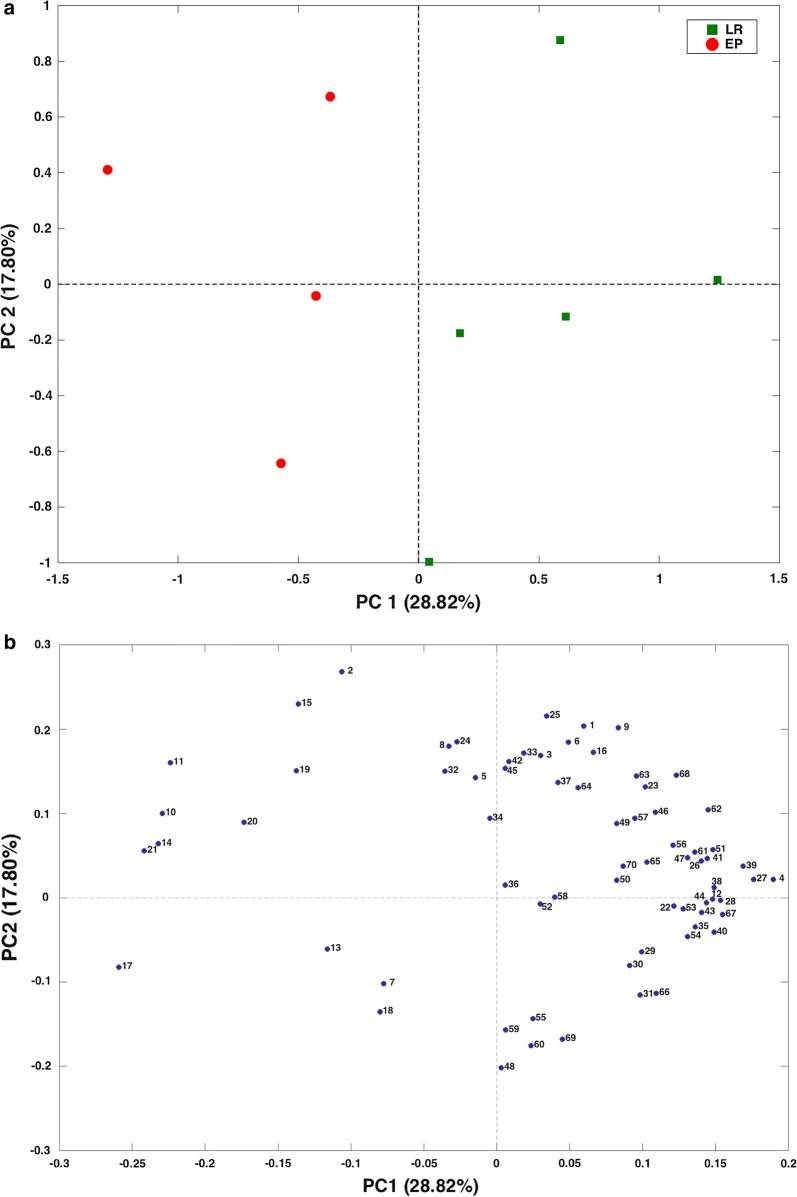
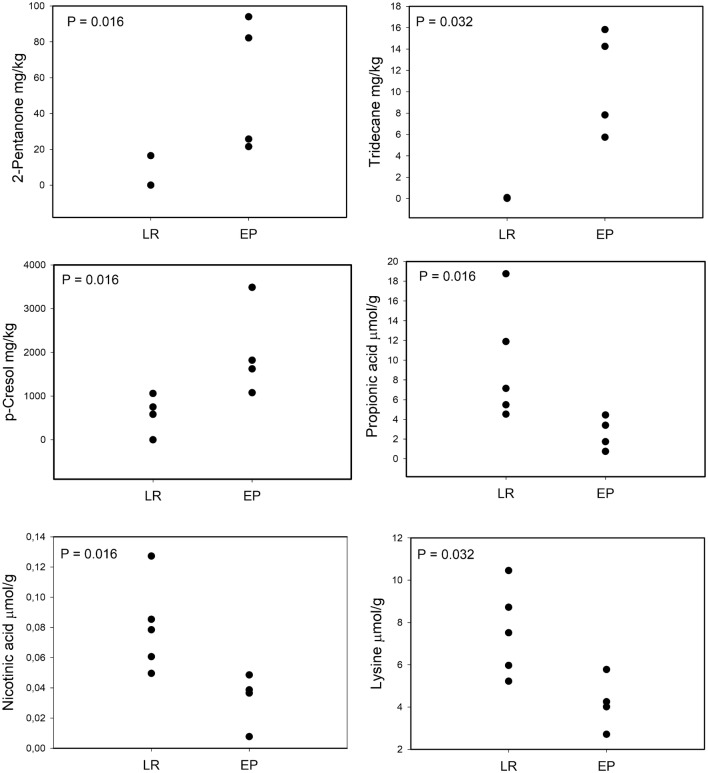
Background: Despite the efficacy of immune checkpoint inhibitors (ICIs) only the 20–30% of treated patients present long term benefits. The metabolic changes occurring in the gut microbiota metabolome are herein proposed as a factor potentially influencing the response to immunotherapy. Methods: The metabolomic profiling of gut microbiota was characterized in 11 patients affected by non-small cell lung cancer (NSCLC) treated with nivolumab in second-line treatment with anti-PD-1 nivolumab. The metabolomics analyses were performed by GC–MS/SPME and 1 H-NMR in order to detect volatile and non-volatile metabolites. Metabolomic data were processed by statistical profiling and chemometric analyses. Results: Four out of 11 patients (36%) presented early progression, while the remaining 7 out of 11 (64%) presented disease progression after 12 months. 2-Pentanone (ketone) and tridecane (alkane) were significantly associated with early progression, and on the contrary short chain fatty acids (SCFAs) (i.e., propionate, butyrate), lysine and nicotinic acid were significantly associated with long-term beneficial effects. Conclusions: Our preliminary data suggest a significant role of gut microbiota metabolic pathways in affecting response to immunotherapy. The metabolic approach could be a promising strategy to contribute to the personalized management of cancer patients by the identification of microbiota-linked “indicators” of early progressor and long responder patients.
Overview
The claims and statistics of this paper haven’t been checked yet.
Free: it reads the open-access text and checks the first 5 claims that cite a source we can check. Create a free account to check every claim.
Integrity signals
Registry
Cites
Statistics
Figures
Verification
Claims the paper makes
The claims and statistics of this paper haven’t been checked yet.
Free: it reads the open-access text and checks the first 5 claims that cite a source we can check. Create a free account to check every claim.
Claims other papers make about this one
Each is checked against this paper’s own text: does it say what the citing paper says it does?
The source backs part of the claim, not all of it — or backs it for a different population, condition or comparison.
In the citing paper
“Several studies reported that high fecal and plasma SCFA levels correlated with the improved clinical outcomes to anti-PD-1 therapy [74,75].”
From A Clinical Outcome of the Anti-PD-1 Therapy of Melanoma in Polish Patients Is Mediated by Population-Specific Gut Microbiome Composition (2022) · cites this paper as [74]
Experimental — accuracy not yet measured
Self-check
Percentages, sums and reported differences re-computed from the paper’s own numbers.
The self-check needs the paper’s full text.
Citations
Cites
Moderated estimation of fold change and dispersion for RNA-seq data with DESeq2
Love, M. I., Huber, W., & Anders, S. (2014) · Genome Biology · doi:10.1186/s13059-014-0550-8 · Cited by 95,106 · cited 1×
“Ecological and statistical analyses were performed using phyloseq and DESeq2 packages from R software [27, 28].”
QIIME allows analysis of high-throughput community sequencing data
Caporaso, J. G., Kuczynski, J., Stombaugh, J., Bittinger, K., Bushman, F. D., Costello, E. K., Fierer, N., Peña, A. G., Goodrich, J. K., Gordon, J. I., et al. (2010) · Nature Methods · doi:10.1038/nmeth.f.303 · Cited by 34,887
phyloseq: An R Package for Reproducible Interactive Analysis and Graphics of Microbiome Census Data
McMurdie, P. J., & Holmes, S. (2013) · PLoS ONE · doi:10.1371/journal.pone.0061217 · Cited by 21,322 · cited 1×
“Ecological and statistical analyses were performed using phyloseq and DESeq2 packages from R software [27, 28].”
MethodGreengenes, a Chimera-Checked 16S rRNA Gene Database and Workbench Compatible with ARB
DeSantis, T. Z., Hugenholtz, P., Larsen, N., Rojas, M., Brodie, E. L., Keller, K., Huber, T., Dalevi, D., Hu, P., & Andersen, G. L. (2006) · Applied and Environmental Microbiology · doi:10.1128/aem.03006-05 · Cited by 10,891
Gut microbiome influences efficacy of PD-1-based immunotherapy against epithelial tumors
Routy, B., Le Chatelier, E., Derosa, L., Duong, C. P. M., Alou, M. T., Daillère, R., Fluckiger, A., Messaoudene, M., Rauber, C., Roberti, M. P., et al. (2018) · Science · doi:10.1126/science.aan3706 · Cited by 5,671 · cited 4×
“Fecal samples of EPs NSCLC patients were characterized by a metabolic profile constituted by high levels of alkanes (tridecane and dodecane), methylketones (2-pentanone and 2-octanone), p-cresol, and low levels of SCFAs (propionic, butyric, acetic, valeric acids), aminoacids (lysine, isoleucine and glutamic) and nicot…”
BackgroundResultInfluentialGut microbiome modulates response to anti-PD-1 immunotherapy in melanoma patients
Gopalakrishnan, V., Spencer, C. N., Nezi, L., Reuben, A., Andrews, M. C., Karpinets, T. V., Prieto, P. A., Vicente, D., Hoffman, K., Wei, S. C., et al. (2018) · Science · doi:10.1126/science.aan4236 · Cited by 4,812 · cited 1×
“Recently, it was also demonstrated that melanoma patients carrying gut microbiota enriched in Faecalibacterium prausnitzii presented longer progression free survival (lPFS) and overall survival (OS) [17], while in patients affected by NSCLC and renal cell carcinoma (RCC) patients treated with anti-PD-1 an higher distr…”
BackgroundHost-gut microbiota metabolic interactions
Nicholson, J. K., Holmes, E., Kinross, J., Burcelin, R., Gibson, G., Jia, W., & Pettersson, S. (2012) · Science · doi:10.1126/science.1223813 · Cited by 4,760
Nicholson, J. K., Lindon, J. C., & Holmes, E. (1999) · Xenobiotica · doi:10.1080/004982599238047 · Cited by 3,895
Commensal Bifidobacterium promotes antitumor immunity and facilitates anti–PD-L1 efficacy
Sivan, A., Corrales, L., Hubert, N., Williams, J. B., Aquino-Michaels, K., Earley, Z. M., Benyamin, F. W., Man Lei, Y., Jabri, B., Alegre, M.-L., et al. (2015) · Science · doi:10.1126/science.aac4255 · Cited by 3,888
IFN-γ–related mRNA profile predicts clinical response to PD-1 blockade
Ayers, M., Lunceford, J., Nebozhyn, M., Murphy, E., Loboda, A., Kaufman, D. R., Albright, A., Cheng, J. D., Kang, S. P., Shankaran, V., et al. (2017) · Journal of Clinical Investigation · doi:10.1172/jci91190 · Cited by 3,788
Cited by
Items 101–200 of 209
Pellitero, A. M., Zapata, M. E. S., Ruiz, M. G., Sesma, A., Quílez, E., Ramírez-Labrada, A., Martínez‐Lostao, L., Domingo, M. P., Esteban, P., Yubero, A., et al. (2024) · Cancers · doi:10.3390/cancers16061144 · Cited by 18
Luo, W., Mei, S., Huang, Z., Chen, Z., Zhang, Y., Yang, M., Liu, J., Xu, J., Yang, X., Zhong, R.-W., et al. (2024) · Journal of Translational Medicine · doi:10.1186/s12967-024-05135-5 · Cited by 26
“Botti-celli et al. revealed that fecal 2-pentanone and tridecane exhibited significant associations with early progression, whereas short chain fatty acids, lysine, and nicotinic acid were notably linked to long-term beneficial effects [22].”
BackgroundLipidomic-Based Advances in Diagnosis and Modulation of Immune Response to Cancer
Gil‐de‐Gómez, L., Balgoma, D., & Montero, O. (2020) · Metabolites · doi:10.3390/metabo10080332 · Cited by 16
“These data correlate with those from a recent study that makes the case for the reduced serum content of SCFAs being a biomarker of refractory non-small cell lung cancer (NSCLC) [67].”
BackgroundResultLung microbiome: an emerging player in lung cancer pathogenesis and progression
Karvela, A., Veloudiou, O.-Z., Karachaliou, A., Kloukina, T., Gomatou, G., & Kotteas, E. A. (2023) · Clinical & Translational Oncology · doi:10.1007/s12094-023-03139-z · Cited by 17
Shi, W., & Zhao, W. (2020) · Chinese Medical Journal · doi:10.1097/cm9.0000000000001090 · Cited by 15
“A study on nivolumab-treated NSCLC patients and healthy individuals reports that pretreatment composition of microbiome affects anti-PD-1 response.([93]) Microbiological diversity is interfered by several factors including physical conditions, dietary patterns, tobacco inhaling, and dwelling environment.”
BackgroundGiudice, T. D., Staropoli, N., Tassone, P., Tagliaferri, P., & Barbieri, V. (2024) · Cancers · doi:10.3390/cancers16101806 · Cited by 17
“…investigation of the gut microbiome and has correlated it with cancer onset and response The advent of Next-Generation Sequencing (NGS) has allowed for the extensive investigation of the gut microbiome and has correlated it with cancer onset and response to immunotherapy [4]. to immuno-therapy [4].”
BackgroundLi, D., Lan, X., Xu, L., Zhou, S., Luo, H., Zhang, X., Yu, W., Yang, Y., & Fang, X. (2025) · Frontiers in Immunology · doi:10.3389/fimmu.2025.1552010 · Cited by 20
Modeling the Th17 and Tregs Paradigm: Implications for Cancer Immunotherapy
Corral‐Jara, K. F., da Silva, G. R., Fierro, N. A., & Soumelis, V. (2021) · Frontiers in Cell and Developmental Biology · doi:10.3389/fcell.2021.675099 · Cited by 17
Chao, Y., Jiang, W., Wang, X., Wang, X., Song, J., Chen, C., Zhou, J., Huang, Q., Hu, J., & Song, Y. (2022) · Clinical & Experimental Immunology · doi:10.1093/cei/uxac021 · Cited by 14
Cui, C., Yang, T., Wang, S., Jia, Z., Zhao, L., Sun, X., Sun, X., Zong, J., Wang, S., & Chen, D. (2024) · PLoS ONE · doi:10.1371/journal.pone.0304403 · Cited by 15
“Metabolomic analysis of the gut has revealed certain metabolites that may play a significant role in immune responses [33], Our study, which analyzed 32 different bacterial families, found a potential protective effect between Peptostreptococcaceae and gliomas.”
BackgroundYi, J., Xiang, J., & Tang, J. (2023) · Chinese Medical Journal - Pulmonary and Critical Care Medicine · doi:10.1016/j.pccm.2023.08.003 · Cited by 14
Causal influence of gut microbiota on small cell lung cancer: a Mendelian randomization study
Yang, W., Fan, X., Li, W., & Chen, Y. (2024) · The Clinical Respiratory Journal · doi:10.1111/crj.13764 · Cited by 15
“The genus Intestinibacter has previously been associated with NSCLC. 41,42 Its abundance is notably increased in the gut microbiota of NSCLC patients.”
BackgroundThe Interplay Between the Gut Microbiota and Colorectal Cancer: A Review of the Literature
Cintoni, M., Palombaro, M., Zoli, E., D’Agostino, G., Pulcini, G., Leonardi, E., Raoul, P. C., Rinninella, E., Maio, F. D., Capristo, E., et al. (2025) · Microorganisms · doi:10.3390/microorganisms13061410 · Cited by 14
“In non-small cell lung cancer and renal cell carcinoma, the abundance of Akkermansia muciniphila promotes the efficacy of ICIs [82,83].”
Yan, C., Chen, Y., Tian, Y., Hu, S., Wang, H., Zhang, X., Chu, Q., Huang, S., & Sun, W. (2025) · Cellular Oncology · doi:10.1007/s13402-025-01103-3 · Cited by 14
“In cancer patients, SCFA-producing bacteria (e.g., members of the Firmicutes and Actinobacteria phyla ) are often depleted, resulting in reduced SCFA levels and increased gut permeability, which may facilitate the entry of carcinogenic factors into the circulation [190–192].”
Aggerbeck, M. R., Frøkjær, E. E., Johansen, A., Ellegaard‐Jensen, L., Hansen, L. H., & Hansen, M. A. (2024) · Environmental Research · doi:10.1016/j.envres.2024.119242 · Cited by 15
Cancer trigger or remedy: two faces of the human microbiome
Grenda, A., & Krawczyk, P. A. (2021) · Applied Microbiology and Biotechnology · doi:10.1007/s00253-021-11125-0 · Cited by 13
Gut microbiota: Role and Association with Tumorigenesis in Different Malignancies
Ali, A., Ara, A., & Kashyap, M. K. (2022) · Molecular Biology Reports · doi:10.1007/s11033-022-07357-6 · Cited by 12
Du, P., Jing, J., & He, X. (2022) · Frontiers in Pharmacology · doi:10.3389/fphar.2022.1091124 · Cited by 15
“Another study indicated that fecal SCFAs, particularly propionate, were associated with improved long-term responses to ICIs in non-small cell lung cancer (NSCLC) patients treated with anti-PD-1 antibody (Botticelli et al., 2020).”
BackgroundBiomarkers for Immunotherapy in Driver-Gene-Negative Advanced NSCLC
Huang, Y., Chau, Y. F., Bai, H., Wu, X., & Duan, J. (2023) · International Journal of Molecular Sciences · doi:10.3390/ijms241914521 · Cited by 12
Zou, R., Wang, Y., Ye, F., Zhang, X., Wang, M., & Cui, S. (2021) · Clinical & Translational Oncology · doi:10.1007/s12094-021-02637-2 · Cited by 12
“In addition to the composition of the gut microbiome, the type and concentration of metabolites produced by the bacteria may also indicate the effectiveness of immunotherapy in cancer patients [140].”
BackgroundCostante, F., Airola, C., Santopaolo, F., Gasbarrini, A., Pompili, M., & Ponziani, F. R. (2022) · World Journal of Gastrointestinal Oncology · doi:10.4251/wjgo.v14.i9.1622 · Cited by 14
Microbial metabolites for cancer immunotherapy: Current evidence and future directions
Wang, X., Liang, J.-J., Duan, X., & Chen, G. (2025) · Seminars in Cancer Biology · doi:10.1016/j.semcancer.2025.10.005 · Cited by 12
Gut microbiome metabolites in lung cancer: The emerging importance of short-chain fatty acids
Bishoyi, A. K., Al-Hasnaawei, S., Salem, K. H., Ganesan, S., Shankhyan, A., Nanda, A., Sinha, A., Ray, S., Nathiya, D., & Hammady, F. J. (2025) · International Immunopharmacology · doi:10.1016/j.intimp.2025.115821 · Cited by 13
Güven, D. C., Şahin, T. K., Rizzo, A., Ricci, A. D., Aksoy, S., & Şahin, K. (2022) · Applied Sciences · doi:10.3390/app122010548 · Cited by 11
“(2020) [102] NSCLC/11 Increased fecal Akkermansia muciniphila, Bifidobacterium longum, and Faecalibacterium prausnitzii levels in ICI responders Curcumin [93]/EGCG [94] Resveratrol [82], Anthocyanin [103] Anthocyanin [86] Prebiotic nondigestible fiber-rich diet [95] Grapes, wine, and peanuts [83], Chinese purple sweet…”
BackgroundGut and Intratumoral microbiota: Key to lung Cancer development and immunotherapy
Cai, J., Zhang, W., Zhu, S., Lin, T., Mao, R., Wu, N., Zhang, P., & Kang, M. (2025) · International Immunopharmacology · doi:10.1016/j.intimp.2025.114677 · Cited by 13
Technological Innovations and Multi-Omics Approaches in Cancer Research: A Comprehensive Review
Velmurugan, S., Wankhar, D., Paramasivan, V., & Subbaraj, G. K. (2025) · Biocell · doi:10.32604/biocell.2025.065891 · Cited by 13
Pu, X., Zhou, Y. L., Wang, J., & Wu, L. (2025) · Thoracic Cancer · doi:10.1111/1759-7714.70113 · Cited by 10
Applications of headspace solid-phase microextraction in human biological matrix analysis
Ji, X. (2022) · Reviews in Analytical Chemistry · doi:10.1515/revac-2022-0042 · Cited by 10
Gastrointestinal cancer resistance to treatment: the role of microbiota
Sadeghi, L., Vahidian, F., Eterafi, M., & Safarzadeh, E. (2024) · Infectious Agents and Cancer · doi:10.1186/s13027-024-00605-3 · Cited by 9
“Notably, a clear connection exists between the gut microbiota and the effectiveness and potential adverse effects of ICI treatment [3, 90–92].”
BackgroundChen, X.-X., Ju, Q., Qiu, D., Zhou, Y., Wang, Y., Zhang, X., Li, J., Wang, M., Chang, N., Xu, X.-R., et al. (2025) · Cancer Immunology Immunotherapy · doi:10.1007/s00262-025-03996-3 · Cited by 13
The gut wall’s potential as a partner for precision oncology in immune checkpoint treatment
Lopez, S. H., Jalving, M., Fehrmann, R. S. N., Nagengast, W. B., de Vries, E. G. E., & de Haan, J. J. (2022) · Cancer Treatment Reviews · doi:10.1016/j.ctrv.2022.102406 · Cited by 9
Vilbert, M., Koch, E. C., Rose, A. A. N., Laister, R. C., Gray, D., Sotov, V., Penny, S. L., Spreafico, A., Hogg, D., Pinto, D. M., et al. (2023) · Cancers · doi:10.3390/cancers15143708 · Cited by 10
D’Onofrio, V., CHIERICO, F. D., Belci, P., Vernocchi, P., Quagliariello, A., Reddel, S., Conta, G., Mancino, M. V., Fadda, M., Scigliano, M. C., et al. (2020) · Nutrients · doi:10.3390/nu13010087 · Cited by 11
Self-citationWong, M., Barbulescu, P., Coburn, B. A., & Reguera-Nuñez, E. (2021) · Microbes and Infection · doi:10.1016/j.micinf.2021.104804 · Cited by 9
Unraveling the Role of the Microbiota in Cancer Immunotherapy: A New Frontier
Wang, S., Li, S., Zhang, M., Liu, R., Ye, X., Mao, S., Yu, J., Xie, X., & Tan, W. (2025) · Research · doi:10.34133/research.0744 · Cited by 13
Khalil, M., & Tsao, M. (2025) · Cancers · doi:10.3390/cancers17132199 · Cited by 10
“For example, high concentrations of propionate and butyrate in fecal matter have both been significantly associated with long-term survival to anti-PD-1 treatment in NSCLC patients [210].”
Microbial metabolites in tumor metabolic reprogramming and immunotherapy: new insights
Wang, Y., Huang, D., Wang, R., Yin, J.-J., Pei, J., & Zhang, C. (2025) · Frontiers in Cellular and Infection Microbiology · doi:10.3389/fcimb.2025.1706040 · Cited by 10
Microenvironmental Metabolites in the Intestine: Messengers between Health and Disease
Zaurito, A. E., & Tschurtschenthaler, M. (2022) · Metabolites · doi:10.3390/metabo12010046 · Cited by 8
Deng, X., Chen, X., Luo, Y., Que, J., & Chen, L. (2023) · Frontiers in Microbiology · doi:10.3389/fmicb.2023.1202454 · Cited by 8
New Metabolomic Insights Into Cancer
Zhu, J. (2024) · The Cancer Journal · doi:10.1097/ppo.0000000000000740 · Cited by 10
Bello, A. D., Scala, A., Gili, R., Falcicchia, R., Bassolino, A., Polidori, S., D’Auria, F., Tortora, G., Bossi, P., & Cassano, A. (2026) · Critical Reviews in Oncology/Hematology · doi:10.1016/j.critrevonc.2025.105108 · Cited by 7
Hazra, R., Chattopadhyay, S., Mallick, A., Gayen, S., & Roy, S. (2024) · Medical Oncology · doi:10.1007/s12032-024-02416-3 · Cited by 8
“Short-chain fatty acids (SCFAs) produced by the microbiota, which include butyrate, propionate, kynurenines, and acetate, are engaged in a number of biological activities and have an effect on ICI therapy [131].”
Du, Y., Wang, Q., Zheng, Z., Zhou, H., Han, Y., Qi, A., Jiao, L., & Gong, Y. (2024) · Frontiers in Nutrition · doi:10.3389/fnut.2024.1425802 · Cited by 8
“In stool samples from patients with NSCLC, there was a significant increase in the levels of Prevotella, Lactobacillus, Rikenellaceae, Streptococcus, Enterobacteriaceae, Oscillospira , and Bacteroides plebeius , in contrast to lower levels found in healthy individuals (7).”
ResultPharmacometabolomics by NMR in Oncology: A Systematic Review
Gómez-Cebrián, N., Vazquez‐Ferreiro, P., Hueso, F. J. C., Andrés, J. L. P., Puchades‐Carrasco, L., & Pineda‐Lucena, A. (2021) · Pharmaceuticals · doi:10.3390/ph14101015 · Cited by 10
“Ghini et al. evaluated the serum metabolomics profile of NSCLC patients before treatment with the immune checkpoint inhibitors Nivolumab and Pembrolizumab [52].”
BackgroundMethodInfluentialHilakivi-Clarke, L. A., Verma, V., McDermott, M., Koak, P., & Andrade, F. D. O. (2022) · Frontiers in Microbiomes · doi:10.3389/frmbi.2022.1049688 · Cited by 7
“The gut metabolomic profile was analyzed in 11 NSCLC patients receiving second-line treatment with antiPD1 nivolumab (Botticelli et al., 2020).”
BackgroundTakahashi, M., Nakatsukasa, H., Shibano, M., Ishigami, Y., Oka, T., Tani, Y., Kawaguchi, T., Nakamura, Y., & Kaneda, H. (2025) · International Journal of Clinical Oncology · doi:10.1007/s10147-025-02805-2 · Cited by 7
Leveraging gut microbiota for enhanced immune checkpoint blockade in solid tumor therapy
Hu, J., Feng, T., Zhang, L., Zhou, Q., & Zhu, L. (2025) · Chinese Medical Journal · doi:10.1097/cm9.0000000000003687 · Cited by 8
“[95] High concentrations of SCFA were markedly related to longer PFS in 52 solid tumor patients receiving anti-PD-1 antibody therapy.”
Malczewski, A. B., Coward, J. I. G., Ketheesan, N., & Navarro, S. (2025) · Clinical and Translational Medicine · doi:10.1002/ctm2.70472 · Cited by 9
“20,41,42 Botticelli et al. (2020) profiled faecal metabolites in 11 patients with non-small cell lung cancer (NSCLC) undergoing CIT (2nd-line nivolumab) and found that elevated levels of propionate, butyrate, lysine and nicotinic acid were associated with a progression-free survival (PFS) exceeding…”
Microbial-Derived Metabolites and Their Impact on Cancer Immunotherapy
Jeong, J., Baines, K. J., & Vareki, S. M. (2026) · Cancer Immunology Research · doi:10.1158/2326-6066.cir-25-1018 · Cited by 9
The gut as a central hub for multi-organ crosstalk in aging
Zhang, X., Li, R., Gao, Y., Zhang, W., Ni, T., & Liu, Y. (2026) · Cellular and Molecular Life Sciences · doi:10.1007/s00018-026-06129-w · Cited by 9
Immunomodulation aspects of gut microbiome-related interventional strategies in colorectal cancer
Cheraghpour, M., Fatemi, N., Shadnoush, M., Talebi, G., Tierling, S., & Bermúdez‐Humarán, L. G. (2024) · Medical Oncology · doi:10.1007/s12032-024-02480-9 · Cited by 8
“For instance, an increase in fecal SCFA augmented the long-term responses and progression-free survival (PFS) to anti-PD-1 [144, 145].”
Radoš, L., Golčić, M., & Mikolašević, I. (2025) · Biomedicines · doi:10.3390/biomedicines13010096 · Cited by 7
“The majority of studies highlight the genus Ruminococceacae [8–12], order Clostridales [9,10,13], genus Faecalibacterium [9,12,13], and the bacterium Akkermansia muciniphila [10,14–17] as more represented in the groups that achieved a clinical response to immunotherapy (responder group—”
Nakatsukasa, H., Takahashi, M., Shibano, M., Ishigami, Y., Kawaguchi, T., Nakamura, Y., & Kaneda, H. (2024) · International Journal of Clinical Oncology · doi:10.1007/s10147-024-02622-z · Cited by 6
“High concentrations of fecal or plasma SCFAs are associated with better long-term response to ICIs [29, 30].”
Su, Q., Yang, L., Xiao, J., Cao, H., & Wang, H. (2025) · Food Bioscience · doi:10.1016/j.fbio.2025.106115 · Cited by 5
Lung cancer and the Gut-microbiota-lung Axis: emerging evidence and potential clinical implications
Liu, L., Li, Y., Zhang, H., Li, H., Shang, T., & Liu, L. (2025) · Frontiers in Medicine · doi:10.3389/fmed.2025.1655780 · Cited by 8
Gut microbiota drives cancer evolution and therapy resistance
Min, S., Zhang, Y., Zhang, H., & Liu, Q. (2026) · Molecular Cancer · doi:10.1186/s12943-025-02564-8 · Cited by 10
“Moreover, SCFAs are closely linked to the long-term positive outcomes of ICI therapy in patients with NSCLC and melanoma [146, 206].”
Mirabile, A., Rivoltini, L., Daveri, E., Vernieri, C., Mele, R., Porcu, L., Lazzari, C., Bulotta, A., Viganò, M. G., Cascinu, S., et al. (2020) · Cancers · doi:10.3390/cancers12051153 · Cited by 6
“[31] NSCLC 11 Microbiome Observational Immune cells Tridecane and 2-pentanone associated to early progression (respectively p = 0.”
BackgroundKhilwani, R., & Singh, S. (2025) · Frontiers in Immunology · doi:10.3389/fimmu.2025.1649517 · Cited by 6
Tian, Z., Liu, Y., Zhu, D., Cao, B., & Cui, M. (2024) · Journal of Clinical Medicine · doi:10.3390/jcm13020529 · Cited by 7
“However, most of them focus on the comparison between patients diagnosed with NSCLC and healthy individuals or on cross-sectional studies examining a specific time point after treatment [13–15].”
BackgroundCirculating biomarkers of response to immunotherapy and immune-related adverse events
Garrison, Z. R., Hornick, N. I., Cheng, J. B., & Kulkarni, R. P. (2022) · Expert Review of Molecular Diagnostics · doi:10.1080/14737159.2022.2130688 · Cited by 5
Alosaimi, M. E., Alotaibi, B. S., Abduljabbar, M. H., Alnemari, R. M., Almalki, A. H., & Serag, A. (2024) · Journal of Chromatography B · doi:10.1016/j.jchromb.2024.124144 · Cited by 4
Du, Y., Fan, C., Song, X., Teng, C., Zhang, Z., Zhang, J., Zhao, T., & Xin, T. (2025) · Frontiers in Cellular and Infection Microbiology · doi:10.3389/fcimb.2025.1616695 · Cited by 4
Elayeh, E. R., Aleidi, S., Aboud, O., Semreen, M., Bustanji, Y., & Dahabiyeh, L. (2025) · Lung Cancer Targets and Therapy · doi:10.2147/lctt.s539777 · Cited by 16
Xiao, X., Wang, Y., Yin, T., Wang, Q., Feng, Y., Ren, H., Li, J., & Cheng, L. (2026) · International Journal of Molecular Sciences · doi:10.3390/ijms27041905 · Cited by 3
“Importantly, a significant correlation has been observed between the gut microbiota and metabolite levels [39,46].”
Development and treatment of colorectal cancer: Insights from multi‐kingdom microbiota
Hong, Y.-M., Song, D., Liu, N., & Wang, H. (2023) · Aging and Cancer · doi:10.1002/aac2.12063 · Cited by 3
Biomarkers for Immune Checkpoint Inhibitors in Non-Small-Cell Lung Cancer
Fuschillo, S., Battiloro, C., Rocco, D., Gravara, L. D., Motta, A., & Maniscalco, M. (2020) · Biomarkers in Medicine · doi:10.2217/bmm-2020-0242 · Cited by 2
Carrasco‐Pozo, C., & Avery, V. M. (2023) · ACS Food Science & Technology · doi:10.1021/acsfoodscitech.3c00194 · Cited by 2
Integrating natural woody composites with modern therapies for enhanced lung cancer treatment
Qingyu, GuanyanLi, Yang, Y., Zhang, Y., Wang, D., Zhang, D., Peng, W., Lam, S. S., & Gu, H. (2024) · Advanced Composites and Hybrid Materials · doi:10.1007/s42114-024-01197-7 · Cited by 4
“%) benefiting from this approach [107, 108].”
Emerging Biomarkers for the Selection of Advanced NSCLC-Affected Immunotherapy Patients
Gravara, L. D., Battiloro, C., Letizia, A., Cantile, R., D’Agnano, V., Sica, G., & Rocco, D. (2021) · Journal of Molecular Pathology · doi:10.3390/jmp2020017 · Cited by 2
Combinatorial Strategies for T Lymphocyte-Based Cancer Immunotherapy
Hargadon, K. M., & Wall, J. B. (2022) · Springer eBooks · doi:10.1007/978-3-030-80962-1_211-1 · Cited by 2
A new frontier in cancer therapy: The intersection of cancer vaccines and metabolomics
Sukareh, F. A., Al-Nemi, R., Karagiannis, P., Asfour, H. N., Verma, A., Jaremko, M., & Emwas, A.-H. M. (2024) · Elsevier eBooks · doi:10.1016/b978-0-443-15526-0.00009-3 · Cited by 1
Ren, G., Liu, B., Qu, Z., Jiang, X., Zhao, H., Qu, D., Ning, R., Chen, S., Liu, T., Zhang, G., et al. (2025) · Advanced Intelligent Discovery · doi:10.1002/aidi.202500086 · Cited by 2
Risk assessment and interventions for malignant ground-glass lung nodules
Ge, X., Hu, J., Li, Y., Wang, L., Luo, Y., Hua, B., & Liu, R. (2025) · Critical Reviews in Oncology/Hematology · doi:10.1016/j.critrevonc.2025.104856 · Cited by 2
Combinatorial Strategies for T Lymphocyte-Based Cancer Immunotherapy
Hargadon, K. M., & Wall, J. B. (2025) · Springer eBooks · doi:10.1007/978-3-032-00767-4_211 · Cited by 1
Westheim, A. J. F., Dubois, L. J., Prades-Sagarra, È., Chan, J., van der Wiel, A. M.-M. A., Lieuwes, N. G., Biemans, R., Cong, Y., Houben, T., Meesters, D. M., et al. (2026) · Molecular Nutrition & Food Research · doi:10.1002/mnfr.70370 · Cited by 1
Gut microbiome‐derived metabolites show promise in cancer research and therapy
Yang, K., Wang, Y., Tang, D., Li, P., & Du, L. (2026) · Interdisciplinary medicine · doi:10.1002/inmd.70096 · Cited by 1
Yerlikaya, F. H., Topkafa, M., Köksal, H., Maçin, S., Yormaz, S., Sivrikaya, A., Abuşoğlu, S., Onmaz, D. E., Arslan, U., & Çiftçi, N. (2026) · Bratislavské lekárske listy/Bratislava medical journal · doi:10.1007/s44411-026-00523-3 · Cited by 2
Gou, W., Wang, Z., Liu, Y., Fu, J., Liu, M., Si, Q., Zhang, N., & Shang, H. (2026) · Animal nutrition · doi:10.1016/j.aninu.2026.01.010 · Cited by 1
Ali, H., Xie, B., Yang, J., & Nadeem, U. (2026) · Cancers · doi:10.3390/cancers18121948 · Cited by 1
“Conversely, enrichment of alcohol-and aldehyde-producing bacteria has been observed in non-responders, further underscoring the functional relevance of microbial metabolism [40,45,55,72].”
Microbiome as a prediction of immunotherapy response in lung cancer
Rojas, L., Zuluaga, J., & Cardona, A. F. (2026) · Frontiers in Immunology · doi:10.3389/fimmu.2026.1849553 · Cited by 1
“This underscores the mechanistic role of bacterial metabolites in modulating systemic immunity, enhancing the in fi ltration of effector T cells into the TME, and facilitating communication along the gut-lung axis (76).”
Nomiri, S., Yazdani, F., Heidary, H., Sadeghi, A., Tarzemani, S., Sadeghloo, Z., Niasar, M. S., Tillotson, G., Safarpour, H., & Raeisi, H. (2026) · Probiotics and Antimicrobial Proteins · doi:10.1007/s12602-026-11164-x · Cited by 1
Mikrobiyota Kaynaklı Kısa Zincirli Yağ Asitleri ve Hastalıklar Üzerine Etkileri
Döğüş, Y., DEAMİ, A., & Yönden, Z. (2023) · Arşiv Kaynak Tarama Dergisi · doi:10.17827/aktd.1330297 · Cited by 3
Natural substances in cancer—do they work?
Sobolewska, A., Dunisławska, A., & Stadnicka, K. (2021) · Physical Sciences Reviews · doi:10.1515/psr-2019-0060 · Cited by 2
Biome Profiling and Clinical Parasitology: Tools for Gut Microbiota RestoringPreprint
Pane, S., Ristori, M. V., Gardini, S., russo, A., CHIERICO, F. D., & Putignani, L. (2021) · Preprints.org · doi:10.20944/preprints202110.0167.v1
Self-citationTherapeutic Basis of Human Diseases Based on Metabolome-related Knowledge
(2021) · Biointerface Research in Applied Chemistry · doi:10.33263/briac121.405419
Immunotherapies and their moderation
Anisman, H., & Kusnecov, A. W. (2022) · Elsevier eBooks · doi:10.1016/b978-0-323-91904-3.00006-9
Overview of healthcare biotechnology
Tanveer, A., Yadav, K., Dwivedi, S., Gupta, S., Yadav, P. K., & Yadav, D. (2022) · Elsevier eBooks · doi:10.1016/b978-0-323-89837-9.00003-6
Microbiota in relation to cancer
Anisman, H., & Kusnecov, A. W. (2022) · Elsevier eBooks · doi:10.1016/b978-0-323-91904-3.00007-0
Microbiome as a therapeutic target
Moiseenko, F. V. (2022) · Practical oncology · doi:10.31917/2303160
Research Progress on Gut Microbiota and Immunotherapy of Lung Cancer
谢, 欣. (2023) · Advances in Clinical Medicine · doi:10.12677/acm.2023.1381754
Hua, X., Lin, X., Guo, X., Zhou, X., Chen, P., Xie, R., Yao, W., Huang, Y., Liu, H., Zheng, F., et al. (2024) · Research Square · doi:10.21203/rs.3.rs-4182640/v1
Wan, L., Liu, Q., Liang, D., Guo, Y., Liu, G., Ren, J., Gu, X., He, Y., & Shan, B. (2024) · Research Square · doi:10.21203/rs.3.rs-4293656/v1
Yerlikaya, F. H., Topkafa, M., Köksal, H., Maçin, S., Yormaz, S., Sivrikaya, A., Abuşoğlu, S., Onmaz, D. E., Arslan, U., & Çiftçi, N. (2024) · Research Square · doi:10.21203/rs.3.rs-5145862/v1
From metabolomics to energy balance physiology
Romero, M. J. O., & Na, D. (2024) · Advances in genetics · doi:10.1016/bs.adgen.2024.11.001
Mousa, W. K., Ali, A., Abdelmoteleb, R. W. A., Shami, R. A., Alramadan, N., Moutraji, S. A., & Ghemrawi, R. (2025) · Targeted Cancer Therapy Connect · doi:10.69709/ciconnect.2025.154988
Prospect of interdisciplinary research on gut microbiota and colorectal cancer immunotherapy
Lu, Y., Zhang, Z., Chen, L., Xue, P., Zhang, Y., Li, Y., & Guo, H. (2025) · Critical Reviews in Oncology/Hematology · doi:10.1016/j.critrevonc.2025.104832 · Cited by 1
Liu, C., He, L., Peng, Z., & Luo, J. (2025) · Discover Oncology · doi:10.1007/s12672-025-03540-w
“Modulating the gut microbiota to increase propionate production—such as supplementing propionate-producing bacteria or adopting a high-fiber diet—may serve as an adjuvant to enhance ICI efficacy [33].”
Luo, W., Mei, S.-Q., Huang, Z.-J., Chen, Z.-H., Zhang, Y.-C., Yang, M.-Y., Liu, J.-Q., Xu, J.-Y., Yang, X.-R., Zhong, R., et al. (2024) · Figshare · doi:10.6084/m9.figshare.25530414
Jeong, D.-W., Lee, S., & Chun, Y.-S. (2021) · Figshare · doi:10.6084/m9.figshare.17010237
Luo, W., Mei, S.-Q., Huang, Z.-J., Chen, Z.-H., Zhang, Y.-C., Yang, M.-Y., Liu, J.-Q., Xu, J.-Y., Yang, X.-R., Zhong, R., et al. (2024) · Figshare · doi:10.6084/m9.figshare.25530316
Metadata
- Authors
- Botticelli, A., Vernocchi, P., Marini, F., Quagliariello, A., Cerbelli, B., Reddel, S., Del Chierico, F., Di Pietro, F., Giusti, R., Tomassini, A., Giampaoli, O., Miccheli, A., Zizzari, I. G., Nuti, M., Putignani, L., & Marchetti, P.
- Affiliations
- Policlinico Umberto I (IT)
- Bambino Gesù Children's Hospital (IT)
- Sapienza University of Rome (IT)
- Azienda Ospedaliera Sant'Andrea (IT)
- Corresponding author
- Putignani, Lorenza
- ORCID
- Venue
- Journal of Translational Medicine
- Published
- 2020-02-03
- Volume
- 18
- Issue
- 1
- Pages
- 49-49
- ISSN
- 1479-5876 (ISSN-L)
- PMC
- PMC6998840
- OpenAlex
- W3008213618
- Cited by
- 209
- References
- 58
- Citations by year
- 2026: 21 · 2025: 37 · 2024: 37 · 2023: 38 · 2022: 33 · 2021: 32 · 2020: 11
- FWCI
- 9.20
- Type
- journal article
- Language
- en
- Open access
- gold
- doi.org
- Licence
- cc-by
- creativecommons.org/licenses/by/4.0/ (tdm)
- creativecommons.org/licenses/by/4.0/ (vor)
- Locations
- Journal of Translational Medicine (publishedVersion, cc-by)
- PubMed Central (publishedVersion, cc-by)
- PubMed (publishedVersion)
- IRIS Research product catalog (Sapienza University of Rome) (submittedVersion, cc-by)
- Padua Research Archive (University of Padova) (submittedVersion, cc-by)
- DOAJ (DOAJ: Directory of Open Access Journals) (submittedVersion)
- Florence Research (University of Florence) (submittedVersion)
- Zenodo (CERN European Organization for Nuclear Research) (submittedVersion, cc-by)
- Funders
- Ministry of Health (Ricerca Corrente 201802G004314)
- Topics
- Life Sciences › Biochemistry, Genetics and Molecular Biology › Molecular Biology › Gut microbiota and health
- Life Sciences › Biochemistry, Genetics and Molecular Biology › Molecular Biology › Metabolomics and Mass Spectrometry Studies
- Health Sciences › Medicine › Oncology › Cancer Immunotherapy and Biomarkers
- Keywords
- non-small cell lung cancer, immune checkpoint inhibitors, nivolumab, anti-PD-1 therapy, immunotherapy response prediction, short-chain fatty acids, 2-pentanone, tridecane, disease progression, personalized cancer management, microbiome biomarkers
- MeSH terms
- Gastrointestinal Microbiome, Carcinoma, Non-Small-Cell Lung, Humans, Immunotherapy, Lung Neoplasms, Metabolomics
About these checks
Registry, retraction, Cites and statistics results are computed, not judged, with one exception: a printed reference that no index lists is read once by a model before it counts as a citation error. Claims are extracted by a model and kept only when their quote appears verbatim in the text; each cited source is then checked, with a model’s help, for whether it says what the claim relies on. Those verdicts can be wrong — read the claim’s quote and the cited source before relying on one.
Statistics and arithmetic are recomputed, not judged.
Confidence bands are shown only for fields calibrated on our annotated test set. None is calibrated yet, so no band is shown.
What counts as a claim ›How we measure confidence ›How we check this ›
Are you an author, or do you see a problem with this page? Request a review
Data sources
Bibliographic data: Semantic Scholar, OpenAlex, Crossref.
Contains information from the Semantic Scholar Academic Graph Datasets, made available under the ODC Attribution License (ODC-BY 1.0).
Semantic Scholar’s data is described in: Kinney, R., et al. (2023). The Semantic Scholar Open Data Platform. arXiv:2301.10140.
