

Gut metabolomics profiling of non-small cell lung cancer (NSCLC) patients under immunotherapy treatment
Open accessThe DOI matches its Crossref record; 57 of the 58 references it cites were found in a registry or an index.
Abstract
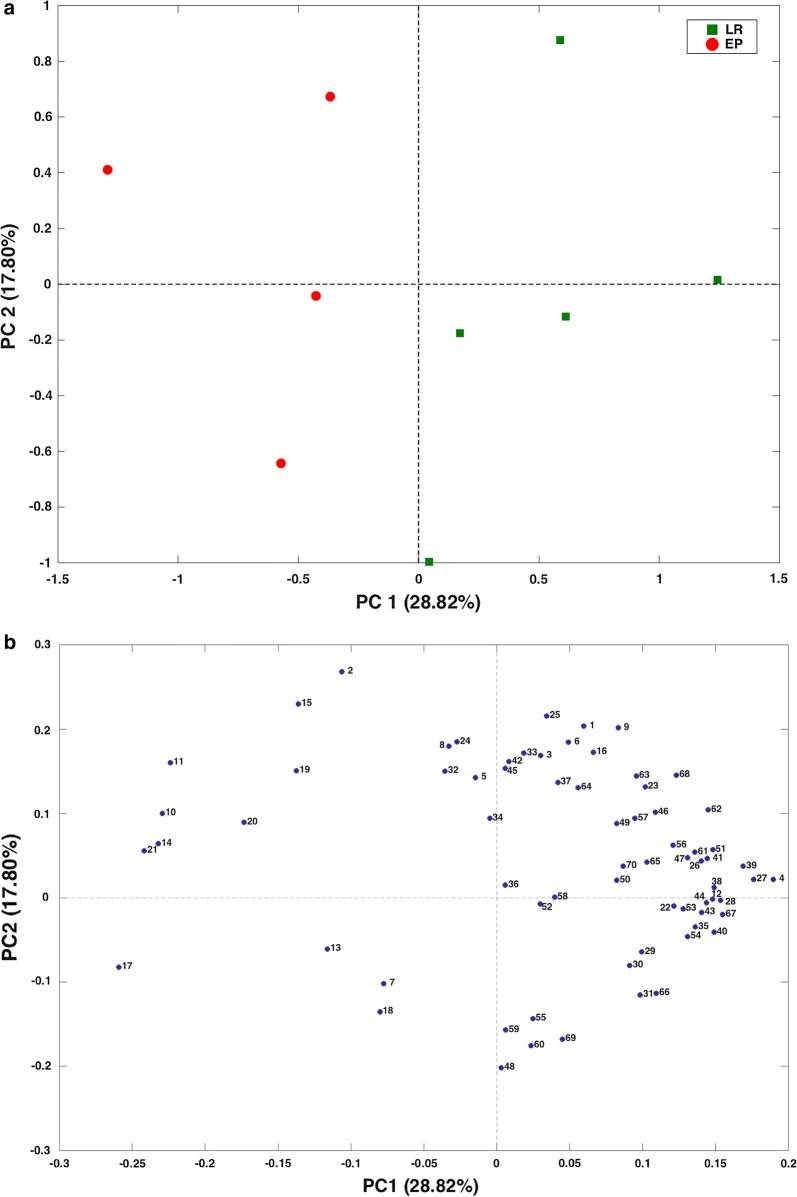
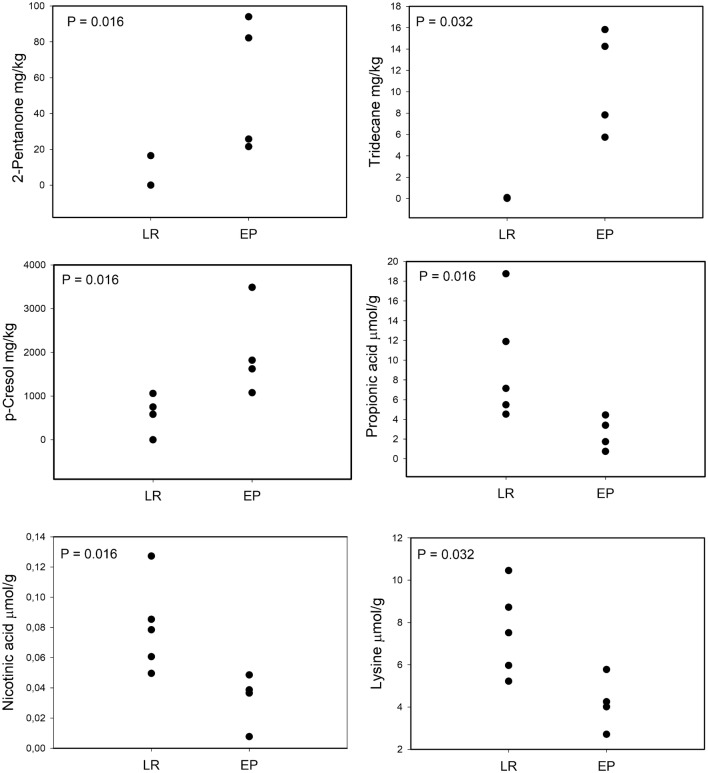
Background: Despite the efficacy of immune checkpoint inhibitors (ICIs) only the 20–30% of treated patients present long term benefits. The metabolic changes occurring in the gut microbiota metabolome are herein proposed as a factor potentially influencing the response to immunotherapy. Methods: The metabolomic profiling of gut microbiota was characterized in 11 patients affected by non-small cell lung cancer (NSCLC) treated with nivolumab in second-line treatment with anti-PD-1 nivolumab. The metabolomics analyses were performed by GC–MS/SPME and 1 H-NMR in order to detect volatile and non-volatile metabolites. Metabolomic data were processed by statistical profiling and chemometric analyses. Results: Four out of 11 patients (36%) presented early progression, while the remaining 7 out of 11 (64%) presented disease progression after 12 months. 2-Pentanone (ketone) and tridecane (alkane) were significantly associated with early progression, and on the contrary short chain fatty acids (SCFAs) (i.e., propionate, butyrate), lysine and nicotinic acid were significantly associated with long-term beneficial effects. Conclusions: Our preliminary data suggest a significant role of gut microbiota metabolic pathways in affecting response to immunotherapy. The metabolic approach could be a promising strategy to contribute to the personalized management of cancer patients by the identification of microbiota-linked “indicators” of early progressor and long responder patients.
Overview
The claims and statistics of this paper haven’t been checked yet.
Free: it reads the open-access text and checks the first 5 claims that cite a source we can check. Create a free account to check every claim.
Integrity signals
Registry
Cites
Statistics
Figures
Verification
Claims the paper makes
The claims and statistics of this paper haven’t been checked yet.
Free: it reads the open-access text and checks the first 5 claims that cite a source we can check. Create a free account to check every claim.
Claims other papers make about this one
Each is checked against this paper’s own text: does it say what the citing paper says it does?
The source backs part of the claim, not all of it — or backs it for a different population, condition or comparison.
In the citing paper
“Several studies reported that high fecal and plasma SCFA levels correlated with the improved clinical outcomes to anti-PD-1 therapy [74,75].”
From A Clinical Outcome of the Anti-PD-1 Therapy of Melanoma in Polish Patients Is Mediated by Population-Specific Gut Microbiome Composition (2022) · cites this paper as [74]
Experimental — accuracy not yet measured
Self-check
Percentages, sums and reported differences re-computed from the paper’s own numbers.
The self-check needs the paper’s full text.
Citations
Cites
Moderated estimation of fold change and dispersion for RNA-seq data with DESeq2
Love, M. I., Huber, W., & Anders, S. (2014) · Genome Biology · doi:10.1186/s13059-014-0550-8 · Cited by 95,106 · cited 1×
“Ecological and statistical analyses were performed using phyloseq and DESeq2 packages from R software [27, 28].”
QIIME allows analysis of high-throughput community sequencing data
Caporaso, J. G., Kuczynski, J., Stombaugh, J., Bittinger, K., Bushman, F. D., Costello, E. K., Fierer, N., Peña, A. G., Goodrich, J. K., Gordon, J. I., et al. (2010) · Nature Methods · doi:10.1038/nmeth.f.303 · Cited by 34,887
phyloseq: An R Package for Reproducible Interactive Analysis and Graphics of Microbiome Census Data
McMurdie, P. J., & Holmes, S. (2013) · PLoS ONE · doi:10.1371/journal.pone.0061217 · Cited by 21,322 · cited 1×
“Ecological and statistical analyses were performed using phyloseq and DESeq2 packages from R software [27, 28].”
MethodGreengenes, a Chimera-Checked 16S rRNA Gene Database and Workbench Compatible with ARB
DeSantis, T. Z., Hugenholtz, P., Larsen, N., Rojas, M., Brodie, E. L., Keller, K., Huber, T., Dalevi, D., Hu, P., & Andersen, G. L. (2006) · Applied and Environmental Microbiology · doi:10.1128/aem.03006-05 · Cited by 10,891
Gut microbiome influences efficacy of PD-1-based immunotherapy against epithelial tumors
Routy, B., Le Chatelier, E., Derosa, L., Duong, C. P. M., Alou, M. T., Daillère, R., Fluckiger, A., Messaoudene, M., Rauber, C., Roberti, M. P., et al. (2018) · Science · doi:10.1126/science.aan3706 · Cited by 5,671 · cited 4×
“Fecal samples of EPs NSCLC patients were characterized by a metabolic profile constituted by high levels of alkanes (tridecane and dodecane), methylketones (2-pentanone and 2-octanone), p-cresol, and low levels of SCFAs (propionic, butyric, acetic, valeric acids), aminoacids (lysine, isoleucine and glutamic) and nicot…”
BackgroundResultInfluentialGut microbiome modulates response to anti-PD-1 immunotherapy in melanoma patients
Gopalakrishnan, V., Spencer, C. N., Nezi, L., Reuben, A., Andrews, M. C., Karpinets, T. V., Prieto, P. A., Vicente, D., Hoffman, K., Wei, S. C., et al. (2018) · Science · doi:10.1126/science.aan4236 · Cited by 4,812 · cited 1×
“Recently, it was also demonstrated that melanoma patients carrying gut microbiota enriched in Faecalibacterium prausnitzii presented longer progression free survival (lPFS) and overall survival (OS) [17], while in patients affected by NSCLC and renal cell carcinoma (RCC) patients treated with anti-PD-1 an higher distr…”
BackgroundHost-gut microbiota metabolic interactions
Nicholson, J. K., Holmes, E., Kinross, J., Burcelin, R., Gibson, G., Jia, W., & Pettersson, S. (2012) · Science · doi:10.1126/science.1223813 · Cited by 4,760
Nicholson, J. K., Lindon, J. C., & Holmes, E. (1999) · Xenobiotica · doi:10.1080/004982599238047 · Cited by 3,895
Commensal Bifidobacterium promotes antitumor immunity and facilitates anti–PD-L1 efficacy
Sivan, A., Corrales, L., Hubert, N., Williams, J. B., Aquino-Michaels, K., Earley, Z. M., Benyamin, F. W., Man Lei, Y., Jabri, B., Alegre, M.-L., et al. (2015) · Science · doi:10.1126/science.aac4255 · Cited by 3,888
IFN-γ–related mRNA profile predicts clinical response to PD-1 blockade
Ayers, M., Lunceford, J., Nebozhyn, M., Murphy, E., Loboda, A., Kaufman, D. R., Albright, A., Cheng, J. D., Kang, S. P., Shankaran, V., et al. (2017) · Journal of Clinical Investigation · doi:10.1172/jci91190 · Cited by 3,788
Cited by
Targeting the gut microbiota for cancer therapy
Fernandes, M. R., Aggarwal, P., Costa, R. G. F., Cole, A. M., & Trinchieri, G. (2022) · Nature Reviews Cancer · doi:10.1038/s41568-022-00513-x · Cited by 290
Han, K., Nam, J., Xu, J., Sun, X., Huang, X., Animasahun, O., Achreja, A., Jeon, J. H., Pursley, B., Kamada, N., et al. (2021) · Nature Biomedical Engineering · doi:10.1038/s41551-021-00749-2 · Cited by 287
Gut Microbiota Modulation of Efficacy and Toxicity of Cancer Chemotherapy and Immunotherapy
Chrysostomou, D., Roberts, L. A., Marchesi, J. R., & Kinross, J. M. (2023) · Gastroenterology · doi:10.1053/j.gastro.2022.10.018 · Cited by 283
Hou, H., Chen, D., Zhang, K., Zhang, W., Liu, T., Wang, S., Dai, X., Wang, B., Zhong, W., & Cao, H. (2022) · Cancer Letters · doi:10.1016/j.canlet.2021.11.027 · Cited by 263
To metabolomics and beyond: a technological portfolio to investigate cancer metabolism
Danzi, F., Pacchiana, R., Mafficini, A., Scupoli, M. T., Scarpa, A., Donadelli, M., & Fiore, A. (2023) · Signal Transduction and Targeted Therapy · doi:10.1038/s41392-023-01380-0 · Cited by 242
A Review of Gut Microbiota‐Derived Metabolites in Tumor Progression and Cancer Therapy
Yang, Q., Wang, B., Zheng, Q., Li, H., Meng, X., Zhou, F., & Zhang, L. (2023) · Advanced Science · doi:10.1002/advs.202207366 · Cited by 240
Intestinal Microbiota-Derived Short Chain Fatty Acids in Host Health and Disease
Cong, J., Zhou, P., & Zhang, R. (2022) · Nutrients · doi:10.3390/nu14091977 · Cited by 231
“According to preliminary findings, propionate and butyrate were shown to be significantly related with long-term beneficial effects in NSCLC patients treated with nivolumab in second-line treatment [63].”
BackgroundResultHanus, M., Parada-Venegas, D., Landskron, G., Wielandt, A. M., Hurtado, C., Alvarez, K., Hermoso, M. A., López-Köstner, F., & De la Fuente, M. (2021) · Frontiers in Immunology · doi:10.3389/fimmu.2021.612826 · Cited by 199
Gut microbiota: A new insight into lung diseases
Ma, P.-J., Wang, M.-M., & Wang, Y. (2022) · Biomedicine & Pharmacotherapy · doi:10.1016/j.biopha.2022.113810 · Cited by 163
Gut Microbiota-Derived Short-Chain Fatty Acids: Impact on Cancer Treatment Response and Toxicities
Al-Qadami, G. H., Secombe, K. R., Subramaniam, C. B., Wardill, H. R., & Bowen, J. M. (2022) · Microorganisms · doi:10.3390/microorganisms10102048 · Cited by 162
“analyzed the metabolomic profile of 11 patients with non-small cell lung cancer treated with nivolumab immunotherapy and demonstrated that higher levels of fecal SCFAs including butyrate and propionate were associated with long responders (>1-year progression-free survival) [61].”
BackgroundGrajeda-Iglesias, C., Durand, S., Daillère, R., Iribarren, K., Lemaitre, F., Derosa, L., Aprahamian, F., Bossut, N., Nirmalathasan, N., Madeo, F., et al. (2021) · Aging · doi:10.18632/aging.202739 · Cited by 161
“Moreover, the plasma concentrations of butyrate and propionate are associated with protection from chronic graft-versus-host disease in patients [49], as well as with the therapeutic response of cancer patients to PD-1 blockade [50, 51].”
Modulating gut microbiome in cancer immunotherapy: Harnessing microbes to enhance treatment efficacy
Kang, X., Lau, H. C.-H., & Yu, J. Q. (2024) · Cell Reports Medicine · doi:10.1016/j.xcrm.2024.101478 · Cited by 197
Towards modulating the gut microbiota to enhance the efficacy of immune-checkpoint inhibitors
Simpson, R. C., Shanahan, E. R., Scolyer, R. A., & Long, G. V. (2023) · Nature Reviews Clinical Oncology · doi:10.1038/s41571-023-00803-9 · Cited by 153
Vernocchi, P., Gili, T., Conte, F., Del Chierico, F., Conta, G., Miccheli, A., Botticelli, A., Paci, P., Caldarelli, G., Nuti, M., et al. (2020) · International Journal of Molecular Sciences · doi:10.3390/ijms21228730 · Cited by 148
“In particular, we defined non-responder (NR) patients experiencing disease progression within three months from the beginning of nivolumab [17].”
BackgroundMethodResultInfluentialSelf-citationHayase, E., & Jenq, R. R. (2021) · Genome Medicine · doi:10.1186/s13073-021-00923-w · Cited by 145
“Fecal levels of organic compounds such as 2-pentanone (ketone) and tridecane were associated with early progression of tumor in 11 non-small lung cell carcinoma patients treated with anti-PD-1 antibody [49].”
BackgroundButyrate as a promising therapeutic target in cancer: From pathogenesis to clinic (Review)
Sun, J., Chen, S., Zang, D., Sun, H., Sun, Y., & Chen, J. (2024) · International Journal of Oncology · doi:10.3892/ijo.2024.5632 · Cited by 165
Role of gut microbiome in cancer immunotherapy: from predictive biomarker to therapeutic target
Zhang, M., Liu, J., & Xia, Q. (2023) · Experimental Hematology and Oncology · doi:10.1186/s40164-023-00442-x · Cited by 167
“In a study involving eleven patients treated with Nivolumab (PD-1 inhibitors), early NSCLC progression was significantly associated with 2-pentanone and tridecane, while butyrate, propionate, lysine, and nicotinic acid were more likely to be related to favorable outcomes [74].”
BackgroundXu, L., Zhang, Y., Li, X., Li, C., Hu, H., Hu, J., Liu, M., Yang, Q. Z., Gu, P., Li, J., et al. (2025) · iMeta · doi:10.1002/imt2.270 · Cited by 154
Fatty acid metabolism of immune cells: a new target of tumour immunotherapy
Zhang, S., Lv, K., Liu, Z., Zhao, R., & Li, F. (2024) · Cell Death Discovery · doi:10.1038/s41420-024-01807-9 · Cited by 153
“High levels of single-chain fatty acids are signi fi cantly associated with better outcomes in patients receiving anti-PD-1 therapy [141, 142].”
BackgroundGhini, V., Laera, L., Fantechi, B., Monte, F. D., Benelli, M., McCartney, A., Tenori, L., Luchinat, C., & Pozzessere, D. (2020) · Cancers · doi:10.3390/cancers12123574 · Cited by 140
“Conversely, short chain fatty acids propionate and butyrate, as well as lysine and nicotinic acid were significantly associated with long-term beneficial effects [37].”
BackgroundResultThe gut microbiota in cancer immunity and immunotherapy
Xie, M., Li, X., Lau, H. C.-H., & Yu, J. (2025) · Cellular and Molecular Immunology · doi:10.1038/s41423-025-01326-2 · Cited by 139
The cancer-immune dialogue in the context of stress
Ma, Y., & Kroemer, G. (2023) · Nature reviews. Immunology · doi:10.1038/s41577-023-00949-8 · Cited by 133
“Of note, in patients with solid tumours, the outcome of PD1-targeted immune checkpoint inhibitors correlated with the abundance of SCFAs 225,226 .”
InfluentialAnti–PD-1 and Anti–PD-L1 in Head and Neck Cancer: A Network Meta-Analysis
Botticelli, A., Cirillo, A., Strigari, L., Valentini, F., Cerbelli, B., Scagnoli, S., Cerbelli, E., Zizzari, I. G., Rocca, C. D., d’Amati, G., et al. (2021) · Frontiers in Immunology · doi:10.3389/fimmu.2021.705096 · Cited by 114
“The heterogeneity of PD-L1 expression and the peculiar immunological behavior of each metastatic site affect the response to immunotherapy (64, 65), identifying some site as “immunologically sanctuary” organs.”
BackgroundSelf-citationMetabolomics, metabolic flux analysis and cancer pharmacology
Liang, L., Sun, F., Wang, H., & Hu, Z. (2021) · Pharmacology & Therapeutics · doi:10.1016/j.pharmthera.2021.107827 · Cited by 93
Gut microbiota reshapes cancer immunotherapy efficacy: Mechanisms and therapeutic strategies
Xie, J., Liu, M., Deng, X., Tang, Y., Zheng, S., Ou, X., Tang, H., Xie, X., Wu, M., & Zou, Y. (2024) · iMeta · doi:10.1002/imt2.156 · Cited by 109
“Microbial fermentation of dietary fibers produces SCFAs like butyrate and propionate, which can interact with the gut wall and assist in maintaining intestinal immune homeostasis as the main metabolites produced by the gut microbiota of long ‐ term responders to ICI therapy [72].”
BackgroundHuang, X., Hu, M., Sun, T., Li, J., Zhou, Y., Yan, Y., Xuan, B., Wang, J., Xiong, H., Ji, L., et al. (2023) · Cell Host & Microbe · doi:10.1016/j.chom.2023.10.005 · Cited by 104
The microbiome: an integral player in immune homeostasis and inflammation in the respiratory tract
Perdijk, O., Azzoni, R., & Marsland, B. J. (2023) · Physiological Reviews · doi:10.1152/physrev.00020.2023 · Cited by 105
Li, X., Shang, S., Wu, M., Song, Q., & Chen, D. (2024) · Cancer Letters · doi:10.1016/j.canlet.2024.217096 · Cited by 93
The heightened importance of the microbiome in cancer immunotherapy
Villemin, C., Six, A., Neville, B. A., Lawley, T. D., Robinson, M. J., & Bakdash, G. (2023) · Trends in Immunology · doi:10.1016/j.it.2022.11.002 · Cited by 73
Influence of gut and intratumoral microbiota on the immune microenvironment and anti-cancer therapy
Chen, Y., Liu, B., Wei, Y., & Kuang, D.-M. (2021) · Pharmacological Research · doi:10.1016/j.phrs.2021.105966 · Cited by 73
Botticelli, A., Cirillo, A., Scagnoli, S., Cerbelli, B., Strigari, L., Cortellini, A., Pizzuti, L., Vici, P., Galitiis, F. D., Pietro, F. R. D., et al. (2020) · Vaccines · doi:10.3390/vaccines8020203 · Cited by 70
Self-citationThe intratumoral microbiome: Characterization methods and functional impact
Heymann, C. J. F., Bard, J.-M., Heymann, M.-F., Heymann, D., & Bobin-Dubigeon, C. (2021) · Cancer Letters · doi:10.1016/j.canlet.2021.09.009 · Cited by 57
The Role of the Gut Microbiome in Cancer Immunotherapy: Current Knowledge and Future Directions
Kiousi, D. E., Kouroutzidou, A. Z., Neanidis, K., Karavanis, E., Matthaios, D., Pappa, A., & Galanis, Α. (2023) · Cancers · doi:10.3390/cancers15072101 · Cited by 76
“muciniphila was found to utilize inosine-A2AR signaling for its ICI-promoting effect, which is similar to bifidobacteria [58,64].”
BackgroundResultMicrobiome bacterial influencers of host immunity and response to immunotherapy
Yousefi, Y., Baines, K. J., & Vareki, S. M. (2024) · Cell Reports Medicine · doi:10.1016/j.xcrm.2024.101487 · Cited by 71
“50,80 Despite the established correlation between SCFAs and ICI responsiveness, 67,69 and the fact that Ruminococcaceae is a significant producer of SCFAs, there is limited evidence suggesting that the beneficial impact of this bacterium on ICI outcomes is directly related to SCFAs.”
BackgroundTumour neoantigen mimicry by microbial species in cancer immunotherapy
Boesch, M., Baty, F., Rothschild, S. I., Tamm, M., Joerger, M., Früh, M., & Brutsche, M. H. (2021) · British Journal of Cancer · doi:10.1038/s41416-021-01365-2 · Cited by 58
How cancer cells remodel lipid metabolism: strategies targeting transcription factors
Jeong, D., Lee, S., & Chun, Y. (2021) · Lipids in Health and Disease · doi:10.1186/s12944-021-01593-8 · Cited by 65
“Indeed, high levels of short-chain FA are associated with longer progression-free survival in patients with melanoma and lung cancer [210, 211].”
BackgroundResultMicrobiota-derived metabolites: Key modulators of cancer immunotherapies
Perl, M., Fante, M. A., Herfeld, K., Scherer, J. N., Poeck, H., & Orberg, E. T. (2025) · Med · doi:10.1016/j.medj.2025.100773 · Cited by 66
“82 The positive association between stool SCFAs and response to ICIs aligns with serum metabolomics in NSCLC patients, where concentrations of acetic, butyric, and propionic acids were positively correlated with response to anti-PD-1 treatment and with PD-1 expression on CD8 + T cells.”
Zhao, H., Li, D., Liu, J., Zhou, X., Han, J., Wang, L., Fan, Z., Feng, L., Zuo, J., & Wang, Y. (2023) · Cancer Medicine · doi:10.1002/cam4.5312 · Cited by 49
Liu, X., Lu, B., Tang, H. T., Jia, X., Zhou, Q., Zeng, Y., Gao, X., Chen, M., Xu, Y., Wang, M., et al. (2024) · EBioMedicine · doi:10.1016/j.ebiom.2024.105427 · Cited by 58
Dóra, D., Bokhari, S. M. Z., Aloss, K., Takacs, P., Desnoix, J. Z., Szklenárik, G., Hurley, P. D., & Lohinai, Z. (2023) · International Journal of Molecular Sciences · doi:10.3390/ijms24032769 · Cited by 51
The impact of the gut microbiome on tumor immunotherapy: from mechanism to application strategies
Guo, C., Kong, L., Xiao, L., Liu, K., Cui, H., Xin, Q., Gu, X., Jiang, C., & Wu, J. (2023) · Cell & Bioscience · doi:10.1186/s13578-023-01135-y · Cited by 48
“…11 non-small cell lung cancer (NSCLC) patients treated with nivolumab anti-PD-1 therapy, which showed that 2-pen-tanone and tridecane were significantly associated with early progression, while SCFAs, lysine and nicotinic acid were significantly associated with long-term beneficial effects [140].”
BackgroundMicrobes in lung cancer initiation, treatment, and outcome: Boon or bane?
Guo, H., Zhao, L., Zhu, J., Chen, P., Wang, H., Jiang, M., Liu, X., Sun, H., Zhao, W., Zheng, Z., et al. (2021) · Seminars in Cancer Biology · doi:10.1016/j.semcancer.2021.05.025 · Cited by 50
Microbiome-derived metabolome as a potential predictor of response to cancer immunotherapy
Malczewski, A. B., Navarro, S., Coward, J. I. G., & Ketheesan, N. (2020) · Journal for ImmunoTherapy of Cancer · doi:10.1136/jitc-2020-001383 · Cited by 49
Li, Y., Ye, Z., Zhu, J., Fang, S., Meng, L., & Zhou, C. (2022) · Frontiers in Immunology · doi:10.3389/fimmu.2022.844335 · Cited by 45
Kang, Y., & Cai, Y. (2021) · World Journal of Gastroenterology · doi:10.3748/wjg.v27.i32.5362 · Cited by 48
Zhang, F., Ferrero, M., Dong, N., D’Auria, G., Reyes-Prieto, M., Herreros-Pomares, A., Calabuig-Fariñas, S., Duréndez, E., Aparisi, F., Blasco, A., et al. (2021) · Cancers · doi:10.3390/cancers13112514 · Cited by 43
“Indeed, it has been demonstrated that higher concentrations of fecal SCFAs are associated with ICB efficacy in solid cancer tumors [38] and predict long-term beneficial effects in NSCLC patients [62].”
BackgroundZizzari, I. G., Filippo, A. D., Scirocchi, F., Pietro, F. R. D., Rahimi, H., Ugolini, A., Scagnoli, S., Vernocchi, P., CHIERICO, F. D., Putignani, L., et al. (2020) · Journal of Personalized Medicine · doi:10.3390/jpm10040208 · Cited by 46
“Specific gut metabolomic pathways were found and were clearly associated with early progression and long response to therapy in the patients enrolled in this study [13].”
BackgroundSelf-citationFacts and Hopes for Gut Microbiota Interventions in Cancer Immunotherapy
Davar, D., & Zarour, H. M. (2022) · Clinical Cancer Research · doi:10.1158/1078-0432.ccr-21-1129 · Cited by 40
“In two separate studies of anti–PD-1–treated patients with cancer, higher levels of SCFAs were associated with favorable response (89, 90).”
BackgroundThe impact of microbiota on PD-1/PD-L1 inhibitor therapy outcomes: A focus on solid tumors
Najafi, S., Majidpoor, J., & Mortezaee, K. (2022) · Life Sciences · doi:10.1016/j.lfs.2022.121138 · Cited by 38
Chaľová, P., Ťažký, A., Škultéty, Ľ., Minichová, L., Chovanec, M., Čierniková, S., Mikuš, P., & Piešťanský, J. (2023) · Frontiers in Oncology · doi:10.3389/fonc.2023.1110235 · Cited by 43
“This group of patients showed also lower levels of some amino acids, but higher levels of alkanes, methyl-ketones, and pkrezol (84).”
BackgroundHarnessing actinobacteria potential for cancer prevention and treatment
Pongen, Y. L., Thirumurugan, D., Ramasubburayan, R., & Prakash, S. (2023) · Microbial Pathogenesis · doi:10.1016/j.micpath.2023.106324 · Cited by 40
Lu, Y., Yuan, H., Liang, S., Li, D., Jiang, P., Wang, X., Zhang, K., & Liu, D. (2025) · Frontiers in Immunology · doi:10.3389/fimmu.2025.1603658 · Cited by 45
“Botticelli et al. that elevated fecal tridecane levels correlated with accelerated tumor progression in NSCLC patients receiving ICIs, proposing it as a candidate resistance biomarker (234).”
A Perspective on the Role of Microbiome for Colorectal Cancer Treatment
Kalasabail, S., Engelman, J., Zhang, L. Y., El-Omar, E. M., & Yim, H. C. H. (2021) · Cancers · doi:10.3390/cancers13184623 · Cited by 42
“Another study of 11 NSCLC patients demonstrated a positive correlation between increased Granulicatella abundance and improved treatment response to nivolumab [93].”
BackgroundOptimizing Cancer Treatment Through Gut Microbiome Modulation
Kim, K., Lee, M., Shin, Y., Lee, Y., & Kim, T. J. (2025) · Cancers · doi:10.3390/cancers17071252 · Cited by 40
“Higher fecal propionate levels have been associated with better responses to anti-PD-1 therapy, whereas increased systemic butyrate concentrations have been linked to reduced efficacy of anti-CTLA-4 therapy [116,117].”
Immunological consequences of microbiome-based therapeutics
Alam, M. Z., Maslanka, J. R., & Abt, M. C. (2023) · Frontiers in Immunology · doi:10.3389/fimmu.2022.1046472 · Cited by 43
Cracking Brain Diseases from Gut Microbes-Mediated Metabolites for Precise Treatment
Gong, Y., Chen, A., Zhang, G., Shen, Q., Zou, L., Li, J., Miao, Y., & Liu, W. (2023) · International Journal of Biological Sciences · doi:10.7150/ijbs.85259 · Cited by 35
“Furthermore, through the identification of patients with early progression and long-term response to second-line treatment of non-small cell lung cancer with nivolumab, the data initially showed that SCFAs lysine and nicotinic acid were significantly associated with long-term treatment efficacy [178].”
BackgroundZhuang, Y.-P., Zhou, H., Chen, H., Zheng, M.-Y., Liang, Y., Gu, Y.-T., Li, W., Qiu, W., & Zhou, H. (2023) · Biomedicine & Pharmacotherapy · doi:10.1016/j.biopha.2023.115040 · Cited by 38
Dóra, D., Szőcs, E., Soós, Á., Halasy, V., Somodi, C., Mihucz, A., Rostás, M., Mógor, F., Lohinai, Z., & Nagy, N. (2024) · Frontiers in Immunology · doi:10.3389/fimmu.2024.1434804 · Cited by 35
“Bacillus, Bacteroides, Clostridium, Coriobacteriaceae, Fusobacterium, Megasphaera, Oscillospira, Prevotella , and Synergistes genera were overall signi fi cantly enriched in lung cancer patients (315, 326, 349, 351, 352).”
Augustus, E., Zwaenepoel, K., Siozopoulou, V., Raskin, J., Jordaens, S., Baggerman, G., Sorber, L., Roeyen, G., Peeters, M., & Pauwels, P. (2021) · Cancers · doi:10.3390/cancers13071675 · Cited by 38
Zhao, H., Wang, D., Zhang, Z., Xian, J., & Bai, X. (2022) · Molecules · doi:10.3390/molecules27154799 · Cited by 38
“Propionate and butyrate In NSCLC patients receiving second-line therapy with PD-1 mAb, propionate and butyrate concentrations were significantly associated with long-term beneficial effects [34].”
BackgroundPietrzak, B., Tomela, K., Olejnik-Schmidt, A., Galus, Ł., Mackiewicz, J., Kaczmarek, M., Mackiewicz, A., & Schmidt, M. (2022) · Cancers · doi:10.3390/cancers14215369 · Cited by 36
“Several studies reported that high fecal and plasma SCFA levels correlated with the improved clinical outcomes to anti-PD-1 therapy [74,75].”
BackgroundFatty Acids as a Tool to Boost Cancer Immunotherapy Efficacy
Westheim, A. J. F., Stoffels, L. M., Dubois, L. J., van Bergenhenegouwen, J., van Helvoort, A., LANGEN, R. C. J., Shiri‐Sverdlov, R., & Theys, J. (2022) · Frontiers in Nutrition · doi:10.3389/fnut.2022.868436 · Cited by 43
“, metabolomics profiling of the gut microbiota from patients with non-small cell lung cancer (NSCLC) receiving Nivolumab showed that propionate and butyrate were significantly associated with long-term beneficial effects (33).”
BackgroundEmerging roles of the gut microbiota in cancer immunotherapy
Shi, Z., Li, H., Song, W., Zhou, Z., Li, Z., & Zhang, M. (2023) · Frontiers in Immunology · doi:10.3389/fimmu.2023.1139821 · Cited by 34
“(39) Nivolumab, n =12, 100% Clinical benefits: short chain fatty acids (i.”
BackgroundMicrobiota and Lung Cancer. Opportunities and Challenges for Improving Immunotherapy Efficacy
Ocáriz, M., Cruellas, M., Ruiz, M. G., Lastra, R. P., Martínez‐Lostao, L., Ramírez-Labrada, A., Paño, J. R., Sesma, A., Torres, I., Yubero, A., et al. (2020) · Frontiers in Oncology · doi:10.3389/fonc.2020.568939 · Cited by 35
“New techniques based on microbiota-associated metabolic fingerprints can be useful to identify microbiota composition as recently developed for gut microbiota from lung cancer patients without requiring RNA analyses (82).”
MethodThe role of the sex hormone-gut microbiome axis in tumor immunotherapy
Wang, L., Tang, L., Zhai, D., Song, M., Li, W., Xu, S., Jiang, S., Meng, H., Liang, J., Wang, Y., et al. (2023) · Gut Microbes · doi:10.1080/19490976.2023.2185035 · Cited by 34
Gut microbiota reshapes the TNBC immune microenvironment: Emerging immunotherapeutic strategies
Huang, M., Zhang, Y., Chen, Z., Yu, X., Luo, S., Peng, X., & Li, X. (2025) · Pharmacological Research · doi:10.1016/j.phrs.2025.107726 · Cited by 34
Exploring the role of respiratory microbiome in lung cancer: A systematic review
Perrone, F., Belluomini, L., Mazzotta, M., Bianconi, M., Noia, V. D., Meacci, F., Montrone, M., Pignataro, D., Prelaj, A., Rinaldi, S., et al. (2021) · Critical Reviews in Oncology/Hematology · doi:10.1016/j.critrevonc.2021.103404 · Cited by 33
Disentangling the molecular mystery of tumour–microbiota interactions: Microbial metabolites
Duan, Y.-W., Dai, J.-H., Lu, Y.-Q., Qiao, H., & Liu, N. (2024) · Clinical and Translational Medicine · doi:10.1002/ctm2.70093 · Cited by 31
Microbiome in Cancer Development and Treatment
Čierniková, S., Ševčíková, A., Mladosievičová, B., & Mego, M. (2023) · Microorganisms · doi:10.3390/microorganisms12010024 · Cited by 33
“On the other hand, alkanes, ketones, aldehydes, and p-cresol were prevalent in the metabolome of early progressors [150].”
BackgroundYoon, S. J., Lee, C. B., Chae, S. U., Jo, S. J., & Bae, S. K. (2021) · International Journal of Molecular Sciences · doi:10.3390/ijms22136932 · Cited by 28
“These studies introduced metabolomic approaches and their network analysis as promising strategies for the management of cancer patients and prediction of good responders using microbiota-linked indicators [99,100].”
BackgroundHersi, F., Elgendy, S. M., Shamma, S. A. A., Altell, R. T., Sadiek, O., & Omar, H. A. (2022) · Life Sciences · doi:10.1016/j.lfs.2022.120573 · Cited by 31
The Species of Gut Bacteria Associated with Antitumor Immunity in Cancer Therapy
Qi, X., Liu, Y., Hussein, S., Choi, G., Kimchi, E. T., Staveley-O’Carroll, K. F., & Li, G. (2022) · Cells · doi:10.3390/cells11223684 · Cited by 30
Hwang, S. W., Kim, M. K., & Kweon, M. (2023) · Intestinal Research · doi:10.5217/ir.2023.00019 · Cited by 29
“In another study, the gut microbiome of patients with NSCLC responsive to antiPD-1 therapy was associated with the production of SCFAs.(36) SCFAs can directly promote differentiation of both effector and regulatory T cells under different immunologic conditions, depending on the presence of various cytokines.”
BackgroundThe role of short-chain fatty acids in cancer prevention and cancer treatment
Kalyanaraman, B., Cheng, G., & Hardy, M. (2024) · Archives of Biochemistry and Biophysics · doi:10.1016/j.abb.2024.110172 · Cited by 34
“Higher levels of SCFAs in feces in patients with solid tumors ( e.g. , melanoma, renal cell carcinoma, and head and neck cancer) were found to improve the immunotherapeutic clinical outcomes in patients treated with anti-PD-1 treatment [74,75].”
Tang, Y., Cai, Q., Tian, Z., Chen, W., & Tang, H. (2025) · Research · doi:10.34133/research.0600 · Cited by 40
Duttagupta, S., Hakozaki, T., Routy, B., & Messaoudene, M. (2023) · Current Oncology · doi:10.3390/curroncol30110681 · Cited by 31
Cancer and the Microbiome of the Human Body
Herrera‐Quintana, L., Vázquez‐Lorente, H., López-Garzón, M., Cortés‐Martín, A., & Plaza‐Díaz, J. (2024) · Nutrients · doi:10.3390/nu16162790 · Cited by 27
Huang, J., Gong, C., & Zhou, A. (2023) · Therapeutic Advances in Medical Oncology · doi:10.1177/17588359231204854 · Cited by 33
“31 The supplement of a probiotic strain, Lactobacillus rhamnosus Probio-M9 (Probio-M9), modulates the intestinal microbiome of tumor-bearing mice by increasing beneficial bacteria, promoting the accumulation of acetate, propionate, and butyrate in the intestine.”
BackgroundUntangling the web of intratumor microbiota in lung cancer
Liu, W. L., Xu, J., Pi, Z., Chen, Y., Jiang, G., Wan, Y., & Mao, W. (2023) · Biochimica et Biophysica Acta (BBA) - Reviews on Cancer · doi:10.1016/j.bbcan.2023.189025 · Cited by 31
Potential urinary volatile organic compounds as screening markers in cancer – a review
Goertzen, A., Kidane, B., Ahmed, N., & Aliani, M. (2024) · Frontiers in Oncology · doi:10.3389/fonc.2024.1448760 · Cited by 22
Chen, L., Li, B., Zu, M., Reis, R. L., Kundu, S. C., & Xiao, B. (2025) · Seminars in Cancer Biology · doi:10.1016/j.semcancer.2025.06.012 · Cited by 24
Malczewski, A. B., Ketheesan, N., Coward, J. I. G., & Navarro, S. (2021) · Frontiers in Immunology · doi:10.3389/fimmu.2021.624434 · Cited by 22
“(2020) showed that non-small cell lung cancer (NSCLC) patients (n = 11) who had early disease progression within 3 months of starting nivolumab had fecal samples that were characterized by low levels of SCFAs (propionic, butyric, acetic, valeric acids), compared to long-term responders (progression free survival > 12…”
BackgroundInfluentialYan, M., Yang, J., Zhu, H., Zou, Q., Zhao, H., & Sun, H. (2024) · Journal of Hazardous Materials · doi:10.1016/j.jhazmat.2024.135856 · Cited by 25
Xia, L., Li, C., Zhao, J., Sun, Q., & Mao, X. (2024) · Phytomedicine · doi:10.1016/j.phymed.2024.156150 · Cited by 24
The lung, the niche, and the microbe: Exploring the lung microbiome in cancer and immunity
Huynh, M., Crane, M. J., & Jamieson, A. M. (2023) · Frontiers in Immunology · doi:10.3389/fimmu.2022.1094110 · Cited by 25
“Similarly, in clinical trials, it was found that 2-pentanone and decane were associated with early progression of NSCLC after treatment with PD-1 therapy, whereas SCFAs, lysine, and nicotinic acid were correlated with better response and long-term effects (106).”
ResultThe human microbiome: A promising target for lung cancer treatment
Sun, Y. H., Wen, M., Liu, Y., Wang, Y., Jing, P., Gu, Z., Jiang, T., & Wang, W. (2023) · Frontiers in Immunology · doi:10.3389/fimmu.2023.1091165 · Cited by 30
“Also, contents of Prevotella , Lactobacillus , Rikenellaceae , Treptococcus, Enterobacteriaceae, Oscillospira, and Bacteroides plebeius were significantly higher in the feces of patients with NSCLC than in healthy controls (93).”
BackgroundThe traditional Chinese medicine and non-small cell lung cancer: from a gut microbiome perspective
Wang, X., Hou, L., Cui, M., Liu, J., Wang, M., & Xie, J. (2023) · Frontiers in Cellular and Infection Microbiology · doi:10.3389/fcimb.2023.1151557 · Cited by 26
“Therefore, a large number of basic and clinical studies are needed in the TCM treatment of NSCLC.”
BackgroundInfluentialWang, L., Yang, Z., Guo, F., Chen, Y., Wei, J., Dai, X., & Zhang, X. (2023) · Frontiers in Immunology · doi:10.3389/fimmu.2023.1227797 · Cited by 29
Propionate reinforces epithelial identity and reduces aggressiveness of lung carcinoma
Ramesh, V., Gollavilli, P. N., Pinna, L., Siddiqui, A., Martinez-Turtos, A., Napoli, F., Antonelli, Y., Leal‐Egaña, A., Havelund, J. F., Jakobsen, S. T., et al. (2023) · EMBO Molecular Medicine · doi:10.15252/emmm.202317836 · Cited by 28
“SP treatment has an impact, but does not appear to inhibit metastasis overall.”
Backgroundde León-Martínez, L. D., Flores‐Ramírez, R., López-Mendoza, C. M., Rodríguez‐Aguilar, M., Metha, G., de Lourdes, Z.-M. M., Ornelas-Rebolledo, O., & Alcántara-Quintana, L. E. (2021) · Clinica Chimica Acta · doi:10.1016/j.cca.2021.08.014 · Cited by 20
Gong, X., Lin, S., Huang, X., Peng, S., Shen, M., Ouyang, S., Zheng, J., Xu, J., & Ouyang, G. (2022) · Green Analytical Chemistry · doi:10.1016/j.greeac.2022.100004 · Cited by 19
Yu, X., Liu, F., Qiu, B., Li, Y., Xie, X., Guo, J., Wu, L., Liang, T., Wang, D., Wang, J., et al. (2022) · Frontiers in Cellular and Infection Microbiology · doi:10.3389/fcimb.2022.892401 · Cited by 22
Sun, L., Wang, X., Zhou, H., Li, R., Meng, M., Roviello, G., Oh, B., Feng, L., Yu, Z., & Wang, J. (2024) · Journal of Thoracic Disease · doi:10.21037/jtd-24-1201 · Cited by 24
“These metabolites affect the efficacy of immunotherapy through several mechanisms, including by providing metabolic energy, promoting biosynthesis, and altering signaling proteins (17,18).”
Leigh, S., Lynch, C. M. K., Bird, B., Griffin, B. T., Cryan, J. F., & Clarke, G. A. (2022) · Expert Opinion on Drug Metabolism & Toxicology · doi:10.1080/17425255.2022.2043849 · Cited by 19
“been shown to be associated with chemotherapy [48] and immunotherapy [54,188,189] response in a number of clinical”
BackgroundThe gut microbiome modulate response to immunotherapy in cancer
Jiang, S., Kang, Z., Chen, Y., & Fang, J. (2024) · Science China Life Sciences · doi:10.1007/s11427-023-2634-7 · Cited by 22
“…and found that high concentrations of fecal acetic acid, propionic acid, butyric acid, valeric acid, and plasma isovaleric acid were associated with longer PFS. Similar results of gut metabolomics were found in patients with NSCLC who received anti-PD-1 immunotherapy (Botticelli et al., 2020).”
Cross-correlation of virome–bacteriome–host–metabolome to study respiratory health
Iorio, A., Biazzo, M., Gardini, S., Muda, A. O., Perno, C. F., Dallapiccola, B., & Putignani, L. (2021) · Trends in Microbiology · doi:10.1016/j.tim.2021.04.011 · Cited by 23
Self-citationA Forgotten Corner in Cancer Immunotherapy: The Role of Lipids
Yu, Y., Gao, L., Wang, Y., Xu, B., Maswikiti, E. P., Li, H., Peng, Z., Tao, P., Xiang, L., Gu, B., et al. (2021) · Frontiers in Oncology · doi:10.3389/fonc.2021.751086 · Cited by 19
Susiriwatananont, T., Eiamprapaporn, P., Roque, M. V., Farraye, F. A., Pearlman, A., & Chumsri, S. (2025) · Cells · doi:10.3390/cells14221779 · Cited by 21
Xie, Z., Zhu, R., Huang, X., Yao, F., Jin, S., Huang, Q., Wang, D., Li, H., Wang, Q., Long, H., et al. (2023) · Oncology Letters · doi:10.3892/ol.2023.13944 · Cited by 17
“However, certain metabolites, including 2‑pentanone and tridecane, have been reported to adversely affect therapeutic effi‑ cacy in CRC patients (46).”
Potential Effects of Regulating Intestinal Flora on Immunotherapy for Liver Cancer
Yan, X.-D., Bai, L., Qi, P., Lv, J., Song, X., & Zhang, L. (2023) · International Journal of Molecular Sciences · doi:10.3390/ijms241411387 · Cited by 16
“In two separate studies of anti-PD-1 therapy in cancer patients, a high expression of SCFAs produced a positive immune response [87,88].”
Background
Metadata
- Authors
- Botticelli, A., Vernocchi, P., Marini, F., Quagliariello, A., Cerbelli, B., Reddel, S., Del Chierico, F., Di Pietro, F., Giusti, R., Tomassini, A., Giampaoli, O., Miccheli, A., Zizzari, I. G., Nuti, M., Putignani, L., & Marchetti, P.
- Affiliations
- Policlinico Umberto I (IT)
- Bambino Gesù Children's Hospital (IT)
- Sapienza University of Rome (IT)
- Azienda Ospedaliera Sant'Andrea (IT)
- Corresponding author
- Putignani, Lorenza
- ORCID
- Venue
- Journal of Translational Medicine
- Published
- 2020-02-03
- Volume
- 18
- Issue
- 1
- Pages
- 49-49
- ISSN
- 1479-5876 (ISSN-L)
- PMC
- PMC6998840
- OpenAlex
- W3008213618
- Cited by
- 209
- References
- 58
- Citations by year
- 2026: 21 · 2025: 37 · 2024: 37 · 2023: 38 · 2022: 33 · 2021: 32 · 2020: 11
- FWCI
- 9.20
- Type
- journal article
- Language
- en
- Open access
- gold
- doi.org
- Licence
- cc-by
- creativecommons.org/licenses/by/4.0/ (tdm)
- creativecommons.org/licenses/by/4.0/ (vor)
- Locations
- Journal of Translational Medicine (publishedVersion, cc-by)
- PubMed Central (publishedVersion, cc-by)
- PubMed (publishedVersion)
- IRIS Research product catalog (Sapienza University of Rome) (submittedVersion, cc-by)
- Padua Research Archive (University of Padova) (submittedVersion, cc-by)
- DOAJ (DOAJ: Directory of Open Access Journals) (submittedVersion)
- Florence Research (University of Florence) (submittedVersion)
- Zenodo (CERN European Organization for Nuclear Research) (submittedVersion, cc-by)
- Funders
- Ministry of Health (Ricerca Corrente 201802G004314)
- Topics
- Life Sciences › Biochemistry, Genetics and Molecular Biology › Molecular Biology › Gut microbiota and health
- Life Sciences › Biochemistry, Genetics and Molecular Biology › Molecular Biology › Metabolomics and Mass Spectrometry Studies
- Health Sciences › Medicine › Oncology › Cancer Immunotherapy and Biomarkers
- Keywords
- non-small cell lung cancer, immune checkpoint inhibitors, nivolumab, anti-PD-1 therapy, immunotherapy response prediction, short-chain fatty acids, 2-pentanone, tridecane, disease progression, personalized cancer management, microbiome biomarkers
- MeSH terms
- Gastrointestinal Microbiome, Carcinoma, Non-Small-Cell Lung, Humans, Immunotherapy, Lung Neoplasms, Metabolomics
About these checks
Registry, retraction, Cites and statistics results are computed, not judged, with one exception: a printed reference that no index lists is read once by a model before it counts as a citation error. Claims are extracted by a model and kept only when their quote appears verbatim in the text; each cited source is then checked, with a model’s help, for whether it says what the claim relies on. Those verdicts can be wrong — read the claim’s quote and the cited source before relying on one.
Statistics and arithmetic are recomputed, not judged.
Confidence bands are shown only for fields calibrated on our annotated test set. None is calibrated yet, so no band is shown.
What counts as a claim ›How we measure confidence ›How we check this ›
Are you an author, or do you see a problem with this page? Request a review
Data sources
Bibliographic data: Semantic Scholar, OpenAlex, Crossref.
Contains information from the Semantic Scholar Academic Graph Datasets, made available under the ODC Attribution License (ODC-BY 1.0).
Semantic Scholar’s data is described in: Kinney, R., et al. (2023). The Semantic Scholar Open Data Platform. arXiv:2301.10140.
