

Gut metabolomics profiling of non-small cell lung cancer (NSCLC) patients under immunotherapy treatment
Open accessThe DOI matches its Crossref record; 57 of the 58 references it cites were found in a registry or an index.
Abstract
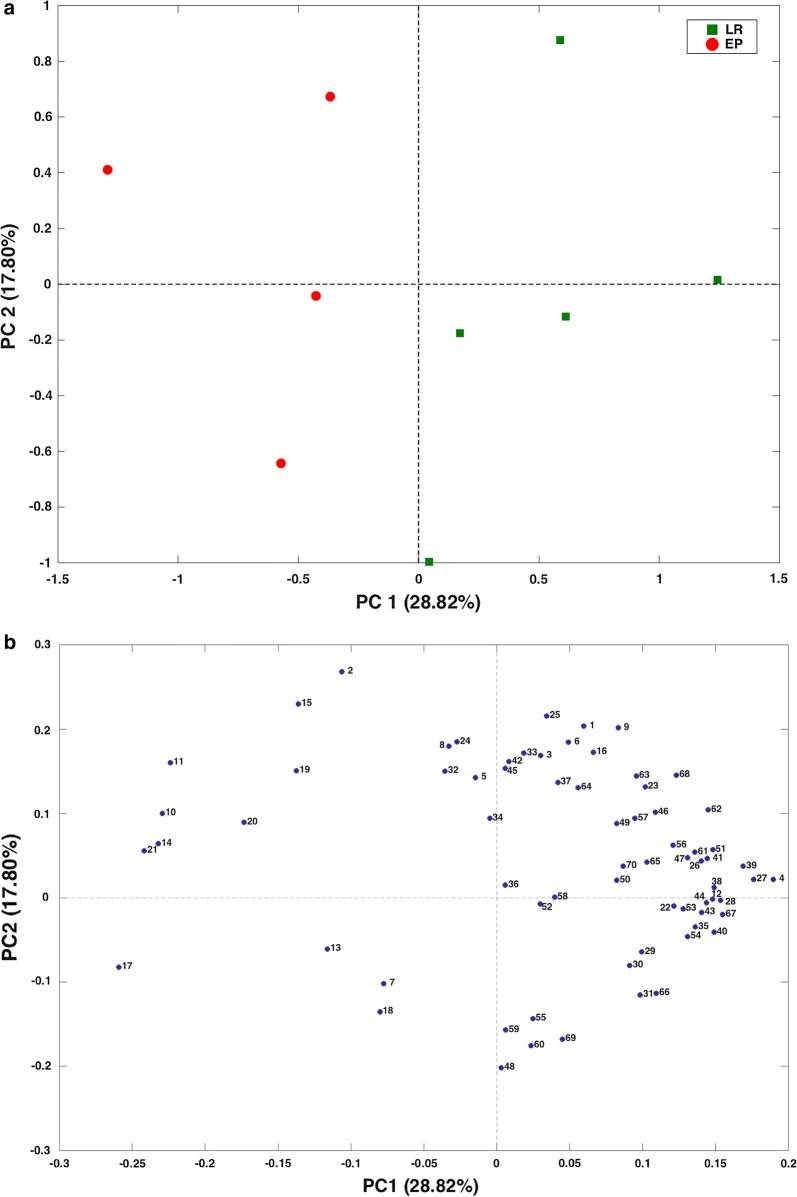
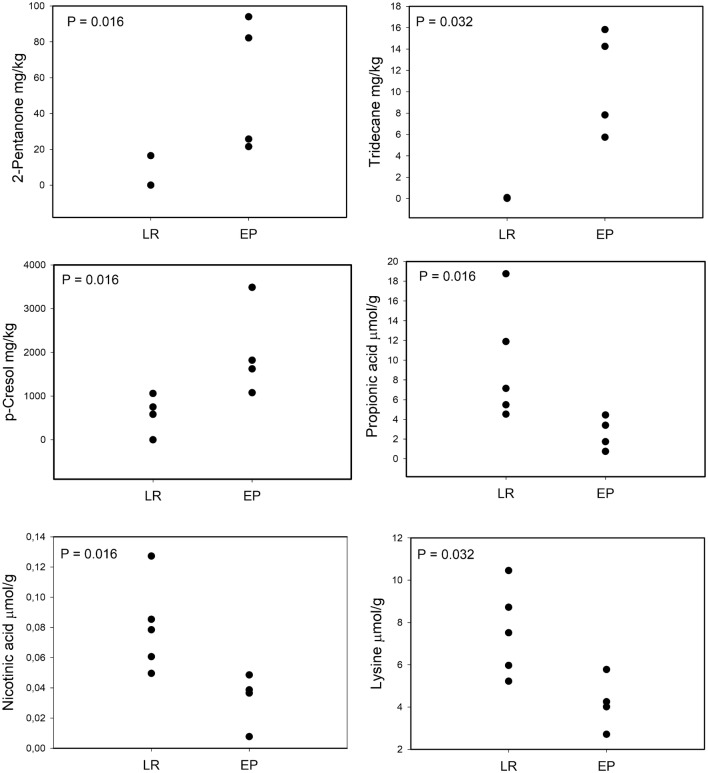
Background: Despite the efficacy of immune checkpoint inhibitors (ICIs) only the 20–30% of treated patients present long term benefits. The metabolic changes occurring in the gut microbiota metabolome are herein proposed as a factor potentially influencing the response to immunotherapy. Methods: The metabolomic profiling of gut microbiota was characterized in 11 patients affected by non-small cell lung cancer (NSCLC) treated with nivolumab in second-line treatment with anti-PD-1 nivolumab. The metabolomics analyses were performed by GC–MS/SPME and 1 H-NMR in order to detect volatile and non-volatile metabolites. Metabolomic data were processed by statistical profiling and chemometric analyses. Results: Four out of 11 patients (36%) presented early progression, while the remaining 7 out of 11 (64%) presented disease progression after 12 months. 2-Pentanone (ketone) and tridecane (alkane) were significantly associated with early progression, and on the contrary short chain fatty acids (SCFAs) (i.e., propionate, butyrate), lysine and nicotinic acid were significantly associated with long-term beneficial effects. Conclusions: Our preliminary data suggest a significant role of gut microbiota metabolic pathways in affecting response to immunotherapy. The metabolic approach could be a promising strategy to contribute to the personalized management of cancer patients by the identification of microbiota-linked “indicators” of early progressor and long responder patients.
Overview
The claims and statistics of this paper haven’t been checked yet.
Free: it reads the open-access text and checks the first 5 claims that cite a source we can check. Create a free account to check every claim.
Integrity signals
Registry
Cites
Statistics
Figures
Verification
Claims the paper makes
The claims and statistics of this paper haven’t been checked yet.
Free: it reads the open-access text and checks the first 5 claims that cite a source we can check. Create a free account to check every claim.
Claims other papers make about this one
Each is checked against this paper’s own text: does it say what the citing paper says it does?
The source backs part of the claim, not all of it — or backs it for a different population, condition or comparison.
In the citing paper
“Several studies reported that high fecal and plasma SCFA levels correlated with the improved clinical outcomes to anti-PD-1 therapy [74,75].”
From A Clinical Outcome of the Anti-PD-1 Therapy of Melanoma in Polish Patients Is Mediated by Population-Specific Gut Microbiome Composition (2022) · cites this paper as [74]
Experimental — accuracy not yet measured
Self-check
Percentages, sums and reported differences re-computed from the paper’s own numbers.
The self-check needs the paper’s full text.
Citations
Cites
Moderated estimation of fold change and dispersion for RNA-seq data with DESeq2
Love, M. I., Huber, W., & Anders, S. (2014) · Genome Biology · doi:10.1186/s13059-014-0550-8 · Cited by 95,106 · cited 1×
“Ecological and statistical analyses were performed using phyloseq and DESeq2 packages from R software [27, 28].”
QIIME allows analysis of high-throughput community sequencing data
Caporaso, J. G., Kuczynski, J., Stombaugh, J., Bittinger, K., Bushman, F. D., Costello, E. K., Fierer, N., Peña, A. G., Goodrich, J. K., Gordon, J. I., et al. (2010) · Nature Methods · doi:10.1038/nmeth.f.303 · Cited by 34,887
phyloseq: An R Package for Reproducible Interactive Analysis and Graphics of Microbiome Census Data
McMurdie, P. J., & Holmes, S. (2013) · PLoS ONE · doi:10.1371/journal.pone.0061217 · Cited by 21,322 · cited 1×
“Ecological and statistical analyses were performed using phyloseq and DESeq2 packages from R software [27, 28].”
MethodGreengenes, a Chimera-Checked 16S rRNA Gene Database and Workbench Compatible with ARB
DeSantis, T. Z., Hugenholtz, P., Larsen, N., Rojas, M., Brodie, E. L., Keller, K., Huber, T., Dalevi, D., Hu, P., & Andersen, G. L. (2006) · Applied and Environmental Microbiology · doi:10.1128/aem.03006-05 · Cited by 10,891
Gut microbiome influences efficacy of PD-1-based immunotherapy against epithelial tumors
Routy, B., Le Chatelier, E., Derosa, L., Duong, C. P. M., Alou, M. T., Daillère, R., Fluckiger, A., Messaoudene, M., Rauber, C., Roberti, M. P., et al. (2018) · Science · doi:10.1126/science.aan3706 · Cited by 5,671 · cited 4×
“Fecal samples of EPs NSCLC patients were characterized by a metabolic profile constituted by high levels of alkanes (tridecane and dodecane), methylketones (2-pentanone and 2-octanone), p-cresol, and low levels of SCFAs (propionic, butyric, acetic, valeric acids), aminoacids (lysine, isoleucine and glutamic) and nicot…”
BackgroundResultInfluentialGut microbiome modulates response to anti-PD-1 immunotherapy in melanoma patients
Gopalakrishnan, V., Spencer, C. N., Nezi, L., Reuben, A., Andrews, M. C., Karpinets, T. V., Prieto, P. A., Vicente, D., Hoffman, K., Wei, S. C., et al. (2018) · Science · doi:10.1126/science.aan4236 · Cited by 4,812 · cited 1×
“Recently, it was also demonstrated that melanoma patients carrying gut microbiota enriched in Faecalibacterium prausnitzii presented longer progression free survival (lPFS) and overall survival (OS) [17], while in patients affected by NSCLC and renal cell carcinoma (RCC) patients treated with anti-PD-1 an higher distr…”
BackgroundHost-gut microbiota metabolic interactions
Nicholson, J. K., Holmes, E., Kinross, J., Burcelin, R., Gibson, G., Jia, W., & Pettersson, S. (2012) · Science · doi:10.1126/science.1223813 · Cited by 4,760
Nicholson, J. K., Lindon, J. C., & Holmes, E. (1999) · Xenobiotica · doi:10.1080/004982599238047 · Cited by 3,895
Commensal Bifidobacterium promotes antitumor immunity and facilitates anti–PD-L1 efficacy
Sivan, A., Corrales, L., Hubert, N., Williams, J. B., Aquino-Michaels, K., Earley, Z. M., Benyamin, F. W., Man Lei, Y., Jabri, B., Alegre, M.-L., et al. (2015) · Science · doi:10.1126/science.aac4255 · Cited by 3,888
IFN-γ–related mRNA profile predicts clinical response to PD-1 blockade
Ayers, M., Lunceford, J., Nebozhyn, M., Murphy, E., Loboda, A., Kaufman, D. R., Albright, A., Cheng, J. D., Kang, S. P., Shankaran, V., et al. (2017) · Journal of Clinical Investigation · doi:10.1172/jci91190 · Cited by 3,788
Cited by
Items 201–209 of 209
Laya, A. (2025) · Applied Food Research · doi:10.1016/j.afres.2025.101614 · Cited by 1
Microbiome and EGFR -mutant non-small cell lung cancer: a complex interplay
Eccher, S., Sposito, M., Scaglione, I. M., Pasqualin, L., Rota, M., Bonato, A., Longo, L., Avancini, A., Trestini, I., Tregnago, D., et al. (2026) · Expert Review of Clinical Immunology · doi:10.1080/1744666x.2026.2645844
“As highlighted by Kim et al., Lactobacillus spp regulate intestinal immune responses and tumorigenesis via short-chain fatty acid (SCFA) production [30,31] and inhibit tumor cell growth by inducing apoptosis and G0/G1 cell cycle arrest [32,33].”
The hidden mycobiome: emerging role in anticancer immunotherapy
Peng, Z.-C., Liu, X.-Y., Liu, Q.-Y., Lü, W., Jin, C.-Z., Zhang, T.-Y., & Liu, N.-N. (2026) · Mycology: An International Journal on Fungal Biology · doi:10.1080/21501203.2026.2640728
Lin, H., Luo, L., Xie, J., Sun, D., & Gao, X. (2026) · Infectious Microbes & Diseases · doi:10.1097/im9.0000000000000210
Gan, S., Yang, S., Pan, J., & Wang, M. (2026) · Medicine · doi:10.1097/md.0000000000048775 · Cited by 1
“[89,90] Notably, levels of beneficial, butyrate-producing bacteria (e.g., Faecalibacterium prausnitzii , Ruminococcus , and Clostridium cluster I) are significantly reduced.”
Akram, F., Zainab, S., Shabbir, I., & Haq, I. U. (2026) · Folia Microbiologica · doi:10.1007/s12223-026-01515-0
McCartney, C., Hajjar, R., & Santos, M. M. (2026) · Frontiers in Microbiology · doi:10.3389/fmicb.2026.1774501 · Cited by 1
“Insufficient dietary fiber intake was also associated with lower survival in melanoma patients undergoing ICI therapy while dietary fiber supplementation in combination with ICIs led to decreased tumor size in vivo compared to ICIs alone (Spencer et al., 2021).”
InfluentialAlotaibi, B. S. (2026) · Saudi Pharmaceutical Journal · doi:10.1007/s44446-026-00107-w
“Increased levels of fecal propionic acid obtained from anti-PD-1 therapy-receiving patients have been linked with increased antitumor responses, which can result in prolonged disease-free survival (Botticelli et al. 2020).”
Panda, P., Mohanty, S., & Mohapatra, R. (2026) · Clinical Microbiology Newsletter · doi:10.1016/j.clinmicnews.2026.08.003
Metadata
- Authors
- Botticelli, A., Vernocchi, P., Marini, F., Quagliariello, A., Cerbelli, B., Reddel, S., Del Chierico, F., Di Pietro, F., Giusti, R., Tomassini, A., Giampaoli, O., Miccheli, A., Zizzari, I. G., Nuti, M., Putignani, L., & Marchetti, P.
- Affiliations
- Policlinico Umberto I (IT)
- Bambino Gesù Children's Hospital (IT)
- Sapienza University of Rome (IT)
- Azienda Ospedaliera Sant'Andrea (IT)
- Corresponding author
- Putignani, Lorenza
- ORCID
- Venue
- Journal of Translational Medicine
- Published
- 2020-02-03
- Volume
- 18
- Issue
- 1
- Pages
- 49-49
- ISSN
- 1479-5876 (ISSN-L)
- PMC
- PMC6998840
- OpenAlex
- W3008213618
- Cited by
- 209
- References
- 58
- Citations by year
- 2026: 21 · 2025: 37 · 2024: 37 · 2023: 38 · 2022: 33 · 2021: 32 · 2020: 11
- FWCI
- 9.20
- Type
- journal article
- Language
- en
- Open access
- gold
- doi.org
- Licence
- cc-by
- creativecommons.org/licenses/by/4.0/ (tdm)
- creativecommons.org/licenses/by/4.0/ (vor)
- Locations
- Journal of Translational Medicine (publishedVersion, cc-by)
- PubMed Central (publishedVersion, cc-by)
- PubMed (publishedVersion)
- IRIS Research product catalog (Sapienza University of Rome) (submittedVersion, cc-by)
- Padua Research Archive (University of Padova) (submittedVersion, cc-by)
- DOAJ (DOAJ: Directory of Open Access Journals) (submittedVersion)
- Florence Research (University of Florence) (submittedVersion)
- Zenodo (CERN European Organization for Nuclear Research) (submittedVersion, cc-by)
- Funders
- Ministry of Health (Ricerca Corrente 201802G004314)
- Topics
- Life Sciences › Biochemistry, Genetics and Molecular Biology › Molecular Biology › Gut microbiota and health
- Life Sciences › Biochemistry, Genetics and Molecular Biology › Molecular Biology › Metabolomics and Mass Spectrometry Studies
- Health Sciences › Medicine › Oncology › Cancer Immunotherapy and Biomarkers
- Keywords
- non-small cell lung cancer, immune checkpoint inhibitors, nivolumab, anti-PD-1 therapy, immunotherapy response prediction, short-chain fatty acids, 2-pentanone, tridecane, disease progression, personalized cancer management, microbiome biomarkers
- MeSH terms
- Gastrointestinal Microbiome, Carcinoma, Non-Small-Cell Lung, Humans, Immunotherapy, Lung Neoplasms, Metabolomics
About these checks
Registry, retraction, Cites and statistics results are computed, not judged, with one exception: a printed reference that no index lists is read once by a model before it counts as a citation error. Claims are extracted by a model and kept only when their quote appears verbatim in the text; each cited source is then checked, with a model’s help, for whether it says what the claim relies on. Those verdicts can be wrong — read the claim’s quote and the cited source before relying on one.
Statistics and arithmetic are recomputed, not judged.
Confidence bands are shown only for fields calibrated on our annotated test set. None is calibrated yet, so no band is shown.
What counts as a claim ›How we measure confidence ›How we check this ›
Are you an author, or do you see a problem with this page? Request a review
Data sources
Bibliographic data: Semantic Scholar, OpenAlex, Crossref.
Contains information from the Semantic Scholar Academic Graph Datasets, made available under the ODC Attribution License (ODC-BY 1.0).
Semantic Scholar’s data is described in: Kinney, R., et al. (2023). The Semantic Scholar Open Data Platform. arXiv:2301.10140.
