

The efficacy of a β-hydroxy-β-methylbutyrate supplementation on physical capacity, body composition and biochemical markers in elite rowers: a randomised, double-blind, placebo-controlled crossover study
Open accessThe DOI matches its Crossref record; 44 of the 44 references it cites were found in a registry or an index.
Abstract
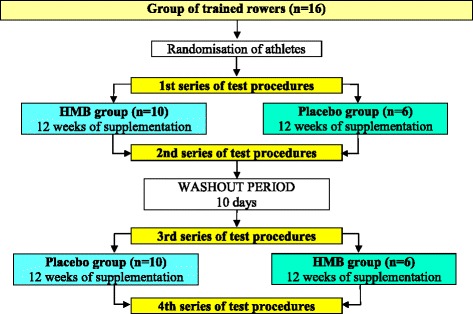
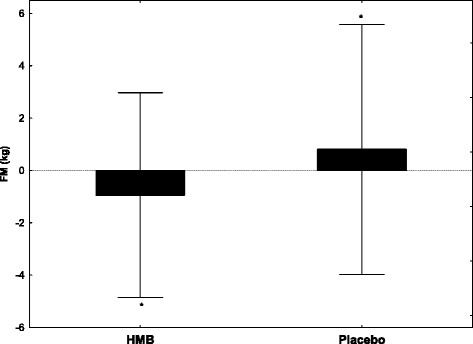
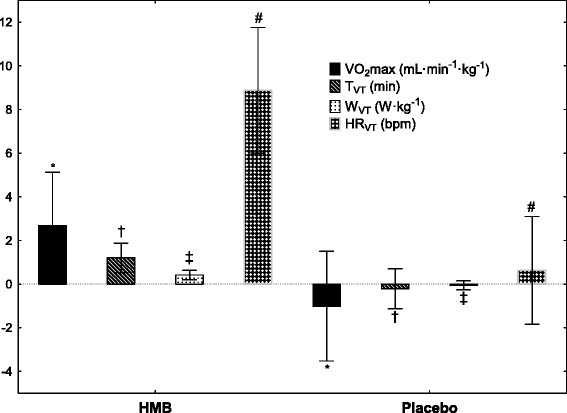
BACKGROUND: β-hydroxy-β-methylbutyric acid (HMB) is an interesting supplement in sports. However, literature sources present a limited number of studies that verify the efficacy of HMB intake over a longer time period among endurance athletes. For this reason, the aim of this study was to assess the effect of HMB supplementation on physical capacity, body composition and levels of biochemical markers in rowers. METHODS: Sixteen elite male rowers were administered a 12-week HMB supplementation (3×1 gHMB · day(-1)) and placebo administration (PLA) following the model of a randomised, placebo controlled, double-blind crossover study with a 10 days washout period. Over the course of the experiment, aerobic (maximal oxygen uptake, ventilatory threshold) and anaerobic (anaerobic power indices) capacity were determined, while analyses were conducted on body composition as well as levels of creatine kinase, lactate dehydrogenase, testosterone, cortisol and the T/C ratio. A normal distribution of variables was tested using the paired 2-tailed t-tests; the Mann-Whitney U-test or the Wilcoxon-signed rank test were applied for non-normally distributed variables. RESULTS: Following HMB supplementation, [Formula: see text] increased (+2.7 mL · min(-1) · kg(-1)) significantly (p < 0.001) in comparison to its reduction after PLA (-1.0 mL · min(-1) · kg(-1)). In turn, at the ventilatory threshold, a longer time was required to reach this point (+1.2 minHMB vs. -0.2 minPLA, p = 0.012), while threshold load (+0.42 W · kg(-1) HMB vs. -0.06 W · kg(-1) PLA, p = 0.002) and threshold heart rate (+9 bpmHMB vs. +1 bpmPLA, p < 0.001) increased. After HMB supplementation, fat mass decreased (-0.9 kgHMB vs. +0.8 kgPLA, p = 0.03). In relation to the initial values after HMB supplementation, the refusal time to continue in the progressive test was extended (p = 0.04), maximum load (p = 0.04) and anaerobic peak power (p = 0.02) increased. However, in relation to the placebo, no differences were observed in anaerobic adaptation or blood marker levels. CONCLUSIONS: The results indicate that HMB intake in endurance training has an advantageous effect on the increase in aerobic capacity and the reduction of fat mass. It may also stimulate an increase in peak anaerobic power, while it seems to have no effect on other indices of anaerobic adaptation and levels of investigated markers in the blood.
Overview
The claims and statistics of this paper haven’t been checked yet.
Free: it reads the open-access text and checks the first 5 claims that cite a source we can check. Create a free account to check every claim.
Integrity signals
Registry
Cites
Statistics
Figures
Verification
Claims the paper makes
The claims and statistics of this paper haven’t been checked yet.
Free: it reads the open-access text and checks the first 5 claims that cite a source we can check. Create a free account to check every claim.
Claims other papers make about this one
Each is checked against this paper’s own text: does it say what the citing paper says it does?
The cited source says what the claim attributes to it.
In the citing paper
“In 2015, Durkalec-Michalski and investigators [178] supplemented highly trained rowers (n = 16) in a randomized, double-blind, crossover fashion with either 3 g per day of calcium-HMB or a placebo.”
From ISSN exercise & sports nutrition review update: research & recommendations (2018) · cites this paper as [178]
The cited source says what the claim attributes to it.
In the citing paper
“HMB supplementation (3 g/day) in elite rowers over a 12-week period significantly improved aerobic (VO2max, time to reach ventilatory threshold) performance markers and decreased fat mass when compared to changes seen with placebo [178].”
From ISSN exercise & sports nutrition review update: research & recommendations (2018) · cites this paper as [178]
Self-check
Percentages, sums and reported differences re-computed from the paper’s own numbers.
The self-check needs the paper’s full text.
Citations
Cites
A new method for detecting anaerobic threshold by gas exchange
Beaver, W. L., Wasserman, K., & Whipp, B. J. (1986) · Journal of Applied Physiology · doi:10.1152/jappl.1986.60.6.2020 · Cited by 4,103
Bioelectrical impedance analysis?part I: review of principles and methods
KYLE, U. (2004) · Clinical Nutrition · doi:10.1016/j.clnu.2004.06.004 · Cited by 3,200 · cited 1×
“in the morning hours, following overnight fasting, in subjects lying in a supine position, and with the recommended application of measuring electrodes [32].”
BackgroundThe Wingate Anaerobic Test: An Update on Methodology, Reliability and Validity
Bar-Or, O. (1987) · Sports Medicine · doi:10.2165/00007256-198704060-00001 · Cited by 1,169 · cited 2×
“Bar-Or O.”
MethodSmith, K., Gunaratnam, L., Morley, M., Franovic, A., Mekhail, K., & Lee, S. (2005) · Cancer Research · doi:10.1158/0008-5472.can-05-0169 · Cited by 458
Nissen, S., Sharp, R., Ray, M., Rathmacher, J. A., Rice, D., Fuller, J. C., Connelly, A. S., & Abumrad, N. (1996) · Journal of Applied Physiology · doi:10.1152/jappl.1996.81.5.2095 · Cited by 393 · cited 4×
“The consumed HMB dose was equivalent to the most commonly recommended intake of 3 g HMB per day [2, 3, 5, 19, 26].”
BackgroundMethodInfluentialNutritional supplement use among college athletes and their sources of information
Froiland, K., Koszewski, W., Hingst, J., & Kopecky, L. (2004) · International Journal of Sport Nutrition and Exercise Metabolism · doi:10.1123/ijsnem.14.1.104 · Cited by 386 · cited 1×
“tation support in sports [1–5].”
Nissen, S. L., & Sharp, R. L. (2003) · Journal of Applied Physiology · doi:10.1152/japplphysiol.00755.2002 · Cited by 258
Physiological and Biomechanical Aspects of Rowing: Implications for Training
Secher, N. H. (1993) · Sports Medicine · doi:10.2165/00007256-199315010-00004 · Cited by 219
Kornasio, R., Riederer, I., Butler-Browne, G., Mouly, V., Uni, Z., & Halevy, O. (2009) · Biochimica et Biophysica Acta (BBA) - Molecular Cell Research · doi:10.1016/j.bbamcr.2008.12.017 · Cited by 182
Nissen, S., Sharp, R. L., Panton, L., Vukovich, M., Trappe, S., & Fuller, J. C. (2000) · The Journal of Nutrition · doi:10.1093/jn/130.8.1937 · Cited by 173
Oxidation of leucine and alpha-ketoisocaproate to beta-hydroxy-beta-methylbutyrate in vivo
Van Koevering, M., & Nissen, S. (1992) · American Journal of Physiology-Endocrinology and Metabolism · doi:10.1152/ajpendo.1992.262.1.e27 · Cited by 172
??-hydroxy-??-methylbutyrate ingestion, Part I: effects on strength and fat free mass
GALLAGHER, P. M., CARRITHERS, J. A., GODARD, M. P., SCHULZE, K. E., & TRAPPE, A. S. W. (2000) · Medicine and Science in Sports and Exercise · doi:10.1097/00005768-200012000-00022 · Cited by 171
Sun, X., & Zemel, M. B. (2009) · Nutrition & Metabolism · doi:10.1186/1743-7075-6-26 · Cited by 164
Effects of β-hydroxy-β-methylbutyrate on muscle damage after a prolonged run
Knitter, A. E., Panton, L., Rathmacher, J. A., Petersen, A., & Sharp, R. (2000) · Journal of Applied Physiology · doi:10.1152/jappl.2000.89.4.1340 · Cited by 152 · cited 4×
“dehydrogenase (LDH) [20, 24–26].”
BackgroundInfluentialHMB supplementation: clinical and athletic performance-related effects and mechanisms of action
Zanchi, N. E., Gerlinger-Romero, F., Guimarães-Ferreira, L., de Siqueira Filho, M. A., Felitti, V., Lira, F. S., Seelaender, M., & Lancha, A. H. (2011) · Amino Acids · doi:10.1007/s00726-010-0678-0 · Cited by 151 · cited 2×
“The consumed HMB dose was equivalent to the most commonly recommended intake of 3 g HMB per day [2, 3, 5, 19, 26].”
BackgroundMethodBruckbauer, A., Zemel, M. B., Thorpe, T., Akula, M. R., Stuckey, A. C., Osborne, D., Martin, E. B., Kennel, S., & Wall, J. S. (2012) · Nutrition & Metabolism · doi:10.1186/1743-7075-9-77 · Cited by 128 · cited 3×
“The possible impact of HMB on the activation of AMPK kinase and Sirt 1, may promote stimulation of mitochondrial biogenesis, higher oxygen consumption, increased efficiency of carbohydrate and fat metabolism, increased lipolysis and fat mass reduction [17, 18].”
BackgroundResultHao, Y., Jackson, J. R., Wang, Y., Edens, N., Pereira, S. L., & Alway, S. E. (2011) · American Journal of Physiology-Regulatory, Integrative and Comparative Physiology · doi:10.1152/ajpregu.00840.2010 · Cited by 124
van Someren, K. A., Edwards, A. J., & Howatson, G. (2005) · International Journal of Sport Nutrition and Exercise Metabolism · doi:10.1123/ijsnem.15.4.413 · Cited by 109
Effects of Amino Acids Supplement on Physiological Adaptations to Resistance Training
KRAEMER, W. J., HATFIELD, D. L., VOLEK, J. S., FRAGALA, M. S., VINGREN, J. L., ANDERSON, J. M., SPIERING, B. A., THOMAS, G. A., HO, J. Y., QUANN, E. E., et al. (2009) · Medicine & Science in Sports & Exercise · doi:10.1249/mss.0b013e318194cc75 · Cited by 108 · cited 1×
“[41] showed a significant increase in the pre-exercise concentration of testosterone and a reduction of cortisol levels, which were not observed in the control.”
BackgroundHoleček, M., Muthný, T., Kovařík, M., & Šišpera, L. (2008) · Food and Chemical Toxicology · doi:10.1016/j.fct.2008.11.021 · Cited by 106 · cited 2×
“This may suggest a limited role of HMB, as postulated in the literature, in the activation of, for example, mTOR kinase pathways [6, 8, 12, 13], expression of insulin-like growth factor-1 (IGF-1) [11, 12], or the reduction of activity of the ubiquitin-proteasome system and caspase activity [9, 14–16].”
BackgroundKovařík, M., Muthný, T., Šišpera, L., & Holeček, M. (2010) · Journal of Physiology and Biochemistry · doi:10.1007/s13105-010-0037-3 · Cited by 104 · cited 2×
“This may suggest a limited role of HMB, as postulated in the literature, in the activation of, for example, mTOR kinase pathways [6, 8, 12, 13], expression of insulin-like growth factor-1 (IGF-1) [11, 12], or the reduction of activity of the ubiquitin-proteasome system and caspase activity [9, 14–16].”
BackgroundEley, H. L., Russell, S. T., & Tisdale, M. J. (2008) · American Journal of Physiology-Endocrinology and Metabolism · doi:10.1152/ajpendo.90530.2008 · Cited by 100
Portal, S., Zadik, Z., Rabinowitz, J., Pilz-Burstein, R., Adler-Portal, D., Meckel, Y., Cooper, D. M., Eliakim, A., & Nemet, D. (2011) · European Journal of Applied Physiology · doi:10.1007/s00421-011-1855-x · Cited by 90 · cited 4×
“The consumed HMB dose was equivalent to the most commonly recommended intake of 3 g HMB per day [2, 3, 5, 19, 26].”
BackgroundMethodResultInfluentialSport and Exercise Physiology Testing Guidelines: Volume I - Sport Testing
(2006) · Routledge eBooks · doi:10.4324/9780203966846 · Cited by 89
Pimentel, G. D., Rosa, J. C., Lira, F. S., Zanchi, N. E., Ropelle, E. R., Oyama, L. M., Oller do Nascimento, C. M., de Mello, M., Tufik, S., & Santos, R. V. (2011) · Nutrition & Metabolism · doi:10.1186/1743-7075-8-11 · Cited by 89 · cited 2×
“This may suggest a limited role of HMB, as postulated in the literature, in the activation of, for example, mTOR kinase pathways [6, 8, 12, 13], expression of insulin-like growth factor-1 (IGF-1) [11, 12], or the reduction of activity of the ubiquitin-proteasome system and caspase activity [9, 14–16].”
BackgroundGerlinger-Romero, F., Guimarães-Ferreira, L., Giannocco, G., & Nunes, M. T. (2011) · Growth Hormone & IGF Research · doi:10.1016/j.ghir.2010.12.006 · Cited by 86
Muscaritoli (2011) · International Journal of Oncology · doi:10.3892/ijo.2010.885 · Cited by 86 · cited 2×
“This may suggest a limited role of HMB, as postulated in the literature, in the activation of, for example, mTOR kinase pathways [6, 8, 12, 13], expression of insulin-like growth factor-1 (IGF-1) [11, 12], or the reduction of activity of the ubiquitin-proteasome system and caspase activity [9, 14–16].”
BackgroundPinheiro, C. H. D. J., Gerlinger-Romero, F., Guimarães-Ferreira, L., de Souza-Jr, A. L., Vitzel, K. F., Nachbar, R. T., Nunes, M. T., & Curi, R. (2012) · European Journal of Applied Physiology · doi:10.1007/s00421-011-2224-5 · Cited by 77 · cited 1×
“Thus when considering the results of this study, literature data as well as the above mentioned potential mechanisms of HMB action, connected (for example) with the regulation of muscle protein expression, maintenance of cell wall integrity or stimulation of activity of AMPK kinase and Sirt 1, which promotes stimulati…”
ResultHoffman, J. R., Cooper, J., Wendell, M., Im, J., & Kang, J. (2004) · The Journal of Strength and Conditioning Research · doi:10.1519/13973.1 · Cited by 77 · cited 2×
“involved in resistance or volleyball training [3, 27–29].”
BackgroundResultβ-hydroxy-β-methylbutyrate (HMB) kinetics and the influence of glucose ingestion in humans
Vukovich, M. D., Slater, G., Macchi, M. B., Turner, M. J., Fallon, K., Boston, T., & Rathmacher, J. (2001) · The Journal of Nutritional Biochemistry · doi:10.1016/s0955-2863(01)00182-6 · Cited by 66 · cited 1×
“After 12 weeks, a 10-day washout period was implemented, which was similar in other studies and sufficient given the kinetics of HMB absorption and excretion from the body [24, 30, 31].”
MethodNissen, S. L., & Sharp, R. L. (2003) · Scandinavian Journal of Medicine & Science in Sports · doi:10.1034/j.1600-0838.2003.00339.x · Cited by 65 · cited 6×
“by Nissen and Sharp [21], it was found that HMB”
BackgroundInfluentialWilson, J. M., Grant, S. C., Lee, S.-R., Masad, I. S., Park, Y.-M., Henning, P. C., Stout, J. R., Loenneke, J. P., Arjmandi, B. H., Panton, L. B., et al. (2012) · Journal of the International Society of Sports Nutrition · doi:10.1186/1550-2783-9-18 · Cited by 52
Nunan, D., Howatson, G., & van Someren, K. A. (2010) · Journal of Strength and Conditioning Research · doi:10.1519/jsc.0b013e3181c4d370 · Cited by 51
Lamboley, C. R. H., Royer, D., & Dionne, I. J. (2007) · International Journal of Sport Nutrition and Exercise Metabolism · doi:10.1123/ijsnem.17.1.56 · Cited by 49 · cited 4×
“The consumed HMB dose was equivalent to the most commonly recommended intake of 3 g HMB per day [2, 3, 5, 19, 26].”
MethodInfluentialRobinson, E. H., Stout, J. R., Miramonti, A. A., Fukuda, D. H., Wang, R., Townsend, J. R., Mangine, G. T., Fragala, M. S., & Hoffman, J. R. (2014) · Journal of the International Society of Sports Nutrition · doi:10.1186/1550-2783-11-16 · Cited by 44 · cited 3×
“[25], who, in a group of males and females after a 4-week HMB supplementation, combined with high-intensity interval training, found levels of _ VO2peak higher by almost 5.”
BackgroundMethodChang, C.-K., Chang Chien, K.-M., Chang, J.-H., Huang, M.-H., Liang, Y.-C., & Liu, T.-H. (2015) · PLOS ONE · doi:10.1371/journal.pone.0121866 · Cited by 42
Crowe, M. J., O’Connor, D. M., & Lukins, J. E. (2003) · International Journal of Sport Nutrition and Exercise Metabolism · doi:10.1123/ijsnem.13.2.184 · Cited by 40
(2001) · PubMed · Cited by 35
Caperuto, É. C., dos Santos, R. V. T., Colquhoun, A., Seelaender, M. C. L., & Rosa, L. F. B. P. C. (2006) · Clinical Nutrition · doi:10.1016/j.clnu.2006.05.007 · Cited by 32 · cited 2×
“[39].”
BackgroundTownsend, J. R., Hoffman, J. R., Gonzalez, A. M., Jajtner, A. R., Boone, C. H., Robinson, E. H., Mangine, G. T., Wells, A. J., Fragala, M. S., Fukuda, D. H., et al. (2015) · International Journal of Endocrinology · doi:10.1155/2015/856708 · Cited by 28 · cited 1×
“[42] testosterone levels significant increased immediately after exercise in comparison to baseline, but also returned after 30 min, in resistance trained men, supplemented with HMB.”
BackgroundHung, W., Liu, T.-H., Chen, C.-Y., & Chang, C.-K. (2010) · Journal of Exercise Science & Fitness · doi:10.1016/s1728-869x(10)60007-x · Cited by 24 · cited 1×
“2 % PLA) only in the group of athletes supplemented with HMB, although no differences were found in indices of anaerobic power between athletes using HMB and placebos [23].”
BackgroundIs There a Physiologic Basis for Creatine Use in Children and Adolescents?
UNNITHAN, V. B., VEEHOF, S. H. E., VELLA, C. A., & KERN, M. (2001) · Journal of Strength and Conditioning Research · doi:10.1519/00124278-200111000-00021 · Cited by 18
Development of aerobic and anaerobic power in adolescent rowers: a 5‐year follow‐up study
Mikulić, P. (2010) · Scandinavian Journal of Medicine and Science in Sports · doi:10.1111/j.1600-0838.2010.01200.x · Cited by 15 · cited 1×
“Additionally, despite the supreme importance of aerobic capacity in endurance sports, a significant role may also be played by a high level of anaerobic adaptation, particularly at the start or finish of the race [36, 37].”
BackgroundFerreira, M. P. L., Greenwood, M. P., Wilson, M. J., Grindstaff, P., Plisk, S. S., & Cantler, E. C. (2000) · Cited by 5
Research works printed but not linked: 1
- Winter EM Jones AM Davison RCR Bromley PD Mercer T Sport and exercise physiology testing guidelines: vol. 1 sport testing. The British Association of Sport and Exercise Sciences 2009 Abingdon Taylor and Francis e-Library
Cited by
ISSN exercise & sports nutrition review update: research & recommendations
Kerksick, C. M., Wilborn, C. D., Roberts, M. D., Smith-Ryan, A., Kleiner, S. M., Jäger, R., Collins, R., Cooke, M., Davis, J. N., Galvan, E., et al. (2018) · Journal of the International Society of Sports Nutrition · doi:10.1186/s12970-018-0242-y · Cited by 945
Holeček, M. (2017) · Journal of Cachexia, Sarcopenia and Muscle · doi:10.1002/jcsm.12208 · Cited by 286
Leucine Supplementation: A Novel Strategy for Modulating Lipid Metabolism and Energy Homeostasis
Zhang, L., Li, F., Guo, Q., Duan, Y., Wang, W., Zhong, Y., Yang, Y., & Yin, Y. (2020) · Nutrients · doi:10.3390/nu12051299 · Cited by 106
Durkalec-Michalski, K., Jeszka, J., & Podgórski, T. (2017) · Nutrients · doi:10.3390/nu9070753 · Cited by 78
“The stu y was powered based on our previous study [6] to etect diff r nce in anaer bic p ak power between HMB and placebo treatment.”
BackgroundMethodResultInfluentialSelf-citationTodd, J. J., McSorley, E. M., Pourshahidi, L. K., Madigan, S. M., Laird, E., Healy, M., & Magee, P. J. (2017) · European Journal of Nutrition · doi:10.1007/s00394-016-1202-4 · Cited by 56
Metadata
- Authors
- Durkalec-Michalski, K., & Jeszka, J.
- Affiliations
- Department of Hygiene and Human NutritionPoznań University of Life Sciences Wojska Polskiego 31 60-624 Poznań Poland
- Poznań University of Life Sciences (PL)
- Venue
- Journal of the International Society of Sports Nutrition
- Publisher
- Informa UK Limited
- Published
- 2015-10-20
- Volume
- 12
- Issue
- 1
- Pages
- 31-31
- ISSN
- 1550-2783 (ISSN-L)
- PMC
- PMC4518594
- OpenAlex
- W1643285427
- Cited by
- 48
- References
- 44
- Citations by year
- 2026: 4 · 2025: 2 · 2024: 2 · 2023: 3 · 2022: 5 · 2021: 3 · 2020: 9 · 2019: 5 · 2018: 8 · 2017: 5 · 2016: 2
- FWCI
- 2.67
- Type
- journal article
- Language
- en
- Open access
- gold
- doi.org
- Licence
- Locations
- Journal of the International Society of Sports Nutrition (publishedVersion, cc-by)
- Europe PMC (PubMed Central) (publishedVersion, cc-by)
- PubMed Central (publishedVersion, cc-by)
- PubMed (publishedVersion)
- Funders
- Narodowe Centrum Nauki (N N312 262340)
- Topics
- Health Sciences › Nursing › Nutrition and Dietetics › Muscle metabolism and nutrition
- Health Sciences › Medicine › Orthopedics and Sports Medicine › Sports Performance and Training
- Health Sciences › Medicine › Physiology (medical) › Exercise and Physiological Responses
- Keywords
- beta-hydroxy-beta-methylbutyrate, HMB supplementation, rowing, elite rowers, endurance athletes, physical capacity, cardiorespiratory fitness, anaerobic power, body composition, fat mass, creatine kinase, lactate dehydrogenase, testosterone, cortisol, T/C ratio, biochemical markers, sports nutrition, placebo-controlled crossover study, ventilatory threshold
- MeSH terms
- Adolescent, Body Composition, Creatine Kinase, Double-Blind Method, Humans, L-Lactate Dehydrogenase, Male, Oxygen Consumption, Physical Endurance, Valerates, Biomarkers, Body Mass Index, Cross-Over Studies, Dietary Supplements, Young Adult
About these checks
Registry, retraction, Cites and statistics results are computed, not judged, with one exception: a printed reference that no index lists is read once by a model before it counts as a citation error. Claims are extracted by a model and kept only when their quote appears verbatim in the text; each cited source is then checked, with a model’s help, for whether it says what the claim relies on. Those verdicts can be wrong — read the claim’s quote and the cited source before relying on one.
Statistics and arithmetic are recomputed, not judged.
Confidence bands are shown only for fields calibrated on our annotated test set. None is calibrated yet, so no band is shown.
What counts as a claim ›How we measure confidence ›How we check this ›
Are you an author, or do you see a problem with this page? Request a review
Data sources
Bibliographic data: Semantic Scholar, OpenAlex, Crossref.
Contains information from the Semantic Scholar Academic Graph Datasets, made available under the ODC Attribution License (ODC-BY 1.0).
Semantic Scholar’s data is described in: Kinney, R., et al. (2023). The Semantic Scholar Open Data Platform. arXiv:2301.10140.
