

The effect of 6 days of alpha glycerylphosphorylcholine on isometric strength
Open accessThe DOI matches its Crossref record; 27 of the 27 references it cites were found in a registry or an index.
Abstract
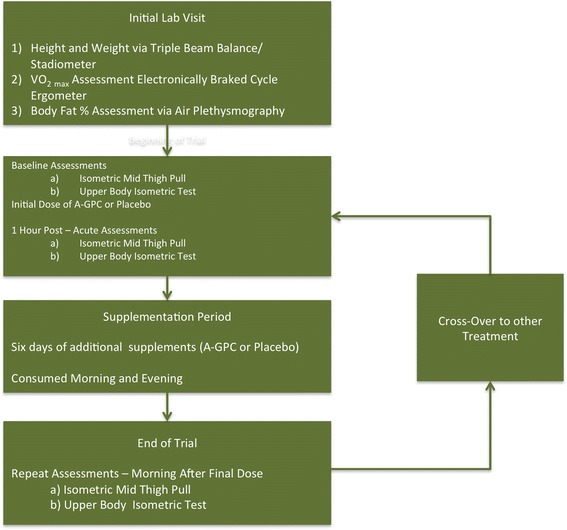
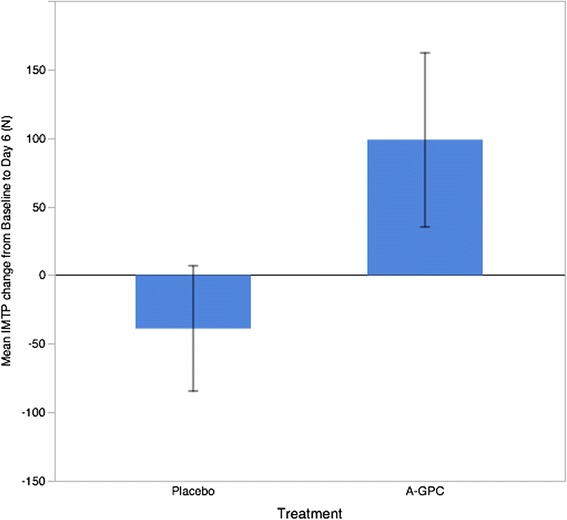
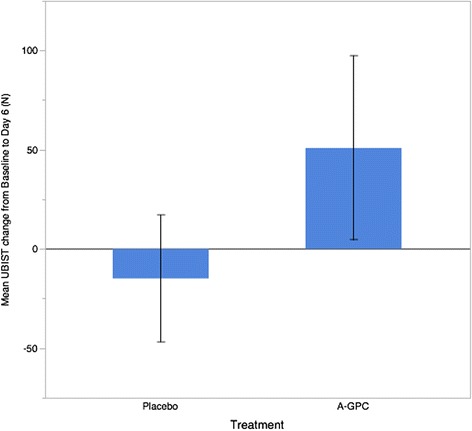
BACKGROUND: Ergogenic aides are widely used by fitness enthusiasts and athletes to increase performance. Alpha glycerylphosphorylcholine (A-GPC) has demonstrated some initial promise in changing explosive performance. The purpose of the present investigation was to determine if 6 days of supplementation with A-GPC would augment isometric force production compared to a placebo. METHODS: Thirteen college-aged males (Means ± SD; Age: 21.9 ± 2.2 years, Height: 180.3 ± 7.7 cm, Weight: 87.6 ± 15.6 kg; VO2 max: 40.08 ± 7.23 ml O2*Kg(-1)*min(-1), Body Fat: 17.5 ± 4.6%) gave written informed consent to participate in the study. The study was a double blind, placebo controlled, cross-over design. The participants reported to the lab for an initial visit where they were familiarized with the isometric mid thigh pull in a custom squat cage on a force platform and upper body isometric test against a high frequency load cell, and baseline measurements were taken for both. The participant then consumed either 600 mg per day of A-GPC or placebo and at the end of 6 days performed isometric mid thigh pulls and an upper body isometric test. A one-week washout period was used before the participants' baseline was re-measured and crossed over to the other treatment. RESULTS: The A-GPC treatment resulted in significantly greater isometric mid thigh pull peak force change from baseline (t = 1.76, p = 0.044) compared with placebo (A-GPC: 98.8. ± 236.9 N vs Placebo: -39.0 ± 170.9 N). For the upper body test the A-GPC treatment trended towards greater change from baseline force production (A-GPC: 50.9 ± 67.2 N Placebo: -14.9 ± 114.9 N) but failed to obtain statistical significance (t = 1.16, p = 0.127). CONCLUSIONS: A-GPC is effective at increasing lower body force production after 6 days of supplementation. Sport performance coaches can consider adding A-GPC to the diet of speed and power athletes to enhance muscle performance.
Overview
The claims and statistics of this paper haven’t been checked yet.
Free: it reads the open-access text and checks the first 5 claims that cite a source we can check. Create a free account to check every claim.
Integrity signals
Registry
Cites
Statistics
Figures
Verification
Claims the paper makes
The claims and statistics of this paper haven’t been checked yet.
Free: it reads the open-access text and checks the first 5 claims that cite a source we can check. Create a free account to check every claim.
Claims other papers make about this one
Each is checked against this paper’s own text: does it say what the citing paper says it does?
The source backs part of the claim, not all of it — or backs it for a different population, condition or comparison.
In the citing paper
“Previous work has indicated that supplementation with alpha-glycerylphosphorylcholine (A-GPC), a choline-containing phospholipid, can increase choline levels, and in doing so may augment cognition, physical performance, and endogenous hormone production [2,3,4].”
From Acute Alpha-Glycerylphosphorylcholine Supplementation Enhances Cognitive Performance in Healthy Men (2024) · cites this paper as [3]
Experimental — accuracy not yet measuredThe source backs part of the claim, not all of it — or backs it for a different population, condition or comparison.
In the citing paper
“and in doing so may augment cognition, physical performance, and endogenous hormone production [2,3,4].”
From Acute Alpha-Glycerylphosphorylcholine Supplementation Enhances Cognitive Performance in Healthy Men (2024) · cites this paper as [3]
Experimental — accuracy not yet measuredThe cited source says what the claim attributes to it.
In the citing paper
“Other studies demonstrating positive results have used doses of 600 mg [10, 11]; therefore this may be the preferred dose at the present with the data available in the literature.”
From Evaluation of the effects of two doses of alpha glycerylphosphorylcholine on physical and psychomotor performance (2017) · cites this paper as [11]
The cited source says what the claim attributes to it.
In the citing paper
“There have been other studies in the past that have demonstrated increased power [10] and isometric strength [11] with A-GPC supplementation.”
From Evaluation of the effects of two doses of alpha glycerylphosphorylcholine on physical and psychomotor performance (2017) · cites this paper as [11]
The cited source says what the claim attributes to it.
In the citing paper
“The majority of studies use doses of around 600 mg in an acute fashion, although the only chronic dosing human performance study [11] reported changes in force production.”
From Evaluation of the effects of two doses of alpha glycerylphosphorylcholine on physical and psychomotor performance (2017) · cites this paper as [11]
10 more claims about this paper
Create a free account to see every claim other papers make about this one.
Self-check
Percentages, sums and reported differences re-computed from the paper’s own numbers.
The self-check needs the paper’s full text.
Citations
Cites
Faul, F., Erdfelder, E., Lang, A.-G., & Buchner, A. (2007) · Behavior Research Methods · doi:10.3758/bf03193146 · Cited by 65,971 · cited 1×
“G*Power software [15] was used to determine effect size (Cohen’s d), all other analyses were performed using a modern statistical software package (JMP, version 11.”
MethodProgressive Statistics for Studies in Sports Medicine and Exercise Science
HOPKINS, W. G., MARSHALL, S. W., BATTERHAM, A. M., & HANIN, J. (2009) · Medicine & Science in Sports & Exercise · doi:10.1249/mss.0b013e31818cb278 · Cited by 9,128 · cited 1×
“The use of magnitude based inference is an attempt to expand the interpretation of findings to include harmful, trivial and beneficial as interpretations, rather than just significant, nonsignificant [17].”
BackgroundMaking Meaningful Inferences About Magnitudes
Batterham, A. M., & Hopkins, W. G. (2006) · International Journal of Sports Physiology and Performance · doi:10.1123/ijspp.1.1.50 · Cited by 2,183 · cited 1×
“Magnitude based inferences were calculated to assist with interpretation of results [16].”
MethodPaul, D. J., & Nassis, G. P. (2015) · The Journal of Strength and Conditioning Research · doi:10.1519/jsc.0000000000000807 · Cited by 140 · cited 1×
“Background Performance in sport is often determined by moments of extreme force production and power output [1].”
BackgroundParnetti, L., Mignini, F., Tomassoni, D., Traini, E., & Amenta, F. (2007) · Journal of the Neurological Sciences · doi:10.1016/j.jns.2007.01.043 · Cited by 122
Zeisel, S. H. (2012) · Annals of Nutrition and Metabolism · doi:10.1159/000343120 · Cited by 108 · cited 1×
“Ingested A-GPC is converted to phosphatidylcholine, a source of choline [10].”
Background“Magnitude-based Inference”: A Statistical Review
Welsh, A. H., & Knight, E. (2014) · Medicine & Science in Sports & Exercise · doi:10.1249/mss.0000000000000451 · Cited by 101 · cited 1×
“This interpretations in not without controversy [18], as such the authors have chosen to include it alongside a more traditional statistical approach.”
BackgroundCholine: An Important Micronutrient for Maximal Endurance-Exercise Performance?
Penry, J. T., & Manore, M. M. (2008) · International Journal of Sport Nutrition and Exercise Metabolism · doi:10.1123/ijsnem.18.2.191 · Cited by 92 · cited 1×
“that choline itself is important to consider in regard to endurance performance [19, 20].”
BackgroundPhospholipids and sports performance
Jäger, R., Purpura, M., & Kingsley, M. (2007) · Journal of the International Society of Sports Nutrition · doi:10.1186/1550-2783-4-5 · Cited by 89
Central Versus Peripheral Adaptations Following Eccentric Resistance Training
Pensini, M., Martin, A., & Maffiuletti, N. A. (2002) · International Journal of Sports Medicine · doi:10.1055/s-2002-35558 · Cited by 83
Cited by
Choline supplements: An update
Kansakar, U., Trimarco, V., Mone, P., Varzideh, F., Lombardi, A., & Santulli, G. (2023) · Frontiers in Endocrinology · doi:10.3389/fendo.2023.1148166 · Cited by 103
“Double-blind, placebocontrolled crossover 600 mg GPC 13 healthy college-aged males -Enhanced strength and performance especially the lower body force production (55)”
BackgroundThomas, C. J., Rothschild, J., Earnest, C. P., & Blaisdell, A. (2019) · Sports · doi:10.3390/sports7090196 · Cited by 77
“Active ingredients in Reload with the potential to affect cognition and/or gaming performance include caffeine and L-theanine (alone and in combination) [12–14], phosphatidylserine [15], Nicotinamide Adenine Dinucleotide [in the reduced form as NADH] [16], alpha-glycerylphosphorylcholine (alpha-GPC) [17], and L-Carnit…”
BackgroundZhang, M., Wang, Y., Zhang, Q., Wang, C., Zhang, D., Wan, J., & Yan, C. (2018) · International Journal of Biological Macromolecules · doi:10.1016/j.ijbiomac.2018.01.204 · Cited by 54
The Nutritional Supplement L-Alpha Glycerylphosphorylcholine Promotes Atherosclerosis
Wang, Z., Hazen, J. E., Jia, X., Org, E., Zhao, Y., Osborn, L. J., Nimer, N. A., Buffa, J. A., Culley, M. K., Krajcik, D., et al. (2021) · International Journal of Molecular Sciences · doi:10.3390/ijms222413477 · Cited by 54
“Additionally, some evidence suggests that GPC improves physical and psychomotor performance in the context of human strength and conditioning [11,12].”
BackgroundValue-Added Products from Ethanol Fermentation—A Review
Tse, T. J., Wiens, D. J., Chicilo, F., Purdy, S. K., & Reaney, M. J. T. (2021) · Fermentation · doi:10.3390/fermentation7040267 · Cited by 60
Marcus, L., Soileau, J., Judge, L. W., & Bellar, D. (2017) · Journal of the International Society of Sports Nutrition · doi:10.1186/s12970-017-0196-5 · Cited by 36
“Other studies demonstrating positive results have used doses of 600 mg [10, 11]; therefore this may be the preferred dose at the present with the data available in the literature.”
BackgroundMethodInfluentialSelf-citationParaxanthine Supplementation Increases Muscle Mass, Strength, and Endurance in Mice
Jäger, R., Purpura, M., Wells, S. D., Liao, K., & Godavarthi, A. (2022) · Nutrients · doi:10.3390/nu14040893 · Cited by 35
“[13] who reported significant increases in isometric strength using a mid-thigh pull movement in collegeaged males after 6 days of 600 mg/day alpha-GPC supplementation using a randomized, double-blind, crossover approach.”
BackgroundMethodTinsley, G. M., Hamm, M. A., Hurtado, A. K., Cross, A. G., Pineda, J. G., Martin, A. Y., Uribe, V. A., & Palmer, T. B. (2017) · Journal of the International Society of Sports Nutrition · doi:10.1186/s12970-017-0203-x · Cited by 26
“Other ingredients with varying degrees of performance-enhancing potential (creatine [20], betaine [21, 22], alpha-glyceryl phosphoryl choline [23, 24] and huperzine A) were also present in both supplements.”
BackgroundAisyah, R., Ohshima, N., Watanabe, D., Nakagawa, Y., Sakuma, T., Nitschké, F., Nakamura, M., Sato, K., Nakahata, K., Yokoyama, C., et al. (2024) · Communications Biology · doi:10.1038/s42003-024-06298-z · Cited by 24
“Alterationofcholineanditsmetabolitesinresponsetophysical activity,environment,andpathologicalconditionsmaybethephysiological linkbetweencholinemetabolismandmusclefunctions 8,9 .”
Tuboly, E., Gáspár, R., Ibor, M. O., Gömöri, K., Kiss, B., Strifler, G., Hartmann, P., Ferdinándy, P., Barteková, M., Boros, M., et al. (2019) · Molecular and Cellular Biochemistry · doi:10.1007/s11010-019-03580-1 · Cited by 20
Adaptations to excess choline in insulin resistant and Pcyt2 deficient skeletal muscle
Taylor, A., Schenkel, L. C., Yokich, M. K., & Bakovic, M. (2016) · Biochemistry and Cell Biology · doi:10.1139/bcb-2016-0105 · Cited by 17
“Recently, 600 330 mg per day of alpha glycerylphosphorylcholine has been recommended to supplement the diets 331 of speed and power athletes to enhance their muscle performance (Bellar et al. 2015).”
BackgroundWang, J., Dong, X. W., Ma, F.-X., Li, C., Bu, R., Lu, J., Gao, J., & Xue, P. (2020) · Journal of Ethnopharmacology · doi:10.1016/j.jep.2020.113018 · Cited by 18
Exploring Psilocybe spp. mycelium and fruiting body chemistry for potential therapeutic compounds
Waldbillig, A., Baranova, M., Neumann, S., Andrade, J., & Sidhu, S. (2023) · Frontiers in Fungal Biology · doi:10.3389/ffunb.2023.1295223 · Cited by 13
Saccharomyces cerevisiae Fermentation of 28 Barley and 12 Oat Cultivars
Tse, T. J., Wiens, D. J., Shen, J., Beattie, A. D., & Reaney, M. J. T. (2021) · Fermentation · doi:10.3390/fermentation7020059 · Cited by 13
“This compound can improve cognitive abilities [31] and isometric strength [32], and appears to have benefits for various other physical and mental performance tasks [33].”
BackgroundAcute Alpha-Glycerylphosphorylcholine Supplementation Enhances Cognitive Performance in Healthy Men
Kerksick, C. M. (2024) · Nutrients · doi:10.3390/nu16234240 · Cited by 8
“These results align somewhat with previous studies examining physical performance changes in young, healthy cohorts [3,5,14].”
InfluentialSohn, M., Park, Y. H., & Lim, S. K. (2024) · Diabetes Obesity and Metabolism · doi:10.1111/dom.16131 · Cited by 8
Barzanjeh, S. P., Pescatello, L. S., Figueroa, A., & Ahmadizad, S. (2022) · Nutrients · doi:10.3390/nu14193970 · Cited by 9
“Our results confirm the finding of others who demonstrated increases in mean power, power, and isometric strength during a maximal effort sprint test [36,37].”
ResultHarrington, R. N. (2023) · Journal of the International Society of Sports Nutrition · doi:10.1080/15502783.2023.2214112 · Cited by 7
The Effects of a Pre-workout Supplement on Measures of Alertness, Mood, and Lower-Extremity Power
Curtis, J., Evans, C., Mekhail, V., Czartoryski, P., Santana, J. C., & António, J. (2022) · Cureus · doi:10.7759/cureus.24877 · Cited by 9
Li, J., Zhang, J., Wang, Y., Yang, Y., Su, Y., Gu, L., & Chang, C. (2025) · Journal of Food Science · doi:10.1111/1750-3841.70338 · Cited by 6
Cao, J., & Su, E. (2025) · Comprehensive Reviews in Food Science and Food Safety · doi:10.1111/1541-4337.70117 · Cited by 6
Che, X., Zhao, Y., Xu, Z., Hu, Y., Ren, A., Wu, C., & Yang, J. (2025) · Nutrition Reviews · doi:10.1093/nutrit/nuaf008 · Cited by 6
Effects of an Elastic Hamstring Assistance Device During Downhill Running
Aldret, R. L., Trahan, B. A., Davis, G. R., Campbell, B., & Bellar, D. M. (2017) · Journal of Human Kinetics · doi:10.1515/hukin-2017-0048 · Cited by 6
“This device had been used previously in research studies to capture isometric strength data (Bellar et al., 2015a, 2015b).”
MethodSelf-citationEnrichment and Utilization of Thin Stillage By‐products
Tse, T. J., & Reaney, M. J. T. (2019) · Wiley eBooks · doi:10.1002/9781119534167.ch2 · Cited by 5
Gage, M., Phillips, K. C., Noh, B., & Yoon, T. (2021) · International Journal of Environmental Research and Public Health · doi:10.3390/ijerph182111400 · Cited by 5
“We hypothesized that subjects would show an increase in physical performance as measured by vertical jump height, strength, rate of torque development (RTD), impulse, and power with CMS during a fatiguing task but not at baseline [7,8].”
BackgroundInfluentialBellar, D. M., Etheredge, C. E., & Judge, L. W. (2018) · Journal of Human Kinetics · doi:10.1515/hukin-2017-0202 · Cited by 4
“Previously reported data demonstrated this test to be reliable and highly related to upper body strength (Bellar et al., 2015a, b).”
Self-citationNenseth, H. Z., Sahu, A., Saatcioglu, F., & Osguthorpe, S. (2021) · Frontiers in Nutrition · doi:10.3389/fnut.2021.703394 · Cited by 2
Yang, Y., & Lin, C.-Y. (2025) · Computer Modeling in Engineering & Sciences · doi:10.32604/cmes.2025.064459 · Cited by 2
“…sports especially at the elite level, even a small change in performance can have substantial effects on an athlete’s chance of winning or medaling [45–48], and this small but significant change that can have drastic effects on the outcome of a sporting event is often less than 1% or 2% [49,50].”
Paris, A., Labrador, B., Lejeune, F., Canlet, C., Molina, J., Guinot, M., Mégret, A., Rieu, M., Thalabard, J., & Bouc, Y. L. (2021) · Metabolomics · doi:10.1007/s11306-021-01812-4 · Cited by 2
Gage, M. (2017) · Digital Commons - Michigan Tech (Michigan Technological University) · doi:10.37099/mtu.dc.etdr/335 · Cited by 1
α-Glycerophosphorylcholine and the Effects on Anaerobic Indices
Rickard, A. J. (2017)
St-Arnaud, S. (2018) · doi:10.71781/25961
“Indeed, -GPC consumption improved the isometric peak strength of the lower limbs by 3% in just 6 days (Bellar et al., 2015a).”
InfluentialSLC44A1 Transport of Choline and Ethanolamine in Disease
Taylor, A. (2019) · The Atrium (University of Guelph) · Cited by 3
Bellar, D. M., Murphy, K., Davis, G. R., & Judge, L. W. (2020) · International Journal for Vitamin and Nutrition Research · doi:10.1024/0300-9831/a000631
Self-citationPushko, O. O., & Литвиненко, Н. В. (2021) · The Medical and Ecological Problems · doi:10.31718/mep.2021.25.3-4.02
Patel, S. G., Vyas, N. Y., Patel, A., Shah, U., Raval, M., Patel, M. M., & Patel, A. J. (2022) · Current Psychopharmacologye · doi:10.2174/2211556011666220510141329
MINIMAL INGREDIENTS WITH MAXIMUM EFFECTIVENESS; A PRE-WORKOUT SUPPLEMENT LITERATURE REVIEW
Dunn, N., & Dunn, N. (2023) · UA Campus Repository (The University of Arizona)
Chen, H., Xing, X., Ding, X., Xiang, G., Li, J. C., Yang, Y., Liu, Q., Xu, K., Lei, Q., & Li, P. (2026) · Frontiers in Pharmacology · doi:10.3389/fphar.2026.1807444
“These findings are consistent with previous reports regarding GPC’s beneficial effects on motor performance, supporting its potential as a novel sports supplement (Bellar et al., 2015; Marcus et al., 2017).”
Chen, S., Ohkubo, T., Yanaka, N., & Aisyah, R. (2026) · Nutrients · doi:10.3390/nu18101526
“Furthermore, GPC shows potential benefits in improving skeletal muscle performance [19,20], alcohol-induced liver disease [21], ocular health [22], and listening comprehension [23], all of which commonly occur in the elderly, suggesting its potential benefits as a therapeutic agent for…”
Kang, G., Lee, S. B., Kim, M., Xu, G., Ding, K., Shen, J., Hong, J. Y., Reaney, M. J. T., Kim, J. K., Kim, Y. W., et al. (2026) · Critical Reviews in Food Science and Nutrition · doi:10.1080/10408398.2026.2681928
“…trials reveal that α-GPC significantly enhances explosive power metrics, including countermovement jump velocity, mechanical power (Marcus et al. 2017) (Figure 12A), and isometric mid-thigh pull peak force, without altering total muscle cross-sectional area (Bellar et al. 2015) (Figure 12B).”
Swim Bladder Glue Prevents Osteoporosis Progression: Gut Microbiota and Metabolic Mechanisms
Huang, Y., Song, B., Cai, H., Yang, K., Yuan, Y., Li, Z., Dai, Z., Qi, Y., & Zhong, S. (2026) · Food Science and Human Wellness · doi:10.26599/fshw.2026.9251304
Metadata
- Authors
- Bellar, D., LeBlanc, N. R., & Campbell, B.
- Affiliations
- University of Louisiana at Lafayette (US)
- Corresponding author
- Bellar, David
- ORCID
- Bellar, David
- Venue
- Journal of the International Society of Sports Nutrition
- Publisher
- Informa UK Limited
- Published
- 2015-10-20
- Volume
- 12
- Issue
- 1
- Pages
- 42-42
- ISSN
- 1550-2783 (ISSN-L)
- PMC
- PMC4650143
- OpenAlex
- W2177391494
- Cited by
- 43
- References
- 27
- Citations by year
- 2026: 3 · 2025: 4 · 2024: 3 · 2023: 8 · 2022: 4 · 2021: 7 · 2020: 2 · 2019: 4 · 2018: 2 · 2017: 5 · 2016: 1
- FWCI
- 2.75
- Type
- journal article
- Language
- en
- Open access
- gold
- doi.org
- Licence
- Locations
- Journal of the International Society of Sports Nutrition (publishedVersion, cc-by)
- PubMed Central (publishedVersion, cc-by)
- PubMed (publishedVersion)
- Funders
- Chemi Nutra, Austin TX USA
- Topics
- Health Sciences › Medicine › Orthopedics and Sports Medicine › Sports Performance and Training
- Health Sciences › Nursing › Nutrition and Dietetics › Muscle metabolism and nutrition
- Health Sciences › Medicine › Physiology (medical) › Biochemical effects in animals
- Keywords
- ergogenic aids, dietary supplementation, isometric strength, muscle force production, lower limb strength, power athletes
- MeSH terms
- Analysis of Variance, Double-Blind Method, Exercise Test, Physical Exertion, Glycerylphosphorylcholine, Humans, Isometric Contraction, Louisiana, Male, Task Performance and Analysis, Thigh, United States, Reproducibility of Results, Cross-Over Studies, Muscle Fatigue, Dietary Supplements, Muscle Strength, Athletic Performance, Young Adult, Athletes, Sports Nutritional Physiological Phenomena
About these checks
Registry, retraction, Cites and statistics results are computed, not judged, with one exception: a printed reference that no index lists is read once by a model before it counts as a citation error. Claims are extracted by a model and kept only when their quote appears verbatim in the text; each cited source is then checked, with a model’s help, for whether it says what the claim relies on. Those verdicts can be wrong — read the claim’s quote and the cited source before relying on one.
Statistics and arithmetic are recomputed, not judged.
Confidence bands are shown only for fields calibrated on our annotated test set. None is calibrated yet, so no band is shown.
What counts as a claim ›How we measure confidence ›How we check this ›
Are you an author, or do you see a problem with this page? Request a review
Data sources
Bibliographic data: Semantic Scholar, OpenAlex, Crossref.
Contains information from the Semantic Scholar Academic Graph Datasets, made available under the ODC Attribution License (ODC-BY 1.0).
Semantic Scholar’s data is described in: Kinney, R., et al. (2023). The Semantic Scholar Open Data Platform. arXiv:2301.10140.
