

Acute and chronic safety and efficacy of dose dependent creatine nitrate supplementation and exercise performance
Open accessThe DOI matches its Crossref record; 35 of the 35 references it cites were found in a registry or an index.
Abstract
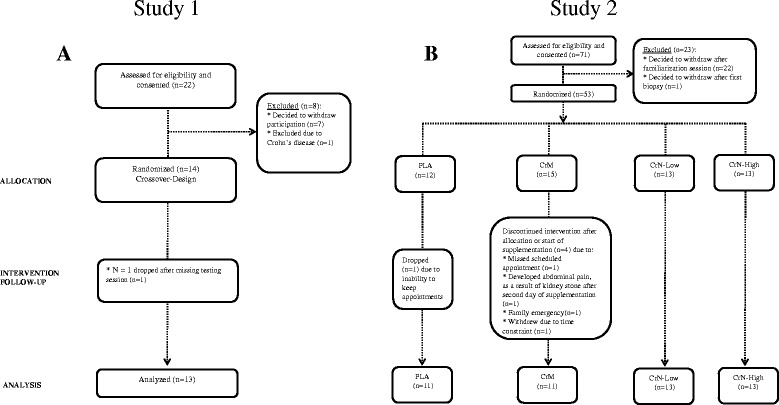
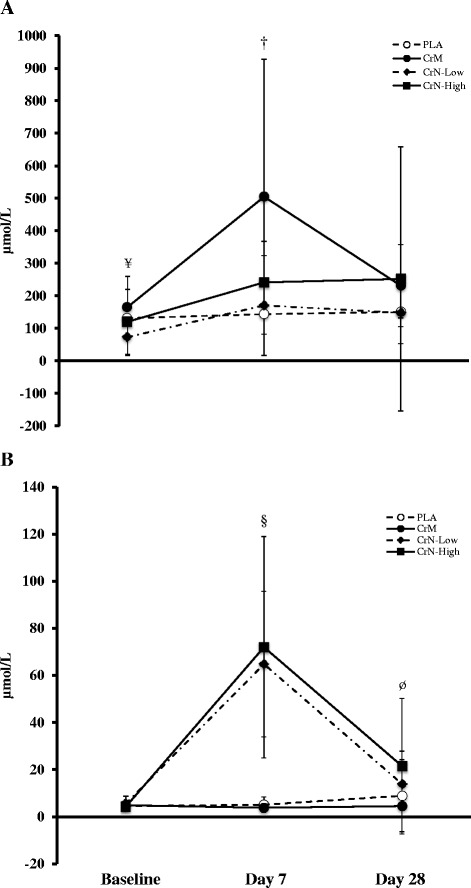
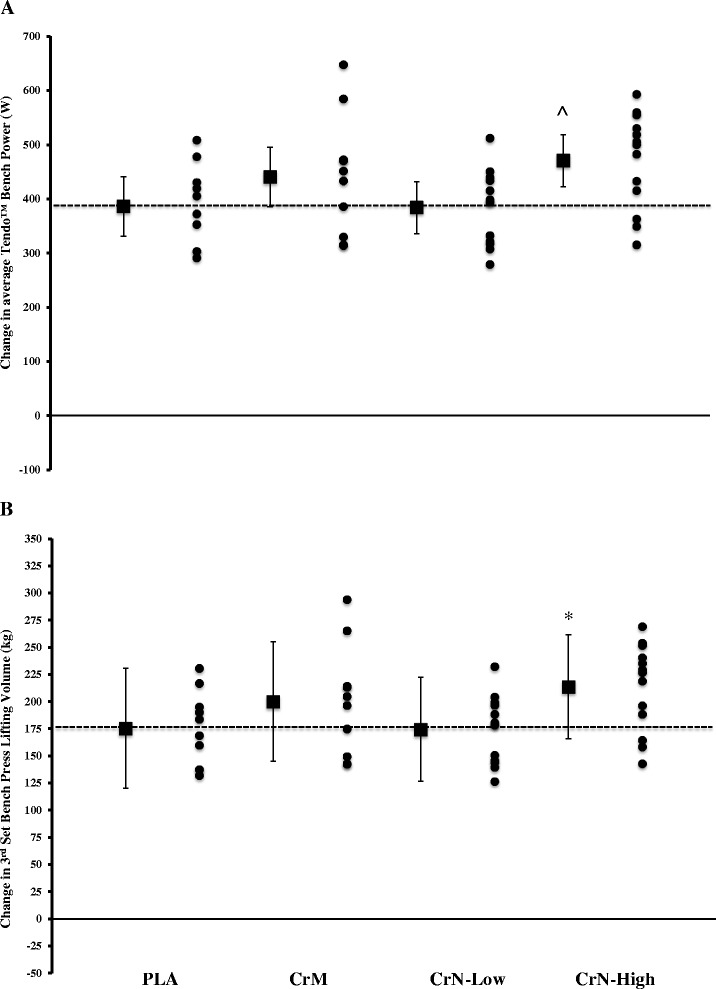
BACKGROUND: Creatine monohydrate (CrM) and nitrate are popular supplements for improving exercise performance; yet have not been investigated in combination. We performed two studies to determine the safety and exercise performance-characteristics of creatine nitrate (CrN) supplementation. METHODS: Study 1 participants (N = 13) ingested 1.5 g CrN (CrN-Low), 3 g CrN (CrN-High), 5 g CrM or a placebo in a randomized, crossover study (7d washout) to determine supplement safety (hepatorenal and muscle enzymes, heart rate, blood pressure and side effects) measured at time-0 (unsupplemented), 30-min, and then hourly for 5-h post-ingestion. Study 2 participants (N = 48) received the same CrN treatments vs. 3 g CrM in a randomized, double-blind, 28d trial inclusive of a 7-d interim testing period and loading sequence (4 servings/d). Day-7 and d-28 measured Tendo™ bench press performance, Wingate testing and a 6x6-s bicycle ergometer sprint. Data were analyzed using a GLM and results are reported as mean ± SD or mean change ± 95 % CI. RESULTS: In both studies we observed several significant, yet stochastic changes in blood markers that were not indicative of potential harm or consistent for any treatment group. Equally, all treatment groups reported a similar number of minimal side effects. In Study 2, there was a significant increase in plasma nitrates for both CrN groups by d-7, subsequently abating by d-28. Muscle creatine increased significantly by d-7 in the CrM and CrN-High groups, but then decreased by d-28 for CrN-High. By d-28, there were significant increases in bench press lifting volume (kg) for all groups (PLA, 126.6, 95 % CI 26.3, 226.8; CrM, 194.1, 95 % CI 89.0, 299.2; CrN-Low, 118.3, 95 % CI 26.1, 210.5; CrN-High, 267.2, 95 % CI 175.0, 359.4, kg). Only the CrN-High group was significantly greater than PLA (p < 0.05). Similar findings were observed for bench press peak power (PLA, 59.0, 95 % CI 4.5, 113.4; CrM, 68.6, 95 % CI 11.4, 125.8; CrN-Low, 40.9, 95 % CI -9.2, 91.0; CrN-High, 60.9, 95 % CI 10.8, 111.1, W) and average power. CONCLUSIONS: Creatine nitrate delivered at 3 g was well-tolerated, demonstrated similar performance benefits to 3 g CrM, in addition, within the confines of this study, there were no safety concerns.
Overview
The claims and statistics of this paper haven’t been checked yet.
Free: it reads the open-access text and checks the first 5 claims that cite a source we can check. Create a free account to check every claim.
Integrity signals
Registry
Cites
Statistics
Figures
Verification
Claims the paper makes
The claims and statistics of this paper haven’t been checked yet.
Free: it reads the open-access text and checks the first 5 claims that cite a source we can check. Create a free account to check every claim.
Claims other papers make about this one
Each is checked against this paper’s own text: does it say what the citing paper says it does?
The source backs part of the claim, not all of it — or backs it for a different population, condition or comparison.
In the citing paper
“These dosing amounts appear to be well tolerated when consumed as both supplemental [587] and supplemental sources [588] without significant alterations in hemodynamics or clinical boundaries of hepatorenal and muscle enzyme status [478, 589].”
From ISSN exercise & sports nutrition review update: research & recommendations (2018) · cites this paper as [478]
Experimental — accuracy not yet measuredThe source backs part of the claim, not all of it — or backs it for a different population, condition or comparison.
In the citing paper
“Other studies have also reported an additive or synergistic effects of high-intensity intermittent exercise, endurance exercise, or resistance training when nitrate supplementation is combined with sodium phosphate [511], caffeine [597], or creatine [478], respectively.”
From ISSN exercise & sports nutrition review update: research & recommendations (2018) · cites this paper as [478]
Experimental — accuracy not yet measuredThe source backs part of the claim, not all of it — or backs it for a different population, condition or comparison.
In the citing paper
“can therefore enhance acute exercise capacity and training adaptations in adolescents [62–66], younger adults [61, 67–77] and older individuals [5, 40, 43, 78–85]”
From International Society of Sports Nutrition position stand: safety and efficacy of creatine supplementation in exercise, sport, and medicine (2017) · cites this paper as [61]
Experimental — accuracy not yet measuredThe source backs part of the claim, not all of it — or backs it for a different population, condition or comparison.
In the citing paper
“CrM supplementation has been reported to improve acute exercise performance particularly in intermittent high-intensity exercise bouts as well as enhance training adaptations in adolescents [78,79,80,81,82], young adults [29,55,83,84,85,86,87,88,89,90,91,92], and older individuals [8,77,93,94,95,96,97,98,99,100,101].”
From Bioavailability, Efficacy, Safety, and Regulatory Status of Creatine and Related Compounds: A Critical Review (2022) · cites this paper as [29]
Experimental — accuracy not yet measuredThe source backs part of the claim, not all of it — or backs it for a different population, condition or comparison.
In the citing paper
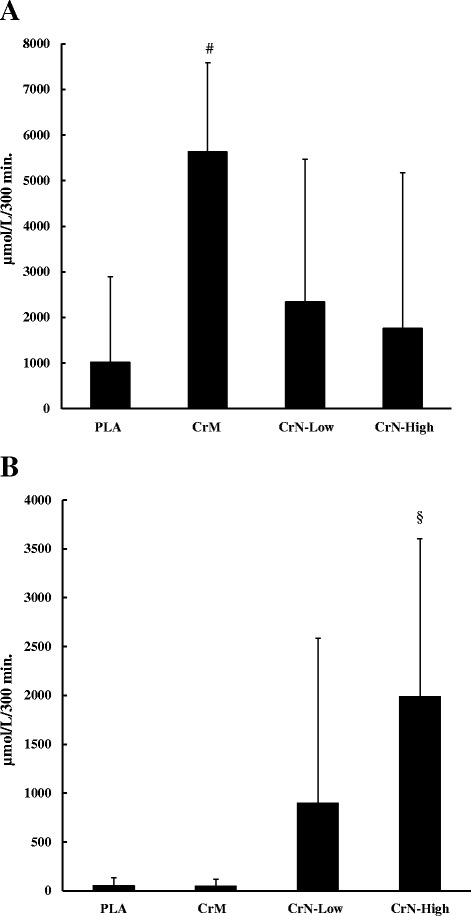
“Conversely, the nitrate AUCs in the CrN groups were significantly greater than the placebo and CrM treatments in a dose related manner.”
From Bioavailability, Efficacy, Safety, and Regulatory Status of Creatine and Related Compounds: A Critical Review (2022) · cites this paper as [29]
Experimental — accuracy not yet measured
4 more claims about this paper
Create a free account to see every claim other papers make about this one.
Self-check
Percentages, sums and reported differences re-computed from the paper’s own numbers.
The self-check needs the paper’s full text.
Citations
Cites
Creatine and Creatinine Metabolism
Wyss, M., & Kaddurah-Daouk, R. (2000) · Physiological Reviews · doi:10.1152/physrev.2000.80.3.1107 · Cited by 2,950 · cited 1×
“Moreover, creatine supplementation and a diet rich in nitrates have been shown to have a beneficial influence on health [4, 34], either of which may explain the minor, yet positive perturbations of blood lipids observed in Study 1.”
BackgroundElevation of creatine in resting and exercised muscle of normal subjects by creatine supplementation
Harris, R. C., Söderlund, K., & Hultman, E. (1992) · Clinical Science · doi:10.1042/cs0830367 · Cited by 1,168 · cited 1×
“Samples were analyzed based on methods developed by Harris and colleagues [11, 12, 14].”
MethodWebb, A. J., Patel, N., Loukogeorgakis, S., Okorie, M., Aboud, Z., Misra, S., Rashid, R., Miall, P., Deanfield, J., Benjamin, N., et al. (2008) · Hypertension · doi:10.1161/hypertensionaha.107.103523 · Cited by 1,078 · cited 2×
“5 h after ~1,400 mg of nitrate ingestion [31].”
BackgroundFood sources of nitrates and nitrites: The physiologic context for potential health benefits
Hord, N. G., Tang, Y., & Bryan, N. S. (2009) · The American Journal of Clinical Nutrition · doi:10.3945/ajcn.2008.27131 · Cited by 1,069 · cited 2×
“Inorganic nitrate (NO3 ) is an ion exhibiting limited synthesis in the body, therefore usually obtained from the diet via green leafy vegetables, while nitrites (NO2 ) are also found in food as processing additives, but to a much lesser degree [13].”
BackgroundHarris, R. C., Hultman, E., & Nordesjö, L. O. (1974) · Scandinavian Journal of Clinical and Laboratory Investigation · doi:10.3109/00365517409082477 · Cited by 849
Muscle creatine loading in men
Hultman, E., Soderlund, K., Timmons, J. A., Cederblad, G., & Greenhaff, P. L. (1996) · Journal of Applied Physiology · doi:10.1152/jappl.1996.81.1.232 · Cited by 822 · cited 16×
“Methods: Study 1 participants (N = 13) ingested 1.5 g CrN (CrN-Low), 3 g CrN (CrN-High), 5 g CrM or a placebo in a randomized, crossover study (7d washout) to determine supplement safety (hepatorenal and muscle enzymes, heart rate, blood pressure and side effects) measured at time-0 (unsupplemented), 30-min, and then…”
MethodResultInfluentialBailey, S. J., Winyard, P., Vanhatalo, A., Blackwell, J. R., DiMenna, F. J., Wilkerson, D. P., Tarr, J., Benjamin, N., & Jones, A. M. (2009) · Journal of Applied Physiology · doi:10.1152/japplphysiol.00722.2009 · Cited by 759 · cited 4×
“Methods The current report represents studies examining the [1] acute and [2] chronic supplementation of a CrN formula.”
BackgroundMethodInfluentialEffects of dietary nitrate on oxygen cost during exercise
Larsen, F. J., Weitzberg, E., Lundberg, J. O., & Ekblom, B. (2007) · Acta Physiologica · doi:10.1111/j.1748-1716.2007.01713.x · Cited by 637 · cited 1×
“While extensive reviews are available elsewhere, nitrate ingestion has been shown to reduce the oxygen cost of exercise and improve exercise tolerance [22, 24].”
BackgroundEffects of Dietary Nitrate on Blood Pressure in Healthy Volunteers
Larsen, F. J., Ekblom, B., Sahlin, K., Lundberg, J. O., & Weitzberg, E. (2006) · New England Journal of Medicine · doi:10.1056/nejmc062800 · Cited by 587 · cited 2×
“, reported no change in blood pressure following 3-d of ~430 mg nitrate/d [23].”
BackgroundBlumenthal, J. A. (2010) · Archives of Internal Medicine · doi:10.1001/archinternmed.2009.470 · Cited by 578
Suction applied to a muscle biopsy maximizes sample size
EVANS, W. J., PHINNEY, S. D., & YOUNG, V. R. (1982) · Medicine & Science in Sports & Exercise · doi:10.1249/00005768-198201000-00018 · Cited by 519 · cited 1×
“Percutaneous muscle biopsies from the vastus lateralis occurred on the day before baseline testing, d-7, and d-27 using a modified Bergstrom needle biopsy technique following standard procedures and subsequently examined for creatine concentrations [10].”
MethodDietary Nitrate Supplementation and Exercise Performance
Jones, A. M. (2014) · Sports Medicine · doi:10.1007/s40279-014-0149-y · Cited by 442 · cited 1×
“The ingestion of nitrate have demonstrated its importance to health in that nitrate and nitrite can be reduced to nitric oxide, which has shown to have numerous physiologic effects in exercise and health [16, 17, 19].”
BackgroundSlow Component of V˙O2 Kinetics: Mechanistic Bases and Practical Applications
JONES, A. M., GRASSI, B., CHRISTENSEN, P. M., KRUSTRUP, P., BANGSBO, J., & POOLE, D. C. (2011) · Medicine & Science in Sports & Exercise · doi:10.1249/mss.0b013e31821fcfc1 · Cited by 353 · cited 1×
“Further research has elaborated on these findings, showing a reduction in the amplitude of the VO2 slow component; hence an improvement in muscle efficiency associated with nitrate ingestion [2, 18].”
BackgroundInternational Society of Sports Nutrition position stand: creatine supplementation and exercise
Buford, T. W., Kreider, R. B., Stout, J. R., Greenwood, M., Campbell, B., Spano, M., Ziegenfuss, T., Lopez, H., Landis, J., & Antonio, J. (2007) · Journal of the International Society of Sports Nutrition · doi:10.1186/1550-2783-4-6 · Cited by 341
Self-citationLarsen, F. J., Weitzberg, E., Lundberg, J. O., & Ekblom, B. (2010) · Free Radical Biology and Medicine · doi:10.1016/j.freeradbiomed.2009.11.006 · Cited by 320 · cited 2×
“While extensive reviews are available elsewhere, nitrate ingestion has been shown to reduce the oxygen cost of exercise and improve exercise tolerance [22, 24].”
BackgroundMethodHarris, R. C., Hultman, E., & Nordesjö, L. O. (1974) · PubMed · Cited by 315
Creatine supplementation with specific view to exercise/sports performance: An update
Cooper, R., Naclerio, F., Allgrove, J., & Jimenez, A. (2012) · Journal of the International Society of Sports Nutrition · doi:10.1186/1550-2783-9-33 · Cited by 306 · cited 1×
“Creatine has been extensively researched and has been the subject of numerous reviews and position statements attesting to its efficacy and safety in sport and in health [5, 7, 8].”
BackgroundJones, A. M. (2014) · Applied Physiology, Nutrition, and Metabolism · doi:10.1139/apnm-2014-0036 · Cited by 144 · cited 1×
“The ingestion of nitrate have demonstrated its importance to health in that nitrate and nitrite can be reduced to nitric oxide, which has shown to have numerous physiologic effects in exercise and health [16, 17, 19].”
BackgroundAcute Administration of Inorganic Nitrate Reduces V˙O2peak in Endurance Athletes
BESCÓS, R., RODRÍGUEZ, F. A., IGLESIAS, X., FERRER, M. D., IBORRA, E., & PONS, A. (2011) · Medicine & Science in Sports & Exercise · doi:10.1249/mss.0b013e318217d439 · Cited by 137 · cited 5×
“5 g flavoring, 2 g dextrose), [3] CrN-Low (1.”
BackgroundMethodInfluentialCampbell, B., Roberts, M., Kerksick, C., Wilborn, C., Marcello, B., Taylor, L., Nassar, E., Leutholtz, B., Bowden, R., Rasmussen, C., et al. (2006) · Nutrition · doi:10.1016/j.nut.2006.06.003 · Cited by 128
Self-citationWhole Beetroot Consumption Acutely Improves Running Performance
Murphy, M., Eliot, K., Heuertz, R. M., & Weiss, E. (2012) · Journal of the Academy of Nutrition and Dietetics · doi:10.1016/j.jand.2011.12.002 · Cited by 124 · cited 2×
“Murphy and colleagues reported similar findings [25].”
BackgroundEarnest, C. P., Almada, A. L., & Mitchell, T. L. (1996) · Clinical Science · doi:10.1042/cs0910113 · Cited by 88 · cited 1×
“It should also be noted that changes in lipid fractions have been observed previously accompanying creatine ingestion [9, 26].”
BackgroundSelf-citationStrømme, J. H., Rustad, P., Steensland, H., Theodorsen, L., & Urdal, P. (2004) · Scandinavian Journal of Clinical and Laboratory Investigation · doi:10.1080/00365510410002742 · Cited by 84
Bioelectrical Impedance Analysis to Determine Fat-Free Mass, Total Body Water and Body Fat
Loan, M. D. V. (1990) · Sports Medicine · doi:10.2165/00007256-199010040-00001 · Cited by 73
Putting the Myth of Creatine Supplementation Leading to Muscle Cramps and Dehydration to Rest
Dalbo, V. J., Roberts, M., Kerksick, C., & Stout, J. (2008) · British Journal of Sports Medicine · doi:10.1136/bjsm.2007.042473 · Cited by 66 · cited 1×
“Creatine has been extensively researched and has been the subject of numerous reviews and position statements attesting to its efficacy and safety in sport and in health [5, 7, 8].”
BackgroundLow-dose creatine supplementation enhances fatigue resistance in the absence of weight gain
Rawson, E. S., Stec, M. J., Frederickson, S. J., & Miles, M. P. (2011) · Nutrition · doi:10.1016/j.nut.2010.04.001 · Cited by 58 · cited 15×
“Methods: Study 1 participants (N = 13) ingested 1.5 g CrN (CrN-Low), 3 g CrN (CrN-High), 5 g CrM or a placebo in a randomized, crossover study (7d washout) to determine supplement safety (hepatorenal and muscle enzymes, heart rate, blood pressure and side effects) measured at time-0 (unsupplemented), 30-min, and then…”
ResultInfluentialKerksick, C. M., Wilborn, C. D., Campbell, B. I., Roberts, M. D., Rasmussen, C. J., Greenwood, M., & Kreider, R. B. (2009) · Journal of Strength and Conditioning Research · doi:10.1519/jsc.0b013e3181a00baf · Cited by 49 · cited 2×
“Strength tests were performed using a standardized isotonic lifting protocol on an Olympic bench press [21].”
MethodSelf-citationDAWSON, B., VLADICH, T., & BLANKSBY, B. A. (2002) · Journal of Strength and Conditioning Research · doi:10.1519/00124278-200211000-00001 · Cited by 41
An Evaluation of the Roche Cobas c 111
Bowling, J. L., & Katayev, A. (2010) · Laboratory Medicine · doi:10.1309/lm6t8d1lkqxvncac · Cited by 38
Zhang, X., Chinkes, D. L., & Wolfe, R. R. (2008) · Clinical Nutrition · doi:10.1016/j.clnu.2008.01.006 · Cited by 34 · cited 2×
“While the former point has been demonstrated with endurance exercise, the latter point has recently been hypothesized relative to nitric oxide’s potential role in protein synthesis and is currently under investigation by others [6, 30, 35].”
Background(2001) · PubMed Central · Cited by 34
WILDER, N., GILDERS, R., HAGERMAN, F., & DEIVERT, R. G. (2002) · Journal of Strength and Conditioning Research · doi:10.1519/00124278-200208000-00003 · Cited by 31
Influence of Dietary Nitrate Supplementation on Exercise Tolerance and Performance
Jones, A. M., Vanhatalo, A., & Bailey, S. J. (2013) · Nestlé Nutrition Institute Workshop Series · doi:10.1159/000345815 · Cited by 19
28 days of creatine nitrate supplementation is apparently safe in healthy individuals
Joy, J. M., Lowery, R. P., Falcone, P. H., Mosman, M. M., Vogel, R. M., Carson, L. R., Tai, C.-Y., Choate, D., Kimber, D., Ormes, J. A., et al. (2014) · Journal of the International Society of Sports Nutrition · doi:10.1186/s12970-014-0060-9 · Cited by 19 · cited 1×
“[20] have examined Galvan et al.”
Polyviou, T. P., Pitsiladis, Y. P., Celis-Morales, C. A., Brown, B., Speakman, J. R., & Malkova, D. (2015) · Journal of Amino Acids · doi:10.1155/2015/352458 · Cited by 8 · cited 1×
“It should also be noted that changes in lipid fractions have been observed previously accompanying creatine ingestion [9, 26].”
Background
Research works printed but not linked: 1
- Almada A, Kreider R, Ransom J, Rasmussen C. Comparison of the reliability of repeated whole body DEXA scans to repeated spine and hip scans. J Bone Miner Res. 1999;14:S369.
Cited by
Kreider, R. B., Kalman, D. S., Antonio, J., Ziegenfuss, T. N., Wildman, R., Collins, R., Candow, D. G., Kleiner, S. M., Almada, A. L., & Lopez, H. L. (2017) · Journal of the International Society of Sports Nutrition · doi:10.1186/s12970-017-0173-z · Cited by 1,057
“Clinical evidence has not demonstrated that different forms of creatine such as creatine citrate [50], creatine serum [58], creatine ethyl ester [59], buffered forms of creatine [60], or creatine nitrate [61] promote greater creatine retention than creatine monohydrate [53].”
BackgroundSelf-citationISSN exercise & sports nutrition review update: research & recommendations
Kerksick, C. M., Wilborn, C. D., Roberts, M. D., Smith-Ryan, A., Kleiner, S. M., Jäger, R., Collins, R., Cooke, M., Davis, J. N., Galvan, E., et al. (2018) · Journal of the International Society of Sports Nutrition · doi:10.1186/s12970-018-0242-y · Cited by 945
Self-citationAntonio, J., Candow, D. G., Forbes, S. C., Gualano, B., Jagim, A. R., Kreider, R. B., Rawson, E. S., Smith-Ryan, A. E., VanDusseldorp, T. A., Willoughby, D. S., et al. (2021) · Journal of the International Society of Sports Nutrition · doi:10.1186/s12970-021-00412-w · Cited by 345
“buffered creatine [41], creatine nitrate [194, 195], creatine dipeptides, or the micro amounts of creatine contained in”
MethodSelf-citationCreatine in health and disease
Kreider, R. B., & Stout, J. R. (2021) · Nutrients · doi:10.3390/nu13020447 · Cited by 227
Self-citationMetabolic Basis of Creatine in Health and Disease: A Bioinformatics-Assisted Review
Bonilla, D. A., Kreider, R. B., Stout, J. R., Forero, D. A., Kerksick, C. M., Roberts, M. D., & Rawson, E. S. (2021) · Nutrients · doi:10.3390/nu13041238 · Cited by 223
Self-citation
Metadata
- Authors
- Galvan, E., Walker, D. K., Simbo, S. Y., Dalton, R., Levers, K., O’Connor, A., Goodenough, C., Barringer, N. D., Greenwood, M., Rasmussen, C., Smith, S. B., Riechman, S. E., Fluckey, J. D., Murano, P. S., Earnest, C. P., & Kreider, R. B.
- Affiliations
- Texas A&M University (US)
- Baylor University (US)
- Nutrabolt 77807 Bryan TX USA
- Corresponding author
- Kreider, Richard B.
- ORCID
- Venue
- Journal of the International Society of Sports Nutrition
- Publisher
- Informa UK Limited
- Published
- 2016-01-05
- Volume
- 13
- Issue
- 1
- Pages
- 12-12
- ISSN
- 1550-2783 (ISSN-L)
- PMC
- PMC4815124
- OpenAlex
- W2335385201
- Cited by
- 42
- References
- 34
- Citations by year
- 2026: 3 · 2025: 4 · 2024: 7 · 2023: 2 · 2022: 6 · 2021: 9 · 2020: 3 · 2019: 1 · 2018: 2 · 2017: 5
- FWCI
- 1.84
- Type
- journal article
- Language
- en
- Open access
- gold
- doi.org
- Licence
- Locations
- Journal of the International Society of Sports Nutrition (publishedVersion, cc-by)
- Europe PMC (PubMed Central) (publishedVersion, cc-by)
- PubMed Central (publishedVersion, cc-by)
- PubMed (publishedVersion)
- OakTrust (Texas A&M University Libraries) (submittedVersion)
- Funders
- Nutrabolt International (M1303625)
- Topics
- Health Sciences › Nursing › Nutrition and Dietetics › Muscle metabolism and nutrition
- Health Sciences › Medicine › Orthopedics and Sports Medicine › Sports Performance and Training
- Health Sciences › Medicine › Physiology (medical) › Biochemical effects in animals
- Keywords
- creatine monohydrate, dietary nitrate, exercise performance, creatine supplementation, supplement safety, plasma nitrate, muscle creatine, Wingate test, cycling sprints, dose-dependent effects, muscle enzymes, creatine loading, sports nutrition, creatine kinase, lactate dehydrogenase
- MeSH terms
- Adult, Blood Pressure, Creatine, Dose-Response Relationship, Drug, Double-Blind Method, Heart Rate, Humans, Male, Nitrates, Physical Endurance, Physical Fitness, Weight Lifting, Anaerobic Threshold, Muscle, Skeletal, Cross-Over Studies, Dietary Supplements, Muscle Strength, Athletic Performance
About these checks
Registry, retraction, Cites and statistics results are computed, not judged, with one exception: a printed reference that no index lists is read once by a model before it counts as a citation error. Claims are extracted by a model and kept only when their quote appears verbatim in the text; each cited source is then checked, with a model’s help, for whether it says what the claim relies on. Those verdicts can be wrong — read the claim’s quote and the cited source before relying on one.
Statistics and arithmetic are recomputed, not judged.
Confidence bands are shown only for fields calibrated on our annotated test set. None is calibrated yet, so no band is shown.
What counts as a claim ›How we measure confidence ›How we check this ›
Are you an author, or do you see a problem with this page? Request a review
Data sources
Bibliographic data: Semantic Scholar, OpenAlex, Crossref.
Contains information from the Semantic Scholar Academic Graph Datasets, made available under the ODC Attribution License (ODC-BY 1.0).
Semantic Scholar’s data is described in: Kinney, R., et al. (2023). The Semantic Scholar Open Data Platform. arXiv:2301.10140.
