

The DOI matches its Crossref record; 230 of the 230 references it cites were found in a registry or an index.
International Society of Sports Nutrition position stand: sodium bicarbonate and exercise performance
Open accessAbstract
Based on a comprehensive review and critical analysis of the literature regarding the effects of sodium bicarbonate supplementation on exercise performance, conducted by experts in the field and selected members of the International Society of Sports Nutrition (ISSN), the following conclusions represent the official Position of the Society: 1. Supplementation with sodium bicarbonate (doses from 0.2 to 0.5 g/kg) improves performance in muscular endurance activities, various combat sports, including boxing, judo, karate, taekwondo, and wrestling, and in high-intensity cycling, running, swimming, and rowing. The ergogenic effects of sodium bicarbonate are mostly established for exercise tasks of high-intensity that last between 30 s and 12 min. 2. Sodium bicarbonate improves performance in single- and multiple-bout exercise. 3. Sodium bicarbonate improves exercise performance in both men and women. 4. For single-dose supplementation protocols, 0.2 g/kg of sodium bicarbonate seems to be the minimum dose required to experience improvements in exercise performance. The optimal dose of sodium bicarbonate dose for ergogenic effects seems to be 0.3 g/kg. Higher doses (e.g., 0.4 or 0.5 g/kg) may not be required in single-dose supplementation protocols, because they do not provide additional benefits (compared with 0.3 g/kg) and are associated with a higher incidence and severity of adverse side-effects. 5. For single-dose supplementation protocols, the recommended timing of sodium bicarbonate ingestion is between 60 and 180 min before exercise or competition. 6. Multiple-day protocols of sodium bicarbonate supplementation can be effective in improving exercise performance. The duration of these protocols is generally between 3 and 7 days before the exercise test, and a total sodium bicarbonate dose of 0.4 or 0.5 g/kg per day produces ergogenic effects. The total daily dose is commonly divided into smaller doses, ingested at multiple points throughout the day (e.g., 0.1 to 0.2 g/kg of sodium bicarbonate consumed at breakfast, lunch, and dinner). The benefit of multiple-day protocols is that they could help reduce the risk of sodium bicarbonate-induced side-effects on the day of competition. 7. Long-term use of sodium bicarbonate (e.g., before every exercise training session) may enhance training adaptations, such as increased time to fatigue and power output. 8. The most common side-effects of sodium bicarbonate supplementation are bloating, nausea, vomiting, and abdominal pain. The incidence and severity of side-effects vary between and within individuals, but it is generally low. Nonetheless, these side-effects following sodium bicarbonate supplementation may negatively impact exercise performance. Ingesting sodium bicarbonate (i) in smaller doses (e.g., 0.2 g/kg or 0.3 g/kg), (ii) around 180 min before exercise or adjusting the timing according to individual responses to side-effects, (iii) alongside a high-carbohydrate meal, and (iv) in enteric-coated capsules are possible strategies to minimize the likelihood and severity of these side-effects. 9. Combining sodium bicarbonate with creatine or beta-alanine may produce additive effects on exercise performance. It is unclear whether combining sodium bicarbonate with caffeine or nitrates produces additive benefits. 10. Sodium bicarbonate improves exercise performance primarily due to a range of its physiological effects. Still, a portion of the ergogenic effect of sodium bicarbonate seems to be placebo-driven.
Overview
The claims and statistics of this paper haven’t been checked yet.
Run the check — free, no account needed. It reads the open-access text and checks the sources it cites.
Integrity signals
Registry
Cites
Statistics
Figures
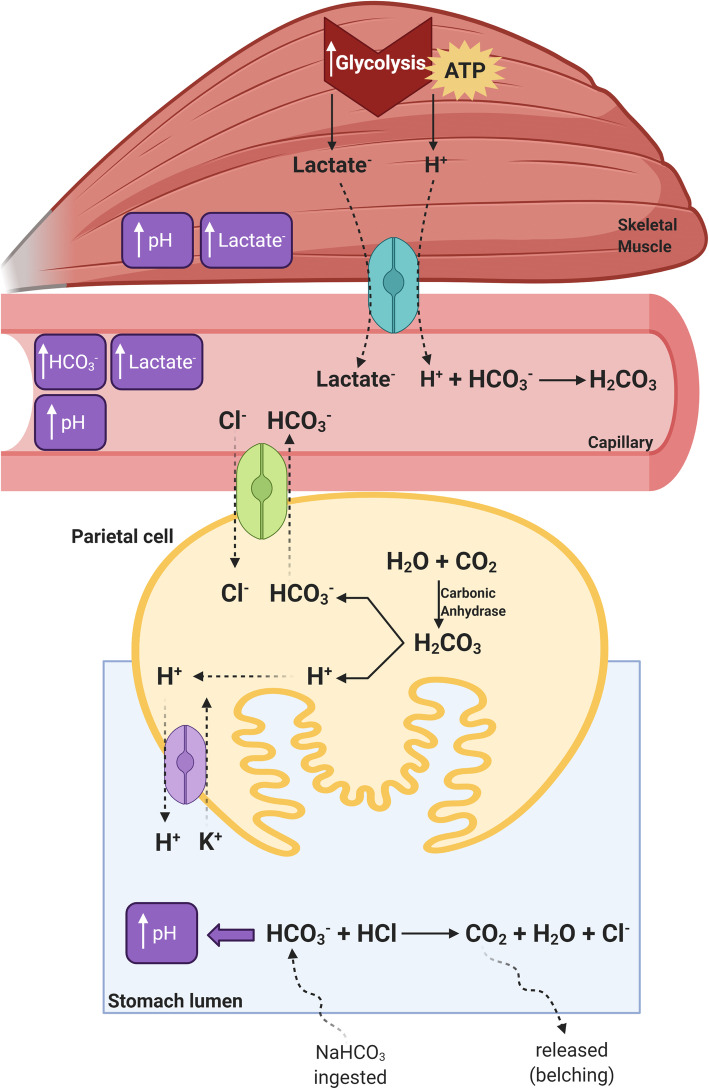
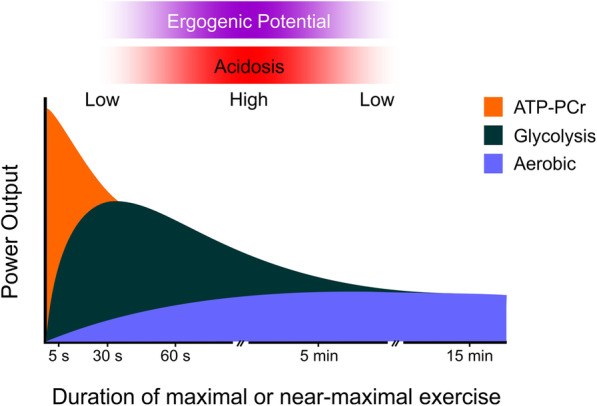
Verification
Claims the paper makes
The claims and statistics of this paper haven’t been checked yet.
Run the check — free, no account needed. It reads the open-access text and checks the sources it cites.
Claims other papers make about this one
Each is checked against this paper’s own text: does it say what the citing paper says it does?
The source backs part of the claim, not all of it — or backs it for a different population, condition or comparison.
In the citing paper
“Supplementation with 0.2–0.5 g/kg of bodyweight of sodium bicarbonate has been generally accepted as the dose range required to elicit performance benefits (Grgic, Pedisic, et al. 2021).”
From Gastrointestinal Symptoms Associated With Sodium Bicarbonate Supplementation Protocols: A Systematic Review (2026) · cites this paper as Grgic, Pedisic, et al. 2021
Experimental — accuracy not yet measuredThe cited source says what the claim attributes to it.
In the citing paper
“Sodium bicarbonate (NaHCO3) supplementation before exercise is widely recognized for enhancing extracellular buffering capacity when administered at doses of 0.2–0.4 g·kg⁻1 body mass (BM) 1–3 h prior to activity [120].”
From Nutritional Strategies to Improve Post-exercise Recovery and Subsequent Exercise Performance: A Narrative Review (2025) · cites this paper as [120]
The cited source says what the claim attributes to it.
In the citing paper
“They are also absorbed by an active ion transport process involving hydrogen ion secretion in the small intestine [39,40].”
From Effects of Enteric-Coated Formulation of Sodium Bicarbonate on Bicarbonate Absorption and Gastrointestinal Discomfort (2024) · cites this paper as [39]
The cited source says what the claim attributes to it.
In the citing paper
“Bicarbonate ions are known to be transported into the blood through the stomach [38,39].”
From Effects of Enteric-Coated Formulation of Sodium Bicarbonate on Bicarbonate Absorption and Gastrointestinal Discomfort (2024) · cites this paper as [39]
The cited source says what the claim attributes to it.
In the citing paper
“Based on a comprehensive review of the international Society of Sports Nutrition position on sodium bicarbonate and exercise performance, the ergogenic effects of sodium bicarbonate are mostly established for exercise tasks of high-intensity that last between 30 s and 12 min (Driller et al., 2012; Mündel, 2018; Grgic et al., 2021; Grgic, 2022).”
From Acute enteric-coated sodium bicarbonate has negligible effect on anaerobic performance but affects metabolomics and attenuates the gastrointestinal response (2022) · cites this paper as Grgic et al., 2021
The cited source says what the claim attributes to it.
In the citing paper
“Of note, doses around and above 0.2–0.3 g/kg have been linked to reports of gastrointestinal symptoms (GIS) (Grgic, Pedisic, et al. 2021), which include, but are not limited to, nausea, vomiting, bloating, abdominal cramps, flatulence, and diarrhea (Dalle et al. 2019; Driller et al. 2012; Miller et al. 2016; Saunders et al. 2014; Varovic et al. 2023).”
From Gastrointestinal Symptoms Associated With Sodium Bicarbonate Supplementation Protocols: A Systematic Review (2026) · cites this paper as Grgic, Pedisic, et al. 2021
The cited source says what the claim attributes to it.
In the citing paper
“These effects are achieved by increasing circulating bicarbonate and delaying metabolic acidosis resulting from high‐intensity exercise, thereby potentially improving performance in rowing, swimming, running, cycling, combat sports, and resistance training (Heibel et al. 2018; Grgic, Pedisic, et al. 2021).”
From Gastrointestinal Symptoms Associated With Sodium Bicarbonate Supplementation Protocols: A Systematic Review (2026) · cites this paper as Grgic, Pedisic, et al. 2021
The cited source says what the claim attributes to it.
In the citing paper
“Although its ergogenic potential is well‐established, sodium bicarbonate's GIS side effects may negatively impact performance (Freis et al. 2017), limiting its use in populations that may benefit (Grgic, Pedisic, et al. 2021; Hilton et al. 2019).”
From Gastrointestinal Symptoms Associated With Sodium Bicarbonate Supplementation Protocols: A Systematic Review (2026) · cites this paper as Grgic, Pedisic, et al. 2021
Self-check
Percentages, sums and reported differences re-computed from the paper’s own numbers.
The self-check needs the paper’s full text.
Citations
Cites
The Importance of Muscular Strength in Athletic Performance
Suchomel, T. J., Nimphius, S., & Stone, M. H. (2016) · Sports Medicine · doi:10.1007/s40279-016-0486-0 · Cited by 1,786
Bangsbo, J., Iaia, F. M., & Krustrup, P. (2008) · Sports Medicine · doi:10.2165/00007256-200838010-00004 · Cited by 1,463
Rate of force development: physiological and methodological considerations
Maffiuletti, N. A., Aagaard, P., Blazevich, A. J., Folland, J., Tillin, N., & Duchateau, J. (2016) · European Journal of Applied Physiology · doi:10.1007/s00421-016-3346-6 · Cited by 1,424
Modern quantitative acid–base chemistry
Stewart, P. A. (1983) · Canadian Journal of Physiology and Pharmacology · doi:10.1139/y83-207 · Cited by 1,366
Kreider, R. B., Kalman, D. S., Antonio, J., Ziegenfuss, T. N., Wildman, R., Collins, R., Candow, D. G., Kleiner, S. M., Almada, A. L., & Lopez, H. L. (2017) · Journal of the International Society of Sports Nutrition · doi:10.1186/s12970-017-0173-z · Cited by 1,057
Self-citationEnergy System Interaction and Relative Contribution During Maximal Exercise
Gastin, P. B. (2001) · Sports Medicine · doi:10.2165/00007256-200131100-00003 · Cited by 1,016
IOC Consensus Statement: Dietary Supplements and the High-performance Athlete
Maughan, R. J., Burke, L. M., Dvorak, J., Larson-Meyer, D. E., Peeling, P., Phillips, S. M., Rawson, E. S., Walsh, N. P., Garthe, I., Geyer, H., et al. (2018) · British Journal of Sports Medicine · doi:10.1136/bjsports-2018-099027 · Cited by 1,004
Self-citationA Review of Caffeine’s Effects on Cognitive, Physical and Occupational Performance
McLellan, T. M., Caldwell, J. A., & Lieberman, H. R. (2016) · Neuroscience & Biobehavioral Reviews · doi:10.1016/j.neubiorev.2016.09.001 · Cited by 840
McNulty, K. L., Elliott-Sale, K. J., Dolan, E., Swinton, P. A., Ansdell, P., Goodall, S., Thomas, K., & Hicks, K. M. (2020) · Sports Medicine · doi:10.1007/s40279-020-01319-3 · Cited by 812
International society of sports nutrition position stand: caffeine and performance
Goldstein, E. R., Ziegenfuss, T., Kalman, D., Kreider, R., Campbell, B., Wilborn, C., Taylor, L., Willoughby, D., Stout, J., Graves, B. S., et al. (2010) · Journal of the International Society of Sports Nutrition · doi:10.1186/1550-2783-7-5 · Cited by 686
Self-citation
Research works printed but not linked: 10
- CamposEZSangaliEBNetoJGGobbiRBFreitas JuniorIFPapotiMEffects of sodium bicarbonate ingestion during an intermittent exercise on blood lactate, stroke parameters, and performance of swimmersJ Exerc Physiol Online.201215 6 84 92
- DrillerMWilliamsABellingerPHoweSFellJThe effects of NaHCO3 and NaCl loading on hematocrit and high-intensity cycling performanceJ Exerc Physiol Online.201215 1 47 56
- MaterkoWSantosELNovaesJDSEffect of bicarbonate supplementation on muscular strengthJ Exerc Physiol Online.200811 6 25 33
- MaughanRJLeiperJBLitchfieldPE DotsonCOHumphreyJHThe effects of induced acidosis and alkalosis on isometric endurance capacity in manExercise physiology, current selected research1986 New York AMS Press 73 82
- McNaughtonLRFordSNewboldCEffect of sodium bicarbonate ingestion on high intensity exercise in moderately trained womenJ Strength Cond Res.199711 2 98 102
- McNaughtonLStrangeNBackxKThe effects of chronic sodium bicarbonate ingestion on multiple bouts of anaerobic work and power outputJ Hum Mov Stud.200038 307 322
- SchaufMBallTEEffects of sodium bicarbonate ingestion on anaerobic performance of women: dosage effectJ Hum Mov Stud.199631 4 179 187
- TanakaSYamaguchiDIgawaSEffect of low-dose sodium bicarbonate sup-plementation on intermittent endurance performanceFood Nutr Sci.20189 1316 1326 1:CAS:528:DC%2BC1MXhtFahurnF
- MeroAAKeskinenKLMalvelaMTSallinenJMCombined creatine and sodium bicarbonate supplementation enhances interval swimmingJ Strength Cond Res.200418 2 306 310 15142001 15142001
- LindingerMIFranklinTWLandsLCPedersenPKWelshDGHeigenhauserGJRole of skeletal muscle in plasma ion and acid-base regulation after NaHCO3 and KHCO3 loading in humansAm J Physiol.1999276 1 R32 R43 1:CAS:528:DyaK1MXntlSnsg%3D%3D 9887175 9887175
Cited by
Sorted by citations
Items 101–139 of 139
Efeitos da suplementação de bicarbonato de sódio sobre a performance física de corredores de rua
de Menezes, R. O., de Santana, I. E. L., Silva, R. D. J., Gomes, J. H., & Mendes, R. R. (2022) · Revista Brasileira de Fisiologia do Exercício · doi:10.33233/rbfex.v21i3.5163
صالح, ه. ع. ا. (2023) · Mağallaẗ Buḥūṯ Al-Tarbiyyaẗ Al-Badaniyyaẗ wa ʿulūm Al-Rīyāḍaẗ · doi:10.21608/osdj.2023.198849.1050
Optimizing Nutrition for Exercise and Sports
Gonzalez, D. E., Latt, S. L., Blalock, T., Leutholtz, B., & Kreider, R. B. (2023) · Nutrition and health · doi:10.1007/978-3-031-24663-0_29
Self-citationAntunes, E. L., Rios, M. L., Sochodolak, R. C., Nadal, J. M., Farago, P. V., & Okuno, N. M. (2024) · Research Square · doi:10.21203/rs.3.rs-4101653/v1
Musiyenko, O. V., Semeniv, B. S., Якимишин, І. Д., Hodyk, N., Popovych, S., & Maksymiak, Y. (2024) · Scientific Journal of National Pedagogical Dragomanov University Series 15 Scientific and pedagogical problems of physical culture (physical culture and sports) · doi:10.31392/udu-nc.series15.2024.7(180).24
Gehlert, S., Khurshudyan, A., Weber, S., Widdershoven, J., & Schuylenbergh, R. V. (2025) · Frontiers in Sports and Active Living · doi:10.3389/fspor.2025.1546117
Analysis of Nutritional Supplements Use in Turkish Elite SkiersPreprint
Günalan, E., Sánchez-Oliver, A. J., Turhan, S., Altınok, Ö., Çavak, B. Y., & Cebioğlu, İ. K. (2025) · Research Square · doi:10.21203/rs.3.rs-6251321/v1
Fritz, P., Mayer, L., & Maszlag, A. (2025) · Recreation · doi:10.21486/recreation.2025.15.1-2.1
Toniazzo, T., Azevedo, R. D. A., Oliveira, T. N., de Souza, R. A. S., Marinho, L. S. V., Roschel, H., Gualano, B., Saunders, B., & TADINI, C. C. (2025) · International Journal of Sport Nutrition and Exercise Metabolism · doi:10.1123/ijsnem.2025-0021
Self-citationHew‐Butler, T. (2025) · Springer eBooks · doi:10.1007/978-3-642-27830-3_61-1
Hatami, S., Ebrahimi, M., & Jorbonian, A. (2025) · Journal of Bodywork and Movement Therapies · doi:10.1016/j.jbmt.2025.08.025
Harnish, C., Holman, M. E., & Bruneau, M. L. (2025) · Physiologia · doi:10.3390/physiologia5030035
Calcium citrate nanoparticles as a new frontier in metabolic acidosis treatment
Udomsinsirikul, T., Anegkamol, W., Thongsricome, T., Rimsueb, N., Rojanathanes, R., Keawsongsaeng, W., Sereemaspun, A., Keawwongse, M., & Dissayabutra, T. (2025) · Nanoscale · doi:10.1039/d5nr01856k
The Effects of Sodium Bicarbonate and Caffeine Intake on Athletic Performance in Combat Sports
ORAKÇI, N. B. D., & Göbel, P. (2025) · Gümüşhane Üniversitesi Sağlık Bilimleri Dergisi · doi:10.37989/gumussagbil.1556790
Jayawardena, R., Weerasinghe, K., Nanayakkara, I., Madhujith, T., Hills, A. P., & Kalupahana, N. S. (2025) · BMC Sports Science Medicine and Rehabilitation · doi:10.1186/s13102-025-01496-6 · Cited by 2
Çalişkan, R. K., & Ayça, İ. B. (2026) · The Online Journal of Recreation and Sports · doi:10.22282/tojras.1771000
Antunes, E. L., Sochodolak, R. C., Rios, M. L., Nadal, J. M., Farago, P. V., & Okuno, N. M. (2026) · Brazilian Archives of Biology and Technology · doi:10.1590/1678-4324-2026250319
Markowski, D., Rodziewicz, J., Daniszewski, W., Kretschmer, V., Baranowska, M., Sobolewska, E., Kondracki, P., & Markowski, M. (2026) · International Journal of Innovative Technologies in Social Science · doi:10.31435/ijitss.1(49).2026.5083
Sport et compléments alimentaires
André, P. (2026) · Actualités Pharmaceutiques · doi:10.1016/j.actpha.2026.03.014
Parsaiean, A., Zirdehi, M. S. K., Arazi, H., & Ebrahimi, M. (2026) · Sport Sciences for Health · doi:10.1007/s11332-026-01733-6
Romero, T., Luden, N. D., Womack, C. J., & Saunders, M. J. (2026) · Performance Nutrition · doi:10.1186/s44410-026-00027-9
Hew‐Butler, T. (2026) · Springer eBooks · doi:10.1007/978-3-032-05988-8_61
Alalwan, T. A., Mazzola, G., Chiesa, L., Rondanelli, M., & Perna, S. (2026) · Journal of Ageing and Longevity · doi:10.3390/jal6030049
Nutrition for Elite Male Ice Hockey: Evidence-Based Recommendations
Nordstrøm, A. (2026) · International Journal of Sport Nutrition and Exercise Metabolism · doi:10.1123/ijsnem.2025-0260
Eidiyan-Kakhki, M. M., Nikolaidis, P. Τ., Willems, M. E. T., Clemente, F. M., رجبی, ح., Amani-Shalamzari, S., Motamedi, P., Salehpour, M., & Samadi, H. (2026) · Sport Sciences for Health · doi:10.1007/s11332-026-01813-7
Michalica, T., Březina, J., Polak, M., Mališ, J., Svozil, Z., Plchová, M., Friedecký, D., & Kociánová, E. (2026) · Journal of Human Kinetics · doi:10.5114/jhk/224514
Potential Health Risks Associated with Sports Supplementation Use in Athletes
Cai, J., Wang, T., & Li, S. (2026) · Nutrients · doi:10.3390/nu18152490
de Souza, E. B., de Souza, L., & Gomes, D. V. (2026) · Jornal de Investigação Médica · doi:10.29073/jim.v5i2.1009
Antonio, B. B., Shannon, E. S., Candow, D. G., Gough, L. A., Grgić, J., Gurton, W. H., McNaughton, L. R., Roberts, J., Saunders, B., Schwarz, A. V., et al. (2026) · Journal of the International Society of Sports Nutrition · doi:10.1080/15502783.2026.2724103
Self-citationGe, X., Sun, H., Wu, C., & Liu, S. (2026) · Frontiers in Nutrition · doi:10.3389/fnut.2026.1936178
Mănescu, D. C., Casals, C., Piotrowska, A., de Carvalho, T. S., Petcu, C., Băltarețu, C., Bidiugan, R., Dragomir, A., Amzulescu, O., Bidiugan, S., et al. (2026) · Nutrients · doi:10.3390/nu18203337
Yang, X., Yang, Q., He, Z., Bao, D., Jiang, X., & McNaughton, L. R. (2026) · European Journal of Applied Physiology · doi:10.1007/s00421-026-06448-7
Sports nutrition: Maximizing performance with natural products
Gautam, A., Kumar, S., Nigam, M., & Jyoti, V. (2026) · Elsevier eBooks · doi:10.1016/b978-0-443-34071-0.00014-2
Wang, X., & Wang, X. (2026) · Journal of the International Society of Sports Nutrition · doi:10.1080/15502783.2026.2735090
Trexler, E. T., & Pontzer, H. (2026) · Journal of Nutrition · doi:10.1016/j.tjnut.2026.101884
Zhang, Q., 徐宏汉, Mo, J., Wang, F., Gao, X., Zhou, C., Zeng, Z., Dong, X., Huang, D., Shi, H., et al. (2026) · Nutrients · doi:10.3390/nu18203441
Aktitiz, S., Güzel, Y., ATAKAN, M. M., Bulut, S., Karanfil, Y., JONES, A. M., & Turnagöl, H. H. (2026) · International Journal of Sport Nutrition and Exercise Metabolism · doi:10.1123/ijsnem.2026-0041
Metadata
- Authors
- Grgic, J., Pedisic, Z., Saunders, B., Artioli, G. G., Schoenfeld, B. J., McKenna, M. J., Bishop, D. J., Kreider, R. B., Stout, J. R., Kalman, D. S., Arent, S. M., VanDusseldorp, T. A., Lopez, H. L., Ziegenfuss, T. N., Burke, L. M., Antonio, J., & Campbell, B. I.
- Affiliations
- Victoria University (AU)
- Institute for Health and Sport, Victoria University
- Universidade de São Paulo (BR)
- Manchester Metropolitan University (GB)
- Lehman College (US)
- Texas A&M University (US)
- University of Central Florida (US)
- Nova Southeastern University (US)
- University of South Carolina (US)
- Kennesaw State University (US)
- The Center for Applied Health Sciences
- Australian Catholic University (AU)
- Exercise and Sport Science
- University of South Florida (US)
- Corresponding author
- Grgic, Jozo
- ORCID
- Venue
- Journal of the International Society of Sports Nutrition
- Publisher
- Informa UK Limited
- Published
- 2021-01-02
- Volume
- 18
- Issue
- 1
- Pages
- 61-61
- ISSN
- 1550-2783 (ISSN-L)
- PMC
- PMC8427947
- OpenAlex
- W3197275089
- Cited by
- 138
- References
- 230
- Citations by year
- 2026: 38 · 2025: 33 · 2024: 28 · 2023: 22 · 2022: 14 · 2021: 3
- FWCI
- 3.57
- Type
- journal article
- Language
- en
- Open access
- gold
- doi.org
- Licence
- Locations
- Journal of the International Society of Sports Nutrition (publishedVersion, cc-by)
- PubMed Central (publishedVersion, cc-by)
- PubMed (publishedVersion)
- Victoria University Research Repository (Victoria University) (submittedVersion, cc-by)
- DigitalCommons - Kennesaw State University (Kennesaw State University) (submittedVersion)
- Scholar Commons (University of South Carolina) (submittedVersion, cc-by)
- DOAJ (DOAJ: Directory of Open Access Journals) (submittedVersion)
- The HKU Scholars Hub (University of Hong Kong) (submittedVersion)
- Funders
- Fundação de Amparo à Pesquisa do Estado de São Paulo (16/50438-0)
- Universidade de São Paulo
- Faculdade de Medicina da Universidade de São Paulo (2020.1.362.5.2)
- Topics
- Health Sciences › Medicine › Orthopedics and Sports Medicine › Sports Performance and Training
- Health Sciences › Nursing › Nutrition and Dietetics › Muscle metabolism and nutrition
- Health Sciences › Medicine › Physiology (medical) › Exercise and Physiological Responses
- Keywords
- sodium bicarbonate, ergogenic aids, exercise performance, high-intensity exercise, muscular endurance, combat sports, single bout exercise, dose-response relationship, timing of supplementation, long-term supplementation, training effects, adverse effects, bloating, gastrointestinal discomfort, acid-base balance, buffering capacity
- MeSH terms
- Female, Humans, Male, Exercise, Sodium Bicarbonate, Athletic Performance, Performance-Enhancing Substances, Sports Nutritional Sciences
About these checks
Registry, retraction, Cites and statistics results are computed, not judged, with one exception: a printed reference that no index lists is read once by a model before it counts as a citation error. Claims are extracted by a model and kept only when their quote appears verbatim in the text; each cited source is then checked, with a model’s help, for whether it says what the claim relies on. Those verdicts can be wrong — read the claim’s quote and the cited source before relying on one.
Statistics and arithmetic are recomputed, not judged.
Confidence bands are shown only for fields calibrated on our annotated test set. None is calibrated yet, so no band is shown.
What counts as a claim ›How we measure confidence ›How we check this ›
Are you an author, or do you see a problem with this page? Request a review
