

Excess cerebral TNF causing glutamate excitotoxicity rationalizes treatment of neurodegenerative diseases and neurogenic pain by anti-TNF agents
Open accessThe DOI matches its Crossref record; 252 of the 252 references it cites were found in a registry or an index.
Abstract
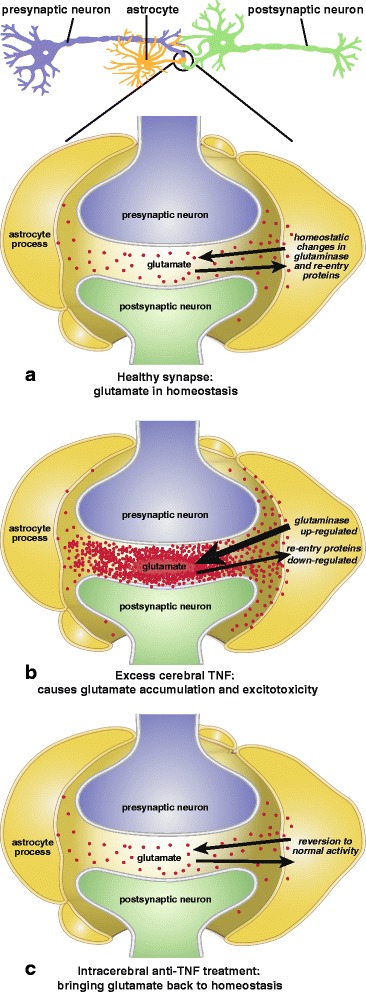
The basic mechanism of the major neurodegenerative diseases, including neurogenic pain, needs to be agreed upon before rational treatments can be determined, but this knowledge is still in a state of flux. Most have agreed for decades that these disease states, both infectious and non-infectious, share arguments incriminating excitotoxicity induced by excessive extracellular cerebral glutamate. Excess cerebral levels of tumor necrosis factor (TNF) are also documented in the same group of disease states. However, no agreement exists on overarching mechanism for the harmful effects of excess TNF, nor, indeed how extracellular cerebral glutamate reaches toxic levels in these conditions. Here, we link the two, collecting and arguing the evidence that, across the range of neurodegenerative diseases, excessive TNF harms the central nervous system largely through causing extracellular glutamate to accumulate to levels high enough to inhibit synaptic activity or kill neurons and therefore their associated synapses as well. TNF can be predicted from the broader literature to cause this glutamate accumulation not only by increasing glutamate production by enhancing glutaminase, but in addition simultaneously reducing glutamate clearance by inhibiting re-uptake proteins. We also discuss the effects of a TNF receptor biological fusion protein (etanercept) and the indirect anti-TNF agents dithio-thalidomides, nilotinab, and cannabinoids on these neurological conditions. The therapeutic effects of 6-diazo-5-oxo-norleucine, ceptriaxone, and riluzole, agents unrelated to TNF but which either inhibit glutaminase or enhance re-uptake proteins, but do not do both, as would anti-TNF agents, are also discussed in this context. By pointing to excess extracellular glutamate as the target, these arguments greatly strengthen the case, put now for many years, to test appropriately delivered ant-TNF agents to treat neurodegenerative diseases in randomly controlled trials.
Overview
The claims and statistics of this paper haven’t been checked yet.
Free: it reads the open-access text and checks the first 5 claims that cite a source we can check. Create a free account to check every claim.
Integrity signals
Registry
Cites
Statistics
Figures
Verification
Claims the paper makes
The claims and statistics of this paper haven’t been checked yet.
Free: it reads the open-access text and checks the first 5 claims that cite a source we can check. Create a free account to check every claim.
Claims other papers make about this one
Each is checked against this paper’s own text: does it say what the citing paper says it does?
The cited source says what the claim attributes to it.
In the citing paper
“Nevertheless, excessive TNF led to a high-level accumulation of extracellular glutamate to inhibit the synaptic activity or kill neurons, which rationalized the treatment of neurogenic pain by anti-TNF agents (Clark and Vissel, 2016).”
From Picroside Ⅱ attenuates neuropathic pain by regulating inflammation and spinal excitatory synaptic transmission (2024) · cites this paper as Clark and Vissel, 2016
Self-check
Percentages, sums and reported differences re-computed from the paper’s own numbers.
The self-check needs the paper’s full text.
Citations
Cites
Items 201–252 of 252
Epileptogenesis due to glia-mediated synaptic scaling
Savin, C., Triesch, J., & Meyer-Hermann, M. (2009) · Journal of The Royal Society Interface · doi:10.1098/rsif.2008.0387 · Cited by 50 · cited 1×
“They include (Table 1) Parkinson’s disease (PD) [43], neurogenic pain [44–50], Huntington’s disease [51], amyotropic lateral sclerosis [52], septic encephalopathy [53], defective postoperative cognition [54, 55], defective post-irradiation [56] and post-chemotherapy [57, 58] cognition, defective cognition during RA [4…”
BackgroundImmediate Neurological Recovery Following Perispinal Etanercept Years After Brain Injury
Tobinick, E. L., Rodriguez-Romanacce, H., Levine, A., Ignatowski, T. A., & Spengler, R. N. (2014) · Clinical Drug Investigation · doi:10.1007/s40261-014-0186-1 · Cited by 47 · cited 1×
“It seems likely, therefore, that these data rationalize the unexpected but clearly rapid response in case reports and open trials to perispinal etanercept, initially reported in 2003 [121] and 2008 [122], and regularly confirmed since [123–127].”
ResultInflammation and neurodegenerative disorders: is there still hope for therapeutic intervention?
Baune, B. T. (2015) · Current Opinion in Psychiatry · doi:10.1097/yco.0000000000000140 · Cited by 47 · cited 1×
“The use of anti-TNF agents in neurodegenerative disease has its critics who largely base their concerns on whether the functional complexities of TNF science, such as the p55 and p75 TNF receptors and membrane versus soluble location of TNF, should be more fully elucidated beforehand [134, 135].”
BackgroundThalidomide-based TNF-α inhibitors for neurodegenerative diseases
Greig, N. H., Giordano, T., Zhu, X., Yu, Q., Perry, T., Holloway, H. W., Brossi, A. R., Rogers, J. T., Sambamurti, K., & Lahiri, D. K. (2004) · Acta Neurobiologiae Experimentalis · doi:10.55782/ane-2004-1486 · Cited by 46
Excess Glutamate Levels in the Cerebrospinal Fluid Predict Clinical Outcome of Bacterial Meningitis
Spranger, M., Schwab, S., Krempien, S., Winterholler, M., Steiner, T. J., & Hacke, W. (1996) · Archives of Neurology · doi:10.1001/archneur.1996.00550100066016 · Cited by 45 · cited 1×
“These conditions (Table 1) came to include AD [72], PD [73], Huntington’s disease [74], amyotropic lateral sclerosis [75], stroke [76], viral encephelitides [77, 78], septic encephalopathy [79], defective post-operative cognition [80], post-irradiation brain function [81], pain [82, 83], bacterial meningitis [84], epi…”
BackgroundPotential utility of small tyrosine kinase inhibitors in the treatment of diabetes
Mokhtari, D., & Welsh, N. (2009) · Clinical Science · doi:10.1042/cs20090348 · Cited by 44 · cited 1×
“Also, given that insulin resistance is a common direct consequence of chronically increased TNF [178], further evidence for anti-TNF effects being central to these observations with nilotinib comes from the ability of these tyrosine kinase inhibitors to treat type 2 diabetes mellitus (T2DM) by decreasing insulin resis…”
BackgroundFontana, A. C. K., Fox, D. P., Zoubroulis, A., Mortensen, O. V., & Raghupathi, R. (2015) · Journal of Neurotrauma · doi:10.1089/neu.2015.4079 · Cited by 44
3,6′‐dithiothalidomide improves experimental stroke outcome by suppressing neuroinflammation
Yoon, J. S., Lee, J., Tweedie, D., Mughal, M. R., Chigurupati, S., Greig, N. H., & Mattson, M. P. (2013) · Journal of Neuroscience Research · doi:10.1002/jnr.23190 · Cited by 44 · cited 1×
“They are widely efficacious, by various behavioral and cognitive criteria, in models of lipopolysaccharideinduced neuroinflammation [158], AD [159–161], TBI [55], and stroke [142].”
BackgroundIgnatowski, T. A., Spengler, R. N., Dhandapani, K. M., Folkersma, H., Butterworth, R. F., & Tobinick, E. L. (2014) · CNS Drugs · doi:10.1007/s40263-014-0174-2 · Cited by 43 · cited 1×
“Awareness of this 1999 report on the rapidity of extracellular cerebral glutamate turnover [120] may now help contribute to the body of accruing evidence that should alter attitudes regarding reports of rapid responses to anti-TNF in neurodegenerative disease [126, 128].”
BackgroundDifferential involvement of TNFα in hypoxic suppression of astrocyte glutamate transporters
Boycott, H. E., Wilkinson, J. A., Boyle, J. P., Pearson, H. A., & Peers, C. (2008) · Glia · doi:10.1002/glia.20673 · Cited by 42 · cited 1×
“We are unaware of any literature on dithio-thalidomides influencing glutaminase, but the parent compound also has been reported to prevent hypoxia-induced TNF from inhibiting one of the glutamate re-uptake proteins [163].”
BackgroundThe beta‐lactam antibiotic, ceftriaxone, attenuates morphine‐evoked hyperthermia in rats
Rawls, S. M., Tallarida, R., Robinson, W., & Amin, M. (2007) · British Journal of Pharmacology · doi:10.1038/sj.bjp.0707309 · Cited by 40 · cited 1×
“In 2007, ceftriaxone was shown to independently enhance glutamate re-uptake and thus reduce the glutamatedependent portion of morphine-dependent hyperthermia [233].”
BackgroundBarzegar, S., Komaki, A., Shahidi, ., Sarihi, A., Mirazi, N., & Salehi, I. (2015) · Pharmacology Biochemistry and Behavior · doi:10.1016/j.pbb.2015.02.005 · Cited by 40 · cited 1×
“Moreover, treatment with cannabinoids or altering the function of their cellular receptors [185, 191, 216–221] has been reported to lower the levels, or function, of brain glutamate (Table 2).”
BackgroundDronabinol and chronic pain: importance of mechanistic considerations
de Vries, M., van Rijckevorsel, D. C., Wilder-Smith, O. H., & van Goor, H. (2014) · Expert Opinion on Pharmacotherapy · doi:10.1517/14656566.2014.918102 · Cited by 40
Weng, J.-C., Tikhonova, M. A., Chen, J.-H., Shen, M.-S., Meng, W.-Y., Chang, Y.-T., Chen, K.-H., Liang, K.-C., Hung, C.-S., Amstislavskaya, T. G., et al. (2016) · Behavioural Brain Research · doi:10.1016/j.bbr.2016.02.034 · Cited by 39
Yang, J., He, F., Meng, Q., Sun, Y., Wang, W., & Wang, C. (2016) · Cellular Physiology and Biochemistry · doi:10.1159/000438610 · Cited by 39
Chapman, K. L., Adjei, A., Baldrick, P., da Silva, A., Smet, K. D., DiCicco, R. L., Hong, S. S., Jones, D., Leach, M. W., McBlane, J. W., et al. (2016) · mAbs · doi:10.1080/19420862.2016.1145331 · Cited by 39 · cited 1×
“Recent debates on competitive pressures versus scientific rationales delaying introduction of biological biosimilars are most informative [133].”
BackgroundSawada, M., Hara, N., & Maéno, T. (1990) · Neuroscience Letters · doi:10.1016/0304-3940(90)90458-l · Cited by 38 · cited 1×
“By 1987, TNF had been shown to be a necessary part of the chain of events that control normal sleep [25], and a few years later, current conductance in neurons of a sea slug, Aplysia kurodai, was observed to be reduced by human TNF [26, 27].”
BackgroundDumont, A. O., Goursaud, S., Desmet, N., & Hermans, E. (2014) · PLoS ONE · doi:10.1371/journal.pone.0097649 · Cited by 38
Kuramoto, T., Nishikawa, M., Thanaketpaisarn, O., Okabe, T., Yamashita, F., & Hashida, M. (2005) · The Journal of Gene Medicine · doi:10.1002/jgm.812 · Cited by 38
Marijuana Use and Brain Immune Mechanisms
Cabral, G. A., & Jamerson, M. (2014) · International review of neurobiology · doi:10.1016/b978-0-12-801284-0.00008-7 · Cited by 38 · cited 1×
“They have, however, a considerable advantage in neurodegenerative disease in that when administered orally or systemically, they can traverse the BBB and get to where they are needed [143, 157, 169, 231].”
BackgroundPlasma concentrations of glutamate and its metabolites in patients with Alzheimer's disease
Schwartz, F. N., Miulli, D. E., & Norwell, D. (1993) · Journal of Osteopathic Medicine · doi:10.7556/jaoa.1993.93.6.670 · Cited by 37 · cited 1×
“These conditions (Table 1) came to include AD [72], PD [73], Huntington’s disease [74], amyotropic lateral sclerosis [75], stroke [76], viral encephelitides [77, 78], septic encephalopathy [79], defective post-operative cognition [80], post-irradiation brain function [81], pain [82, 83], bacterial meningitis [84], epi…”
BackgroundRiluzole increases glutamate uptake by cultured C6 astroglial cells
Dall'Igna, O. P. P., Bobermin, L. D., Souza, D. O., & Quincozes‐Santos, A. (2013) · International Journal of Developmental Neuroscience · doi:10.1016/j.ijdevneu.2013.06.002 · Cited by 36 · cited 1×
“This has been reported to include enhancing levels of glutamate re-uptake transporters [245], including in astrocytes [246, 247].”
BackgroundTobinick, E. L. (2012) · Current Alzheimer Research · doi:10.2174/156720512799015073 · Cited by 35
Kulcsar, K. A., Baxter, V. K., Abraham, R., Nelson, A. N., & Griffin, D. E. (2015) · Journal of Virology · doi:10.1128/jvi.00173-15 · Cited by 35 · cited 1×
“They include (Table 1) Parkinson’s disease (PD) [43], neurogenic pain [44–50], Huntington’s disease [51], amyotropic lateral sclerosis [52], septic encephalopathy [53], defective postoperative cognition [54, 55], defective post-irradiation [56] and post-chemotherapy [57, 58] cognition, defective cognition during RA [4…”
Backgroundde Miranda, A. S., Vieira, L. B., Lacerda‐Queiroz, N., de Souza, A. H., Rodrigues, D. H., Vilela, M. C., Gomez, M. V., Machado, F. S., Rachid, M. A., & Teixeira, A. L. (2010) · Brazilian Journal of Medical and Biological Research · doi:10.1590/s0100-879x2010007500130 · Cited by 33 · cited 2×
“These conditions (Table 1) came to include AD [72], PD [73], Huntington’s disease [74], amyotropic lateral sclerosis [75], stroke [76], viral encephelitides [77, 78], septic encephalopathy [79], defective post-operative cognition [80], post-irradiation brain function [81], pain [82, 83], bacterial meningitis [84], epi…”
BackgroundPotter, M. C., Baxter, V. K., Mathey, R. W., Alt, J., Rojas, C., Griffin, D. E., & Slusher, B. S. (2015) · Journal of NeuroVirology · doi:10.1007/s13365-015-0314-6 · Cited by 32
Self‐induced accumulation of glutamate in striatal astrocytes and basal ganglia excitotoxicity
Moráles, I., & Rodríguez, M. (2012) · Glia · doi:10.1002/glia.22368 · Cited by 32 · cited 1×
“As but one example, the capacity of excess TNF to greatly increase glutamate output through activating glutaminase [104, 105] casts the considerable body of work on astrocytes, glutamate, and basal ganglia excitotoxicity, in which the influence of inflammatory cytokines are not considered [114], in a new light.”
BackgroundPerispinal Delivery of CNS Drugs
Tobinick, E. L. (2016) · CNS Drugs · doi:10.1007/s40263-016-0339-2 · Cited by 32 · cited 1×
“As recently reviewed in detail [137], this route of cerebral venous drainage has had, since its discovery well over a century and a half ago, a most complex and interesting history, and more recently application, in medical advances.”
BackgroundMPTP-induced degeneration: interference with glutamatergic toxicity
Löschmann, P. A., Lange, K. W., Wachtel, H., & Turski, L. (1994) · PubMed · doi:10.5283/epub.25420 · Cited by 31
Nilotinib inhibits the Src‐family kinase LCK and T‐cell function in vitro
Blake, S. J., Lyons, A. B., & Hughes, T. P. (2009) · Journal of Cellular and Molecular Medicine · doi:10.1111/j.1582-4934.2009.00500_1.x · Cited by 31
Chen, Y., Chen, H., Lan, J.-L., & Chen, D. (2010) · Joint Bone Spine · doi:10.1016/j.jbspin.2010.01.017 · Cited by 31 · cited 1×
“They include (Table 1) Parkinson’s disease (PD) [43], neurogenic pain [44–50], Huntington’s disease [51], amyotropic lateral sclerosis [52], septic encephalopathy [53], defective postoperative cognition [54, 55], defective post-irradiation [56] and post-chemotherapy [57, 58] cognition, defective cognition during RA [4…”
BackgroundTargeting the endogenous cannabinoid system to treat neuropathic pain
Lau, B. K., & Vaughan, C. W. (2014) · Frontiers in Pharmacology · doi:10.3389/fphar.2014.00028 · Cited by 30
Huang, C.-K., Chang, Y., Amstislavskaya, T. G., Tikhonova, M. A., Lin, C., Hung, C., Lai, T., & Ho, Y. (2015) · Behavioural Brain Research · doi:10.1016/j.bbr.2015.08.011 · Cited by 29 · cited 1×
“With this mechanism in mind, ceftriaxone is nowadays under active consideration as a therapy in models of AD [235], stroke [236], TBI [237–239], and PD [240–243].”
BackgroundFerlito, M., Romanenko, O. G., Guyton, K., Ashton, S., Squadrito, F., Halushka, P. V., & Cook, J. A. (2002) · Journal of Endotoxin Research · doi:10.1177/09680519020080061101 · Cited by 29 · cited 1×
“In addition to nilotinib [176] another selective Src tyrosine kinase, pyrazolopyrimidine-2 (PP2), inhibits production of TNF [177].”
BackgroundJing, H., Hao, Y., Bi, Q., Zhang, J., & Yang, P. (2015) · Neuroscience Research · doi:10.1016/j.neures.2014.10.015 · Cited by 28
HU-444, a Novel, Potent Anti-Inflammatory, Nonpsychotropic Cannabinoid
Haj, C. G., Sumariwalla, P. F., Hanuš, L., Kogan, N. M., Yektin, Z., Mechoulam, R., Feldmann, M., & Gallily, R. (2015) · The Journal of Pharmacology and Experimental Therapeutics · doi:10.1124/jpet.115.226100 · Cited by 26
Homeostatic Regulation of Glutamate Release in Response to Depolarization
Moulder, K. L., Meeks, J. P., & Mennerick, S. (2006) · Molecular Neurobiology · doi:10.1385/mn:33:2:133 · Cited by 26 · cited 1×
“Readers interested in the complexities of glutamate release, including its physiological control, are directed to the examples provided by references [109–111].”
MethodVogel, K. R., Arning, E., Wasek, B. L., Bottiglieri, T., & Gibson, K. M. (2012) · Journal of Inherited Metabolic Disease · doi:10.1007/s10545-012-9524-8 · Cited by 25 · cited 2×
“[231], has recently also been effective in treating mice infected with Sindbis virus [227] as well as the cerebral malaria model discussed above [215].”
BackgroundThe expression of cytokines in the organs of normal individuals: role in homeostasis. A review.
Tovey, M. G. (1988) · PubMed · Cited by 25
Phase I trial of 6-diazo-5-oxo-L-norleucine (DON) administered by 5-day courses.
Earhart, R. H., Koeller, J. M., & Davis, H. L. (1982) · PubMed · Cited by 24
The endocannabinoid system in gp120-mediated insults and HIV-associated dementia
Bari, M., Rapino, C., Mozetic, P., & Maccarrone, M. (2010) · Experimental Neurology · doi:10.1016/j.expneurol.2010.03.025 · Cited by 23 · cited 1×
“) Both endocannabinoids and CBD have been shown to be active in models for pain [186–190], AD [191–195], epileptic seizures [196–199], PD [200–202], HIV dementia [203–205], viral encephalitis [206], and TBI [207].”
BackgroundNeuroprotective effect of ceftriaxone on the penumbra in a rat venous ischemia model
Inui, T., Alessandri, B., Heimann, A., Nishimura, F., Frauenknecht, K., Sommer, C., & Kempski, O. (2013) · Neuroscience · doi:10.1016/j.neuroscience.2013.03.018 · Cited by 23 · cited 1×
“With this mechanism in mind, ceftriaxone is nowadays under active consideration as a therapy in models of AD [235], stroke [236], TBI [237–239], and PD [240–243].”
BackgroundCarloni, S., Alconada, D. A., Girelli, S., Duranti, A., Tontini, A., Piomelli, D., Hilario, E., Alvarez, A. A., & Balduini, W. (2012) · Pediatric Research · doi:10.1038/pr.2012.91 · Cited by 22 · cited 1×
“These agents are also active in hypoxic encephalopathy, a stroke parallel in newborns [208, 209], a condition associated with raised inflammatory cytokines and glutamate [210].”
BackgroundProtein accumulation in cerebrospinal fluid during -90 degrees head-down tilt in rabbit
Wen, T. S., Randall, D. C., & Zolman, J. F. (1994) · Journal of Applied Physiology · doi:10.1152/jappl.1994.77.3.1081 · Cited by 22 · cited 1×
“Contemporary awareness of the potential of this route began when researchers in aviation medicine were exploring an animal model of the effects of gravity and body position on pilots of high-performance aircraft [138].”
BackgroundBaeten, D., & van Hagen, P. M. (2010) · Annals of the Rheumatic Diseases · doi:10.1136/ard.2009.126813 · Cited by 21
Sawada, M., Hara, N., & Maéno, T. (1991) · Journal of Neuroscience Research · doi:10.1002/jnr.490280403 · Cited by 20 · cited 1×
“By 1987, TNF had been shown to be a necessary part of the chain of events that control normal sleep [25], and a few years later, current conductance in neurons of a sea slug, Aplysia kurodai, was observed to be reduced by human TNF [26, 27].”
BackgroundMeloni, F., Ballabio, P., Bianchi, L. N. C., Grassi, F. A., & Grassi, G. (2009) · Chemotherapy · doi:10.1159/000239358 · Cited by 20 · cited 1×
“In contrast to cannabinoids and nilotinib, it has been shown not to reduce TNF release from LPS-treated human monocytes [232], implying it does not act against excitotoxicity by inhibiting TNFmediated glutaminase enhancement [97] or enhancing TNF-mediated reduced glutamate re-uptake [104].”
BackgroundAcute effects of irradiation on the rat brain: protection by glutamate blockade
Alaoui, F., Pratt, J., Trocherie, S., Court, L. A., & Stutzmann, J. M. (1995) · European Journal of Pharmacology · doi:10.1016/0014-2999(95)00006-7 · Cited by 19 · cited 1×
“These conditions (Table 1) came to include AD [72], PD [73], Huntington’s disease [74], amyotropic lateral sclerosis [75], stroke [76], viral encephelitides [77, 78], septic encephalopathy [79], defective post-operative cognition [80], post-irradiation brain function [81], pain [82, 83], bacterial meningitis [84], epi…”
BackgroundXiong, Y., Murphy, M., Manavalan, T. T., Pattabiraman, G., Qiu, F., Chang, H., Ho, I., & Medvedev, A. E. (2015) · Journal of Innate Immunity · doi:10.1159/000440838 · Cited by 18 · cited 1×
“Endotoxin tolerance is associated with inhibited phosphorylation Src, a non-receptor tyrosine kinase protein [181].”
BackgroundSong, T., Ma, X., Gu, K., Yang, Y., Yang, L., Ma, P., Wang, W., Zhao, J., Yan, R., Guan, J., et al. (2015) · Journal of Neuroimmunology · doi:10.1016/j.jneuroim.2015.11.007 · Cited by 17
Li, Y., Wang, S., RAN, K., Hu, Z., Liu, Z., & Duan, K. (2015) · Molecular Medicine Reports · doi:10.3892/mmr.2015.3697 · Cited by 16 · cited 1×
“These conditions (Table 1) came to include AD [72], PD [73], Huntington’s disease [74], amyotropic lateral sclerosis [75], stroke [76], viral encephelitides [77, 78], septic encephalopathy [79], defective post-operative cognition [80], post-irradiation brain function [81], pain [82, 83], bacterial meningitis [84], epi…”
BackgroundProspects for cannabinoid therapies in viral encephalitis
Solbrig, M. V., Fan, Y., & Hazelton, P. R. (2013) · Brain Research · doi:10.1016/j.brainres.2013.08.032 · Cited by 8 · cited 1×
“) Both endocannabinoids and CBD have been shown to be active in models for pain [186–190], AD [191–195], epileptic seizures [196–199], PD [200–202], HIV dementia [203–205], viral encephalitis [206], and TBI [207].”
Background
Research works printed but not linked: 1
- Pagan F Society for Neuroscience (SfN) 2015 Annual Meeting. Abstract 12.01. Presented October 18, 2015 2015
Cited by
Santomasso, B. D., Park, J. H., Salloum, D., Riviere, I., Flynn, J., Mead, E., Halton, E., Wang, X., Senechal, B., Purdon, T., et al. (2018) · Cancer Discovery · doi:10.1158/2159-8290.cd-17-1319 · Cited by 942
“In addition, elevated CSF TNFα may potentiate neurotoxicity by both increasing the production of cerebral Glut by cell types such as microglia and decreasing its clearance, resulting in increased concentration and availability to mediate excitotoxicity through NMDA and AMPA receptors (48).”
BackgroundXiao, X., Huang, S., Chen, S., Wang, Y., Sun, Q., Xu, X., & Li, Y. (2021) · Journal of Experimental & Clinical Cancer Research · doi:10.1186/s13046-021-02148-6 · Cited by 310
“In addition, QA can promote the secretion of Glut [101], activate astrocytes to secrete numerous cytokines, such as TNF-α, IL-6, and MCP-1, and change the cohesion of the BBB, representing a feed-forward mechanism exacerbating brain dysfunction [101, 102].”
BackgroundNeuroinflammation and Proinflammatory Cytokines in Epileptogenesis
Soltani Khaboushan, A., Yazdanpanah, N., & Rezaei, N. (2022) · Molecular Neurobiology · doi:10.1007/s12035-022-02725-6 · Cited by 262
“In addition, it is demonstrated that etanercept administration could diminish glutamate transmission, therefore decreasing synaptic excitability in the brain (144, 158).”
BackgroundMorris, G. P., Clark, I. A., & Vissel, B. (2018) · Acta Neuropathologica · doi:10.1007/s00401-018-1918-8 · Cited by 212
“However, it must be borne in mind synapse dysfunction usually arises from perturbation in the physiological functions of cellular and molecular components within the multicellular synapse and extracellular matrix [49, 180] (discussed further in Supplementary Material 1.”
BackgroundSelf-citationHölscher, C. (2018) · Neuropharmacology · doi:10.1016/j.neuropharm.2018.01.040 · Cited by 198
“the important role that chronic inflammation in the brain plays in disease progression, and how to potentially halt this process (Butchart et al., 2015; Clark and Vissel, 2016; Morris et al., 2014).”
Background
Metadata
- Authors
- Clark, I. A., & Vissel, B.
- Affiliations
- Australian National University (AU)
- Garvan Institute of Medical Research (AU)
- Corresponding author
- Clark, Ian A.
- Venue
- Journal of Neuroinflammation
- Published
- 2016-09-05
- Volume
- 13
- Issue
- 1
- Pages
- 236-236
- ISSN
- 1742-2094 (ISSN-L)
- PMC
- PMC5011997
- OpenAlex
- W2515408417
- Cited by
- 123
- References
- 252
- Citations by year
- 2026: 6 · 2025: 14 · 2024: 10 · 2023: 8 · 2022: 16 · 2021: 14 · 2020: 18 · 2019: 11 · 2018: 17 · 2017: 9
- FWCI
- 1.08
- Type
- journal article
- Language
- en
- Open access
- gold
- doi.org
- Licence
- cc-by
- Locations
- Journal of Neuroinflammation (publishedVersion, cc-by)
- PubMed Central (publishedVersion, cc-by)
- PubMed (publishedVersion)
- ANU Open Research (Australian National University) (submittedVersion, cc-by)
- UTS ePRESS (University of Technology Sydney) (submittedVersion)
- Funders
- National Health and Medical Research Council (NHMRC) of Australia (project grant #1083569)
- Topics
- Life Sciences › Neuroscience › Neurology › Neuroinflammation and Neurodegeneration Mechanisms
- Life Sciences › Neuroscience › Cellular and Molecular Neuroscience › Neuroscience and Neuropharmacology Research
- Health Sciences › Medicine › Physiology (medical) › Pain Mechanisms and Treatments
- Keywords
- TNF-α, glutamate excitotoxicity, neurodegenerative diseases, neuropathic pain, anti-TNF therapy, glutaminase, glutamate clearance, etanercept, cannabinoids, riluzole, synaptic inhibition, neuroinflammation
- MeSH terms
- Animals, Cerebral Cortex, Humans, Neuralgia, Tumor Necrosis Factor-alpha, Glutamic Acid, Neurodegenerative Diseases
About these checks
Registry, retraction, Cites and statistics results are computed, not judged, with one exception: a printed reference that no index lists is read once by a model before it counts as a citation error. Claims are extracted by a model and kept only when their quote appears verbatim in the text; each cited source is then checked, with a model’s help, for whether it says what the claim relies on. Those verdicts can be wrong — read the claim’s quote and the cited source before relying on one.
Statistics and arithmetic are recomputed, not judged.
Confidence bands are shown only for fields calibrated on our annotated test set. None is calibrated yet, so no band is shown.
What counts as a claim ›How we measure confidence ›How we check this ›
Are you an author, or do you see a problem with this page? Request a review
Data sources
Bibliographic data: Semantic Scholar, OpenAlex, Crossref.
Contains information from the Semantic Scholar Academic Graph Datasets, made available under the ODC Attribution License (ODC-BY 1.0).
Semantic Scholar’s data is described in: Kinney, R., et al. (2023). The Semantic Scholar Open Data Platform. arXiv:2301.10140.
