

Excess cerebral TNF causing glutamate excitotoxicity rationalizes treatment of neurodegenerative diseases and neurogenic pain by anti-TNF agents
Open accessThe DOI matches its Crossref record; 252 of the 252 references it cites were found in a registry or an index.
Abstract
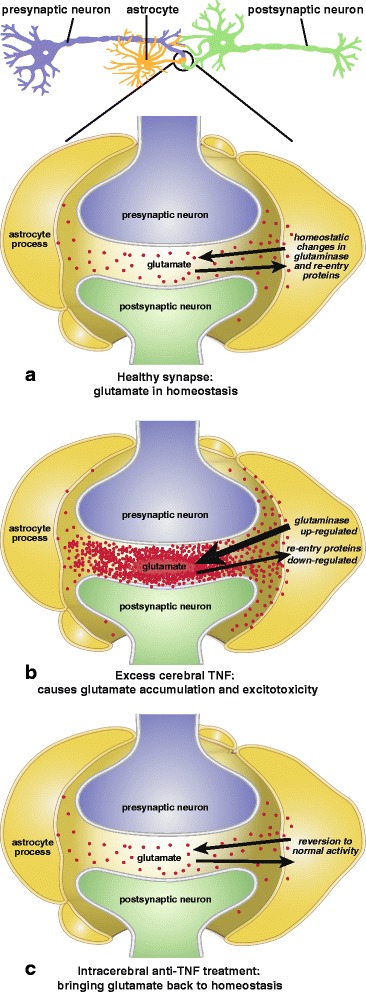
The basic mechanism of the major neurodegenerative diseases, including neurogenic pain, needs to be agreed upon before rational treatments can be determined, but this knowledge is still in a state of flux. Most have agreed for decades that these disease states, both infectious and non-infectious, share arguments incriminating excitotoxicity induced by excessive extracellular cerebral glutamate. Excess cerebral levels of tumor necrosis factor (TNF) are also documented in the same group of disease states. However, no agreement exists on overarching mechanism for the harmful effects of excess TNF, nor, indeed how extracellular cerebral glutamate reaches toxic levels in these conditions. Here, we link the two, collecting and arguing the evidence that, across the range of neurodegenerative diseases, excessive TNF harms the central nervous system largely through causing extracellular glutamate to accumulate to levels high enough to inhibit synaptic activity or kill neurons and therefore their associated synapses as well. TNF can be predicted from the broader literature to cause this glutamate accumulation not only by increasing glutamate production by enhancing glutaminase, but in addition simultaneously reducing glutamate clearance by inhibiting re-uptake proteins. We also discuss the effects of a TNF receptor biological fusion protein (etanercept) and the indirect anti-TNF agents dithio-thalidomides, nilotinab, and cannabinoids on these neurological conditions. The therapeutic effects of 6-diazo-5-oxo-norleucine, ceptriaxone, and riluzole, agents unrelated to TNF but which either inhibit glutaminase or enhance re-uptake proteins, but do not do both, as would anti-TNF agents, are also discussed in this context. By pointing to excess extracellular glutamate as the target, these arguments greatly strengthen the case, put now for many years, to test appropriately delivered ant-TNF agents to treat neurodegenerative diseases in randomly controlled trials.
Overview
The claims and statistics of this paper haven’t been checked yet.
Free: it reads the open-access text and checks the first 5 claims that cite a source we can check. Create a free account to check every claim.
Integrity signals
Registry
Cites
Statistics
Figures
Verification
Claims the paper makes
The claims and statistics of this paper haven’t been checked yet.
Free: it reads the open-access text and checks the first 5 claims that cite a source we can check. Create a free account to check every claim.
Claims other papers make about this one
Each is checked against this paper’s own text: does it say what the citing paper says it does?
The cited source says what the claim attributes to it.
In the citing paper
“Nevertheless, excessive TNF led to a high-level accumulation of extracellular glutamate to inhibit the synaptic activity or kill neurons, which rationalized the treatment of neurogenic pain by anti-TNF agents (Clark and Vissel, 2016).”
From Picroside Ⅱ attenuates neuropathic pain by regulating inflammation and spinal excitatory synaptic transmission (2024) · cites this paper as Clark and Vissel, 2016
Self-check
Percentages, sums and reported differences re-computed from the paper’s own numbers.
The self-check needs the paper’s full text.
Citations
Cites
Glutamate neurotoxicity and diseases of the nervous system
CHOI, D. (1988) · Neuron · doi:10.1016/0896-6273(88)90162-6 · Cited by 7,972 · cited 1×
“As reviewed [66, 71], should extracellular cerebral glutamate become excessive, whether through excess release or poor clearance, or both, a harmful excitotoxicity ensues.”
BackgroundCui, C., Cui, J., Jin, F., Cui, Y., Li, R., Jiang, X., Tian, Y., Wang, K., Jiang, P., & Gao, J. (2017) · Cellular Physiology and Biochemistry · doi:10.1159/000479571 · Cited by 5,203
An endotoxin-induced serum factor that causes necrosis of tumors
Carswell, E. A., Old, L. J., Kassel, R. L., Green, S., Fiore, N., & Williamson, B. (1975) · Proceedings of the National Academy of Sciences · doi:10.1073/pnas.72.9.3666 · Cited by 4,532
Danbolt, N. C. (2001) · Progress in Neurobiology · doi:10.1016/s0301-0082(00)00067-8 · Cited by 4,227 · cited 1×
“As reviewed in 2001 [96], glutamate re-uptake from the synaptic cleft noted above is controlled by fluctuations in a unique family of amino acid transport, or re-uptake, proteins that act as signal terminators.”
BackgroundIL-23 drives a pathogenic T cell population that induces autoimmune inflammation
Langrish, C. L., Chen, Y., Blumenschein, W. M., Mattson, J., Basham, B., Sedgwick, J. D., McClanahan, T., Kastelein, R. A., & Cua, D. J. (2005) · The Journal of Experimental Medicine · doi:10.1084/jem.20041257 · Cited by 4,099 · cited 1×
“Nevertheless, data on other proinflammatory or anti-inflammatory cytokines such as IL-1β, IL-4, IL-17, and IL-23 [29–31] continue to add to the principles behind this concept and may well generate related therapeutic avenues.”
BackgroundBenveniste, H., Drejer, J., Schousboe, A., & Diemer, N. H. (1984) · Journal of Neurochemistry · doi:10.1111/j.1471-4159.1984.tb05396.x · Cited by 2,859 · cited 1×
“These conditions (Table 1) came to include AD [72], PD [73], Huntington’s disease [74], amyotropic lateral sclerosis [75], stroke [76], viral encephelitides [77, 78], septic encephalopathy [79], defective post-operative cognition [80], post-irradiation brain function [81], pain [82, 83], bacterial meningitis [84], epi…”
BackgroundDrug Transport across the Blood–Brain Barrier
Pardridge, W. M. (2012) · Journal of Cerebral Blood Flow & Metabolism · doi:10.1038/jcbfm.2012.126 · Cited by 1,994
Two Phase 3 Trials of Bapineuzumab in Mild-to-Moderate Alzheimer's Disease
Salloway, S., Sperling, R., Fox, N. C., Blennow, K., Klunk, W., Raskind, M., Sabbagh, M., Honig, L. S., Porsteinsson, A. P., Ferris, S., et al. (2014) · New England Journal of Medicine · doi:10.1056/nejmoa1304839 · Cited by 1,960 · cited 1×
“It may also explain why removing soluble Aβ or its plaque, still the goal of the many clinical trials [12], does not retard human disease progression, since the other secondary DAMPs, S100 proteins and HMGB1, are still actively inducing TNF.”
BackgroundThe molecular logic of endocannabinoid signalling
Piomelli, D. (2003) · Nature Reviews Neuroscience · doi:10.1038/nrn1247 · Cited by 1,957 · cited 1×
“In physiological terms, these may be considered as part neurotransmitter, part cytokine, and part hormone and have been identified and studied at length (see [184, 185] for reviews.”
BackgroundElliott, M. J., Maini, R. N., Feldmann, M., Kalden, J. R., Antoni, C., Smolen, J. S., Leeb, B., Breedveld, F. C., Macfarlane, J. D., Bijl, J. A., et al. (1994) · The Lancet · doi:10.1016/s0140-6736(94)90628-9 · Cited by 1,682 · cited 1×
“After being recognized as an early step in the inflammatory cytokine cascade [20], TNF began to achieve its present wide acceptance as a master cytokine in disease pathogenesis through infliximab, the first of the specific neutralizing biological anti-TNF agents, becoming a striking clinical success in treating RA [21…”
BackgroundInnate immune activation in neurodegenerative disease
Heneka, M. T., Kummer, M. P., & Latz, E. (2014) · Nature Reviews Immunology · doi:10.1038/nri3705 · Cited by 1,437 · cited 1×
“Refinements of these scientific arguments have accumulated to the present day [35–41].”
BackgroundAβ peptide immunization reduces behavioural impairment and plaques in a model of Alzheimer's disease
Janus, C., Pearson, J., McLaurin, J., Mathews, P. M., Jiang, Y., Schmidt, S. D., Chishti, M. A., Horne, P., Heslin, D., French, J., et al. (2000) · Nature · doi:10.1038/35050110 · Cited by 1,431 · cited 1×
“In contrast, removing Aβ is successful in mouse transgenic models that have been designed to generate pathologically but artificially high Aβ [13].”
BackgroundMacrophage-mediated inflammation in metabolic disease
Chawla, A., Nguyen, K. D., & Goh, Y. P. S. (2011) · Nature reviews. Immunology · doi:10.1038/nri3071 · Cited by 1,314 · cited 1×
“Also, given that insulin resistance is a common direct consequence of chronically increased TNF [178], further evidence for anti-TNF effects being central to these observations with nilotinib comes from the ability of these tyrosine kinase inhibitors to treat type 2 diabetes mellitus (T2DM) by decreasing insulin resis…”
BackgroundSampaio, E. P., Sarno, E. N., Galilly, R., Cohn, Z. A., & Kaplan, G. (1991) · The Journal of experimental medicine · doi:10.1084/jem.173.3.699 · Cited by 1,192 · cited 1×
“It was shown to selectively inhibit TNF production by stimulated human monocytes [154], and to do so by enhancing degradation of the mRNA for this cytokine [155].”
BackgroundBRENNAN, F. (1989) · The Lancet · doi:10.1016/s0140-6736(89)90430-3 · Cited by 1,129 · cited 1×
“Others from this research group showed that TNF is a master cytokine through observing that infliximab reduces levels of other inflammatory cytokines as well as TNF [22, 23].”
BackgroundBezzi, P., Domercq, M., Brambilla, L., Galli, R., Schols, D., De Clercq, E., Vescovi, A., Bagetta, G., Kollias, G., Meldolesi, J., et al. (2001) · Nature Neuroscience · doi:10.1038/89490 · Cited by 1,102
Frequent amyloid deposition without significant cognitive impairment among the elderly
Aizenstein, H. J., Nebes, R. D., Saxton, J. A., Price, J. C., Mathis, C. A., Tsopelas, N. D., Ziolko, S. K., James, J. A., Snitz, B. E., Houck, P. R., et al. (2008) · Archives of Neurology · doi:10.1001/archneur.65.11.1509 · Cited by 1,059 · cited 1×
“Likewise, outcomes comparing in vivo human cerebral amyloid β (Aβ) deposition on Pittsburgh Compound B PET imaging have not generated optimism for the amyloid theory [6, 7].”
BackgroundMoreira, A. L., Sampaio, E. P., Zmuidzinas, A., Frindt, P., Smith, K. A., & Kaplan, G. (1993) · The Journal of experimental medicine · doi:10.1084/jem.177.6.1675 · Cited by 1,045 · cited 1×
“It was shown to selectively inhibit TNF production by stimulated human monocytes [154], and to do so by enhancing degradation of the mRNA for this cytokine [155].”
BackgroundAmyloid imaging results from the Australian Imaging, Biomarkers and Lifestyle (AIBL) study of aging
Rowe, C. C., Ellis, K. A., Rimajova, M., Bourgeat, P., Pike, K. E., Jones, G., Fripp, J., Tochon-Danguy, H., Morandeau, L., O'Keefe, G., et al. (2010) · Neurobiology of Aging · doi:10.1016/j.neurobiolaging.2010.04.007 · Cited by 986 · cited 1×
“Likewise, outcomes comparing in vivo human cerebral amyloid β (Aβ) deposition on Pittsburgh Compound B PET imaging have not generated optimism for the amyloid theory [6, 7].”
BackgroundDifferential Regulation of AMPA Receptor and GABA Receptor Trafficking by Tumor Necrosis Factor-α
Stellwagen, D., Beattie, E. C., Seo, J. Y., & Malenka, R. C. (2005) · The Journal of Neuroscience · doi:10.1523/jneurosci.4486-04.2005 · Cited by 985
Glutamate as a neurotransmitter in the healthy brain
Zhou, Y., & Danbolt, N. C. (2014) · Journal of Neural Transmission · doi:10.1007/s00702-014-1180-8 · Cited by 979 · cited 1×
“L-glutamate, the most abundant extracellular amino acid in the brain, is, as reviewed over the decades [65–67], the chief physiological excitatory neurotransmitter, including in normal memory and learning.”
BackgroundTumor Necrosis Factor-α: A Mediator of Focal Ischemic Brain Injury
Barone, F. C., Arvin, B., White, R. F., Miller, A., Webb, C. L., Willette, R. N., Lysko, P. G., & Feuerstein, G. Z. (1997) · Stroke · doi:10.1161/01.str.28.6.1233 · Cited by 863 · cited 1×
“Twenty years ago, the involvement of unchecked chronic TNF generation, particularly within the brain, in the pathogenesis of stroke, traumatic brain injury (TBI), and AD began to be apparent [32–34].”
McCoy, M. K., & Tansey, M. G. (2008) · Journal of Neuroinflammation · doi:10.1186/1742-2094-5-45 · Cited by 847
Glutamate exocytosis from astrocytes controls synaptic strength
Jourdain, P., Bergersen, L. H., Bhaukaurally, K., Bezzi, P., Santello, M., Domercq, M., Matute, C., Tonello, F., Gundersen, V., & Volterra, A. (2007) · Nature Neuroscience · doi:10.1038/nn1849 · Cited by 801 · cited 1×
“In addition, the key studies of Jourdain and co-workers [91] convincingly combined functional and ultrastructural evidence to argue the case for glutamate from astrocytes being a key player in physiological control of synaptic strength.”
BackgroundRamírez, B. G., Blázquez, C., del Pulgar, T. G., Guzmán, M., & de Ceballos, M. L. (2005) · The Journal of Neuroscience · doi:10.1523/jneurosci.4540-04.2005 · Cited by 785 · cited 1×
“) Both endocannabinoids and CBD have been shown to be active in models for pain [186–190], AD [191–195], epileptic seizures [196–199], PD [200–202], HIV dementia [203–205], viral encephalitis [206], and TBI [207].”
BackgroundAn endogenous cannabinoid (2-AG) is neuroprotective after brain injury
Panikashvili, D., Simeonidou, C., Ben-Shabat, S., Hanuš, L., Breuer, A., Mechoulam, R., & Shohami, E. (2001) · Nature · doi:10.1038/35097089 · Cited by 752 · cited 9×
“Although these open trial observations (Table 2) continue to be reported poststroke [125] and TBI [125], and the principles they embrace now have a solid foundation in animal models [50, 55, 142–144], remarkably they have not, as did parallels in inflammatory states in other organs earlier, attracted funding for rando…”
BackgroundInfluentialTakeuchi, H., Jin, S., Wang, J., Zhang, G., Kawanokuchi, J., Kuno, R., Sonobe, Y., Mizuno, T., & Suzumura, A. (2006) · Journal of Biological Chemistry · doi:10.1074/jbc.m600504200 · Cited by 749
Tumor necrosis factor alpha: A link between neuroinflammation and excitotoxicity
Olmos, G., & Lladó, J. (2014) · Mediators of Inflammation · doi:10.1155/2014/861231 · Cited by 730 · cited 1×
“When combined, the ideas generated in these fields of research have allowed insightful functional links of neuroinflammation and glutamateinduced excitotoxicity to be proposed [102, 103].”
BackgroundNeuroinflammation: The role and consequences
Lyman, M., Lloyd, D. G., Ji, X., Vizcaychipi, M. P., & Ma, D. (2014) · Neuroscience Research · doi:10.1016/j.neures.2013.10.004 · Cited by 730 · cited 1×
“Refinements of these scientific arguments have accumulated to the present day [35–41].”
BackgroundTumor necrosis factor-α triggers a cytokine cascade yielding postoperative cognitive decline
Terrando, N., Monaco, C., Ma, D., Foxwell, B. M. J., Feldmann, M., & Maze, M. (2010) · Proceedings of the National Academy of Sciences · doi:10.1073/pnas.1014557107 · Cited by 726
Chronic Glutamate Toxicity in Neurodegenerative Diseases—What is the Evidence?
Lewerenz, J., & Maher, P. (2015) · Frontiers in Neuroscience · doi:10.3389/fnins.2015.00469 · Cited by 718
Nawroth, P. P., Bank, I., Handley, D., Cassimeris, J., Chess, L., & Stern, D. (1986) · The Journal of experimental medicine · doi:10.1084/jem.163.6.1363 · Cited by 693 · cited 1×
“After being recognized as an early step in the inflammatory cytokine cascade [20], TNF began to achieve its present wide acceptance as a master cytokine in disease pathogenesis through infliximab, the first of the specific neutralizing biological anti-TNF agents, becoming a striking clinical success in treating RA [21…”
BackgroundJohnson, J. R., Burnell-Nugent, M., Lossignol, D., Ganae-Motan, E. D., Potts, R., & Fallon, M. T. (2010) · Journal of Pain and Symptom Management · doi:10.1016/j.jpainsymman.2009.06.008 · Cited by 622
Shen, M., Piser, T. M., Seybold, V. S., & Thayer, S. A. (1996) · The Journal of Neuroscience · doi:10.1523/jneurosci.16-14-04322.1996 · Cited by 604 · cited 1×
“Moreover, treatment with cannabinoids or altering the function of their cellular receptors [185, 191, 216–221] has been reported to lower the levels, or function, of brain glutamate (Table 2).”
BackgroundIL-4 in the brain: a cytokine to remember
Gadani, S. P., Cronk, J. C., Norris, G. T., & Kipnis, J. (2012) · The Journal of Immunology · doi:10.4049/jimmunol.1202246 · Cited by 549 · cited 1×
“Nevertheless, data on other proinflammatory or anti-inflammatory cytokines such as IL-1β, IL-4, IL-17, and IL-23 [29–31] continue to add to the principles behind this concept and may well generate related therapeutic avenues.”
BackgroundMicrobes and Alzheimer’s Disease
Itzhaki, R. F., Lathe, R., Balin, B. J., Ball, M. J., Bearer, E. L., Braak, H., Bullido, M. J., Carter, C., Clerici, M., Cosby, S. L., et al. (2016) · Journal of Alzheimer’s Disease · doi:10.3233/jad-160152 · Cited by 532 · cited 1×
“These receptors also recognize pathogen-associated molecular patterns (PAMPs) present on the surface of, for example, the microbes now widely agreed to be sometimes associated with AD [10].”
BackgroundCharles, P. J., Elliott, M. J., Davis, D., Potter, A. R., Kalden, J. R., Antoni, C., Breedveld, F. C., Js, S., Eberl, G., DeWoody, K. L., et al. (1999) · PubMed · Cited by 531
Inconsistencies and Controversies Surrounding the Amyloid Hypothesis of Alzheimer's Disease
Morris, G. P., Clark, I. A., & Vissel, B. (2014) · Acta Neuropathologica Communications · doi:10.1186/s40478-014-0135-5 · Cited by 522 · cited 1×
“com/editors-blog/posts/time-dismount) eloquently again brings to the fore the long-held, widespread, and increasing unease among researchers [1–5].”
BackgroundSelf-citationEvidence for the involvement of TNF and NF-?B in hippocampal synaptic plasticity
Albensi, B. C., & Mattson, M. P. (2000) · Synapse · doi:10.1002/(sici)1098-2396(200002)35:2<151::aid-syn8>3.0.co;2-p · Cited by 521
Intrathecal inflammation precedes development of Alzheimer's disease
Tarkowski, E. (2003) · Journal of Neurology, Neurosurgery & Psychiatry · doi:10.1136/jnnp.74.9.1200 · Cited by 501 · cited 2×
“However, this text takes no account of the presence of excess cerebral TNF production or its influence on extracellular brain glutamate levels in these and similar diseases [34, 51, 93–95].”
BackgroundTNF and its receptors in the CNS: The essential, the desirable and the deleterious effects
Probert, L. (2015) · Neuroscience · doi:10.1016/j.neuroscience.2015.06.038 · Cited by 495 · cited 1×
“The use of anti-TNF agents in neurodegenerative disease has its critics who largely base their concerns on whether the functional complexities of TNF science, such as the p55 and p75 TNF receptors and membrane versus soluble location of TNF, should be more fully elucidated beforehand [134, 135].”
BackgroundThe role of glutamate in epilepsy and other CNS disorders.
Meldrum, B. S. (1994) · PubMed · Cited by 479
Charles, P., Elliott, M. J., Davis, D., Potter, A., Kalden, J. R., Antoni, C., Breedveld, F. C., Smolen, J. S., Eberl, G., deWoody, K., et al. (1999) · The Journal of Immunology · doi:10.4049/jimmunol.163.3.1521 · Cited by 436 · cited 1×
“Others from this research group showed that TNF is a master cytokine through observing that infliximab reduces levels of other inflammatory cytokines as well as TNF [22, 23].”
BackgroundCB1 Cannabinoid Receptor Inhibits Synaptic Release of Glutamate in Rat Dorsolateral Striatum
Gerdeman, G., & Lovinger, D. M. (2001) · Journal of Neurophysiology · doi:10.1152/jn.2001.85.1.468 · Cited by 433 · cited 1×
“Moreover, treatment with cannabinoids or altering the function of their cellular receptors [185, 191, 216–221] has been reported to lower the levels, or function, of brain glutamate (Table 2).”
BackgroundHájos, N., Ledent, C., & Freund, T. F. (2001) · Neuroscience · doi:10.1016/s0306-4522(01)00287-1 · Cited by 419 · cited 1×
“Moreover, treatment with cannabinoids or altering the function of their cellular receptors [185, 191, 216–221] has been reported to lower the levels, or function, of brain glutamate (Table 2).”
BackgroundThe Role of Inflammation and Cytokines in Brain Injury
ARVIN, B., NEVILLE, L. F., BARONE, F. C., & FEUERSTEIN, G. Z. (1996) · Neuroscience & Biobehavioral Reviews · doi:10.1016/0149-7634(95)00026-7 · Cited by 416 · cited 1×
“Twenty years ago, the involvement of unchecked chronic TNF generation, particularly within the brain, in the pathogenesis of stroke, traumatic brain injury (TBI), and AD began to be apparent [32–34].”
BackgroundZou, J. Y., & Crews, F. T. (2005) · Brain Research · doi:10.1016/j.brainres.2004.11.014 · Cited by 410 · cited 1×
“Twenty years ago, TNF was first implicated in generating excitotoxicity through its capacity to inhibit glutamate re-uptake in an HIV dementia model [97] and subsequently in cultures brain slices [98] and a Sindbis virus disease model [99].”
BackgroundGlutamate: its role in learning, memory, and the aging brain
McEntee, W. J., & Crook, T. H. (1993) · Psychopharmacology · doi:10.1007/bf02253527 · Cited by 403 · cited 1×
“L-glutamate, the most abundant extracellular amino acid in the brain, is, as reviewed over the decades [65–67], the chief physiological excitatory neurotransmitter, including in normal memory and learning.”
BackgroundWallace, M. J., Blair, R. E., Falenski, K. W., Martin, B. R., & DeLorenzo, R. J. (2003) · The Journal of Pharmacology and Experimental Therapeutics · doi:10.1124/jpet.103.051920 · Cited by 393 · cited 1×
“) Both endocannabinoids and CBD have been shown to be active in models for pain [186–190], AD [191–195], epileptic seizures [196–199], PD [200–202], HIV dementia [203–205], viral encephalitis [206], and TBI [207].”
BackgroundTherapeutic bispecific antibodies cross the blood-brain barrier in nonhuman primates
Yu, Y. J., Atwal, J. K., Zhang, Y., Tong, R. K., Wildsmith, K. R., Tan, C., Bien-Ly, N., Hersom, M., Maloney, J. A., Meilandt, W. J., et al. (2014) · Science Translational Medicine · doi:10.1126/scitranslmed.3009835 · Cited by 371 · cited 1×
“An alternative method of delivery of large molecules into the brain exists [145–147], but it ignores the above input from aviation medicine and, as has been discussed [148–150], remains fraught with technical difficulties.”
MethodYe, L., Huang, Y., Zhao, L., Li, Y., Sun, L., Zhou, Y., Qian, G., & Zheng, J. C. (2013) · Journal of Neurochemistry · doi:10.1111/jnc.12263 · Cited by 363
Blockade of TNF-α rapidly inhibits pain responses in the central nervous system
Hess, A., Axmann, R., Rech, J., Finzel, S., Heindl, C., Kreitz, S., Sergeeva, M., Saake, M., Garcia, M., Kollias, G., et al. (2011) · Proceedings of the National Academy of Sciences · doi:10.1073/pnas.1011774108 · Cited by 356
McCoy, M. K., Martinez, T. N., Ruhn, K. A., Szymkowski, D. E., Smith, C. G., Botterman, B. R., Tansey, K. E., & Tansey, M. G. (2006) · The Journal of Neuroscience · doi:10.1523/jneurosci.1504-06.2006 · Cited by 354 · cited 1×
“The capacity of nilotinib (and indeed dasatinib [170]) to inhibit TNF generation in vivo [173, 174], and the observations that blocking TNF duplicates this effect of nilotinib in PD models [43, 175], appear to have not yet been considered as a plausible mechanism of these new clinical observations with this agent [166…”
BackgroundTransferrin receptor (TfR) trafficking determines brain uptake of TfR antibody affinity variants
Bien-Ly, N., Yu, Y. J., Bumbaca, D., Elstrott, J., Boswell, C. A., Zhang, Y., Luk, W., Lu, Y., Dennis, M. S., Weimer, R. M., et al. (2014) · Journal of Experimental Medicine · doi:10.1084/jem.20131660 · Cited by 353 · cited 1×
“An alternative method of delivery of large molecules into the brain exists [145–147], but it ignores the above input from aviation medicine and, as has been discussed [148–150], remains fraught with technical difficulties.”
MethodBlockade of Endocannabinoid-Degrading Enzymes Attenuates Neuropathic Pain
Kinsey, S. G., Long, J. Z., O’Neal, S. T., Abdullah, R. A., Poklis, J. L., Boger, D. L., Cravatt, B. F., & Lichtman, A. H. (2009) · The Journal of Pharmacology and Experimental Therapeutics · doi:10.1124/jpet.109.155465 · Cited by 330 · cited 1×
“) Both endocannabinoids and CBD have been shown to be active in models for pain [186–190], AD [191–195], epileptic seizures [196–199], PD [200–202], HIV dementia [203–205], viral encephalitis [206], and TBI [207].”
BackgroundTNF-alpha modulation for treatment of Alzheimer's disease: a 6-month pilot study.
Tobinick, E. L., Gross, H., Weinberger, A., & Cohen, H. (2006) · PubMed Central · Cited by 325
Hebron, M. L., Lonskaya, I., & Moussa, C. E. H. (2013) · Human Molecular Genetics · doi:10.1093/hmg/ddt192 · Cited by 325
Tumor Necrosis Factor α Inhibits Glutamate Uptake by Primary Human Astrocytes
Fine, S. M., Angel, R. A., Perry, S. W., Epstein, L. G., Rothstein, J. D., Dewhurst, S., & Gelbard, H. A. (1996) · Journal of Biological Chemistry · doi:10.1074/jbc.271.26.15303 · Cited by 324
Peppel, K., Crawford, D., & Beutler, B. (1991) · The Journal of experimental medicine · doi:10.1084/jem.174.6.1483 · Cited by 321 · cited 1×
“Whereas infliximab and adalimumab are essentially monoclonal antibodies directed at TNF itself, etanercept, the only anti-TNF biological drug yet tested in this context, is a fusion protein consisting of the p75 TNF receptor, joined to the constant end of the IgG1 antibody [129].”
BackgroundBehrens, P. F. (2002) · Brain · doi:10.1093/brain/awf180 · Cited by 320 · cited 1×
“These conditions (Table 1) came to include AD [72], PD [73], Huntington’s disease [74], amyotropic lateral sclerosis [75], stroke [76], viral encephelitides [77, 78], septic encephalopathy [79], defective post-operative cognition [80], post-irradiation brain function [81], pain [82, 83], bacterial meningitis [84], epi…”
BackgroundLee, S.-G., Su, Z.-Z., Emdad, L., Gupta, P., Sarkar, D., Borjabad, A., Volsky, D. J., & Fisher, P. B. (2008) · Journal of Biological Chemistry · doi:10.1074/jbc.m707697200 · Cited by 317 · cited 1×
“This activity of ceftriaxone was soon shown, in primary fetal human astrocytes, to operate through increased expression of excitatory amino acid transporter 2 (EAAT2) promoter activity, allowing it to inhibit glutamate-induced excitotoxicity of its own accord [234].”
BackgroundKesler, S., Janelsins, M., Koovakkattu, D., Palesh, O., Mustian, K., Morrow, G., & Dhabhar, F. S. (2013) · Brain, Behavior, and Immunity · doi:10.1016/j.bbi.2012.05.017 · Cited by 312 · cited 1×
“They include (Table 1) Parkinson’s disease (PD) [43], neurogenic pain [44–50], Huntington’s disease [51], amyotropic lateral sclerosis [52], septic encephalopathy [53], defective postoperative cognition [54, 55], defective post-irradiation [56] and post-chemotherapy [57, 58] cognition, defective cognition during RA [4…”
BackgroundAstrogliosis: An integral player in the pathogenesis of Alzheimer's disease
Osborn, L. M., Kamphuis, W., Wadman, W. J., & Hol, E. M. (2016) · Progress in Neurobiology · doi:10.1016/j.pneurobio.2016.01.001 · Cited by 312 · cited 1×
“, [108]).”
Inhibition of uptake unmasks rapid extracellular turnover of glutamate of nonvesicular origin
Jabaudon, D., Shimamoto, K., Yasuda-Kamatani, Y., Scanziani, M., Gähwiler, B. H., & Gerber, U. (1999) · Proceedings of the National Academy of Sciences · doi:10.1073/pnas.96.15.8733 · Cited by 305 · cited 3×
“Awareness of this 1999 report on the rapidity of extracellular cerebral glutamate turnover [120] may now help contribute to the body of accruing evidence that should alter attitudes regarding reports of rapid responses to anti-TNF in neurodegenerative disease [126, 128].”
BackgroundPossible importance of macrophage-derived mediators in acute malaria
Clark, I. A., Virelizier, J. L., Carswell, E. A., & Wood, P. R. (1981) · Infection and Immunity · doi:10.1128/iai.32.3.1058-1066.1981 · Cited by 296 · cited 1×
“TNF was recognized, and named, as an endogenous tumor killing agent [15], and 6 years later, its wider biological importance began to be appreciated through its roles in innate immunity and the pathogenesis of infectious disease ([16], reviewed in 2004 [17]).”
BackgroundSelf-citationRecombinant tumor necrosis factor and interleukin 1 enhance slow-wave sleep
Shoham, S., Davenne, D., Cady, A. B., Dinarello, C. A., & Krueger, J. M. (1987) · American Journal of Physiology-Regulatory, Integrative and Comparative Physiology · doi:10.1152/ajpregu.1987.253.1.r142 · Cited by 290 · cited 1×
“By 1987, TNF had been shown to be a necessary part of the chain of events that control normal sleep [25], and a few years later, current conductance in neurons of a sea slug, Aplysia kurodai, was observed to be reduced by human TNF [26, 27].”
BackgroundSpreux-Varoquaux, O., Bensimon, G., Lacomblez, L., Salachas, F., Pradat, P. F., Le Forestier, N., Marouan, A., Dib, M., & Meininger, V. (2002) · Journal of the Neurological Sciences · doi:10.1016/s0022-510x(01)00661-x · Cited by 283 · cited 1×
“These conditions (Table 1) came to include AD [72], PD [73], Huntington’s disease [74], amyotropic lateral sclerosis [75], stroke [76], viral encephelitides [77, 78], septic encephalopathy [79], defective post-operative cognition [80], post-irradiation brain function [81], pain [82, 83], bacterial meningitis [84], epi…”
BackgroundBelarbi, K., Jopson, T., Tweedie, D., Arellano, C., Luo, W., Greig, N. H., & Rosi, S. (2012) · Journal of Neuroinflammation · doi:10.1186/1742-2094-9-23 · Cited by 283
A historical overview of chemical research on cannabinoids
Mechoulam, R., & Hanuš, L. (2000) · Chemistry and Physics of Lipids · doi:10.1016/s0009-3084(00)00184-5 · Cited by 282 · cited 1×
“Cannabinoids As reviewed [182], the therapeutic and pharmacological secrets of Cannabis sativa have fascinated researchers for about two centuries.”
BackgroundCannabinoids ablate release of TNFα in rat microglial cells stimulated with lypopolysaccharide
Facchinetti, F., Del Giudice, E., Furegato, S., Passarotto, M., & Leon, A. (2003) · Glia · doi:10.1002/glia.10177 · Cited by 275
McAlpine, F. E., Lee, J.-K., Harms, A. S., Ruhn, K. A., Blurton-Jones, M., Hong, J., Das, P., Golde, T. E., LaFerla, F. M., Oddo, S., et al. (2009) · Neurobiology of Disease · doi:10.1016/j.nbd.2009.01.006 · Cited by 268
Addressing Safety Liabilities of TfR Bispecific Antibodies That Cross the Blood-Brain Barrier
Couch, J. A., Yu, Y. J., Zhang, Y., Tarrant, J. M., Fuji, R. N., Meilandt, W. J., Solanoy, H., Tong, R. K., Hoyte, K., Luk, W., et al. (2013) · Science Translational Medicine · doi:10.1126/scitranslmed.3005338 · Cited by 268 · cited 1×
“An alternative method of delivery of large molecules into the brain exists [145–147], but it ignores the above input from aviation medicine and, as has been discussed [148–150], remains fraught with technical difficulties.”
MethodRole of the pro‐inflammatory cytokines TNF‐α and IL‐1β in HIV‐associated dementia
Brabers, N. A. C. H., & Nottet, H. S. L. M. (2006) · European Journal of Clinical Investigation · doi:10.1111/j.1365-2362.2006.01657.x · Cited by 265
Karuppagounder, S. S., Brahmachari, S., Lee, Y., Dawson, V. L., Dawson, T. M., & Ko, H. S. (2014) · Scientific Reports · doi:10.1038/srep04874 · Cited by 264
Glutamate Receptors and Nociception: Implications for the Drug Treatment of Pain
Fundytus, M. E. (2001) · CNS Drugs · doi:10.2165/00023210-200115010-00004 · Cited by 250
Haroon, E., Fleischer, C. C., Felger, J. C., Chen, X., Woolwine, B. J., Patel, T., Hu, X. P., & Miller, A. H. (2016) · Molecular Psychiatry · doi:10.1038/mp.2015.206 · Cited by 250
Rapid cognitive improvement in Alzheimer's disease following perispinal etanercept administration
Tobinick, E. L., & Gross, H. (2008) · Journal of Neuroinflammation · doi:10.1186/1742-2094-5-2 · Cited by 248 · cited 2×
“It seems likely, therefore, that these data rationalize the unexpected but clearly rapid response in case reports and open trials to perispinal etanercept, initially reported in 2003 [121] and 2008 [122], and regularly confirmed since [123–127].”
Etanercept in Alzheimer disease: A randomized, placebo-controlled, double-blind, phase 2 trial
Butchart, J., Brook, L., Hopkins, V., Teeling, J., Püntener, U., Culliford, D., Sharples, R., Sharif, S., McFarlane, B., Raybould, R., et al. (2015) · Neurology · doi:10.1212/wnl.0000000000001617 · Cited by 248
Riluzole enhances the activity of glutamate transporters GLAST, GLT1 and EAAC1
Fumagalli, E., Funicello, M., Rauen, T., Gobbi, M., & Mennini, T. (2008) · European Journal of Pharmacology · doi:10.1016/j.ejphar.2007.10.023 · Cited by 246 · cited 1×
“This has been reported to include enhancing levels of glutamate re-uptake transporters [245], including in astrocytes [246, 247].”
BackgroundHsiao, H.-Y., Chen, Y.-C., Chen, H.-M., Tu, P.-H., & Chern, Y. (2013) · Human Molecular Genetics · doi:10.1093/hmg/ddt036 · Cited by 239
The roles of TNF in brain dysfunction and disease
Clark, I. A., Alleva, L. M., & Vissel, B. (2010) · Pharmacology & Therapeutics · doi:10.1016/j.pharmthera.2010.08.007 · Cited by 232 · cited 1×
“This is entirely consistent with the evidence we have previously presented [37] that increased cerebral TNF is the most logical therapeutic target for countering this disease.”
ResultSelf-citationPrice, D. A., Martinez, A. A., Seillier, A., Koek, W., Acosta, Y., Fernandez, E., Strong, R., Lutz, B., Marsicano, G., Roberts, J. L., et al. (2009) · European Journal of Neuroscience · doi:10.1111/j.1460-9568.2009.06764.x · Cited by 232
Emery, P., Vencovský, J., Sylwestrzak, A., Leszczyński, P., Porawska, W., Baranauskaite, A., Tseluyko, V., Zhdan, V. M., Stasiuk, B., Milasiene, R., et al. (2017) · Annals of the Rheumatic Diseases · doi:10.1136/annrheumdis-2015-207588 · Cited by 231 · cited 1×
“An etanercept biosimilar is already in the literature [130, 131], and a number of others already have approval or are being developed [132], providing the prospect of reduced treatment costs for most of the world.”
BackgroundPazos, M. R., Mohammed, N., Lafuente, H., Santos, M., Martínez-Pinilla, E., Moreno, E., Valdizan, E., Romero, J., Pazos, A., Franco, R., et al. (2013) · Neuropharmacology · doi:10.1016/j.neuropharm.2013.03.027 · Cited by 225 · cited 1×
“These agents are also active in hypoxic encephalopathy, a stroke parallel in newborns [208, 209], a condition associated with raised inflammatory cytokines and glutamate [210].”
BackgroundDomenici, M. R., Azad, S. C., Marsicano, G., Schierloh, A., Wotjak, C. T., Dodt, H.-U., Zieglgänsberger, W., Lutz, B., & Rammes, G. (2006) · The Journal of Neuroscience · doi:10.1523/jneurosci.0372-06.2006 · Cited by 224 · cited 1×
“Moreover, treatment with cannabinoids or altering the function of their cellular receptors [185, 191, 216–221] has been reported to lower the levels, or function, of brain glutamate (Table 2).”
BackgroundMullane, K., & Williams, M. (2013) · Biochemical Pharmacology · doi:10.1016/j.bcp.2012.11.014 · Cited by 213 · cited 1×
“com/editors-blog/posts/time-dismount) eloquently again brings to the fore the long-held, widespread, and increasing unease among researchers [1–5].”
BackgroundPathogenesis of Malaria and Clinically Similar Conditions
Clark, I. A., Alleva, L. M., Mills, A. C., & Cowden, W. B. (2004) · Clinical Microbiology Reviews · doi:10.1128/cmr.17.3.509-539.2004 · Cited by 209 · cited 2×
“TNF was recognized, and named, as an endogenous tumor killing agent [15], and 6 years later, its wider biological importance began to be appreciated through its roles in innate immunity and the pathogenesis of infectious disease ([16], reviewed in 2004 [17]).”
BackgroundSelf-citationvan Hensbroek, M. B., Palmer, A., Onyiorah, E., Schneider, G., Jaffar, S., Dolan, G., Memming, H., Frenkel, J., Enwere, G., Bennett, S., et al. (1996) · Journal of Infectious Diseases · doi:10.1093/infdis/174.5.1091 · Cited by 207 · cited 1×
“Yet a large trial of a specific anti-TNF antibody, injected intravenously, failed to show evidence, in a large trial in West Africa, of any protective effect in children with cerebral malaria [230].”
BackgroundTweedie, D., Ferguson, R. A., Fishman, K., Frankola, K. A., Van Praag, H., Holloway, H. W., Luo, W., Li, Y., Caracciolo, L., Russo, I., et al. (2012) · Journal of Neuroinflammation · doi:10.1186/1742-2094-9-106 · Cited by 204 · cited 1×
“They are widely efficacious, by various behavioral and cognitive criteria, in models of lipopolysaccharideinduced neuroinflammation [158], AD [159–161], TBI [55], and stroke [142].”
BackgroundSerpell, M., Ratcliffe, S., Hovorka, J., Schofield, M., Taylor, L., Lauder, H., & Ehler, E. (2014) · European Journal of Pain · doi:10.1002/j.1532-2149.2013.00445.x · Cited by 197
Treatment for Rheumatoid Arthritis and Risk of Alzheimer’s Disease: A Nested Case-Control Analysis
Chou, R. C., Kane, M., Ghimire, S., Gautam, S., & Gui, J. (2016) · CNS Drugs · doi:10.1007/s40263-016-0374-z · Cited by 194
Cheng, D., Spiro, A. S., Jenner, A. M., Garner, B., & Karl, T. (2014) · Journal of Alzheimer’s Disease · doi:10.3233/jad-140921 · Cited by 193 · cited 1×
“) Both endocannabinoids and CBD have been shown to be active in models for pain [186–190], AD [191–195], epileptic seizures [196–199], PD [200–202], HIV dementia [203–205], viral encephalitis [206], and TBI [207].”
BackgroundKiaei, M., Petri, S., Kipiani, K., Gardian, G., Choi, D.-K., Chen, J., Calingasan, N. Y., Schafer, P., Muller, G. W., Stewart, C., et al. (2006) · The Journal of Neuroscience · doi:10.1523/jneurosci.5253-05.2006 · Cited by 182 · cited 1×
“However, this text takes no account of the presence of excess cerebral TNF production or its influence on extracellular brain glutamate levels in these and similar diseases [34, 51, 93–95].”
BackgroundGoodrich, G. S., Kabakov, A. Y., Hameed, M. Q., Dhamne, S. C., Rosenberg, P. A., & Rotenberg, A. (2013) · Journal of Neurotrauma · doi:10.1089/neu.2012.2712 · Cited by 181 · cited 1×
“With this mechanism in mind, ceftriaxone is nowadays under active consideration as a therapy in models of AD [235], stroke [236], TBI [237–239], and PD [240–243].”
BackgroundCheng, D., Low, J. K., Logge, W., Garner, B., & Karl, T. (2014) · Psychopharmacology · doi:10.1007/s00213-014-3478-5 · Cited by 172
The CB1 cannabinoid receptor mediates glutamatergic synaptic suppression in the hippocampus
Takahashi, K. A., & Castillo, P. E. (2006) · Neuroscience · doi:10.1016/j.neuroscience.2006.01.024 · Cited by 171 · cited 1×
“Moreover, treatment with cannabinoids or altering the function of their cellular receptors [185, 191, 216–221] has been reported to lower the levels, or function, of brain glutamate (Table 2).”
BackgroundZumkehr, J., Rodríguez‐Ortiz, C. J., Cheng, D., Kieu, Z., Wai, T., Hawkins, C., Kilian, J., Lim, S., Medeiros, R., & Kitazawa, M. (2015) · Neurobiology of Aging · doi:10.1016/j.neurobiolaging.2015.04.005 · Cited by 171 · cited 1×
“With this mechanism in mind, ceftriaxone is nowadays under active consideration as a therapy in models of AD [235], stroke [236], TBI [237–239], and PD [240–243].”
BackgroundMalarkey, E. B., Ni, Y., & Parpura, V. (2008) · Glia · doi:10.1002/glia.20656 · Cited by 170 · cited 1×
“Readers interested in the complexities of glutamate release, including its physiological control, are directed to the examples provided by references [109–111].”
MethodIncreased glutamate in CSF and plasma of patients with HIV dementia
Ferrarese, C., Aliprandi, A., Tremolizzo, L., Stanzani, L., De Micheli, A., Dolara, A., & Frattola, L. (2001) · Neurology · doi:10.1212/wnl.57.4.671 · Cited by 168
Brain-derived TNFα mediates neuropathic pain
Ignatowski, T. A., Covey, W. C., Knight, P. R., Severin, C. M., Nickola, T. J., & Spengler, R. N. (1999) · Brain Research · doi:10.1016/s0006-8993(99)01782-5 · Cited by 167
Learning and memory … and the immune system
Marin, I., & Kipnis, J. (2013) · Learning & Memory · doi:10.1101/lm.028357.112 · Cited by 166
David, C. N., Frias, E. S., Szu, J. I., Vieira, P. A., Hubbard, J. A., Lovelace, J., Michael, M., Worth, D., McGovern, K. E., Ethell, I. M., et al. (2016) · PLOS Pathogens · doi:10.1371/journal.ppat.1005643 · Cited by 164 · cited 1×
“The most complete evidence consistent with this approach to date is a very recent extensive report on ceftriaxone rescuing brain function in Toxoplasma gondii-infected mice [244].”
BackgroundGallily, R., Breuer, A., & Mechoulam, R. (2000) · European Journal of Pharmacology · doi:10.1016/s0014-2999(00)00653-1 · Cited by 163
Cerebrospinal Fluid Cytokine Levels and Cognitive Impairment in Cerebral Malaria
John, C. C., Panoskaltsis‐Mortari, A., Opoka, R. O., Park, G. S., Orchard, P. J., Jurek, A. M., Idro, R., Byarugaba, J. S., & Boivin, M. J. (2008) · American Journal of Tropical Medicine and Hygiene · doi:10.4269/ajtmh.2008.78.198 · Cited by 163 · cited 2×
“Not until 8 years ago was the excess TNF in cerebral malaria shown to originate in the brain [62].”
BackgroundWilson, C., Gaber, M. W., Sabek, O. M., Zawaski, J. A., & Merchant, T. E. (2009) · International Journal of Radiation Oncology*Biology*Physics · doi:10.1016/j.ijrobp.2009.02.035 · Cited by 160
Amyloid-β in Alzheimer Disease: The Null versus the Alternate Hypotheses
Lee, H., Zhu, X., Castellani, R. J., Nunomura, A., Perry, G. L., & Smith, M. A. (2007) · Journal of Pharmacology and Experimental Therapeutics · doi:10.1124/jpet.106.114009 · Cited by 159 · cited 1×
“com/editors-blog/posts/time-dismount) eloquently again brings to the fore the long-held, widespread, and increasing unease among researchers [1–5].”
BackgroundTherapeutic targeting of the IL-12/23 pathways: generation and characterization of ustekinumab
Benson, J., Sachs, C. W., Treacy, G., Zhou, H., Pendley, C. E., Brodmerkel, C. M., Shankar, G., & Mascelli, M. A. (2011) · Nature Biotechnology · doi:10.1038/nbt.1903 · Cited by 158 · cited 1×
“Nevertheless, data on other proinflammatory or anti-inflammatory cytokines such as IL-1β, IL-4, IL-17, and IL-23 [29–31] continue to add to the principles behind this concept and may well generate related therapeutic avenues.”
BackgroundTobinick, E. L., Kim, N. M., Reyzin, G., Rodriguez-Romanacce, H., & DePuy, V. (2012) · CNS Drugs · doi:10.1007/s40263-012-0013-2 · Cited by 153
Lonskaya, I., Hebron, M. L., Desforges, N. M., Schachter, J. B., & Moussa, C. E.-H. (2014) · Journal of Molecular Medicine · doi:10.1007/s00109-013-1112-3 · Cited by 152 · cited 1×
“Prior animal studies also show that using nilotinib and the closely related dasatinib was useful in models of AD [170–172].”
ResultSynaptic memory mechanisms: Alzheimer's disease amyloid β-peptide-induced dysfunction
Rowan, M. J., Klyubin, I., Wang, Q., Hu, N. W., & Anwyl, R. (2007) · Biochemical Society Transactions · doi:10.1042/bst0351219 · Cited by 152 · cited 1×
“This is consistent with Aβ not inhibiting long-term potentiation in hippocampal slices from mice treated with anti-TNF agents, such as infliximab [11].”
Pardridge, W. M. (2015) · Expert Opinion on Drug Delivery · doi:10.1517/17425247.2014.952627 · Cited by 152 · cited 1×
“An alternative method of delivery of large molecules into the brain exists [145–147], but it ignores the above input from aviation medicine and, as has been discussed [148–150], remains fraught with technical difficulties.”
MethodCohen, S. P., Bogduk, N., Dragovich, A., Buckenmaier, C. C., Griffith, S., Kurihara, C., Raymond, J., Richter, P. J., Williams, N., & Yaksh, T. L. (2009) · Anesthesiology · doi:10.1097/aln.0b013e3181a05aa0 · Cited by 150
Weeding out bad waves: towards selective cannabinoid circuit control in epilepsy
Soltesz, I., Alger, B. E., Kano, M., Lee, S.-H., Lovinger, D. M., Ohno-Shosaku, T., & Watanabe, M. (2015) · Nature Reviews Neuroscience · doi:10.1038/nrn3937 · Cited by 141 · cited 1×
“) Both endocannabinoids and CBD have been shown to be active in models for pain [186–190], AD [191–195], epileptic seizures [196–199], PD [200–202], HIV dementia [203–205], viral encephalitis [206], and TBI [207].”
BackgroundDoes tumor necrosis factor-alpha (TNF-α) play a role in post-chemotherapy cerebral dysfunction?
Ganz, P. A., Bower, J. E., Kwan, L., Castellon, S. A., Silverman, D. H. S., Geist, C., Breen, E. C., Irwin, M. R., & Cole, S. W. (2013) · Brain, Behavior, and Immunity · doi:10.1016/j.bbi.2012.07.015 · Cited by 140
A survey on “Trojan Horse” peptides: Opportunities, issues and controlled entry to “Troy”
Shi, N., Qi, X., Xiang, B., & Zhang, Y. (2014) · Journal of Controlled Release · doi:10.1016/j.jconrel.2014.08.014 · Cited by 138
Exitatory Amino Acids in Health and Disease
Thomas, R. J. (1995) · Journal of the American Geriatrics Society · doi:10.1111/j.1532-5415.1995.tb07407.x · Cited by 138
Bhaskar, K., Maphis, N., Xu, G., Varvel, N. H., Kokiko-Cochran, O. N., Weick, J. P., Staugaitis, S. M., Cardona, A., Ransohoff, R. M., Herrup, K., et al. (2014) · Neurobiology of Disease · doi:10.1016/j.nbd.2013.10.007 · Cited by 137
Endocannabinoids in Synaptic Plasticity and Neuroprotection
Xu, J.-Y., & Chen, C. (2015) · The Neuroscientist · doi:10.1177/1073858414524632 · Cited by 135 · cited 1×
“In physiological terms, these may be considered as part neurotransmitter, part cytokine, and part hormone and have been identified and studied at length (see [184, 185] for reviews.”
BackgroundInhibition of soluble tumor necrosis factor is therapeutic in Huntington's disease
Hsiao, H.-Y., Chiu, F.-L., Chen, C.-M., Wu, Y.-R., Chen, H.-M., Chen, Y.-C., Kuo, H.-C., & Chern, Y. (2014) · Human Molecular Genetics · doi:10.1093/hmg/ddu151 · Cited by 134 · cited 1×
“They include (Table 1) Parkinson’s disease (PD) [43], neurogenic pain [44–50], Huntington’s disease [51], amyotropic lateral sclerosis [52], septic encephalopathy [53], defective postoperative cognition [54, 55], defective post-irradiation [56] and post-chemotherapy [57, 58] cognition, defective cognition during RA [4…”
BackgroundRuppel, R. A., Kochanek, P. M., Adelson, P. D., Rose, M. E., Wisniewski, S. R., Bell, M. J., Clark, R. S. B., Marion, D. W., & Graham, S. H. (2001) · The Journal of Pediatrics · doi:10.1067/mpd.2001.110979 · Cited by 132 · cited 1×
“These conditions (Table 1) came to include AD [72], PD [73], Huntington’s disease [74], amyotropic lateral sclerosis [75], stroke [76], viral encephelitides [77, 78], septic encephalopathy [79], defective post-operative cognition [80], post-irradiation brain function [81], pain [82, 83], bacterial meningitis [84], epi…”
BackgroundBlair, R. E., Deshpande, L. S., Sombati, S., Falenski, K. W., Martin, B. R., & DeLorenzo, R. J. (2006) · Journal of Pharmacology and Experimental Therapeutics · doi:10.1124/jpet.105.100354 · Cited by 131 · cited 1×
“) Both endocannabinoids and CBD have been shown to be active in models for pain [186–190], AD [191–195], epileptic seizures [196–199], PD [200–202], HIV dementia [203–205], viral encephalitis [206], and TBI [207].”
BackgroundThe cerebrospinal venous system: anatomy, physiology, and clinical implications.
Tobinick, E. L., & Vega, C. (2006) · PubMed · Cited by 131
Bonansco, C., Couve, A., Perea, G., Ferradas, C. Á., Roncagliolo, M., & Fuenzalida, M. (2011) · European Journal of Neuroscience · doi:10.1111/j.1460-9568.2011.07631.x · Cited by 126 · cited 1×
“In brief, a plausible paired physiological role for them is low fluctuating levels of TNF determining physiological levels of glutamate in hippocampal homeostatic synaptic plasticity [69, 70], as described below.”
BackgroundProw, N. A., & Irani, D. N. (2008) · Journal of Neurochemistry · doi:10.1111/j.1471-4159.2008.05230.x · Cited by 126 · cited 1×
“Cerebral glutamate homeostasis is disrupted in mouse models of both the neurological sequelae of Sindbis virus infection [226] and malarial encephalopathy caused by Plasmodium berghei ANKA [87], and DON has been successfully used therapeutically in experimental versions of both conditions [215, 227].”
BackgroundHeyland, D. K., Elke, G., Cook, D., Berger, M. M., Wischmeyer, P. E., Albert, M., Muscedere, J., Jones, G., Day, A. G., & on behalf of the Canadian Critical Care Trials Group (2015) · Journal of Parenteral and Enteral Nutrition · doi:10.1177/0148607114529994 · Cited by 125 · cited 1×
“However, a recent post hoc analysis of a large-scale randomized trial has shown this procedure to be of no value, perhaps even harmful [113].”
BackgroundChung, Y. C., Bok, E., Huh, S. H., Park, J.-Y., Yoon, S.-H., Kim, S. R., Kim, Y.-S., Maeng, S., Hyun Park, S., & Jin, B. K. (2011) · The Journal of Immunology · doi:10.4049/jimmunol.1102435 · Cited by 124
Endocannabinoid 2-arachidonoylglycerol protects neurons against β-amyloid insults
Chen, X., Zhang, J., & Chen, C. (2011) · Neuroscience · doi:10.1016/j.neuroscience.2011.01.024 · Cited by 122
Guindon, J., Guijarro, A., Piomelli, D., & Hohmann, A. G. (2011) · British Journal of Pharmacology · doi:10.1111/j.1476-5381.2010.01192.x · Cited by 120 · cited 1×
“) Both endocannabinoids and CBD have been shown to be active in models for pain [186–190], AD [191–195], epileptic seizures [196–199], PD [200–202], HIV dementia [203–205], viral encephalitis [206], and TBI [207].”
BackgroundSynaptic vesicle protein trafficking at the glutamate synapse
Santos, M., Li, H., & Voglmaier, S. M. (2008) · Neuroscience · doi:10.1016/j.neuroscience.2008.03.029 · Cited by 117 · cited 1×
“Readers interested in the complexities of glutamate release, including its physiological control, are directed to the examples provided by references [109–111].”
MethodKang, Y., He, R.-L., Yang, L., Qin, D., Guggilam, A., Elks, C., Yan, N., Guo, Z., & Francis, J. (2009) · Cardiovascular Research · doi:10.1093/cvr/cvp160 · Cited by 117 · cited 2×
“Thus, given the role of TNF to influence both glutaminase and reuptake proteins described earlier, the capacity of intracerebral etanercept to lower brain glutamate, as summarized above [117–119], can be expected to act with somewhat the same degree of rapidity.”
BackgroundDhawan, G., & Combs, C. K. (2012) · Journal of Neuroinflammation · doi:10.1186/1742-2094-9-117 · Cited by 117 · cited 1×
“The capacity of nilotinib (and indeed dasatinib [170]) to inhibit TNF generation in vivo [173, 174], and the observations that blocking TNF duplicates this effect of nilotinib in PD models [43, 175], appear to have not yet been considered as a plausible mechanism of these new clinical observations with this agent [166…”
BackgroundAge and Alzheimer’s disease gene expression profiles reversed by the glutamate modulator riluzole
Pereira, A. C., Gray, J. D., Kogan, J. F., Davidson, R. L., Rubin, T. G., Okamoto, M., Morrison, J. H., & McEwen, B. S. (2017) · Molecular Psychiatry · doi:10.1038/mp.2016.33 · Cited by 116 · cited 1×
“This principle is entirely consistent with findings in a mouse AD model [248] and has been extended in a recent study in which riluzole proved to reverse the same array of human gene changes in AD and aging [249].”
ResultHarms, A. S., Barnum, C. J., Ruhn, K. A., Varghese, S., Treviño, I., Blesch, A., & Tansey, M. G. (2011) · Molecular Therapy · doi:10.1038/mt.2010.217 · Cited by 116 · cited 2×
“They include (Table 1) Parkinson’s disease (PD) [43], neurogenic pain [44–50], Huntington’s disease [51], amyotropic lateral sclerosis [52], septic encephalopathy [53], defective postoperative cognition [54, 55], defective post-irradiation [56] and post-chemotherapy [57, 58] cognition, defective cognition during RA [4…”
BackgroundViral-Induced Spinal Motor Neuron Death Is Non-Cell-Autonomous and Involves Glutamate Excitotoxicity
Darman, J., Backovic, S., Dike, S., Maragakis, N. J., Krishnan, C., Rothstein, J. D., Irani, D. N., & Kerr, D. A. (2004) · The Journal of Neuroscience · doi:10.1523/jneurosci.2002-04.2004 · Cited by 115 · cited 1×
“These conditions (Table 1) came to include AD [72], PD [73], Huntington’s disease [74], amyotropic lateral sclerosis [75], stroke [76], viral encephelitides [77, 78], septic encephalopathy [79], defective post-operative cognition [80], post-irradiation brain function [81], pain [82, 83], bacterial meningitis [84], epi…”
BackgroundPerspectives on neuroinflammation and excitotoxicity: A neurotoxic conspiracy?
Viviani, B., Boraso, M., Marchetti, N., & Marinovich, M. (2014) · NeuroToxicology · doi:10.1016/j.neuro.2014.03.004 · Cited by 115 · cited 1×
“When combined, the ideas generated in these fields of research have allowed insightful functional links of neuroinflammation and glutamateinduced excitotoxicity to be proposed [102, 103].”
BackgroundRiluzole elevates GLT-1 activity and levels in striatal astrocytes
Carbone, M., Duty, S., & Rattray, M. (2012) · Neurochemistry International · doi:10.1016/j.neuint.2011.10.017 · Cited by 114 · cited 1×
“This has been reported to include enhancing levels of glutamate re-uptake transporters [245], including in astrocytes [246, 247].”
BackgroundBaratz-Goldstein, R., Tweedie, D., Rubovitch, V., Luo, W., Yoon, J. S., Hoffer, B. J., Greig, N. H., & Pick, C. G. (2011) · Journal of Neurochemistry · doi:10.1111/j.1471-4159.2011.07377.x · Cited by 112
Chen, C., OU, Y., Chang, C., Pan, H., Liao, S., Chen, S., Raung, S., & Lai, C. (2012) · Glia · doi:10.1002/glia.22282 · Cited by 111
Covey, W. C., Ignatowski, T. A., Knight, P. R., & Spengler, R. N. (2000) · Brain Research · doi:10.1016/s0006-8993(00)01965-x · Cited by 109
Zhao, J., Lopez, A. L., Erichsen, D. A., Herek, S., Cotter, R. L., Curthoys, N. P., & Zheng, J. (2003) · Journal of Neurochemistry · doi:10.1046/j.1471-4159.2003.02146.x · Cited by 108 · cited 1×
“It has also been useful in an in vitro HIV dementia model [228] and in both in vitro and ex vivo experimental autoimmune encephalitis, a mouse model of multiple sclerosis [229].”
MethodCampos, A. C., Brant, F., de Miranda, A. S., Machado, F. S., & Teixeira, A. L. (2015) · Neuroscience · doi:10.1016/j.neuroscience.2014.12.051 · Cited by 104 · cited 1×
“This list includes treating the murine malarial encephalopathy (cerebral malaria) [214], a condition in which, as discussed below, 6-diazo-5-oxonorleucine is also efficacious for a related and predictable reason concerned with lowering extracellular cerebral glutamate [215].”
BackgroundAmyloid-β oligomers stimulate microglia through a tyrosine kinase dependent mechanism
Dhawan, G., Floden, A. M., & Combs, C. K. (2012) · Neurobiology of Aging · doi:10.1016/j.neurobiolaging.2011.10.027 · Cited by 104
Blockade of microglial glutamate release protects against ischemic brain injury
Takeuchi, H., Jin, S., Suzuki, H., Doi, Y., Liang, J., Kawanokuchi, J., Mizuno, T., Sawada, M., & Suzumura, A. (2008) · Experimental Neurology · doi:10.1016/j.expneurol.2008.08.001 · Cited by 103 · cited 1×
“DON has been a useful, albeit often toxic [224], experimental tool to demonstrate that glutamate-mediated excitotoxicity is a significant component of the pathogenesis of various neurodegenerative states, including brain ischemia [225].”
BackgroundStover, J., Schöning, B., Beyer, T. F., Woiciechowsky, C., & Unterberg, A. W. (2000) · Neuroscience Letters · doi:10.1016/s0304-3940(00)01187-3 · Cited by 103 · cited 1×
“These conditions (Table 1) came to include AD [72], PD [73], Huntington’s disease [74], amyotropic lateral sclerosis [75], stroke [76], viral encephelitides [77, 78], septic encephalopathy [79], defective post-operative cognition [80], post-irradiation brain function [81], pain [82, 83], bacterial meningitis [84], epi…”
BackgroundTherapeutic evaluation of etanercept in a model of traumatic brain injury
Chio, C., Lin, J., Chang, M., Wang, C., Kuo, J., Yang, C., & Chang, C. (2010) · Journal of Neurochemistry · doi:10.1111/j.1471-4159.2010.06969.x · Cited by 100 · cited 1×
“) dose to enter the cerebrospinal fluid (CSF), intentionally compensating for this by giving a 20-fold larger dose reduces brain glutamate in a rat model of traumatic brain injury [117].”
BackgroundEvolution of TNF-induced apoptosis reveals 550 My of functional conservation
Quistad, S. D., Stotland, A., Barott, K. L., Smurthwaite, C. A., Hilton, B. J., Grasis, J. A., Wolkowicz, R., & Rohwer, F. L. (2014) · Proceedings of the National Academy of Sciences · doi:10.1073/pnas.1405912111 · Cited by 100 · cited 1×
“The extraordinarily broad relevance of TNF in biology can now be inferred by its strongly conserved state, traceable back through a remarkably ancient lineage including fish and insects, with the form generated by reef-building corals, and the TNF receptors on their cells, co-recognizing their human counterparts [24].”
BackgroundValdés, M., Collado, A., Bargalló, N., Vázquez, M., Rami, L., Gómez, E., & Salamero, M. (2010) · Arthritis & Rheumatism · doi:10.1002/art.27430 · Cited by 100 · cited 1×
“These conditions (Table 1) came to include AD [72], PD [73], Huntington’s disease [74], amyotropic lateral sclerosis [75], stroke [76], viral encephelitides [77, 78], septic encephalopathy [79], defective post-operative cognition [80], post-irradiation brain function [81], pain [82, 83], bacterial meningitis [84], epi…”
BackgroundCannabinoids Inhibit HIV-1 Gp120-Mediated Insults in Brain Microvascular Endothelial Cells
Lu, T., Avraham, H. K., Seng, S., Tachado, S. D., Koziel, H., Makriyannis, A., & Avraham, S. (2008) · The Journal of Immunology · doi:10.4049/jimmunol.181.9.6406 · Cited by 99 · cited 1×
“) Both endocannabinoids and CBD have been shown to be active in models for pain [186–190], AD [191–195], epileptic seizures [196–199], PD [200–202], HIV dementia [203–205], viral encephalitis [206], and TBI [207].”
BackgroundNargi‐Aizenman, J. L., & Griffin, D. E. (2001) · Journal of Virology · doi:10.1128/jvi.75.15.7114-7121.2001 · Cited by 96 · cited 1×
“These conditions (Table 1) came to include AD [72], PD [73], Huntington’s disease [74], amyotropic lateral sclerosis [75], stroke [76], viral encephelitides [77, 78], septic encephalopathy [79], defective post-operative cognition [80], post-irradiation brain function [81], pain [82, 83], bacterial meningitis [84], epi…”
BackgroundChio, C., Chang, C.-H., Wang, C.-C., Cheong, C.-U., Chao, C., Cheng, B., Yang, C., & Chang, C. (2013) · BMC Neuroscience · doi:10.1186/1471-2202-14-33 · Cited by 96
Brain Protection from Stroke with Intravenous TNF α Decoy Receptor-Trojan Horse Fusion Protein
Sumbria, R. K., Boado, R. J., & Pardridge, W. M. (2012) · Journal of Cerebral Blood Flow & Metabolism · doi:10.1038/jcbfm.2012.97 · Cited by 95
Tyrosine phosphorylation in Toll-like receptor signaling
Chattopadhyay, S., & Sen, G. C. (2014) · Cytokine & Growth Factor Reviews · doi:10.1016/j.cytogfr.2014.06.002 · Cited by 95 · cited 2×
“How might nilotinib reduce TNF levels? Tyrosine phosphorylation is central to TLR stimulation and subsequent activation of NF-kappaB [180] that generates cytokines such as TNF.”
BackgroundA novel mechanism of neuroprotection: Blood glutamate grabber
Castillo, J., Loza, M. I., Mirelman, D., Brea, J., Blanco, M., Sobrino, T., & Campos, F. (2016) · Journal of Cerebral Blood Flow & Metabolism · doi:10.1177/0271678x15606721 · Cited by 94 · cited 1×
“It also modifies the novel “glutamate grabber” approach to treating brain ischemia [115], in that etanercept is, from the above insights, likely to be much more effective than glutamate-oxaloacetate transamimase or oxaloacetate by preventing an excess of newly formed glutamate.”
BackgroundGabbita, S. P., Srivastava, M. K., Eslami, P., Johnson, M. F., Kobritz, N. K., Tweedie, D., Greig, N. H., Zemlan, F. P., Sharma, S. P., & Harris-White, M. E. (2012) · Journal of Neuroinflammation · doi:10.1186/1742-2094-9-99 · Cited by 93 · cited 1×
“They are widely efficacious, by various behavioral and cognitive criteria, in models of lipopolysaccharideinduced neuroinflammation [158], AD [159–161], TBI [55], and stroke [142].”
BackgroundTobinick, E., & Davoodifar, S. (2004) · Current Medical Research and Opinion · doi:10.1185/030079903125004286 · Cited by 93 · cited 1×
“They include (Table 1) Parkinson’s disease (PD) [43], neurogenic pain [44–50], Huntington’s disease [51], amyotropic lateral sclerosis [52], septic encephalopathy [53], defective postoperative cognition [54, 55], defective post-irradiation [56] and post-chemotherapy [57, 58] cognition, defective cognition during RA [4…”
BackgroundFernández‐Suárez, D., Celorrio, M., Riezu‐Boj, J. I., Ugarte, A., Pacheco, R., González, H., Oyarzábal, J., Hillard, C. J., Franco, R., & Aymerich, M. S. (2014) · Neurobiology of Aging · doi:10.1016/j.neurobiolaging.2014.05.021 · Cited by 92 · cited 1×
“) Both endocannabinoids and CBD have been shown to be active in models for pain [186–190], AD [191–195], epileptic seizures [196–199], PD [200–202], HIV dementia [203–205], viral encephalitis [206], and TBI [207].”
BackgroundPerispinal TNF-alpha inhibition for discogenic pain
Tobinick, E. L., & Davoodifar, S. (2003) · Swiss Medical Weekly · doi:10.4414/smw.2003.10163 · Cited by 92 · cited 3×
“As discussed [139, 140], the principle behind this approach—drug delivery to the brain by retrograde venous flow—began to be used off-label the early 2000s to get etanercept into the brain in patients with neurogenic pain [121] and AD [141].”
BackgroundResultShijie, J., Takeuchi, H., Yawata, I., Harada, Y., Sonobe, Y., Doi, Y., Liang, J., Hua, L., Yasuoka, S., Zhou, Y., et al. (2009) · The Tohoku Journal of Experimental Medicine · doi:10.1620/tjem.217.87 · Cited by 91 · cited 1×
“It has also been useful in an in vitro HIV dementia model [228] and in both in vitro and ex vivo experimental autoimmune encephalitis, a mouse model of multiple sclerosis [229].”
MethodThe interplay between inflammation and neurodegeneration in CNS disease
Esiri, M. M. (2006) · Journal of Neuroimmunology · doi:10.1016/j.jneuroim.2006.11.013 · Cited by 91 · cited 1×
“Refinements of these scientific arguments have accumulated to the present day [35–41].”
BackgroundWei, J., Pan, X., Pei, Z., Wang, W., Qiu, W., Shi, Z., & Xiao, G. (2012) · Journal of Trauma and Acute Care Surgery · doi:10.1097/ta.0b013e31825133c0 · Cited by 90
Eikelenboom, P., Veerhuis, R., van Exel, E., J.M. Hoozemans, J., J.M. Rozemuller, A., & A. van Gool, W. (2011) · Current Alzheimer Research · doi:10.2174/156720511795256080 · Cited by 88 · cited 1×
“Refinements of these scientific arguments have accumulated to the present day [35–41].”
BackgroundToklu, H. Z., Uysal, M. K., Kabasakal, L., Şirvancı, S., Ercan, F., & Kaya, M. (2008) · Journal of Surgical Research · doi:10.1016/j.jss.2008.03.013 · Cited by 87 · cited 1×
“These conditions (Table 1) came to include AD [72], PD [73], Huntington’s disease [74], amyotropic lateral sclerosis [75], stroke [76], viral encephelitides [77, 78], septic encephalopathy [79], defective post-operative cognition [80], post-irradiation brain function [81], pain [82, 83], bacterial meningitis [84], epi…”
BackgroundBelarbi, K., Arellano, C., Ferguson, R., Jopson, T., & Rosi, S. (2012) · Brain, Behavior, and Immunity · doi:10.1016/j.bbi.2011.07.225 · Cited by 87 · cited 1×
“They include (Table 1) Parkinson’s disease (PD) [43], neurogenic pain [44–50], Huntington’s disease [51], amyotropic lateral sclerosis [52], septic encephalopathy [53], defective postoperative cognition [54, 55], defective post-irradiation [56] and post-chemotherapy [57, 58] cognition, defective cognition during RA [4…”
BackgroundNeuroprotective effect of ceftriaxone in a rat model of traumatic brain injury
Cui, C., Cui, Y., Gao, J., Sun, L., Wang, Y., Wang, R. C., Li, R., Tian, Y., Song, S., & Cui, J. (2013) · Neurological Sciences · doi:10.1007/s10072-013-1585-4 · Cited by 87 · cited 1×
“With this mechanism in mind, ceftriaxone is nowadays under active consideration as a therapy in models of AD [235], stroke [236], TBI [237–239], and PD [240–243].”
BackgroundChotibut, T., Davis, R. W., Arnold, J. C., Frenchek, Z., Gurwara, S., Bondada, V., Geddes, J. W., & Salvatore, M. F. (2014) · Molecular Neurobiology · doi:10.1007/s12035-013-8598-0 · Cited by 86 · cited 1×
“With this mechanism in mind, ceftriaxone is nowadays under active consideration as a therapy in models of AD [235], stroke [236], TBI [237–239], and PD [240–243].”
BackgroundHunsberger, H. C., Weitzner, D. S., Rudy, C. C., Hickman, J. E., Libell, E. M., Speer, R. R., Gerhardt, G. A., & Reed, M. N. (2015) · Journal of Neurochemistry · doi:10.1111/jnc.13230 · Cited by 86
Clark, I. A., & Vissel, B. (2015) · British Journal of Pharmacology · doi:10.1111/bph.13181 · Cited by 84 · cited 2×
“We have recently [9] reviewed the literature demonstrating that increased soluble Aβ does not cause direct damage but is one of the proinflammatory cytokineinduced damage-associated molecular patterns (DAMPs) recognized by toll-like receptors (TLRs).”
BackgroundSelf-citationWood, L. B., Winslow, A. R., Proctor, E. A., McGuone, D., Mordes, D. A., Frosch, M. P., Hyman, B. T., Lauffenburger, D. A., & Haigis, K. M. (2015) · Scientific Reports · doi:10.1038/srep16622 · Cited by 84
Thiothalidomides: Novel Isosteric Analogues of Thalidomide with Enhanced TNF-α Inhibitory Activity
Zhu, X., Giordano, T., Yu, Q.-S., Holloway, H. W., Perry, T., Lahiri, D. K., Brossi, A. R., & Greig, N. H. (2003) · Journal of Medicinal Chemistry · doi:10.1021/jm030152f · Cited by 83 · cited 1×
“A decade later, a series of thio-thalidomides with higher anti-TNF effects than the parent compound were synthesized [156], and the outcomes of their use on TNF mRNA generation closely compared [157].”
BackgroundEikelenboom, P., Veerhuis, R., van Exel, E., Hoozemans, J. J. M., Rozemüller, A. J. M., & van Gool, W. A. (2011) · Current Alzheimer Research · doi:10.2174/1567211213451672050 · Cited by 83
Bhaskaran, M. D., & Smith, B. N. (2010) · PLoS ONE · doi:10.1371/journal.pone.0010683 · Cited by 82 · cited 1×
“) Both endocannabinoids and CBD have been shown to be active in models for pain [186–190], AD [191–195], epileptic seizures [196–199], PD [200–202], HIV dementia [203–205], viral encephalitis [206], and TBI [207].”
BackgroundTargeting glutamine metabolism rescues mice from late-stage cerebral malaria
Gordon, E. B., Hart, G. T., Tran, T. M., Waisberg, M., Akkaya, M., Kim, A. S., Hamilton, S. E., Peña, M., Yazew, T., Qi, C., et al. (2015) · Proceedings of the National Academy of Sciences · doi:10.1073/pnas.1516544112 · Cited by 82 · cited 3×
“This list includes treating the murine malarial encephalopathy (cerebral malaria) [214], a condition in which, as discussed below, 6-diazo-5-oxonorleucine is also efficacious for a related and predictable reason concerned with lowering extracellular cerebral glutamate [215].”
BackgroundFernández‐López, D., Pazos, M. R., Tolón, R. M., Moro, M. Á., Romero, J., Lizasoaín, I., & Martínez-Orgado, J. A. (2007) · Pediatric Research · doi:10.1203/pdr.0b013e318123fbb8 · Cited by 80 · cited 1×
“These agents are also active in hypoxic encephalopathy, a stroke parallel in newborns [208, 209], a condition associated with raised inflammatory cytokines and glutamate [210].”
BackgroundLeung, T. C. H., Lui, C. N. P., Chen, L. W., Yung, W. H., Chan, Y. S., & Yung, K. K. L. (2012) · ACS Chemical Neuroscience · doi:10.1021/cn200072h · Cited by 78
Glutamine in Critical Illness: The Time Has Come, The Time Is Now
Weitzel, L.-R. B., & Wischmeyer, P. E. (2010) · Critical Care Clinics · doi:10.1016/j.ccc.2010.04.006 · Cited by 77 · cited 1×
“glutamine replacement therapy a routine, if formally untested, adjunct treatment in critical care wards [112].”
BackgroundMoving beyond anti-amyloid therapy for the prevention and treatment of Alzheimer’s disease
Castello, M. A., Jeppson, J. D., & Soriano, S. (2014) · BMC Neurology · doi:10.1186/s12883-014-0169-0 · Cited by 77 · cited 1×
“com/editors-blog/posts/time-dismount) eloquently again brings to the fore the long-held, widespread, and increasing unease among researchers [1–5].”
BackgroundEtanercept Reduces Neuroinflammation and Lethality in Mouse Model of Japanese Encephalitis
Ye, J., Jiang, R., Cui, M., Zhu, B., Sun, L., Wang, Y., Zohaib, A., Dong, Q., Ruan, X., Song, Y., et al. (2014) · The Journal of Infectious Diseases · doi:10.1093/infdis/jiu179 · Cited by 75 · cited 1×
“The following year, this group also showed that etanercept reduces inflammation and lethality in the above model of Japanese viral encephalopathy [107].”
BackgroundCachectin/TNF Production in Experimental Burns and Pseudomonas Infection
Marano, M. A. (1988) · Archives of Surgery · doi:10.1001/archsurg.1988.01400350097015 · Cited by 74 · cited 1×
“In due course, fundamental roles for this cytokine in physiological homeostasis [18] and non-infectious disease [19] began to be explored.”
BackgroundMaekawa, T., Ashihara, E., & Kimura, S. H. (2007) · International Journal of Clinical Oncology · doi:10.1007/s10147-007-0699-1 · Cited by 73
Carmen, J., Rothstein, J. D., & Kerr, D. A. (2009) · Brain Research · doi:10.1016/j.brainres.2009.01.040 · Cited by 72 · cited 1×
“Twenty years ago, TNF was first implicated in generating excitotoxicity through its capacity to inhibit glutamate re-uptake in an HIV dementia model [97] and subsequently in cultures brain slices [98] and a Sindbis virus disease model [99].”
BackgroundIgnatowski, T. A., & Spengler, R. N. (1994) · Brain Research · doi:10.1016/0006-8993(94)91350-1 · Cited by 72 · cited 1×
“Next, physiological levels of TNF had been reasoned to be necessary for normal mammalian neuronal function, with a loss or gain of TNF beyond homeostatic limits being pathological [28].”
BackgroundKim, H. J., Shin, A. H., & Thayer, S. A. (2011) · Molecular Pharmacology · doi:10.1124/mol.111.071647 · Cited by 72 · cited 1×
“) Both endocannabinoids and CBD have been shown to be active in models for pain [186–190], AD [191–195], epileptic seizures [196–199], PD [200–202], HIV dementia [203–205], viral encephalitis [206], and TBI [207].”
BackgroundPerispinal etanercept: Potential as an Alzheimer therapeutic
Griffin, W. S. T. (2008) · Journal of Neuroinflammation · doi:10.1186/1742-2094-5-3 · Cited by 66
Russo, I., Caracciolo, L., Tweedie, D., Choi, S., Greig, N. H., Barlati, S., & Bosetti, F. (2012) · Journal of Neurochemistry · doi:10.1111/j.1471-4159.2012.07846.x · Cited by 65
Conti, F., & Minelli, A. (1994) · Journal of Histochemistry & Cytochemistry · doi:10.1177/42.6.7910617 · Cited by 65 · cited 2×
“DON, a molecule not known to affect re-uptake proteins, but which inhibits glutaminase [223], as well as passes the BBB when given i.”
BackgroundNilotinib: A second-generation tyrosine kinase inhibitor for chronic myeloid leukemia
Breccia, M., & Alimena, G. (2009) · Leukemia Research · doi:10.1016/j.leukres.2009.08.031 · Cited by 64 · cited 1×
“Nilotinib, a tyrosine kinase inhibitor, is 30 times more potent than imatinib, which it is replacing for treating certain leukemias [164, 165].”
BackgroundNilotinib protects the murine liver from ischemia/reperfusion injury
Ocuin, L. M., Zeng, S., Cavnar, M. J., Sorenson, E. C., Bamboat, Z. M., Greer, J. B., Kim, T. S., Popow, R., & DeMatteo, R. P. (2012) · Journal of Hepatology · doi:10.1016/j.jhep.2012.05.012 · Cited by 61 · cited 2×
“The capacity of nilotinib (and indeed dasatinib [170]) to inhibit TNF generation in vivo [173, 174], and the observations that blocking TNF duplicates this effect of nilotinib in PD models [43, 175], appear to have not yet been considered as a plausible mechanism of these new clinical observations with this agent [166…”
BackgroundKang, Y., Wang, Y., Yang, L., Elks, C. M., Cardinale, J. P., Yu, X., Zhao, X.-F., Zhang, J., Zhang, L.-H., Yang, Z., et al. (2010) · The Tohoku Journal of Experimental Medicine · doi:10.1620/tjem.222.251 · Cited by 60 · cited 2×
“Thus, given the role of TNF to influence both glutaminase and reuptake proteins described earlier, the capacity of intracerebral etanercept to lower brain glutamate, as summarized above [117–119], can be expected to act with somewhat the same degree of rapidity.”
Background6-Diazo-5-oxo-L-norleucine, a new tumor-inhibitory substance. I. Biologic studies.
COFFEY, G. L., EHRLICH, J., FISHER, M. W., HILLEGAS, A. B., 吉内, 一., MACHAMER, H. E., RIGHTSEL, W. A., & ROEGNER, F. R. (1956) · PubMed · doi:10.15064/jjpm.48.5_378_4 · Cited by 60
Perispinal etanercept for neuroinflammatory disorders
Tobinick, E. L. (2008) · Drug Discovery Today · doi:10.1016/j.drudis.2008.10.005 · Cited by 59 · cited 1×
“As discussed [139, 140], the principle behind this approach—drug delivery to the brain by retrograde venous flow—began to be used off-label the early 2000s to get etanercept into the brain in patients with neurogenic pain [121] and AD [141].”
BackgroundRapid Improvement of Chronic Stroke Deficits after Perispinal Etanercept
Tobinick, E. L. (2011) · CNS Drugs · doi:10.2165/11588400-000000000-00000 · Cited by 58 · cited 1×
“It seems likely, therefore, that these data rationalize the unexpected but clearly rapid response in case reports and open trials to perispinal etanercept, initially reported in 2003 [121] and 2008 [122], and regularly confirmed since [123–127].”
ResultGerard, E., Spengler, R. N., Bonoiu, A. C., Mahajan, S. D., Davidson, B. A., Ding, H. Y., Kumar, R., Prasad, P. N., Knight, P. R., & Ignatowski, T. A. (2015) · Pain · doi:10.1097/j.pain.0000000000000181 · Cited by 58
Azevedo, V. F., Galli, N., Kleinfelder, A. D. F., D’Ippolito, J. F., & Urbano, P. C. M. (2014) · Rheumatology International · doi:10.1007/s00296-014-3080-5 · Cited by 58 · cited 1×
“An etanercept biosimilar is already in the literature [130, 131], and a number of others already have approval or are being developed [132], providing the prospect of reduced treatment costs for most of the world.”
BackgroundBrain-Penetrating Tumor Necrosis Factor Decoy Receptor in the Mouse
Zhou, Q.-H., Boado, R. J., Hui, E. K., Lu, J. Z., & Pardridge, W. M. (2010) · Drug Metabolism and Disposition · doi:10.1124/dmd.110.036012 · Cited by 57 · cited 1×
“In 2011, the UCLA/Armagen group reported that a re-engineered version of etanercept, in which the IgG part of the fusion protein is a chimeric monoclonal antibody against the mouse transferrin receptor, could be delivered into the mouse brain in this way [151].”
BackgroundMolecular Pathogenesis of Alzheimer’s Disease: Reductionist versus Expansionist Approaches
Castellani, R. J., Zhu, X., Lee, H.-G., Smith, M. A., & Perry, G. (2009) · International Journal of Molecular Sciences · doi:10.3390/ijms10031386 · Cited by 54 · cited 1×
“com/editors-blog/posts/time-dismount) eloquently again brings to the fore the long-held, widespread, and increasing unease among researchers [1–5].”
BackgroundLee, Y. J., Shin, D., Kim, Y., Kang, J. W., Gauliard, A., & Fuhr, R. (2016) · British Journal of Clinical Pharmacology · doi:10.1111/bcp.12929 · Cited by 54
Tanabe, A., Yamamura, Y., Kasahara, J., Morigaki, R., Kaji, R., & Goto, S. (2014) · Frontiers in Cellular Neuroscience · doi:10.3389/fncel.2014.00050 · Cited by 52 · cited 1×
“Previously, nilotinib had been reported, by this group and others, to be successful in controlled studies in mouse PD models [167–169].”
BackgroundNilotinib ameliorates lipopolysaccharide-induced acute lung injury in rats
El‐Agamy, D. S. (2011) · Toxicology and Applied Pharmacology · doi:10.1016/j.taap.2011.03.023 · Cited by 51 · cited 2×
“The capacity of nilotinib (and indeed dasatinib [170]) to inhibit TNF generation in vivo [173, 174], and the observations that blocking TNF duplicates this effect of nilotinib in PD models [43, 175], appear to have not yet been considered as a plausible mechanism of these new clinical observations with this agent [166…”
BackgroundThe therapeutic potential of the endocannabinoid system for Alzheimer's disease
Karl, T., Cheng, D., Garner, B., & Arnold, J. C. (2012) · Expert Opinion on Therapeutic Targets · doi:10.1517/14728222.2012.671812 · Cited by 50 · cited 1×
“) Both endocannabinoids and CBD have been shown to be active in models for pain [186–190], AD [191–195], epileptic seizures [196–199], PD [200–202], HIV dementia [203–205], viral encephalitis [206], and TBI [207].”
Background
Research works printed but not linked: 1
- Pagan F Society for Neuroscience (SfN) 2015 Annual Meeting. Abstract 12.01. Presented October 18, 2015 2015
Cited by
Santomasso, B. D., Park, J. H., Salloum, D., Riviere, I., Flynn, J., Mead, E., Halton, E., Wang, X., Senechal, B., Purdon, T., et al. (2018) · Cancer Discovery · doi:10.1158/2159-8290.cd-17-1319 · Cited by 942
“In addition, elevated CSF TNFα may potentiate neurotoxicity by both increasing the production of cerebral Glut by cell types such as microglia and decreasing its clearance, resulting in increased concentration and availability to mediate excitotoxicity through NMDA and AMPA receptors (48).”
BackgroundXiao, X., Huang, S., Chen, S., Wang, Y., Sun, Q., Xu, X., & Li, Y. (2021) · Journal of Experimental & Clinical Cancer Research · doi:10.1186/s13046-021-02148-6 · Cited by 310
“In addition, QA can promote the secretion of Glut [101], activate astrocytes to secrete numerous cytokines, such as TNF-α, IL-6, and MCP-1, and change the cohesion of the BBB, representing a feed-forward mechanism exacerbating brain dysfunction [101, 102].”
BackgroundNeuroinflammation and Proinflammatory Cytokines in Epileptogenesis
Soltani Khaboushan, A., Yazdanpanah, N., & Rezaei, N. (2022) · Molecular Neurobiology · doi:10.1007/s12035-022-02725-6 · Cited by 262
“In addition, it is demonstrated that etanercept administration could diminish glutamate transmission, therefore decreasing synaptic excitability in the brain (144, 158).”
BackgroundMorris, G. P., Clark, I. A., & Vissel, B. (2018) · Acta Neuropathologica · doi:10.1007/s00401-018-1918-8 · Cited by 212
“However, it must be borne in mind synapse dysfunction usually arises from perturbation in the physiological functions of cellular and molecular components within the multicellular synapse and extracellular matrix [49, 180] (discussed further in Supplementary Material 1.”
BackgroundSelf-citationHölscher, C. (2018) · Neuropharmacology · doi:10.1016/j.neuropharm.2018.01.040 · Cited by 198
“the important role that chronic inflammation in the brain plays in disease progression, and how to potentially halt this process (Butchart et al., 2015; Clark and Vissel, 2016; Morris et al., 2014).”
Background
Metadata
- Authors
- Clark, I. A., & Vissel, B.
- Affiliations
- Australian National University (AU)
- Garvan Institute of Medical Research (AU)
- Corresponding author
- Clark, Ian A.
- Venue
- Journal of Neuroinflammation
- Published
- 2016-09-05
- Volume
- 13
- Issue
- 1
- Pages
- 236-236
- ISSN
- 1742-2094 (ISSN-L)
- PMC
- PMC5011997
- OpenAlex
- W2515408417
- Cited by
- 123
- References
- 252
- Citations by year
- 2026: 6 · 2025: 14 · 2024: 10 · 2023: 8 · 2022: 16 · 2021: 14 · 2020: 18 · 2019: 11 · 2018: 17 · 2017: 9
- FWCI
- 1.08
- Type
- journal article
- Language
- en
- Open access
- gold
- doi.org
- Licence
- cc-by
- Locations
- Journal of Neuroinflammation (publishedVersion, cc-by)
- PubMed Central (publishedVersion, cc-by)
- PubMed (publishedVersion)
- ANU Open Research (Australian National University) (submittedVersion, cc-by)
- UTS ePRESS (University of Technology Sydney) (submittedVersion)
- Funders
- National Health and Medical Research Council (NHMRC) of Australia (project grant #1083569)
- Topics
- Life Sciences › Neuroscience › Neurology › Neuroinflammation and Neurodegeneration Mechanisms
- Life Sciences › Neuroscience › Cellular and Molecular Neuroscience › Neuroscience and Neuropharmacology Research
- Health Sciences › Medicine › Physiology (medical) › Pain Mechanisms and Treatments
- Keywords
- TNF-α, glutamate excitotoxicity, neurodegenerative diseases, neuropathic pain, anti-TNF therapy, glutaminase, glutamate clearance, etanercept, cannabinoids, riluzole, synaptic inhibition, neuroinflammation
- MeSH terms
- Animals, Cerebral Cortex, Humans, Neuralgia, Tumor Necrosis Factor-alpha, Glutamic Acid, Neurodegenerative Diseases
About these checks
Registry, retraction, Cites and statistics results are computed, not judged, with one exception: a printed reference that no index lists is read once by a model before it counts as a citation error. Claims are extracted by a model and kept only when their quote appears verbatim in the text; each cited source is then checked, with a model’s help, for whether it says what the claim relies on. Those verdicts can be wrong — read the claim’s quote and the cited source before relying on one.
Statistics and arithmetic are recomputed, not judged.
Confidence bands are shown only for fields calibrated on our annotated test set. None is calibrated yet, so no band is shown.
What counts as a claim ›How we measure confidence ›How we check this ›
Are you an author, or do you see a problem with this page? Request a review
Data sources
Bibliographic data: Semantic Scholar, OpenAlex, Crossref.
Contains information from the Semantic Scholar Academic Graph Datasets, made available under the ODC Attribution License (ODC-BY 1.0).
Semantic Scholar’s data is described in: Kinney, R., et al. (2023). The Semantic Scholar Open Data Platform. arXiv:2301.10140.
