

Excess cerebral TNF causing glutamate excitotoxicity rationalizes treatment of neurodegenerative diseases and neurogenic pain by anti-TNF agents
Open accessThe DOI matches its Crossref record; 252 of the 252 references it cites were found in a registry or an index.
Abstract
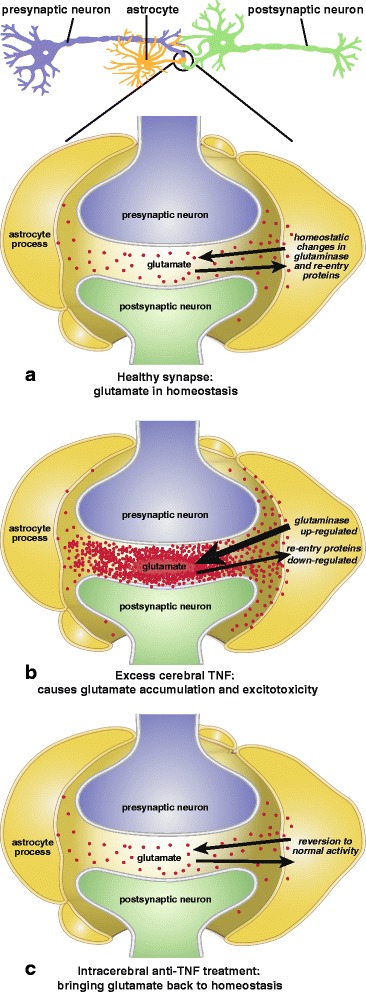
The basic mechanism of the major neurodegenerative diseases, including neurogenic pain, needs to be agreed upon before rational treatments can be determined, but this knowledge is still in a state of flux. Most have agreed for decades that these disease states, both infectious and non-infectious, share arguments incriminating excitotoxicity induced by excessive extracellular cerebral glutamate. Excess cerebral levels of tumor necrosis factor (TNF) are also documented in the same group of disease states. However, no agreement exists on overarching mechanism for the harmful effects of excess TNF, nor, indeed how extracellular cerebral glutamate reaches toxic levels in these conditions. Here, we link the two, collecting and arguing the evidence that, across the range of neurodegenerative diseases, excessive TNF harms the central nervous system largely through causing extracellular glutamate to accumulate to levels high enough to inhibit synaptic activity or kill neurons and therefore their associated synapses as well. TNF can be predicted from the broader literature to cause this glutamate accumulation not only by increasing glutamate production by enhancing glutaminase, but in addition simultaneously reducing glutamate clearance by inhibiting re-uptake proteins. We also discuss the effects of a TNF receptor biological fusion protein (etanercept) and the indirect anti-TNF agents dithio-thalidomides, nilotinab, and cannabinoids on these neurological conditions. The therapeutic effects of 6-diazo-5-oxo-norleucine, ceptriaxone, and riluzole, agents unrelated to TNF but which either inhibit glutaminase or enhance re-uptake proteins, but do not do both, as would anti-TNF agents, are also discussed in this context. By pointing to excess extracellular glutamate as the target, these arguments greatly strengthen the case, put now for many years, to test appropriately delivered ant-TNF agents to treat neurodegenerative diseases in randomly controlled trials.
Overview
The claims and statistics of this paper haven’t been checked yet.
Free: it reads the open-access text and checks the first 5 claims that cite a source we can check. Create a free account to check every claim.
Integrity signals
Registry
Cites
Statistics
Figures
Verification
Claims the paper makes
The claims and statistics of this paper haven’t been checked yet.
Free: it reads the open-access text and checks the first 5 claims that cite a source we can check. Create a free account to check every claim.
Claims other papers make about this one
Each is checked against this paper’s own text: does it say what the citing paper says it does?
The cited source says what the claim attributes to it.
In the citing paper
“Nevertheless, excessive TNF led to a high-level accumulation of extracellular glutamate to inhibit the synaptic activity or kill neurons, which rationalized the treatment of neurogenic pain by anti-TNF agents (Clark and Vissel, 2016).”
From Picroside Ⅱ attenuates neuropathic pain by regulating inflammation and spinal excitatory synaptic transmission (2024) · cites this paper as Clark and Vissel, 2016
Self-check
Percentages, sums and reported differences re-computed from the paper’s own numbers.
The self-check needs the paper’s full text.
Citations
Cites
Glutamate neurotoxicity and diseases of the nervous system
CHOI, D. (1988) · Neuron · doi:10.1016/0896-6273(88)90162-6 · Cited by 7,972 · cited 1×
“As reviewed [66, 71], should extracellular cerebral glutamate become excessive, whether through excess release or poor clearance, or both, a harmful excitotoxicity ensues.”
BackgroundCui, C., Cui, J., Jin, F., Cui, Y., Li, R., Jiang, X., Tian, Y., Wang, K., Jiang, P., & Gao, J. (2017) · Cellular Physiology and Biochemistry · doi:10.1159/000479571 · Cited by 5,203
An endotoxin-induced serum factor that causes necrosis of tumors
Carswell, E. A., Old, L. J., Kassel, R. L., Green, S., Fiore, N., & Williamson, B. (1975) · Proceedings of the National Academy of Sciences · doi:10.1073/pnas.72.9.3666 · Cited by 4,532
Danbolt, N. C. (2001) · Progress in Neurobiology · doi:10.1016/s0301-0082(00)00067-8 · Cited by 4,227 · cited 1×
“As reviewed in 2001 [96], glutamate re-uptake from the synaptic cleft noted above is controlled by fluctuations in a unique family of amino acid transport, or re-uptake, proteins that act as signal terminators.”
BackgroundIL-23 drives a pathogenic T cell population that induces autoimmune inflammation
Langrish, C. L., Chen, Y., Blumenschein, W. M., Mattson, J., Basham, B., Sedgwick, J. D., McClanahan, T., Kastelein, R. A., & Cua, D. J. (2005) · The Journal of Experimental Medicine · doi:10.1084/jem.20041257 · Cited by 4,099 · cited 1×
“Nevertheless, data on other proinflammatory or anti-inflammatory cytokines such as IL-1β, IL-4, IL-17, and IL-23 [29–31] continue to add to the principles behind this concept and may well generate related therapeutic avenues.”
BackgroundBenveniste, H., Drejer, J., Schousboe, A., & Diemer, N. H. (1984) · Journal of Neurochemistry · doi:10.1111/j.1471-4159.1984.tb05396.x · Cited by 2,859 · cited 1×
“These conditions (Table 1) came to include AD [72], PD [73], Huntington’s disease [74], amyotropic lateral sclerosis [75], stroke [76], viral encephelitides [77, 78], septic encephalopathy [79], defective post-operative cognition [80], post-irradiation brain function [81], pain [82, 83], bacterial meningitis [84], epi…”
BackgroundDrug Transport across the Blood–Brain Barrier
Pardridge, W. M. (2012) · Journal of Cerebral Blood Flow & Metabolism · doi:10.1038/jcbfm.2012.126 · Cited by 1,994
Two Phase 3 Trials of Bapineuzumab in Mild-to-Moderate Alzheimer's Disease
Salloway, S., Sperling, R., Fox, N. C., Blennow, K., Klunk, W., Raskind, M., Sabbagh, M., Honig, L. S., Porsteinsson, A. P., Ferris, S., et al. (2014) · New England Journal of Medicine · doi:10.1056/nejmoa1304839 · Cited by 1,960 · cited 1×
“It may also explain why removing soluble Aβ or its plaque, still the goal of the many clinical trials [12], does not retard human disease progression, since the other secondary DAMPs, S100 proteins and HMGB1, are still actively inducing TNF.”
BackgroundThe molecular logic of endocannabinoid signalling
Piomelli, D. (2003) · Nature Reviews Neuroscience · doi:10.1038/nrn1247 · Cited by 1,957 · cited 1×
“In physiological terms, these may be considered as part neurotransmitter, part cytokine, and part hormone and have been identified and studied at length (see [184, 185] for reviews.”
BackgroundElliott, M. J., Maini, R. N., Feldmann, M., Kalden, J. R., Antoni, C., Smolen, J. S., Leeb, B., Breedveld, F. C., Macfarlane, J. D., Bijl, J. A., et al. (1994) · The Lancet · doi:10.1016/s0140-6736(94)90628-9 · Cited by 1,682 · cited 1×
“After being recognized as an early step in the inflammatory cytokine cascade [20], TNF began to achieve its present wide acceptance as a master cytokine in disease pathogenesis through infliximab, the first of the specific neutralizing biological anti-TNF agents, becoming a striking clinical success in treating RA [21…”
Background
Research works printed but not linked: 1
- Pagan F Society for Neuroscience (SfN) 2015 Annual Meeting. Abstract 12.01. Presented October 18, 2015 2015
Cited by
Santomasso, B. D., Park, J. H., Salloum, D., Riviere, I., Flynn, J., Mead, E., Halton, E., Wang, X., Senechal, B., Purdon, T., et al. (2018) · Cancer Discovery · doi:10.1158/2159-8290.cd-17-1319 · Cited by 942
“In addition, elevated CSF TNFα may potentiate neurotoxicity by both increasing the production of cerebral Glut by cell types such as microglia and decreasing its clearance, resulting in increased concentration and availability to mediate excitotoxicity through NMDA and AMPA receptors (48).”
BackgroundXiao, X., Huang, S., Chen, S., Wang, Y., Sun, Q., Xu, X., & Li, Y. (2021) · Journal of Experimental & Clinical Cancer Research · doi:10.1186/s13046-021-02148-6 · Cited by 310
“In addition, QA can promote the secretion of Glut [101], activate astrocytes to secrete numerous cytokines, such as TNF-α, IL-6, and MCP-1, and change the cohesion of the BBB, representing a feed-forward mechanism exacerbating brain dysfunction [101, 102].”
BackgroundNeuroinflammation and Proinflammatory Cytokines in Epileptogenesis
Soltani Khaboushan, A., Yazdanpanah, N., & Rezaei, N. (2022) · Molecular Neurobiology · doi:10.1007/s12035-022-02725-6 · Cited by 262
“In addition, it is demonstrated that etanercept administration could diminish glutamate transmission, therefore decreasing synaptic excitability in the brain (144, 158).”
BackgroundMorris, G. P., Clark, I. A., & Vissel, B. (2018) · Acta Neuropathologica · doi:10.1007/s00401-018-1918-8 · Cited by 212
“However, it must be borne in mind synapse dysfunction usually arises from perturbation in the physiological functions of cellular and molecular components within the multicellular synapse and extracellular matrix [49, 180] (discussed further in Supplementary Material 1.”
BackgroundSelf-citationHölscher, C. (2018) · Neuropharmacology · doi:10.1016/j.neuropharm.2018.01.040 · Cited by 198
“the important role that chronic inflammation in the brain plays in disease progression, and how to potentially halt this process (Butchart et al., 2015; Clark and Vissel, 2016; Morris et al., 2014).”
BackgroundReactive Glia Inflammatory Signaling Pathways and Epilepsy
Sanz, P., & Garcia-Gimeno, M. A. (2020) · International Journal of Molecular Sciences · doi:10.3390/ijms21114096 · Cited by 176
“The levels of TNFα are elevated in epileptic patients (reviewed in [61,62]), and probably contribute to their neuronal hyper-excitability because, on the one hand, TNFα increases the levels of glutamate in the brain, an excitatory neurotransmitter, since it reduces glutamate uptake by diminishing the levels of astrocy…”
BackgroundProgression in migraine: Role of mast cells and pro-inflammatory and anti-inflammatory cytokines
Conti, P., D’Ovidio, C., Conti, C. M., Gallenga, C. E., Lauritano, D., Caraffa, A., Kritas, S. K., & Ronconi, G. (2018) · European Journal of Pharmacology · doi:10.1016/j.ejphar.2018.12.004 · Cited by 160
Astrocytes as Guardians of Neuronal Excitability: Mechanisms Underlying Epileptogenesis
Verhoog, Q. P., Holtman, L., Aronica, E., & van Vliet, E. A. (2020) · Frontiers in Neurology · doi:10.3389/fneur.2020.591690 · Cited by 147
“Similar to IL-6, TNF-α decreases astrocytic uptake of glutamate (78, 79) via purinergic signaling, thereby activating presynaptic NDMA receptors (80).”
Insulin Resistance Exacerbates Alzheimer Disease via Multiple Mechanisms
Wei, Z., Koya, J., & Reznik, S. E. (2021) · Frontiers in Neuroscience · doi:10.3389/fnins.2021.687157 · Cited by 115
DePaula-Silva, A. B., Gorbea, C., Doty, D. J., Libbey, J. E., Sanchez, J. M. S., Hanak, T. J., Cazalla, D., & Fujinami, R. S. (2019) · Journal of Neuroinflammation · doi:10.1186/s12974-019-1545-x · Cited by 133
Curcumin can improve Parkinson's disease via activating BDNF/PI3k/Akt signaling pathways
Jin, T., Zhang, Y., Botchway, B. O. A., Zhang, J., Fan, R., Zhang, Y., & Liu, X. (2022) · Food and Chemical Toxicology · doi:10.1016/j.fct.2022.113091 · Cited by 122
Immune mechanisms of depression in rheumatoid arthritis
Brock, J., Basu, N., Schlachetzki, J. C. M., Schett, G. A., McInnes, I. B., & Cavanagh, J. (2023) · Nature Reviews Rheumatology · doi:10.1038/s41584-023-01037-w · Cited by 114
“Of relevance, experimental rodent models have shown that anti-TNF treatment with etanercept can lower the levels of glutamate in the brain 85 .”
BackgroundRice, J., Nagle, S. J., Randall, J., & Hinson, H. E. (2019) · Current Treatment Options in Neurology · doi:10.1007/s11940-019-0580-3 · Cited by 98
How Oxidative Stress Induces Depression?
Ji, N., Lei, M., Chen, Y., Tian, S., Li, C., & Zhang, B. (2023) · ASN NEURO · doi:10.1177/17590914231181037 · Cited by 93
“…effect, as oxide synthase and NOX inhibitors can block the process (Barger et al., 2007; Hu et al., 2000; Tilleux & Hermans, 2007), and hypoxia affected GLT-1 function required the present of TNF, which could cause glutamate excitotoxicity by itself (Boycott et al., 2008; Clark & Vissel, 2016).”
BackgroundThe meteorology of cytokine storms, and the clinical usefulness of this knowledge
Clark, I. A., & Vissel, B. (2017) · Seminars in Immunopathology · doi:10.1007/s00281-017-0628-y · Cited by 88
“summarized [110], cerebral TNF and consequentially extracellular cerebral glutamate are both chronically increased in”
InfluentialSelf-citationAstrocytes and synaptic plasticity in health and disease
Singh, A., & Abraham, W. C. (2017) · Experimental Brain Research · doi:10.1007/s00221-017-4928-1 · Cited by 87
Zhang, L., Zhang, L., Li, Y., Li, L., Melchiorsen, J. U., Rosenkilde, M., & Hölscher, C. (2020) · Journal of Parkinson's Disease · doi:10.3233/jpd-191768 · Cited by 79
“Activated microglia release pro-inflammatory cytokines which in turn impair neuronal function and inhibit growth factor signalling and energy utilisation [57, 58].”
Mechanisms of immune effector cell‐associated neurotoxicity syndrome after CAR‐T treatment
Gu, T., Hu, K., Si, X., Hu, Y., & Huang, H. (2022) · WIREs Mechanisms of Disease · doi:10.1002/wsbm.1576 · Cited by 82
“During vasogenic edema, activated microglia secrete IL-1 and TNF-α that caused increased BBB permeability and neuron injury (Clark & Vissel, 2016; Conroy et al., 2004; Holmin & Mathiesen, 2000).”
BackgroundMorris, G., Maes, M., Berk, M., Carvalho, A. F., & Puri, B. K. (2020) · European Psychiatry · doi:10.1192/j.eurpsy.2019.13 · Cited by 65
“Glutamate and GABA uptake are energy consuming processes as previously discussed [199,243] due in part to the reliance of EAATs on the option function ofNKA receptors which coexist in the same molecular complex [244] (reviewed by [243]).”
BackgroundAstroglial role in the pathophysiology of statusepilepticus: an overview
Vargas-Sánchez, K., Mogilevskaya, M., Rodríguez-Pérez, J., Rubiano, M. G., Javela, J. J., & González-Reyes, R. E. (2018) · Oncotarget · doi:10.18632/oncotarget.25485 · Cited by 74
“Activation of IL-1R by IL-1β in astrocytes, decreases glutamate reuptake and simultaneously stimulates the release of glutamate from astroglial cells via TNFα induction, mediated through activation of TNFαR [169].”
BackgroundLong-term, West Nile virus-induced neurological changes: A comparison of patients and rodent models
Fulton, C. M., Beasley, D. W. C., Bente, D. A., & Dineley, K. T. (2020) · Brain Behavior & Immunity - Health · doi:10.1016/j.bbih.2020.100105 · Cited by 67
“Caso, 2014), glutamate toxicity (Clark and Vissel, 2016), and neuronal dysfunction and death in ND (Frankola K et al.”
BackgroundAn integrated cytokine and kynurenine network as the basis of neuroimmune communication
Stone, T. W., Clanchy, F. I. L., Huang, Y., Chiang, N., Darlington, L. G., & Williams, R. O. (2022) · Frontiers in Neuroscience · doi:10.3389/fnins.2022.1002004 · Cited by 61
“, 2019) but glutamate uptake transporters are also inhibited (Olmos and Llado, 2014; Clark and Vissel, 2016).”
BackgroundSustained hyperammonemia induces TNF-a IN Purkinje neurons by activating the TNFR1-NF-κB pathway
Balzano, T., Arenas, Y. M., Dadsetan, S., Forteza, J., Gil‐Perotín, S., Cubas-Núñez, L., Casanova, B., Gracià, F., Varela-Andrés, N., Montoliu, C., et al. (2020) · Journal of Neuroinflammation · doi:10.1186/s12974-020-01746-z · Cited by 59
del Rivero, T., Fischer, R., Yang, F., Swanson, K. A., & Bethea, J. R. (2018) · Pain · doi:10.1097/j.pain.0000000000001470 · Cited by 53
Incretin Mimetics as Rational Candidates for the Treatment of Traumatic Brain Injury
Glotfelty, E. J., Delgado, T. E., Tovar-y-Romo, L. B., Luo, Y., Hoffer, B. J., Olson, L., Karlsson, T. E., Mattson, M. P., Harvey, B. K., Tweedie, D., et al. (2019) · ACS Pharmacology & Translational Science · doi:10.1021/acsptsci.9b00003 · Cited by 48
Stone, T. W., & Williams, R. O. (2023) · Journal of Neurochemistry · doi:10.1111/jnc.16015 · Cited by 49
“These effects are partly dependent on in - creased glutaminase activity (Milewski et al., 2019 ; Ye et al., 2013 ) and partly on inhibition of glutamate uptake transporters (Clark & Vissel, 2016 ; Olmos & Llado, 2014 ).”
Clark, I. A., & Vissel, B. (2018) · British Journal of Pharmacology · doi:10.1111/bph.14471 · Cited by 45
“Moreover, glutamate excitotoxicity, a TNF-induced phenomenon we have explained (Clark and Vissel, 2016) through the combined effects of this cytokine enhancing glutaminase (Takeuchi et al.”
BackgroundSelf-citationIntercellular communication and ion channels in neuropathic pain chronicization
Vicario, N., Turnaturi, R., Spitale, F. M., Torrisi, F., Zappalà, A., Gulino, R., Pasquinucci, L., Chiechio, S., Parenti, C., & Parenti, R. (2020) · Inflammation Research · doi:10.1007/s00011-020-01363-9 · Cited by 45
Arenas, Y. M., Cabrera‐Pastor, A., Juciute, N., Mora-Navarro, E., & Felipo, V. (2020) · Journal of Neuroinflammation · doi:10.1186/s12974-020-01941-y · Cited by 45
“trophic lateral sclerosis or in septic encephalopathy [37].”
BackgroundDefining novel functions for cerebrospinal fluid in ALS pathophysiology
Kwong, K. C. N. K., Mehta, A. R., Nedergaard, M., & Chandran, S. (2020) · Acta Neuropathologica Communications · doi:10.1186/s40478-020-01018-0 · Cited by 43
Singh, A., Jones, O. D., Mockett, B. G., Ohline, S. M., & Abraham, W. C. (2019) · Journal of Neuroscience · doi:10.1523/jneurosci.1492-19.2019 · Cited by 42
“…of TNF in AD as suggested by preclinical experiments (He et al., 2007; McAlpine et al., 2009), it is worth exploring the optimal dosage and route of administration of TNF antagonists/inhibitors in the treatment of this currently incurable disease (Clark and Vissel, 2016; MacPherson et al., 2017).”
BackgroundCAR T-Cell-Associated Neurotoxicity: Current Management and Emerging Treatment Strategies
Rivera, A., May, S., Lei, M. M., Qualls, S., Bushey, K., Rubin, D. B., & Barra, M. E. (2020) · Critical Care Nursing Quarterly · doi:10.1097/cnq.0000000000000302 · Cited by 40
Samat, H. N. A., Razali, N. N., Mahadzir, H., Muhammad, T. S. T., Ling, K., Mansor, N. I., & Abidin, S. Z. (2025) · International Journal of Molecular Sciences · doi:10.3390/ijms26188905 · Cited by 39
“TNF-α disrupts synaptic signalling by interfering with glutamate regulation, causing excitotoxicity, a condition where excessive glutamate damages neurons [64].”
Saba, J., Couselo, F. L., Turati, J., Carniglia, L., Durand, D., Laurentiis, A. D., Lasaga, M., & Caruso, C. M. (2020) · Journal of Neuroinflammation · doi:10.1186/s12974-020-01965-4 · Cited by 38
Gautam, M., & Ramanathan, M. (2018) · Inflammopharmacology · doi:10.1007/s10787-018-0502-0 · Cited by 36
Pulukool, S. K., Bhagavatham, S. K. S., Kannan, V., Sukumar, P., Dandamudi, R. B., Ghaisas, S., Kunchala, H., Saieesh, D., Naik, A. A., Pargaonkar, A., et al. (2021) · Scientific Reports · doi:10.1038/s41598-021-89137-z · Cited by 36
Hou, J., Klippel, K., & Bose, P. (2025) · Frontiers in Bioscience-Landmark · doi:10.31083/fbl38904 · Cited by 36
“This overactivates ionotropic (e.g., NMDA, AMPA, kainate) and metabotropic glutamate receptors, triggering calcium (Ca 2+ ) and sodium (Na⁺) influx, oxidative stress, and mitochondrial dysfunction, ultimately leading to necrosis and apoptosis [11,146].”
McKenzie, A., Dombrower, R., Theeraphapphong, N., McKenzie, S. M., & Hijazin, M. A. (2025) · Biomedicines · doi:10.3390/biomedicines14010058 · Cited by 34
“Consequently, interventions that upregulate glutamate transporters have shown promise in counteracting cytokine-mediated neuroinflammation and attenuating pain behavior [66,67].”
Abd‐El‐Basset, E. M., Rao, M. S. R., Alshawaf, S. M., Ashkanani, H. K. A. H. A., & Kabli, A. H. (2021) · AIMS neuroscience · doi:10.3934/neuroscience.2021031 · Cited by 33
“accumulates, it inhibits synaptic activity or kills the neurons and associated synapses as well [60].”
BackgroundXie, J., Tuo, P., Zhang, W., & Wang, S. (2023) · Neuroreport · doi:10.1097/wnr.0000000000001961 · Cited by 32
The role of the TNFα-mediated astrocyte signaling pathway in epilepsy
Chen, R., Xue, G., & Hölscher, C. (2021) · Acta Epileptologica · doi:10.1186/s42494-021-00059-9 · Cited by 31
“When glutamate reaches pathological levels, it can have toxic effects and cause damage to synapses [38].”
BackgroundNovel pathophysiological insights into CAR-T cell associated neurotoxicity
Genoud, V., & Migliorini, D. (2023) · Frontiers in Neurology · doi:10.3389/fneur.2023.1108297 · Cited by 31
“When activated in the case of inflammation, they can secrete IL-1 and TNF-α, further worsening BBB permeability and neuron injury (72).”
BackgroundSynaptamide Improves Cognitive Functions and Neuronal Plasticity in Neuropathic Pain
Tyrtyshnaia, A. A., Bondar, A., Konovalova, S. P., & Manzhulo, I. (2021) · International Journal of Molecular Sciences · doi:10.3390/ijms222312779 · Cited by 28
Blood Glutamate Scavenger as a Novel Neuroprotective Treatment in Spinal Cord Injury
Goldshmit, Y., Jona, G., Schmukler, E., Solomon, S., Pinkas‐Kramarski, R., & Ruban, A. (2018) · Journal of Neurotrauma · doi:10.1089/neu.2017.5524 · Cited by 28
“1,36,37 In this study we demonstrate that decreasing Glu levels by BGS after SCI in mice results in a reduced inflam-matory response and decreased astrocyte reactivity and glial scar formation.”
Kung, P.-L., Chou, T.-W., Lindman, M., Chang, N. P., Estevez, I., Buckley, B. D., Atkins, C., & Daniels, B. P. (2022) · Journal of Neuroinflammation · doi:10.1186/s12974-022-02460-8 · Cited by 27
“Notably, recent work has described complex neuromodulatory effects of TNF-α signaling, including direct effects on glutamatergic neurotransmission (102-104), neuronal differentiation (105-107), and other fundamental neurologic processes (108-110).”
BackgroundVicente, M. C., Addo-Osafo, K., & Vossel, K. A. (2024) · Frontiers in Neurology · doi:10.3389/fneur.2024.1277613 · Cited by 25
Activated peripheral blood mononuclear cell mediators trigger astrocyte reactivity
Bellaver, B., da Rocha, A. S., de Souza, D. G., Leffa, D. T., Bastiani, M. A. D., Schu, G. G., Ferreira, P. C. L., Venturin, G. T., Greggio, S., Ribeiro, C. T., et al. (2019) · Brain Behavior and Immunity · doi:10.1016/j.bbi.2019.05.041 · Cited by 24
Chim, S. M., Howell, K., Kokkosis, A. G., Zambrowicz, B., Karalis, K. P., & Pavlopoulos, E. (2024) · Pharmaceutics · doi:10.3390/pharmaceutics16101314 · Cited by 23
“…rose to concentrations typically used for the induction of excitotoxicity in neuronal cultures [101–103], consistent with the role of TNF α in inducing glutamate-mediated excitotoxicity [104,105] and the disturbed E/I balance observed in several brain diseases and neuroinflammation [106–108].”
BackgroundResultClark, I. A., & Vissel, B. (2018) · Frontiers in Neuroscience · doi:10.3389/fnins.2018.00257 · Cited by 23
“…AMPA receptors (Ferguson et al., 2008), homeostatic synaptic scaling (Stellwagen and Malenka, 2006; Becker et al., 2013), long-term potentiation (Cumiskey et al., 2007), and control of formation and clearance of synaptic levels of glutamate, a potent toxin when in excess (Clark and Vissel, 2016).”
BackgroundSelf-citationHsueh, S., Luo, W., Tweedie, D., Kim, D. S., Kim, Y. K., Hwang, I., Gil, J.-E., Han, B., Chiang, Y. H., Selman, W. R., et al. (2021) · ACS Pharmacology & Translational Science · doi:10.1021/acsptsci.1c00042 · Cited by 23
Clavulanic Acid Attenuating Effect on the Diabetic Neuropathic Pain in Rats
Kolahdouz, M., Jafari, F., Falanji, F., Nazemi, S., Mohammad‐Zadeh, M., Molavi, M., & Amin, B. (2021) · Neurochemical Research · doi:10.1007/s11064-021-03308-y · Cited by 23
“1 3 of TNF-α through different pathways cause a high accumulation of glutamate and thereby induction of pain behaviors, glutamate excitotoxicity and ultimately damage of neurons [46].”
BackgroundMelatonin, an Antitumor Necrosis Factor Therapy
Álvarez‐López, A. I., Cruz‐Chamorro, I., Lardone, P. J., Bejarano, I., Hinostroza, K. A. A., Ponce‐España, E., Santos‐Sánchez, G., Álvarez‐Sánchez, N., & Carrillo‐Vico, A. (2024) · Journal of Pineal Research · doi:10.1111/jpi.70025 · Cited by 22
“Although several strategies have been proposed to allow these drugs to reach the CNS [93], further research is needed to extrapolate these findings to humans.”
Immunotherapy - Myths, Reality, Ideas, Future
Metodiev, K. (2017) · InTech eBooks · doi:10.5772/63291 · Cited by 22
Gautam, M., & Ramanathan, M. (2019) · Nutritional Neuroscience · doi:10.1080/1028415x.2019.1627768 · Cited by 22
“High amount of TNF-α cause extracellular glutamate to accumulate caused by enhancing glutaminase and reducing glutamate clearance, resulting it to accumulate on the synaptic cleft causing inhibition of synaptic activity and killing of neurons [14].”
BackgroundAptamers Selected for Recognizing Amyloid β-Protein—A Case for Cautious Optimism
Rahimi, F. (2018) · International Journal of Molecular Sciences · doi:10.3390/ijms19030668 · Cited by 21
Vizuete, A. F. K., Mussulini, B. H. M., Zenki, K. C., Baggio, S., Pasqualotto, A., Rosemberg, D. B., Bogo, M. R., de Oliveira, D. L., & Rico, E. P. (2021) · NeuroToxicology · doi:10.1016/j.neuro.2021.10.014 · Cited by 20
Li, Y., Li, Y., Fang, X., Chen, D., Yu, W., & Zhu, Z. (2024) · Frontiers in Cellular Neuroscience · doi:10.3389/fncel.2024.1365448 · Cited by 20
“For example, the inflammatory mediator TNF-α can increase intracellular calcium levels by activating TNF-α receptors on neurons, leading to neuronal damage or even death (Clark and Vissel, 2016; Batista et al., 2019).”
BackgroundClark, I. A. (2022) · Pharmacology Research & Perspectives · doi:10.1002/prp2.926 · Cited by 20
Self-citationTNFα increases STAT3-mediated expression of glutaminase isoform KGA in cultured rat astrocytes
Milewski, K., Bogacińska-Karaś, M., Hilgier, W., Albrecht, J., & Zielińska, M. (2019) · Cytokine · doi:10.1016/j.cyto.2019.154774 · Cited by 19
Perispinal etanercept advances as a neurotherapeutic
Tobinick, E. L. (2018) · Expert Review of Neurotherapeutics · doi:10.1080/14737175.2018.1468253 · Cited by 19
Wang, M., Li, H., Zhang, W., Zhang, L., Wang, S., Miao, J., Jia, L., Zhang, Y., Gao, H., Zhang, X., et al. (2025) · PLoS ONE · doi:10.1371/journal.pone.0311207 · Cited by 18
Gyawali, A., & Kang, Y. (2020) · Biomedicines · doi:10.3390/biomedicines9010009 · Cited by 18
“An excessive amount of TNF-α in neuronal cells can produce excessive extracellular glutamate levels and reduce glutamate clearance, whereas LPS treatment activates the production of intracellular molecules that further activate the production of inflammatory mediators, key factors in motor neuron damage, and diminishe…”
BackgroundClark, I. A. (2020) · Reviews in Medical Virology · doi:10.1002/rmv.2210 · Cited by 16
Self-citationPozdeev, V. I., Lang, E., Görg, B., Bidmon, H. J., Shinde, P. V., KIRCHEIS, G., Herebıan, D., Pfeffer, K., Lang, F. J. W., Häussinger, D., et al. (2017) · Scientific Reports · doi:10.1038/s41598-017-07640-8 · Cited by 16
Role of Glutamate Excitotoxicity in Glioblastoma Growth and Its Implications in Treatment
Moriarty, C., Gupta, N., & Bhattacharya, D. (2025) · Cell Biology International · doi:10.1002/cbin.70005 · Cited by 15
“Anti ‐ TNF agents could be a potential therapeutic option for reducing the amount of glutamate affecting neurons in GBM patients (Clark and Vissel 2016).”
Gyawali, A., & Kang, Y. (2020) · Journal of Pharmaceutical Sciences · doi:10.1016/j.xphs.2020.10.030 · Cited by 15
Wu, K.-C., Lee, C.-Y., Chern, Y., & Lin, C. (2021) · Brain Behavior and Immunity · doi:10.1016/j.bbi.2021.05.027 · Cited by 15
Sasidharakurup, H., & Diwakar, S. (2020) · Applied Network Science · doi:10.1007/s41109-020-00307-w · Cited by 13
“The excessive glutamate bound to its receptor on microglia which initiated further TNF α release in excess (Clark and Vissel 2016).”
BackgroundCharret, T. S., Pereira, M. T. M., Pascoal, V., Lopes‐Cendes, Í., & Pascoal, A. C. R. F. (2021) · Journal of Medicinal Food · doi:10.1089/jmf.2020.0073 · Cited by 13
“29 Thus, the expression control obtained by citral at a concentration of 100 mg/kg can potentially have beneficial effects in the control of glutamate-mediated excitatory neurotransmission and potentially in the excitotoxic damage related to this neurotransmitter.”
Supramolecular organizing centers at the interface of inflammation and neurodegeneration
Sušjan, P., Ramuta, T. Ž., Boršić, E., Orehek, S., & Hafner‐Bratkovič, I. (2022) · Frontiers in Immunology · doi:10.3389/fimmu.2022.940969 · Cited by 13
“Alzheimer’s disease (AD) Cleaved products of the APP (amyloid-b): Ab(1-42), Ab(1-40) Amyloid/senile/ neuritic plaques Extracellular Hippocampus Cognitive”
BackgroundKarabulut, S., Filiz, A. K., & Akkaya, R. (2022) · Neurological Research · doi:10.1080/01616412.2022.2066785 · Cited by 12
Pulukool, S. K., Bhagavatham, S. K. S., Kannan, V., Parim, B., Challa, S., Karnatam, V., M., D. D. V., Mir, I. A., Sukumar, P., Venkateshan, V., et al. (2022) · Cytokine · doi:10.1016/j.cyto.2022.155807 · Cited by 11
Effects of Tumor Necrosis Factor Blocker on Salicylate-Induced Tinnitus in Mice
Hwang, J.-H., Huang, D. C.-W., Lu, Y.-C., Yang, W., & Liu, T. (2017) · The International Tinnitus Journal · doi:10.5935/0946-5448.20170006 · Cited by 11
Guo, S., Zhang, Y., Wei, C., Shi, L., & Feng, Y. (2019) · The Anatomical Record · doi:10.1002/ar.24238 · Cited by 11
“Although it has been reported that TNF-α is toxic to cultured neurons by promotingglutamate production (Zhang et al., 2009; Clark and Vissel, 2016), the signaling events that lead to TNFα-initiated neurotoxicity remain largely unknown.”
BackgroundHsueh, S., Parekh, P., Batsaikhan, B., Vargesson, N., Tweedie, D., Luo, W., Patel, C., Liu, D., McDevitt, R. A., Baig, A. M., et al. (2025) · Journal of Biomedical Science · doi:10.1186/s12929-025-01150-w · Cited by 10
Therapeutic Antibody‐Based Drugs in the Treatment of Human Inflammatory Disorders
Sedger, L. M., Ranasinghe, C., McDermott, M., & Asvadi, P. (2017) · InTech eBooks · doi:10.5772/67478 · Cited by 11
“One unifying hypothesis is that TNF causes glutamate excitotoxicity in neurones in a number of neurodegenerative diseases, and it is sobering to consider that cerebral TNF is elevated in degenerative CNS conditions, traumatic brain injury and even situations of post-operative delirium with cognitive decline [148].”
Backgroundzaher, E. (2020) · The Egyptian Journal of Histology · doi:10.21608/ejh.2020.22609.1235 · Cited by 10
“2009[37] found that astaxanthin treatment showed neuroprotective effect via the restoration of glutathione level and reduction of ROS formation.”
BackgroundZhang, J., Zhang, X., Li, L., Bai, L., Gao, Y., Yang, Y., Wang, L., Qiao, Y., Wang, X., & Xu, J. (2022) · Neurotherapeutics · doi:10.1007/s13311-022-01255-2 · Cited by 10
“Our previous study [41] and others [42, 43] showed that peripheral nerve injury increases the production of TNF-α, which plays an important role in the genesis of neuropathic pain, in the DRG and dorsal horn.”
BackgroundClark, I. A., & Vissel, B. (2023) · Pharmacology Research & Perspectives · doi:10.1002/prp2.1136 · Cited by 9
Self-citationIttiyavirah, S. P., Kannan, R., Sathyan, A., Rajasree, R. S., Kuruniyan, M. S., Quadri, S. A., Elayadeth‐Meethal, M., & Naseef, P. P. (2022) · Saudi Pharmaceutical Journal · doi:10.1016/j.jsps.2022.10.007 · Cited by 9
“The use of specific anti-TNF biologicals like etanercept has also been shown to be effective, but is not cost-effective (Clark and Vissel, 2016).”
Loewen, C. A., Boekhoff‐Falk, G., Ganetzky, B., & Chtarbanova, S. (2018) · G3 Genes Genomes Genetics · doi:10.1534/g3.118.200627 · Cited by 9
Abolarin, P. O., Nafiu, A. B., Oyewole, A. L., Amin, A., Ogundele, O. M., & Owoyele, B. V. (2021) · IBRO Neuroscience Reports · doi:10.1016/j.ibneur.2021.11.001 · Cited by 9
Silveira, J. S., Júnior, O. V. R., Schmitz, F., Ferreira, F. S., Rodrigues, F. C., Coutinho‐Silva, R., Savio, L. E. B., & Wyse, Â. T. D. S. (2022) · Molecular Neurobiology · doi:10.1007/s12035-022-02724-7 · Cited by 9
“The cytokine IL-1β secretion is strongly related to the exacerbation of neurodegenerative disease [109].”
BackgroundAn unsound AAN Practice Advisory on poststroke etanercept
Clark, I. A. (2017) · Expert Review of Neurotherapeutics · doi:10.1080/14737175.2017.1282315 · Cited by 9
“Likewise, as reviewed [14], turnover of cerebral extracellular glutamate – central to synaptic function but”
BackgroundSelf-citationChen, F., Khan, M. N., Xie, M., Zhang, Y., Liang, L., Farooq, A. D., Liu, J., He, Q., Liu, X., & Jiang, N. (2025) · Nutrients · doi:10.3390/nu17193157 · Cited by 8
“This suggests that PSP’s anti-inflammatory effects may help restore the excitatory/inhibitory balance, consistent with previous findings that cytokines influence neurotransmitter homeostasis [43].”
Quincozes‐Santos, A., Bobermin, L. D., Tramontina, A. C., Wartchow, K. M., Silva, V.-F. D., Gayger-Dias, V., Thomaz, N. K., de Moraes, A. D. M., da Costa, D. S., Nardin, P., et al. (2025) · Neurotoxicity Research · doi:10.1007/s12640-025-00730-w · Cited by 8
“Excitotoxicity, oxidative stress, and inflammatory responses are all closely associated with aging (Clark and Vissel 2016; Merelli et al. 2021).”
Hsueh, S., Scerba, M. T., Tweedie, D., Lecca, D., Kim, D. S., Baig, A. M., Kim, Y. K., Hwang, I., Kim, S., Selman, W. R., et al. (2022) · Biomedicines · doi:10.3390/biomedicines10102449 · Cited by 9
Drummond, I. S. A., de Oliveira, J. N. S., Niella, R. V., Silva, Á. J. C., de Oliveira, I. S., de Souza, S. S., Marques, C. S. D. C., Corrêa, J. M. X., Silva, J. F., & de Lavor, M. S. L. (2024) · Animals · doi:10.3390/ani14131941 · Cited by 8
“…apoptosis or proliferation, being a suitable systemic marker of tissue damage [49,50], regulating several types of glutamatergic receptors [51,52], and is involved in the production of the neurotransmitter glutamate, as well as decreasing glutamate reuptake, raising it to toxic levels [53].”
BackgroundJin, J., Guo, Y., Yang, L., Wang, Z., Yang, X., & Sun, S. (2019) · Oncology Reports · doi:10.3892/or.2019.7210 · Cited by 8
“IL‑1β also induces expression of TNF‑α via blocking the combination of IL‑1β and IL‑37 (22).”
Wang, X., Xiong, W., Li, M., Wu, L., Zhang, Y., Zhu, C., Lin, W., Chen, S., & Huang, H. (2024) · Frontiers in Neurology · doi:10.3389/fneur.2024.1388920 · Cited by 7
“In neurological disorders, including epilepsy, excess TNF damages the central nervous system by causing extracellular glutamate to accumulate to levels sufficient to inhibit synaptic activity or kill neurons (16).”
BackgroundAnti-inflammatory Drugs in the Treatment of Depression
Cavanagh, J. (2023) · Current topics in behavioral neurosciences · doi:10.1007/7854_2023_459 · Cited by 6
Glial Contributions to Lafora Disease: A Systematic Review
Vecchia, S. D., Marchese, M., & Santorelli, F. M. (2022) · Biomedicines · doi:10.3390/biomedicines10123103 · Cited by 6
Kannan, V., Bhagavatham, S. K. S., Dandamudi, R. B., Kunchala, H., Challa, S., Almansour, A. I., Pargaonkar, A., Pulukool, S. K., Sharma, A., & Sivaramakrishnan, V. (2024) · Frontiers in Molecular Biosciences · doi:10.3389/fmolb.2024.1421030 · Cited by 5
Orthosiphon stamineus Proteins Alleviate Hydrogen Peroxide Stress in SH-SY5Y Cells
Chung, Y.-S., Ahmed, P. K., Othman, I., & Shaikh, M. F. (2021) · Life · doi:10.3390/life11060585 · Cited by 5
Modulation of Glutamate for Chronic Pain Management
Holton, K. F. (2022) · Springer eBooks · doi:10.1007/978-3-030-87480-3_13 · Cited by 5
Lestari, I. T., Anggadiredja, K., & Garmana, A. N. (2024) · Pharmacia · doi:10.3897/pharmacia.71.e134309 · Cited by 5
“Excessive TNF-α release causes glutamate buildup, leading to pain behavior, excitotoxicity, and neuronal damage (Clark and Vissel 2016; Kolahdouz et al. 2021).”
Beckers, P., Charlier, M., Azria-Richter, L., Braconnier, P., Desmet, N., Massie, A., & Hermans, E. (2025) · Neuropharmacology · doi:10.1016/j.neuropharm.2025.110340 · Cited by 5
Blaylock, R. L. (2025) · Surgical Neurology International · doi:10.25259/sni_1114_2024 · Cited by 5
“[14,33,75] Glutamate receptors are divided into two basic groups – ionic glutamate receptors, such as n-methyl-d-aspartate receptor (NMDAR), AMPA, and kainate type ionotropic glutamate receptors (iGluRs), which control ion entry into the cell and are named according to their main agonist and…”
Viana, R., Rubio, T., Campos‐Rodríguez, Á., & Sanz, P. (2025) · Neuropathology and Applied Neurobiology · doi:10.1111/nan.70009 · Cited by 4
“…pathway contributes to neuronal hyperexcitability [17] by elevating the levels of glutamate in the brain, achieved by reducing the activity of glutamate uptake transporters and enhancing the release of this neurotransmitter from astrocytes via the xCT cystine-glutamate antiporter [18, 19].”
The clinical utility of gene expression examination in rheumatology
Tchetina, E. V., & Markova, G. A. (2017) · Mediterranean Journal of Rheumatology · doi:10.31138/mjr.28.3.116 · Cited by 4
Metadata
- Authors
- Clark, I. A., & Vissel, B.
- Affiliations
- Australian National University (AU)
- Garvan Institute of Medical Research (AU)
- Corresponding author
- Clark, Ian A.
- Venue
- Journal of Neuroinflammation
- Published
- 2016-09-05
- Volume
- 13
- Issue
- 1
- Pages
- 236-236
- ISSN
- 1742-2094 (ISSN-L)
- PMC
- PMC5011997
- OpenAlex
- W2515408417
- Cited by
- 123
- References
- 252
- Citations by year
- 2026: 6 · 2025: 14 · 2024: 10 · 2023: 8 · 2022: 16 · 2021: 14 · 2020: 18 · 2019: 11 · 2018: 17 · 2017: 9
- FWCI
- 1.08
- Type
- journal article
- Language
- en
- Open access
- gold
- doi.org
- Licence
- cc-by
- Locations
- Journal of Neuroinflammation (publishedVersion, cc-by)
- PubMed Central (publishedVersion, cc-by)
- PubMed (publishedVersion)
- ANU Open Research (Australian National University) (submittedVersion, cc-by)
- UTS ePRESS (University of Technology Sydney) (submittedVersion)
- Funders
- National Health and Medical Research Council (NHMRC) of Australia (project grant #1083569)
- Topics
- Life Sciences › Neuroscience › Neurology › Neuroinflammation and Neurodegeneration Mechanisms
- Life Sciences › Neuroscience › Cellular and Molecular Neuroscience › Neuroscience and Neuropharmacology Research
- Health Sciences › Medicine › Physiology (medical) › Pain Mechanisms and Treatments
- Keywords
- TNF-α, glutamate excitotoxicity, neurodegenerative diseases, neuropathic pain, anti-TNF therapy, glutaminase, glutamate clearance, etanercept, cannabinoids, riluzole, synaptic inhibition, neuroinflammation
- MeSH terms
- Animals, Cerebral Cortex, Humans, Neuralgia, Tumor Necrosis Factor-alpha, Glutamic Acid, Neurodegenerative Diseases
About these checks
Registry, retraction, Cites and statistics results are computed, not judged, with one exception: a printed reference that no index lists is read once by a model before it counts as a citation error. Claims are extracted by a model and kept only when their quote appears verbatim in the text; each cited source is then checked, with a model’s help, for whether it says what the claim relies on. Those verdicts can be wrong — read the claim’s quote and the cited source before relying on one.
Statistics and arithmetic are recomputed, not judged.
Confidence bands are shown only for fields calibrated on our annotated test set. None is calibrated yet, so no band is shown.
What counts as a claim ›How we measure confidence ›How we check this ›
Are you an author, or do you see a problem with this page? Request a review
Data sources
Bibliographic data: Semantic Scholar, OpenAlex, Crossref.
Contains information from the Semantic Scholar Academic Graph Datasets, made available under the ODC Attribution License (ODC-BY 1.0).
Semantic Scholar’s data is described in: Kinney, R., et al. (2023). The Semantic Scholar Open Data Platform. arXiv:2301.10140.
