

The role of microglial P2X7: modulation of cell death and cytokine release
Open accessThe DOI matches its Crossref record; 40 of the 40 references it cites were found in a registry or an index.
Abstract
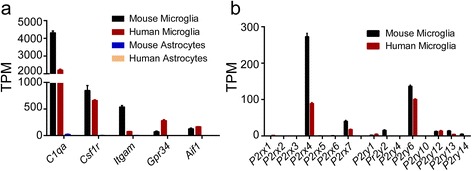
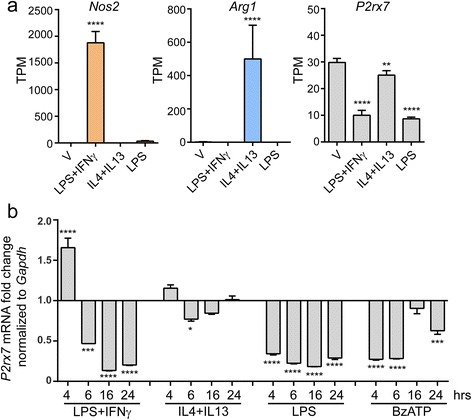
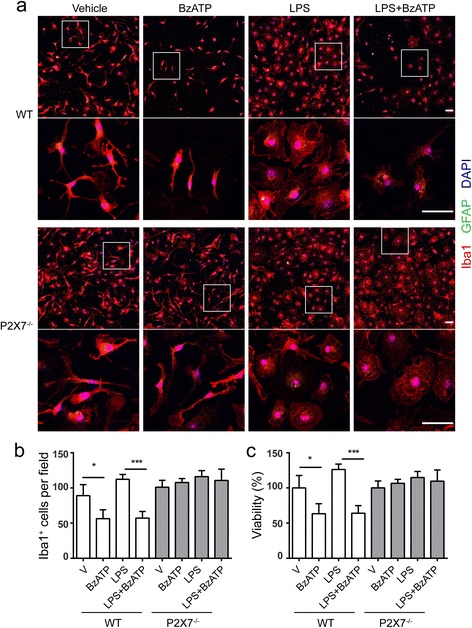
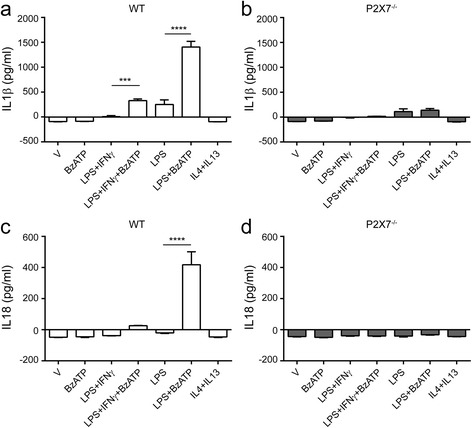
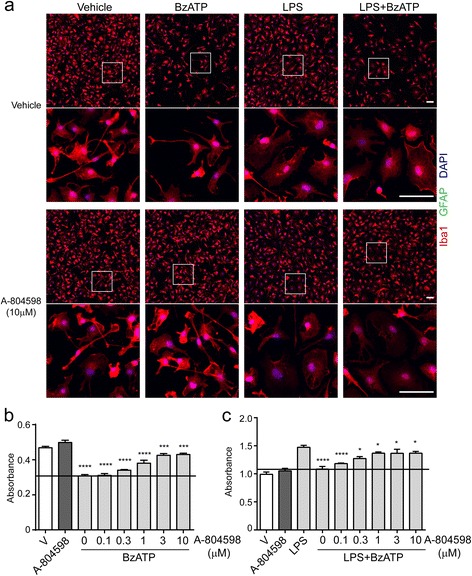
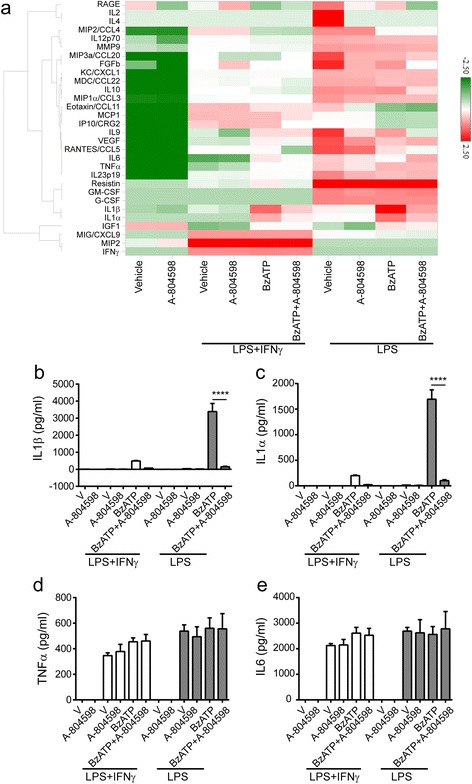
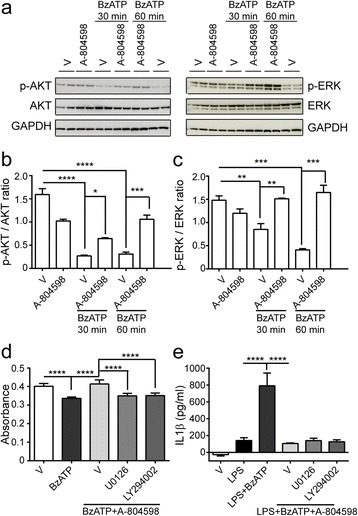
ATP-gated P2X7 is a non-selective cation channel, which participates in a wide range of cellular functions as well as pathophysiological processes including neuropathic pain, immune response, and neuroinflammation. Despite its abundant expression in microglia, the role of P2X7 in neuroinflammation still remains unclear. Primary microglia were isolated from cortices of P0-2 C57BL/6 wild-type or P2X7 knockout (P2X7 −/− ) mouse pups. Lipopolysaccharide, lipopolysaccharide plus IFNγ, or IL4 plus IL13 were used to polarize microglia to pro-inflammatory or anti-inflammatory states. P2rx7 expression level in resting or activated mouse and human microglia was measured by RNA-sequencing and quantitative real-time PCR. Microglial cell death was measured by cell counting kit-8 and immunocytochemistry, and microglial secretion in wild-type or P2X7 −/− microglia was examined by Luminex multiplex assay or ELISA using P2X7 agonist BzATP or P2X7 antagonist A-804598. P2X7 signaling was analyzed by Western blot. First, we confirmed that P2rx7 is constitutively expressed in mouse and human primary microglia. Moreover, P2rx7 mRNA level was downregulated in mouse microglia under both pro- and anti-inflammatory conditions. Second, P2X7 agonist BzATP caused cell death of mouse microglia, while this effect was suppressed either by P2X7 knockout or by A-804598 under both basal and pro-inflammatory conditions, which suggests the mediating role of P2X7 in BzATP-induced microglial cell death. Third, BzATP-induced release of IL1 family cytokines including IL1α, IL1β, and IL18 was blocked in P2X7 −/− microglia or by A-804598 in pro-inflammatory microglia, while the release of other cytokines/chemokines was independent of P2X7 activation. These findings support the specific role of P2X7 in IL1 family cytokine release. Finally, P2X7 activation was discovered to be linked to AKT and ERK pathways, which may be the underlying mechanism of P2X7 functions in microglia. These results reveal that P2X7 mediates BzATP-induced microglial cell death and specific release of IL1 family cytokines, indicating the important role of P2X7 in neuroinflammation and implying the potential of targeting P2X7 for the treatment of neuroinflammatory disorders.
Overview
The claims and statistics of this paper haven’t been checked yet.
Free: it reads the open-access text and checks the first 5 claims that cite a source we can check. Create a free account to check every claim.
Integrity signals
Registry
Cites
Statistics
Figures
Verification
Claims the paper makes
The claims and statistics of this paper haven’t been checked yet.
Free: it reads the open-access text and checks the first 5 claims that cite a source we can check. Create a free account to check every claim.
Claims other papers make about this one
Each is checked against this paper’s own text: does it say what the citing paper says it does?
The source backs part of the claim, not all of it — or backs it for a different population, condition or comparison.
In the citing paper
“Stress exposure is a major pathogenic factor in disease models and can increase Ca 2+ -dependent release of ATP from neurons, which causes excitotoxicity. 197 , 198”
From Major depressive disorder: hypothesis, mechanism, prevention and treatment (2024) · cites this paper as [198]
Experimental — accuracy not yet measuredThe source backs part of the claim, not all of it — or backs it for a different population, condition or comparison.
In the citing paper
“Consequently, there is an activation of caspase-1 and maturation of IL-1β and IL-18, resulting in pro-inflammatory cytokine release [16, 20, 52, 71, 73].”
From Hyperactivation of P2X7 receptors as a culprit of COVID-19 neuropathology (2021) · cites this paper as [52]
Experimental — accuracy not yet measured
Self-check
Percentages, sums and reported differences re-computed from the paper’s own numbers.
The self-check needs the paper’s full text.
Citations
Cites
Amyloid oligomers exacerbate tau pathology in a mouse model of tauopathy
Selenica, M.-L. B., Brownlow, M., Jimenez, J. P., Lee, D. C., Pena, G., Dickey, C. A., Gordon, M. N., & Morgan, D. (2013) · Neurodegenerative Diseases · doi:10.1159/000337230 · Cited by 10,359
Resting microglial cells are highly dynamic surveillants of brain parenchyma in vivo
Nimmerjahn, A., Kirchhoff, F., & Helmchen, F. (2005) · Science · doi:10.1126/science.1110647 · Cited by 5,827 · cited 1×
“At quiescent state, microglia display characteristically ramified morphology with numerous branching processes, which dynamically survey the brain microenvironment [5].”
Microglial physiology: unique stimuli, specialized responses
Ransohoff, R. M., & Perry, V. H. (2009) · Annual Review of Immunology · doi:10.1146/annurev.immunol.021908.132528 · Cited by 1,858 · cited 1×
“Microglia, the resident immune cells of the brain parenchyma, play critical roles in neuroinflammation [3, 4].”
Altered Cytokine Production in Mice Lacking P2X7Receptors
Solle, M., Labasi, J., Perregaux, D. G., Stam, E., Petrushova, N., Koller, B. H., Griffiths, R. J., & Gabel, C. A. (2001) · Journal of Biological Chemistry · doi:10.1074/jbc.m006781200 · Cited by 930 · cited 1×
“neomycin cassette into exon 1 (Glaxo) [31], or by inserting a neomycin cassette into exon 13 (Pfizer) [18, 32], or by knocking-in of human P2rx7 cDNA to the mouse P2rx7 locus [14], or by inserting shRNA vectors [33].”
Microglial dysfunction in brain aging and Alzheimer's disease
Mosher, K. I., & Wyss-Coray, T. (2014) · Biochemical Pharmacology · doi:10.1016/j.bcp.2014.01.008 · Cited by 618 · cited 1×
“In response to injury, microglia become activated with amoeboid morphology by retracting their ramified processes and produce inflammatory cytokines such as tumor necrosis factor α (TNFα), interleukin (IL) 6, and IL1β [6].”
The P2X 7 Receptor Drives Microglial Activation and Proliferation: A Trophic Role for P2X 7 R Pore
Monif, M., Reid, C. A., Powell, K. L., Smart, M. L., & Williams, D. A. (2009) · The Journal of Neuroscience · doi:10.1523/jneurosci.5512-08.2009 · Cited by 374 · cited 1×
“Overexpression of P2X7 evokes both microglia activation and proliferation [25].”
Microglia Function in Central Nervous System Development and Plasticity
Schafer, D. P., & Stevens, B. (2015) · Cold Spring Harbor Perspectives in Biology · doi:10.1101/cshperspect.a020545 · Cited by 353 · cited 1×
“Microglia, the resident immune cells of the brain parenchyma, play critical roles in neuroinflammation [3, 4].”
The P2X 7 purinergic receptor: from physiology to neurological disorders
Skaper, S. D., Debetto, P., & Giusti, P. (2010) · The FASEB Journal · doi:10.1096/fj.09-138883 · Cited by 337 · cited 1×
“Another hallmark of P2X7 activation is the formation of plasma membrane pores permeable to molecules up to a molecular weight of 900 Da with prolonged exposure to ATP, which leads to dramatic elevation of intracellular Ca(2) , depletion of intracellular ions and metabolites, and ultimately cell death [21].”
Yue, N., Huang, H., Zhu, X., Han, Q., Wang, Y., Li, B., Liu, Q., Wu, G., Zhang, Y., & Yu, J. (2017) · Journal of Neuroinflammation · doi:10.1186/s12974-017-0865-y · Cited by 334
Microglia in Health and Disease
Ransohoff, R. M., & Khoury, J. E. (2016) · Cold Spring Harbor Perspectives in Biology · doi:10.1101/cshperspect.a020560 · Cited by 303 · cited 1×
“Growing evidence supports that neuroinflammation is involved in pathogenesis of a variety of neurological disorders, including Alzheimer’s disease, Parkinson’s disease, and psychiatric diseases [1, 2].”
Cited by
Items 101–194 of 194
Biltz, R. G., Swanson, S. P., Draime, N., Davis, A. C., Yin, W., Goodman, E. J., Gallagher, N. R., Bhattacharya, A., Sheridan, J. F., & Godbout, J. P. (2023) · Brain Behavior and Immunity · doi:10.1016/j.bbi.2023.10.011 · Cited by 14
Self-citationPotential mechanism of SARS‐CoV ‐2‐associated central and peripheral nervous system impairment
Zhang, Y., Chen, X., Jia, L., & Zhang, Y. (2022) · Acta Neurologica Scandinavica · doi:10.1111/ane.13657 · Cited by 14
von Mücke-Heim, I.-A., Martin, J. N., Uhr, M., Ries, C., & Deussing, J. M. (2023) · Frontiers in Pharmacology · doi:10.3389/fphar.2023.1148190 · Cited by 17
“In line with this argument and similar to our findings, previous studies that have made use of serum-containing medium have shown that microglia lose the majority of their ramifications in vitro (Caldeira et al., 2014; He et al., 2017; He et al., 2021; Hu et al., 2022).”
BackgroundResultLigand-receptor interactions: A key to understanding microglia and astrocyte roles in epilepsy
Thergarajan, P., O'Brien, T. J., Jones, N. C., & Ali, I. Y. (2024) · Epilepsy & Behavior · doi:10.1016/j.yebeh.2024.110219 · Cited by 14
Neonatal Seizures and Purinergic Signalling
Méndez, A. M., Smith, J., & Engel, T. (2020) · International Journal of Molecular Sciences · doi:10.3390/ijms21217832 · Cited by 16
Kristóf, Z., Baranyi, M., Tod, P., Mut-Arbona, P., Demeter, K., Bitter, I., & Sperlágh, B. (2022) · The International Journal of Neuropsychopharmacology · doi:10.1093/ijnp/pyac026 · Cited by 13
“The NOD-like receptor protein 3 inflammasome triggers the activation of caspase-1, which causes the maturation of interleukin (IL)-1 β and IL-18 and, consequently, increases proinflammatory cytokine release (Jo et al., 2016; He et al., 2017; Bhattacharya and Jones, 2018).”
Purinergic signaling systems across comparative models of spinal cord injury
Stefanova, E. E., & Scott, A. L. (2022) · Neural Regeneration Research · doi:10.4103/1673-5374.338993 · Cited by 18
“Among the purinergic receptors, P2X7 has been most strongly implicated in mediating pro-inflammatory cytokine expression and secretion by various cell types within the mammalian CNS (Giuliani et al., 2017; He et al., 2017).”
BackgroundKristóf, Z., Gál, Z., Török, D., Eszlári, N., Sütöri, S., Erdelyi-Hamza, B., Petschner, P., Sperlágh, B., Anderson, I. M., Deakin, J. F. W., et al. (2023) · Scientific Reports · doi:10.1038/s41598-023-34781-w · Cited by 14
The role of ATP in sleep-wake regulation: In adenosine-dependent and -independent manner
Gao, Z., Guan, J., Yin, S., & Liu, F. (2024) · Sleep Medicine · doi:10.1016/j.sleep.2024.04.031 · Cited by 15
Development of endothelial-targeted CD39 as a therapy for ischemic stroke
Lee, N. T., Savvidou, I., Selan, C., Calvello, I., Vuong, A., Wright, D. K., Brkljača, R., Willcox, A., Chia, J. S., Wang, X., et al. (2024) · Journal of Thrombosis and Haemostasis · doi:10.1016/j.jtha.2024.04.023 · Cited by 13
Triggering of Major Brain Disorders by Protons and ATP: The Role of ASICs and P2X Receptors
Cherninskyi, A., Storozhuk, M., Maximyuk, O. P., Kulyk, V. B., & Krishtal, O. (2022) · Neuroscience Bulletin · doi:10.1007/s12264-022-00986-8 · Cited by 12
“The latter triggers the activation of caspase-1, which causes the maturation of IL-1β and IL-18 and, consequently, increases pro-inflammatory cytokine release [160, 162].”
BackgroundGentile, T. A., Simmons, S. J., Tallarida, C. S., Su, S., Rom, S., Watson, M. N., Reitz, A. B., Potula, R., & Rawls, S. M. (2019) · Drug and Alcohol Dependence · doi:10.1016/j.drugalcdep.2018.12.022 · Cited by 12
“Cytokines, such as IL-1β, IL-6 and TNF-α, and reactive oxygen species are released from microglia following P2X7 receptor activation (He et al., 2017; Fernandes et al., 2016), suggesting a link between the pro-inflammatory actions of P2X7 and CNS diseases.”
BackgroundErbaş, E., Celep, N. A., Tekiner, D., Genç, A., & Gedikli, S. (2023) · Journal of Biochemical and Molecular Toxicology · doi:10.1002/jbt.23536 · Cited by 11
Zeng, Z.-J., Lin, X., Liu, Y., Li, Y., & Gao, W. H. (2024) · Molecular Neurobiology · doi:10.1007/s12035-024-04225-1 · Cited by 16
“…activation [92] A-804598 LPS plus IFNγ-treated primary microglia Inhibition of microglial cell death and specific release of IL-1 family cytokines [93] Cepharanthine OGD/R-treated BV2 cells, MCAO mice Inhibition of 12/15-LOX in BV2 cells [94] NLRC4, AIM2 Erythropoietin OGD/R-induced BV2 cells,…”
Augusto‐Oliveira, M., Tremblay, M., & Verkhratsky, A. (2024) · Advances in neurobiology · doi:10.1007/978-3-031-55529-9_6 · Cited by 10
Lan, T., Bai, M., Chen, X., Wang, Y., Li, Y., Tian, Y., He, Y., Wu, Z., Yu, H., Chen, Z., et al. (2020) · Life Sciences · doi:10.1016/j.lfs.2020.118501 · Cited by 10
Self-citationPulukool, S. K., Bhagavatham, S. K. S., Kannan, V., Parim, B., Challa, S., Karnatam, V., M., D. D. V., Mir, I. A., Sukumar, P., Venkateshan, V., et al. (2022) · Cytokine · doi:10.1016/j.cyto.2022.155807 · Cited by 11
Emerging roles of the P2X7 receptor in cancer pain
Wu, P., Wang, Y., Liu, Y., Liu, Y., Zhou, G., Wu, X., & Wen, Q. (2022) · Purinergic Signalling · doi:10.1007/s11302-022-09902-1 · Cited by 10
The P2X7 receptor in depression: Novel insights and therapeutic implications
Zhong, Y.-T., Pi, C., Zuo, Y., Wei, Y., Li, W., Jiang, Y.-Q., Tao, L., Zheng, W.-W., Jiang, J., Yang, Y., et al. (2025) · Neurobiology of Disease · doi:10.1016/j.nbd.2025.107011 · Cited by 11
PET Imaging of Neuroinflammation
Chaney, A. M., Deal, E. M., Jackson, I. M., & James, M. L. (2021) · Elsevier eBooks · doi:10.1016/b978-0-12-816386-3.00047-8 · Cited by 12
Yu, Q., Liu, M., Dai, W., Xiong, Y., Mu, X., Xia, M., Li, Y., Ma, S., Su, Y., Wu, J., et al. (2023) · Frontiers in Pharmacology · doi:10.3389/fphar.2023.974905 · Cited by 8
“Antipsychotic drugs, such as chlorpromazine, haloperidol, can antagonize P2X7R mediated reactions, and reducing the activity of dopaminergic transmitter system by inhibiting P2X7R (He et al., 2017).”
BackgroundNew insights into pathogenisis and therapies of P2X7R in Parkinson’s disease
Wei, S., Song, X., Mou, Y., Yang, T., Wang, Y., Wang, H., Ren, C., & Song, X. (2025) · npj Parkinson's Disease · doi:10.1038/s41531-025-00980-7 · Cited by 12
“Additionally, the activation of P2X7R on microglia initiates the innate immune response by promoting the assembly of the NLRP3 in fl ammasome and the activation of caspase-1 102,103 .”
Leite-Aguiar, R., Bello-Santos, V. G., Castro, N. G., Coutinho‐Silva, R., & Savio, L. E. B. (2024) · Journal of Immunological Methods · doi:10.1016/j.jim.2024.113727 · Cited by 10
P2X Receptor-Dependent Modulation of Mast Cell and Glial Cell Activities in Neuroinflammation
Salcman, B., Affleck, K., & Bulfone‐Paus, S. (2021) · Cells · doi:10.3390/cells10092282 · Cited by 9
Kristóf, Z., Gál, Z., Török, D., Eszlári, N., Sütöri, S., Sperlágh, B., Anderson, I. M., Deakin, J. F. W., Bagdy, G., Juhász, G., et al. (2024) · International Journal of Molecular Sciences · doi:10.3390/ijms25020865 · Cited by 7
“P2X7R is expressed in various tissues and cells, including monocytes/macrophages, lymphocytes, dendritic cells [85], and microglia, the resident immune cells of the CNS [86,87], raising P2X7R to be a key driver of neuroin-flammation, not only in the periphery but also in the brain [88].”
BackgroundSalam, A. S. G. A. E., & Elrazik, N. A. A. (2024) · Life Sciences · doi:10.1016/j.lfs.2024.122559 · Cited by 9
Targeting glial-orchestrated neuroinflammation in migraine pathophysiology
Lu, W., Zhang, Y., Shi, C., Tao, Y., Li, S., Sun, Y., Ji, F., Chen, G., Snutch, T., & Tao, J. (2026) · The Journal of Headache and Pain · doi:10.1186/s10194-026-02272-8 · Cited by 9
“The P2×7 receptor on microglia, activated by extracellular ATP, triggers inflammatory cascades, including IL-1β and ROS release, exacerbating neuronal excitability and pain [158, 159].”
Liao, J.-X., Huang, Q., Pan, Z., Wu, J., & Zhang, W. (2024) · European Journal of Pharmacology · doi:10.1016/j.ejphar.2024.176950 · Cited by 6
Druggable targets for Parkinson’s disease: transcriptomics based Mendelian randomization study
Lyu, Q., Chen, R., Qiu, Z., Wang, C., & Liu, R. (2024) · Scientific Reports · doi:10.1038/s41598-024-77401-x · Cited by 9
“…by which RNASET2 influences the risk of PD. P2X7 receptor (P2X7R), which is widely distributed throughout the human system 53 , primarily microglia and oligodendrocytes 54,55 , is another intriguing therapeutic target for PD. Neuroinflammation assumes a pivotal role in the pathogenesis of PD 56 .”
BackgroundZucker, E., & Burd, I. D. (2022) · Experimental Neurology · doi:10.1016/j.expneurol.2022.114207 · Cited by 6
Coordinated Transcriptional Waves Define the Inflammatory Response of Primary Microglial Culture
Zohar, K., Lezmi, E., Reichert, F., Eliyahu, T., Rotshenker, S., Weinstock, M., & Linial, M. (2023) · International Journal of Molecular Sciences · doi:10.3390/ijms241310928 · Cited by 5
Singh, S. J., Sarroza, D., English, A., Whittington, D., Dong, A., Malamas, M. S., Makriyannis, A., van der Stelt, M., Li, Y., Zweifel, L. S., et al. (2024) · British Journal of Pharmacology · doi:10.1111/bph.16348 · Cited by 6
“(He et al., 2017; Kanellopoulos & Delarasse, 2019; Wang et al., 2004).”
Xiao, Z., Xu, M., Lan, L., Xu, K., & Zhang, Y.-R. (2022) · Molecular Pain · doi:10.1177/17448069221106844 · Cited by 4
“Accompanied by a large amount of inflammatory cytokines such as the Il-1β, Il-6 and the TNF-α release, further exacerbates the inflammation.(24) In addition, the activation of the P2X7 receptor can also be amplified to the release of the neurotransmitters such as glutamate, D-serine, and cytokine production via intrac…”
BackgroundRetractedCharacterization of Astrocytic Response after Experiencing Cavitation In Vitro
Wrede, A. H., McNamara, M. C., Baldwin, R., Luo, J. D., Montazami, R., Kanthasamy, A. G., & Hashemi, N. N. (2020) · Global Challenges · doi:10.1002/gch2.201900014 · Cited by 5
von Mücke-Heim, I.-A., Oldekamp, J., Metzger, M. W., Kläffgen, S., Tang, H., Walser, S. M., Dedic, N., Rammes, G., Holsboer, F., Wurst, W., et al. (2025) · Purinergic Signalling · doi:10.1007/s11302-025-10074-x · Cited by 6
“Upon immune stimulation, cellular trauma and following acute as well as chronic psychosocial stress, ATP is released into the extracellular space [32–34].”
InfluentialKristóf, Z., Szabó, D., Sperlágh, B., Török, D., & Gonda, X. (2025) · International Journal of Molecular Sciences · doi:10.3390/ijms26104687 · Cited by 6
“Distribution of normalized mRNA expression levels ( These receptors are also expressed in diverse cell types, including microglia [89], oligodendrocytes (Figure 4), and Schwann cells [90], while their expression and functionality in neurons and astrocytes remain debated [33,91].”
Ferreira, G., Chavarría, L., DeMarco, A., Bernech, F., Cardozo, R., Santander, A., Domínguez, L., Mujica, N., Sobrevía, L., & Nicolson, G. L. (2025) · Molecular Aspects of Medicine · doi:10.1016/j.mam.2025.101426 · Cited by 5
Digby, Z., Diamond, C., Wescott, H., Smolak, P. J., Thornton, P., Lindsay, N. A., Gabel, C. A., Clarke, N. P., & Watt, A. P. (2026) · ACS Chemical Neuroscience · doi:10.1021/acschemneuro.5c00843 · Cited by 8
Roles of microglial calcium channels in neurodegenerative diseases
Wang, S., Zhang, J., Zhang, J., Li, A., Yuan, Z., & Cheng, J. (2024) · Human Brain · doi:10.37819/hb.1.1806 · Cited by 6
“The P2X7 receptor is another prominent Ca 2+ entry channel in microglial cells 71 , which regulates IL-1β and IL-18 release, microglial activa - tion, and neuroinflammation 72 .”
BackgroundNADPH and Alzheimer’s Disease and Parkinson’s Disease
Yang, D.-C., Cheng, Y., & Lin, F. (2025) · Springer eBooks · doi:10.1007/978-981-97-9877-3_39 · Cited by 4
Purinergic receptor (P2X7R): A Promising Anti-Parkinson's Drug Target
Varshini, M. S., M, L., Krishnamurthy, P. T., Shaji, N., & Reddy, R. A. (2024) · Advanced Pharmaceutical Bulletin · doi:10.34172/apb.43206 · Cited by 3
“29 P2X7R is selectively expressed and increased in diseases such as PD, epilepsy, and Multiple Sclerosis (Figure 1).”
Li, Y., Tang, F.-R., & Luo, Y. (2024) · Brain Circulation · doi:10.4103/bc.bc_27_24 · Cited by 2
“[31] P2X7 can promote the release of proinflammatory cytokines such as IL1 α , IL1 β , [32] IL6, [33] and IL18, [34] and act as gate keeper of inflammation.”
Arnould, B., Martz, A., Belzanne, P., Peralta, F. A., Cevoli, F., Hovhannisyan, V., Goumon, Y., Hosy, E., Specht, A., & Grütter, T. (2025) · eLife · doi:10.7554/elife.106096.3 · Cited by 2
P2X receptors in immune cells: key regulators of inflammation and immune function
Adinolfi, E., Falzoni, S., Fortuna, F., Ricci, L., Ruo, L., Grignolo, M., Giuliani, A. L., & Pegoraro, A. (2026) · Neuropharmacology · doi:10.1016/j.neuropharm.2026.110976 · Cited by 2
Attia, M. S., Shahin, N. N., Kamel, A. S. E. D., Khattab, M. A., Shabayek, M. I., Darwish, H. A., & El‐Sawalhi, M. M. (2026) · Life Sciences · doi:10.1016/j.lfs.2026.124420 · Cited by 2
Espinosa, N., Martín‐Suárez, S., Lara-Vásquez, A., Montero, T. D., Muro‐García, T., Fernandez, G., Encinas, J. M., & Fuentealba, P. (2025) · Frontiers in Neuroscience · doi:10.3389/fnins.2025.1513135 · Cited by 2
“The activation of ATP receptors, particularly the P2X7R, is increasingly recognized as a crucial factor in controlling brain hyperexcitability, inflammation, and potentially offering neuroprotection (Beamer et al., 2017; He et al., 2017).”
Liu, H., & Ou, C. (2022) · Neurological Research · doi:10.1080/01616412.2022.2112371 · Cited by 2
“It has been proposed that P2X7 can activate ion channels to induce microglia to release the pro-inflammatory cytokine IL-1β, which is involved in neuropathic pain, immune response and neuroinflammatory response [27].”
BackgroundQiu, C.-J., Cui, Z.-Y., Zhang, Q., Pan, S., & Pei, B.-G. (2025) · Frontiers in Neurology · doi:10.3389/fneur.2025.1633630 · Cited by 1
“…the neuroinflammatory response and neuropathic pain in TN models was developed through the activation of P2X7/NLRP3/IL-1 β or the P2X7/p38/IL-1 β pathways (38, 76, 77), which could be blocked by brilliant blue G (BBG) (38) and lidocaine (77), respectively, both are inhibitors of the P2X7 receptor.”
Connexin 43 hemichannel-mediated ATP release in depression: recent advances and mechanistic insights
Wang, Y.-C., Chen, N., & Wang, Z. (2025) · Life Sciences · doi:10.1016/j.lfs.2025.124047 · Cited by 1
Tian, X., Jia, Y., Sun, C., Sun, Y., Guo, Z., & Wang, X. (2026) · Journal of Advanced Research · doi:10.1016/j.jare.2026.03.003 · Cited by 2
Lin, X., Yu, W., Lou, J., Cao, Z., & Song, W. (2026) · The Journal of Headache and Pain · doi:10.1186/s10194-026-02372-5 · Cited by 1
“P2X7R, when activated by high concentrations of ATP, promotes cytokine release and contributes to inflammatory responses [48, 49].”
Chunchai, T., Pintana, H., Pantiya, P., Kunasol, C., Thonusin, C., Chattipakorn, N., & Chattipakorn, S. C. (2026) · Acta Physiologica · doi:10.1111/apha.70241 · Cited by 1
Neuroinflammatory Mechanisms in Depression: From Biomarkers to Anti-Inflammatory Therapy
Li, S., Wang, Q., Li, J., & Luo, Q. (2026) · Brain Sciences · doi:10.3390/brainsci16060632 · Cited by 4
“This is followed by proliferation and the production of pro-inflammatory mediators such as IL-1 β , TNF-α , and IL-6 [27,28].”
P2X7 Signaling in Neuroinflammation: Glial Crosstalk, Redox Integration, and Therapeutic Targeting
Ayyubova, G., Sultanova, T., Gurbanova, S., & Ayyubova, N. (2026) · Journal of Molecular Neuroscience · doi:10.1007/s12031-026-02581-2 · Cited by 2
“P2X7 expres - sion may be either up-or downregulated by LPS depending on stimulus conditions (He et al. 2017 ), and receptor over-expression alone is sufficient to induce microglial activation (Monif et al. 2009) (Bhattacharya et al. 2018) (Berdyyeva et al. 2019 ) (V. S. Alves et al. 2023 ).”
Novel Therapeutic Targets for Treating Alzheimer’s Disease
Varshini, M. S., Kiran, A. V. V. V. R., Garikapati, K. K., Krishnamurthy, P. T., Patil, V. M., & Khaydarov, R. R. (2023) · Springer eBooks · doi:10.1007/978-981-99-2657-2_2 · Cited by 1
Mousavikia, S. N., Matin, M. M., Tossi, M. T. B., & Azimian, H. (2025) · Biochimica et Biophysica Acta (BBA) - Molecular Cell Research · doi:10.1016/j.bbamcr.2025.119910 · Cited by 1
Verkhratsky, A., & Sofroniew, M. V. (2025) · Handbook of clinical neurology · doi:10.1016/b978-0-443-19102-2.00009-0 · Cited by 2
Campagno, K. E., Lu, W., Jassim, A. H., Albalawi, F., Cenaj, A., Tso, H., Clark, S. P., Sripinun, P., Gómez, N. M., & Mitchell, C. H. (2021) · Research Square · doi:10.21203/rs.3.rs-424697/v1 · Cited by 1
Dongol, A. (2018) · Research Online (University of Wollongong)
Papel do receptor B2 de cininas na terapia da neurodegeneração dopaminérgica em modelo animal
de Souza, H. D. N. (2018) · Digital Library of Theses and Dissertations (Universidade de São Paulo) · doi:10.11606/t.46.2018.tde-12122018-113241
Envolvimento de receptores purinérgicos e vias nociceptivas na dor muscular crônica
Jorge, C. O. (2019) · doi:10.47749/t/unicamp.2019.1149286 · Cited by 1
乳癌抑制遺伝子BRCA1の機能解析 : CDK2-BRCA1-NPM pathway(第105回日本外科学会定期学術集会)
太田, 智., 呉, 文., 速水, 亮., 佐藤, 工., & 福田, 護. (2005) · 日本外科学会雑誌
Linial, M., Zohar, K., Lezmi, E., Reichert, F., Eliyahu, T., Rotshenker, S., & Weinstock, M. (2022) · Research Square · doi:10.21203/rs.3.rs-1359348/v1
Corrigendum: Purinergic signaling systems across comparative models of spinal cord injury
(2022) · Neural Regeneration Research · doi:10.4103/1673-5374.350234
“Among the purinergic receptors, P2X7 has been most strongly implicated in mediating pro-inflammatory cytokine expression and secretion by various cell types within the mammalian CNS (Giuliani et al., 2017; He et al., 2017).”
Purinergic Signaling in Neuroinflammation
de Faria, B. D. A., Oliveira‐Giacomelli, Á., Ratajczak, M. Z., & Ulrich, H. (2023) · Springer eBooks · doi:10.1007/978-3-031-26945-5_12
P2X RECEPTORS AS A NOVEL PROMINENT PHARMACOLOGICAL TARGET FOR VARIOUS CNS DISORDERS [
Iegorova, O., & Maximyuk, O. P. (2024) · Fìzìologìčnij žurnal · doi:10.15407/fz70.03.079 · Cited by 2
Wójcik, A., Górny, A., Chwiejczak, J., Młynarska, J., Kościan, J., Szczerkowska, K., Seroka, A., Mitkowska, M., Rybicka, M., & Obrębski, M. (2024) · Journal of Education Health and Sport · doi:10.12775/jehs.2024.71.49808
Mou, Y.-J., & Qin, Z. (2025) · Springer eBooks · doi:10.1007/978-981-97-9877-3_41
Arnould, B., Martz, A., Belzanne, P., Peralta, F. A., Cevoli, F., Hovhannisyan, V., Goumon, Y., Hosy, E., Specht, A., & Grütter, T. (2025) · eLife · doi:10.7554/elife.106096
“…IL-1 β release in microglia and other cell types ( Ferrari et al., 1996 ; Perregaux et al., 2000 ; Ferrari et al., 2006 ; Di Virgilio et al., 2017 ; He et al., 2017 ; Swanson et al., 2019 ), where the first signal involves LPS priming, leading to the intracellular accumulation of pro- IL-1 β ,…”
Affinity-guided labeling reveals P2X7 nanoscale membrane redistribution during microglial activationPreprint
Arnould, B., Martz, A., Belzanne, P., Peralta, F. A., Cevoli, F., Hovhannisyan, V., Goumon, Y., Hosy, E., Specht, A., & Grütter, T. (2025) · eLife · doi:10.7554/elife.106096.1
Al-Awssi, A., Pazarlar, B. A., Pinborg, L. H., & Mikkelsen, J. D. (2025) · Epilepsy & Behavior · doi:10.1016/j.yebeh.2025.110752
Physiological roles and therapeutic potential of the purinergic P2X7 receptor
Dunker, C., Gross, S., Vinnenberg, L., Prinz, A., Koch, O., & Junker, A. (2025) · Elsevier eBooks · doi:10.1016/b978-0-443-29808-0.00063-7
Arnould, B., Martz, A., Belzanne, P., Peralta, F. A., Cevoli, F., Hovhannisyan, V., Goumon, Y., Hosy, E., Specht, A., & Grütter, T. (2025) · eLife · doi:10.7554/elife.106096.2 · Cited by 1
Beaino, W., Janssen, B., Kooijman, E. J. M., Vos, R., Schuit, R. C., O’Brien-Brown, J., Kassiou, M., van het Hof, B., Vugts, D. J., de Vries, H. E., et al. (2020) · Figshare · doi:10.6084/m9.figshare.13093766
Campagno, K. E., Lu, W., Jassim, A. H., Albalawi, F., Cenaj, A., Tso, H.-Y., Clark, S. P., Sripinun, P., Gómez, N., & Mitchell, C. H. (2021) · Figshare · doi:10.6084/m9.figshare.16650524
Cui, Y., Zhang, Z., Zhou, X., Zhao, Z., Zhao, R., Xu, X., Kong, X., Ren, J., Yao, X., Wen, Q., et al. (2021) · Figshare · doi:10.6084/m9.figshare.16909791
Campagno, K. E., Lu, W., Jassim, A. H., Albalawi, F., Cenaj, A., Tso, H.-Y., Clark, S. P., Sripinun, P., Gómez, N., & Mitchell, C. H. (2021) · Figshare · doi:10.6084/m9.figshare.16650518
Cui, Y., Zhang, Z., Zhou, X., Zhao, Z., Zhao, R., Xu, X., Kong, X., Ren, J., Yao, X., Wen, Q., et al. (2021) · Figshare · doi:10.6084/m9.figshare.16909785
Cui, Y., Zhang, Z., Zhou, X., Zhao, Z., Zhao, R., Xu, X., Kong, X., Ren, J., Yao, X., Wen, Q., et al. (2021) · Figshare · doi:10.6084/m9.figshare.16909782
Cui, Y., Zhang, Z., Zhou, X., Zhao, Z., Zhao, R., Xu, X., Kong, X., Ren, J., Yao, X., Wen, Q., et al. (2021) · Figshare · doi:10.6084/m9.figshare.16909776
Cui, Y., Zhang, Z., Zhou, X., Zhao, Z., Zhao, R., Xu, X., Kong, X., Ren, J., Yao, X., Wen, Q., et al. (2021) · Figshare · doi:10.6084/m9.figshare.16909779
Cui, Y., Zhang, Z., Zhou, X., Zhao, Z., Zhao, R., Xu, X., Kong, X., Ren, J., Yao, X., Wen, Q., et al. (2021) · Figshare · doi:10.6084/m9.figshare.16909773
Li, X., Quan, P., Si, Y., Liu, F., Fan, Y., Ding, F., Sun, L., Liu, H., Huang, S., Sun, L., et al. (2024) · Figshare · doi:10.6084/m9.figshare.26665108
Cui, Y., Zhang, Z., Zhou, X., Zhao, Z., Zhao, R., Xu, X., Kong, X., Ren, J., Yao, X., Wen, Q., et al. (2021) · Figshare · doi:10.6084/m9.figshare.16909788
Wilmes, M., Pinto-Espinoza, C., Ludewig, P., Stabernack, J., Liesz, A., Nicke, A., Gelderblom, M., Gerloff, C. P., Falzoni, S., Tolosa, E., et al. (2022) · Figshare · doi:10.6084/m9.figshare.21321416
Li, X., Quan, P., Si, Y., Liu, F., Fan, Y., Ding, F., Sun, L., Liu, H., Huang, S., Sun, L., et al. (2024) · Figshare · doi:10.6084/m9.figshare.26665111
Xu, W., Xie, S.-H., Chen, Z.-J., Zhang, X., & Chen, R. (2026) · Journal of Visualized Experiments · doi:10.3791/69940
Bertin, É. (2019) · theses.fr (ABES) · doi:10.70675/5ca95ac9z583cz4a23z88c4z20ef189cda74 · Cited by 1
SETDB1 modulates neuroinflammation in the mouse cortex by regulating neuronal P2rx7 expression
Zhu, Y., Liao, L., Liu, X., Sheng, H., Sun, D., Li, J., Chen, Q., Zhang, C., Wang, S., Zhang, Y., et al. (2026) · Molecular Psychiatry · doi:10.1038/s41380-026-03584-6
“While P2X7R has traditionally been studied in microglia, where it is highly expressed and mediates the release of pro-in fl ammatory cytokines [20, 21], recent evidence also highlights its expression in neurons [22, 23].”
Rôle du récepteur 5-HT2B dans la motilité des cellules microgliales
Etienne, F. (2020) · theses.fr (ABES) · doi:10.70675/525a2c9ez9415z45f8z8838z1155f108aaf2
Neuronal activity drives microglial calcium signaling through purinergic signaling system
Cignitti, G. (2021) · theses.fr (ABES) · doi:10.70675/10d547b1z74fdz4822zb93fz4ed3f0330806
ATP and major affective disorders: the involvement of P2X receptors in pathophysiology
Mattova, S., Šimko, P., Colzi, E., Štammová, E., Urbanská, N., Grigoroiu‐Serbânescu, M., Coppi, E., & Kisková, T. (2026) · Purinergic Signalling · doi:10.1007/s11302-026-10147-5
“This process causes the maturation and release of pro-inflammatory cytokines, specifically IL-1β and IL-18, driving neuroinflammation and, in extreme cases, microglial pyroptosis [62, 77, 78].”
NEMO (IKKγ) citrullination in microglia promotes neuroinflammation in the post-ischemic brain
Oh, S.-A., Seol, S.-I., Lee, J.-K., & Kim, I. (2026) · Neurotherapeutics · doi:10.1016/j.neurot.2026.e01082
“As the P2X7 receptor, ATP-activated cation channel, is predominantly expressed on microglia in the CNS [56,57], it is plausible that ATP/P2X7-mediated calcium influx serves as a primary driver of PAD activation in microglia in the post-ischemic brain.”
Metadata
- Authors
- He, Y., Taylor, N., Fourgeaud, L., & Bhattacharya, A.
- Affiliations
- Janssen Research & Development (United States) (US)
- Corresponding author
- He, Yingbo
- Venue
- Journal of Neuroinflammation
- Published
- 2017-07-17
- Volume
- 14
- Issue
- 1
- Pages
- 135-135
- ISSN
- 1742-2094 (ISSN-L)
- PMC
- PMC5513370
- OpenAlex
- W2734661769
- Cited by
- 194
- References
- 40
- Citations by year
- 2026: 14 · 2025: 22 · 2024: 25 · 2023: 13 · 2022: 33 · 2021: 34 · 2020: 23 · 2019: 12 · 2018: 17
- FWCI
- 10.89
- Type
- journal article
- Language
- en
- Open access
- gold
- doi.org
- Licence
- cc-by
- Locations
- Journal of Neuroinflammation (publishedVersion, cc-by)
- PubMed Central (publishedVersion, cc-by)
- PubMed (publishedVersion)
- DOAJ (DOAJ: Directory of Open Access Journals) (submittedVersion, cc-by-sa)
- Topics
- Life Sciences › Biochemistry, Genetics and Molecular Biology › Physiology › Adenosine and Purinergic Signaling
- Life Sciences › Neuroscience › Neurology › Neuroinflammation and Neurodegeneration Mechanisms
- Health Sciences › Medicine › Physiology (medical) › Pain Mechanisms and Treatments
- Keywords
- P2X7 receptor, microglia, neuroinflammation, microglial cell death, BzATP, IL-1 family cytokines, IL-1β, IL-18, IL-1α, Akt signaling, ERK signaling, microglial polarization, lipopolysaccharide, interferon-gamma
- MeSH terms
- Adenosine Triphosphate, Animals, Cells, Cultured, Female, Humans, Mice, Inbred C57BL, Pregnancy, Cytokines, Cell Death, Microglia, Mice, Knockout, Mice, Receptors, Purinergic P2X7, Purinergic P2X Receptor Agonists
About these checks
Registry, retraction, Cites and statistics results are computed, not judged, with one exception: a printed reference that no index lists is read once by a model before it counts as a citation error. Claims are extracted by a model and kept only when their quote appears verbatim in the text; each cited source is then checked, with a model’s help, for whether it says what the claim relies on. Those verdicts can be wrong — read the claim’s quote and the cited source before relying on one.
Statistics and arithmetic are recomputed, not judged.
Confidence bands are shown only for fields calibrated on our annotated test set. None is calibrated yet, so no band is shown.
What counts as a claim ›How we measure confidence ›How we check this ›
Are you an author, or do you see a problem with this page? Request a review
Data sources
Bibliographic data: Semantic Scholar, OpenAlex, Crossref.
Contains information from the Semantic Scholar Academic Graph Datasets, made available under the ODC Attribution License (ODC-BY 1.0).
Semantic Scholar’s data is described in: Kinney, R., et al. (2023). The Semantic Scholar Open Data Platform. arXiv:2301.10140.
