

The role of microglial P2X7: modulation of cell death and cytokine release
Open accessThe DOI matches its Crossref record; 40 of the 40 references it cites were found in a registry or an index.
Abstract
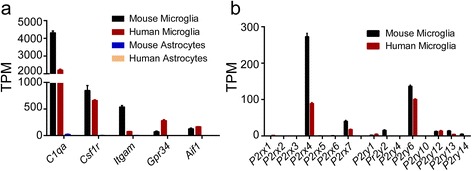
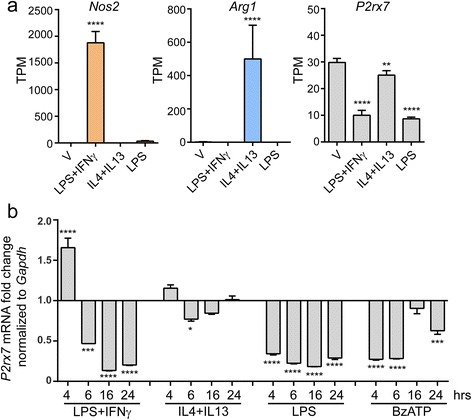
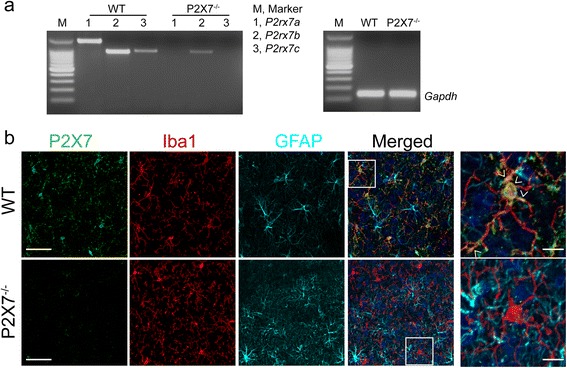
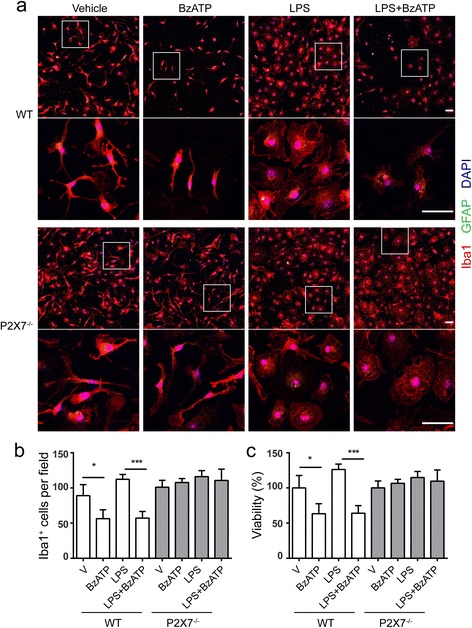
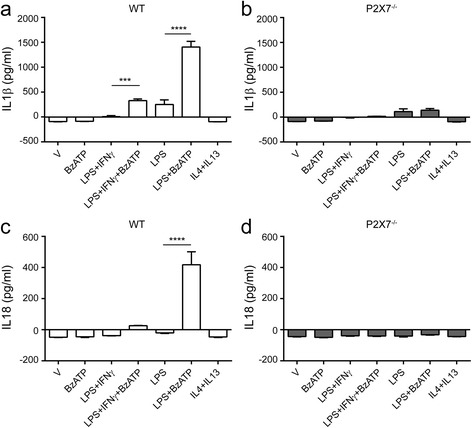
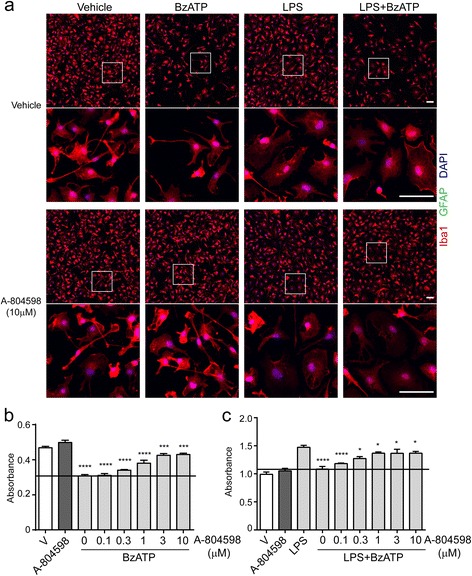
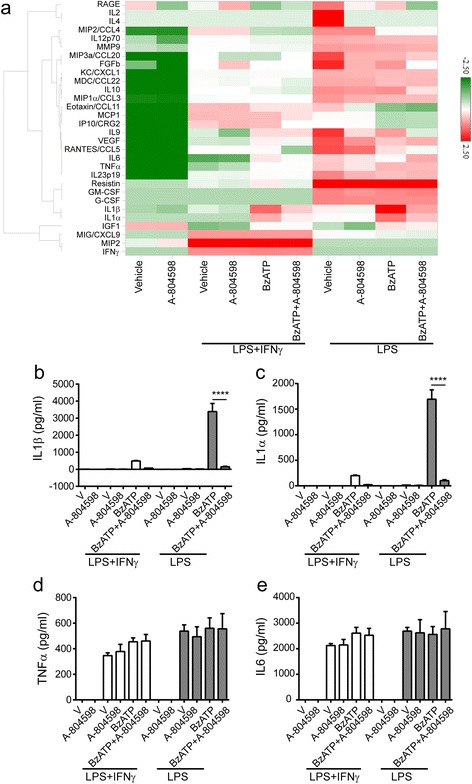
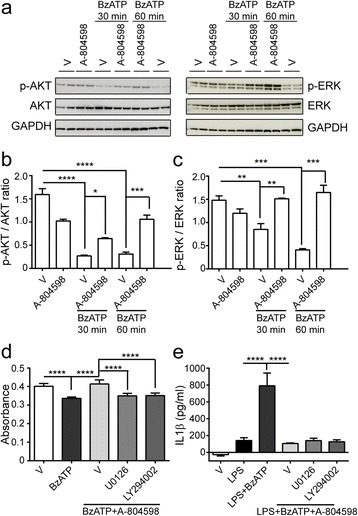
ATP-gated P2X7 is a non-selective cation channel, which participates in a wide range of cellular functions as well as pathophysiological processes including neuropathic pain, immune response, and neuroinflammation. Despite its abundant expression in microglia, the role of P2X7 in neuroinflammation still remains unclear. Primary microglia were isolated from cortices of P0-2 C57BL/6 wild-type or P2X7 knockout (P2X7 −/− ) mouse pups. Lipopolysaccharide, lipopolysaccharide plus IFNγ, or IL4 plus IL13 were used to polarize microglia to pro-inflammatory or anti-inflammatory states. P2rx7 expression level in resting or activated mouse and human microglia was measured by RNA-sequencing and quantitative real-time PCR. Microglial cell death was measured by cell counting kit-8 and immunocytochemistry, and microglial secretion in wild-type or P2X7 −/− microglia was examined by Luminex multiplex assay or ELISA using P2X7 agonist BzATP or P2X7 antagonist A-804598. P2X7 signaling was analyzed by Western blot. First, we confirmed that P2rx7 is constitutively expressed in mouse and human primary microglia. Moreover, P2rx7 mRNA level was downregulated in mouse microglia under both pro- and anti-inflammatory conditions. Second, P2X7 agonist BzATP caused cell death of mouse microglia, while this effect was suppressed either by P2X7 knockout or by A-804598 under both basal and pro-inflammatory conditions, which suggests the mediating role of P2X7 in BzATP-induced microglial cell death. Third, BzATP-induced release of IL1 family cytokines including IL1α, IL1β, and IL18 was blocked in P2X7 −/− microglia or by A-804598 in pro-inflammatory microglia, while the release of other cytokines/chemokines was independent of P2X7 activation. These findings support the specific role of P2X7 in IL1 family cytokine release. Finally, P2X7 activation was discovered to be linked to AKT and ERK pathways, which may be the underlying mechanism of P2X7 functions in microglia. These results reveal that P2X7 mediates BzATP-induced microglial cell death and specific release of IL1 family cytokines, indicating the important role of P2X7 in neuroinflammation and implying the potential of targeting P2X7 for the treatment of neuroinflammatory disorders.
Overview
The claims and statistics of this paper haven’t been checked yet.
Free: it reads the open-access text and checks the first 5 claims that cite a source we can check. Create a free account to check every claim.
Integrity signals
Registry
Cites
Statistics
Figures
Verification
Claims the paper makes
The claims and statistics of this paper haven’t been checked yet.
Free: it reads the open-access text and checks the first 5 claims that cite a source we can check. Create a free account to check every claim.
Claims other papers make about this one
Each is checked against this paper’s own text: does it say what the citing paper says it does?
The source backs part of the claim, not all of it — or backs it for a different population, condition or comparison.
In the citing paper
“Stress exposure is a major pathogenic factor in disease models and can increase Ca 2+ -dependent release of ATP from neurons, which causes excitotoxicity. 197 , 198”
From Major depressive disorder: hypothesis, mechanism, prevention and treatment (2024) · cites this paper as [198]
Experimental — accuracy not yet measuredThe source backs part of the claim, not all of it — or backs it for a different population, condition or comparison.
In the citing paper
“Consequently, there is an activation of caspase-1 and maturation of IL-1β and IL-18, resulting in pro-inflammatory cytokine release [16, 20, 52, 71, 73].”
From Hyperactivation of P2X7 receptors as a culprit of COVID-19 neuropathology (2021) · cites this paper as [52]
Experimental — accuracy not yet measured
Self-check
Percentages, sums and reported differences re-computed from the paper’s own numbers.
The self-check needs the paper’s full text.
Citations
Cites
Amyloid oligomers exacerbate tau pathology in a mouse model of tauopathy
Selenica, M.-L. B., Brownlow, M., Jimenez, J. P., Lee, D. C., Pena, G., Dickey, C. A., Gordon, M. N., & Morgan, D. (2013) · Neurodegenerative Diseases · doi:10.1159/000337230 · Cited by 10,359
Resting microglial cells are highly dynamic surveillants of brain parenchyma in vivo
Nimmerjahn, A., Kirchhoff, F., & Helmchen, F. (2005) · Science · doi:10.1126/science.1110647 · Cited by 5,827 · cited 1×
“At quiescent state, microglia display characteristically ramified morphology with numerous branching processes, which dynamically survey the brain microenvironment [5].”
Microglial physiology: unique stimuli, specialized responses
Ransohoff, R. M., & Perry, V. H. (2009) · Annual Review of Immunology · doi:10.1146/annurev.immunol.021908.132528 · Cited by 1,858 · cited 1×
“Microglia, the resident immune cells of the brain parenchyma, play critical roles in neuroinflammation [3, 4].”
Altered Cytokine Production in Mice Lacking P2X7Receptors
Solle, M., Labasi, J., Perregaux, D. G., Stam, E., Petrushova, N., Koller, B. H., Griffiths, R. J., & Gabel, C. A. (2001) · Journal of Biological Chemistry · doi:10.1074/jbc.m006781200 · Cited by 930 · cited 1×
“neomycin cassette into exon 1 (Glaxo) [31], or by inserting a neomycin cassette into exon 13 (Pfizer) [18, 32], or by knocking-in of human P2rx7 cDNA to the mouse P2rx7 locus [14], or by inserting shRNA vectors [33].”
Microglial dysfunction in brain aging and Alzheimer's disease
Mosher, K. I., & Wyss-Coray, T. (2014) · Biochemical Pharmacology · doi:10.1016/j.bcp.2014.01.008 · Cited by 618 · cited 1×
“In response to injury, microglia become activated with amoeboid morphology by retracting their ramified processes and produce inflammatory cytokines such as tumor necrosis factor α (TNFα), interleukin (IL) 6, and IL1β [6].”
The P2X 7 Receptor Drives Microglial Activation and Proliferation: A Trophic Role for P2X 7 R Pore
Monif, M., Reid, C. A., Powell, K. L., Smart, M. L., & Williams, D. A. (2009) · The Journal of Neuroscience · doi:10.1523/jneurosci.5512-08.2009 · Cited by 374 · cited 1×
“Overexpression of P2X7 evokes both microglia activation and proliferation [25].”
Microglia Function in Central Nervous System Development and Plasticity
Schafer, D. P., & Stevens, B. (2015) · Cold Spring Harbor Perspectives in Biology · doi:10.1101/cshperspect.a020545 · Cited by 353 · cited 1×
“Microglia, the resident immune cells of the brain parenchyma, play critical roles in neuroinflammation [3, 4].”
The P2X 7 purinergic receptor: from physiology to neurological disorders
Skaper, S. D., Debetto, P., & Giusti, P. (2010) · The FASEB Journal · doi:10.1096/fj.09-138883 · Cited by 337 · cited 1×
“Another hallmark of P2X7 activation is the formation of plasma membrane pores permeable to molecules up to a molecular weight of 900 Da with prolonged exposure to ATP, which leads to dramatic elevation of intracellular Ca(2) , depletion of intracellular ions and metabolites, and ultimately cell death [21].”
Yue, N., Huang, H., Zhu, X., Han, Q., Wang, Y., Li, B., Liu, Q., Wu, G., Zhang, Y., & Yu, J. (2017) · Journal of Neuroinflammation · doi:10.1186/s12974-017-0865-y · Cited by 334
Microglia in Health and Disease
Ransohoff, R. M., & Khoury, J. E. (2016) · Cold Spring Harbor Perspectives in Biology · doi:10.1101/cshperspect.a020560 · Cited by 303 · cited 1×
“Growing evidence supports that neuroinflammation is involved in pathogenesis of a variety of neurological disorders, including Alzheimer’s disease, Parkinson’s disease, and psychiatric diseases [1, 2].”
Cited by
Major depressive disorder: hypothesis, mechanism, prevention and treatment
Cui, L., Li, S., Wang, S., Wu, X., Liu, Y., Yu, W., Wang, Y., Tang, Y., Xia, M., & Li, B. (2024) · Signal Transduction and Targeted Therapy · doi:10.1038/s41392-024-01738-y · Cited by 1,244
“197 ,198 Regulated in development and DNA damage response-1 (REDD1) is a stress response gene that can regulate development and the response to DNA damage.”
BackgroundImmune targets for therapeutic development in depression: towards precision medicine
Drevets, W. C., Wittenberg, G. M., Bullmore, E. T., & Manji, H. K. (2022) · Nature Reviews Drug Discovery · doi:10.1038/s41573-021-00368-1 · Cited by 348
Shao, F., Wang, X., Wu, H., Wu, Q., & Zhang, J. (2022) · Frontiers in Aging Neuroscience · doi:10.3389/fnagi.2022.825086 · Cited by 250
Regulation of Microglial Functions by Purinergic Mechanisms in the Healthy and Diseased CNS
Illes, P., Rubini, P., Ulrich, H., Zhao, Y., & Tang, Y. (2020) · Cells · doi:10.3390/cells9051108 · Cited by 235
“The loss of important cell ingredients through the P2X7R pore and the release of pro-inflammatory cytokines and chemokines with their subsequent deleterious effects may cause necrotic death of both the microglia itself (‘suicide receptor’) [127,128] and the targeted CNS neurons by the accompanying neuroinflammation ev…”
BackgroundMicroglia-neuron crosstalk: Signaling mechanism and control of synaptic transmission
Marinelli, S., Basilico, B., Marrone, M. C., & Ragozzino, D. (2019) · Seminars in Cell & Developmental Biology · doi:10.1016/j.semcdb.2019.05.017 · Cited by 233
Cui, Y., Zhang, Z., Zhou, X., Zhao, Z., Zhao, R., Xu, X., Kong, X., Ren, J., Yao, X., Wen, Q., et al. (2021) · Journal of Neuroinflammation · doi:10.1186/s12974-021-02231-x · Cited by 207
“On one hand, certain kinds of cell death can lead to neuroinflammation; on the other hand, neuroinflammation can modulate cell death [40, 41].”
BackgroundThe P2X7 Receptor: Central Hub of Brain Diseases
Andrejew, R., Oliveira-Giacomelli, Á., Ribeiro, D. E., Glaser, T., Arnaud-Sampaio, V. F., Lameu, C., & Ulrich, H. (2020) · Frontiers in Molecular Neuroscience · doi:10.3389/fnmol.2020.00124 · Cited by 162
“P2X7 Receptor in Neuroinflammation The P2X7 receptor is highly expressed in microglial cells (Lord et al., 2015; He et al., 2017).”
BackgroundInfluentialHyperactivation of P2X7 receptors as a culprit of COVID-19 neuropathology
Ribeiro, D. E., Oliveira-Giacomelli, Á., Glaser, T., Arnaud-Sampaio, V. F., Andrejew, R., Dieckmann, L., Baranova, J., Lameu, C., Ratajczak, M. Z., & Ulrich, H. (2021) · Molecular Psychiatry · doi:10.1038/s41380-020-00965-3 · Cited by 145
“Consequently, there is an activation of caspase-1 and maturation of IL-1β and IL-18, resulting in pro-inflammatory cytokine release [16, 20, 52, 71, 73].”
BackgroundMicroglia and the Purinergic Signaling System
Calovi, S., Mut-Arbona, P., & Sperlágh, B. (2019) · Neuroscience · doi:10.1016/j.neuroscience.2018.12.021 · Cited by 133
Modulation of three key innate immune pathways for the most common retinal degenerative diseases
Akhtar‐Schäfer, I., Wang, L., Krohne, T. U., Xu, H., & Langmann, T. (2018) · EMBO Molecular Medicine · doi:10.15252/emmm.201708259 · Cited by 129
Neurodegeneration and Neuro-Regeneration—Alzheimer’s Disease and Stem Cell Therapy
Vasić, V., Barth, K., & Schmidt, M. H. H. (2019) · International Journal of Molecular Sciences · doi:10.3390/ijms20174272 · Cited by 143
“[40] have shown that P2X7R, modulator of neuroinflammation, plays an important role in mediating microglial cell death and cytokine release, which may be coupled to AKT and ERK pathways.”
BackgroundPenna, C. R. R., & Pagliaro, P. (2025) · Antioxidants · doi:10.3390/antiox14030256 · Cited by 166
“For comprehensive reviews on the role of the NLRP3 inflammasome in ED and CVDs, see [9,102,110,127].”
InfluentialRecent advances in CNS P2X7 physiology and pharmacology: Focus on neuropsychiatric disorders
Bhattacharya, A. (2018) · Frontiers in Pharmacology · doi:10.3389/fphar.2018.00030 · Cited by 115
“Within the CNS P2X7 is abundantly expressed in microglial cells (Bhattacharya and Biber, 2016) and P2X7 activation causes IL-1β (and IL-18) release, neuroinflammation, and microglial activation (Monif et al., 2010; Frontiers in Pharmacology | www.frontiersin.org 1 February 2018 | Volume 9 | Article 30 Bhattacharya et…”
BackgroundSelf-citationA central role for P2X7 receptors in human microglia
Janks, L., Sharma, C. V. R., & Egan, T. M. (2018) · Journal of Neuroinflammation · doi:10.1186/s12974-018-1353-8 · Cited by 110
“While this may represent a genuine difference between murine and human cells, it is also possible that the P2X4R gene, which may be present and active in human cells in situ [26], is downregulated under the culture conditions in which our cells were maintained.”
BackgroundJiang, L., Zhang, Y., Feng, J. C., Long, T., Qin, G., Zhang, D., Chen, L., & Zhou, J. (2021) · Journal of Neuroinflammation · doi:10.1186/s12974-020-02056-0 · Cited by 112
Ion Channels and Receptors as Determinants of Microglial Function
Izquierdo, P., Attwell, D., & Madry, C. (2019) · Trends in Neurosciences · doi:10.1016/j.tins.2018.12.007 · Cited by 102
He, Y., Yao, X., Taylor, N., Bai, Y., Lovenberg, T., & Bhattacharya, A. (2018) · Journal of Neuroinflammation · doi:10.1186/s12974-018-1195-4 · Cited by 95
“Secretome assay was carried out as described before [20].”
Self-citationNew Insights into Microglia–Neuron Interactions: A Neuron’s Perspective
Pósfai, B., Cserép, C., Orsolits, B., & Dénes, Á. (2019) · Neuroscience · doi:10.1016/j.neuroscience.2018.04.046 · Cited by 98
P2RX7 Purinoceptor as a Therapeutic Target—The Second Coming?
Young, C., & Górecki, D. C. (2018) · Frontiers in Chemistry · doi:10.3389/fchem.2018.00248 · Cited by 103
“Macrophages and microglia express high levels of P2RX7 (He et al., 2017; Young et al., 2017) and are perhaps the best studied cells in relation to receptor function both in vitro and in/ex vivo (Csóka et al.”
BackgroundMouse primary microglia respond differently to LPS and poly(I:C) in vitro
He, Y., Taylor, N., Yao, X., & Bhattacharya, A. (2021) · Scientific Reports · doi:10.1038/s41598-021-89777-1 · Cited by 117
Self-citationThe yin and yang functions of extracellular ATP and adenosine in tumor immunity
Feng, L.-L., Cai, Y.-Q., Zhu, M.-C., Xing, L.-J., & Wang, X. (2020) · Cancer Cell International · doi:10.1186/s12935-020-01195-x · Cited by 93
Role of NLRP3 Inflammasome in Parkinson’s Disease and Therapeutic Considerations
Nguyen, L. T. N., Nguyễn, H. Đ., Kim, Y. J., Nguyen, T. T., Lai, T. T., Lee, Y. K., Ma, H., & Kim, Y. E. (2022) · Journal of Parkinson s Disease · doi:10.3233/jpd-223290 · Cited by 102
Calcium signaling in neuroglia
(2021) · International Review of Cell and Molecular Biology · doi:10.1016/bs.ircmb.2021.01.003 · Cited by 85
Bhattacharya, A., Lord, B., Grigoleit, J., He, Y., Fraser, I. C., Campbell, S. N., Taylor, N., Aluisio, L. E., O’Connor, J. C., Papp, M., et al. (2018) · Neuropsychopharmacology · doi:10.1038/s41386-018-0141-6 · Cited by 88
Self-citationPathological ATPergic Signaling in Major Depression and Bipolar Disorder
Illes, P., Verkhratsky, A., & Tang, Y. (2020) · Frontiers in Molecular Neuroscience · doi:10.3389/fnmol.2019.00331 · Cited by 76
Microglial-driven changes in synaptic plasticity: A possible role in major depressive disorder
Innes, S., Pariante, C. M., & Borsini, A. (2019) · Psychoneuroendocrinology · doi:10.1016/j.psyneuen.2018.12.233 · Cited by 75
Rahimian, R., Belliveau, C., Chen, R., & Mechawar, N. (2022) · Frontiers in Psychiatry · doi:10.3389/fpsyt.2022.871997 · Cited by 88
Unraveling the Complex Interplay Between Neuroinflammation and Depression: A Comprehensive Review
Sălcudean, A., Popovici, R. A., Pitic, D. E., Sârbu, D., Boroghina, A. R., Jomaa, M., Salehi, M. A., Kher, A. A. M., Lica, M. M., Bodo, C. R., et al. (2025) · International Journal of Molecular Sciences · doi:10.3390/ijms26041645 · Cited by 89
“…Under normal physiological conditions, microglia exhibit a ramified morphology, characterized by long, branched processes that allow them to continuously survey the brain environment [60]. characterized by long, branched processes that allow them to continuously survey the brain environment [60].”
Timmers, M., Ravenstijn, P. G. M., Xi, L., Triana‐Baltzer, G., Furey, M., Hemelryck, S. V., Biewenga, J., Ceusters, M., Bhattacharya, A., van den Boer, M., et al. (2018) · Journal of Psychopharmacology · doi:10.1177/0269881118800067 · Cited by 73
Self-citationRole of P2X7 Receptors in Immune Responses During Neurodegeneration
Oliveira-Giacomelli, Á., Petiz, L. L., Andrejew, R., Turrini, N., Silva, J. B., Sack, U., & Ulrich, H. (2021) · Frontiers in Cellular Neuroscience · doi:10.3389/fncel.2021.662935 · Cited by 68
Interactions of neuroimmune signaling and glutamate plasticity in addiction
Gipson, C. D., Rawls, S. M., Scofield, M. D., Siemsen, B. M., Bondy, E. O., & Maher, E. E. (2021) · Journal of Neuroinflammation · doi:10.1186/s12974-021-02072-8 · Cited by 74
“reinforcement [91, 92, 127, 245], suggesting a link be-”
Territo, P. R., & Zarrinmayeh, H. (2021) · Frontiers in Cellular Neuroscience · doi:10.3389/fncel.2021.617036 · Cited by 78
“Lord et al., 2015 Bhattacharya and Jones, 2018 Hempel et al., 2013 Rudolph et al., 2015 JNJ-54173717 [11C]-JNJ-54173717 1.6 ± 0.1 nM rat cortex 4.2 ± 0.01 (h) 7.6 ± 0.01 (r) Brain-penetrable.”
BackgroundInfluentialCampagno, K. E., Lu, W., Jassim, A. H., Albalawi, F., Cenaj, A., Tso, H., Clark, S. P., Sripinun, P., Gómez, N. M., & Mitchell, C. H. (2021) · Journal of Neuroinflammation · doi:10.1186/s12974-021-02251-7 · Cited by 69
The role and pharmacological properties of the P2X7 receptor in neuropathic pain
Zhang, W., Zhu, J., & Liu, Z.-X. (2019) · Brain Research Bulletin · doi:10.1016/j.brainresbull.2019.11.006 · Cited by 71
Berdyyeva, T., Xia, C., Taylor, N., He, Y., Chen, G., Huang, C., Zhang, W., Kolb, H., Letavic, M., Bhattacharya, A., et al. (2019) · Molecular Imaging and Biology · doi:10.1007/s11307-018-01313-2 · Cited by 60
Self-citationMicroglial Responses to Brain Injury and Disease: Functional Diversity and New Opportunities
Lyu, J., Jiang, X., Leak, R. K., Shi, Y., Hu, X., & Chen, J. (2020) · Translational Stroke Research · doi:10.1007/s12975-020-00857-2 · Cited by 67
Effect of P2X7 receptor on tumorigenesis and its pharmacological properties
Zhang, W., Hu, C., Zhu, J., & Luo, H. (2020) · Biomedicine & Pharmacotherapy · doi:10.1016/j.biopha.2020.109844 · Cited by 60
Xia, M., Li, Z., Li, S., Liang, S., Li, X., Chen, B., Zhang, M., Dong, C., Verkhratsky, A., Guan, D., et al. (2020) · Neuroscience Bulletin · doi:10.1007/s12264-020-00524-4 · Cited by 55
Kolb, H. C., Barret, O., Bhattacharya, A., Chen, G., Constantinescu, C. C., Huang, C., Letavic, M. A., Tamagnan, G. D., Xia, C. A., Zhang, W., et al. (2019) · Journal of Nuclear Medicine · doi:10.2967/jnumed.118.212696 · Cited by 56
“One of the features of the P2X7 receptor activation is NLRP3 inflammasome activation followed by release of proinflammatory cytokines IL-1b and IL-18 (9), which is dependent on 2 critical steps working in concert: a priming of toll-like receptors by lipopolysaccharide and a subsequent activation of the P2X7 receptor b…”
BackgroundSelf-citationP2X7 Receptor–Mediated Inflammation in Cardiovascular Disease
Zhou, J., Zhou, Z., Liu, X., Yin, H., Tang, Y., & Cao, X. (2021) · Frontiers in Pharmacology · doi:10.3389/fphar.2021.654425 · Cited by 68
“In addition, extracellular ATP opens K channels through ATP-gated P2X7 receptors, accelerating K outflow and thereby triggering NLRP3 inflammasome activation (He et al., 2017).”
Backgrounddo Carmo, M. R. S., Gonçalves, F. Q., Canas, P. M., Oses, J. P., Fernandes, F. D. P., Duarte, F. V., Palmeira, C. M., Tomé, Â. R., Agostinho, P. M., de Andrade, G. M., et al. (2019) · British Journal of Pharmacology · doi:10.1111/bph.14771 · Cited by 55
León, B. E., Kang, S., Franca-Solomon, G., Shang, P., & Choi, D. (2022) · Frontiers in Behavioral Neuroscience · doi:10.3389/fnbeh.2021.778456 · Cited by 66
“P2X7R activation results in the release of pro-inflammatory cytokines IL-1β and IL-18 (He et al., 2017) which is mediated by the activation of nucleotide oligomerization domain containing protein 1 (NOD)-, leucine-rich repeat (LRR)-, and pyrin domain containing protein 3 (NLRP3) inflammasome complex (Iwata et al., 201…”
BackgroundP2X7 receptor in inflammation and pain
Hu, S.-Q., Hu, J., Zou, F.-L., Liu, J., Luo, H., Hu, D.-X., Wu, L., & Zhang, W. (2022) · Brain Research Bulletin · doi:10.1016/j.brainresbull.2022.07.006 · Cited by 56
Genetic variation in P2RX7 and pain tolerance
Kambur, O., Kaunisto, M. A., Winsvold, B. S., Wilsgaard, T., Stubhaug, A., Zwart, J., Kalso, E. A., & Nielsen, C. S. (2018) · Pain · doi:10.1097/j.pain.0000000000001188 · Cited by 52
“P2X7 activation and consequent cellular events contribute to the proinflammatory response to injury and mediate apoptosis.(30) It has been implicated in physiological and pathological conditions, including bone tissue homeostasis and remodeling,(26,36) inflammation,(3,11,17) oncogenesis,(17,51) neurodegenerative and n…”
BackgroundPurinergic Receptors in Neurological Diseases With Motor Symptoms: Targets for Therapy
Oliveira-Giacomelli, Á., Naaldijk, Y., Sardá-Arroyo, L., Gonçalves, M. C. B., Corrêa-Velloso, J., Pillat, M. M., de Souza, H. D. N., & Ulrich, H. (2018) · Frontiers in Pharmacology · doi:10.3389/fphar.2018.00325 · Cited by 50
“…neuroinflammatory responses, excitotoxicity, oxidative stress and cell death, especially via A2A and P2X7 receptors activity, respectively (Cunha, 2016; Borea et al., 2017; Faas et al., 2017; Faria et al., 2017; He et al., 2017; Lu et al., 2017; Miras-Portugal et al., 2017; Vuorimaa et al., 2017).”
BackgroundLi, X., Quan, P., Si, Y., Liu, F., Fan, Y., Ding, F., Sun, L., Liu, H., Huang, S., Sun, L., et al. (2024) · Journal of Neuroinflammation · doi:10.1186/s12974-023-03009-z · Cited by 58
“Indeed, activation of P2RX7 leads to the activation and release of inflammatory factors from microglia [68], as well as the modulation of neurotransmitter release from neurons [69].”
BackgroundWilmes, M., Pinto-Espinoza, C., Ludewig, P., Stabernack, J., Liesz, A., Nicke, A., Gelderblom, M., Gerloff, C. P., Falzoni, S., Tolosa, E., et al. (2022) · Journal of Neuroinflammation · doi:10.1186/s12974-022-02601-z · Cited by 52
Pleiotropic Roles of P2X7 in the Central Nervous System
Kanellopoulos, J. M., & Delarasse, C. (2019) · Frontiers in Cellular Neuroscience · doi:10.3389/fncel.2019.00401 · Cited by 48
“P2X7 stimulation induces apoptosis in embryonic rat cortical neurons via activation of the signaling pathways JNK1, ERK and caspases 8/9/3 (Kong et al., 2005).”
BackgroundInfluentialP2X2 receptors in pyramidal neurons are critical for regulating vulnerability to chronic stress
Kuang, X., Zhang, C.-Y., Yan, B.-Y., Cai, W.-Z., Lu, C., Xie, L.-J., Li, S.-J., Kong, P., Fan, J., Pan, S.-M., et al. (2022) · Theranostics · doi:10.7150/thno.72144 · Cited by 47
“And P2X7R, expressed on microglia and macrophage, play a role in mediating stress and depression [20-23].”
BackgroundP2X7R antagonists in chronic stress-based depression models: a review
von Mücke-Heim, I.-A., Ries, C., Urbina-Treviño, L., & Deussing, J. M. (2021) · European Archives of Psychiatry and Clinical Neuroscience · doi:10.1007/s00406-021-01306-3 · Cited by 49
Mokmeli, S., & Vetrici, M. A. (2020) · Canadian Journal of Respiratory Therapy · doi:10.29390/cjrt-2020-015 · Cited by 46
“Extracellular ATP plays a central role in apoptotic cell death [27], the induction of inflammation [28], and mitochondrial failure in monocytes [29].”
BackgroundXu, M., Zhang, L., Liu, G., Jiang, N., Zhou, W., & Zhang, Y. (2019) · Journal of Alzheimer's Disease · doi:10.3233/jad-180722 · Cited by 39
“P2X7activationisreportedly associatedwiththeinductionofmicroglialdeath[45, 46].”
Role and therapeutic targets of P2X7 receptors in neurodegenerative diseases
Zheng, H., Liu, Q., Zhou, S., Luo, H., & Zhang, W. (2024) · Frontiers in Immunology · doi:10.3389/fimmu.2024.1345625 · Cited by 51
“However, it is not linked to the release of IL-1 family cytokines (IL-18, IL-1 b , IL-1 a ) (47).”
BackgroundCieślak, M., Roszek, K., & Wujak, M. (2018) · Purinergic Signalling · doi:10.1007/s11302-018-9633-4 · Cited by 42
De Sousa, V. L., Araújo, S. B., Antonio, L. M., Silva-Queiroz, M., Colodeti, L. C., Soares, C., Barros-Aragão, F., Mota-Araujo, H. P., Alves, V. S., Coutinho-Silva, R., et al. (2021) · Brain, Behavior, and Immunity · doi:10.1016/j.bbi.2021.04.001 · Cited by 37
Contribution of non-selective membrane channels and receptors in epilepsy
García‐Rodríguez, C., Tobar, I. D. B., Duarte, Y., Barrio, L. C., & Sáez, J. C. (2021) · Pharmacology & Therapeutics · doi:10.1016/j.pharmthera.2021.107980 · Cited by 40
Pan, K., & Garaschuk, O. (2022) · The Journal of Physiology · doi:10.1113/jp279521 · Cited by 37
“…(Brawek et al., 2014; Eichhoff et al., 2011) and under more proinflammatory conditions or in case of strong ATP release likely also ionotropic (Garaschuk, 2021; He et al., 2017; Pocock & Kettenmann, 2007) purinergic receptors as well as Ca 2 + release from the intracellular Ca 2 + stores.”
Engel, T., Smith, J., & Alves, M. (2021) · Journal of Inflammation Research · doi:10.2147/jir.s287740 · Cited by 37
Ernest James Phillips, T., & Maguire, E. (2021) · Frontiers in Cellular Neuroscience · doi:10.3389/fncel.2021.652593 · Cited by 33
Wang, H., Zhang, Y. L., Ma, X., Wang, W., Xu, X., Huang, M., Xu, L., Shi, H., Yuan, T., Jiang, W., et al. (2020) · Journal of Inflammation Research · doi:10.2147/jir.s266995 · Cited by 33
Liu, X., Li, Y., Huang, L., Kuang, Y., Wu, X., Ma, X., Zhao, B., & Lan, J. (2024) · Frontiers in Pharmacology · doi:10.3389/fphar.2024.1450704 · Cited by 53
“Notably, P2X7R activation is not associated with IL-1 family cytokine release in this context (He et al., 2017).”
BackgroundDissection of P2X4 and P2X7 Receptor Current Components in BV-2 Microglia
Trang, M., Schmalzing, G., Müller, C. E., & Markwárdt, F. (2020) · International Journal of Molecular Sciences · doi:10.3390/ijms21228489 · Cited by 39
“The functional expression of P2X7 receptors decreased [17,77,79,81], increased [62,76] or was unaltered by LPS [17,19].”
BackgroundHorner, E., Lord, J. M., & Hazeldine, J. (2023) · Frontiers in Immunology · doi:10.3389/fimmu.2023.1239683 · Cited by 35
Brandli, A. A., Vessey, K. A., & Fletcher, E. L. (2024) · Journal of Neuroinflammation · doi:10.1186/s12974-024-03055-1 · Cited by 37
Zhang, W. (2021) · Purinergic Signalling · doi:10.1007/s11302-020-09761-8 · Cited by 33
The role of P2X7R in neuroinflammation and implications in Alzheimer's disease
Chen, Y.-H., Lin, R.-R., & Tao, Q. (2021) · Life Sciences · doi:10.1016/j.lfs.2021.119187 · Cited by 35
Modulation of Microglial Function by ATP-Gated P2X7 Receptors: Studies in Rat, Mice and Human
Tewari, M., Michalski, S. A., & Egan, T. M. (2024) · Cells · doi:10.3390/cells13020161 · Cited by 40
“Additionally, P2X7Rs mediate the release of proinflammatory cytokines in response to tissue damage and inflammation [108,121,122].”
BackgroundInfluentialAghajanpour, F., Boroujeni, M. E., Jahanian, A., Soltani, R., Ezi, S., Khatmi, A., Abdollahifar, M., Mirbehbahani, S. H., Toreyhi, H., Aliaghaei, A., et al. (2020) · Neurotoxicity Research · doi:10.1007/s12640-020-00214-z · Cited by 33
“Besides, there are other signaling pathways that regulate cell death in the brain or other organs (He et al. 2017; Rock and Kono 2008).”
BackgroundBlocking the inflammasome: A novel approach to treat uveitis
Shome, A., Mugisho, O. O., Niederer, R. L., & Rupenthal, I. D. (2021) · Drug Discovery Today · doi:10.1016/j.drudis.2021.06.017 · Cited by 29
The role of P2X7 receptor in infection and metabolism: Based on inflammation and immunity
Cai, X. T., Yao, Y., Teng, F., Li, Y., Wu, L., Yan, W., & Lin, N. (2021) · International Immunopharmacology · doi:10.1016/j.intimp.2021.108297 · Cited by 34
Sun, S., Jiang, W., Yan, X., Zhang, J., Gao, L., Wu, C., Zhu, B., & Wu, L. (2022) · Brain Research Bulletin · doi:10.1016/j.brainresbull.2022.10.020 · Cited by 27
“Recently, studies have focused on the close correlation between PRR-mediated neuroinflammation and peripheral and central pain sensitization mechanisms (Hirao et al., 2009; Kato et al., 2016).”
BackgroundBeaino, W., Janssen, B., Kooijman, E. J. M., Vos, R., Schuit, R. C., O’Brien-Brown, J., Kassiou, M., Hof, B. V. H., Vugts, D. J., de Vries, H. E., et al. (2020) · Journal of Neuroinflammation · doi:10.1186/s12974-020-01962-7 · Cited by 31
Role of Dehydrocorybulbine in Neuropathic Pain After Spinal Cord Injury Mediated by P2X4 Receptor.
Wang, Z., Mei, W., Wang, Q., Guo, R., Liu, P., Wang, Y., Zhang, Z., & Wang, L. (2019) · Europe PMC (PubMed Central) · doi:10.14348/molcells.2018.0028 · Cited by 25
“Purinergic signaling is involved in the release of pronociceptive factors (Ferrari et al., 1997; He et al., 2017).”
BackgroundThe Multifaceted Role of P2X7R in Microglia and Astrocytes
Bedetta, M., Pizzo, P., & Lia, A. (2025) · Neurochemical Research · doi:10.1007/s11064-025-04502-y · Cited by 29
“This effect was not observed in P2X7RKO microglia, indicating that P2X7R is essential for BzATP-induced cytotoxicity [82].”
P2x7 receptors control demyelination and inflammation in the cuprizone model
Bernal‐Chico, A., Manterola, A., Cipriani, R., Katona, I., Matute, C., & Mato, S. (2020) · Brain Behavior & Immunity - Health · doi:10.1016/j.bbih.2020.100062 · Cited by 28
Wang, K., Sun, M., Juan, Z., Zhang, J., Sun, Y., Wang, G., Wang, C., Li, Y., Kong, W., Fan, L., et al. (2022) · Behavioural Neurology · doi:10.1155/2022/3777351 · Cited by 29
“P2X7R is primarily expressed on the surface of various brain cells, especially microglia and astrocytes [6, 7].”
BackgroundLigand-Gated Ion Channels as Targets for Treatment and Management of Cancers
Rao, R., Shah, S., Bhattacharya, D., Toukam, D. K., Cáceres, R., Krummel, D. P., & Sengupta, S. (2022) · Frontiers in Physiology · doi:10.3389/fphys.2022.839437 · Cited by 28
Jiang, Q., Li, W., Xu, Z., Yu, L.-H., Lu, Z.-Y., Liu, Y., Ma, B., & Cheng, L. (2021) · The International Journal of Biochemistry & Cell Biology · doi:10.1016/j.biocel.2021.106068 · Cited by 25
Wu, P., Zhou, G., Wu, X., Lv, R., Yao, J., & Wen, Q. (2022) · Molecular Pain · doi:10.1177/17448069211060962 · Cited by 26
Pinto-Espinoza, C., Guillou, C., Rissiek, B., Wilmes, M., Javidi, E., Schwarz, N., Junge, M., Haag, F., Liaukouskaya, N., Wanner, N., et al. (2022) · Frontiers in Pharmacology · doi:10.3389/fphar.2022.1029236 · Cited by 25
“P2X7 is expressed on the cell surface of various leukocytes, particularly at high levels on macrophages, microglia (Ferrari et al., 1996; He et al., 2017; Metzger et al., 2017) and resident T cells of the kidney (Stark et al.”
BackgroundP2X7 Receptor: an Emerging Target in Alzheimer’s Disease
Huang, Q., Ying, J., Yu, W., Dong, Y., Xiong, H., Zhang, Y., Liu, J., Wang, X., & Hua, F. (2023) · Molecular Neurobiology · doi:10.1007/s12035-023-03699-9 · Cited by 29
“M1 microglia can secrete a variety of pro-inflammatory cytokines and chemokines, such as IL-1β, IL-6, IL-18, and TNF-α [102, 103].”
BackgroundBeltran-Lobo, P., Hughes, M. M., Troakes, C., Croft, C. L., Rupawala, H., Jutzi, D., Ruepp, M., Jiménez-Sánchez, M., Perkinton, M. S., Kassiou, M., et al. (2023) · Brain Behavior and Immunity · doi:10.1016/j.bbi.2023.09.011 · Cited by 24
“The concentrations of Cp2 used were based on previous publications examining changes in microglial function following P2X7R antagonism (He et al., 2017; Janks et al., 2018).”
P2X7 Receptor as a Potential Target for Major Depressive Disorder
Huang, Z., & Tan, S. (2021) · Current Drug Targets · doi:10.2174/1389450122666210120141908 · Cited by 23
Tang, Y., Illes, P., Zhang, Y., Yin, H.-Y., & Rubini, P. (2022) · Current Neuropharmacology · doi:10.2174/1570159x20666220302152400 · Cited by 20
“Even though the P2X7R expresses abundantly in central immunocytes, it is usually “silent” under normal physiological conditions unless the concentration of ATP reaches high micromolar/millimolar levels to activate the ion channel towards promoting the release of the proinflammatory cytokines IL-1β and IL-18 [61, 97].”
InfluentialPurinergic signaling in cognitive impairment and neuropsychiatric symptoms of Alzheimer's disease
Ribeiro, D. E., Petiz, L. L., Glaser, T., Oliveira‐Giacomelli, Á., Andrejew, R., Saab, F. D. A. R., Milanis, M. D. S., Campos, H. C., Arnaud-Sampaio, V. F., de Oliveira, S. L. B., et al. (2022) · Neuropharmacology · doi:10.1016/j.neuropharm.2022.109371 · Cited by 24
Dalgarno, R., Leduc‐Pessah, H., Pilapil, A., Kwok, C. H. T., & Trang, T. (2018) · Molecular Pain · doi:10.1177/1744806918795793 · Cited by 24
Single-cell sequencing of the substantia nigra reveals microglial activation in a model of MPTP
Liu, Q., Liu, Z., Xie, W., Li, Y., Wang, H., Zhang, S., Wang, W., Hao, J., Geng, D., Yang, J., et al. (2024) · Frontiers in Aging Neuroscience · doi:10.3389/fnagi.2024.1390310 · Cited by 20
“It can modulation of microglia death and cytokine release (He et al., 2017).”
BackgroundNeuroglial Advances: New Roles for Established Players
Verkhratsky, A., Li, B., Niu, J., Lin, S.-S., Su, Y., Jin, W., Li, Y., Jiang, S., Yi, C., Shi, F., et al. (2025) · Journal of Neurochemistry · doi:10.1111/jnc.70080 · Cited by 20
“Excessive extracellular ATP exacerbates neuroinflammation by activating microglial P2X 7 purinoceptors, driving NLRP3 inflammasome activation and IL-1β release (He et al. 2017).”
The Purinergic System as a Target for the Development of Treatments for Bipolar Disorder
Gonçalves, M. C. B., Andrejew, R., & Gubert, C. (2022) · CNS Drugs · doi:10.1007/s40263-022-00934-0 · Cited by 27
“It activates caspase-1 and converts pro-interleukin-1β and pro-interleukin-18 into their mature forms, increasing their release [61, 62].”
BackgroundCharacterization of the Novel P2X7 Receptor Radioligand [3H]JNJ-64413739 in Human Brain Tissue
Mikkelsen, J. D., Aripaka, S. S., Kaad, S., Pazarlar, B. A., Pinborg, L. H., Finsen, B. R., Varrone, A., Bang‐Andersen, B., & Bastlund, J. F. (2022) · ACS Chemical Neuroscience · doi:10.1021/acschemneuro.2c00561 · Cited by 20
The P2X7 receptor in mood disorders: Emerging target in immunopsychiatry, from bench to bedside
von Mücke-Heim, I.-A., & Deussing, J. M. (2022) · Neuropharmacology · doi:10.1016/j.neuropharm.2022.109366 · Cited by 20
Garrosa, J., Sánchez‐Carro, Y., Ovejero-Benito, M. C., del Sastre, E., García, A. G., López, M. G., López-García, P., & Cano‐Abad, M. F. (2021) · Neuroscience Letters · doi:10.1016/j.neulet.2021.136275 · Cited by 18
Wang, J., Qin, J., Wang, P., Sun, Y. S., & Zhang, Q. (2020) · Mediators of Inflammation · doi:10.1155/2020/3497920 · Cited by 20
“In cultured microglia, the release of IL-6, IL1α, IL1β, IL18, and chemokine CC motif ligand 2 (CCL2) was P2X7R-dependent, and benzoyl-benzoyl ATP (Bz-ATP) could also induce microglial cell death [46, 47].”
BackgroundCalovi, S., Mut-Arbona, P., Tod, P., Iring, A., Nicke, A., Mato, S., Vizi, E. S., Tønnesen, J., & Sperlágh, B. (2020) · Frontiers in Molecular Neuroscience · doi:10.3389/fnmol.2020.566251 · Cited by 22
“Among their receptors, P2X7Rs promote microglial proliferation and activation (Bianco et al., 2006; Monif et al., 2010) and the release of proinflammatory cytokines such as interleukin-1β (IL-1β; He et al., 2017).”
BackgroundMethodPhysiologic roles of P2 receptors in leukocytes
Alberto, A. V. P., Ferreira, N. C. D. S., Bonavita, A. G. C., Nihei, O. K., de Farias, F. P., Bisaggio, R. D. C., Albuquerque, C., Savino, W., Coutinho‐Silva, R., Persechini, P. M., et al. (2022) · Journal of Leukocyte Biology · doi:10.1002/jlb.2ru0421-226rr · Cited by 20
Liu, N., Zhang, G., Zhu, C., Lan, X., Tian, M., Zheng, P., Peng, X.-D., Li, Y., & Yu, J. (2023) · Biomedicine & Pharmacotherapy · doi:10.1016/j.biopha.2023.115675 · Cited by 21
ATP-induced cell death: a novel hypothesis for osteoporosis
Wang, W. J., Zhang, H., Sandai, D. A., Zhao, R., Bai, J., Wang, Y., Wang, Y., Zhang, Z., Zhang, H.-L., & Song, Z. (2023) · Frontiers in Cell and Developmental Biology · doi:10.3389/fcell.2023.1324213 · Cited by 19
Priming and release of cytokine IL-1β in microglial cells from the retina
Campagno, K. E., Lu, W., Sripinun, P., Albalawi, F., Cenaj, A., & Mitchell, C. H. (2024) · Experimental Eye Research · doi:10.1016/j.exer.2025.110246 · Cited by 18
Chisari, M., Barraco, M., Bucolo, C., Ciranna, L., & Sortino, M. A. (2022) · European Journal of Pharmacology · doi:10.1016/j.ejphar.2022.175389 · Cited by 15
Conte, G., Nguyen, T. N., Alves, M., de Diego-García, L., Kenny, A., Nicke, A., Henshall, D. C., Jimenez-Mateos, E. M., & Engel, T. (2020) · Frontiers in Molecular Neuroscience · doi:10.3389/fnmol.2020.00127 · Cited by 16
“This is even more remarkable, as previous studies using P2rx7 mice have provided little evidence of altered P2X7 receptor down-stream signaling during physiological conditions with the regulation of cytokines representing one of the few studies reported (Solle et al., 2001; He et al., 2017).”
Result
Metadata
- Authors
- He, Y., Taylor, N., Fourgeaud, L., & Bhattacharya, A.
- Affiliations
- Janssen Research & Development (United States) (US)
- Corresponding author
- He, Yingbo
- Venue
- Journal of Neuroinflammation
- Published
- 2017-07-17
- Volume
- 14
- Issue
- 1
- Pages
- 135-135
- ISSN
- 1742-2094 (ISSN-L)
- PMC
- PMC5513370
- OpenAlex
- W2734661769
- Cited by
- 194
- References
- 40
- Citations by year
- 2026: 14 · 2025: 22 · 2024: 25 · 2023: 13 · 2022: 33 · 2021: 34 · 2020: 23 · 2019: 12 · 2018: 17
- FWCI
- 10.89
- Type
- journal article
- Language
- en
- Open access
- gold
- doi.org
- Licence
- cc-by
- Locations
- Journal of Neuroinflammation (publishedVersion, cc-by)
- PubMed Central (publishedVersion, cc-by)
- PubMed (publishedVersion)
- DOAJ (DOAJ: Directory of Open Access Journals) (submittedVersion, cc-by-sa)
- Topics
- Life Sciences › Biochemistry, Genetics and Molecular Biology › Physiology › Adenosine and Purinergic Signaling
- Life Sciences › Neuroscience › Neurology › Neuroinflammation and Neurodegeneration Mechanisms
- Health Sciences › Medicine › Physiology (medical) › Pain Mechanisms and Treatments
- Keywords
- P2X7 receptor, microglia, neuroinflammation, microglial cell death, BzATP, IL-1 family cytokines, IL-1β, IL-18, IL-1α, Akt signaling, ERK signaling, microglial polarization, lipopolysaccharide, interferon-gamma
- MeSH terms
- Adenosine Triphosphate, Animals, Cells, Cultured, Female, Humans, Mice, Inbred C57BL, Pregnancy, Cytokines, Cell Death, Microglia, Mice, Knockout, Mice, Receptors, Purinergic P2X7, Purinergic P2X Receptor Agonists
About these checks
Registry, retraction, Cites and statistics results are computed, not judged, with one exception: a printed reference that no index lists is read once by a model before it counts as a citation error. Claims are extracted by a model and kept only when their quote appears verbatim in the text; each cited source is then checked, with a model’s help, for whether it says what the claim relies on. Those verdicts can be wrong — read the claim’s quote and the cited source before relying on one.
Statistics and arithmetic are recomputed, not judged.
Confidence bands are shown only for fields calibrated on our annotated test set. None is calibrated yet, so no band is shown.
What counts as a claim ›How we measure confidence ›How we check this ›
Are you an author, or do you see a problem with this page? Request a review
Data sources
Bibliographic data: Semantic Scholar, OpenAlex, Crossref.
Contains information from the Semantic Scholar Academic Graph Datasets, made available under the ODC Attribution License (ODC-BY 1.0).
Semantic Scholar’s data is described in: Kinney, R., et al. (2023). The Semantic Scholar Open Data Platform. arXiv:2301.10140.
