

Intracellular inflammatory and antioxidant pathways in postmortem frontal cortex of subjects with major depression: effect of antidepressants
Open accessThe DOI matches its Crossref record; 74 of the 74 references it cites were found in a registry or an index.
Abstract
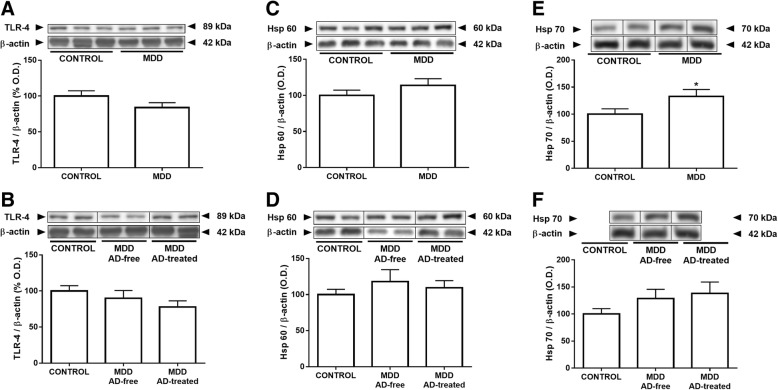
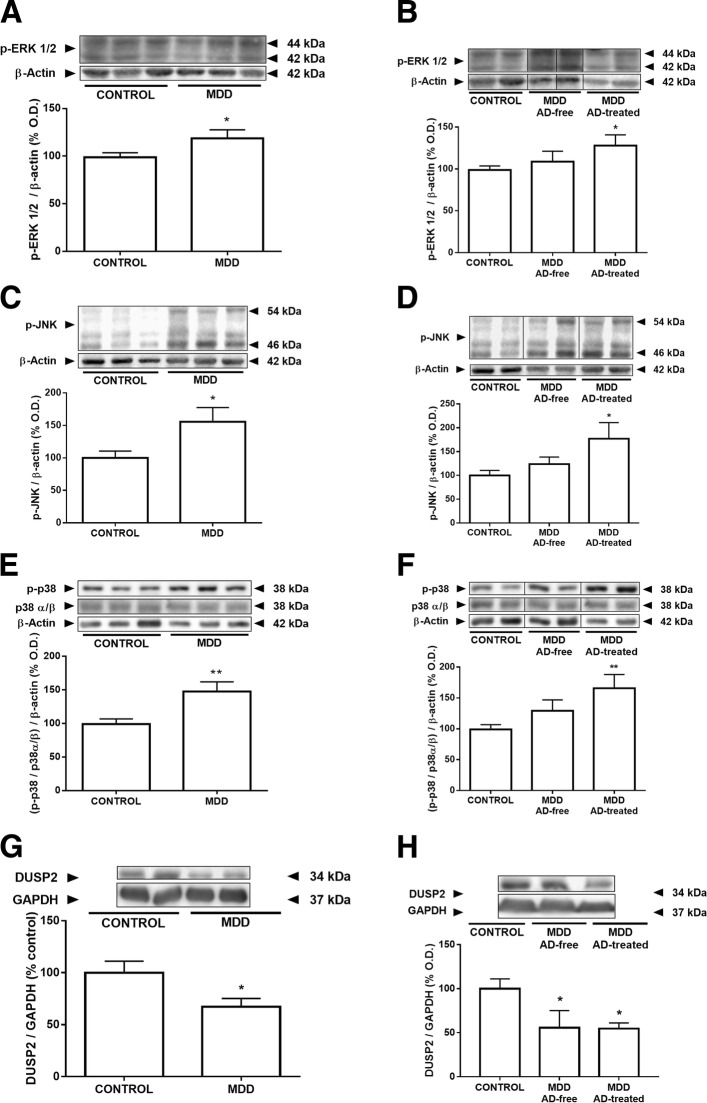
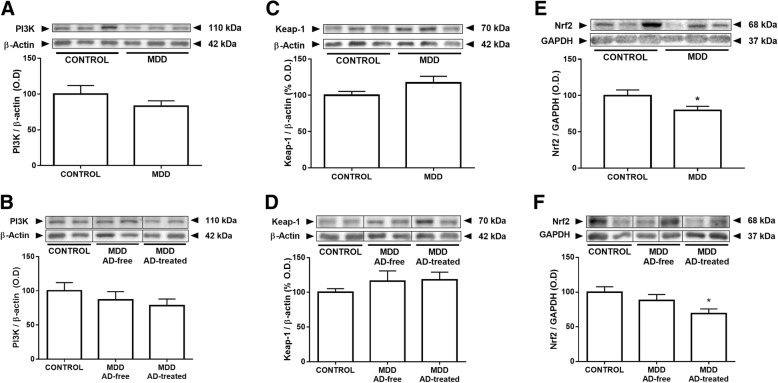
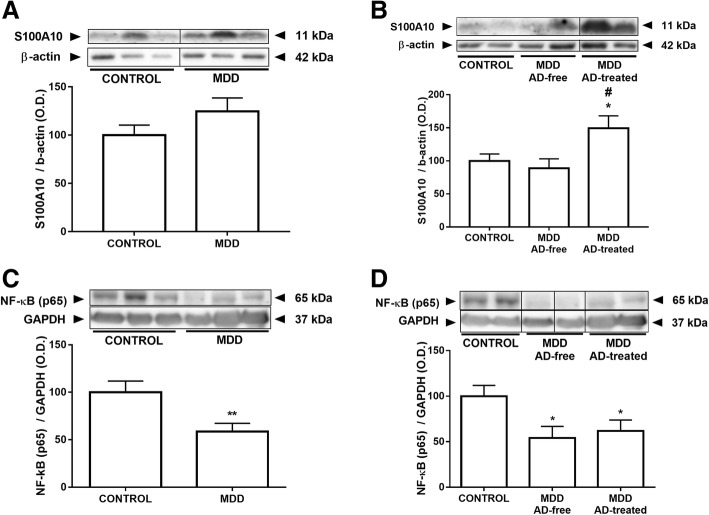
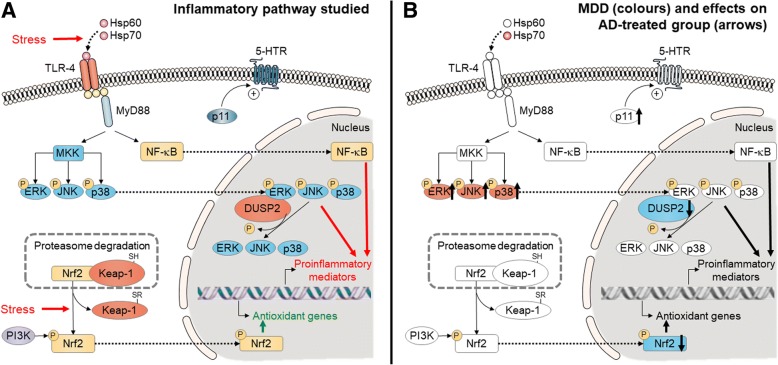
BACKGROUND: Studies show that Toll-like receptors (TLRs), members of the innate immune system, might participate in the pathogenesis of the major depressive disorder (MDD). However, evidence of this participation in the brain of patients with MDD has been elusive. METHODS: This work explores whether the protein expression by immunodetection assays (Western blot) of elements of TLR-4 pathways controlling inflammation and the oxidative/nitrosative stress are altered in postmortem dorsolateral prefrontal cortex of subjects with MDD. The potential modulation induced by the antidepressant treatment on these parameters was also assessed. Thirty MDD subjects (15 antidepressant-free and 15 under antidepressant treatment) were matched for gender and age to 30 controls in a paired design. RESULTS: No significant changes in TLR-4 expression were detected. An increased expression of the TLR-4 endogenous ligand Hsp70 (+ 33%), but not of Hsp60, and the activated forms of mitogen-activated protein kinases (MAPKs) p38 (+ 47%) and JNK (+ 56%) was observed in MDD. Concomitantly, MDD subjects present a 45% decreased expression of DUSP2 (a regulator of MAPKs) and reduced (- 21%) expression of the antioxidant nuclear factor Nrf2. Antidepressant treatment did not modify the changes detected in the group with MDD and actually increased (+ 25%) the expression of p11, a protein linked with the transport of neurotransmitters and depression. CONCLUSION: Data indicate an altered TLR-4 immune response in the brain of subjects with MDD. Additional research focused on the mechanisms contributing to the antidepressant-induced TLR-4 pathway modulation is warranted and could help to develop new treatment strategies for MDD.
Overview
The claims and statistics of this paper haven’t been checked yet.
Free: it reads the open-access text and checks the first 5 claims that cite a source we can check. Create a free account to check every claim.
Integrity signals
Registry
Cites
Statistics
Figures
Verification
Claims the paper makes
The claims and statistics of this paper haven’t been checked yet.
Free: it reads the open-access text and checks the first 5 claims that cite a source we can check. Create a free account to check every claim.
Claims other papers make about this one
Each is checked against this paper’s own text: does it say what the citing paper says it does?
The source backs part of the claim, not all of it — or backs it for a different population, condition or comparison.
In the citing paper
“Two post-mortem studies have demonstrated that Nrf2 levels are decreased in hippocampus, prefrontal cortex, and parietal cortex (33, 34).”
From Melatonin Attenuates LPS-Induced Acute Depressive-Like Behaviors and Microglial NLRP3 Inflammasome Activation Through the SIRT1/Nrf2 Pathway (2019) · cites this paper as [33]
Experimental — accuracy not yet measuredThe cited source says what the claim attributes to it.
In the citing paper
“Correspondingly, post-mortem studies have found decreased expression of Nrf2 in the prefrontal cortex of depressed compared to non-depressed patients (110).”
From Chronic stress, neuroinflammation, and depression: an overview of pathophysiological mechanisms and emerging anti-inflammatories (2023) · cites this paper as [110]
Self-check
Percentages, sums and reported differences re-computed from the paper’s own numbers.
The self-check needs the paper’s full text.
Citations
Cites
Molecular Mechanisms of Depression: Perspectives on New Treatment Strategies
Lang, U. E., & Borgwardt, S. (2013) · Cellular Physiology and Biochemistry · doi:10.1159/000350094 · Cited by 8,475
From inflammation to sickness and depression: when the immune system subjugates the brain
Dantzer, R., O'Connor, J. C., Freund, G. G., Johnson, R. W., & Kelley, K. W. (2008) · Nature Reviews Neuroscience · doi:10.1038/nrn2297 · Cited by 7,395
Takeda, K., Kaisho, T., & Akira, S. (2003) · Annual Review of Immunology · doi:10.1146/annurev.immunol.21.120601.141126 · Cited by 6,143
A Meta-Analysis of Cytokines in Major Depression
Dowlati, Y., Herrmann, N., Swardfager, W., Liu, H., Sham, L., Reim, E. K., & Lanctôt, K. L. (2010) · Biological Psychiatry · doi:10.1016/j.biopsych.2009.09.033 · Cited by 4,729
Toll-like receptors and innate immunity
Medzhitov, R. (2001) · Nature Reviews Immunology · doi:10.1038/35100529 · Cited by 4,308
Bardo, M. T., & Hammer, R. P. (1991) · Neuroscience · doi:10.1016/0306-4522(91)90226-e · Cited by 3,219
Cytokines sing the blues: inflammation and the pathogenesis of depression
Raison, C. L., Capuron, L., & Miller, A. H. (2006) · Trends in Immunology · doi:10.1016/j.it.2005.11.006 · Cited by 3,009
The Nrf2-antioxidant response element signaling pathway and its activation by oxidative stress
Nguyen, T., Nioi, P., & Pickett, C. B. (2009) · Journal of Biological Chemistry · doi:10.1074/jbc.r900010200 · Cited by 2,655
LPS induction of gene expression in human monocytes
Guha, M., & Mackman, N. (2001) · Cellular Signalling · doi:10.1016/s0898-6568(00)00149-2 · Cited by 2,304
Zheng, P., Zeng, B., Zhou, C., Liu, M., Fang, Z., Xu, X., Zeng, L., Chen, J., Fan, S., Du, X., et al. (2016) · Molecular Psychiatry · doi:10.1038/mp.2016.44 · Cited by 2,023
Cited by
Hassamal, S. (2023) · Frontiers in Psychiatry · doi:10.3389/fpsyt.2023.1130989 · Cited by 578
Arioz, B. I., Tastan, B., Tarakcioglu, E., Tufekci, K. U., Olcum, M., Ersoy, N., Bagriyanik, A., Genc, K., & Genc, S. (2019) · Frontiers in Immunology · doi:10.3389/fimmu.2019.01511 · Cited by 516
Zhu, K., Zhu, X., Sun, S., Yang, W., Liu, S., Tang, Z., Zhang, R., Li, J., Shen, T., & Hei, M. (2021) · Experimental Neurology · doi:10.1016/j.expneurol.2021.113828 · Cited by 185
Nrf2: An all-rounder in depression
Zuo, C., Cao, H., Song, Y., Gu, Z., Huang, Y., Yang, Y., Miao, J., Zhu, L., Chen, J., Jiang, Y., et al. (2022) · Redox Biology · doi:10.1016/j.redox.2022.102522 · Cited by 145
α‐Synuclein evokes NLRP3 inflammasome‐mediated IL‐1β secretion from primary human microglia
Pike, A. F., Varanita, T., Herrebout, M. A. C., Plug, B. C., Kole, J., Musters, R. J. P., Teunissen, C. E., Hoozemans, J. J. M., Bubacco, L., & Veerhuis, R. (2021) · Glia · doi:10.1002/glia.23970 · Cited by 126
“High mobility group box 1 (HMGB1), biglycan, and heat shock protein 70 (Hsp70) all have been identified as endogenous TLR4 ligands in the brain (Gou et al., 2020; Martín-Hernández et al., 2018; Xie et al., 2020).”
BackgroundMartínez, M., Postolache, T. T., García‐Bueno, B., Leza, J. C., Figuero, E., Lowry, C. A., & Malan‐Müller, S. (2022) · Frontiers in Psychiatry · doi:10.3389/fpsyt.2021.814177 · Cited by 150
Self-citationToll-Like Receptor Signaling in Depression
Figueroa‐Hall, L. K., Paulus, M. P., & Savitz, J. B. (2020) · Psychoneuroendocrinology · doi:10.1016/j.psyneuen.2020.104843 · Cited by 133
“Another postmortem study measured TLR4 protein concentration and TLR pathway mediators in antidepressanttreated and antidepressant-free MDD subjects matched for sex and age with controls (Martin-Hernandez et al., 2018).”
BackgroundAnti-TNF-α Compounds as a Treatment for Depression
Uzzan, S., & Azab, A. N. (2021) · Molecules · doi:10.3390/molecules26082368 · Cited by 126
Essential Role of Keap1-Nrf2 Signaling in Mood Disorders: Overview and Future Perspective
Hashimoto, K. (2018) · Frontiers in Pharmacology · doi:10.3389/fphar.2018.01182 · Cited by 98
“A recent study showed the reduced (-21%) expression of Nrf2 in the dorsolateral prefrontal cortex from MDD patients (Martín-Hernández et al., 2018).”
BackgroundDionisie, V., Ciobanu, A. M., Toma, V. A., Manea, M. C., Baldea, I., Olteanu, D., Sevastre-Berghian, A., Clichici, S., Manea, M., Riga, S., et al. (2021) · International Journal of Molecular Sciences · doi:10.3390/ijms22147483 · Cited by 78
“(2018) documented a decrease in the Nrf2 expression in the dorsolateral prefrontal cortex of patients with major depressive disorder [32].”
BackgroundIncreasing Nrf2 Activity as a Treatment Approach in Neuropsychiatry
Morris, G., Walker, A. J., Walder, K., Berk, M., Marx, W., Carvalho, A. F., Maes, M., & Puri, B. K. (2021) · Molecular Neurobiology · doi:10.1007/s12035-020-02212-w · Cited by 72
Kimura, L. F., Novaes, L. S., Picolo, G., Munhoz, C. D., Cheung, C. W., & Camarini, R. (2021) · British Journal of Pharmacology · doi:10.1111/bph.15584 · Cited by 79
“Moreover, post-mortem studies with major depressive disorder patients described the involvement of TLR4 signalling in the dorsolateral prefrontal cortex (Martín-Hern andez et al., 2018).”
BackgroundNrf2 regulates iron-dependent hippocampal synapses and functional connectivity damage in depression
Zeng, T., Li, J., Xie, L., Dong, Z., Chen, Q., Huang, S., Xie, S., Lai, Y., Li, J., Yan, W., et al. (2023) · Journal of Neuroinflammation · doi:10.1186/s12974-023-02875-x · Cited by 77
“Two post-mortem studies have shown a reduction in Nrf2 levels in the hippocampus, prefrontal cortex, and parietal cortex, suggesting that Nrf2 deficiency is implicated in the development of MDD [16, 17].”
BackgroundInflammation as the Potential Basis in Depression
Maeng, S., & Hong, H. (2019) · International Neurourology Journal · doi:10.5213/inj.1938226.113 · Cited by 71
“Although hyperactivity of NF-κB has been associated with stress and depression, a postmortem study showed that NF-κB expression was decreased in patients with depression compared with controls [44] and NF-κB mRNA and protein expression reduced slightly in chronic stress-induced depressed rats [45].”
BackgroundGuan, Y., Wang, J., Wu, X., Song, L., Wang, Y., Gong, M., & Li, B. (2021) · Brain Research · doi:10.1016/j.brainres.2021.147661 · Cited by 63
Effects of donkey milk on oxidative stress and inflammatory response
Li, Y., Ma, Q., Liu, G., & Wang, C. (2021) · Journal of Food Biochemistry · doi:10.1111/jfbc.13935 · Cited by 66
Bassi, M. S., Gilio, L., Maffei, P., Dolcetti, E., Bruno, A., Buttari, F., Centonze, D., & Iezzi, E. (2018) · Frontiers in Molecular Neuroscience · doi:10.3389/fnmol.2018.00424 · Cited by 52
“Moreover, post-mortem studies in patients with major depression evidenced that also the innate immune response is altered, possibly contributing to the pathogenesis of depression (Martín-Hernández et al., 2018).”
BackgroundMorris, G., Walder, K. R., Berk, M., Marx, W., Walker, A. J., Maes, M. H. J., & Puri, B. K. (2020) · Molecular Biology Reports · doi:10.1007/s11033-020-05590-5 · Cited by 50
“However, it is fair to say that the benefits seen with NAC and CoQ supplementation are relatively modest as far as SZ and BPD are concerned, and as of yet there is no evidence showing robust benefit in patients with MDD [48, 51].”
BackgroundInfluentialDysfunction of inflammatory pathways in adolescent female patients with anorexia nervosa
Caso, J. R., Graell, M., Navalón, A., MacDowell, K. S., Gutiérrez, S., Soto, M., Leza, J. C., Carrasco, J. L., & Díaz‐Marsá, M. (2019) · Progress in Neuro-Psychopharmacology and Biological Psychiatry · doi:10.1016/j.pnpbp.2019.109727 · Cited by 48
Self-citationQu, Y., Shan, J., Wang, S., Chang, L., Pu, Y., Wang, X., Tan, Y., Yamamoto, M. P., & Hashimoto, K. (2020) · European Archives of Psychiatry and Clinical Neuroscience · doi:10.1007/s00406-020-01208-w · Cited by 44
Pinzi, M., Fagiolini, A. M., Koukouna, D., Gualtieri, G., Rescalli, M. B., Pierini, C., Pardossi, S., Patrizio, B., & Cuomo, A. (2025) · Cells · doi:10.3390/cells14191558 · Cited by 54
Inflammatory and antioxidant pathway dysfunction in borderline personality disorder
MacDowell, K. S., Díaz‐Marsá, M., Buenache, E., López‐Villatoro, J. M., Moreno, B., Leza, J. C., & Carrasco, J. L. (2020) · Psychiatry Research · doi:10.1016/j.psychres.2020.112782 · Cited by 46
Self-citationInduced Ketosis as a Treatment for Neuroprogressive Disorders: Food for Thought?
Morris, G., Puri, B. K., Carvalho, A. F., Maes, M. H. J., Berk, M., Ruusunen, A. A., & OLIVE, L. S. (2020) · The International Journal of Neuropsychopharmacology · doi:10.1093/ijnp/pyaa008 · Cited by 44
The Nrf2 Pathway in Depressive Disorders: A Systematic Review of Animal and Human Studies
Sani, G., Margoni, S., Brugnami, A., Ferrara, O. M., Bernardi, E., Simonetti, A., Monti, L., Mazza, M., Janiri, D., Moccia, L., et al. (2023) · Antioxidants · doi:10.3390/antiox12040817 · Cited by 54
Ji, Y., Luo, J., Zeng, J., Fang, Y., Liu, R., Luan, F., & Zeng, N. (2021) · Frontiers in Pharmacology · doi:10.3389/fphar.2021.643456 · Cited by 42
“A recent study has shown that NFE2L2 antioxidant signaling pathways are inhibited in the prefrontal cortex of patients with severe depression (Martín-Hernández et al., 2018).”
BackgroundMorris, G., Sominsky, L., Walder, K. R., Berk, M., Marx, W., Carvalho, A. F., Bortolasci, C. C., Maes, M. H. J., & Puri, B. K. (2022) · Molecular Neurobiology · doi:10.1007/s12035-022-02800-y · Cited by 41
The Nrf2 pathway in psychiatric disorders: pathophysiological role and potential targeting
Bhandari, R., Kaur, J., Kaur, S., & Kuhad, A. (2021) · Expert Opinion on Therapeutic Targets · doi:10.1080/14728222.2021.1887141 · Cited by 38
“in the expression of ERK1/2 when compared to control whereas a 7% drop was seen in patients with AD treated group [57].”
ResultMorris, G., Gamage, E., Travica, N., Berk, M., Jacka, F. N., O'Neil, A. E., Puri, B. K., Carvalho, A. F., Bortolasci, C. C., Walder, K. R., et al. (2021) · Free Radical Biology and Medicine · doi:10.1016/j.freeradbiomed.2021.05.036 · Cited by 36
Bioque, M., MacDowell, K. S., Meseguer, A., Macau, E., Valero, R., Vieta, E., Leza, J. C., & Bernardo, M. (2019) · Psychiatry and Clinical Neurosciences · doi:10.1111/pcn.12906 · Cited by 32
“23 A study with postmortem brain samples also showed an altered TLR4 immune response in the brains of subjects with MDD.24 Following this hypothesis, a successful treatment would help to normalize the inflammatory imbalance that some of these individuals present.14,25 Previous studies have indicated that an ECT treatm…”
BackgroundSelf-citationAhmed, A., Misrani, A., Tabassum, S., Yang, L., & Long, C. (2021) · Brain Research Bulletin · doi:10.1016/j.brainresbull.2021.05.028 · Cited by 35
The compensatory antioxidant response system with a focus on neuroprogressive disorders
Morris, G., Puri, B. K., Walker, A. J., Berk, M., Walder, K. R., Bortolasci, C. C., Marx, W., Carvalho, A. F., & Maes, M. H. J. (2019) · Progress in Neuro-Psychopharmacology and Biological Psychiatry · doi:10.1016/j.pnpbp.2019.109708 · Cited by 35
Ciubuc-Batcu, M. T., Stapelberg, N. J. C., Headrick, J. P., & Renshaw, G. M. C. (2023) · Biochimica et Biophysica Acta (BBA) - Molecular Basis of Disease · doi:10.1016/j.bbadis.2023.166920 · Cited by 34
Luan, D., Zhao, M., Shi, Y., Li, L., Cao, Y.-J., Feng, H., & Zhang, Z. (2020) · World Journal of Psychiatry · doi:10.5498/wjp.v10.i10.223 · Cited by 31
Salort, G., Hernández‐Hernández, E., García-Fuster, M. J., & García-Sevilla, J. A. (2020) · Journal of Affective Disorders · doi:10.1016/j.jad.2020.07.074 · Cited by 22
NLRP3 inflammatory pathway. Can we unlock depression?
Jahromi, G. G., Razi, S., & Rezaei, N. (2023) · Brain Research · doi:10.1016/j.brainres.2023.148644 · Cited by 26
Tamayo, M., Agustí, A., Molina-Mendoza, G. V., Rossini, V., Francés‐Cuesta, C., Tolosa-Enguís, V., & Sanz, Y. (2024) · Brain Behavior and Immunity · doi:10.1016/j.bbi.2024.12.028 · Cited by 23
Nakagawa, Y., & Yamada, S. (2022) · Cellular and Molecular Neurobiology · doi:10.1007/s10571-022-01234-3 · Cited by 20
Ai, Y., Du, Y., Chen, L., Liu, S., Liu, Q., & Cheng, Y. (2023) · Molecular Neurobiology · doi:10.1007/s12035-022-03199-2 · Cited by 20
Kalkman, H. O. (2023) · Biomedicines · doi:10.3390/biomedicines11030806 · Cited by 18
Akçay, E., & Karataş, H. (2024) · Brain Behavior & Immunity - Health · doi:10.1016/j.bbih.2024.100853 · Cited by 24
Réus, G. Z., Abitante, M. S., Manosso, L. M., de Moura, A. B., Borba, L. A., Botelho, M. E. M., Darabas, A. C., Demo, J. P., Behenck, J. P., Arent, C. O., et al. (2021) · Molecular Neurobiology · doi:10.1007/s12035-021-02588-3 · Cited by 19
Curzytek, K., Maes, M. H. J., & Kubera, M. (2021) · Neurotoxicity Research · doi:10.1007/s12640-021-00367-5 · Cited by 17
Hime, G. R., Stonehouse, S. L., & Pang, T. Y. (2021) · World Journal of Psychiatry · doi:10.5498/wjp.v11.i10.711 · Cited by 14
Zhao, Y., He, J., Wang, Y., Li, S., Jia, B., Zhang, S., Guo, C.-L., Zhang, J., Zhang, G., Hu, B., et al. (2022) · Brain Behavior & Immunity - Health · doi:10.1016/j.bbih.2022.100523 · Cited by 24
Li, X., Qi, S., Wang, Y., Jiang, H., Li, Y., Zhao, B., Zhang, T., Sun, Y., Gao, X., Quan, S., et al. (2021) · The Anatomical Record · doi:10.1002/ar.24740 · Cited by 16
Ferreira-Chamorro, P., Redondo, A., Riego, G., & Pol, O. (2020) · Cellular and Molecular Neurobiology · doi:10.1007/s10571-020-00952-w · Cited by 13
Bai, Y., Liu, W., Zhang, F., Zheng, Y., Guo, Q., Hu, H., Hu, Y. F., Chen, H., Li, G., Tang, Y., et al. (2025) · Journal of Affective Disorders · doi:10.1016/j.jad.2025.04.066 · Cited by 13
Martín‐Hernández, D., Muñoz‐López, M., Tendilla‐Beltrán, H., Caso, J. R., García‐Bueno, B., Menchen, L. A., & Leza, J. C. (2023) · International Journal of Molecular Sciences · doi:10.3390/ijms241612634 · Cited by 16
“Given the existing evidence, there exists a bidirectional relationship between the immune system and current pharmacological treatments: antidepressants and antipsychotics have demonstrated anti-inflammatory effects beyond their conventional neurotransmitter actions [28,29], while anti-inflammatory drugs have shown an…”
BackgroundSelf-citationLópez‐Villatoro, J. M., Díaz‐Marsá, M., de la Torre‐Luque, A., MacDowell, K. S., Prittwitz, C., Leza, J. C., & Carrasco, J. L. (2023) · The World Journal of Biological Psychiatry · doi:10.1080/15622975.2023.2183254 · Cited by 14
Self-citationBiomarkers of Oxidative Stress in Major Depressive Disorder
Hamed, R. A., Elmalt, H. A., Salama, A., Abozaid, S. Y., & Ahmed, A. (2020) · Open Access Macedonian Journal of Medical Sciences · doi:10.3889/oamjms.2020.4144 · Cited by 15
“A study by Martín-Hernández (2018) [18] was done on postmortem brains of depressed patients showed decreased expression of Nrf2 in the dorsolateral prefrontal cortex.”
BackgroundShao, G.-J., Wang, X.-L., Wei, M.-L., Ren, D., & Hu, B. (2022) · Neural Regeneration Research · doi:10.4103/1673-5374.350208 · Cited by 13
“In another study, researchers found decreased expression of DUSP2 in patients with major depressive disorder, and decreased DUSP2 led to MAPK overexpression (Martín-Hernández et al., 2018).”
Suárez-Rojas, I., Pérez-Fernández, M., Bai, X., Martínez-Martel, I., Intagliata, S., Pittalà, V., Salerno, L., & Pol, O. (2023) · Antioxidants · doi:10.3390/antiox12101859 · Cited by 13
Sun, Y., Wang, J., Ding, W., Qin, Q., Wang, R., Yu, R., Yan, J., Hou, R., Liu, G., Cai, X., et al. (2025) · Redox Biology · doi:10.1016/j.redox.2025.103620 · Cited by 12
“Similarly, decreased Nrf2 expression has been observed in the prefrontal cortex (PFC), CA3 region and dentate gyrus (DG) of hippocampus in mice, exhibiting a depression-like phenotype [30,31].”
Spero, V., Paladini, M. S., Brivio, P., Riva, M. A., Calabrese, F., & Molteni, R. (2022) · Psychopharmacology · doi:10.1007/s00213-022-06140-6 · Cited by 10
“2020) and in the prefrontal cortex of depressed subjects (Martín-Hernández et al. 2018), as well as in the chronic mild stress preclinical model of depression (Rossetti et al.”
BackgroundLópez‐Villatoro, J. M., de la Torre‐Luque, A., MacDowell, K. S., Gálvez-Merlín, A., del Barrio, A. G., Beato‐Fernández, L., Ruiz-Guerrero, F., Mola-Cardenes, P., Polo, F., León-Velasco, M., et al. (2023) · Progress in Neuro-Psychopharmacology and Biological Psychiatry · doi:10.1016/j.pnpbp.2023.110927 · Cited by 11
Self-citationThe Wnt signaling pathway in major depressive disorder: A systematic review of human studies
Sánchez-Ruiz, J. A., Treviño‐Alvarez, A. M., Zambrano-Lucio, M., Lozano-Díaz, S. T., Wang, N., Biernacka, J. M., Tye, S. J., & Barboza, A. B. C. (2024) · Psychiatry Research · doi:10.1016/j.psychres.2024.115983 · Cited by 13
Pańczyszyn-Trzewik, P., Stachowicz, K., Misztak, P., Nowak, G., & Sowa-Kućma, M. (2024) · Pharmaceuticals · doi:10.3390/ph17060762 · Cited by 11
Moya, M., Escudero, B., Gómez-Blázquez, E., Poves, A. B. R., López‐Gallardo, M., Guerrero, C., Marco, E. M., & Orío, L. (2022) · Frontiers in Pharmacology · doi:10.3389/fphar.2022.866574 · Cited by 11
“previously demonstrated in human brain tissue by using IHC and western blotting (Zurolo et al., 2011; MacDowell et al., 2017; Martín-Hernández et al., 2018).”
BackgroundUzzan, S., Rostevanov, I. S., Rubin, E., Benguigui, O., Marazka, S., KAPLANSKI, J., Agbaria, R., & Azab, A. N. (2024) · International Journal of Molecular Sciences · doi:10.3390/ijms25031823 · Cited by 11
Probiotics as technological innovations in psychiatric disorders: patents and research reviews
de Lima, A. A., Santos, S. S., de Araújo, M. A., Vinderola, G., Villarreal, C. F., & Viana, M. D. M. (2025) · Frontiers in Nutrition · doi:10.3389/fnut.2025.1567097 · Cited by 10
Virijević, K., Spasojević, N., Stefanović, B., Ferizović, H., Janković, M., Vasiljevic, P. J., & Dronjak, S. (2024) · Neuroscience Letters · doi:10.1016/j.neulet.2024.137709 · Cited by 10
Nassar, A., KAPLANSKI, J., & Azab, A. N. (2024) · Pharmaceuticals · doi:10.3390/ph17101271 · Cited by 8
Wei, J., Tang, L., Wang, S., Yuan, X., Liao, R., Wu, Y.-L., Huang, N., Liu, H., & Wang, H. (2025) · Scientific Reports · doi:10.1038/s41598-025-95663-x · Cited by 8
“In the dorsolateral prefrontal cortex of patients with depression, Martín-Hernández D et al. found changes in TLR4 -related immune responses, but no changes in TLR4 expression levels were detected 37 .”
Janković, M., Spasojević, N., Ferizović, H., Stefanović, B., Virijević, K., Vezmar, M., & Dronjak, S. (2023) · Molecular Neurobiology · doi:10.1007/s12035-023-03649-5 · Cited by 7
“Our results were in accordance with the recent studies, which have reported an increased expression of the pp38 in the postmortem dorsolateral PFC of the subjects with a major depressive disorder [46] and in the hip-pocampi of the adolescent mice, which were exposed to the cold stress [47].”
Alhazzaa, O. A., Abahussin, H. M., Majrashi, M. A., Alotaibi, M. S., Alkhrayef, M. N., Alhamdan, Z. A., & Alawad, A. O. (2026) · Frontiers in Aging · doi:10.3389/fragi.2026.1743142 · Cited by 7
Wang, Y., Wang, B., Zeng, Z., Liu, R., Tang, L., Meng, X., & Li, W. (2022) · Behavioural Brain Research · doi:10.1016/j.bbr.2022.114172 · Cited by 6
Bris, Á. G., MacDowell, K. S., Ulecia-Morón, C., Martín‐Hernández, D., Moreno, B., Madrigal, J. L. M., García‐Bueno, B., Caso, J. R., & Leza, J. C. (2023) · Neurotherapeutics · doi:10.1016/j.neurot.2023.10.010 · Cited by 7
“Its implication in neuropsychiatric and neurodegenerative diseases has been highly studied [26,37].”
BackgroundSelf-citationEffects of curcumin and melatonin treatment in the cerebral cortex of adult rats
MUTLU, Ç. Y., Aktan, A. K., & AKBULUT, K. G. (2023) · General Physiology and Biophysics · doi:10.4149/gpb_2022047 · Cited by 6
Hagihara, H., & Miyakawa, T. (2024) · Translational Psychiatry · doi:10.1038/s41398-024-03173-7 · Cited by 4
Chen, Y., Qin, Q., Ding, W., Yu, R., Wang, R., Ji, H., Yan, J., Ma, H., Jiang, C., Sun, Y., et al. (2025) · European Journal of Medicinal Chemistry · doi:10.1016/j.ejmech.2025.117848 · Cited by 3
Astrocytic PERK Deficiency Drives Prefrontal Circuit Dysfunction and Depressive‐Like Behaviors
Chen, K., Gupta, R., Morizawa, Y. M., Qin, Y., Du, X., Pang, C. H.-N., Al‐Dalahmah, O., Dupont, M. B., & Yang, G. (2025) · Advanced Science · doi:10.1002/advs.202510780 · Cited by 2
Pharmacological Modulation of Toll-Like Receptors in Brain Disorders
Alshammari, T. K., Al-Rasheed, N. M., Alhushan, L., Alhoutah, R., Dayel, A. F. B., Alonazi, A. S., & Alshammari, M. A. (2021) · IntechOpen eBooks · doi:10.5772/intechopen.97869
Zeng, T., Li, J., Xie, L., Dong, Z., Chen, Q., Huang, S., Xie, S., Lai, Y., Li, J., Yan, W., et al. (2023) · Figshare · doi:10.6084/m9.figshare.24180905
Martín‐Hernández, D., Caso, J. R., Díaz-García, C., Regidor, P., Rizo, J. M., Román, M., Gutiérrez, R., & Leza, J. C. (2026) · European Journal of Nutrition · doi:10.1007/s00394-026-03941-9 · Cited by 1
Self-citationHu, S., Yao, Y., Li, S., 战乐庆, Feng, R., Zhangsun, D., Luo, S., & Zhu, X. (2026) · Biomolecules · doi:10.3390/biom16050678
Huang, X., Lin, J., & Zhang, Y. (2026) · Neurochemistry International · doi:10.1016/j.neuint.2026.106202
Dong, Z., Zheng, W., Lv, S., Peng, L., Wang, Y., & Wang, Q. (2026) · Biomolecules · doi:10.3390/biom16091225
“Anaerobutyricum is a genus of Gram-positive anaerobic bacteria belonging to Bacillota [74].”
Yang, J., Luan, R., & Zhao, X. (2026) · International Journal of Radiation Research · doi:10.66224/ijrr.24.3.17
Pilar-Cuéllar, F., Senserrich, J., Grosselle, T., Florensa-Zanuy, E., Díaz, Á., Pazos, Á., Callado, L. F., Meana, J. J., & Castro, E. (2026) · Research Square · doi:10.21203/rs.3.rs-11194275/v1
Self-citation
Metadata
- Authors
- Martín-Hernández, D., Caso, J. R., Javier Meana, J., Callado, L. F., Madrigal, J. L. M., García-Bueno, B., & Leza, J. C.
- Affiliations
- Universidad Complutense de Madrid (ES)
- University of the Basque Country (ES)
- Corresponding author
- Caso, Javier R.
- Venue
- Journal of Neuroinflammation
- Published
- 2018-09-04
- Volume
- 15
- Issue
- 1
- Pages
- 251-251
- ISSN
- 1742-2094 (ISSN-L)
- PMC
- PMC6122627
- OpenAlex
- W2891464809
- Cited by
- 80
- References
- 74
- Citations by year
- 2026: 8 · 2025: 7 · 2024: 8 · 2023: 15 · 2022: 9 · 2021: 17 · 2020: 9 · 2019: 5 · 2018: 2
- FWCI
- 2.61
- Type
- journal article
- Language
- en
- Open access
- gold
- doi.org
- Licence
- cc-by
- creativecommons.org/licenses/by/4.0/ (tdm)
- Locations
- Journal of Neuroinflammation (publishedVersion, cc-by)
- Europe PMC (PubMed Central) (publishedVersion, other-oa)
- PubMed Central (publishedVersion, cc-by)
- PubMed (publishedVersion)
- Communities in ADDI (Universidad del Pais Vasco) (submittedVersion, other-oa)
- Communities in ADDI (University of the Basque Country) (submittedVersion, other-oa)
- LA Referencia (Red Federada de Repositorios Institucionales de Publicaciones Científicas) (submittedVersion, cc-by)
- LA Referencia (Red Federada de Repositorios Institucionales de Publicaciones Científicas) (submittedVersion, other-oa)
- DOAJ (DOAJ: Directory of Open Access Journals) (submittedVersion)
- Hispana (submittedVersion, cc-by)
- Funders
- Instituto de Salud Carlos III (PI13/01102)
- Gobierno Vasco (IT-616-13)
- Centro de Investigación Biomédica en Red de Salud Mental
- Secretaría de Estado de Investigación, Desarrollo e Innovación (RYC2015-17065, RYC2011-07955)
- Ministerio de Economía, Industria y Competitividad, Gobierno de España (SAF2016-75500-R, SAF2017-83053-R)
- Topics
- Life Sciences › Neuroscience › Biological Psychiatry › Tryptophan and brain disorders
- Health Sciences › Medicine › Pharmacology (medical) › Treatment of Major Depression
- Life Sciences › Neuroscience › Behavioral Neuroscience › Stress Responses and Cortisol
- Keywords
- major depressive disorder, TLR4, neuroinflammation, oxidative stress, nitrosative stress, HSP70, HSP60, MAPK signaling, p38 MAPK, JNK, DUSP2, Nrf2, antioxidant pathways, antidepressants, p11, dorsolateral prefrontal cortex, postmortem brain
- MeSH terms
- S100 Calcium Binding Protein A10, Analysis of Variance, Antidepressive Agents, Antioxidants, Autopsy, Major Depressive Disorder, DNA-Binding Proteins, Frontal Lobe, Humans, Inflammation, S100 Proteins, Transcription Factors, Signal Transduction, NF-kappa B, Annexin A2, Chaperonin 60, p38 Mitogen-Activated Protein Kinases, Toll-Like Receptor 4
About these checks
Registry, retraction, Cites and statistics results are computed, not judged, with one exception: a printed reference that no index lists is read once by a model before it counts as a citation error. Claims are extracted by a model and kept only when their quote appears verbatim in the text; each cited source is then checked, with a model’s help, for whether it says what the claim relies on. Those verdicts can be wrong — read the claim’s quote and the cited source before relying on one.
Statistics and arithmetic are recomputed, not judged.
Confidence bands are shown only for fields calibrated on our annotated test set. None is calibrated yet, so no band is shown.
What counts as a claim ›How we measure confidence ›How we check this ›
Are you an author, or do you see a problem with this page? Request a review
Data sources
Bibliographic data: Semantic Scholar, OpenAlex, Crossref.
Contains information from the Semantic Scholar Academic Graph Datasets, made available under the ODC Attribution License (ODC-BY 1.0).
Semantic Scholar’s data is described in: Kinney, R., et al. (2023). The Semantic Scholar Open Data Platform. arXiv:2301.10140.
