

Intracellular inflammatory and antioxidant pathways in postmortem frontal cortex of subjects with major depression: effect of antidepressants
Open accessThe DOI matches its Crossref record; 74 of the 74 references it cites were found in a registry or an index.
Abstract
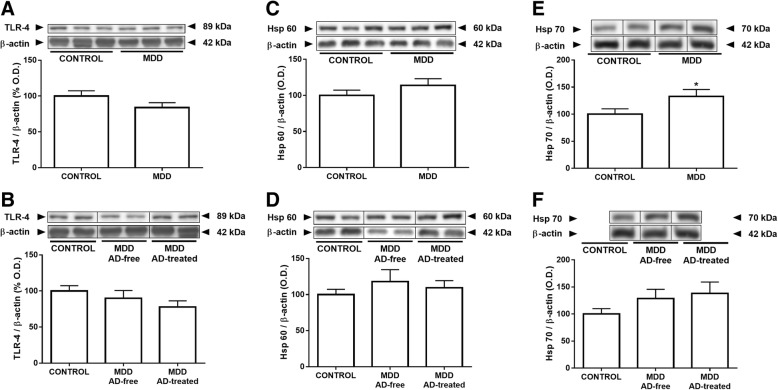
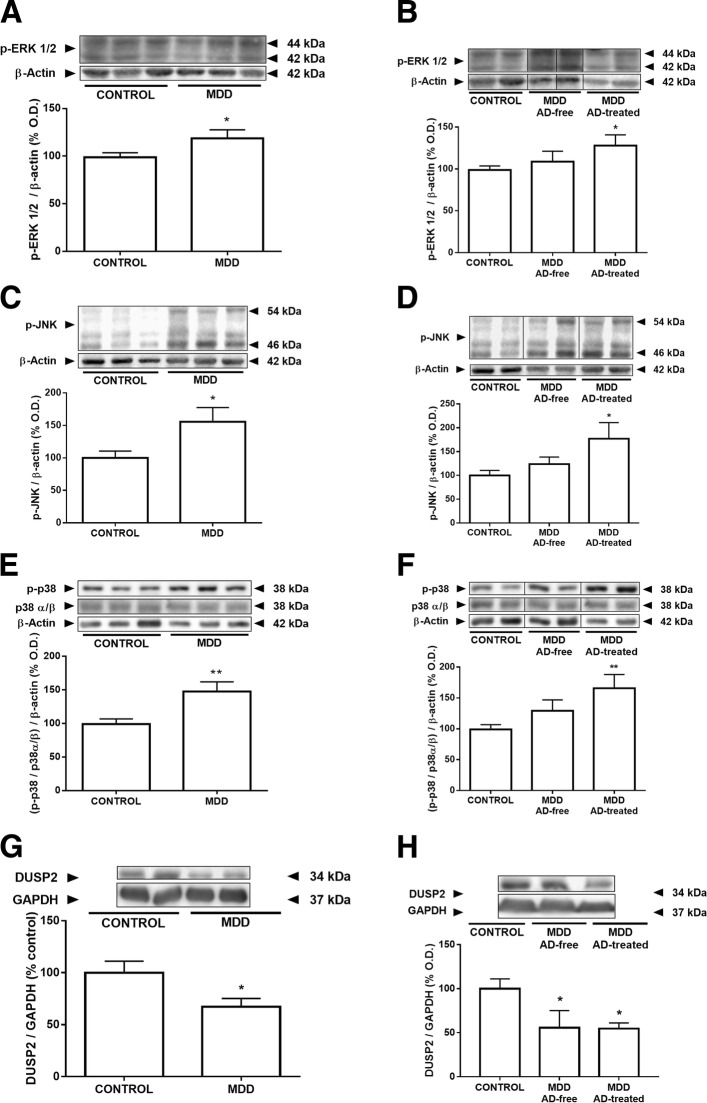
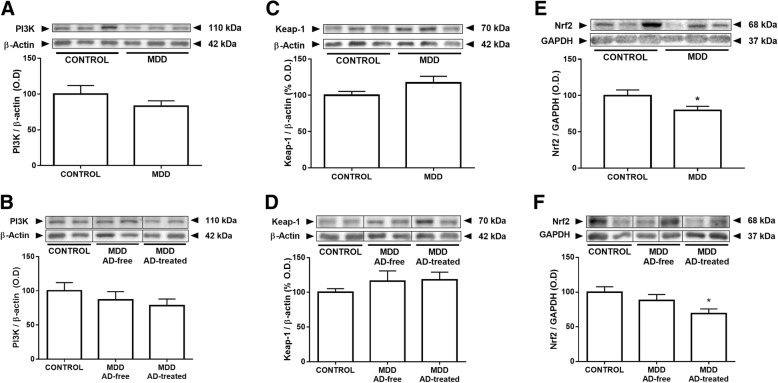
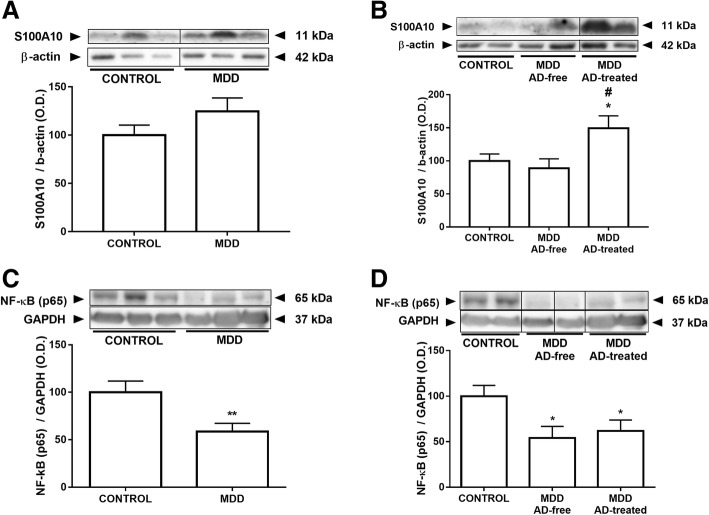
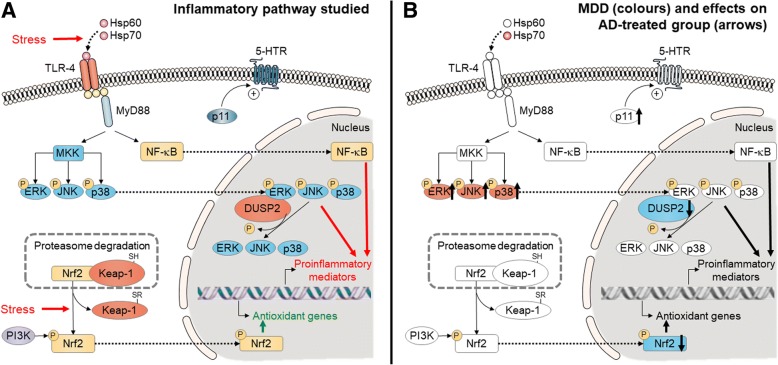
BACKGROUND: Studies show that Toll-like receptors (TLRs), members of the innate immune system, might participate in the pathogenesis of the major depressive disorder (MDD). However, evidence of this participation in the brain of patients with MDD has been elusive. METHODS: This work explores whether the protein expression by immunodetection assays (Western blot) of elements of TLR-4 pathways controlling inflammation and the oxidative/nitrosative stress are altered in postmortem dorsolateral prefrontal cortex of subjects with MDD. The potential modulation induced by the antidepressant treatment on these parameters was also assessed. Thirty MDD subjects (15 antidepressant-free and 15 under antidepressant treatment) were matched for gender and age to 30 controls in a paired design. RESULTS: No significant changes in TLR-4 expression were detected. An increased expression of the TLR-4 endogenous ligand Hsp70 (+ 33%), but not of Hsp60, and the activated forms of mitogen-activated protein kinases (MAPKs) p38 (+ 47%) and JNK (+ 56%) was observed in MDD. Concomitantly, MDD subjects present a 45% decreased expression of DUSP2 (a regulator of MAPKs) and reduced (- 21%) expression of the antioxidant nuclear factor Nrf2. Antidepressant treatment did not modify the changes detected in the group with MDD and actually increased (+ 25%) the expression of p11, a protein linked with the transport of neurotransmitters and depression. CONCLUSION: Data indicate an altered TLR-4 immune response in the brain of subjects with MDD. Additional research focused on the mechanisms contributing to the antidepressant-induced TLR-4 pathway modulation is warranted and could help to develop new treatment strategies for MDD.
Overview
The claims and statistics of this paper haven’t been checked yet.
Free: it reads the open-access text and checks the first 5 claims that cite a source we can check. Create a free account to check every claim.
Integrity signals
Registry
Cites
Statistics
Figures
Verification
Claims the paper makes
The claims and statistics of this paper haven’t been checked yet.
Free: it reads the open-access text and checks the first 5 claims that cite a source we can check. Create a free account to check every claim.
Claims other papers make about this one
Each is checked against this paper’s own text: does it say what the citing paper says it does?
The source backs part of the claim, not all of it — or backs it for a different population, condition or comparison.
In the citing paper
“Two post-mortem studies have demonstrated that Nrf2 levels are decreased in hippocampus, prefrontal cortex, and parietal cortex (33, 34).”
From Melatonin Attenuates LPS-Induced Acute Depressive-Like Behaviors and Microglial NLRP3 Inflammasome Activation Through the SIRT1/Nrf2 Pathway (2019) · cites this paper as [33]
Experimental — accuracy not yet measuredThe cited source says what the claim attributes to it.
In the citing paper
“Correspondingly, post-mortem studies have found decreased expression of Nrf2 in the prefrontal cortex of depressed compared to non-depressed patients (110).”
From Chronic stress, neuroinflammation, and depression: an overview of pathophysiological mechanisms and emerging anti-inflammatories (2023) · cites this paper as [110]
Self-check
Percentages, sums and reported differences re-computed from the paper’s own numbers.
The self-check needs the paper’s full text.
Citations
Cites
Molecular Mechanisms of Depression: Perspectives on New Treatment Strategies
Lang, U. E., & Borgwardt, S. (2013) · Cellular Physiology and Biochemistry · doi:10.1159/000350094 · Cited by 8,475
From inflammation to sickness and depression: when the immune system subjugates the brain
Dantzer, R., O'Connor, J. C., Freund, G. G., Johnson, R. W., & Kelley, K. W. (2008) · Nature Reviews Neuroscience · doi:10.1038/nrn2297 · Cited by 7,395
Takeda, K., Kaisho, T., & Akira, S. (2003) · Annual Review of Immunology · doi:10.1146/annurev.immunol.21.120601.141126 · Cited by 6,143
A Meta-Analysis of Cytokines in Major Depression
Dowlati, Y., Herrmann, N., Swardfager, W., Liu, H., Sham, L., Reim, E. K., & Lanctôt, K. L. (2010) · Biological Psychiatry · doi:10.1016/j.biopsych.2009.09.033 · Cited by 4,729
Toll-like receptors and innate immunity
Medzhitov, R. (2001) · Nature Reviews Immunology · doi:10.1038/35100529 · Cited by 4,308
Bardo, M. T., & Hammer, R. P. (1991) · Neuroscience · doi:10.1016/0306-4522(91)90226-e · Cited by 3,219
Cytokines sing the blues: inflammation and the pathogenesis of depression
Raison, C. L., Capuron, L., & Miller, A. H. (2006) · Trends in Immunology · doi:10.1016/j.it.2005.11.006 · Cited by 3,009
The Nrf2-antioxidant response element signaling pathway and its activation by oxidative stress
Nguyen, T., Nioi, P., & Pickett, C. B. (2009) · Journal of Biological Chemistry · doi:10.1074/jbc.r900010200 · Cited by 2,655
LPS induction of gene expression in human monocytes
Guha, M., & Mackman, N. (2001) · Cellular Signalling · doi:10.1016/s0898-6568(00)00149-2 · Cited by 2,304
Zheng, P., Zeng, B., Zhou, C., Liu, M., Fang, Z., Xu, X., Zeng, L., Chen, J., Fan, S., Du, X., et al. (2016) · Molecular Psychiatry · doi:10.1038/mp.2016.44 · Cited by 2,023
Hawton, K., & van Heeringen, K. (2009) · The Lancet · doi:10.1016/s0140-6736(09)60372-x · Cited by 1,671
So depression is an inflammatory disease, but where does the inflammation come from?
Berk, M., Williams, L. J., Jacka, F. N., O’Neil, A., Pasco, J. A., Moylan, S., Allen, N. B., Stuart, A. L., Hayley, A. C., Byrne, M. L., et al. (2013) · BMC Medicine · doi:10.1186/1741-7015-11-200 · Cited by 1,423 · cited 1×
“There are two predominant sources of TLR-4 activation: (i) altered gut microbiota [37] and the subsequent dysbiosis through increased intestinal barrier permeability and bacterial translocation present in patients with MDD [38, 39], and (ii) damage-associated molecular patterns (DAMPs) released by non-infective tissue…”
BackgroundHaapakoski, R., Mathieu, J., Ebmeier, K. P., Alenius, H., & Kivimäki, M. (2015) · Brain, Behavior, and Immunity · doi:10.1016/j.bbi.2015.06.001 · Cited by 1,129
Mitchell, S., Vargas, J., & Hoffmann, A. (2016) · WIREs Systems Biology and Medicine · doi:10.1002/wsbm.1331 · Cited by 1,029
Haroon, E., Raison, C. L., & Miller, A. H. (2012) · Neuropsychopharmacology · doi:10.1038/npp.2011.205 · Cited by 1,000 · cited 2×
“Specifically, p38 has been related to MDD because of its proinflammatory actions and its stimulatory activity on the expression and function of the serotonin transporter [2].”
BackgroundDAMPening Inflammation by Modulating TLR Signalling
Piccinini, A. M., & Midwood, K. S. (2010) · Mediators of Inflammation · doi:10.1155/2010/672395 · Cited by 973
Leonard, B., & Maes, M. (2012) · Neuroscience & Biobehavioral Reviews · doi:10.1016/j.neubiorev.2011.12.005 · Cited by 805
Steiner, J., Bielau, H., Brisch, R., Danos, P., Ullrich, O., Mawrin, C., Bernstein, H.-G., & Bogerts, B. (2008) · Journal of Psychiatric Research · doi:10.1016/j.jpsychires.2006.10.013 · Cited by 791
Dual-specificity phosphatases: critical regulators with diverse cellular targets
Patterson, K. I., Brummer, T., O'brien, P. M., & Daly, R. J. (2009) · Biochemical Journal · doi:10.1042/bj20082234 · Cited by 744
Inflammation and clinical response to treatment in depression: A meta-analysis
Strawbridge, R., Arnone, D., Danese, A., Papadopoulos, A., Herane Vives, A., & Cleare, A. J. (2015) · European Neuropsychopharmacology · doi:10.1016/j.euroneuro.2015.06.007 · Cited by 666
Alterations in 5-HT 1B Receptor Function by p11 in Depression-Like States
Svenningsson, P., Chergui, K., Rachleff, I., Flajolet, M., Zhang, X., Yacoubi, M. E., Vaugeois, J.-M., Nomikos, G. G., & Greengard, P. (2006) · Science · doi:10.1126/science.1117571 · Cited by 572
Steiner, J., Walter, M., Gos, T., Guillemin, G. J., Bernstein, H.-G., Sarnyai, Z., Mawrin, C., Brisch, R., Bielau, H., zu Schwabedissen, L., et al. (2011) · Journal of Neuroinflammation · doi:10.1186/1742-2094-8-94 · Cited by 568
Zhu, C.-B., Blakely, R. D., & Hewlett, W. A. (2006) · Neuropsychopharmacology · doi:10.1038/sj.npp.1301029 · Cited by 549 · cited 1×
“Moreover, proinflammatory cytokines can increase, through activation of signaling pathways that include MAPKs, the expression and function of monoamine transporters [46, 47], the most important target for antidepressant Fig.”
BackgroundTorres-Platas, S. G., Cruceanu, C., Chen, G. G., Turecki, G., & Mechawar, N. (2014) · Brain, Behavior, and Immunity · doi:10.1016/j.bbi.2014.05.007 · Cited by 545
Shelton, R. C., Claiborne, J., Sidoryk-Wegrzynowicz, M., Reddy, R., Aschner, M., Lewis, D. A., & Mirnics, K. (2011) · Molecular Psychiatry · doi:10.1038/mp.2010.52 · Cited by 511
Toll-like receptors in health and disease in the brain: mechanisms and therapeutic potential
Hanke, M. L., & Kielian, T. (2011) · Clinical Science · doi:10.1042/cs20110164 · Cited by 492
Maes, M., Kubera, M., Leunis, J.-C., & Berk, M. (2012) · Journal of Affective Disorders · doi:10.1016/j.jad.2012.02.023 · Cited by 446
Dwivedi, Y., Rizavi, H. S., Roberts, R. C., Conley, R. C., Tamminga, C. A., & Pandey, G. N. (2001) · Journal of Neurochemistry · doi:10.1046/j.1471-4159.2001.00300.x · Cited by 329
Maes, M., Fišar, Z., Medina, M., Scapagnini, G., Nowak, G., & Berk, M. (2012) · Inflammopharmacology · doi:10.1007/s10787-011-0111-7 · Cited by 325
Warner-Schmidt, J. L., Vanover, K. E., Chen, E. Y., Marshall, J. J., & Greengard, P. (2011) · Proceedings of the National Academy of Sciences · doi:10.1073/pnas.1104836108 · Cited by 291
Gourley, S. L., Wu, F. J., Kiraly, D. D., Ploski, J. E., Kedves, A. T., Duman, R. S., & Taylor, J. R. (2008) · Biological Psychiatry · doi:10.1016/j.biopsych.2007.07.016 · Cited by 287
Positive regulation of immune cell function and inflammatory responses by phosphatase PAC-1
Jeffrey, K. L., Brummer, T., Rolph, M. S., Liu, S. M., Callejas, N. A., Grumont, R. J., Gillieron, C., Mackay, F., Grey, S., Camps, M., et al. (2006) · Nature Immunology · doi:10.1038/ni1310 · Cited by 270
Morón, J. A., Zakharova, I., Ferrer, J. V., Merrill, G. A., Hope, B., Lafer, E. M., Lin, Z. C., Wang, J. B., Javitch, J. A., Galli, A., et al. (2003) · The Journal of Neuroscience · doi:10.1523/jneurosci.23-24-08480.2003 · Cited by 262
Nrf2-dependent persistent oxidative stress results in stress-induced vulnerability to depression
Bouvier, E., Brouillard, F., Molet, J., Claverie, D., Cabungcal, J.-H., Cresto, N., Doligez, N., Rivat, C., Do, K. Q., Bernard, C., et al. (2017) · Molecular Psychiatry · doi:10.1038/mp.2016.144 · Cited by 248
IκB-independent control of NF-κB activity by modulatory phosphorylations
Schmitz, M. L., Bacher, S., & Kracht, M. (2001) · Trends in Biochemical Sciences · doi:10.1016/s0968-0004(00)01753-9 · Cited by 234
Astrocytic Hypertrophy in Anterior Cingulate White Matter of Depressed Suicides
Torres-Platas, S. G., Hercher, C., Davoli, M. A., Maussion, G., Labonté, B., Turecki, G., & Mechawar, N. (2011) · Neuropsychopharmacology · doi:10.1038/npp.2011.154 · Cited by 223
Stress-induced neuroinflammation: role of the toll-like receptor-4 pathway
Gárate, I., Garcia-Bueno, B., Madrigal, J. L. M., Caso, J. R., Alou, L., Gomez-Lus, M. L., Micó, J. A., & Leza, J. C. (2013) · Biological Psychiatry · doi:10.1016/j.biopsych.2012.07.005 · Cited by 202
Self-citationLopez, J. P., Fiori, L. M., Cruceanu, C., Lin, R., Labonte, B., Cates, H. M., Heller, E. A., Vialou, V., Ku, S. M., Gerald, C., et al. (2017) · Nature Communications · doi:10.1038/ncomms15497 · Cited by 201
MAP Kinase Activation by Fluoxetine and Its Relation to Gene Expression in Cultured Rat Astrocytes
Mercier, G., Lennon, A. M., Renouf, B., Dessouroux, A., Ramaugé, M., Courtin, F., & Pierre, M. (2004) · Journal of Molecular Neuroscience · doi:10.1385/jmn:24:2:207 · Cited by 176
Vargas-Caraveo, A., Sayd, A., Maus, S. R., Caso, J. R., Madrigal, J. L. M., García-Bueno, B., & Leza, J. C. (2017) · Scientific Reports · doi:10.1038/s41598-017-13302-6 · Cited by 175
Self-citationp11 and its role in depression and therapeutic responses to antidepressants
Svenningsson, P., Kim, Y., Warner-Schmidt, J., Oh, Y.-S., & Greengard, P. (2013) · Nature Reviews Neuroscience · doi:10.1038/nrn3564 · Cited by 174
Innate immune receptor Toll-like receptor 4 signalling in neuropsychiatric diseases
García‐Bueno, B., Caso, J. R., Madrigal, J. L. M., & Leza, J. C. (2016) · Neuroscience & Biobehavioral Reviews · doi:10.1016/j.neubiorev.2016.02.013 · Cited by 172
Self-citationCellular Plasticity Cascades: Genes-To-Behavior Pathways in Animal Models of Bipolar Disorder
Einat, H., & Manji, H. K. (2006) · Biological Psychiatry · doi:10.1016/j.biopsych.2005.11.004 · Cited by 168
Gárate, I., García-Bueno, B., Madrigal, J. L., Bravo, L., Berrocoso, E., Caso, J. R., Micó, J. A., & Leza, J. C. (2011) · Journal of Neuroinflammation · doi:10.1186/1742-2094-8-151 · Cited by 165
Self-citationToll-like receptors in the depressed and suicide brain
Pandey, G. N., Rizavi, H. S., Ren, X., Bhaumik, R., & Dwivedi, Y. (2014) · Journal of Psychiatric Research · doi:10.1016/j.jpsychires.2014.01.021 · Cited by 164
Altered neuro-inflammatory gene expression in hippocampus in major depressive disorder
Mahajan, G. J., Vallender, E. J., Garrett, M. R., Challagundla, L., Overholser, J. C., Jurjus, G., Dieter, L., Syed, M., Romero, D. G., Benghuzzi, H., et al. (2018) · Progress in Neuro-Psychopharmacology and Biological Psychiatry · doi:10.1016/j.pnpbp.2017.11.017 · Cited by 159
Nrf2 participates in depressive disorders through an anti-inflammatory mechanism
Martín-de-Saavedra, M. D., Budni, J., Cunha, M. P., Gómez-Rangel, V., Lorrio, S., del Barrio, L., Lastres-Becker, I., Parada, E., Tordera, R. M., Rodrigues, A. L. S., et al. (2013) · Psychoneuroendocrinology · doi:10.1016/j.psyneuen.2013.03.020 · Cited by 143
Engler, H., Brendt, P., Wischermann, J., Wegner, A., Rohling, R., Schoemberg, T., Meyer, U., Gold, R., Peters, J., Benson, S., et al. (2017) · Molecular Psychiatry · doi:10.1038/mp.2016.264 · Cited by 137
The role of Toll‐like receptors in CNS response to microbial challenge
Konat, G. W., Kielian, T., & Marriott, I. (2006) · Journal of Neurochemistry · doi:10.1111/j.1471-4159.2006.04076.x · Cited by 120
Annexin A2 tetramer activates human and murine macrophages through TLR4
Swisher, J. F. A., Burton, N., Bacot, S. M., Vogel, S. N., & Feldman, G. M. (2009) · Blood · doi:10.1182/blood-2009-06-226944 · Cited by 118
Toll‐like receptors in the brain and their potential roles in neuropathology
Crack, P. J., & Bray, P. J. (2007) · Immunology & Cell Biology · doi:10.1038/sj.icb.7100103 · Cited by 118
Dean, B., Tawadros, N., Scarr, E., & Gibbons, A. S. (2009) · Journal of Affective Disorders · doi:10.1016/j.jad.2009.04.027 · Cited by 117
NF-KappaB in Long-Term Memory and Structural Plasticity in the Adult Mammalian Brain
Kaltschmidt, B., & Kaltschmidt, C. (2015) · Frontiers in Molecular Neuroscience · doi:10.3389/fnmol.2015.00069 · Cited by 115
Increased Temporal Cortex ER Stress Proteins in Depressed Subjects Who Died by Suicide
Bown, C. D., Wang, J. F., MacQueen, G., & Young, L. T. (2000) · Neuropsychopharmacology · doi:10.1016/s0893-133x(99)00091-3 · Cited by 102
Thomas, A. J., Ferrier, I. N., Kalaria, R. N., Woodward, S. A., Ballard, C., Oakley, A., Perry, R. H., & O’Brien, J. T. (2000) · American Journal of Psychiatry · doi:10.1176/appi.ajp.157.10.1682 · Cited by 102
Antidepressants normalize elevated Toll-like receptor profile in major depressive disorder
Hung, Y.-Y., Huang, K.-W., Kang, H.-Y., Huang, G. Y.-L., & Huang, T.-L. (2016) · Psychopharmacology · doi:10.1007/s00213-015-4087-7 · Cited by 96
Contributions of ERK signaling in the striatum to instrumental learning and performance
Shiflett, M. W., & Balleine, B. W. (2011) · Behavioural Brain Research · doi:10.1016/j.bbr.2010.12.010 · Cited by 94
Thundyil, J., & Lim, K. (2014) · Ageing Research Reviews · doi:10.1016/j.arr.2014.11.003 · Cited by 93
Association Between Depression and Inflammation-Differences by Race and Sex: The META-Health Study
AMYRE Morris, A., Zhao, L., Ahmed, Y., Stoyanova, N., De Staercke, C., Hooper, W. C., Gibbons, G., Din-Dzietham, R., Quyyumi, A., & Vaccarino, V. (2011) · Psychosomatic Medicine · doi:10.1097/psy.0b013e318222379c · Cited by 89
Busse, M., Busse, S., Myint, A.-M., Gos, T., Dobrowolny, H., Müller, U., Bogerts, B., Bernstein, H., & Steiner, J. (2014) · European Archives of Psychiatry and Clinical Neuroscience · doi:10.1007/s00406-014-0562-0 · Cited by 86
García-Bueno, B., Gassó, P., MacDowell, K. S., Callado, L. F., Mas, S., Bernardo, M., Lafuente, A., Meana, J. J., & Leza, J. C. (2016) · Journal of Psychiatry and Neuroscience · doi:10.1503/jpn.150195 · Cited by 86
Self-citationReliability of psychiatric diagnosis in postmortem research
Deep‐Soboslay, A., Akil, M., Martin, C. E., Bigelow, L. B., Herman, M. M., Hyde, T. M., & Kleinman, J. E. (2004) · Biological Psychiatry · doi:10.1016/j.biopsych.2004.10.016 · Cited by 75
Morioka, N., Suekama, K., Zhang, F. F., Kajitani, N., Hisaoka‐Nakashima, K., Takebayashi, M., & Nakata, Y. (2014) · British Journal of Pharmacology · doi:10.1111/bph.12614 · Cited by 73
Galeotti, N., & Ghelardini, C. (2012) · The International Journal of Neuropsychopharmacology · doi:10.1017/s1461145711000897 · Cited by 63
Chou, C., He, S., & Jan, C. (2006) · Toxicology and Applied Pharmacology · doi:10.1016/j.taap.2006.11.012 · Cited by 59
(2017) · Fortschritte der Neurologie · Psychiatrie · doi:10.1055/s-0043-104029 · Cited by 50
Martín‐Hernández, D., Bris, Á. G., MacDowell, K. S., García‐Bueno, B., Madrigal, J. L. M., Leza, J. C., & Caso, J. R. (2015) · Neuropharmacology · doi:10.1016/j.neuropharm.2015.11.029 · Cited by 47
Self-citationUdina, M., Hidalgo, D., Navinés, R., Forns, X., Solà, R., Farré, M., Capuron, L., Vieta, E., & Martín-Santos, R. (2014) · The Journal of Clinical Psychiatry · doi:10.4088/jcp.13r08800 · Cited by 40
Effects of antidepressants on mRNA levels of antioxidant enzymes in human monocytic U-937 cells
Schmidt, A. J., Heiser, P., Hemmeter, U. M., Krieg, J.-C., & Vedder, H. (2008) · Progress in Neuro-Psychopharmacology and Biological Psychiatry · doi:10.1016/j.pnpbp.2008.05.024 · Cited by 40
MacDowell, K. S., Pinacho, R., Leza, J. C., Costa, J., Ramos, B., & García‐Bueno, B. (2017) · Progress in Neuro-Psychopharmacology and Biological Psychiatry · doi:10.1016/j.pnpbp.2017.08.005 · Cited by 39
Self-citationGarcía-Fuster, M. J., Díez-Alarcia, R., Ferrer‐Alcón, M., Harpe, R. L., Meana, J. J., & García-Sevilla, J. A. (2014) · Neuroscience · doi:10.1016/j.neuroscience.2014.07.027 · Cited by 37
Lauridsen, J. K., Olesen, R. H., Vendelbo, J., Hyde, T. M., Kleinman, J. E., Bibby, B. M., Brock, B., Rungby, J., & Larsen, A. (2017) · Translational Psychiatry · doi:10.1038/tp.2016.259 · Cited by 32
Stressor-Like Effects of c-Jun N-Terminal Kinase (JNK) Inhibition
Clarke, M., Pentz, R., Bobyn, J., & Hayley, S. P. (2012) · PLoS ONE · doi:10.1371/journal.pone.0044073 · Cited by 20
Cui, J., Yang, K., Yu, X. L., Wang, J.-L., Li, J., Zhang, Y., & Li, H. (2016) · Medical Principles and Practice · doi:10.1159/000449165 · Cited by 18
Cited by
Hassamal, S. (2023) · Frontiers in Psychiatry · doi:10.3389/fpsyt.2023.1130989 · Cited by 578
Arioz, B. I., Tastan, B., Tarakcioglu, E., Tufekci, K. U., Olcum, M., Ersoy, N., Bagriyanik, A., Genc, K., & Genc, S. (2019) · Frontiers in Immunology · doi:10.3389/fimmu.2019.01511 · Cited by 516
Zhu, K., Zhu, X., Sun, S., Yang, W., Liu, S., Tang, Z., Zhang, R., Li, J., Shen, T., & Hei, M. (2021) · Experimental Neurology · doi:10.1016/j.expneurol.2021.113828 · Cited by 185
Nrf2: An all-rounder in depression
Zuo, C., Cao, H., Song, Y., Gu, Z., Huang, Y., Yang, Y., Miao, J., Zhu, L., Chen, J., Jiang, Y., et al. (2022) · Redox Biology · doi:10.1016/j.redox.2022.102522 · Cited by 145
α‐Synuclein evokes NLRP3 inflammasome‐mediated IL‐1β secretion from primary human microglia
Pike, A. F., Varanita, T., Herrebout, M. A. C., Plug, B. C., Kole, J., Musters, R. J. P., Teunissen, C. E., Hoozemans, J. J. M., Bubacco, L., & Veerhuis, R. (2021) · Glia · doi:10.1002/glia.23970 · Cited by 126
“High mobility group box 1 (HMGB1), biglycan, and heat shock protein 70 (Hsp70) all have been identified as endogenous TLR4 ligands in the brain (Gou et al., 2020; Martín-Hernández et al., 2018; Xie et al., 2020).”
Background
Metadata
- Authors
- Martín-Hernández, D., Caso, J. R., Javier Meana, J., Callado, L. F., Madrigal, J. L. M., García-Bueno, B., & Leza, J. C.
- Affiliations
- Universidad Complutense de Madrid (ES)
- University of the Basque Country (ES)
- Corresponding author
- Caso, Javier R.
- Venue
- Journal of Neuroinflammation
- Published
- 2018-09-04
- Volume
- 15
- Issue
- 1
- Pages
- 251-251
- ISSN
- 1742-2094 (ISSN-L)
- PMC
- PMC6122627
- OpenAlex
- W2891464809
- Cited by
- 80
- References
- 74
- Citations by year
- 2026: 8 · 2025: 7 · 2024: 8 · 2023: 15 · 2022: 9 · 2021: 17 · 2020: 9 · 2019: 5 · 2018: 2
- FWCI
- 2.61
- Type
- journal article
- Language
- en
- Open access
- gold
- doi.org
- Licence
- cc-by
- creativecommons.org/licenses/by/4.0/ (tdm)
- Locations
- Journal of Neuroinflammation (publishedVersion, cc-by)
- Europe PMC (PubMed Central) (publishedVersion, other-oa)
- PubMed Central (publishedVersion, cc-by)
- PubMed (publishedVersion)
- Communities in ADDI (Universidad del Pais Vasco) (submittedVersion, other-oa)
- Communities in ADDI (University of the Basque Country) (submittedVersion, other-oa)
- LA Referencia (Red Federada de Repositorios Institucionales de Publicaciones Científicas) (submittedVersion, cc-by)
- LA Referencia (Red Federada de Repositorios Institucionales de Publicaciones Científicas) (submittedVersion, other-oa)
- DOAJ (DOAJ: Directory of Open Access Journals) (submittedVersion)
- Hispana (submittedVersion, cc-by)
- Funders
- Instituto de Salud Carlos III (PI13/01102)
- Gobierno Vasco (IT-616-13)
- Centro de Investigación Biomédica en Red de Salud Mental
- Secretaría de Estado de Investigación, Desarrollo e Innovación (RYC2015-17065, RYC2011-07955)
- Ministerio de Economía, Industria y Competitividad, Gobierno de España (SAF2016-75500-R, SAF2017-83053-R)
- Topics
- Life Sciences › Neuroscience › Biological Psychiatry › Tryptophan and brain disorders
- Health Sciences › Medicine › Pharmacology (medical) › Treatment of Major Depression
- Life Sciences › Neuroscience › Behavioral Neuroscience › Stress Responses and Cortisol
- Keywords
- major depressive disorder, TLR4, neuroinflammation, oxidative stress, nitrosative stress, HSP70, HSP60, MAPK signaling, p38 MAPK, JNK, DUSP2, Nrf2, antioxidant pathways, antidepressants, p11, dorsolateral prefrontal cortex, postmortem brain
- MeSH terms
- S100 Calcium Binding Protein A10, Analysis of Variance, Antidepressive Agents, Antioxidants, Autopsy, Major Depressive Disorder, DNA-Binding Proteins, Frontal Lobe, Humans, Inflammation, S100 Proteins, Transcription Factors, Signal Transduction, NF-kappa B, Annexin A2, Chaperonin 60, p38 Mitogen-Activated Protein Kinases, Toll-Like Receptor 4
About these checks
Registry, retraction, Cites and statistics results are computed, not judged, with one exception: a printed reference that no index lists is read once by a model before it counts as a citation error. Claims are extracted by a model and kept only when their quote appears verbatim in the text; each cited source is then checked, with a model’s help, for whether it says what the claim relies on. Those verdicts can be wrong — read the claim’s quote and the cited source before relying on one.
Statistics and arithmetic are recomputed, not judged.
Confidence bands are shown only for fields calibrated on our annotated test set. None is calibrated yet, so no band is shown.
What counts as a claim ›How we measure confidence ›How we check this ›
Are you an author, or do you see a problem with this page? Request a review
Data sources
Bibliographic data: Semantic Scholar, OpenAlex, Crossref.
Contains information from the Semantic Scholar Academic Graph Datasets, made available under the ODC Attribution License (ODC-BY 1.0).
Semantic Scholar’s data is described in: Kinney, R., et al. (2023). The Semantic Scholar Open Data Platform. arXiv:2301.10140.
