

A1 astrocytes contribute to murine depression-like behavior and cognitive dysfunction, which can be alleviated by IL-10 or fluorocitrate treatment
Open accessThe DOI matches its Crossref record; 44 of the 44 references it cites were found in a registry or an index.
Abstract
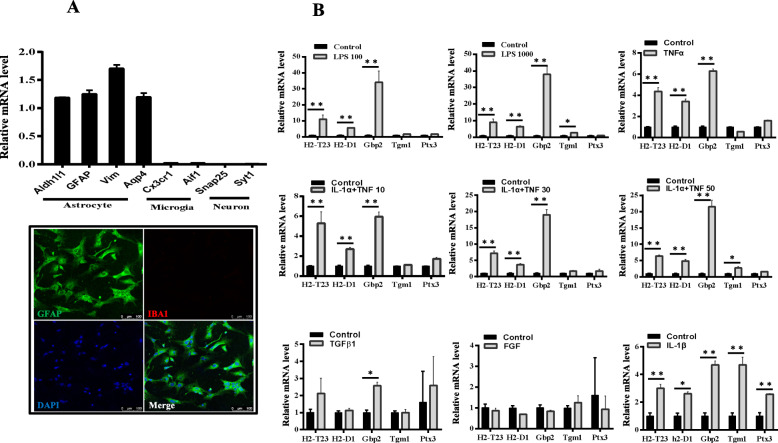
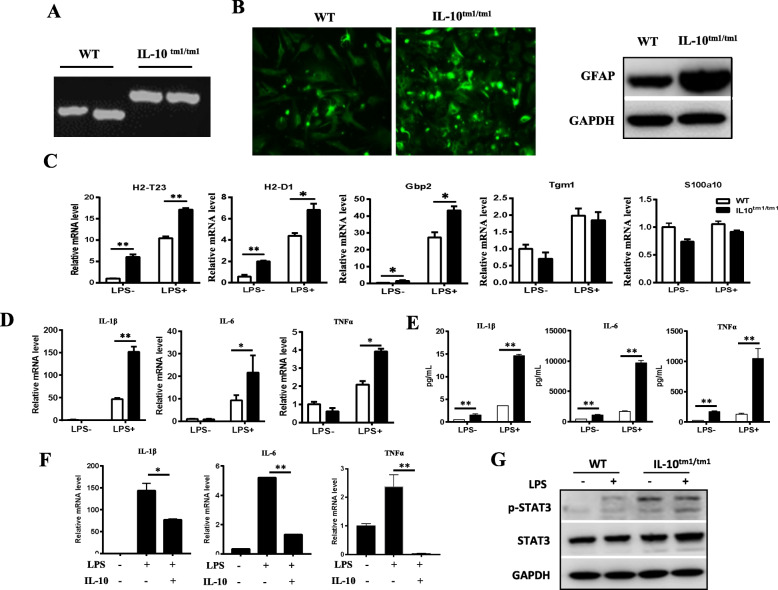
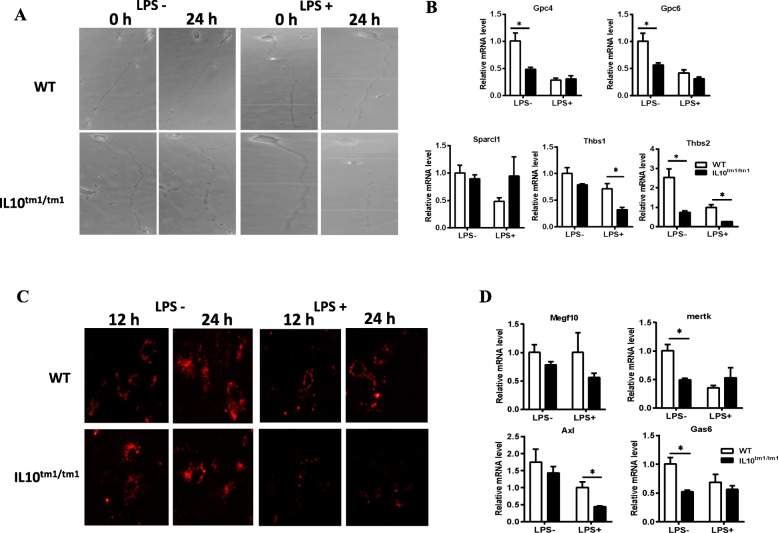
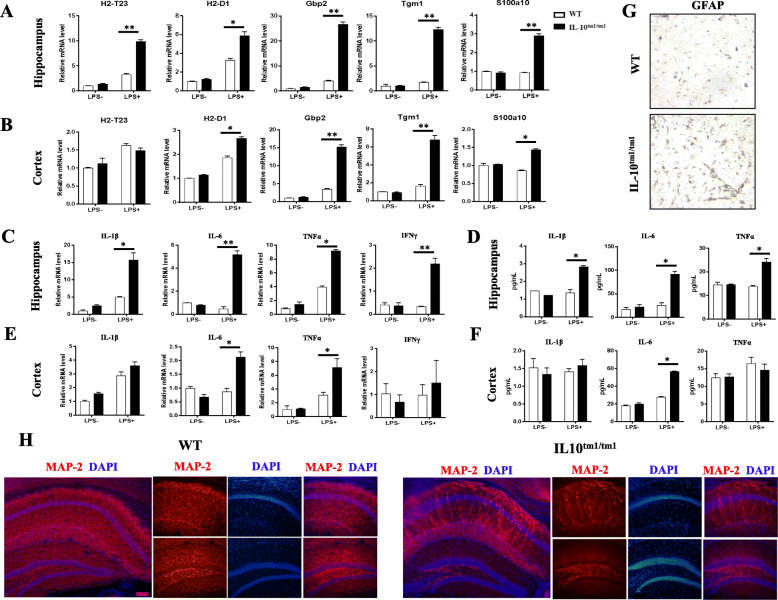
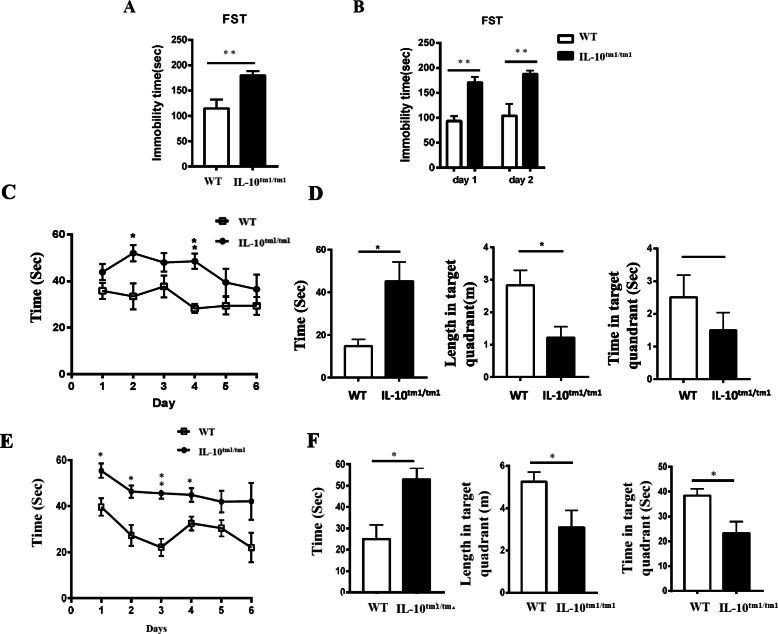
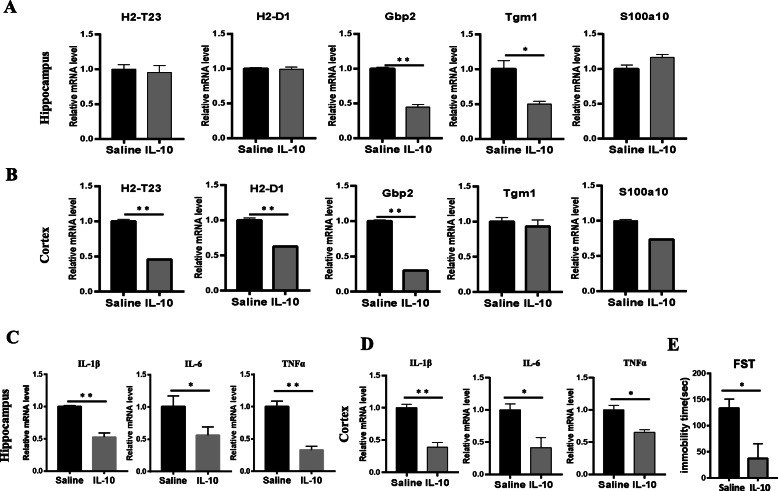
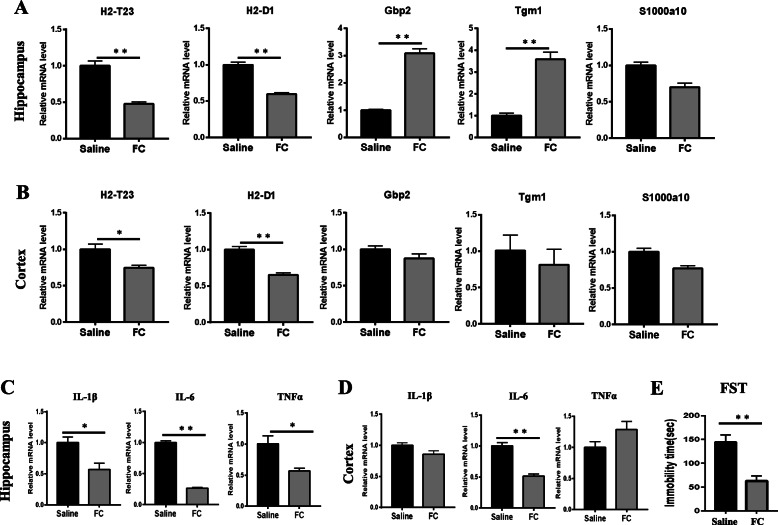
Background: Astrocytes are crucial regulators in the central nervous system. Abnormal activation of astrocytes contributes to some behavior deficits. However, mechanisms underlying the effects remain unclear. Here, we studied the activation of A1 astrocytes and their contribution to murine behavior deficits. Methods: A1 astrocytes were induced by treatment with lipopolysaccharide (LPS) in vitro. The functional phenotype of astrocytes was determined by quantitative RT-PCR, ELISA, and immunohistochemistry. To assess the role of A1 astrocytes in vivo, mice were injected intraperitoneally with LPS. Then, murine behaviors were tested, and the hippocampus and cortex were analyzed by quantitative RT-PCR, ELISA, and immunohistochemistry. The function of IL-10 and fluorocitrate on A1 astrocyte activation was also examined. Results: Our results show that astrocytes isolated from B6.129S6-Il10 tm1Flv/J homozygotes (IL-10 tm1/tm1) were prone to characteristics of A1 reactive astrocytes. Compared with their wild-type counterparts, IL-10 tm1/tm1 astrocytes exhibited higher expression of glial fibrillary acidic protein (GFAP). Whether or not they were stimulated with LPS, IL-10 tm1/tm1 astrocytes exhibited enhanced expression of A1-specific transcripts and proinflammatory factors IL-1β, IL-6, and TNFα. In addition, IL-10 tm1/tm1 astrocytes demonstrated hyperphosphorylation of STAT3. Moreover, astrocytes from IL-10 tm1/tm1 mice showed attenuated phagocytic ability and were neurotoxic. IL-10 tm1/tm1 mice demonstrated increased immobility time in the forced swim test and defective learning and memory behavior in the Morris water maze test. Moreover, enhanced neuroinflammation was found in the hippocampus and cortex of IL-10 tm1/tm1 mice, accompanying with more GFAP-positive astrocytes and severe neuron loss in the hippocampus. Pretreatment IL-10 tm1/tm1 mice with IL-10 or fluorocitrate decreased the expression of proinflammatory factors and A1-specific transcripts in the hippocampus and cortex, and then alleviated LPS-induced depressive-like behavior. Conclusion: These results demonstrate that astrocytes isolated from B6.129S6-Il10 tm1Flv/J homozygotes are prone to A1 phenotype and contribute to the depression-like behavior and memory deficits. Inhibiting A1 astrocyte activation may be an attractive therapeutic strategy in some neurodegenerative diseases.
Overview
The claims and statistics of this paper haven’t been checked yet.
Free: it reads the open-access text and checks the first 5 claims that cite a source we can check. Create a free account to check every claim.
Integrity signals
Registry
Cites
Statistics
Figures
Verification
Claims the paper makes
The claims and statistics of this paper haven’t been checked yet.
Free: it reads the open-access text and checks the first 5 claims that cite a source we can check. Create a free account to check every claim.
Claims other papers make about this one
Each is checked against this paper’s own text: does it say what the citing paper says it does?
In the citing paper
“This theory is also supported by the fact that several types of antidepressants increase IL-10 levels [110,111].”
From Selected biomarkers of depression: what are the effects of cytokines and inflammation (2022) · cites this paper as [111]
Self-check
Percentages, sums and reported differences re-computed from the paper’s own numbers.
The self-check needs the paper’s full text.
Citations
Cites
1 retracted
Yang, J., Jiang, Z., Fitzgerald, D. C., Ma, C., Yu, S., Li, H., Zhao, Z., Li, Y., Ciric, B., Curtis, M., et al. (2009) · Journal of Clinical Investigation · doi:10.1172/jci37914 · Cited by 194
RetractedNeurotoxic reactive astrocytes are induced by activated microglia
Liddelow, S. A., Guttenplan, K. A., Clarke, L. E., Bennett, F. C., Bohlen, C. J., Schirmer, L., Bennett, M. L., Münch, A. E., Chung, W.-S., Peterson, T. C., et al. (2017) · Nature · doi:10.1038/nature21029 · Cited by 7,971
Astrocytes: Biology and pathology
Sofroniew, M. V., & Vinters, H. V. (2010) · Acta Neuropathologica · doi:10.1007/s00401-009-0619-8 · Cited by 5,196
Reactive Astrocytes: Production, Function, and Therapeutic Potential
Liddelow, S. A., & Barres, B. A. (2017) · Immunity · doi:10.1016/j.immuni.2017.06.006 · Cited by 2,336
Reactive Astrocytes Protect Tissue and Preserve Function after Spinal Cord Injury
Faulkner, J. R., Herrmann, J. E., Woo, M. J., Tansey, K. E., Doan, N. B., & Sofroniew, M. V. (2004) · The Journal of Neuroscience · doi:10.1523/jneurosci.3547-03.2004 · Cited by 1,598
O'Connor, J. C., Lawson, M. A., André, C., Moreau, M., Lestage, J., Castanon, N., Kelley, K. W., & Dantzer, R. (2009) · Molecular Psychiatry · doi:10.1038/sj.mp.4002148 · Cited by 1,278
Diversity of astrocyte functions and phenotypes in neural circuits
Khakh, B. S., & Sofroniew, M. V. (2015) · Nature Neuroscience · doi:10.1038/nn.4043 · Cited by 1,239
Normal aging induces A1-like astrocyte reactivity
Clarke, L. E., Liddelow, S. A., Chakraborty, C., Münch, A. E., Heiman, M., & Barres, B. A. (2018) · Proceedings of the National Academy of Sciences · doi:10.1073/pnas.1800165115 · Cited by 1,237
Block of A1 astrocyte conversion by microglia is neuroprotective in models of Parkinson’s disease
Yun, S. P., Kam, T.-I., Panicker, N., Kim, S., Oh, Y., Park, J.-S., Kwon, S.-H., Park, Y. J., Karuppagounder, S. S., Park, H., et al. (2018) · Nature Medicine · doi:10.1038/s41591-018-0051-5 · Cited by 1,123
Cell Biology of Astrocyte-Synapse Interactions
Allen, N. J., & Eroglu, C. (2017) · Neuron · doi:10.1016/j.neuron.2017.09.056 · Cited by 1,098
Astrocyte reactivity and reactive astrogliosis: costs and benefits
Pekny, M., & Pekna, M. (2014) · Physiological Reviews · doi:10.1152/physrev.00041.2013 · Cited by 934
Inflammation-associated depression: From serotonin to kynurenine
Dantzer, R., O’Connor, J. C., Lawson, M. A., & Kelley, K. W. (2011) · Psychoneuroendocrinology · doi:10.1016/j.psyneuen.2010.09.012 · Cited by 726
Unexpected role of interferon-γ in regulating neuronal connectivity and social behaviour
Filiano, A. J., Xu, Y., Tustison, N. J., Marsh, R. L., Baker, W., Smirnov, I., Overall, C. C., Gadani, S. P., Turner, S. D., Weng, Z., et al. (2016) · Nature · doi:10.1038/nature18626 · Cited by 697 · cited 1×
“frontal-cortical/insular regions though did not show anxiety or motor deficits [39].”
Heterogeneity of reactive astrocytes
Anderson, M. A., Ao, Y., & Sofroniew, M. V. (2014) · Neuroscience Letters · doi:10.1016/j.neulet.2013.12.030 · Cited by 450
Suppression of neuroinflammation by astrocytic dopamine D2 receptors via αB-crystallin
Shao, W., Zhang, S.-Z., Tang, M., Zhang, X.-H., Zhou, Z., Yin, Y.-Q., Zhou, Q.-B., Huang, Y.-Y., Liu, Y.-J., Wawrousek, E., et al. (2013) · Nature · doi:10.1038/nature11748 · Cited by 418
Self-citationFrom IL-2 to IL-37: the expanding spectrum of anti-inflammatory cytokines
Banchereau, J., Pascual, V., & O'Garra, A. (2012) · Nature Immunology · doi:10.1038/ni.2406 · Cited by 401
Kamanaka, M., Kim, S. T., Wan, Y. Y., Sutterwala, F. S., Lara-Tejero, M., Galán, J. E., Harhaj, E., & Flavell, R. A. (2006) · Immunity · doi:10.1016/j.immuni.2006.09.013 · Cited by 390
Il10 Deficiency Rebalances Innate Immunity to Mitigate Alzheimer-Like Pathology
Guillot-Sestier, M.-V., Doty, K. R., Gate, D., Rodriguez, J., Leung, B. P., Rezai-Zadeh, K., & Town, T. (2015) · Neuron · doi:10.1016/j.neuron.2014.12.068 · Cited by 363
Chakrabarty, P., Li, A., Ceballos-Diaz, C., Eddy, J. A., Funk, C. C., Moore, B., DiNunno, N., Rosario, A. M., Cruz, P. E., Verbeeck, C., et al. (2015) · Neuron · doi:10.1016/j.neuron.2014.11.020 · Cited by 354
Buffo, A., Rolando, C., & Ceruti, S. (2010) · Biochemical Pharmacology · doi:10.1016/j.bcp.2009.09.014 · Cited by 321
Astrocyte reactivity and astrogliosis after spinal cord injury
Okada, S., Hara, M., Kobayakawa, K., Matsumoto, Y., & Nakashima, Y. (2018) · Neuroscience Research · doi:10.1016/j.neures.2017.10.004 · Cited by 313
Deciphering the astrocyte reaction in Alzheimer's disease
Perez-Nievas, B. G., & Serrano-Pozo, A. (2018) · Frontiers in Aging Neuroscience · doi:10.3389/fnagi.2018.00114 · Cited by 282
Human astrocytes in the diseased brain
Dossi, E., Vasile, F., & Rouach, N. (2018) · Brain Research Bulletin · doi:10.1016/j.brainresbull.2017.02.001 · Cited by 250
Voorhees, J. L., Tarr, A. J., Wohleb, E. S., Godbout, J. P., Mo, X., Sheridan, J. F., Eubank, T. D., & Marsh, C. B. (2013) · PLoS ONE · doi:10.1371/journal.pone.0058488 · Cited by 236
Leng, L., Zhuang, K., Liu, Z., Huang, C., Gao, Y., Chen, G., Lin, H., Hu, Y., Wu, D., Shi, M., et al. (2018) · Neuron · doi:10.1016/j.neuron.2018.08.031 · Cited by 236
IL-10 modulates depressive-like behavior
Mesquita, A. R., Correia‐Neves, M., Roque, S., Castro, A. G., Vieira, P., Pedrosa, J., Palha, J. A., & Sousa, N. (2008) · Journal of Psychiatric Research · doi:10.1016/j.jpsychires.2008.02.004 · Cited by 175
Emerging Strategies for Treating Brain Metastases from Breast Cancer
Kodack, D. P., Askoxylakis, V., Ferraro, G. B., Fukumura, D., & Jain, R. K. (2015) · Cancer Cell · doi:10.1016/j.ccell.2015.01.001 · Cited by 162
Grimaldi, A., Pediconi, N., Oieni, F., Pizzarelli, R., Rosito, M., Giubettini, M., Santini, T., Limatola, C., Ruocco, G., Ragozzino, D., et al. (2019) · Frontiers in Neuroscience · doi:10.3389/fnins.2019.00925 · Cited by 157
Wood, S. K., Wood, C. S., Lombard, C. M., Lee, C. S., Zhang, X.-Y., Finnell, J. E., & Valentino, R. J. (2015) · Biological Psychiatry · doi:10.1016/j.biopsych.2014.10.026 · Cited by 131
The A1 astrocyte paradigm: New avenues for pharmacological intervention in neurodegeneration
Hinkle, J. T., Dawson, V. L., & Dawson, T. M. (2019) · Movement Disorders · doi:10.1002/mds.27718 · Cited by 99
Interleukin-10 regulates progenitor differentiation and modulates neurogenesis on adult brain
Perez-Asensio, F. J., Perpiñá, U., Planas, A. M., & Pozas, E. (2013) · Journal of Cell Science · doi:10.1242/jcs.127803 · Cited by 95
The diverse actions of astrocytes during synaptic development
Bosworth, A. P., & Allen, N. J. (2017) · Current Opinion in Neurobiology · doi:10.1016/j.conb.2017.08.017 · Cited by 86
IL-10 regulates adult neurogenesis by modulating ERK and STAT3 activity
Pereira, L., Font-Nieves, M., Van den Haute, C., Baekelandt, V., Planas, A. M., & Pozas, E. (2015) · Frontiers in Cellular Neuroscience · doi:10.3389/fncel.2015.00057 · Cited by 82
Swiergiel, A. H., & Dunn, A. J. (2006) · Behavioural Brain Research · doi:10.1016/j.bbr.2006.03.024 · Cited by 76
Inhibition of activated astrocyte ameliorates lipopolysaccharide- induced depressive-like behaviors
Wang, Y., Ni, J., Zhai, L., Gao, C., Xie, L., Zhao, L., & Yin, X. (2019) · Journal of Affective Disorders · doi:10.1016/j.jad.2018.08.015 · Cited by 75 · cited 1×
“Previous studies have shown that FC can inhibit the activation of astrocytes and then ameliorates LPSinduced depressive-like behavior [24, 25].”
Self-citationSystemic Inflammation as a Driver of Brain Injury: the Astrocyte as an Emerging Player
Bellaver, B., dos Santos, J. P., Leffa, D. T., Bobermin, L. D., Roppa, P. H. A., da Silva Torres, I. L., Gonçalves, C.-A., Souza, D. O., & Quincozes-Santos, A. (2018) · Molecular Neurobiology · doi:10.1007/s12035-017-0526-2 · Cited by 64
Almolda, B., de Labra, C., Barrera, I., Gruart, A., Delgado-Garcia, J. M., Villacampa, N., Vilella, A., Hofer, M. J., Hidalgo, J., Campbell, I. L., et al. (2015) · Brain, Behavior, and Immunity · doi:10.1016/j.bbi.2014.10.015 · Cited by 58
Villacampa, N., Almolda, B., Vilella, A., Campbell, I. L., González, B., & Castellano, B. (2015) · Glia · doi:10.1002/glia.22807 · Cited by 58
Labaka, A., Gómez-Lázaro, E., Vegas, Ó., Pérez-Tejada, J., Arregi, A., & Garmendia, L. (2017) · Behavioural Brain Research · doi:10.1016/j.bbr.2017.08.002 · Cited by 55
Zhang, X., Shen, X., Dong, J., Liu, W.-C., Song, M., Sun, Y., Shu, H., Towse, C., Liu, C., Liu, C., et al. (2019) · Cellular and Molecular Neurobiology · doi:10.1007/s10571-019-00709-0 · Cited by 43
Recasens, M., Shrivastava, K., Almolda, B., González, B., & Castellano, B. (2018) · Glia · doi:10.1002/glia.23573 · Cited by 42
Transcriptional and epigenetic mechanisms underlying astrocyte identity
Pavlou, M. A. S., Grandbarbe, L., Buckley, N. J., Niclou, S. P., & Michelucci, A. (2018) · Progress in Neurobiology · doi:10.1016/j.pneurobio.2018.12.007 · Cited by 38
Santos, C. L., Bobermin, L. D., Souza, D. O., & Quincozes‐Santos, A. (2018) · Metabolic Brain Disease · doi:10.1007/s11011-018-0311-6 · Cited by 35
Interleukin-10 regulates progenitor differentiation and modulates neurogenesis in adult brain
Pérez-Asensio, F. J., Perpiñá, U., Planas, A. M., & Pozas, E. (2013) · Development · doi:10.1242/dev.103812 · Cited by 34
Cited by
Roles of neuropathology-associated reactive astrocytes: a systematic review
Lawrence, J. M., Schardien, K., Wigdahl, B., & Nonnemacher, M. R. (2023) · Acta Neuropathologica Communications · doi:10.1186/s40478-023-01526-9 · Cited by 433
A1/A2 astrocytes in central nervous system injuries and diseases: Angels or devils?
Fan, Y.-Y., & Huo, J. (2021) · Neurochemistry International · doi:10.1016/j.neuint.2021.105080 · Cited by 304
Selected biomarkers of depression: what are the effects of cytokines and inflammation
Harsanyi, S., Kupcova, I., Danisovic, L., & Klein, M. (2022) · International Journal of Molecular Sciences · doi:10.3390/ijms24010578 · Cited by 299
Kouba, B. R., de Araujo Borba, L., Borges de Souza, P., Gil-Mohapel, J., & Rodrigues, A. L. S. (2024) · Cells · doi:10.3390/cells13050423 · Cited by 209
Zhang, D., Li, S., Hou, L., Jing, L., Ruan, Z., Peng, B., Zhang, X., Hong, J.-S., Zhao, J., & Wang, Q. (2021) · Journal of Neuroinflammation · doi:10.1186/s12974-020-02065-z · Cited by 187
Self-citation
Metadata
- Authors
- Zhang, H.-Y., Wang, Y., He, Y., Wang, T., Huang, X.-H., Zhao, C.-M., Zhang, L., Li, S.-W., Wang, C., Qu, Y.-N., & Jiang, X.-X.
- Affiliations
- Academy of Military Medical Sciences (CN)
- Capital Medical University (CN)
- Tongren University (CN)
- Venue
- Journal of Neuroinflammation
- Published
- 2020-07-01
- Volume
- 17
- Issue
- 1
- Pages
- 200-200
- ISSN
- 1742-2094 (ISSN-L)
- PMC
- PMC7331266
- OpenAlex
- W3038299436
- Cited by
- 161
- References
- 44
- Citations by year
- 2026: 8 · 2025: 31 · 2024: 36 · 2023: 30 · 2022: 36 · 2021: 20
- FWCI
- 8.41
- Type
- journal article
- Language
- en
- Open access
- gold
- doi.org
- Licence
- cc-by
- creativecommons.org/licenses/by/4.0 (tdm)
- creativecommons.org/licenses/by/4.0 (vor)
- Locations
- Journal of Neuroinflammation (publishedVersion, cc-by)
- PubMed Central (publishedVersion, cc-by)
- PubMed (publishedVersion)
- DOAJ (DOAJ: Directory of Open Access Journals) (submittedVersion, cc-by-sa)
- Funders
- National Natural Science Foundation of China (81771998)
- Topics
- Life Sciences › Neuroscience › Neurology › Neuroinflammation and Neurodegeneration Mechanisms
- Life Sciences › Neuroscience › Biological Psychiatry › Tryptophan and brain disorders
- Life Sciences › Neuroscience › Cellular and Molecular Neuroscience › Neuroscience and Neuropharmacology Research
- Keywords
- astrocyte activation, depression-like behavior, cognitive impairment, IL-10, fluorocitrate, lipopolysaccharide, neuroinflammation, STAT3 phosphorylation, glial fibrillary acidic protein, inflammatory cytokines, hippocampus, neuronal loss
- MeSH terms
- Animals, Astrocytes, Behavior, Animal, Cell Survival, Cerebral Cortex, Citrates, Depression, Disease Models, Animal, Hippocampus, Male, Interleukin-10, Maze Learning, Mice, Cognitive Dysfunction
About these checks
Registry, retraction, Cites and statistics results are computed, not judged, with one exception: a printed reference that no index lists is read once by a model before it counts as a citation error. Claims are extracted by a model and kept only when their quote appears verbatim in the text; each cited source is then checked, with a model’s help, for whether it says what the claim relies on. Those verdicts can be wrong — read the claim’s quote and the cited source before relying on one.
Statistics and arithmetic are recomputed, not judged.
Confidence bands are shown only for fields calibrated on our annotated test set. None is calibrated yet, so no band is shown.
What counts as a claim ›How we measure confidence ›How we check this ›
Are you an author, or do you see a problem with this page? Request a review
Data sources
Bibliographic data: Semantic Scholar, OpenAlex, Crossref.
Contains information from the Semantic Scholar Academic Graph Datasets, made available under the ODC Attribution License (ODC-BY 1.0).
Semantic Scholar’s data is described in: Kinney, R., et al. (2023). The Semantic Scholar Open Data Platform. arXiv:2301.10140.
