

Associations between gut microbiota and Alzheimer’s disease, major depressive disorder, and schizophrenia
Open accessThe DOI matches its Crossref record; 58 of the 58 references it cites were found in a registry or an index.
Abstract
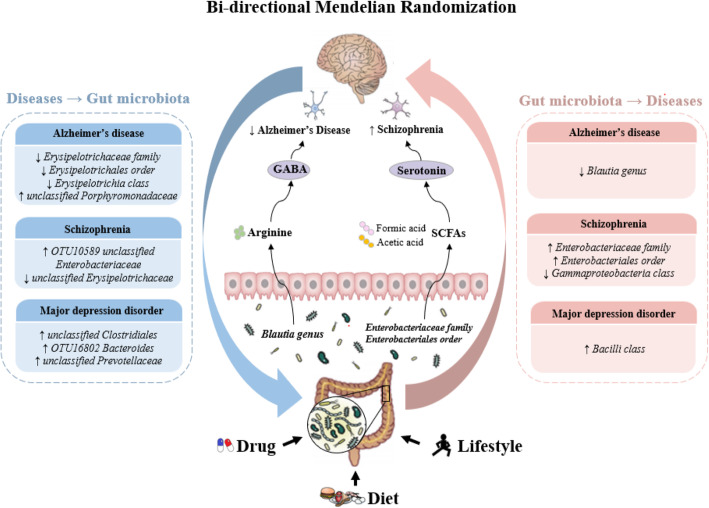
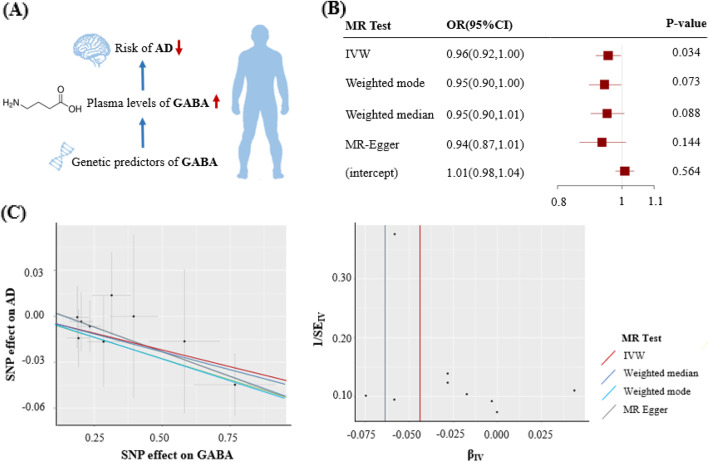
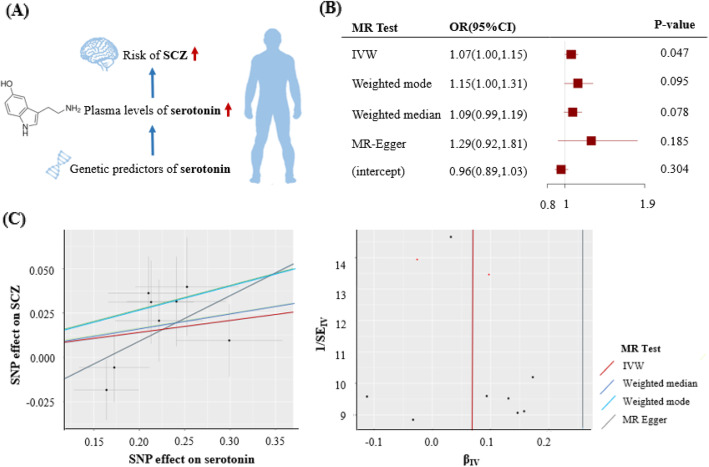
Background: Growing evidence has shown that alterations in the gut microbiota composition were associated with a variety of neuropsychiatric conditions. However, whether such associations reflect causality remains unknown. We aimed to reveal the causal relationships among gut microbiota, metabolites, and neuropsychiatric disorders including Alzheimer’s disease (AD), major depressive disorder (MDD), and schizophrenia (SCZ). Methods: A two-sample bi-directional Mendelian randomization analysis was performed by using genetic variants from genome-wide association studies as instrumental variables for gut microbiota, metabolites, AD, MDD, and SCZ, respectively. Results: We found suggestive associations of host-genetic-driven increase in Blautia (OR, 0.88; 95%CI, 0.79–0.99; P = 0.028) and elevated γ-aminobutyric acid (GABA) (0.96; 0.92–1.00; P = 0.034), a downstream product of Blautia -dependent arginine metabolism, with a lower risk of AD. Genetically increased Enterobacteriaceae family and Enterobacteriales order were potentially associated with a higher risk of SCZ (1.09; 1.00–1.18; P = 0.048), while Gammaproteobacteria class (0.90; 0.83–0.98; P = 0.011) was related to a lower risk for SCZ. Gut production of serotonin was potentially associated with an increased risk of SCZ (1.07; 1.00–1.15; P = 0.047). Furthermore, genetically increased Bacilli class was related to a higher risk of MDD (1.07; 1.02–1.12; P = 0.010). In the other direction, neuropsychiatric disorders altered gut microbiota composition. Conclusions: These data for the first time provide evidence of potential causal links between gut microbiome and AD, MDD, and SCZ. GABA and serotonin may play an important role in gut microbiota-host crosstalk in AD and SCZ, respectively. Further investigations in understanding the underlying mechanisms of associations between gut microbiota and AD, MDD, and SCZ are required.
Overview
The claims and statistics of this paper haven’t been checked yet.
Free: it reads the open-access text and checks the first 5 claims that cite a source we can check. Create a free account to check every claim.
Integrity signals
Registry
Cites
Statistics
Figures
Verification
Claims the paper makes
The claims and statistics of this paper haven’t been checked yet.
Free: it reads the open-access text and checks the first 5 claims that cite a source we can check. Create a free account to check every claim.
Claims other papers make about this one
Each is checked against this paper’s own text: does it say what the citing paper says it does?
The cited source says what the claim attributes to it.
In the citing paper
“Substantial evidence links the gut microbiome to a variety of neuropsychiatric conditions[11], [12], [13], [14] and gastrointestinal diseases[15], [16], [17], [18].”
From The hidden genetic and microbial networks connecting neuropsychiatric and digestive disorders (2025) · cites this paper as [11]
Self-check
Percentages, sums and reported differences re-computed from the paper’s own numbers.
The self-check needs the paper’s full text.
Citations
Cites
Bowden, J., Davey Smith, G., Haycock, P. C., & Burgess, S. (2016) · Genetic Epidemiology · doi:10.1002/gepi.21965 · Cited by 8,922
Meta-Analysis of 74,046 Individuals Identifies 11 New Susceptibility Loci for Alzheimer’s Disease
(EADI), E. A. D. I., Lambert, J.-C., (GERAD), G. A. E. R. I. A. D., Alzheimer's Disease Genetic Consortium (ADGC), (CHARGE), C. F. H. A. A. R. I. G. E., Ibrahim-Verbaas, C. A., Harold, D., Naj, A. C., Sims, R., Bellenguez, C., et al. (2013) · Nature Genetics · doi:10.1038/ng.2802 · Cited by 4,336
Emdin, C. A., Khera, A. V., & Kathiresan, S. (2017) · JAMA · doi:10.1001/jama.2017.17219 · Cited by 3,637
Robust inference in summary data Mendelian randomization via the zero modal pleiotropy assumption
Hartwig, F. P., Davey Smith, G., & Bowden, J. (2017) · International Journal of Epidemiology · doi:10.1093/ije/dyx102 · Cited by 3,485
eQTLGen, Wray, N. R., 23andMe, the Major Depressive Disorder Working Group of the Psychiatric Genomics Consortium, Ripke, S., Mattheisen, M., Trzaskowski, M., Byrne, E. M., Abdellaoui, A., Adams, M. J., et al. (2018) · Nature Genetics · doi:10.1038/s41588-018-0090-3 · Cited by 3,005
Gut microbiome alterations in Alzheimer’s disease
Vogt, N. M., Kerby, R. L., Dill-McFarland, K. A., Harding, S. J., Merluzzi, A. P., Johnson, S. C., Carlsson, C. M., Asthana, S., Zetterberg, H., Blennow, K., et al. (2017) · Scientific Reports · doi:10.1038/s41598-017-13601-y · Cited by 2,137
The neuroactive potential of the human gut microbiota in quality of life and depression
Valles-Colomer, M., Falony, G., Darzi, Y., Tigchelaar, E. F., Wang, J., Tito, R. Y., Schiweck, C., Kurilshikov, A., Joossens, M., Wijmenga, C., et al. (2019) · Nature Microbiology · doi:10.1038/s41564-018-0337-x · Cited by 1,963
Interactions between the microbiota, immune and nervous systems in health and disease
Fung, T. C., Olson, C. A., & Hsiao, E. Y. (2017) · Nature Neuroscience · doi:10.1038/nn.4476 · Cited by 1,900
Causal relationships among the gut microbiome, short-chain fatty acids and metabolic diseases
Sanna, S., van Zuydam, N. R., Mahajan, A., Kurilshikov, A., Vich Vila, A., Võsa, U., Mujagic, Z., Masclee, A. A. M., Jonkers, D. M. A. E., Oosting, M., et al. (2019) · Nature Genetics · doi:10.1038/s41588-019-0350-x · Cited by 1,539
Neurotransmitter modulation by the gut microbiota
Strandwitz, P. (2018) · Brain Research · doi:10.1016/j.brainres.2018.03.015 · Cited by 1,527
Cited by
Tryptophan metabolism and gut-brain homeostasis
Roth, W., Zadeh, K., Vekariya, R., Ge, Y., & Mohamadzadeh, M. (2021) · International Journal of Molecular Sciences · doi:10.3390/ijms22062973 · Cited by 519
“Several other genera, including Clostridium, Ruminococcus, Blautia and Lactobacillus expressing TPH decarboxylases catabolize TPH to tryptamine [71].”
BackgroundGamma-aminobutyric acid as a potential postbiotic mediator in the gut–brain axis
Braga, J. D., Thongngam, M., & Kumrungsee, T. (2024) · npj Science of Food · doi:10.1038/s41538-024-00253-2 · Cited by 224
“As men-tionedabove,homocarnosinecouldpossiblybeagoodreservoirofGABAin thebrain,andotherneurologicaldisorders,suchasAD,ASD,andSCZ,can beassociatedwithhomocarnosineastheyarecharacterizedbylowGABA levels,andGABAcaninducehomocarnosineproduction 35,88,92,134 .”
BackgroundOrnish, D. M., Madison, C. A., Kivipelto, M., Kemp, C., McCulloch, C. E., Galasko, D., Artz, J., Rentz, D. M., Lin, J., Norman, K., et al. (2024) · Alzheimer s Research & Therapy · doi:10.1186/s13195-024-01482-z · Cited by 200
“For example, Blautia, which increased during the intervention in the intervention group, has previously been associated with a lower risk of AD, potentially due to its involvement in increasing γ-aminobutyric acid (GABA) production [37].”
BackgroundProbiotics for Alzheimer’s Disease: A Systematic Review
Naomi, R., Embong, H., Othman, F., Ghazi, H. F., Maruthey, N., & Bahari, H. (2021) · Nutrients · doi:10.3390/nu14010020 · Cited by 194
“Another study reports the causal effect of elevated GABA, which is a downstream product of Blautia- dependent arginine metabolism with a lower risk of AD [39].”
BackgroundGut Microbiota and Psychiatric Disorders: A Two-Sample Mendelian Randomization Study
Ni, J.-J., Xu, Q., Yan, S.-S., Han, B.-X., Zhang, H., Wei, X.-T., Feng, G.-J., Zhao, M., Pei, Y.-F., & Zhang, L. (2022) · Frontiers in Microbiology · doi:10.3389/fmicb.2021.737197 · Cited by 181
Mhanna, A., Martini, N., Hmaydoosh, G., Hamwi, G., Jarjanazi, M., Zaifah, G., Kazzazo, R., Mohamad, A. H., & Alshehabi, Z. (2024) · Medicine · doi:10.1097/md.0000000000037114 · Cited by 180
“[37] The Parabacteroides and Eubacterium genera were identified as GABA producers, [38] along with Lactobacillus, Bifidobacterium, Bacteroides , [37] and Blautia , [39] specifically Bacteroides fragilis .”
BackgroundRoles and Mechanisms of Gut Microbiota in Patients With Alzheimer’s Disease
Wu, S., Liu, X., Jiang, R., Yan, X., & Ling, Z. (2021) · Frontiers in Aging Neuroscience · doi:10.3389/fnagi.2021.650047 · Cited by 143
Causal effects of gut microbiota on diabetic retinopathy: A Mendelian randomization study
Liu, K., Zou, J., Fan, H., Hu, H., & You, Z. (2022) · Frontiers in Immunology · doi:10.3389/fimmu.2022.930318 · Cited by 147
Aaldijk, E., & Vermeiren, Y. (2022) · Ageing Research Reviews · doi:10.1016/j.arr.2021.101556 · Cited by 142
“Additionally, the suggestion of a(n) (in)direct link between the axis and AD development due to neurotransmitter alterations (serotonin, gamma aminobutyric acid) has recently been raised by a Mendelian randomization analysis (Zhuang et al., 2020).”
Zhou, L., Qiu, W., Wang, J., Zhao, A., Zhou, C., Sun, T., Xiong, Z., Cao, P., Shen, W., Chen, J., et al. (2023) · Cell Host & Microbe · doi:10.1016/j.chom.2023.05.022 · Cited by 143
Emerging Evidence for the Widespread Role of Glutamatergic Dysfunction in Neuropsychiatric Diseases
McGrath, T., Baskerville, R., Rogero, M. M., & Castell, L. M. (2022) · Nutrients · doi:10.3390/nu14050917 · Cited by 135
The gut microbiota–brain axis in neurological disorders
You, M., Chen, N., Yang, Y., Cheng, L., He, H., Cai, Y., Liu, Y., Liu, H., & Hong, G. (2024) · MedComm · doi:10.1002/mco2.656 · Cited by 136
“117,118 121 For example, altered serotonin (5-HT) and associated changes in microbiota composition have been observed in irritable bowel syndrome, PD, and AD.”
BackgroundShabbir, U., Rubab, M., Tyagi, A., & Oh, D. (2020) · International Journal of Molecular Sciences · doi:10.3390/ijms22010196 · Cited by 128
Yu, J., Ning, J., Huang, S.-Y., Chen, S.-D., Huang, Y., & Dong, Q. (2022) · Journal of Alzheimer s Disease · doi:10.3233/jad-215411 · Cited by 128
“A previous MR study has suggested that increase in Blautia and elevated (cid:2) -aminobutyric acid (GABA) were related to lower risk of AD [36].”
Gagnon, É., Mitchell, P. L., Manikpurage, H. D., Abner, E., Taba, N., Esko, T., Ghodsian, N., Thériault, S., Mathieu, P., & Arsenault, B. J. (2023) · Journal of Translational Medicine · doi:10.1186/s12967-022-03799-5 · Cited by 122
Gut Microbiota Interaction with the Central Nervous System throughout Life
Ojeda, J., Ávila, A., & Vidal, P. M. (2021) · Journal of Clinical Medicine · doi:10.3390/jcm10061299 · Cited by 103
The gut microbiome modulates the transformation of microglial subtypes
Huang, Y., Wu, J., Zhang, H., Li, Y., Wen, L., Tan, X., Cheng, K., Liu, Y., Pu, J., Liu, L., et al. (2023) · Molecular Psychiatry · doi:10.1038/s41380-023-02017-y · Cited by 111
“Previously, clinical and animal studies have shown that AD and MDD were accompanied by disturbances of the gut microbiome [4, 9, 13, 64].”
BackgroundAntioxidant and Anti-Inflammatory Effects of Carotenoids in Mood Disorders: An Overview
Rasmus, P., & Kozłowska, E. (2023) · Antioxidants · doi:10.3390/antiox12030676 · Cited by 112
Hormetic Nutrition and Redox Regulation in Gut–Brain Axis Disorders
Scuto, M. C., Rampulla, F., Reali, G. M., Spanò, S. M., Salinaro, A. T., & Calabrese, V. (2024) · Antioxidants · doi:10.3390/antiox13040484 · Cited by 111
A large-scale causal analysis of gut microbiota and delirium: A Mendelian randomization study
Yu, H., Wan, X., Yang, M., Xie, J., Xu, K., Wang, J., Wang, G., & Xu, P. (2023) · Journal of Affective Disorders · doi:10.1016/j.jad.2023.02.078 · Cited by 101
Alzheimer’s Disease and Diabetes: Role of Diet, Microbiota and Inflammation in Preclinical Models
Carranza-Naval, M. J., Vargas-Soria, M., Hierro‐Bujalance, C., Baena‐Nieto, G., García-Alloza, M., Infante‐Garcia, C., & del Marco, À. (2021) · Biomolecules · doi:10.3390/biom11020262 · Cited by 88
“Additionally, in opposite direction, AD pathology could affect gut microbiota composition [17,19].”
BackgroundMicrobiota-gut-brain axis in the Alzheimer's disease pathology - an overview
Giridharan, V. V., Quevedo, C. E. B. D., & Petronilho, F. C. (2022) · Neuroscience Research · doi:10.1016/j.neures.2022.05.003 · Cited by 76
Cheng, W., Ho, J. Y. S., & Chang, R. C. (2022) · Ageing Research Reviews · doi:10.1016/j.arr.2022.101620 · Cited by 75
Khan, M. T., Zohair, M., Khan, A., Kashif, A. W., Mumtaz, S., & Muskan, F. (2025) · Molecular and Cellular Endocrinology · doi:10.1016/j.mce.2025.112599 · Cited by 78
Liu, W.-T., Wu, Z., Sun, M., Zhang, S., Yuan, J., Zhu, D., Yan, G., & Hou, K. (2022) · Biomolecules and Biomedicine · doi:10.17305/bjbms.2021.6754 · Cited by 73
“Other studies have shown [37] that mental disorders including MDD may change the composition of the intestinal flora.”
BackgroundLayunta, E., Buey, B., Mesonero, J. E., & Latorre, E. (2021) · Frontiers in Endocrinology · doi:10.3389/fendo.2021.748254 · Cited by 73
“In this context, recent studies have described the involvement of microbiota in serotonin signaling in CNS disorders such as Alzheimer’s or schizophrenia (9).”
BackgroundMingdong, W., Gao, X., Yongjun, Q., Mingshuai, W., & Hao, P. (2023) · BMC Cancer · doi:10.1186/s12885-023-11383-3 · Cited by 73
Gut-brain axis and neurodegeneration: mechanisms and therapeutic potentials
Park, K. J., & Gao, Y. (2024) · Frontiers in Neuroscience · doi:10.3389/fnins.2024.1481390 · Cited by 71
Kim, Y., Lim, J., & Oh, J. (2024) · Biomedicine & Pharmacotherapy · doi:10.1016/j.biopha.2024.117277 · Cited by 71
Cutuli, D., Decandia, D., Giacovazzo, G., & Coccurello, R. (2023) · International Journal of Molecular Sciences · doi:10.3390/ijms241914686 · Cited by 64
“Moreover, an increase in Blautia has been found to be causally associated with a reduced risk of AD [234], and a 12-week mixed exercise training was reported to produce an increase in some genera such as Blautia , Dialister , and Roseburia [235].”
BackgroundCastilo, I. D., Neumann, A. S., Lemos, F. S., Bastiani, M. A. D., de Oliveira, F. L., Zimmer, E. R., Rêgo, A. M., Hardoim, C. C. P., Antunes, L. C. M., Lara, F. A., et al. (2022) · International Journal of Molecular Sciences · doi:10.3390/ijms23105583 · Cited by 59
“Emerging data on the gut–microbiota–brain connection suggest that there is a link between changes in the gut microbiome composition and the development of neurological diseases [23,25,50,51].”
BackgroundSun, P., Zhu, H., Li, X., Shi, W., Guo, Y., Du, X., Zhang, L., Su, L., & Qin, C. (2022) · International Journal of Molecular Sciences · doi:10.3390/ijms231911560 · Cited by 55
“Recent studies have shown that AD shows a change pattern of GABA metabolites in feces, which may be related to gut dysbiosis [30].”
BackgroundDeleterious Effect of Air Pollution on Human Microbial Community and Bacterial Flora: A Short Review
Gupta, N., Yadav, V. K., Gacem, A., Al-Dossari, M., Yadav, K. K., El-Gawaad, N. S. A., Khedher, N. B., Choudhary, N., Kumar, P., & Cavalu, S. D. (2022) · International Journal of Environmental Research and Public Health · doi:10.3390/ijerph192315494 · Cited by 56
Shi, X., Wei, T., Hu, Y., Wang, M., & Tang, Y. (2022) · Journal of Neuroinflammation · doi:10.1186/s12974-022-02582-z · Cited by 49
Liu, H., Hu, Y., Zhang, Y., Zhang, H., Gao, S., Wang, L., Wang, T., Han, Z., Sun, B.-L., & Liu, G. (2022) · Alzheimer's Research & Therapy · doi:10.1186/s13195-022-00963-3 · Cited by 51
Ni, H., Liu, M., Cao, M., Zhang, L., Zhao, Y., Yi, L., Li, Y., Liu, L., Wang, P., Du, Q., et al. (2024) · Biomedicine & Pharmacotherapy · doi:10.1016/j.biopha.2024.116190 · Cited by 53
Li, C., Liu, C., & Li, N. (2022) · Frontiers in Microbiology · doi:10.3389/fmicb.2022.1059281 · Cited by 48
“Eubacterium, Ruminococcaceae, and Enterobacterales are involved in the production of short-chain fatty acids, such that their depletion is causally linked to inflammation (Tran et al., 2019; Zhuang et al., 2020).”
BackgroundCurcumin Formulations and Trials: What’s New in Neurological Diseases
Gagliardi, S., Morasso, C., Stivaktakis, P. D., Pandini, C., Tinelli, V., Tsatsakis, A. M., Prosperi, D., Hickey, M. A., Corsi, F., & Cereda, C. (2020) · Molecules · doi:10.3390/molecules25225389 · Cited by 47
“Interestingly, perturbations in gut microbiota have been associated with different pathologies, such as neurological diseases (AD, PD) [22,23].”
BackgroundEvaluating Causal Effects of Gut Microbiome on Alzheimer's Disease
Zhao, Q. S., Baranova, A. V., Cao, H., & Zhang, F. (2024) · The Journal of Prevention of Alzheimer s Disease · doi:10.14283/jpad.2024.113 · Cited by 45
“…in three MR studies, Blautia, which is genetically driven by the host, was found to have an increased protective effect on AD risk (OR: 0.88) (34); The genus Allisonella (OR: 1.235), genus Lachnospiraceae FCS020 group (OR: 1.374) significantly increased the risk of AD, while the family…”
InfluentialGut microbiota and chronic obstructive pulmonary disease: a Mendelian randomization study
Wei, Y., Lu, X., & Liu, C. (2023) · Frontiers in Microbiology · doi:10.3389/fmicb.2023.1196751 · Cited by 43
Opioid Use, Gut Dysbiosis, Inflammation, and the Nervous System
Jalodia, R., Abu, Y. F., Oppenheimer, M. R., Truitt, B., Meng, J., Chupikova, I., Tao, J., Ghosh, N., Dutta, R. K., Kolli, U., et al. (2022) · Journal of Neuroimmune Pharmacology · doi:10.1007/s11481-021-10046-z · Cited by 43
Zhao, J., Liang, R., Song, Q., Song, S., Yue, J., & Wu, C. (2023) · Precision Clinical Medicine · doi:10.1093/pcmedi/pbad010 · Cited by 41
Consensus on potential biomarkers developed for use in clinical tests for schizophrenia
Lin, P., Sun, J., Lou, X., Li, D., Shi, Y., Li, Z., Ma, P., Li, P., Chen, S., Jin, W., et al. (2022) · General Psychiatry · doi:10.1136/gpsych-2021-100685 · Cited by 41
Gut microbiome and major depressive disorder: insights from two-sample Mendelian randomization
Zhao, Q., Baranova, A. V., Cao, H., & Zhang, F. (2024) · BMC Psychiatry · doi:10.1186/s12888-024-05942-6 · Cited by 39
“In addition, there are MR studies supporting that MDD alters the composition of the gut microbiota [35].”
BackgroundDabboussi, N., Debs, E., Bouji, M., Rafei, R., & Farès, N. (2024) · Brain Research Bulletin · doi:10.1016/j.brainresbull.2024.111056 · Cited by 39
“The genera Bacillus and Streptococcus were re-ported to be causal in developing MDD in two mendelian randomization studies as well (Chen et al., 2022; Zhuang et al., 2020).”
BackgroundImpact of Gut Microbiota on the Association between Diet and Depressive Symptoms in Breast Cancer
Maitiniyazi, G., Cao, X., Chen, Y., Zhang, R., Liu, Y., Li, Z., Gu, D., Li, T., & Xia, S. (2022) · Nutrients · doi:10.3390/nu14061186 · Cited by 36
“In the same study, the association between Blautia and MDD showed a similar trend [48].”
ResultApplications of Mendelian randomization in psychiatry: a comprehensive systematic review
Saccaro, L. F., Gasparini, S., & Rutigliano, G. (2022) · Psychiatric Genetics · doi:10.1097/ypg.0000000000000327 · Cited by 36
“Studying systemic inflammation in SCZ is particularly relevant considering that two recent studies showed causal links between genetic predisposition to altered gut microbiota composition and SCZ risk (Zhuang et al., 2020; Ni et al., 2022), and it is known that microbiota composition might influence systemic immunity…”
BackgroundScaldaferri, F., D’Onofrio, A. M., Calia, R., Vincenzo, F. D., Ferrajoli, G. F., Petito, V., Maggio, E., Pafundi, P. C., Napolitano, D., Masi, L., et al. (2023) · Inflammatory Bowel Diseases · doi:10.1093/ibd/izad091 · Cited by 36
“51 It cannot be excluded that the reduction of Enterobacteriaceae entails a reduction in serotonin levels, which, according to the aminergic theory, seems to be reduced in depressed individuals.”
BackgroundCurrent Alzheimer disease research highlights: evidence for novel risk factors
Brenowitz, W. D., Xiang, Y., McEvoy, C. T., Yang, C., Yaffe, K. S., Le, W., & Leng, Y. (2021) · Chinese Medical Journal · doi:10.1097/cm9.0000000000001706 · Cited by 35
“To investigate the causal relationship between gut microbiota and AD, a clinical study found that gammaaminobutyric acid (GABA) and serotonin may play an important role in the gut microbiota–host interaction in AD patients.([72]) A pilot study revealed the characteristics of the MCI-specific gut fungi (mycobiome) sign…”
BackgroundAssociation Between Gut Microbiota and Delirium in Acutely Ill Older Adults
Garcez, F. B., de Alencar, J. C. G., Fernández, S. S. M., Avelino‐Silva, V. I., Sabino, É. C., Martins, R. C. R., Franco, L. A. M., Ribeiro, S. M. L., de Souza, H. P., & Avelino‐Silva, T. J. (2023) · The Journals of Gerontology Series A · doi:10.1093/gerona/glad074 · Cited by 35
The predictive, preventive, and personalized medicine of insomnia: gut microbiota and inflammation
Chen, H.-W., Zhou, R., Cao, B., Liu, K., Zhong, Q., Huang, Y., Liu, H., Zhao, J.-Q., & Wu, X. (2023) · The EPMA Journal · doi:10.1007/s13167-023-00345-1 · Cited by 33
“MR has played a critical role in establishing evidence linking GM to neurological conditions such as Alzheimer’s disease and major depressive disorders [26].”
BackgroundXu, Q., Zhang, S., Wang, R., Weng, Y.-J., Cui, X., Wei, X., Ni, J., Ren, H., Zhang, L., & Pei, Y. (2021) · Journal of Nutrition · doi:10.1093/jn/nxab025 · Cited by 32
Probing gut‐brain links in Alzheimer's disease with rifaximin
Suhocki, P. V., Ronald, J., Diehl, A. M., Murdoch, D. M., & Doraiswamy, P. M. (2022) · Alzheimer s & Dementia Translational Research & Clinical Interventions · doi:10.1002/trc2.12225 · Cited by 32
“Prior studies have noted that the abundance of firmicutes is reduced in AD (19-25) and hence our findings also suggest a potential neuroprotective effect.”
BackgroundEffect of gut microbiome on serotonin metabolism: a personalized treatment approach
Potter, K., Gayle, E. J., & Deb, S. (2023) · Naunyn-Schmiedeberg s Archives of Pharmacology · doi:10.1007/s00210-023-02762-5 · Cited by 32
“While the results of this study were not unfounded, Zhuang et al. state that results were subject to confounding bias and that a more reliable method should be employed (Zhuang et al. 2020).”
InfluentialWang, H., Zhou, L., Zheng, Q., Song, Y., Huang, W., Yang, L., Xiong, Y., Cai, Z., Chen, Y., & Yuan, J. (2024) · Journal of Ethnopharmacology · doi:10.1016/j.jep.2024.118161 · Cited by 31
Schizophrenia as metabolic disease. What are the causes?
Helaly, A. M., & Ghorab, D. S. (2023) · Metabolic Brain Disease · doi:10.1007/s11011-022-01147-6 · Cited by 31
“Excess serotonin-producing strains were more related to increased rates of SZ (Zhuang et al. 2020).”
BackgroundGut microbiome at the crossroad of genetic variants and behavior disorders
Cheng, L., Wu, H., Chen, Z., Hao, H., & Zheng, X. (2023) · Gut Microbes · doi:10.1080/19490976.2023.2201156 · Cited by 31
Song, X., Zhu, Z., Qian, X., Liu, X., Chen, S., & Tang, H. (2022) · Molecules · doi:10.3390/molecules27061904 · Cited by 31
“Growing evidence has indicated that gut microbiota not only could participate in the metabolism of the body [24] but could also regulate brain function through the brain–gut– microbiota axis [25], which provides a potential relevant link between cognitive impairment and metabolic dysregulations.”
BackgroundGut feelings: the microbiota-gut-brain axis on steroids
So, S. Y., & Savidge, T. (2021) · American Journal of Physiology-Gastrointestinal and Liver Physiology · doi:10.1152/ajpgi.00294.2021 · Cited by 29
Li, Y., Wang, K., Zhang, Y., Yang, J., Wu, Y., & Zhao, M. (2023) · Frontiers in Cellular and Infection Microbiology · doi:10.3389/fcimb.2023.1200299 · Cited by 29
“, 2021), and psychiatric disorders (Zhuang et al., 2020).”
Precision Nutrition and Gut–Brain Axis Modulation in the Prevention of Neurodegenerative Diseases
Tuigunov, D. N., Sinyavskiy, Y. A., Nurgozhin, T. S., Zholdassova, Z., Smagul, G., Omarov, Y., Dolmatova, O., Yeshmanova, A., & Omarova, I. (2025) · Nutrients · doi:10.3390/nu17193068 · Cited by 28
Wu, Y., Dong, Z.-Y., Jiang, X., Qu, L., Zhou, W., Sun, X., Hou, J., Xu, H., & Cheng, M. (2023) · Microbiology Spectrum · doi:10.1128/spectrum.00302-23 · Cited by 25
“Growing evidence has shown that gut microbiota perturbations are compellingly correlated with neurological diseases through the microbiota-gut-brain axis (11, 12).”
BackgroundA review on gut microbiota and miRNA crosstalk: implications for Alzheimer’s disease
Ayyanar, M. P., & Vijayan, M. (2024) · GeroScience · doi:10.1007/s11357-024-01432-5 · Cited by 25
“Zhuang et al. (2020) suggested that neurotransmitters generated by gut microbiota plays a crucial part in microbiota-host communication, influencing brain function and behavior [324].”
Role of the gut microbiome in psychological symptoms associated with inflammatory bowel diseases
Atanasova, K., Knödler, L.-L., Reindl, W., Ebert, M. P. A., & Thomann, A. (2025) · Seminars in Immunopathology · doi:10.1007/s00281-025-01036-x · Cited by 25
“This process induces the biosynthesis of serotonin on the level of enterochromaffin cells, which upon activation, release serotonin to act upon serotonin receptors on neurons in the enteric nervous system [79, 80].”
He, Y., Zhang, X., Gao, J., Gao, H., Cheng, J., Xu, Z., Pan, R., Yi, W., Song, J. G., Liu, X., et al. (2022) · Environmental Research · doi:10.1016/j.envres.2022.113243 · Cited by 24
Liu, K., Wu, P., Zou, J., Fan, H., Hu, H., Cheng, Y., He, F., Liu, J., & You, Z. (2022) · Human Genetics · doi:10.1007/s00439-022-02514-0 · Cited by 25
Zhao, H., Sun, M., Zhang, Y., Kong, W., Fan, L., Wang, K., Xu, Q., Chen, B., Dong, J., Shi, Y., et al. (2023) · Aging and Disease · doi:10.14336/ad.2023.0516 · Cited by 24
Zhu, B., Liang, L., Huang, Y., Wang, H., Zhou, J., Xiong, D., Li, S., Li, H., Li, X., Chen, S., et al. (2025) · Schizophrenia Research · doi:10.1016/j.schres.2025.04.017 · Cited by 23
Oluwagbemigun, K., Schnermann, M. E., Schmid, M. C., Cryan, J. F., & Nöthlings, U. (2022) · Gut Pathogens · doi:10.1186/s13099-022-00487-z · Cited by 22
Yan, S., Wang, H., Feng, B., Ye, L., & Chen, A. (2024) · Frontiers in Immunology · doi:10.3389/fimmu.2024.1332757 · Cited by 22
“Recent studies utilizing MR analysis have made signi fi cant advancements in unveiling the causality of autoimmune disorders and GM (23) along with neuropsychiatric conditions (24).”
BackgroundTao, W., Zhang, Y., Wang, B., Nie, S., Li, F., Xiao, J., & Wu, Y. (2024) · Journal of Advanced Research · doi:10.1016/j.jare.2024.03.023 · Cited by 22
“And the increase in Blautia -dependent arginine metabolism GABA level in the intestine is associated with decrease of AD risk [71].”
A multi‐omics study to monitor senescence‐associated secretory phenotypes of Alzheimer's disease
Yang, J., Zhou, Y., Wang, T., Li, N., Chao, Y., Gao, S., Zhang, Q., Wu, S., Zhao, L., & Dong, X. W. (2024) · Annals of Clinical and Translational Neurology · doi:10.1002/acn3.52047 · Cited by 23
Gut Microbes Associated with Neurodegenerative Disorders: A Comprehensive Review of the Literature
Koutsokostas, C., Merkouris, E., Goulas, A., Aidinopoulou, K., Sini, N., Dimaras, T., Tsiptsios, D., Mueller, C., Nystazaki, M., & Tsamakis, K. (2024) · Microorganisms · doi:10.3390/microorganisms12081735 · Cited by 24
“GABAergic activities may be a crucial element in the overall process of AD pathogenesis, which appeared to be more resilient to neurodegenerative alterations in the aged brain [38].”
BackgroundInfluentialMaftoon, H., Siadat, S. D., Tarashi, S., Soroush, E., Asefi, M. B., Foroushani, A. R., & Dallal, M. M. S. (2024) · Brain Research · doi:10.1016/j.brainres.2024.149280 · Cited by 24
Son, S. J., Wu, X., Roh, H. W., Cho, Y. H., Hong, S., Nam, Y. J., Hong, C. H., & Park, S. (2025) · Alzheimer s Research & Therapy · doi:10.1186/s13195-025-01820-9 · Cited by 21
“While emerging evidence suggests that gut dysbiosis can contribute to neuroinflammation and neurodegeneration [61], it is also plausible that the progression of cognitive decline and associated changes in diet, physical activity, or even stress could, in turn, alter the gut microbiome [60].”
Sathyasaikumar, K. V., Ayala, T. B., Zheng, Y., Schwieler, L., Erhardt, S., Tufvesson‐Alm, M., Pöeggeler, B., & Schwarcz, R. M. (2024) · International Journal of Tryptophan Research · doi:10.1177/11786469241262876 · Cited by 22
Vaziri, Y., Olia, J. B. H., Avcı, Ç. B., & Nourazarian, A. (2025) · Molecular Brain · doi:10.1186/s13041-025-01263-1 · Cited by 20
“Over the past five years, the pace of discovery has accelerated, progressing from the identification of specific microbial taxa in AD cohorts (2020) to early-phase FMT trials reporting cognitive improvements [5–10].”
Warren, A., Wynia, Z., Corr, P. G., Devin, M. F., Celikkol, Z., Gordon, L., Farah, M., Karam, M., Villarreal, D., Jackson, S. A., et al. (2026) · Alzheimer s & Dementia · doi:10.1002/alz.71023 · Cited by 21
Harnessing human microbiomes for disease prediction
Liu, Y., Fachrul, M., Inouye, M., & Méric, G. (2024) · Trends in Microbiology · doi:10.1016/j.tim.2023.12.004 · Cited by 20
Yang, B., He, M., Chen, X., Sun, M., Pan, T., Xu, X., Zhang, X., Gong, Q., Zhao, Y., Jin, Z., et al. (2022) · Computational and Mathematical Methods in Medicine · doi:10.1155/2022/1527159 · Cited by 20
“Acupuncture dramatically reduced the amount of Porphyromonadaceae and Helicobacteraceae in this study, indicating that the gut microbiota components impacted by acupuncture may interfere with AD.”
ResultInfluentialRetractedZhang, Q., Zhang, S., Cao, X., Zhi, Y., & Guo, Y. C. (2025) · Microbiological Research · doi:10.1016/j.micres.2025.128391 · Cited by 19
Shi, H., Chen, M., Zheng, C., Yinglin, B., & Zhu, B. (2023) · Journal of Pain Research · doi:10.2147/jpr.s415642 · Cited by 19
Moschonis, G., Sarapis, K., Resciniti, S. M., Hall, R., Yim, K., Tonkovic, M., Fitzgerald, C., Anixiadis, F., Vinh, A., Dinh, Q. N., et al. (2024) · British Journal Of Nutrition · doi:10.1017/s0007114524001703 · Cited by 19
“A potential causal relationship has been proposed between the gut microbiota and depression (20) , as the gut microbiota plays a role in the development and functioning of the immune system and the brain through the microbiota – gut – brain axis.”
Jin, S., Ma, Z., Zhang, H., Liang, T., & Zhang, J. (2023) · BMC Genomic Data · doi:10.1186/s12863-023-01120-x · Cited by 19
“Recent reports have revealed that there is a strong relationship between MDD and AD [18, 19].”
BackgroundOral Health and Cognitive Decline: A Systematic Review of the Periodontitis–Alzheimer’s Connection
Inchingolo, A. M., Inchingolo, A. D., Piras, F., Avantario, P., Ferrante, L., Paduanelli, G., Inchingolo, F., Palermo, A., Dipalma, G., & Corsalini, M. (2025) · Applied Sciences · doi:10.3390/app15126728 · Cited by 18
Wu, Q., He, Q., Zhang, X., Chen, S., & Xue, X. (2024) · Aging and Disease · doi:10.14336/ad.2024.0834 · Cited by 17
“Evidence from Mendelian randomization (MR) studies support a potential causal relationship between the gut microbiome and AD [244].”
Nutrition and the gut microbiome: a symbiotic dialogue influencing health and disease
Ray, S., & Shankaran, P. (2026) · Frontiers in Nutrition · doi:10.3389/fnut.2026.1761992 · Cited by 16
Chen, W., Chen, Y., Aslam, M. S., Shen, J., Tong, T., Yan, S., Cheng, W., Huang, Z., Li, J., Liu, S., et al. (2023) · Behavioural Brain Research · doi:10.1016/j.bbr.2023.114627 · Cited by 16
Lou, Y., Liu, B., Jiang, Z., Wen, X., Song, S., Xie, Z., Mao, Y., & Shao, T. (2024) · Nutrition Metabolism and Cardiovascular Diseases · doi:10.1016/j.numecd.2024.01.021 · Cited by 15
Li, C., Chen, H., Gu, Y., Chen, W., Liu, M., Lei, Q., Li, Y., Liang, X., Wei, B., Huang, D., et al. (2024) · Ecotoxicology and Environmental Safety · doi:10.1016/j.ecoenv.2024.116257 · Cited by 15
Chen, X., Wei, J., Zhang, L., Wang, H., Zhang, Y., Li, Z., Wang, X., Liu, L., Zhang, Y., & Zhang, T. (2025) · Lipids in Health and Disease · doi:10.1186/s12944-025-02477-x · Cited by 15
“Growing evidence suggests that the microbiota-gut-brain axis is associated with various neurocognitive disorders, including Alzheimer’s disease (AD) and Parkinson’s disease (PD) [1, 2].”
Zhang, W., Li, D., & Shi, J. (2023) · American Journal of Alzheimer s Disease & Other Dementias® · doi:10.1177/15333175231174193 · Cited by 15
“36 These results suggest that these changes in the gut microbiota composition may already be signs of triggering symptoms of AD before the apparent spatial memory de fi cits in AD mice.”
BackgroundTrimethylamine N-oxide and risk of inflammatory bowel disease: A Mendelian randomization study
Banno, Y., Nomura, M., Hara, R., Asami, M., Tanaka, K., Mukai, Y., & Tomata, Y. (2023) · Medicine · doi:10.1097/md.0000000000034758 · Cited by 15
“[7,10] These SNPs were independent, with a threshold of linkage disequilibrium of R 2 0.001 ( R 2 between rs16917161 and rs2703228 on chromosome 8 was 0.0001) except for 1 pair (rs4846884 and rs3935570) on chromosome 1 which was suspected of the linkage disequilibrium (LDlink:…”
InfluentialNing, M., An, L., Dong, L., Zhu, R., Hao, J., Liu, X., & Zhang, Y. (2024) · Journal of Alzheimer s Disease · doi:10.3233/jad-240082 · Cited by 14
Chen, Y., Xue, Y., Jia, L., Yang, M., Huang, G., & Xie, J. (2024) · Medicine · doi:10.1097/md.0000000000037284 · Cited by 14
“[18] In this study, we explored the potential causal association between the GM (exposure) and ASD (outcome) from a genetic perspective, providing new thinking for ASD prevention and treatment.”
Cao, B., Lu, C., Yan, L., McIntyre, R. S., Teopiz, K. M., & Zhan, L. (2025) · BMC Psychiatry · doi:10.1186/s12888-025-07388-w · Cited by 13
“Research targeting various neuropsychiatric disorders has suggested that changes in neuroactive molecules serve as intermediate pathways, participating in the impact of host genetics on the pathogenesis of MDD through the gut microbiota [21].”
SIGNALLING THROUGH THE MICROBIOTA-GUT-BRAIN TRIADE
AMZĂR, A. I. (2022) · FARMACIA · doi:10.31925/farmacia.2022.3.4 · Cited by 14
Lin, L., Lin, J., Qiu, J., Feng, W., Bai, X., Ma, W., Zeng, J., & Lin, D. (2022) · Frontiers in Microbiology · doi:10.3389/fmicb.2022.994170 · Cited by 14
“Many studies found evidence of relationships between gut microbiota and neuropsychiatric diseases and neurodegenerative diseases, for example, major depressive disorder, schizophrenia, and Parkinson’s disease (Zhuang et al., 2020; Rosoff et al., 2021; Ning et al., 2022).”
BackgroundWidjaja, F., & Rietjens, I. M. C. M. (2023) · Biomedicines · doi:10.3390/biomedicines11102658 · Cited by 13
Li, H., Hu, Y., Huang, Y., Ding, S., Zhu, L., Li, X., Lan, M., Huang, W., & Lin, X. (2024) · Frontiers in Microbiology · doi:10.3389/fmicb.2024.1365043 · Cited by 12
Metadata
- Authors
- Zhuang, Z., Yang, R., Wang, W., Qi, L., & Huang, T.
- Affiliations
- Peking University (CN)
- Tulane University (US)
- Corresponding author
- Qi, Lu
- Huang, Tao
- Venue
- Journal of Neuroinflammation
- Published
- 2020-10-02
- Volume
- 17
- Issue
- 1
- Pages
- 288-288
- ISSN
- 1742-2094 (ISSN-L)
- PMC
- PMC7532639
- OpenAlex
- W3090879627
- Semantic Scholar
- f9e6f20166865ff729c81d9467879c9ec4ca7694
- Cited by
- 220
- References
- 57
- Citations by year
- 2026: 15 · 2025: 53 · 2024: 66 · 2023: 36 · 2022: 32 · 2021: 16 · 2020: 2
- FWCI
- 7.05
- Type
- journal article
- Language
- en
- Open access
- gold
- doi.org
- Licence
- cc-by
- creativecommons.org/licenses/by/4.0 (tdm)
- creativecommons.org/licenses/by/4.0 (vor)
- Locations
- Journal of Neuroinflammation (publishedVersion, cc-by)
- PubMed Central (publishedVersion, cc-by)
- PubMed (publishedVersion)
- DOAJ (DOAJ: Directory of Open Access Journals) (submittedVersion, cc-by-sa)
- Funders
- Beijing Technology and Business University
- Peking University (2019YFC2003400)
- Topics
- Life Sciences › Biochemistry, Genetics and Molecular Biology › Molecular Biology › Gut microbiota and health
- Life Sciences › Biochemistry, Genetics and Molecular Biology › Genetics › Genetic Associations and Epidemiology
- Life Sciences › Neuroscience › Biological Psychiatry › Tryptophan and brain disorders
- Keywords
- gut microbiota, Alzheimer's disease, major depressive disorder, schizophrenia, neuropsychiatric disorders, Blautia, GABA, serotonin, arginine metabolism, Enterobacteriaceae, Gammaproteobacteria, bacilli, causal inference, gut-brain axis, microbial metabolites
- MeSH terms
- Gastrointestinal Microbiome, Alzheimer Disease, Major Depressive Disorder, Humans, Schizophrenia, Genetic Predisposition to Disease, Genome-Wide Association Study
About these checks
Registry, retraction, Cites and statistics results are computed, not judged, with one exception: a printed reference that no index lists is read once by a model before it counts as a citation error. Claims are extracted by a model and kept only when their quote appears verbatim in the text; each cited source is then checked, with a model’s help, for whether it says what the claim relies on. Those verdicts can be wrong — read the claim’s quote and the cited source before relying on one.
Statistics and arithmetic are recomputed, not judged.
Confidence bands are shown only for fields calibrated on our annotated test set. None is calibrated yet, so no band is shown.
What counts as a claim ›How we measure confidence ›How we check this ›
Are you an author, or do you see a problem with this page? Request a review
Data sources
Bibliographic data: Semantic Scholar, OpenAlex, Crossref.
Contains information from the Semantic Scholar Academic Graph Datasets, made available under the ODC Attribution License (ODC-BY 1.0).
Semantic Scholar’s data is described in: Kinney, R., et al. (2023). The Semantic Scholar Open Data Platform. arXiv:2301.10140.
