

Associations between gut microbiota and Alzheimer’s disease, major depressive disorder, and schizophrenia
Open accessThe DOI matches its Crossref record; 58 of the 58 references it cites were found in a registry or an index.
Abstract
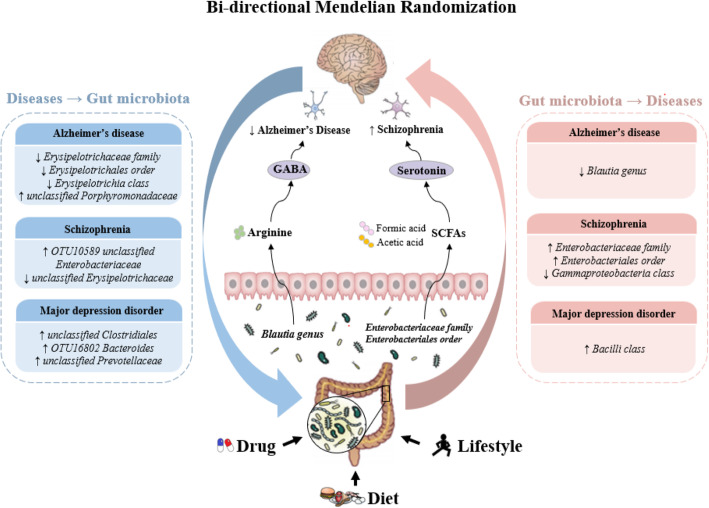
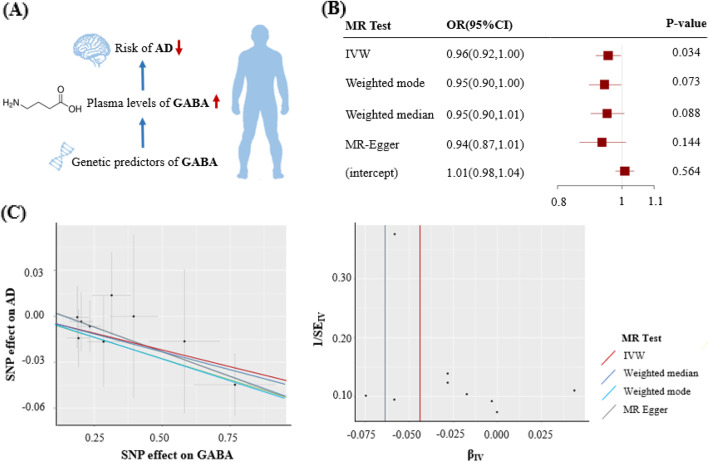
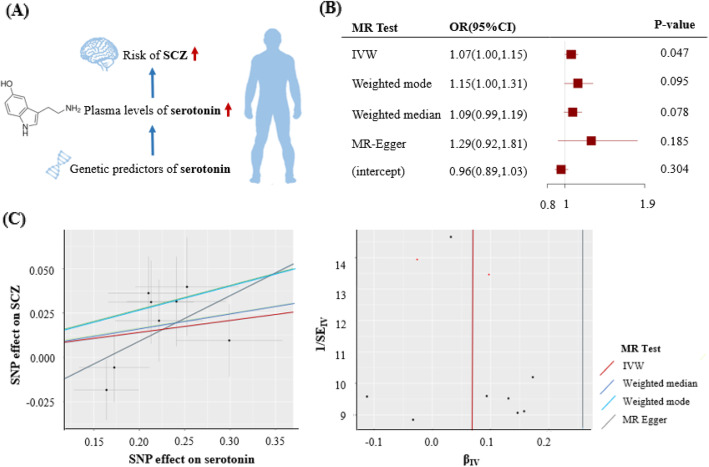
Background: Growing evidence has shown that alterations in the gut microbiota composition were associated with a variety of neuropsychiatric conditions. However, whether such associations reflect causality remains unknown. We aimed to reveal the causal relationships among gut microbiota, metabolites, and neuropsychiatric disorders including Alzheimer’s disease (AD), major depressive disorder (MDD), and schizophrenia (SCZ). Methods: A two-sample bi-directional Mendelian randomization analysis was performed by using genetic variants from genome-wide association studies as instrumental variables for gut microbiota, metabolites, AD, MDD, and SCZ, respectively. Results: We found suggestive associations of host-genetic-driven increase in Blautia (OR, 0.88; 95%CI, 0.79–0.99; P = 0.028) and elevated γ-aminobutyric acid (GABA) (0.96; 0.92–1.00; P = 0.034), a downstream product of Blautia -dependent arginine metabolism, with a lower risk of AD. Genetically increased Enterobacteriaceae family and Enterobacteriales order were potentially associated with a higher risk of SCZ (1.09; 1.00–1.18; P = 0.048), while Gammaproteobacteria class (0.90; 0.83–0.98; P = 0.011) was related to a lower risk for SCZ. Gut production of serotonin was potentially associated with an increased risk of SCZ (1.07; 1.00–1.15; P = 0.047). Furthermore, genetically increased Bacilli class was related to a higher risk of MDD (1.07; 1.02–1.12; P = 0.010). In the other direction, neuropsychiatric disorders altered gut microbiota composition. Conclusions: These data for the first time provide evidence of potential causal links between gut microbiome and AD, MDD, and SCZ. GABA and serotonin may play an important role in gut microbiota-host crosstalk in AD and SCZ, respectively. Further investigations in understanding the underlying mechanisms of associations between gut microbiota and AD, MDD, and SCZ are required.
Overview
The claims and statistics of this paper haven’t been checked yet.
Free: it reads the open-access text and checks the first 5 claims that cite a source we can check. Create a free account to check every claim.
Integrity signals
Registry
Cites
Statistics
Figures
Verification
Claims the paper makes
The claims and statistics of this paper haven’t been checked yet.
Free: it reads the open-access text and checks the first 5 claims that cite a source we can check. Create a free account to check every claim.
Claims other papers make about this one
Each is checked against this paper’s own text: does it say what the citing paper says it does?
The cited source says what the claim attributes to it.
In the citing paper
“Substantial evidence links the gut microbiome to a variety of neuropsychiatric conditions[11], [12], [13], [14] and gastrointestinal diseases[15], [16], [17], [18].”
From The hidden genetic and microbial networks connecting neuropsychiatric and digestive disorders (2025) · cites this paper as [11]
Self-check
Percentages, sums and reported differences re-computed from the paper’s own numbers.
The self-check needs the paper’s full text.
Citations
Cites
Bowden, J., Davey Smith, G., Haycock, P. C., & Burgess, S. (2016) · Genetic Epidemiology · doi:10.1002/gepi.21965 · Cited by 8,922
Meta-Analysis of 74,046 Individuals Identifies 11 New Susceptibility Loci for Alzheimer’s Disease
(EADI), E. A. D. I., Lambert, J.-C., (GERAD), G. A. E. R. I. A. D., Alzheimer's Disease Genetic Consortium (ADGC), (CHARGE), C. F. H. A. A. R. I. G. E., Ibrahim-Verbaas, C. A., Harold, D., Naj, A. C., Sims, R., Bellenguez, C., et al. (2013) · Nature Genetics · doi:10.1038/ng.2802 · Cited by 4,336
Emdin, C. A., Khera, A. V., & Kathiresan, S. (2017) · JAMA · doi:10.1001/jama.2017.17219 · Cited by 3,637
Robust inference in summary data Mendelian randomization via the zero modal pleiotropy assumption
Hartwig, F. P., Davey Smith, G., & Bowden, J. (2017) · International Journal of Epidemiology · doi:10.1093/ije/dyx102 · Cited by 3,485
eQTLGen, Wray, N. R., 23andMe, the Major Depressive Disorder Working Group of the Psychiatric Genomics Consortium, Ripke, S., Mattheisen, M., Trzaskowski, M., Byrne, E. M., Abdellaoui, A., Adams, M. J., et al. (2018) · Nature Genetics · doi:10.1038/s41588-018-0090-3 · Cited by 3,005
Gut microbiome alterations in Alzheimer’s disease
Vogt, N. M., Kerby, R. L., Dill-McFarland, K. A., Harding, S. J., Merluzzi, A. P., Johnson, S. C., Carlsson, C. M., Asthana, S., Zetterberg, H., Blennow, K., et al. (2017) · Scientific Reports · doi:10.1038/s41598-017-13601-y · Cited by 2,137
The neuroactive potential of the human gut microbiota in quality of life and depression
Valles-Colomer, M., Falony, G., Darzi, Y., Tigchelaar, E. F., Wang, J., Tito, R. Y., Schiweck, C., Kurilshikov, A., Joossens, M., Wijmenga, C., et al. (2019) · Nature Microbiology · doi:10.1038/s41564-018-0337-x · Cited by 1,963
Interactions between the microbiota, immune and nervous systems in health and disease
Fung, T. C., Olson, C. A., & Hsiao, E. Y. (2017) · Nature Neuroscience · doi:10.1038/nn.4476 · Cited by 1,900
Causal relationships among the gut microbiome, short-chain fatty acids and metabolic diseases
Sanna, S., van Zuydam, N. R., Mahajan, A., Kurilshikov, A., Vich Vila, A., Võsa, U., Mujagic, Z., Masclee, A. A. M., Jonkers, D. M. A. E., Oosting, M., et al. (2019) · Nature Genetics · doi:10.1038/s41588-019-0350-x · Cited by 1,539
Neurotransmitter modulation by the gut microbiota
Strandwitz, P. (2018) · Brain Research · doi:10.1016/j.brainres.2018.03.015 · Cited by 1,527
Cited by
Items 101–200 of 240
The role of the microbiota-gut-brain axis in schizophrenia: an immunological perspective
Su, B.-W., Li, Y., Yang, L.-Y., Yang, H., Wang, W., Ren, H., Bao, Y.-N., Lao, J.-Y., & Luan, Z. (2025) · Frontiers in Immunology · doi:10.3389/fimmu.2025.1711756 · Cited by 12
Self-citationPhysical Exercise and Mechanism Related to Alzheimer’s Disease: Is Gut–Brain Axis Involved?
Sanchez‐Martinez, J., Solis‐Urra, P., Arancibia, J. E. O., & Plaza‐Díaz, J. (2024) · Brain Sciences · doi:10.3390/brainsci14100974 · Cited by 13
“Blautia , which was found to increase in the intervention group during the intervention, has previously been associated with a lower risk of Alzheimer’s disease, possibly because it promotes gamma-aminobutyric acid production [75].”
BackgroundJagodic, A., Kršek, A., Schleicher, L. M. S., & Batičić, L. (2025) · Gastrointestinal Disorders · doi:10.3390/gidisord7020028 · Cited by 12
“For example, Blautia and Gammaproteobacteria were associated with increased neuroinflammatory markers in major depressive disorder and schizophrenia [53].”
Wang, J., Fiori, P. L., Capobianco, G., Carru, C., & Chen, Z. (2024) · Frontiers in Endocrinology · doi:10.3389/fendo.2024.1275419 · Cited by 11
Impact of acute stress on the canine gut microbiota
Patel, K. V., Hunt, A. B. G., Fernandez, J. C., Abrams, C., King, T., Watson, P., & Amos, G. C. A. (2024) · Scientific Reports · doi:10.1038/s41598-024-66652-3 · Cited by 13
“A significant increase in abundance of Blautia has also been associated with a lower risk of Alzheimer’s Disease in humans (odds ratio, 0.88; 95% CI, 0.79–0.99; p -value of 0.028), alongside elevated GABA levels ( p -value of 0.034) 30 .”
BackgroundInfluentialZhang, J.-X., Li, Q., Wang, X., Zhang, C.-C., Chen, S.-T., Liu, X., Dong, X.-Y., Hu, Z., & Huang, D. (2024) · Current Medical Science · doi:10.1007/s11596-024-2931-x · Cited by 11
“Moreover, disruptions in the gut microbiota have been linked to cardiovascular disease, renal disease, various types of cancer, psychiatric disorders, and other medical conditions [12–15] .”
Gut microbiota in diabetic-linked polycystic ovarian syndrome: Mechanisms and therapeutic insights
Mehta, P., Saha, D., Das, A., & Das, B. K. (2025) · Tissue and Cell · doi:10.1016/j.tice.2025.102870 · Cited by 11
Liu, Z., Mu, C., & Zhu, W. (2023) · Amino Acids · doi:10.1007/s00726-023-03311-3 · Cited by 11
“(Zhuang et al. 2020).”
Construction of antibiotic-induced depression mice model and the function of intestinal microbiota
Deng, H., Yu, Y., Sha, Q., Sun, W., Liang, L., Ren, F., Ji, H., Shen, X., & Fan, X. (2023) · Frontiers in Microbiology · doi:10.3389/fmicb.2023.1093486 · Cited by 11
Linking gut microbiota dysbiosis to molecular pathways in Alzheimer’s disease
Asadifard, E., Hokmabadi, M., Hashemi, M., & Bereimipour, A. (2024) · Brain Research · doi:10.1016/j.brainres.2024.149242 · Cited by 10
Fatimi, H. E., El‐Mansoury, B., Tinakoua, A., Ndayambaje, M., Zaid, Y., Khalki, H., & Khalki, L. (2025) · Pharmacological Reports · doi:10.1007/s43440-025-00759-w · Cited by 10
Batagianni, M., Papazoglou, Α. S., Galiatsatos, P., & Linos, D. A. (2025) · The World Journal of Biological Psychiatry · doi:10.1080/15622975.2025.2530750 · Cited by 10
“Specific gut bacteria and the produced neurotransmitters like gamma-aminobutyric acid (GABA) and serotonin may play a significant role in neuropsychiatric disorders (Zhuang et al. 2020).”
Diet patterns and cognitive performance in a UK Female Twin Registry (TwinsUK)
McEvoy, C. T., Jennings, A., Steves, C. J., MacGregor, A. J., Spector, T. D., & Cassidy, A. (2024) · Alzheimer s Research & Therapy · doi:10.1186/s13195-024-01387-x · Cited by 10
“Causal links between gut dysbiosis and cognitive impairment have been previously demonstrated [32, 33].”
BackgroundCausal link between gut microbiome and schizophrenia: a Mendelian randomization study
Zeng, Q., Zhang, M., & Wang, R. (2024) · Psychiatric Genetics · doi:10.1097/ypg.0000000000000361 · Cited by 11
Xie, B., Wang, Y., Lu, Y., Wang, M., Hui, R., Yu, H., Li, W., Zhang, L., Feng, Y., Ni, Z., et al. (2024) · Biomedicine & Pharmacotherapy · doi:10.1016/j.biopha.2024.117273 · Cited by 10
Bahmani, M., Mehrtabar, S., Jafarizadeh, A., Zoghi, S., Heravi, F. S., Abbasi, A., Sanaie, S., Rahnemayan, S., & Leylabadlo, H. E. (2024) · Current Pharmaceutical Biotechnology · doi:10.2174/0113892010281892240116081031 · Cited by 10
Tian, C., Yang, M., Chen, K., Luo, D., Yue, N.-N., Zhao, H., Zhang, Y., Lu, J., Liang, Y.-J., Song, Y., et al. (2025) · Journal of Inflammation Research · doi:10.2147/jir.s514838 · Cited by 9
“224,225 Clinical studies have found differences in the GM composition of AD patients compared to the healthy population.”
Xu, W., Zhang, L., & Song, X. (2024) · International Journal of Dermatology · doi:10.1111/ijd.17032 · Cited by 9
“28,29 Future research should focus on a more diverse population and deeper microbial taxonomy to further understand gut microbiota’s role in AA.”
BackgroundChen, C.-S., Zhang, D., Wu, D., Chen, F., Li, Z., & Hu, Y. (2024) · Experimental Gerontology · doi:10.1016/j.exger.2024.112530 · Cited by 9
“ZH Zhuang et al. found that E. coli was associated with a high risk of severe Dep (Zhuang et al., 2020).”
Causal relationship between gut microbiota and ageing: A multi-omics Mendelian randomization study
Zhang, G., Lu, Y., Wang, Z., Ma, R., Jin, H., Zhang, J., Liu, F., & Ding, Y. (2025) · Archives of Gerontology and Geriatrics · doi:10.1016/j.archger.2025.105765 · Cited by 9
Mendelian randomization studies of depression: evidence, opportunities, and challenges
Ma, W.-R., Zhang, L., Ma, J., Yu, F. F., Hou, Y.-Q., Feng, X.-R., & Yang, L. (2023) · Annals of General Psychiatry · doi:10.1186/s12991-023-00479-6 · Cited by 9
“The results of an MR investigation indicate that Bacillus species are linked to a high risk of MDD [75], which can be explained by the possibility that Bacillus species are involved in the metabolism of dopamine, leading to the emergence of MDD symptoms [76].”
BackgroundGut microbiota: A bridge between depression and cardiovascular disease-A narrative review
Mu, X., Feng, L., Li, H., & Sun, Y. (2025) · The Microbe · doi:10.1016/j.microb.2025.100292 · Cited by 8
Cai, Y., Wen, S., Hu, J., Wang, Z., Huang, G., Zeng, Q., & Zou, J. (2024) · Frontiers in Neuroscience · doi:10.3389/fnins.2024.1369996 · Cited by 9
Stress and the gut microbiota-brain axis
Hyder, N., & Raza, M. L. (2025) · Progress in brain research · doi:10.1016/bs.pbr.2025.01.002 · Cited by 8
Shen, J., Zhou, M., Xiao, N., Tan, Z., & Liang, X. (2025) · International Journal of Molecular Sciences · doi:10.3390/ijms26073150 · Cited by 7
Mercante, F., Abbaspour, A., Pucci, M., Sabatucci, A., Rania, M., Konstantinidou, F., Gatta, V., Stuppia, L., Cifani, C., Bulik, C. M., et al. (2025) · Life Sciences · doi:10.1016/j.lfs.2025.123695 · Cited by 7
Wang, R., Li, J., Li, X., Guo, Y., Chen, P., & Tian, P. (2025) · Reviews in the Neurosciences · doi:10.1515/revneuro-2025-0013 · Cited by 7
Identification of characteristic microbes and metabolites in confined environments population
Feng, X., Zhong, J., Wang, J., Lu, X., Chen, Y., Yao, Y., Ji, X., Zhao, M., Jin, J., Li, J., et al. (2025) · Brain Behavior and Immunity · doi:10.1016/j.bbi.2025.106114 · Cited by 7
Sun, T., Chen, G., Jiang, W., Xu, W. G., You, L., Jiang, C., Chen, S., Wang, D., Zheng, X., & Yuan, Y. (2024) · Bipolar Disorders · doi:10.1111/bdi.13439 · Cited by 7
Yang, Z., Liu, S., Wei, F., & Hu, J. (2024) · Frontiers in Cellular and Infection Microbiology · doi:10.3389/fcimb.2024.1381209 · Cited by 7
The Gut Microbiome Affects Human Mood and Behavior
Villa, T. G., & Sánchez-Pérez, A. (2021) · Springer eBooks · doi:10.1007/978-3-030-77595-7_22 · Cited by 7
Wang, J., Li, J., & Ji, Y. (2024) · Medicine · doi:10.1097/md.0000000000038654 · Cited by 6
The Impact of Microbiota on Neurological Disorders: Mechanisms and Therapeutic Implications
Merra, G., Placa, G. L., Covino, M., Candelli, M., Gasbarrini, A., & Franceschi, F. (2025) · OBM Neurobiology · doi:10.21926/obm.neurobiol.2501273 · Cited by 6
Rocchetti, M. T., Chiano, M. D., Elouardi, I., & Fiocco, D. (2025) · Global Pediatrics · doi:10.1016/j.gpeds.2025.100266 · Cited by 7
Chen, S., Zhu, B., Lu, X., Huang, Y., Wang, S., Wang, W., Chen, G., Wu, X., Zhou, J., Wu, F., et al. (2026) · Journal of Affective Disorders · doi:10.1016/j.jad.2026.121858 · Cited by 7
Self-citationYu, H., Zhang, F., Wen, Y., Zheng, Z., Chen, G., Pan, Y., Wu, P., Ye, Q., Han, J., Chen, X., et al. (2022) · Frontiers in Pharmacology · doi:10.3389/fphar.2022.1038188 · Cited by 6
“, 2019) and have certain correlations with the incidence of emotional diseases and intestinal 5-HT content (Zhuang et al., 2020).”
BackgroundShi, J., Yi, M., Xie, S., Wang, Z., Zhang, X., Tan, X., Tao, D., Liu, Y., & Yang, Y. (2024) · Scientific Reports · doi:10.1038/s41598-024-52469-7 · Cited by 6
“Moreover, several studies found a relatively lower abundance of Gammaproteobacteria in schizophrenia and demonstrated it was related to a lower risk for schizophreni 42–44 .”
Insights from antiaging-related X discussions: A six-year #Longevity hashtag analysis study
Bensz, J., Sołdacki, D., Ma, Z., Matin, F. B., Matin, M., & Atanasov, A. G. (2025) · Current Research in Biotechnology · doi:10.1016/j.crbiot.2025.100280 · Cited by 6
He, M., Zhang, H., Luo, Z., Duan, X., Zhao, F., Su, P., Zeng, Z., Zhou, L., Chen, C., & Qiu, J. (2025) · Journal of Affective Disorders · doi:10.1016/j.jad.2025.02.099 · Cited by 6
Meng, X., Li, X., Cao, M., Dong, J., Wang, H., Cao, W., Liu, D., & Wang, Y. (2025) · Systematic Reviews · doi:10.1186/s13643-025-02792-5 · Cited by 6
“In detail, an MR study reported suggestive associations of a host genetic-driven increase in Blautia and elevated γ-aminobutyric acid, a down-stream product of Blautia-dependent arginine metabolism, with a lower risk of AD [28].”
Causal associations between gut microbiota and cutaneous melanoma: a Mendelian randomization study
Bao, Y.-Q., Zhang, Y., & Li, Z.-N. (2024) · Frontiers in Microbiology · doi:10.3389/fmicb.2024.1339621 · Cited by 6
A taxon-centered review of bacterial shifts in psychiatric disorders
Papacocea, R.-I., & Ciobanu, A. (2026) · Frontiers in Psychiatry · doi:10.3389/fpsyt.2026.1702172 · Cited by 5
“…(commonly referred to dysbiosis) have been linked to several psychiatric conditions (20), including major depressive disorder (21 – 24) schizophrenia (25, 26), bipolar disorder (27, 28), autism spectrum disorder (ASD) (29, 30) anxiety (31, 32) ADHD (10, 33) and Alzheimer ’ s disease (34).”
Regulation of hippocampal miRNA expression by intestinal flora in anxiety-like mice
Tong, C.-Q., Li, M., Liu, Y., Zhou, Q., Sun, W.-Q., Chen, J., Wang, D., Li, F., Chen, Z.-J., & Song, Y. (2024) · European Journal of Pharmacology · doi:10.1016/j.ejphar.2024.177016 · Cited by 5
Genomics-Microbiome Based Assessment of Bidirectional Causality Between Gut Microbiota and Psoriasis
Gao, Q., Liu, J., Ma, W., Cheng, Z.-L., Hao, P., & Luo, N. (2024) · Clinical Cosmetic and Investigational Dermatology · doi:10.2147/ccid.s450227 · Cited by 5
“24,25 Second, on the basis of the SNPs obtained in the previous step, we set the linkage disequilibrium filtering conditions to R2 = 0.01 and clumping distance = 10,000 kb.”
MethodInfluentialPan, Y., Lin, M., Liou, J., Fan, C.-C., Su, M., Chen, C., Wu, C., Chen, P., Huang, Y., & Wang, S. (2024) · Communications Medicine · doi:10.1038/s43856-024-00607-7 · Cited by 5
Tung, H., Lin, C., Chen, Y., Lee, W., Chien, L.-S., Sun, T.-H., Liao, C.-S., Lin, Y.-Y., & Hsiao, T. (2022) · Frontiers in Aging Neuroscience · doi:10.3389/fnagi.2022.927656 · Cited by 5
“They influence the neurological system by affecting neurotransmitters (Zhuang et al., 2020), such as serotonin and GABA, and increasing amyloid-β deposition (Nagpal et al.”
BackgroundThe hidden genetic and microbial networks connecting neuropsychiatric and digestive disorders
Xiong, J., Xu, T., Wang, Z., Huang, Y., Zhang, S., Yang, G., Yang, J., Gao, S., Wang, T., Jian, X., et al. (2025) · Computational and Structural Biotechnology Journal · doi:10.1016/j.csbj.2025.07.029 · Cited by 4
“Substantial evidence links the gut microbiome to a variety of neuropsychiatric conditions[11 – 14] and gastrointestinal diseases[15 – 18].”
Xiong, Z., Li, H., Qiu, C.-S., Tang, X.-L., Liao, D., Du, L., Lai, S., Huang, H.-X., Zhang, B., Kuang, L., et al. (2024) · Nutrients · doi:10.3390/nu16193312 · Cited by 4
Immune dysregulation and gut microbiota: Connection to health and disease development
Boleti, A. P. D. A., Cardoso, P. H. D. O., Frihling, B. E. F., de Moraes, L. F. R. N., Nunes, E. A. C., Mukoyama, L. T. H., Biembengute, M. E. F., Melo, V. F., Morales, M., de Castro, A. P., et al. (2025) · Neural Regeneration Research · doi:10.4103/nrr.nrr-d-25-00244 · Cited by 4
“…antibiotics (Ribeiro et al., 2020), probiotics (Kaur et al., 2020; Kim et al., 2021a), diet (Graf et al., 2015), lifestyle (Martinez et al., 2021), aging (Funk et al., 2020), and disease (Nibali et al., 2014; Zhuang et al., 2020), can influence gut microbiota composition (Rinninella et al., 2019).”
Yadav, V. K., Tahira, S., Jyothi, R., Kumar, P., Karthikeyan, J., Choudhary, N., Verma, R. K., Patel, A., & Zairov, R. (2025) · CNS & Neurological Disorders - Drug Targets · doi:10.2174/0118715273384176250929130818 · Cited by 4
Beyond the Gut: Integrating Oral Microbiota into the Microbiota–Brain Axis in Depression
Rafique, Q. T., Gogoi, V., & Barah, P. (2025) · Molecular Neurobiology · doi:10.1007/s12035-025-05518-9 · Cited by 4
“This indicates the significance of our "second genome" and its influence on human physiology [8].”
The impact of gut microbiota on mental health
Neska, A., Kędzierska, E., & Gibuła‐Tarłowska, E. (2024) · Current Issues in Pharmacy and Medical Sciences · doi:10.2478/cipms-2024-0037 · Cited by 4
Mafra, D., Alvarenga, L., de Velasco, P. C., Manhães, L. D. M., Santana, L. D. D. S. E., & Borges, N. A. (2025) · Molecular and Cellular Biochemistry · doi:10.1007/s11010-025-05359-z · Cited by 4
“GABA and serotonin likely play a pivotal role in mediating the interaction between the gut microbiota and the brain [90].”
Alterations in Peripheral Metabolites as Key Actors in Alzheimer’s Disease
Sheng, C., Chu, X., He, Y., Ding, Q., Jia, S., Shi, Q.-G., Sun, R., Li, S., Du, W., Liang, Y., et al. (2023) · Current Alzheimer Research · doi:10.2174/1567205020666230825091147 · Cited by 4
Khaled, M., Al-Jamal, H., Tajer, L., & El-Mir, R. (2024) · Journal of Alzheimer s Disease · doi:10.3233/jad-231432 · Cited by 4
“In a recent study in 2020, by Zhuang et al., a relation was found between serotonin, and neuropsychiatric disorders such as AD and schizophrenia [36].”
Shen, J., Feng, Y., Lu, M., He, J., & Yang, H. (2023) · Frontiers in Neurology · doi:10.3389/fneur.2023.1189746 · Cited by 4
“More and more evidence shows that there is a correlation between GM and mental disorders, such as anxiety disorder, depression (16), schizophrenia (17), and so on.”
BackgroundLiu, X., Wei, T., Shi, L., Zhou, S., Liu, Y., Song, W., Que, X., Wang, Z., & Tang, Y. (2023) · Brain and Behavior · doi:10.1002/brb3.3117 · Cited by 4
Hatcher, C., McKinlay, A., Bailward, A., Dawes, A., Hughes, D. A., Pournaras, D. J., Corbin, L. J., Goudswaard, L. J., Spiga, F., & Wade, K. H. (2025) · medRxiv · doi:10.1101/2025.06.03.25328787 · Cited by 4
Wang, T., Ju, M., Zhang, X., Feng, W., Wang, L., Hao, L. Y., Yu, H., & Xiao, R. (2025) · GeroScience · doi:10.1007/s11357-025-01628-3 · Cited by 4
Gao, S., Xiao, A. Y., Zou, S., Li, T., Deng, H., & Wang, Y. (2025) · Food & Function · doi:10.1039/d4fo04366a · Cited by 3
Rabelo, R. A. N., Pereira, R. D. D., Oliveira, N. F. D. M., Porto, S. L. T., Barbosa, C. L. N., Santana, L. F. D., Oliveira, F. B. R., Ricci, M. F., Queiroz‐Junior, C. M., Teixeira, C. F., et al. (2025) · Inflammation Research · doi:10.1007/s00011-025-02065-w · Cited by 3
“Dysregulation increases intestinal permeability, releases microbiota contents and inflammatory cytokines into the circulation, and triggers neuroinflammation, as found here for toxoplasmo - sis and described in Alzheimer’s disease [63, 64].”
Magnesium and Zinc in Schizophrenia
Nechifor, M. (2025) · Biomedicines · doi:10.3390/biomedicines13092249 · Cited by 3
“A higher production rate of serotonin by the gut microbiome was positively correlated with an increased risk of schizophrenia [205,210].”
Prenatal Gut Microbiota Predicts Temperament in Offspring at 1–2 Years
Cao, Y., Zhang, X., Zhang, Q., Fan, X., Zang, T., Bai, J., Wu, Y., Zhou, W., & Liu, Y. (2024) · Biological Research For Nursing · doi:10.1177/10998004241260894 · Cited by 4
“Moreover, decreased Blautia is associated with an increased risk of ASD, major depressive disorder (MDD), and Alzheimer ’ s disease (AD) (Zhuang et al., 2020).”
The interplay between gut microbiota composition and dementia
Pour, R. G. K., Zounouzi, S. K., Farshbafnadi, M., & Rezaei, N. (2025) · Reviews in the Neurosciences · doi:10.1515/revneuro-2024-0113 · Cited by 3
Zhao, S., Qu, Y., Huang, H., Xie, P., Cai, X., Peng, Q., Peng, J., Zhang, W., Zhou, H., Yan, H., et al. (2025) · Beneficial Microbes · doi:10.1163/18762891-bja00058 · Cited by 3
Xian, L., Xu, X., Mai, Y., Guo, T., Chen, Z., & Deng, X. (2024) · Medicine · doi:10.1097/md.0000000000039740 · Cited by 3
“[19] Additionally, increasing literature illustrates the significance of utilizing human genetic data of GM features for clinical evaluations, [20] which allowed us to deploy an MR approach to ascertain the mutually causal relations of BI and GM.”
BackgroundXi, C., Zhang, J., Liu, H., Jia, X., Ding, Y., Wei, W., Wang, L., & Liu, Z. (2024) · Journal of Alzheimer s Disease · doi:10.3233/jad-231457 · Cited by 3
“44 Based on the mechanism of bidirectional brain-gut interactions, this study employs the method of bidirectional MR to systematically explore gut microbiota at different taxonomic levels (phylum, class, order, family, and genus) that have a causal relationship with CIs.”
The Role of Curcumin in Post-Ischemic Brain
Rusek, M., & Czuczwar, S. J. (2021) · Exon Publications eBooks · doi:10.36255/exonpublications.cerebralischemia.2021.curcumin · Cited by 3
“It has been proved that any changes in gut microbiota are associated with different pathologies, even with neurological diseases such as AD, schizophrenia, brain ischemia, and depressive disorders (91).”
BackgroundAbnormal blood lipid and electrocardiogram characteristics in common mental disorders
Li, Y., Tang, C., Wu, W., Li, Z., Li, X., Huang, W., Chen, W., Mai, X., Li, X., Xu, C., et al. (2023) · BMC Psychiatry · doi:10.1186/s12888-023-04965-9 · Cited by 3
Quigley, E. M. M., Stevenson, A., Jeffery, I. B., & Masters, J. (2023) · Alimentary Pharmacology & Therapeutics · doi:10.1111/apt.17354 · Cited by 3
Endocrine Properties of Microbiota
Sobol, K. V. (2024) · Journal of Evolutionary Biochemistry and Physiology · doi:10.1134/s0022093024070019 · Cited by 2
“GABA may be implicated in the development of neurodegenerative Parkinson’s and Alzheimer’s diseases, as well as schizophrenia and epilepsy [102– 104].”
Viewing Psychiatric Disorders Through Viruses: Simple Architecture, Burgeoning Implications
Kong, L., Zhu, B., Zhuang, Y., Lai, J., & Hu, S. (2025) · Neuroscience Bulletin · doi:10.1007/s12264-025-01443-y · Cited by 2
Wen, L., Si, T., Yan, C., Shen, H., Zheng, W., Xiu, M., & Qu, M. (2025) · Current Neuropharmacology · doi:10.2174/011570159x390349250818115524 · Cited by 2
“Besides, Mendelian genetic analysis showed a causal relationship between Enterobacteriaceae and schizophrenia, and animal experiments also showed a significant increase of Enterobacteriaceae in Parkinson's disease mice [31, 32].”
Li, C., Peng, H., Lu, F., Zhang, G., Xu, N., Chen, X., & Gao, X. (2025) · Medicine · doi:10.1097/md.0000000000045513 · Cited by 2
“[23] While there is evidence suggesting that ARDS development is linked to GM dysbiosis, the direct causal link between the 2 remains uncertain.”
Joshi, R., Gupta, N., Gupta, A., Khanna, P., Verma, N., & Kaur, S. (2026) · World Journal of Gastrointestinal Pharmacology and Therapeutics · doi:10.4292/wjgpt.v17.i1.112754 · Cited by 2
Dong, H., Wang, X., Ma, T., Shan, T., He, W., Zhang, G., Xia, Z., Yang, W., Chen, L., Niu, P., et al. (2026) · Ecotoxicology and Environmental Safety · doi:10.1016/j.ecoenv.2026.119931 · Cited by 2
Yang, B., He, L., Liu, T.-Q., Ma, S., Wu, Y.-F., Li, W., & Emu, B. (2026) · Neuropsychopharmacology · doi:10.1038/s41386-026-02407-0 · Cited by 2
Зв’язок між мікробіомом кишечника та розвитком нейродегенеративних захворювань (огляд)
Широбоков, В. П., & Димент, Г. С. (2024) · Visnik Nacional noi academii nauk Ukrai ni · doi:10.15407/visn2024.07.077 · Cited by 2
Ordóñez‐Gutiérrez, L., & Wandosell, F. G. (2025) · Gut Microbiome · doi:10.1017/gmb.2025.10005 · Cited by 2
“Elsewhere, a higher abundance of pro-inflammatory Escherichia/Shigella bacteria has been reported in cognitively impaired older adults without an AD diagnosis (Zhuang et al., 2020).”
Su, T., Lang, Y., Ren, J., Yin, X., Zhang, W., & Cui, L. (2024) · Molecular Neurobiology · doi:10.1007/s12035-024-04376-1 · Cited by 2
“Our study is the first known MR investigation of the relationship between the gut microbiota and sCJD, providing new insights into the underlying mechanisms of sCJD. Current research suggests that the pathogenic mechanisms of sCJD, PD, and AD all involve the misfolding of proteins [30, 35, 36].”
Monaghan, G., Hatcher, C., Anderson, E. L., & Wade, K. H. (2025) · medRxiv · doi:10.1101/2025.08.20.25333769 · Cited by 2
Lai, H., & Shen, T. (2023) · Healthy ageing and longevity · doi:10.1007/978-3-031-14023-5_14 · Cited by 1
Machine learning to predict gut microbiomes of agricultural pests
Jobayer, M., Taylor, A., Hasan, M. R., Ahmed, K. A., & Hossain, M. Z. (2025) · Neural Computing and Applications · doi:10.1007/s00521-025-10999-9 · Cited by 2
“On the other hand, the Enterobacteriales family has been identified as an important biomarker for schizophrenia Zhuang et al. (2020); Shen et al. (2018); Nguyen et al. (2019).”
Gao, Z., Li, D., & Zhou, R. (2025) · Physiology & Behavior · doi:10.1016/j.physbeh.2025.115070 · Cited by 1
Mediators between gut microbiota and Alzheimer's disease: A mediation Mendelian randomization study
Dong, X., Han, Y., Wang, T.-B., Han, Y., & Liu, L. (2025) · Journal of Alzheimer s Disease · doi:10.1177/13872877251401157 · Cited by 1
“10,11 However, the underlying mechanisms by which gut microbiota in fl uence AD remain unclear, with few studies having investigated the mediating pathways involved.”
Lin, F., Yang, X., Xie, X., Qiu, L., Zheng, C., Zheng, X., Li, Z., & Nie, B. (2026) · Journal of Alzheimer s Disease Reports · doi:10.1177/25424823261422629 · Cited by 1
“51 Yu Bozhu et al. utilized two-sample MR to explore the causal relationship between 271 intestinal microbiota and AD, and found that De fl uviitaleaceae increased the risk of AD, while Ruminococcus gnavus group had a protective effect, and the latter mechanism was related to the production of…”
González-Franco, D. A., Corona-Cervantes, K., Bello-Medina, P. C., Pérez-Morales, M., García-Mena, J., Díaz-Miranda, S. Y., & Pacheco‐López, G. (2026) · Brain Behavior and Immunity · doi:10.1016/j.bbi.2026.106913 · Cited by 1
Xu, T., Huang, Y., Yang, G., Tu, W., Luo, T., Wang, D., & Jin, Y. (2026) · Environmental Pollution · doi:10.1016/j.envpol.2026.128837 · Cited by 1
Major depression disorder - etiology and treatment
CZUCHRYTA, P., BABIAK, R., BAJAK, K., Domańska, A., Gawęda, A., Grabek, A., RUTKOWSKA, J., RZĘSA-TOKARCZYK, Ż., SKOREK, K., & URBAŃCZYK, A. (2023) · Journal of Education Health and Sport · doi:10.12775/jehs.2023.37.01.008 · Cited by 1
“[27] Objawy ze strony przewodu pokarmowego i objawy psychiczne wykazują ze sobą ścisłe połączenie.”
BackgroundInfluential田, 格. (2024) · Advances in Clinical Medicine · doi:10.12677/acm.2024.142347 · Cited by 1
Oleksak, I., Leśniewski, M., Welian-Polus, I., Maliszewska, K., & Ziółkowska, J. (2024) · Journal of Education Health and Sport · doi:10.12775/jehs.2024.57.005 · Cited by 1
Influencia del microbioma intestinal en los trastornos neuropsiquiátricos: una revisión sistemática
López, L. J. A. (2024) · Revista Ciencias Básicas en Salud · doi:10.24054/cbs.v2i2.2924 · Cited by 1
Ma, Y., Xu, P., Luo, Y., Sun, J., Guo, C., & fang, J. (2022) · Research Square · doi:10.21203/rs.3.rs-1759648/v1 · Cited by 1
Mota, A. S. (2024) · Digital Library of Theses and Dissertations (Universidade de São Paulo) · doi:10.11606/t.9.2024.tde-25042024-144356 · Cited by 1
Vastrad, B. M., & Vastrad, C. M. (2024) · bioRxiv (Cold Spring Harbor Laboratory) · doi:10.1101/2024.12.03.626535 · Cited by 1
Associação entre microbioma intestinal e ocorrência de delirium em idosos agudamente enfermos
Carvalho, F. B. G. (2021) · Digital Library of Theses and Dissertations (Universidade de São Paulo) · doi:10.11606/t.5.2021.tde-09082021-085157
Recent advances in blood and gut microbiota biomarkers for Alzheimer’s disease
Wu, S., Li, H., Tong, L., & Zhou, L. I. U. (2021) · Scientia Sinica Vitae · doi:10.1360/ssv-2021-0100
The gut microbiome as a therapeutic target in systemic disease
Morrissette, M. (2021) · Digital Repository Service (Northeastern University) · doi:10.17760/d20423512
Liu, S., Zhang, L., & Luo, W. (2023) · Research Square · doi:10.21203/rs.3.rs-3172211/v1
Impact of the gut microbiota and associated metabolites on primary open angle glaucomaPreprint
He, M., Chen, X., Fan, Z., & Xia, X. (2023) · Research Square · doi:10.21203/rs.3.rs-3385571/v1
Metadata
- Authors
- Zhuang, Z., Yang, R., Wang, W., Qi, L., & Huang, T.
- Affiliations
- Peking University (CN)
- Tulane University (US)
- Corresponding author
- Qi, Lu
- Huang, Tao
- Venue
- Journal of Neuroinflammation
- Published
- 2020-10-02
- Volume
- 17
- Issue
- 1
- Pages
- 288-288
- ISSN
- 1742-2094 (ISSN-L)
- PMC
- PMC7532639
- OpenAlex
- W3090879627
- Semantic Scholar
- f9e6f20166865ff729c81d9467879c9ec4ca7694
- Cited by
- 220
- References
- 57
- Citations by year
- 2026: 15 · 2025: 53 · 2024: 66 · 2023: 36 · 2022: 32 · 2021: 16 · 2020: 2
- FWCI
- 7.05
- Type
- journal article
- Language
- en
- Open access
- gold
- doi.org
- Licence
- cc-by
- creativecommons.org/licenses/by/4.0 (tdm)
- creativecommons.org/licenses/by/4.0 (vor)
- Locations
- Journal of Neuroinflammation (publishedVersion, cc-by)
- PubMed Central (publishedVersion, cc-by)
- PubMed (publishedVersion)
- DOAJ (DOAJ: Directory of Open Access Journals) (submittedVersion, cc-by-sa)
- Funders
- Beijing Technology and Business University
- Peking University (2019YFC2003400)
- Topics
- Life Sciences › Biochemistry, Genetics and Molecular Biology › Molecular Biology › Gut microbiota and health
- Life Sciences › Biochemistry, Genetics and Molecular Biology › Genetics › Genetic Associations and Epidemiology
- Life Sciences › Neuroscience › Biological Psychiatry › Tryptophan and brain disorders
- Keywords
- gut microbiota, Alzheimer's disease, major depressive disorder, schizophrenia, neuropsychiatric disorders, Blautia, GABA, serotonin, arginine metabolism, Enterobacteriaceae, Gammaproteobacteria, bacilli, causal inference, gut-brain axis, microbial metabolites
- MeSH terms
- Gastrointestinal Microbiome, Alzheimer Disease, Major Depressive Disorder, Humans, Schizophrenia, Genetic Predisposition to Disease, Genome-Wide Association Study
About these checks
Registry, retraction, Cites and statistics results are computed, not judged, with one exception: a printed reference that no index lists is read once by a model before it counts as a citation error. Claims are extracted by a model and kept only when their quote appears verbatim in the text; each cited source is then checked, with a model’s help, for whether it says what the claim relies on. Those verdicts can be wrong — read the claim’s quote and the cited source before relying on one.
Statistics and arithmetic are recomputed, not judged.
Confidence bands are shown only for fields calibrated on our annotated test set. None is calibrated yet, so no band is shown.
What counts as a claim ›How we measure confidence ›How we check this ›
Are you an author, or do you see a problem with this page? Request a review
Data sources
Bibliographic data: Semantic Scholar, OpenAlex, Crossref.
Contains information from the Semantic Scholar Academic Graph Datasets, made available under the ODC Attribution License (ODC-BY 1.0).
Semantic Scholar’s data is described in: Kinney, R., et al. (2023). The Semantic Scholar Open Data Platform. arXiv:2301.10140.
