

The DOI matches its Crossref record; 71 of the 71 references it cites were found in a registry or an index.
Microglial activation contributes to cognitive impairments in rotenone-induced mouse Parkinson’s disease model
Open accessPublished version of a preprint
Abstract
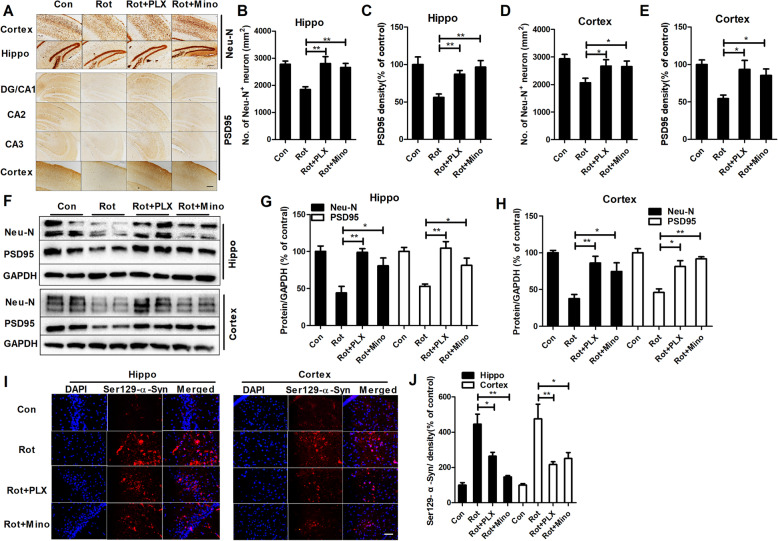
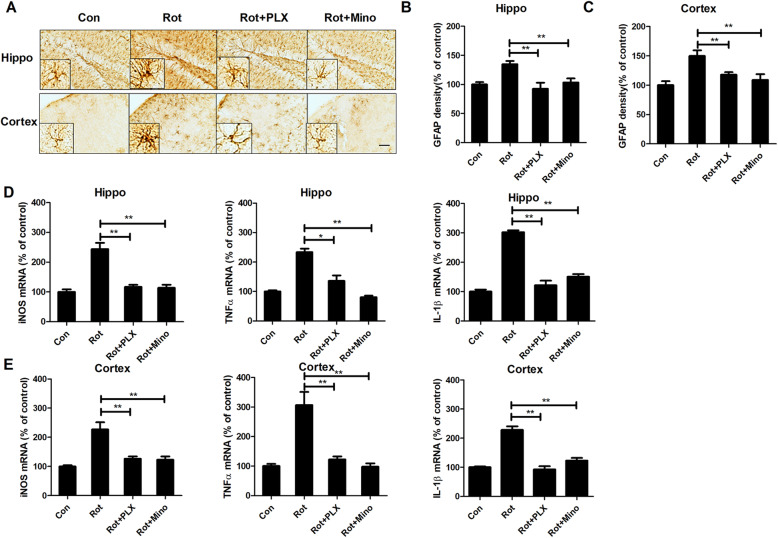
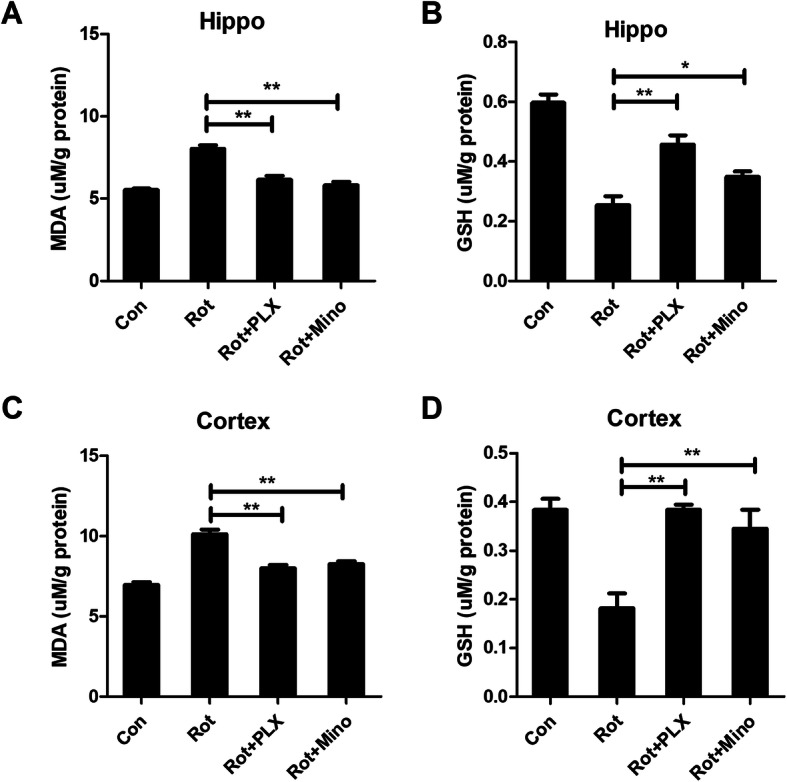
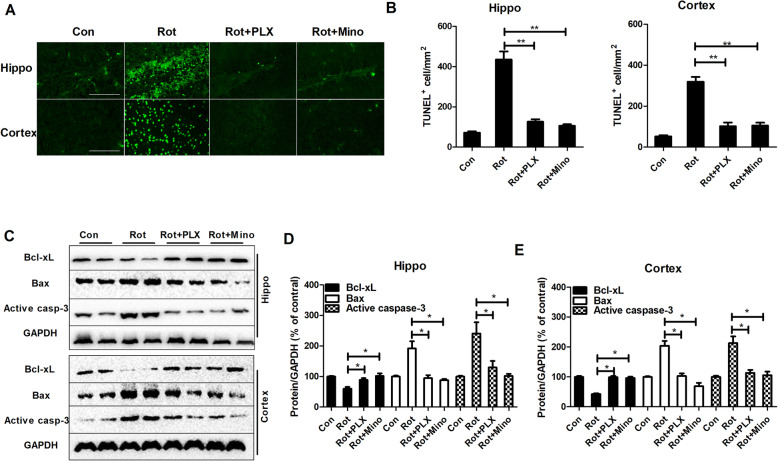
BACKGROUND: Cognitive decline occurs frequently in Parkinson's disease (PD), which greatly decreases the quality of life of patients. However, the mechanisms remain to be investigated. Neuroinflammation mediated by overactivated microglia is a common pathological feature in multiple neurological disorders, including PD. This study is designed to explore the role of microglia in cognitive deficits by using a rotenone-induced mouse PD model. METHODS: To evaluate the role of microglia in rotenone-induced cognitive deficits, PLX3397, an inhibitor of colony-stimulating factor 1 receptor, and minocycline, a widely used antibiotic, were used to deplete or inactivate microglia, respectively. Cognitive performance of mice among groups was detected by Morris water maze, objective recognition, and passive avoidance tests. Neurodegeneration, synaptic loss, α-synuclein phosphorylation, glial activation, and apoptosis were determined by immunohistochemistry and Western blot or immunofluorescence staining. The gene expression of inflammatory factors and lipid peroxidation were further explored by using RT-PCR and ELISA kits, respectively. RESULTS: Rotenone dose-dependently induced cognitive deficits in mice by showing decreased performance of rotenone-treated mice in the novel objective recognition, passive avoidance, and Morris water maze compared with that of vehicle controls. Rotenone-induced cognitive decline was associated with neurodegeneration, synaptic loss, and Ser129-phosphorylation of α-synuclein and microglial activation in the hippocampal and cortical regions of mice. A time course experiment revealed that rotenone-induced microglial activation preceded neurodegeneration. Interestingly, microglial depletion by PLX3397 or inactivation by minocycline significantly reduced neuronal damage and α-synuclein pathology as well as improved cognitive performance in rotenone-injected mice. Mechanistically, PLX3397 and minocycline attenuated rotenone-induced astroglial activation and production of cytotoxic factors in mice. Reduced lipid peroxidation was also observed in mice treated with combined PLX3397 or minocycline and rotenonee compared with rotenone alone group. Finally, microglial depletion or inactivation was found to mitigate rotenone-induced neuronal apoptosis. CONCLUSIONS: Taken together, our findings suggested that microglial activation contributes to cognitive impairments in a rotenone-induced mouse PD model via neuroinflammation, oxidative stress, and apoptosis, providing novel insight into the immunopathogensis of cognitive deficits in PD.
Overview
The claims and statistics of this paper haven’t been checked yet.
Run the check — free, no account needed. It reads the open-access text and checks the sources it cites.
Integrity signals
Registry
Cites
Statistics
Figures
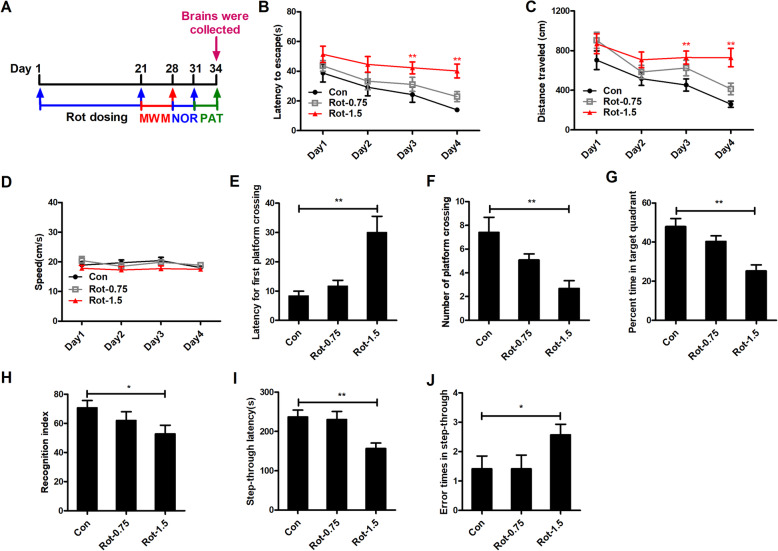
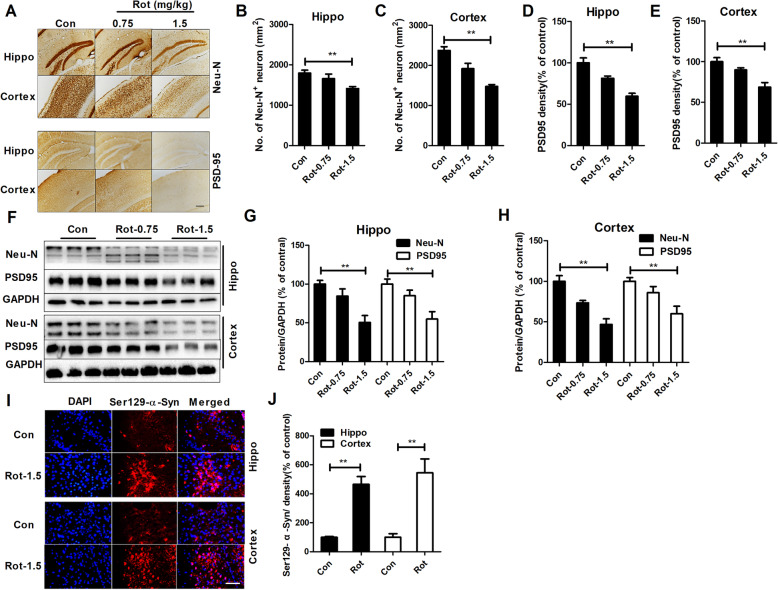
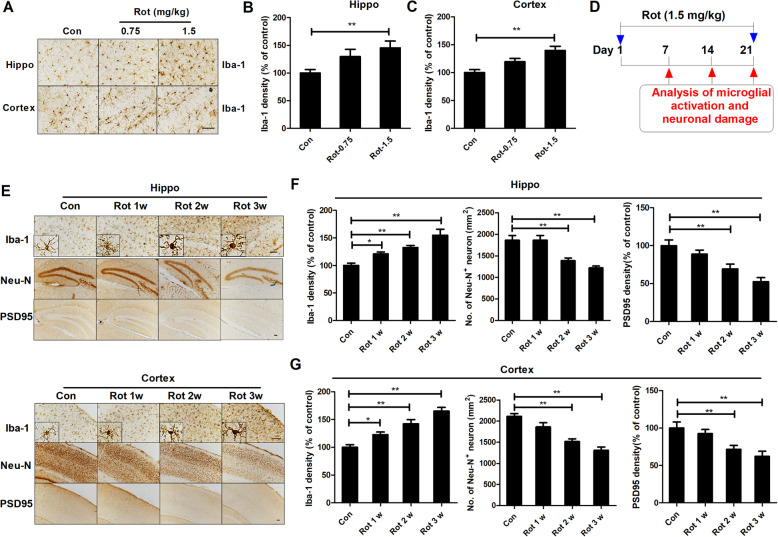
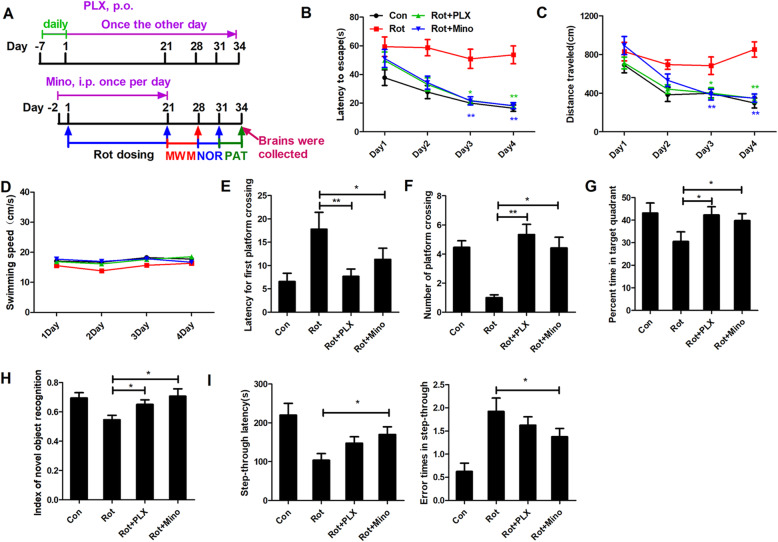
Verification
Claims the paper makes
The claims and statistics of this paper haven’t been checked yet.
Run the check — free, no account needed. It reads the open-access text and checks the sources it cites.
Claims other papers make about this one
Each is checked against this paper’s own text: does it say what the citing paper says it does?
The cited source says what the claim attributes to it.
In the citing paper
“several studies have demonstrated the potential of CSF1R inhibitors in attenuating neurodegeneration in toxic PD models involving rotenone24, 6-hydroxydopamine21, and MPTP25.”
From Microglial inhibition alleviates alpha-synuclein propagation and neurodegeneration in Parkinson’s disease mouse model (2024) · cites this paper as [24]
In the citing paper
“Of note, these molecular changes seem to explain the increased striatal dopamine levels as well as the cognitive and locomotor improvements observed in zebrafish, mouse, and rat models [259,260,264,268,269,270,271].”
From The Interplay between Gut Microbiota and Parkinson’s Disease: Implications on Diagnosis and Treatment (2022) · cites this paper as [260]
In the citing paper
“This effect is mainly ascribable to the minocycline-dependent suppression of microglia activation, which has been reported by several in vivo studies [251,258,259,260,261,262,263].”
From The Interplay between Gut Microbiota and Parkinson’s Disease: Implications on Diagnosis and Treatment (2022) · cites this paper as [260]
Self-check
Percentages, sums and reported differences re-computed from the paper’s own numbers.
The self-check needs the paper’s full text.
Citations
Cites
Staging of brain pathology related to sporadic Parkinson’s disease
Braak, H., Tredici, K. D., Rüb, U., de Vos, R. A. I., Jansen Steur, E. N. H., & Braak, E. (2003) · Neurobiology of Aging · doi:10.1016/s0197-4580(02)00065-9 · Cited by 10,777
Neurotoxic reactive astrocytes are induced by activated microglia
Liddelow, S. A., Guttenplan, K. A., Clarke, L. E., Bennett, F. C., Bohlen, C. J., Schirmer, L., Bennett, M. L., Münch, A. E., Chung, W.-S., Peterson, T. C., et al. (2017) · Nature · doi:10.1038/nature21029 · Cited by 7,971
Elmore, M. R. P., Najafi, A. R., Koike, M. A., Dagher, N. N., Spangenberg, E. E., Rice, R. A., Kitazawa, M., Matusow, B., Nguyen, H., West, B. L., et al. (2014) · Neuron · doi:10.1016/j.neuron.2014.02.040 · Cited by 1,968
Parkinson's disease dementia: convergence of α-synuclein, tau and amyloid-β pathologies
Irwin, D. J., Lee, V. M. ‐., & Trojanowski, J. Q. (2013) · Nature reviews. Neuroscience · doi:10.1038/nrn3549 · Cited by 914
Imamura, K., Hishikawa, N., Sawada, M., Nagatsu, T., Yoshida, M., & Hashizume, Y. (2003) · Acta Neuropathologica · doi:10.1007/s00401-003-0766-2 · Cited by 791
Astrocyte function from information processing to cognition and cognitive impairment
Santello, M., Toni, N., & Volterra, A. (2019) · Nature Neuroscience · doi:10.1038/s41593-018-0325-8 · Cited by 737
Non-motor symptoms in Parkinson's disease
Pfeiffer, R. F. (2016) · Parkinsonism & Related Disorders · doi:10.1016/j.parkreldis.2015.09.004 · Cited by 644
Dagher, N. N., Najafi, A. R., Kayala, K. M. N., Elmore, M. R. P., White, T. E., Medeiros, R., West, B. L., & Green, K. N. (2015) · Journal of Neuroinflammation · doi:10.1186/s12974-015-0366-9 · Cited by 505
Parkinson’s disease dementia: a neural networks perspective
Gratwicke, J., Jahanshahi, M., & Foltynie, T. (2015) · Brain · doi:10.1093/brain/awv104 · Cited by 459
Minocycline and Neurodegenerative Diseases
Kim, H.-S., & Suh, Y.-H. (2009) · Behavioural Brain Research · doi:10.1016/j.bbr.2008.09.040 · Cited by 447
LIEBERMAN, A. N., Dziatolowski, M., Kupersmith, M. J., Serby, M., Goodgold, A. L., Korein, J., & Goldstein, M. (1979) · Annals of Neurology · doi:10.1002/ana.410060409 · Cited by 369
Hall, H., Reyes, S., Landeck, N., Bye, C. R., Leanza, G., Double, K. L., Thompson, L. H., Halliday, G. M., & Kirik, D. (2014) · Brain · doi:10.1093/brain/awu193 · Cited by 315
Risk factors for non-motor symptoms in Parkinson's disease.
Marinus, J., Zhu, K., Marras, C., Aarsland, D., & van Hilten, J. V. (2018) · Lancet Neurology · doi:10.1016/s1474-4422(18)30127-3 · Cited by 302
Hanganu, A., Bedetti, C., Degroot, C., Mejia‐Constain, B., Lafontaine, A., Soland, V., Chouinard, S., Bruneau, M., Mellah, S., Belleville, S., et al. (2014) · Brain · doi:10.1093/brain/awu036 · Cited by 223
Neuronal Apoptosis in Neurodegeneration
Okouchi, M., Ekshyyan, O. Y., Maracine, M., & Aw, T. Y. (2007) · Antioxidants and Redox Signaling · doi:10.1089/ars.2007.1511 · Cited by 222
Microglia Play an Active Role in Obesity-Associated Cognitive Decline
Cope, E. C., LaMarca, E. A., Monari, P. K., Olson, L. B., Martinez, S., Zych, A. D., Katchur, N. J., & Gould, E. (2018) · The Journal of Neuroscience · doi:10.1523/jneurosci.0789-18.2018 · Cited by 219
The Role of Inflammatory Cytokines in Cognition and Other Non-Motor Symptoms of Parkinson's Disease
Menza, M. A., Dobkin, R. D., Marín, H., Mark, M. H., Gara, M. A., Bienfait, K., Dicke, A., & Kusnekov, A. (2010) · Psychosomatics · doi:10.1016/s0033-3182(10)70739-8 · Cited by 182
Hamelin, L., Lagarde, J., Dorothée, G., Potier, M. C., Corlier, F., Kuhnast, B., Caillé, F., Dubois, B., Fillon, L., Chupin, M., et al. (2018) · Brain · doi:10.1093/brain/awy079 · Cited by 177
Rosenblat, J. D., Brietzke, E., Mansur, R. B., Maruschak, N. A., Lee, Y., & McIntyre, R. S. (2015) · Journal of Affective Disorders · doi:10.1016/j.jad.2015.08.058 · Cited by 172
Burke, N. N., Kerr, D. M., Moriarty, O., Finn, D. P., & Roche, M. (2014) · Brain Behavior and Immunity · doi:10.1016/j.bbi.2014.06.015 · Cited by 170
Zhang, H.-Y., Wang, Y., He, Y., Wang, T., Huang, X.-H., Zhao, C.-M., Zhang, L., Li, S.-W., Wang, C., Qu, Y.-N., et al. (2020) · Journal of Neuroinflammation · doi:10.1186/s12974-020-01871-9 · Cited by 161
Lawson, R. A., Yarnall, A. J., Duncan, G. W., Khoo, T. K., Breen, D. P., Barker, R. A., Collerton, D., Taylor, J., & Burn, D. J. (2014) · Parkinsonism & Related Disorders · doi:10.1016/j.parkreldis.2014.07.004 · Cited by 148
Lecours, C., Bordeleau, M., Cantin, L., Parent, M., Paolo, T. D., & Tremblay, M. (2018) · Frontiers in Cellular Neuroscience · doi:10.3389/fncel.2018.00282 · Cited by 148
Xu, N., Tang, X.-H., Pan, W., Xie, Z.-M., Zhang, G.-F., Ji, M., Yang, J., Zhou, M.-T., & Zhou, Z. (2017) · Frontiers in Neuroscience · doi:10.3389/fnins.2017.00209 · Cited by 138
Khatri, D. K., & Juvekar, A. R. (2016) · Pharmacology Biochemistry and Behavior · doi:10.1016/j.pbb.2016.09.002 · Cited by 129
Microglial complement receptor 3 regulates brain Aβ levels through secreted proteolytic activity
Czirr, E., Castello, N. A., Mosher, K. I., Castellano, J. M., Hinkson, I. V., Lucin, K. M., Baeza-Raja, B., Ryu, J. K., Li, L., Farina, S. N., et al. (2017) · Journal of Experimental Medicine · doi:10.1084/jem.20162011 · Cited by 126
The Role of Inflammatory Cytokines in Cognition and Other Non-Motor Symptoms of Parkinson's Disease
Menza, M., Dobkin, R. D., Marin, H., et al. (2010) · Psychosomatics · doi:10.1176/appi.psy.51.6.474 · Cited by 116
Depletion of microglia augments the dopaminergic neurotoxicity of MPTP
Yang, X., Ren, H., Wood, K., Li, M., Qiu, S., Shi, F., Ma, C., & Liu, Q. (2018) · The FASEB Journal · doi:10.1096/fj.201700833rr · Cited by 115
Hou, L., Sun, F., Huang, R., Sun, W., Zhang, D., & Wang, Q. (2019) · Redox Biology · doi:10.1016/j.redox.2019.101134 · Cited by 112
Zhao, Z., Wang, Y., Zhou, R., Li, Y., Gao, Y., Tu, D., Wilson, B., Song, S., Feng, J., Hong, J.-S., et al. (2020) · Journal of Neuroinflammation · doi:10.1186/s12974-020-1728-5 · Cited by 109
Hou, L., Huang, R., Sun, F., Zhang, L., & Wang, Q. (2019) · Toxicology · doi:10.1016/j.tox.2019.02.011 · Cited by 107
Wang, Q., Li, Q., Chen, S., Chu, C., Wilson, B. C., Oyarzabal, E. A., Ali, S. F., Robinson, B. L., Rao, D. B., & Hong, J. (2015) · Brain · doi:10.1093/brain/awv034 · Cited by 103
Dementia in Parkinson's disease
Aarsland, D., Beyer, M. K., & Kurz, M. W. (2008) · Current Opinion in Neurology · doi:10.1097/wco.0b013e3283168df0 · Cited by 95
Khalil, W. K. B., Assaf, N., ElShebiney, S. A., & Salem, N. A. (2014) · Neurochemistry International · doi:10.1016/j.neuint.2014.11.008 · Cited by 88
Femminella, G. D., Ninan, S., Atkinson, R., Fan, Z., Brooks, D. J., & Edison, P. (2016) · Journal of Alzheimer’s Disease · doi:10.3233/jad-150827 · Cited by 88
Feng, X., Jopson, T. D., Paladini, M. S., Liu, S., West, B. L., Gupta, N. M., & Rosi, S. (2016) · Journal of Neuroinflammation · doi:10.1186/s12974-016-0671-y · Cited by 87
Wang, Q., Chu, C., Li, Q., Chen, S., Wilson, B. C., Oyarzabal, E. A., Jiang, L., Ali, S. F., Robinson, B. L., Kim, H., et al. (2014) · Journal of Neuroscience · doi:10.1523/jneurosci.2238-14.2014 · Cited by 86
Hypertension and Diagnosis of Parkinson’s Disease: A Meta-Analysis of Cohort Studies
Hou, L., Li, Q., Jiang, L., Qiu, H., Geng, C., Hong, J., Li, H., & Wang, Q. (2018) · Frontiers in Neurology · doi:10.3389/fneur.2018.00162 · Cited by 80
Wang, Q., Shin, E.-J., Nguyen, X.-K. T., Li, Q., Bach, J., Bing, G., Kim, W.-K., Kim, H., & Hong, J. (2012) · Journal of Neuroinflammation · doi:10.1186/1742-2094-9-124 · Cited by 75
Song, S., Jiang, L., Oyarzabal, E. A., Wilson, B. C., Li, Z., Shih, Y. I., Wang, Q., & Hong, J. (2018) · Molecular Neurobiology · doi:10.1007/s12035-018-1235-1 · Cited by 74
Yin, P., Wang, X., Wang, S., Wei, Y., Feng, J., & Zhu, M. (2019) · Frontiers in Cellular Neuroscience · doi:10.3389/fncel.2019.00466 · Cited by 73
Shi, E., Shi, K., Qiu, S., Sheth, K. N., Lawton, M. T., & Ducruet, A. F. (2019) · The FASEB Journal · doi:10.1096/fj.201900257r · Cited by 72
Cognitive impairment in Parkinson's disease: impact on quality of life of carers
Lawson, R. A., Yarnall, A. J., Johnston, F., Duncan, G. W., Khoo, T. K., Collerton, D., Taylor, J., Burn, D. J., & On behalf of the ICICLE‐PD study group (2016) · International Journal of Geriatric Psychiatry · doi:10.1002/gps.4623 · Cited by 68
Dai, J., Ding, Z., Zhang, J., Xu, W., Guo, Q., Zou, W., Xiong, Y., Weng, Y., Yang, Y., Chen, S., et al. (2019) · Anesthesia & Analgesia · doi:10.1213/ane.0000000000004063 · Cited by 62
Hou, L., Sun, F., Sun, W., Zhang, L., & Wang, Q. (2019) · Neuroscience · doi:10.1016/j.neuroscience.2019.09.006 · Cited by 62
Krishna, G., & ., M. (2014) · Neurochemical Research · doi:10.1007/s11064-014-1323-1 · Cited by 61
Locus coeruleus neurons are most sensitive to chronic neuroinflammation-induced neurodegeneration
Wang, Q., Oyarzabal, E. A., Song, S., Wilson, B. C., Santos, J. H., & Hong, J. (2020) · Brain Behavior and Immunity · doi:10.1016/j.bbi.2020.01.003 · Cited by 59
Trx-1 ameliorates learning and memory deficits in MPTP-induced Parkinson's disease model in mice
Zhang, X., Bai, L., Zhang, S., Zhou, X., Li, Y., & Bai, J. (2018) · Free Radical Biology and Medicine · doi:10.1016/j.freeradbiomed.2018.06.029 · Cited by 56
Shahidi, ., Asl, S. S., Komaki, A., & Hashemi-Firouzi, N. (2018) · Psychopharmacology · doi:10.1007/s00213-018-4862-3 · Cited by 54
Alabi, A., Ajayi, A. M., Ben‐Azu, B., Bakre, A. G., & Umukoro, S. (2019) · NeuroToxicology · doi:10.1016/j.neuro.2019.07.003 · Cited by 54
Neuropsychological profile in patients with early stage of Parkinson's disease in Taiwan
Yu, R., Wu, R., Tai, C., Lin, C., Cheng, T.-W., & Hua, M. (2012) · Parkinsonism & Related Disorders · doi:10.1016/j.parkreldis.2012.06.002 · Cited by 50
Jackson, L., Dumanli, S., Johnson, M. H., Fagan, S. C., & Ergul, A. (2020) · Journal of Neuroinflammation · doi:10.1186/s12974-020-01815-3 · Cited by 50
Bcl-xL in neuroprotection and plasticity
Jonas, E. A., Porter, G. A., & Alavian, K. N. (2014) · Frontiers in Physiology · doi:10.3389/fphys.2014.00355 · Cited by 48
Vásquez-Rosati, A., Brunetti, E. P., Cordero, C., & Maldonado, P. (2017) · Frontiers in Human Neuroscience · doi:10.3389/fnhum.2017.00209 · Cited by 46
Cohen, J. W., Louneva, N., Han, L., Hodes, G. E., Wilson, R. S., Bennett, D. A., Lucki, I., & Arnold, S. E. (2010) · Synapse · doi:10.1002/syn.20900 · Cited by 43
Chen, P.-Z., He, W., Zhu, Z.-R., Guoji, E., Xu, G., Chen, D., & Gao, Y. (2018) · Behavioural Brain Research · doi:10.1016/j.bbr.2018.02.038 · Cited by 41
Hou, L., Zhang, L., Hong, J., Zhang, D., Zhao, J., & Wang, Q. (2020) · Antioxidants and Redox Signaling · doi:10.1089/ars.2019.8014 · Cited by 39
Liang, Y., Feng, S., Qi, Y.-P., Li, K., Jin, Z., Jing, H., Liu, L., Cai, J., Xing, G., & Fu, K. (2019) · Brain Behavior and Immunity · doi:10.1016/j.bbi.2019.05.026 · Cited by 38
Haga, H., Matsuo, K., Yabuki, Y., Zhang, C., Han, F., & Fukunaga, K. (2019) · Neurochemistry International · doi:10.1016/j.neuint.2019.104492 · Cited by 33
Abdelkader, N. F., Farid, H. A., Youness, E. R., Abdel‐Salam, O. M. E., & Zaki, H. F. (2020) · Life Sciences · doi:10.1016/j.lfs.2020.118070 · Cited by 32
Wang, Q., Sun, G., Gao, C., Feng, L., Zhang, Y., Hao, J., Zuo, E., Zhang, C., Li, S., & Piao, F. (2016) · Scientific Reports · doi:10.1038/srep34715 · Cited by 30
Fifel, K., Dkhissi‐Benyahya, O., & Cooper, H. M. (2013) · Chronobiology International · doi:10.3109/07420528.2012.762011 · Cited by 29
Mu, R.-H., Tan, Y.-Z., Fu, L., Islam, M. N., Hu, M. Y., Hong, H., & Tang, S. (2019) · International Immunopharmacology · doi:10.1016/j.intimp.2019.105918 · Cited by 28
Hou, L., Yang, J., Li, S., Huang, R., Zhang, D., Zhao, J., & Wang, Q. (2020) · Toxicology Letters · doi:10.1016/j.toxlet.2020.06.002 · Cited by 28
Tian, J., Tai, Y., Shi, M., Zhao, C., Xu, W., Ge, X., & Zhu, G. (2019) · Cellular and Molecular Neurobiology · doi:10.1007/s10571-019-00750-z · Cited by 27
Jia, F., Song, N., Zhao, C., Xie, J., & Jiang, H. F. (2014) · PLoS ONE · doi:10.1371/journal.pone.0091641 · Cited by 21
Schneider, C. B., Donix, M., Linse, K., Werner, A., Fauser, M., Klingelhoefer, L., Löhle, M., von Kummer, R., Reichmann, H., & Storch, A. (2017) · American Journal of Alzheimer s Disease & Other Dementias® · doi:10.1177/1533317517698794 · Cited by 21
Queiroz, A. I. G., Filho, A. J. M. C., Araújo, T. D. S., Lima, C. N. D. C., Machado, M. D. J. S., Carvalho, A. F., Vasconcelos, S. M. M., de Lucena, D. F., Quevedo, J., & Macêdo, D. S. (2017) · Journal of Affective Disorders · doi:10.1016/j.jad.2017.07.053 · Cited by 16
Amini-Khoei, H., Kordjazy, N., Haj‐Mirzaian, A., Amiri, S., Haj‐Mirzaian, A., Shirzadian, A., Hasanvand, A., Balali-Dehkordi, S., Hassanipour, M., & Dehpour, A. R. (2018) · Canadian Journal of Physiology and Pharmacology · doi:10.1139/cjpp-2017-0673 · Cited by 13
Bruinenberg, V. M., van Vliet, D., Attali, A., de Wilde, M. C., Kuhn, M., van Spronsen, F. J., & van der Zee, E. (2016) · Nutrients · doi:10.3390/nu8040185 · Cited by 12
Sokolov, E. N., & Ts, T. (1974) · PubMed · Cited by 1
Cited by
Sorted by citations
Wang, X., Fan, W., Li, N., Ma, Y., Yao, M., Wang, G., He, S., Li, W., Tan, J., Lu, Q., et al. (2023) · Genome biology · doi:10.1186/s13059-023-02931-y · Cited by 298
Microglia as hackers of the matrix: sculpting synapses and the extracellular space
Crapser, J. D., Arreola, M. A., Tsourmas, K. I., & Green, K. N. (2021) · Cellular & Molecular Immunology · doi:10.1038/s41423-021-00751-3 · Cited by 178
Rotenone-Induced Model of Parkinson’s Disease: Beyond Mitochondrial Complex I Inhibition
Ibarra-Gutiérrez, M. T., Serrano‐García, N., & Orozco‐Ibarra, M. (2023) · Molecular Neurobiology · doi:10.1007/s12035-022-03193-8 · Cited by 187
Mekhora, C., Lamport, D. J., & Spencer, J. P. E. (2024) · Neurochemistry International · doi:10.1016/j.neuint.2024.105900 · Cited by 108
Varesi, A., Campagnoli, L. I. M., Fahmideh, F., Pierella, E., Romeo, M., Ricevuti, G., Nicoletta, M., Chirumbolo, S., & Pascale, A. (2022) · International Journal of Molecular Sciences · doi:10.3390/ijms232012289 · Cited by 88
Metadata
- Authors
- Zhang, D., Li, S., Hou, L., Jing, L., Ruan, Z., Peng, B., Zhang, X., Hong, J.-S., Zhao, J., & Wang, Q.
- Affiliations
- Dalian Medical University (CN)
- National Institutes of Health (US)
- Corresponding author
- Zhao, Jie
- Wang, Qingshan
- ORCID
- Venue
- Journal of Neuroinflammation
- Published
- 2021-01-05
- Volume
- 18
- Issue
- 1
- Pages
- 4-4
- ISSN
- 1742-2094 (ISSN-L)
- PMC
- PMC7786472
- OpenAlex
- W3111358404
- Cited by
- 187
- References
- 70
- Citations by year
- 2026: 18 · 2025: 40 · 2024: 65 · 2023: 27 · 2022: 24 · 2021: 13
- FWCI
- 12.91
- Type
- journal article
- Language
- en
- Update notices
- correction (2025-05-24)
- Open access
- gold
- doi.org
- Locations
- Journal of Neuroinflammation (publishedVersion, cc-by)
- Research Square (acceptedVersion, cc-by)
- Europe PMC (PubMed Central) (publishedVersion, other-oa)
- PubMed Central (publishedVersion, cc-by)
- PubMed (publishedVersion)
- DOAJ (DOAJ: Directory of Open Access Journals) (submittedVersion, cc-by-sa)
- Funders
- National Natural Science Foundation of China (81973087)
- Natural Science Foundation of Liaoning Province (2019-MS-077)
- LiaoNing Revitalization Talents Program (XLYC1907026)
- Topics
- Life Sciences › Neuroscience › Neurology › Neuroinflammation and Neurodegeneration Mechanisms
- Health Sciences › Medicine › Clinical Neurology › Parkinson's Disease Mechanisms and Treatments
- Life Sciences › Neuroscience › Neurology › Neurological Disease Mechanisms and Treatments
- Keywords
- Parkinson's disease, cognitive impairment, microglial activation, neuroinflammation, rotenone, PLX3397, minocycline, microglial depletion, alpha-synuclein phosphorylation, neurodegeneration, synaptic loss, astroglial activation, lipid peroxidation, oxidative stress, neuronal apoptosis, hippocampus, immunopathogenesis
- MeSH terms
- Aminopyridines, Animals, Insecticides, Male, Mice, Inbred C57BL, Minocycline, Pyrroles, Rotenone, Microglia, Parkinsonian Disorders, Mice, Cognitive Dysfunction
About these checks
Registry, retraction, Cites and statistics results are computed, not judged, with one exception: a printed reference that no index lists is read once by a model before it counts as a citation error. Claims are extracted by a model and kept only when their quote appears verbatim in the text; each cited source is then checked, with a model’s help, for whether it says what the claim relies on. Those verdicts can be wrong — read the claim’s quote and the cited source before relying on one.
Statistics and arithmetic are recomputed, not judged.
Confidence bands are shown only for fields calibrated on our annotated test set. None is calibrated yet, so no band is shown.
What counts as a claim ›How we measure confidence ›How we check this ›
Are you an author, or do you see a problem with this page? Request a review
