

Sepsis-associated encephalopathy: a vicious cycle of immunosuppression
Open accessThe DOI matches its Crossref record; 152 of the 153 references it cites were found in a registry or an index.
Abstract
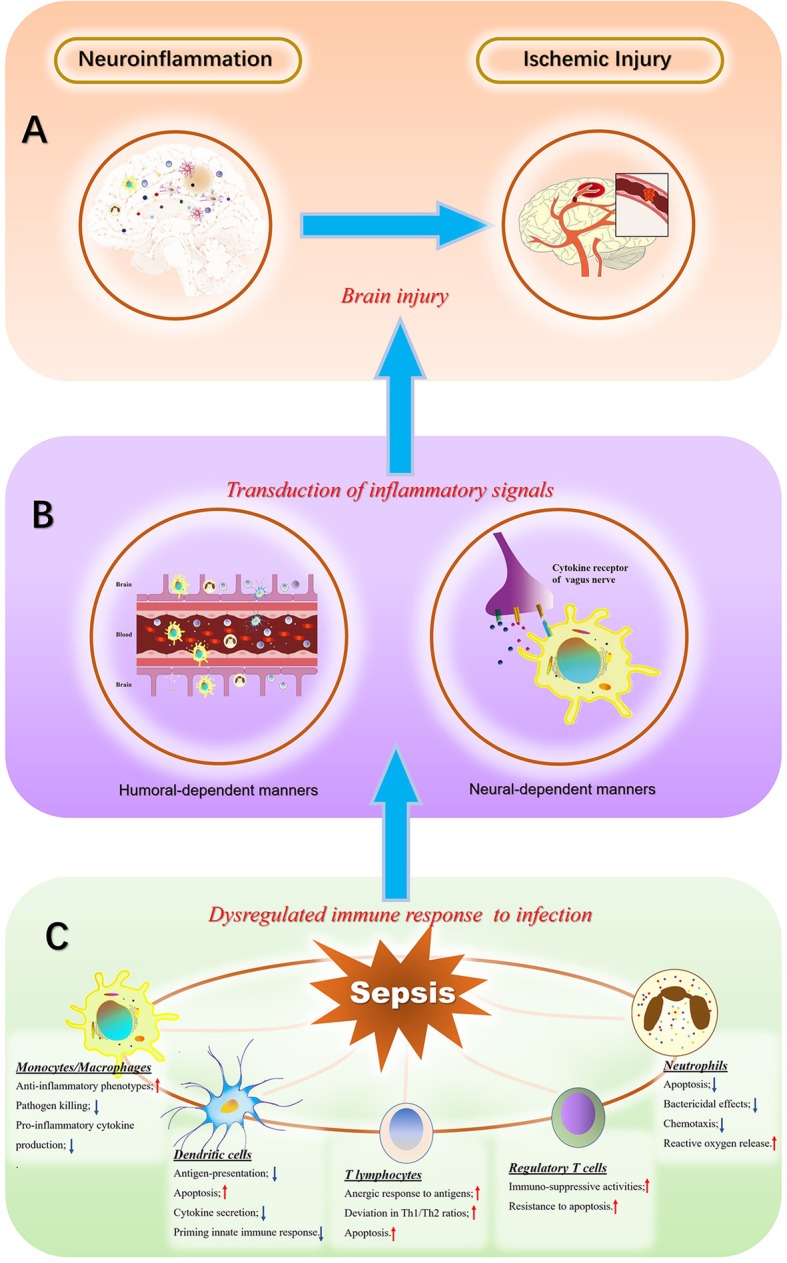
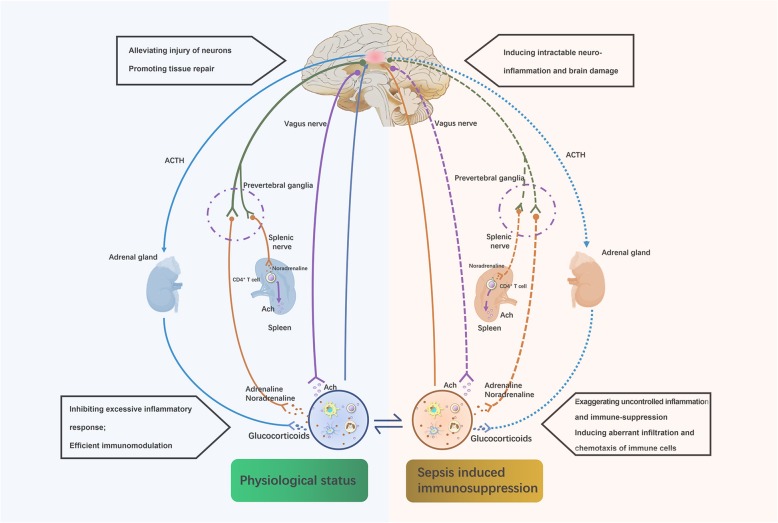
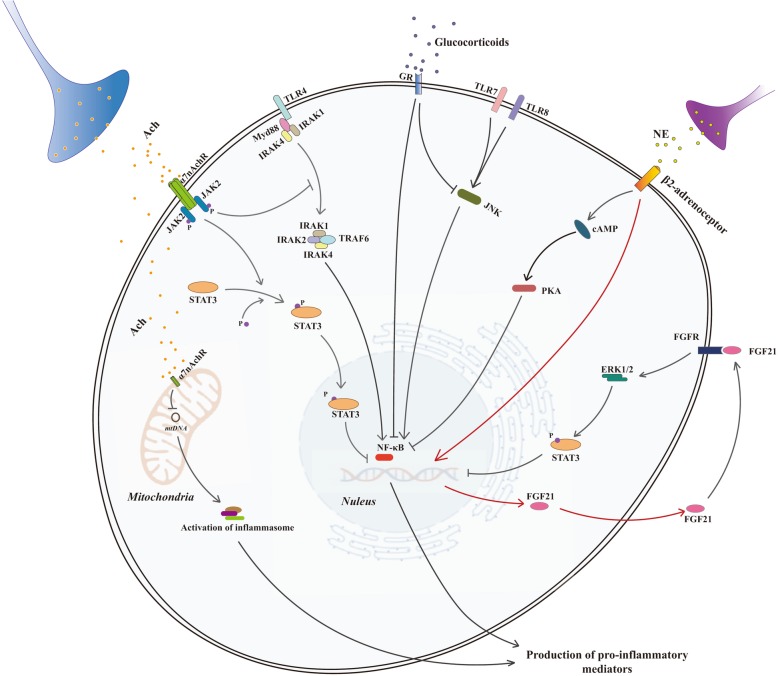
Sepsis-associated encephalopathy (SAE) is commonly complicated by septic conditions, and is responsible for increased mortality and poor outcomes in septic patients. Uncontrolled neuroinflammation and ischemic injury are major contributors to brain dysfunction, which arises from intractable immune malfunction and the collapse of neuroendocrine immune networks, such as the cholinergic anti-inflammatory pathway, hypothalamic-pituitary-adrenal axis, and sympathetic nervous system. Dysfunction in these neuromodulatory mechanisms compromised by SAE jeopardizes systemic immune responses, including those of neutrophils, macrophages/monocytes, dendritic cells, and T lymphocytes, which ultimately results in a vicious cycle between brain injury and a progressively aberrant immune response. Deep insight into the crosstalk between SAE and peripheral immunity is of great importance in extending the knowledge of the pathogenesis and development of sepsis-induced immunosuppression, as well as in exploring its effective remedies.
Overview
The claims and statistics of this paper haven’t been checked yet.
Free: it reads the open-access text and checks the first 5 claims that cite a source we can check. Create a free account to check every claim.
Integrity signals
Registry
Cites
Statistics
Figures
Verification
Claims the paper makes
The claims and statistics of this paper haven’t been checked yet.
Free: it reads the open-access text and checks the first 5 claims that cite a source we can check. Create a free account to check every claim.
Claims other papers make about this one
Each is checked against this paper’s own text: does it say what the citing paper says it does?
The cited source doesn’t support the claim as written.
In the citing paper
“In SAE, brain-infiltrating Tregs antagonize microglial inflammatory cascades by secreting factors like IL-10 and TGF-β, and suppress astrocytic IL-6 synthesis through the amphiregulin (AREG)-EGFR signaling axis [35,36].”
From Research Advances in the Pathogenesis of Sepsis-Associated Encephalopathy (2026) · cites this paper as [35]
Checked by a reasoning model — may be wrong.
Experimental — accuracy not yet measured
Self-check
Percentages, sums and reported differences re-computed from the paper’s own numbers.
The self-check needs the paper’s full text.
Citations
Cites
3 retracted
Yoon, S., Kim, S., & Lee, S. (2017) · The Journal of Infectious Diseases · doi:10.1093/infdis/jix142 · Cited by 52
RetractedRegulatory T cells exhibit neuroprotective effect in a mouse model of traumatic brain injury
Yu, Y., Cao, F., Ran, Q., & Sun, X. (2016) · Molecular Medicine Reports · doi:10.3892/mmr.2016.5954 · Cited by 10
RetractedRegulatory T cells exhibit neuroprotective effect in a mouse model of traumatic brain injury
Yu, Y., Cao, F., Ran, Q., & Sun, X. (2017) · Molecular Medicine Reports · doi:10.3892/mmr.2017.6299 · Cited by 8 · cited 2×
“Although the role of Tregs in the pathogenesis and progression of SAE has not been established, Tregs do show benefits for TBI patients via alleviating local inflammation and promoting tissue repair [100].”
BackgroundRetractedSurviving Sepsis Campaign: International guidelines for management of sepsis and septic shock: 2016.
Rhodes, A., Evans, L. E., Alhazzani, W., Levy, M. M., Antonelli, M., Ferrer, R., Kumar, A., Sevransky, J. E., Sprung, C. L., Nunnally, M. E., et al. (2017) · Intensive Care Medicine · doi:10.1007/s00134-017-4683-6 · Cited by 6,621
Long-term cognitive impairment and functional disability among survivors of severe sepsis.
Iwashyna, T. J., Ely, E. W., Smith, D. M., & Langa, K. M. (2010) · JAMA · doi:10.1001/jama.2010.1553 · Cited by 2,582
The Hypothalamic–Pituitary–Adrenal Axis and Immune-Mediated Inflammation
Chrousos, G. P. (1995) · New England Journal of Medicine · doi:10.1056/nejm199505183322008 · Cited by 2,579
Alhazzani, W., Møller, M. H., Arabi, Y. M., Loeb, M., Gong, M. N., Fan, E., Oczkowski, S., Levy, M. M., Derde, L., Dzierba, A., et al. (2020) · Critical Care Medicine · doi:10.1097/ccm.0000000000004363 · Cited by 1,565
Acetylcholine-Synthesizing T Cells Relay Neural Signals in a Vagus Nerve Circuit
Rosas-Ballina, M., Olofsson, P. S., Ochani, M., Valdés-Ferrer, S. I., Levine, Y. A., Reardon, C., Tusche, M. W., Pavlov, V. A., Andersson, U., Chavan, S., et al. (2011) · Science · doi:10.1126/science.1209985 · Cited by 1,551
Cholinergic agonists inhibit HMGB1 release and improve survival in experimental sepsis
Wang, H., Liao, H., Ochani, M., Justiniani, M., Lin, X., Yang, L., Al-Abed, Y., Wang, H., Metz, C., Miller, E. J., et al. (2004) · Nature Medicine · doi:10.1038/nm1124 · Cited by 1,170
Tracey, K. J. (2009) · Nature Reviews Immunology · doi:10.1038/nri2566 · Cited by 1,154
Cited by
Items 201–267 of 267
Wang, L., Li, Y., Zhang, J., Xiao, H., & Xia, C. (2026) · Medicine · doi:10.1097/md.0000000000047037 · Cited by 1
“3] Burns can cause extensive skin damage, fluid loss, and a hypermet-abolic state in the body.”
Wang, K., Xia, M., Long, Y., Chen, S., & Yin, Y. (2026) · Neurotherapeutics · doi:10.1016/j.neurot.2026.e00855 · Cited by 1
“Moreover, we should recognize that sepsis itself can impair BBB integrity through endothelial injury, disruption of tight junctions, and barrier compromise driven by neuroinflammation [3].”
Liu, Y., Shi, Z., Luo, H., Fu, W., Li, Y., Xie, J., Li, M., Zhang, Z., Xia, B., & Lin, L. (2026) · European Journal of Pharmacology · doi:10.1016/j.ejphar.2026.178722 · Cited by 1
Chronic “sepsis brain” and regulatory T cells – A promising therapeutic target
Darden, D. B., Fenner, B. P., Foster, T. C., Larson, S. D., & Efron, P. A. (2021) · Brain Behavior and Immunity · doi:10.1016/j.bbi.2021.01.017 · Cited by 2
“Though there is a consensus that SAE is mediated in part by the dysregulated immune response to sepsis, the underlying neuroinflammatory pathophysiology is still largely unknown (6).”
BackgroundClinical symptoms, diagnosis and outcome of encephalopathy
Alsaidlani, A. A., Khedrawi, A. A., Bamarouf, H. A., Mutaileq, N. A. A., Alosaif, S. M., Aldamkh, N. A., Mudarris, R. I., Alhamad, F. F., Hadadi, E. A., Alhaffaf, B. Q., et al. (2024) · International Journal of Community Medicine and Public Health · doi:10.18203/2394-6040.ijcmph20243795 · Cited by 1
An explicable machine learning approach for predicting 30-day septic mortality for ICU patients
Zhou, L., Wu, R., Wang, S., Komolafe, T. E., Guo, J., Fan, Z., & Zhang, Z. (2025) · International Journal of Information and Communication Technology · doi:10.1504/ijict.2025.145831 · Cited by 3
Research Advances in the Pathogenesis of Sepsis-Associated Encephalopathy
Tan, H., Su, W., & Niu, Z. (2026) · International Journal of Molecular Sciences · doi:10.3390/ijms27125390 · Cited by 1
“In SAE, brain-infiltrating Tregs antagonize microglial inflammatory cascades by secreting factors like IL-10 and TGF-β , and suppress astrocytic IL-6 synthesis through the amphiregulin (AREG)-EGFR signaling axis [35,36].”
The value of neurohumoral regulation in the outcome of multiple organ failure syndrome in sepsis
Leontyev, M. A., Vodova, A. B., & Kravchuk, S. V. (2020) · Messenger of Anesthesiology and Resuscitation · doi:10.21292/2078-5658-2020-17-5-80-86
Jin, P., Deng, S., Mi, T., Wei, P., Wang, Y., Tan, J., Wen, H., Feng, Z., Gao, Y., & Gong, Y. (2020) · Research Square · doi:10.21203/rs.3.rs-36666/v1
“However, uncontrolled neuroin ammation and ischemic injury are closely related to brain injury after sepsis[35].”
BackgroundWang, N., Zhong, D., Lin, J., Ye, M., Chen, Y., Wang, L., Chen, M., & Luo, C. (2022) · Molecular & Cellular Toxicology · doi:10.1007/s13273-022-00270-w
Brain T cell ameliorates mental disorders in the mouse model of post-sepsis syndrome
Saito, M., Fujinami, Y., Ono, Y., Yamashita, K., Inoue, S., & Kotani, J. (2022) · The Japanese Journal of SURGICAL METABOLISM and NUTRITION · doi:10.11638/jssmn.56.4_155
Dumbuya, J. S., Siqi, L. I., Liang, L., Yachen, C. H. E. N., Du, J., & Zeng, Q. (2022) · Research Square · doi:10.21203/rs.3.rs-2006071/v2
Sepsis-associated encephalopathy: From pathogenesis to neuroimaging findings
Zhong, Y., Cheng, Y. Z., & Wu, R. (2022) · Radiology of Infectious Diseases · doi:10.4103/rid.rid_23_21
Amano, Y., Ikeda, H., Sano, C., & Ohta, R. (2023) · Cureus · doi:10.7759/cureus.46600
“One potential cause is the spread of systemic inflammation caused by sepsis to the brain, triggering autoinflammation [3].”
BackgroundАрьев, А. Л., & Лаптева, Е. С. (2024) · Успехи геронтологии · doi:10.34922/ae.2023.36.6.006
COGNITIVE IMPAIRMENT IN PATIENTS WITH CHRONIC HEART FAILURE (REVIEW)
Aleynikova, A. V., & Ложкина, Н. Г. (2024) · Bulletin of Medical Science · doi:10.31684/25418475-2023-4-139
Impact du sepsis sur les circuits neuronaux et le comportement à long-terme
Bourhy, L. (2021) · theses.fr (ABES) · doi:10.70675/ec7b6d96zd057z4d7ez9f0czae74f82ec051
Sun, D., Liang, Y., Yang, F., Liu, L. D., & Yan, Y. (2024) · Advances in Public Health · doi:10.1155/2024/3256273
Xie, Z., Zhang, W. Y., Li, L., Luo, M., Chen, J., Gong, L., Cao, J., Liu, Y., Liu, J., & Fu, C. (2024) · Research Square · doi:10.21203/rs.3.rs-5451979/v1
Sepsis-associated encephalopathy: Understanding the brain dysfunction in sepsis
Dominguini, D., Alberton, K. S., Cardoso, F. B., Ceretta, L. B., & Dal‐Pizzol, F. (2024) · Elsevier eBooks · doi:10.1016/b978-0-443-19130-5.00015-0
HIV, Sepsis, and Postdischarge Mortality in Sub-Saharan Africa
Al-Ward, H., Alnadhary, A., Chen, W., & Sun, Y. E. (2025) · American Journal of Respiratory and Critical Care Medicine · doi:10.1164/rccm.202411-2237le
“SAE, which involves cognitive dysfunction, delirium, and long-term neuroin fl ammation, is prevalent in sepsis survivors and can signi fi cantly impair recovery (12).”
Hernández, A. M., & Aldasoro, M. (2025) · doi:10.60096/fundacionavanza/2002025
Sepsis Associated Encephalopathy: Pathology, Diagnosis and Therapeutic Interventions
Bandyopadhyay, D., & Mishra, D. (2024) · International Journal of Advanced Pharmaceutical Sciences and Research · doi:10.54105/ijapsr.e4086.04030424 · Cited by 1
Simulated Aeromedical Evacuation Causes Hippocampal Neuronal Damage in Rats With Acute Lung Injury
Yin, C., He, J., Li, W., Chen, Q., Wang, Y., Wang, S., & Liu, L. (2025) · Military Medicine · doi:10.1093/milmed/usaf377
Gu, W., Zhong, J. M., Han, Y., Liu, Y., Lv, C., Zhang, G., Xie, M., Ma, Y., & Guo, W. H. (2025) · Journal of Acute Disease · doi:10.4103/jad.jad_84_25
Zhu, S., Ye, L., & Chen, J. (2025) · International Journal of General Medicine · doi:10.2147/ijgm.s527691
“Much of the previous”
Circadian Regulation of the Immune System and Susceptibility to COVID-19
Zeng, Z. (2025) · Transactions on Materials Biotechnology and Life Sciences · doi:10.62051/wemwd548
“The psychological challenges of the pandemic exacerbated circadian disruptions, leading to a harmful cycle [24].”
New Insights in Septic Encephalopathy
Albertinetti, S., & Lakbar, I. (2025) · Springer eBooks · doi:10.1007/978-3-032-01024-7_5
Dong, H., Dai, X., Zhou, Y., Shi, C., Bhuiyan, P., Sun, Z., Li, N., & Jin, W. (2024) · Figshare · doi:10.6084/m9.figshare.25107846
Zhu, Y., Zhang, Y., He, S., Yi, S., Feng, H., Xia, X., Fang, X., Gong, X., & Zhao, P. (2024) · Figshare · doi:10.6084/m9.figshare.26170701
Zhu, Y., Zhang, Y., He, S., Yi, S., Feng, H., Xia, X., Fang, X., Gong, X., & Zhao, P. (2024) · Figshare · doi:10.6084/m9.figshare.26743076
Zhu, Y., Zhang, Y., He, S., Yi, S., Feng, H., Xia, X., Fang, X., Gong, X., & Zhao, P. (2024) · Figshare · doi:10.6084/m9.figshare.26743070
Additional file 2 of SOFA in sepsis: with or without GCS
Wang, L., Ma, X., Zhou, G., Gao, S., Pan, W., Chen, J., Su, L., He, H., Long, Y., Yin, Z., et al. (2024) · Figshare · doi:10.6084/m9.figshare.26725220
Zhu, Y., Zhang, Y., He, S., Yi, S., Feng, H., Xia, X., Fang, X., Gong, X., & Zhao, P. (2024) · Figshare · doi:10.6084/m9.figshare.26743061
Zhu, Y., Zhang, Y., He, S., Yi, S., Feng, H., Xia, X., Fang, X., Gong, X., & Zhao, P. (2024) · Figshare · doi:10.6084/m9.figshare.26743079
Zhu, Y., Zhang, Y., He, S., Yi, S., Feng, H., Xia, X., Fang, X., Gong, X., & Zhao, P. (2024) · Figshare · doi:10.6084/m9.figshare.26743064
Lin, J., Xu, Y., Guo, P., Chen, Y.-J., Zhou, J., Xia, M., Tan, B., Liu, X., Feng, H., & Chen, Y. (2023) · Figshare · doi:10.6084/m9.figshare.22626403
Additional file 3 of SOFA in sepsis: with or without GCS
Wang, L., Ma, X., Zhou, G., Gao, S., Pan, W., Chen, J., Su, L., He, H., Long, Y., Yin, Z. Q., et al. (2024) · Figshare · doi:10.6084/m9.figshare.26725223
Zhu, Y., Zhang, Y., He, S., Yi, S., Feng, H., Xia, X., Fang, X., Gong, X., & Zhao, P. (2024) · Figshare · doi:10.6084/m9.figshare.26743067
Chen, J., Shi, X., Diao, M., Jin, G., Zhu, Y., Hu, W., & Xi, S. (2020) · Figshare · doi:10.6084/m9.figshare.13059488
Zhu, Y., Zhang, Y., He, S., Yi, S., Feng, H., Xia, X., Fang, X., Gong, X., & Zhao, P. (2024) · Figshare · doi:10.6084/m9.figshare.26743058
Additional file 1 of SOFA in sepsis: with or without GCS
Wang, L., Ma, X., Zhou, G., Gao, S., Pan, W., Chen, J., Su, L., He, H., Long, Y., Yin, Z., et al. (2024) · Figshare · doi:10.6084/m9.figshare.26725217
Huang, X., Ye, C., Zhao, X., Tong, Y., Lin, W., Huang, Q., Zheng, Y., Wang, J., Zhang, A., & 莫云长 (2023) · Figshare · doi:10.6084/m9.figshare.24708919
Zhu, Y., Zhang, Y., He, S., Yi, S., Feng, H., Xia, X., Fang, X., Gong, X., & Zhao, P. (2024) · Figshare · doi:10.6084/m9.figshare.26743052
Zhu, Y., Zhang, Y., He, S., Yi, S., Feng, H., Xia, X., Fang, X., Gong, X., & Zhao, P. (2024) · Figshare · doi:10.6084/m9.figshare.26743055
Zhu, Y., Zhang, Y., He, S., Yi, S., Feng, H., Xia, X., Fang, X., Gong, X., & Zhao, P. (2024) · Figshare · doi:10.6084/m9.figshare.26170542
Zhu, Y., Zhang, Y., He, S., Yi, S., Feng, H., Xia, X., Fang, X., Gong, X., & Zhao, P. (2024) · Figshare · doi:10.6084/m9.figshare.26743073
The effects of bacterial and viral infections on microglia
Ermolina, S., & Bowdish, D. M. E. (2026) · Elsevier eBooks · doi:10.1016/b978-0-443-27340-7.00001-2
Wang, H., Luo, N., & Li, Y. (2026) · Anaesthesia Critical Care & Pain Medicine · doi:10.1016/j.accpm.2026.101794
Shen, J., Pan, J., Yu, T.-Y., Liu, L.-W., Li, Y., Jin, Y.-Y., & Zhu, M. (2026) · Frontiers in Psychiatry · doi:10.3389/fpsyt.2025.1742710
Zhou, T., Li, L., Yi, J., Gong, X., & Huang, F. (2026) · Frontiers in Neurology · doi:10.3389/fneur.2026.1756916
Wang, Y. S., Zheng, L., & Ye, F. (2026) · Frontiers in Aging Neuroscience · doi:10.3389/fnagi.2026.1780681
“However, in-depth investigations reveal that SAE involves more complex pathological processes, including excessive neuroinflammation, mitochondrial dysfunction, blood–brain barrier disruption, and immunosuppression (Hong et al., 2023; Ren et al., 2020).”
Wang, Z., Song, E., Wang, Y., & Lu, Y. (2026) · Frontiers in Immunology · doi:10.3389/fimmu.2026.1792688
“These conditions set the stage for defective efferocytosis to aggravate neuronal injury and cognitive decline (7, 19).”
In vitro and in vivo study of the effects of Levetiracetam on activated microglia during sepsis
Fleurance, R. (2021) · theses.fr (ABES) · doi:10.70675/0a82ed6ez6595z4366z832fz70cbe839c7ff
The role of astrocytic GSDME in Sepsis-associated cognitive dysfunction
Zhao, X., Wu, X., Sun, Q., Ma, B., Zhang, T., Wang, D., Gao, S., Jiang, Y., Shen, R., Chen, W., et al. (2026) · International Immunopharmacology · doi:10.1016/j.intimp.2026.116736
Cui, Y., Lu, S., Lv, K., Zhang, H., Pang, M., Wang, H., Tian, X., Chen, H., Qiu, J., & Wang, H. (2026) · Experimental Neurology · doi:10.1016/j.expneurol.2026.115813
Self-citationTargeting VISTA for immunomodulation in sepsis: mechanisms and therapeutic potentials
Hu, B., Yan, J., Ji, W., Wang, H., Tao, T., & Bo, L. (2026) · Frontiers in Immunology · doi:10.3389/fimmu.2026.1850679 · Cited by 2
Li, F., Xu, X., 周明根, Du, S., He, Z., Xia, Z., Qikui, C. H. E. N., Li, J., Tang, S., Zhong, W. L., et al. (2026) · Gut Pathogens · doi:10.1186/s13099-026-00838-0 · Cited by 1
Delirium in the oncology intensive care unit: Risk, recognition, and recovery strategies
Sirohiya, P., Maurya, P., Gupta, N., Vig, S., Kumar, B., Ratre, B. K., Gupta, R., Bhopale, S. A., & Pandit, A. (2026) · World Journal of Critical Care Medicine · doi:10.5492/wjccm.114792
Ziyi, Z., Wang, H. Y., Huo, Y., Lu, B., Zhang, Y., & Liu, L. (2026) · Journal of Inflammation Research · doi:10.2147/jir.s612518
“14 Choline acetyltransferase (ChAT) is a key enzyme in the synthesis of acetylcholine within the cholinergic anti-inflammatory pathway, and its activity directly influences the efficiency of acetylcholine production.”
A 24-hour landmark machine learning model for predicting new-onset sepsis-associated encephalopathy
Hong, W., Jiang, Z., Ruan, J., Weng, D., Zhang, R., & Dong, L. (2026) · Frontiers in Medicine · doi:10.3389/fmed.2026.1904524
“Previous studies have reported that SAE may occur in approximately 30% to 70% of patients with sepsis, depending on disease severity, population characteristics, and diagnostic criteria (5, 7).”
Li, Z., Zhong, S., Chen, M., & Chen, H. (2026) · Biomarkers · doi:10.1080/1354750x.2026.2722073
“During sepsis, systemic inflammation triggers a cascade of events that ultimately affect the central nervous system through multiple interconnected mechanisms (Michels et al. 2015; Mazeraud et al. 2016; Danielski et al. 2018; Ren et al. 2020).”
Liu, Y., Wang, F., Wang, L., Wang, S., & Xing, J. (2026) · Frontiers in Immunology · doi:10.3389/fimmu.2026.1890443
“In SAE, CAP dysregulation drives neuroin fl ammation and immune dysfunction (6), while astrocytic a 7nAChR activation exerts protective effects through NF-k B inhibition and Nrf2 activation (42, 43).”
Xie, Y., Li, Y., Li, Y., Chen, S., Song, G., & Wang, H. (2026) · Frontiers in Cellular Neuroscience · doi:10.3389/fncel.2026.1941147
“…barrier (BBB) injury, neuroinflammation and microglial activation, oxidative stress, mitochondrial dysfunction, and neurotransmitter disturbances (Bozza et al., 2013; Sharshar et al., 2014; Michels et al., 2015; Tian et al., 2019; Ren et al., 2020; Gao and Hernandes, 2021; Guo et al., 2024).”
Wang, C., Xin, T., Chen, Y., Li, N., Zhang, L., Zhong, F., Chen, L., Zeng, L., & Liu, L. (2026) · Frontiers in Neurology · doi:10.3389/fneur.2026.1954784
“…is increasingly recognized as a complex neurological syndrome involving neuroinflammation, immune dysregulation, and metabolic disturbances; however, how these molecular alterations within the septic brain can be captured through clinically accessible biomarkers remains unclear (4, 26).”
Lu, K., Liang, H., Yang, J., Geng, S., & 王松青 (2026) · Frontiers in Medicine · doi:10.3389/fmed.2026.1983119
Lou, F., Deng, G., Chen, J., Jing, Y., Wang, A., Zhang, M., Zhang, Y., & Wang, B. (2026) · PLoS ONE · doi:10.1371/journal.pone.0362296
Metadata
- Authors
- Ren, C., Yao, R.-Q., Zhang, H., Feng, Y.-W., & Yao, Y.-M.
- Affiliations
- Chinese PLA General Hospital (CN)
- Changhai Hospital (CN)
- Corresponding author
- Yao, Yong-ming
- Venue
- Journal of Neuroinflammation
- Published
- 2020-01-10
- Volume
- 17
- Issue
- 1
- Pages
- 14-14
- ISSN
- 1742-2094 (ISSN-L)
- PMC
- PMC6953314
- OpenAlex
- W3004285897
- Cited by
- 259
- References
- 153
- Citations by year
- 2026: 27 · 2025: 49 · 2024: 63 · 2023: 35 · 2022: 46 · 2021: 20 · 2020: 18
- FWCI
- 4.35
- Type
- journal article
- Language
- en
- Open access
- gold
- doi.org
- Licence
- cc-by
- creativecommons.org/licenses/by/4.0/ (tdm)
- creativecommons.org/licenses/by/4.0/ (vor)
- Locations
- Journal of Neuroinflammation (publishedVersion, cc-by)
- PubMed Central (publishedVersion, cc-by)
- PubMed (publishedVersion)
- DOAJ (DOAJ: Directory of Open Access Journals) (submittedVersion)
- Funders
- National Natural Science Foundation of China (81730057, 81842025, 81801935)
- Topics
- Health Sciences › Medicine › Critical Care and Intensive Care Medicine › Sepsis Diagnosis and Treatment
- Life Sciences › Neuroscience › Neurology › Neuroinflammation and Neurodegeneration Mechanisms
- Health Sciences › Medicine › Critical Care and Intensive Care Medicine › Intensive Care Unit Cognitive Disorders
- Keywords
- sepsis-associated encephalopathy, sepsis-induced immunosuppression, neuroinflammation, cholinergic anti-inflammatory pathway, hypothalamic-pituitary-adrenal axis, sympathetic nervous system, neutrophils, macrophages, dendritic cells, T cells
- MeSH terms
- Animals, Humans, Immune Tolerance, Neuroimmunomodulation, Sepsis, Sepsis-Associated Encephalopathy
About these checks
Registry, retraction, Cites and statistics results are computed, not judged, with one exception: a printed reference that no index lists is read once by a model before it counts as a citation error. Claims are extracted by a model and kept only when their quote appears verbatim in the text; each cited source is then checked, with a model’s help, for whether it says what the claim relies on. Those verdicts can be wrong — read the claim’s quote and the cited source before relying on one.
Statistics and arithmetic are recomputed, not judged.
Confidence bands are shown only for fields calibrated on our annotated test set. None is calibrated yet, so no band is shown.
What counts as a claim ›How we measure confidence ›How we check this ›
Are you an author, or do you see a problem with this page? Request a review
Data sources
Bibliographic data: Semantic Scholar, OpenAlex, Crossref.
Contains information from the Semantic Scholar Academic Graph Datasets, made available under the ODC Attribution License (ODC-BY 1.0).
Semantic Scholar’s data is described in: Kinney, R., et al. (2023). The Semantic Scholar Open Data Platform. arXiv:2301.10140.
