

Sepsis-associated encephalopathy: a vicious cycle of immunosuppression
Open accessThe DOI matches its Crossref record; 152 of the 153 references it cites were found in a registry or an index.
Abstract
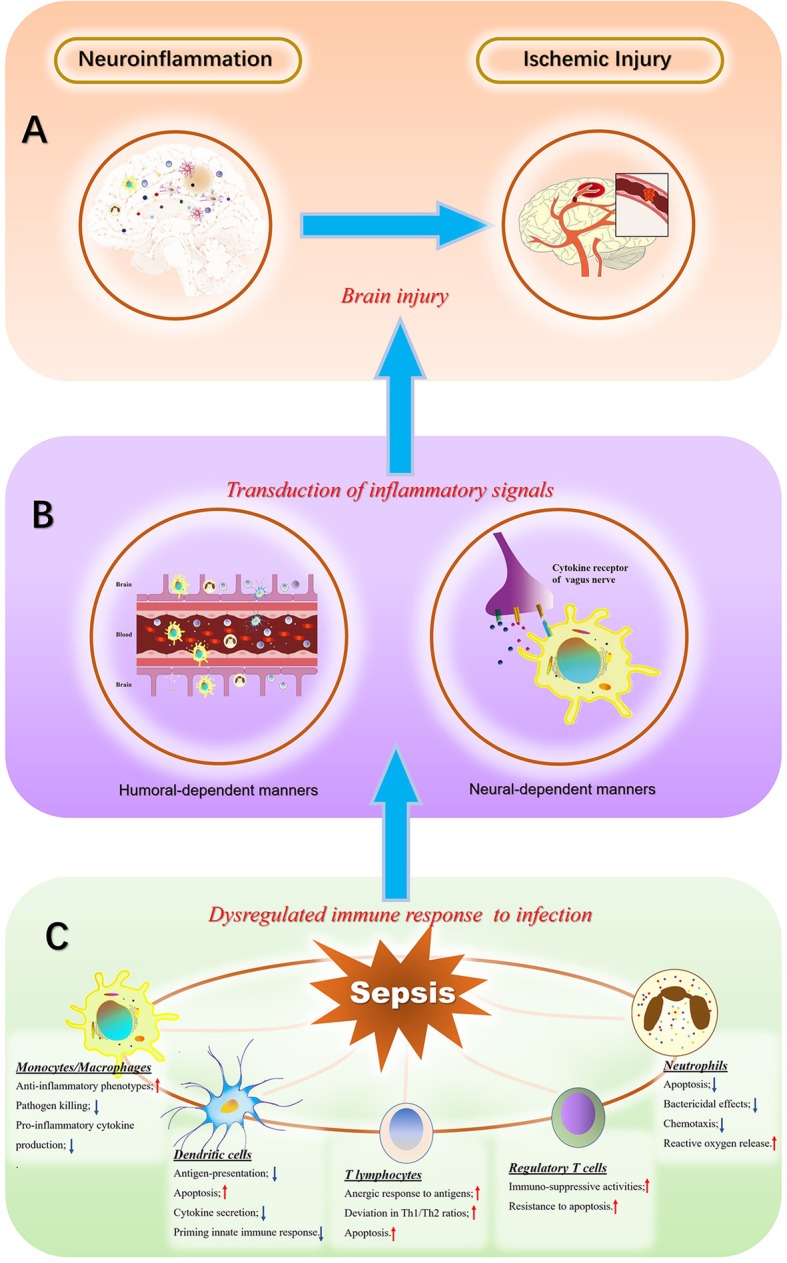
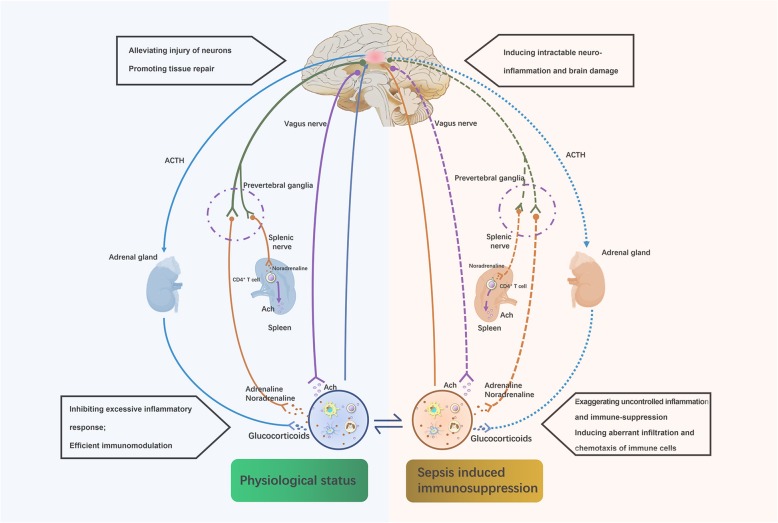
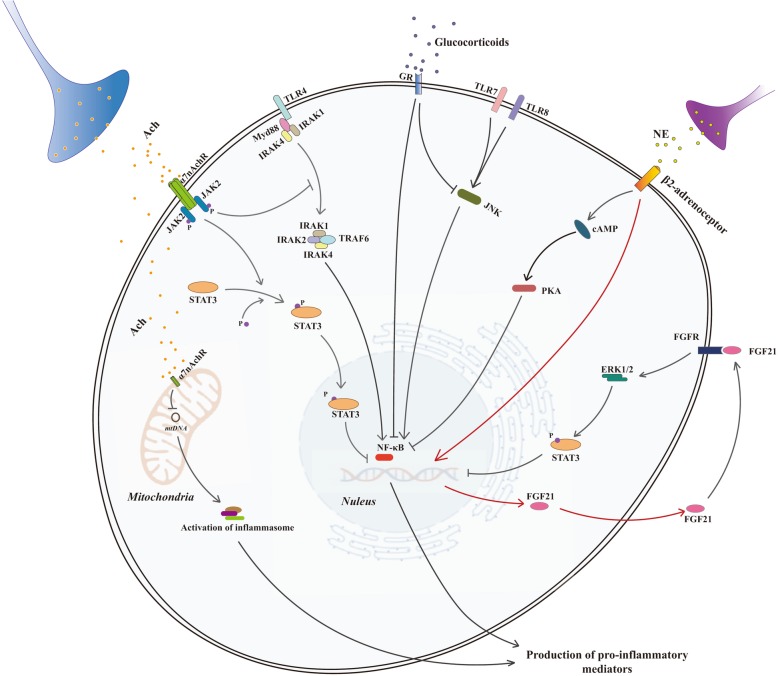
Sepsis-associated encephalopathy (SAE) is commonly complicated by septic conditions, and is responsible for increased mortality and poor outcomes in septic patients. Uncontrolled neuroinflammation and ischemic injury are major contributors to brain dysfunction, which arises from intractable immune malfunction and the collapse of neuroendocrine immune networks, such as the cholinergic anti-inflammatory pathway, hypothalamic-pituitary-adrenal axis, and sympathetic nervous system. Dysfunction in these neuromodulatory mechanisms compromised by SAE jeopardizes systemic immune responses, including those of neutrophils, macrophages/monocytes, dendritic cells, and T lymphocytes, which ultimately results in a vicious cycle between brain injury and a progressively aberrant immune response. Deep insight into the crosstalk between SAE and peripheral immunity is of great importance in extending the knowledge of the pathogenesis and development of sepsis-induced immunosuppression, as well as in exploring its effective remedies.
Overview
The claims and statistics of this paper haven’t been checked yet.
Free: it reads the open-access text and checks the first 5 claims that cite a source we can check. Create a free account to check every claim.
Integrity signals
Registry
Cites
Statistics
Figures
Verification
Claims the paper makes
The claims and statistics of this paper haven’t been checked yet.
Free: it reads the open-access text and checks the first 5 claims that cite a source we can check. Create a free account to check every claim.
Claims other papers make about this one
Each is checked against this paper’s own text: does it say what the citing paper says it does?
The cited source doesn’t support the claim as written.
In the citing paper
“In SAE, brain-infiltrating Tregs antagonize microglial inflammatory cascades by secreting factors like IL-10 and TGF-β, and suppress astrocytic IL-6 synthesis through the amphiregulin (AREG)-EGFR signaling axis [35,36].”
From Research Advances in the Pathogenesis of Sepsis-Associated Encephalopathy (2026) · cites this paper as [35]
Checked by a reasoning model — may be wrong.
Experimental — accuracy not yet measured
Self-check
Percentages, sums and reported differences re-computed from the paper’s own numbers.
The self-check needs the paper’s full text.
Citations
Cites
3 retracted
Yoon, S., Kim, S., & Lee, S. (2017) · The Journal of Infectious Diseases · doi:10.1093/infdis/jix142 · Cited by 52
RetractedRegulatory T cells exhibit neuroprotective effect in a mouse model of traumatic brain injury
Yu, Y., Cao, F., Ran, Q., & Sun, X. (2016) · Molecular Medicine Reports · doi:10.3892/mmr.2016.5954 · Cited by 10
RetractedRegulatory T cells exhibit neuroprotective effect in a mouse model of traumatic brain injury
Yu, Y., Cao, F., Ran, Q., & Sun, X. (2017) · Molecular Medicine Reports · doi:10.3892/mmr.2017.6299 · Cited by 8 · cited 2×
“Although the role of Tregs in the pathogenesis and progression of SAE has not been established, Tregs do show benefits for TBI patients via alleviating local inflammation and promoting tissue repair [100].”
BackgroundRetractedSurviving Sepsis Campaign: International guidelines for management of sepsis and septic shock: 2016.
Rhodes, A., Evans, L. E., Alhazzani, W., Levy, M. M., Antonelli, M., Ferrer, R., Kumar, A., Sevransky, J. E., Sprung, C. L., Nunnally, M. E., et al. (2017) · Intensive Care Medicine · doi:10.1007/s00134-017-4683-6 · Cited by 6,621
Long-term cognitive impairment and functional disability among survivors of severe sepsis.
Iwashyna, T. J., Ely, E. W., Smith, D. M., & Langa, K. M. (2010) · JAMA · doi:10.1001/jama.2010.1553 · Cited by 2,582
The Hypothalamic–Pituitary–Adrenal Axis and Immune-Mediated Inflammation
Chrousos, G. P. (1995) · New England Journal of Medicine · doi:10.1056/nejm199505183322008 · Cited by 2,579
Alhazzani, W., Møller, M. H., Arabi, Y. M., Loeb, M., Gong, M. N., Fan, E., Oczkowski, S., Levy, M. M., Derde, L., Dzierba, A., et al. (2020) · Critical Care Medicine · doi:10.1097/ccm.0000000000004363 · Cited by 1,565
Acetylcholine-Synthesizing T Cells Relay Neural Signals in a Vagus Nerve Circuit
Rosas-Ballina, M., Olofsson, P. S., Ochani, M., Valdés-Ferrer, S. I., Levine, Y. A., Reardon, C., Tusche, M. W., Pavlov, V. A., Andersson, U., Chavan, S., et al. (2011) · Science · doi:10.1126/science.1209985 · Cited by 1,551
Cholinergic agonists inhibit HMGB1 release and improve survival in experimental sepsis
Wang, H., Liao, H., Ochani, M., Justiniani, M., Lin, X., Yang, L., Al-Abed, Y., Wang, H., Metz, C., Miller, E. J., et al. (2004) · Nature Medicine · doi:10.1038/nm1124 · Cited by 1,170
Tracey, K. J. (2009) · Nature Reviews Immunology · doi:10.1038/nri2566 · Cited by 1,154
Neural regulation of innate immunity: a coordinated nonspecific host response to pathogens
Sternberg, E. M. (2006) · Nature Reviews Immunology · doi:10.1038/nri1810 · Cited by 1,064
Annane, D. (2000) · JAMA · doi:10.1001/jama.283.8.1038 · Cited by 1,000
Prass, K., Meisel, C., Höflich, C., Braun, J., Halle, E., Wolf, T., Ruscher, K., Victorov, I. V., Priller, J., Dirnagl, U., et al. (2003) · The Journal of Experimental Medicine · doi:10.1084/jem.20021098 · Cited by 925
Sepsis-associated encephalopathy
Gofton, T. E., & Young, G. B. (2012) · Nature Reviews Neurology · doi:10.1038/nrneurol.2012.183 · Cited by 821
Dysregulation of in vitro cytokine production by monocytes during sepsis.
Munoz, C., Carlet, J., Fitting, C., Misset, B., Blériot, J. P., & Cavaillon, J. M. (1991) · Journal of Clinical Investigation · doi:10.1172/jci115493 · Cited by 754
Cholinergic control of inflammation
Rosas‐Ballina, M., & Tracey, K. J. (2009) · Journal of Internal Medicine · doi:10.1111/j.1365-2796.2009.02098.x · Cited by 576
Transcranial amelioration of inflammation and cell death after brain injury.
Roth, T. L., Nayak, D., Atanasijevic, T., Koretsky, A. P., Latour, L. L., & McGavern, D. B. (2014) · Nature · doi:10.1038/nature12808 · Cited by 574
IL-4 in the brain: a cytokine to remember
Gadani, S. P., Cronk, J. C., Norris, G. T., & Kipnis, J. (2012) · The Journal of Immunology · doi:10.4049/jimmunol.1202246 · Cited by 549
Saeed, R. W., Varma, S., Peng-Nemeroff, T., Sherry, B., Balakhaneh, D., Huston, J., Tracey, K. J., Al-Abed, Y., & Metz, C. N. (2005) · The Journal of Experimental Medicine · doi:10.1084/jem.20040463 · Cited by 489
Dantzer, R., Konsman, J.-P., Bluthé, R.-M., & Kelley, K. W. (2000) · Autonomic Neuroscience · doi:10.1016/s1566-0702(00)00220-4 · Cited by 400
Ek, M., Kurosawa, M., Lundeberg, T., & Ericsson, A. (1998) · The Journal of Neuroscience · doi:10.1523/jneurosci.18-22-09471.1998 · Cited by 369
Predisposing Factors for Adrenal Insufficiency
Bornstein, S. R. (2009) · New England Journal of Medicine · doi:10.1056/nejmra0804635 · Cited by 356
The Neuropathology of Septic Shock
Sharshar, T., Annane, D., de la Gradmaison, G. L., Brouland, J. P., Hopkinson, N. S., & Gray, F. (2004) · Brain Pathology · doi:10.1111/j.1750-3639.2004.tb00494.x · Cited by 348
Neutrophil dysregulation during sepsis: an overview and update
Shen, X., Cao, K., Jiang, J., Guan, W., & Du, J. (2017) · Journal of Cellular and Molecular Medicine · doi:10.1111/jcmm.13112 · Cited by 333
Diagnosis of Adrenal Insufficiency in Severe Sepsis and Septic Shock
Annane, D., Maxime, V., Ibrahim, F., Alvarez, J. C., Abe, E., & Boudou, P. (2006) · American Journal of Respiratory and Critical Care Medicine · doi:10.1164/rccm.200509-1369oc · Cited by 327
Potentially modifiable factors contributing to sepsis-associated encephalopathy
Sonneville, R., de Montmollin, E., Poujade, J., Garrouste-Orgeas, M., Souweine, B., Darmon, M., Mariotte, E., Argaud, L., Barbier, F., Goldgran-Toledano, D., et al. (2017) · Intensive Care Medicine · doi:10.1007/s00134-017-4807-z · Cited by 323
Huston, J. M., Gallowitsch-Puerta, M., Ochani, M., Ochani, K., Yuan, R., Rosas-Ballina, M., Ashok, M., Goldstein, R. S., Chavan, S., Pavlov, V. A., et al. (2007) · Critical Care Medicine · doi:10.1097/00003246-200712000-00014 · Cited by 306 · cited 2×
“Manipulation of CAP activity through stimulating brain cholinergic nuclei or vagus nerve, inhibiting cholinesterase activity and administering agonists of α7nAchR, is beneficial for organ function and survival of septic animals by reconstruction or simulation of CAP effects [9, 10, 116, 117].”
BackgroundThe function of neutrophils in sepsis
Kovach, M. A., & Standiford, T. J. (2012) · Current Opinion in Infectious Diseases · doi:10.1097/qco.0b013e3283528c9b · Cited by 293
Control of lymphocyte egress from lymph nodes through β2-adrenergic receptors
Nakai, A., Hayano, Y., Furuta, F., Noda, M., & Suzuki, K. (2014) · Journal of Experimental Medicine · doi:10.1084/jem.20141132 · Cited by 290
Cerebral perfusion in sepsis-associated delirium
Pfister, D., Siegemund, M., Dell-Kuster, S., Smielewski, P., Rüegg, S., Strebel, S. P., Marsch, S. C., Pargger, H., & Steiner, L. A. (2008) · Critical Care · doi:10.1186/cc6891 · Cited by 258
Nascimento, D. C., Melo, P. H., Piñeros, A. R., Ferreira, R. G., Colón, D. F., Donate, P. B., Castanheira, F. V., Gozzi, A., Czaikoski, P. G., Niedbala, W., et al. (2017) · Nature Communications · doi:10.1038/ncomms14919 · Cited by 230
TNF is a key mediator of septic encephalopathy acting through its receptor, TNF receptor-1
Alexander, J. J., Jacob, A., Cunningham, P., Hensley, L., & Quigg, R. J. (2008) · Neurochemistry International · doi:10.1016/j.neuint.2007.08.006 · Cited by 225
GAILLARD, R. C., TURNILL, D., SAPPINO, P., & MULLER, A. F. (1990) · Endocrinology · doi:10.1210/endo-127-1-101 · Cited by 220
Catecholamines predict outcome in traumatic brain injury
Hamill, R. W., Woolf, P. D., McDonald, J. V., Lee, L. A., & Kelly, M. (1987) · Annals of Neurology · doi:10.1002/ana.410210504 · Cited by 216
Corticosteroids for treating sepsis
Annane, D., Bellissant, E., Bollaert, P. E., Briegel, J., Keh, D., & Kupfer, Y. (2015) · Cochrane Database of Systematic Reviews · doi:10.1002/14651858.cd002243.pub3 · Cited by 210 · cited 2×
“Therefore, reconstruction of the HPA axis may act as a promising therapeutic strategy for improving the survival and prognosis of septic patients [62].”
BackgroundThe role of microglia activation in the development of sepsis-induced long-term cognitive impairment
Michels, M., Vieira, A. S., Vuolo, F., Zapelini, H. G., Mendonça, B., Mina, F., Dominguini, D., Steckert, A., Schuck, P. F., Quevedo, J., et al. (2015) · Brain, Behavior, and Immunity · doi:10.1016/j.bbi.2014.07.002 · Cited by 207
Lu, B., Kwan, K., Levine, Y. A., Olofsson, P. S., Yang, H., Li, J., Joshi, S., Wang, H., Andersson, U., Chavan, S. S., et al. (2014) · Molecular Medicine · doi:10.2119/molmed.2013.00117 · Cited by 206
Sepsis-Induced T Cell Immunoparalysis: The Ins and Outs of Impaired T Cell Immunity
Jensen, I. J., Sjaastad, F. V., Griffith, T. S., & Badovinac, V. P. (2018) · The Journal of Immunology · doi:10.4049/jimmunol.1701618 · Cited by 204 · cited 1×
“T lymphocytes are classically representatives of the adaptive immune system, which are important for the prognosis of septic complications, and their impaired activity and aberrant differentiation are noteworthy in sepsis [86].”
BackgroundHMGB1 Mediates Cognitive Impairment in Sepsis Survivors
Chavan, S. S., Huerta, P. T., Robbiati, S., Valdes-Ferrer, S. I., Ochani, M., Dancho, M., Frankfurt, M., Volpe, B. T., Tracey, K. J., & Diamond, B. (2012) · Molecular Medicine · doi:10.2119/molmed.2012.00195 · Cited by 199
Cooperation of β2‐ and β3‐adrenergic receptors in hematopoietic progenitor cell mobilization
Méndez‐Ferrer, S., Battista, M., & Frenette, P. S. (2010) · Annals of the New York Academy of Sciences · doi:10.1111/j.1749-6632.2010.05390.x · Cited by 194
Di Battista, A. P., Rhind, S. G., Hutchison, M. G., Hassan, S., Shiu, M. Y., Inaba, K., Topolovec-Vranic, J., Neto, A. C., Rizoli, S. B., & Baker, A. J. (2016) · Journal of Neuroinflammation · doi:10.1186/s12974-016-0500-3 · Cited by 188
Andonegui, G., Zelinski, E. L., Schubert, C. L., Knight, D., Craig, L. A., Winston, B. W., Spanswick, S. C., Petri, B., Jenne, C. N., Sutherland, J. C., et al. (2018) · JCI Insight · doi:10.1172/jci.insight.99364 · Cited by 179
Impact of sepsis on CD4 T cell immunity
Cabrera-Perez, J., Condotta, S. A., Badovinac, V. P., & Griffith, T. S. (2014) · Journal of Leukocyte Biology · doi:10.1189/jlb.5mr0114-067r · Cited by 178
Tan, M., Zhu, J.-C., Du, J., Zhang, L.-M., & Yin, H.-H. (2011) · Critical Care · doi:10.1186/cc10579 · Cited by 174
Bcl-2 blocks glucocorticoid- but not Fas- or activation-induced apoptosis in a T cell hybridoma
Memon, S. A., Moreno, M. B., Petrak, D., & Zacharchuk, C. M. (1995) · The Journal of Immunology · doi:10.4049/jimmunol.155.10.4644 · Cited by 172 · cited 1×
“tivity of T cells by inducing apoptosis in a Fas/FasLdependent manner [139].”
BackgroundKenne, E., Erlandsson, A., Lindbom, L., Hillered, L., & Clausen, F. (2012) · Journal of Neuroinflammation · doi:10.1186/1742-2094-9-17 · Cited by 167
Tinsley, K. W., Grayson, M. H., Swanson, P. E., Drewry, A. M., Chang, K. C., Karl, I. E., & Hotchkiss, R. S. (2003) · The Journal of Immunology · doi:10.4049/jimmunol.171.2.909 · Cited by 167
Shin, S. S., & Dixon, C. E. (2015) · Journal of Neurotrauma · doi:10.1089/neu.2014.3445 · Cited by 165
Poehlmann, H., Schefold, J. C., Zuckermann-Becker, H., Volk, H.-D., & Meisel, C. (2009) · Critical Care · doi:10.1186/cc7969 · Cited by 164
The Impact of Acute Organ Dysfunction on Long-Term Survival in Sepsis*
Schuler, A., Wulf, D. A., Lu, Y., Iwashyna, T. J., Escobar, G. J., Shah, N. H., & Liu, V. X. (2018) · Critical Care Medicine · doi:10.1097/ccm.0000000000003023 · Cited by 161
Oxidative Burst of Circulating Neutrophils Following Traumatic Brain Injury in Human
Liao, Y., Liu, P., Guo, F., Zhang, Z.-Y., & Zhang, Z. (2013) · PLoS ONE · doi:10.1371/journal.pone.0068963 · Cited by 159
Pharmacologic cholinesterase inhibition improves survival in experimental sepsis*
Hofer, S., Eisenbach, C., Lukic, I. K., Schneider, L., Bode, K., Brueckmann, M., Mautner, S., Wente, M. N., Encke, J., Werner, J., et al. (2008) · Critical Care Medicine · doi:10.1097/01.ccm.0b013e31816208b3 · Cited by 156
Traumatic Brain Injury and Peripheral Immune Suppression: Primer and Prospectus
Hazeldine, J., Lord, J. M., & Belli, A. (2015) · Frontiers in Neurology · doi:10.3389/fneur.2015.00235 · Cited by 156
Schramm, P., Klein, K. U., Falkenberg, L., Berres, M., Closhen, D., Werhahn, K. J., David, M., Werner, C., & Engelhard, K. (2012) · Critical Care · doi:10.1186/cc11665 · Cited by 156
Cerebral blood flow is reduced in patients with sepsis syndrome
Bowton, D. L., Bertels, N. H., Prough, D. S., & Stump, D. A. (1989) · Critical Care Medicine · doi:10.1097/00003246-198905000-00004 · Cited by 149
Huang, Z., Zhong, L., Lee, J. T. H., Zhang, J., Wu, D., Geng, L., Wang, Y., Wong, C.-M., & Xu, A. (2017) · Cell Metabolism · doi:10.1016/j.cmet.2017.08.003 · Cited by 147
Sewell, D. L., Nacewicz, B. M., Liu, F., Macvilay, S., Erdei, A., Lambris, J. D., Sándor, M., & Fábry, Z. (2004) · Journal of Neuroimmunology · doi:10.1016/j.jneuroim.2004.06.003 · Cited by 146
Anti-Inflammatory Chromatinscape Suggests Alternative Mechanisms of Glucocorticoid Receptor Action
Oh, K.-S., Patel, H., Gottschalk, R. A., Lee, W. S., Baek, S., Fraser, I. D. C., Hager, G. L., & Sung, M.-H. (2017) · Immunity · doi:10.1016/j.immuni.2017.07.012 · Cited by 142
Steer, J. H., Kroeger, K. M., Abraham, L. J., & Joyce, D. A. (2000) · Journal of Biological Chemistry · doi:10.1074/jbc.m906304199 · Cited by 139
Dimopoulou, I., Tsagarakis, S., Kouyialis, A. T., Roussou, P., Assithianakis, G., Christoforaki, M., Ilias, I., Sakas, D. E., Thalassinos, N., & Roussos, C. (2004) · Critical Care Medicine · doi:10.1097/01.ccm.0000108885.37811.ca · Cited by 139
Sepsis-induced brain dysfunction
Adam, N., Kandelman, S., Mantz, J., Chrétien, F., & Sharshar, T. (2013) · Expert Review of Anti-infective Therapy · doi:10.1586/eri.12.159 · Cited by 132
Wang, H., Hong, L.-J., Huang, J.-Y., Jiang, Q., Tao, R.-R., Tan, C., Lu, N.-N., Wang, C.-K., Ahmed, M. M., Lu, Y.-M., et al. (2015) · Cell Research · doi:10.1038/cr.2015.61 · Cited by 123
Taccone, F. S., Su, F., De Deyne, C., Abdellhai, A., Pierrakos, C., He, X., Donadello, K., Dewitte, O., Vincent, J.-L., & De Backer, D. (2014) · Critical Care Medicine · doi:10.1097/ccm.0b013e3182a641b8 · Cited by 120
Neuroanatomy and Physiology of Brain Dysfunction in Sepsis
Mazeraud, A., Pascal, Q., Verdonk, F., Heming, N., Chrétien, F., & Sharshar, T. (2016) · Clinics in Chest Medicine · doi:10.1016/j.ccm.2016.01.013 · Cited by 119
Astroglia in Sepsis Associated Encephalopathy
Shulyatnikova, T., & Verkhratsky, A. (2020) · Neurochemical Research · doi:10.1007/s11064-019-02743-2 · Cited by 118 · cited 2×
“It is reported to orchestrate the effects of immune cells in central nervous system by acting as a surveillant yet integrate center for inflammatory signals [26].”
BackgroundTraumatic brain injury–induced alterations in peripheral immunity
Schwulst, S. J., Trahanas, D. M., Saber, R., & Perlman, H. (2013) · Journal of Trauma and Acute Care Surgery · doi:10.1097/ta.0b013e318299616a · Cited by 110
Hamano, R., Takahashi, H. K., Iwagaki, H., Yoshino, T., Nishibori, M., & Tanaka, N. (2006) · Shock · doi:10.1097/01.shk.0000228168.86845.60 · Cited by 108
Traffic of leukocytes and cytokine up-regulation in the central nervous system in sepsis
Comim, C. M., Vilela, M. C., Constantino, L. D. S., Petronilho, F. C., Vuolo, F., Lacerda‐Queiroz, N., Rodrigues, D. H., da Rocha, J. L., Teixeira, A. L., Quevedo, J., et al. (2011) · Intensive Care Medicine · doi:10.1007/s00134-011-2151-2 · Cited by 105
Systemic inflammation in early neonatal mice induces transient and lasting neurodegenerative effects
Cardoso, F. L., Herz, J., Fernandes, A., Rocha, J., Sepodes, B., Brito, M. A., McGavern, D. B., & Brites, D. (2015) · Journal of Neuroinflammation · doi:10.1186/s12974-015-0299-3 · Cited by 103
Role of interleukin-10 in monocyte hyporesponsiveness associated with septic shock
Sfeir, T., Saha, D. C., Astiz, M., & Rackow, E. C. (2001) · Critical Care Medicine · doi:10.1097/00003246-200101000-00026 · Cited by 103
Ren, C., Tong, Y., Li, J., Lu, Z., & Yao, Y.-M. (2016) · International Journal of Biological Sciences · doi:10.7150/ijbs.16404 · Cited by 103
Self-citationThe role of adrenal gland microenvironment in the HPA axis function and dysfunction during sepsis
Kanczkowski, W., Sue, M., Zacharowski, K., Reincke, M., & Bornstein, S. R. (2015) · Molecular and Cellular Endocrinology · doi:10.1016/j.mce.2014.12.019 · Cited by 101
Characterization of Sepsis and Sepsis-Associated Encephalopathy
Feng, Q., Ai, Y.-H., Gong, H., Wu, L., Ai, M.-L., Deng, S.-Y., Huang, L., Peng, Q.-Y., & Zhang, L.-N. (2019) · Journal of Intensive Care Medicine · doi:10.1177/0885066617719750 · Cited by 101
Obesity Exacerbates Sepsis‐Induced Inflammation and Microvascular Dysfunction in Mouse Brain
VACHHARAJANI, V., RUSSELL, J. M., SCOTT, K. L., CONRAD, S., STOKES, K. Y., TALLAM, L., HALL, J., & GRANGER, D. N. (2005) · Microcirculation · doi:10.1080/10739680590904982 · Cited by 98
Kox, M., van Velzen, J. F., Pompe, J. C., Hoedemaekers, C., van der Hoeven, J. G., & Pickkers, P. (2009) · Biochemical Pharmacology · doi:10.1016/j.bcp.2009.06.096 · Cited by 94
Cerebral circulation and metabolism in patients with septic encephalopathy
Maekawa, T., Fujii, Y., Sadamitsu, D., Yokota, K., Soejima, Y., Ishikawa, T., Miyauchi, Y., & Takeshita, H. (1991) · The American Journal of Emergency Medicine · doi:10.1016/0735-6757(91)90175-j · Cited by 92
Modulation of Macrophage Hyperactivity Improves Survival in a Burn-Sepsis Model
O'Riordain, M. G. (1992) · Archives of Surgery · doi:10.1001/archsurg.1992.01420020034005 · Cited by 91
Brown, R., Zuo, L., Vriend, C. Y., Nirula, R., Janz, L., Falk, J., Nance, D. M., Dyck, D. G., & Greenberg, A. H. (1991) · Cellular Immunology · doi:10.1016/0008-8749(91)90008-y · Cited by 91
Interaction of neurotransmitters and neurochemicals with lymphocytes
Kerage, D., Sloan, E. K., Mattarollo, S. R., & McCombe, P. (2019) · Journal of Neuroimmunology · doi:10.1016/j.jneuroim.2019.04.006 · Cited by 91
Ramchandra, R., Wan, L., Hood, S. G., Frithiof, R., Bellomo, R., & May, C. N. (2009) · American Journal of Physiology-Regulatory, Integrative and Comparative Physiology · doi:10.1152/ajpregu.00437.2009 · Cited by 89
Forebrain Cholinergic Dysfunction and Systemic and Brain Inflammation in Murine Sepsis Survivors
Zaghloul, N., Addorisio, M. E., Silverman, H. A., Patel, H. L., Valdés-Ferrer, S. I., Ayasolla, K. R., Lehner, K. R., Olofsson, P. S., Nasim, M., Metz, C. N., et al. (2017) · Frontiers in Immunology · doi:10.3389/fimmu.2017.01673 · Cited by 89
Samary, C. S., Ramos, A. B., Maia, L. A., Rocha, N. N., Santos, C. L., de Magalhães, R. F., Clevelario, A. L., Pimentel‐Coelho, P. M., Méndez‐Otero, R., Cruz, F. F., et al. (2018) · Critical Care · doi:10.1186/s13054-018-2164-0 · Cited by 87
Oami, T., Watanabe, E., Hatano, M., Sunahara, S., Fujimura, L., Sakamoto, A., Ito, C., Toshimori, K., & Oda, S. (2017) · Critical Care Medicine · doi:10.1097/ccm.0000000000002016 · Cited by 86
Davenpeck, K. L., Zagorski, J., Schleimer, R. P., & Bochner, B. S. (1998) · The Journal of Immunology · doi:10.4049/jimmunol.161.12.6861 · Cited by 85 · cited 1×
“It has been documented that the HPA axis disturbs rolling and adhesion of leukocytes by reducing L-selectin activity [140].”
BackgroundBurkhart, C. S., Siegemund, M., & Steiner, L. A. (2010) · Critical Care · doi:10.1186/cc8856 · Cited by 82
Septic encephalopathy: does inflammation drive the brain crazy?
Dal-Pizzol, F., Tomasi, C. D., & Ritter, C. (2014) · Revista Brasileira de Psiquiatria · doi:10.1590/1516-4446-2013-1233 · Cited by 77
Neuroanatomy of the spleen: Mapping the relationship between sympathetic neurons and lymphocytes
Murray, K. M., Godinez, D. R., Brust‐Mascher, I., Miller, E. N., Gareau, M. G., & Reardon, C. (2017) · PLoS ONE · doi:10.1371/journal.pone.0182416 · Cited by 77
Tsoyi, K., Jang, H. J., Kim, J. W., Chang, H. K., Lee, Y. S., Pae, H.-O., Kim, H. J., Seo, H. G., Lee, J. H., Chung, H.-T., et al. (2011) · Antioxidants & Redox Signaling · doi:10.1089/ars.2010.3555 · Cited by 74
Wang, J., Yu, L., Jiang, C. Q., Fu, X., Liu, X., Wang, M., Ou, C., Cui, X., Zhou, C., & Wang, J. (2014) · Brain Behavior and Immunity · doi:10.1016/j.bbi.2014.07.022 · Cited by 72
Silvio Taccone, F., Scolletta, S., Franchi, F., Donadello, K., & Oddo, M. (2013) · Current Vascular Pharmacology · doi:10.2174/1570161111311020007 · Cited by 71 · cited 2×
“Injury of endothelial cells as a result of neuroinflammation leads to derangement of cerebral perfusion, which renders the ischemic processes of SAE an intractable problem [32].”
BackgroundCholinergic Regulatory Lymphocytes Re-Establish Neuromodulation of Innate Immune Responses in Sepsis
Peña, G., Cai, B., Ramos, L., Vida, G., Deitch, E. A., & Ulloa, L. (2011) · The Journal of Immunology · doi:10.4049/jimmunol.1100013 · Cited by 71
Neuroinflammation: Microglial Activation During Sepsis
Michels, M., Danielski, L., Dal-Pizzol, F., & Petronilho, F. (2014) · Current Neurovascular Research · doi:10.2174/1567202611666140520122744 · Cited by 69
Associations of T helper 1, 2, 17 and regulatory T lymphocytes with mortality in severe sepsis
Wu, H.-P., Chung, K., Lin, C., Jiang, B.-Y., Chuang, D., & Liu, J. Y.-C. (2013) · Inflammation Research · doi:10.1007/s00011-013-0630-3 · Cited by 69
Li, Q., Zhou, X.-D., Kolosov, V. P., & Perelman, J. M. (2011) · Cellular Physiology and Biochemistry · doi:10.1159/000329982 · Cited by 68
Alterations of Dendritic Cells in Sepsis: Featured Role in Immunoparalysis
Fan, X., Liu, Z., Jin, H., Yan, J., & Liang, H.-P. (2015) · BioMed Research International · doi:10.1155/2015/903720 · Cited by 67 · cited 3×
“DCs show evident signs of activation and maturation in the initial phase of sepsis, and this effectively primes the response of the adaptive immune system via upregulating the expression of surface molecules, including CD80, CD86, CD40, and major histocompatibility complex (MHC)-II, as well as enhancing the release of…”
BackgroundYilmaz, A., Fuchs, T., Dietel, B., Altendorf, R., Cicha, I., Stumpf, C., Schellinger, P. D., Blümcke, I., Schwab, S., Daniel, W. G., et al. (2010) · Clinical Science · doi:10.1042/cs20090154 · Cited by 67
Strother, R. K., Danahy, D. B., Kotov, D. I., Kucaba, T. A., Zacharias, Z. R., Griffith, T. S., Legge, K. L., & Badovinac, V. P. (2016) · The Journal of Immunology · doi:10.4049/jimmunol.1601463 · Cited by 67
Adrenal Insufficiency in Sepsis
Annane, D. (2008) · Current Pharmaceutical Design · doi:10.2174/138161208784980626 · Cited by 66
Mrakovcic‐Sutic, I., Tokmadzic, V. S., Laskarin, G., Mahmutefendic, H., Lucin, P., Zupan, Z., & Sustic, A. (2010) · Scandinavian Journal of Immunology · doi:10.1111/j.1365-3083.2010.02407.x · Cited by 65 · cited 1×
“Previous studies showed that a reduction in peripheral T lymphocytes was observed at 24 h and remained low for 4 days post TBI, which resulted in an inadequate number of cells to exert an effective immune response [94].”
ResultKasahara, E., & Inoue, M. (2014) · Redox Report · doi:10.1179/1351000214y.0000000107 · Cited by 64
Hasegawa-Ishii, S., Inaba, M., Umegaki, H., Unno, K., Wakabayashi, K., & Shimada, A. (2016) · Scientific Reports · doi:10.1038/srep25457 · Cited by 64
Systemic Inflammation as a Driver of Brain Injury: the Astrocyte as an Emerging Player
Bellaver, B., dos Santos, J. P., Leffa, D. T., Bobermin, L. D., Roppa, P. H. A., da Silva Torres, I. L., Gonçalves, C.-A., Souza, D. O., & Quincozes-Santos, A. (2018) · Molecular Neurobiology · doi:10.1007/s12035-017-0526-2 · Cited by 64
Area postrema and aortic or vagal afferents converge to excite cells in nucleus tractus solitarius
Bonham, A. C., & Hasser, E. M. (1993) · American Journal of Physiology-Heart and Circulatory Physiology · doi:10.1152/ajpheart.1993.264.5.h1674 · Cited by 63 · cited 1×
“Peripheral inflammatory signals are captured by receptors of immunetransmitter in afferent vagus nerve, such as receptors of IL-1β and prostaglandins, and then reach the nucleus tractus solitarius of the central nervous system [101, 102].”
BackgroundShein, S. L., Shellington, D. K., Exo, J. L., Jackson, T. C., Wisniewski, S. R., Jackson, E. K., Vagni, V., Bayır, H., Clark, R. S. B., Dixon, C. E., et al. (2014) · Journal of Neurotrauma · doi:10.1089/neu.2013.2985 · Cited by 58
Zarbato, G. F., Goldim, M. P. D. S., Giustina, A. D., Danielski, L. G., Mathias, K., Florentino, D., de Oliveira, A. N., da Rosa, N., Laurentino, A. O. M., Trombetta, T., et al. (2018) · Neurotoxicity Research · doi:10.1007/s12640-018-9900-8 · Cited by 58
Dendritic cells in sepsis: Potential immunoregulatory cells with therapeutic potential
Kumar, V. (2018) · Molecular Immunology · doi:10.1016/j.molimm.2018.07.007 · Cited by 58
Tian, M., Qingzhen, L., Zhiyang, Y., Chunlong, C., Jiao, D., Zhang, L., & Li, W. (2019) · Journal of Cellular Biochemistry · doi:10.1002/jcb.27983 · Cited by 58
Traumatic Brain Injury in Rats Induces Lung Injury and Systemic Immune Suppression
Vermeij, J.-D., Aslami, H., Fluiter, K., Roelofs, J. J., van den Bergh, W. M., Juffermans, N. P., Schultz, M. J., Van der Sluijs, K., van de Beek, D., & van Westerloo, D. J. (2013) · Journal of Neurotrauma · doi:10.1089/neu.2013.3060 · Cited by 56
Junger, W. G., Rhind, S. G., Rizoli, S. B., Cuschieri, J., Baker, A. J., Shek, P. N., Hoyt, D. B., & Bulger, E. M. (2013) · Shock · doi:10.1097/shk.0000000000000038 · Cited by 56
Cedillo, J. L., Arnalich, F., Martín-Sánchez, C., Quesada, A., Blanco, J. J. R., Maldifassi, M. C., Atienza, G., Renart, J., Fernández‐Capitán, C., Rio, F. G., et al. (2014) · The Journal of Infectious Diseases · doi:10.1093/infdis/jiu425 · Cited by 54
Severe head injury: effect upon cellular immune function‡
Quattrocchi, K. B., Frank, E. H., Miller, C. H., Dull, S. T., Howard, R. R., & Wagner, F. C. (1991) · Neurological Research · doi:10.1080/01616412.1991.11739959 · Cited by 53
Vagal Modulation of the Inflammatory Response in Sepsis
Wang, D.-W., Yin, Y.-M., & Yao, Y.-M. (2016) · International Reviews of Immunology · doi:10.3109/08830185.2015.1127369 · Cited by 52
Self-citationConstitutive Vagus Nerve Activation Modulates Immune Suppression in Sepsis Survivors
Rana, M., Fei, Y., Son, M., Bella, A. L., Ochani, M., Levine, Y. A., Chiu, P. Y., Wang, P., Chavan, S. S., Volpe, B. T., et al. (2018) · Frontiers in Immunology · doi:10.3389/fimmu.2018.02032 · Cited by 52
Kox, M., Pompe, J. C., Pickkers, P., Hoedemaekers, C. W., van Vugt, A. B., & van der Hoeven, J. G. (2008) · Neurology · doi:10.1212/01.wnl.0000279479.69502.3e · Cited by 51
Septic encephalopathy: when cytokines interact with acetylcholine in the brain
Zhang, Q.-H., Sheng, Z.-Y., & Yao, Y.-M. (2014) · Military Medical Research · doi:10.1186/2054-9369-1-20 · Cited by 51
Self-citationDendritic cells in central nervous system autoimmunity
Sie, C., & Korn, T. (2016) · Seminars in Immunopathology · doi:10.1007/s00281-016-0608-7 · Cited by 51
Valiyaveettil, M., Alamneh, Y. A., Miller, S.-A., Hammamieh, R., Arun, P., Wang, Y., Wei, Y., Oguntayo, S., Long, J. B., & Nambiar, M. P. (2012) · Chemico-Biological Interactions · doi:10.1016/j.cbi.2012.10.022 · Cited by 49
Zhang, Q., Chen, Q., Kang, J., Liu, C., Dong, N., Zhu, X., Sheng, Z.-Y., & Yao, Y.-M. (2011) · Journal of Neuroinflammation · doi:10.1186/1742-2094-8-118 · Cited by 49
Self-citationHumoral and cellular immunity following severe head injury: review and current investigations‡
Miller, C. H., Quattrocchi, K. B., Frank, E. H., Issel, B. W., & Franklin C. Wagner Jr (1991) · Neurological Research · doi:10.1080/01616412.1991.11739977 · Cited by 45
Zhai, Q., Lai, D., Cui, P., Zhou, R., Chen, Q., Hou, J., Su, Y.-T., Pan, L., Ye, H., Zhao, J., et al. (2017) · Critical Care Medicine · doi:10.1097/ccm.0000000000002646 · Cited by 45
Chen, A.-L., Sun, X., Wang, W., Liu, J.-F., Zeng, X., Qiu, J.-F., Liu, X.-J., & Wang, Y. (2016) · Journal of Neuroinflammation · doi:10.1186/s12974-016-0743-z · Cited by 42
Yang, Y., Ye, Y., Chen, C., Kong, C., Su, X., Zhang, X., Bai, W., & He, X. (2019) · NeuroImmunoModulation · doi:10.1159/000495465 · Cited by 41
Shimada, A., & Hasegawa‐Ishii, S. (2017) · Frontiers in Immunology · doi:10.3389/fimmu.2017.00017 · Cited by 40
Zhang, X., Rocha‐Ferreira, E., Li, T., Vontell, R., Jabin, D., Hua, S., Zhou, K., Nazmi, A., Albertsson, A.-M., Sobotka, K. S., et al. (2017) · Journal of Neuroinflammation · doi:10.1186/s12974-017-1029-9 · Cited by 40
Interacting Chemokine Signals Regulate Dendritic Cells in Acute Brain Injury
Israelsson, C., Kylberg, A., Bengtsson, H., Hillered, L., & Ebendal, T. (2014) · PLoS ONE · doi:10.1371/journal.pone.0104754 · Cited by 37
TRANSIENT MONOCYTE RELEASE OF INTERLEUKIN-10 IN RESPONSE TO TRAUMATIC BRAIN INJURY
Shimonkevitz, R., Bar-Or, D., Harris, L., Dole, K., McLaughlin, L., & Yukl, R. (1999) · Shock · doi:10.1097/00024382-199907000-00002 · Cited by 35
Impaired Blood Dendritic Cell Numbers and Functions after Aneurysmal Subarachnoid Hemorrhage
Roquilly, A., Braudeau, C., Cinotti, R., Dumonte, E., Motreul, R., Josien, R., & Asehnoune, K. (2013) · PLoS ONE · doi:10.1371/journal.pone.0071639 · Cited by 34
The cholinergic anti-inflammatory pathway meets microRNA
Ulloa, L. (2013) · Cell Research · doi:10.1038/cr.2013.128 · Cited by 34
McDermott, A. J., Falkowski, N. R., McDonald, R. A., Frank, C. R., Pandit, C. R., Young, V. B., & Huffnagle, G. B. (2016) · Immunology · doi:10.1111/imm.12700 · Cited by 34
Zhang, Q., Li, A.-M., He, S., Yao, X., Zhu, J., Zhang, Z.-W., Sheng, Z.-Y., & Yao, Y.-M. (2015) · PLoS ONE · doi:10.1371/journal.pone.0129082 · Cited by 33
Self-citationFlierl, M. A., Rittirsch, D., Weckbach, S., Huber-Lang, M. S., Ipaktchi, K. R., Ward, P. A., & Stahel, P. F. (2011) · Annals of Intensive Care · doi:10.1186/2110-5820-1-53 · Cited by 32
Larangé, A., Antonios, D., Pallardy, M. J., & Kerdine‐Römer, S. (2011) · Journal of Leukocyte Biology · doi:10.1189/jlb.1110615 · Cited by 32
Loss of vagal tone aggravates systemic inflammation and cardiac impairment in endotoxemic rats
Schulte, A., Lichtenstern, C., Henrich, M., Weigand, M. A., & Uhle, F. (2014) · Journal of Surgical Research · doi:10.1016/j.jss.2014.01.022 · Cited by 30
Hall, S., Kumaria, A., & Belli, A. (2013) · British Journal of Neurosurgery · doi:10.3109/02688697.2013.835373 · Cited by 30
Dendritic cells as therapeutic targets in neuroinflammation
Lüssi, F., Zipp, F., & Witsch, E. (2016) · Cellular and Molecular Life Sciences · doi:10.1007/s00018-016-2170-9 · Cited by 29
Ren, C., Tong, Y., Li, J., Dong, N., Hao, J.-W., Zhang, Q., & Yao, Y.-M. (2017) · Oncotarget · doi:10.18632/oncotarget.21502 · Cited by 29
Self-citationLU, C.-X., Qiu, T., Tong, H., Liu, Z., Su, L., & Cheng, B. (2016) · Experimental and Therapeutic Medicine · doi:10.3892/etm.2016.3000 · Cited by 26
Pharmacogenomics of neuroimmune interactions in human psychiatric disorders
Licinio, J., Mastronardi, C., & Wong, M. (2007) · Experimental Physiology · doi:10.1113/expphysiol.2007.038471 · Cited by 23
Innate Immune Function and Organ Failure Recovery in Adults With Sepsis
Maddux, A. B., Hiller, T. D., Overdier, K. H., Pyle, L. L., & Douglas, I. S. (2017) · Journal of Intensive Care Medicine · doi:10.1177/0885066617701903 · Cited by 23
Adrenal insufficiency in sepsis
Polito, A., Aboab, J., & Annane, D. (2006) · Revista Brasileira de Terapia Intensiva · doi:10.1590/s0103-507x2006000100014 · Cited by 19
Juif, P., Anton, F., & Hanesch, U. (2011) · Physiology & Behavior · doi:10.1016/j.physbeh.2011.11.008 · Cited by 19
Peidaee, E., Sheybani, F., Naderi, H., Khosravi, N., & Nooghabi, M. J. (2018) · Emergency Medicine International · doi:10.1155/2018/3587014 · Cited by 19
Kasahara, E., Sekiyama, A., Hori, M., Kuratsune, D., Fujisawa, N., Chida, D., Hiramoto, K., Li, J., Okamura, H., Inoue, M., et al. (2015) · NeuroImmunoModulation · doi:10.1159/000368802 · Cited by 16
Liu, Q., Lu, J., Wang, X. H., Qu, B.-J., Li, S. R., & Kang, J. R. (2014) · Genetics and Molecular Research · doi:10.4238/2014.september.26.4 · Cited by 16
Ren, C., Li, X., Wu, Y., Dong, N., Tong, Y., & Yao, Y.-M. (2019) · Mediators of Inflammation · doi:10.1155/2019/6197084 · Cited by 15
Self-citationFlow cytometric characterization of brain dendritic cell subsets after murine stroke
Pösel, C., Uri, A., Schulz, I., Boltze, J., Weise, G., & Wagner, D. (2014) · Experimental & Translational Stroke Medicine · doi:10.1186/2040-7378-6-11 · Cited by 13
Papaioannou, V. E., & Pnevmatikos, I. (2019) · Nutrition and Metabolic Insights · doi:10.1177/1178638819847486 · Cited by 11
[Protective effects of vagus nerve stimulation on rats with sepsis-associated encephalopathy].
Li, N., Li, Z., Xiang, H., Wang, X., Zhang, X., & Li, J. (2015) · PubMed · doi:10.3760/cma.j.issn.2095-4352.2015.06.018 · Cited by 8
Niu, R., Gao, H., Zhou, Y., & Zhang, J. (2018) · Medical Science Monitor · doi:10.12659/msm.906889 · Cited by 6
Huang, W., Zhu, S., Liu, X., Huang, L., Han, Y., Han, Q., Xie, D., & Zeng, H. (2016) · PubMed · Cited by 4
Griffin, A. C., Zhao, W. G., Wegmann, K. W., & Hickey, W. F. (1994) · Brain Behavior and Immunity · doi:10.1006/brbi.1994.1029 · Cited by 3
Erratum to: Dendritic cells as therapeutic targets in neuroinflammation
Luessi, F., Zipp, F., & Witsch, E. (2016) · Cellular and Molecular Life Sciences · doi:10.1007/s00018-016-2227-9 · Cited by 1
Cited by
Sepsis-Induced Immunosuppression
Torres, L. K., Pickkers, P., & van der Poll, T. (2022) · Annual Review of Physiology · doi:10.1146/annurev-physiol-061121-040214 · Cited by 355
Immunopathophysiology of human sepsis
Wiersinga, W. J., & van der Poll, T. (2022) · eBioMedicine · doi:10.1016/j.ebiom.2022.104363 · Cited by 322
New insight into neurological degeneration: Inflammatory cytokines and blood–brain barrier
Yang, J., Ran, M., Li, H., Lin, Y., Ma, K., Yang, Y., Fu, X., & Yang, S. (2022) · Frontiers in Molecular Neuroscience · doi:10.3389/fnmol.2022.1013933 · Cited by 279
“, 2018) can compromise BBB permeability and induce or deteriorate neurological disorders which make the regulation of inflammation more difficult (Ren et al., 2020).”
BackgroundBlood-Brain Barrier Disruption by Lipopolysaccharide and Sepsis-Associated Encephalopathy
Peng, X., Luo, Z., He, S., Zhang, L., & Li, Y. (2021) · Frontiers in Cellular and Infection Microbiology · doi:10.3389/fcimb.2021.768108 · Cited by 267
Sepsis-Associated Encephalopathy and Blood-Brain Barrier Dysfunction
Gao, Q., & Hernandes, M. S. (2021) · Inflammation · doi:10.1007/s10753-021-01501-3 · Cited by 257
Metadata
- Authors
- Ren, C., Yao, R.-Q., Zhang, H., Feng, Y.-W., & Yao, Y.-M.
- Affiliations
- Chinese PLA General Hospital (CN)
- Changhai Hospital (CN)
- Corresponding author
- Yao, Yong-ming
- Venue
- Journal of Neuroinflammation
- Published
- 2020-01-10
- Volume
- 17
- Issue
- 1
- Pages
- 14-14
- ISSN
- 1742-2094 (ISSN-L)
- PMC
- PMC6953314
- OpenAlex
- W3004285897
- Cited by
- 259
- References
- 153
- Citations by year
- 2026: 27 · 2025: 49 · 2024: 63 · 2023: 35 · 2022: 46 · 2021: 20 · 2020: 18
- FWCI
- 4.35
- Type
- journal article
- Language
- en
- Open access
- gold
- doi.org
- Licence
- cc-by
- creativecommons.org/licenses/by/4.0/ (tdm)
- creativecommons.org/licenses/by/4.0/ (vor)
- Locations
- Journal of Neuroinflammation (publishedVersion, cc-by)
- PubMed Central (publishedVersion, cc-by)
- PubMed (publishedVersion)
- DOAJ (DOAJ: Directory of Open Access Journals) (submittedVersion)
- Funders
- National Natural Science Foundation of China (81730057, 81842025, 81801935)
- Topics
- Health Sciences › Medicine › Critical Care and Intensive Care Medicine › Sepsis Diagnosis and Treatment
- Life Sciences › Neuroscience › Neurology › Neuroinflammation and Neurodegeneration Mechanisms
- Health Sciences › Medicine › Critical Care and Intensive Care Medicine › Intensive Care Unit Cognitive Disorders
- Keywords
- sepsis-associated encephalopathy, sepsis-induced immunosuppression, neuroinflammation, cholinergic anti-inflammatory pathway, hypothalamic-pituitary-adrenal axis, sympathetic nervous system, neutrophils, macrophages, dendritic cells, T cells
- MeSH terms
- Animals, Humans, Immune Tolerance, Neuroimmunomodulation, Sepsis, Sepsis-Associated Encephalopathy
About these checks
Registry, retraction, Cites and statistics results are computed, not judged, with one exception: a printed reference that no index lists is read once by a model before it counts as a citation error. Claims are extracted by a model and kept only when their quote appears verbatim in the text; each cited source is then checked, with a model’s help, for whether it says what the claim relies on. Those verdicts can be wrong — read the claim’s quote and the cited source before relying on one.
Statistics and arithmetic are recomputed, not judged.
Confidence bands are shown only for fields calibrated on our annotated test set. None is calibrated yet, so no band is shown.
What counts as a claim ›How we measure confidence ›How we check this ›
Are you an author, or do you see a problem with this page? Request a review
Data sources
Bibliographic data: Semantic Scholar, OpenAlex, Crossref.
Contains information from the Semantic Scholar Academic Graph Datasets, made available under the ODC Attribution License (ODC-BY 1.0).
Semantic Scholar’s data is described in: Kinney, R., et al. (2023). The Semantic Scholar Open Data Platform. arXiv:2301.10140.
