

Divanillyl sulfone suppresses NLRP3 inflammasome activation via inducing mitophagy to ameliorate chronic neuropathic pain in mice
Open accessThe DOI matches its Crossref record; 58 of the 59 references it cites were found in a registry or an index.
Abstract
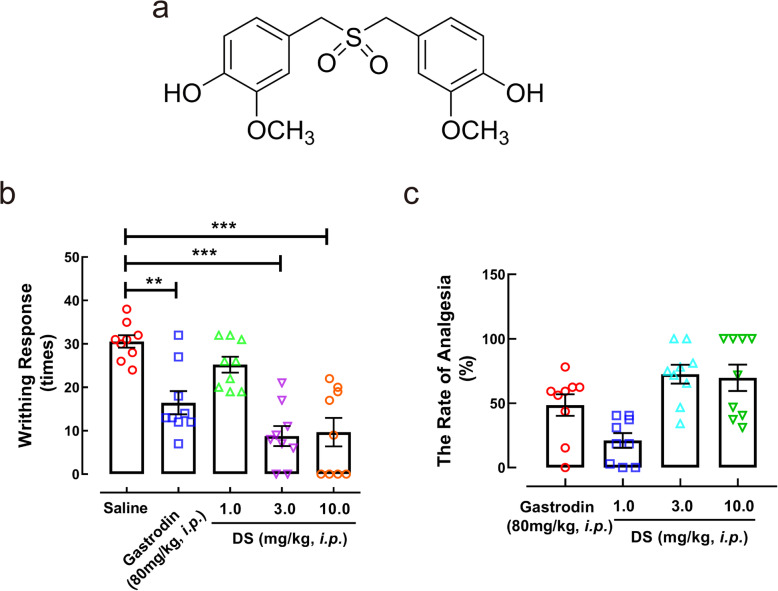
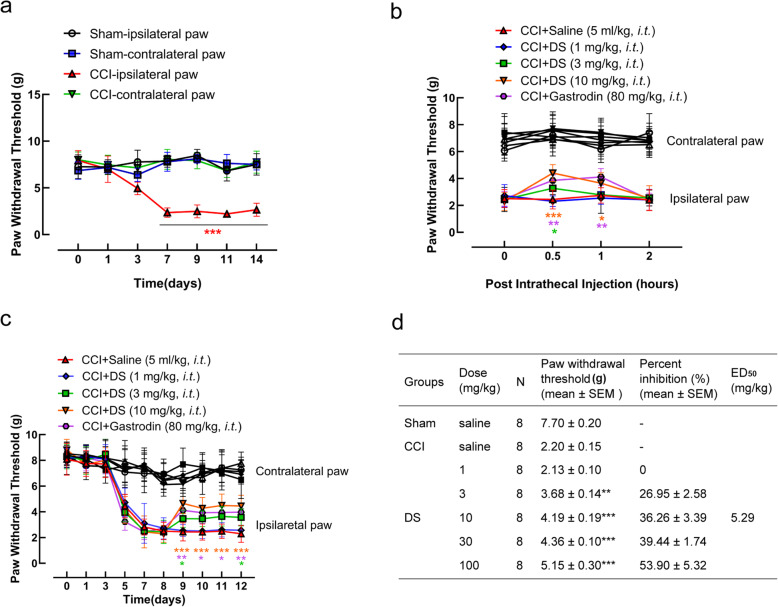
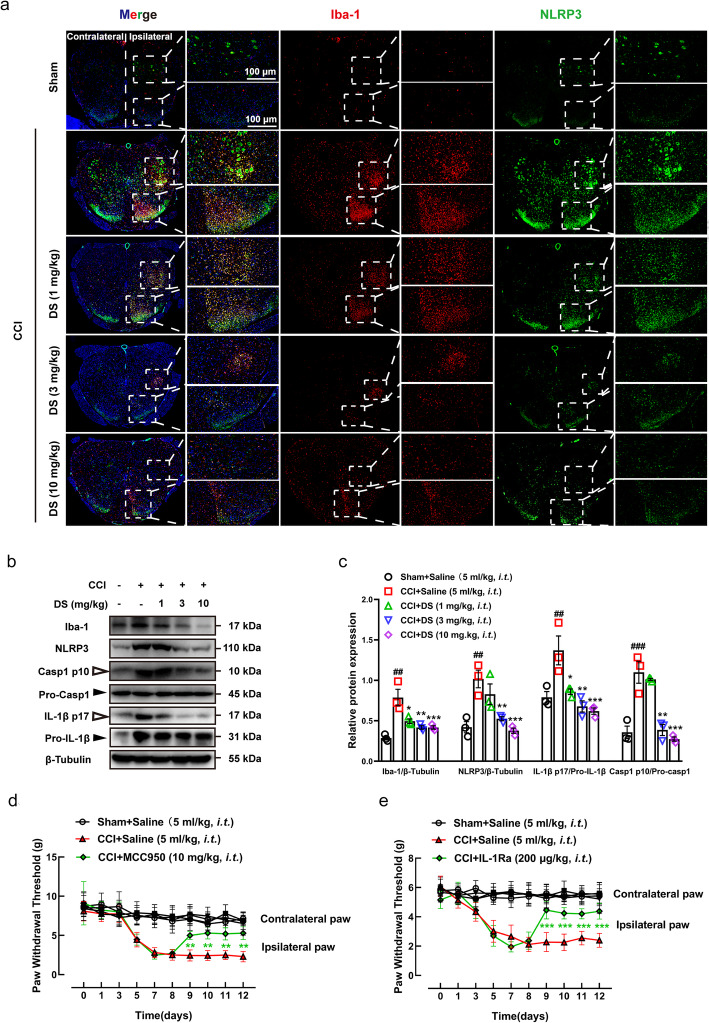
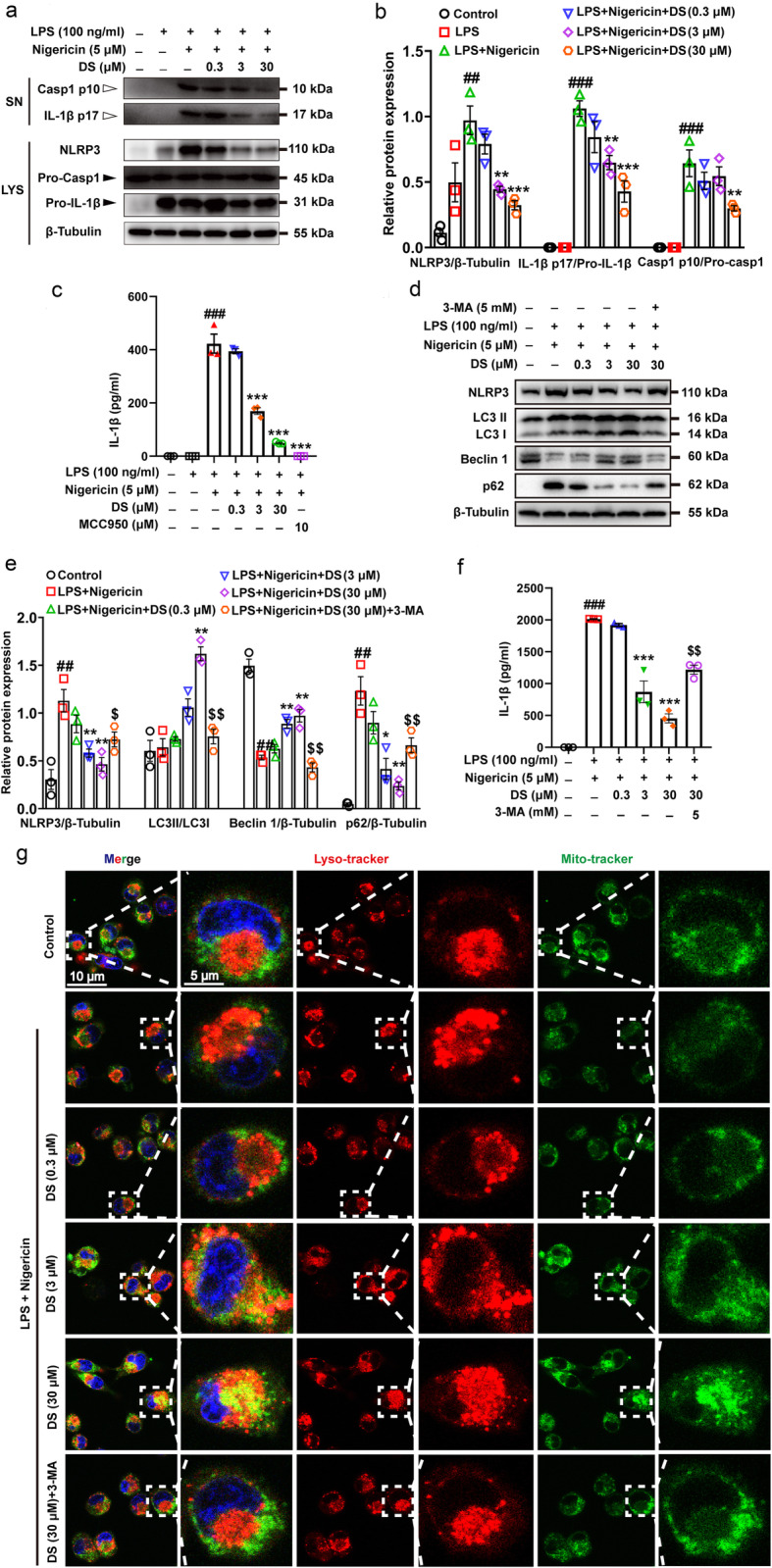
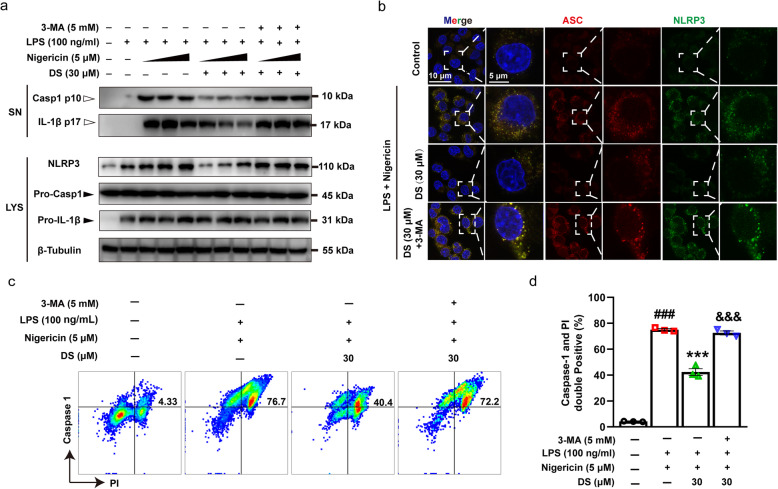
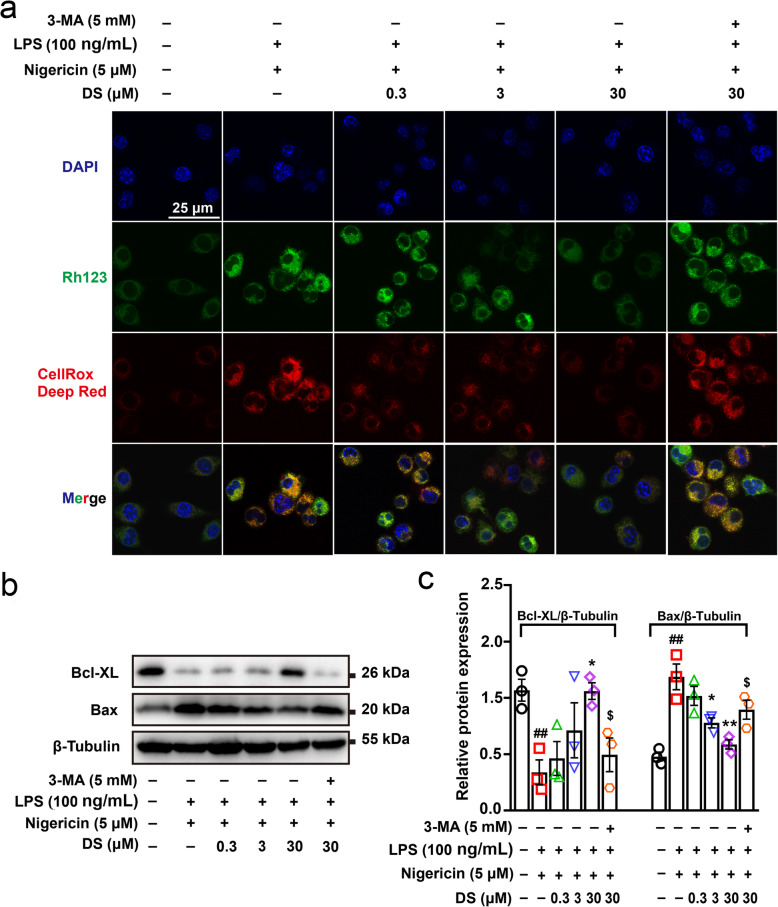
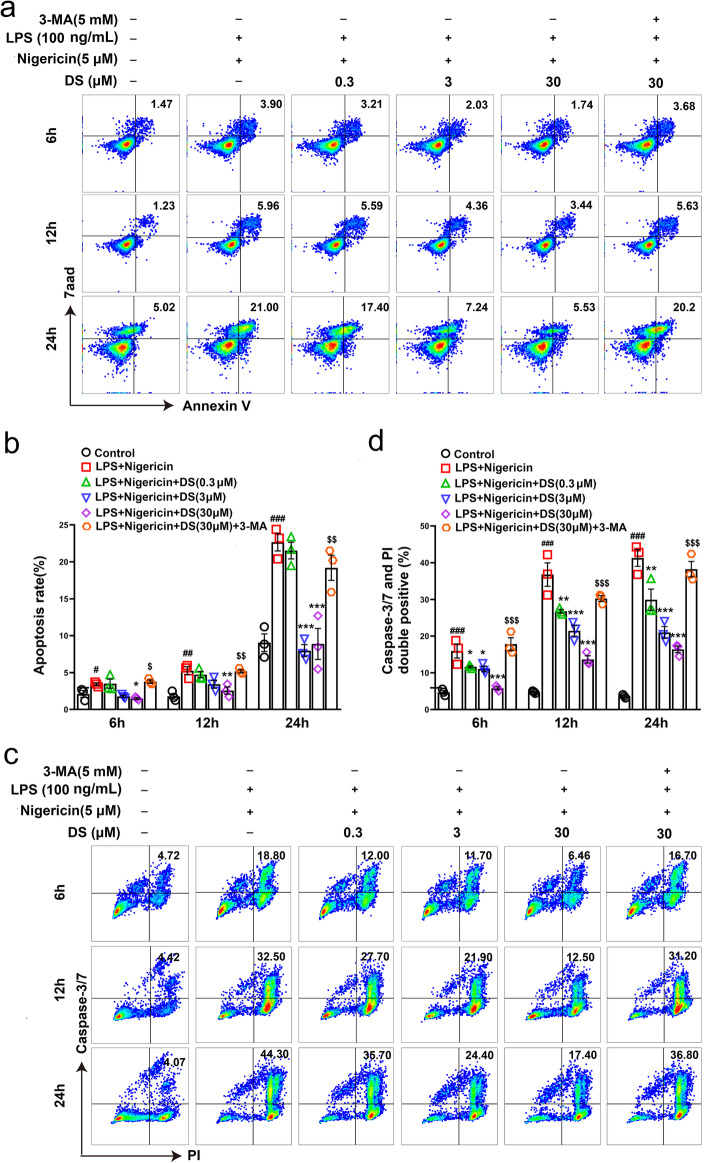
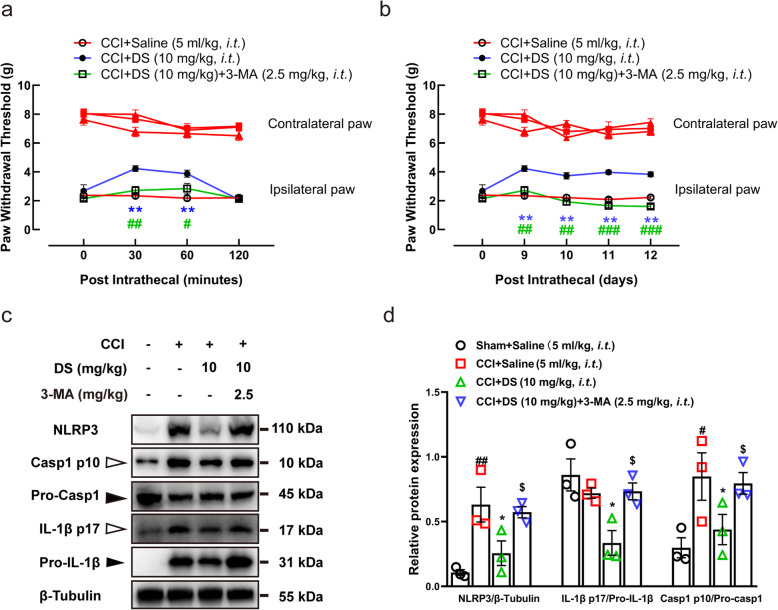
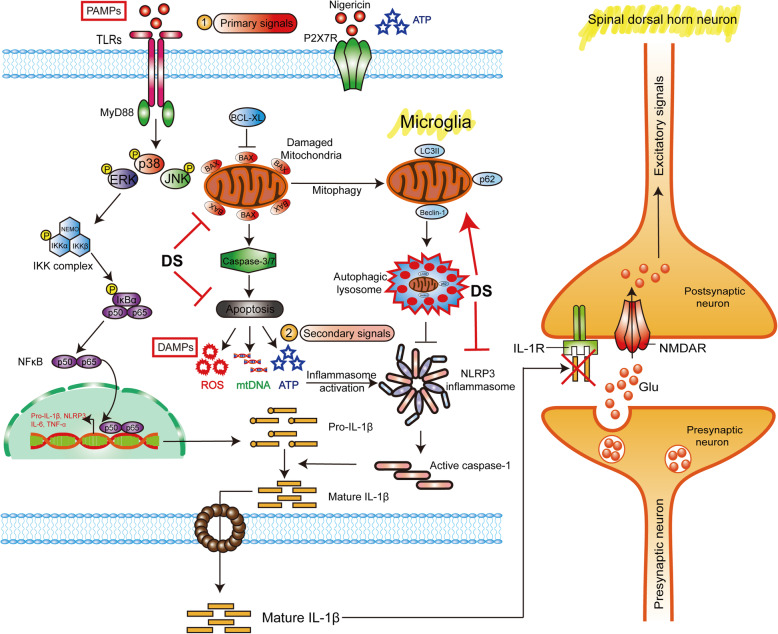
Background: Chronic neuropathic pain is a frequent sequel to peripheral nerve injury and maladaptive nervous system function. Divanillyl sulfone (DS), a novel structural derivative of 4,4′-dihydroxydibenzyl sulfoxide from a traditional Chinese medicine Gastrodia elata with anti-nociceptive effects, significantly alleviated neuropathic pain following intrathecal injection. Here, we aimed to investigate the underlying mechanisms of DS against neuropathic pain. Methods: A chronic constrictive injury (CCI) mouse model of neuropathic pain induced by sciatic nerve ligation was performed to evaluate the effect of DS by measuring the limb withdrawal using Von Frey filament test. Immunofluorescence staining was used to assess the cell localizations and expressions of Iba-1, ASC, NLRP3, and ROS, the formation of autolysosome. The levels of NLRP3-related proteins (caspase-1, NLRP3, and IL-1β), mitophagy-related proteins (LC3, Beclin-1, and p62), and apoptosis-related proteins (Bcl-XL and Bax) were detected by Western blotting. The apoptosis of BV-2 cell and caspase activity were evaluated by flow cytometry. Results: DS significantly alleviated the neuropathic pain by increasing the mechanical withdrawal threshold and inhibiting the activation of NLRP3 in CCI-induced model mice. Our findings indicated that DS promoted the mitophagy by increasing the LC3II and Beclin 1 and decreasing the levels of p62 protein in BV-2 cell. This is accompanied by the inhibition of NLRP3 activation, which was shown as inhibited the expression of NLRP3 in lysates as well as the secretion of mature caspase-1 p10 and IL-1β p17 in supernatants in cultured BV-2 microglia. In addition, DS could promote mitophagy-induced improvement of dysfunctional mitochondria by clearing intracellular ROS and restoring mitochondrial membrane potential. Conclusion: Together, our findings demonstrated that DS ameliorate chronic neuropathic pain in mice by suppressing NLRP3 inflammasome activation induced by mitophagy in microglia. DS may be a promising therapeutic agent for chronic neuropathic pain.
Overview
The claims and statistics of this paper haven’t been checked yet.
Free: it reads the open-access text and checks the first 5 claims that cite a source we can check. Create a free account to check every claim.
Integrity signals
Registry
Cites
Statistics
Figures
Verification
Claims the paper makes
The claims and statistics of this paper haven’t been checked yet.
Free: it reads the open-access text and checks the first 5 claims that cite a source we can check. Create a free account to check every claim.
Claims other papers make about this one
Each is checked against this paper’s own text: does it say what the citing paper says it does?
The source backs part of the claim, not all of it — or backs it for a different population, condition or comparison.
In the citing paper
“Traditional Chinese medicines (TCM) as natural product drugs had painrelieving anti-inflammatory properties with accurate analgesic effects with few side effects (Yuan et al., 2020, Shao et al., 2021).”
From Picroside Ⅱ attenuates neuropathic pain by regulating inflammation and spinal excitatory synaptic transmission (2024) · cites this paper as Shao et al., 2021
Experimental — accuracy not yet measured
Self-check
Percentages, sums and reported differences re-computed from the paper’s own numbers.
The self-check needs the paper’s full text.
Citations
Cites
A role for mitochondria in nlrp3 inflammasome activation
Zhou, R., Yazdi, A. S., Menu, P., & Tschopp, J. (2011) · Nature · doi:10.1038/nature09663 · Cited by 5,602
Guidelines for the use and interpretation of assays for monitoring autophagy
Klionsky, D. J., Abdalla, F. C., Abeliovich, H., Abraham, R. T., Acevedo-Arozena, A., Adeli, K., Agholme, L., Agnello, M., Agostinis, P., Aguirre-Ghiso, J. A., et al. (2012) · Autophagy · doi:10.4161/auto.19496 · Cited by 4,330 · cited 1×
“subsequent modification of the LC3-I protein to LC3II protein promotes their fusion with lysosomes [49, 50].”
The Beclin 1 network regulates autophagy and apoptosis
Kang, R., Zeh, H. J., Lotze, M. T., & Tang, D. (2011) · Cell Death & Differentiation · doi:10.1038/cdd.2010.191 · Cited by 2,485 · cited 1×
“totic cascade by promoting cytochrome C release from mitochondria [53, 54].”
BackgroundMuñoz-Planillo, R., Kuffa, P., Martínez-Colón, G., Smith, B. L., Rajendiran, T. M., & Núñez, G. (2013) · Immunity · doi:10.1016/j.immuni.2013.05.016 · Cited by 2,147 · cited 2×
“The NLRP3 inflammasome can be activated by K efflux, Reactive oxygen species (ROS) releasing, and lysosomal disruption [29, 30].”
BackgroundMicroglia and macrophages in brain homeostasis and disease
Li, Q., & Barres, B. A. (2018) · Nature Reviews Immunology · doi:10.1038/nri.2017.125 · Cited by 1,999 · cited 1×
“However, aberrantly activated microglia can trigger neuroinflammation and tissue damage [18, 37].”
BackgroundInnate immune activation in neurodegenerative disease
Heneka, M. T., Kummer, M. P., & Latz, E. (2014) · Nature Reviews Immunology · doi:10.1038/nri3705 · Cited by 1,437 · cited 3×
“PAMPs activate the priming signal of NLRP3 inflammasome, and DAMPs act as the second signal that promote neuroinflammation and facilitate transmission of pain signals from the primary center to the superior center [11, 14, 20, 21].”
BackgroundShi, C.-S., Shenderov, K., Huang, N.-N., Kabat, J., Abu-Asab, M., Fitzgerald, K. A., Sher, A., & Kehrl, J. H. (2012) · Nature Immunology · doi:10.1038/ni.2215 · Cited by 1,367 · cited 1×
“creases mechanical pain threshold in neuropathic pain models, likely by inhibiting NLRP3 inflammasome activation [40, 57].”
BackgroundPain regulation by non-neuronal cells and inflammation
Ji, R.-R., Chamessian, A., & Zhang, Y.-Q. (2016) · Science · doi:10.1126/science.aaf8924 · Cited by 1,314
Kawasaki, Y., Zhang, L., Cheng, J.-K., & Ji, R.-R. (2008) · The Journal of Neuroscience · doi:10.1523/jneurosci.3338-07.2008 · Cited by 1,162
Emerging targets in neuroinflammation-driven chronic pain
Ji, R.-R., Xu, Z.-Z., & Gao, Y.-J. (2014) · Nature Reviews Drug Discovery · doi:10.1038/nrd4334 · Cited by 1,101 · cited 1×
“Pro-inflammatory factor of interleukin-1β (IL-1β) plays an important role in the microglial inflammatory signaling mediated neuropathic pain [13].”
Background
Cited by
Hua, T., Yang, M., Song, H., Kong, E., Deng, M., Li, Y., Li, J., Liu, Z., Fu, H., Wang, Y., et al. (2022) · Journal of Nanobiotechnology · doi:10.1186/s12951-022-01522-6 · Cited by 189
“Autophagy plays an important role in eliminating misfolded proteins, ROS, ATP and proinflammatory cytokines which induces NLRP3 inflammasome activation [47].”
BackgroundLv, Q.-K., Tao, K., Wang, X.-B., Yao, X., Pang, M., Liu, J., Wang, F., & Liu, C. (2023) · Inflammation Research · doi:10.1007/s00011-022-01676-x · Cited by 127
“Chronic constrictive injury Divanillyl sulfone (DS) DS promoted autophagy and inhibited NLRP3 activated [201]”
BackgroundSu, Z., Yang, Y., Chen, S., Tang, Z., & Xu, H. (2023) · Journal of Ethnopharmacology · doi:10.1016/j.jep.2023.116467 · Cited by 97
The NLRP3 inflammasome: role in the pathobiology of chronic pain
Chen, C., & Smith, M. T. (2023) · Inflammopharmacology · doi:10.1007/s10787-023-01235-8 · Cited by 71
“In other work in the CCI-mouse model of peripheral neuropathic pain, intrathecal injection of divanillyl sulfone alleviated mechanical allodynia in the ipsilateral hindpaws (Shao et al. 2021).”
BackgroundSelf-citationStress/cell death pathways, neuroinflammation, and neuropathic pain
Li, L., Li, T. X., Qu, X., Sun, G., Fu, Q., & Han, G. (2023) · Immunological Reviews · doi:10.1111/imr.13275 · Cited by 59
“87 Especially, it promotes mitophagy through elevating LC3-II and Beclin1 levels as well as attenuating p62 activity in microglia, with NLRP3 inactivation.”
Background
Metadata
- Authors
- Shao, S., Xu, C.-B., Chen, C.-J., Shi, G.-N., Guo, Q.-L., Zhou, Y., Wei, Y.-Z., Wu, L., Shi, J.-G., & Zhang, T.-T.
- Affiliations
- Chinese Academy of Medical Sciences & Peking Union Medical College (CN)
- Corresponding author
- Shi, Jian-Gong
- Venue
- Journal of Neuroinflammation
- Published
- 2021-06-24
- Volume
- 18
- Issue
- 1
- Pages
- 142-142
- ISSN
- 1742-2094 (ISSN-L)
- PMC
- PMC8223331
- OpenAlex
- W3177383838
- Semantic Scholar
- 841312c3119937849ce32d7b6c6c5637dc75b23a
- Cited by
- 112
- References
- 59
- Citations by year
- 2026: 25 · 2025: 31 · 2024: 28 · 2023: 21 · 2022: 7
- FWCI
- 8.80
- Type
- journal article
- Language
- en
- Open access
- gold
- doi.org
- Licence
- cc-by
- creativecommons.org/licenses/by/4.0 (tdm)
- creativecommons.org/licenses/by/4.0 (vor)
- Locations
- Journal of Neuroinflammation (publishedVersion, cc-by)
- PubMed Central (publishedVersion, cc-by)
- PubMed (publishedVersion)
- DOAJ (DOAJ: Directory of Open Access Journals) (submittedVersion, cc-by-sa)
- Funders
- National Natural Science Foundation of China (81973338)
- National Key R&D Program of China (2020YFA0908004)
- Topics
- Health Sciences › Medicine › Physiology (medical) › Pain Mechanisms and Treatments
- Life Sciences › Biochemistry, Genetics and Molecular Biology › Molecular Biology › Inflammasome and immune disorders
- Health Sciences › Medicine › Anesthesiology and Pain Medicine › Pain Management and Treatment
- Keywords
- chronic neuropathic pain, NLRP3 inflammasome, mitophagy, microglia, Gastrodia elata, caspase-1, IL-1β, mitochondrial dysfunction, reactive oxygen species, mitochondrial membrane potential, Beclin-1, LC3, p62, apoptosis, peripheral nerve injury, antinociceptive activity
- MeSH terms
- NLR Family, Pyrin Domain-Containing 3 Protein, Animals, Cell Line, Disease Models, Animal, Male, Medicine, Chinese Traditional, Mice, Inbred C57BL, Mitochondria, Neuralgia, Sciatic Nerve, Sulfones, Apoptosis, Microglia, Caspase 1, Mice, Inflammasomes, Mitophagy
About these checks
Registry, retraction, Cites and statistics results are computed, not judged, with one exception: a printed reference that no index lists is read once by a model before it counts as a citation error. Claims are extracted by a model and kept only when their quote appears verbatim in the text; each cited source is then checked, with a model’s help, for whether it says what the claim relies on. Those verdicts can be wrong — read the claim’s quote and the cited source before relying on one.
Statistics and arithmetic are recomputed, not judged.
Confidence bands are shown only for fields calibrated on our annotated test set. None is calibrated yet, so no band is shown.
What counts as a claim ›How we measure confidence ›How we check this ›
Are you an author, or do you see a problem with this page? Request a review
Data sources
Bibliographic data: Semantic Scholar, OpenAlex, Crossref.
Contains information from the Semantic Scholar Academic Graph Datasets, made available under the ODC Attribution License (ODC-BY 1.0).
Semantic Scholar’s data is described in: Kinney, R., et al. (2023). The Semantic Scholar Open Data Platform. arXiv:2301.10140.
