

TRIM45 aggravates microglia pyroptosis via Atg5/NLRP3 axis in septic encephalopathy
Open accessPublished version of a preprint
The DOI matches its Crossref record; 56 of the 56 references it cites were found in a registry or an index.
Abstract
Background: Neuroinflammation mediated by microglial pyroptosis is an important pathogenic mechanism of septic encephalopathy (SAE). It has been reported that TRIM45 is associated with tumours and inflammatory diseases. However, the role of TRIM45 in SAE and the relationship between TRIM45 and microglial pyroptosis are unknown. In this study, we found that TRIM45 played an important role in regulating microglial pyroptosis and the molecular mechanism. Methods: SAE was induced by intraperitoneal injection of LPS in WT and AAV-shTRIM45 mice. BV2 cells were treated with LPS/ATP in vitro. Cognitive function was assessed by the Morris water maze. Nissl staining was used to evaluate histological and structural lesions. ELISA was used to dectect neuroinflammation. qPCR was used to detect the mRNA levels of inflammatory cytokines, NLRP3, and autophagy genes. Western blotting and immunofluorescence analysis were used to analyse the expression of the proteins. Changes in reactive oxygen species (ROS) in cells were observed by flow cytometry. Changes in mitochondrial membrane potential in BV2 cells were detected by JC-1 staining. Peripheral blood mononuclear cells were extracted from blood by density gradient centrifugation and then used for qPCR, western blotting and flow detection. To further explore the mechanism, we used the overexpression plasmids TRIM45 and Atg5 as well as siRNA-TRIM45 and siRNA-Atg5 to analyse the downstream pathway of NLRP3. The protein and mRNA levels of TRIM45 in peripheral blood mononuclear cells from sepsis patients were examined. Results: Knocking down TRIM45 protected against neuronal damage and cognitive impairment in septic mice. TRIM45 knockdown inhibited microglial pyroptosis and the secretion of inflammatory cytokines in vivo and in vitro, which was mediated by NLRP3/Gsdmd-N activation. Overexpression of TRIM45 could activate NLRP3 and downstream proteins. Further examination showed that TRIM45 regulated the activation of NLRP3 by altering Atg5 and regulating autophagic flux. It was also found that overexpression and knockdown of TRIM45 affected the changes in ROS and mitochondrial membrane potential. Thus, knocking down TRIM45 could reduce microglial pyroptosis, the secretion of proinflammatory cytokines, and neuronal damage and improve cognitive function. In addition, the level of TRIM45 protein in septic patients was increased. There was a positive linear correlation between APACHE II score and TRIM45, between SOFA score and TRIM45. Compared to group GCS > 9, level of TRIM45 were increased in group GCS ≤ 8. Conclusion: TRIM45 plays a key role in neuroinflammation caused by LPS, and the mechanism may involve TRIM45-mediated exacerbation of microglial pyroptosis via the Atg5/NLRP3 axis. Graphical Abstract:
Overview
The claims and statistics of this paper haven’t been checked yet.
Free: it reads the open-access text and checks the first 5 claims that cite a source we can check. Create a free account to check every claim.
Integrity signals
Registry
Cites
Statistics
Figures
Verification
Claims the paper makes
The claims and statistics of this paper haven’t been checked yet.
Free: it reads the open-access text and checks the first 5 claims that cite a source we can check. Create a free account to check every claim.
Claims other papers make about this one
Each is checked against this paper’s own text: does it say what the citing paper says it does?
The source backs part of the claim, not all of it — or backs it for a different population, condition or comparison.
In the citing paper
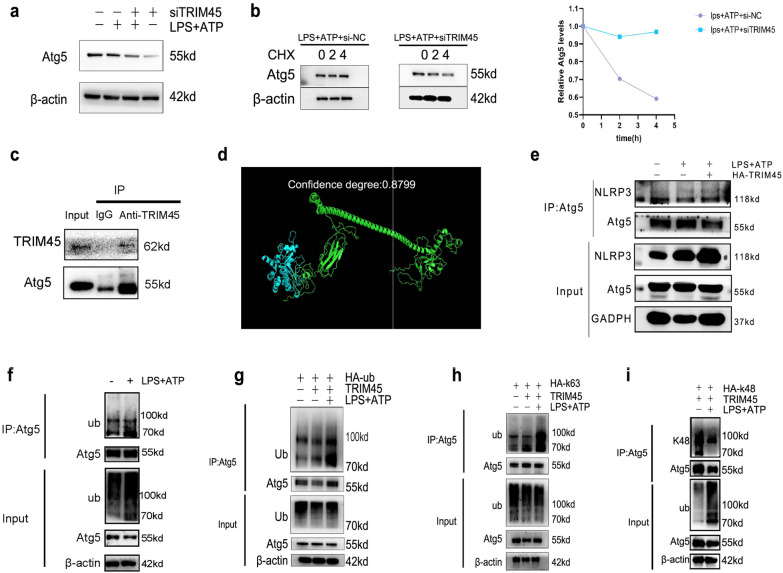
“TRIM45 aggravates microglial pyroptosis by promoting K63-linked polyubiquitination ubiquitination and stabilization of Atg5, thereby disrupting autophagic flux and activating the NLRP3 inflammasome [78]; Maf1 inhibits NF-κB/p65-driven inflammasome assembly [79].”
From Research Advances in the Pathogenesis of Sepsis-Associated Encephalopathy (2026) · cites this paper as [78]
Experimental — accuracy not yet measuredThe cited source says what the claim attributes to it.
In the citing paper
“TRIM45 aggravates microglial pyroptosis by promoting K63-linked polyubiquitination ubiquitination and stabilization of Atg5, thereby disrupting autophagic flux and activating the NLRP3 inflammasome [78]; Maf1 inhibits NF-κB/p65-driven inflammasome assembly [79].”
From Research Advances in the Pathogenesis of Sepsis-Associated Encephalopathy (2026) · cites this paper as [78]
Self-check
Percentages, sums and reported differences re-computed from the paper’s own numbers.
The self-check needs the paper’s full text.
Citations
Cites
The NLRP3 inflammasome: molecular activation and regulation to therapeutics
Swanson, K. V., Deng, M., & Ting, J. P.-Y. (2019) · Nature Reviews Immunology · doi:10.1038/s41577-019-0165-0 · Cited by 4,884 · cited 1×
“Significantly increasing in neuroinflammation exacerbates neuronal damage and death, which leads to the behavioural and psychological symptoms of SAE [6, 7].”
BackgroundLong-term cognitive impairment and functional disability among survivors of severe sepsis.
Iwashyna, T. J., Ely, E. W., Smith, D. M., & Langa, K. M. (2010) · JAMA · doi:10.1001/jama.2010.1553 · Cited by 2,582 · cited 1×
“…diagnostic criteria for SAE, we found that the Glasgow Coma Score (GCS), Sequential Organ Failure Assessment Score (SOFA), and Acute Physiology and Chronic Health Evaluation (APACHE II) score may be associated with SAE, and so we examined the correlation between TRIM45 and these indicators [34–37].”
MethodTRIM Family Proteins: Roles in Autophagy, Immunity, and Carcinogenesis
Hatakeyama, S. (2017) · Trends in Biochemical Sciences · doi:10.1016/j.tibs.2017.01.002 · Cited by 960
Inflammasomes in neuroinflammatory and neurodegenerative diseases
Voet, S., Srinivasan, S., Lamkanfi, M., & van Loo, G. (2019) · EMBO Molecular Medicine · doi:10.15252/emmm.201810248 · Cited by 761
Burdette, B. E., Esparza, A. N., Zhu, H., & Wang, S. (2021) · Acta Pharmaceutica Sinica B · doi:10.1016/j.apsb.2021.02.006 · Cited by 703
NLRP3 Inflammasome and Inflammatory Bowel Disease
Zhen, Y., & Zhang, H. (2019) · Frontiers in Immunology · doi:10.3389/fimmu.2019.00276 · Cited by 649
Lin, Q., Li, S., Jiang, N., Shao, X., Zhang, M., Jin, H., Zhang, Z., Shen, J., Zhou, Y., Zhou, W., et al. (2019) · Redox Biology · doi:10.1016/j.redox.2019.101254 · Cited by 632
Nicotine promotes atherosclerosis via ROS-NLRP3-mediated endothelial cell pyroptosis
Wu, X., Zhang, H., Qi, W., Zhang, Y., Li, J., Li, Z., Lin, Y., Bai, X., Liu, X., Chen, X., et al. (2018) · Cell Death & Disease · doi:10.1038/s41419-017-0257-3 · Cited by 586
Han, X., Xu, T., Fang, Q., Zhang, H., Yue, L., Hu, G., & Sun, L. (2021) · Redox Biology · doi:10.1016/j.redox.2021.102010 · Cited by 544
Dentate gyrus circuits for encoding, retrieval and discrimination of episodic memories
Hainmueller, T., & Bartos, M. (2020) · Nature Reviews Neuroscience · doi:10.1038/s41583-019-0260-z · Cited by 506
Biomarkers for sepsis: more than just fever and leukocytosis—a narrative review
Barichello, T., Generoso, J. S., Singer, M., & Dal-Pizzol, F. (2022) · Critical Care · doi:10.1186/s13054-021-03862-5 · Cited by 462
Autophagy in Alzheimer’s disease pathogenesis: Therapeutic potential and future perspectives
Zhang, Z., Yang, X., Song, Y.-Q., & Tu, J. (2021) · Ageing Research Reviews · doi:10.1016/j.arr.2021.101464 · Cited by 369
The K48-K63 Branched Ubiquitin Chain Regulates NF-κB Signaling
Ohtake, F., Saeki, Y., Ishido, S., Kanno, J., & Tanaka, K. (2016) · Molecular Cell · doi:10.1016/j.molcel.2016.09.014 · Cited by 349
Septic-Associated Encephalopathy: a Comprehensive Review
Mazeraud, A., Righy, C., Bouchereau, E., Benghanem, S., Bozza, F. A., & Sharshar, T. (2020) · Neurotherapeutics · doi:10.1007/s13311-020-00862-1 · Cited by 328
Potentially modifiable factors contributing to sepsis-associated encephalopathy
Sonneville, R., de Montmollin, E., Poujade, J., Garrouste-Orgeas, M., Souweine, B., Darmon, M., Mariotte, E., Argaud, L., Barbier, F., Goldgran-Toledano, D., et al. (2017) · Intensive Care Medicine · doi:10.1007/s00134-017-4807-z · Cited by 323
Cosin-Roger, J., Simmen, S., Melhem, H., Atrott, K., Frey-Wagner, I., Hausmann, M., de Vallière, C., Spalinger, M. R., Spielmann, P., Wenger, R. H., et al. (2017) · Nature Communications · doi:10.1038/s41467-017-00213-3 · Cited by 309
NLRP3 inflammasome activation triggers gasdermin D–independent inflammation
Wang, C., Yang, T., Xiao, J., Xu, C., Alippe, Y., Sun, K., Kanneganti, T.-D., Monahan, J. B., Abu-Amer, Y., Lieberman, J., et al. (2021) · Science Immunology · doi:10.1126/sciimmunol.abj3859 · Cited by 307
Blood-Brain Barrier Disruption by Lipopolysaccharide and Sepsis-Associated Encephalopathy
Peng, X., Luo, Z., He, S., Zhang, L., & Li, Y. (2021) · Frontiers in Cellular and Infection Microbiology · doi:10.3389/fcimb.2021.768108 · Cited by 267
Sepsis-associated encephalopathy: A vicious cycle of immunosuppression
Ren, C., Yao, R.-Q., Zhang, H., Feng, Y.-W., & Yao, Y.-M. (2020) · Journal of Neuroinflammation · doi:10.1186/s12974-020-1701-3 · Cited by 259 · cited 1×
“Therefore, studying the pathogenesis of SAE and finding potential targets to improve the quality of life and survival rate of SAE patients have scientific importance and clinical value [4, 5].”
BackgroundSepsis-Associated Encephalopathy and Blood-Brain Barrier Dysfunction
Gao, Q., & Hernandes, M. S. (2021) · Inflammation · doi:10.1007/s10753-021-01501-3 · Cited by 257
Han, Y.-C., Tang, S.-Q., Liu, Y.-T., Li, A.-M., Zhan, M., Yang, M., Song, N., Zhang, W., Wu, X.-Q., Peng, C.-H., et al. (2021) · Cell Death & Disease · doi:10.1038/s41419-021-04184-8 · Cited by 257 · cited 2×
“It has been reported that Atg family proteins affect the NLRP3 pathway by regulating autophagy [31–33].”
BackgroundInfluentialPrussian Blue Nanozyme as a Pyroptosis Inhibitor Alleviates Neurodegeneration
Ma, X., Hao, J., Wu, J., Li, Y., Cai, X., & Zheng, Y. (2022) · Advanced Materials · doi:10.1002/adma.202106723 · Cited by 252
Self-citationXu, S., Wang, J., Zhong, J., Shao, M., Jiang, J., Song, J., Zhu, W., Zhang, F., Xu, H., Xu, G., et al. (2021) · Clinical and Translational Medicine · doi:10.1002/ctm2.269 · Cited by 237
Self-citationFu, Q., Wu, J., Zhou, X.-Y., Ji, M.-H., Mao, Q.-H., Li, Q., Zong, M.-M., Zhou, Z.-Q., & Yang, J.-J. (2019) · Inflammation · doi:10.1007/s10753-018-0894-4 · Cited by 232 · cited 1×
“Erbin protects against sepsis-associated encephalopathy by attenuating micro-glial pyroptosis via the IRE1α/Xbp1s-Ca 2 + axis [12], and NLRP3/Caspase-1 pathway-induced pyroptosis mediates cognitive deficits in a mouse model of sepsis-associated encephalopathy [13].”
BackgroundSepsis-associated encephalopathy and septic encephalitis: an update
Tauber, S. C., Djukic, M., Gossner, J., Eiffert, H., Brück, W., & Nau, R. (2021) · Expert Review of Anti-infective Therapy · doi:10.1080/14787210.2020.1812384 · Cited by 228
Microglial NLRP3 inflammasome activates neurotoxic astrocytes in depression-like mice
Li, S., Fang, Y., Zhang, Y., Song, M., Zhang, X., Ding, X., Yao, H., Chen, M., Sun, Y., Ding, J., et al. (2022) · Cell Reports · doi:10.1016/j.celrep.2022.111532 · Cited by 225 · cited 1×
“There is a close relationship between the NLR family and pyroptosis [21].”
BackgroundBeclin1‐driven autophagy modulates the inflammatory response of microglia via NLRP 3
Houtman, J., Freitag, K., Gimber, N., Schmoranzer, J., Heppner, F. L., & Jendrach, M. (2019) · The EMBO Journal · doi:10.15252/embj.201899430 · Cited by 217
Lv, Q., Xing, Y., Liu, J., Dong, D., Liu, Y., Qiao, H., Zhang, Y., & Hu, L. (2021) · Acta Pharmaceutica Sinica B · doi:10.1016/j.apsb.2021.03.011 · Cited by 210
Shemer, A., Scheyltjens, I., Frumer, G. R., Kim, J.-S., Grozovski, J., Ayanaw, S., Dassa, B., Van Hove, H., Chappell-Maor, L., Boura-Halfon, S., et al. (2020) · Immunity · doi:10.1016/j.immuni.2020.09.018 · Cited by 175 · cited 1×
“During septic encephalopathy, neuroinflammation in the brain causes microglial activation, and the secretion of proinflammatory factors can damage surrounding brain tissue [42].”
BackgroundQin, Y., Qiu, J., Wang, P., Liu, J., Zhao, Y., Jiang, F., & Lou, H. (2021) · Brain, Behavior, and Immunity · doi:10.1016/j.bbi.2020.10.010 · Cited by 175
Liu, W., Zhao, Y., Wang, G., Feng, S., Ge, X., Ye, W., Wang, Z., Zhu, Y., Cai, W., Bai, J., et al. (2022) · Redox Biology · doi:10.1016/j.redox.2022.102344 · Cited by 174
TRIM proteins in autophagy: selective sensors in cell damage and innate immune responses
Di Rienzo, M., Romagnoli, A., Antonioli, M., Piacentini, M., & Fimia, G. M. (2020) · Cell Death & Differentiation · doi:10.1038/s41418-020-0495-2 · Cited by 171
Pan, X., Chen, Y., Shen, Y., & Tantai, J. (2019) · Cell Death and Disease · doi:10.1038/s41419-019-1660-8 · Cited by 163
Sepsis‐Induced Brain Dysfunction: Pathogenesis, Diagnosis, and Treatment
Pan, S., Lv, Z., Wang, R., Shu, H., Yuan, S., Yu, Y., & Shang, Y. (2022) · Oxidative Medicine and Cellular Longevity · doi:10.1155/2022/1328729 · Cited by 156
USP5 attenuates NLRP3 inflammasome activation by promoting autophagic degradation of NLRP3
Cai, B., Zhao, J., Zhang, Y., Liu, Y., Ma, C., Yi, F., Zheng, Y., Zhang, L., Chen, T., Liu, H., et al. (2021) · Autophagy · doi:10.1080/15548627.2021.1965426 · Cited by 148
Self-citationYin, X.-Y., Tang, X.-H., Wang, S.-X., Zhao, Y.-C., Jia, M., Yang, J.-J., Ji, M.-H., & Shen, J.-C. (2023) · Journal of Neuroinflammation · doi:10.1186/s12974-023-02756-3 · Cited by 138 · cited 1×
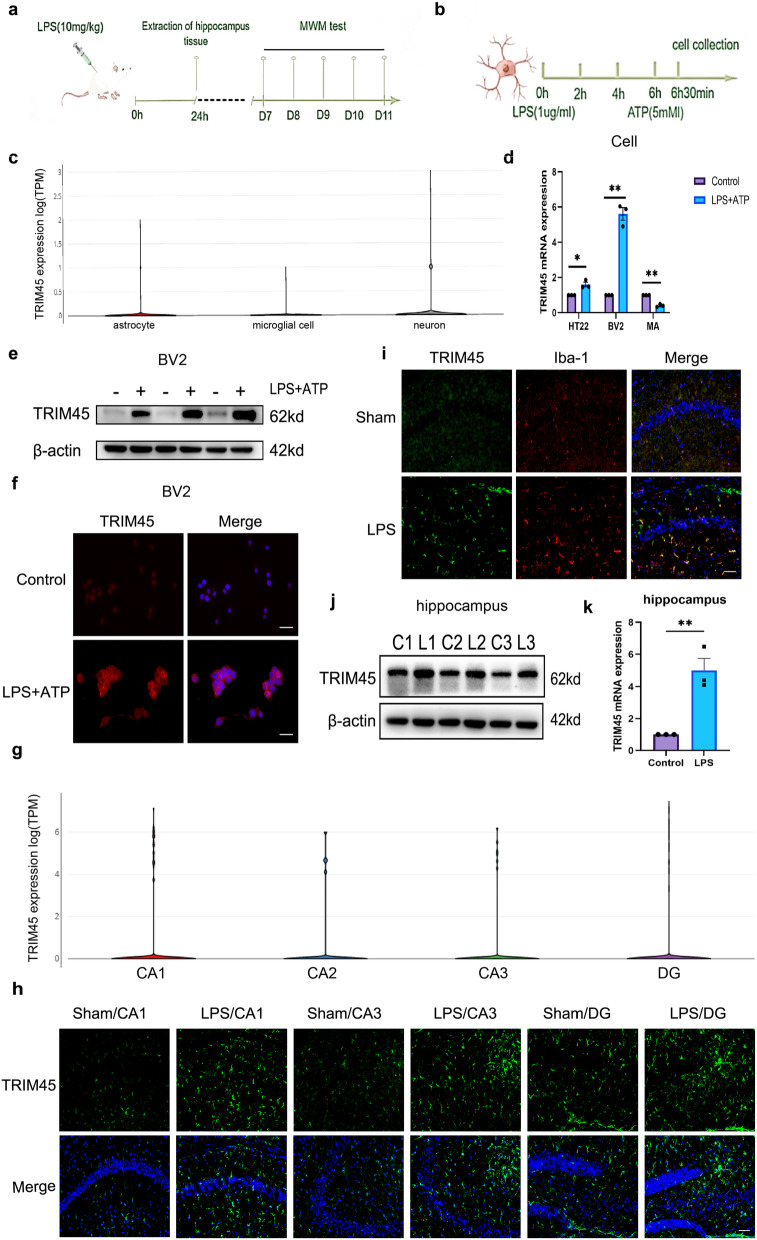
“Abnormal hippocampus structure is associated with cognitive dysfunction [18, 19], and we again referenced the single-cell website to analyse the changes in TRIM45 in different regions of the hippocampus in normal mice.”
BackgroundGupta, S., Bhatia, V., Wen, J.-J., Wu, Y., Huang, M.-H., & Garg, N. J. (2009) · Free Radical Biology and Medicine · doi:10.1016/j.freeradbiomed.2009.08.008 · Cited by 132
ATG5: A central autophagy regulator implicated in various human diseases
Changotra, H., Kaur, S., Yadav, S. S., Gupta, G. L., Parkash, J., & Duseja, A. K. (2022) · Cell Biochemistry and Function · doi:10.1002/cbf.3740 · Cited by 128
Central role of microglia in sepsis-associated encephalopathy: From mechanism to therapy
Yan, X., Yang, K., Xiao, Q., Hou, R., Pan, X., & Zhu, X. (2022) · Frontiers in Immunology · doi:10.3389/fimmu.2022.929316 · Cited by 121
Xia, Q., Zhan, G., Mao, M., Zhao, Y., & Li, X. (2022) · Experimental & Molecular Medicine · doi:10.1038/s12276-022-00734-y · Cited by 118
Wang, Y.-T., Liu, T.-Y., Shen, C.-H., Lin, S., Hung, C.-C., Hsu, L.-C., & Chen, G. (2022) · Cell Reports · doi:10.1016/j.celrep.2022.110354 · Cited by 92
USP22 suppresses the NLRP3 inflammasome by degrading NLRP3 via ATG5-dependent autophagy
Di, Q., Zhao, X., Tang, H., Li, X., Xiao, Y., Wu, H. J., Wu, Z., Quan, J., & Chen, W. (2022) · Autophagy · doi:10.1080/15548627.2022.2107314 · Cited by 90
Self-citationJing, G., Zuo, J., Fang, Q., Yuan, M., Xia, Y. F., Jin, Q., Liu, Y., Wang, Y., Zhang, Z., Liu, W., et al. (2022) · Journal of Neuroinflammation · doi:10.1186/s12974-022-02598-5 · Cited by 81
MitoQ regulates autophagy by inducing a pseudo-mitochondrial membrane potential
Sun, C., Liu, X., Di, C., Wang, Z., Mi, X., Liu, Y., Zhao, Q., Mao, A., Chen, W., Gan, L., et al. (2017) · Autophagy · doi:10.1080/15548627.2017.1280219 · Cited by 80
Zhang, J., Zhang, C., Cui, J., Ou, J., Han, J., Qin, Y., Zhi, F., & Wang, R. (2017) · Cell Death and Disease · doi:10.1038/cddis.2017.149 · Cited by 75
TRIM45, a novel human RBCC/TRIM protein, inhibits transcriptional activities of ElK-1 and AP-1
Wang, Y., Li, Y., Qi, X., Yuan, W., Ai, J., Zhu, C., Cao, L., Yang, H., Liu, F., Wu, X., et al. (2004) · Biochemical and Biophysical Research Communications · doi:10.1016/j.bbrc.2004.08.048 · Cited by 67
Autophagy, Metabolic Disease, and Pathogenesis of Heart Dysfunction
Wang, F., Jia, J., & Rodrigues, B. B. (2017) · Canadian Journal of Cardiology · doi:10.1016/j.cjca.2017.01.002 · Cited by 67
Zhang, D., Zhang, Y., Pan, J., Cao, J., Sun, X., Li, X., Zhang, L., & Qin, C. (2023) · CNS Neuroscience & Therapeutics · doi:10.1111/cns.14219 · Cited by 67
Peng, L., Peng, C., Yang, F., Wang, J., Zuo, W., Cheng, C., Mao, Z., Jin, Z., & Li, W. (2022) · BMC Medical Research Methodology · doi:10.1186/s12874-022-01664-z · Cited by 54
Self-citationDentate spikes and external control of hippocampal function
Dvorak, D., Chung, A., Park, E. H., & Fenton, A. A. (2021) · Cell Reports · doi:10.1016/j.celrep.2021.109497 · Cited by 46
Links of Autophagy Dysfunction to Inflammatory Bowel Disease Onset
El-Khider, F., & McDonald, C. (2016) · Digestive Diseases · doi:10.1159/000442921 · Cited by 37
Hu, J., Ding, X., Tian, S., Chu, Y., Liu, Z., Li, Y., Li, X., Wang, G., Wang, L., & Wang, Z. (2021) · Cell Death and Disease · doi:10.1038/s41419-021-03670-3 · Cited by 37
Laha, D., Sarkar, J., Maity, J., Pramanik, A., Howlader, M. S. I., Barthels, D., & Das, H. (2022) · Biomolecules · doi:10.3390/biom12091220 · Cited by 37
Ge, C., Chen, W., Zhang, L., Ai, Y., Zou, Y., & Peng, Q. (2022) · CNS Neuroscience & Therapeutics · doi:10.1111/cns.14013 · Cited by 29
TRIM50 promotes NLRP3 inflammasome activation by directly inducing NLRP3 oligomerization
Lin, Y., Lv, X., Sun, C., Sun, Y., Yang, M., Ma, D., Jing, W., Zhao, Y., Cheng, Y., Xuan, H., et al. (2022) · EMBO Reports · doi:10.15252/embr.202154569 · Cited by 24
Zhao, L., Hou, S., Na, R., Liu, B., Wang, Z., Li, Y., & Xie, K. (2023) · Frontiers in Public Health · doi:10.3389/fpubh.2022.1016931 · Cited by 9
Cited by
Wang, Y., Yuan, H., Shen, D., Liu, S., Kong, W., Zheng, K., Yang, J., & Ge, L. (2024) · Biomedicine & Pharmacotherapy · doi:10.1016/j.biopha.2024.116894 · Cited by 70
Lou, J., Mao, Y., Jiang, W., Shen, H., Fan, Y., Yu, Q., Zhou, C., Wei, Z., Zhou, K., Jin, M., et al. (2024) · Advanced Science · doi:10.1002/advs.202407132 · Cited by 53
Review of research progress in sepsis-associated acute kidney injury
Nian, W., Tao, W., & Zhang, H. (2025) · Frontiers in Molecular Biosciences · doi:10.3389/fmolb.2025.1603392 · Cited by 39
Convergence of sepsis-associated encephalopathy pathogenesis onto microglia
Xiao, D., Wang, X., Liang, W., Yang, Y., Du, Y., Liu, C., Xu, F., Yang, Y., Wei, M., & Yang, G. (2025) · Journal of Translational Medicine · doi:10.1186/s12967-025-06635-8 · Cited by 36
The ROS/TXNIP/NLRP3 pathway mediates LPS-induced microglial inflammatory response
Zhao, Q., Liu, G., Ding, Q., Zheng, F., Shi, X., Lin, Z., & Liang, Y. (2024) · Cytokine · doi:10.1016/j.cyto.2024.156677 · Cited by 33
Metadata
- Authors
- Huang, X., Ye, C., Zhao, X., Tong, Y., Lin, W., Huang, Q., Zheng, Y., Wang, J., Zhang, A., & Mo, Y.
- Affiliations
- First Affiliated Hospital of Wenzhou Medical University (CN)
- Southern Medical University (CN)
- Corresponding author
- Zhang, Anqi
- Mo, Yunchang
- Venue
- Journal of Neuroinflammation
- Published
- 2023-11-30
- Volume
- 20
- Issue
- 1
- Pages
- 284-284
- ISSN
- 1742-2094 (ISSN-L)
- PMC
- PMC10688018
- OpenAlex
- W4389199632
- Cited by
- 60
- References
- 56
- Citations by year
- 2026: 26 · 2025: 21 · 2024: 13
- FWCI
- 5.33
- Type
- journal article
- Language
- en
- Open access
- gold
- doi.org
- Licence
- cc-by
- creativecommons.org/licenses/by/4.0 (tdm)
- creativecommons.org/licenses/by/4.0 (vor)
- Locations
- Journal of Neuroinflammation (publishedVersion, cc-by)
- Research Square (acceptedVersion, cc-by)
- PubMed Central (publishedVersion, cc-by)
- PubMed (publishedVersion)
- DOAJ (DOAJ: Directory of Open Access Journals) (submittedVersion, cc-by-sa)
- Funders
- National Natural Science Foundation of China (81603685)
- Wenzhou Municipal Science and Technology Bureau
- Natural Science Foundation of Zhejiang Province (81603685, LY22H150003, LQ21H150007)
- Topics
- Life Sciences › Biochemistry, Genetics and Molecular Biology › Molecular Biology › Inflammasome and immune disorders
- Life Sciences › Neuroscience › Neurology › Neuroinflammation and Neurodegeneration Mechanisms
- Life Sciences › Immunology and Microbiology › Immunology › Inflammation biomarkers and pathways
- Keywords
- microglial pyroptosis, sepsis-associated encephalopathy, NLRP3 inflammasome, ATG5, autophagy, GSDMD-N, neuroinflammation, autophagic flux, reactive oxygen species, mitochondrial membrane potential, cognitive impairment, sepsis, peripheral blood mononuclear cells, LPS-induced neuroinflammation
- MeSH terms
- Pyroptosis, Autophagy-Related Protein 5, NLR Family, Pyrin Domain-Containing 3 Protein, Neuroinflammatory Diseases, Animals, Humans, Leukocytes, Mononuclear, Lipopolysaccharides, Repressor Proteins, RNA, Messenger, Cytokines, Reactive Oxygen Species, Microglia, RNA, Small Interfering, Mice, Inflammasomes, Sepsis-Associated Encephalopathy
About these checks
Registry, retraction, Cites and statistics results are computed, not judged, with one exception: a printed reference that no index lists is read once by a model before it counts as a citation error. Claims are extracted by a model and kept only when their quote appears verbatim in the text; each cited source is then checked, with a model’s help, for whether it says what the claim relies on. Those verdicts can be wrong — read the claim’s quote and the cited source before relying on one.
Statistics and arithmetic are recomputed, not judged.
Confidence bands are shown only for fields calibrated on our annotated test set. None is calibrated yet, so no band is shown.
What counts as a claim ›How we measure confidence ›How we check this ›
Are you an author, or do you see a problem with this page? Request a review
Data sources
Bibliographic data: Semantic Scholar, OpenAlex, Crossref.
Contains information from the Semantic Scholar Academic Graph Datasets, made available under the ODC Attribution License (ODC-BY 1.0).
Semantic Scholar’s data is described in: Kinney, R., et al. (2023). The Semantic Scholar Open Data Platform. arXiv:2301.10140.
