

Intasome architecture and chromatin density modulate retroviral integration into nucleosome
Open accessThe DOI matches its Crossref record; 67 of the 67 references it cites were found in a registry or an index.
Abstract
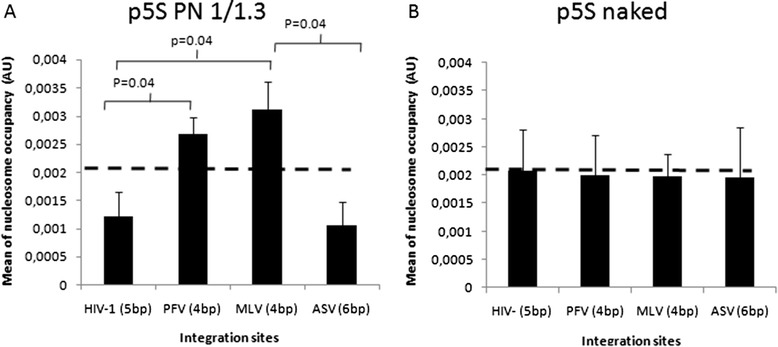
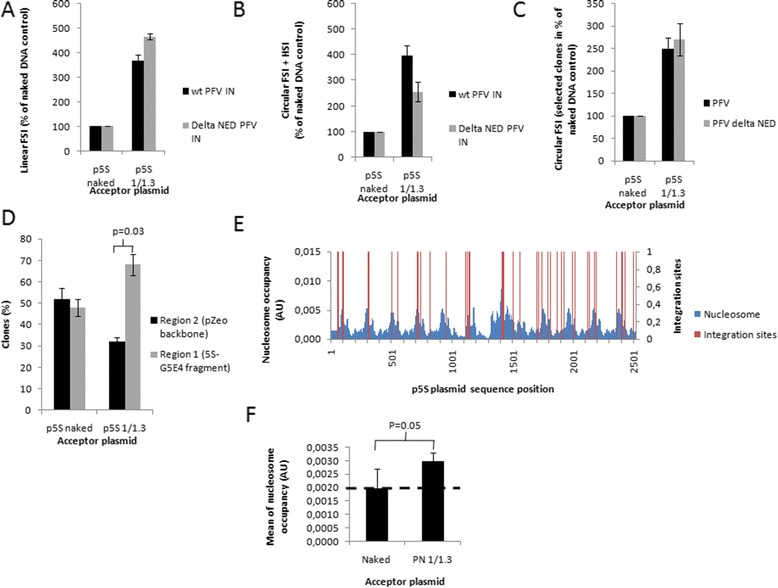
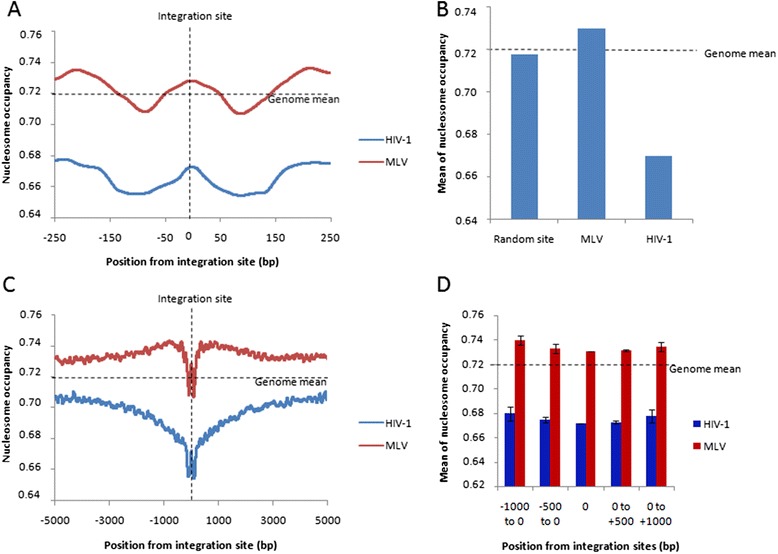
BACKGROUND: Retroviral integration depends on the interaction between intasomes, host chromatin and cellular targeting cofactors as LEDGF/p75 or BET proteins. Previous studies indicated that the retroviral integrase, by itself, may play a role in the local integration site selection within nucleosomal target DNA. We focused our study on this local association by analyzing the intrinsic properties of various retroviral intasomes to functionally accommodate different chromatin structures in the lack of other cofactors. RESULTS: Using in vitro conditions allowing the efficient catalysis of full site integration without these cofactors, we show that distinct retroviral integrases are not equally affected by chromatin compactness. Indeed, while PFV and MLV integration reactions are favored into dense and stable nucleosomes, HIV-1 and ASV concerted integration reactions are preferred into poorly dense chromatin regions of our nucleosomal acceptor templates. Predicted nucleosome occupancy around integration sites identified in infected cells suggests the presence of a nucleosome at the MLV and HIV-1 integration sites surrounded by differently dense chromatin. Further analyses of the relationships between the in vitro integration site selectivity and the structure of the inserted DNA indicate that structural constraints within intasomes could account for their ability to accommodate nucleosomal DNA and could dictate their capability to bind nucleosomes functionally in these specific chromatin contexts. CONCLUSIONS: Thus, both intasome architecture and compactness of the chromatin surrounding the targeted nucleosome appear important determinants of the retroviral integration site selectivity. This supports a mechanism involving a global targeting of the intasomes toward suitable chromatin regions followed by a local integration site selection modulated by the intrinsic structural constraints of the intasomes governing the target DNA bending and dictating their sensitivity toward suitable specific nucleosomal structures and density.
Overview
The claims and statistics of this paper haven’t been checked yet.
Free: it reads the open-access text and checks the first 5 claims that cite a source we can check. Create a free account to check every claim.
Integrity signals
Registry
Cites
Statistics
Figures
Verification
Claims the paper makes
The claims and statistics of this paper haven’t been checked yet.
Free: it reads the open-access text and checks the first 5 claims that cite a source we can check. Create a free account to check every claim.
Claims other papers make about this one
Each is checked against this paper’s own text: does it say what the citing paper says it does?
The cited source says what the claim attributes to it.
In the citing paper
“However, in vitro studies with intasomes of several retroviruses suggested genus-specific modes of chromosomal integration66”
From Structure and function of retroviral integrase (2022) · cites this paper as [66]
Self-check
Percentages, sums and reported differences re-computed from the paper’s own numbers.
The self-check needs the paper’s full text.
Citations
Cites
The DNA-encoded nucleosome organization of a eukaryotic genome
Kaplan, N., Moore, I. K., Fondufe-Mittendorf, Y., Gossett, A. J., Tillo, D., Field, Y., LeProust, E. M., Hughes, T. R., Lieb, J. D., Widom, J., et al. (2009) · Nature · doi:10.1038/nature07667 · Cited by 1,194 · cited 1×
“Actually, the performance of this method is as good as the more commonly used approach developed by Segal and Widom’s groups [59] (the mean Pearson correlation between genome-wide experiments and prediction is > 0.”
MethodHIV reproducibly establishes a latent infection after acute infection of T cells in vitro
Jordan, A., Bisgrove, D., & Verdin, E. (2003) · The EMBO Journal · doi:10.1093/emboj/cdg188 · Cited by 914 · cited 1×
“Integration into a region of active transcription promotes viral gene expression, whereas integration into transcriptionally repressed chromatin could potentially promote viral latency [21-23].”
BackgroundRetroviral intasome assembly and inhibition of DNA strand transfer
Hare, S., Gupta, S. S., Valkov, E., Engelman, A., & Cherepanov, P. (2010) · Nature · doi:10.1038/nature08784 · Cited by 678 · cited 4×
“Although numerous partial structures of INs from different retroviral genera have been determined, only PFV IN has been crystallized in its full-length form, in the presence of its DNA substrates, providing unprecedented details on the organization of the successive nucleoprotein complexes involved in the integration…”
BackgroundInfluentialDeterminants of nucleosome organization in primary human cells
Valouev, A., Johnson, S. M., Boyd, S. D., Smith, C. L., Fire, A. Z., & Sidow, A. (2011) · Nature · doi:10.1038/nature10002 · Cited by 677 · cited 1×
“majority of the human genome [40].”
HIV-1 DNA integration: Mechanism of viral DNA cleavage and DNA strand transfer
Engelman, A., Mizuuchi, K., & Craigie, R. (1991) · Cell · doi:10.1016/0092-8674(91)90297-c · Cited by 655
Miller, M. D., Farnet, C. M., & Bushman, F. D. (1997) · Journal of Virology · doi:10.1128/jvi.71.7.5382-5390.1997 · Cited by 620 · cited 1×
“This step, catalyzed by retroviral integrase (IN), is performed within a nucleoprotein structure, the pre-integration complex (PIC), which must reach the nucleus and gain access to the target DNA in a nucleosomal compacted structure [1,2].”
BackgroundJordan, A., Defechereux, P., & Verdin, E. (2001) · The EMBO Journal · doi:10.1093/emboj/20.7.1726 · Cited by 467 · cited 1×
“Integration into a region of active transcription promotes viral gene expression, whereas integration into transcriptionally repressed chromatin could potentially promote viral latency [21-23].”
BackgroundShun, M.-C., Raghavendra, N. K., Vandegraaff, N., Daigle, J. E., Hughes, S., Kellam, P., Cherepanov, P., & Engelman, A. (2007) · Genes & Development · doi:10.1101/gad.1565107 · Cited by 467
Wang, G. P., Ciuffi, A., Leipzig, J., Berry, C. C., & Bushman, F. D. (2007) · Genome Research · doi:10.1101/gr.6286907 · Cited by 457 · cited 3×
“The position of the integration sites on the surface of the nucleosome [55] also suggests that other proteins inducing local remodeling of the DNA in the nucleosome nucleoprotein complex and/or supplementary intasome/nucleosome interactions could be involved, in addition to the anchoring factor LEDGF/p75.”
BackgroundMethodGenome-wide analysis of retroviral DNA integration
Bushman, F., Lewinski, M., Ciuffi, A., Barr, S., Leipzig, J., Hannenhalli, S., & Hoffmann, C. (2005) · Nature Reviews Microbiology · doi:10.1038/nrmicro1263 · Cited by 422 · cited 1×
“exhibit only a weak preference for TUs, and some Betaretroviruses integrate in an almost random fashion (reviewed in [28]).”
Background
Research works printed but not linked: 2
- 7. Brown PO. Integration. 1997.
- 10. Maertens GN, Hare S, Cherepanov P. The mechanism of retroviral integration from X-ray structures of its key intermediates. Nature. 2010;468:326-9. · DOI · Paper page
Cited by
Integration site selection by retroviruses and transposable elements in eukaryotes
Sultana, T., Zamborlini, A., Cristofari, G., & Lesage, P. (2017) · Nature Reviews Genetics · doi:10.1038/nrg.2017.7 · Cited by 275
Lesbats, P., Engelman, A. N., & Cherepanov, P. (2016) · Chemical Reviews · doi:10.1021/acs.chemrev.6b00125 · Cited by 233
Self-citationStructure and function of retroviral integrase
Maertens, G. N., Engelman, A. N., & Cherepanov, P. (2022) · Nature Reviews Microbiology · doi:10.1038/s41579-021-00586-9 · Cited by 124
Nup153 unlocks the nuclear pore complex for HIV-1 nuclear translocation in nondividing cells
Buffone, C., Martinez-Lopez, A., Fricke, T., Opp, S., Severgnini, M., Cifola, I., Petiti, L., Frabetti, S., Skorupka, K., Zadrozny, K. K., et al. (2018) · Journal of Virology · doi:10.1128/jvi.00648-18 · Cited by 109
Cellular and molecular mechanisms of HIV-1 integration targeting
Engelman, A., & Singh, P. K. (2018) · Cellular and Molecular Life Sciences · doi:10.1007/s00018-018-2772-5 · Cited by 115
“Although these data suggest that retroviruses might universally integrate into preferred target DNA sequences on the surface of nucleosomes, other work has revealed differential effects of chromatin compaction on the in vitro activities of retroviral integrase proteins [32].”
BackgroundDemeulemeester, J., De Rijck, J., Gijsbers, R., & Debyser, Z. (2015) · BioEssays · doi:10.1002/bies.201500051 · Cited by 71
“Results from cellular integration site sequencing suggest that integration is directed into outward-facing major grooves on nucleosomal DNA [78, 79].”
BackgroundPhysical principles of retroviral integration in the human genome
Michieletto, D., Lusic, M., Marenduzzo, D., & Orlandini, E. (2019) · Nature Communications · doi:10.1038/s41467-019-08333-8 · Cited by 62
Key determinants of target DNA recognition by retroviral intasomes
Serrao, E., Ballandras-Colas, A., Cherepanov, P., Maertens, G. N., & Engelman, A. N. (2015) · Retrovirology · doi:10.1186/s12977-015-0167-3 · Cited by 62
“We note that a report published after the submission of this paper indicated that MLV and PFV integration can occur in regions of compact chromatin that tend to disfavor HIV-1 and ASLV integration [45].”
BackgroundRenner, T. M., Tang, V. A., Burger, D. E., & Langlois, M. (2019) · Journal of Virology · doi:10.1128/jvi.01600-19 · Cited by 49
“When retroviruses infect a cell population, a large proportion of cells will harbor proviruses integrated into unique positions in their genome (29, 30).”
BackgroundModulation of chromatin structure by the FACT histone chaperone complex regulates HIV-1 integration
Matysiak, J., Lesbats, P., Mauro, E., Lapaillerie, D., Dupuy, J., Lopez, A. P., Benleulmi, M. S., Calmels, C., Andréola, M., Ruff, M., et al. (2017) · Retrovirology · doi:10.1186/s12977-017-0363-4 · Cited by 49
“integration into chromatin in vitro While HIV-1 IN integrates efficiently in mononucleosomes [4, 5] the concerted full site integration was found to be inhibited by nucleosome compaction in vitro [8, 14].”
BackgroundMethodResultInfluentialSelf-citationRetroviruses integrate into a shared, non-palindromic DNA motif
Kirk, P., Huvet, M., Melamed, A., Maertens, G. N., & Bangham, C. R. M. (2016) · Nature Microbiology · doi:10.1038/nmicrobiol.2016.212 · Cited by 38
Different Pathways Leading to Integrase Inhibitors Resistance
Thierry, E., Deprez, E., & Delelis, O. (2017) · Frontiers in Microbiology · doi:10.3389/fmicb.2016.02165 · Cited by 40
“This half-site ST reaction can be easily recorded in vitro using ODN or long substrate DNA (Sinha et al., 2002; Sinha and Grandgenett, 2005; Li et al., 2006; Benleulmi et al., 2015).”
BackgroundSequence features of viral and human Internal Ribosome Entry Sites predictive of their activity
Gritsenko, A. A., Weingarten-Gabbay, S., Elias‐Kirma, S., Nir, R., de Ridder, D., & Segal, E. (2017) · PLoS Computational Biology · doi:10.1371/journal.pcbi.1005734 · Cited by 43
Naughtin, M., Haftek-Terreau, Z., Xavier, J., Meyer, S., Silvain, M., Jaszczyszyn, Y., Levy, N., Miele, V., Benleulmi, M. S., Ruff, M., et al. (2015) · PLoS ONE · doi:10.1371/journal.pone.0129427 · Cited by 37
Self-citationRetroviral Integrase: Then and Now
Andrake, M., & Skalka, A. M. (2015) · Annual Review of Virology · doi:10.1146/annurev-virology-100114-055043 · Cited by 38
Self-citationSites of retroviral DNA integration: From basic research to clinical applications
Serrao, E., & Engelman, A. (2015) · Critical Reviews in Biochemistry and Molecular Biology · doi:10.3109/10409238.2015.1102859 · Cited by 36
“Also intriguing is that chromatin density in the regions surrounding integration sites can negatively modulate the DNA strand transfer activity of some retroviral INs, while having the opposite effect on other proteins (Benleulmi et al., 2015; Lesbats et al., 2011; Taganov et al., 2004).”
BackgroundBenleulmi, M. S., Matysiak, J., Robert, X., Miskey, C., Mauro, E., Lapaillerie, D., Lesbats, P., Chaignepain, S., Henríquez, D. R., Calmels, C., et al. (2017) · Retrovirology · doi:10.1186/s12977-017-0378-x · Cited by 33
“In vitro integration assays Concerted integration assays were performed as previously reported [6] using recombinant purified IN or IN•LEDGF/p75 complex (200 nM in IN monomers).”
BackgroundMethodResultInfluentialSelf-citationSapp, N., Burge, N. L., Cox, K. L., Thapa, S., Prakash, P., Balasubramaniam, M., Christensen, D. E., Li, M., Linderberger, J., Kvaratskhelia, M., et al. (2022) · Journal of Virology · doi:10.1128/jvi.01011-22 · Cited by 34
“arrays are less preferred for avian sarcoma virus (ASV) integration compared to analogous naked DNA (39, 41, 65).”
BackgroundInfluentialCiuffi, A. (2016) · Clinical Microbiology and Infection · doi:10.1016/j.cmi.2016.02.013 · Cited by 27
“Finally, the viral integrase also affects the final integration step, favouring DNA sequences that are preferentially wrapped around nucleosomes, facing outwards, and that are severely bent [12,46–49].”
BackgroundDNA minicircles clarify the specific role of DNA structure on retroviral integration
Pasi, M., Mornico, D., Volant, S., Juchet, A., Batisse, J., Bouchier, C., Parissi, V., Ruff, M., Lavery, R., & Lavigne, M. (2016) · Nucleic Acids Research · doi:10.1093/nar/gkw651 · Cited by 29
“Retroviral integration targets nucleosomes (9,22,25,34), but the respective roles of DNA and histones in this selectivity are still a matter of debate.”
BackgroundSelf-citationThe Multifaceted Contributions of Chromatin to HIV-1 Integration, Transcription, and Latency
Crignis, E. D., & Mahmoudi, T. (2016) · International review of cytology · doi:10.1016/bs.ircmb.2016.08.006 · Cited by 24
“preferentially integrate within genomic regions harboring transcribed genes (Mitchell et al., 2004; Taganov et al., 2004; Crise et al., 2005; Benleulmi et al., 2015), supporting the notion that specific characteristics of active genes, such as the presence of an open chromatin landscape, might favor ARTICLE IN PRESS”
BackgroundMultivalent interactions essential for lentiviral integrase function
Ballandras-Colas, A., Chivukula, V., Gruszka, D. T., Shan, Z., Singh, P. K., Pye, V. E., McLean, R. K., Bedwell, G. J., Li, W., Nans, A., et al. (2022) · Nature Communications · doi:10.1038/s41467-022-29928-8 · Cited by 25
“Thus, the differences in tDNA conformation during its capture by the retroviral intasomes strongly support the idea that retroviruses may have evolved genus or even species-specific ways of interacting with chromatinized target DNA (73).”
BackgroundModulation of the intrinsic chromatin binding property of HIV-1 integrase by LEDGF/p75
Lapaillerie, D., Lelandais, B., Mauro, E., Lagadec, F., Tumiotto, C., Miskey, C., Ferran, G., Kuschner, N., Calmels, C., Métifiot, M., et al. (2021) · Nucleic Acids Research · doi:10.1093/nar/gkab886 · Cited by 23
“Noticeably, it has been reported that the chromatin structure surrounding the insertion site modulates retroviral integration into nucleosomes (16).”
BackgroundResultInfluentialSelf-citationRetroviral DNA Transposition: Themes and Variations
Skala, A. M. (2014) · Microbiology Spectrum · doi:10.1128/microbiolspec.mdna3-0005-2014 · Cited by 24
Mauro, E., Lesbats, P., Lapaillerie, D., Chaignepain, S., Maillot, B., Oladosu, O., Robert, X., Fiorini, F., Kieffer, B., Bouaziz, S., et al. (2019) · Nucleic Acids Research · doi:10.1093/nar/gkz091 · Cited by 21
“The functional intasome/nucleosome association was found to be modulated by the structure of both the incoming intasome and the chromatin surrounding the targeted nucleosome (13).”
BackgroundSelf-citationRetroviral integrase protein and intasome nucleoprotein complex structures
Grawenhoff, J., & Engelman, A. (2017) · World Journal of Biological Chemistry · doi:10.4331/wjbc.v8.i1.32 · Cited by 27
B-to-A transition in target DNA during retroviral integration
Jozwik, I. K., Li, W., Zhang, D., Wong, D., Grawenhoff, J., Ballandras-Colas, A., Aiyer, S., Cherepanov, P., Engelman, A., & Lyumkis, D. (2022) · Nucleic Acids Research · doi:10.1093/nar/gkac644 · Cited by 18
“Variations in the expanded target site may ultimately translate into differences in nucleosome engagement (90,91).”
BackgroundIntegrating transposable elements in the 3D genome
Bousios, A., Nützmann, H., Buck, D., & Michieletto, D. (2020) · Mobile DNA · doi:10.1186/s13100-020-0202-3 · Cited by 19
“The output of these simulations may be readily measured in experiments in vitro on designed DNA and chromatin templates as done for HIV [89, 91], and may thus inform the mechanistic principles leading to DNA integration.”
BackgroundStructural Insights on Retroviral DNA Integration: Learning from Foamy Viruses
Lee, G.-E., Mauro, E., Parissi, V., Shin, C., & Lesbats, P. (2019) · Viruses · doi:10.3390/v11090770 · Cited by 11
“PFV intasome showed strong integration activity when supplied with purified or recombinant human mononucleosomes [11,49].”
MethodSelf-citationRole of RNA Polymerase II Promoter-Proximal Pausing in Viral Transcription
Whelan, M., & Pelchat, M. (2022) · Viruses · doi:10.3390/v14092029 · Cited by 11
“The HIV IN was found to favor gene-dense, transcriptionally active regions of chromatin with lower nucleosome density [46,47].”
BackgroundMackler, R. M., Jones, N. D., Gardner, A. M., Lopez, M. A., Howard, C. J., Fishel, R. A., & Yoder, K. E. (2019) · PLoS ONE · doi:10.1371/journal.pone.0212764 · Cited by 10
Aquarius helicase facilitates HIV-1 integration into R-loop enriched genomic regions
Penzo, C., Özel, I., Martinovic, M., Kuzman, M., Glavaš, D., Stanić, M., Reichenbach, T., Müller, T. G., Rheinberger, M., Godarzi, N., et al. (2025) · Nature Microbiology · doi:10.1038/s41564-025-02089-2 · Cited by 9
Self-citationBrief Histories of Retroviral Integration Research and Associated International Conferences
Grandgenett, D. P., & Engelman, A. (2024) · Viruses · doi:10.3390/v16040604 · Cited by 8
“Marc Lavigne investigated the effect of DNA topology on the efficiency of HIV-1 integration [184,185].”
BackgroundModulation of the functional interfaces between retroviral intasomes and the human nucleosome
Mauro, E., Lapaillerie, D., Tumiotto, C., Charlier, C., Martins, F. G., Sousa, S. F., Métifiot, M., Weigel, P., Yamatsugu, K., Kanai, M., et al. (2023) · mBio · doi:10.1128/mbio.01083-23 · Cited by 6
“MNs were assembled as previously described for chromatin assembly (7, 8).”
BackgroundMethodSelf-citationPrototype Foamy Virus Integrase Displays Unique Biochemical Activities among Retroviral Integrases
Rabe, A. J., Tan, Y. Y., Larue, R. C., & Yoder, K. E. (2021) · Biomolecules · doi:10.3390/biom11121910 · Cited by 6
Oligomerization of Retrovirus Integrases
Grandgenett, D. P., & Aihara, H. (2018) · Sub-cellular biochemistry/Subcellular biochemistry · doi:10.1007/978-981-10-8456-0_10 · Cited by 4
Miklík, D., Grim, J., Elleder, D., & Hejnar, J. (2023) · Genome Research · doi:10.1101/gr.277694.123 · Cited by 4
“Locally, the occupancy of nucleosomes and the physical attributes of DNA affect the target site selection (Pryciak and Varmus 1992; Benleulmi et al. 2015; Naughtin et al. 2015; Michieletto et al. 2019; Józ ́ wik et al. 2022).”
The role of chromatin in retroviral preintegration complex function
Sapp, N., Prakash, P., Chakraborty, R., Balasubramaniam, M., & Dash, C. (2025) · Journal of Biological Chemistry · doi:10.1016/j.jbc.2025.110440 · Cited by 3
“Both retroviral INs target less dense nucleosome regions of the chromatinized plasmid (222).”
InfluentialLoops are geometric catalysts for DNA integration
Battaglia, C., & Michieletto, D. (2024) · Nucleic Acids Research · doi:10.1093/nar/gkae484 · Cited by 3
Core nucleosomes are refractory to lentiviral DNA integration
Hope, J., Punch, E. K., Cook, N., Singer, M. R., Joshi, D., Singh, P. K., Nans, A., Sweeney, N. P., Vanderlinden, W., Engelman, A., et al. (2026) · Nature Communications · doi:10.1038/s41467-026-76698-8 · Cited by 2
“Conversely, amorerecent study reported thatHIV-1 intasomes preferentially target chromatinized tDNA regions that are sparsely occupied by nucleosomes, indicating that stable nucleosome structures are disfavored targets for lentiviral integration 56 .”
Structures and functions of the C-Terminal domain of HIV-1 integration
Oladosu, O. (2017) · theses.fr (ABES) · doi:10.70675/ad8059d5z788dz4aafza31dz85b0c784be62 · Cited by 1
Physical Principles of Retroviral Integration in the Human GenomePreprint
Michieletto, D., Lusic, M., Marenduzzo, D., & Orlandini, E. (2018) · bioRxiv (Cold Spring Harbor Laboratory) · doi:10.1101/247437 · Cited by 1
The complexity of genome integration process in human lentivirus
García‐Vallejo, F. (2016) · Revista de la Academia Colombiana de Ciencias Exactas Físicas y Naturales · doi:10.18257/raccefyn.364
Amadori, C. (2016) · theses.fr (ABES) · doi:10.70675/2da75a32z2820z4ceaz8909zee47e88e36ee
“Des études récentes montrent que l’intasome du PFV cible préférentiellement des régions dans la chromatine in vitro [220].”
Lapaillerie, D., Mauro, E., Lelandais, B., Ferran, G., Kuschner, N., Calmels, C., Métifiot, M., Rooryck, C., Ruff, M., Zimmer, C., et al. (2020) · bioRxiv (Cold Spring Harbor Laboratory) · doi:10.1101/2020.12.23.424107
“Furthermore, it has been reported that the chromatin structure surrounding the insertion site modulates retroviral integration into nucleosomes (Benleulmi et al. 2015).”
BackgroundSelf-citationMolecular basis for the regulation of retroviral nucleosomal integration by chromatin compaction
Lapaillerie, D., Zgadzay, Y., Martins, F. G., Bertinetti, C., Autin, M., Batisse, J., Tumiotto, C., Lesbats, P., Ruff, M., Sousa, S. F., et al. (2026) · Nucleic Acids Research · doi:10.1093/nar/gkag705
“In particular, the distinct nucleosome interfaces found between PFV and HIV-1 intasomes may account for their previously observed differences in sensitivity toward chromatin architecture, as observed in integration assays using reconstituted polynucleosome templates [ 6 , 8 , 24 ].”
InfluentialSelf-citationContrôle de l’expression du VIH-1 par les complexes associés au facteur de transcription Iws1
Abdouni, A. (2016) · theses.fr (ABES) · doi:10.70675/3cd9a7dfz9792z45edz8f25z0a39f612c0ff
Matysiak, J. (2016) · theses.fr (ABES) · doi:10.70675/b082c593ze2e1z430dzb62bzafbcf4d9ce13
Self-citationInfluence of the genomic context on integration site selection by human L1 retrotransposons
Sultana, T. (2016) · theses.fr (ABES) · doi:10.70675/be4b59d9zf7a0z4899zb1dczfce6ba9bc553 · Cited by 1
Caractérisation des voies d’échappement aux inhibiteurs d’intégrase du VIH-1
Thierry, E. (2015) · theses.fr (ABES) · doi:10.70675/602eaec1z5d9az4bb2za08dz10755e91efc2
Coévolution dans le gène pol du VIH-1 : un carrefour aux frontières de nouvelles espèces du VIH
Kanja, M. (2017) · theses.fr (ABES) · doi:10.70675/7add66cczbb9ez4099z83c1zf797f8fcba3a
Yajjou, H. (2017) · theses.fr (ABES) · doi:10.70675/344cf9e9z00abz4537za0c2zbf6a2e27f221 · Cited by 1
Identification de facteurs cellulaires régulant la rétrotransposition de Ty1 chez S. cerevisiae
Barkova, A. (2019) · theses.fr (ABES) · doi:10.70675/d3dce78az48e8z4209zb2afzd31c32c110b1
Metadata
- Authors
- Benleulmi, M. S., Matysiak, J., Henriquez, D. R., Vaillant, C., Lesbats, P., Calmels, C., Naughtin, M., Leon, O., Skalka, A. M., Ruff, M., Lavigne, M., Andreola, M.-L., & Parissi, V.
- Affiliations
- Centre National de la Recherche Scientifique (FR)
- École Normale Supérieure de Lyon (FR)
- Fox Chase Cancer Center (US)
- Corresponding author
- Parissi, Vincent
- Venue
- Retrovirology
- Published
- 2015-02-07
- Volume
- 12
- Issue
- 1
- Pages
- 13-13
- ISSN
- 1742-4690 (ISSN-L)
- PMC
- PMC4358916
- OpenAlex
- W2135800359
- Cited by
- 47
- References
- 67
- Citations by year
- 2026: 1 · 2025: 2 · 2024: 2 · 2023: 2 · 2022: 5 · 2021: 3 · 2020: 2 · 2019: 6 · 2018: 5 · 2017: 7 · 2016: 6 · 2015: 5
- FWCI
- 5.27
- Type
- journal article
- Language
- en
- Open access
- gold
- doi.org
- Locations
- Retrovirology (publishedVersion, cc-by)
- Europe PMC (PubMed Central) (publishedVersion, cc-by)
- PubMed Central (publishedVersion, cc-by)
- PubMed (publishedVersion)
- Oskar-Bordeaux (Universite de Bordeaux) (submittedVersion, cc-by)
- HAL (submittedVersion, other-oa)
- Universidad de Chile (submittedVersion, cc-by-nc-nd)
- univOAK (4 institutions : Université de Strasbourg, Université de Haute Alsace, INSA Strasbourg, Bibliothèque Nationale et Universitaire de Strasbourg) (submittedVersion, cc-by)
- Funders
- Cancer Research UK
- Agence Nationale de la Recherche (ANR-11-JSV3-0006)
- Institut National de la Santé et de la Recherche Médicale (U1016)
- Centre National de la Recherche Scientifique (UMR8104, UMR 3569, GDR3546)
- Universidad de Chile
- Université de Bordeaux
- Comisión Nacional de Investigación Científica y Tecnológica
- National Institute of Allergy and Infectious Diseases (R01AI040385)
- Institute of Genetics
- Topics
- Life Sciences › Biochemistry, Genetics and Molecular Biology › Genetics › Virus-based gene therapy research
- Life Sciences › Immunology and Microbiology › Virology › HIV Research and Treatment
- Health Sciences › Medicine › Infectious Diseases › HIV/AIDS drug development and treatment
- Keywords
- retroviral integration, chromatin density, nucleosome, integration site selection, retroviral integrase, HIV-1 integrase, nucleosome occupancy, DNA bending, chromatin targeting
- MeSH terms
- Chromatin, DNA, Humans, Nucleosomes, Retroviridae, Virus Integration, Integrases, Host-Pathogen Interactions
About these checks
Registry, retraction, Cites and statistics results are computed, not judged, with one exception: a printed reference that no index lists is read once by a model before it counts as a citation error. Claims are extracted by a model and kept only when their quote appears verbatim in the text; each cited source is then checked, with a model’s help, for whether it says what the claim relies on. Those verdicts can be wrong — read the claim’s quote and the cited source before relying on one.
Statistics and arithmetic are recomputed, not judged.
Confidence bands are shown only for fields calibrated on our annotated test set. None is calibrated yet, so no band is shown.
What counts as a claim ›How we measure confidence ›How we check this ›
Are you an author, or do you see a problem with this page? Request a review
Data sources
Bibliographic data: Semantic Scholar, OpenAlex, Crossref.
Contains information from the Semantic Scholar Academic Graph Datasets, made available under the ODC Attribution License (ODC-BY 1.0).
Semantic Scholar’s data is described in: Kinney, R., et al. (2023). The Semantic Scholar Open Data Platform. arXiv:2301.10140.
