

NHEJ pathway is involved in post-integrational DNA repair due to Ku70 binding to HIV-1 integrase
Open accessThe DOI matches its Crossref record; 74 of the 74 references it cites were found in a registry or an index.
Abstract
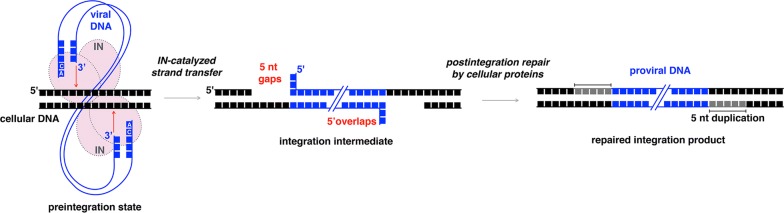
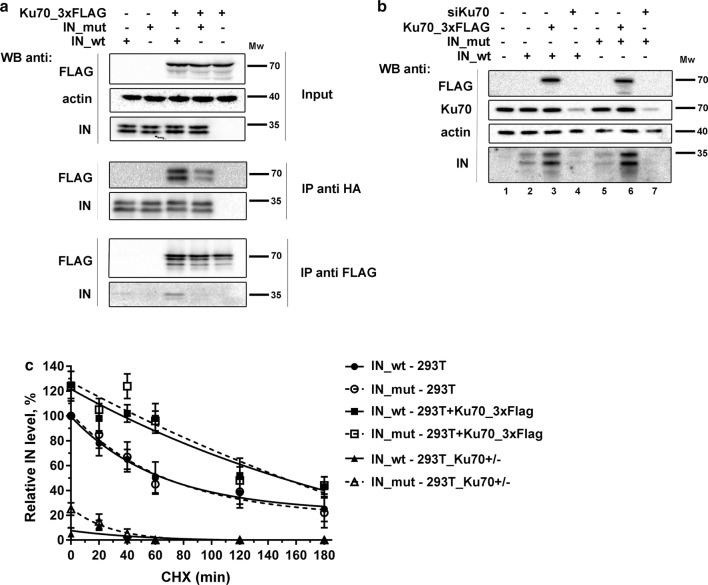
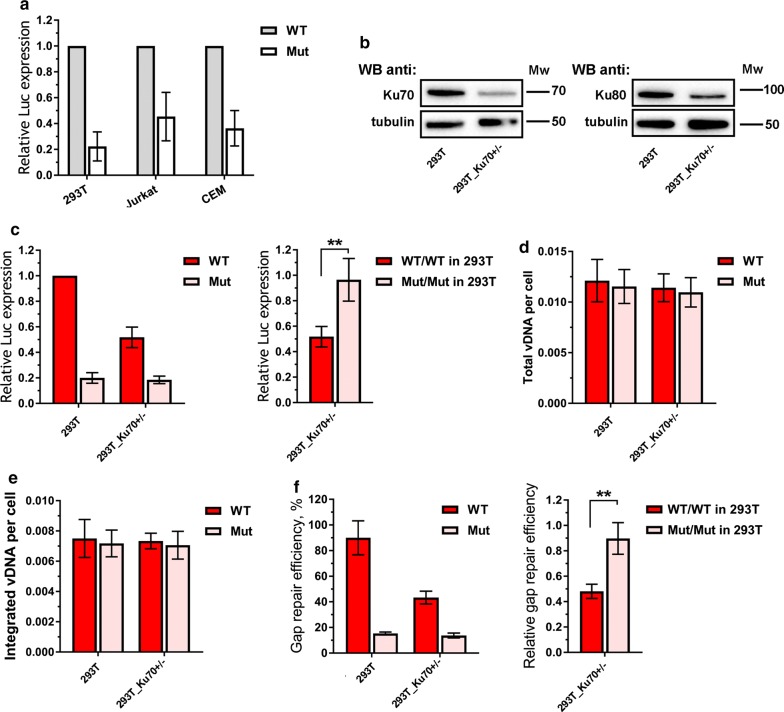
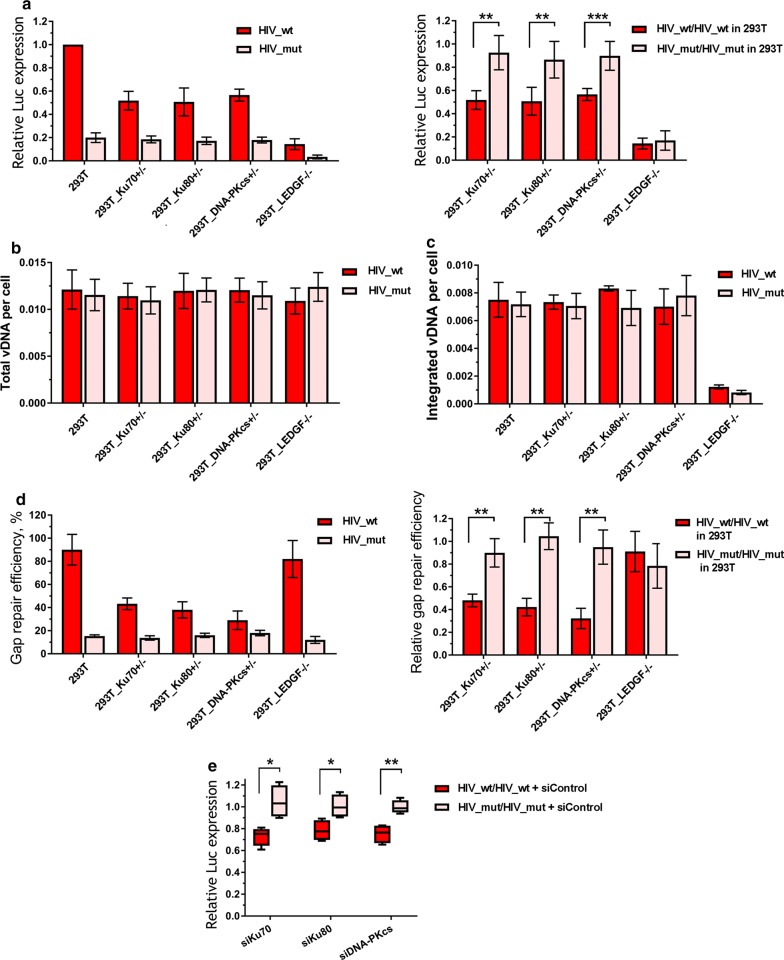
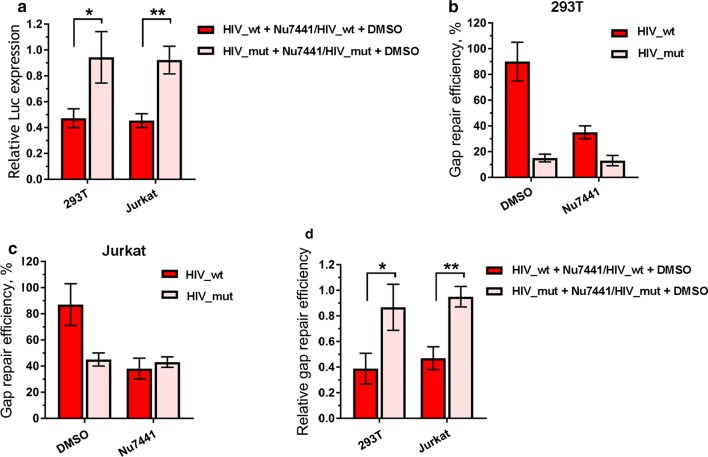
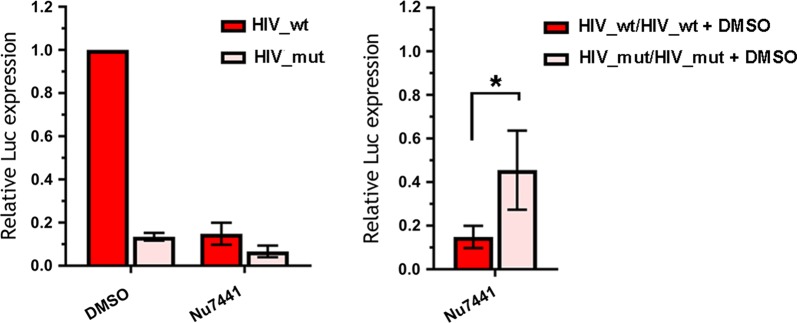
Background: HIV-1 integration results in genomic DNA gaps that are repaired by cellular DNA repair pathways. This step of the lentiviral life cycle remains poorly understood despite its crucial importance for successful replication. We and others reported that Ku70 protein of the non-homologous end joining pathway (NHEJ) directly binds HIV-1 integrase (IN). Here, we studied the importance of this interaction for post-integrational gap repair and the recruitment of NHEJ factors in this process. Results: We engineered HIV-based pseudovirus with mutant IN defective in Ku70 binding and generated heterozygous Ku70, Ku80 and DNA-PKcs human knockout (KO) cells using CRISPR/Cas9. KO of either of these proteins or inhibition of DNA-PKcs catalytic activity substantially decreased the infectivity of HIV-1 with native IN but not with the mutant one. We used a recently developed qPCR assay for the measurement of gap repair efficiency to show that HIV-1 with mutant IN was defective in DNA post-integrational repair, whereas the wild type virus displayed such a defect only when NHEJ system was disrupted in any way. This effect was present in CRISPR/Cas9 modified 293T cells, in Jurkat and CEM lymphoid lines and in primary human PBMCs. Conclusions: Our data provide evidence that IN recruits DNA-PK to the site of HIV-1 post-integrational repair due to Ku70 binding—a novel finding that explains the involvement of DNA-PK despite the absence of free double stranded DNA breaks. In addition, our data clearly indicate the importance of interactions between HIV-1 IN and Ku70 in HIV-1 replication at the post-integrational repair step.
Overview
The claims and statistics of this paper haven’t been checked yet.
Free: it reads the open-access text and checks the first 5 claims that cite a source we can check. Create a free account to check every claim.
Integrity signals
Registry
Cites
Statistics
Figures
Verification
Claims the paper makes
The claims and statistics of this paper haven’t been checked yet.
Free: it reads the open-access text and checks the first 5 claims that cite a source we can check. Create a free account to check every claim.
Claims other papers make about this one
Each is checked against this paper’s own text: does it say what the citing paper says it does?
The source backs part of the claim, not all of it — or backs it for a different population, condition or comparison.
In the citing paper
“Two recent studies described HIV-1 IN mutants with normal reverse transcription and integration, but delayed proviral expression19,21.”
From Structure and function of retroviral integrase (2022) · cites this paper as [21]
Experimental — accuracy not yet measured
Self-check
Percentages, sums and reported differences re-computed from the paper’s own numbers.
The self-check needs the paper’s full text.
Citations
Cites
Ror2 signaling regulates Golgi structure and transport through IFT20 for tumor invasiveness
Nishita, M., Park, S.-Y., Nishio, T., Kamizaki, K., Wang, Z., Tamada, K., Takumi, T., Hashimoto, R., Otani, H., Pazour, G. J., et al. (2017) · Scientific Reports · doi:10.1038/s41598-016-0028-x · Cited by 15,947
Identification of host proteins required for HIV infection through a functional genomic screen
Brass, A. L., Dykxhoorn, D. M., Benita, Y., Yan, N., Engelman, A., Xavier, R. J., Lieberman, J., & Elledge, S. J. (2008) · Science · doi:10.1126/science.1152725 · Cited by 1,449
Structure of the Ku heterodimer bound to DNA and its implications for double-strand break repair
Walker, J. R., Corpina, R. A., & Goldberg, J. (2001) · Nature · doi:10.1038/35088000 · Cited by 1,212
Global Analysis of Host-Pathogen Interactions that Regulate Early-Stage HIV-1 Replication
König, R., Zhou, Y., Elleder, D., Diamond, T. L., Bonamy, G. M. C., Irelan, J. T., Chiang, C.-Y., Tu, B. P., De Jesus, P. D., Lilley, C. E., et al. (2008) · Cell · doi:10.1016/j.cell.2008.07.032 · Cited by 960
Genome-Scale RNAi Screen for Host Factors Required for HIV Replication
Zhou, H., Xu, M., Huang, Q., Gates, A. T., Zhang, X. D., Castle, J. C., Stec, E., Ferrer, M., Strulovici, B., Hazuda, D. J., et al. (2008) · Cell Host & Microbe · doi:10.1016/j.chom.2008.10.004 · Cited by 789
HIV-1 Integrase Forms Stable Tetramers and Associates with LEDGF/p75 Protein in Human Cells
Cherepanov, P., Maertens, G., Proost, P., Devreese, B., Van Beeumen, J., Engelborghs, Y., De Clercq, E., & Debyser, Z. (2003) · Journal of Biological Chemistry · doi:10.1074/jbc.m209278200 · Cited by 704
A role for LEDGF/p75 in targeting HIV DNA integration
Ciuffi, A., Llano, M., Poeschla, E., Hoffmann, C., Leipzig, J., Shinn, P., Ecker, J. R., & Bushman, F. (2005) · Nature Medicine · doi:10.1038/nm1329 · Cited by 658
Ku Recruits the XRCC4-Ligase IV Complex to DNA Ends
McElhinny, S. A. N., Snowden, C. M., McCarville, J., & Ramsden, D. A. (2000) · Molecular and Cellular Biology · doi:10.1128/mcb.20.9.2996-3003.2000 · Cited by 516
Mechanism of interaction between Ku protein and DNA.
Mimori, T., & Hardin, J. A. (1986) · Journal of Biological Chemistry · doi:10.1016/s0021-9258(18)67534-9 · Cited by 501
Nonhomologous DNA end-joining for repair of DNA double-strand breaks
Pannunzio, N. R., Watanabe, G., & Lieber, M. R. (2018) · Journal of Biological Chemistry · doi:10.1074/jbc.tm117.000374 · Cited by 489
Shun, M.-C., Raghavendra, N. K., Vandegraaff, N., Daigle, J. E., Hughes, S., Kellam, P., Cherepanov, P., & Engelman, A. (2007) · Genes & Development · doi:10.1101/gad.1565107 · Cited by 467
Dynamic assembly of end-joining complexes requires interaction between Ku70/80 and XRCC4
Mari, P.-O., Florea, B. I., Persengiev, S. P., Verkaik, N. S., Brüggenwirth, H. T., Modesti, M., Giglia-Mari, G., Bezstarosti, K., Demmers, J. A. A., Luider, T. M., et al. (2006) · Proceedings of the National Academy of Sciences · doi:10.1073/pnas.0609061103 · Cited by 423
Leahy, J. J. J., Golding, B. T., Griffin, R. J., Hardcastle, I. R., Richardson, C., Rigoreau, L., & Smith, G. C. M. (2004) · Bioorganic & Medicinal Chemistry Letters · doi:10.1016/j.bmcl.2004.09.060 · Cited by 411
Structural basis for the recognition between HIV-1 integrase and transcriptional coactivator p75
Cherepanov, P., Ambrosio, A. L. B., Rahman, S., Ellenberger, T., & Engelman, A. (2005) · Proceedings of the National Academy of Sciences · doi:10.1073/pnas.0506924102 · Cited by 408
Ku Recruits the XRCC4-Ligase IV Complex to DNA Ends
McElhinny, S. A. N., McCarville, J., Snowden, C. M., & Ramsden, D. A. (2020) · Carolina Digital Repository (University of North Carolina at Chapel Hill) · doi:10.17615/5hds-gb46 · Cited by 402
Interaction of Ku protein and DNA-dependent protein kinase catalytic subunit with nucleic acids
Dynan, W. S., & Yoo, S. (1998) · Nucleic Acids Research · doi:10.1093/nar/26.7.1551 · Cited by 376
Role of the non-homologous DNA end joining pathway in the early steps of retroviral infection
Li, L. (2001) · The EMBO Journal · doi:10.1093/emboj/20.12.3272 · Cited by 356
A Role for DNA-PK in Retroviral DNA Integration
Daniel, R., Katz, R. A., & Skalka, A. M. (1999) · Science · doi:10.1126/science.284.5414.644 · Cited by 260
Lesbats, P., Engelman, A. N., & Cherepanov, P. (2016) · Chemical Reviews · doi:10.1021/acs.chemrev.6b00125 · Cited by 233
Leavitt, A. D., Robles, G., Alesandro, N., & Varmus, H. E. (1996) · Journal of Virology · doi:10.1128/jvi.70.2.721-728.1996 · Cited by 232
HIV-1 causes CD4 cell death through DNA-dependent protein kinase during viral integration
Cooper, A., García, M., Petrovas, C., Yamamoto, T., Koup, R. A., & Nabel, G. J. (2013) · Nature · doi:10.1038/nature12274 · Cited by 227
Cross-Clade Ultrasensitive PCR-Based Assays To Measure HIV Persistence in Large-Cohort Studies
Vandergeeten, C., Fromentin, R., Merlini, E., Lawani, M. B., DaFonseca, S., Bakeman, W., McNulty, A., Ramgopal, M., Michael, N., Kim, J. H., et al. (2014) · Journal of Virology · doi:10.1128/jvi.00609-14 · Cited by 224
Mazurov, D., Ilinskaya, A., Heidecker, G., Lloyd, P., & Derse, D. (2010) · PLoS Pathogens · doi:10.1371/journal.ppat.1000788 · Cited by 217
Self-citationRepair of gaps in retroviral DNA integration intermediates
Yoder, K. E., & Bushman, F. D. (2000) · Journal of Virology · doi:10.1128/jvi.74.23.11191-11200.2000 · Cited by 209
Cryo-EM structures and atomic model of the HIV-1 strand transfer complex intasome
Passos, D. O., Li, M., Yang, R., Rebensburg, S. V., Ghirlando, R., Jeon, Y., Shkriabai, N., Kvaratskhelia, M., Craigie, R., & Lyumkis, D. (2017) · Science · doi:10.1126/science.aah5163 · Cited by 202
Ku recruits XLF to DNA double‐strand breaks
Yano, K., Morotomi‐Yano, K., Wang, S., Uematsu, N., Lee, K., Asaithamby, A., Weterings, E., & Chen, D. J. (2008) · EMBO reports · doi:10.1038/sj.embor.7401137 · Cited by 193
Cellular co-factors of HIV-1 integration
Van Maele, B., Busschots, K., Vandekerckhove, L., Christ, F., & Debyser, Z. (2006) · Trends in Biochemical Sciences · doi:10.1016/j.tibs.2005.12.002 · Cited by 185
HIV-1 integrase crosslinked oligomers are active in vitro
Faure, A. L. (2005) · Nucleic Acids Research · doi:10.1093/nar/gki241 · Cited by 181
Suppression of HIV-1 infection by a small molecule inhibitor of the ATM kinase
Lau, A., Swinbank, K. M., Ahmed, P. S., Taylor, D. L., Jackson, S. P., Smith, G. C. M., & O’Connor, M. J. (2005) · Nature Cell Biology · doi:10.1038/ncb1250 · Cited by 180
In Vivo Analysis of Retroviral Integrase Structure and Function
Engelman, A. (1999) · Advances in Virus Research · doi:10.1016/s0065-3527(08)60309-7 · Cited by 176
Productive and Nonproductive Complexes of Ku and DNA-Dependent Protein Kinase at DNA Termini
West, R. B., Yaneva, M., & Lieber, M. R. (1998) · Molecular and Cellular Biology · doi:10.1128/mcb.18.10.5908 · Cited by 170
Hultquist, J. F., Schumann, K., Woo, J. M., Manganaro, L., McGregor, M. J., Doudna, J., Simon, V., Krogan, N. J., & Marson, A. (2016) · Cell Reports · doi:10.1016/j.celrep.2016.09.080 · Cited by 170
Retroviral DNA integration and the DNA damage response
Skalka, A. M., & Katz, R. A. (2005) · Cell Death and Differentiation · doi:10.1038/sj.cdd.4401573 · Cited by 156
New Insights into the Link Between DNA Damage and Apoptosis
De Zio, D., Cianfanelli, V., & Cecconi, F. (2013) · Antioxidants & Redox Signaling · doi:10.1089/ars.2012.4938 · Cited by 152
Novel approaches to inhibiting HIV-1 replication
Adamson, C. S., & Freed, E. O. (2010) · Antiviral Research · doi:10.1016/j.antiviral.2009.09.009 · Cited by 144
Schrijvers, R., De Rijck, J., Demeulemeester, J., Adachi, N., Vets, S., Ronen, K., Christ, F., Bushman, F. D., Debyser, Z., & Gijsbers, R. (2012) · PLoS Pathogens · doi:10.1371/journal.ppat.1002558 · Cited by 134
Persistently bound Ku at DNA ends attenuates DNA end resection and homologous recombination
Shao, Z., Davis, A. J., Fattah, K. R., So, S., Sun, J., Lee, K. J., Harrison, L., Yang, J., & Chen, D. J. (2012) · DNA repair · doi:10.1016/j.dnarep.2011.12.007 · Cited by 131
Mousnier, A., Kubat, N. J., Massias-Simon, A., Ségéral, E., Rain, J., Bénarous, R., Emiliani, S., & Dargemont, C. (2007) · Proceedings of the National Academy of Sciences · doi:10.1073/pnas.0705162104 · Cited by 108
Daniel, R., Greger, J. G., Katz, R. A., Taganov, K. D., Wu, X., Kappes, J. C., & Skalka, A. M. (2004) · Journal of Virology · doi:10.1128/jvi.78.16.8573-8581.2004 · Cited by 107
DNA-Dependent Protein Kinase Is Not Required for Efficient Lentivirus Integration
Baekelandt, V., Claeys, A., Cherepanov, P., De Clercq, E., De Strooper, B., Nuttin, B., & Debyser, Z. (2000) · Journal of Virology · doi:10.1128/jvi.74.23.11278-11285.2000 · Cited by 93
Effect of Ku80 Depletion on the Preintegrative Steps of HIV-1 Replication in Human Cells
Jeanson, L., Subra, F., Vaganay, S., Hervy, M., Marangoni, E., Bourhis, J., & Mouscadet, J. F. (2002) · Virology · doi:10.1006/viro.2002.1515 · Cited by 90
Daniel, R., Katz, R. A., Merkel, G. W., Hittle, J. C., Yen, T. J., & Skalka, A. M. (2001) · Molecular and Cellular Biology · doi:10.1128/mcb.21.4.1164-1172.2001 · Cited by 88
Studamire, B., & Goff, S. P. (2008) · Retrovirology · doi:10.1186/1742-4690-5-48 · Cited by 79
High-resolution profiling of the LEDGF/p75 chromatin interaction in the ENCODE region
De Rijck, J., Bartholomeeusen, K., Ceulemans, H., Debyser, Z., & Gijsbers, R. (2010) · Nucleic Acids Research · doi:10.1093/nar/gkq410 · Cited by 77
Role of Ku70 in deubiquitination of Mcl-1 and suppression of apoptosis
Wang, B., Xie, M., Li, R., Owonikoko, T. K., Ramalingam, S. S., Khuri, F. R., Curran, W. J., Wang, Y., & Deng, X. (2014) · Cell Death and Differentiation · doi:10.1038/cdd.2014.42 · Cited by 75
Structure-based mutagenesis of the catalytic domain of human immunodeficiency virus type 1 integrase
Engelman, A., Liu, Y., Chen, H., Farzan, M., & Dyda, F. (1997) · Journal of Virology · doi:10.1128/jvi.71.5.3507-3514.1997 · Cited by 73
Zheng, Y., Ao, Z., Wang, B., Jayappa, K. D., & Yao, X. (2011) · Journal of Biological Chemistry · doi:10.1074/jbc.m110.184739 · Cited by 72
Espeseth, A. S., Fishel, R., Hazuda, D. J., Huang, Q., Xu, M., Yoder, K. E., & Zhou, H. (2011) · PLoS ONE · doi:10.1371/journal.pone.0017612 · Cited by 66
Komorek, J., Kuppuswamy, M. N., Subramanian, T., Vijayalingam, S., Lomonosova, E. E., Zhao, L., Mymryk, J. S., Schmitt, K. P., & Chinnadurai, G. (2010) · Journal of Virology · doi:10.1128/jvi.02119-09 · Cited by 61
Waninger, S., Kuhen, K., Hu, X., Chatterton, J. E., Wong‐Staal, F., & Tang, H. (2004) · Journal of Virology · doi:10.1128/jvi.78.23.12829-12837.2004 · Cited by 57
Host sequences flanking the HIV provirus
Vincent, K. A., York-Higgins, D., Quiroga, M., & Brown, P. O. (1990) · Nucleic Acids Research · doi:10.1093/nar/18.20.6045 · Cited by 55
DNA double strand break repair enzymes function at multiple steps in retroviral infection
Sakurai, Y., Komatsu, K., Agematsu, K., & Matsuoka, M. (2009) · Retrovirology · doi:10.1186/1742-4690-6-114 · Cited by 53
The Base Excision Repair Pathway Is Required for Efficient Lentivirus Integration
Yoder, K. E., Espeseth, A. S., Wang, X.-H., Fang, Q., Russo, M. T., Lloyd, R. S., Hazuda, D. J., Sobol, R. W., & Fishel, R. A. (2011) · PLoS ONE · doi:10.1371/journal.pone.0017862 · Cited by 52
Analysis of the junctions between human immunodeficiency virus type 1 proviral DNA and human DNA
Vink, C., Groenink, M., Elgersma, Y., Fouchier, R. A., Tersmette, M., & Plasterk, R. H. (1990) · Journal of Virology · doi:10.1128/jvi.64.11.5626-5627.1990 · Cited by 52
Immortalization and malignant transformation of Eukaryotic cells
Stepanenko, A. A., & Kavsan, V. M. (2012) · Cytology and Genetics · doi:10.3103/s0095452712020041 · Cited by 51
Cosnefroy, O., Tocco, A., Lesbats, P., Thierry, S., Calmels, C., Wiktorowicz, T., Reigadas, S., Kwon, Y., Cian, A. D., Desfarges, S., et al. (2011) · Journal of Virology · doi:10.1128/jvi.05425-11 · Cited by 47
In Vitro DNA Tethering of HIV-1 Integrase by the Transcriptional Coactivator LEDGF/p75
McNeely, M., Hendrix, J., Busschots, K., Boons, E., Deleersnijder, A., Gérard, M., Christ, F., & Debyser, Z. (2011) · Journal of Molecular Biology · doi:10.1016/j.jmb.2011.03.073 · Cited by 39
DeubiKuitylation: A novel DUB enzymatic activity for the DNA repair protein, Ku70
RATHAUS, M., Lerrer, B., & Cohen, H. Y. (2009) · Cell Cycle · doi:10.4161/cc.8.12.8864 · Cited by 36
Anisenko, A. N., Knyazhanskaya, E. S., Zalevsky, A. O., Agapkina, J., Sizov, A. I., Zatsepin, T. S., & Gottikh, M. (2017) · Scientific Reports · doi:10.1038/s41598-017-05659-5 · Cited by 30
Self-citationShunaeva, A., Potashnikova, D., Pichugin, A., Mishina, A., Filatov, A., Nikolaitchik, O., Hu, W.-S., & Mazurov, D. (2015) · Journal of Virology · doi:10.1128/jvi.01940-15 · Cited by 27
Self-citationHuman Ku70 protein binds hairpin RNA and double stranded DNA through two different sites
Anisenko, A. N., Knyazhanskaya, E. S., Zatsepin, T. S., & Gottikh, M. (2016) · Biochimie · doi:10.1016/j.biochi.2016.11.001 · Cited by 27
Self-citationImpact of the Ku Complex on HIV-1 Expression and Latency
Manic, G., Maurin-Marlin, A., Laurent-Tchénio, F., Vitale, I., Thierry, S., Delelis, O., Dessen, P., Vincendeau, M., Leib‐Mösch, C., Hazan, U., et al. (2013) · PLoS ONE · doi:10.1371/journal.pone.0069691 · Cited by 26
Protein–protein interactions and human cellular cofactors as new targets for HIV therapy
Tintori, C., Brai, A., Fallacara, A. L., Fazi, R., Schenone, S., & Botta, M. (2014) · Current Opinion in Pharmacology · doi:10.1016/j.coph.2014.06.005 · Cited by 26
Tarasevich, A., Filatov, A., Pichugin, A., & Mazurov, D. (2015) · Acta virologica · doi:10.4149/av_2015_03_247 · Cited by 26
Self-citationIsolation of gene-edited cells via knock-in of short glycophosphatidylinositol-anchored epitope tags
Zotova, A., Av, P., Atemasova, A., Knyazhanskaya, E. S., Lopatukhina, E. V., Mitkin, N. A., Holmuhamedov, E., Gottikh, M., Kuprash, D. V., Filatov, A. V., et al. (2019) · Scientific Reports · doi:10.1038/s41598-019-40219-z · Cited by 24
Self-citationTargeting the DNA-PK complex: Its rationale use in cancer and HIV-1 infection
Schwartz, C., Rohr, O., & Wallet, C. (2018) · Biochemical Pharmacology · doi:10.1016/j.bcp.2018.12.002 · Cited by 20
DNA–PK facilitates piggyBac transposition by promoting paired-end complex formation
Jin, Y., Chen, Y., Zhao, S., Guan, K., Zhuang, Y., Zhou, W., Wu, X., & Xu, T. (2017) · Proceedings of the National Academy of Sciences · doi:10.1073/pnas.1612980114 · Cited by 18
Goetze, R. W., Kim, D.-H., Schinazi, R. F., & Kim, B. (2017) · Journal of Biological Chemistry · doi:10.1074/jbc.m117.793661 · Cited by 16
Bennett, G. R., Peters, R., Wang, X., Hanne, J., Sobol, R. W., Bundschuh, R. A., Fishel, R. A., & Yoder, K. E. (2014) · PLoS ONE · doi:10.1371/journal.pone.0103164 · Cited by 14
A qPCR assay for measuring the post-integrational DNA repair in HIV-1 replication
Anisenko, A. N., Knyazhanskaya, E. S., Isaguliants, M. G., & Gottikh, M. (2018) · Journal of Virological Methods · doi:10.1016/j.jviromet.2018.09.004 · Cited by 13
Self-citationDual and Opposite Effects of hRAD51 Chemical Modulation on HIV-1 Integration
Thierry, S., Benleulmi, M. S., Sinzelle, L., Thierry, E., Calmels, C., Chaignepain, S., Waffo‐Téguo, P., Mérillon, J., Budke, B., Pasquet, J., et al. (2015) · Chemistry & Biology · doi:10.1016/j.chembiol.2015.04.020 · Cited by 12
Role of DNA-dependent protein kinase in the HIV-1 replication cycle
Knyazhanskaya, E. S., Shadrina, O., Anisenko, A. N., & Gottikh, M. (2016) · Molecular Biology · doi:10.1134/s0026893316040075 · Cited by 12
Self-citationHIV-1 integrase inhibitors as new components of antiviral therapy
Prikazchikova, T. A., Sycheva, A. M., Agapkina, Y. Y., Александров, Д. А., & Gottikh, M. (2008) · Russian Chemical Reviews · doi:10.1070/rc2008v077n05abeh003779 · Cited by 9
Self-citationРоль ДНК-зависимой протеинкиназы в репликации ВИЧ-1
Княжанская, Е. С., Shadrina, O., Anisenko, A. N., & Gottikh, M. (2016) · Molecular Biology · doi:10.7868/s0026898416040078 · Cited by 5
Self-citation
Cited by
Structure and function of retroviral integrase
Maertens, G. N., Engelman, A. N., & Cherepanov, P. (2022) · Nature Reviews Microbiology · doi:10.1038/s41579-021-00586-9 · Cited by 124
The Role of Ku70 as a Cytosolic DNA Sensor in Innate Immunity and Beyond
Sui, H., Hao, M., Chang, W., & Imamichi, T. (2021) · Frontiers in Cellular and Infection Microbiology · doi:10.3389/fcimb.2021.761983 · Cited by 36
Multimodal Functionalities of HIV-1 Integrase
Engelman, A., & Kvaratskhelia, M. (2022) · Viruses · doi:10.3390/v14050926 · Cited by 41
““class III” as a potential moniker for the E212A/L213A IN mutant virus [206], which we adopt herein.”
BackgroundCytoplasmic‐translocated Ku70 senses intracellular DNA and mediates interferon‐lambda1 induction
Sui, H., Chen, Q., & Imamichi, T. (2021) · Immunology · doi:10.1111/imm.13318 · Cited by 36
Winans, S., & Goff, S. P. (2020) · PLOS Pathogens · doi:10.1371/journal.ppat.1009147 · Cited by 29
Metadata
- Authors
- Knyazhanskaya, E., Anisenko, A., Shadrina, O., Kalinina, A., Zatsepin, T., Zalevsky, A., Mazurov, D., & Gottikh, M.
- Affiliations
- Lomonosov Moscow State University (RU)
- Skolkovo Institute of Science and Technology (RU)
- Institute of Gene Biology (RU)
- Corresponding author
- Knyazhanskaya, Ekaterina
- Anisenko, Andrey
- ORCID
- Venue
- Retrovirology
- Published
- 2019-11-06
- Volume
- 16
- Issue
- 1
- Pages
- 30-30
- ISSN
- 1742-4690 (ISSN-L)
- PMC
- PMC6833283
- OpenAlex
- W2987184845
- Semantic Scholar
- 5523f64595b2f9beeb7c6835c04ac57012d8235a
- Cited by
- 46
- References
- 73
- Citations by year
- 2026: 4 · 2025: 5 · 2024: 10 · 2023: 3 · 2022: 10 · 2021: 8 · 2020: 5 · 2019: 1
- FWCI
- 3.36
- Type
- journal article
- Language
- en
- Open access
- gold
- doi.org
- Licence
- cc-by
- creativecommons.org/licenses/by/4.0/ (tdm)
- creativecommons.org/licenses/by/4.0/ (vor)
- Locations
- Retrovirology (publishedVersion, cc-by)
- Europe PMC (PubMed Central) (publishedVersion, cc-by)
- PubMed Central (publishedVersion, cc-by)
- PubMed (publishedVersion)
- DOAJ (DOAJ: Directory of Open Access Journals) (submittedVersion, cc-by-sa)
- Funders
- Российский Фонд Фундаментальных Исследований (17-04-01178, 18-34-00393)
- Russian Science Foundation (17-14-01107, 18-14-00333)
- Topics
- Life Sciences › Immunology and Microbiology › Virology › HIV Research and Treatment
- Life Sciences › Biochemistry, Genetics and Molecular Biology › Molecular Biology › DNA Repair Mechanisms
- Health Sciences › Medicine › Infectious Diseases › HIV/AIDS drug development and treatment
- Keywords
- HIV-1 integrase, Ku70, non-homologous end joining, DNA-PKcs, Ku80, HIV-1 integration, HIV-1 replication, DNA double-strand break repair
- MeSH terms
- Ku Autoantigen, Host Microbial Interactions, Humans, HIV-1, HIV Integrase, Metabolic Networks and Pathways, DNA Breaks, Double-Stranded, DNA End-Joining Repair
About these checks
Registry, retraction, Cites and statistics results are computed, not judged, with one exception: a printed reference that no index lists is read once by a model before it counts as a citation error. Claims are extracted by a model and kept only when their quote appears verbatim in the text; each cited source is then checked, with a model’s help, for whether it says what the claim relies on. Those verdicts can be wrong — read the claim’s quote and the cited source before relying on one.
Statistics and arithmetic are recomputed, not judged.
Confidence bands are shown only for fields calibrated on our annotated test set. None is calibrated yet, so no band is shown.
What counts as a claim ›How we measure confidence ›How we check this ›
Are you an author, or do you see a problem with this page? Request a review
Data sources
Bibliographic data: Semantic Scholar, OpenAlex, Crossref.
Contains information from the Semantic Scholar Academic Graph Datasets, made available under the ODC Attribution License (ODC-BY 1.0).
Semantic Scholar’s data is described in: Kinney, R., et al. (2023). The Semantic Scholar Open Data Platform. arXiv:2301.10140.
