

Creating a positive perception of childbirth experience: systematic review and meta-analysis of prenatal and intrapartum interventions
Open accessThe DOI matches its Crossref record; 54 of the 55 references it cites were found in a registry or an index.
Abstract
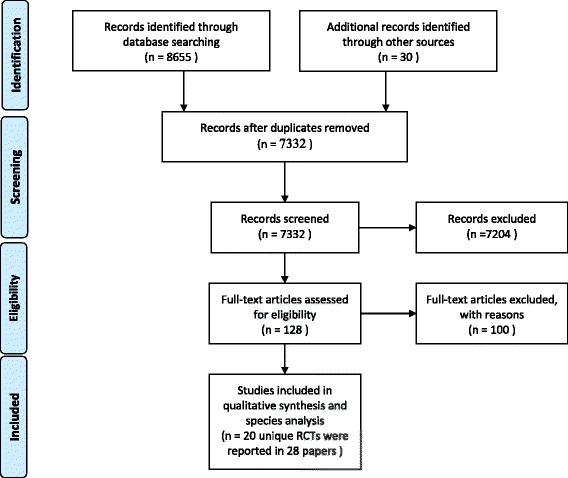
BACKGROUND: A negative experience in childbirth is associated with chronic maternal morbidities. The aim of this systematic review and meta-analysis was to identify currently available successful interventions to create a positive perception of childbirth experience which can prevent psychological birth trauma. METHODS: Randomized controlled trials of interventions in pregnancy or labour which aimed to improve childbirth experience versus usual care were identified from 1994 to September 2016. Low risk pregnant or childbearing women were chosen as the study population. PEDRO scale and Cochrane risk of bias tool were used for quality assessment. Pooled effect estimates were calculated when more than two studies had similar intervention. If it was not possible to include a study in the meta-analysis, its data were summarized narratively. RESULTS: After screening of 7832 titles/abstracts, 20 trials including 22,800 participants from 12 countries were included. Successful strategies to create a positive perception of childbirth experience were supporting women during birth (Risk Ratio = 1.35, 95% Confidence Interval: 1.07 to 1.71), intrapartum care with minimal intervention (Risk Ratio = 1.29, 95% Confidence Interval:1.15 to 1.45) and birth preparedness and readiness for complications (Mean Difference = 3.27, 95% Confidence Interval: 0.66 to 5.88). Most of the relaxation and pain relief strategies were not successful to create a positive birth experience (Mean Difference = - 2.64, 95% Confidence Intervention: - 6.80 to 1.52). CONCLUSION: The most effective strategies to create a positive birth experience are supporting women during birth, intrapartum care with minimal intervention and birth preparedness. This study might be helpful in clinical approaches and designing future studies about prevention of the negative and traumatic birth experiences.
Overview
The claims and statistics of this paper haven’t been checked yet.
Free: it reads the open-access text and checks the first 5 claims that cite a source we can check. Create a free account to check every claim.
Integrity signals
Registry
Cites
Statistics
Figures




Verification
Claims the paper makes
The claims and statistics of this paper haven’t been checked yet.
Free: it reads the open-access text and checks the first 5 claims that cite a source we can check. Create a free account to check every claim.
Claims other papers make about this one
Each is checked against this paper’s own text: does it say what the citing paper says it does?
The source backs part of the claim, not all of it — or backs it for a different population, condition or comparison.
In the citing paper
“These traumatic births can lead to various psychological consequences, including stress, anxiety, fear of death, and posttraumatic stress disorder [41].”
From Understanding mothers’ lived experiences of postpartum depression: a qualitative phenomenological study (2025) · cites this paper as [41]
Experimental — accuracy not yet measuredThe cited source says what the claim attributes to it.
In the citing paper
“A meta-analysis supports our findings, showing that continuous midwifery care empowers women with information on the optimal time to go to the hospital, leading to fewer labour interventions and greater satisfaction [57].”
From Effect of midwifery students’ continuity of care program on women’s experiences of maternity care: A randomised controlled trial (2026) · cites this paper as [57]
The cited source says what the claim attributes to it.
In the citing paper
“Childbirth is among the most challenging psychological events for women, with 10–34% of women experiencing traumatic birth experiences.”
From Understanding mothers’ lived experiences of postpartum depression: a qualitative phenomenological study (2025) · cites this paper as [41]
Self-check
Percentages, sums and reported differences re-computed from the paper’s own numbers.
The self-check needs the paper’s full text.
Citations
Cites
Methods of Meta-Analysis: Correcting Error and Bias in Research Findings
Schmidt, F. L., & Hunter, J. E. (2015) · doi:10.4135/9781483398105 · Cited by 5,542
Midwife-led continuity models versus other models of care for childbearing women
Sandall, J., Soltani, H., Gates, S., Shennan, A., & Devane, D. (2013) · Cochrane Database of Systematic Reviews · doi:10.1002/14651858.cd004667.pub3 · Cited by 1,226
Continuous support for women during childbirth
Hodnett, E. D., Gates, S., Hofmeyr, G. J., & Sakala, C. (2012) · Cochrane Database of Systematic Reviews · doi:10.1002/14651858.cd003766.pub4 · Cited by 1,155
Pain and women's satisfaction with the experience of childbirth: A systematic review
Hodnett, E. D. (2002) · American Journal of Obstetrics and Gynecology · doi:10.1016/s0002-9378(02)70189-0 · Cited by 967 · cited 5×
“Ethically it is not appropriate to conduct a RCT on professional behavior of caregivers [14].”
BackgroundInfluentialContinuous Support for Women During Childbirth
Hodnett, E. D., Gates, S., Hofmeyr, G. J., & Sakala, C. (2005) · Birth · doi:10.1111/j.0730-7659.2005.00336.x · Cited by 886
Prevalence and Predictors of Women's Experience of Psychological Trauma During Childbirth
Soet, J. E., Brack, G. A., & DiIorio, C. (2003) · Birth · doi:10.1046/j.1523-536x.2003.00215.x · Cited by 733 · cited 9×
“Therefore, it is evident there is a lack of recommendations within national guidelines regarding the prevention of PBT [1, 13].”
BackgroundInfluentialWomen's perceptions and experiences of a traumatic birth: a meta-ethnography
Elmir, R., Schmied, V., Wilkes, L., & Jackson, D. (2010) · Journal of Advanced Nursing · doi:10.1111/j.1365-2648.2010.05391.x · Cited by 432 · cited 7×
“Therefore, it is evident there is a lack of recommendations within national guidelines regarding the prevention of PBT [1, 13].”
BackgroundInfluentialPosttraumatic stress disorder after childbirth: A cross sectional study
Wijma, K., Söderquist, J., & Wijma, B. (1997) · Journal of Anxiety Disorders · doi:10.1016/s0887-6185(97)00041-8 · Cited by 418 · cited 1×
“Since then, studies began to assess maternal experience with regard to psychological aspects of childbirth [20].”
BackgroundDencker, A., Taft, C., Bergqvist, L., Lilja, H., & Berg, M. (2010) · BMC Pregnancy and Childbirth · doi:10.1186/1471-2393-10-81 · Cited by 365 · cited 2×
“It should be noted access to maternity care is directly influenced by socioeconomic disparities [52]; this confounding factor has been compared between groups across different studies and no differences were detected.”
BackgroundResultAyers, S., Eagle, A., & Waring, H. (2006) · Psychology, Health & Medicine · doi:10.1080/13548500600708409 · Cited by 345 · cited 7×
“Therefore, it is evident there is a lack of recommendations within national guidelines regarding the prevention of PBT [1, 13].”
BackgroundInfluentialPain and women's satisfaction with the experience of childbirth: A systematic review*1
HODNETT, E. D. (2002) · American Journal of Obstetrics and Gynecology · doi:10.1067/mob.2002.121141 · Cited by 310
The impact of subjective birth experiences on post-traumatic stress symptoms: a longitudinal study
Garthus-Niegel, S., von Soest, T., Vollrath, M. E., & Eberhard-Gran, M. (2013) · Archives of Women's Mental Health · doi:10.1007/s00737-012-0301-3 · Cited by 297
Experience of labor and birth in 1111 women
Waldenström, U. (1999) · Journal of Psychosomatic Research · doi:10.1016/s0022-3999(99)00043-4 · Cited by 274 · cited 1×
“As childbirth experience might be affected by maternal socioeconomic status [23, 24], we removed studies conducted among women belonging to a special socioeconomic situation (e.”
MethodHypnosis for pain management during labour and childbirth
Madden, K., Middleton, P., Cyna, A. M., Matthewson, M., & Jones, L. (2016) · Cochrane Database of Systematic Reviews · doi:10.1002/14651858.cd009356.pub3 · Cited by 242
AYERS, S. (2004) · Clinical Obstetrics and Gynecology · doi:10.1097/01.grf.0000129919.00756.9c · Cited by 240 · cited 1×
“Background Childbirth is one of the most challenging psychological events in a mother’s life, as 10–34% of all childbearing women are faced with traumatic birth experiences [1, 2].”
BackgroundContinuous support for women during childbirth (Review)
HODNETT, E. D., Gates, S., Gj, H., & Sakala, C. (2011) · Cited by 220
Nilsson, C., Lundgren, I., Karlström, A., & Hildingsson, I. (2012) · Women and Birth · doi:10.1016/j.wombi.2011.06.001 · Cited by 217 · cited 8×
“A negative experience in childbirth is associated with post-traumatic stress disorder (PTSD), disruption to interpersonal relationships, dysfunctional maternalinfancy bonding [3–5], reduction in rates of exclusive breastfeeding [6], inappropriate utilization of maternal and newborn care services [7], fear of childbirt…”
BackgroundInfluentialChildbirth‐related post‐traumatic stress disorder in couples: A qualitative study
Nicholls, K., & Ayers, S. (2007) · British Journal of Health Psychology · doi:10.1348/135910706x120627 · Cited by 211 · cited 7×
“Therefore, it is evident there is a lack of recommendations within national guidelines regarding the prevention of PBT [1, 13].”
BackgroundInfluentialJourney to confidence: women's experiences of pain in labour and relational continuity of care
Leap, N., Sandall, J., Buckland, S., & Huber, U. (2010) · Journal of Midwifery & Women's Health · doi:10.1016/j.jmwh.2010.02.001 · Cited by 196 · cited 1×
“Continuity of midwife care, improves the birth experience through various agents including maternal selfmanagement of pain, ability to cope with the labour challenge, control over the birth process, support from trusted experts and reduction of stressful examinations and interventions [46, 48].”
BackgroundMidwife continuity of care models versus other models of care for childbearing women
Sandall, J., Fernandez Turienzo, C., Devane, D., Soltani, H., Gillespie, P., Gates, S., Jones, L. V., Shennan, A. H., & Rayment-Jones, H. (2024) · Cochrane Database of Systematic Reviews · doi:10.1002/14651858.cd004667.pub6 · Cited by 192
Impact of Birth Trauma on Breast-feeding: A Tale of Two Pathways
Beck, C. T., & Watson, S. (2008) · Nursing Research · doi:10.1097/01.nnr.0000313494.87282.90 · Cited by 190 · cited 8×
“A negative experience in childbirth is associated with post-traumatic stress disorder (PTSD), disruption to interpersonal relationships, dysfunctional maternalinfancy bonding [3–5], reduction in rates of exclusive breastfeeding [6], inappropriate utilization of maternal and newborn care services [7], fear of childbirt…”
BackgroundInfluentialLanger, A., Campero, L., Garcia, C., & Reynoso, S. (1998) · BJOG: An International Journal of Obstetrics & Gynaecology · doi:10.1111/j.1471-0528.1998.tb09936.x · Cited by 181 · cited 4×
“Independently, “access to prenatal care” was reported in some studies and its baseline similarity was confirmed between the control and experimental groups [16, 27, 31].”
BackgroundMethodInfluentialPEDro or Cochrane to Assess the Quality of Clinical Trials? A Meta-Epidemiological Study
Armijo-Olivo, S., da Costa, B. R., Cummings, G. G., Ha, C., Fuentes, J., Saltaji, H., & Egger, M. (2015) · PLOS ONE · doi:10.1371/journal.pone.0132634 · Cited by 171 · cited 1×
“re-evaluated with the Cochrane tool [25].”
Hodnett, E. D. (2002) · JAMA · doi:10.1001/jama.288.11.1373 · Cited by 159
McKenzie-McHarg, K., Ayers, S., Ford, E., Horsch, A., Jomeen, J., Sawyer, A., Stramrood, C., Thomson, G., & Slade, P. (2015) · Journal of Reproductive and Infant Psychology · doi:10.1080/02646838.2015.1031646 · Cited by 158 · cited 1×
“The meeting concluded that there are no published studies directly aimed at preventing psychological trauma in childbirth [10].”
BackgroundPang, M. W., Leung, T. N., Lau, T. K., & Hang Chung, T. K. (2008) · Birth · doi:10.1111/j.1523-536x.2008.00225.x · Cited by 156 · cited 8×
“A negative experience in childbirth is associated with post-traumatic stress disorder (PTSD), disruption to interpersonal relationships, dysfunctional maternalinfancy bonding [3–5], reduction in rates of exclusive breastfeeding [6], inappropriate utilization of maternal and newborn care services [7], fear of childbirt…”
BackgroundInfluentialMassage or music for pain relief in labour: A pilot randomised placebo controlled trial
Kimber, L., McNabb, M., Court, C. M., Haines, A., & Brocklehurst, P. (2008) · European Journal of Pain · doi:10.1016/j.ejpain.2008.01.004 · Cited by 150 · cited 7×
“found as a hidden factor in the others [33, 34, 42, 46].”
BackgroundMethodResultInfluentialDebriefing interventions for the prevention of psychological trauma in women following childbirth
Bastos, M. H., Furuta, M., Small, R., McKenzie-McHarg, K., & Bick, D. (2015) · Cochrane Database of Systematic Reviews · doi:10.1002/14651858.cd007194.pub2 · Cited by 145 · cited 1×
“As there is no evidence to defend postpartum interventions for the prevention of psychological trauma [18], there is no high-quality data available to support prenatal interventions for the prevention of PBT.”
BackgroundA randomised controlled trial of epidural compared with non‐epidural analgesia in labour
Howell, C. J., Kidd, C., Roberts, W., Upton, P., Lucking, L., Jones, P. W., & Johanson, R. B. (2001) · BJOG: An International Journal of Obstetrics & Gynaecology · doi:10.1111/j.1471-0528.2001.00012.x · Cited by 143 · cited 4×
“All included studies measured the childbirth experience within three months of the birth; three studies repeated measurements after several months [36, 40, 43].”
BackgroundMethodInfluentialAn Early Labor Assessment Program: A Randomized, Controlled Trial
McNiven, P. S., Williams, J. I., Hodnett, E., Kaufman, K., & Hannah, M. E. (1998) · Birth · doi:10.1046/j.1523-536x.1998.00005.x · Cited by 137 · cited 7×
“found as a hidden factor in the others [33, 34, 42, 46].”
BackgroundMethodResultInfluentialSupport to woman by a companion of her choice during childbirth: a randomized controlled trial
Bruggemann, O. M., Parpinelli, M. A., Osis, M. J., Cecatti, J. G., & Neto, A. S. C. (2007) · Reproductive Health · doi:10.1186/1742-4755-4-5 · Cited by 132 · cited 5×
“social network (four studies) [27, 28, 32, 35], a nurse (one study) [30] or a hired companion (two studies) [29, 31]; all of them were trained to provide labour support.”
BackgroundMethodInfluentialEffect of music therapy during vaginal delivery on postpartum pain relief and mental health
Simavli, S., Kaygusuz, I., Gumus, I., Usluogulları, B., Yildirim, M., & Kafali, H. (2014) · Journal of Affective Disorders · doi:10.1016/j.jad.2013.12.027 · Cited by 125 · cited 5×
“One study tested the effect of self-selected music during labour [41] and one study used epidural analgesia as a pain relief method for childbearing women [43].”
BackgroundMethodInfluentialMcLachlan, H., Forster, D., Davey, M., Farrell, T., Flood, M., Shafiei, T., & Waldenström, U. (2016) · BJOG: An International Journal of Obstetrics & Gynaecology · doi:10.1111/1471-0528.13713 · Cited by 123 · cited 5×
“found as a hidden factor in the others [33, 34, 42, 46].”
BackgroundMethodInfluentialEffects of providing hospital-based doulas in health maintenance organization hospitals
Gordon, N. (1999) · Obstetrics & Gynecology · doi:10.1016/s0029-7844(98)00430-x · Cited by 120 · cited 2×
“The childbirth experience was measured as a primary outcome in seven studies [27, 29, 33, 40, 41, 44, 45] and as a secondary outcome in the remaining studies.”
BackgroundMethodSchepper, S. D., Vercauteren, T., Tersago, J., Jacquemyn, Y., Raes, F., & Franck, E. (2015) · Midwifery · doi:10.1016/j.midw.2015.08.010 · Cited by 120 · cited 1×
“As childbirth experience might be affected by maternal socioeconomic status [23, 24], we removed studies conducted among women belonging to a special socioeconomic situation (e.”
MethodKuo, S., Lin, K., Hsu, C., Yang, C.-C., Chang, M.-Y., Tsao, C.-M., & Lin, L.-C. (2009) · International Journal of Nursing Studies · doi:10.1016/j.ijnurstu.2009.11.012 · Cited by 104 · cited 3×
“01), feelings of control and fulfillment of expectations [45].”
BackgroundMethodReleasing and relieving encounters: experiences of pregnancy and childbirth
Lundgren, I. (2004) · Scandinavian Journal of Caring Sciences · doi:10.1111/j.1471-6712.2004.00300.x · Cited by 93 · cited 1×
“Studies that used summated scales of the overall childbirth experience were not excluded because perception of overall experience was influenced by important factors, such as maternal expectations of birth, experienced complications during childbirth and the use of pain relief [47].”
MethodRandomised trial of structured antenatal training sessions to improve the birth process
Maimburg, R., Væth, M., Dürr, J., Hvidman, L., & Olsen, J. (2010) · BJOG: An International Journal of Obstetrics & Gynaecology · doi:10.1111/j.1471-0528.2010.02584.x · Cited by 85 · cited 3×
“All included studies measured the childbirth experience within three months of the birth; three studies repeated measurements after several months [36, 40, 43].”
BackgroundMethodImmersion in Water in the First Stage of Labor: A Randomized Controlled Trial
Eckert, K. A., Turnbull, D. A., & MacLennan, A. H. (2001) · Birth · doi:10.1046/j.1523-536x.2001.00084.x · Cited by 85 · cited 7×
“All included studies measured the childbirth experience within three months of the birth; three studies repeated measurements after several months [36, 40, 43].”
BackgroundMethodInfluentialFemale Relatives or Friends Trained as Labor Doulas: Outcomes at 6 to 8 Weeks Postpartum
Campbell, D., Scott, K. D., Klaus, M. H., & Falk, M. (2007) · Birth · doi:10.1111/j.1523-536x.2007.00174.x · Cited by 81 · cited 6×
“social network (four studies) [27, 28, 32, 35], a nurse (one study) [30] or a hired companion (two studies) [29, 31]; all of them were trained to provide labour support.”
BackgroundInfluentialAyers, S., Jessop, D., Pike, A., Parfitt, Y., & Ford, E. (2014) · Journal of Affective Disorders · doi:10.1016/j.jad.2013.10.022 · Cited by 76
Hundley, V. A., Milne, J. M., Glazener, C. M. A., & Mollison, J. (1997) · BJOG: An International Journal of Obstetrics & Gynaecology · doi:10.1111/j.1471-0528.1997.tb10974.x · Cited by 70 · cited 5×
“This finding is favourable because the first six months of birth is considered as the best time for surveys about maternity care used for health planning [44].”
BackgroundMethodResultInfluentialPentadic Cartography: Mapping Birth Trauma Narratives
Beck, C. T. (2006) · Qualitative Health Research · doi:10.1177/1049732305285968 · Cited by 67
Plautz, A., & Meekers, D. (2007) · Reproductive Health · doi:10.1186/1742-4755-4-1 · Cited by 66
Antenatal Hypnosis Training and Childbirth Experience: A Randomized Controlled Trial
Werner, A., Uldbjerg, N., Zachariae, R., Wu, C. S., & Nohr, E. A. (2013) · Birth · doi:10.1111/birt.12071 · Cited by 56 · cited 4×
“Two trials compared water immersion during labour with routine care [36, 37], two studies evaluated the effect of self-hypnobirthing [38, 39], one study compared three arms, which were massaging during labour, placebo relaxing music and usual care [42].”
BackgroundMethodInfluentialYuenyong, S., O’Brien, B., & Jirapeet, V. (2012) · Journal of Obstetric, Gynecologic & Neonatal Nursing · doi:10.1111/j.1552-6909.2011.01311.x · Cited by 53 · cited 10×
“social network (four studies) [27, 28, 32, 35], a nurse (one study) [30] or a hired companion (two studies) [29, 31]; all of them were trained to provide labour support.”
BackgroundMethodInfluentialMORHASON‐BELLO, I. O., ADEDOKUN, B. O., OJENGBEDE, O. A., OLAYEMI, O., OLADOKUN, A., & FABAMWO, A. O. (2009) · Australian and New Zealand Journal of Obstetrics and Gynaecology · doi:10.1111/j.1479-828x.2009.00983.x · Cited by 46 · cited 3×
“A certificated trainer had trained the birth companions in a single 2-h session [28, 35], multiple sessions [29–31] or via educational leaflets [27, 32].”
BackgroundHealth services utilization of women following a traumatic birth
Turkstra, E., Creedy, D. K., Fenwick, J., Buist, A., Scuffham, P., & Gamble, J. A. (2015) · Archives of Women s Mental Health · doi:10.1007/s00737-014-0495-7 · Cited by 40 · cited 1×
“A negative experience in childbirth is associated with post-traumatic stress disorder (PTSD), disruption to interpersonal relationships, dysfunctional maternalinfancy bonding [3–5], reduction in rates of exclusive breastfeeding [6], inappropriate utilization of maternal and newborn care services [7], fear of childbirt…”
BackgroundJournal club for obstetricians, midwives and obstetric nurses
Siassakos, D. M. (2010) · Explore Bristol Research · Cited by 33
Childbirth expectations and correlates at the final stage of pregnancy in Chinese expectant parents
Zhang, X., & Lu, H. S. (2014) · International Journal of Nursing Sciences · doi:10.1016/j.ijnss.2014.05.019 · Cited by 22 · cited 1×
“definition reflects most of the key elements of childbirth experience such as feelings of control, fulfillment of expectations [22], confidence and participation in decision making [21].”
BackgroundPregnancy, Childbirth and Postpartum Experiences of Israeli Women in the Negev
Segal‐Engelchin, D., Sarid, O., & Cwikel, J. (2009) · Journal of Prenatal and Perinatal Psychology and Health · Cited by 13
Development and Psychometric Properties of The Delayed Childbearing Questionnaire (DCBQ-55)
Behboudi‐Gandevani, S., Ziaei, S., Kazemnejad, A., Farahani, F. K., & Vaismoradi, M. (2018) · Healthcare · doi:10.3390/healthcare6040120 · Cited by 6
The HATCh Trial: hypnosis antenatal training for childbirth.
Cyna, A. M. (2011) · Adelaide Research & Scholarship (AR&S) (University of Adelaide) · Cited by 4
A randomized controlled trial of the effects of the bath in labour
Rush, J. P. (1999) · TSpace (University of Toronto) · Cited by 3
Research works printed but not linked: 2
- Nichols FH The meaning of the childbirth experience: A review of the literature J Perinat Educ 1996 5 71 77
- Waltz CF, Strickland OL, Lenz ER. Measurement in nursing and health research. 4th ed: Springer Publishing Company; 2010.
Cited by
Childbirth experience in women participating in a continuity of midwifery care project
Hildingsson, I., Karlström, A., & Larsson, B. (2021) · Women and Birth · doi:10.1016/j.wombi.2020.04.010 · Cited by 67
Walter, M. H., Abele, H., & Plappert, C. F. (2021) · Frontiers in Endocrinology · doi:10.3389/fendo.2021.742236 · Cited by 164
“Important factors that have been shown to reduce stress during birth are the birth environment, which can hinder or support physiological birth depending on the stress level exerted on the birthing woman (101), as well as intrapartum care with minimal intervention and birth preparedness (102), which requires a one-to-…”
BackgroundLeinweber, J., Fontein‐Kuipers, Y., Karlsdottir, S. I., Ekström‐Bergström, A., Nilsson, C., Stramrood, C., & Thomson, G. (2023) · Birth · doi:10.1111/birt.12666 · Cited by 113
Hu, Y., Lu, H. S., Huang, J., & Zang, Y. (2021) · Journal of Clinical Nursing · doi:10.1111/jocn.15865 · Cited by 100
Factors Influencing Couples’ Sexuality in the Puerperium: A Systematic Review
Drozdowskyj, E. S., Castro, E. G., López, E. T., Taland, I. B., & Actis, C. C. (2019) · Sexual Medicine Reviews · doi:10.1016/j.sxmr.2019.07.002 · Cited by 97
Metadata
- Authors
- Taheri, M., Takian, A., Taghizadeh, Z., Jafari, N., & Sarafraz, N.
- Affiliations
- Tehran University of Medical Sciences (IR)
- Ministry of Health and Medical Education (IR)
- Corresponding author
- Taghizadeh, Ziba
- Venue
- Reproductive Health
- Published
- 2018-05-02
- Volume
- 15
- Issue
- 1
- Pages
- 73-73
- ISSN
- 1742-4755 (ISSN-L)
- PMC
- PMC5932889
- OpenAlex
- W2807579791
- Cited by
- 253
- References
- 55
- Citations by year
- 2026: 21 · 2025: 41 · 2024: 66 · 2023: 34 · 2022: 36 · 2021: 23 · 2020: 22 · 2019: 7 · 2018: 3
- FWCI
- 2.22
- Type
- journal article
- Language
- en
- Open access
- gold
- doi.org
- Licence
- cc-by
- creativecommons.org/licenses/by/4.0/ (tdm)
- Locations
- Reproductive Health (publishedVersion, cc-by)
- Europe PMC (PubMed Central) (publishedVersion, other-oa)
- PubMed Central (publishedVersion, cc-by)
- PubMed (publishedVersion)
- DOAJ (DOAJ: Directory of Open Access Journals) (submittedVersion, cc-by-sa)
- Funders
- Tehran University of Medical Sciences and Health Services (95-02-28-32630)
- Topics
- Health Sciences › Medicine › Obstetrics and Gynecology › Maternal and Perinatal Health Interventions
- Health Sciences › Medicine › Public Health, Environmental and Occupational Health › Maternal Mental Health During Pregnancy and Postpartum
- Health Sciences › Medicine › Obstetrics and Gynecology › Pregnancy-related medical research
- Keywords
- childbirth experience, positive birth experience, intrapartum care, minimal intervention, childbirth support, childbirth preparation, relaxation techniques, pain relief during labour, prenatal intervention, maternal morbidity
- MeSH terms
- Female, Humans, Labor, Obstetric, Perception, Pregnancy, Prenatal Care, Stress, Psychological, Randomized Controlled Trials as Topic, Patient Satisfaction, Parturition, Postpartum Period, Pain Management
About these checks
Registry, retraction, Cites and statistics results are computed, not judged, with one exception: a printed reference that no index lists is read once by a model before it counts as a citation error. Claims are extracted by a model and kept only when their quote appears verbatim in the text; each cited source is then checked, with a model’s help, for whether it says what the claim relies on. Those verdicts can be wrong — read the claim’s quote and the cited source before relying on one.
Statistics and arithmetic are recomputed, not judged.
Confidence bands are shown only for fields calibrated on our annotated test set. None is calibrated yet, so no band is shown.
What counts as a claim ›How we measure confidence ›How we check this ›
Are you an author, or do you see a problem with this page? Request a review
Data sources
Bibliographic data: Semantic Scholar, OpenAlex, Crossref.
Contains information from the Semantic Scholar Academic Graph Datasets, made available under the ODC Attribution License (ODC-BY 1.0).
Semantic Scholar’s data is described in: Kinney, R., et al. (2023). The Semantic Scholar Open Data Platform. arXiv:2301.10140.
