

The DOI matches its Crossref record; 64 of the 64 references it cites were found in a registry or an index.
Interleukin-6 and C-reactive protein, successful aging, and mortality: the PolSenior study
Open accessAbstract
BACKGROUND: In the elderly, chronic low-grade inflammation (inflammaging) is a risk factor for the development of aging-related diseases and frailty. Using data from several thousand Eastern Europeans aged 65 years and older, we investigated whether the serum levels of two proinflammatory factors, interleukin-6 (IL-6) and C-reactive protein (CRP), were associated with physical and cognitive performance, and could predict mortality in successfully aging elderly. RESULTS: IL-6 and CRP levels systematically increased in an age-dependent manner in the entire study group (IL-6: n = 3496 individuals, p < 0.001 and CRP: n = 3632, p = 0.003), and in the subgroup of successfully aging individuals who had never been diagnosed with cardiovascular disease, myocardial infarction, stroke, type 2 diabetes, or cancer, and had a Mini Mental State Examination (MMSE) score ≥24 and a Katz Activities of Daily Living (ADL) score ≥5 (IL-6: n = 1258, p < 0.001 and CRP: n = 1312, p < 0.001). In the subgroup of individuals suffering from aging-related diseases/disability, only IL-6 increased with age (IL-6: n = 2238, p < 0.001 and CRP: n = 2320, p = 0.249). IL-6 and CRP levels were lower in successfully aging individuals than in the remaining study participants (both p < 0.001). Higher IL-6 and CRP levels were associated with poorer physical performance (lower ADL score) and poorer cognitive performance (lower MMSE score) (both p < 0.001). This association remained significant after adjusting for age, gender, BMI, lipids, estimated glomerular filtration rate, and smoking status. Longer survival was associated with lower concentrations of IL-6 and CRP not only in individuals with aging-related diseases/disability (HR = 1.063 per each pg/mL, 95 % CI: 1.052-1.074, p < 0.001 and HR = 1.020 per each mg/L, 95 % CI: 1.015-1.025, p < 0.001, respectively) but also in the successfully aging subgroup (HR = 1.163 per each pg/mL, 95 % CI: 1.128-1.199, p < 0.001 and HR = 1.074 per each mg/L, 95 % CI: 1.047-1.100, p < 0.001, respectively). These associations remained significant after adjusting for age, gender, BMI, lipids and smoking status. The Kaplan-Meier survival curves showed similar results (all p < 0.001). CONCLUSIONS: Both IL-6 and CRP levels were good predictors of physical and cognitive performance and the risk of mortality in both the entire elderly population and in successfully aging individuals.
Overview
The claims and statistics of this paper haven’t been checked yet.
Run the check — free, no account needed. It reads the open-access text and checks the sources it cites.
Integrity signals
Registry
Cites
Statistics
Figures
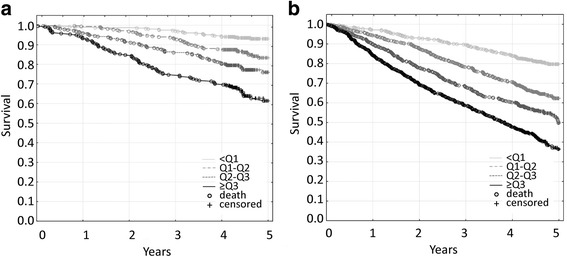
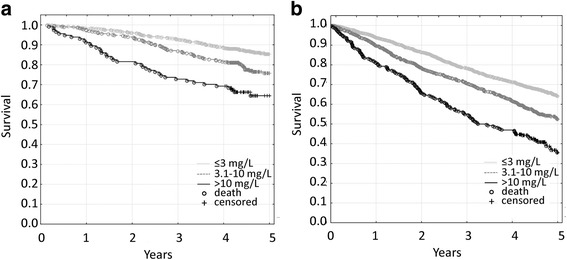
Verification
Claims the paper makes
The claims and statistics of this paper haven’t been checked yet.
Run the check — free, no account needed. It reads the open-access text and checks the sources it cites.
Claims other papers make about this one
Each is checked against this paper’s own text: does it say what the citing paper says it does?
The source backs part of the claim, not all of it — or backs it for a different population, condition or comparison.
In the citing paper
“In the serum of healthy adults, IL-6 is normally lower than 2 pg/mL or undetectable, while a gradual increment of serum IL-6 amounts with advancing ages (Fig. 3) [39, 40].”
From The double-edged effects of IL-6 in liver regeneration, aging, inflammation, and diseases (2024) · cites this paper as [39]
Experimental — accuracy not yet measuredIn the citing paper
“This leads to an increased production of pro-inflammatory cytokines and acute phase proteins (59, 60).”
From Immunosenescence and Its Hallmarks: How to Oppose Aging Strategically? A Review of Potential Options for Therapeutic Intervention (2019) · cites this paper as [59]
In the citing paper
“Chronic and low-grade inflammation can lead to tissue dysfunction and degeneration.”
From Immunosenescence and Its Hallmarks: How to Oppose Aging Strategically? A Review of Potential Options for Therapeutic Intervention (2019) · cites this paper as [59]
In the citing paper
“In the course of aging, there is a reduction in the ability to endure consequences of antigenic, chemical, physical, and nutritional triggers of inflammation.”
From Immunosenescence and Its Hallmarks: How to Oppose Aging Strategically? A Review of Potential Options for Therapeutic Intervention (2019) · cites this paper as [59]
Self-check
Percentages, sums and reported differences re-computed from the paper’s own numbers.
The self-check needs the paper’s full text.
Citations
Cites
Folstein, M. F., Folstein, S. E., & McHugh, P. R. (1975) · Journal of Psychiatric Research · doi:10.1016/0022-3956(75)90026-6 · Cited by 88,282
Hirono, N., Mori, E., Ikejiri, Y., Imamura, T., Shimomura, T., Hashimoto, M., Yamashita, H., & Ikeda, M. (1997) · PubMed · Cited by 21,012
Kok, J. S., Berg, I. J., & Scherder, E. J. A. (2013) · Dementia and Geriatric Cognitive Disorders Extra · doi:10.1159/000353441 · Cited by 20,589
Older Adults' Reasons for Using Technology while Aging in Place
Peek, S. T. M., Luijkx, K. G., Rijnaard, M. D., Nieboer, M. E., van der Voort, C. S., Aarts, S., van Hoof, J., Vrijhoef, H. J., & Wouters, E. (2015) · Gerontology · doi:10.1159/000430949 · Cited by 19,852
Sensitivity and False Alarm Rate of a Fall Sensor in Long-Term Fall Detection in the Elderly
Kangas, M., Korpelainen, R., Vikman, I., Nyberg, L., & Jämsä, T. J. (2014) · Gerontology · doi:10.1159/000362720 · Cited by 19,007
Xu, H., Barnes, G. T., Yang, Q., Tan, G., Yang, D., Chou, C. J., Sole, J., Nichols, A., Ross, J. S., Tartaglia, L. A., et al. (2003) · Journal of Clinical Investigation · doi:10.1172/jci200319451 · Cited by 6,760
Katz, S. (1963) · JAMA · doi:10.1001/jama.1963.03060120024016 · Cited by 2,421
Fatty acid–induced NLRP3-ASC inflammasome activation interferes with insulin signaling
Wen, H., Gris, D., Lei, Y., Jha, S., Zhang, L., Huang, M. T.-H., Brickey, W. J., & Ting, J. P.-Y. (2011) · Nature Immunology · doi:10.1038/ni.2022 · Cited by 1,698
Through Ageing, and Beyond: Gut Microbiota and Inflammatory Status in Seniors and Centenarians
Biagi, E., Nylund, L., Candela, M., Ostan, R., Bucci, L., Pini, E., Nikkïla, J., Monti, D., Satokari, R., Franceschi, C., et al. (2010) · PLoS ONE · doi:10.1371/journal.pone.0010667 · Cited by 1,483
Vasan, R. S., SULLIVAN, L. M., Roubenoff, R., Dinarello, C. A., Harris, T. B., Benjamin, E. J., Sawyer, D. B., Levy, D. A., Wilson, P. W. F., & D’Agostino, R. B. (2003) · Circulation · doi:10.1161/01.cir.0000057810.48709.f6 · Cited by 763
Cited by
Sorted by citations
Items 301–400 of 445
SATB1, senescence and senescence‐related diseases
Qi, W., Bai, J., Wang, R., Zeng, X., & Zhang, L. (2024) · Journal of Cellular Physiology · doi:10.1002/jcp.31327 · Cited by 6
Immune cell phenotypes and mortality in the Framingham Heart Study
Ragab, A. A. Y., Doyle, M. F., Chen, J., Fang, Y., Lunetta, K. L., & Murabito, J. M. (2024) · Immunity & Ageing · doi:10.1186/s12979-024-00431-6 · Cited by 9
Study of immunosenescence in the occurrence and immunotherapy of gastrointestinal malignancies
Dong, D., Xue, Y., Liu, H., Xu, J., Guo, J., Guo, W., Li, X., Wang, F., Zhang, D., Liu, K., et al. (2025) · Seminars in Cancer Biology · doi:10.1016/j.semcancer.2025.01.007 · Cited by 6
Carter, M., Pacini, S., & Ruggiero, M. (2020) · American Journal of Immunology · doi:10.3844/ajisp.2020.8.18 · Cited by 5
Inflammaging in Dermatology: A New Frontier for Research
Haque, A., & Woolery-Lloyd, H. C. (2021) · Journal of Drugs in Dermatology · doi:10.36849/jdd.5481 · Cited by 5
Soliman, A. M., Das, S., & Mahakkanukrauh, P. (2021) · Current Medicinal Chemistry · doi:10.2174/0929867328666210901122359 · Cited by 5
Linking alcohol use to Alzheimer’s disease: Interactions with aging and APOE along immune pathways
Monnig, M. A., & Shah, K. (2024) · Medical Research Archives · doi:10.18103/mra.v12i8.5228 · Cited by 6
Chronic Inflammation and Aging (Inflammaging)
Tan, B. L., & Norhaizan, M. E. (2021) · Springer eBooks · doi:10.1007/978-3-030-82859-2_4 · Cited by 4
Miljkovic, I., Cvejkus, R., An, P., Thyagarajan, B., Christensen, K., Wojczynski, M. K., Schupf, N., & Zmuda, J. M. (2022) · Frontiers in Clinical Diabetes and Healthcare · doi:10.3389/fcdhc.2022.753986 · Cited by 4
Paal, K., Stranz, B., Thurner, E.-M., Niedrist, T., Renner, W., & Langsenlehner, T. (2024) · World Journal of Urology · doi:10.1007/s00345-024-05409-z · Cited by 4
Jamshidi, S., Eskandari, Z., Ojaroodi, A. F., Keramat, S., & Stanek, A. (2025) · Nutrients · doi:10.3390/nu17142303 · Cited by 6
Segura-Saldaña, P., Chambergo‐Michilot, D., Alarcón-Santos, J., Aguilar, C., Álvarez-Vargas, M. L., Reyes, P. R. M. P., León-Vivar, R., & Pariona, M. (2021) · Revista Portuguesa de Cardiologia · doi:10.1016/j.repc.2021.03.010 · Cited by 4
Liver sinusoidal cells in aging
Gracia‐Sancho, J. (2024) · Elsevier eBooks · doi:10.1016/b978-0-323-95262-0.00004-8 · Cited by 4
Turcotte, L. M., Wang, T., Hemmer, M., Spellman, S. R., Arora, M., Yingst, A. M., Couriel, D. R., Alousi, A. M., Pidala, J., Knight, J. M., et al. (2018) · Transplantation and Cellular Therapy · doi:10.1016/j.bbmt.2018.08.011 · Cited by 4
Longitudinal Characterisation of Healthy Ageing in Rats using Multimodal Magnetic Resonance ImagingPreprint
MacNicol, E. (2021) · Thesis Commons (OSF Preprints) · doi:10.31237/osf.io/3vpyg · Cited by 3
Vascular aging: the role of hypertension, obesity and meta-inflammation
Zyubanova, I. V., Mordovin, V. F., Lichikaki, V. A., Manukyan, M. A., Хунхинова, С. А., Solonskaya, E. I., Rudenko, V. V., & Falkovskaya, А. Y. (2024) · Arterial’naya Gipertenziya (Arterial Hypertension) · doi:10.18705/1607-419x-2024-2474 · Cited by 3
Progress of immune senescence in multiple myeloma treatment resistance
Jia, Y., Yan, L., Fan, C., Sun, H., Zhou, X., & Shi, Z. (2025) · Discover Oncology · doi:10.1007/s12672-025-02136-8 · Cited by 4
Marques, D. A., Guay, L. M., Koogler, A. A., Ostrowski, T. D., & Kinkead, R. (2025) · Experimental Physiology · doi:10.1113/ep092722 · Cited by 3
Ferrando, S. J., Lynch, S. T., Dornbush, R. L., Groenendaal, E., Klepacz, L., Shahar, S., Bilal, A., Mansour, R., Aftab, S., & Libretti, A. (2025) · Journal of Psychiatric Research · doi:10.1016/j.jpsychires.2025.07.038 · Cited by 2
Vyhnánková, S., Lacina, L., Chovanec, M., Plzák, J., Smetana, K., Netušil, J., Kolář, M., & Šindelka, R. (2025) · International Journal of Molecular Sciences · doi:10.3390/ijms26188844 · Cited by 3
Wang, Y., Qi, H., Yu, Q., Yu, Q., Yu, M., Yang, F., Qiu, X., Chen, F., Ding, Y., Jiang, M., et al. (2025) · Archives of Gerontology and Geriatrics · doi:10.1016/j.archger.2025.106047 · Cited by 3
Bertolazzi, G., Calabrò, A., Accardi, G., Aiello, A., Caruso, C., Corsale, A. M., Simone, M. D., Meraviglia, S., & Candore, G. (2026) · Journal of Ageing and Longevity · doi:10.3390/jal6010009 · Cited by 3
Metabolic Stress and Immune Activation in Heart Failure With a Preserved Ejection Fraction
Pereira, A., Alvarez‐Argote, S., Meite, I., Inui, H., Sterling, J. K., Thorp, E. J., Feinstein, M. J., Filipp, M., & Thorp, E. B. (2026) · Immunological Reviews · doi:10.1111/imr.70103 · Cited by 4
Genetic Correlates of Biological Aging and the Influence on Prediction of Mortality
Akeju, O., Mens, M. M. J., Warmerdam, R., Dijkema, M. X. L., van den Biggelaar, A. H. J., Franke, L., Goudsmit, J., & Wu, J. W. (2024) · The Journals of Gerontology Series A · doi:10.1093/gerona/glae024 · Cited by 4
Sex-specific relationships of inflammatory biomarkers with blood pressure in older adults
Sulicka‐Grodzicka, J., Wizner, B., Zdrojewski, T. R., Mossakowska, M., Puzianowska‐Kuźnicka, M., Chudek, J. T., Więcek, A., Korkosz, M., Caiazzo, E., Maffia, P., et al. (2024) · GeroScience · doi:10.1007/s11357-024-01170-8 · Cited by 3
Self-citationVerlinden, S. F. F. (2024) · Frontiers in Aging · doi:10.3389/fragi.2024.1452453 · Cited by 4
Increased inflammation in older high-pressure glaucoma mice
Reinehr, S., Pamuk, M. R., Fuchshofer, R., Dick, H. B., & Joachim, S. C. (2024) · Neurobiology of Aging · doi:10.1016/j.neurobiolaging.2024.10.001 · Cited by 4
Work-family enrichment: A potential buffer of inflammation among black adults?
Thomas, N. D., Montgomery, S. C., Behers, B. J., Reyes, E., Ledermann, T., & Grzywacz, J. G. (2022) · Brain Behavior & Immunity - Health · doi:10.1016/j.bbih.2022.100517 · Cited by 3
Utility of Serum Interleukine-6 Level in Empty Nose Syndrome
Hsueh, H.-A., Lee, T., Huang, C., Chang, P., & Fu, C. (2023) · International Journal of Medical Sciences · doi:10.7150/ijms.83993 · Cited by 4
Social Regulation of the Neural Threat Response Predicts Subsequent Markers of Physical Health
Lin, J., Namaky, N., Costello, M. A., Uchino, B. N., Allen, J. P., & Coan, J. A. (2023) · Psychosomatic Medicine · doi:10.1097/psy.0000000000001238 · Cited by 3
Rajcic, D., Kromm, F., Hernández-Arriaga, A. M., Brandt, A., Baumann, A., Staltner, R., Camarinha‐Silva, A., & Bergheim, I. (2023) · Biomolecules · doi:10.3390/biom13111579 · Cited by 4
Chen, C., Lee, Y., Shen, C., & Cheng, C. (2025) · Internal and Emergency Medicine · doi:10.1007/s11739-025-03975-7 · Cited by 3
“Inflammaging” and Estradiol among Older U.S. Women: A Nationally Representative Longitudinal Study
Das, A. (2017) · Biodemography and Social Biology · doi:10.1080/19485565.2017.1403304 · Cited by 3
Olczak, E., Kuryłowicz, A., Wicik, Z., Kołodziej, P., Cakala, M., Buyanovskaya, O. A., Ślusarczyk, P., Mossakowska, M., & Puzianowska‐Kuźnicka, M. (2018) · Experimental Gerontology · doi:10.1016/j.exger.2018.12.006 · Cited by 3
Self-citationInhibition of an immunometabolic axis of mTORC1 activation extends mammalian healthspanPreprint
Widjaja, A. A., Lim, W., Viswanathan, S., Chothani, S. P., Corden, B., Goh, J. W. T., Tan, J., Pua, C. J., Lim, R., Singh, B. K., et al. (2023) · bioRxiv (Cold Spring Harbor Laboratory) · doi:10.1101/2023.07.09.548250 · Cited by 3
Macrophage-intrinsic MDA5-IRF5 axis drives HIV-1 icRNA-induced inflammatory responsesPreprint
Ramaswamy, S., Akiyama, H., Berrigan, J. L., Quiñones-Molina, A. A., Olson, A. J., Chen, Y., Liang, Y. M., Henderson, A. J., Asundi, A., Sagar, M., et al. (2024) · bioRxiv (Cold Spring Harbor Laboratory) · doi:10.1101/2024.09.06.611547 · Cited by 3
Park, J., You, Y., Kim, S. H., Ku, H.-J., Han, H.-J., Kim, C.-H., Kim, T., Sohn, M., Kim, I., & Baeg, C. (2025) · Life · doi:10.3390/life15071002 · Cited by 4
The roles of tertiary lymphoid structures in orchestrating immune responses in peripheral organs
Taniguchi, K., Yoshikawa, T., & Yanagita, M. (2025) · Inflammation and Regeneration · doi:10.1186/s41232-025-00393-2 · Cited by 3
A sex-adjusted 7-biomarker clinical aging clock for translational preventative medicine
Meyer, D. H., Mejia, G., Molière, A., Wangprapa, P., Khunlertkit, T., Teekakirikul, P., Ewald, C. Y., & Viecelli, C. (2025) · Scientific Reports · doi:10.1038/s41598-025-27478-9 · Cited by 2
Targeting immunosenescence in lung diseases: mechanistic insights and clinical interventions
Zhang, Y., Yu, X., Li, P., Ouyang, Y., Zhu, L., & Luo, F. (2026) · BMC Medicine · doi:10.1186/s12916-026-04833-9 · Cited by 2
Serum interleukin-6 levels are higher in old age subjects with Alzheimer’s dementia
Boccardi, V., Baroni, M., Cecchetti, R., Scamosci, M., Bastiani, P., & Mecocci, P. (2021) · Geriatric Care · doi:10.4081/gc.2021.9423 · Cited by 2
(2021) · Frontiers research topics · doi:10.3389/978-2-88966-718-5 · Cited by 3
Value Ranges and Clinical Comparisons of Serum DHEA-S, IL-6, and TNF-α in Western Lowland Gorillas
Edes, A. N., Zimmerman, D. M., Jourdan, B., Brown, J. L., & Edwards, K. L. (2022) · Animals · doi:10.3390/ani12192705 · Cited by 2
Chen, C., Fu, Y.-C., Lee, Y., Hsieh, K., Shen, C., & Cheng, C. (2023) · Frontiers in Pharmacology · doi:10.3389/fphar.2023.1166923 · Cited by 2
Gondo, J. B. K., Bouénizabila, E., Mayassi, H. K. F., Massip, L., Okamba, F. R., Matingou, D. G. L., Hermans, M. P., & Moukassa, D. (2023) · Advances in Biological Chemistry · doi:10.4236/abc.2023.133006 · Cited by 2
Vascular Responses to Acute Induced Inflammation With Aging: Does Fitness Matter?
Lefferts, E. C., & Ranadive, S. M. (2024) · Exercise and Sport Sciences Reviews · doi:10.1249/jes.0000000000000334 · Cited by 2
Immune profiles of pre-frail people living with HIV-1: a prospective longitudinal study
Kundura, L., Cezar, R., Gimenez, S., Pastore, M., Reynès, C., Sotto, A., Reynes, J., Allavena, C., Meyer, L., Makinson, A., et al. (2024) · Immunity & Ageing · doi:10.1186/s12979-024-00416-5 · Cited by 2
Effect of L‐4‐Thiazolylalanine (Protinol™) on skin barrier strength and skin protection
Haxaire, C., Liebel, F. T., Huang, G., Chen, S., Knapp, E., Idkowiak‐Baldys, J., & Glynn, J. (2023) · International Journal of Cosmetic Science · doi:10.1111/ics.12881 · Cited by 2
Zhang, N., Qu, X., Kang, L., Liu, X., & Zhu, W.-L. (2024) · Cureus · doi:10.7759/cureus.60511 · Cited by 2
Angiotensin converting enzyme (ACE) 1 expression in leukocytes of adults from 64 to 67 years oldPreprint
Bueno, V., Destro, P. H., Teixeira, D., & Frasca, D. (2022) · medRxiv · doi:10.1101/2022.07.27.22278062 · Cited by 2
Aging-Related Immune Cell Phenotypes and Mortality in the Framingham Heart StudyPreprint
Ragab, A. A. Y., Doyle, M. F., Chen, J., Fang, Y., Lunetta, K. L., & Murabito, J. M. (2023) · Research Square · doi:10.21203/rs.3.rs-3773986/v1 · Cited by 2
Bogaisky, M. (2019) · Springer eBooks · doi:10.1007/978-3-030-19625-7_6 · Cited by 1
Sensory evaluation of axillary odour samples of younger and older adults by a trained panel
Owsienko, D., Schwinn, L., Eskofier, B. M., Kiesswetter, E., & Loos, H. M. (2023) · Flavour and Fragrance Journal · doi:10.1002/ffj.3762 · Cited by 1
DVORETSKI, L. I., Викторовна, Т. С., MАMCHICH, D. S., Алексеевна, Е. Т., Игоревна, Т. О., Romanova, M. A., Николаевна, В. О., Игоревич, Б. Л., VASILIEVA, Y. Y., LYTKINA, K. A., et al. (2023) · The Bulletin of Contemporary Clinical Medicine · doi:10.20969/vskm.2023.16(4).7-15 · Cited by 2
Frailty assessment in patients with Behçet's syndrome: A cross-sectional monocentric study
Apaydın, H., Güven, S. C., Ulucaköy, R. K., Babaoğlu, H., Erdoğan, E. K., Orhan, K., & Armağan, B. (2024) · Reumatología Clínica (English Edition) · doi:10.1016/j.reumae.2024.09.005 · Cited by 1
Paoletti, J., Argueta, D. L., Denny, B. T., Derrick, J. L., Green, C. E., Lai, V. D., Medina, L. D., Schulz, P. E., Stinson, J. M., Wu‐Chung, E. L., et al. (2025) · Psychosomatic Medicine · doi:10.1097/psy.0000000000001372 · Cited by 1
Duan, X., & Lu, Z. (2025) · Journal of Cosmetic Dermatology · doi:10.1111/jocd.70135 · Cited by 2
Inflammation impacts the relationship between gait speed and cognitive function in caregivers
Morgan, E., Savettiere, A., Lam, J. C., Gomez, R. G., Schulte, T., & Fairchild, J. K. (2025) · Applied Neuropsychology Adult · doi:10.1080/23279095.2025.2507846 · Cited by 1
Владимирович, Г. В., Gromova, T., Ogurtsova, A. D., Muradyan, T., Zhuravleva, Е. J., & Gankovskaya, L. V. (2025) · Bulletin of Russian State Medical University · doi:10.24075/brsmu.2025.041 · Cited by 1
Lima, B. S., Rosa‐Neto, P., Phillips, N. A., BORRIE, M. J., Roncero, C. T., Lahiri, D., Dori, D., Eintracht, S., & Chertkow, H. M. (2025) · Journal of Alzheimer s Disease · doi:10.1177/13872877251401611 · Cited by 1
Artificial intelligence approaches in biological age prediction: current status and challenges
Wang, G., Ding, P., Li, Z., Tang, Q., Tu, L., Jiang, T., Zhang, L., Su, B., Xu, J., & An, H. (2026) · British Journal of Biomedical Science · doi:10.3389/bjbs.2026.16141 · Cited by 1
Whole Plant Foods in Aging and Disease
Dreher, M. L. (2018) · Springer eBooks · doi:10.1007/978-3-319-59180-3_3 · Cited by 1
Interleukin-6 in Very Elderly Patients with Coronary Artery Disease
Викторовна, Т. С., Алексеевна, Е. Т., Николаевна, В. О., & DVORETSKI, L. I. (2020) · SN Comprehensive Clinical Medicine · doi:10.1007/s42399-020-00473-z · Cited by 1
Cytokine Expression and Production Changes in Very Old Age
McNerlan, S., Ross, O. A., & Rea, I. M. (2017) · Springer eBooks · doi:10.1007/978-3-319-64597-1_40-1 · Cited by 1
Cytokine Expression and Production Changes in Very Old Age
McNerlan, S., Ross, O. A., & Rea, I. M. (2019) · Springer eBooks · doi:10.1007/978-3-319-99375-1_40 · Cited by 1
Pan, Y., & Ma, L. (2022) · Elsevier eBooks · doi:10.1016/b978-0-12-823761-8.00004-5 · Cited by 1
Lewandowski, K., Wyszomirski, A., Wierucki, Ł., Solnica, B., & Zdrojewski, T. R. (2022) · Diagnostyka Laboratoryjna · doi:10.5604/01.3001.0016.1864 · Cited by 1
Stress, aging, and inflammation
Matovic, S., Rummel, C. D., Feldotto, M., & Gouin, J. (2023) · Elsevier eBooks · doi:10.1016/b978-0-12-817558-3.00004-4 · Cited by 1
Müller, A., Kob, R., Sieber, C. C., Freiberger, E., Rohleder, N., & Britting, S. (2025) · Comprehensive Psychoneuroendocrinology · doi:10.1016/j.cpnec.2025.100315 · Cited by 2
Triana, R., Meiliana, A., Halimah, E., & Wijaya, A. (2019) · The Indonesian Biomedical Journal · doi:10.18585/inabj.v11i1.436 · Cited by 1
Bernhold, Q. S. (2020) · Health Communication · doi:10.1080/10410236.2020.1731916 · Cited by 1
Shiri, F., Monazzami, A., & Azizi, M. (2021) · Journal of Archives in Military Medicine · doi:10.5812/jamm.112886 · Cited by 1
Shahid, M. A. R. (2022) · Isra Medical Journal · doi:10.55282/imj.oa1320 · Cited by 1
dos Reis, N. A., Rodrigues, R. A. P., Tavares, D. M. D. S., Fhon, J. R. S., & Júnior, J. S. V. (2019) · Preprints.org · doi:10.20944/preprints201910.0283.v1 · Cited by 1
Relation of inflammatory marker trajectories with frailty and aging in a 20-year longitudinal studyPreprint
Samson, L. D., Buisman, A., Ferreira, J. A., Picavet, H. S. J., Verschuren, W. M. M., Boots, A. M. H., & Engelfriet, P. M. (2021) · bioRxiv (Cold Spring Harbor Laboratory) · doi:10.1101/2021.02.10.430670 · Cited by 1
Anton, P. E., Rutt, L. N., Capper, C., & McCullough, R. L. (2022) · SSRN Electronic Journal · doi:10.2139/ssrn.4093290 · Cited by 1
Parker, D., & Heflin, M. T. (2017) · Springer eBooks · doi:10.1007/978-3-319-20317-1_3-1
Miljkovic, L. V., Pavleska, L., & Petreska-Zovic, B. (2018) · Cardiologia Croatica · doi:10.15836/ccar2018.223
Inflammatory activity and academic performance in university students
Thomas, B. L., Bipath, P., & Viljoen, M. (2020) · Journal of Psychology in Africa · doi:10.1080/14330237.2020.1712802
Surgical Decisions on Breast Cancer in the Elderly
Castaldi, M. T. (2020) · Springer eBooks · doi:10.1007/978-3-030-47963-3_14
Pieren, D. K. J. (2021) · Utrecht University Repository (Utrecht University) · doi:10.33540/572
Chang, H.-C., Lin, Y.-K., Liang, C., Huang, H.-W., Lin, Y., Lin, Y.-H., Hu, W., & Chiang, C. (2021) · Nutrition & Food Science · doi:10.1108/nfs-02-2021-0065
Ong, A. M. (2020) · eScholarship@McGill (McGill) · doi:10.82308/54884
Ismoilova, F. R., & Rustamova, M. T. (2022) · Экспериментальная и клиническая гастроэнтерология · doi:10.31146/1682-8658-ecg-196-12-134-138
Mohammedsaeed, W. M., & Shikieri, A. B. E. (2020) · Research Square · doi:10.21203/rs.3.rs-49554/v1
Parker, D., & Heflin, M. T. (2020) · Springer eBooks · doi:10.1007/978-3-319-47771-8_3
Effect of Age and Fitness on Vascular Function and Oxidative Stress During Acute Inflammation
Lefferts, E. C. (2019) · Case Medical Research · doi:10.31525/ct1-nct03889158
Fong, S., Goh, Y. S., Torres‐Ruesta, A., Chang, Z. W., Chan, Y., Neo, V. K., Lee, B. T. K., Duan, K., Amrun, S. N., Yeo, N. K., et al. (2022) · SSRN Electronic Journal · doi:10.2139/ssrn.4147516
Chen, C., Fu, Y.-C., Lee, Y., Shen, C., & Cheng, C. (2022) · SSRN Electronic Journal · doi:10.2139/ssrn.4188796
FRAILTY INDEX AND INFLAMMATORY MARKERS IN ELDERLY PATIENTS WITH ACUTE SURGICAL ABDOMINAL PATHOLOGIES
Akhverdiev, B. D. (2022) · World of Medicine and Biology · doi:10.26724/2079-8334-2022-4-82-16-20
Zulfa, Q., Fitranti, D. Y., Wijayanti, H. S., & Noer, E. R. (2023) · AcTion Aceh Nutrition Journal · doi:10.30867/action.v8i1.813
Hasan, M. M., & Khalifa, A. A. (2023) · PERIÓDICO TCHÊ QUÍMICA · doi:10.52571/ptq.v20.n43.2023_04_hansan_pgs_43_57.pdf
Kirby, C., Barrington, J., Sondag, L., Loan, J. J., Schreuder, F. H. B. M., McColl, B. W., Klijn, C. J. M., Salman, R. A., & Samarasekera, N. (2023) · Wellcome Open Research · doi:10.12688/wellcomeopenres.19187.1
Society Interacting with Brain, Cognition, and Health in Late Life
Chey, J. (2023) · Cambridge University Press eBooks · doi:10.1017/9781108974325.008
Psychoneuroimmunology Linking Social Isolation with Cognitive Aging
Lee, S. (2023) · Cambridge University Press eBooks · doi:10.1017/9781108974325.011
Wijaya, M. H., Ghanie, A., Riviati, N., & Saleh, M. I. (2023) · Bioscientia Medicina Journal of Biomedicine and Translational Research · doi:10.37275/bsm.v7i10.879
Bashir, S., Wilson, M., Ashiru-Oredope, D. A. I., & Murdan, S. (2023) · AAPS advances in the pharmaceutical sciences series · doi:10.1007/978-3-031-35811-1_9
Liu, J., Liu, J., Xian, X., Hu, T., Bi, Z., & Yang, H. (2024) · Research Square · doi:10.21203/rs.3.rs-3868428/v1
Lee, Y.-J., Sarkar, A., Tassey, J., Levi, J. N., Lee, S., Liu, N. Q., Drake, A. C., Magallanes, J., Stevic, U., Lu, J., et al. (2024) · bioRxiv (Cold Spring Harbor Laboratory) · doi:10.1101/2024.04.08.588362
Metadata
- Authors
- Puzianowska-Kuźnicka, M., Owczarz, M., Wieczorowska-Tobis, K., Nadrowski, P., Chudek, J., Slusarczyk, P., Skalska, A., Jonas, M., Franek, E., & Mossakowska, M.
- Affiliations
- International Institute of Molecular and Cell Biology (PL)
- Medical University of Silesia (PL)
- Jagiellonian University (PL)
- Mossakowski Medical Research Institute, Polish Academy of Sciences (PL)
- Venue
- Immunity & Ageing
- Published
- 2016-06-03
- Volume
- 13
- Issue
- 1
- Pages
- 21-21
- ISSN
- 1742-4933 (ISSN-L)
- PMC
- PMC4891873
- OpenAlex
- W2416122254
- Cited by
- 445
- References
- 64
- Citations by year
- 2026: 27 · 2025: 53 · 2024: 61 · 2023: 63 · 2022: 62 · 2021: 55 · 2020: 41 · 2019: 28 · 2018: 32 · 2017: 19 · 2016: 4
- FWCI
- 48.26
- Type
- journal article
- Language
- en
- Open access
- gold
- doi.org
- Licence
- cc-by
- Locations
- Immunity & Ageing (publishedVersion, cc-by)
- PubMed Central (publishedVersion, cc-by)
- PubMed (publishedVersion)
- Jagiellonian University Repository (Jagiellonian University) (submittedVersion, cc-by-nc-nd)
- Jagiellonian University Repository (Jagiellonian University) (submittedVersion, other-oa)
- Homo Politicus (Academy of Humanities and Economics in Lodz) (submittedVersion, cc-by-nc-nd)
- Funders
- Polish Ministry of Science and Higher Education (PBZ-MEiN-9/2/2006 – K143/P01/2007/1)
- Topics
- Social Sciences › Psychology › Developmental and Educational Psychology › Aging and Gerontology Research
- Health Sciences › Medicine › Geriatrics and Gerontology › Frailty in Older Adults
- Life Sciences › Biochemistry, Genetics and Molecular Biology › Aging › Genetics, Aging, and Longevity in Model Organisms
- Keywords
- interleukin-6, C-reactive protein, inflammaging, successful aging, mortality, older adults, physical performance, activities of daily living, cognitive performance, Mini-Mental State Examination, frailty, age-related diseases, Eastern Europe, aging biomarkers, cardiovascular disease, type 2 diabetes, cancer, smoking, glomerular filtration rate, body mass index
About these checks
Registry, retraction, Cites and statistics results are computed, not judged, with one exception: a printed reference that no index lists is read once by a model before it counts as a citation error. Claims are extracted by a model and kept only when their quote appears verbatim in the text; each cited source is then checked, with a model’s help, for whether it says what the claim relies on. Those verdicts can be wrong — read the claim’s quote and the cited source before relying on one.
Statistics and arithmetic are recomputed, not judged.
Confidence bands are shown only for fields calibrated on our annotated test set. None is calibrated yet, so no band is shown.
What counts as a claim ›How we measure confidence ›How we check this ›
Are you an author, or do you see a problem with this page? Request a review
