

An analysis of usability evaluation practices and contexts of use in wearable robotics
Open accessPublished version of a preprint
The DOI matches its Crossref record; 38 of the 38 references it cites were found in a registry or an index.
Abstract
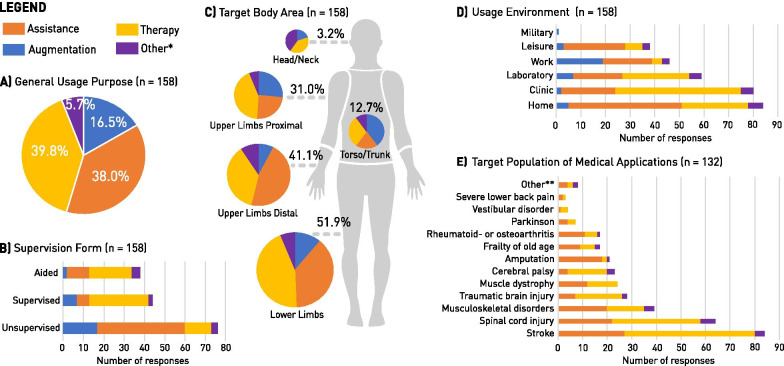
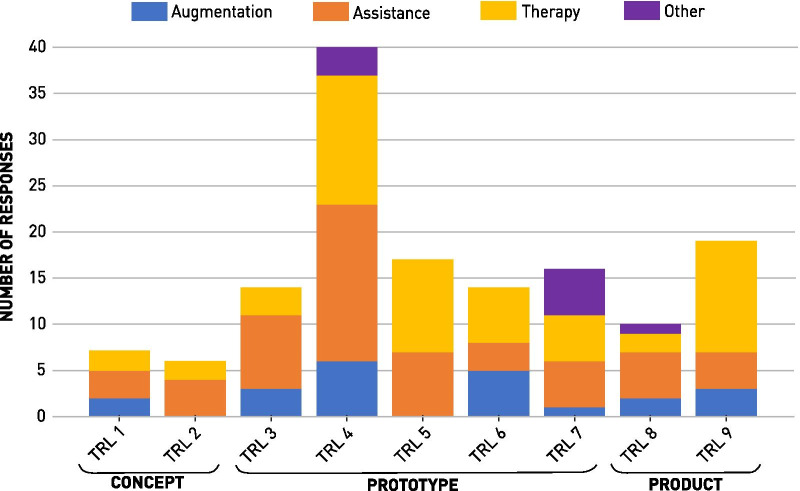
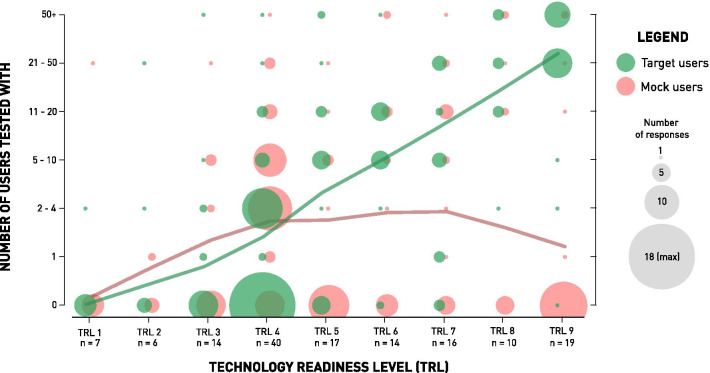
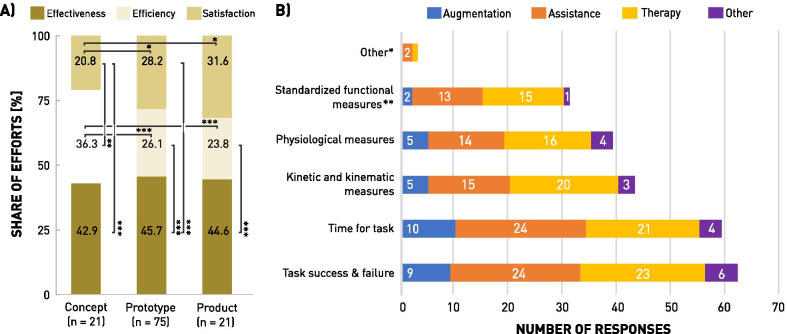
Background: User-centered design approaches have gained attention over the past decade, aiming to tackle the technology acceptance issues of wearable robotic devices to assist, support or augment human capabilities. While there is a consensus that usability is key to user-centered design, dedicated usability evaluation studies are scarce and clear evaluation guidelines are missing. However, the careful consideration and integration of user needs appears to be essential to successfully develop an effective, efficient, and satisfactory human-robot interaction. It is primarily the responsibility of the developer, to ensure that this users involvement takes place throughout the design process. Methods: Through an online survey for developers of wearable robotics, we wanted to understand how the design and evaluation in actual daily practice compares to what is reported in literature. With a total of 31 questions, we analyzed the most common wearable robotic device applications and their technology maturity, and how these influence usability evaluation practices. Results: A total of 158 responses from a heterogeneous population were collected and analyzed. The dataset representing contexts of use for augmentation (16.5%), assistance (38.0%), therapy (39.8%), as well as few other specific applications (5.7%), allowed for an insightful analysis of the influence of technology maturity on user involvement and usability evaluation. We identified functionality, ease of use, and performance as the most evaluated usability attributes and could specify which measures are used to assess them. Also, we could underline the frequent use of qualitative measures alongside the expected high prevalence of performance-metrics. In conclusion of the analysis, we derived evaluation recommendations to foster user-centered design and usability evaluation. Conclusion: This analysis might serve as state-of-the-art comparison and recommendation for usability studies in wearable robotics. We believe that by motivating for more balanced, comparable and user-oriented evaluation practices, we may support the wearable robotics field in tackling the technology acceptance limitations.
Overview
The claims and statistics of this paper haven’t been checked yet.
Free: it reads the open-access text and checks the first 5 claims that cite a source we can check. Create a free account to check every claim.
Integrity signals
Registry
Cites
Statistics
Figures
Verification
Claims the paper makes
The claims and statistics of this paper haven’t been checked yet.
Free: it reads the open-access text and checks the first 5 claims that cite a source we can check. Create a free account to check every claim.
Claims other papers make about this one
Each is checked against this paper’s own text: does it say what the citing paper says it does?
The cited source says what the claim attributes to it.
In the citing paper
“This dissonance makes the results in the reviewed literature difficult to contextualize and compare against related work in the field (e.g., as discussed in [103]).”
From A Review of Design and Evaluation Practices in Mobile Text Entry for Visually Impaired and Blind Persons (2023) · cites this paper as [103]
Self-check
Percentages, sums and reported differences re-computed from the paper’s own numbers.
The self-check needs the paper’s full text.
Citations
Cites
Internet, Phone, Mail, and Mixed‐Mode Surveys: The Tailored Design Method
Dillman, D. A., Smyth, J. D., & Christian, L. M. (2014) · Wiley eBooks · doi:10.1002/9781394260645 · Cited by 4,460
Upper limb prosthesis use and abandonment: A survey of the last 25 years
Biddiss, E. A., & Chau, T. T. (2007) · Prosthetics & Orthotics International · doi:10.1080/03093640600994581 · Cited by 1,111
Consumer design priorities for upper limb prosthetics
Biddiss, E., Beaton, D., & Chau, T. (2007) · Disability and Rehabilitation: Assistive Technology · doi:10.1080/17483100701714733 · Cited by 519 · cited 1×
“Such user-oriented evaluation from early on is expected to enhance stakeholder involvement and may help meeting user needs right from the start [37, 41, 42].”
BackgroundWearable Robots: Biomechatronic Exoskeletons
(2008) · Wiley eBooks · doi:10.1002/9780470987667 · Cited by 517
Benefits of and barriers to involving users in medical device technology development and evaluation
Shah, S. G. S., & Robinson, I. (2007) · International Journal of Technology Assessment in Health Care · doi:10.1017/s0266462307051677 · Cited by 299 · cited 1×
“A solution to tackle and minimize usability limitations is user-centered design (UCD), which aims to involve the technology stakeholders throughout the device development to more successfully address and meet user needs [11–13].”
BackgroundPredictors of assistive technology use: The importance of personal and psychosocial factors
Scherer, M. J., Sax, C., Vanbiervliet, A., Cushman, L. A., & Scherer, J. V. (2005) · Disability and Rehabilitation · doi:10.1080/09638280500164800 · Cited by 283 · cited 3×
“Particularly, devices for medical applications such as robot-aided therapy or advanced assistive technologies often struggle to comply with the complex contexts of use, as users with health issues have more specific and personalized needs [7–10].”
BackgroundExoskeleton and End‐Effector Robots for Upper and Lower Limbs Rehabilitation: Narrative Review
Molteni, F., Gasperini, G., Cannaviello, G., & Guanziroli, E. (2018) · PM&R · doi:10.1016/j.pmrj.2018.06.005 · Cited by 274 · cited 2×
“Nonetheless, the number of WRD in daily use is still very low due to missing availability on the market, as well as technology acceptance limitations [1, 4, 5].”
BackgroundFischer, B., Peine, A., & Östlund, B. (2020) · The Gerontologist · doi:10.1093/geront/gnz163 · Cited by 253 · cited 1×
“A solution to tackle and minimize usability limitations is user-centered design (UCD), which aims to involve the technology stakeholders throughout the device development to more successfully address and meet user needs [11–13].”
BackgroundShah, S. G. S., Robinson, I., & AlShawi, S. (2009) · International Journal of Technology Assessment in Health Care · doi:10.1017/s0266462309990328 · Cited by 237 · cited 2×
“While the user-perspective remains the key element of WRD usability and technology acceptance [15, 26], it is also crucial to understand how the developers of the technology make the decision of when and how to involve end-users in the design process.”
BackgroundSoft Robotic Suits: State of the Art, Core Technologies, and Open Challenges
Xiloyannis, M., Alicea, R., Georgarakis, A.-M., Haufe, F. L., Wolf, P., Masia, L., & Riener, R. (2022) · IEEE Transactions on Robotics · doi:10.1109/tro.2021.3084466 · Cited by 225 · cited 4×
“A great diversity from fully wearable and soft, to stationary and rigid devices has been developed over the past decades, showing promising ranges of functionalities [1–3].”
BackgroundInfluential
Cited by
Principles of human movement augmentation and the challenges in making it a reality
Eden, J., Bräcklein, M., Ibáñez, J., Barsakcioglu, D. Y., Pino, G. D., Farina, D., Burdet, E., & Mehring, C. (2022) · Nature Communications · doi:10.1038/s41467-022-28725-7 · Cited by 154
IMU-based human activity recognition and payload classification for low-back exoskeletons
Pesenti, M., Invernizzi, G., Mazzella, J., Bocciolone, M., Pedrocchi, A., & Gandolla, M. (2023) · Scientific Reports · doi:10.1038/s41598-023-28195-x · Cited by 70
Noronha, B., Ng, C. Y., Little, K., Xiloyannis, M., Kuah, C. W. K., Wee, S. K., Kulkarni, S. R., Masia, L., Chua, K. S. G., & Accoto, D. (2022) · IEEE Transactions on Neural Systems and Rehabilitation Engineering · doi:10.1109/tnsre.2022.3175224 · Cited by 69
Gantenbein, J., Dittli, J., Meyer, J. T., Gassert, R., & Lambercy, O. (2022) · Frontiers in Neurorobotics · doi:10.3389/fnbot.2022.815693 · Cited by 57
“The 12 usability attributes presumed to be relevant for IDS were selected based on the findings of a recent survey on common practices in usability evaluation of wearable robots (Meyer et al., 2021).”
MethodSelf-citationThe present and future of neural interfaces
Valeriani, D., Santoro, F., & Ienca, M. (2022) · Frontiers in Neurorobotics · doi:10.3389/fnbot.2022.953968 · Cited by 53
Industry Perception of the Suitability of Wearable Robot for Construction Work
Gonsalves, N. J., Akanmu, A. A., Gao, X., Agee, P. R., & Shojaei, A. (2023) · Journal of Construction Engineering and Management · doi:10.1061/jcemd4.coeng-12762 · Cited by 52
Moorthy, P., Weinert, L., Schüttler, C., Svensson, L., Sedlmayr, B., Müller, J., & Nagel, T. (2024) · JMIR mhealth and uhealth · doi:10.2196/52179 · Cited by 43
“Meyer et al [164] analyzed usability evaluation practices in wearable robotics and recommended better distinguishing between the different usability dimensions and including qualitative measures for identifying a wider range of usability issues.”
BackgroundPuranik, T. A., Shaik, N., Vankudoth, R., Kolhe, M. R., Yadav, N., & Boopathi, S. (2024) · Advances in information security, privacy, and ethics book series · doi:10.4018/979-8-3693-0774-8.ch001 · Cited by 29
Dittli, J., Meyer, J. T., Gantenbein, J., Bützer, T., Ranzani, R., Linke, A. D., Curt, A. E. P., Gassert, R., & Lambercy, O. (2023) · Journal of NeuroEngineering and Rehabilitation · doi:10.1186/s12984-023-01284-8 · Cited by 32
“To address this adoption barrier preemptively, a deliberate focus on user-centered design and, specifically, early in-depth evaluation of device usability could help improve the RHO functionality and increase the technology acceptance for daily life [7].”
BackgroundSelf-citationUsability of an exosuit in domestic and community environments
Basla, C., Hungerbühler, I., Meyer, J. T., Wolf, P., Riener, R., & Xiloyannis, M. (2022) · Journal of NeuroEngineering and Rehabilitation · doi:10.1186/s12984-022-01103-6 · Cited by 35
“Despite the increasing number of studies investigating functional improvements of participants using robotic devices, little research has focused on end-user perspectives in term of usability and user experience [20].”
BackgroundSelf-citationMeyer, J. T., Weber, S., Jaeger, L., Sigrist, R., Gassert, R., & Lambercy, O. (2022) · Journal of NeuroEngineering and Rehabilitation · doi:10.1186/s12984-022-01015-5 · Cited by 25
“Given that the QUEST is one of the most used scales for the subjective rating of perceived usability [34, 36], the mean QUEST scores from our data might serve as an approximate benchmark for other AAT.”
Self-citationMeyer, J. T., Tanczak, N., Kanzler, C. M., Pelletier, C., Gassert, R., & Lambercy, O. (2023) · Wearable Technologies · doi:10.1017/wtc.2022.31 · Cited by 20
“All data in the IUT only comprised of a sample of 158 WRD developers from our previous survey, where augmentation was represented in a small sample only (Meyer et al., 2021).”
BackgroundMethodResultInfluentialSelf-citationKomninos, A., Stefanis, V., & Garofalakis, J. (2023) · Multimodal Technologies and Interaction · doi:10.3390/mti7020022 · Cited by 16
Moulaei, K., Moulaei, R., & Bahaadinbeigy, K. (2024) · DIGITAL HEALTH · doi:10.1177/20552076241237384 · Cited by 13
“6 These questionnaires serve as valuable tools for gathering user feedback, identifying areas for improvement, and enhancing the overall user experience.”
BackgroundMethodSpasticity evaluation with the Amadeo Tyromotion device in patients with hemispheric stroke
Urrutia, R., Gutiérrez-Muto, A. M., Sanz-Morère, C. B., Gómez, A., Politi, A. M., Lunardini, F., Baccini, M., Cecchi, F., León, N., Oliviero, A., et al. (2023) · Frontiers in Neurorobotics · doi:10.3389/fnbot.2023.1172770 · Cited by 13
“This issue could be very important to improve the measure and the effectiveness of the device, improving the quality of the session (Bevan et al., 2021; Meyer et al., 2021).”
BackgroundRätz, R., Conti, F., Thaler, I., Müri, R. M., & Marchal–Crespo, L. (2024) · Journal of NeuroEngineering and Rehabilitation · doi:10.1186/s12984-024-01439-1 · Cited by 23
“We combined quantitative methods, i.e., standardized questionnaires with scales and performance-related measures, with qualitative methods, i.e., semi-structured interviews that balance structured queries and personalized dialogues, to obtain a holistic assessment [83, 87].”
MethodForbrigger, S., Liblong, M., Davies, T., DePaul, V. G., Morin, E. L., & Hashtrudi-Zaad, K. (2023) · Journal of Rehabilitation and Assistive Technologies Engineering · doi:10.1177/20556683231171840 · Cited by 12
“Meyer et al.(19) found in the design of wearable robotic devices that target users are often not involved in the design process until the prototyping phase.”
BackgroundRanzani, R., Albrecht, M., Haarman, C. J. W., Koh, E., Devittori, G., Held, J. P. O., Tönis, F. J., Gassert, R., & Lambercy, O. (2023) · Frontiers in Mechanical Engineering · doi:10.3389/fmech.2022.1075795 · Cited by 12
“Furthermore, little is known about their usability, which should be assessed already in early development stages to optimize the device design based on the user needs (Meyer et al., 2021), as well as increase acceptance and user compliance to a therapy plan (Lee et al.”
BackgroundSelf-citationRätz, R., Ratschat, A. L., Cividanes-Garcia, N., Ribbers, G. M., & Marchal–Crespo, L. (2024) · Frontiers in Neurorobotics · doi:10.3389/fnbot.2024.1351700 · Cited by 12
Cumplido, C., Barquín-Santos, E., Aneiros-Tarancón, F., Plaza, A., Espinosa-García, S., Fernández, R., & García, E. (2024) · Children · doi:10.3390/children11121500 · Cited by 8
Kim, Y., Pyo, S., Lee, S., Park, C. I., & Song, S.-H. (2025) · Sensors · doi:10.3390/s25030680 · Cited by 8
“The International Association for the Study of Pain (IASP) defines pain as “an unpleasant sensory and emotional experience associated with actual or potential tissue damage”, and common scales include the Visual Analog Scale (VAS), Numerical Rating Scale (NRS), and Likert scale [2,3].”
Feasibility of the Hand–Eye Algorithm in Sensor-to-Sensor Calibration of Wearable Devices
Mileti, I., & Patanè, F. (2024) · IEEE Sensors Journal · doi:10.1109/jsen.2024.3352898 · Cited by 8
“To date, the applications of HEC are several [33], [34], [35], [36], [37], [38], [39], [40], [41], including gaming [42], vision systems for industrial robots [43], and robotics [44].”
BackgroundAssessment of wearable robotics performance in patients with neurological conditions
Gerez, L. F., Micera, S., Nuckols, R. W., & Proietti, T. (2024) · Current Opinion in Neurology · doi:10.1097/wco.0000000000001328 · Cited by 6
“While wearable robots have found commercial success and a broad application base [4 6], and despite the extensive research conducted across various with embedded sensors capable of collecting quantitative data , there is considerable variability in how this data is utilized [9].”
Cumulative Impact of Testing Factors in Usability Tests for Human-Centered Web Design
Yakunin, A. V., & Bodrunova, S. S. (2022) · Future Internet · doi:10.3390/fi14120359 · Cited by 5
Ranzani, R., Razzoli, M., Sanson, P., Song, J., Galati, S., Ferrarese, C., Lambercy, O., Kaelin‐Lang, A., & Gassert, R. (2024) · Toxins · doi:10.3390/toxins16080346 · Cited by 5
“Usability evaluations using SUS, TLX, and QUEST 2.0 are common in technology-assisted rehabilitation [60], but directly comparing different devices and studies remains difficult due to varying applications, user groups, environments, and small sample sizes [61].”
MethodInfluentialSelf-citationKim, Y., Han, I., Jung, J., Yang, S., Lee, S., Koo, B., Ahn, S., Nam, Y., & Song, S.-H. (2024) · Sensors · doi:10.3390/s24030917 · Cited by 4
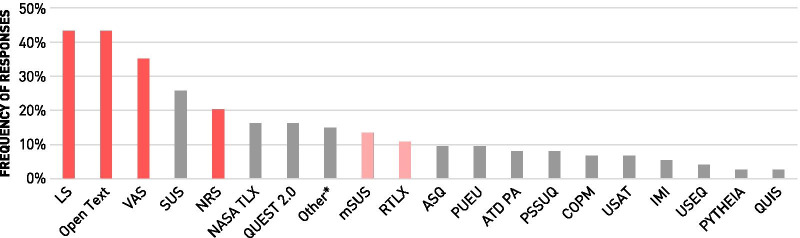
“Meyer et al. [5] created questionnaires that included the a VAS, the Likert scale, and a numerical rating scale to assess the usability of wearable robots and reported that the VAS, Likert scale, and open text were mainly preferred by subjects.”
MethodNicora, G., Santangelo, G., Marzero, G., Dagliati, A., Aprile, I. G., & Quaglini, S. (2025) · International Conference on Rehabilitation Robotics · doi:10.1109/icorr66766.2025.11063026 · Cited by 5
Ryu, D.-H., Choi, B., Kong, Y.-K., Park, S., Shim, H.-H., & Park, J. (2025) · Journal of Agromedicine · doi:10.1080/1059924x.2025.2583408 · Cited by 3
“44 Such evaluations should ensure that exoskeletons not only alleviate the physical burdens of farm work but also fits seamlessly into daily routines, enhancing both efficiency and comfort.”
Enhancing wearability: designing wearable suit platforms for industrial workers
Chung, J., Won, H., Lee, H., Park, S., Ahn, H., Pyeon, S., Yoon, J. E., & Koo, S. H. (2024) · International Journal of Clothing Science and Technology · doi:10.1108/ijcst-06-2023-0090 · Cited by 3
Ofori, J. N. A., Tomori, M., & Ogunseiju, O. R. (2026) · Journal of Construction Engineering and Management · doi:10.1061/jcemd4.coeng-17102 · Cited by 2
Tanczak, N., Ranzani, R., Meyer, J. T., Devittori, G., Califfi, A., Dinacci, D., Gassert, R., Lambercy, O., & Kanzler, C. M. (2022) · International Conference on Rehabilitation Robotics · doi:10.1109/icorr55369.2022.9896516 · Cited by 2
“Many desired features align with the most evaluated usability attributes in wearable robotics, such as ease of use, safety, reliability, and intuitiveness [23].”
BackgroundSelf-citationUsability of Educational Robots in STEM Education
Tosheva, E. (2024) · International Journal for Research in Applied Science and Engineering Technology · doi:10.22214/ijraset.2024.58725 · Cited by 3
Enhancing Non-Expert User Interaction with Robots: An Advanced Interface for Error Handling
Darboven, J. A., Takamido, R., & Ota, J. (2024) · IEEE International Conference on Advanced Intelligent Mechatronics (AIM) · doi:10.1109/aim55361.2024.10637047 · Cited by 2
“In lieu of these findings, [12] concludes that although usability can tackle technological limitations, standardized benchmarks are pertinent to identifying bottlenecks of usability and acceptance.”
BackgroundPorras-Martínez, E., Kreamer-Tonin, K., Lobo-Prat, J., López-Matas, H., Carnicero-Carmona, A., Tolrà-Campanyà, M., Pérez-Cañabate, F., Estay-Girardi, J., & Samitier, B. (2025) · Disability and Rehabilitation · doi:10.1080/09638288.2025.2496351 · Cited by 2
“…in the evaluation phase (either during clinical trials or after a device is deployed) as appointed on the survey conducted by Meyers et al. [22], leaving little room to dramatically improve the device design [9]. in the framework proposed by shah and robinson [14], they highlight that the…”
Towards a validated glossary of usability attributes for the evaluation of wearable robotic devices
Herrera-Valenzuela, D. S., Meyer, J. T., del‐Ama, A. J., Moreno, J. C., Gassert, R., & Lambercy, O. (2024) · Journal of NeuroEngineering and Rehabilitation · doi:10.1186/s12984-024-01312-1 · Cited by 3
“…to describe usability (i.e. effectiveness , satisfaction , and efficiency ) and usability evaluation is predominantly related to functional or performance-related outcomes [21, 22], followed by the evaluation ease of use , safety and comfort [16, 23], which may over-look the richness of usability.”
BackgroundMethodResultInfluentialSelf-citationUser Requirements and Involvement Methods in the Development of Hand Exoskeletons: A Review
Süner-Pla-Cerdà, S., Şahin, B., & Arıkan, K. B. (2024) · ACM Transactions on Human-Robot Interaction · doi:10.1145/3698240 · Cited by 3
“Terrazas-Rodas et al. [36] conducted a survey with developers of wearable robotic devices, vast majority of which aim at assistance or rehabilitation.”
USE_WR 1.0: A New Comprehensive Instrument for Subjective Usability Evaluation for Wearable Robots
Park, J., Lee, S., & Kim, M. (2025) · IEEE Access · doi:10.1109/access.2025.3606883 · Cited by 1
Nurtejo, B., Triatmojo, B., Oktaviansyah, & Sunardi (2025) · International HCI and UX Conference in Indonesia (CHIuXiD) · doi:10.1109/chiuxid68326.2025.11323707 · Cited by 1
Electrical stimulation in upper limb assistance: opportunities and challenges
Routledge, N., Zhang, D., & Metcalfe, B. (2026) · Frontiers in Neuroscience · doi:10.3389/fnins.2025.1702889 · Cited by 2
Zhou, C., & Zhao, H. (2025) · International Journal of Human-Computer Interaction · doi:10.1080/10447318.2025.2508306 · Cited by 1
“As HCI-related products diversify, scholars have developed evaluation standards to assess usability across various products (Jeddi et al., 2020; Meyer et al., 2021; Tuli & Mantri, 2020).”
Ranzani, R., Albrecht, M., Haarman, C. J. W., Koh, E., Devittori, G., Held, J. P. O., Tönis, F. J., Gassert, R., & Lambercy, O. (2022) · Research Square · doi:10.21203/rs.3.rs-1748848/v1 · Cited by 1
Self-citationRätz, R., Conti, F., Thaler, I., Müri, R. M., & Marchal–Crespo, L. (2024) · Research Square · doi:10.21203/rs.3.rs-4155027/v1
User Involvement During the Development of the T-GRIP Thumb Exoskeleton
Kottink, A. I. R., Haarman, C. J. W., Farjam, P., Tuijthof, G. J. M., Maas, E. M., van Vliet, R. O., Rietman, J. S., & Prinsen, E. C. (2025) · Biosystems & biorobotics · doi:10.1007/978-3-031-77588-8_15
Méndez, Á., Navarro, M. D., Ferri, J., Noé, E., & Lloréns, R. (2026) · Games for Health Journal · doi:10.1177/2161783x251370421
“29 It includes how intuitive and user-friendly the interface is, how easily users can learn to operate the system, and how well the design supports therapeutic outcomes.”
Dittli, J., Meyer, J. T., Gantenbein, J., Bützer, T., Ranzani, R., Linke, A. D., Curt, A. E. P., Gassert, R., & Lambercy, O. (2024) · Figshare · doi:10.6084/m9.figshare.26648361
Self-citationMeyer, J. T., Weber, S., Jaeger, L., Sigrist, R., Gassert, R., & Lambercy, O. (2022) · Figshare · doi:10.6084/m9.figshare.19500970
Self-citationHerrera-Valenzuela, D. S., Meyer, J. T., del‐Ama, A. J., Moreno, J. C., Gassert, R., & Lambercy, O. (2024) · Figshare · doi:10.6084/m9.figshare.26686623
Self-citationHerrera-Valenzuela, D. S., Meyer, J. T., del‐Ama, A. J., Moreno, J. C., Gassert, R., & Lambercy, O. (2024) · Figshare · doi:10.6084/m9.figshare.26686620
Self-citationHerrera-Valenzuela, D. S., Meyer, J. T., del‐Ama, A. J., Moreno, J. C., Gassert, R., & Lambercy, O. (2024) · Figshare · doi:10.6084/m9.figshare.26686617
Self-citationOttikkutti, S., Mehryar, P., Zeybek, B., Karamousadakis, M., Ali, Z., & Chen, D. (2025) · IEEE Access · doi:10.1109/access.2025.3609566
“…interface to be reliable and usable, it must provide a stiff coupling between the user’s skeleton and the rest of the prosthesis in order to facilitate control without causing pain or discomfort [2], [3] whilst also improving factors such as functionality, ease of use, performance and safety [4].”
Wang, Q., Jiang, Y., Zhang, Y., Pang, B., Lou, Y., & Yu, B. (2025) · SSRN Electronic Journal · doi:10.2139/ssrn.5558180
Shin, S., Hwang, J., & Lee, S. (2026) · Universal Access in the Information Society · doi:10.1007/s10209-026-01324-9
“As a personalized consumer technology, wearable robots are shaped by emotional factors such as wearability, adapt - ability, and hedonic motivation, alongside cost-value con - siderations [ 15 ].”
InfluentialHerrera-Valenzuela, D. S. (2026) · Springer theses · doi:10.1007/978-3-032-18739-0_1
Herrera-Valenzuela, D. S. (2026) · Springer theses · doi:10.1007/978-3-032-18739-0_4
Herrera-Valenzuela, D. S. (2026) · Springer theses · doi:10.1007/978-3-032-18739-0_3
Park, S. J., Kim, M., & Park, J. (2026) · Ergonomics · doi:10.1080/00140139.2026.2677616
Nichols, C. J., Nicholas, H., Crane, H. T., Routt, A., Haile, M., Goossens, Q., Shinohara, M., Sawicki, G. S., Jakubowski, K. L., & Inan, O. T. (2026) · Science Robotics · doi:10.1126/scirobotics.aea4580
Human Factors in Robotics for Motor Rehabilitation, Assistance, and Prosthetics
Tessari, F., Sierotowicz, M., Thuerauf, S., Flores, H. S., Thomsen, J. G., Laffranchi, M., Michieli, L. D., Gruppioni, E., Muraki, S., Leocani, L., et al. (2026) · Springer tracts in advanced robotics · doi:10.1007/978-3-032-19374-2_10
Ngcofe, L., & Kemp, J. (2026) · South African Geographical Journal · doi:10.1080/03736245.2026.2747282
Challenges and design requirements for public-facing social robots
Oruma, S. O., Sánchez‐Gordón, M., Colomo‐Palacios, R., & Gkioulos, V. (2026) · Telematics and Informatics Reports · doi:10.1016/j.teler.2026.100380
Metadata
- Authors
- Meyer, J. T., Gassert, R., & Lambercy, O.
- Affiliations
- ETH Zurich (CH)
- Corresponding author
- Meyer, Jan Thomas
- Venue
- Journal of NeuroEngineering and Rehabilitation
- Published
- 2021-12
- Volume
- 18
- Issue
- 1
- Pages
- 170-170
- ISSN
- 1743-0003 (ISSN-L)
- PMC
- PMC8656061
- OpenAlex
- W4226019611
- Cited by
- 58
- References
- 37
- Citations by year
- 2026: 12 · 2025: 10 · 2024: 18 · 2023: 8 · 2022: 10
- FWCI
- 5.82
- Type
- journal article
- Language
- en
- Open access
- gold
- doi.org
- Licence
- cc-by
- creativecommons.org/licenses/by/4.0 (tdm)
- creativecommons.org/licenses/by/4.0 (vor, 8 d)
- Locations
- Journal of NeuroEngineering and Rehabilitation (publishedVersion, cc-by)
- Research Square (acceptedVersion, cc-by)
- PubMed Central (publishedVersion, cc-by)
- PubMed (publishedVersion)
- DOAJ (DOAJ: Directory of Open Access Journals) (submittedVersion, cc-by-sa)
- Repository for Publications and Research Data (ETH Zurich) (submittedVersion, cc-by)
- ETH Zürich Research Collection (cc-by)
- Funders
- vontobel-stiftung
- national centre of competence in research robotics
- eth zürich foundation
- national research foundation, prime minister’s office, singapore under its campus for research excellence and technological enterprise (create) program
- Topics
- Physical Sciences › Computer Science › Human-Computer Interaction › Usability and User Interface Design
- Physical Sciences › Computer Science › Human-Computer Interaction › Innovative Human-Technology Interaction
- Physical Sciences › Engineering › Biomedical Engineering › Prosthetics and Rehabilitation Robotics
- Keywords
- wearable robotics, usability evaluation, user-centered design, context of use, technology maturity, human-robot interaction, assistive robotics, rehabilitation robotics, evaluation guidelines, user participation, technology acceptance
- MeSH terms
- Wearable Electronic Devices, Humans, Surveys and Questionnaires, Robotics
About these checks
Registry, retraction, Cites and statistics results are computed, not judged, with one exception: a printed reference that no index lists is read once by a model before it counts as a citation error. Claims are extracted by a model and kept only when their quote appears verbatim in the text; each cited source is then checked, with a model’s help, for whether it says what the claim relies on. Those verdicts can be wrong — read the claim’s quote and the cited source before relying on one.
Statistics and arithmetic are recomputed, not judged.
Confidence bands are shown only for fields calibrated on our annotated test set. None is calibrated yet, so no band is shown.
What counts as a claim ›How we measure confidence ›How we check this ›
Are you an author, or do you see a problem with this page? Request a review
Data sources
Bibliographic data: Semantic Scholar, OpenAlex, Crossref.
Contains information from the Semantic Scholar Academic Graph Datasets, made available under the ODC Attribution License (ODC-BY 1.0).
Semantic Scholar’s data is described in: Kinney, R., et al. (2023). The Semantic Scholar Open Data Platform. arXiv:2301.10140.
