

An investigation of the internal morphology of asbestos ferruginous bodies: constraining their role in the onset of malignant mesothelioma
Open accessThe DOI matches its Crossref record; 33 of the 35 references it cites were found in a registry or an index; 34 of the 87 sources its claims cite were checked for support.
Abstract
Background: Asbestos is a fibrous mineral that was widely used in the past. However, asbestos inhalation is associated with an aggressive type of cancer known as malignant mesothelioma (MM). After inhalation, an iron-rich coat forms around the asbestos fibres, together the coat and fibre are termed an “asbestos ferruginous body” (AFB). AFBs are the main features associated with asbestos-induced MM. Whilst several studies have investigated the external morphology of AFBs, none have characterised the internal morphology. Here, cross-sections of multiple AFBs from two smokers and two non-smokers are compared to investigate the effects of smoking on the onset and growth of AFBs. Morphological and chemical observations of AFBs were undertaken by transmission electron microscopy, energy dispersive x-ray spectroscopy and selected area diffraction. Results: The AFBs of all patients were composed of concentric layers of 2-line or 6-line ferrihydrite, with small spherical features being observed on the outside of the AFBs and within the cross-sections. The spherical components are of a similar size to Fe-rich inclusions found within macrophages from mice injected with asbestos fibres in a previous study. As such, the spherical components composing the AFBs may result from the deposition of Fe-rich inclusions during frustrated phagocytosis. The AFBs were also variable in terms of their Fe, P and Ca abundances, with some layers recording higher Fe concentrations (dense layers), whilst others lower Fe concentrations (porous layers). Furthermore, smokers were found to have smaller and overall denser AFBs than non-smokers. Conclusions: The AFBs of smokers and non-smokers show differences in their morphology, indicating they grew in lung environments that experienced disparate conditions. Both the asbestos fibres of smokers and non-smokers were likely subjected to frustrated phagocytosis and accreted mucopolysaccharides, resulting in Fe accumulation and AFB formation. However, smokers’ AFBs experienced a more uniform Fe-supply within the lung environment compared to non-smokers, likely due to Fe complexation from cigarette smoke, yielding denser, smaller and more Fe-rich AFBs. Moreover, the lack of any non-ferrihydrite Fe phases in the AFBs may indicate that the ferritin shell was intact, and that ROS may not be the main driver for the onset of MM.
Overview
CoChat Summary
TL;DR
Cross-sections of asbestos ferruginous bodies (AFBs) from two smokers and two non-smokers were characterised by TEM, EDS and SAED, revealing concentric ferrihydrite layers with internal porosity/density differences. Smokers’ AFBs were smaller, denser and more Fe-rich than non-smokers’, and the absence of non-ferrihydrite Fe phases suggests ROS may not be the main driver of malignant mesothelioma.
Key findings
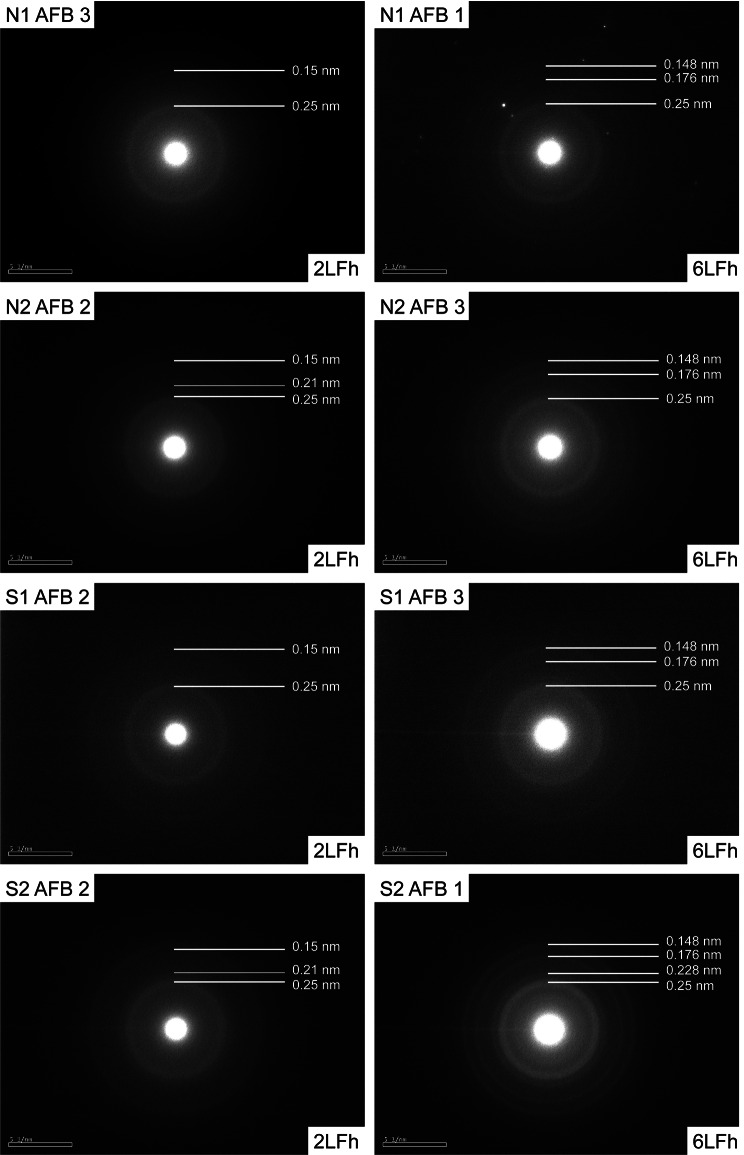
- All AFBs from all four patients consisted of concentric layers of 2-line or 6-line ferrihydrite; no other Fe minerals such as goethite were detected, suggesting the ferritin shell was intact before sample processing.
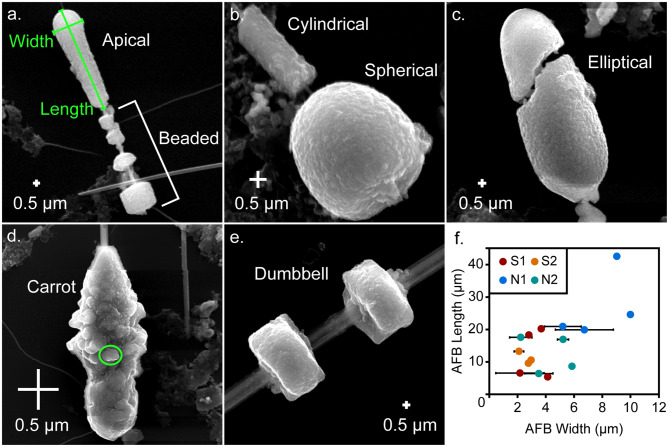
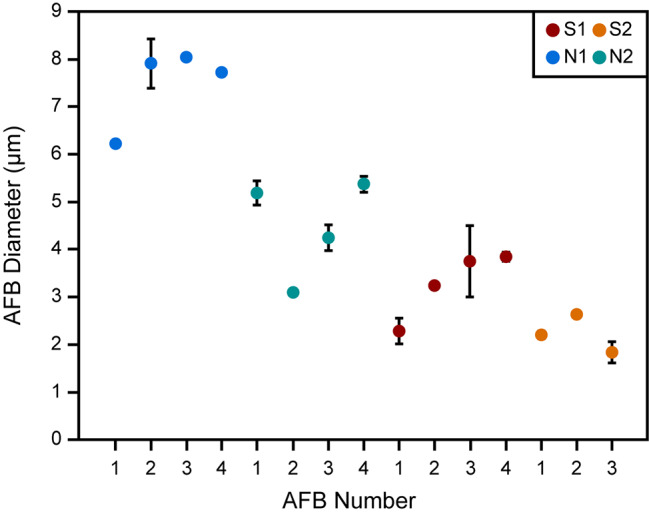
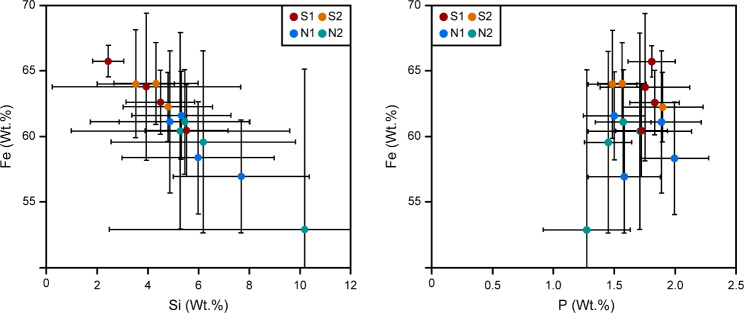
- Smokers’ AFBs were smaller and denser than non-smokers’: average body widths were 3.21 ± 0.88 µm (S1) and 2.61 ± 0.45 µm (S2) versus 7.74 ± 2.18 µm (N1) and 4.21 ± 1.65 µm (N2).
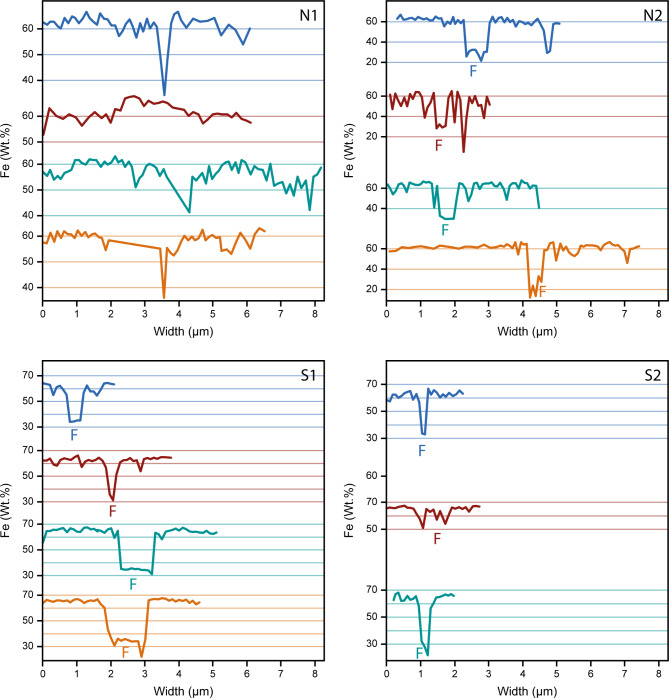
- Mean Fe abundances were higher in smokers’ AFBs (S1: 63.13 ± 5.45 wt.%; S2: 63.43 ± 3.47 wt.%) than non-smokers’ AFBs (N1: 59.14 ± 4.82 wt.%; N2: 59.20 ± 7.96 wt.%), with the paper reporting the non-smoking mean as 6.5% less than the smoking mean.
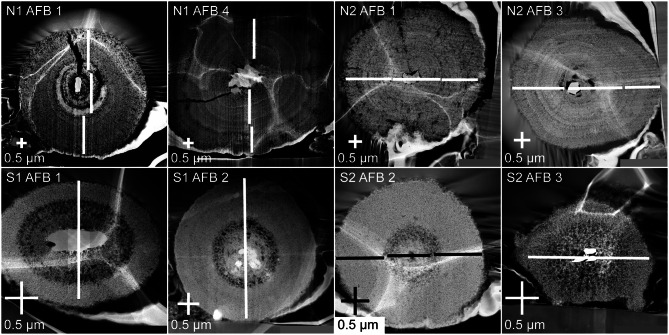
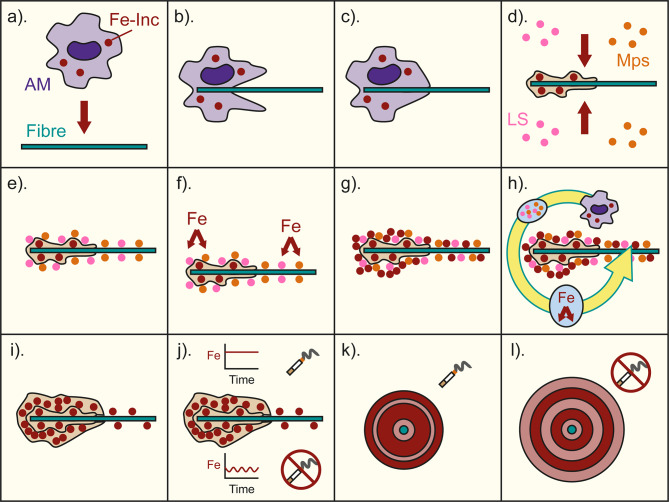
- Small spherical components (50–170 nm) within and on AFBs resemble Fe-rich inclusions previously reported in macrophages from mice injected with crocidolite, and may result from frustrated phagocytosis.
Methods
- Human lung samples from MM patients previously collected at Yamaguchi Ube Medical Centre for Nakamura et al. (2009); four patients were selected: N1 and N2 (non-smokers), S1 and S2 (smokers).
- AFBs were imaged externally by SEM, sliced by focused ion beam (FIB)-SEM to <120 nm, and analysed by TEM dark-field imaging, EDS line analyses, and SAED; EDS was performed on four AFBs from N1, N2 and S1 and three AFBs from S2, with data normalised to 100%.
- Asbestos fibre stoichiometry was calculated from EDS data using the procedure of Leake et al. (1997).
Limitations
- The paper states that the number of samples is limited, that the implications of AFB differences for cancer and MM initiation are not yet understood, and that no previous studies have found links between smoking and asbestos-related MM risk.
- Evident from the text: only four patients (two smokers, two non-smokers) and three to four AFBs per patient were analysed, so findings are not generalisable; EDS damage and biofilm fixation are noted as artefacts in some images.
- Evident from the text: the study did not directly measure ROS production, radiation dose, or clinical outcomes, so proposed mechanisms for MM onset remain inferential.
Model-written summary. Check it against the paper before relying on it.
Integrity signals
Registry
Cites
Statistics
Figures
Verification
Claims the paper makes
19 Valid · 1 Not valid · 20 Not checked · 94 Own results and interpretations
At least one cited source doesn’t support this claim or points to a different paper, and none confirmed it — see the verdicts below.
In the paper
“Previous AFB studies reflect morphological descriptions and chemical compositions from only the exterior of the AFB [11, 20, 22, 23].”
§ An investigation of the internal morphology of asbestos ferruginous bodies: constraining their role in the onset of malignant mesothelioma > Background
What the sources say
- Not checked yetcites [11] Di Giuseppe D Zoboli A Vigliaturo R Gieré R Bonasoni MP Sala O Mineral fibres and asbestos bodies in human lung tissue: A case study Minerals 2019 9 1 21 10.3390/min9100618 source
Checked before — its earlier verdict is held back until a new check runs.
- Disputedcites [20] Bardelli F Veronesi G Capella S Bellis D Charlet L Cedola A New insights on the biomineralisation process developing in human lungs around inhaled asbestos fibres Sci Rep 2017 7 1 11 10.1038/srep44862 28332562 PMC5362951 sourceExperimental — accuracy not yet measured
The Results (X-ray Absorption Spectroscopy; page not available) say a previous study reported a contribution from the embedded crocidolite fibre to asbestos-body spectra. That is a chemical finding about the interior, contrary to the claim that previous studies described chemical composition only from the exterior. (LLM, conf=0.82)
Checked by a reasoning model — may be wrong.
- Not checked — no full text of the sourcecites [22] Pascolo L Zabucchi G Gianoncelli A Kourousias G Trevisan E Pascotto E Synchrotron X-ray microscopy reveals early calcium and iron interaction with crocidolite fibers in the lung of exposed mice Toxicol Lett 2016 241 111 20 10.1016/j.toxlet.2015.11.016 26602167 source
plain- Asserted: passes — The authors put it forward as true.
- Checkable: passes — It can be checked against evidence.
- Load-bearing: passes — The paper’s conclusions depend on it.
- Based: passes — The paper gives a reason why it holds.
- Not checked yet
Every source the paper cites for this claim was checked and supports it.
In the paper
“However, asbestos inhalation is associated with an aggressive type of cancer known as malignant mesothelioma (MM).”
- Also stated in: § Background · boosted
“By the 1990s, asbestos was known to cause malignant mesothelioma (MM), an aggressive occupational cancer, leading to the widespread ban of asbestos [2].”
§ An investigation of the internal morphology of asbestos ferruginous bodies: constraining their role in the onset of malignant mesothelioma > Abstract > Background
What the sources say
- Supportedcites [2] Toyokuni S Iron overload as a major targetable pathogenesis of asbestos-induced mesothelial carcinogenesis Redox Rep 2014 19 1 7 10.1179/1351000213Y.0000000075 24257681 PMC6837658 source
The Abstract describes asbestos as a human carcinogen causing malignant mesothelioma, which it calls a rare but aggressive cancer. The Introduction says asbestos fibers are inhaled from the air and that most MM cases are thought to be associated with former asbestos exposure. (LLM, conf=0.95)
boostedstates an association- Asserted: passes — The authors put it forward as true.
- Checkable: passes — It can be checked against evidence.
- Load-bearing: passes — The paper’s conclusions depend on it.
- Based: passes — The paper gives a reason why it holds.
- Also stated in: § Background · boosted
The cited sources support only part of this claim — read each source’s verdict below.
In the paper
“However, the AM fail to phagocytose the asbestos fibres due to the fibres’ long lengths, leading to “frustrated phagocytosis” [2, 4].”
§ An investigation of the internal morphology of asbestos ferruginous bodies: constraining their role in the onset of malignant mesothelioma > Background
What the sources say
- Partly supportedcites [2] Toyokuni S Iron overload as a major targetable pathogenesis of asbestos-induced mesothelial carcinogenesis Redox Rep 2014 19 1 7 10.1179/1351000213Y.0000000075 24257681 PMC6837658 sourceExperimental — accuracy not yet measured
The Introduction says alveolar macrophages fail to dispose of asbestos fibers when they are too long, supporting the length-related failure to clear them. It also says the macrophages die after phagocytosing the fibers, so the paper does not support the claim that they fail to phagocytose them; it does not use the term “frustrated phagocytosis.” (LLM, conf=0.88)
- Partly supportedcites [4] Hiriart E, Deepe R, Wessels A. Mesothelium and malignant mesothelioma. J Dev Biol. 2019;7. 10.3390/jdb7020007. PMC6630312 30965570 sourceExperimental — accuracy not yet measured
Section 6, “Malignant Pleural Mesothelioma and Its Etiologies” (page not provided), says asbestos-fiber size prevents pleural macrophages from properly phagocytosing the fibers, causing frustrated phagocytosis. It does not establish the same finding specifically for AM, if that abbreviation means alveolar macrophages. (LLM, conf=0.83)
plainstates a cause- Asserted: passes — The authors put it forward as true.
- Checkable: passes — It can be checked against evidence.
- Load-bearing: unclear — It is unclear whether the paper’s conclusions depend on it.
- Based: passes — The paper gives a reason why it holds.
- Partly supported
The cited sources support only part of this claim — read each source’s verdict below.
In the paper
“The components include sequestered ferritin with scavenged Fe (possibly Fe inclusions [33]), which are deposited onto the asbestos fibre surface [4–6, 33].”
§ An investigation of the internal morphology of asbestos ferruginous bodies: constraining their role in the onset of malignant mesothelioma > Discussion
What the sources say
- Not matchedcites [33] Koerten HK Hazekamp J Kroon M Daems WT Asbestos body formation and iron accumulation in mouse peritoneal granulomas after the introduction of crocidolite asbestos fibers Am J Pathol 1990 136 141 57 2153345 PMC1877471
Its entry has no title and year that we can search by.
- Could not verifycites [4] Hiriart E, Deepe R, Wessels A. Mesothelium and malignant mesothelioma. J Dev Biol. 2019;7. 10.3390/jdb7020007. PMC6630312 30965570 sourceExperimental — accuracy not yet measured
Section 6 discusses asbestos fibres and the release of inflammatory substances during frustrated phagocytosis, but it does not address ferritin, scavenged iron, or their deposition on fibre surfaces. Searches for ferritin and iron-containing fibre coatings found no passage supporting the attributed claim. (LLM, conf=0.72)
- Partly supportedcites [5] Aust AE Cook PM Dodson RF Morphological and chemical mechanisms of elongated mineral particle toxicities J Toxicol Environ Heal - Part B Crit Rev 2011 14 40 75 10.1080/10937404.2011.556046 PMC3118489 21534085 sourceExperimental — accuracy not yet measured
The ‘Ferruginous Bodies’ section says asbestos fibres acquire Fe coatings, and ‘Intracellular Source of Iron’ identifies ferritin or hemosiderin as a proposed source of that Fe (page numbers unavailable). It does not establish that sequestered ferritin itself is released and deposited on the fibre surface; it also describes Fe deposition occurring without ferritin. (LLM, conf=0.84)
- Not checked — no full text of the sourcecites [6] Toyokuni S Iron addiction with ferroptosis-resistance in asbestos-induced mesothelial carcinogenesis: Toward the era of mesothelioma prevention Free Radic Biol Med 2019 133 206 15 10.1016/j.freeradbiomed.2018.10.401 30312759 source
hedgedstates a cause- Asserted: passes — The authors put it forward as true.
- Checkable: passes — It can be checked against evidence.
- Load-bearing: passes — The paper’s conclusions depend on it.
- Based: passes — The paper gives a reason why it holds.
- Not matched
Every source the paper cites for this claim was checked and supports it.
In the paper
“the presence of Ca might arise due to calcifications, which result from AM phagocytosis [21]”
§ An investigation of the internal morphology of asbestos ferruginous bodies: constraining their role in the onset of malignant mesothelioma > Discussion
What the sources say
- Supportedcites [21] Pascolo L Gianoncelli A Schneider G Salomé M Schneider M Calligaro C The interaction of asbestos and iron in lung tissue revealed by synchrotron-based scanning X-ray microscopy Sci Rep 2013 3 1 11 10.1038/srep01123 PMC3553542 23350030 source
The Discussion states that calcium in the fibre casing suggests calcification and that calcification seems to be a consequence of phagocytosis. The Results identify macrophages phagocytosing an asbestos fibre, supporting the claim’s alveolar-macrophage context. (LLM, conf=0.93)
hedgedstates a possible cause- Asserted: passes — The authors put it forward as true.
- Checkable: passes — It can be checked against evidence.
- Load-bearing: unclear — It is unclear whether the paper’s conclusions depend on it.
- Based: passes — The paper gives a reason why it holds.
- Supported
53 more claims · 3 with their cited sources checked
Create a free account to see all 134 claims and to verify the 17 references still open.
- It may state two separate claims as one. 61
- Probably not a substantial claim. 25
- The quote only partly states this claim. 2
Self-check
Percentages, sums and reported differences re-computed from the paper’s own numbers.
Each contradiction between two passages listed here was confirmed by an independent check.
Rated minor: it would not touch a result — a value no result rests on, a p-value that stays on the same side of the significance level, or a conflict that is clerical, resolved elsewhere in the paper, or outside its own findings.
In the paper
§ An investigation of the internal morphology of asbestos ferruginous bodies: constraining their role in the onset of malignant mesothelioma > Conclusions
“no other Fe phases were observed, as was the case in previous studies that probed the external portions of AFBs.”
§ An investigation of the internal morphology of asbestos ferruginous bodies: constraining their role in the onset of malignant mesothelioma > Background
“The study’s selected area diffraction (SAED) patterns identified other crystal materials than ferrihydrite, such as goethite (α-Fe3+O(OH)).”
Citations
Cites
Leake, B. E., Woolley, A. R., Arps, C. E. S., Birch, W. D., Gilbert, M. C., Grice, J. D., Hawthorne, F. C., Kato, A., Kisch, H. J., Krivovichev, V. G., et al. (1997) · Mineralogical Magazine · doi:10.1180/minmag.1997.061.405.13 · Cited by 975
Involvement of cigarette smoke-induced epithelial cell ferroptosis in COPD pathogenesis
Yoshida, M., Minagawa, S., Araya, J., Sakamoto, T., Hara, H., Tsubouchi, K., Hosaka, Y., Ichikawa, A., Saito, N., Kadota, T., et al. (2019) · Nature Communications · doi:10.1038/s41467-019-10991-7 · Cited by 572
Silica binding and toxicity in alveolar macrophages
Hamilton, R. F., Thakur, S. A., & Holian, A. (2008) · Free Radical Biology and Medicine · doi:10.1016/j.freeradbiomed.2007.12.027 · Cited by 415
Effect of Ferrihydrite Crystallite Size on Phosphate Adsorption Reactivity
Wang, X., Li, W., Harrington, R., Liu, F., Parise, J. B., Feng, X., & Sparks, D. L. (2013) · Environmental Science & Technology · doi:10.1021/es401301z · Cited by 277 · cited 1×
“Meanwhile, the presence of P within the AFBs is explained by the known association of ferrihydrite with phosphates [37, 38] and the presence of Ca might arise due to calcifications, which result from AM phagocytosis [21].”
BackgroundTransmission Electron Microscopy of Synthetic 2- and 6-Line Ferrihydrite
Janney, D. E., Cowley, J. M., & Buseck, P. R. (2000) · Clays and Clay Minerals · doi:10.1346/ccmn.2000.0480114 · Cited by 227 · cited 3×
“Some SAED patterns showed shoulders on one side or both sides of each ring, such as those observed by Janney, 2000 [32].”
BackgroundInfluentialSanchez, V. C., Pietruska, J. R., Miselis, N. R., Hurt, R. H., & Kane, A. B. (2009) · WIREs Nanomedicine and Nanobiotechnology · doi:10.1002/wnan.41 · Cited by 186 · cited 1×
“The amosite (grunerite) (Fe(2)7(Si8O22)(OH)2) and crocidolite (riebeckite) (Na2Fe(2)3Fe(3)2(Si8O22)(OH)2) fibres are known to persist in the lung environment [7–9] whereas chrysotile (Mg3(Si2O5)(OH)4) fibres are known to dissolve within the lung environment due to the dissolution of their brucite layer [7, 10, 11].”
BackgroundAsbestos and other ferruginous bodies: their formation and clinical significance.
(1981) · PubMed Central · Cited by 155
Morphological and Chemical Mechanisms of Elongated Mineral Particle Toxicities
Aust, A. E., Cook, P. M., & Dodson, R. F. (2011) · Journal of Toxicology and Environmental Health, Part B · doi:10.1080/10937404.2011.556046 · Cited by 155 · cited 1×
“Besides ROS, the onset of MM and lung cancer may be initiated by an alternate mechanism, such as inflammation [4, 5] or radiation-induced DNA damage [25].”
BackgroundMalignant mesothelioma as an oxidative stress-induced cancer: An update
Chew, S. H., & Toyokuni, S. (2015) · Free Radical Biology and Medicine · doi:10.1016/j.freeradbiomed.2015.05.002 · Cited by 102
Toyokuni, S. (2019) · Free Radical Biology and Medicine · doi:10.1016/j.freeradbiomed.2018.10.401 · Cited by 96 · cited 1×
“The accumulated products accrete as an Fe coat onto the asbestos fibre, resulting in the asbestos ferruginous body (AFB) [6, 10, 13, 19, 20].”
BackgroundPhytoavailability of phosphate adsorbed on ferrihydrite, hematite, and goethite
Guzman, G., Alcantara, E., Barron, V., & Torrent, J. (1994) · Plant and Soil · doi:10.1007/bf00009284 · Cited by 91 · cited 1×
“Meanwhile, the presence of P within the AFBs is explained by the known association of ferrihydrite with phosphates [37, 38] and the presence of Ca might arise due to calcifications, which result from AM phagocytosis [21].”
BackgroundReview: Ferruginous Bodies: Implications in the Mechanism of Fiber and Particle Toxicity
Ghio, A. J., Churg, A., & Roggli, V. L. (2004) · Toxicologic Pathology · doi:10.1080/01926230490885733 · Cited by 89
Pascolo, L., Gianoncelli, A., Schneider, G., Salomé, M., Schneider, M., Calligaro, C., Kiskinova, M., Melato, M., & Rizzardi, C. (2013) · Scientific Reports · doi:10.1038/srep01123 · Cited by 88 · cited 3×
“7f-g), eventually masking the fibre’s irritant factors and ceasing its membrane damage [17, 20, 21].”
BackgroundMesothelium and Malignant Mesothelioma
Hiriart, E., Deepe, R., & Wessels, A. (2019) · Journal of Developmental Biology · doi:10.3390/jdb7020007 · Cited by 66 · cited 4×
“The cases of MM are expected to greatly increase as MM has a long latency period (15–50 years) [2, 4].”
BackgroundInfluentialIron Homeostasis in the Lung Following Asbestos Exposure
Ghio, A. J., Stonehuerner, J., Richards, J., & Devlin, R. B. (2008) · Antioxidants & Redox Signaling · doi:10.1089/ars.2007.1909 · Cited by 65
Smoking-induced iron dysregulation in the lung
Zhang, W. Z., Butler, J. J., & Cloonan, S. M. (2019) · Free Radical Biology and Medicine · doi:10.1016/j.freeradbiomed.2018.07.024 · Cited by 62 · cited 1×
“The AM also scavenge Fe from senescent red blood cells, storing the Fe in ferritin (an Fe transport protein), within the AM for Fe recycling [12].”
BackgroundBiochemical and cellular mechanisms of dust-induced lung fibrosis.
Richards, R. J., & Curtis, C. G. (1984) · Environmental Health Perspectives · doi:10.1289/ehp.8455393 · Cited by 59 · cited 2×
“7f-g), eventually masking the fibre’s irritant factors and ceasing its membrane damage [17, 20, 21].”
BackgroundZhang, V., Nemeth, E., & Kim, A. (2019) · Pharmaceuticals · doi:10.3390/ph12010030 · Cited by 57
Iron overload as a major targetable pathogenesis of asbestos-induced mesothelial carcinogenesis
Toyokuni, S. (2014) · Redox Report · doi:10.1179/1351000213y.0000000075 · Cited by 56 · cited 4×
“The cases of MM are expected to greatly increase as MM has a long latency period (15–50 years) [2, 4].”
BackgroundInfluentialPATHOGENIC EFFECTS OF INHALED PARTICLES AND ANTIGENS
Allison, A. C. (1974) · Annals of the New York Academy of Sciences · doi:10.1111/j.1749-6632.1974.tb28229.x · Cited by 45
(1990) · Europe PMC (PubMed Central) · Cited by 37
A histochemical study of the asbestos body coating
Governa, M., & Rosanda, C. (1972) · Occupational and Environmental Medicine · doi:10.1136/oem.29.2.154 · Cited by 35
The protein coating of asbestos bodies
Blount, M., Holt, P., & Leach, A. (1966) · Biochemical Journal · doi:10.1042/bj1010204 · Cited by 34 · cited 1×
“The accumulated products accrete as an Fe coat onto the asbestos fibre, resulting in the asbestos ferruginous body (AFB) [6, 10, 13, 19, 20].”
BackgroundAsbestos body Phagocytosis by Human free Alveolar macrophages
McLemore, T. L., Mace, M. L., Roggli, V., Marshall, M. V., Lawrence, E. C., Wilson, R. K., Martin, R. R., Brinkley, B. R., & Greenberg, S. D. (1980) · Cancer Letters · doi:10.1016/0304-3835(80)90111-1 · Cited by 29
NAKAMURA, E., MAKISHIMA, A., HAGINO, K., & OKABE, K. (2009) · Proceedings of the Japan Academy, Series B · doi:10.2183/pjab.85.229 · Cited by 27 · cited 8×
“Human lung samples from MM patients were previously collected, digested, and quantified at Yamaguchi Ube Medical Centre for Nakamura et al., 2009 [25].”
BackgroundMethodResultInfluentialSelf-citationMicrostructures and fiber-formation mechanisms of crocidolite asbestos
Ahn, J. H., & Buseck, P. R. (1991) · American Mineralogist · Cited by 27
Bardelli, F., Veronesi, G., Capella, S., Bellis, D., Charlet, L., Cedola, A., & Belluso, E. (2017) · Scientific Reports · doi:10.1038/srep44862 · Cited by 26 · cited 6×
“Bardelli et al., 2017 [20] observed AFBs using XRF and scanning electron microscopy (SEM).”
BackgroundMethodInfluentialMineral Fibres and Asbestos Bodies in Human Lung Tissue: A Case Study
Di Giuseppe, D., Zoboli, A., Vigliaturo, R., Gieré, R., Bonasoni, M. P., Sala, O., & Gualtieri, A. F. (2019) · Minerals · doi:10.3390/min9100618 · Cited by 26 · cited 4×
“Di Giuseppe et al., 2019 [11] performed analysis only on the exterior of AFBs using transmission electron microscopy (TEM) and energy dispersive X-ray spectrometry (EDS).”
BackgroundMethodResultInfluentialRole of asbestos in etiology of malignant pleural mesothelioma
Godleski, J. J. (2004) · Thoracic Surgery Clinics · doi:10.1016/s1547-4127(04)00111-2 · Cited by 24
The Role of Analytical SEM in the Determination of Causation in Malignant Mesothelioma
Roggli, V. L. (2006) · Ultrastructural Pathology · doi:10.1080/01913120500313192 · Cited by 22
Pascolo, L., Gianoncelli, A., Rizzardi, C., de Jonge, M. D., Howard, D. L., Paterson, D. J., Cammisuli, F., Salome-Pateyron, M., Paoli, P. D., Melato, M., et al. (2016) · Microscopy and Microanalysis · doi:10.1017/s1431927616011685 · Cited by 22 · cited 5×
“Previous AFB studies reflect morphological descriptions and chemical compositions from only the exterior of the AFB [11, 20, 22, 23].”
BackgroundMethodInfluentialPascolo, L., Zabucchi, G., Gianoncelli, A., Kourousias, G., Trevisan, E., Pascotto, E., Casarsa, C., Ryan, C., Lucattelli, M., Lungarella, G., et al. (2016) · Toxicology Letters · doi:10.1016/j.toxlet.2015.11.016 · Cited by 20 · cited 8×
“A misfolded ferritin permits exposure of ferrihydrite to the surface, leading to its phase change and its contribution to ROS production [11, 22].”
BackgroundMethodInfluentialCigarette Smoke Particle-Induced Lung Injury and Iron Homeostasis
Ghio, A. J., Pavlisko, E. N., Roggli, V. L., Todd, N. W., & Sangani, R. G. (2022) · International Journal of Chronic Obstructive Pulmonary Disease · doi:10.2147/copd.s337354 · Cited by 19
Research works printed but not linked: 6
- Wachowski L Domka L Sources and Effects of Asbestos and Other Mineral Fibres Present in Ambient Air Pol J Environ Stud 2000 9 443 54
- Miles KR Grunerite in Western Australia Am Mineral 1943 28 25 38
- Klein CJ Cummingtonite-Grunerite Series: a chemical, optical and x-ray study Am Mineral 1964 53 963 82
- Lyons PC Significance of riebickite and ferrohastringsite in microperthite granites Am Mineral 1972 57 1404 12
- Evans B Reactions among sodic, calcic, and ferromagnesian amphiboles, sodic pyroxene, and deerite in high-pressure metamorphose ironstone, Siphnos, Greece Mineral Am Sci Geol 1986 7 18 25
- Hirschmann M Evens BW Yang H Composition and temperature dependence of Fe-Mg ordering in cummingtonite-grunerite as determined by X-ray diffraction Mlnc Am Mineral 1994 79 862 77
Cited by
Reamon-Buettner, S. M., Rittinghausen, S., Klauke, A., Hiemisch, A., & Ziemann, C. (2024) · Particle and Fibre Toxicology · doi:10.1186/s12989-024-00565-x · Cited by 8
“For example, a recent study has shown differences in the internal morphology of asbestos ferruginous bodies (AFBs), which are a key indicator of asbestos-induced malignant mesothelioma, between smokers and non-smokers [4].”
BackgroundAsbestos Bodies in Human Lung: Localization of Iron and Carbon in the Coating
Croce, A., Gatti, G., Calisi, A., Cagna, L., Bellis, D., Bertolotti, M., Rinaudo, C., & Maconi, A. (2024) · Geosciences · doi:10.3390/geosciences14030058 · Cited by 2
Weerarathne, W. B. C. P., Arachchige, M. S. A., Wijayasinghe, A., Madegedara, D., Vithanage, M. S., & Magana-Arachchi, D. (2024) · Environmental Geochemistry and Health · doi:10.1007/s10653-024-01973-w · Cited by 1
“The breathing of this fibrous asbestos is the culprit for aggressive malignant mesothelioma (Avramescu et al., 2023), lung, laryngeal, and ovarian cancer, and the non-cancerous diseases involve progressive asbestosis, pleuritis, atelectasis and conditions like pleural plaques(Bolan et al., 2023;…”
Asbestos Bodies and Non-asbestos Ferruginous Bodies
Li, H., & Roggli, V. L. (2025) · Springer eBooks · doi:10.1007/978-3-031-89250-9_3 · Cited by 1
Huang, S., Gu, D., He, J., Hou, G., Wang, J., Li, Z., Yu, M., Li, J., & Xiong, W. (2026) · Chemico-Biological Interactions · doi:10.1016/j.cbi.2026.112302
Metadata
- Authors
- Avramescu, M.-L., Potiszil, C., Kunihiro, T., Okabe, K., & Nakamura, E.
- Affiliations
- Institute for Planetary Materials, Okayama University (JP)
- Berurando General Hospital (JP)
- Okayama University (JP)
- Corresponding author
- Nakamura, Eizo
- Venue
- Particle and Fibre Toxicology
- Published
- 2023-05-08
- Volume
- 20
- Issue
- 1
- Pages
- 19-19
- ISSN
- 1743-8977 (ISSN-L)
- PMC
- PMC10165766
- OpenAlex
- W4375855680
- Cited by
- 12
- References
- 35
- Citations by year
- 2026: 1 · 2025: 1 · 2024: 10
- FWCI
- 2.20
- Type
- journal article
- Language
- en
- Open access
- gold
- doi.org
- Licence
- cc-by
- creativecommons.org/licenses/by/4.0 (tdm)
- creativecommons.org/licenses/by/4.0 (vor)
- Locations
- Particle and Fibre Toxicology (publishedVersion, cc-by)
- PubMed Central (publishedVersion, cc-by)
- PubMed (publishedVersion)
- Institutional Repositories DataBase (IRDB) (submittedVersion, cc-by)
- Okayama University Scientific Achievement Repository (Okayama University) (submittedVersion)
- DOAJ (DOAJ: Directory of Open Access Journals) (submittedVersion, cc-by-sa)
- Funders
- Ministry of Education, Culture, Sports, Science and Technology
- Topics
- Health Sciences › Medicine › Pulmonary and Respiratory Medicine › Occupational and environmental lung diseases
- Social Sciences › Health › Occupational Health and Global Justice
- Health Sciences › Medicine › Pulmonary and Respiratory Medicine › Interstitial Lung Diseases and Idiopathic Pulmonary Fibrosis
- Keywords
- malignant mesothelioma, asbestos fibers, ferrihydrite, frustrated phagocytosis, smoking, cigarette smoke, ferritin, reactive oxygen species, iron accumulation, pulmonary fibrosis
- MeSH terms
- Mesothelioma, Malignant, Animals, Asbestos, Ferric Compounds, Lung, Lung Neoplasms, Mesothelioma, Smoking, Mice
About these checks
Registry, retraction, Cites and statistics results are computed, not judged, with one exception: a printed reference that no index lists is read once by a model before it counts as a citation error. Claims are extracted by a model and kept only when their quote appears verbatim in the text; each cited source is then checked, with a model’s help, for whether it says what the claim relies on. Those verdicts can be wrong — read the claim’s quote and the cited source before relying on one.
The claim verdicts this report counts are experimental: their accuracy is not yet measured.
A language model drew the claims from the paper on 2026-10-10, under version 3 of the claim definition (model deepseek-v4.1-flash, prompt extract-v3).
A second model labelled each claim on 2026-10-10 (model jev-1.13-20260917, definition revision gold-guideline-v0.2).
Cited sources are checked with a language model’s help (gpt-6-sol).
Statistics and arithmetic are recomputed, not judged.
Confidence bands are shown only for fields calibrated on our annotated test set. None is calibrated yet, so no band is shown.
What counts as a claim ›How we measure confidence ›How we check this ›
Are you an author, or do you see a problem with this page? Request a review
Data sources
Bibliographic data: Semantic Scholar, OpenAlex, Crossref.
Contains information from the Semantic Scholar Academic Graph Datasets, made available under the ODC Attribution License (ODC-BY 1.0).
Semantic Scholar’s data is described in: Kinney, R., et al. (2023). The Semantic Scholar Open Data Platform. arXiv:2301.10140.
