

Characteristics of Indigenous primary health care service delivery models: a systematic scoping review
Open accessThe DOI matches its Crossref record; 99 of the 101 references it cites were found in a registry or an index.
Abstract
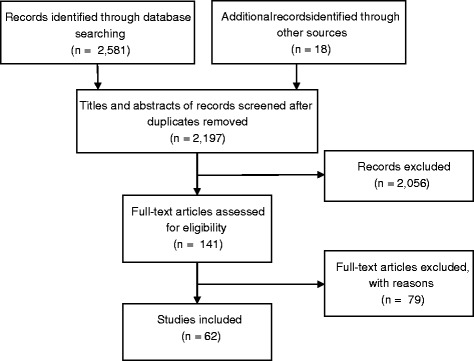
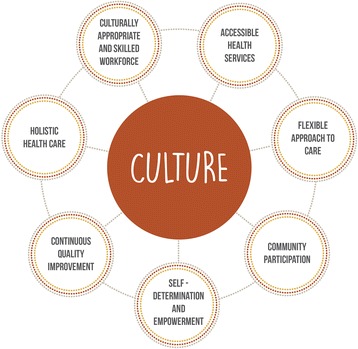
BACKGROUND: Indigenous populations have poorer health outcomes compared to their non-Indigenous counterparts. The evolution of Indigenous primary health care services arose from mainstream health services being unable to adequately meet the needs of Indigenous communities and Indigenous peoples often being excluded and marginalised from mainstream health services. Part of the solution has been to establish Indigenous specific primary health care services, for and managed by Indigenous peoples. There are a number of reasons why Indigenous primary health care services are more likely than mainstream services to improve the health of Indigenous communities. Their success is partly due to the fact that they often provide comprehensive programs that incorporate treatment and management, prevention and health promotion, as well as addressing the social determinants of health. However, there are gaps in the evidence base including the characteristics that contribute to the success of Indigenous primary health care services in providing comprehensive primary health care. This systematic scoping review aims to identify the characteristics of Indigenous primary health care service delivery models. METHOD: This systematic scoping review was led by an Aboriginal researcher, using the Joanna Briggs Institute Scoping Review Methodology. All published peer-reviewed and grey literature indexed in PubMed, EBSCO CINAHL, Embase, Informit, Mednar, and Trove databases from September 1978 to May 2015 were reviewed for inclusion. Studies were included if they describe the characteristics of service delivery models implemented within an Indigenous primary health care service. Sixty-two studies met the inclusion criteria. Data were extracted and then thematically analysed to identify the characteristics of Indigenous PHC service delivery models. RESULTS: Culture was the most prominent characteristic underpinning all of the other seven characteristics which were identified - accessible health services, community participation, continuous quality improvement, culturally appropriate and skilled workforce, flexible approach to care, holistic health care, and self-determination and empowerment. CONCLUSION: While the eight characteristics were clearly distinguishable within the review, the interdependence between each characteristic was also evident. These findings were used to develop a new Indigenous PHC Service Delivery Model, which clearly demonstrates some of the unique characteristics of Indigenous specific models.
Overview
The claims and statistics of this paper haven’t been checked yet.
Free: it reads the open-access text and checks the first 5 claims that cite a source we can check. Create a free account to check every claim.
Integrity signals
Registry
Cites
Statistics
Figures
Verification
Claims the paper makes
The claims and statistics of this paper haven’t been checked yet.
Free: it reads the open-access text and checks the first 5 claims that cite a source we can check. Create a free account to check every claim.
Claims other papers make about this one
Each is checked against this paper’s own text: does it say what the citing paper says it does?
The source backs part of the claim, not all of it — or backs it for a different population, condition or comparison.
In the citing paper
“Gaps abound in services to Indigenous healthcare and inadequate primary healthcare for FN in the Canadian context [22,23].”
From Canada First Nations Strengths in Community-Based Primary Healthcare (2022) · cites this paper as [23]
Experimental — accuracy not yet measuredThe source backs part of the claim, not all of it — or backs it for a different population, condition or comparison.
In the citing paper
“Community-based primary healthcare models that facilitate holistic Indigenous approaches, have been shown to more comprehensively address varied determinants of health and wellbeing than mainstream systems, which tend more toward addressing specific concerns [23].”
From Canada First Nations Strengths in Community-Based Primary Healthcare (2022) · cites this paper as [23]
Experimental — accuracy not yet measured
Self-check
Percentages, sums and reported differences re-computed from the paper’s own numbers.
The self-check needs the paper’s full text.
Citations
Cites
Preferred Reporting Items for Systematic Reviews and Meta-Analyses: the PRISMA statement
Moher, D., Liberati, A., Tetzlaff, J., Altman, D. G., & for the PRISMA Group (2009) · BMJ · doi:10.1136/bmj.b2535 · Cited by 83,823
Preferred Reporting Items for Systematic Reviews and Meta-Analyses: The PRISMA Statement
Moher, D., Liberati, A., Tetzlaff, J., Altman, D. G., & The PRISMA Group (2009) · PLoS Medicine · doi:10.1371/journal.pmed.1000097 · Cited by 64,042
Preferred reporting items for systematic reviews and meta-analyses: the PRISMA Statement.
(2009) · PubMed Central · Cited by 44,859
Preferred reporting items for systematic reviews and meta-analyses: The PRISMA statement
Moher, D., Liberati, A., Tetzlaff, J., Altman, D. G., & the PRISMA Group* (2009) · Annals of Internal Medicine · doi:10.7326/0003-4819-151-4-200908180-00135 · Cited by 37,554
Wang, G., Ma, R., Qiao, G., Wada, K., Aizawa, Y., & Satoh, T. (2015) · Integrative Medicine International · doi:10.1159/000368408 · Cited by 18,657
Guidance for conducting systematic scoping reviews
Peters, M. D. J., Godfrey, C. M., Khalil, H., McInerney, P., Parker, D., & Soares, C. B. (2015) · International Journal of Evidence-Based Healthcare · doi:10.1097/xeb.0000000000000050 · Cited by 7,472 · cited 2×
“A scoping review methodology was chosen, as it is the most appropriate methodology for synthesising a body of evidence that has yet to be comprehensively reviewed [19].”
MethodOrganizing Care for Patients with Chronic Illness
Wagner, E. H., Austin, B. T., & Korff, M. V. (1996) · The Milbank Quarterly · doi:10.2307/3350391 · Cited by 2,877 · cited 2×
“ample, the Chronic Care Model [90] focuses on implementing evidence based care, mobilising community”
BackgroundIndigenous health part 1: Determinants and disease patterns
Gracey, M., & King, M. (2009) · The Lancet · doi:10.1016/s0140-6736(09)60914-4 · Cited by 1,303
Napier, A. D., Ancarno, C., Butler, B., Calabrese, J., Chater, A., Chatterjee, H., Guesnet, F., Horne, R., Jacyna, S., Jadhav, S., et al. (2014) · The Lancet · doi:10.1016/s0140-6736(14)61603-2 · Cited by 849
International Journal of Evidence-Based Healthcare
(2020) · International Journal of Evidence-Based Healthcare · doi:10.1111/(issn)1744-1609 · Cited by 411
Research works printed but not linked: 13
- Lurie N Swift EK Mesauring disparities in access to care Guidnace for the national healthcare disparities report 2002 Washington, D. C The National Academies Press 99 148 25057628
- Lavoie J Policy and financing of indigenous primary health care providers in Canada, Australia and New Zealand 2005 London, England London School of Hygiene and Tropical Medicine
- World Health Organisation. Declaration of Alma-Ata. International conference on primary health care 1978 5-12 September 1978 [14/04/2016]; Available from: http://www.who.int/publications/almaata_declaration_en.pdf.
- QSR International Pty Ltd NVivo qualitative data analysis software 2012
- The Dreamers - Art Therapy for Women. Aborig Islander Health Worker J. 2002;26(6):10.
- Campbell D Ellis R Models of excellence in indigenous community health part one: the aboriginal medical service, Redfern Aboriginal and Islander Health Worker Journal 1995 19 4 4 14
- Dawson A Russel A Caponi A Asthma project at Pika Wiya health services: identifying barriers and developing resources Aboriginal and Islander Health Worker Journal 2003 27 5 20 22
- Tongs J Chatfield H Arabena K The Winnunga Nimmityjah aboriginal health service holistic health Care for Prison Model Aboriginal and Islander Health Worker Journal 2007 31 6 6 8
- Townsville Aboriginal Islanders Health Services Ltd The mums and babies project Families Australia Bulletin 2003 3 Winter 10 11
- Centre for Primary Care Human Systems for Southcentral Foundation’s Nuka system of care 2015 Harvard Boston, Massachusetts
- Anderson KM Olson S Leveraging culture to address health inequalities: examples from native communities 2013 Seattle, United States of America National Academies Press 24830070
- National Advisory Committee on Health and Disability The social, cultural and economic determinants of health in New Zealand: action to improve health 1998 New Zealand Wellington
- Russell L Smiler K Stace H Improving Māori health and reducing inequalities between Māori and non-Māori: has the primary health care strategy worked for Māori? 2013 New Zealand Health Research Council Of New Zealand and The Ministry Of Health Wellington
Cited by
Munn, Z., Peters, M. D. J., Stern, C., Tufanaru, C., McArthur, A., & Aromataris, E. (2018) · BMC Medical Research Methodology · doi:10.1186/s12874-018-0611-x · Cited by 11,385
Self-citationUpdated methodological guidance for the conduct of scoping reviews
Peters, M. D. J., Marnie, C., Tricco, A. C., Pollock, D., Munn, Z., Alexander, L., McInerney, P., Godfrey, C. M., & Khalil, H. (2020) · JBI Evidence Synthesis · doi:10.11124/jbies-20-00167 · Cited by 9,046
“Subsequently, they were able to develop and describe a new Indigenous Primary Health Care Service Delivery Model that focused on the local cultural values, customs, and beliefs of Indigenous people.(22) The value of scoping reviews to evidence-based health care and practice lies in their ability to incorporate various…”
BackgroundMethodSelf-citationUpdated methodological guidance for the conduct of scoping reviews
Peters, M. D. J., Marnie, C., Tricco, A. C., Pollock, D., Munn, Z., Alexander, L., McInerney, P., Godfrey, C. M., & Khalil, H. (2021) · JBI Evidence Implementation · doi:10.1097/xeb.0000000000000277 · Cited by 1,461
Self-citationPollock, D., Alexander, L., Munn, Z., Peters, M. D. J., Khalil, H., Godfrey, C. M., McInerney, P., Synnot, A., & Tricco, A. C. (2022) · JBI Evidence Synthesis · doi:10.11124/jbies-21-00416 · Cited by 182
“The review team includedmethodologistsandcontentexperts,with the findingsof the review discussed and interpreted within the wider community.(34)”
BackgroundMethodSelf-citationPearson, O. R., Schwartzkopff, K., Dawson, A. P., Hagger, C., Karagi, A., Davy, C. P., Brown, A. D. H., & Braunack‐Mayer, A. (2020) · BMC Public Health · doi:10.1186/s12889-020-09943-4 · Cited by 165
Self-citation
Metadata
- Authors
- Harfield, S. G., Davy, C., McArthur, A., Munn, Z., Brown, A., & Brown, N.
- Affiliations
- University of South Australia (AU)
- South Australian Health and Medical Research Institute (AU)
- The University of Adelaide (AU)
- University of Wollongong (AU)
- Corresponding author
- Harfield, Stephen G.
- Venue
- Globalization and Health
- Published
- 2018-01-25
- Volume
- 14
- Issue
- 1
- Pages
- 12-12
- ISSN
- 1744-8603 (ISSN-L)
- PMC
- PMC5784701
- OpenAlex
- W2787898157
- Cited by
- 270
- References
- 101
- Citations by year
- 2026: 22 · 2025: 27 · 2024: 38 · 2023: 37 · 2022: 38 · 2021: 62 · 2020: 25 · 2019: 9 · 2018: 11
- FWCI
- 4.41
- Type
- journal article
- Language
- en
- Open access
- gold
- doi.org
- Licence
- cc-by
- creativecommons.org/licenses/by/4.0 (tdm)
- creativecommons.org/licenses/by/4.0 (vor)
- Locations
- Globalization and Health (publishedVersion, cc-by)
- PubMed Central (publishedVersion, cc-by)
- PubMed (publishedVersion)
- Figshare (acceptedVersion)
- Research Online (University of Wollongong) (submittedVersion)
- Adelaide Research & Scholarship (AR&S) (University of Adelaide) (submittedVersion, cc-by)
- DOAJ (DOAJ: Directory of Open Access Journals) (submittedVersion, cc-by-sa)
- UniSA Research Outputs Repository (University of South Australia) (submittedVersion)
- Funders
- National Health and Medical Research Council (NHMRC No 1061242)
- Topics
- Social Sciences › Health › Indigenous Health, Education, and Rights
- Health Sciences › Medicine › Family Practice › Primary Care and Health Outcomes
- Social Sciences › Anthropology › Indigenous Cultures and History
- Keywords
- service delivery models, Indigenous health, culturally appropriate care, community participation, self-determination (international law), healthcare workers, holistic care, social determinants of health, health promotion, prevention, continuous quality improvement
- MeSH terms
- Health Services, Indigenous, Humans, Primary Health Care, Models, Organizational
About these checks
Registry, retraction, Cites and statistics results are computed, not judged, with one exception: a printed reference that no index lists is read once by a model before it counts as a citation error. Claims are extracted by a model and kept only when their quote appears verbatim in the text; each cited source is then checked, with a model’s help, for whether it says what the claim relies on. Those verdicts can be wrong — read the claim’s quote and the cited source before relying on one.
Statistics and arithmetic are recomputed, not judged.
Confidence bands are shown only for fields calibrated on our annotated test set. None is calibrated yet, so no band is shown.
What counts as a claim ›How we measure confidence ›How we check this ›
Are you an author, or do you see a problem with this page? Request a review
Data sources
Bibliographic data: Semantic Scholar, OpenAlex, Crossref.
Contains information from the Semantic Scholar Academic Graph Datasets, made available under the ODC Attribution License (ODC-BY 1.0).
Semantic Scholar’s data is described in: Kinney, R., et al. (2023). The Semantic Scholar Open Data Platform. arXiv:2301.10140.
