

Characteristics of Indigenous primary health care service delivery models: a systematic scoping review
Open accessThe DOI matches its Crossref record; 99 of the 101 references it cites were found in a registry or an index.
Abstract
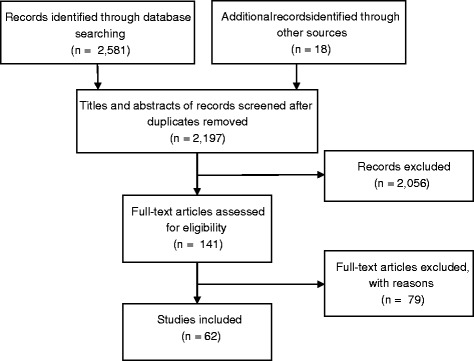
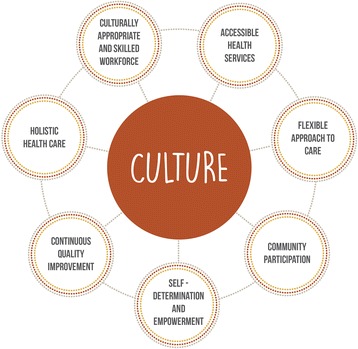
BACKGROUND: Indigenous populations have poorer health outcomes compared to their non-Indigenous counterparts. The evolution of Indigenous primary health care services arose from mainstream health services being unable to adequately meet the needs of Indigenous communities and Indigenous peoples often being excluded and marginalised from mainstream health services. Part of the solution has been to establish Indigenous specific primary health care services, for and managed by Indigenous peoples. There are a number of reasons why Indigenous primary health care services are more likely than mainstream services to improve the health of Indigenous communities. Their success is partly due to the fact that they often provide comprehensive programs that incorporate treatment and management, prevention and health promotion, as well as addressing the social determinants of health. However, there are gaps in the evidence base including the characteristics that contribute to the success of Indigenous primary health care services in providing comprehensive primary health care. This systematic scoping review aims to identify the characteristics of Indigenous primary health care service delivery models. METHOD: This systematic scoping review was led by an Aboriginal researcher, using the Joanna Briggs Institute Scoping Review Methodology. All published peer-reviewed and grey literature indexed in PubMed, EBSCO CINAHL, Embase, Informit, Mednar, and Trove databases from September 1978 to May 2015 were reviewed for inclusion. Studies were included if they describe the characteristics of service delivery models implemented within an Indigenous primary health care service. Sixty-two studies met the inclusion criteria. Data were extracted and then thematically analysed to identify the characteristics of Indigenous PHC service delivery models. RESULTS: Culture was the most prominent characteristic underpinning all of the other seven characteristics which were identified - accessible health services, community participation, continuous quality improvement, culturally appropriate and skilled workforce, flexible approach to care, holistic health care, and self-determination and empowerment. CONCLUSION: While the eight characteristics were clearly distinguishable within the review, the interdependence between each characteristic was also evident. These findings were used to develop a new Indigenous PHC Service Delivery Model, which clearly demonstrates some of the unique characteristics of Indigenous specific models.
Overview
The claims and statistics of this paper haven’t been checked yet.
Free: it reads the open-access text and checks the first 5 claims that cite a source we can check. Create a free account to check every claim.
Integrity signals
Registry
Cites
Statistics
Figures
Verification
Claims the paper makes
The claims and statistics of this paper haven’t been checked yet.
Free: it reads the open-access text and checks the first 5 claims that cite a source we can check. Create a free account to check every claim.
Claims other papers make about this one
Each is checked against this paper’s own text: does it say what the citing paper says it does?
The source backs part of the claim, not all of it — or backs it for a different population, condition or comparison.
In the citing paper
“Gaps abound in services to Indigenous healthcare and inadequate primary healthcare for FN in the Canadian context [22,23].”
From Canada First Nations Strengths in Community-Based Primary Healthcare (2022) · cites this paper as [23]
Experimental — accuracy not yet measuredThe source backs part of the claim, not all of it — or backs it for a different population, condition or comparison.
In the citing paper
“Community-based primary healthcare models that facilitate holistic Indigenous approaches, have been shown to more comprehensively address varied determinants of health and wellbeing than mainstream systems, which tend more toward addressing specific concerns [23].”
From Canada First Nations Strengths in Community-Based Primary Healthcare (2022) · cites this paper as [23]
Experimental — accuracy not yet measured
Self-check
Percentages, sums and reported differences re-computed from the paper’s own numbers.
The self-check needs the paper’s full text.
Citations
Cites
Preferred Reporting Items for Systematic Reviews and Meta-Analyses: the PRISMA statement
Moher, D., Liberati, A., Tetzlaff, J., Altman, D. G., & for the PRISMA Group (2009) · BMJ · doi:10.1136/bmj.b2535 · Cited by 83,823
Preferred Reporting Items for Systematic Reviews and Meta-Analyses: The PRISMA Statement
Moher, D., Liberati, A., Tetzlaff, J., Altman, D. G., & The PRISMA Group (2009) · PLoS Medicine · doi:10.1371/journal.pmed.1000097 · Cited by 64,042
Preferred reporting items for systematic reviews and meta-analyses: the PRISMA Statement.
(2009) · PubMed Central · Cited by 44,859
Preferred reporting items for systematic reviews and meta-analyses: The PRISMA statement
Moher, D., Liberati, A., Tetzlaff, J., Altman, D. G., & the PRISMA Group* (2009) · Annals of Internal Medicine · doi:10.7326/0003-4819-151-4-200908180-00135 · Cited by 37,554
Wang, G., Ma, R., Qiao, G., Wada, K., Aizawa, Y., & Satoh, T. (2015) · Integrative Medicine International · doi:10.1159/000368408 · Cited by 18,657
Guidance for conducting systematic scoping reviews
Peters, M. D. J., Godfrey, C. M., Khalil, H., McInerney, P., Parker, D., & Soares, C. B. (2015) · International Journal of Evidence-Based Healthcare · doi:10.1097/xeb.0000000000000050 · Cited by 7,472 · cited 2×
“A scoping review methodology was chosen, as it is the most appropriate methodology for synthesising a body of evidence that has yet to be comprehensively reviewed [19].”
MethodOrganizing Care for Patients with Chronic Illness
Wagner, E. H., Austin, B. T., & Korff, M. V. (1996) · The Milbank Quarterly · doi:10.2307/3350391 · Cited by 2,877 · cited 2×
“ample, the Chronic Care Model [90] focuses on implementing evidence based care, mobilising community”
BackgroundIndigenous health part 1: Determinants and disease patterns
Gracey, M., & King, M. (2009) · The Lancet · doi:10.1016/s0140-6736(09)60914-4 · Cited by 1,303
Napier, A. D., Ancarno, C., Butler, B., Calabrese, J., Chater, A., Chatterjee, H., Guesnet, F., Horne, R., Jacyna, S., Jadhav, S., et al. (2014) · The Lancet · doi:10.1016/s0140-6736(14)61603-2 · Cited by 849
International Journal of Evidence-Based Healthcare
(2020) · International Journal of Evidence-Based Healthcare · doi:10.1111/(issn)1744-1609 · Cited by 411
Methodology for jbi scoping reviews
Peters, M. D. J., Godfrey, C. M., McInerney, P. A., Soares, C. B., Khalil, H., & Parker, D. (2015) · Cited by 365
International Journal of Circumpolar Health
(2011) · International Journal of Circumpolar Health · doi:10.3402/ijch.v70i3.17826 · Cited by 350
on behalf of the DEDIPAC consortium, Condello, G., Ling, F. C. M., Bianco, A., Chastin, S., Cardon, G., Ciarapica, D., Conte, D., Cortis, C., De Craemer, M., et al. (2016) · BMC Public Health · doi:10.1186/s12889-016-3800-8 · Cited by 327
Guizzo, B. S., Krziminski, C. D. O., & de Oliveira, D. L. L. C. (2003) · PubMed · Cited by 312
Improving Access to Health Care Among New Zealand’s Maori Population
Ellison-Loschmann, L., & Pearce, N. (2006) · American Journal of Public Health · doi:10.2105/ajph.2005.070680 · Cited by 222 · cited 4×
“This has resulted in a combination of national and locally controlled Māori led initiatives that are committed to improving Māori health [7].”
BackgroundInfluentialAboriginal community controlled health services: leading the way in primary care
Panaretto, K. S., Wenitong, M., Button, S., & Ring, I. T. (2014) · Medical Journal of Australia · doi:10.5694/mja13.00005 · Cited by 218 · cited 7×
“Culturally Appropriate and Skilled Workforce • employing a range of skilled staff both health and non-health personnel who are able to meet the needs of the local community [30, 36, 41, 49, 50].”
BackgroundInfluentialIndigenous peoples' health—why are they behind everyone, everywhere?
Stephens, C., Nettleton, C., Porter, J., Willis, R., & Clark, S. (2005) · The Lancet · doi:10.1016/s0140-6736(05)66801-8 · Cited by 218 · cited 1×
“compared to their non-Indigenous counterparts [1].”
Self-rated health in multimorbid older general practice patients: a cross-sectional study in Germany
Nützel, A., Dahlhaus, A., Fuchs, A., Gensichen, J., König, H.-H., Riedel-Heller, S., Maier, W., Schäfer, I., Schön, G., Weyerer, S., et al. (2014) · BMC Family Practice · doi:10.1186/1471-2296-15-1 · Cited by 200
In search of a Healing Place: Aboriginal women in Vancouver's Downtown Eastside
Benoit, C., Carroll, D., & Chaudhry, M. (2003) · Social Science & Medicine · doi:10.1016/s0277-9536(02)00081-3 · Cited by 172 · cited 4×
“This contributed to ensuring cultural safety, a concept which extended beyond being simply aware of cultural differences to incorporating a deeper level of interaction and thoughtful practice, as defined by those who receive services [38, 47, 48, 50, 52, 56, 66, 79].”
BackgroundInfluentialThe Nuka System of Care: improving health through ownership and relationships
Gottlieb, K. (2013) · International Journal of Circumpolar Health · doi:10.3402/ijch.v72i0.21118 · Cited by 157 · cited 1×
“by the service with its ‘customer-owners’ ([102] p.”
BackgroundTsey, K., Whiteside, M., Haswell, M., Bainbridge, R. G., Cadet‐James, Y., & Wilson, A. J. (2009) · Health & Social Care in the Community · doi:10.1111/j.1365-2524.2009.00885.x · Cited by 130 · cited 1×
“Previous studies have demonstrated an association between empowerment of Indigenous peoples and communities and better health outcomes for Indigenous peoples [104, 105].”
BackgroundThe National Aboriginal Community Controlled Health Organisation
Hunter, P. (1998) · The New Doctor · Cited by 120
When the tide goes out: health workforce in rural, remote and Indigenous communities
Murray, R. B., & Wronski, I. (2006) · The Medical Journal of Australia · doi:10.5694/j.1326-5377.2006.tb00450.x · Cited by 114
The history and politics of US health care policy for American Indians and Alaskan Natives.
Kunitz, S. J. (1996) · American Journal of Public Health · doi:10.2105/ajph.86.10.1464 · Cited by 110
Impact of community participation in primary health care: what is the evidence?
Bath, J., & Wakerman, J. (2015) · Australian Journal of Primary Health · doi:10.1071/py12164 · Cited by 104 · cited 1×
“Aboriginal Community Controlled Health Organisations in Australia have been identified as exemplars of these types of community governance models [103], further demonstrating the link between community control and positive health outcomes.”
BackgroundCultural adaptation of birthing services in rural Ayacucho, Peru
Gabrysch, S., Lema, C., Bedriñana, E., Bautista, M. A., Malca, R., & Campbell, O. M. (2009) · Bulletin of the World Health Organization · doi:10.2471/blt.08.057794 · Cited by 103 · cited 10×
“Of the studies included, the majority of service delivery models focused on PHC service delivery more generally [29–32, 34, 36, 40–42, 49, 52–54, 56, 58, 61, 64, 66, 67, 69, 71, 73, 75, 76, 81, 82, 84–86]; while the others studies focused on specific areas such as women’s, maternal and infant health [27, 45, 47, 57, 6…”
BackgroundInfluentialPanaretto, K. S., Lee, H. M., Mitchell, M. R., Larkins, S. L., Manessis, V., Buettner, P. G., & Watson, D. (2005) · Medical Journal of Australia · doi:10.5694/j.1326-5377.2005.tb00017.x · Cited by 102 · cited 4×
“Other practical examples of how culturally appropriate service delivery was achieved, included creating welcoming [41] and comfortable spaces [72], and family-friendly environments [48, 85], through to for example, the use of Indigenous artwork and Indigenous signage [27], and developing culturally appropriate prevent…”
BackgroundInfluentialKeleher, H. (2001) · Australian Journal of Primary Health · doi:10.1071/py01035 · Cited by 95 · cited 1×
“Of the studies included, the majority of service delivery models focused on PHC service delivery more generally [29–32, 34, 36, 40–42, 49, 52–54, 56, 58, 61, 64, 66, 67, 69, 71, 73, 75, 76, 81, 82, 84–86]; while the others studies focused on specific areas such as women’s, maternal and infant health [27, 45, 47, 57, 6…”
BackgroundSi, D., Bailie, R. S., Togni, S. J., D'Abbs, P. H., & Robinson, G. (2006) · The Medical Journal of Australia · doi:10.5694/j.1326-5377.2006.tb00451.x · Cited by 95 · cited 1×
“Indigenous peoples providing health care to their own people has been shown to improve health outcomes related to diabetes [97], asthma [98], mental health and maternal and infant care [99].”
BackgroundA systems-based partnership learning model for strengthening primary healthcare
Bailie, R. S., Matthews, V., Brands, J., & Schierhout, G. (2013) · Implementation Science · doi:10.1186/1748-5908-8-143 · Cited by 94 · cited 3×
“• undertaking research to strengthen health systems in order to meet the needs of the community with an emphasis on translating research findings into practice [28].”
BackgroundFreeman, T., Edwards, T., Baum, F. E., Lawless, A. P., Jolley, G. M., Javanparast, S., & Francis, T. (2014) · Australian and New Zealand Journal of Public Health · doi:10.1111/1753-6405.12231 · Cited by 87 · cited 9×
“Culturally Appropriate and Skilled Workforce • employing a range of skilled staff both health and non-health personnel who are able to meet the needs of the local community [30, 36, 41, 49, 50].”
BackgroundInfluentialGardner, K. L., Dowden, M., Togni, S., & Bailie, R. (2010) · Implementation Science · doi:10.1186/1748-5908-5-21 · Cited by 87
Driscoll, D. L., Hiratsuka, V., Johnston, J. M., Norman, S., Reilly, K. M., Shaw, J., Smith, J., Szafran, Q. N., & Dillard, D. (2013) · The Annals of Family Medicine · doi:10.1370/afm.1474 · Cited by 72 · cited 3×
“• integrating health care services [38, 69, 76, 78, 80, 84], with a multidisciplinary team approach [34, 49, 62, 67–69, 76], case management [33, 46, 67, 72, 76, 80], and continuity of care [47, 48, 53, 56, 67, 68, 81, 84].”
BackgroundMinichiello, A., Lefkowitz, A. R. F., Firestone, M., Smylie, J. K., & Schwartz, R. M. (2015) · BMC Public Health · doi:10.1186/s12889-015-2645-x · Cited by 70 · cited 1×
“[106], found that tobacco intervention programs which had elements of self-determination and were relevant to the community were more likely to lead to positive outcomes such as reduced initiation and consumption of tobacco.”
BackgroundThomas, S. L., Wakerman, J., & Humphreys, J. S. (2014) · BMC Family Practice · doi:10.1186/1471-2296-15-143 · Cited by 68 · cited 1×
“development, and advocacy and rehabilitation ([23](para.”
Arora, S., Kurji, A. K., & Tennant, M. T. (2013) · Clinical and Investigative Medicine · doi:10.25011/cim.v36i2.19567 · Cited by 67 · cited 6×
“Employing local Indigenous staff helped to embed community cultural values, customs and beliefs into service delivery [45, 77, 78, 81].”
BackgroundInfluentialKelly, J., & Luxford, Y. (2007) · Collegian Journal of the Royal College of Nursing Australia · doi:10.1016/s1322-7696(08)60560-0 · Cited by 64 · cited 6×
“The employment of local Indigenous staff also incorporated aspects of cultural mentoring [38, 45, 81] ensuring non-Indigenous staff were culturally competent [45, 84] and aware of local protocols and values [58].”
BackgroundInfluentialMaar, M. A., Erskine, B., McGregor, L., Larose, T. L., Sutherland, M. E., Graham, D., Shawande, M., & Gordon, T. (2009) · International Journal of Mental Health Systems · doi:10.1186/1752-4458-3-27 · Cited by 64 · cited 9×
“• delivering acceptable care which focused on building trust with communities [87] ensuring patients felt supported [38] providing assurances in relation to privacy and confidentiality [38, 80], and implementing services underpinned by cultural respect, social justice and equality [47].”
BackgroundInfluentialAboriginal maternal and infant care workers: partners in caring for Aboriginal mothers and babies
Stamp, G., Champion, S., Anderson, G., Warren, B., Stuart-Butler, D., Doolan, J., Boles, C., Callaghan, L., Foale, A., & Muyambi, C. (2008) · Rural and Remote Health · doi:10.22605/rrh883 · Cited by 63 · cited 1×
“Indigenous peoples providing health care to their own people has been shown to improve health outcomes related to diabetes [97], asthma [98], mental health and maternal and infant care [99].”
BackgroundIndigenous healthcare worker involvement for Indigenous adults and children with asthma
Chang, A. B., Taylor, B., Masters, I. B., Laifoo, Y., & Brown, A. D. (2010) · Cochrane Database of Systematic Reviews · doi:10.1002/14651858.cd006344.pub3 · Cited by 60
Self-citationSacks, E., Swanson, R. C., Schensul, J. J., Gleave, A., Shelley, K. D., Were, M. K., Chowdhury, A. M., LeBan, K., & Perry, H. B. (2017) · International Quarterly of Community Health Education · doi:10.1177/0272684x17738089 · Cited by 56 · cited 1×
“Community participation and mobilization in health care is essential for ensuring services can identify health needs and set priorities, plan, implement, monitor and evaluate services and programs, this is consistent with existing literature on community participation in health [107].”
ResultMurphy, E., & Best, E. (2012) · New South Wales Public Health Bulletin · doi:10.1071/nb11051 · Cited by 48 · cited 9×
“• delivering acceptable care which focused on building trust with communities [87] ensuring patients felt supported [38] providing assurances in relation to privacy and confidentiality [38, 80], and implementing services underpinned by cultural respect, social justice and equality [47].”
BackgroundInfluentialLawless, A. P., Freeman, T., Bentley, M., Baum, F. E., & Jolley, G. M. (2014) · BMC Family Practice · doi:10.1186/1471-2296-15-99 · Cited by 48 · cited 1×
“Culture is also notably absent from the World Health Organisation Innovative Care for Chronic Conditions Framework [91] and the Southgate Model of Comprehensive Primary Health Care in Australia model [92].”
BackgroundAnderson, I. P. S., Baum, F. E., & Bentley, M. (2004) · Cited by 47
Integrated Care with Indigenous Populations: A Systematic Review of the Literature
Lewis, M. E., & Myhra, L. L. (2017) · American Indian and Alaska Native Mental Health Research · doi:10.5820/aian.2403.2017.88 · Cited by 46 · cited 1×
“While this is the first review of its type to identify the characteristics of Indigenous PHC service delivery models, a review by Lewis and Myhra on Integrated care with Indigenous populations: a systematic review of the literature [112], was identified.”
BackgroundStrengthening primary health care: achieving health gains in a remote region of Australia
Reeve, C. A., Humphreys, J., Wakerman, J., Carter, M., Carroll, V., & Reeve, D. (2015) · The Medical Journal of Australia · doi:10.5694/mja14.00894 · Cited by 45 · cited 7×
“Flexible Approaches to Care • tailoring approaches to identify [36, 50, 55, 66, 72] and meet the needs of the local community [29, 38, 41, 47, 48, 50, 52, 54, 58, 64, 69, 70, 83, 87], and delivering a range of services [29], that are relevant, culturally appropriate and effective [36, 82].”
BackgroundInfluentialA Political History of the Indian Health Service
Bergman, A. B., Grossman, D. C., Erdrich, A. M., Todd, J. G., & Forquera, R. (1999) · Milbank Quarterly · doi:10.1111/1468-0009.00152 · Cited by 44
Community-based health care for indigenous women in Mexico: a qualitative evaluation
Pelcastre‐Villafuerte, B. E., Ruiz, M., Meneses, S., Amaya-Castellanos, C. I., Marquez, M. S., Taboada, A., & Careaga, K. (2014) · International Journal for Equity in Health · doi:10.1186/1475-9276-13-2 · Cited by 44 · cited 9×
“• delivering acceptable care which focused on building trust with communities [87] ensuring patients felt supported [38] providing assurances in relation to privacy and confidentiality [38, 80], and implementing services underpinned by cultural respect, social justice and equality [47].”
BackgroundInfluentialHarfield, S., Davy, C., Kite, E., McArthur, A., Munn, Z., Brown, N., & Brown, A. (2015) · JBI Database of Systematic Reviews and Implementation Reports · doi:10.11124/jbisrir-2015-2474 · Cited by 42 · cited 1×
“The review team developed and published a protocol prior to commencing the systematic scoping review [21], that outlined the intended approach and method, which is summarised below.”
MethodSelf-citationModels of health service delivery in remote or isolated areas of Queensland: a multiple case study
Birks, M., Mills, J. E., Francis, K. L., Coyle, M., Davis, J., & Jones, J. (2010) · Australian journal of advanced nursing · doi:10.37464/2010.281.1690 · Cited by 40 · cited 3×
“• establishing an Indigenous workforce comprising Indigenous Health Workers, mental health workers, social workers, nurses, doctors, administration staff, managers and traditional healers, all who are central to the delivery of services, providing a diverse range of care [37, 38, 41, 47, 50, 78, 81, 88], and within so…”
BackgroundThe case for Aboriginal Health Workers in palliative care
McGrath, P. D., Patton, M. A., Ogilvie, K. F., & Rayner, R. D. (2007) · Australian Health Review · doi:10.1071/ah070430 · Cited by 39 · cited 1×
“Importantly, local Indigenous staff provide more acceptable care [100], as well as encouraging access to PHC more generally [101].”
BackgroundJersky, M., Titmuss, A., Haswell, M., Freeman, N. S., Osborne, P., Callaghan, L., Winters, J., Fitzpatrick, S., & Zwi, K. J. (2015) · Australian and New Zealand Journal of Public Health · doi:10.1111/1753-6405.12448 · Cited by 36 · cited 1×
“Previous studies have demonstrated an association between empowerment of Indigenous peoples and communities and better health outcomes for Indigenous peoples [104, 105].”
BackgroundFreeman, T., Baum, F. E., Jolley, G. M., Lawless, A. P., Edwards, T., Javanparast, S., & Ziersch, A. M. (2014) · The International Journal of Health Planning and Management · doi:10.1002/hpm.2253 · Cited by 35 · cited 5×
“Culture informed and supported the philosophy underpinning Indigenous self-determination, particularly community participation, ensuring Indigenous peoples having the right and determination to decide how their PHC services should, and can be delivered [30, 33, 40, 49, 59, 69, 73, 82, 85].”
BackgroundInfluentialAsthma management in indigenous children of a remote community using an indigenous health model
Chang, A. B., Shannon, C., O'Neil, M., Tiemann, A. M., Valery, P. C., Craig, D. R., Fa'afoi, E., & Masters, I. B. (2000) · Journal of Paediatrics and Child Health · doi:10.1046/j.1440-1754.2000.00505.x · Cited by 35 · cited 1×
“Of the studies included, the majority of service delivery models focused on PHC service delivery more generally [29–32, 34, 36, 40–42, 49, 52–54, 56, 58, 61, 64, 66, 67, 69, 71, 73, 75, 76, 81, 82, 84–86]; while the others studies focused on specific areas such as women’s, maternal and infant health [27, 45, 47, 57, 6…”
BackgroundThe development of Māori primary care services.
Crengle, S. M. (2000) · PubMed · Cited by 32
A Holistic System of Care for Native Americans in an Urban Environment
Nebelkopf, E., & King, J. C. (2003) · Journal of Psychoactive Drugs · doi:10.1080/02791072.2003.10399992 · Cited by 31 · cited 3×
“• improving health literacy particularly in relation to early warning signs of suicide [70], increasing HIV/AIDs awareness [32], providing information about the harm that comes from alcohol, tobacco and other drugs [73], understanding food labelling [83], maintaining health and ensuring that people could detect early…”
BackgroundPrimary care at the Alaska Native Medical Center: a fully deployed "new model" of primary care.
Eby, D. (2007) · PubMed · Cited by 30
IMPLEMENTING WOMEN'S CANCER SCREENING PROGRAMS IN AMERICAN INDIAN AND ALASKA NATIVE POPULATIONS
Lantz, P. M., Orians, C. E., Liebow, E., Joe, J. R., Burhansstipanov, L., Erb-Alvarez, J. A., & Kenyon, K. (2003) · Health Care For Women International · doi:10.1080/07399330390227481 · Cited by 30 · cited 8×
“Of the studies included, the majority of service delivery models focused on PHC service delivery more generally [29–32, 34, 36, 40–42, 49, 52–54, 56, 58, 61, 64, 66, 67, 69, 71, 73, 75, 76, 81, 82, 84–86]; while the others studies focused on specific areas such as women’s, maternal and infant health [27, 45, 47, 57, 6…”
BackgroundInfluentialMcDonald, J., Harris, M., Cumming, J., Davies, G. P., & Burns, P. (2008) · The Medical Journal of Australia · doi:10.5694/j.1326-5377.2008.tb01749.x · Cited by 28 · cited 1×
“Funding models are one of the key drivers for how care is provided [111].”
BackgroundThe oral health care experiences of NSW Aboriginal Community Controlled Health Services
Campbell, M., Hunt, J., Walker, D., & Williams, R. (2015) · Australian and New Zealand Journal of Public Health · doi:10.1111/1753-6405.12294 · Cited by 28 · cited 7×
“Culture informed and supported the philosophy underpinning Indigenous self-determination, particularly community participation, ensuring Indigenous peoples having the right and determination to decide how their PHC services should, and can be delivered [30, 33, 40, 49, 59, 69, 73, 82, 85].”
BackgroundInfluentialDyson, K., Kruger, E., & Tennant, M. (2012) · Australian Journal of Rural Health · doi:10.1111/j.1440-1584.2012.01318.x · Cited by 27 · cited 4×
“• training Indigenous Health Workers [30, 32, 49, 50, 61, 70] as a capacity building exercise [88], including more specialised health care such as dental [33, 39] or maternal health [47].”
BackgroundInfluentialKelaher, M., Dunt, D. R., Taylor‐Thomson, D., Harrison, N., O’Donoghue, L., Barnes, T., & Anderson, I. P. S. (2006) · Australian and New Zealand Journal of Public Health · doi:10.1111/j.1467-842x.2006.tb00113.x · Cited by 27 · cited 1×
“• offering a diverse range of services to clients [57], such as prevention and health promotion through to chronic disease care [29, 31, 34, 41, 53, 57, 62, 71], maternal and child health [34, 41, 49, 56, 57, 59, 82], oral health [39, 42, 50, 53, 57, 64, 65, 82], ear health [53, 56, 64] sexual health [53], mental and…”
BackgroundThe evolution of a breast health program for Plains Indian women.
Brant, J. M., Fallsdown, D., & Iverson, M. (1999) · PubMed · Cited by 27
Kahn, M. W., Lejero, L., Antone, M., Francisco, D., & Manuel, J. (1988) · American Journal of Community Psychology · doi:10.1007/bf00919376 · Cited by 26 · cited 6×
“Of the studies included, the majority of service delivery models focused on PHC service delivery more generally [29–32, 34, 36, 40–42, 49, 52–54, 56, 58, 61, 64, 66, 67, 69, 71, 73, 75, 76, 81, 82, 84–86]; while the others studies focused on specific areas such as women’s, maternal and infant health [27, 45, 47, 57, 6…”
BackgroundInfluentialFuture public health delivery models for Native American tribes
Allison, M., Rivers, P., & Fottler, M. D. (2007) · Public Health · doi:10.1016/j.puhe.2006.11.005 · Cited by 26 · cited 5×
“Culture informed and supported the philosophy underpinning Indigenous self-determination, particularly community participation, ensuring Indigenous peoples having the right and determination to decide how their PHC services should, and can be delivered [30, 33, 40, 49, 59, 69, 73, 82, 85].”
BackgroundInfluentialBartlett, B., & Boffa, J. (2001) · Australian Journal of Primary Health · doi:10.1071/py01050 · Cited by 22 · cited 6×
“Flexible Approaches to Care • tailoring approaches to identify [36, 50, 55, 66, 72] and meet the needs of the local community [29, 38, 41, 47, 48, 50, 52, 54, 58, 64, 69, 70, 83, 87], and delivering a range of services [29], that are relevant, culturally appropriate and effective [36, 82].”
BackgroundInfluentialKirby, R. S. (2007) · International Journal of Circumpolar Health · doi:10.3402/ijch.v66i1.18215 · Cited by 22
Economic value of Aboriginal community controlled health services
Alford, K. A. (2014) · Cited by 22
Johnston, J. M., Smith, J. J., Hiratsuka, V. Y., Dillard, D. A., Szafran, Q. N., & Driscoll, D. (2013) · International Journal of Circumpolar Health · doi:10.3402/ijch.v72i0.20960 · Cited by 19 · cited 3×
“• integrating health care services [38, 69, 76, 78, 80, 84], with a multidisciplinary team approach [34, 49, 62, 67–69, 76], case management [33, 46, 67, 72, 76, 80], and continuity of care [47, 48, 53, 56, 67, 68, 81, 84].”
BackgroundDiGiacomo, M. L., Abbott, P., Davison, J., Moore, L., & Davidson, P. M. (2010) · PubMed · Cited by 17
The Whanaungatanga Model of Care.
Lyford, S., & Cook, P. (2005) · PubMed · Cited by 16
Contemporary management issues for Aboriginal Community Controlled Health Services
Taylor, J., Dollard, J., Weetra, C., & Wilkinson, D. (2001) · Australian Health Review · doi:10.1071/ah010125 · Cited by 16 · cited 8×
“Flexible Approaches to Care • tailoring approaches to identify [36, 50, 55, 66, 72] and meet the needs of the local community [29, 38, 41, 47, 48, 50, 52, 54, 58, 64, 69, 70, 83, 87], and delivering a range of services [29], that are relevant, culturally appropriate and effective [36, 82].”
BackgroundInfluentialLovett, R. W., Dance, P., Guthrie, J., Brown, R., & Tongs, J. (2014) · Australian Health Review · doi:10.1071/ah13148 · Cited by 16 · cited 2×
“• integrating health care services [38, 69, 76, 78, 80, 84], with a multidisciplinary team approach [34, 49, 62, 67–69, 76], case management [33, 46, 67, 72, 76, 80], and continuity of care [47, 48, 53, 56, 67, 68, 81, 84].”
BackgroundCulture as a Determinant of Aboriginal Health
Morrissey, M., Pe-Pua, R., Brown, A. D. H., & Latif, A. (2007) · Cited by 16
Self-citationWakerman, J., & Field, P. (1998) · Australian Journal of Rural Health · doi:10.1111/j.1440-1584.1998.tb00277.x · Cited by 14 · cited 5×
“The employment of local Indigenous staff also incorporated aspects of cultural mentoring [38, 45, 81] ensuring non-Indigenous staff were culturally competent [45, 84] and aware of local protocols and values [58].”
BackgroundInfluentialTraining Injury Control Practitioners: The Indian Health Service Model
Smith, R. J., Dellapenna, A., & Berger, L. R. (2000) · The Future of Children · doi:10.2307/1602830 · Cited by 14
Meeting the needs of Māori with diabetes: Evaluation of a nurse-led service.
Janssen, J., & Nelson, K. (2014) · Nursing Praxis in Aotearoa New Zealand · doi:10.36951/ngpxnz.2014.008 · Cited by 14 · cited 8×
“Of the studies included, the majority of service delivery models focused on PHC service delivery more generally [29–32, 34, 36, 40–42, 49, 52–54, 56, 58, 61, 64, 66, 67, 69, 71, 73, 75, 76, 81, 82, 84–86]; while the others studies focused on specific areas such as women’s, maternal and infant health [27, 45, 47, 57, 6…”
BackgroundInfluentialAuclair, G., & Sappa, M. (2012) · PubMed · Cited by 14
West, E. A. (1994) · PubMed · Cited by 13
Provision of Health Care in a Frontier Setting: An Alaskan Perspective
Berner, B. (1992) · Journal of the American Academy of Nurse Practitioners · doi:10.1111/j.1745-7599.1992.tb00817.x · Cited by 13 · cited 5×
“• providing training and development opportunities for all staff [30, 32, 41, 47, 49, 50, 61, 64, 70, 74, 88], such as cultural awareness training for non-Indigenous staff [38, 58, 81], and comprehensive training for staff working in remote areas or in isolation who require additional skills and knowledge to deal with…”
BackgroundInfluentialImplementation of evidence-based healthcare in Papua New Guinea
Davy, C. P., & Patrickson, M. (2012) · International Journal of Evidence-Based Healthcare · doi:10.1111/j.1744-1609.2012.00294.x · Cited by 13 · cited 1×
“The majority of studies included in the review were conducted in Australia [27–58], 18 studies were conducted in the United States [59–76], five in Canada [77–81], four studies in New Zealand [82–85] and one study each in Papua New Guinea [86], Mexico [87] and Peru [88].”
BackgroundSelf-citationEstablishing a Maori case management clinic.
Maniapoto, T., & Gribben, B. (2003) · PubMed · Cited by 11
Atkinson, J., Boudville, A. I., Stanford, E., Lange, F. D., & Anjou, M. D. (2014) · Australian Journal of Primary Health · doi:10.1071/py14050 · Cited by 10
Bennett, M. (1988) · PubMed · Cited by 10
An American Indian Community Implements the Chronic Care Model: Evolution and Lessons Learned
Langwell, K. M., Keene, C., Zullo, M., & Ogu, L. C. (2014) · Health Promotion Practice · doi:10.1177/1524839914544171 · Cited by 9 · cited 4×
“• offering a diverse range of services to clients [57], such as prevention and health promotion through to chronic disease care [29, 31, 34, 41, 53, 57, 62, 71], maternal and child health [34, 41, 49, 56, 57, 59, 82], oral health [39, 42, 50, 53, 57, 64, 65, 82], ear health [53, 56, 64] sexual health [53], mental and…”
BackgroundInfluentialA Model for Providing Prenatal Health Care to Indigenous Women Living in Remote Areas
Baldwin, M., & Stevenson, Y. L. (2001) · International Journal of Circumpolar Health · doi:10.1080/25761900.2022.12220642 · Cited by 9 · cited 5×
“Holistic Health Care • providing comprehensive primary health care, which is holistic [32, 34, 37, 80, 82], supports the health and wellbeing of not only the individual but also their family and community [34, 49–51, 54, 66, 69, 73, 85], and includes mental, emotional and spiritual needs alongside physical wellbeing […”
BackgroundInfluentialASSESSMENT OF ABORIGINAL HEALTH SERVICES
Copeman, R. C. (1988) · Community Health Studies · doi:10.1111/j.1753-6405.1988.tb00584.x · Cited by 7 · cited 8×
“Culturally Appropriate and Skilled Workforce • employing a range of skilled staff both health and non-health personnel who are able to meet the needs of the local community [30, 36, 41, 49, 50].”
BackgroundInfluentialBowyer, N. K. (1997) · PubMed · Cited by 6
Gajjar, D., Zwi, A. B., Hill, P., & Shannon, C. (2014) · Australian Health Review · doi:10.1071/ah13221 · Cited by 5 · cited 3×
“• evaluating services to measure health benefits for the community [54], assessing economic outcomes, baseline demographics in relation to increased service utilisation, health assessments and chronic disease care plans [42].”
BackgroundPoroch, N. C., Tongs, J., Longford, E., & Keed, S. (2012) · Aboriginal health worker · Cited by 5
Poroch, N. C., Tongs, J., Sharp, P. G., Dodson, M., Larkin, S., Mikhailovich, K., Fisher, J. K., Lovett, R. W., Arabena, K., den Dungen, J. V., et al. (2007) · Cited by 4
Tongs, J., & Poroch, N. (2014) · Australian aboriginal studies/Australian Aboriginal studies · Cited by 4
Sơn, N. T., Barraclough, S., Morrow, M., & Trung, D. Q. (2000) · Australian Journal of Primary Health · doi:10.1071/py00003 · Cited by 4
Feasibility Assessment of the Service Delivery Model
Coll (2004) · American Indian and Alaska Native Mental Health Research · doi:10.5820/aian.1102.2004.99 · Cited by 3 · cited 4×
“This contributed to ensuring cultural safety, a concept which extended beyond being simply aware of cultural differences to incorporating a deeper level of interaction and thoughtful practice, as defined by those who receive services [38, 47, 48, 50, 52, 56, 66, 79].”
BackgroundInfluentialStewart, J., Raiwaqavuka, T., & Social Health Team (2009) · Australasian Psychiatry · doi:10.1080/10398560902948555 · Cited by 3 · cited 5×
“• integrating health care services [38, 69, 76, 78, 80, 84], with a multidisciplinary team approach [34, 49, 62, 67–69, 76], case management [33, 46, 67, 72, 76, 80], and continuity of care [47, 48, 53, 56, 67, 68, 81, 84].”
BackgroundInfluentialModel system of ongoing care for native Americans--a 5-year followup.
Dietrich, A. J., & Al, O. (1986) · PubMed · Cited by 2
The Indian Health Service in Oklahoma: dental service for American Indians.
Chiarchiaro, G. (1997) · PubMed · Cited by 2
World AIDS Day: Sydney West Area Health Service
Mundy, D., & Ward, J. S. (2007) · Aboriginal health worker · Cited by 1
Research works printed but not linked: 13
- Lurie N Swift EK Mesauring disparities in access to care Guidnace for the national healthcare disparities report 2002 Washington, D. C The National Academies Press 99 148 25057628
- Lavoie J Policy and financing of indigenous primary health care providers in Canada, Australia and New Zealand 2005 London, England London School of Hygiene and Tropical Medicine
- World Health Organisation. Declaration of Alma-Ata. International conference on primary health care 1978 5-12 September 1978 [14/04/2016]; Available from: http://www.who.int/publications/almaata_declaration_en.pdf.
- QSR International Pty Ltd NVivo qualitative data analysis software 2012
- The Dreamers - Art Therapy for Women. Aborig Islander Health Worker J. 2002;26(6):10.
- Campbell D Ellis R Models of excellence in indigenous community health part one: the aboriginal medical service, Redfern Aboriginal and Islander Health Worker Journal 1995 19 4 4 14
- Dawson A Russel A Caponi A Asthma project at Pika Wiya health services: identifying barriers and developing resources Aboriginal and Islander Health Worker Journal 2003 27 5 20 22
- Tongs J Chatfield H Arabena K The Winnunga Nimmityjah aboriginal health service holistic health Care for Prison Model Aboriginal and Islander Health Worker Journal 2007 31 6 6 8
- Townsville Aboriginal Islanders Health Services Ltd The mums and babies project Families Australia Bulletin 2003 3 Winter 10 11
- Centre for Primary Care Human Systems for Southcentral Foundation’s Nuka system of care 2015 Harvard Boston, Massachusetts
- Anderson KM Olson S Leveraging culture to address health inequalities: examples from native communities 2013 Seattle, United States of America National Academies Press 24830070
- National Advisory Committee on Health and Disability The social, cultural and economic determinants of health in New Zealand: action to improve health 1998 New Zealand Wellington
- Russell L Smiler K Stace H Improving Māori health and reducing inequalities between Māori and non-Māori: has the primary health care strategy worked for Māori? 2013 New Zealand Health Research Council Of New Zealand and The Ministry Of Health Wellington
Cited by
Munn, Z., Peters, M. D. J., Stern, C., Tufanaru, C., McArthur, A., & Aromataris, E. (2018) · BMC Medical Research Methodology · doi:10.1186/s12874-018-0611-x · Cited by 11,385
Self-citationUpdated methodological guidance for the conduct of scoping reviews
Peters, M. D. J., Marnie, C., Tricco, A. C., Pollock, D., Munn, Z., Alexander, L., McInerney, P., Godfrey, C. M., & Khalil, H. (2020) · JBI Evidence Synthesis · doi:10.11124/jbies-20-00167 · Cited by 9,046
“Subsequently, they were able to develop and describe a new Indigenous Primary Health Care Service Delivery Model that focused on the local cultural values, customs, and beliefs of Indigenous people.(22) The value of scoping reviews to evidence-based health care and practice lies in their ability to incorporate various…”
BackgroundMethodSelf-citationUpdated methodological guidance for the conduct of scoping reviews
Peters, M. D. J., Marnie, C., Tricco, A. C., Pollock, D., Munn, Z., Alexander, L., McInerney, P., Godfrey, C. M., & Khalil, H. (2021) · JBI Evidence Implementation · doi:10.1097/xeb.0000000000000277 · Cited by 1,461
Self-citationPollock, D., Alexander, L., Munn, Z., Peters, M. D. J., Khalil, H., Godfrey, C. M., McInerney, P., Synnot, A., & Tricco, A. C. (2022) · JBI Evidence Synthesis · doi:10.11124/jbies-21-00416 · Cited by 182
“The review team includedmethodologistsandcontentexperts,with the findingsof the review discussed and interpreted within the wider community.(34)”
BackgroundMethodSelf-citationPearson, O. R., Schwartzkopff, K., Dawson, A. P., Hagger, C., Karagi, A., Davy, C. P., Brown, A. D. H., & Braunack‐Mayer, A. (2020) · BMC Public Health · doi:10.1186/s12889-020-09943-4 · Cited by 163
Self-citation
Metadata
- Authors
- Harfield, S. G., Davy, C., McArthur, A., Munn, Z., Brown, A., & Brown, N.
- Affiliations
- University of South Australia (AU)
- South Australian Health and Medical Research Institute (AU)
- The University of Adelaide (AU)
- University of Wollongong (AU)
- Corresponding author
- Harfield, Stephen G.
- Venue
- Globalization and Health
- Published
- 2018-01-25
- Volume
- 14
- Issue
- 1
- Pages
- 12-12
- ISSN
- 1744-8603 (ISSN-L)
- PMC
- PMC5784701
- OpenAlex
- W2787898157
- Cited by
- 270
- References
- 101
- Citations by year
- 2026: 22 · 2025: 27 · 2024: 38 · 2023: 37 · 2022: 38 · 2021: 62 · 2020: 25 · 2019: 9 · 2018: 11
- FWCI
- 4.41
- Type
- journal article
- Language
- en
- Open access
- gold
- doi.org
- Licence
- cc-by
- creativecommons.org/licenses/by/4.0 (tdm)
- creativecommons.org/licenses/by/4.0 (vor)
- Locations
- Globalization and Health (publishedVersion, cc-by)
- PubMed Central (publishedVersion, cc-by)
- PubMed (publishedVersion)
- Figshare (acceptedVersion)
- Research Online (University of Wollongong) (submittedVersion)
- Adelaide Research & Scholarship (AR&S) (University of Adelaide) (submittedVersion, cc-by)
- DOAJ (DOAJ: Directory of Open Access Journals) (submittedVersion, cc-by-sa)
- UniSA Research Outputs Repository (University of South Australia) (submittedVersion)
- Funders
- National Health and Medical Research Council (NHMRC No 1061242)
- Topics
- Social Sciences › Health › Indigenous Health, Education, and Rights
- Health Sciences › Medicine › Family Practice › Primary Care and Health Outcomes
- Social Sciences › Anthropology › Indigenous Cultures and History
- Keywords
- service delivery models, Indigenous health, culturally appropriate care, community participation, self-determination (international law), healthcare workers, holistic care, social determinants of health, health promotion, prevention, continuous quality improvement
- MeSH terms
- Health Services, Indigenous, Humans, Primary Health Care, Models, Organizational
About these checks
Registry, retraction, Cites and statistics results are computed, not judged, with one exception: a printed reference that no index lists is read once by a model before it counts as a citation error. Claims are extracted by a model and kept only when their quote appears verbatim in the text; each cited source is then checked, with a model’s help, for whether it says what the claim relies on. Those verdicts can be wrong — read the claim’s quote and the cited source before relying on one.
Statistics and arithmetic are recomputed, not judged.
Confidence bands are shown only for fields calibrated on our annotated test set. None is calibrated yet, so no band is shown.
What counts as a claim ›How we measure confidence ›How we check this ›
Are you an author, or do you see a problem with this page? Request a review
Data sources
Bibliographic data: Semantic Scholar, OpenAlex, Crossref.
Contains information from the Semantic Scholar Academic Graph Datasets, made available under the ODC Attribution License (ODC-BY 1.0).
Semantic Scholar’s data is described in: Kinney, R., et al. (2023). The Semantic Scholar Open Data Platform. arXiv:2301.10140.
