

Characteristics of Indigenous primary health care service delivery models: a systematic scoping review
Open accessThe DOI matches its Crossref record; 99 of the 101 references it cites were found in a registry or an index.
Abstract
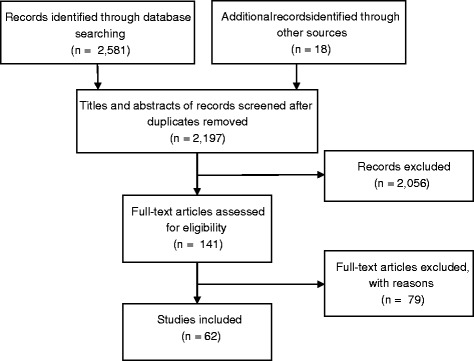
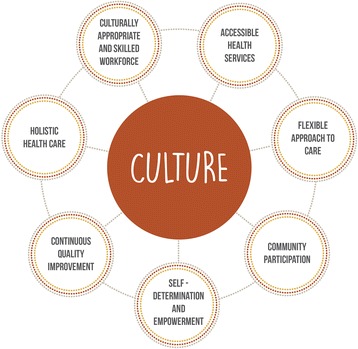
BACKGROUND: Indigenous populations have poorer health outcomes compared to their non-Indigenous counterparts. The evolution of Indigenous primary health care services arose from mainstream health services being unable to adequately meet the needs of Indigenous communities and Indigenous peoples often being excluded and marginalised from mainstream health services. Part of the solution has been to establish Indigenous specific primary health care services, for and managed by Indigenous peoples. There are a number of reasons why Indigenous primary health care services are more likely than mainstream services to improve the health of Indigenous communities. Their success is partly due to the fact that they often provide comprehensive programs that incorporate treatment and management, prevention and health promotion, as well as addressing the social determinants of health. However, there are gaps in the evidence base including the characteristics that contribute to the success of Indigenous primary health care services in providing comprehensive primary health care. This systematic scoping review aims to identify the characteristics of Indigenous primary health care service delivery models. METHOD: This systematic scoping review was led by an Aboriginal researcher, using the Joanna Briggs Institute Scoping Review Methodology. All published peer-reviewed and grey literature indexed in PubMed, EBSCO CINAHL, Embase, Informit, Mednar, and Trove databases from September 1978 to May 2015 were reviewed for inclusion. Studies were included if they describe the characteristics of service delivery models implemented within an Indigenous primary health care service. Sixty-two studies met the inclusion criteria. Data were extracted and then thematically analysed to identify the characteristics of Indigenous PHC service delivery models. RESULTS: Culture was the most prominent characteristic underpinning all of the other seven characteristics which were identified - accessible health services, community participation, continuous quality improvement, culturally appropriate and skilled workforce, flexible approach to care, holistic health care, and self-determination and empowerment. CONCLUSION: While the eight characteristics were clearly distinguishable within the review, the interdependence between each characteristic was also evident. These findings were used to develop a new Indigenous PHC Service Delivery Model, which clearly demonstrates some of the unique characteristics of Indigenous specific models.
Overview
The claims and statistics of this paper haven’t been checked yet.
Free: it reads the open-access text and checks the first 5 claims that cite a source we can check. Create a free account to check every claim.
Integrity signals
Registry
Cites
Statistics
Figures
Verification
Claims the paper makes
The claims and statistics of this paper haven’t been checked yet.
Free: it reads the open-access text and checks the first 5 claims that cite a source we can check. Create a free account to check every claim.
Claims other papers make about this one
Each is checked against this paper’s own text: does it say what the citing paper says it does?
The source backs part of the claim, not all of it — or backs it for a different population, condition or comparison.
In the citing paper
“Gaps abound in services to Indigenous healthcare and inadequate primary healthcare for FN in the Canadian context [22,23].”
From Canada First Nations Strengths in Community-Based Primary Healthcare (2022) · cites this paper as [23]
Experimental — accuracy not yet measuredThe source backs part of the claim, not all of it — or backs it for a different population, condition or comparison.
In the citing paper
“Community-based primary healthcare models that facilitate holistic Indigenous approaches, have been shown to more comprehensively address varied determinants of health and wellbeing than mainstream systems, which tend more toward addressing specific concerns [23].”
From Canada First Nations Strengths in Community-Based Primary Healthcare (2022) · cites this paper as [23]
Experimental — accuracy not yet measured
Self-check
Percentages, sums and reported differences re-computed from the paper’s own numbers.
The self-check needs the paper’s full text.
Citations
Cites
Preferred Reporting Items for Systematic Reviews and Meta-Analyses: the PRISMA statement
Moher, D., Liberati, A., Tetzlaff, J., Altman, D. G., & for the PRISMA Group (2009) · BMJ · doi:10.1136/bmj.b2535 · Cited by 83,823
Preferred Reporting Items for Systematic Reviews and Meta-Analyses: The PRISMA Statement
Moher, D., Liberati, A., Tetzlaff, J., Altman, D. G., & The PRISMA Group (2009) · PLoS Medicine · doi:10.1371/journal.pmed.1000097 · Cited by 64,042
Preferred reporting items for systematic reviews and meta-analyses: the PRISMA Statement.
(2009) · PubMed Central · Cited by 44,859
Preferred reporting items for systematic reviews and meta-analyses: The PRISMA statement
Moher, D., Liberati, A., Tetzlaff, J., Altman, D. G., & the PRISMA Group* (2009) · Annals of Internal Medicine · doi:10.7326/0003-4819-151-4-200908180-00135 · Cited by 37,554
Wang, G., Ma, R., Qiao, G., Wada, K., Aizawa, Y., & Satoh, T. (2015) · Integrative Medicine International · doi:10.1159/000368408 · Cited by 18,657
Guidance for conducting systematic scoping reviews
Peters, M. D. J., Godfrey, C. M., Khalil, H., McInerney, P., Parker, D., & Soares, C. B. (2015) · International Journal of Evidence-Based Healthcare · doi:10.1097/xeb.0000000000000050 · Cited by 7,472 · cited 2×
“A scoping review methodology was chosen, as it is the most appropriate methodology for synthesising a body of evidence that has yet to be comprehensively reviewed [19].”
MethodOrganizing Care for Patients with Chronic Illness
Wagner, E. H., Austin, B. T., & Korff, M. V. (1996) · The Milbank Quarterly · doi:10.2307/3350391 · Cited by 2,877 · cited 2×
“ample, the Chronic Care Model [90] focuses on implementing evidence based care, mobilising community”
BackgroundIndigenous health part 1: Determinants and disease patterns
Gracey, M., & King, M. (2009) · The Lancet · doi:10.1016/s0140-6736(09)60914-4 · Cited by 1,303
Napier, A. D., Ancarno, C., Butler, B., Calabrese, J., Chater, A., Chatterjee, H., Guesnet, F., Horne, R., Jacyna, S., Jadhav, S., et al. (2014) · The Lancet · doi:10.1016/s0140-6736(14)61603-2 · Cited by 849
International Journal of Evidence-Based Healthcare
(2020) · International Journal of Evidence-Based Healthcare · doi:10.1111/(issn)1744-1609 · Cited by 411
Research works printed but not linked: 13
- Lurie N Swift EK Mesauring disparities in access to care Guidnace for the national healthcare disparities report 2002 Washington, D. C The National Academies Press 99 148 25057628
- Lavoie J Policy and financing of indigenous primary health care providers in Canada, Australia and New Zealand 2005 London, England London School of Hygiene and Tropical Medicine
- World Health Organisation. Declaration of Alma-Ata. International conference on primary health care 1978 5-12 September 1978 [14/04/2016]; Available from: http://www.who.int/publications/almaata_declaration_en.pdf.
- QSR International Pty Ltd NVivo qualitative data analysis software 2012
- The Dreamers - Art Therapy for Women. Aborig Islander Health Worker J. 2002;26(6):10.
- Campbell D Ellis R Models of excellence in indigenous community health part one: the aboriginal medical service, Redfern Aboriginal and Islander Health Worker Journal 1995 19 4 4 14
- Dawson A Russel A Caponi A Asthma project at Pika Wiya health services: identifying barriers and developing resources Aboriginal and Islander Health Worker Journal 2003 27 5 20 22
- Tongs J Chatfield H Arabena K The Winnunga Nimmityjah aboriginal health service holistic health Care for Prison Model Aboriginal and Islander Health Worker Journal 2007 31 6 6 8
- Townsville Aboriginal Islanders Health Services Ltd The mums and babies project Families Australia Bulletin 2003 3 Winter 10 11
- Centre for Primary Care Human Systems for Southcentral Foundation’s Nuka system of care 2015 Harvard Boston, Massachusetts
- Anderson KM Olson S Leveraging culture to address health inequalities: examples from native communities 2013 Seattle, United States of America National Academies Press 24830070
- National Advisory Committee on Health and Disability The social, cultural and economic determinants of health in New Zealand: action to improve health 1998 New Zealand Wellington
- Russell L Smiler K Stace H Improving Māori health and reducing inequalities between Māori and non-Māori: has the primary health care strategy worked for Māori? 2013 New Zealand Health Research Council Of New Zealand and The Ministry Of Health Wellington
Cited by
Munn, Z., Peters, M. D. J., Stern, C., Tufanaru, C., McArthur, A., & Aromataris, E. (2018) · BMC Medical Research Methodology · doi:10.1186/s12874-018-0611-x · Cited by 11,385
Self-citationUpdated methodological guidance for the conduct of scoping reviews
Peters, M. D. J., Marnie, C., Tricco, A. C., Pollock, D., Munn, Z., Alexander, L., McInerney, P., Godfrey, C. M., & Khalil, H. (2020) · JBI Evidence Synthesis · doi:10.11124/jbies-20-00167 · Cited by 9,046
“Subsequently, they were able to develop and describe a new Indigenous Primary Health Care Service Delivery Model that focused on the local cultural values, customs, and beliefs of Indigenous people.(22) The value of scoping reviews to evidence-based health care and practice lies in their ability to incorporate various…”
BackgroundMethodSelf-citationUpdated methodological guidance for the conduct of scoping reviews
Peters, M. D. J., Marnie, C., Tricco, A. C., Pollock, D., Munn, Z., Alexander, L., McInerney, P., Godfrey, C. M., & Khalil, H. (2021) · JBI Evidence Implementation · doi:10.1097/xeb.0000000000000277 · Cited by 1,461
Self-citationPollock, D., Alexander, L., Munn, Z., Peters, M. D. J., Khalil, H., Godfrey, C. M., McInerney, P., Synnot, A., & Tricco, A. C. (2022) · JBI Evidence Synthesis · doi:10.11124/jbies-21-00416 · Cited by 182
“The review team includedmethodologistsandcontentexperts,with the findingsof the review discussed and interpreted within the wider community.(34)”
BackgroundMethodSelf-citationPearson, O. R., Schwartzkopff, K., Dawson, A. P., Hagger, C., Karagi, A., Davy, C. P., Brown, A. D. H., & Braunack‐Mayer, A. (2020) · BMC Public Health · doi:10.1186/s12889-020-09943-4 · Cited by 165
Self-citationBalasooriya, B. M. J. K., Rajapakse, J., & Gallage, C. P. K. (2023) · The Science of The Total Environment · doi:10.1016/j.scitotenv.2023.166559 · Cited by 95
Finlay, S. M., & Wenitong, M. (2020) · Australian and New Zealand Journal of Public Health · doi:10.1111/1753-6405.13010 · Cited by 77
Voaklander, B., Rowe, S., Sanni, O., Campbell, S., Eurich, D., & Ospina, M. B. (2020) · The Lancet Global Health · doi:10.1016/s2214-109x(20)30046-2 · Cited by 72
Australia in 2030: what is our path to health for all?
Backholer, K., Baum, F. E., Finlay, S. M., Friel, S., Giles‐Corti, B., Jones, A., Patrick, R., Shill, J., Townsend, B., Armstrong, F., et al. (2021) · The Medical Journal of Australia · doi:10.5694/mja2.51020 · Cited by 93
Vincze, L., Barnes, K., Somerville, M., Littlewood, R., Atkins, H., Rogany, A., & Williams, L. T. (2021) · International Journal for Equity in Health · doi:10.1186/s12939-021-01462-x · Cited by 62
“A recent systematic scoping review of Indigenous primary healthcare service delivery models identified a preference for healthcare that was accessible, culturally appropriate, holistic and involved community participation [14].”
BackgroundHow does the school built environment impact students’ bullying behaviour? A scoping review
Francis, J., Strobel, N., Trapp, G., Pearce, N., Vaz, S. M. A., Christian, H. E., Runions, K., Martin, K., & CROSS, D. S. (2022) · Social Science & Medicine · doi:10.1016/j.socscimed.2022.115451 · Cited by 78
Understanding the utilization of primary health care services by Indigenous men: a systematic review
Canuto, K., Brown, A. D. H., Wittert, G., & Harfield, S. G. (2018) · BMC Public Health · doi:10.1186/s12889-018-6093-2 · Cited by 58
“Studies from New Zealand, Canada and America were also included in the review due to the countries shared experience with colonization and their high disparity of health and wellbeing between the Indigenous and non-Indigenous peoples within each country.”
BackgroundSelf-citationConway, J., Lawn, S., Crail, S. M., & McDonald, S. P. (2018) · BMC Health Services Research · doi:10.1186/s12913-018-3849-4 · Cited by 62
A systematic review of EPDS cultural suitability with Indigenous mothers: a global perspective
Chan, A. W., Reid, C. L., Skeffington, P., & Marriott, R. (2020) · Archives of Women s Mental Health · doi:10.1007/s00737-020-01084-2 · Cited by 63
Cullen, P., Mackean, T., Walker, N., Coombes, J., Bennett‐Brook, K., Clapham, K. F., Ivers, R., Hackett, M. L., Worner, F., & Longbottom, M. (2021) · Trauma Violence & Abuse · doi:10.1177/1524838020985571 · Cited by 67
“…peoples, which emphasizes the need for services to be culturally safe and contextually tailored to best meet the specific priorities and needs of communities (Davy et al., 2016; Fredericks & Thompson, 2010; Freeman et al., 2014; Harfield et al., 2018; Lovett & Olsen, 2016; Nelson & Wilson, 2018).”
BackgroundKatapally, T. R. (2020) · JMIR Pediatrics and Parenting · doi:10.2196/21155 · Cited by 56
“With such strong evidence of culture playing a role in holistic health, there is a need to normalize culturally appropriate policies and programs to facilitate Indigenous youth mental health [22].”
Nagata, H., Glick, L., Lougheed, J., Grattan, M., Mondal, T., Thakur, V., Schwartz, S. M., & Jaeggi, E. (2020) · Canadian Journal of Cardiology · doi:10.1016/j.cjca.2020.01.010 · Cited by 46
Harfield, S. G., Purcell, T., Schioldann, E., Ward, J. S., Pearson, O. R., & Azzopardi, P. S. (2024) · BMC Health Services Research · doi:10.1186/s12913-024-10796-5 · Cited by 50
Self-citationBeks, H., Ewing, G., Charles, J., Mitchell, F., Paradies, Y., Clark, R. A., & Versace, V. L. (2020) · International Journal for Equity in Health · doi:10.1186/s12939-020-01306-0 · Cited by 50
Shrivastava, R., Couturier, Y., Girard, F., Papineau, L., & Emami, E. (2020) · International Journal for Equity in Health · doi:10.1186/s12939-020-01195-3 · Cited by 50
Rheumatic heart disease in Indigenous young peoples
Wyber, R., Wade, V., Anderson, A., Schreiber, Y., Saginur, R., Brown, A. D. H., & Carapetis, J. R. (2021) · The Lancet Child & Adolescent Health · doi:10.1016/s2352-4642(20)30308-4 · Cited by 41
Self-citationUnderstanding virtual primary healthcare with Indigenous populations: a rapid evidence review
Fitzpatrick, K., Ody, M., Goveas, D., Montesanti, S. R., Campbell, P., MacDonald, K., Crowshoe, L. L., Campbell, S., & Roach, P. (2023) · BMC Health Services Research · doi:10.1186/s12913-023-09299-6 · Cited by 44
“Concerns surrounding the technological and cultural accessibility of virtual PHC services further highlight the need to explore virtual PHC [14] to ensure holistic aspects of health and self-management, health promotion and prevention are incorporated [2, 15, 16].”
BackgroundCorso, M., DeSouza, A., Brunton, G., Yu, H., Cancelliere, C., Mior, S. A., Taylor-Vaisey, A. L., MacLeod-Beaver, K., & Côté, P. (2022) · BMJ Open · doi:10.1136/bmjopen-2021-059323 · Cited by 51
Beks, H., Binder, M. J., Kourbelis, C., Ewing, G., Charles, J., Paradies, Y., Clark, R. A., & Versace, V. L. (2019) · BMC Public Health · doi:10.1186/s12889-019-7463-0 · Cited by 33
#Caremongering: A community-led social movement to address health and social needs during COVID-19
Seow, H. Y., McMillan, K., Civak, M., Bainbridge, D. B., van der Wal, A., Haanstra, C., Goldhar, J., & Winemaker, S. (2021) · PLoS ONE · doi:10.1371/journal.pone.0245483 · Cited by 35
Lucier, K. J., Schuster‐Wallace, C. J., Skead, D., Skead, K., & Dickson‐Anderson, S. E. (2020) · BMC Public Health · doi:10.1186/s12889-020-09825-9 · Cited by 36
Laird, P. J., Walker, R., Lane, M., Chang, A. B., & Schultz, A. (2019) · Respirology · doi:10.1111/resp.13642 · Cited by 27
Understanding Historical Trauma for the Holistic Care of Indigenous Populations: A Scoping Review
Joo‐Castro, L., & Emerson, A. (2020) · Journal of Holistic Nursing · doi:10.1177/0898010120979135 · Cited by 28
“Similar to the culturally specific approaches in interventions and programs in the studies we reviewed, the cultural safety model integrates the values, attitudes, and beliefs of Indigenous culture into health services, using community participation to identify needs of the population and stressing self-determination…”
BackgroundThe inaugural World Report on Hearing: From barriers to a platform for change
McMahon, C. M., Nieman, C. L., Thorne, P. R., Emmett, S. D., & Bhutta, M. F. (2021) · Clinical Otolaryngology · doi:10.1111/coa.13756 · Cited by 22
Crowshoe, L. L., Sehgal, A., Montesanti, S. R., Barnabe, C. C. M., Kennedy, A. P., Murry, A. T., Roach, P., Green, M., Bablitz, C., Tailfeathers, E., et al. (2021) · Health Policy · doi:10.1016/j.healthpol.2021.02.007 · Cited by 34
Fitts, M. S., Humphreys, J. S., Dunbar, T., Bourke, L., Mulholland, E., Guthridge, S. L., Zhao, Y., Jones, M. P., Boffa, J. D., Ramjan, M., et al. (2021) · BMJ Open · doi:10.1136/bmjopen-2020-043902 · Cited by 21
Dawson, A. P., Harfield, S. G., Davy, C. P., Baker, A., Kite, E., Aitken, G., Morey, K., Braunack‐Mayer, A., & Brown, A. D. H. (2021) · Primary Health Care Research & Development · doi:10.1017/s1463423621000542 · Cited by 21
“Culture is at the centre of all ACCHO primary health care service delivery (Harfield et al., 2018) with culturally respectful care attributed to employment of Aboriginal staff, welcoming spaces, the integration of cultural protocols, a social view of health and strategies to promote access (Freeman et al.”
BackgroundSelf-citationJaleel, A., Arlappa, N., Ramakrishna, K. S., Sunu, P. V., Jayalakshmi, G., Neeraja, G., Narasimhulu, D., Kumar, T. S., & Kumar, S. B. (2023) · Nutrients · doi:10.3390/nu15183995 · Cited by 26
Tobey, M. L., Amir, O., Beste, J., Jung, P., Shamasunder, S., Tutt, M., Shah, S. P., & Le, P. V. (2019) · Journal of Health Care for the Poor and Underserved · doi:10.1353/hpu.2019.0040 · Cited by 20
Walker, R., Graham, A., Palmer, S. C., Jagroop, A., & Tipene‐Leach, D. (2019) · International Journal for Equity in Health · doi:10.1186/s12939-019-0981-7 · Cited by 24
“these countries, ranging from mainstream services who are generally unable to meet indigenous need to indigenous health care systems that are under-resourced and struggle to cope with demand [33].”
BackgroundBraley, E., Bedard, A. C., Nuk, J., Hong, Q., Bedard, J. E. J., Sun, S. B., & Schrader, K. A. (2021) · Familial Cancer · doi:10.1007/s10689-021-00270-0 · Cited by 24
McCalman, J., Fagan, R., McDonald, T., Jose, S., Neal, P., Blignault, I., Askew, D. A., & Cadet‐James, Y. (2022) · International Journal of Environmental Research and Public Health · doi:10.3390/ijerph20010375 · Cited by 20
Osman, S., Churruca, K., Ellis, L. A., & Braithwaite, J. (2024) · The Medical Journal of Australia · doi:10.5694/mja2.52294 · Cited by 22
“24,25 Telehealth can help enhance the health status of rural and remote communities by improving accessibility and contribute to other factors, such as the reduction of road accidents due to decreased travel.”
BackgroundStrategies to address COVID-19 vaccine hesitancy in First Nations peoples: a systematic review
Tinessia, A., Clark, K. K., Randell, M., Leask, J., & King, C. L. (2024) · Global Health Action · doi:10.1080/16549716.2024.2384497 · Cited by 17
“Even prior to the pandemic, First Nations peoples often reported being unable to access adequate healthcare or have their health needs effectively met [25,41].”
BackgroundBrodie, T., Pearson, O. R., Cantley, L., Cooper, P., Westhead, S., Brown, A. D. H., & Howard, N. J. (2021) · Primary Health Care Research & Development · doi:10.1017/s1463423621000402 · Cited by 17
“A structured and consistent approach to identifying needs and a specifically designed monitoring framework enables the program to measure progress or outcomes which can be used to understand the needs of service users, to plan responses and to advocate for resources (Harfield et al., 2018).”
BackgroundSelf-citationBeks, H., Mitchell, F., Charles, J., Namara, K. M., & Versace, V. L. (2022) · International Journal for Equity in Health · doi:10.1186/s12939-022-01768-4 · Cited by 19
“This is also congruent with the international principles of self-determination and Indigenous rights [20, 21].”
ResultThe cultural safety journey: An Aboriginal Australian nursing and midwifery context
Best, O. (2018) · Cambridge University Press eBooks · doi:10.1017/9781108123754.005 · Cited by 20
Dudgeon, P., Boe, M., & Walker, R. (2020) · Research in Health Science · doi:10.22158/rhs.v5n3p48 · Cited by 16
“of the specific needs of different Indigenous sub-populations (Harfield et al., 2018; Kilian & Williamson, 2018).”
BackgroundInfluentialRecreating the future—Indigenous research paradigms in health professional education research
McKivett, A., & Paul, D. (2023) · Medical Education · doi:10.1111/medu.15154 · Cited by 18
“38 By embedding Indigenous cultural values and beliefs into health care design and delivery, services are able to better engage with community, deliver culturally responsive care, support self-determination and enact strategies at the workforce level to deliver wholistic services.”
BackgroundInfluentialO'Dea, B., Roe, Y. L., Gao, Y., Kruske, S., Nelson, C., Hickey, S. D., Carson, A., Watego, K., Currie, J., Blackman, R., et al. (2024) · Child Abuse & Neglect · doi:10.1016/j.chiabu.2024.106664 · Cited by 19
“These increased cultural connections drive synergistic health engagement, whereby women attend regularly, build emotional resilience and engage in selfcare (Harfield et al., 2018).”
BackgroundA history of health services for Aboriginal and Torres Strait Islander people
Lovett, R. W., & Brinckley, M. (2018) · Cambridge University Press eBooks · doi:10.1017/9781009626897.002 · Cited by 16
Yatdjuligin: Aboriginal and Torres Strait Islander Nursing and Midwifery Care
(2021) · Cambridge University Press eBooks · doi:10.1017/9781108894166 · Cited by 18
Abbas, F., Monroe, A. C., Kiware, S. S., Khamis, M., Serbantez, N., Al-mafazy, A.-W. H., Mohamed, F., & Kigadye, E. S. (2023) · Malaria Journal · doi:10.1186/s12936-023-04474-w · Cited by 17
Khatri, R. B., & Assefa, Y. A. (2023) · BioMed Research International · doi:10.1155/2023/6648138 · Cited by 18
What do indigenous communities want from their surgeons and surgical services: A systematic review
Koea, J., & Ronald, M. (2019) · Surgery · doi:10.1016/j.surg.2019.08.022 · Cited by 15
Harfield, S. G., Davy, C. P., Dawson, A. P., Mulholland, E., Braunack‐Mayer, A., & Brown, A. D. H. (2021) · Primary Health Care Research & Development · doi:10.1017/s1463423621000554 · Cited by 14
“…reported similar findings, which suggest that employing Aboriginal and Torres Strait Islander staff has a positive impact on the acceptability and accessibility of health services (Freeman et al. , 2014; Panaretto et al. , 2014; Gibson et al. , 2015; Davy et al. , 2016; Harfield et al. , 2018).”
InfluentialSelf-citationPrimary health care in the Amazon and its potential impact on health inequities: a scoping review
Sousa, Herkrath, Wallace, Farmer, & Bousquat (2022) · Rural and Remote Health · doi:10.22605/rrh6747 · Cited by 14
Cardona, M., Fien, S., Myooran, J., Hunter, C., Dillon, A., Lewis, E., Browning, M., Lewis, L., & Chróinín, D. N. (2022) · Ethnicity and Health · doi:10.1080/13557858.2021.2023111 · Cited by 18
“born or the community they live in (Harfield et al. 2018).”
BackgroundHaydon, H. M., Smith, A. C., Gleed, L., Neuhaus, M., Lawton, S., & Caffery, L. J. (2022) · Dementia · doi:10.1177/14713012221138825 · Cited by 14
“Harfield et al. (2018) outline the characteristics of primary care health services that include the need to be holistic and prioritise community needs.”
BackgroundSarier, C., Conneely, M., Bowers, S., Dore, L., Galvin, R., & Griffin, A. (2024) · BMC Geriatrics · doi:10.1186/s12877-024-05478-0 · Cited by 14
“All extracted data were classified according to the nutrition care process model to describe the level of nutrition care provided [18, 19, 28].”
BackgroundMethodCultural Safety and Child Protection Responses in Hospitals: a Scoping Review
Flemington, T., Lock, M., Shipp, J., Hartz, D. L., Lonne, B., & Fraser, J. (2021) · International Journal on Child Maltreatment Research Policy and Practice · doi:10.1007/s42448-020-00065-3 · Cited by 14
“Processes of integration are in alignment with intersectoral collaborative policy (Harfield et al. 2018), Aboriginal holistic views of health (Lutschini 2005) and ‘integrated patterns’ as definitions of culture (Bamblett et al.”
BackgroundKong, K., Cass, A., Leach, A. J., Morris, P. S., Kimber, A., Su, J., & Oguoma, V. M. (2021) · Trials · doi:10.1186/s13063-021-05215-7 · Cited by 13
Kingsley, J., Munro-Harrison, E., Jenkins, A., & Thorpe, A. (2021) · Social Science & Medicine · doi:10.1016/j.socscimed.2021.114217 · Cited by 15
McCormack, H., Guy, R., Bourne, C., & Newman, C. E. (2022) · Australian and New Zealand Journal of Public Health · doi:10.1111/1753-6405.13208 · Cited by 17
Fitzpatrick, K., Sehgal, A., Montesanti, S. R., Pianarosa, E., Barnabe, C. C. M., Heyd, A., Kleissen, T., & Crowshoe, L. L. (2022) · Global Public Health · doi:10.1080/17441692.2022.2049845 · Cited by 14
Redman-MacLaren, M. L., Turner, N., Taylor, J., Laycock, A. F., Vine, K., Thompson, Q., Larkins, S., Carlisle, K., Thompson, S., Bailie, R. S., et al. (2021) · Frontiers in Public Health · doi:10.3389/fpubh.2021.630611 · Cited by 15
Hussain, A. (2022) · International Journal of Dentistry · doi:10.1155/2022/7511213 · Cited by 15
“Oral health is important for good physical, mental, and psychological well-being [1].”
Riddell, J., Hempenstall, A., Nakata, Y., Gregson, S., Hayes, R. B., Smith, S., Coates, M., Charlie, L., Perrett, C., Newie, V., et al. (2023) · PLoS ONE · doi:10.1371/journal.pone.0284151 · Cited by 15
“An integrated approach which manages CHB and these comorbidities concurrently—rather than the siloed approach that is seen too frequently—would be expected to translate into both better liver and general health outcomes [54, 55].”
BackgroundParry‐Strong, A., Gearry, R. B., Merry, T. L., Weatherall, M., Davies, C., Worthington, A., Bishop, R., Wright, S. R., Lithander, F. E., Foster, M. J., et al. (2023) · BMC Nutrition · doi:10.1186/s40795-023-00805-x · Cited by 13
“This approach to health and wellbeing by and for their own people is an indigenous health model that links culture with health and self-determination [36].”
BackgroundPreparing genetic counselors to serve Native American communities
Freeman, A., Arbuckle, J. D., & Petty, E. M. (2021) · Journal of Genetic Counseling · doi:10.1002/jgc4.1405 · Cited by 11
Jones, M. P., Zhao, Y., Guthridge, S. L., Russell, D., Ramjan, M., Humphreys, J. S., & Wakerman, J. (2021) · BMJ Open · doi:10.1136/bmjopen-2021-055635 · Cited by 12
Kurtz, D., Janke, R., Barry, J., Cloherty, A. P. M., Shahram, S., & Jones, C. (2022) · International Indigenous Policy Journal · doi:10.18584/iipj.2022.13.1.14041 · Cited by 11
“An essential component of culturally appropriate care is the inclusion of Indigenous Peoples as providers and teachers of Traditional practices and healing (Harfield et al., 2018; National Aboriginal Health Organization, 2017).”
BackgroundNagel, T. M., Dingwall, K. M., Sweet, M., Kavanagh, D. J., Majoni, S. W., Sajiv, C., & Cass, A. (2022) · BMC Nephrology · doi:10.1186/s12882-022-02856-x · Cited by 16
“Integrating SEWB and chronic disease treatment is an important strategy in this cohort where physical illness and disability combine with limited access to transportation [37].”
BackgroundBrown, J. A., Lewans, M., Menon, D., & Nykiforuk, C. I. J. (2024) · Environmental Science & Policy · doi:10.1016/j.envsci.2024.103677 · Cited by 13
Williams, K., Potestio, M. L., & Austen-Wiebe, V. (2019) · Canadian Medical Association Journal · doi:10.1503/cmaj.190585 · Cited by 11
Canada First Nations Strengths in Community-Based Primary Healthcare
Kyoon Achan, G., Eni, R., Phillips-Beck, W., Lavoie, J. G., Kinew, K. A., & Katz, A. (2022) · International Journal of Environmental Research and Public Health · doi:10.3390/ijerph192013532 · Cited by 13
“Community-based primary healthcare models that facilitate holistic Indigenous approaches, have been shown to more comprehensively address varied determinants of health and wellbeing than mainstream systems, which tend more toward addressing specific concerns [23].”
BackgroundCanadian Northern and Indigenous health policy responses to the first wave of COVID-19
Fleury, K., & Chatwood, S. (2022) · Scandinavian Journal of Public Health · doi:10.1177/14034948221092185 · Cited by 13
“Indigenous-led health systems are more likely than western systems to improve the health of Indigenous communities due to their incorporation of community values and principles and their holistic approach to health and treatment [11].”
BackgroundEar and hearing care programs for First Nations children: a scoping review
Nash, K., Macniven, R., Clague, L., Coates, H. L. C., Fitzpatrick, M., Gunasekera, H., Gwynne, K. G., Halvorsen, L., Harkus, S., Holt, L., et al. (2023) · BMC Health Services Research · doi:10.1186/s12913-023-09338-2 · Cited by 13
“Culturally safe health services for First Nations people have emerged to address challenges of discrimination in healthcare settings [50].”
BackgroundPathways of Socioeconomic Disadvantage and Peer Bullying in Children and Youth: A Scoping Review
Runions, K., Sae-Koew, J. H., Pearce, N., Sarasjärvi, K. K., Attey, M., & Mitrou, F. (2024) · Health Education & Behavior · doi:10.1177/10901981241275631 · Cited by 12
“A scoping review of published research was chosen as an appropriate methodology for synthesizing a body of research that is yet to be comprehensively reviewed (Harfield et al., 2018).”
Rohit, A., Kirkham, R., McCarthy, L., Puruntatameri, V., Maple-Brown, L. J., & Brimblecombe, J. K. (2021) · BMC Public Health · doi:10.1186/s12889-021-11493-2 · Cited by 10
Beks, H., Ewing, G., Muir, R., Charles, J., Paradies, Y., Clark, R. A., & Versace, V. L. (2019) · The JBI Database of Systematic Reviews and Implementation Reports · doi:10.11124/jbisrir-d-19-00057 · Cited by 12
The cultural safety journey: An Aboriginal Australian nursing and midwifery context
(2021) · Cambridge University Press eBooks · doi:10.1017/9781108894166.005 · Cited by 10
Bailie, J., Laycock, A. F., Matthews, V., Peiris, D., & Bailie, R. S. (2019) · Australian Journal of Primary Health · doi:10.1071/py18088 · Cited by 10
Stajic, J. (2020) · The Australian Journal of Indigenous Education · doi:10.1017/jie.2020.21 · Cited by 10
Salins, A., Nash, K., Macniven, R., Halvorsen, L., Lumby, N., & McMahon, C. M. (2022) · International Journal of Speech-Language Pathology · doi:10.1080/17549507.2022.2143565 · Cited by 12
“A systematic scoping review in 2018, identified that culture was at the heart of all characteristics of Indigenous primary health services (Harfield et al., 2018), highlighting its importance in system design and service delivery.”
BackgroundTotal pain and social suffering: marginalised Greenlanders' end-of-life in Denmark
Graven, V., Abrahams, M. B., & Pedersen, T. (2023) · Frontiers in Sociology · doi:10.3389/fsoc.2023.1161021 · Cited by 9
“Several studies reveal that mainstream health services fail in meeting the needs of indigenous peoples and that indigenous people are often excluded and marginalised from mainstream health services (Harfield et al., 2018).”
BackgroundHealthcare services for low-wage migrant workers: A systematic review
Rast, E., Lau, K. M., Lin, R. C.-Y., Loganathan, T., Hargreaves, S., & Zimmerman, C. (2025) · Social Science & Medicine · doi:10.1016/j.socscimed.2025.118176 · Cited by 13
“Healthcare services for indigenous communities, often based on community engagement, offer valuable examples for effectively making services culturally-sensitive (Harfield et al., 2018).”
Macniven, R., Coombes, J., Wilson, R., Simon, A., Mackean, T., Hunter, K., Ma, T., Gwynn, J., Sherrington, C., Tiedemann, A., et al. (2021) · Injury Prevention · doi:10.1136/injuryprev-2020-043980 · Cited by 9
Propelled by the Pandemic: Responses and Shifts in Primary Healthcare Models for Indigenous Peoples
Barnabe, C. C. M., Montesanti, S. R., Sarin, C., White, T., Bartel, R., Henderson, R., Kennedy, A. P., Murry, A. T., Roach, P., & Crowshoe, L. L. (2022) · Healthcare policy · doi:10.12927/hcpol.2022.26826 · Cited by 9
Lallo, S. D., Schoenberger, K., Graham, L., Drobot, A., & Arain, M. A. (2021) · Risk Management and Healthcare Policy · doi:10.2147/rmhp.s275731 · Cited by 10
“Appropriate and sufficient workforce is central to the delivery of services which is acceptable and accessible to the community.(22) Lastly, the findings from the program evaluation explored strategies to expand the Awasisak model of care to other children’s hospitals across Canada.”
BackgroundThe role of Aboriginal leadership in community health programmes
Stroud, V., Adams, J., Champion, D., Hogarth, G., Mahony, A., Monck, R., Pinnegar, T., dos Santos, N. S., & WATSON, C. R. R. (2021) · Primary Health Care Research & Development · doi:10.1017/s1463423621000414 · Cited by 8
“These messages and observations from across Western Australia are consistent with principles of the Indigenous PHC service delivery model proposed by Harfield et al. (2018) and reflected in ACCHOS ‘ways of working’ (Dawson et al., 2020).”
BackgroundMethodResultInfluentialNavigating First Nations social and emotional wellbeing in mainstream mental health services
(2021) · Cambridge University Press eBooks · doi:10.1017/9781108894166.015 · Cited by 9
Guinaran, R. C., Alupias, E. B., & Gilson, L. (2020) · International Journal of Health Policy and Management · doi:10.34172/ijhpm.2020.246 · Cited by 11
Barriers to Healthcare Access for Indigenous Communities: Insights from Healthcare Professionals
Tew, S. J. E., Sim, Y. T., Chong, Y. S., Ng, Q. X., Lee, R. F. S., Wong, W. J., & Lee, S. W. H. (2024) · Journal of Racial and Ethnic Health Disparities · doi:10.1007/s40615-024-02274-9 · Cited by 7
“Research indicates that adapting healthcare services to be culturally appropriate to the needs of indigenous populations can significantly enhance their access [4, 7, 8].”
Contextual Factors and Motor Skills in Indigenous Amazon Forest and Urban Indigenous Children
Duarte, M. G., Valentini, N. C., Nobre, G. C., & Benda, R. N. (2022) · Frontiers in Public Health · doi:10.3389/fpubh.2022.858394 · Cited by 13
Service Quality Delivery of Benadir Local Government in Somalia
Abdullahi, A. M., & Osman, A. I. (2023) · International Journal of Professional Business Review · doi:10.26668/businessreview/2023.v8i6.2308 · Cited by 9
“While various scholars propose distinct service features, According to Brown (2018), lists service delivery quality perishability, service delivery quality variability, service delivery quality inseparability, and service delivery quality intangibility, as the mutual features’ services quality…”
BackgroundPain management in indigenous and tribal peoples: a scoping review protocol
de Oliveira, P. R., Pereira, L. V., Vila, V. D. S. C., Lemes, A. G., da Rocha, E. M., Ferreira, A. B., & Borges, M. D. (2023) · BMJ Open · doi:10.1136/bmjopen-2022-068111 · Cited by 8
Preventative health assessments and indigenous people of Australia: a scoping review
Usher, K. J., Jackson, D. W., Kabir, H., Jones, R., Miller, J., Peake, R. M., & Smallwood, R. (2023) · Frontiers in Public Health · doi:10.3389/fpubh.2023.1168568 · Cited by 7
“A scoping review methodology was selected as it was deemed the most appropriate method to explore and examine the available evidence in this specified field, and to allow the research team to provide a scope of what is reported in the literature around a particular concept, to identify gaps in the literature, and high…”
MethodDórame-López, N. A., Bobadilla-Tapia, L. E., Tapia-Villaseñor, A., Gallegos-Aguilar, A. C., Serna-Gutiérrez, A., Alemán-Mateo, H., & Esparza‐Romero, J. (2024) · Gaceta Médica de México · doi:10.24875/gmm.23000358 · Cited by 7
Meharg, D. P., Dennis, S. M., McNab, J., Gwynne, K. G., Jenkins, C. R., Maguire, G. P., Jan, S., Shaw, T. J., McKeough, Z. J., Rambaldini, B., et al. (2024) · Qualitative Health Research · doi:10.1177/10497323241259891 · Cited by 8
“In Australia, like other colonised countries, it is evident that mainstream health systems are failing to meet the needs of Indigenous peoples (Har fi eld et al., 2018).”
Pagaduan, J. E., Lazarescu, C., Vallieres, E., Skinner, K. A., Zuckermann, A. M. E., & Idzerda, L. (2024) · International Journal of Circumpolar Health · doi:10.1080/22423982.2024.2313255 · Cited by 13
“The recommendations and critiques were then categorised via open coding wherein the identified keywords were grouped into key themes [22,25,26].”
BackgroundIndigenous model of care to health and social care workforce planning
Pepler, E. F., & Martell, R. (2018) · Healthcare Management Forum · doi:10.1177/0840470418809105 · Cited by 7
Co-Developed Indigenous Educational Materials for Chronic Kidney Disease: A Scoping Review
Jansen, L., Maina, G., Horsburgh, B., Kumaran, M., Mcharo, S. K., Laliberte, G., Kappel, J. E., & Bullin, C. (2020) · Canadian Journal of Kidney Health and Disease · doi:10.1177/2054358120916394 · Cited by 7
Lucas, C., Aly, M., & Power, T. (2020) · Reflective Practice · doi:10.1080/14623943.2020.1844648 · Cited by 8
Vidal-Cuéllar, C. L., Chicmana-Zapata, V., Arotoma‐Rojas, I., Meza, G., Ford, J. D., Ferruchi, H. R., De-La-Cruz, E., Lancha-Rucoba, G., Borjas-Cavero, D. B., Loarte, S., et al. (2024) · BMJ Global Health · doi:10.1136/bmjgh-2023-014391 · Cited by 15
“Our methodology has the potential to be replicated in similar multicultural contexts beyond the Peruvian Amazon.”
Metadata
- Authors
- Harfield, S. G., Davy, C., McArthur, A., Munn, Z., Brown, A., & Brown, N.
- Affiliations
- University of South Australia (AU)
- South Australian Health and Medical Research Institute (AU)
- The University of Adelaide (AU)
- University of Wollongong (AU)
- Corresponding author
- Harfield, Stephen G.
- Venue
- Globalization and Health
- Published
- 2018-01-25
- Volume
- 14
- Issue
- 1
- Pages
- 12-12
- ISSN
- 1744-8603 (ISSN-L)
- PMC
- PMC5784701
- OpenAlex
- W2787898157
- Cited by
- 270
- References
- 101
- Citations by year
- 2026: 22 · 2025: 27 · 2024: 38 · 2023: 37 · 2022: 38 · 2021: 62 · 2020: 25 · 2019: 9 · 2018: 11
- FWCI
- 4.41
- Type
- journal article
- Language
- en
- Open access
- gold
- doi.org
- Licence
- cc-by
- creativecommons.org/licenses/by/4.0 (tdm)
- creativecommons.org/licenses/by/4.0 (vor)
- Locations
- Globalization and Health (publishedVersion, cc-by)
- PubMed Central (publishedVersion, cc-by)
- PubMed (publishedVersion)
- Figshare (acceptedVersion)
- Research Online (University of Wollongong) (submittedVersion)
- Adelaide Research & Scholarship (AR&S) (University of Adelaide) (submittedVersion, cc-by)
- DOAJ (DOAJ: Directory of Open Access Journals) (submittedVersion, cc-by-sa)
- UniSA Research Outputs Repository (University of South Australia) (submittedVersion)
- Funders
- National Health and Medical Research Council (NHMRC No 1061242)
- Topics
- Social Sciences › Health › Indigenous Health, Education, and Rights
- Health Sciences › Medicine › Family Practice › Primary Care and Health Outcomes
- Social Sciences › Anthropology › Indigenous Cultures and History
- Keywords
- service delivery models, Indigenous health, culturally appropriate care, community participation, self-determination (international law), healthcare workers, holistic care, social determinants of health, health promotion, prevention, continuous quality improvement
- MeSH terms
- Health Services, Indigenous, Humans, Primary Health Care, Models, Organizational
About these checks
Registry, retraction, Cites and statistics results are computed, not judged, with one exception: a printed reference that no index lists is read once by a model before it counts as a citation error. Claims are extracted by a model and kept only when their quote appears verbatim in the text; each cited source is then checked, with a model’s help, for whether it says what the claim relies on. Those verdicts can be wrong — read the claim’s quote and the cited source before relying on one.
Statistics and arithmetic are recomputed, not judged.
Confidence bands are shown only for fields calibrated on our annotated test set. None is calibrated yet, so no band is shown.
What counts as a claim ›How we measure confidence ›How we check this ›
Are you an author, or do you see a problem with this page? Request a review
Data sources
Bibliographic data: Semantic Scholar, OpenAlex, Crossref.
Contains information from the Semantic Scholar Academic Graph Datasets, made available under the ODC Attribution License (ODC-BY 1.0).
Semantic Scholar’s data is described in: Kinney, R., et al. (2023). The Semantic Scholar Open Data Platform. arXiv:2301.10140.
