

The roles of interoceptive sensitivity and metacognitive interoception in panic
Open accessThe DOI matches its Crossref record; 25 of the 25 references it cites were found in a registry or an index.
Abstract
BACKGROUND: Interoception refers to the ability to sense body signals. Two interoceptive dimensions have been recently proposed: (a) interoceptive sensitivity (IS) -objective accuracy in detecting internal bodily sensations (e.g., heartbeat, breathing)-; and (b) metacognitive interoception (MI) -explicit beliefs and worries about one's own interoceptive sensitivity and internal sensations. Current models of panic assume a possible influence of interoception on the development of panic attacks. Hypervigilance to body symptoms is one of the most characteristic manifestations of panic disorders. Some explanations propose that patients have abnormal IS, whereas other accounts suggest that misinterpretations or catastrophic beliefs play a pivotal role in the development of their psychopathology. Our goal was to evaluate these theoretical proposals by examining whether patients differed from controls in IS, MI, or both. Twenty-one anxiety disorders patients with panic attacks and 13 healthy controls completed a behavioral measure of IS motor heartbeat detection (HBD) and two questionnaires measuring MI. FINDINGS: Patients did not differ from controls in IS. However, significant differences were found in MI measures. Patients presented increased worries in their beliefs about somatic sensations compared to controls. These results reflect a discrepancy between direct body sensing (IS) and reflexive thoughts about body states (MI). CONCLUSION: Our findings support the idea that hypervigilance to body symptoms is not necessarily a bottom-up dispositional tendency (where patients are hypersensitive about bodily signals), but rather a metacognitive process related to threatening beliefs about body/somatic sensations.
Overview
The claims and statistics of this paper haven’t been checked yet.
Free: it reads the open-access text and checks the first 5 claims that cite a source we can check. Create a free account to check every claim.
Integrity signals
Registry
Cites
Statistics
Figures
Verification
Claims the paper makes
The claims and statistics of this paper haven’t been checked yet.
Free: it reads the open-access text and checks the first 5 claims that cite a source we can check. Create a free account to check every claim.
Claims other papers make about this one
Each is checked against this paper’s own text: does it say what the citing paper says it does?
The cited source doesn’t support the claim as written.
In the citing paper
“Heightened interoceptive sensitivity has been widely documented in patients with panic disorder who show augmented interoceptive sensitivity whether measured by the ASI or by heartbeat detection tests (Domschke et al., 2010;Limmer et al., 2015;Yoris et al., 2015).”
From Physiological feelings (2019) · cites this paper as Yoris et al., 2015
Checked by a reasoning model — may be wrong.
Experimental — accuracy not yet measuredThe cited source says what the claim attributes to it.
In the citing paper
“There is evidence of increased prevalence of atypical interoception in anxiety and panic disorders (Ehlers and Breuer, 1992; Paulus and Stein, 2010; Adrián Yoris et al., 2015), alcohol and substance abuse (Jakubczyk et al., 2019; Naqvi and Bechara, 2010; Paulus and Stewart, 2014; Paulus et al., 2009; Verdejo-Garcia et al., 2012), depression (Aaronson et al., 2017; Dunn et al., 2007; Furman et al.,”
From Atypical interoception as a common risk factor for psychopathology: A review (2021) · cites this paper as Adrián Yoris et al., 2015
Self-check
Percentages, sums and reported differences re-computed from the paper’s own numbers.
The self-check needs the paper’s full text.
Citations
Cites
Diagnostic and Statistical Manual of Mental Disorders
American Psychiatric Association (2013) · doi:10.1176/appi.books.9780890425596 · Cited by 116,369
Diagnostic and Statistical Manual of Mental Disorders
Williams, J. B. W., & First, M. (2013) · Encyclopedia of Social Work · doi:10.1093/acrefore/9780199975839.013.104 · Cited by 109,519
How do you feel? Interoception: The sense of the physiological condition of the body
Craig, A. D. (2002) · Nature Reviews Neuroscience · doi:10.1038/nrn894 · Cited by 6,006 · cited 1×
“Background Interoception (the ability to perceive bodily sensations) [1] has been proposed as a risk factor for panic attacks [1,2].”
BackgroundClark, D. M. (1986) · Behaviour Research and Therapy · doi:10.1016/0005-7967(86)90011-2 · Cited by 2,422 · cited 2×
“MI is consistent with cognitive models of panic which emphasize the misinterpretation of somatic sensations as a fundamental aspect of its psychopathogenesis [8], with patients reporting more worries about body signals than controls [6,9,10].”
ResultChambless, D. L., Caputo, G. C., Bright, P., & Gallagher, R. (1984) · Journal of Consulting and Clinical Psychology · doi:10.1037/0022-006x.52.6.1090 · Cited by 1,247 · cited 3×
“Beliefs about body signals were assessed with the Body Sensations Questionnaire (BSQ) and the Physical Concern Index (PCI) of the Agoraphobic Cognitions Questionnaire (ACQ) [19].”
MethodInteroception in anxiety and depression
Paulus, M. P., & Stein, M. B. (2010) · Brain Structure and Function · doi:10.1007/s00429-010-0258-9 · Cited by 952 · cited 2×
“Previous studies have shown increased IS with elevated arousal [9,22].”
BackgroundResultDomschke, K., Stevens, S., Pfleiderer, B., & Gerlach, A. L. (2010) · Clinical Psychology Review · doi:10.1016/j.cpr.2009.08.008 · Cited by 580 · cited 5×
“The mental tracking paradigm is the only procedure that has yielded significant differences [2,5], albeit inconsistently.”
BackgroundMethodResultInfluentialGarfinkel, S. N., & Critchley, H. D. (2013) · Social Cognitive and Affective Neuroscience · doi:10.1093/scan/nss140 · Cited by 386
Misinterpretation of body sensations in panic disorder.
Clark, D. M., Salkovskis, P. M., Ost, L.-G., & Breitholtz, E. (1997) · Journal of Consulting and Clinical Psychology · doi:10.1037//0022-006x.65.2.203 · Cited by 373 · cited 1×
“While MI has been restricted to explicit knowledge about accuracy during interoceptive tasks [3], we characterize it as beliefs about bodily sensations at large [4].”
BackgroundIncreased cardiac awareness in panic disorder
Ehlers, A., & Breuer, P. (1992) · Journal of Abnormal Psychology · doi:10.1037/0021-843x.101.3.371 · Cited by 315 · cited 6×
“The mental tracking paradigm is the only procedure that has yielded significant differences [2,5], albeit inconsistently.”
BackgroundMethodInfluentialAnxiety sensitivity and interoceptive exposure: A transdiagnostic construct and change strategy
Boswell, J. F., Farchione, T. J., Sauer-Zavala, S., Murray, H. W., Fortune, M. R., & Barlow, D. H. (2013) · Behavior Therapy · doi:10.1016/j.beth.2013.03.006 · Cited by 232 · cited 1×
“Moreover, panic treatments based on the modification of biased threatening beliefs about body symptoms are the most effective ones [24].”
BackgroundAnterior insular cortex mediates bodily sensibility and social anxiety
Terasawa, Y., Shibata, M., Moriguchi, Y., & Umeda, S. (2013) · Social Cognitive and Affective Neuroscience · doi:10.1093/scan/nss108 · Cited by 224
Heartbeat perception in depression
Dunn, B. D., Dalgleish, T., Ogilvie, A. D., & Lawrence, A. D. (2007) · Behaviour Research and Therapy · doi:10.1016/j.brat.2006.09.008 · Cited by 218 · cited 1×
“Considering the possible influence of depression and anxiety on interoception [5,20] − and the significant”
BackgroundHow good are patients with panic disorder at perceiving their heartbeats?
Ehlers, A., & Breuer, P. (1996) · Biological Psychology · doi:10.1016/0301-0511(95)05153-8 · Cited by 205 · cited 1×
“In addition, it has been shown that panic attack episodes are similar to panic attacks in panic disorders [15].”
BackgroundHeartbeat perception in panic disorder: a reanalysis
Van der Does, A. J. W., Antony, M. M., Ehlers, A., & Barsky, A. J. (2000) · Behaviour Research and Therapy · doi:10.1016/s0005-7967(98)00184-3 · Cited by 152 · cited 1×
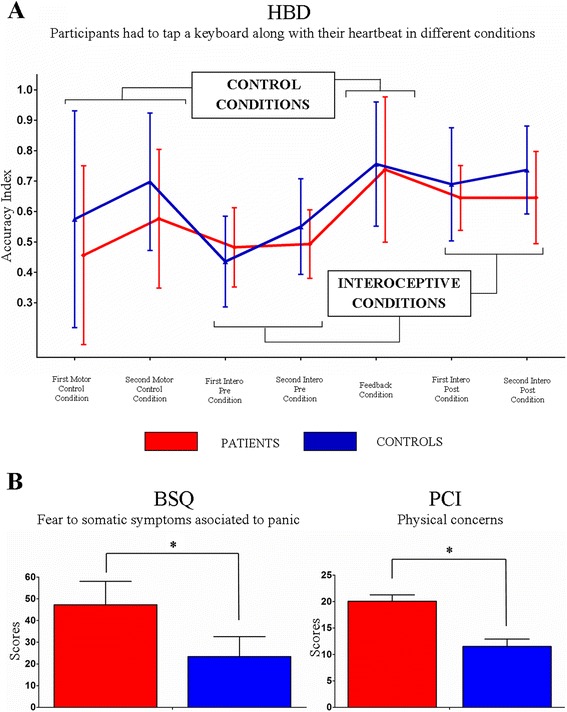
“Vertical bars indicate standard expected [21] and irrelevant effect of condition was observed (Figure 2A and Additional file 1: 3.”
BackgroundDefinitions of panic attacks and panic disorder in the DSM-IV: Implications for research.
Barlow, D. H., Brown, T. A., & Craske, M. G. (1994) · Journal of Abnormal Psychology · doi:10.1037//0021-843x.103.3.553 · Cited by 152 · cited 1×
“Patients’ diagnoses were established with the SCID-I [16] by an anxiety disorder expert, and the presence of panic attacks was established according to Barlow’s criteria [17].”
MethodSedeño, L., Couto, B., Melloni, M., Canales-Johnson, A., Yoris, A., Baez, S., Esteves, S., Velásquez, M., Barttfeld, P., Sigman, M., et al. (2014) · PLoS ONE · doi:10.1371/journal.pone.0098769 · Cited by 135 · cited 2×
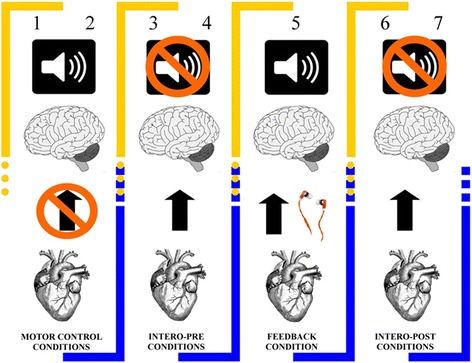
“The HBD task is a motor tracking test that assesses IS at rest [11-13].”
BackgroundMethodSelf-citationMelloni, M., Sedeño, L., Couto, B., Reynoso, M., Gelormini, C., Favaloro, R., Canales-Johnson, A., Sigman, M., Manes, F., & Ibanez, A. (2013) · Behavioral and Brain Functions · doi:10.1186/1744-9081-9-47 · Cited by 127 · cited 2×
“The HBD task is a motor tracking test that assesses IS at rest [11-13].”
BackgroundMethodSelf-citationInteroceptive Accuracy and Panic
Zoellner, L. A., & Craske, M. G. (1999) · Behaviour Research and Therapy · doi:10.1016/s0005-7967(98)00202-2 · Cited by 117 · cited 4×
“The sample compressed twenty-one anxiety disorder patients [14] who experienced at least one panic attack (PA) [2,10] in the month before testing, and 13 healthy controls.”
BackgroundResultInfluentialThe man who feels two hearts: the different pathways of interoception.
Couto, B., Salles, A., Sedeño, L., Peradejordi, M., Barttfeld, P., Canales-Johnson, A., Dos Santos, Y. V., Huepe, D., Bekinschtein, T., Sigman, M., et al. (2014) · Social Cognitive and Affective Neuroscience · doi:10.1093/scan/nst108 · Cited by 97 · cited 2×
“The HBD task is a motor tracking test that assesses IS at rest [11-13].”
BackgroundMethodSelf-citationThe effect of body composition and gender on cardiac awareness
Rouse, C. H., Jones, G. E., & Jones, K. R. (1988) · Psychophysiology · doi:10.1111/j.1469-8986.1988.tb01876.x · Cited by 84 · cited 1×
“Body mass index was controlled given its influence on IS [18].”
BackgroundAccuracy of heartbeat perception in panic disorder, social phobia, and nonanxious subjects
Antony, M. M., Brown, T. A., Craske, M. G., Barlow, D. H., Mitchell, W. B., & Meadows, E. A. (1995) · Journal of Anxiety Disorders · doi:10.1016/0887-6185(95)00017-i · Cited by 75 · cited 5×
“In addition, other studies have found no differences in mixed diagnostic groups [2,9].”
BackgroundResultInfluentialCognitive-behavioral therapy for panic disorder: current status.
Barlow, D. H. (1997) · PubMed · Cited by 64
Accurate heartbeat perception in panic disorder: fact and artefact
van der Does, W. A. J., van Dyck, R., & Spinhoven, P. (1997) · Journal of Affective Disorders · doi:10.1016/s0165-0327(96)01414-0 · Cited by 52 · cited 6×
“Moreover, accurate heartbeat perception, as measured with this paradigm, is uncommon in both controls and panic patients [6].”
BackgroundMethodResultInfluentialCardiac acuity in panic disorder
Richards, J. C., Edgar, L. V., & Gibbon, P. (1996) · Cognitive Therapy and Research · doi:10.1007/bf02228039 · Cited by 23 · cited 1×
“These studies have employed two types of HBD tasks: i) mental tracking paradigms, currently questioned because its working memory demands might affect cardiac perception [7]; and ii) discrimination tasks, where interference generated by simultaneous attention to cardiac sensation and external stimuli may constitute a…”
Method
Research works printed but not linked: 1
- First MB Spitzer RL Gibbon M Williams JB Structured Clinical Interview for DSM-IVA Axis I Disorders, Research Version, Patient Edition (SCID-I/P) 2002 New York Biometrics Research, New York State Psychiatric Institute
Cited by
Focus of attention modulates the heartbeat evoked potential
Petzschner, F. H., Weber, L. A., Wellstein, K. V., Paolini, G., Do, C. T., & Stephan, K. E. (2019) · NeuroImage · doi:10.1016/j.neuroimage.2018.11.037 · Cited by 248
Adolfi, F., Couto, B., Richter, F., Decety, J., Lopez, J., Sigman, M., Manes, F., & Ibáñez, A. (2017) · Cortex · doi:10.1016/j.cortex.2016.12.019 · Cited by 238
Self-citationPace-Schott, E. F., Amole, M. C., Aue, T., Balconi, M., Bylsma, L. M., Critchley, H., Demaree, H. A., Friedman, B. H., Gooding, A. E. K., Gosseries, O., et al. (2019) · Neuroscience & Biobehavioral Reviews · doi:10.1016/j.neubiorev.2019.05.002 · Cited by 221
“Heightened interoceptive sensitivity has been widely documented in patients with panic disorder who show augmented interoceptive sensitivity whether measured by the ASI or by heartbeat detection tests (Domschke et al., 2010; Limmer et al., 2015; Yoris et al., 2015).”
García-Cordero, I., Sedeño, L., de la Fuente, L., Slachevsky, A., Forno, G., Klein, F., Lillo, P., Ferrari, J., Rodriguez, C., Bustin, J., et al. (2016) · Philosophical Transactions of the Royal Society B: Biological Sciences · doi:10.1098/rstb.2016.0006 · Cited by 199
Self-citationInteroceptive pathways to understand and treat mental health conditions
Nord, C. L., & Garfinkel, S. N. (2022) · Trends in Cognitive Sciences · doi:10.1016/j.tics.2022.03.004 · Cited by 199
“Crucially, bodily attributions should be noncatastrophic [111], and beliefs and predictions about the body should be aligned to the nature of bodily signals [112].”
Metadata
- Authors
- Yoris, A., Esteves, S., Couto, B., Melloni, M., Kichic, R., Cetkovich, M., Favaloro, R., Moser, J., Manes, F., Ibanez, A., & Sedeño, L.
- Affiliations
- Consejo Nacional de Investigaciones Científicas y Técnicas (AR)
- Favaloro University (AR)
- Michigan State University (US)
- Australian Research Council (AU)
- Corresponding author
- Sedeño, Lucas
- ORCID
- Venue
- Behavioral and Brain Functions
- Published
- 2015-04-08
- Volume
- 11
- Issue
- 1
- Pages
- 14-14
- ISSN
- 1744-9081 (ISSN-L)
- PMC
- PMC4422149
- OpenAlex
- W2037954822
- Cited by
- 101
- References
- 25
- Citations by year
- 2026: 7 · 2025: 8 · 2024: 8 · 2023: 7 · 2022: 7 · 2021: 11 · 2020: 11 · 2019: 10 · 2018: 11 · 2017: 11 · 2016: 9 · 2015: 1
- FWCI
- 8.67
- Type
- journal article
- Language
- en
- Open access
- gold
- doi.org
- Locations
- Behavioral and Brain Functions (publishedVersion, cc-by)
- Europe PMC (PubMed Central) (publishedVersion, cc-by)
- PubMed Central (publishedVersion, cc-by)
- PubMed (publishedVersion)
- LA Referencia (Red Federada de Repositorios Institucionales de Publicaciones Científicas) (submittedVersion, cc-by-nc-sa)
- Americanae (AECID Library) (submittedVersion, cc-by-nc-sa)
- Funders
- Fundación INECO
- Consejo Nacional de Investigaciones Científicas y Técnicas (1130920, PICT 2012)
- Comisión Nacional de Investigación Científica y Tecnológica (1130920)
- Fondo para la Investigación Científica y Tecnológica (2012-0412, PICT 2012)
- Topics
- Health Sciences › Medicine › Psychiatry and Mental health › Psychosomatic Disorders and Their Treatments
- Social Sciences › Psychology › Experimental and Cognitive Psychology › Anxiety, Depression, Psychometrics, Treatment, Cognitive Processes
- Health Sciences › Medicine › Cardiology and Cardiovascular Medicine › Heart Rate Variability and Autonomic Control
- Keywords
- interoception, interoceptive sensitivity, panic attacks, panic disorder, heartbeat detection, somatic sensation, anxiety disorders
- MeSH terms
- Adult, Affect, Anxiety Disorders, Cognition, Female, Heart Rate, Humans, Male, Psychiatric Status Rating Scales, Sensation, Panic Disorder, Self Report, Catastrophization, Interoception
About these checks
Registry, retraction, Cites and statistics results are computed, not judged, with one exception: a printed reference that no index lists is read once by a model before it counts as a citation error. Claims are extracted by a model and kept only when their quote appears verbatim in the text; each cited source is then checked, with a model’s help, for whether it says what the claim relies on. Those verdicts can be wrong — read the claim’s quote and the cited source before relying on one.
Statistics and arithmetic are recomputed, not judged.
Confidence bands are shown only for fields calibrated on our annotated test set. None is calibrated yet, so no band is shown.
What counts as a claim ›How we measure confidence ›How we check this ›
Are you an author, or do you see a problem with this page? Request a review
Data sources
Bibliographic data: Semantic Scholar, OpenAlex, Crossref.
Contains information from the Semantic Scholar Academic Graph Datasets, made available under the ODC Attribution License (ODC-BY 1.0).
Semantic Scholar’s data is described in: Kinney, R., et al. (2023). The Semantic Scholar Open Data Platform. arXiv:2301.10140.
