

The roles of interoceptive sensitivity and metacognitive interoception in panic
Open accessThe DOI matches its Crossref record; 25 of the 25 references it cites were found in a registry or an index.
Abstract
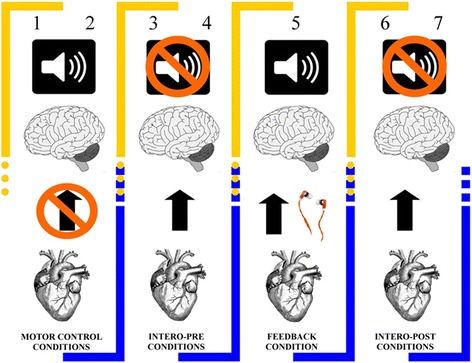
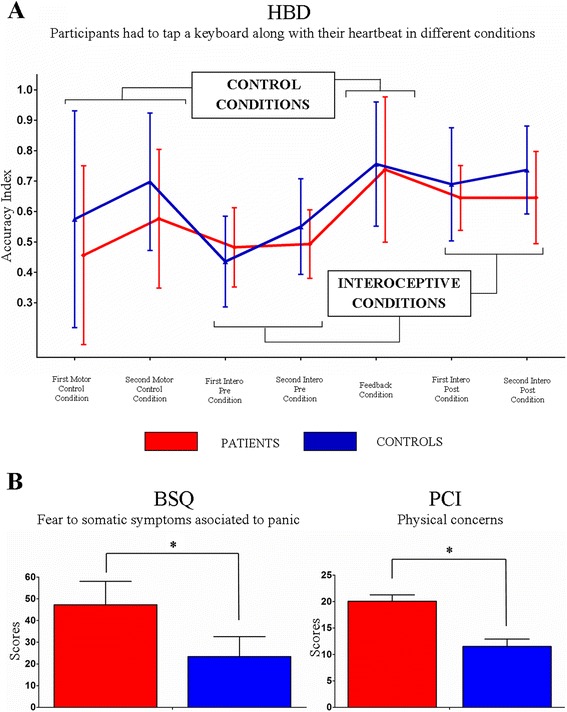
BACKGROUND: Interoception refers to the ability to sense body signals. Two interoceptive dimensions have been recently proposed: (a) interoceptive sensitivity (IS) -objective accuracy in detecting internal bodily sensations (e.g., heartbeat, breathing)-; and (b) metacognitive interoception (MI) -explicit beliefs and worries about one's own interoceptive sensitivity and internal sensations. Current models of panic assume a possible influence of interoception on the development of panic attacks. Hypervigilance to body symptoms is one of the most characteristic manifestations of panic disorders. Some explanations propose that patients have abnormal IS, whereas other accounts suggest that misinterpretations or catastrophic beliefs play a pivotal role in the development of their psychopathology. Our goal was to evaluate these theoretical proposals by examining whether patients differed from controls in IS, MI, or both. Twenty-one anxiety disorders patients with panic attacks and 13 healthy controls completed a behavioral measure of IS motor heartbeat detection (HBD) and two questionnaires measuring MI. FINDINGS: Patients did not differ from controls in IS. However, significant differences were found in MI measures. Patients presented increased worries in their beliefs about somatic sensations compared to controls. These results reflect a discrepancy between direct body sensing (IS) and reflexive thoughts about body states (MI). CONCLUSION: Our findings support the idea that hypervigilance to body symptoms is not necessarily a bottom-up dispositional tendency (where patients are hypersensitive about bodily signals), but rather a metacognitive process related to threatening beliefs about body/somatic sensations.
Overview
The claims and statistics of this paper haven’t been checked yet.
Free: it reads the open-access text and checks the first 5 claims that cite a source we can check. Create a free account to check every claim.
Integrity signals
Registry
Cites
Statistics
Figures
Verification
Claims the paper makes
The claims and statistics of this paper haven’t been checked yet.
Free: it reads the open-access text and checks the first 5 claims that cite a source we can check. Create a free account to check every claim.
Claims other papers make about this one
Each is checked against this paper’s own text: does it say what the citing paper says it does?
The cited source doesn’t support the claim as written.
In the citing paper
“Heightened interoceptive sensitivity has been widely documented in patients with panic disorder who show augmented interoceptive sensitivity whether measured by the ASI or by heartbeat detection tests (Domschke et al., 2010;Limmer et al., 2015;Yoris et al., 2015).”
From Physiological feelings (2019) · cites this paper as Yoris et al., 2015
Checked by a reasoning model — may be wrong.
Experimental — accuracy not yet measuredThe cited source says what the claim attributes to it.
In the citing paper
“There is evidence of increased prevalence of atypical interoception in anxiety and panic disorders (Ehlers and Breuer, 1992; Paulus and Stein, 2010; Adrián Yoris et al., 2015), alcohol and substance abuse (Jakubczyk et al., 2019; Naqvi and Bechara, 2010; Paulus and Stewart, 2014; Paulus et al., 2009; Verdejo-Garcia et al., 2012), depression (Aaronson et al., 2017; Dunn et al., 2007; Furman et al.,”
From Atypical interoception as a common risk factor for psychopathology: A review (2021) · cites this paper as Adrián Yoris et al., 2015
Self-check
Percentages, sums and reported differences re-computed from the paper’s own numbers.
The self-check needs the paper’s full text.
Citations
Cites
Diagnostic and Statistical Manual of Mental Disorders
American Psychiatric Association (2013) · doi:10.1176/appi.books.9780890425596 · Cited by 116,369
Diagnostic and Statistical Manual of Mental Disorders
Williams, J. B. W., & First, M. (2013) · Encyclopedia of Social Work · doi:10.1093/acrefore/9780199975839.013.104 · Cited by 109,519
How do you feel? Interoception: The sense of the physiological condition of the body
Craig, A. D. (2002) · Nature Reviews Neuroscience · doi:10.1038/nrn894 · Cited by 6,006 · cited 1×
“Background Interoception (the ability to perceive bodily sensations) [1] has been proposed as a risk factor for panic attacks [1,2].”
BackgroundClark, D. M. (1986) · Behaviour Research and Therapy · doi:10.1016/0005-7967(86)90011-2 · Cited by 2,422 · cited 2×
“MI is consistent with cognitive models of panic which emphasize the misinterpretation of somatic sensations as a fundamental aspect of its psychopathogenesis [8], with patients reporting more worries about body signals than controls [6,9,10].”
ResultChambless, D. L., Caputo, G. C., Bright, P., & Gallagher, R. (1984) · Journal of Consulting and Clinical Psychology · doi:10.1037/0022-006x.52.6.1090 · Cited by 1,247 · cited 3×
“Beliefs about body signals were assessed with the Body Sensations Questionnaire (BSQ) and the Physical Concern Index (PCI) of the Agoraphobic Cognitions Questionnaire (ACQ) [19].”
MethodInteroception in anxiety and depression
Paulus, M. P., & Stein, M. B. (2010) · Brain Structure and Function · doi:10.1007/s00429-010-0258-9 · Cited by 952 · cited 2×
“Previous studies have shown increased IS with elevated arousal [9,22].”
BackgroundResultDomschke, K., Stevens, S., Pfleiderer, B., & Gerlach, A. L. (2010) · Clinical Psychology Review · doi:10.1016/j.cpr.2009.08.008 · Cited by 580 · cited 5×
“The mental tracking paradigm is the only procedure that has yielded significant differences [2,5], albeit inconsistently.”
BackgroundMethodResultInfluentialGarfinkel, S. N., & Critchley, H. D. (2013) · Social Cognitive and Affective Neuroscience · doi:10.1093/scan/nss140 · Cited by 386
Misinterpretation of body sensations in panic disorder.
Clark, D. M., Salkovskis, P. M., Ost, L.-G., & Breitholtz, E. (1997) · Journal of Consulting and Clinical Psychology · doi:10.1037//0022-006x.65.2.203 · Cited by 373 · cited 1×
“While MI has been restricted to explicit knowledge about accuracy during interoceptive tasks [3], we characterize it as beliefs about bodily sensations at large [4].”
BackgroundIncreased cardiac awareness in panic disorder
Ehlers, A., & Breuer, P. (1992) · Journal of Abnormal Psychology · doi:10.1037/0021-843x.101.3.371 · Cited by 315 · cited 6×
“The mental tracking paradigm is the only procedure that has yielded significant differences [2,5], albeit inconsistently.”
BackgroundMethodInfluential
Research works printed but not linked: 1
- First MB Spitzer RL Gibbon M Williams JB Structured Clinical Interview for DSM-IVA Axis I Disorders, Research Version, Patient Edition (SCID-I/P) 2002 New York Biometrics Research, New York State Psychiatric Institute
Cited by
Focus of attention modulates the heartbeat evoked potential
Petzschner, F. H., Weber, L. A., Wellstein, K. V., Paolini, G., Do, C. T., & Stephan, K. E. (2019) · NeuroImage · doi:10.1016/j.neuroimage.2018.11.037 · Cited by 248
Adolfi, F., Couto, B., Richter, F., Decety, J., Lopez, J., Sigman, M., Manes, F., & Ibáñez, A. (2017) · Cortex · doi:10.1016/j.cortex.2016.12.019 · Cited by 238
Self-citationPace-Schott, E. F., Amole, M. C., Aue, T., Balconi, M., Bylsma, L. M., Critchley, H., Demaree, H. A., Friedman, B. H., Gooding, A. E. K., Gosseries, O., et al. (2019) · Neuroscience & Biobehavioral Reviews · doi:10.1016/j.neubiorev.2019.05.002 · Cited by 221
“Heightened interoceptive sensitivity has been widely documented in patients with panic disorder who show augmented interoceptive sensitivity whether measured by the ASI or by heartbeat detection tests (Domschke et al., 2010; Limmer et al., 2015; Yoris et al., 2015).”
García-Cordero, I., Sedeño, L., de la Fuente, L., Slachevsky, A., Forno, G., Klein, F., Lillo, P., Ferrari, J., Rodriguez, C., Bustin, J., et al. (2016) · Philosophical Transactions of the Royal Society B: Biological Sciences · doi:10.1098/rstb.2016.0006 · Cited by 199
Self-citationInteroceptive pathways to understand and treat mental health conditions
Nord, C. L., & Garfinkel, S. N. (2022) · Trends in Cognitive Sciences · doi:10.1016/j.tics.2022.03.004 · Cited by 199
“Crucially, bodily attributions should be noncatastrophic [111], and beliefs and predictions about the body should be aligned to the nature of bodily signals [112].”
Smith, R., Kuplicki, R., Feinstein, J., Forthman, K. L., Stewart, J. L., Paulus, M. P., Tulsa 1000 investigators, & Khalsa, S. S. (2020) · PLOS Computational Biology · doi:10.1371/journal.pcbi.1008484 · Cited by 196
“, a heart attack) may contribute to anxiety and panic [60, 61].”
BackgroundAtypical interoception as a common risk factor for psychopathology: A review
Brewer, R., Murphy, J., & Bird, G. (2021) · Neuroscience & Biobehavioral Reviews · doi:10.1016/j.neubiorev.2021.07.036 · Cited by 180
Disrupted Dorsal Mid-Insula Activation During Interoception Across Psychiatric Disorders
Nord, C. L., Lawson, R. P., & Dalgleish, T. (2021) · American Journal of Psychiatry · doi:10.1176/appi.ajp.2020.20091340 · Cited by 171
Making sense of what you sense: disentangling interoceptive awareness, sensibility and accuracy
Forkmann, T., Scherer, A., Meessen, J., Michal, M., Schächinger, H., Vögele, C., & Schulz, A. (2016) · International Journal of Psychophysiology · doi:10.1016/j.ijpsycho.2016.09.019 · Cited by 155
Interoception and Positive Symptoms in Schizophrenia
Ardizzi, M., Ambrosecchia, M., Buratta, L., Ferri, F., Peciccia, M., Donnari, S., Mazzeschi, C., & Gallese, V. (2016) · Frontiers in Human Neuroscience · doi:10.3389/fnhum.2016.00379 · Cited by 132
“Frequently, deficit in interoceptive accuracy has been associated to anatomo-functional alterations of the Insular cortex (see for example, Frank, 2015; Kerr et al., 2015) and to clinical severity (Dunn et al., 2010b; Avery et al., 2014; Forrest et al., 2015; Yoris et al., 2015).”
BackgroundHarrison, L. A., Kats, A., Williams, M. E., & Aziz-Zadeh, L. (2019) · Frontiers in Psychology · doi:10.3389/fpsyg.2019.00103 · Cited by 116
Yoris, A., García, A. M., Traiber, L., Santamaría-García, H., Martorell, M., Alifano, F., Kichic, R., Moser, J. S., Cetkovich, M., Manes, F., et al. (2017) · Psychological Medicine · doi:10.1017/s0033291717000368 · Cited by 124
“the discrimination task and the mental tracking task), each with its own advantages and disadvantages (Domschke et al. 2010; Yoris et al. 2015).”
BackgroundMethodResultSelf-citationStern, E. R., Grimaldi, S. J., Muratore, A., Murrough, J., Leibu, E., Fleysher, L., Goodman, W. K., & Burdick, K. E. (2017) · Human Brain Mapping · doi:10.1002/hbm.23811 · Cited by 106
“1), replicating and extending prior work [Avery et al., 2015; Caseras et al., 2013; Critchley et al., 2004; Ernst et al., 2013; Farb et al., 2013; Pollatos et al., 2007b; Simmons et al., 2013; Tracy et al., 2007; Wiebking et al., 2014; Zaki et al., 2012] (see Schulz [2016] for meta-analysis).”
BackgroundResultInfluentialGarcía-Cordero, I., Esteves, S., Mikulan, E. P., Hesse, E., Baglivo, F. H., Silva, W., García, M. D. C., Vaucheret, E., Ciraolo, C., García, H. S., et al. (2017) · Frontiers in Neuroscience · doi:10.3389/fnins.2017.00411 · Cited by 115
“…et al., 2013; Couto et al., 2014; Sedeno et al., 2014; CanalesJohnson et al., 2015; Yoris et al., 2015, 2017; García-Cordero et al., 2016) and offers a more precise measure of interoceptive performance than other available paradigms (such as mental or discrimination ones) (Yoris et al., 2015).”
BackgroundMethodResultInfluentialSelf-citationAdams, K. L., Edwards, A., Peart, C., Ellett, L., Mendes, I., Bird, G., & Murphy, J. (2022) · Neuroscience & Biobehavioral Reviews · doi:10.1016/j.neubiorev.2022.104754 · Cited by 88
Ferentzi, E., Drew, R., Tihanyi, B. T., & Köteles, F. (2018) · Physiology & Behavior · doi:10.1016/j.physbeh.2017.11.015 · Cited by 93
Panic Disorder Comorbidity with Medical Conditions and Treatment Implications
Meuret, A. E., Kroll, J., & Ritz, T. (2017) · Annual Review of Clinical Psychology · doi:10.1146/annurev-clinpsy-021815-093044 · Cited by 87
“A recent study by Yoris et al. (2015) suggests that panic sufferers did not differ from controls in their heartbeat detection, but rather differed in their reflexive beliefs about their body signals (Clark 1986).”
BackgroundA multidimensional and multi-feature framework for cardiac interoception
Fittipaldi, S., Abrevaya, S., Fuente, A. D. L., Pascariello, G. O., Hesse, E., Birba, A., Salamone, P., Hildebrandt, M., Martí, S. A., Pautassi, R. M., et al. (2020) · NeuroImage · doi:10.1016/j.neuroimage.2020.116677 · Cited by 90
Self-citationEwing, D. L., Manassei, M., Gould van Praag, C., Philippides, A. O., Critchley, H. D., & Garfinkel, S. N. (2017) · Biological Psychology · doi:10.1016/j.biopsycho.2017.05.011 · Cited by 86
“…2008; Neckelmann, Mykletun, & Dahl, 2007; Spoormaker & van den Bout, 2005; Taylor, Lichstein, Durrence, Reidel, & Bush, 2005), and our results suggest that poor sleep quality may exacerbate the misinterpretation of bodily signals often found within these disorders (e.g. Yoris et al., 2015).”
Social neuroscience: undoing the schism between neurology and psychiatry
Ibáñez, A., García, A. M., Esteves, S., Yoris, A., Muñoz, E., Reynaldo, L., Pietto, M. L., Adolfi, F., & Manes, F. (2018) · Social Neuroscience · doi:10.1080/17470919.2016.1245214 · Cited by 84
“…to the coordination between external and internal milieus (CanalesJohnson et al., 2015; Couto et al., 2015, 2015, 2014, 2013; García-Cordero et al., 2016; Garfinkel & Critchley, 2013; Melloni et al., 2013; Sedeño et al., 2014 AQ19; Uddin, 810Kinnison, Pessoa, & Anderson, 2014; Yoris et al., 2015).”
BackgroundSelf-citationThe Role of Language in Alexithymia: Moving Towards a Multiroute Model of Alexithymia
Hobson, H., Brewer, R., Catmur, C., & Bird, G. (2019) · Emotion Review · doi:10.1177/1754073919838528 · Cited by 87
Do interoceptive accuracy and interoceptive sensibility predict emotion regulation?
Schuette, S., Zucker, N., & Smoski, M. (2020) · Psychological Research · doi:10.1007/s00426-020-01369-2
Affective interoceptive inference: Evidence from heart‐beat evoked brain potentials
Gentsch, A., Sel, A., Marshall, A. C., & Schütz‐Bosbach, S. (2019) · Human Brain Mapping · doi:10.1002/hbm.24352 · Cited by 76
“…associated with psychi- atric conditions such as depersonalization symptoms (Seth, Suzuki, & Critchley, 2011; Sedeño et al., 2014), panic disorders (Yoris et al., 2015), obsessive compulsive disorder (Yoris et al., 2017), and depres- sion (e.g., Avery et al., 2014; Pollatos, Traut-Mattausch, &…”
BackgroundTreatment-resistant panic disorder: clinical significance, concept and management
Chen, M., & Tsai, S. (2016) · Progress in Neuro-Psychopharmacology and Biological Psychiatry · doi:10.1016/j.pnpbp.2016.02.001 · Cited by 80
Altered neural signatures of interoception in multiple sclerosis
Salamone, P. C., Esteves, S., Sinay, V. J., García‐Cordero, I., Abrevaya, S., Couto, B., Adolfi, F., Martorell, M., Petroni, A., Yoris, A., et al. (2018) · Human Brain Mapping · doi:10.1002/hbm.24319 · Cited by 72
“The HEP is also a more sensitive index of interoceptive processes than behavioral measures, which have yielded inconsistent results in several conditions, including anxiety disorders (Domschke, Stevens, Pfleiderer, & Gerlach, 2010; Yoris et al., 2015) and depersonalization–derealization syndrome (Michal et al.”
BackgroundMethodResultSelf-citationPain and emotion as predictive factors of interoception in fibromyalgia
Borg, C., Chouchou, F., Dayot-Gorlero, J., Zimmermann, P., Maudoux, D., Laurent, B., & Michael, G. (2018) · Journal of Pain Research · doi:10.2147/jpr.s152012 · Cited by 77
“8 This suggests that interoception may be amplified in FM (hypervigilance) and modulated by pain.”
BackgroundYoris, A., Abrevaya, S., Esteves, S., Salamone, P., Lori, N., Martorell, M., Legaz, A., Alifano, F., Petroni, A., Sánchez, R., et al. (2018) · Human Brain Mapping · doi:10.1002/hbm.23933 · Cited by 66
“While similar deficits have been reported in psychiatric (Dunn et al., 2007; Khalsa et al., 2015; Muller et al., 2015; Yoris et al., 2015, 2017) and neurological (García-Cordero et al., 2016; Khalsa et al., 2009a; Ricciardi et al., 2016a,b; Terhaar et al., 2012) disorders (for a review, see Yoris…”
BackgroundMethodInfluentialSelf-citationFerentzi, E., Horváth, Á., & Köteles, F. (2019) · Psychophysiology · doi:10.1111/psyp.13319 · Cited by 66
A synergetic turn in cognitive neuroscience of brain diseases
Ibanez, A., Kringelbach, M. L., & Deco, G. (2024) · Trends in Cognitive Sciences · doi:10.1016/j.tics.2023.12.006 · Cited by 65
Fan, H., Gershman, S. J., & Phelps, E. A. (2022) · Nature Human Behaviour · doi:10.1038/s41562-022-01455-y · Cited by 80
Lackner, R. J., & Fresco, D. M. (2016) · Behaviour Research and Therapy · doi:10.1016/j.brat.2016.08.007 · Cited by 63
“process related to threatening beliefs about somatic sensations (Yoris et al., 2015).”
InfluentialAttentional focus on subjective interoceptive experience in patients with fibromyalgia
Borg, C., Emond, F. C., Colson, D., Laurent, B., & Michael, G. A. (2015) · Brain and Cognition · doi:10.1016/j.bandc.2015.10.002 · Cited by 56
Richter, F., García, A. M., Rodriguez Arriagada, N., Yoris, A., Birba, A., Huepe, D., Zimmer, H., Ibáñez, A., & Sedeño, L. (2021) · Human Brain Mapping · doi:10.1002/hbm.25288 · Cited by 46
Self-citationRamos‐Cejudo, J., & Salguero, J. M. (2017) · Psychiatry Research · doi:10.1016/j.psychres.2017.01.056 · Cited by 50
“, 2015; Thielsch, Andor, & Ehring, 2015), and anxiety sensitivity (Yoris et al., 2015).”
Interoception, Stress, and Physical Symptoms in Stress-Associated Diseases
Schulz, A., Schultchen, D., & Vögele, C. (2020) · European Journal of Health Psychology · doi:10.1027/2512-8442/a000063 · Cited by 44
Time is body: multimodal evidence of crosstalk between interoception and time estimation
Richter, F., & Ibáñez, A. (2021) · Biological Psychology · doi:10.1016/j.biopsycho.2021.108017 · Cited by 40
Self-citationReconciling movement and exercise with pain neuroscience education: A case for consistent education
Blickenstaff, C., & Pearson, N. (2016) · Physiotherapy Theory and Practice · doi:10.1080/09593985.2016.1194653 · Cited by 46
“However, it has been suggested that interoception is a multifaceted concept with two realms relevant in the case of hypervigilance; interoceptive sensitivity and the interpretation of the sensations (Yoris et al, 2015).”
BackgroundBaiano, C., Job, X., Santangelo, G., Auvray, M., & Kirsch, L. P. (2021) · Neuroscience & Biobehavioral Reviews · doi:10.1016/j.neubiorev.2021.08.007 · Cited by 45
“For example, anxiety disorder patients who experienced panic attacks, did not show differences in interoceptive accuracy compared with healthy controls but exhibited more worries and catastrophic thoughts about somatic sensations (Yoris et al., 2015).”
Interoception and Obsessive-Compulsive Disorder: A Review of Current Evidence and Future Directions
Bragdon, L. B., Eng, G. K., Belanger, A., Collins, K. A., & Stern, E. R. (2021) · Frontiers in Psychiatry · doi:10.3389/fpsyt.2021.686482 · Cited by 42
Dynamic neurocognitive changes in interoception after heart transplant
Salamone, P. C., Sedeño, L., Legaz, A., Bekinschtein, T., Martorell, M., Adolfi, F., Fraile-Vazquez, M., Rodríguez Arriagada, N., Favaloro, L., Peradejordi, M., et al. (2020) · Brain Communications · doi:10.1093/braincomms/fcaa095 · Cited by 34
Self-citationDatko, M., Lutz, J., Gawande, R., Comeau, A., To, M. N., Desel, T., Gan, J., Desbordes, G., Napadow, V., & Schuman-Olivier, Z. (2022) · Psychiatry Research: Neuroimaging · doi:10.1016/j.pscychresns.2022.111559 · Cited by 35
Abrevaya, S., Fittipaldi, S., García, A. M., Dottori, M., Santamaria-Garcia, H., Birba, A., Yoris, A., Hildebrandt, M. K., Salamone, P., De la Fuente, A., et al. (2020) · Psychosomatic Medicine · doi:10.1097/psy.0000000000000868 · Cited by 34
Self-citationLyyra, P., & Parviainen, T. (2018) · Frontiers in Psychology · doi:10.3389/fpsyg.2018.01026 · Cited by 28
Wu, X., Shi, L., Wei, D., & Qiu, J. (2019) · Human Brain Mapping · doi:10.1002/hbm.24488 · Cited by 28
“…et al., 2014; Mitte, 2008), somatosensory functions or interoception (Anderson & Hope, 2009; Gupta, 2013; Paulus & Stein, 2010; Stern, 2014; Yoris et al., 2015), and emotional regulation strategies (Aldao, Nolen-Hoeksema, & Schweizer, 2010; Amstadter, 2008; Cisler, Olatunji, Feldner, &…”
A Primer on Interoception and its Importance in Psychiatry
Nayok, S. B., Sreeraj, V. S., Shivakumar, V., & Venkatasubramanian, G. (2023) · Clinical Psychopharmacology and Neuroscience · doi:10.9758/cpn.2023.21.2.252 · Cited by 34
MacCormack, J. K., Bonar, A. S., & Lindquist, K. A. (2024) · Emotion · doi:10.1037/emo0001270 · Cited by 33
Höller, I., Stenzel, J.-S., Rath, D., & Forkmann, T. (2021) · International Journal of Environmental Research and Public Health · doi:10.3390/ijerph18094893 · Cited by 27
“While some researchers referred to interoception as a single construct [2], others examined different facets of interoception [3].”
BackgroundResultMulticentric evidence of emotional impairments in hypertensive heart disease
Yoris, A., Legaz, A., Abrevaya, S., Alarco, S., Peláez, J. L., Sanchez, R. A., García, A. M., Ibáñez, A. M., & Sedeño, L. (2020) · Scientific Reports · doi:10.1038/s41598-020-70451-x · Cited by 28
Self-citationSalguero, J. M., Ramos-Cejudo, J., & García-Sancho, E. (2019) · International Journal of Cognitive Therapy · doi:10.1007/s41811-019-00048-4 · Cited by 20
Effects of insular resection on interactions between cardiac interoception and emotion recognition
Terasawa, Y., Motomura, K., Natsume, A., Iijima, K., Chalise, L., Sugiura, J., Yamamoto, H., Koyama, K., Wakabayashi, T., & Umeda, S. (2021) · Cortex · doi:10.1016/j.cortex.2021.01.011 · Cited by 27
“Discussion about the laterality of insular function has continued, but neuropsychological studies reporting the involvement of the insula in interoception are biased toward bilateral or the right insula (Terasawa et al., 2015; Yoris et al., 2015).”
BackgroundLuo, L., Xiao, M., Luo, Y., Yi, H., Dong, D., Liu, Y., Chen, X., Li, W., & Chen, H. (2022) · Journal of Affective Disorders · doi:10.1016/j.jad.2022.07.051 · Cited by 24
Li, H., Zhang, B., Hu, Q., Zhang, L., Jin, Y., Wang, J., Cui, H., Pang, J., & Li, C. (2020) · General Psychiatry · doi:10.1136/gpsych-2019-100057 · Cited by 22
Brain Mechanisms Underlying Panic Attack and Panic Disorder
Guan, X., & Cao, P. (2023) · Neuroscience Bulletin · doi:10.1007/s12264-023-01088-9 · Cited by 26
“It has been proposed that interoceptive sensitivity, particularly heartbeat, may be potentially involved in the transition from PA to PD [91, 92].”
Altena, E., Daviaux, Y., Sanz‐Arigita, E., Bonhomme, É., de Sevin, É., Micoulaud‐Franchi, J., Bioulac, S., & Philip, P. (2018) · Journal of Sleep Research · doi:10.1111/jsr.12677 · Cited by 23
Interoceptive awareness mitigates deficits in emotional prosody recognition in Autism
Mulcahy, J. S., Davies, M., Quadt, L., Critchley, H. D., & Garfinkel, S. N. (2019) · Biological Psychology · doi:10.1016/j.biopsycho.2019.05.011 · Cited by 21
Looking within: Interoceptive sensibility in young adults with psychotic‐like experiences
Barbato, M., Arora, T., Hemeiri, S. A., & AlJassmi, M. A. (2021) · Early Intervention in Psychiatry · doi:10.1111/eip.13117 · Cited by 24
“This is largely due to reliance on patients' working memory ability (Yoris et al., 2015), which is notoriously impaired in those with psychosis (Goldman-Rakic, 1996; Harvey & Rosenthal, 2018).”
BackgroundNeural substrates of cognitive emotion regulation: a brief review
Öner, S. (2018) · Psychiatry and Clinical Psychopharmacology · doi:10.1080/24750573.2017.1407563 · Cited by 20
“cues as in the panic disorder [53] modulate the phase of emotion generation and even in the absence of an actual threat, leads the individual to experience substantial anxiety as if there exists a real threat.”
BackgroundAltered Interoceptive Sensibility in Adults With Chronic Tic Disorder
Narapareddy, A., Eckland, M. R., Riordan, H., Cascio, C. J., & Isaacs, D. A. (2022) · Frontiers in Psychiatry · doi:10.3389/fpsyt.2022.914897 · Cited by 21
“These clinical factors are critical considerations in studies of interoceptive sensibility given evidence of divergent interoceptive sensibility between the sexes (65, 91) and atypical interoceptive sensibility in depressive (92, 93), anxiety (94, 95), and obsessive-compulsive disorders (64).”
BackgroundA single oral dose of citalopram increases interoceptive insight in healthy volunteers
Livermore, J. J. A., Holmes, C. L., Moga, G., Adamatzky, K., Critchley, H., Garfinkel, S. N., & Campbell-Meiklejohn, D. K. (2022) · Psychopharmacology · doi:10.1007/s00213-022-06115-7 · Cited by 20
“In panic disorder, which is related to metacognitive beliefs about one’s interoceptive sensitivity and internal sensations (Yoris et al. 2015), 5HT1A binding is also decreased in the amygdala (Nash et al.”
BackgroundParrotta, E., Bach, P., Perrucci, M. G., Costantini, M., & Ferri, F. (2024) · Cognition · doi:10.1016/j.cognition.2024.105719 · Cited by 17
Rossignol, M., Philippot, P., & Vögele, C. (2016) · Santé mentale au Québec · doi:10.7202/1036971ar · Cited by 16
“Concepts équivalents Sensibilité intéroceptive (Ginzburg et al., 2014) Attention envers les SC (Ginzburg et al., 2014) Intéroception métacognitive (Yoris et al., 2015) Sensibilité intéroceptive (Garfinkel et al., 2015) Mise au point terminologique Figure 1 Sante mentale Q.41.1.corr 2.indd 197…”
BackgroundInfluentialPredictors of etiological beliefs about panic disorder and impact of beliefs on treatment outcomes
Amiri, S. E., Koszycki, D., Taljaard, M., Segal, Z. V., & Bradwejn, J. (2018) · Psychiatry Research · doi:10.1016/j.psychres.2018.04.003 · Cited by 14
Allostatic interoception and brain health: From neurodegeneration to social adversities
Migeot, J., & Ibáñez, A. (2025) · Encyclopedia of the Human Brain · doi:10.1016/b978-0-12-820480-1.00025-5 · Cited by 10
Interoception and Mental Health
Khalsa, S. S., & Verdonk, C. (2024) · Springer eBooks · doi:10.1007/978-3-031-68521-7_9 · Cited by 13
Gualtieri, I., Parisi, I., Bortolini, T., Porciello, G., & Panasiti, M. S. (2025) · International Journal of Cognitive Behavioral Therapy · doi:10.1007/s41811-025-00235-6 · Cited by 12
“Anxiety spectrum disorders, particularly panic disorders, deal with interoceptive dysfunction (Yoris et al., 2015).”
Proposition of Two Subtypes of Patients at Risk of Suicide: Pain Hypersensitive Vs. Dissociative
Bianco, F., Courtet, P., Olié, É., López‐Castromán, J., Madeddu, F., & Calati, R. (2025) · Current Psychiatry Reports · doi:10.1007/s11920-025-01600-0 · Cited by 9
“Con-sistently, interoceptive signaling of inflammation appears to be involved in the etiology of mood disorders [ 30 ] and metacognitive components of interoception are thought to be implicated in the pathogenesis of some anxiety disorders, such as panic disorder [ 43 ].”
Ahlbrand, R., Wilson, A., Woller, P., Sachdeva, Y., Lai, J., Davis, N., Wiggins, J. W., & Sah, R. (2024) · Neurobiology of Stress · doi:10.1016/j.ynstr.2024.100617 · Cited by 7
“This interoceptive signaling of fear is relevant to psychiatric disorders such as panic disorder (PD) (Van Diest, 2019; Yoris et al., 2015) and posttraumatic stress disorder (PTSD) (Harricharan et al., 2021; Joshi et al., 2023), highly prevalent conditions that are often comorbid.”
BackgroundSavage, H. S., Felsenheimer, A., Smekal, V., & Garfinkel, S. N. (2026) · Philosophical Transactions of the Royal Society B Biological Sciences · doi:10.31234/osf.io/bsma9_v1 · Cited by 9
Neurocircuitry of Anxiety Disorders
Daffre, C., Oliver, K. I., & Pace-Schott, E. F. (2019) · Current clinical psychiatry · doi:10.1007/978-3-030-30687-8_2 · Cited by 10
What Can We Sense? Interoceptive Accuracy
Köteles, F. G. (2021) · Springer eBooks · doi:10.1007/978-3-030-63201-4_4 · Cited by 9
Psychotherapists' interoceptive awareness and accuracy
Halonen, S., Laitila, A. A., Parviainen, T. M., & Kykyri, V. (2024) · Counselling and Psychotherapy Research · doi:10.1002/capr.12864 · Cited by 6
Yan, H., Han, Y., Shan, X., Li, H., Liu, F., Xie, G., Li, P., & Guo, W. (2023) · Neuropharmacology · doi:10.1016/j.neuropharm.2023.109692 · Cited by 5
The Role of the Psychotherapist’s Interoception in the Therapeutic Alliance
Halonen, S., Laitila, A. A., Parviainen, T. M., & Kykyri, V. (2025) · Journal of Contemporary Psychotherapy · doi:10.1007/s10879-025-09681-x · Cited by 4
“Poor interoception is linked, for example, to anxiety disorders (Yoris et al., 2015), schizophrenia (Torregrossa et al., 2022), eating disorders (Richard et al., 2019), and major depressive disorder (Eggart et al., 2019).”
Minenko, I. A., Limonova, A. S., Sukmanova, A. A., Kutsenko, V. A., Nazarova, M. A., Ershova, A. I., & Drapkina, O. M. (2025) · Scientific Reports · doi:10.1038/s41598-025-08779-5 · Cited by 5
Akbari, M., Sheikhi, S., Safiadin, M. S. N., Rahmani, M., Forootan, R., & Asmundson, G. J. G. (2026) · Clinical Psychology Review · doi:10.1016/j.cpr.2026.102773 · Cited by 4
Mitä sydän näkee? Katsaus interoseption merkitykseen ihmisen tiedonkäsittelylle ja hyvinvoinnille
Lyyra, P., & Parviainen, T. M. (2025) · Psykologia · doi:10.62443/psykologia.v54i5.78008 · Cited by 10
Mernagh, M., Baird, K., & Guérin, S. (2020) · Mindfulness · doi:10.1007/s12671-020-01417-3 · Cited by 4
Gao, Z., Xiong, Z., Wang, X., Chang, Y., Kärkkäinen, T., & Cong, F. (2025) · Psychiatry Research Neuroimaging · doi:10.1016/j.pscychresns.2025.112039 · Cited by 3
“Scale and behavioral studies have shown that anxiety patients with a history of panic attacks report greater concern about somatic sensations (Yoris et al., 2015), but in objective performance on interoceptive experiments, panic disorder patients show no significant differences compared to healthy…”
Neurocognitive Mechanisms of Social Anxiety and Interoception
Terasawa, Y., & Umeda, S. (2018) · Springer eBooks · doi:10.1007/978-3-319-75468-0_11 · Cited by 4
Interocepció. Narratív összefoglaló
Ferentzi, E., Tihanyi, B. T., Szemerszky, R., Dömötör, Z., Bárdos, G., & Köteles, F. G. (2018) · Mentálhigiéné és Pszichoszomatika · doi:10.1556/0406.19.2018.014 · Cited by 4
Recognition of others’ interoceptive states in those with and without eating disorders
Gajperia, C., McBride, J., Treasure, J. L., Cardi, V., & Brewer, R. (2024) · BMC Psychiatry · doi:10.1186/s12888-024-05615-4 · Cited by 4
“…conditions [5, 6], such as Autism Spectrum Disorder [7–10], Attention-Deficit/Hyperactivity Disorder [11], Obsessive Compulsive Disorder [12, 13], schizophrenia [14], alcohol and substance abuse [15–17], depression [18–22], anxi - ety and panic disorder [22–24], and Eating Disorders (EDs) [25, 26].”
BackgroundMakowski, D., Lau, Z. J., Pham, T., Te, A., Kirk, S., Tong, C. L. Y., & Chen, S. A. (2024) · Current Psychology · doi:10.1007/s12144-024-06890-w · Cited by 2
Respiratory phases modulate visuo-spatial attention: Evidence from line bisection and landmark tasks
Belli, F., & Fischer, M. H. (2024) · Laterality Asymmetries of Body Brain and Cognition · doi:10.1080/1357650x.2025.2491319 · Cited by 2
“For example, individuals with anxiety often exhibit heightened interoceptive abilities, leading to an exaggerated perception of heart palpitations (Khalsa et al., 2018; Yoris et al., 2015).”
Neural Processes Linking Interoception to Moral Preferences Aligned with Group Consensus
Kim, J., & Kim, H. (2025) · Journal of Neuroscience · doi:10.1523/jneurosci.1114-24.2025 · Cited by 3
McDonald, C. W., Sleight, F. G., Mattson, R. E., & Fani, N. (2026) · Neuroscience & Biobehavioral Reviews · doi:10.1016/j.neubiorev.2026.106582 · Cited by 3
Becattini, V., Lifshitz, M., & Miller, M. M. (2026) · Neuroscience of Consciousness · doi:10.1093/nc/niag001 · Cited by 4
“Although there is mixed evidence on the issue, and enhanced interoception has led in some cases to panic (see Yoris et al. 2015), disrupted interoceptive accuracy is often associated with emotion regulation difficulties (Paulus and Stein 2010; Dijkstra et al. 2024; for a discussion, see Britton et…”
Richter, F., & Zimmer, H. (2018) · Diagnostica · doi:10.1026/0012-1924/a000195 · Cited by 1
The Association Between Alcohol Use and Panic Disorder: A Cross-sectional Study Among US Adults
Rafiei, M. A., Shafiee, A., Nakhaee, Z., & Athar, M. M. T. (2025) · Iranian Journal of Psychiatry and Behavioral Sciences · doi:10.5812/ijpbs-164600 · Cited by 1
“…mimics panic attacks, producing symptoms such as palpitations, tremors, and hyperventilation, which may be misinterpreted as spontaneous panic, especially among individuals with panic disorder who show heightened interoceptive sensitivity and a tendency to catastrophize bodily sensations (34-36).”
Snell, L., Bannister, K., Hong, Y., Garner, M. J., Pfeifer, G., & Morriss, J. (2026) · Journal of Affective Disorders · doi:10.1016/j.jad.2026.121961 · Cited by 3
The Influence of False Cardiac Feedback on Autonomic Markers of Arousal
Kuřátková, M., Bečev, O., Kozáková, E., Mareček, R., Sakálošová, L., Majchrowicz, B., Román, R., & Brázdil, M. (2019) · Studia Psychologica · doi:10.21909/sp.2019.03.778 · Cited by 2
“Some studies suggest that some patients are better in the capacity to detect interoceptive signals (Stevens et al., 2011; Van der Does, Antony, Ehlers, & Barsky, 2000), while others place the difference on the metacognitive level of beliefs about such signals (Yoris et al., 2015).”
BackgroundINDUÇÃO DE HUMOR POR REALIDADE VIRTUAL
BERNARDO, P. D. (2019) · doi:10.17771/pucrio.acad.46847 · Cited by 1
Becattini, V., Lifshitz, M., & Miller, M. M. (2025) · PsyArXiv (OSF Preprints) · doi:10.31234/osf.io/gcjth_v2 · Cited by 1
Cordero, I. G., Sedeño, L., de la Fuente, L. A., Slachevsky, A., Forno, G., Klein, F., Lillo, P., Ferrari, J., Rodriguez, C., Bustin, J., et al. (2018) · Cuadernos de neuropsicología · doi:10.7714/cnps/12.3.206
Self-citationEffects of Physical Activity on the Association Between Interoception and Anxiety in Finnish Adults
Wilson, L. (2018) · Jyväskylä University Digital Archive (University of Jyväskylä)
Angioletti, L., & Balconi, M. (2020) · MALTRATTAMENTO E ABUSO ALL INFANZIA · doi:10.3280/mal2020-001002
【心理学系】感情認識と内受容感覚―感情関連疾患と内受容感覚の下位概念について―
悠理, 寺. (2017) · バイオフィードバック研究 · doi:10.20595/jjbf.44.2_97
Sedeño, L., Couto, J. B., Melloni, M., Canales‐Johnson, A., Yoris, A., Buitrago, S. J. B., Esteves, S., Toledo, M. M. V., Singer, N., Muñoz, É., et al. (2018) · Conicet
Self-citationModalities and Dimensions of Interoception
Ferentzi, E. (2019) · Eötvös Loránd Tudományegyetem · doi:10.15476/elte.2019.045
Psihološke odrednice sindroma suhog oka
Toth, M. (2023) · doi:10.17234/diss.2023.8795
Liu, C., & Berzenski, S. R. (2024) · PsyArXiv (OSF Preprints) · doi:10.31234/osf.io/97pvh
Metadata
- Authors
- Yoris, A., Esteves, S., Couto, B., Melloni, M., Kichic, R., Cetkovich, M., Favaloro, R., Moser, J., Manes, F., Ibanez, A., & Sedeño, L.
- Affiliations
- Consejo Nacional de Investigaciones Científicas y Técnicas (AR)
- Favaloro University (AR)
- Michigan State University (US)
- Australian Research Council (AU)
- Corresponding author
- Sedeño, Lucas
- ORCID
- Venue
- Behavioral and Brain Functions
- Published
- 2015-04-08
- Volume
- 11
- Issue
- 1
- Pages
- 14-14
- ISSN
- 1744-9081 (ISSN-L)
- PMC
- PMC4422149
- OpenAlex
- W2037954822
- Cited by
- 101
- References
- 25
- Citations by year
- 2026: 7 · 2025: 8 · 2024: 8 · 2023: 7 · 2022: 7 · 2021: 11 · 2020: 11 · 2019: 10 · 2018: 11 · 2017: 11 · 2016: 9 · 2015: 1
- FWCI
- 8.67
- Type
- journal article
- Language
- en
- Open access
- gold
- doi.org
- Locations
- Behavioral and Brain Functions (publishedVersion, cc-by)
- Europe PMC (PubMed Central) (publishedVersion, cc-by)
- PubMed Central (publishedVersion, cc-by)
- PubMed (publishedVersion)
- LA Referencia (Red Federada de Repositorios Institucionales de Publicaciones Científicas) (submittedVersion, cc-by-nc-sa)
- Americanae (AECID Library) (submittedVersion, cc-by-nc-sa)
- Funders
- Fundación INECO
- Consejo Nacional de Investigaciones Científicas y Técnicas (1130920, PICT 2012)
- Comisión Nacional de Investigación Científica y Tecnológica (1130920)
- Fondo para la Investigación Científica y Tecnológica (2012-0412, PICT 2012)
- Topics
- Health Sciences › Medicine › Psychiatry and Mental health › Psychosomatic Disorders and Their Treatments
- Social Sciences › Psychology › Experimental and Cognitive Psychology › Anxiety, Depression, Psychometrics, Treatment, Cognitive Processes
- Health Sciences › Medicine › Cardiology and Cardiovascular Medicine › Heart Rate Variability and Autonomic Control
- Keywords
- interoception, interoceptive sensitivity, panic attacks, panic disorder, heartbeat detection, somatic sensation, anxiety disorders
- MeSH terms
- Adult, Affect, Anxiety Disorders, Cognition, Female, Heart Rate, Humans, Male, Psychiatric Status Rating Scales, Sensation, Panic Disorder, Self Report, Catastrophization, Interoception
About these checks
Registry, retraction, Cites and statistics results are computed, not judged, with one exception: a printed reference that no index lists is read once by a model before it counts as a citation error. Claims are extracted by a model and kept only when their quote appears verbatim in the text; each cited source is then checked, with a model’s help, for whether it says what the claim relies on. Those verdicts can be wrong — read the claim’s quote and the cited source before relying on one.
Statistics and arithmetic are recomputed, not judged.
Confidence bands are shown only for fields calibrated on our annotated test set. None is calibrated yet, so no band is shown.
What counts as a claim ›How we measure confidence ›How we check this ›
Are you an author, or do you see a problem with this page? Request a review
Data sources
Bibliographic data: Semantic Scholar, OpenAlex, Crossref.
Contains information from the Semantic Scholar Academic Graph Datasets, made available under the ODC Attribution License (ODC-BY 1.0).
Semantic Scholar’s data is described in: Kinney, R., et al. (2023). The Semantic Scholar Open Data Platform. arXiv:2301.10140.
