

Increasing the provision of preventive care by community healthcare services: a stepped wedge implementation trial
Open accessThe DOI matches its Crossref record; 59 of the 59 references it cites were found in a registry or an index; 3 of the 27 sources its claims cite were checked for support.
Abstract
BACKGROUND: Although clinical guidelines recommend the provision of care to reduce client chronic disease risk behaviours, such care is provided sub-optimally by primary healthcare providers. A study was undertaken to determine the effectiveness of an intervention in increasing community-based clinician implementation of multiple elements of recommended preventive care for four risk behaviours. METHODS: A three-group stepped-wedge trial was undertaken with all 56 community-based primary healthcare facilities in one health district in New South Wales, Australia. A 12-month implementation intervention was delivered sequentially in each of three geographically and administratively defined groups of facilities. The intervention consisted of six key strategies: leadership and consensus processes, enabling systems, educational meetings and training, audit and feedback, practice change support, and practice change information and resources. Client-reported receipt of three elements of preventive care: assessment; brief advice; referral for four behavioural risks: smoking, inadequate fruit and/or vegetable consumption, alcohol overconsumption, and physical inactivity, individually, and for all such risks combined were collected for 56 months (October 2009-May 2014). Segmented logistic regression models were developed to assess intervention effectiveness. RESULTS: A total of 5369 clients participated in data collection. Significant increases were found for receipt of four of five assessment outcomes (smoking OR 1.53; fruit and/or vegetable intake OR 2.18; alcohol consumption OR 1.69; all risks combined OR 1.78) and two of five brief advice outcomes (fruit and/or vegetable intake OR 2.05 and alcohol consumption OR 2.64). No significant increases in care delivery were observed for referral for any risk behaviour, or for physical inactivity. CONCLUSIONS: The implementation intervention was effective in enhancing assessment of client risk status but less so for elements of care that could reduce client risk: provision of brief advice and referral. The intervention was ineffective in increasing care addressing physical inactivity. Further research is required to identify barriers to the provision of preventive care and the effectiveness of practice change interventions in increasing its provision. TRIAL REGISTRATION: Australian Clinical Trials Registry ACTRN12611001284954 . Registered 15 December 2011. Retrospectively registered.
Overview
CoChat Summary
## TL;DR
This stepped-wedge trial across 56 community healthcare facilities in one New South Wales health district tested a 12-month multi-strategic implementation intervention to improve preventive care for smoking, poor nutrition, alcohol overconsumption, and physical inactivity. The intervention increased client-reported assessment and some brief advice, but not referral, and it did not improve care for physical inactivity.
## Key findings
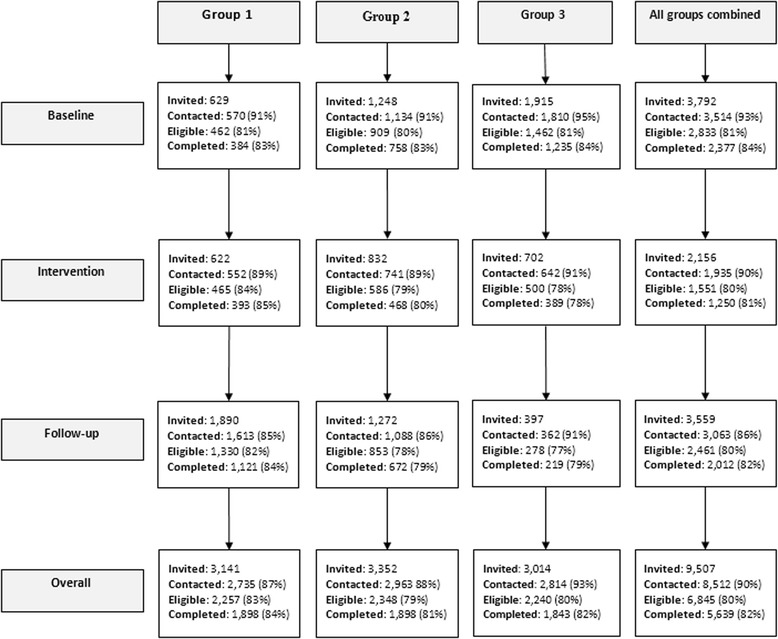
- All 56 eligible community health facilities participated, and 5,639 clients completed data collection; 80% were aged 50+, 14% were smokers, 72% did not consume recommended fruit and/or vegetables, 23% exceeded alcohol guidelines, and 24% did not meet physical activity recommendations.
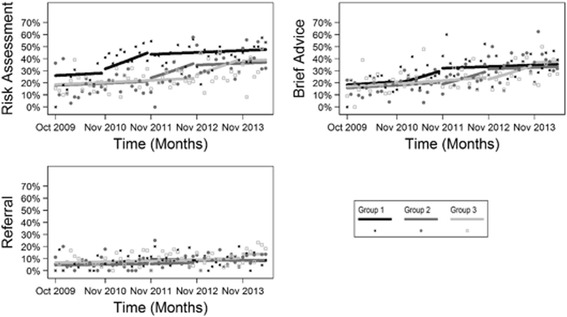
- The intervention significantly increased client-reported receipt of assessment for 4 of 5 outcomes: smoking (OR 1.53), fruit and/or vegetable intake (OR 2.18), alcohol consumption (OR 1.69), and all risks combined (OR 1.78).
- It also increased brief advice for 2 of 5 outcomes: fruit and/or vegetable intake (OR 2.05) and alcohol consumption (OR 2.64); for all relevant risks combined, brief advice also increased (OR 1.54).
- There were no significant increases in referral for any risk behaviour, individually or combined, and no significant increases for physical inactivity outcomes.
## Methods
- Design: Three-group stepped-wedge trial with sequential rollout of a 12-month implementation intervention across three geographically and administratively defined groups; outcomes were collected over 56 months (October 2009–May 2014).
- Sample/data: All 56 community-based primary healthcare facilities in one health district in New South Wales, Australia; 5,369 clients participated in data collection in the abstract, and 5,639 completed data collection in the results section.
- Analysis: Client-reported receipt of preventive care was analyzed using segmented logistic regression in SAS V9.4; outcomes were dichotomized, clustered by group, adjusted for number of visits in the prior 12 months, and significance set at p < 0.01.
## Limitations
- The paper states that the intervention was implemented in a single health district, which may limit generalizability to other districts and jurisdictions.
- The authors state that client self-report may have overestimated care provision.
- The paper notes that not all implementation components were delivered as intended, and it is unknown whether this affected outcomes.
- The “by group” analyses should be interpreted with caution because small within-group sample sizes produced large effect sizes and CIs.
Model-written summary. Check it against the paper before relying on it.
Integrity signals
Registry
Cites
Statistics
Figures

Verification
Claims the paper makes
1 Valid · 0 Not valid · 9 Not checked · 26 Own results and interpretations
The cited sources support only part of this claim — read each source’s verdict below.
In the paper
“Practice change theories [19–22] and reviews of clinical practice change interventions suggest that interventions that address multiple barriers to care provision may be more likely to be effective [23, 24].”
§ Increasing the provision of preventive care by community healthcare services: a stepped wedge implementation trial > Background
What the sources say
- Not checked yetcites [19] Grol R Wesing M M H Eccles M Grol R Wesing M Hulscher M Eccles M Theories on implementation of change in healthcare Improving patient care: the implementation of change in clinical practice 2004 London Elsevier
- Partly supportedcites [20] French SD Green SE O’Connor DA McKenzie JE Francis JJ Michie S Buchbinder R Schattner P Spike N Grimshaw JM Developing theory-informed behaviour change interventions to implement evidence into practice: a systematic approach using the theoretical domains framework Implement Sci 2012 7 38 10.1186/1748-5908-7-38 22531013 PMC3443064 sourceExperimental — accuracy not yet measured
The Methods section (page unavailable) recommends identifying barriers to clinical behaviour change and selecting intervention components to overcome modifiable barriers. That supports the rationale for addressing barriers, but the paper does not establish that interventions addressing multiple barriers are more likely to be effective than those addressing fewer barriers. (LLM, conf=0.83)
- Supportedcites [21] Michie S Johnston M Abraham C Lawton R Parker D Walker A Making psychological theory useful for implementing evidence based practice: a consensus approach Qual Saf Health Care 2005 14 26 33 10.1136/qshc.2004.011155 15692000 PMC1743963 source
In Box 3 (‘An illustrative interview’; page not supplied), the paper identifies two barriers to changing clinical practice and suggests a two-pronged approach to successful implementation that addresses both. It also proposes combining behaviour-change techniques to improve implementation, supporting the citing sentence’s hedged claim. (LLM, conf=0.86)
- Partly supportedcites [22] Damschroder LJ Aron DC Keith RE Kirsh SR Alexander JA Lowery JC Fostering implementation of health services research findings into practice: a consolidated framework for advancing implementation science Implement Sci 2009 4 50 10.1186/1748-5908-4-50 19664226 PMC2736161 sourceExperimental — accuracy not yet measured
The Background identifies barriers at multiple levels of healthcare delivery, and Results > Process recommends planning for salient contextual factors and designing strategies to address modifiable ones. These passages support addressing multiple barriers, but our copy does not say that interventions doing so are more likely to be effective than interventions addressing fewer barriers. The indexed copy provides no page numbers for these sections. (LLM, conf=0.79)
- Not checked yetcites [23] Freund M Campbell E Paul C Sakrouge R McElduff P Walsh R Wiggers J Knight J Girgis A Increasing smoking cessation care provision in hospitals: a meta-analysis of intervention effect Nicotine Tob Res 2009 11 650 662 10.1093/ntr/ntp056 19423696 source
- Not checked yetcites [24] Dijkstra R Wensing M Thomas R Akkermans R Braspenning J Grimshaw J Grol R The relationship between organisational characteristics and the effects of clinical guidelines on medical performance in hospitals, a meta-analysis Biomed Cent Health Serv Res 2006 6 53 10.1186/1472-6963-6-53 PMC1479332 16646968 source
hedgedstates a possible cause- Asserted: passes — The authors put it forward as true.
- Checkable: passes — It can be checked against evidence.
- Load-bearing: passes — The paper’s conclusions depend on it.
- Based: passes — The paper gives a reason why it holds.
A result the paper reports from its own data — it cites no other source for it, so there is none to check. The quote shows it is in the paper.
In the paper
“Analysis of intervention effect by group found a significant increase in care provision for fruit and vegetable assessment for Group 1 (OR 2.05, 95% CI 1.23 to 3.40; p < 0.006), and for Group 2 an increase in smokers receiving brief advice (OR 46.42, 95% CI 6.45 to 333.89; p < 0.001) (Table 4).”
§ Increasing the provision of preventive care by community healthcare services: a stepped wedge implementation trial > Results > Client receipt of preventive care
plainstates a cause- Asserted: passes — The authors put it forward as true.
- Checkable: passes — It can be checked against evidence.
- Load-bearing: unclear — It is unclear whether the paper’s conclusions depend on it.
- Based: passes — The paper gives a reason why it holds.
A result the paper reports from its own data — it cites no other source for it, so there is none to check. The quote shows it is in the paper.
In the paper
“There were significant increases in client-reported receipt of four of the five assessment outcomes: smoking (OR 1.53, 95% CI 1.14–2.06; p < 0.005), fruit and vegetable intake (OR 2.18, 95% CI 1.62–2.94; p < 0.001), alcohol consumption (OR 1.69, 95% CI 1.27–2.26; p < 0.001), and all risks combined (OR 1.78, 95% CI 1.28–2.47; p < 0.001).”
§ Increasing the provision of preventive care by community healthcare services: a stepped wedge implementation trial > Results > Client receipt of preventive care
plainstates a cause- Asserted: passes — The authors put it forward as true.
- Checkable: passes — It can be checked against evidence.
- Load-bearing: passes — The paper’s conclusions depend on it.
- Based: passes — The paper gives a reason why it holds.
A result the paper reports from its own data — it cites no other source for it, so there is none to check. The quote shows it is in the paper.
In the paper
“There were significantly increased odds of clients reporting receipt of three of the five advice outcomes: inadequate fruit and/or vegetable intake (OR 2.05, 95% CI 1.41–2.97; p < 0.001), alcohol overconsumption (OR 2.64, 95% CI 1.36–5.11; p < 0.004) and all relevant risks combined (OR 1.54, 95% CI 1.07–2.22; p < 0.02).”
§ Increasing the provision of preventive care by community healthcare services: a stepped wedge implementation trial > Results > Client receipt of preventive care
plainstates a cause- Asserted: passes — The authors put it forward as true.
- Checkable: passes — It can be checked against evidence.
- Load-bearing: passes — The paper’s conclusions depend on it.
- Based: passes — The paper gives a reason why it holds.
17 more claims
Create a free account to see all 36 claims and to verify the 24 references still open.
- Probably not a substantial claim. 11
- It may state two separate claims as one. 5
Claims other papers make about this one
Each is checked against this paper’s own text: does it say what the citing paper says it does?
The check wasn’t confident either way, so it gives no verdict — never disputed.
In the citing paper
“Traditionally, mental health and addictive behaviours have been treated separately. More recently, there has been a movement towards interventions that target both mental health and addiction [14–16].”
From IntEgrating Smoking Cessation treatment As part of usual Psychological care for dEpression and anxiety (ESCAPE): protocol for a randomised and controlled, multicentre, acceptability, feasibility and implementation trial (2019) · cites this paper as [15]
Experimental — accuracy not yet measured
Self-check
Percentages, sums and reported differences re-computed from the paper’s own numbers.
Each contradiction between two passages listed here was confirmed by an independent check.
Rated minor: it would not touch a result — a value no result rests on, a p-value that stays on the same side of the significance level, or a conflict that is clerical, resolved elsewhere in the paper, or outside its own findings.
In the paper
§ Increasing the provision of preventive care by community healthcare services: a stepped wedge implementation trial > Abstract > Results
“A total of 5369 clients participated in data collection.”
§ Increasing the provision of preventive care by community healthcare services: a stepped wedge implementation trial > Results > Client characteristics
“Of the eligible clients, 5639 (82%) completed data collection (1898 Group 1; 1898 Group 2; 1843 Group 3),”
Rated minor: it would not touch a result — a value no result rests on, a p-value that stays on the same side of the significance level, or a conflict that is clerical, resolved elsewhere in the paper, or outside its own findings.
In the paper
§ Increasing the provision of preventive care by community healthcare services: a stepped wedge implementation trial > Abstract > Results
“and two of five brief advice outcomes (fruit and/or vegetable intake OR 2.05 and alcohol consumption OR 2.64).”
§ Increasing the provision of preventive care by community healthcare services: a stepped wedge implementation trial > Results > Client receipt of preventive care
“There were significantly increased odds of clients reporting receipt of three of the five advice outcomes: inadequate fruit and/or vegetable intake (OR 2.05, 95% CI 1.41–2.97; p < 0.001), alcohol overconsumption (OR 2.64, 95% CI 1.36–5.11; p < 0.004) and all relevant risks combined (OR 1.54, 95% CI 1.07–2.22; p < 0.02).”
Citations
Cites
Damschroder, L. J., Aron, D. C., Keith, R. E., Kirsh, S. R., Alexander, J. A., & Lowery, J. C. (2009) · Implementation Science · doi:10.1186/1748-5908-4-50 · Cited by 14,496
The Fagerstrom Test for Nicotine Dependence: a revision of the Fagerstrom Tolerance Questionnaire
HEATHERTON, T. F., KOZLOWSKI, L. T., FRECKER, R. C., & FAGERSTROM, K. (1991) · British Journal of Addiction · doi:10.1111/j.1360-0443.1991.tb01879.x · Cited by 10,738
Process evaluation of complex interventions: Medical Research Council guidance
Moore, G. F., Audrey, S., Barker, M., Bond, L., Bonell, C., Hardeman, W., Moore, L., O'Cathain, A., Tinati, T., Wight, D., et al. (2015) · BMJ · doi:10.1136/bmj.h1258 · Cited by 6,204
The World Health Report 2002 - Reducing Risks, Promoting Healthy Life
Not Available, N. A. (2003) · Education for Health: Change in Learning & Practice · doi:10.1080/1357628031000116808 · Cited by 6,046
(2001) · Cited by 5,455
Making psychological theory useful for implementing evidence based practice: a consensus approach
Michie, S. (2005) · Quality and Safety in Health Care · doi:10.1136/qshc.2004.011155 · Cited by 3,440
Segmented regression analysis of interrupted time series studies in medication use research
Wagner, A. K., Soumerai, S. B., Zhang, F., & Ross-Degnan, D. (2002) · Journal of Clinical Pharmacy and Therapeutics · doi:10.1046/j.1365-2710.2002.00430.x · Cited by 3,279 · cited 1×
“To examine change in provision of preventive care for each care element across each risk behaviour for the three groups combined, segmented logistic regression models (15 models) were used, with separate intercepts and slopes included for the three distinct time “segments”: baseline, intervention, and post interventio…”
MethodKnowledge translation of research findings
Grimshaw, J. M., Eccles, M. P., Lavis, J. N., Hill, S. J., & Squires, J. E. (2012) · Implementation Science · doi:10.1186/1748-5908-7-50 · Cited by 2,407 · cited 1×
“The larger effect sizes may be attributable to the use of a multistrategic approach to addressing multiple reported barriers to care delivery [25, 31, 51], or to the greater duration and the intensity of intervention implementation support provided.”
BackgroundEffectiveness of brief alcohol interventions in primary care populations
Kaner, E. F., Beyer, F. R., Muirhead, C., Campbell, F., Pienaar, E. D., Bertholet, N., Daeppen, J. B., Saunders, J. B., & Burnand, B. (2018) · Cochrane Database of Systematic Reviews · doi:10.1002/14651858.cd004148.pub4 · Cited by 1,665
THE ROYAL AUSTRALIAN COLLEGE OF GENERAL PRACTITIONERS
(1974) · Medical Journal of Australia · doi:10.5694/j.1326-5377.1974.tb93279.x · Cited by 1,341
French, S. D., Green, S. E., O’Connor, D. A., McKenzie, J. E., Francis, J. J., Michie, S., Buchbinder, R., Schattner, P., Spike, N., & Grimshaw, J. M. (2012) · Implementation Science · doi:10.1186/1748-5908-7-38 · Cited by 1,338
The Australian Guidelines to Reduce Health Risks from Drinking Alcohol
Brussen, K. A. (2010) · Chisholm Health Ethics Bulletin · Cited by 1,083
Book Review: ‘The Australian Immunisation Handbook 8 th Edition’
Shaban, R. Z., & Forster, E. (2005) · Australasian Journal of Paramedicine · doi:10.33151/ajp.3.1.314 · Cited by 712
Interventions for promoting physical activity
Foster, C., Hillsdon, M., Thorogood, M., Kaur, A., & Wedatilake, T. (2005) · Cochrane Database of Systematic Reviews · doi:10.1002/14651858.cd003180.pub2 · Cited by 692
Nursing interventions for smoking cessation
Rice, V. H., & Stead, L. F. (2008) · Cochrane Database of Systematic Reviews · doi:10.1002/14651858.cd001188.pub3 · Cited by 649
Improving Patient Care: The Implementation of Change in Clinical Practice
Grol, R. P. T. M., Wensing, M., Eccles, M., Davis, D., & Wensign, M. (2005) · Cited by 553
Limitations of the Randomized Controlled Trial in Evaluating Population-Based Health Interventions
Sanson-Fisher, R. W., Bonevski, B., Green, L. W., & D’Este, C. (2007) · American Journal of Preventive Medicine · doi:10.1016/j.amepre.2007.04.007 · Cited by 514 · cited 1×
“First, the use of a stepped wedge study design enabled: accounting for the effect of temporal trends through each group acting as its own “control”; the practical difficulty of recruiting a sufficient number of like community healthcare facilities to be addressed; and all community healthcare facilities to receive the…”
MethodGuidelines for Preventive Activities in General Practice
Ackermann, E. W., Harris, M., Alexander, K. L., Arcus, M., Bailey, L., Bennett, J. W., Mar, C. D., Emery, J. D., Ewald, B. D., Ewald, D. P., et al. (2012) · e-publications@bond (Bond University) · Cited by 430
Dietary advice for reducing cardiovascular risk
Brunner, E., Thorogood, M., Rees, K., & Hewitt, G. (2005) · Cochrane Database of Systematic Reviews · doi:10.1002/14651858.cd002128.pub2 · Cited by 351
Designing a stepped wedge trial: three main designs, carry-over effects and randomisation approaches
Copas, A. J., Lewis, J. J., Thompson, J. A., Davey, C., Baio, G., & Hargreaves, J. R. (2015) · Trials · doi:10.1186/s13063-015-0842-7 · Cited by 242 · cited 2×
“The stepped-wedge design has a number of advantages for the conduct of complex and system-wide health service research; including (a) allowing for all facilities to receive and benefit from the intervention, (b) the sequential implementation of the intervention allowing for the monitoring of extraneous variables, and…”
BackgroundMethodThe Multiple Baseline Design for Evaluating Population-Based Research
Hawkins, N. G., Sanson-Fisher, R. W., Shakeshaft, A., D’Este, C., & Green, L. W. (2007) · American Journal of Preventive Medicine · doi:10.1016/j.amepre.2007.03.020 · Cited by 242 · cited 1×
“First, the use of a stepped wedge study design enabled: accounting for the effect of temporal trends through each group acting as its own “control”; the practical difficulty of recruiting a sufficient number of like community healthcare facilities to be addressed; and all community healthcare facilities to receive the…”
MethodTranslating what we have learned into practice
Glasgow, R. E., Goldstein, M. G., Ockene, J. K., & Pronk, N. P. (2004) · American Journal of Preventive Medicine · doi:10.1016/j.amepre.2004.04.019 · Cited by 239 · cited 4×
“Based on such recommendations, and taking account of competing clinical priorities and the brevity of the client consultation [10, 30, 31],clinicians were asked to provide three elements of preventive care (risk assessment for all clients, and brief advice and referral for “at risk” clients) for four risk behaviours (…”
BackgroundMethodInfluentialRamsey, K., Hingora, A., Kante, M., Jackson, E., Exavery, A., Pemba, S., Manzi, F., Baynes, C., Helleringer, S., & Phillips, J. F. (2013) · BMC Health Services Research · doi:10.1186/1472-6963-13-s2-s6 · Cited by 184
Truman, B. I., Smith-Akin, C. K., Hinman, A. R., Gebbie, K. M., Brownson, R., Novick, L. F., Lawrence, R. S., Pappaioanou, M., Fielding, J., Evans, C. A., et al. (2000) · American Journal of Preventive Medicine · doi:10.1016/s0749-3797(99)00124-5 · Cited by 177
Huijg, J. M., Gebhardt, W. A., Verheijden, M. W., van der Zouwe, N., de Vries, J. D., Middelkoop, B. J. C., & Crone, M. R. (2015) · International Journal of Behavioral Medicine · doi:10.1007/s12529-014-9398-2 · Cited by 170 · cited 2×
“Various organizational (reimbursement, systems, resources, support) and provider (time, skills, perception of patients’ motivation) barriers have been reported to impede the effectiveness of primary care provision of care to promote client physical activity [58, 59].”
BackgroundMethodSample size calculation for a stepped wedge trial
Baio, G., Copas, A., Ambler, G., Hargreaves, J., Beard, E., & Omar, R. Z. (2015) · Trials · doi:10.1186/s13063-015-0840-9 · Cited by 163 · cited 1×
“The stepped-wedge design has a number of advantages for the conduct of complex and system-wide health service research; including (a) allowing for all facilities to receive and benefit from the intervention, (b) the sequential implementation of the intervention allowing for the monitoring of extraneous variables, and…”
BackgroundStepped wedge cluster randomised trials: a review of the statistical methodology used and available
Barker, D., McElduff, P., D’Este, C., & Campbell, M. J. (2016) · BMC Medical Research Methodology · doi:10.1186/s12874-016-0176-5 · Cited by 157 · cited 2×
“The stepped-wedge design has a number of advantages for the conduct of complex and system-wide health service research; including (a) allowing for all facilities to receive and benefit from the intervention, (b) the sequential implementation of the intervention allowing for the monitoring of extraneous variables, and…”
BackgroundMethodSelf-citationNew Zealand smoking cessation guidelines.
McRobbie, H. J., Bullen, C., Glover, M., Whittaker, R., Wallace‐Bell, M., & Fraser, T. (2008) · PubMed · Cited by 150
Dijkstra, R. F., Wensing, M., Thomas, R. E., Akkermans, R., Braspenning, J. C. C., Grimshaw, J., & Grol, R. P. T. M. (2006) · BMC Health Services Research · doi:10.1186/1472-6963-6-53 · Cited by 146
Dietary advice for reducing cardiovascular risk
Rees, K., Dyakova, M., Ward, K., Thorogood, M., & Brunner, E. (2013) · Cochrane Database of Systematic Reviews · doi:10.1002/14651858.cd002128.pub4 · Cited by 129
Integrating Physical Activity in Primary Care Practice
AuYoung, M., Linke, S. E., Pagoto, S., Buman, M. P., Craft, L. L., Richardson, C. R., Hutber, A., Marcus, B. H., Estabrooks, P., & Sheinfeld Gorin, S. (2016) · The American Journal of Medicine · doi:10.1016/j.amjmed.2016.02.008 · Cited by 124 · cited 2×
“Various organizational (reimbursement, systems, resources, support) and provider (time, skills, perception of patients’ motivation) barriers have been reported to impede the effectiveness of primary care provision of care to promote client physical activity [58, 59].”
BackgroundMethodWolfenden, L., Yoong, S. L., Williams, C. M., Grimshaw, J., Durrheim, D. N., Gillham, K., & Wiggers, J. (2017) · Journal of Clinical Epidemiology · doi:10.1016/j.jclinepi.2017.03.007 · Cited by 122 · cited 1×
“Development of the strategies was undertaken by an integrated team of behavioural and implementation scientists and population health practitioners in partnership with health service managers and relevant clinician representatives [35].”
MethodSelf-citationConroy, M., Majchrzak, N., Silverman, C., Chang, Y., Regan, S., Schneider, L., & Rigotti, N. (2005) · Nicotine & Tobacco Research · doi:10.1080/14622200500078089 · Cited by 119
Laws, R., Kemp, L., Harris, M., Davies, G. P., Williams, A., & Eames-Brown, R. (2009) · Implementation Science · doi:10.1186/1748-5908-4-66 · Cited by 115
O'Hara, B. J., Phongsavan, P., Venugopal, K., Eakin, E., Eggins, D., Caterson, H., King, L. A., Allman-Farinelli, M. A., Haas, M. R., & Bauman, A. E. (2012) · Preventive Medicine · doi:10.1016/j.ypmed.2012.07.022 · Cited by 111 · cited 1×
“Implementation support strategies that have been reported to be effective in increasing clinician referral of smokers to Quitlines and other smoking cessation services [54, 55] such as: full electronic referral [56]; improved referral pathways [56]; and increasing clinician knowledge of referral options [57], may repr…”
BackgroundAccuracy of patient recall of opportunistic smoking cessation advice in general practice
Ward, J., & Sanson-Fisher, R. (1996) · Tobacco Control · doi:10.1136/tc.5.2.110 · Cited by 93 · cited 1×
“Third, the use of client self-report may have contributed to an overestimate of care provision [62, 63].”
BackgroundBorrelli, B., Lee, C. S., & Novak, S. P. (2007) · Preventive Medicine · doi:10.1016/j.ypmed.2007.09.001 · Cited by 74
Kaner, E., Lock, C., Heather, N., McNamee, P., & Bond, S. (2003) · Patient Education and Counseling · doi:10.1016/s0738-3991(02)00242-2 · Cited by 71
Bank, W. (2002) · The World Bank Open Knowledge Repository (World Bank) · doi:10.1596/9778 · Cited by 71
Fax Referrals, Academic Detailing, and Tobacco Quitline Use
Sheffer, M. A., Baker, T. B., Fraser, D. L., Adsit, R. T., McAfee, T. A., & Fiore, M. C. (2011) · American Journal of Preventive Medicine · doi:10.1016/j.amepre.2011.08.028 · Cited by 67 · cited 1×
“Implementation support strategies that have been reported to be effective in increasing clinician referral of smokers to Quitlines and other smoking cessation services [54, 55] such as: full electronic referral [56]; improved referral pathways [56]; and increasing clinician knowledge of referral options [57], may repr…”
BackgroundBower, P., Kennedy, A., Reeves, D., Rogers, A., Blakeman, T., Chew-Graham, C., Bowen, R., Eden, M., Gardner, C., Hann, M., et al. (2012) · Implementation Science · doi:10.1186/1748-5908-7-7 · Cited by 65
Increasing smoking cessation care provision in hospitals: A meta-analysis of intervention effect
Freund, M., Campbell, E. M., Paul, C. L., Sakrouge, R., McElduff, P., Walsh, R. A., Wiggers, J., Knight, J., & Girgis, A. (2009) · Nicotine & Tobacco Research · doi:10.1093/ntr/ntp056 · Cited by 56 · cited 2×
“Practice change theories [19–22] and reviews of clinical practice change interventions suggest that interventions that address multiple barriers to care provision may be more likely to be effective [23, 24].”
BackgroundSelf-citationPragmatic, formative process evaluations of complex interventions and why we need more of them
Evans, R., Scourfield, J., & Murphy, S. (2015) · Journal of Epidemiology and Community Health · doi:10.1136/jech-2014-204806 · Cited by 54 · cited 1×
“Further research is required to identify the mechanisms and the relative contribution of such mechanisms to enhancing the effectiveness of implementation interventions generally, and those promoting the provision of preventive care specifically [52, 53].”
BackgroundSherman, S. E., Takahashi, N. Y., Kalra, P., Gifford, E. V., Finney, J. W., Canfield, J., Kelly, J. F., Joseph, G. J., & Kuschner, W. G. (2008) · PubMed · Cited by 51
The Community Health SNAP Project Team, Laws, R., Jayasinghe, U. W., Harris, M., Williams, A., Davies, G. P., & Kemp, L. (2009) · BMC Public Health · doi:10.1186/1471-2458-9-165 · Cited by 50 · cited 2×
“However, the finding that the intervention was not effective in increasing referral by such clinicians is consistent with previously reported very low levels of referral to risk reduction services by these professional groups in these settings [17, 34].”
Bartlem, K. M., Bowman, J., Freund, M., Wye, P. M., Lecathelinais, C., McElwaine, K., Wolfenden, L., Gillham, K. E., & Wiggers, J. (2015) · Psychiatric Services · doi:10.1176/appi.ps.201400360 · Cited by 43
Self-citationMcElwaine, K., Freund, M., Campbell, E. M., Bartlem, K. M., Wye, P. M., & Wiggers, J. (2015) · Implementation Science · doi:10.1186/s13012-016-0409-3 · Cited by 39 · cited 4×
“The larger effect sizes may be attributable to the use of a multistrategic approach to addressing multiple reported barriers to care delivery [25, 31, 51], or to the greater duration and the intensity of intervention implementation support provided.”
BackgroundInfluentialSelf-citationTheories on implementation of change in healthcare
Grol, R. P. T. M., Wensing, M., Hulscher, M., & Eccles, M. (2004) · Cited by 37
The delivery of preventive care to clients of community health services
McElwaine, K., Freund, M., Campbell, E. M., Knight, J., Bowman, J., Doherty, E. L., Wye, P. M., Wolfenden, L., Lecathelinais, C., McLachlan, S., et al. (2013) · BMC Health Services Research · doi:10.1186/1472-6963-13-167 · Cited by 33 · cited 3×
“Similarly, the prevalence of care delivery has been reported to vary between risk factors, with a greater prevalence of care for smoking and a lower prevalence for nutrition [17, 18].”
BackgroundMethodResultSelf-citationSmith, A. A., Kepka, D., & Yabroff, K. R. (2014) · BMC Health Services Research · doi:10.1186/1472-6963-14-68 · Cited by 31 · cited 1×
“Similarly, the prevalence of care delivery has been reported to vary between risk factors, with a greater prevalence of care for smoking and a lower prevalence for nutrition [17, 18].”
BackgroundChan, B., Jayasinghe, U. W., Christl, B., Laws, R., Orr, N., Williams, A., Partington, K., & Harris, M. (2013) · BMC Health Services Research · doi:10.1186/1472-6963-13-54 · Cited by 30
Bartlem, K. M., Bowman, J., Freund, M., Wye, P. M., Barker, D., McElwaine, K., Wolfenden, L., Campbell, E. M., McElduff, P., Gillham, K. E., et al. (2015) · Implementation Science · doi:10.1186/s13012-016-0408-4 · Cited by 29
Self-citationMarshall, A. L., Hunt, J., & Jenkins, D. G. (2008) · International Journal of Behavioral Nutrition and Physical Activity · doi:10.1186/1479-5868-5-22 · Cited by 22
McElwaine, K., Freund, M., Campbell, E. M., Slattery, C., Wye, P. M., Lecathelinais, C., Bartlem, K. M., Gillham, K. E., & Wiggers, J. (2013) · Patient Education and Counseling · doi:10.1016/j.pec.2013.10.017 · Cited by 22 · cited 2×
“The primary outcome measures of client-reported receipt of three elements of preventive care for each of four risk behaviours were based on items used in previous surveys [17, 36, 37, 46, 47].”
BackgroundMethodSelf-citationIncreasing Preventive Care by Primary Care Nursing and Allied Health Clinicians
McElwaine, K., Freund, M., Campbell, E. M., Knight, J., Bowman, J., Wolfenden, L., McElduff, P., Bartlem, K. M., Gillham, K. E., & Wiggers, J. (2014) · American Journal of Preventive Medicine · doi:10.1016/j.amepre.2014.06.018 · Cited by 20 · cited 3×
“The primary outcome measures of client-reported receipt of three elements of preventive care for each of four risk behaviours were based on items used in previous surveys [17, 36, 37, 46, 47].”
BackgroundMethodResultSelf-citationAmoroso, C. L., Hobbs, C., & Harris, M. (2005) · Australian Journal of Primary Health · doi:10.1071/py05030 · Cited by 19 · cited 1×
“Implementation support strategies that have been reported to be effective in increasing clinician referral of smokers to Quitlines and other smoking cessation services [54, 55] such as: full electronic referral [56]; improved referral pathways [56]; and increasing clinician knowledge of referral options [57], may repr…”
BackgroundBartlem, K. M., Bowman, J., Freund, M., Wye, P. M., McElwaine, K., Knight, J., McElduff, P., Gillham, K. E., & Wiggers, J. (2013) · Implementation Science · doi:10.1186/1748-5908-8-85 · Cited by 13
Self-citationPromoting a smokers' quitline in Ontario, Canada: an evaluation of an academic detailing approach
Kirst, M. J., & Schwartz, R. (2013) · Health Promotion International · doi:10.1093/heapro/dat040 · Cited by 7 · cited 1×
“Implementation support strategies that have been reported to be effective in increasing clinician referral of smokers to Quitlines and other smoking cessation services [54, 55] such as: full electronic referral [56]; improved referral pathways [56]; and increasing clinician knowledge of referral options [57], may repr…”
BackgroundMcElwaine, K., Freund, M., Campbell, E. M., Knight, J., Slattery, C., Doherty, E. L., McElduff, P., Wolfenden, L., Bowman, J., Wye, P. M., et al. (2011) · BMC Health Services Research · doi:10.1186/1472-6963-11-354 · Cited by 6 · cited 3×
“The study protocol has been previously reported [28].”
MethodSelf-citation
Research works printed but not linked: 8
- Australian Institute of Health and Welfare Australia's health 2016. Australia’s health series no. 15. Cat. No. AUS 199 2016 Canberra AIHW
- United States Preventive Services Task Force The guide to clinical preventive services 2014: recommendations of the US preventive services taskforce. Report no.: 14–05158 2014 Rockville Agency for Healthcare Research and Quality 25144048
- Owen A: Community Health: the evidence base. A report for the NSW Community Health Review Centre for Health Service Development, University of Wollongong 2010.
- Australian Bureau of Statistics National Nutrition Survey selected highlights Australia 1995 1997 Canberra Australian Bureau of Statistics
- Department of Health Australia’s physical activity and sedentary behaviour guidelines: make your move – sit less. Be active for life! 2014 Canberra Commonwealth of Australia
- Department of Health and Ageing Australian dietary guidelines summary 2013 Canberra Commonwealth of Australia
- Australian Bureau of Statistics SEIFA: socio-economic indexes for areas 2011 Canberra Australian Bureau of Statistics
- Department of Health and Aged Care Access/remoteness index of Australia report 2001 Canberra Department of Health and Aged Care
Cited by
Implementation of Clinical Practice Guidelines in the Health Care Setting: A Concept Analysis
Beauchemin, M., Cohn, E. G., & Shelton, R. C. (2019) · Advances in Nursing Science · doi:10.1097/ans.0000000000000263 · Cited by 174
Audit and feedback: effects on professional practice
Ivers, N., Yogasingam, S., Lacroix, M., Brown, K. A., Antony, J., Soobiah, C., Simeoni, M., Willis, T. A., Crawshaw, J., Antonopoulou, V., et al. (2025) · Cochrane Database of Systematic Reviews · doi:10.1002/14651858.cd000259.pub4 · Cited by 78
Obesity prevention and the role of hospital and community-based health services: a scoping review
Pearce, C., Rychetnik, L., Wutzke, S. E., & Wilson, A. J. (2019) · BMC Health Services Research · doi:10.1186/s12913-019-4262-3 · Cited by 76
Crawshaw, J., Meyer, C., Antonopoulou, V., Antony, J., Grimshaw, J., Ivers, N. M., Konnyu, K. J., Lacroix, M., Presseau, J., Simeoni, M., et al. (2023) · Implementation Science · doi:10.1186/s13012-023-01318-8 · Cited by 47
Dzidowska, M., Lee, K. S., Wylie, C. E., Bailie, J., Percival, N., Conigrave, J. H., Hayman, N. E., & Conigrave, K. M. (2020) · BMC Family Practice · doi:10.1186/s12875-020-1101-x · Cited by 34
“The clinical setting was predominantly a generalist, general practitioner-led PHC service; however, four reports [28, 35, 52, 57] representing three projects were conducted in nurse-led community health centres.”
Background
Metadata
- Authors
- Wiggers, J., McElwaine, K., Freund, M., Campbell, L., Bowman, J., Wye, P., Wolfenden, L., Tremain, D., Barker, D., Slattery, C., Gillham, K., & Bartlem, K.
- Affiliations
- Hunter Medical Research Institute (AU)
- University of Newcastle Australia (AU)
- Hunter New England Local Health District (AU)
- Corresponding author
- Wiggers, John
- ORCID
- Venue
- Implementation Science
- Published
- 2017-08-22
- Volume
- 12
- Issue
- 1
- Pages
- 105-105
- ISSN
- 1748-5908 (ISSN-L)
- PMC
- PMC5567434
- OpenAlex
- W2748271262
- Cited by
- 37
- References
- 59
- Citations by year
- 2026: 1 · 2025: 5 · 2024: 12 · 2023: 7 · 2022: 6 · 2020: 1 · 2019: 4 · 2018: 1
- FWCI
- 2.66
- Type
- journal article
- Language
- en
- Open access
- gold
- doi.org
- Licence
- cc-by
- Locations
- Implementation Science (publishedVersion, cc-by)
- Europe PMC (PubMed Central) (publishedVersion, cc-by)
- PubMed Central (publishedVersion, cc-by)
- PubMed (publishedVersion)
- Figshare (submittedVersion, cc-by)
- NOVA (University of Newcastle Australia) (submittedVersion, cc-by)
- Funders
- National Health and Medical Research Council (1016650)
- Topics
- Health Sciences › Health Professions › General Health Professions › Health Policy Implementation Science
- Health Sciences › Medicine › Public Health, Environmental and Occupational Health › Health Promotion and Cardiovascular Prevention
- Health Sciences › Medicine › Public Health, Environmental and Occupational Health › Clinical practice guidelines implementation
- Keywords
- preventive medicine, smoking, fruit and vegetable intake, alcohol consumption, physical inactivity, brief advice, risk assessment, referral, audit and feedback, clinician education, implementation strategies
- MeSH terms
- Adult, Aged, Aged, 80 and over, Community Health Services, Delivery of Health Care, Female, Humans, Male, Middle Aged, New South Wales, Preventive Health Services, Logistic Models
About these checks
Registry, retraction, Cites and statistics results are computed, not judged, with one exception: a printed reference that no index lists is read once by a model before it counts as a citation error. Claims are extracted by a model and kept only when their quote appears verbatim in the text; each cited source is then checked, with a model’s help, for whether it says what the claim relies on. Those verdicts can be wrong — read the claim’s quote and the cited source before relying on one.
The claim verdicts this report counts are experimental: their accuracy is not yet measured.
A language model drew the claims from the paper on 2026-10-11, under version 3 of the claim definition (model deepseek-v4.1-flash, prompt extract-v3).
A second model labelled each claim on 2026-10-11 (model jev-1.13-20260917, definition revision gold-guideline-v0.2).
Cited sources are checked with a language model’s help (gpt-6-sol).
Statistics and arithmetic are recomputed, not judged.
Confidence bands are shown only for fields calibrated on our annotated test set. None is calibrated yet, so no band is shown.
What counts as a claim ›How we measure confidence ›How we check this ›
Are you an author, or do you see a problem with this page? Request a review
Data sources
Bibliographic data: Semantic Scholar, OpenAlex, Crossref.
Contains information from the Semantic Scholar Academic Graph Datasets, made available under the ODC Attribution License (ODC-BY 1.0).
Semantic Scholar’s data is described in: Kinney, R., et al. (2023). The Semantic Scholar Open Data Platform. arXiv:2301.10140.
