

A pragmatic method for costing implementation strategies using time-driven activity-based costing
Open accessThe DOI matches its Crossref record; 42 of the 42 references it cites were found in a registry or an index.
Abstract
Background: Implementation strategies increase the adoption of evidence-based practices, but they require resources. Although information about implementation costs is critical for decision-makers with budget constraints, cost information is not typically reported in the literature. This is at least partly due to a need for clearly defined, standardized costing methods that can be integrated into implementation effectiveness evaluation efforts. Methods: We present a pragmatic approach to systematically estimating detailed, specific resource use and costs of implementation strategies that combine time-driven activity-based costing (TDABC), a business accounting method based on process mapping and known for its practicality, with a leading implementation science framework developed by Proctor and colleagues, which guides specification and reporting of implementation strategies. We illustrate the application of this method using a case study with synthetic data. Results: This step-by-step method produces a clear map of the implementation process by specifying the names, actions, actors, and temporality of each implementation strategy; determining the frequency and duration of each action associated with individual strategies; and assigning a dollar value to the resources that each action consumes. The method provides transparent and granular cost estimation, allowing a cost comparison of different implementation strategies. The resulting data allow researchers and stakeholders to understand how specific components of an implementation strategy influence its overall cost. Conclusion: TDABC can serve as a pragmatic method for estimating resource use and costs associated with distinct implementation strategies and their individual components. Our use of the Proctor framework for the process mapping stage of the TDABC provides a way to incorporate cost estimation into implementation evaluation and may reduce the burden associated with economic evaluations in implementation science.
Overview
The claims and statistics of this paper haven’t been checked yet.
Free: it reads the open-access text and checks the first 5 claims that cite a source we can check. Create a free account to check every claim.
Integrity signals
Registry
Cites
Statistics
Figures
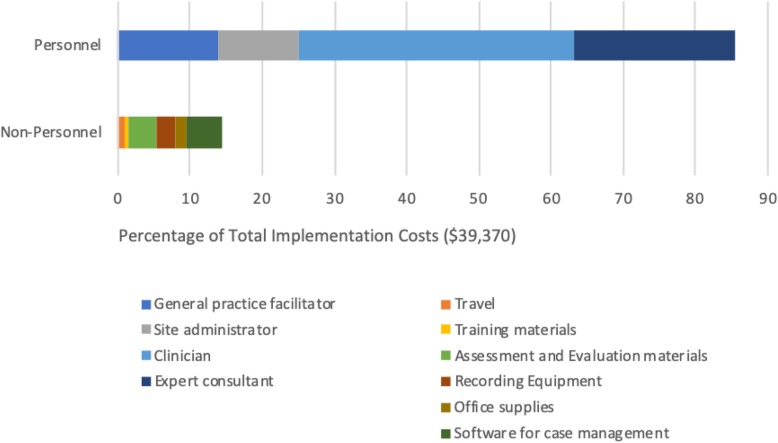
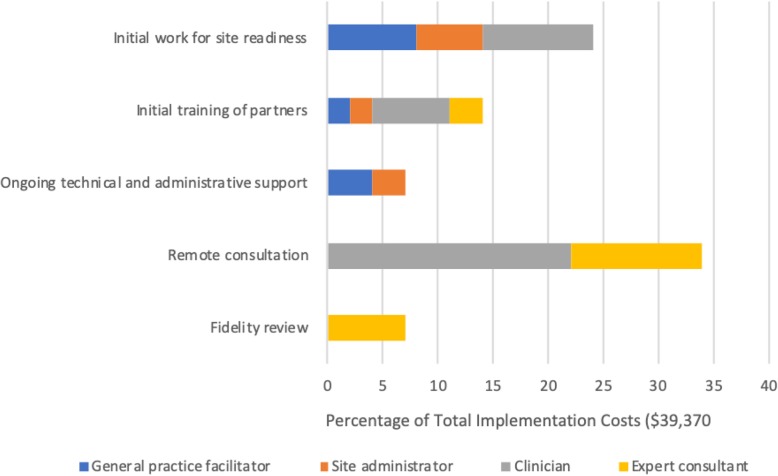
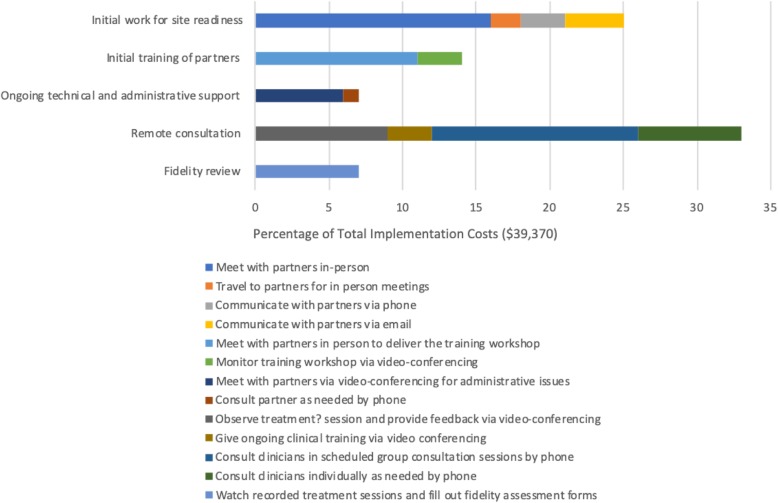
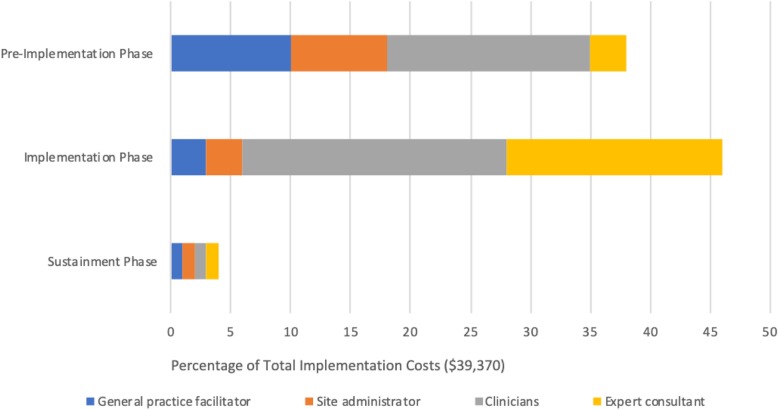
Verification
Claims the paper makes
The claims and statistics of this paper haven’t been checked yet.
Free: it reads the open-access text and checks the first 5 claims that cite a source we can check. Create a free account to check every claim.
Claims other papers make about this one
Each is checked against this paper’s own text: does it say what the citing paper says it does?
The cited source says what the claim attributes to it.
In the citing paper
“There has been a recent surge of publications related to the collection of costs in implementation science [9, 14, 31, 36], and emerging consensus regarding the importance of economic influences on implementation outcomes (see other articles in this collection).”
From Implementation science issues in understanding, collecting, and using cost estimates: A multi-stakeholder perspective (2021) · cites this paper as [36]
The cited source says what the claim attributes to it.
In the citing paper
“Cidav et al. [36] provide examples of feedback displays on the costs of implementation strategies”
From Implementation science issues in understanding, collecting, and using cost estimates: A multi-stakeholder perspective (2021) · cites this paper as [36]
Self-check
Percentages, sums and reported differences re-computed from the paper’s own numbers.
The self-check needs the paper’s full text.
Citations
Cites
1 retracted
Printed educational materials: effects on professional practice and health care outcomes
Freemantle, N., Harvey, E., Wolf, F., Grimshaw, J., Grilli, R., & Bero, L. (1997) · Cochrane Database of Systematic Reviews · doi:10.1002/14651858.cd000172 · Cited by 326
RetractedProctor, E., Silmere, H., Raghavan, R., Hovmand, P., Aarons, G., Bunger, A., Griffey, R., & Hensley, M. (2011) · Administration and Policy in Mental Health and Mental Health Services Research · doi:10.1007/s10488-010-0319-7 · Cited by 8,721 · cited 1×
“In keeping with the fact that a clear understanding of implementation costs is important for determining the feasibility and achieving buy-in from stakeholders, many implementation frameworks highlight cost as an important factor to consider when evaluating implementation approaches and outcomes [3, 4].”
BackgroundPowell, B. J., Waltz, T. J., Chinman, M. J., Damschroder, L. J., Smith, J. L., Matthieu, M. M., Proctor, E. K., & Kirchner, J. E. (2015) · Implementation Science · doi:10.1186/s13012-015-0209-1 · Cited by 4,963 · cited 1×
“1) Naming the implementation strategy in a way that is consistent with the existing guidelines and taxonomies in the literature [30, 36, 37].”
ResultAdvancing a Conceptual Model of Evidence-Based Practice Implementation in Public Service Sectors
Aarons, G. A., Hurlburt, M., & Horwitz, S. M. (2011) · Administration and Policy in Mental Health and Mental Health Services Research · doi:10.1007/s10488-010-0327-7 · Cited by 3,240
Implementation strategies: recommendations for specifying and reporting
Proctor, E. K., Powell, B. J., & McMillen, J. C. (2013) · Implementation Science · doi:10.1186/1748-5908-8-139 · Cited by 2,585 · cited 7×
“reporting of implementation strategies offers a guideline to be followed when evaluating the effectiveness of implementation strategies [23].”
BackgroundInfluentialStandards for Reporting Implementation Studies (StaRI) Statement
Pinnock, H., Barwick, M., Carpenter, C. R., Eldridge, S., Grandes, G., Griffiths, C. J., Rycroft-Malone, J., Meissner, P., Murray, E., Patel, A., et al. (2017) · BMJ · doi:10.1136/bmj.i6795 · Cited by 1,446
A compilation of strategies for implementing clinical innovations in health and mental health
Powell, B. J., McMillen, J. C., Proctor, E. K., Carpenter, C. R., Griffey, R. T., Bunger, A. C., Glass, J. E., & York, J. L. (2012) · Medical Care Research and Review · doi:10.1177/1077558711430690 · Cited by 1,069 · cited 1×
“In response, many guidelines emerged that sought to develop a more standardized language for implementation strategies and other aspects of implementation [23, 29 – 31, 23, 29 – 32].”
BackgroundPrinted educational materials: effects on professional practice and healthcare outcomes
Giguère, A., Légaré, F., Grimshaw, J., Turcotte, S., Fiander, M., Grudniewicz, A., Makosso-Kallyth, S., Wolf, F. M., Farmer, A. P., & Gagnon, M.-P. (2012) · Cochrane Database of Systematic Reviews · doi:10.1002/14651858.cd004398.pub3 · Cited by 878 · cited 1×
“The initial estimation of costs in the matrix can then be compared to the costs of the implementation strategies as actually delivered [8, 39 – 41] to compare estimated versus actual costs.”
MethodTime‐Driven Activity‐Based Costing
(2012) · Measuring Marketing · doi:10.1002/9781119199205.ch23 · Cited by 819
Enhancing the Impact of Implementation Strategies in Healthcare: A Research Agenda
Powell, B. J., Fernandez, M. E., Williams, N. J., Aarons, G. A., Beidas, R. S., Lewis, C. C., McHugh, S. M., & Weiner, B. J. (2019) · Frontiers in Public Health · doi:10.3389/fpubh.2019.00003 · Cited by 775 · cited 4×
“Although several implementation science frameworks include costs as an important implementation outcome to be studied alongside other implementation measures, in practice, cost estimation has not been integrated into most evaluations of implementation strategy effectiveness [5, 8].”
BackgroundInfluentialSelf-citationTime-Driven Activity-Based Costing
Kaplan, R. S., & Anderson, S. R. (2003) · SSRN Electronic Journal · doi:10.2139/ssrn.485443 · Cited by 736 · cited 7×
“TDABC changes how the time data are collected and modifies the calculation of activity costs [15, 20, 26, 27].”
BackgroundMethodInfluential(2007) · Cited by 571
Time-driven activity-based costing in health care: A systematic review of the literature
Keel, G., Savage, C., Rafiq, M., & Mazzocato, P. (2017) · Health Policy · doi:10.1016/j.healthpol.2017.04.013 · Cited by 451 · cited 5×
“TDABC changes how the time data are collected and modifies the calculation of activity costs [15, 20, 26, 27].”
BackgroundMethodInfluentialAarons, G. A., Ehrhart, M. G., Farahnak, L. R., & Hurlburt, M. S. (2015) · Implementation Science · doi:10.1186/s13012-014-0192-y · Cited by 435 · cited 1×
“The initial estimation of costs in the matrix can then be compared to the costs of the implementation strategies as actually delivered [8, 39 – 41] to compare estimated versus actual costs.”
MethodAarons, G. A., Wells, R. S., Zagursky, K., Fettes, D. L., & Palinkas, L. A. (2009) · American Journal of Public Health · doi:10.2105/ajph.2009.161711 · Cited by 299 · cited 1×
“Cost concerns are associated with reduced stakeholder willingness to implement EBPs, and thus, they have emerged as the most significant and least modifiable barrier to EBP implementation [1].”
BackgroundMicrocosting Quantity Data Collection Methods
Frick, K. D. (2009) · Medical Care · doi:10.1097/mlr.0b013e31819bc064 · Cited by 294 · cited 1×
“To do so, it requires only three parameters: (1) frequency of the activity (i.e., how many times the activity occurs), (2) time required to perform one single event of the activity (e.g., 1 hour), and (3) per-hour price of the resources (e.g., personnel time) used to perform the activity [16, 17].”
A glossary of user-centered design strategies for implementation experts
Dopp, A. R., Parisi, K. E., Munson, S. A., & Lyon, A. R. (2019) · Translational Behavioral Medicine · doi:10.1093/tbm/iby119 · Cited by 271 · cited 1×
“1) Naming the implementation strategy in a way that is consistent with the existing guidelines and taxonomies in the literature [30, 36, 37].”
ResultGetting a clinical innovation into practice: An introduction to implementation strategies
Kirchner, J. E., Smith, J. L., Powell, B. J., Waltz, T. J., & Proctor, E. K. (2020) · Psychiatry Research · doi:10.1016/j.psychres.2019.06.042 · Cited by 258 · cited 1×
“1) Naming the implementation strategy in a way that is consistent with the existing guidelines and taxonomies in the literature [30, 36, 37].”
ResultEisman, A. B., Kilbourne, A. M., Dopp, A. R., Saldana, L., & Eisenberg, D. (2020) · Psychiatry Research · doi:10.1016/j.psychres.2019.06.008 · Cited by 210 · cited 2×
“For example, a systematic review of 235 implementation studies found that only 10% provided information about implementation costs [9].”
BackgroundTracking implementation strategies: a description of a practical approach and early findings
Bunger, A. C., Powell, B. J., Robertson, H. A., MacDowell, H., Birken, S. A., & Shea, C. (2017) · Health Research Policy and Systems · doi:10.1186/s12961-017-0175-y · Cited by 208 · cited 1×
“This approach has increasingly been applied in implementation research [6, 33, 34], and the Standards for Reporting Implementation Studies (STARI), a widely accepted checklist for transparent and accurate reporting of studies that evaluate implementation strategies [32], recommends this framework to describe implement…”
MethodUsing Time-Driven Activity-Based Costing to Identify Value Improvement Opportunities in Healthcare
Kaplan, R. S., Witkowski, M., Abbott, M., Guzman, A. B., Higgins, L. D., Meara, J. G., Padden, E., Shah, A. S., Waters, P., Weidemeier, M., et al. (2014) · Journal of Healthcare Management · doi:10.1097/00115514-201411000-00005 · Cited by 204 · cited 1×
“TDABC has been shown to be practical when applied in various organizational settings including healthcare [15, 19, 22, 28].”
BackgroundSaldana, L., Chamberlain, P., Bradford, W. D., Campbell, M., & Landsverk, J. (2014) · Children and Youth Services Review · doi:10.1016/j.childyouth.2013.10.006 · Cited by 175 · cited 1×
“Similarly, the Cost of Implementing New Strategies (COINS) framework was designed to map costs onto pre-determined implementation stages and activity categories associated with the Stages of Implementation Completion (SIC) measure, an 8-stage tool to assess implementation process and milestones [13].”
MethodRefining a taxonomy for guideline implementation: results of an exercise in abstract classification
Mazza, D., Bairstow, P., Buchan, H., Chakraborty, S. P., Van Hecke, O., Grech, C., & Kunnamo, I. (2013) · Implementation Science · doi:10.1186/1748-5908-8-32 · Cited by 173 · cited 1×
“In response, many guidelines emerged that sought to develop a more standardized language for implementation strategies and other aspects of implementation [23, 29 – 31, 23, 29 – 32].”
BackgroundLong-Term Sustainability of Evidence-Based Practices in Community Mental Health Agencies
Bond, G. R., Drake, R. E., McHugo, G. J., Peterson, A. E., Jones, A. M., & Williams, J. (2014) · Administration and Policy in Mental Health and Mental Health Services Research · doi:10.1007/s10488-012-0461-5 · Cited by 172
Roberts, S. L. E., Healey, A., & Sevdalis, N. (2019) · Implementation Science · doi:10.1186/s13012-019-0901-7 · Cited by 161 · cited 2×
“Although several implementation science frameworks include costs as an important implementation outcome to be studied alongside other implementation measures, in practice, cost estimation has not been integrated into most evaluations of implementation strategy effectiveness [5, 8].”
BackgroundEstimating Costs in Cost Effectiveness Analysis
Luce, B. R., Manning, W. G., Siegel, J. E., & Lipscomb, J. (1996) · Cost-Effectiveness in Health and Medicine · doi:10.1093/oso/9780195108248.003.0006 · Cited by 146
An 8-step framework for implementing time-driven activity-based costing in healthcare studies
Etges, A. P. B. D. S., Cruz, L. N., Kuhmmer, R., Neyeloff, J. L., Schlatter, R. P., Astigarraga, C. C., Falavigna, M., & Polanczyk, C. A. (2019) · The European Journal of Health Economics · doi:10.1007/s10198-019-01085-8 · Cited by 141 · cited 2×
“TDABC changes how the time data are collected and modifies the calculation of activity costs [15, 20, 26, 27].”
BackgroundBoyd, M. R., Powell, B. J., Endicott, D., & Lewis, C. C. (2018) · Behavior Therapy · doi:10.1016/j.beth.2017.11.012 · Cited by 137 · cited 2×
“This approach has increasingly been applied in implementation research [6, 33, 34], and the Standards for Reporting Implementation Studies (STARI), a widely accepted checklist for transparent and accurate reporting of studies that evaluate implementation strategies [32], recommends this framework to describe implement…”
BackgroundMethodMixed-method approaches to strengthen economic evaluations in implementation research
Dopp, A. R., Mundey, P., Beasley, L. O., Silovsky, J. F., & Eisenberg, D. (2019) · Implementation Science · doi:10.1186/s13012-018-0850-6 · Cited by 118 · cited 1×
“However, there is little guidance with regard to how to pragmatically estimate these costs [ 5 – 7].”
BackgroundHuynh, A. K., Hamilton, A. B., Farmer, M. M., Bean-Mayberry, B., Stirman, S. W., Moin, T., & Finley, E. P. (2018) · Frontiers in Public Health · doi:10.3389/fpubh.2018.00134 · Cited by 100 · cited 1×
“For example, the effect of the implementation strategy dosage, reflected by action frequency and unit duration of the actions, is an important area of inquiry in implementation science [8, 23, 42].”
BackgroundCharles, J. M., Edwards, R. T., Bywater, T., & Hutchings, J. (2013) · Prevention Science · doi:10.1007/s11121-012-0302-5 · Cited by 85 · cited 1×
“It does this by delivering more detailed, accurate, and transparent activity cost information that is more relevant and actionable for decision-making [ 10, 11, 16 – 18].”
BackgroundFacilitating improvement in primary care: the promise of practice coaching.
Grumbach, K., Bainbridge, E. D., & Bodenheimer, T. S. (2012) · PubMed · Cited by 78
Ritchie, M. J., Kirchner, J. E., Townsend, J. C., Pitcock, J. A., Dollar, K. M., & Liu, C. (2019) · Journal of General Internal Medicine · doi:10.1007/s11606-019-05537-y · Cited by 73 · cited 1×
“estimated the cost of facilitation as a strategy to implement integrated primary care and mental healthcare services [12].”
BackgroundOrganizational Cost of Quality Improvement for Depression Care
Liu, C., Rubenstein, L. V., Kirchner, J. E., Fortney, J. C., Perkins, M. W., Ober, S. K., Pyne, J. M., & Chaney, E. F. (2009) · Health Services Research · doi:10.1111/j.1475-6773.2008.00911.x · Cited by 63 · cited 1×
“have broken down the implementation strategy of provider education into activities such as preparing and producing educational materials, providing introductory educational conferences, in-person or video conferencing for supervision and consultation, ongoing seminars, and academic detailing [14].”
BackgroundSelf-citationWillmeroth, T., Wesselborg, B., & Kuske, S. (2019) · INQUIRY: The Journal of Health Care Organization, Provision, and Financing · doi:10.1177/0046958019861257 · Cited by 53 · cited 2×
“In particular, despite growing evidence that EBPs can be cost-effective over time, start-up costs are frequently cited as a major barrier to implementation [2, 3].”
BackgroundGold, R., Bunce, A. E., Cohen, D. J., Hollombe, C., Nelson, C. A., Proctor, E. K., Pope, J. A., & DeVoe, J. E. (2016) · Mayo Clinic Proceedings · doi:10.1016/j.mayocp.2016.03.014 · Cited by 36 · cited 1×
“This approach has increasingly been applied in implementation research [6, 33, 34], and the Standards for Reporting Implementation Studies (STARI), a widely accepted checklist for transparent and accurate reporting of studies that evaluate implementation strategies [32], recommends this framework…”
MethodThe value and limitations of using process models to describe the manufacturing organization
Busby, J. S., & WILLIAMS, G. M. (1993) · International Journal of Production Research · doi:10.1080/00207549308956852 · Cited by 32 · cited 1×
“Processes can be defined at any level of detail, starting at the most abstract and becoming more concrete by successive decomposition [24].”
BackgroundProcess Evaluation of Implementation Strategies
Hulscher, M., & Wensing, M. (2020) · Wiley eBooks · doi:10.1002/9781119488620.ch22 · Cited by 30 · cited 2×
“Because implementation strategies are often standardized (e.g., procedure frequency and duration are decided beforehand) [38], such a TDABC template can be filled out a priori based on the study protocol and serve as a blueprint prior to the start of implementation.”
BackgroundA Review on Time-Driven Activity-Based Costing System in Various Sectors
Zaini, S. N. A. M., & Abu, M. Y. (2019) · Journal of Modern Manufacturing Systems and Technology · doi:10.15282/jmmst.v2i1.1795 · Cited by 25 · cited 3×
“Applications of TDABC in organizational settings have demonstrated that determining activity frequencies and establishing an average duration is less burdensome than asking personnel to log their time and activities [15, 19, 21, 27].”
BackgroundFilene, J. H., Brodowski, M. L., & Bell, J. (2014) · Journal of Public Child Welfare · doi:10.1080/15548732.2014.939249 · Cited by 10 · cited 2×
“It does this by delivering more detailed, accurate, and transparent activity cost information that is more relevant and actionable for decision-making [ 10, 11, 16 – 18].”
BackgroundThe Costs of Developing, Implementing, and Operating a Safety Learning System in Community Practice
O’Beirne, M., Reid, R. J., Zwicker, K., Sterling, P. D., Sokol, E., Flemons, W. W., BAKER, R. G., & Clement, F. M. (2013) · Journal of Patient Safety · doi:10.1097/pts.0000000000000052 · Cited by 10 · cited 1×
“broke down recruiting clinics into activities such as revising mail-out responses and preparing for and attending meetings [10].”
BackgroundTime-Driven Activity-Based Costing for Healthcare Provider Supply Chain Processes
Gonzalez, M. I. (2014) · Journal of the Arkansas Academy of Science · Cited by 4
Research works printed but not linked: 1
- Foster R Blakely T Wilson N O’Dea D Protocol for direct costing of health sector interventions for economic modelling (including event pathways) 2013 Wellington University of Otago Department of Public Health
Cited by
Reflections on 10 years of effectiveness-implementation hybrid studies
Curran, G. M., Landes, S. J., McBain, S. A., Pyne, J. M., Smith, J. D., Fernandez, M. E., Chambers, D. A., & Mittman, B. S. (2022) · Frontiers in Health Services · doi:10.3389/frhs.2022.1053496 · Cited by 299
“Procedures for costing implementation strategies can be time intensive and need to balance the precision and accuracy of implementation cost data against respondent burden for collecting these data (48, 49).”
MethodSelf-citationCost data in implementation science: categories and approaches to costing
Gold, H. T., McDermott, C., Hoomans, T., & Wagner, T. H. (2022) · Implementation Science · doi:10.1186/s13012-021-01172-6 · Cited by 152
“The time for each activity is multiplied by appropriate wage rates and then summed to estimate total costs [33].”
BackgroundMethodEisman, A. B., Quanbeck, A., Bounthavong, M., Panattoni, L., & Glasgow, R. E. (2021) · Implementation Science · doi:10.1186/s13012-021-01143-x · Cited by 126
“the collection of costs in implementation science [9, 14, 31, 36], and emerging consensus regarding the importance of economic influences on implementation outcomes (see other articles in this collection).”
BackgroundMixed-method approaches to strengthen economic evaluations in implementation research
Dopp, A. R., Mundey, P., Beasley, L. O., Silovsky, J. F., & Eisenberg, D. (2019) · Implementation Science · doi:10.1186/s13012-018-0850-6 · Cited by 118
Advancing healthcare equity through dissemination and implementation science
Baumann, A. A., Shelton, R. C., Kumanyika, S., & Haire-Joshu, D. L. (2023) · Health Services Research · doi:10.1111/1475-6773.14175 · Cited by 116
Metadata
- Authors
- Cidav, Z., Mandell, D., Pyne, J., Beidas, R., Curran, G., & Marcus, S.
- Affiliations
- Leonard Davis Institute of Health Economics (US)
- Central Arkansas Veterans Healthcare System (US)
- Corresponding author
- Cidav, Zuleyha
- Venue
- Implementation Science
- Published
- 2020-05-05
- Volume
- 15
- Issue
- 1
- Pages
- 28-28
- ISSN
- 1748-5908 (ISSN-L)
- PMC
- PMC7201568
- OpenAlex
- W3022355544
- Cited by
- 174
- References
- 42
- Citations by year
- 2026: 18 · 2025: 20 · 2024: 40 · 2023: 36 · 2022: 31 · 2021: 24 · 2020: 4
- FWCI
- 24.80
- Type
- journal article
- Language
- en
- Open access
- gold
- doi.org
- Licence
- cc-by
- creativecommons.org/licenses/by/4.0/ (tdm)
- creativecommons.org/licenses/by/4.0/ (vor)
- Locations
- Implementation Science (publishedVersion, cc-by)
- PubMed Central (publishedVersion, cc-by)
- PubMed (publishedVersion)
- DOAJ (DOAJ: Directory of Open Access Journals) (submittedVersion, cc-by-sa)
- Funders
- National Institute of Mental Health (3P50MH113840-03)
- Topics
- Health Sciences › Health Professions › General Health Professions › Health Policy Implementation Science
- Social Sciences › Business, Management and Accounting › Accounting › Accounting and Organizational Management
- Health Sciences › Medicine › Public Health, Environmental and Occupational Health › Clinical practice guidelines implementation
- Keywords
- implementation strategies, implementation costs, time-driven activity-based costing, resource utilization (health care), process mapping, evidence-based practice adoption, implementation effectiveness evaluation, economic evaluation, cost estimation
- MeSH terms
- Implementation Science, Budgets, Costs and Cost Analysis, Delivery of Health Care, Humans, Time Factors, Evidence-Based Practice
About these checks
Registry, retraction, Cites and statistics results are computed, not judged, with one exception: a printed reference that no index lists is read once by a model before it counts as a citation error. Claims are extracted by a model and kept only when their quote appears verbatim in the text; each cited source is then checked, with a model’s help, for whether it says what the claim relies on. Those verdicts can be wrong — read the claim’s quote and the cited source before relying on one.
Statistics and arithmetic are recomputed, not judged.
Confidence bands are shown only for fields calibrated on our annotated test set. None is calibrated yet, so no band is shown.
What counts as a claim ›How we measure confidence ›How we check this ›
Are you an author, or do you see a problem with this page? Request a review
Data sources
Bibliographic data: Semantic Scholar, OpenAlex, Crossref.
Contains information from the Semantic Scholar Academic Graph Datasets, made available under the ODC Attribution License (ODC-BY 1.0).
Semantic Scholar’s data is described in: Kinney, R., et al. (2023). The Semantic Scholar Open Data Platform. arXiv:2301.10140.
