

Quality of life in patients with locked-in syndrome: Evolution over a 6-year period
Open accessThe DOI matches its Crossref record; 45 of the 47 references it cites were found in a registry or an index.
Abstract
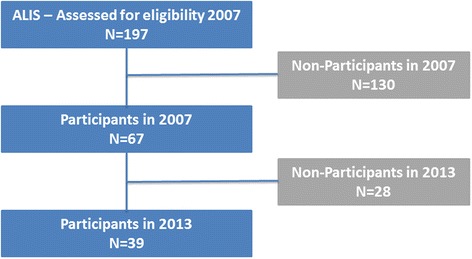
BACKGROUND: Improved knowledge of the quality of life (QoL) of locked-in syndrome (LIS) patients have implications for managing their care, and assists clinicians in choosing the most appropriate interventions. We performed a survey of a population of LIS patients to describe the course of the QoL of LIS patients over a 6-year period and to determine the potential predictive factors of QoL changes over time. METHOD: This is a study performed over a 6-year period in patients with a LIS diagnosis. Questionnaires were sent in 2007 and 2013. The following data were recorded: i) sociodemographic data; ii) clinical data related to LIS, physical/handicap status, psychological status; iii) self-reported QoL: Anamnestic Comparative Self-Assessment (ACSA); iv) Integration in life: French Reintegration to Normal Living Index (RNLI). RESULTS: Among the 67 patients included in 2007, 39 (58 %) patients returned their questionnaire in 2013. The LIS etiology was stroke in 51 individuals. The QoL of the patients was relatively satisfactory compared to populations in other severe conditions. Twenty-one (70 %) individuals reported a stable/improved QoL between 2007 and 2013. The physical/handicap statuses in 2007 and 2013 were not related to the QoL 6 years later, with the exception of one communication parameter: the individuals who used yes-no code reported significantly lower QoL levels than those who did not in 2013. DISCUSSION: In opposition to a widespread opinion, LIS persons report a relatively satisfactory QoL level that stays stable over time, suggesting that life with LIS is worth living. Preservation of autonomy and communication may help them to live as normal life as possible.
Overview
The claims and statistics of this paper haven’t been checked yet.
Free: it reads the open-access text and checks the first 5 claims that cite a source we can check. Create a free account to check every claim.
Integrity signals
Registry
Cites
Statistics
Figures
Verification
Claims the paper makes
The claims and statistics of this paper haven’t been checked yet.
Free: it reads the open-access text and checks the first 5 claims that cite a source we can check. Create a free account to check every claim.
Claims other papers make about this one
Each is checked against this paper’s own text: does it say what the citing paper says it does?
The source backs part of the claim, not all of it — or backs it for a different population, condition or comparison.
In the citing paper
“Faster, more accurate, and more natural communication are among the most desired needs of people who have lost the ability to speak after severe paralysis2,38–40.”
From A high-performance neuroprosthesis for speech decoding and avatar control (2023) · cites this paper as [38]
Experimental — accuracy not yet measured
Self-check
Percentages, sums and reported differences re-computed from the paper’s own numbers.
The self-check needs the paper’s full text.
Citations
Cites
Integrating response shift into health-related quality of life research: a theoretical model
Sprangers, M. A. G., & Schwartz, C. E. (1999) · Social Science & Medicine · doi:10.1016/s0277-9536(99)00045-3 · Cited by 2,228 · cited 1×
“This lack of association between objective health/handicap change and QoL could also be explained by the presence of the well-known ‘response shift phenomena’ [34].”
BackgroundThe disability paradox: high quality of life against all odds
Albrecht, G. L., & Devlieger, P. J. (1999) · Social Science & Medicine · doi:10.1016/s0277-9536(98)00411-0 · Cited by 2,064 · cited 2×
“has been previously observed that patients’ subjective QoL is not related to physical impairments; this observation agrees with previous studies of different motor neuron disorders [4, 11, 15, 22, 27–32] and illustrates the “disability paradox” reported by Albrecht and Devlieger [33].”
ResultThe Diagnosis of Stupor and Coma.
(1967) · Annals of Internal Medicine · doi:10.7326/0003-4819-66-1-244 · Cited by 1,152
The Diagnosis of Stupor and Coma
Poser, C. M. (1981) · JAMA: The Journal of the American Medical Association · doi:10.1001/jama.1981.03310320080042 · Cited by 544
Varieties of the locked-in syndrome
Bauer, G., Gerstenbrand, F., & Rumpl, E. (1979) · Journal of Neurology · doi:10.1007/bf00313105 · Cited by 504 · cited 1×
“The following data were recorded: i) sociodemographic data, including gender, age, living status, marital status, children, educational level, income, and religious status; ii) clinical data, including the type of LIS (total, classical, or partial) according to Bauer’s classification [18], disease duration, etiology (…”
MethodThe locked-in syndrome : what is it like to be conscious but paralyzed and voiceless?
Laureys, S., Pellas, F., Van Eeckhout, P., Ghorbel, S., Schnakers, C., Perrin, F., Berré, J., Faymonville, M.-E., Pantke, K.-H., Damas, F., et al. (2005) · Progress in Brain Research · doi:10.1016/s0079-6123(05)50034-7 · Cited by 477 · cited 1×
“Disease duration Median [IQR] 8 [4;9] 7 [4;9] 14 [10;15]”
Randt, C. (1967) · Archives of Neurology · doi:10.1001/archneur.1967.00470190115018 · Cited by 455
Smith, E., & Delargy, M. (2005) · BMJ · doi:10.1136/bmj.330.7488.406 · Cited by 437
Locked-in syndrome: a review of 139 cases.
Patterson, J. R., & Grabois, M. (1986) · Stroke · doi:10.1161/01.str.17.4.758 · Cited by 303
Medicine, A. C. O. R. (1995) · Archives of Physical Medicine and Rehabilitation · doi:10.1016/s0003-9993(95)80031-x · Cited by 283
Quality of life in ALS depends on factors other than strength and physical function
Simmons, Z., Bremer, B. A., Robbins, R. A., Walsh, S. M., & Fischer, S. (2000) · Neurology · doi:10.1212/wnl.55.3.388 · Cited by 279
Bruno, M.-A., Bernheim, J. L., Ledoux, D., Pellas, F., Demertzi, A., & Laureys, S. (2011) · BMJ Open · doi:10.1136/bmjopen-2010-000039 · Cited by 225 · cited 2×
“Several studies have previously explored the QoL of LIS patients [5, 9–14] and surprisingly have shown that the”
BackgroundLife can be worth living in locked-in syndrome
Lulé, D., Zickler, C., Häcker, S., Bruno, M. A., Demertzi, A., Pellas, F., Laureys, S., & Kübler, A. (2009) · Progress in Brain Research · doi:10.1016/s0079-6123(09)17723-3 · Cited by 217 · cited 3×
“Several studies have previously explored the QoL of LIS patients [5, 9–14] and surprisingly have shown that the”
BackgroundResultBottomley, A., Jones, D., & Claassens, L. (2009) · European Journal of Cancer · doi:10.1016/j.ejca.2008.09.032 · Cited by 216 · cited 2×
“[7, 8].”
BackgroundReintegration to normal living as a proxy to quality of life
Wood-Dauphinee, S., & Williams, J. I. (1987) · Journal of Chronic Diseases · doi:10.1016/0021-9681(87)90005-1 · Cited by 216 · cited 1×
“Normal Living Index (RNLI),[20, 21] which is an 11-item scale that covers areas such as participation in recre-”
BackgroundLocked-in syndrome: a review of 139 cases.
RPatterson, J., & MGrabois (1986) · Stroke · Cited by 216
A cross sectional study on determinants of quality of life in ALS
Chio, A. (2004) · Journal of Neurology, Neurosurgery & Psychiatry · doi:10.1136/jnnp.2003.033100 · Cited by 190 · cited 1×
“Several previous studies have reported the QoL of LIS persons in single assessments [14, 22, 23] through cross-sectional research studies that may not provide definite information about cause and effect relationships.”
BackgroundSurvey: The locked-in syndrome: a syndrome looking for a therapy
León-Carrión, J., Eeckhout, P. V., Domínguez-Morales, M. D. R., & Pérez-Santamaría, F. J. (2002) · Brain Injury · doi:10.1080/02699050110119781 · Cited by 171
Cognitive function in the locked-in syndrome
Schnakers, C., Majerus, S., Goldman, S., Boly, M., van Eeckhout, P., Gay, S., Pellas, F., Bartsch, V., Peigneux, P., Moonen, G., et al. (2008) · Journal of Neurology · doi:10.1007/s00415-008-0544-0 · Cited by 166 · cited 1×
“Our patients appeared to be relatively similar to the populations of other studies in terms of age, gender, and LIS etiology [3, 4, 41].”
ResultSeverity of Depressive Symptoms and Quality of Life in Patients with Amyotrophic Lateral Sclerosis
Kübler, A., Winter, S., Ludolph, A. C., Hautzinger, M., & Birbaumer, N. (2005) · Neurorehabilitation and Neural Repair · doi:10.1177/1545968305276583 · Cited by 163
Neudert, C., Wasner, M., & Borasio, G. D. (2004) · Journal of Palliative Medicine · doi:10.1089/1096621041838443 · Cited by 158 · cited 2×
“has been previously observed that patients’ subjective QoL is not related to physical impairments; this observation agrees with previous studies of different motor neuron disorders [4, 11, 15, 22, 27–32] and illustrates the “disability paradox” reported by Albrecht and Devlieger [33].”
BackgroundResultNeudert, C., Wasner, M., & Borasio, G. D. (2001) · Journal of the Neurological Sciences · doi:10.1016/s0022-510x(01)00612-8 · Cited by 157 · cited 2×
“has been previously observed that patients’ subjective QoL is not related to physical impairments; this observation agrees with previous studies of different motor neuron disorders [4, 11, 15, 22, 27–32] and illustrates the “disability paradox” reported by Albrecht and Devlieger [33].”
BackgroundResultCorrelates of Quality of Life in people with motor neuron disease (MND)
Goldstein, L., Atkins, L., & Leigh, P. (2002) · Amyotrophic Lateral Sclerosis and Other Motor Neuron Disorders · doi:10.1080/146608202760834120 · Cited by 126 · cited 2×
“has been previously observed that patients’ subjective QoL is not related to physical impairments; this observation agrees with previous studies of different motor neuron disorders [4, 11, 15, 22, 27–32] and illustrates the “disability paradox” reported by Albrecht and Devlieger [33].”
BackgroundResultCasanova, E., Lazzari, R. E., Lotta, S., & Mazzucchi, A. (2003) · Archives of Physical Medicine and Rehabilitation · doi:10.1016/s0003-9993(03)00008-x · Cited by 117 · cited 3×
“In most studies, swallowing ability and improved continence have been found to reduce the need for medical devices [3, 4].”
BackgroundResultDoble, J. E., Haig, A. J., Anderson, C., & Katz, R. (2003) · Journal of Head Trauma Rehabilitation · doi:10.1097/00001199-200309000-00005 · Cited by 116 · cited 6×
“In most studies, swallowing ability and improved continence have been found to reduce the need for medical devices [3, 4].”
BackgroundResultInfluentialDepression and Quality of Life in Patients With Amyotrophic Lateral Sclerosis
Lulé, D., Häcker, S., Ludolph, A., Birbaumer, N., & Kübler, A. (2008) · Deutsches Ärzteblatt international · doi:10.3238/arztebl.2008.0397 · Cited by 112 · cited 2×
“support [14], depression [16].”
BackgroundCoco, G. L., Coco, D. L., Cicero, V., Oliveri, A. M., Verso, G. L., Piccoli, F., & Bella, V. L. (2005) · Journal of the Neurological Sciences · doi:10.1016/j.jns.2005.05.018 · Cited by 110 · cited 2×
“has been previously observed that patients’ subjective QoL is not related to physical impairments; this observation agrees with previous studies of different motor neuron disorders [4, 11, 15, 22, 27–32] and illustrates the “disability paradox” reported by Albrecht and Devlieger [33].”
BackgroundResultBaumstarck, K., Boyer, L., Boucekine, M., Michel, P., Pelletier, J., & Auquier, P. (2013) · Multiple Sclerosis International · doi:10.1155/2013/524894 · Cited by 106 · cited 1×
“As with chronic diseases in general,[6] improved knowledge of the quality of life (QoL) and the determinants of the QoL of LIS patients have implications for managing their care, including considerations of ethical issues, and assists clinicians in choosing the most appropriate interventions.”
BackgroundSelf-citationApolone, G., Carli, G. D., Brunetti, M., & Garattini, S. K. (2001) · PharmacoEconomics · doi:10.2165/00019053-200119020-00005 · Cited by 96
Nelson, N. D., Trail, M., Van, J. N., Appel, S. H., & Lai, E. C. (2003) · Journal of Palliative Medicine · doi:10.1089/109662103322144736 · Cited by 87 · cited 2×
“has been previously observed that patients’ subjective QoL is not related to physical impairments; this observation agrees with previous studies of different motor neuron disorders [4, 11, 15, 22, 27–32] and illustrates the “disability paradox” reported by Albrecht and Devlieger [33].”
BackgroundResultStark, S. L., Edwards, D. F., Hollingsworth, H. H., & Gray, D. B. (2005) · Archives of Physical Medicine and Rehabilitation · doi:10.1016/j.apmr.2004.03.020 · Cited by 80 · cited 2×
“Normal Living Index (RNLI),[20, 21] which is an 11-item scale that covers areas such as participation in recre-”
BackgroundThe role of augmentative communication devices in the medical management of ALS
Brownlee, A., & Palovcak, M. (2007) · NeuroRehabilitation · doi:10.3233/nre-2007-22607 · Cited by 79
Quality of life of ALS and LIS patients with and without invasive mechanical ventilation
Rousseau, M., Pietra, S., Blaya, J., & Catala, A. R. (2011) · Journal of Neurology · doi:10.1007/s00415-011-6018-9 · Cited by 65 · cited 1×
“been previously identified; these factors include disability/ handicap status [15], medical devices [13], social/familial”
BackgroundSelf-citationElectronic aids to daily living and quality of life for persons with tetraplegia
Rigby, P. J., Ryan, S. E., & Campbell, K. A. (2010) · Disability and Rehabilitation Assistive Technology · doi:10.3109/17483107.2010.522678 · Cited by 44 · cited 2×
“Electronic communication devices, including patient-computer interfaces such as infrared eye movement sensors and computer voice prosthetics, have a liberating effect on people with LIS and enable them to have real dialogues and use the internet instead of passively responding to the requests of others [36–38].”
BackgroundBernham, J. L. (1999) · Bioethics · doi:10.1111/1467-8519.00156 · Cited by 41
Evaluation of Quality of Life in Complete Locked-In Syndrome Patients
Rousseau, M.-C., Pietra, S., Nadji, M., & Billette de Villemeur, T. (2013) · Journal of Palliative Medicine · doi:10.1089/jpm.2013.0120 · Cited by 40
Self-citationLe Locked-In Syndrome : la conscience emmurée
Bruno, M., Pellas, F., Schnakers, C., van Eeckhout, P., Bernheim, J., Pantke, K.-H., Damas, F., Faymonville, M.-É., Moonen, G., Goldman, S., et al. (2008) · Revue Neurologique · doi:10.1016/j.neurol.2007.12.010 · Cited by 36
Long-term functioning following whiplash injury: the role of social support and personality traits
Nijs, J., Inghelbrecht, E., Daenen, L., Hachimi-Idrissi, S., Hens, L., Willems, B., Roussel, N. A., Cras, P. P., & Bernheim, J. (2011) · Clinical Rheumatology · doi:10.1007/s10067-011-1712-7 · Cited by 35 · cited 1×
“Regarding the few studies that have used the ACSA score to assess QoL, LIS patients have reported lower scores (after scoring harmonization) than subjects who have sustained whiplash injuries [24] and higher scores than patients with facial prostheses [25] and patients with new diagnoses of Alzheimer’s disease [26].”
BackgroundUntersuchung zur Lebensqualität bei Patienten mit Gesichtsepithesen
Klein, M., Menneking, H., Spring, A., & Rose, M. (2005) · Oral and Maxillofacial Surgery · doi:10.1007/s10006-005-0614-8 · Cited by 30
A case study of Locked-In-Syndrome: Psychological and personal perspectives
Wilson, B. A., Hinchcliffe, A., Okines, T., Florschutz, G., & Fish, J. E. (2011) · Brain Injury · doi:10.3109/02699052.2011.568034 · Cited by 26 · cited 2×
“has been previously observed that patients’ subjective QoL is not related to physical impairments; this observation agrees with previous studies of different motor neuron disorders [4, 11, 15, 22, 27–32] and illustrates the “disability paradox” reported by Albrecht and Devlieger [33].”
BackgroundResultEvaluation of quality of life in complete locked-in syndrome patients
Rousseau, M., Pietra, S., & Nadji, M. (2012) · Annals of Physical and Rehabilitation Medicine · doi:10.1016/j.rehab.2012.07.920 · Cited by 26 · cited 1×
“Several previous studies have reported the QoL of LIS persons in single assessments [14, 22, 23] through cross-sectional research studies that may not provide definite information about cause and effect relationships.”
BackgroundSelf-citationLife-sustaining treatment and locked-in syndrome
Anderson, C. S., Dillon, C., & Burns, R. J. (1993) · The Lancet · doi:10.1016/0140-6736(93)92728-c · Cited by 25 · cited 1×
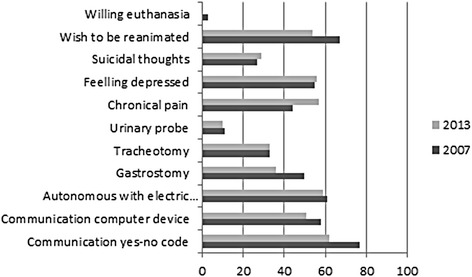
“Nevertheless, more than a quarter of our cohort reporting having suicidal thoughts as previously described,[40] and such thoughts unsurprisingly influence their QoL.”
BackgroundStatistical challenges of quality of life and cancer: new avenues for future research
Boyer, L., Baumstarck, K., Michel, P., Boucékine, M., Anota, A., Bonnetain, F., Coste, J., Falissard, B., Guilleux, A., Hardouin, J.-B., et al. (2013) · Expert Review of Pharmacoeconomics & Outcomes Research · doi:10.1586/14737167.2014.873704 · Cited by 15 · cited 1×
“The presence of a response shift may result in the over- or underestimation of the true changes and lead to challenges in interpreting QoL measures, especially in longitudinal studies [35].”
BackgroundSelf-citationPsychological adjustment to locked-in syndrome
Sledz, M., Oddy, M., & Beaumont, J. G. (2007) · Journal of Neurology Neurosurgery & Psychiatry · doi:10.1136/jnnp.2006.113225 · Cited by 14 · cited 1×
“Several previous studies have reported the QoL of LIS persons in single assessments [14, 22, 23] through cross-sectional research studies that may not provide definite information about cause and effect relationships.”
BackgroundCOGNOS: Care for People With Cognitive Dysfunction A National Observational Study
Mets, T. F., Deyn, P. P. D., Pals, P., Lepeleire, J. D., Vandewoude, M. F. J., Ventura, M., Ivanoiu, A., Albert, A., & Seghers, A.-K. (2012) · Alzheimer Disease & Associated Disorders · doi:10.1097/wad.0b013e318256d1d0 · Cited by 12 · cited 1×
“Regarding the few studies that have used the ACSA score to assess QoL, LIS patients have reported lower scores (after scoring harmonization) than subjects who have sustained whiplash injuries [24] and higher scores than patients with facial prostheses [25] and patients with new diagnoses of Alzheimer’s disease [26].”
Background
Cited by
Fully Implanted Brain–Computer Interface in a Locked-In Patient with ALS
Vansteensel, M. J., Pels, E. G. M., Bleichner, M. G., Branco, M. P., Denison, T., Freudenburg, Z. V., Gosselaar, P., Leinders, S., Ottens, T. H., Van Den Boom, M. A., et al. (2016) · New England Journal of Medicine · doi:10.1056/nejmoa1608085 · Cited by 578
A high-performance neuroprosthesis for speech decoding and avatar control
Metzger, S. L., Littlejohn, K. T., Silva, A. B., Moses, D. A., Seaton, M. P., Wang, R., Dougherty, M. E., Liu, J. R., Wu, P., Berger, M. A., et al. (2023) · Nature · doi:10.1038/s41586-023-06443-4 · Cited by 522
Real-time decoding of question-and-answer speech dialogue using human cortical activity
Moses, D. A., Leonard, M. K., Makin, J. G., & Chang, E. F. (2019) · Nature Communications · doi:10.1038/s41467-019-10994-4 · Cited by 224
The current state of electrocorticography-based brain–computer interfaces
Miller, K. J., Hermes, D., & Staff, N. P. (2020) · Neurosurgical FOCUS · doi:10.3171/2020.4.focus20185 · Cited by 139
Kübler, A. (2019) · Neuroethics · doi:10.1007/s12152-019-09409-4 · Cited by 138
“Because of the outstanding importance of communication for maintaining quality of life in LIS and ALS ( [77] [78]), this can be considered a”
Background
Metadata
- Authors
- Rousseau, M.-C., Baumstarck, K., Alessandrini, M., Blandin, V., Billette de Villemeur, T., & Auquier, P.
- Affiliations
- Aix-Marseille Université (FR)
- Corresponding author
- Rousseau, Marie-Christine
- Venue
- Orphanet Journal of Rare Diseases
- Published
- 2015-07-19
- Volume
- 10
- Issue
- 1
- Pages
- 88-88
- ISSN
- 1750-1172 (ISSN-L)
- PMC
- PMC4506615
- OpenAlex
- W1554341681
- Semantic Scholar
- c8e6ec9da0f26d6e969e2e7796ceecae3143335e
- Cited by
- 93
- References
- 47
- Citations by year
- 2026: 5 · 2025: 7 · 2024: 17 · 2023: 13 · 2022: 5 · 2021: 9 · 2020: 8 · 2019: 12 · 2018: 8 · 2017: 5 · 2016: 3 · 2015: 1
- FWCI
- 5.71
- Type
- journal article
- Language
- en
- Open access
- gold
- doi.org
- Locations
- Orphanet Journal of Rare Diseases (publishedVersion, cc-by)
- PubMed Central (publishedVersion, cc-by)
- PubMed (publishedVersion)
- HAL (submittedVersion, other-oa)
- Topics
- Health Sciences › Medicine › Rehabilitation › Stroke Rehabilitation and Recovery
- Health Sciences › Health Professions › Physical Therapy, Sports Therapy and Rehabilitation › Medical Practices and Rehabilitation
- Health Sciences › Medicine › Clinical Neurology › Traumatic Brain Injury Research
- Keywords
- locked-in syndrome, quality of life, longitudinal change in quality of life, stroke, communication aids, autonomy, Reintegration to Normal Living Index, physical disability
- MeSH terms
- Adult, Female, Health Status Indicators, Health Surveys, Humans, Male, Middle Aged, Quadriplegia, Quality of Life, Surveys and Questionnaires, Socioeconomic Factors, Sickness Impact Profile, Value of Life, Self Report
About these checks
Registry, retraction, Cites and statistics results are computed, not judged, with one exception: a printed reference that no index lists is read once by a model before it counts as a citation error. Claims are extracted by a model and kept only when their quote appears verbatim in the text; each cited source is then checked, with a model’s help, for whether it says what the claim relies on. Those verdicts can be wrong — read the claim’s quote and the cited source before relying on one.
Statistics and arithmetic are recomputed, not judged.
Confidence bands are shown only for fields calibrated on our annotated test set. None is calibrated yet, so no band is shown.
What counts as a claim ›How we measure confidence ›How we check this ›
Are you an author, or do you see a problem with this page? Request a review
Data sources
Bibliographic data: Semantic Scholar, OpenAlex, Crossref.
Contains information from the Semantic Scholar Academic Graph Datasets, made available under the ODC Attribution License (ODC-BY 1.0).
Semantic Scholar’s data is described in: Kinney, R., et al. (2023). The Semantic Scholar Open Data Platform. arXiv:2301.10140.
