

Quality of life in patients with locked-in syndrome: Evolution over a 6-year period
Open accessThe DOI matches its Crossref record; 45 of the 47 references it cites were found in a registry or an index.
Abstract
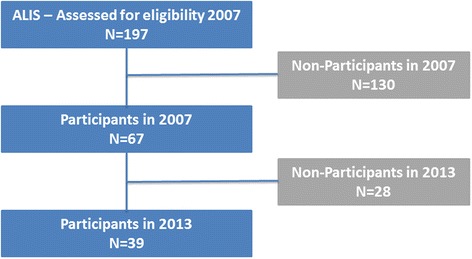
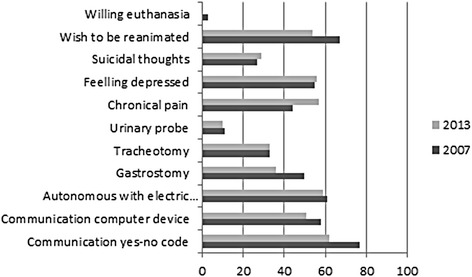
BACKGROUND: Improved knowledge of the quality of life (QoL) of locked-in syndrome (LIS) patients have implications for managing their care, and assists clinicians in choosing the most appropriate interventions. We performed a survey of a population of LIS patients to describe the course of the QoL of LIS patients over a 6-year period and to determine the potential predictive factors of QoL changes over time. METHOD: This is a study performed over a 6-year period in patients with a LIS diagnosis. Questionnaires were sent in 2007 and 2013. The following data were recorded: i) sociodemographic data; ii) clinical data related to LIS, physical/handicap status, psychological status; iii) self-reported QoL: Anamnestic Comparative Self-Assessment (ACSA); iv) Integration in life: French Reintegration to Normal Living Index (RNLI). RESULTS: Among the 67 patients included in 2007, 39 (58 %) patients returned their questionnaire in 2013. The LIS etiology was stroke in 51 individuals. The QoL of the patients was relatively satisfactory compared to populations in other severe conditions. Twenty-one (70 %) individuals reported a stable/improved QoL between 2007 and 2013. The physical/handicap statuses in 2007 and 2013 were not related to the QoL 6 years later, with the exception of one communication parameter: the individuals who used yes-no code reported significantly lower QoL levels than those who did not in 2013. DISCUSSION: In opposition to a widespread opinion, LIS persons report a relatively satisfactory QoL level that stays stable over time, suggesting that life with LIS is worth living. Preservation of autonomy and communication may help them to live as normal life as possible.
Overview
The claims and statistics of this paper haven’t been checked yet.
Free: it reads the open-access text and checks the first 5 claims that cite a source we can check. Create a free account to check every claim.
Integrity signals
Registry
Cites
Statistics
Figures
Verification
Claims the paper makes
The claims and statistics of this paper haven’t been checked yet.
Free: it reads the open-access text and checks the first 5 claims that cite a source we can check. Create a free account to check every claim.
Claims other papers make about this one
Each is checked against this paper’s own text: does it say what the citing paper says it does?
The source backs part of the claim, not all of it — or backs it for a different population, condition or comparison.
In the citing paper
“Faster, more accurate, and more natural communication are among the most desired needs of people who have lost the ability to speak after severe paralysis2,38–40.”
From A high-performance neuroprosthesis for speech decoding and avatar control (2023) · cites this paper as [38]
Experimental — accuracy not yet measured
Self-check
Percentages, sums and reported differences re-computed from the paper’s own numbers.
The self-check needs the paper’s full text.
Citations
Cites
Integrating response shift into health-related quality of life research: a theoretical model
Sprangers, M. A. G., & Schwartz, C. E. (1999) · Social Science & Medicine · doi:10.1016/s0277-9536(99)00045-3 · Cited by 2,228 · cited 1×
“This lack of association between objective health/handicap change and QoL could also be explained by the presence of the well-known ‘response shift phenomena’ [34].”
BackgroundThe disability paradox: high quality of life against all odds
Albrecht, G. L., & Devlieger, P. J. (1999) · Social Science & Medicine · doi:10.1016/s0277-9536(98)00411-0 · Cited by 2,064 · cited 2×
“has been previously observed that patients’ subjective QoL is not related to physical impairments; this observation agrees with previous studies of different motor neuron disorders [4, 11, 15, 22, 27–32] and illustrates the “disability paradox” reported by Albrecht and Devlieger [33].”
ResultThe Diagnosis of Stupor and Coma.
(1967) · Annals of Internal Medicine · doi:10.7326/0003-4819-66-1-244 · Cited by 1,152
The Diagnosis of Stupor and Coma
Poser, C. M. (1981) · JAMA: The Journal of the American Medical Association · doi:10.1001/jama.1981.03310320080042 · Cited by 544
Varieties of the locked-in syndrome
Bauer, G., Gerstenbrand, F., & Rumpl, E. (1979) · Journal of Neurology · doi:10.1007/bf00313105 · Cited by 504 · cited 1×
“The following data were recorded: i) sociodemographic data, including gender, age, living status, marital status, children, educational level, income, and religious status; ii) clinical data, including the type of LIS (total, classical, or partial) according to Bauer’s classification [18], disease duration, etiology (…”
MethodThe locked-in syndrome : what is it like to be conscious but paralyzed and voiceless?
Laureys, S., Pellas, F., Van Eeckhout, P., Ghorbel, S., Schnakers, C., Perrin, F., Berré, J., Faymonville, M.-E., Pantke, K.-H., Damas, F., et al. (2005) · Progress in Brain Research · doi:10.1016/s0079-6123(05)50034-7 · Cited by 477 · cited 1×
“Disease duration Median [IQR] 8 [4;9] 7 [4;9] 14 [10;15]”
Randt, C. (1967) · Archives of Neurology · doi:10.1001/archneur.1967.00470190115018 · Cited by 455
Smith, E., & Delargy, M. (2005) · BMJ · doi:10.1136/bmj.330.7488.406 · Cited by 437
Locked-in syndrome: a review of 139 cases.
Patterson, J. R., & Grabois, M. (1986) · Stroke · doi:10.1161/01.str.17.4.758 · Cited by 303
Medicine, A. C. O. R. (1995) · Archives of Physical Medicine and Rehabilitation · doi:10.1016/s0003-9993(95)80031-x · Cited by 283
Cited by
Fully Implanted Brain–Computer Interface in a Locked-In Patient with ALS
Vansteensel, M. J., Pels, E. G. M., Bleichner, M. G., Branco, M. P., Denison, T., Freudenburg, Z. V., Gosselaar, P., Leinders, S., Ottens, T. H., Van Den Boom, M. A., et al. (2016) · New England Journal of Medicine · doi:10.1056/nejmoa1608085 · Cited by 578
A high-performance neuroprosthesis for speech decoding and avatar control
Metzger, S. L., Littlejohn, K. T., Silva, A. B., Moses, D. A., Seaton, M. P., Wang, R., Dougherty, M. E., Liu, J. R., Wu, P., Berger, M. A., et al. (2023) · Nature · doi:10.1038/s41586-023-06443-4 · Cited by 522
Real-time decoding of question-and-answer speech dialogue using human cortical activity
Moses, D. A., Leonard, M. K., Makin, J. G., & Chang, E. F. (2019) · Nature Communications · doi:10.1038/s41467-019-10994-4 · Cited by 224
The current state of electrocorticography-based brain–computer interfaces
Miller, K. J., Hermes, D., & Staff, N. P. (2020) · Neurosurgical FOCUS · doi:10.3171/2020.4.focus20185 · Cited by 139
Kübler, A. (2019) · Neuroethics · doi:10.1007/s12152-019-09409-4 · Cited by 138
“Because of the outstanding importance of communication for maintaining quality of life in LIS and ALS ( [77] [78]), this can be considered a”
BackgroundDecoding spoken phonemes from sensorimotor cortex with high-density ECoG grids
Ramsey, N. F., Salari, E., Aarnoutse, E. J., Vansteensel, M. J., Bleichner, M. G., & Freudenburg, Z. V. (2018) · NeuroImage · doi:10.1016/j.neuroimage.2017.10.011 · Cited by 124
“People who are completely unable to express themselves are essentially excluded from society at every level (Bruno et al., 2011; Laureys et al., 2005; Rousseau et al., 2015).”
Pels, E. G. M., Aarnoutse, E. J., Leinders, S., Freudenburg, Z. V., Branco, M. P., van der Vijgh, B. H., Snijders, T. J., Denison, T., Vansteensel, M. J., & Ramsey, N. F. (2019) · Clinical Neurophysiology · doi:10.1016/j.clinph.2019.07.020 · Cited by 95
Brain-computer interfaces for communication
Vansteensel, M. J., & Jarosiewicz, B. (2020) · Handbook of clinical neurology · doi:10.1016/b978-0-444-63934-9.00007-x · Cited by 85
“In fact, in a study by Rousseau et al. (2015), the only parameter associated with a decreased QoL in LIS was the restriction of communication to only binary (yes/no) responses to others ’ questions, which makes self-initiated and more nuanced communication difficult.”
BackgroundCognitive Motor Dissociation: Gap Analysis and Future Directions
Claassen, J., Kondziella, D., Alkhachroum, A. M., Diringer, M. N., Edlow, B. L., Fins, J. J., Gosseries, O., Hannawi, Y., Rohaut, B., Schnakers, C., et al. (2023) · Neurocritical Care · doi:10.1007/s12028-023-01769-3 · Cited by 69
“Although generalizations of these survey results have to be made with caution because they do not represent a cross-sectional unbiased sample, subsequent surveys replicated the finding [106].”
Brain-Computer Interfaces for Communication: Preferences of Individuals With Locked-in Syndrome
Branco, M. P., Pels, E. G. M., Sars, R. H., Aarnoutse, E. J., Ramsey, N. F., Vansteensel, M. J., & Nijboer, F. (2021) · Neurorehabilitation and Neural Repair · doi:10.1177/1545968321989331 · Cited by 61
“The questionnaire consisted of 5 sections: (1) demographics, (2) introduction to cBCIs, (3) cBCI applications, (4) mental strategies, and (5) time of information.”
BackgroundEfficient machine learning approach for volunteer eye-blink detection in real-time using webcam
Medeiros, P. A. D. L., da Silva, G. V. S., Fernandes, F. R. D. S., Sánchez-Gendriz, I., Lins, H. W. D. C., Barros, D. M. S., Nagem, D. A. P., & Valentim, R. A. D. M. (2021) · Expert Systems with Applications · doi:10.1016/j.eswa.2021.116073 · Cited by 60
SCHNETZER, L., McCoy, M. R., Bergmann, J., Kunz, A. B., Leis, S., & Trinka, E. (2023) · Therapeutic Advances in Neurological Disorders · doi:10.1177/17562864231160873 · Cited by 54
Real-time classification of auditory sentences using evoked cortical activity in humans
Moses, D. A., Leonard, M. K., & Chang, E. F. (2018) · Journal of Neural Engineering · doi:10.1088/1741-2552/aaab6f · Cited by 41
“associated with increases in patient-reported quality of life [31, 32], these approaches often involve tedious and difficult to learn procedures such as selecting characters one at a time at rates less than 10 characters per minute (typing rates are typically more than 175 characters per minute in healthy individuals).”
Phenomenology of the Locked-In Syndrome: an Overview and Some Suggestions
Vidal, F. (2018) · Neuroethics · doi:10.1007/s12152-018-9388-1 · Cited by 50
Canny, E., Vansteensel, M. J., van der Salm, S. M. A., Müller-Putz, G., & Berezutskaya, J. (2023) · Journal of NeuroEngineering and Rehabilitation · doi:10.1186/s12984-023-01272-y · Cited by 42
“In fact, having access only to coded “yes–no” type of communication is associated with lower quality of life compared to richer communication modes [251].”
BackgroundInfluentialLinse, K., Rüger, W., Joos, M., Schmitz‐Peiffer, H., Storch, A., & Hermann, A. (2017) · Amyotrophic Lateral Sclerosis and Frontotemporal Degeneration · doi:10.1080/21678421.2017.1392576 · Cited by 40
Harnessing the Power of Artificial Intelligence in Otolaryngology and the Communication Sciences
Wilson, B. S., Tucci, D. L., Moses, D. A., Chang, E. F., Young, N. M., Zeng, F., Lesica, N. A., Bur, A. M., Kavookjian, H. L., Mussatto, C. C., et al. (2022) · Journal of the Association for Research in Otolaryngology · doi:10.1007/s10162-022-00846-2 · Cited by 40
“…cognitively intact but unable to operate commercially available assistive communication devices, significantly limiting their ability to communicate with family, friends, and caregivers and drastically reducing their quality of life (Rousseau et al. 2015; Felgoise et al. 2016; Branco et al. 2021).”
BackgroundChewIt. An Intraoral Interface for Discreet Interactions
Cascón, P. G., Matthies, D. J. C., Muthukumarana, S., & Nanayakkara, S. C. (2019) · CHI Conference on Human Factors in Computing Systems · doi:10.1145/3290605.3300556 · Cited by 39
“This sig-nifcantly helps people with physical impairments to regain essential interaction capabilities, in particular patients suffering from locked-in syndrome [69].”
BackgroundWhat Justifies the Allocation of Health Care Resources to Patients with Disorders of Consciousness?
Peterson, A. H., Aas, S., & Wasserman, D. (2021) · AJOB Neuroscience · doi:10.1080/21507740.2021.1896594 · Cited by 37
Branco, M. P., Pels, E., Nijboer, F., Ramsey, N. F., & Vansteensel, M. J. (2021) · Disability and Rehabilitation Assistive Technology · doi:10.1080/17483107.2021.1958932 · Cited by 37
Pels, E. G. M., Aarnoutse, E. J., Ramsey, N. F., & Vansteensel, M. J. (2017) · Neurorehabilitation and Neural Repair · doi:10.1177/1545968317714577 · Cited by 33
“This proportion corresponds to the findings of other studies that questioned members of the French Locked-in Association (ALIS) and found that 61% to 64% of them live at home.(23,32) Both studies did indicate, however, that their study may be subject to selection bias, as only a part of the ALIS-members replied.”
Bhadra, K., Giraud, A., & Marchesotti, S. (2025) · Communications Biology · doi:10.1038/s42003-025-07464-7 · Cited by 33
“Neurological disorders of language such as aphasia, amyotrophic lateral sclerosis and locked-in syndrome can disrupt natural speech resulting in a reduced quality of life for both patients and caregivers (Hilari et al., 2016; Rousseau et al., 2015).”
Spoken and Inner Speech-related EEG Connectivity in Different Spatial Direction
Kiroy, V. N., Бахтин, О. М., Krivko, E., Lazurenko, D. M., Aslanyan, E. V., Shaposhnikov, D. G., & Щербань, И. В. (2021) · Biomedical Signal Processing and Control · doi:10.1016/j.bspc.2021.103224 · Cited by 33
Branco, M. P., de Boer, L. M., Ramsey, N. F., & Vansteensel, M. J. (2019) · European Journal of Neuroscience · doi:10.1111/ejn.14342 · Cited by 32
“In the last decades, Brain-Computer Interfaces (BCIs) have been presented as a muscle-independent tool to restore communication of locked-in individuals, which could, eventually, improve their quality of life (Anderson, 2004; Rousseau et al., 2015).”
Maenhout, A. G., Cornelis, E., VELDE, D. V. D., Desmet, V., Gorus, E., Malderen, L. V., Vanbosseghem, R., & VRIENDT, P. D. (2019) · Aging & Mental Health · doi:10.1080/13607863.2019.1571014 · Cited by 31
“The independent variables relevant to the model were selected from the univariate analysis, based on a threshold p-value of 0.10 (Rousseau et al., 2015).”
MethodInfluentialReal-time decoding of full-spectrum Chinese using brain-computer interface
Qian, Y., Liu, C., Yu, P., Ran, X., Li, S., Yang, Q., Liu, Y., Xia, L., Wang, Y., Qi, J., et al. (2025) · Science Advances · doi:10.1126/sciadv.adz9968 · Cited by 31
Graham, M. (2021) · The Journal of Medicine and Philosophy A Forum for Bioethics and Philosophy of Medicine · doi:10.1093/jmp/jhab026 · Cited by 27
Bonin, E., Lejeune, N., Szymkowicz, E., Bonhomme, V. L., Martial, C., Gosseries, O., Laureys, S., & Thibaut, A. (2023) · Frontiers in Systems Neuroscience · doi:10.3389/fnsys.2023.1112206 · Cited by 27
“Previous studies showed that the majority of patients with chronic pain have sleep disorders and that poor sleep quality can increase pain perception (O’Brien et al., 2011; Rousseau et al., 2015; Frohnhofen, 2018; Bonin et al., 2022c).”
BackgroundThe role of sleep diagnostics and non-invasive ventilation in children with spinal muscular atrophy
Grychtol, R. M., Abel, F., & Fitzgerald, D. A. (2018) · Paediatric Respiratory Reviews · doi:10.1016/j.prrv.2018.07.006 · Cited by 29
Three pitfalls of accountable healthcare rationing
Eijkholt, M. M., Broekman, M. L. D., Balak, N., & Mathiesen, T. I. (2021) · Journal of Medical Ethics · doi:10.1136/medethics-2020-106943 · Cited by 26
Rezvani, S., Hosseini-Zahraei, S., Tootchi, A., Guger, C., Chaibakhsh, Y., Saberi, A., & Chaibakhsh, A. (2023) · Cognitive Neurodynamics · doi:10.1007/s11571-023-09995-3 · Cited by 25
“…having a fully functional brain makes the majority of these patients want to have a meaningful life as much as a healthy person does (Lule´ et al. 2009; Bruno et al. 2011; Rousseau et al. 2015), only if they can find a way to unlock this devastating condition and communicate with the outer world.”
Vansteensel, M. J., Branco, M. P., Leinders, S., Freudenburg, Z. V., Schippers, A., Geukes, S. H., Gaytant, M. A., Gosselaar, P. H., Aarnoutse, E. J., & Ramsey, N. F. (2022) · Neurorehabilitation and neural repair · doi:10.1177/15459683221125788 · Cited by 23
Peterson, A. H., Owen, A. M., & Karlawish, J. H. (2019) · Bioethics · doi:10.1111/bioe.12678 · Cited by 23
Industrial perspectives on brain-computer interface technology
Pulliam, C. L., Stanslaski, S. R., & Denison, T. (2020) · Handbook of clinical neurology · doi:10.1016/b978-0-444-63934-9.00025-1 · Cited by 22
Update on How to Approach a Patient with Locked-In Syndrome and Their Communication Ability
Voity, K., Lopez, T., Chan, J. P., & Greenwald, B. D. (2024) · Brain Sciences · doi:10.3390/brainsci14010092 · Cited by 21
“Environmental causes should not be overlooked, as LIS patients often experience chronic low mental and physical stimulation as well as social isolation, which impact cognitive functioning and predispose patients to depression, which can present with attention and memory deficits [4].”
BackgroundInfluentialEvaluation of quality of life in individuals with severe chronic motor disability: A major challenge
Rousseau, M., Baumstarck, K., de Villemeur, T. B., & Auquier, P. (2016) · Intractable & Rare Diseases Research · doi:10.5582/irdr.2016.01017 · Cited by 20
“It has been previously observed that patients' subjective QoL is not related to physical impairments; this observation agrees with previous studies of different motor neuron disorders (1,2,25,34,38,48-53), SCI patients (54), and LIS patients (5,9,49,53,55).”
BackgroundResultSelf-citationvan Dijck, J. T. J. M., Bartels, R., Lavrijsen, J. C. M., Ribbers, G. M., Kompanje, E. J. O., & Peul, W. C. (2019) · Current Opinion in Critical Care · doi:10.1097/mcc.0000000000000671 · Cited by 20
Individual importance of olfaction decreases with duration of smell loss
Liu, D. T., Besser, G., Prem, B., Speth, M. M., Sedaghat, A. R., & Mueller, C. A. (2020) · Rhinology Journal · doi:10.4193/rhin20.196 · Cited by 19
Differential Diagnosis and Management of Incomplete Locked-In Syndrome after Traumatic Brain Injury
Surdyke, L., Fernandez, J., Foster, H., & Spigel, P. M. (2017) · Case Reports in Neurological Medicine · doi:10.1155/2017/6167052 · Cited by 19
“Longer life expectancy additionally brings to consideration quality of life (QOL), with research to support that physical disability alone does not predict a lesser QOL [11, 25].”
BackgroundFeedback Modalities in Brain–Computer Interfaces: A Systematic Review
Ishihara, W., Moxon, K. A., Ehrman, S. H., Yarborough, M. A., Panontin, T. L., & Nathan-Roberts, D. (2020) · Proceedings of the Human Factors and Ergonomics Society Annual Meeting · doi:10.1177/1071181320641283 · Cited by 16
“Adopting BCI use has been proven to restore ALS patients’ ability to communicate with others (Hinterberger et al., 2004), which is a key factor in determining their quality of life (Rousseau et al., 2015).”
BackgroundBrain‐Computer Interfaces Using Flexible Electronics: An a‐IGZO Front‐End for Active ECoG Electrodes
van Oosterhout, K., Chilundo, A., Branco, M. P., Aarnoutse, E. J., Timmermans, M., Fattori, M., Ramsey, N. F., & Cantatore, E. (2024) · Advanced Science · doi:10.1002/advs.202408576 · Cited by 16
Gaze Typing using Multi-key Selection Technique
Bafna, T. (2018) · International ACM SIGACCESS Conference on Computers and Accessibility (ASSETS) · doi:10.1145/3234695.3240992 · Cited by 14
“A functional communication system allows people with motor disabilities to be a part of real dialogues instead of being passive responders to binary questions, continue being employed and stay connected to the world via internet [5].”
BackgroundAvula, A., Gill, A. S., Nassar, R., Nalleballe, K., Siddamreddy, S., & Chalhoub, M. N. (2020) · Journal of Clinical Neuroscience · doi:10.1016/j.jocn.2020.07.014 · Cited by 14
“Although, studies have noted satisfactory quality of life in LIS survivors; assumptions regarding poor quality of life in LIS could affect management as clinicians may be biased into less aggressive management [24,28].”
The ethical significance of user-control in AI-driven speech-BCIs: a narrative review
van Stuijvenberg, O. C., Samlal, D. P. S., Vansteensel, M. J., Broekman, M. L. D., & Jongsma, K. R. (2024) · Frontiers in Human Neuroscience · doi:10.3389/fnhum.2024.1420334 · Cited by 13
Disabilities and Well-Being: The Bad and the Neutral
Shepherd, J. (2019) · Oxford University Press eBooks · doi:10.1093/oxfordhb/9780190622879.013.11 · Cited by 12
Nilsen, H. W., Martinsen, A. C. T., Johansen, I., Kirkevold, M., Sunnerhagen, K. S., & Becker, F. (2023) · Neurology · doi:10.1212/wnl.0000000000207577 · Cited by 12
“the cognitively related inclusion criteria used or how they were examined.(4,7,13,14) In a recent study, several patients who”
MethodResultDisambiguating Consciousness in Clinical Settings
Choi, W. J., & Young, M. J. (2023) · Neurology · doi:10.1212/wnl.0000000000207765 · Cited by 10
Ethical Considerations in Neuroprognostication Following Acute Brain Injury
Lissak, I. A., Edlow, B. L., Rosenthal, E. S., & Young, M. J. (2023) · Seminars in Neurology · doi:10.1055/s-0043-1775597 · Cited by 10
Leinders, S., Aarnoutse, E. J., Branco, M. P., Freudenburg, Z. V., Geukes, S. H., Schippers, A., Verberne, M. S. W., van den Boom, M., van der Vijgh, B. H., Crone, N. E., et al. (2026) · Scientific Reports · doi:10.1038/s41598-026-44228-7 · Cited by 10
Hacia una fenomenología del síndrome de cautiverio
Vidal, F. (2018) · Revista de la Asociación Española de Neuropsiquiatría · doi:10.4321/s0211-57352018000100003 · Cited by 10
French Survey on Pain Perception and Management in Patients with Locked-In Syndrome
Bonin, E., Delsemme, Z., Blandin, V., Alnagger, N., Thibaut, A., Faymonville, M.-É., Laureys, S., Vanhaudenhuyse, A., & Gosseries, O. (2022) · Diagnostics · doi:10.3390/diagnostics12030769 · Cited by 9
“There are several studies that support this proposed bidirectional relationship, for example one study indicated that 50–70% of patients with chronic pain suffer from sleep disorders [25].”
BackgroundMethodSelf-citationThe clinical and ethical challenges of treating comatose patients following severe brain injury
Rosenfeld, J. V., & Mathiesen, T. I. (2022) · Acta Neurochirurgica · doi:10.1007/s00701-022-05376-7 · Cited by 9
“Even an advanced directive may be misleading if formulated before the patient entered the condition at hand; altered priorities are common when existential conditions change [4, 10, 15].”
BackgroundSawyer, A., Cooke, L., Breyman, E., Spohn, S., Edelman, S., Saravanan, K., & Putrino, D. F. (2024) · Neurorehabilitation and neural repair · doi:10.1177/15459683241282783 · Cited by 9
Chrono-EEG dynamics influencing hand gesture decoding: a 10-hour study
Egger, J., Kostoglou, K., & Müller-Putz, G. (2024) · Scientific Reports · doi:10.1038/s41598-024-70609-x · Cited by 7
Assessing consciousness in patients with locked-in syndrome using their EEG
Adama, S. V., & Bogdan, M. (2025) · Frontiers in Neuroscience · doi:10.3389/fnins.2025.1604173 · Cited by 7
Fernandes, F. G., Raemaekers, M. A. H., Freudenburg, Z. V., & Ramsey, N. F. (2024) · Journal of Neural Engineering · doi:10.1088/1741-2552/ad4178 · Cited by 7
“The inability to express oneself fully, especially via the means of language, is to suffer a level of exclusion in society [1–3].”
BackgroundPredicting and improving outcome in severe pediatric traumatic brain injury
Chevignard, M., Câmara‐Costa, H., & Dellatolas, G. (2024) · Expert Review of Neurotherapeutics · doi:10.1080/14737175.2024.2389921 · Cited by 6
Yes/No Classification of EEG data from CLIS patients
Adama, S. V., & Bogdan, M. (2021) · Annual International Conference of the IEEE Engineering in Medicine and Biology Society (EMBC) · doi:10.1109/embc46164.2021.9629716 · Cited by 5
“Despite the condition, patients report high quality of life, and it was found that higher quality of life correlates with their ability to communicate [2], [3].”
BackgroundKawaguchi, Y. (2019) · Neuroethics · doi:10.1007/s12152-019-09415-6 · Cited by 5
“Preservation of autonomy and communication may help them to live as normal life as possible” [19]”
BackgroundMalhi, S. K., Welch‐West, P., Koo, A. M., Fogarty, J., & Lazosky, A. (2021) · Neuropsychological Rehabilitation · doi:10.1080/09602011.2021.1921813 · Cited by 5
“…tests used in this study were only a sample of the types of tests that may be used (see Marino et al., 2018; Peterson et al., 2013; and Schnakers et al., 2008 for other options of binary choice tests), and the tests certainly did not target all cognitive domains that underly…”
MethodHow Does Artificial Intelligence Contribute to iEEG Research?
Berezutskaya, J., Saive, A.-L., Jerbi, K., & van Gerven, M. A. J. (2023) · Studies in neuroscience, psychology and behavioral economics · doi:10.1007/978-3-031-20910-9_47 · Cited by 5
The Locked-in Syndrome: Perspectives from Ethics, History, and Phenomenology
Vidal, F. (2019) · Neuroethics · doi:10.1007/s12152-019-09420-9 · Cited by 4
Locked‐in syndrome: A qualitative study of a life story
Hordila, M. L., García‐Bravo, C., Palacios‐Ceña, D., & Pérez‐Corrales, J. (2024) · Brain and Behavior · doi:10.1002/brb3.3495 · Cited by 5
Offenberg, E. C., Berezutskaya, J., Müller, L., Freudenburg, Z. V., Ramsey, N. F., & Vansteensel, M. J. (2026) · Clinical Neurophysiology · doi:10.1016/j.clinph.2026.2111940 · Cited by 3
Emerging issues in the management of patients with disorders of consciousness
Kazazian, K., & Owen, A. M. (2025) · Journal of Neurology · doi:10.1007/s00415-025-13406-4 · Cited by 3
“As a field, we can no longer assume that patients left with severely challenging limitations will reject survival or ongoing care [64].”
Understanding the Psychological Well-being of Patients With Locked-in Syndrome: A Scoping Review
Yoshiki, H., Morimoto, N., & Urayama, K. Y. (2023) · Cureus · doi:10.7759/cureus.34295 · Cited by 3
“Experiencing anxiety and suicidal thoughts were found to be negatively associated with QoL [12,17].”
BackgroundMethodResultInfluentialKæseler, R. L., Farina, D., Bentsen, B., Obál, I., Vinge, L., Dremstrup, K., Jochumsen, M., & Struijk, L. N. S. A. (2023) · Journal of Applied Biomedicine · doi:10.1016/j.bbe.2026.02.007 · Cited by 3
Swanson, E., Dohle, E., Bashford, L., Horsfall, H. L., Jovanovic, L., Muirhead, W. R., & Brannigan, J. (2026) · Journal of Neural Engineering · doi:10.1088/1741-2552/ae7694 · Cited by 2
Disability, Quality of Life, and Vitalism in End-of-Life Care
Stahl, D. J. (2025) · HEC Forum · doi:10.1007/s10730-025-09561-w · Cited by 2
“…make lives poor or even unliv - able, people with disabilities, even seriously life-limiting disabilities, rate their QoL similarly as those without disabilities (Albrecht & Devlinger, 1999; Gerhart et al., 1994 ; Kuzma-Kozakiewicz et al., 2019 ; Rousseau et al., 2015; Skotko et al., 2011).”
12 Fighting for Recovery: The Certain Uncertainty of Living with Locked-in Syndrome
Masana, L. (2024) · Gesundheit, Kommunikation und Gesellschaft · doi:10.1515/9783839467626-013 · Cited by 2
Locked-In Syndrome after Trauma—A Rare Case in the Literature
Chaves, J. P. G., Mezadri, P. H., Suzuki, T., Twardowsky, C. A., & de Oliveira, T. V. H. F. (2018) · Indian Journal of Neurotrauma · doi:10.1055/s-0039-1694694 · Cited by 2
Hope and Uncertainty in Health and Medicine: Imagining the Pragmatics of Medical Potential
Démolis, R., Buclin, T., & Foley, R.-A. (2024) · Gesundheit, Kommunikation und Gesellschaft · doi:10.1515/9783839467626 · Cited by 2
Othero, M. B., & Ayres, J. R. D. C. M. (2023) · Hospice and Palliative Medicine International Journal · doi:10.15406/hpmij.2023.06.00218 · Cited by 1
Locked In Syndrome: Looking Inside It, A Case Report
Cabrera, A. R., Pupo, H. A., Oduntan, K. O., Paulino, R., Martinez, M., Shallop, J., & Onyema, O. (2024) · Medicine and Clinical Science · doi:10.33425/2690-5191.1114 · Cited by 1
Marengo, J., Reynolds, J. M., Bowen, L., Nabzdyk, C. S., & Tanious, M. K. (2025) · Disability and health journal · doi:10.1016/j.dhjo.2025.101818 · Cited by 1
The Moral Status and Welfare of Patients Diagnosed as Vegetative With Covert Awareness
Graham, M. (2016) · Scholarship@Western (Western University) · Cited by 1
Письма «запертого человека» — риторика и феноменологические перспективы нейроэтических проектов
Шевченко, С. Ю. (2020) · Горизонты гуманитарного знания · doi:10.17805/ggz.2019.5.5 · Cited by 1
Rousseau, M., Hautin, M., Blandin, V., Pellas, F., Auquier, P., Baumstarck, K., & Lazzarotto, S. (2025) · Brain Impairment · doi:10.1071/ib24030 · Cited by 1
Self-citationMackenzie, R. (2016) · AJOB Neuroscience · doi:10.1080/21507740.2016.1146372 · Cited by 1
“…measures, plummets initially, then usually returns to previous levels, remaining stable or improving even where there is severe physical incapacitation: In a large long-term study of locked-in-syndrome patients, most had stable or improved QOL and none wished for euthanasia (Rousseau et al. 2015).”
BackgroundBowen, L. (2024) · The American Journal of Bioethics · doi:10.1080/15265161.2024.2377143 · Cited by 1
“This view is contradicted by evidence that disabled people rate their quality of life highly (Rousseau et al. 2015).”
Un handicap grave n’est pas toujours synonyme de mauvaise qualité de vie
Riem, R. (2017) · Médecine Intensive Réanimation · doi:10.1007/s13546-017-1291-y
Een hersenimplantaat voor communicatie
Vansteensel, M. J., Aarnoutse, E. J., Freudenburg, Z. V., & Ramsey, N. F. (2018) · Neuropraxis · doi:10.1007/s12474-018-00189-w
One Eye and an Alphabet: Diving Bell and the Butterfly (2007)
Rosenthal, M. S. (2018) · Springer eBooks · doi:10.1007/978-3-319-90374-3_5
Adams, R. L. (2019) · UWE Research Repository (UWE Bristol)
Case study: traditional motor cortex control features in ALS and brainstem stroke
Freudenburg, Z. V., Vansteensel, M. J., van der Vijgh, B. H., Branco, M. P., Leinders, S., Pels, E., van den Boom, M., Aarnoutse, E. J., & Ramsey, N. F. (2019) · TUGraz OPEN Library (Graz University of Technology) · doi:10.3217/978-3-85125-682-6-14
Toma de decisiones en ética clínica y su aplicación a un caso de síndrome de enclaustramiento
López, P. (2020) · ARS MEDICA Revista de Ciencias Médicas · doi:10.11565/arsmed.v45i3.1623
Oliver, D., & Veronese, S. (2019) · Springer eBooks · doi:10.1007/978-3-319-77740-5_23
Oliver, D., & Veronese, S. (2018) · Springer eBooks · doi:10.1007/978-3-319-31738-0_23-1
Ettinger, A. B., Weisbrot, D. M., & Gallimore, C. E. (2019) · Cambridge University Press eBooks · doi:10.1017/9781107706866.012
Dunkley, S. (2015) · British Journal of Neuroscience Nursing · doi:10.12968/bjnn.2015.11.4.206
Palliative care and locked-in syndrome: Brazilian case report
Othero, M. B., & Rocha, J. A. (2022) · Hospice and Palliative Medicine International Journal · doi:10.15406/hpmij.2022.05.00205
Puissances, impuissance et limites corporelles
Carvallo, S. (2023) · Philosophique · doi:10.4000/philosophique.1763
The Management of Neurological Symptoms in Palliative Care
Oliver, D., & Veronese, S. (2024) · Springer eBooks · doi:10.1007/978-3-319-31738-0_23-2
Zablocki, L. I., Mendoza, A. N., & Nieto, N. (2023) · SADIO Electronic Journal of Informatics and Operations Research · doi:10.24215/15146774e005
Khasanova, L. T., Okhtova, D. K., Arkhagova, K. N., Lomakina, I. A., & Koltsova, E. A. (2024) · S S Korsakov Journal of Neurology and Psychiatry · doi:10.17116/jnevro202412412257
The Management of Neurological Symptoms in Palliative Care
Oliver, D., & Veronese, S. (2024) · Springer eBooks · doi:10.1007/978-3-031-48991-4_23
Beck, K. (2019) · doi:10.5282/edoc.25163
(2024) · OAPEN (The OAPEN Foundation)
Алдушина, А. Д. (2022) · Electronic scientific archive of UrFU (Ural Federal University)
Metadata
- Authors
- Rousseau, M.-C., Baumstarck, K., Alessandrini, M., Blandin, V., Billette de Villemeur, T., & Auquier, P.
- Affiliations
- Aix-Marseille Université (FR)
- Corresponding author
- Rousseau, Marie-Christine
- Venue
- Orphanet Journal of Rare Diseases
- Published
- 2015-07-19
- Volume
- 10
- Issue
- 1
- Pages
- 88-88
- ISSN
- 1750-1172 (ISSN-L)
- PMC
- PMC4506615
- OpenAlex
- W1554341681
- Semantic Scholar
- c8e6ec9da0f26d6e969e2e7796ceecae3143335e
- Cited by
- 93
- References
- 47
- Citations by year
- 2026: 5 · 2025: 7 · 2024: 17 · 2023: 13 · 2022: 5 · 2021: 9 · 2020: 8 · 2019: 12 · 2018: 8 · 2017: 5 · 2016: 3 · 2015: 1
- FWCI
- 5.71
- Type
- journal article
- Language
- en
- Open access
- gold
- doi.org
- Locations
- Orphanet Journal of Rare Diseases (publishedVersion, cc-by)
- PubMed Central (publishedVersion, cc-by)
- PubMed (publishedVersion)
- HAL (submittedVersion, other-oa)
- Topics
- Health Sciences › Medicine › Rehabilitation › Stroke Rehabilitation and Recovery
- Health Sciences › Health Professions › Physical Therapy, Sports Therapy and Rehabilitation › Medical Practices and Rehabilitation
- Health Sciences › Medicine › Clinical Neurology › Traumatic Brain Injury Research
- Keywords
- locked-in syndrome, quality of life, longitudinal change in quality of life, stroke, communication aids, autonomy, Reintegration to Normal Living Index, physical disability
- MeSH terms
- Adult, Female, Health Status Indicators, Health Surveys, Humans, Male, Middle Aged, Quadriplegia, Quality of Life, Surveys and Questionnaires, Socioeconomic Factors, Sickness Impact Profile, Value of Life, Self Report
About these checks
Registry, retraction, Cites and statistics results are computed, not judged, with one exception: a printed reference that no index lists is read once by a model before it counts as a citation error. Claims are extracted by a model and kept only when their quote appears verbatim in the text; each cited source is then checked, with a model’s help, for whether it says what the claim relies on. Those verdicts can be wrong — read the claim’s quote and the cited source before relying on one.
Statistics and arithmetic are recomputed, not judged.
Confidence bands are shown only for fields calibrated on our annotated test set. None is calibrated yet, so no band is shown.
What counts as a claim ›How we measure confidence ›How we check this ›
Are you an author, or do you see a problem with this page? Request a review
Data sources
Bibliographic data: Semantic Scholar, OpenAlex, Crossref.
Contains information from the Semantic Scholar Academic Graph Datasets, made available under the ODC Attribution License (ODC-BY 1.0).
Semantic Scholar’s data is described in: Kinney, R., et al. (2023). The Semantic Scholar Open Data Platform. arXiv:2301.10140.
