

ULK1-mediated phosphorylation of ATG14 promotes autophagy and is impaired in Huntington’s disease models
Open accessThe DOI matches its Crossref record; 41 of the 41 references it cites were found in a registry or an index.
Abstract
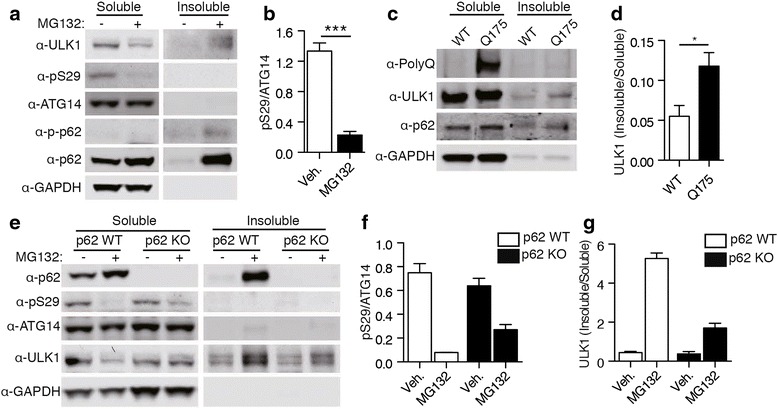
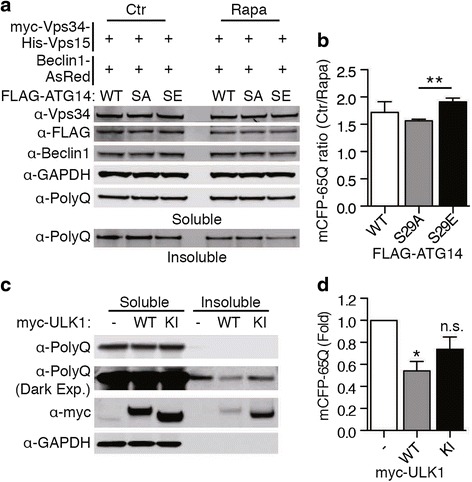
BACKGROUND: Autophagy is a bulk degradation pathway for long-lived proteins, protein aggregates, and damaged organelles. ULK1 protein kinase and Vps34 lipid kinase are two key autophagy regulators that are critical for autophagosome biogenesis. However, it isn't fully understood how ULK1 regulates Vps34, especially in the context of disease. Polyglutamine expansion in huntingtin (Htt) causes aberrant accumulation of the aggregated protein and disrupts various cellular pathways including autophagy, a lysosomal degradation pathway, underlying the pathogenesis of Huntington's disease (HD). Although autophagic clearance of Htt aggregates is under investigation as therapeutic strategy for HD, the precise mechanism of autophagy impairment remains poorly understood. Moreover, in-vivo assays of autophagy have been particularly challenging due to lack of reliable and robust molecular biomarkers. METHOD: We generated anti-phosphorylated ATG14 antibody to determine ATG14-mediated autophagy regulation; we employed Huntington's disease (HD) genetic cell models and animal models as well as autophagy reporter animal model to understand autophagy signaling and regulation in vivo. We applied biochemical analysis and molecular biology approaches to dissect the alteration of autophagy kinase activity and regulation. RESULTS: Here, we demonstrate that ULK1 phosphorylates ATG14 at serine 29 in an mTOR-dependent manner. This phosphorylation critically regulates ATG14-Vps34 lipid kinase activity to control autophagy level. We also show that ATG14-associated Vps34 activity and ULK1-mediated phosphorylation of ATG14 and Beclin 1 are compromised in the Q175 mouse model of Huntington's disease. Finally, we show that ATG14 phosphorylation is decreased during general proteotoxic stress caused by proteasomal inhibition. This reduction of the specific phosphorylation of ATG14 and Beclin 1 is mediated, in part, by p62-induced sequestration of ULK1 to an insoluble cellular fraction. We show that increased ULK1 levels and phosphor-mimetic mutant ATG14 facilitate the clearance of polyQ mutant in cells. CONCLUSION: Our study identifies a new regulatory mechanism for ATG14-Vps34 kinase activity by ULK1, which can be used as valuable molecular markers for in-vivo autophagic activity as well as potential therapeutic target for the clearance of polyglutamine disease protein.
Overview
The claims and statistics of this paper haven’t been checked yet.
Free: it reads the open-access text and checks the first 5 claims that cite a source we can check. Create a free account to check every claim.
Integrity signals
Registry
Cites
Statistics
Figures
Verification
Claims the paper makes
The claims and statistics of this paper haven’t been checked yet.
Free: it reads the open-access text and checks the first 5 claims that cite a source we can check. Create a free account to check every claim.
Claims other papers make about this one
Each is checked against this paper’s own text: does it say what the citing paper says it does?
In the citing paper
“(ii) sequesters the BECN1 interactor RASD2/RHES in the striatum (Mealer et al, 2014) and inhibits BECN1‐PIK3C3/VPS34 and ULK1 kinase activities (Lim et al, 2015; Wold et al, 2016);”
From Autophagy in major human diseases (2021) · cites this paper as Wold et al, 2016
Self-check
Percentages, sums and reported differences re-computed from the paper’s own numbers.
The self-check needs the paper’s full text.
Citations
Cites
Repertoires of Autophagy in the Pathogenesis of Ocular Diseases
Li, Y.-J., Jiang, Q., Cao, G.-F., Yao, J., & Yan, B. (2015) · Cellular Physiology and Biochemistry · doi:10.1159/000373980 · Cited by 16,304
AMPK and mTOR regulate autophagy through direct phosphorylation of Ulk1
Kim, J., Kundu, M., Viollet, B., & Guan, K.-L. (2011) · Nature Cell Biology · doi:10.1038/ncb2152 · Cited by 7,227 · cited 1×
“ULK1 is regulated in part by mTOR and AMPK, which inhibit and activate ULK1, respectively [7].”
BackgroundThe ubiquitin kinase PINK1 recruits autophagy receptors to induce mitophagy
Lazarou, M., Sliter, D. A., Kane, L. A., Sarraf, S. A., Wang, C., Burman, J. L., Sideris, D. P., Fogel, A. I., & Youle, R. J. (2015) · Nature · doi:10.1038/nature14893 · Cited by 2,774
Ravikumar, B., Vacher, C., Berger, Z., Davies, J. E., Luo, S., Oroz, L. G., Scaravilli, F., Easton, D. F., Duden, R., O'Kane, C. J., et al. (2004) · Nature Genetics · doi:10.1038/ng1362 · Cited by 2,347 · cited 1×
“However, increasing autophagy has been shown to facilitate the clearance of mutant Htt aggregates [1, 13].”
BackgroundMizushima, N., Yamamoto, A., Matsui, M., Yoshimori, T., & Ohsumi, Y. (2004) · Molecular Biology of the Cell · doi:10.1091/mbc.e03-09-0704 · Cited by 2,105 · cited 2×
“For imaging analysis, GFP-LC3 expressing mice [18] were crossed with z_Q175 mice.”
BackgroundMethodThoreen, C. C., Kang, S. A., Chang, J. W., Liu, Q., Zhang, J., Gao, Y., Reichling, L. J., Sim, T., Sabatini, D. M., & Gray, N. S. (2009) · Journal of Biological Chemistry · doi:10.1074/jbc.m900301200 · Cited by 1,803
Autophagosomes form at ER–mitochondria contact sites
Hamasaki, M., Furuta, N., Matsuda, A., Nezu, A., Yamamoto, A., Fujita, N., Oomori, H., Noda, T., Haraguchi, T., Hiraoka, Y., et al. (2013) · Nature · doi:10.1038/nature11910 · Cited by 1,683 · cited 2×
“Finally, given ATG14’s role at the ER-mitochondria contact site (MAM) and the requirement of ULK1 in ATG14 puncta formation during autophagy induction, it is possible that ULK1 activity is involved in the recruitment of one or more Vps34 complex members to the MAM [12, 35].”
BackgroundULK1 induces autophagy by phosphorylating Beclin-1 and activating VPS34 lipid kinase
Russell, R. C., Tian, Y., Yuan, H., Park, H. W., Chang, Y.-Y., Kim, J., Kim, H., Neufeld, T. P., Dillin, A., & Guan, K.-L. (2013) · Nature Cell Biology · doi:10.1038/ncb2757 · Cited by 1,529 · cited 4×
“A previous study showed that ULK1-mediated Beclin 1 phosphorylation contributes to the regulation of Vps34 activity [23].”
BackgroundInfluentialPhosphorylation of p62 Activates the Keap1-Nrf2 Pathway during Selective Autophagy
Ichimura, Y., Waguri, S., Sou, Y.-S., Kageyama, S., Hasegawa, J., Ishimura, R., Saito, T., Yang, Y., Kouno, T., Fukutomi, T., et al. (2013) · Molecular Cell · doi:10.1016/j.molcel.2013.08.003 · Cited by 1,205 · cited 4×
“Wild type and p62 KO MEF cells were provided by Dr. Masaaki Komatsu (Niigata University) [16].”
InfluentialAggregate-prone proteins with polyglutamine and polyalanine expansions are degraded by autophagy
Ravikumar, B. (2002) · Human Molecular Genetics · doi:10.1093/hmg/11.9.1107 · Cited by 1,111 · cited 1×
“Previous evidence indicated a role for Vps34 activity in HD: blocking Vps34 activity increases the levels of polyQ protein [30, 31], while addition of synthetic PI(3)P, the Vps34 product, aids in the clearance of polyQ protein [13].”
Background
Cited by
Guidelines for the use and interpretation of assays for monitoring autophagy (4th edition) 1
Klionsky, D. J., Abdel-Aziz, A. K., Abdelfatah, S., Abdellatif, M., Abdoli, A., Abel, S., Abeliovich, H., Abildgaard, M. H., Abudu, Y. P., Acevedo-Arozena, A., et al. (2021) · Autophagy · doi:10.1080/15548627.2020.1797280 · Cited by 2,897
Molecular definitions of autophagy and related processes
Galluzzi, L., Baehrecke, E. H., Ballabio, A., Boya, P., Bravo‐San Pedro, J. M., Cecconi, F., Choi, A. M., Chu, C. T., Codogno, P., Colombo, M. I., et al. (2017) · The EMBO Journal · doi:10.15252/embj.201796697 · Cited by 1,646
“In mammalian cells, ULK1 directly phosphorylates BECN1, resembling AMPK in its VPS34-stimulatory effects (Russell et al , 2013), and ATG14 (Park et al , 2016; Wold et al , 2016).”
Self-citationAutophagy in major human diseases
Klionsky, D. J., Petroni, G., Amaravadi, R. K., Baehrecke, E. H., Ballabio, A., Boya, P., Bravo‐San Pedro, J. M., Cadwell, K., Cecconi, F., Choi, A. M. K., et al. (2021) · The EMBO Journal · doi:10.15252/embj.2021108863 · Cited by 1,585
Self-citationMechanisms governing autophagosome biogenesis
Nakatogawa, H. (2020) · Nature Reviews Molecular Cell Biology · doi:10.1038/s41580-020-0241-0 · Cited by 879
Regulation and metabolic functions of mTORC1 and mTORC2
Szwed, A., Kim, E., & Jacinto, E. (2021) · Physiological Reviews · doi:10.1152/physrev.00026.2020 · Cited by 813
The mammalian ULK1 complex and autophagy initiation
Zachari, M., & Ganley, I. G. (2017) · Essays in Biochemistry · doi:10.1042/ebc20170021 · Cited by 789
Molecular mechanisms of cell death in neurological diseases
Moujalled, D., Strasser, A., & Liddell, J. R. (2021) · Cell Death & Differentiation · doi:10.1038/s41418-021-00814-y · Cited by 749
“It is a similar scenario in HD, where accumulation of the huntingtin protein (HTT) is associated with attenuated autophagy [91].”
BackgroundAutophagy in health and disease: A comprehensive review
Saha, S., Panigrahi, D. P., Patil, S., & Bhutia, S. K. (2018) · Biomedicine & Pharmacotherapy · doi:10.1016/j.biopha.2018.05.007 · Cited by 517
“This phosphorylation is compromised in mouse HD models strengthening the fact that autophagy is necessary in HD [114].”
BackgroundAutophagy and disease: unanswered questions
Yang, Y., & Klionsky, D. J. (2020) · Cell Death & Differentiation · doi:10.1038/s41418-019-0480-9 · Cited by 369
“panied by a decreased level of basal autophagy [99].”
BackgroundAutophagosome biogenesis: From membrane growth to closure
Melia, T. J., Lystad, A. H., & Simonsen, A. (2020) · Journal of Cell Biology · doi:10.1083/jcb.202002085 · Cited by 330
Selective Autophagy Receptor p62/SQSTM1, a Pivotal Player in Stress and Aging
Kumar, A. V., Mills, J., & Lapierre, L. R. (2022) · Frontiers in Cell and Developmental Biology · doi:10.3389/fcell.2022.793328 · Cited by 319
mTOR Pathways in Cancer and Autophagy
Paquette, M., El-Houjeiri, L., & Pause, A. (2018) · Cancers · doi:10.3390/cancers10010018 · Cited by 297
“ULK1 was also shown to directly phosphorylate ATG14 in an mTOR-dependent manner, regulating ATG14-VPS34 lipid kinase activity to control autophagy level [97].”
BackgroundRedefining the role of AMPK in autophagy and the energy stress response
Park, J.-M., Lee, D.-H., & Kim, D.-H. (2023) · Nature Communications · doi:10.1038/s41467-023-38401-z · Cited by 272
“and GSK621 (S7898) from Selleckchem (Houston, TX); MK8722 (HY111363), PEG300 (HY-Y0873), PEG400 (HY-Y0873A), and Tween 80 (HY-Y1891) from MedChem Express (Monmouth Junction, NJ); Hydroxychloroquine (HCQ, 26301-0250) from Acros Organics (Geel, Belgium); William’s medium E (W4128), active recombinant AMPKα1/ β1/γ1 compl…”
MethodAutophagy Receptors and Neurodegenerative Diseases
Deng, Z., Purtell, K., Lachance, V., Wold, M. S., Chen, S., & Yue, Z. (2017) · Trends in Cell Biology · doi:10.1016/j.tcb.2017.01.001 · Cited by 238
Self-citationShu, F., Xiao, H., Li, Q.-N., Ren, X.-S., Liu, Z.-G., Hu, B.-W., Wang, H.-S., Wang, H., & Jiang, G.-M. (2023) · Signal Transduction and Targeted Therapy · doi:10.1038/s41392-022-01300-8 · Cited by 192
SQSTM1/p62: a potential target for neurodegenerative disease
Ma, S., Attarwala, I. Y., & Xie, X.-Q. (2019) · ACS Chemical Neuroscience · doi:10.1021/acschemneuro.8b00516 · Cited by 185
Autophagic and endo-lysosomal dysfunction in neurodegenerative disease
Malik, B. R., Maddison, D. C., Smith, G. A., & Peters, O. M. (2019) · Molecular Brain · doi:10.1186/s13041-019-0504-x · Cited by 184
“PolyQ-expanded HTT can disrupt nucleation of the isolation membrane, by impairing the phosphorylation of Beclin-1 associated ATG14 and VPS34 complex activity [103].”
BackgroundTRIM proteins in autophagy: selective sensors in cell damage and innate immune responses
Di Rienzo, M., Romagnoli, A., Antonioli, M., Piacentini, M., & Fimia, G. M. (2020) · Cell Death & Differentiation · doi:10.1038/s41418-020-0495-2 · Cited by 171
ULK1 phosphorylates Ser30 of BECN1 in association with ATG14 to stimulate autophagy induction
Park, J.-M., Seo, M., Jung, C. H., Grunwald, D., Stone, M., Otto, N. M., Toso, E., Ahn, Y., Kyba, M., Griffin, T. J., et al. (2018) · Autophagy · doi:10.1080/15548627.2017.1422851 · Cited by 168
“Once ULK1 is activated by amino acid starvation or MTORC1 inhibition, ULK1 phosphorylates BECN1 at Ser15 and ATG14 at Ser29 to stimulate the lipid kinase activity of PIK3C3 in association with BECN1 [26-28].”
BackgroundMelatonin and Autophagy in Aging-Related Neurodegenerative Diseases
Luo, F., Sandhu, A. F., Rungratanawanich, W., Williams, G. E., Akbar, M., Zhou, S., Song, B.-J., & Wang, X. (2020) · International Journal of Molecular Sciences · doi:10.3390/ijms21197174 · Cited by 158
“HD mHTT Reduced antagonism to mTOR pathway Inhibited autophagy [157,158]”
BackgroundBalancing nutrient and energy demand and supply via autophagy
He, C. (2022) · Current Biology · doi:10.1016/j.cub.2022.04.071 · Cited by 154
VPS34 complexes from a structural perspective
Ohashi, Y., Tremel, S., & Williams, R. L. (2019) · Journal of Lipid Research · doi:10.1194/jlr.r089490 · Cited by 147
A role for autophagy in Huntington's disease
Croce, K. R., & Yamamoto, A. (2019) · Neurobiology of Disease · doi:10.1016/j.nbd.2018.08.010 · Cited by 139
Huang, X., Zheng, C., Liu, F., Yang, C., Zheng, P., Lu, X., Tian, J., Chung, T., Otegui, M. S., Xiao, S., et al. (2019) · The Plant Cell · doi:10.1105/tpc.19.00066 · Cited by 145
“…of the mammalian ATG1 ortholog ULK1, including itself (Mercer et al., 2018) and the Beclin1 (ATG6) and ATG14L (ATG14-like) subunits of the PI3K complex, which are thought to raise PI3-P levels and subsequent autophagy by stimulating PI3K activity (Russell et al., 2013; Wold et al., 2016).”
BackgroundUnconventional initiation of PINK1/Parkin mitophagy by Optineurin
Nguyen, T. N., Sawa-Makarska, J., Khuu, G., Lam, W. K., Adriaenssens, E., Fracchiolla, D., Shoebridge, S., Bernklau, D., Padman, B. S., Skulsuppaisarn, M., et al. (2023) · Molecular Cell · doi:10.1016/j.molcel.2023.04.021 · Cited by 130
Autophagy in health and disease: From molecular mechanisms to therapeutic target
Lu, G. X., Wang, Y., Shi, Y. P., Zhang, Z., Huang, C., He, W., Wang, C., & Shen, H. (2022) · MedComm · doi:10.1002/mco2.150 · Cited by 149
From autophagy to mitophagy: the roles of P62 in neurodegenerative diseases
Liu, H., Dai, C., Fan, Y., Guo, B., Ren, K., Sun, T., & Wang, W. (2017) · Journal of Bioenergetics and Biomembranes · doi:10.1007/s10863-017-9727-7 · Cited by 134
“Lack of S409 phosphorylation is commonly found in HD, which decrease P62 binding affinity, and lead into P62 dysfunction (Wold et al. 2016).”
Birgisdottir, Å. B., Mouilleron, S., Bhujabal, Z., Wirth, M., Sjøttem, E., Evjen, G., Zhang, W., Lee, R., O’Reilly, N., Tooze, S. A., et al. (2019) · Autophagy · doi:10.1080/15548627.2019.1581009 · Cited by 120
“Phosphorylation of ATG14 S29 by ULK1/2 is crucial for the activation of the lipid kinase activity of the complex [25,27].”
BackgroundAutophagy: Supporting cellular and organismal homeostasis by self-eating
Eskelinen, E. (2019) · The International Journal of Biochemistry & Cell Biology · doi:10.1016/j.biocel.2019.03.010 · Cited by 117
“Another study showed that ULK1-mediated autophagy induction is disturbed in a Huntington mouse model (Wold et al., 2016).”
BackgroundZou, L., Liao, M., Zhen, Y., Zhu, S., Chen, X., Zhang, J. C., Hao, Y., & Liu, B. (2022) · Acta Pharmaceutica Sinica B · doi:10.1016/j.apsb.2022.06.004 · Cited by 111
Targeting the proteostasis network in Huntington’s disease
Soares, T. R., Reis, S., Pinho, B. R., Duchen, M. R., & Oliveira, J. M. A. (2018) · Ageing Research Reviews · doi:10.1016/j.arr.2018.11.006 · Cited by 109
“Supporting this hypothesis, an independent study showed a reduced activity of ULK1 and Vsp34 kinases in HD cellular and animal models (Antonioli et al., 2017; Wold et al., 2016).”
InfluentialPhosphoregulation of the autophagy machinery by kinases and phosphatases
Licheva, M., Raman, B., Kraft, C., & Reggiori, F. (2021) · Autophagy · doi:10.1080/15548627.2021.1909407 · Cited by 94
Significance of Programmed Cell Death Pathways in Neurodegenerative Diseases
Guo, D., Liu, Z., Zhou, J., Ke, C., & Li, D. (2024) · International Journal of Molecular Sciences · doi:10.3390/ijms25189947 · Cited by 90
“Additionally, a similar scenario can be seen in HD, where the accumulation of mHTT is associated with attenuated autophagy [277].”
BackgroundPhosphorylation of phase‐separated p62 bodies by ULK1 activates a redox‐independent stress response
Ikeda, R., Noshiro, D., Morishita, H., Takada, S., Kageyama, S., Fujioka, Y., Funakoshi, T., Komatsu‐Hirota, S., Arai, R., Ryzhii, E., et al. (2023) · The EMBO Journal · doi:10.15252/embj.2022113349 · Cited by 79
Optineurin provides a mitophagy contact site for TBK1 activation
Yamano, K., Sawada, M., Kikuchi, R., Nagataki, K., Kojima, W., Endo, R., Kinefuchi, H., Sugihara, A., Fujino, T., Watanabe, A., et al. (2024) · The EMBO Journal · doi:10.1038/s44318-024-00036-1 · Cited by 75
“Autophosphorylation of ULK1/2 in turn triggers ULK1/2-depen-dent phosphorylation of diverse downstream substrates including ATG9A, BECN1, and ATG14 in mammals (Egan et al, 2015; Park et al, 2016; Russell et al, 2013; Wold et al, 2016; Zhou et al, 2017).”
BackgroundCanonical and noncanonical functions of ULK/Atg1
Wang, B., & Kundu, M. (2017) · Current Opinion in Cell Biology · doi:10.1016/j.ceb.2017.02.011 · Cited by 71
“ULK1-mediated phosphorylation of ATG14 facilitates the recruitment of the ATG14-containing proautophagy VPS34 complex to phagophore initiation sites [27,28].”
BackgroundA detailed overview of quercetin: implications for cell death and liver fibrosis mechanisms
Xiong, F., Zhang, Y., Li, T., Tang, Y., Song, S., Zhou, Q., & Wang, Y. (2024) · Frontiers in Pharmacology · doi:10.3389/fphar.2024.1389179 · Cited by 72
The Emerging Roles of Autophagy in Human Diseases
Lei, Y., & Klionsky, D. J. (2021) · Biomedicines · doi:10.3390/biomedicines9111651 · Cited by 71
“Additionally, mHTT leads to decreased phosphorylation of ATG14 by ULK1, which further leads to the reduction in PtdIns3K kinase activity and autophagy [268].”
BackgroundAutophagy deficiency in neurodevelopmental disorders
Deng, Z., Zhou, X., Lu, J., & Yue, Z. (2021) · Cell & Bioscience · doi:10.1186/s13578-021-00726-x · Cited by 71
Self-citationAutophagosome Biogenesis Machinery
Walker, S. A., & Ktistakis, N. T. (2019) · Journal of Molecular Biology · doi:10.1016/j.jmb.2019.10.027 · Cited by 67
Is amyotrophic lateral sclerosis/frontotemporal dementia an autophagy disease?
Deng, Z., Sheehan, P., Chen, S., & Yue, Z. (2017) · Molecular Neurodegeneration · doi:10.1186/s13024-017-0232-6 · Cited by 59
“ULK1-mediated Atg14L phosphorylation activates VPS34 kinase activity, which is required for the nucleation of the phagophore membrane.”
BackgroundSelf-citationThe Dawn of Mitophagy: What Do We Know by Now?
Belousov, D. M., Вячеславовна, М. Е., Somasundaram, S. G., Kirkland, C. E., & Aliev, G. (2020) · Current Neuropharmacology · doi:10.2174/1570159x18666200522202319 · Cited by 63
VEGF Triggers Transient Induction of Autophagy in Endothelial Cells via AMPKα1
Spengler, K., Kryeziu, N., Größe, S., Mosig, A. S., & Heller, R. (2020) · Cells · doi:10.3390/cells9030687 · Cited by 65
“Figure 2A,B show that VEGF triggered transient phosphorylation of ULK1 and its substrate ATG14, a member of the VPS34 complex [64], at S556 and S29, respectively, denoting the initiation of autophagy.”
BackgroundMiR-26a-5p regulates cardiac fibroblasts collagen expression by targeting ULK1
Zheng, L., Lin, S., & Lv, C. (2018) · Scientific Reports · doi:10.1038/s41598-018-20561-4 · Cited by 59
Pharmacological modulation of autophagy for Alzheimer's disease therapy: Opportunities and obstacles
Deng, Z., Dong, Y., Zhou, X., Lu, J.-H., & Yue, Z. (2022) · Acta Pharmaceutica Sinica B · doi:10.1016/j.apsb.2021.12.009 · Cited by 58
Self-citationLocal membrane source gathering by p62 body drives autophagosome formation
Feng, X., Sun, D., Li, Y., Zhang, J., Liu, S., Zhang, D., Zheng, J., Xi, Q., Liang, H., Zhao, W., et al. (2023) · Nature Communications · doi:10.1038/s41467-023-42829-8 · Cited by 58
“As core components of PI3KC3-C1, BECN1 and ATG14 can be phosphorylated by ULK1 in the presence of ATP, and such phosphorylation promotes PI3KC3-C1 activity and subsequent autophago-some formation 47 – 50 .”
BackgroundPhysiological functions of ULK1/2
Pareek, G., & Kundu, M. (2024) · Journal of Molecular Biology · doi:10.1016/j.jmb.2024.168472 · Cited by 57
Pimentel, J. M., Zhou, J. Y., & Wu, G. S. (2024) · Cancer Letters · doi:10.1016/j.canlet.2024.217285 · Cited by 56
Ortega, M. A., Fraile‐Μartinez, O., León-Oliva, D. D., Boaru, D. L., López-González, L., Montero, C. G., Álvarez-Mon, M. Á., Guijarro, L. G., Torres‐Carranza, D., Sáez, M. A., et al. (2024) · International Journal of Biological Sciences · doi:10.7150/ijbs.95122 · Cited by 61
Lipids and Lipid-Binding Proteins in Selective Autophagy
de la Ballina, L. R., Munson, M. J., & Simonsen, A. (2019) · Journal of Molecular Biology · doi:10.1016/j.jmb.2019.05.051 · Cited by 57
Protein complexes and neighborhoods driving autophagy
Sankar, D. S., & Dengjel, J. (2020) · Autophagy · doi:10.1080/15548627.2020.1847461 · Cited by 56
“ULK1 helps recruiting the PtdIns3K complex I to active initiation sites by phosphorylating the following proteins: (a) AMBRA1 on amino acid residues Ser465 and Ser635 to release the tethered PIK3C3-BECN1 complex toward the ER from AMBRA1, which is bound to microtubules via DYNLL1 and DYNLL2 (dynein light chain LC8-typ…”
BackgroundPalmitoylation of ULK1 by ZDHHC13 plays a crucial role in autophagy
Tabata, K., Imai, K., Fukuda, K., Yamamoto, K., Kunugi, H., Fujita, T., Kaminishi, T., Tischer, C., Neumann, B., Reither, S., et al. (2024) · Nature Communications · doi:10.1038/s41467-024-51402-w · Cited by 54
“HereweusedasiRNAscreeningandidenti fi edazinc fi ngerDHHC-type palmitoyltransferase 13 (ZDHHC13, also known as HIP14L 14 or HIP3RP) as an essential gene in autophagy.”
BackgroundInfluentialValionyte, E., Yang, Y., Roberts, S. L., Kelly, J., Lu, B., & Luo, S. (2019) · Journal of Molecular Biology · doi:10.1016/j.jmb.2019.11.012 · Cited by 53
ULK1 phosphorylation of striatin activates protein phosphatase 2A and autophagy
Hu, Z., Sankar, D. S., Vu, B., Leytens, A., Vionnet, C., Wu, W., Stumpe, M., Martínez-Martínez, E., Stork, B., & Dengjel, J. (2021) · Cell Reports · doi:10.1016/j.celrep.2021.109762 · Cited by 51
Li, X., Du, J., Yang, L., & Lin, X. (2019) · Neural Regeneration Research · doi:10.4103/1673-5374.247476 · Cited by 51
“Rapamycin can trigger autophagy and subsequently provide neuroprotective effects in several models of neurodegenerative disorders (Ya-mamoto et al., 2006; Michiorri et al., 2010; Wold et al., 2016; Moloudizargari et al., 2017).”
Contrasting views on the role of AMPK in autophagy
Kim, D. (2024) · BioEssays · doi:10.1002/bies.202300211 · Cited by 225
“57] When both amino acids and glucose are abundant in cells, mTORC1 phosphorylates ULK1, disrupting the interaction between AMPK and ULK1(Figure2B).”
BackgroundMetamorphic proteins at the basis of human autophagy initiation and lipid transfer
(2023) · doi:10.1016/j.molcel.2023.04.026 · Cited by 47
UNC-51-like Kinase 1: From an Autophagic Initiator to Multifunctional Drug Target
Zhang, L., Ouyang, L., Guo, Y., Zhang, J. C., & Liu, B. (2018) · Journal of Medicinal Chemistry · doi:10.1021/acs.jmedchem.7b01684 · Cited by 49
Function of the SNARE Ykt6 on autophagosomes requires the Dsl1 complex and the Atg1 kinase complex
Gao, J., Kurre, R., Rose, J., Walter, S., Fröhlich, F., Piehler, J., Reggiori, F., & Ungermann, C. (2020) · EMBO Reports · doi:10.15252/embr.202050733 · Cited by 37
Quality Control in Huntington’s Disease: a Therapeutic Target
Nand, S., Singh, B. K., Rathore, A. S., Zahra, W., Keswani, C., Birla, H., Singh, S. S., Dilnashin, H., & Singh, S. P. (2019) · Neurotoxicity Research · doi:10.1007/s12640-019-00087-x · Cited by 35
Geisler, S., Jäger, L., Golombek, S., Nakanishi, E., Hans, F., Casadei, N., Lechado‐Terradas, A., Linnemann, C., & Kahle, P. J. (2019) · Experimental Cell Research · doi:10.1016/j.yexcr.2019.111641 · Cited by 35
Autophagy in protists and their hosts: When, how and why?
Romano, P. S., Akematsu, T., Besteiro, S., Bindschedler, A., Carruthers, V. B., Chahine, Z. M., Coppens, I., Descoteaux, A., Duque, T. L. A., He, C. Y., et al. (2023) · Autophagy Reports · doi:10.1080/27694127.2022.2149211 · Cited by 38
Group A Streptococcus modulates RAB1- and PIK3C3 complex-dependent autophagy
Toh, H., Nozawa, T., Minowa‐Nozawa, A., Hikichi, M., Nakajima, S., Aikawa, C., & Nakagawa, I. (2019) · Autophagy · doi:10.1080/15548627.2019.1628539 · Cited by 35
“As mentioned earlier in this section, MTOR activity was inhibited during GAS infection, which suggests that canonical PIK3C3-dependent autophagy during GAS infection is induced through MTOR-ULK1 signaling.”
BackgroundInfluentialVieweg, S., Mahul‐Mellier, A., Ruggeri, F. S., Riguet, N., DeGuire, S. M., Chiki, A., Cendrowska, U., Dietler, G., & Lashuel, H. A. (2021) · Journal of Molecular Biology · doi:10.1016/j.jmb.2021.167222 · Cited by 34
The Atg1 complex, Atg9, and Vac8 recruit PI3K complex I to the pre-autophagosomal structure
Hitomi, K., Kotani, T., Noda, N. N., Kimura, Y., & Nakatogawa, H. (2023) · The Journal of Cell Biology · doi:10.1083/jcb.202210017 · Cited by 34
“It was also reported that ULK1 phosphorylates VPS34, BECN1 (mammalian Vps30), and ATG14L (Egan et al., 2015; Russell et al., 2013; Wold et al., 2016; Park et al., 2016).”
BAY-3827 and SBI-0206965: Potent AMPK Inhibitors That Paradoxically Increase Thr172 Phosphorylation
Hawley, S. A., Russell, F. M., Ross, F. A., & Hardie, D. G. (2023) · International Journal of Molecular Sciences · doi:10.3390/ijms25010453 · Cited by 33
“However, BAY-3827 had little or no effect on activation by LKB1—while there appeared to be a trend towards the promotion of activation, this was not statistically significant at any concentration of BAY-3827 used in Figure 5B.”
BackgroundWang, H., Ding, Z., Gou, M., Hu, J., Wang, Y., Wang, L., Wang, Y., Di, T., Zhang, X., Hao, X., et al. (2021) · BMC Genomics · doi:10.1186/s12864-021-07419-2 · Cited by 32
“Autophagy is a catabolic degradation pathway that is essential for degrading long-lived proteins, protein aggregates, and damaged organelles [55].”
BackgroundAberrant autophagosome formation occurs upon small molecule inhibition of ULK1 kinase activity
Zachari, M., Longo, M., & Ganley, I. G. (2020) · Life Science Alliance · doi:10.26508/lsa.202000815 · Cited by 30
“…(PI)-3 kinase and when in complex with Beclin-1, ATG14L, and VPS15 (called the VPS34 complex) produces an autophagy-speci fi c pool of phosphatidylinositol-3-phosphate (PI3P) that is required for omega-some formation — an ER-connected platform from which autophago-somes arise (13, 14, 15, 16).”
InfluentialFission Yeast Autophagy Machinery
Xu, D., & Du, L. (2022) · Cells · doi:10.3390/cells11071086 · Cited by 30
LKB1 biology: assessing the therapeutic relevancy of LKB1 inhibitors
Trelford, C. B., & Shepherd, T. G. (2024) · Cell Communication and Signaling · doi:10.1186/s12964-024-01689-5 · Cited by 32
“2).”
Macroautophagy and Mitophagy in Neurodegenerative Disorders: Focus on Therapeutic Interventions
Magalhães, J. D., Fão, L., Vilaça, R., Cardoso, S. M., & Rego, A. C. (2021) · Biomedicines · doi:10.3390/biomedicines9111625 · Cited by 30
“WT ULK1 overexpression decreased insoluble mHTT levels in cell lines, suggesting that ULK1 kinase activity is one limiting factor for the autophagic clearance of mHTT [269].”
BackgroundSelective autophagy: The new player in the fight against neurodegenerative diseases?
Wu, M.-Y., Song, J., Wang, S.-F., Cai, C.-Z., Li, M., & Lu, J. (2017) · Brain Research Bulletin · doi:10.1016/j.brainresbull.2017.11.009 · Cited by 29
Regulation of autophagy gene expression and its implications in cancer
Metur, S. P., Lei, Y., Zhang, Z., & Klionsky, D. J. (2023) · Journal of Cell Science · doi:10.1242/jcs.260631 · Cited by 28
Yorkie Growth-Promoting Activity Is Limited by Atg1-Mediated Phosphorylation
Tyra, L. K., Nandi, N., Tracy, C., & Krämer, H. (2020) · Developmental Cell · doi:10.1016/j.devcel.2020.01.011 · Cited by 26
The human autophagy-initiating complexes ULK1C and PI3KC3-C1
Chen, M., & Hurley, J. H. (2025) · Journal of Biological Chemistry · doi:10.1016/j.jbc.2025.110391 · Cited by 25
“ATG14 is the autophagy-speci fi c subunit of PI3KC3-C1 (99, 103), and its phosphorylation at S29 by ULK1 is critical for autophagy initiation (74).”
A Healthy Heart and a Healthy Brain: Looking at Mitophagy
Luo, H., Zhang, R., Krigman, J., McAdams, A., Ozgen, S., & Sun, N. (2020) · Frontiers in Cell and Developmental Biology · doi:10.3389/fcell.2020.00294 · Cited by 25
Ohashi, Y. (2021) · Autophagy · doi:10.1080/15548627.2021.1872240 · Cited by 25
Tungsukruthai, S., Reamtong, O., Roytrakul, S., Sukrong, S., Vinayanwattikun, C., & Chanvorachote, P. (2021) · Antioxidants · doi:10.3390/antiox10040534 · Cited by 25
“ULK1 is also known to directly phosphorylate the autophagy-related gene 14 (ATG14) in an mTOR-dependent manner, thus regulating ATG14 and the class-III PI3K vacuolar protein sorting 34 (VPS34) lipid kinase activity to control the level of autophagy [51].”
BackgroundMolecular mechanisms of autophagy and implications in liver diseases
Wu, Y., Tan, H. W. S., Lin, J.-Y., Shen, H., Wang, H., & Lu, G. X. (2023) · Liver Research · doi:10.1016/j.livres.2023.02.002 · Cited by 26
Nooraei, M. S., Noori-Zadeh, A., Darabi, S., Rajaei, F., Golmohammadi, Z., & Abbaszadeh, H. (2018) · PubMed Central · doi:10.22034/ibj.22.1.15 · Cited by 27
“Numerous studies suggest that impaired autophagy leads to aging and neurodegenerative diseases such as PD [8-14] , Alzheimer’s [15] , and Huntington’s disease [16] .”
Tran, S. H., Juliani, J., Fairlie, W. D., & Lee, E. F. (2023) · Biochemical Society Transactions · doi:10.1042/bst20221300 · Cited by 26
Alhassan, H. H., Janiyani, K., Surti, M., Adnan, M., & Patel, M. B. (2025) · Frontiers in Pharmacology · doi:10.3389/fphar.2025.1693805 · Cited by 21
Relationship between enriched environment and neurodegeneration: a review from mechanism to therapy
Xu, Y.-Q., Chen, Y., Xing, J., & Yao, J. (2025) · Clinical Epigenetics · doi:10.1186/s13148-025-01820-4 · Cited by 22
MAP1B‐LC1 prevents autophagosome formation by linking syntaxin 17 to microtubules
Arasaki, K., Nagashima, H., Kurosawa, Y., Kimura, H., Nishida, N., Dohmae, N., Yamamoto, A., Yanagi, S., Wakana, Y., Inoue, H., et al. (2018) · EMBO Reports · doi:10.15252/embr.201745584 · Cited by 22
SETD2 transcriptional control of ATG14L/S isoforms regulates autophagosome–lysosome fusion
González-Rodríguez, P., Delorme‐Axford, E., Bernard, A., Keane, L., Stratoulias, V., Grabert, K., Engskog‐Vlachos, P., Füllgrabe, J., Klionsky, D. J., & Joseph, B. (2022) · Cell Death and Disease · doi:10.1038/s41419-022-05381-9 · Cited by 20
“Although it has been demonstrated that autophagy impairment could affect the degradation and eventually the degradation of mHTT [38, 39], the transcriptional mechanism was still unknown.”
BackgroundMembrane targeting of core autophagy players during autophagosome biogenesis
Dudley, L. J., Makar, A. N., & Gammoh, N. (2020) · FEBS Journal · doi:10.1111/febs.15334 · Cited by 18
Ataxin‐2 sequesters Raptor into aggregates and impairs cellular mTORC1 signaling
Liu, Y., Wang, J., Zhang, X., Jiang, L., & Hu, H. (2024) · FEBS Journal · doi:10.1111/febs.17081 · Cited by 18
“There are various cellular components deposited in the aggregates, such as molecular chaperones [34 – 37], transcription factors [38 – 40], and the components of ubiquitin-proteasome system [41 – 48], and those of autophagy [49,50].”
BackgroundVasconcelos‐Ferreira, A., Martins, I. M., Lobo, D. D., Pereira, D., Lopes, M. M., Faro, R., Lopes, S., Verbeek, D. S., Schmidt, T., Nóbrega, C., et al. (2021) · Molecular Therapy · doi:10.1016/j.ymthe.2021.07.012 · Cited by 17
Small but mighty: Atg8s and Rabs in membrane dynamics during autophagy
Barz, S., Kriegenburg, F., Sánchez‐Martín, P., & Kraft, C. (2021) · Biochimica et Biophysica Acta (BBA) - Molecular Cell Research · doi:10.1016/j.bbamcr.2021.119064 · Cited by 19
ULK phosphorylation of STX17 controls autophagosome maturation via FLNA.
Wang, Y., Que, H., Li, C., Wu, Z., Jian, F., Zhao, Y., Tang, H., Chen, Y., Gao, S., Wong, C. C. L., et al. (2023) · PubMed Central · doi:10.1083/jcb.202211025 · Cited by 17
Regulatory Mechanisms Governing the Autophagy-Initiating VPS34 Complex and Its inhibitors
Lee, Y., Nguyen, T. M., Lee, G. J., Kim, B., Park, J., & Lee, C. H. (2024) · Biomolecules & Therapeutics · doi:10.4062/biomolther.2024.094 · Cited by 17
“Independent research groups have also shown that ULK1 phosphorylates S29 of ATG14, leading to the activation of complex I (Park et al ., 2016; Wold et al ., 2016).”
BackgroundZhao, B., & Zhao, B. (2025) · Journal of Nutrition · doi:10.1016/j.tjnut.2025.02.010 · Cited by 17
Pathobiology of the autophagy-lysosomal pathway in the Huntington’s disease brain
Berg, M. J., Veeranna, Rosa, C. M., Kumar, A. R., Mohan, P. S., Stavrides, P. H., Darji, S., Marchionini, D. M., Yang, D., & Nixon, R. A. (2025) · Acta Neuropathologica Communications · doi:10.1186/s40478-025-02131-8 · Cited by 15
“…to Rheb and promoting mTOR signaling (37); interfering with ULK1 activities leading to impairment of the BECN1-PIK3C3/VPS34 and ATG14 complex (38); impairing autophagosomal cargo recognition (35, 39); and interfering with the interaction between Ataxin 3 and BECN-1, resulting in BECN-1…”
Could metformin be therapeutically useful in Huntington’s disease?
Tang, B. L. (2019) · Reviews in the Neurosciences · doi:10.1515/revneuro-2019-0072 · Cited by 16
Modulation of autophagy by melatonin and its receptors: implications in brain disorders
Zhu, C., Li, G., Lyu, H.-F., Lu, Y., Li, Y., & Zhang, X. (2024) · Acta Pharmacologica Sinica · doi:10.1038/s41401-024-01398-2 · Cited by 190
“The polyglutamine (polyQ) tract in mutant HTT affects autophagy formation by reducing Atg14 phosphorylation and Atg14-VPS34 activity [160, 161].”
Global Rhes knockout in the Q175 Huntington’s disease mouse model
Heikkinen, T., Bragge, T., Kuosmanen, J., Parkkari, T., Gustafsson, S., Kwan, M. Y., Beltran, J., Ghavami, A., Subramaniam, S., Shahani, N., et al. (2021) · PLoS ONE · doi:10.1371/journal.pone.0258486 · Cited by 14
The molecular mechanisms regulating the assembly of the autophagy initiation complex
Yao, W., Feng, Y., Zhang, Y., Yang, H., & Yi, C. (2024) · BioEssays · doi:10.1002/bies.202300243 · Cited by 12
The triad interaction of ULK1, ATG13, and FIP200 is required for ULK complex formation and autophagy
Hama, Y., Fujioka, Y., Yamamoto, H., Mizushima, N., & Noda, N. N. (2025) · eLife · doi:10.7554/elife.101531 · Cited by 10
Stavrides, P. H., Goulbourne, C. N., Peddy, J., Huo, C., Rao, M. V., Khetarpal, V. K., Marchionini, D. M., Nixon, R. A., & Yang, D. (2025) · eLife · doi:10.7554/elife.104979.3 · Cited by 12
Unraveling the mysterious veil of ULK1: From non-canonical functions to therapeutic applications
Zhu, L., Li, Z., Wang, H., Cheng, Z., & Zhang, L. (2025) · International Journal of Biological Macromolecules · doi:10.1016/j.ijbiomac.2025.145177 · Cited by 10
Metadata
- Authors
- Wold, M. S., Lim, J., Lachance, V., Deng, Z., & Yue, Z.
- Affiliations
- Icahn School of Medicine at Mount Sinai (US)
- Genentech (US)
- Wuhan University (CN)
- Corresponding author
- Yue, Zhenyu
- Venue
- Molecular Neurodegeneration
- Published
- 2016-12
- Volume
- 11
- Issue
- 1
- Pages
- 76-76
- ISSN
- 1750-1326 (ISSN-L)
- PMC
- PMC5148922
- OpenAlex
- W2560079349
- Cited by
- 153
- References
- 41
- Citations by year
- 2026: 11 · 2025: 23 · 2024: 21 · 2023: 17 · 2022: 10 · 2021: 21 · 2020: 17 · 2019: 14 · 2018: 10 · 2017: 9
- FWCI
- 10.32
- Type
- journal article
- Language
- en
- Open access
- gold
- doi.org
- Licence
- cc-by
- creativecommons.org/licenses/by/4.0/ (tdm)
- creativecommons.org/licenses/by/4.0/ (vor, 8 d)
- Locations
- Molecular Neurodegeneration (publishedVersion, cc-by)
- PubMed Central (publishedVersion, cc-by)
- PubMed (publishedVersion)
- Funders
- National Institutes of Health
- CHDI Foundation
- Topics
- Life Sciences › Biochemistry, Genetics and Molecular Biology › Cell Biology › Autophagy in Disease and Therapy
- Life Sciences › Neuroscience › Cellular and Molecular Neuroscience › Genetic Neurodegenerative Diseases
- Life Sciences › Biochemistry, Genetics and Molecular Biology › Biochemistry › Glycogen Storage Diseases and Myoclonus
- Keywords
- ULK1, ATG14, autophagy, Huntington's disease, Beclin-1, polyglutamine, protein aggregation, mTOR signaling, autophagosome formation, p62, proteasome inhibition, autophagy biomarkers
- MeSH terms
- Autophagy-Related Proteins, Autophagy-Related Protein-1 Homolog, Animals, Autophagy, Cell Line, Disease Models, Animal, Humans, Huntington Disease, Microscopy, Fluorescence, Phosphorylation, Immunoblotting, Adaptor Proteins, Vesicular Transport, Immunoprecipitation, Mice
About these checks
Registry, retraction, Cites and statistics results are computed, not judged, with one exception: a printed reference that no index lists is read once by a model before it counts as a citation error. Claims are extracted by a model and kept only when their quote appears verbatim in the text; each cited source is then checked, with a model’s help, for whether it says what the claim relies on. Those verdicts can be wrong — read the claim’s quote and the cited source before relying on one.
Statistics and arithmetic are recomputed, not judged.
Confidence bands are shown only for fields calibrated on our annotated test set. None is calibrated yet, so no band is shown.
What counts as a claim ›How we measure confidence ›How we check this ›
Are you an author, or do you see a problem with this page? Request a review
Data sources
Bibliographic data: Semantic Scholar, OpenAlex, Crossref.
Contains information from the Semantic Scholar Academic Graph Datasets, made available under the ODC Attribution License (ODC-BY 1.0).
Semantic Scholar’s data is described in: Kinney, R., et al. (2023). The Semantic Scholar Open Data Platform. arXiv:2301.10140.
