

The Trem2 R47H variant confers loss-of-function-like phenotypes in Alzheimer's disease
Open accessThe DOI matches its Crossref record; 35 of the 35 references it cites were found in a registry or an index.
Abstract
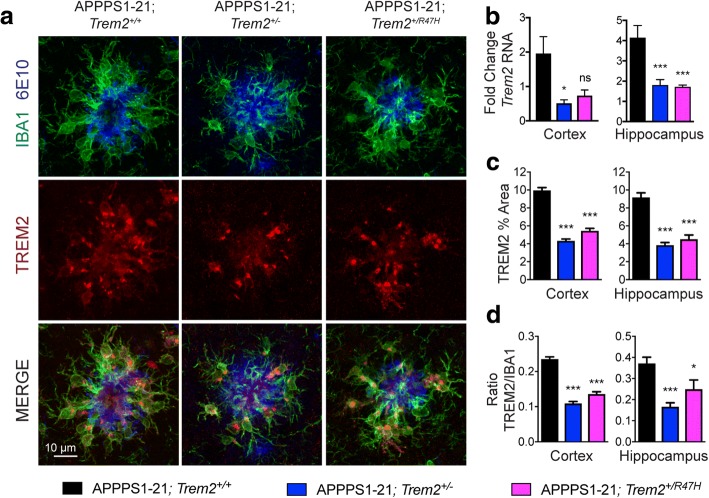
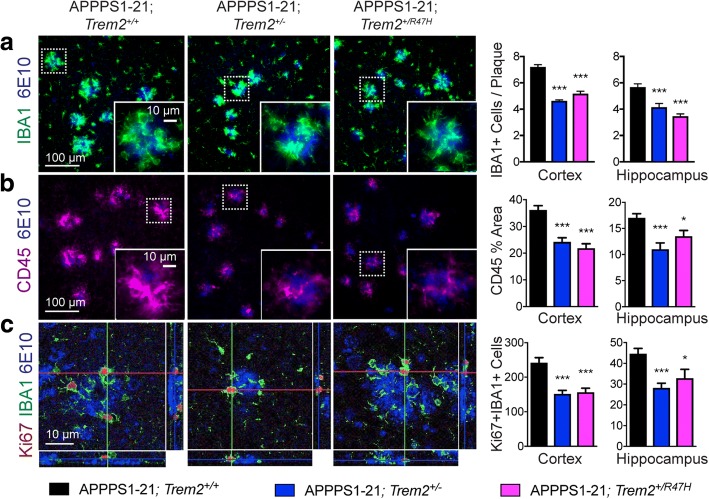
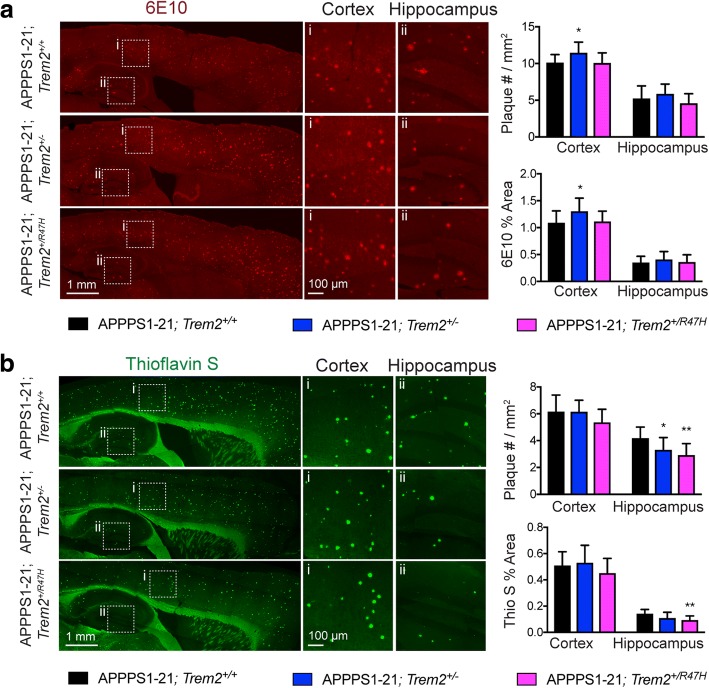
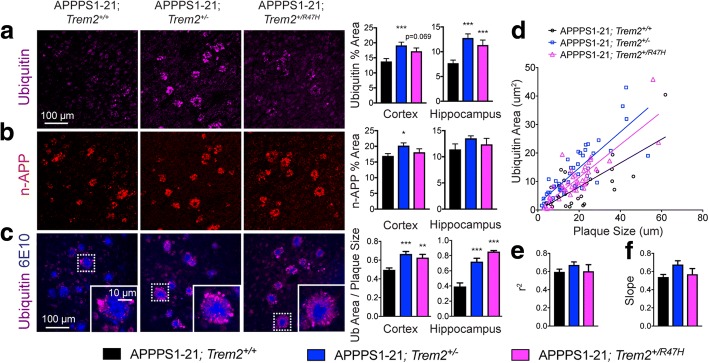
BACKGROUND: The R47H variant of Triggering Receptor Expressed on Myeloid cells 2 (TREM2) confers greatly increased risk for Alzheimer's disease (AD), reflective of a central role for myeloid cells in neurodegeneration. Understanding how this variant confers AD risk promises to provide important insights into how myeloid cells contribute to AD pathogenesis and progression. METHODS: In order to investigate this mechanism, CRISPR/Cas9 was used to generate a mouse model of AD harboring one copy of the single nucleotide polymorphism (SNP) encoding the R47H variant in murine Trem2. TREM2 expression, myeloid cell responses to amyloid deposition, plaque burden, and neuritic dystrophy were assessed at 4 months of age. RESULTS: AD mice heterozygous for the Trem2 R47H allele exhibited reduced total Trem2 mRNA expression, reduced TREM2 expression around plaques, and reduced association of myeloid cells with plaques. These results were comparable to AD mice lacking one copy of Trem2. AD mice heterozygous for the Trem2 R47H allele also showed reduced myeloid cell responses to amyloid deposition, including a reduction in proliferation and a reduction in CD45 expression around plaques. Expression of the Trem2 R47H variant also reduced dense core plaque number but increased plaque-associated neuritic dystrophy. CONCLUSIONS: These data suggest that the AD-associated TREM2 R47H variant increases risk for AD by conferring a loss of TREM2 function and enhancing neuritic dystrophy around plaques.
Overview
The claims and statistics of this paper haven’t been checked yet.
Free: it reads the open-access text and checks the first 5 claims that cite a source we can check. Create a free account to check every claim.
Integrity signals
Registry
Cites
Statistics
Figures
Verification
Claims the paper makes
The claims and statistics of this paper haven’t been checked yet.
Free: it reads the open-access text and checks the first 5 claims that cite a source we can check. Create a free account to check every claim.
Claims other papers make about this one
Each is checked against this paper’s own text: does it say what the citing paper says it does?
The source backs part of the claim, not all of it — or backs it for a different population, condition or comparison.
In the citing paper
“and identified that its expression was strongly increased by amyloid deposition in APP transgenic mice (Guerreiro et al., 2013; Matarin et al., 2015; Cheng-Hathaway et al., 2018; Song et al., 2018).”
From Genetic variability in response to amyloid beta deposition influences Alzheimer’s disease risk (2019) · cites this paper as Cheng-Hathaway et al., 2018
Experimental — accuracy not yet measuredThe source backs part of the claim, not all of it — or backs it for a different population, condition or comparison.
In the citing paper
“TREM2 plays a key and enigmatic role in the progression of AD, acting to drive microglial phagocytosis, survival, lipid homeostasis, and metabolism.”
From PLCG2 modulates TREM2 expression and signaling in response to Alzheimer's disease pathology (2025) · cites this paper as [36]
Experimental — accuracy not yet measuredThe source backs part of the claim, not all of it — or backs it for a different population, condition or comparison.
In the citing paper
“In AD, amyloid pathology induces the expression of TREM2 in microglia. 36 , 37 , 38 , 39 , 40 , 41 , 60”
From PLCG2 modulates TREM2 expression and signaling in response to Alzheimer's disease pathology (2025) · cites this paper as [36]
Experimental — accuracy not yet measuredThe source backs part of the claim, not all of it — or backs it for a different population, condition or comparison.
In the citing paper
“The most characterised variant of TREM2 (p.R47H) shows defects in ligand binding [6, 37, 38, 97], which impacts the ability of TREM2 to recognise damage, and induce microglial changes, resulting in a dampened response to pathological insults such as Aβ deposition.”
From TREM2/PLCγ2 signalling in immune cells: function, structural insight, and potential therapeutic modulation (2021) · cites this paper as [37]
Experimental — accuracy not yet measuredThe cited source says what the claim attributes to it.
In the citing paper
“This effect has been described by Cheng-Hathaway et al. (37) and Xiang et al. (36) studying the same mouse line used here from the Jackson Laboratory, and an independent Trem2 R47H KI mouse line.”
From Trem2 promotes anti-inflammatory responses in microglia and is suppressed under pro-inflammatory conditions (2020) · cites this paper as [37]
10 more claims about this paper
Create a free account to see every claim other papers make about this one.
Self-check
Percentages, sums and reported differences re-computed from the paper’s own numbers.
The self-check needs the paper’s full text.
Citations
Cites
Neuroinflammation in Alzheimer's disease
Heneka, M. T., Carson, M. J., Khoury, J. E., Landreth, G. E., Brosseron, F., Feinstein, D. L., Jacobs, A. H., Wyss-Coray, T., Vitorica, J., Ransohoff, R. M., et al. (2015) · The Lancet Neurology · doi:10.1016/s1474-4422(15)70016-5 · Cited by 6,226 · cited 1×
“Alzheimer’s disease (AD) is accompanied by a robust inflammatory response [1].”
BackgroundSelf-citationA Unique Microglia Type Associated with Restricting Development of Alzheimer’s Disease
Keren-Shaul, H., Spinrad, A., Weiner, A., Matcovitch-Natan, O., Dvir-Szternfeld, R., Ulland, T. K., David, E., Baruch, K., Lara-Astaiso, D., Toth, B., et al. (2017) · Cell · doi:10.1016/j.cell.2017.05.018 · Cited by 5,493 · cited 1×
“Recent work suggests that TREM2 is required for the myeloid cell-mediated inflammatory response in AD [28, 31].”
BackgroundNeuropathological alterations in Alzheimer disease
Serrano-Pozo, A., Frosch, M. P., Masliah, E., & Hyman, B. T. (2011) · Cold Spring Harbor Perspectives in Medicine · doi:10.1101/cshperspect.a006189 · Cited by 3,345 · cited 1×
“Damage to axons and dendrites in the vicinity of plaques, termed neuritic dystrophy, is thought to contribute to cognitive impairment in AD [32] and is reported to be enhanced in AD mice lacking Trem2 and humans carrying an R47H allele [9, 12].”
BackgroundTREM2 Variants in Alzheimer's Disease
Guerreiro, R., Wojtas, A., Bras, J., Carrasquillo, M., Rogaeva, E., Majounie, E., Cruchaga, C., Sassi, C., Kauwe, J. S. K., Younkin, S., et al. (2013) · New England Journal of Medicine · doi:10.1056/nejmoa1211851 · Cited by 3,020 · cited 1×
“The TREM2 R47H variant not only constitutes one of the strongest single allele genetic risk factors for AD [3, 4], but also confers elevated risk for Parkinson’s disease, amyotrophic lateral sclerosis, and frontotemporal dementia [5].”
BackgroundKrasemann, S., Madore, C., Cialic, R., Baufeld, C., Calcagno, N., El Fatimy, R., Beckers, L., O’Loughlin, E., Xu, Y., Fanek, Z., et al. (2017) · Immunity · doi:10.1016/j.immuni.2017.08.008 · Cited by 2,979
Variant of TREM2 Associated with the Risk of Alzheimer's Disease
Jonsson, T., Stefansson, H., Steinberg, S., Jonsdottir, I., Jonsson, P. V., Snaedal, J., Bjornsson, S., Huttenlocher, J., Levey, A. I., Lah, J. J., et al. (2013) · New England Journal of Medicine · doi:10.1056/nejmoa1211103 · Cited by 2,558 · cited 1×
“The TREM2 R47H variant not only constitutes one of the strongest single allele genetic risk factors for AD [3, 4], but also confers elevated risk for Parkinson’s disease, amyotrophic lateral sclerosis, and frontotemporal dementia [5].”
BackgroundHaeussler, M., Schönig, K., Eckert, H., Eschstruth, A., Mianné, J., Renaud, J.-B., Schneider-Maunoury, S., Shkumatava, A., Teboul, L., Kent, J., et al. (2016) · Genome biology · doi:10.1186/s13059-016-1012-2 · Cited by 1,756 · cited 1×
“net) was used to determine potential off-target genes in exonic regions of chromosome 17 [23].”
MethodTREM2 Lipid Sensing Sustains the Microglial Response in an Alzheimer’s Disease Model
Wang, Y., Cella, M., Mallinson, K., Ulrich, J. D., Young, K. L., Robinette, M. L., Gilfillan, S., Krishnan, G. M., Sudhakar, S., Zinselmeyer, B. H., et al. (2015) · Cell · doi:10.1016/j.cell.2015.01.049 · Cited by 1,736
Alzheimer’s Disease Risk Genes and Mechanisms of Disease Pathogenesis
Karch, C. M., & Goate, A. M. (2015) · Biological Psychiatry · doi:10.1016/j.biopsych.2014.05.006 · Cited by 1,357 · cited 1×
“Recent Genome Wide Association Studies have linked single nucleotide polymorphisms (SNPs) in inflammation-related genes to increased AD risk [2], including a SNP encoding the R47H variant in Triggering Receptor Expressed on Myeloid cells 2 (TREM2).”
BackgroundAβ42‐driven cerebral amyloidosis in transgenic mice reveals early and robust pathology
Radde, R., Bolmont, T., Kaeser, S. A., Coomaraswamy, J., Lindau, D., Stoltze, L., Calhoun, M. E., Jäggi, F., Wolburg, H., Gengler, S., et al. (2006) · The EMBO Reports · doi:10.1038/sj.embor.7400784 · Cited by 986 · cited 2×
“Founder lines positive for the SNP were crossed to the APPPS1–21 AD mouse model [26], generating APPPS1–21;Trem2 mice.”
BackgroundMethod
Cited by
Items 101–200 of 257
TREM2 in Alzheimer's disease: Structure, function, therapeutic prospects, and activation challenges
Zgórzyńska, E. (2024) · Molecular and Cellular Neuroscience · doi:10.1016/j.mcn.2024.103917 · Cited by 30
Diesel exhaust impairs TREM2 to dysregulate neuroinflammation
Greve, H. J., Mumaw, C. L., Messenger, E. J., Kodavanti, P. R. S., Royland, J. L., Kodavanti, U. P., & Block, M. L. (2020) · Journal of Neuroinflammation · doi:10.1186/s12974-020-02017-7 · Cited by 30
“Inactivating mutations in TREM2 are known to increase the risk of AD in humans [20, 21, 54], and AD mice deficient in Trem2 demonstrate an exacerbated AD pathology and increased neuroinflammation at older ages [23].”
BackgroundAnimal models of Alzheimer’s disease: preclinical insights and challenges
Xu, Q., Yang, W., Zhong, M., Lin, Z., Gray, N. E., & Xian, Y. (2023) · Acta Materia Medica · doi:10.15212/amm-2023-0001 · Cited by 46
Targeting Impaired Antimicrobial Immunity in the Brain for the Treatment of Alzheimer’s Disease
Fülöp, T., Tripathi, S., Rodrigues, S., Desroches, M., Bunt, T., Eiser, A. R., Bernier, F., Beauregard, P. B., Barron, A. E., Khalil, A., et al. (2021) · Neuropsychiatric Disease and Treatment · doi:10.2147/ndt.s264910 · Cited by 28
“have been identified as risk factor for AD.(206) They are also able to migrate and proliferate and they exhibit two distinct phenotypes but are able to be very plastic.”
BackgroundSTING Deletion Protects Against Amyloid β‐induced Alzheimer's Disease Pathogenesis
Thanos, J. M., Campbell, O. C., Cowan, M. N., Bruch, K. R., Moore, K. A., Ennerfelt, H. E., Natale, N. R., Mangalmurti, A., Kerur, N., & Lukens, J. R. (2025) · Alzheimer's & Dementia · doi:10.1002/alz.70305 · Cited by 26
Alzheimer’s Disease Research Using Human Microglia
Lue, L., Beach, T. G., & Walker, D. G. (2019) · Cells · doi:10.3390/cells8080838 · Cited by 32
“TREM-2 SNP (rs75932628), which results in a genetic mutation in the protein (R47H), is rare but results in a higher risk of AD, possibly due to the loss of function [71,73].”
BackgroundLu, Y., Huang, X., Liang, W., Li, Y., Xing, M., Pan, W., Zhang, Y., Wang, Z., & Song, W. (2023) · Journal of Biological Chemistry · doi:10.1016/j.jbc.2023.104688 · Cited by 28
Differential Roles of TREM2+ Microglia in Anterograde and Retrograde Axonal Injury Models
Manich, G., Gómez‐López, A. R., Almolda, B., Villacampa, N., Recasens, M., Shrivastava, K., González, B., & Castellano, B. (2020) · Frontiers in Cellular Neuroscience · doi:10.3389/fncel.2020.567404 · Cited by 28
TREM2 in Neurodegenerative Disorders: Mutation Spectrum, Pathophysiology, and Therapeutic Targeting
Yang, H.-W., Kim, D., Yang, Y., Bagyinszky, E., & An, S. S. A. (2025) · International Journal of Molecular Sciences · doi:10.3390/ijms26157057 · Cited by 28
Essex, A. L., Huot, J. R., Deosthale, P. J., Wagner, A., Figueras, J. H., Davis, A., Damrath, J. G., Pin, F., Wallace, J. M., Bonetto, A., et al. (2020) · Journal of Bone and Mineral Research · doi:10.1002/jbmr.4572 · Cited by 26
“RNA (mRNA) splicing of the TREM2 transcript in cortical brain and microglia lysates, producing a protein expression knockdown similar to that of a heterozygous knockout, evident by decreases in mRNA expressionmeasured by qPCR of the TREM2 gene.((29,54)) However, qPCR analysis of both whole bone and ex vivo osteoclast…”
MethodResultZhao, Y., Guo, Q., Tian, J., Liu, W., & Wang, X. (2024) · Ageing Research Reviews · doi:10.1016/j.arr.2024.102596 · Cited by 26
γ-Secretase Modulatory Proteins: The Guiding Hand Behind the Running Scissors
Wong, E., Frost, G. R., & Li, Y.-M. (2020) · Frontiers in Aging Neuroscience · doi:10.3389/fnagi.2020.614690 · Cited by 22
von Saucken, V. E., Jay, T. R., & Landreth, G. E. (2020) · Neurobiology of Disease · doi:10.1016/j.nbd.2020.105072 · Cited by 23
“, 2017a) and enhances plaque-associated neuritic dystrophy (Cheng-Hathaway et al., 2018; Wang et al., 2016; Yuan et al., 2016) and neuron loss (Wang et al.”
Self-citationDas, M., Mao, W., Shao, E., Tamhankar, S., Yu, G.-Q., Yu, X., Ho, K., Wang, X., Wang, J., & Mucke, L. (2021) · iScience · doi:10.1016/j.isci.2021.103245 · Cited by 21
“…to increase AD risk in heterozygous carriers of certain TREM2 variants (Guerreiro et al., 2013; Jonsson et al., 2013; Efthymiou and Goate, 2017; Cheng-Hathaway et al., 2018; Sudom et al., 2018; Ulland and Colonna, 2018), we analyzed heterozygous Trem2 knockout (Trem2+/ ) mice, whose TREM2…”
BackgroundPathways linking Alzheimer’s disease risk genes expressed highly in microglia
Hodges, A. K., Piers, T. M., Collier, D., Cousins, O., & Pocock, J. M. (2021) · Neuroimmunology and Neuroinflammation · doi:10.20517/2347-8659.2020.60 · Cited by 21
“Overexpression, activation or restoration of normal TREM2 function has been shown to have largely beneficial outcomes in amyloid-driven mouse models([116-119]) while knock-out or haploinsufficiency exacerbates amyloid-mediated pathologies([76,120-123]); although some studies are at variance with this([124]).”
Zhang, B., Li, R. Q., Zhang, Y., & Gao, X. (2020) · Medicine · doi:10.1097/md.0000000000018921 · Cited by 22
Aging phenotype in AD brain organoids: Track to success and challenges
Hossain, M. K., Kim, H., & Chae, H. (2024) · Ageing Research Reviews · doi:10.1016/j.arr.2024.102256 · Cited by 27
Wang, X., Xie, Y., Fan, X., Wu, X., Wang, D., & Li, Z. (2024) · Alzheimer s Research & Therapy · doi:10.1186/s13195-024-01489-6 · Cited by 28
“The TREM2 R47H variant exhibits a marked decrease in TREM2 membrane expression and increased lysosomal localization, leading to a loss of responsiveness to Aβ in microglia and induction of late-onset AD [21–23].”
BackgroundThe Immune System as a Therapeutic Target for Alzheimer’s Disease
Zieneldien, T., Kim, J., Sawmiller, D. R., & Cao, C. (2022) · Life · doi:10.3390/life12091440 · Cited by 25
From defense to disease: IFITM3 in immunity and Alzheimer's disease
Kehs, Z., Cross, A. C., & Li, Y. (2024) · Neurotherapeutics · doi:10.1016/j.neurot.2024.e00482 · Cited by 21
“This barrier results in more compact plaques and reduces seeding of further aggregation[60,61].”
Dhankhar, J., Agrawal, N., & Shrivastava, A. (2020) · Journal of Neuroimmunology · doi:10.1016/j.jneuroim.2020.577302 · Cited by 18
An update on Alzheimer's disease: Immunotherapeutic agents, stem cell therapy and gene editing
Patwardhan, A. G., & Belemkar, S. (2021) · Life Sciences · doi:10.1016/j.lfs.2021.119790 · Cited by 19
Microglia and neuroinflammation: function, heterogeneity, and crosstalk
Zong, S., Cui, X., Wu, S., & Lu, Z. (2026) · Cellular and Molecular Immunology · doi:10.1038/s41423-026-01438-3 · Cited by 32
“In AD model mice, the heterozygous Trem2 R47H allele results in impaired clearance responses to amyloid deposition, accompanied by attenuated microglial proliferation surrounding plaques [109].”
SHIP inhibition mediates select TREM2-induced microglial functions
Ramakrishnan, G. S., Berry, W. L., Pacherille, A., Kerr, W. G., Chisholm, J. D., Pedicone, C., & Humphrey, M. B. (2024) · Molecular Immunology · doi:10.1016/j.molimm.2024.04.002 · Cited by 17
Tambini, M. D., & D’Adamio, L. (2020) · Scientific Reports · doi:10.1038/s41598-020-60800-1 · Cited by 17
Guo, X., Liu, Y., Morgan, D., & Zhao, L. (2020) · Aging and Disease · doi:10.14336/ad.2020.0201 · Cited by 18
“R47H) has been shown to be associated with an increased risk of AD [77, 78].”
BackgroundPLCG2 modulates TREM2 expression and signaling in response to Alzheimer's disease pathology
Messenger, E. J., Baar, S. A., Bedford, L. M., Tsai, A. P., Lin, P. B., Ferguson, C. A., Xu, G., Wallace, A., Landreth, G. E., Lamb, B. T., et al. (2025) · Alzheimer's & Dementia · doi:10.1002/alz.70231 · Cited by 19
“Cohort information, transcriptomic data generation, and data preprocessing are detailed in Wang et al. 46 The MSBB bulk RNA-seq data were collected from Brodmann areas 10, 22, 36, and 44.”
Self-citationPathogenesis and therapeutic applications of microglia receptors in Alzheimer’s disease
Fu, J., Wang, R., He, J., Liu, X., Wang, X., Yao, J., Liu, Y., Ran, C., Ye, Q., & He, Y. (2025) · Frontiers in Immunology · doi:10.3389/fimmu.2025.1508023 · Cited by 25
Ennerfelt, H. E., Holliday, C., Shapiro, D. A., Zengeler, K. E., Bolte, A. C., Ulland, T. K., & Lukens, J. R. (2023) · Proceedings of the National Academy of Sciences · doi:10.1073/pnas.2303760120 · Cited by 17
Han, S., Na, Y., Koh, I., Nho, K. T., & Lee, Y. (2021) · International Journal of Molecular Sciences · doi:10.3390/ijms22189865 · Cited by 20
“, rs75932628), has been shown to result in a loss-of-function phenotype [22,23] and decreased Trem2 mRNA and protein levels in mice [24].”
BackgroundAstrocytes and Microglia in Alzheimer's Disease: Friends, Foes, or Both?
Sharma, A., Parekh, B. K., Patil, V., Renuka Jyothi, S., Nayak, P. P., Janney, J. B., Singh, G., & Al-Hasnaawei, S. (2025) · Developmental Neurobiology · doi:10.1002/dneu.23015 · Cited by 20
Cousins, O., Schubert, J. J., Chandra, A., Veronese, M., Valkimadi, P., Creese, B., Khan, Z., Arathimos, R., Hampshire, A., Rosenzweig, I., et al. (2023) · Journal of Neuroinflammation · doi:10.1186/s12974-023-02945-0 · Cited by 16
“This is in keeping with preclinical studies which have shown lower levels of hippocampal microglial activation in mice carrying the human TREM2 p.R47H variant, with or without Alzheimer’s disease pathology [65, 66].”
ResultPilat, D. J., Le, H., Prokopenko, D., Lin, C.-C. J., Eimer, W. A., Quinti, L., Gavrilles, E. P., Garcia, S. N., Heitman, S. N., McGinty, D., et al. (2026) · Neuron · doi:10.1016/j.neuron.2025.09.032 · Cited by 14
Critical thinking of Alzheimer’s transgenic mouse model: current research and future perspective
Li, X., Quan, M., Wei, Y., Wang, W., Xu, L., Wang, Q., & Jia, J. (2023) · Science China Life Sciences · doi:10.1007/s11427-022-2357-x · Cited by 16
“Studies have also combined this model with AD risk factors, such as Aβ42, APOE and TREM2, to study their effects on tau pathology (Gratuze et al., 2020; Williams et al., 2022; Zampar and Wirths, 2021).”
BackgroundInfluentialMartins, S., Müller‐Schiffmann, A., Erichsen, L., Bohndorf, M., Wruck, W., Sleegers, K., Broeckhoven, C. V., Korth, C., & Adjaye, J. (2020) · International Journal of Molecular Sciences · doi:10.3390/ijms21124516 · Cited by 14
“reported that Trem2 R47H knock-in mice showed reduced Trem2 mRNA and protein expression in the brain as well as reduced soluble fragments of Trem2 (sTrem2) in plasma [66,67].”
BackgroundThe Pathogenesis in Alzheimer's Disease: TREM2 as a Potential Target
Liu, G., Zhang, L., Fan, Y., & Ji, W. (2023) · Journal of Integrative Neuroscience · doi:10.31083/j.jin2206150 · Cited by 14
“The most common AD-associated TREM2 variant is rs75932628, a single-nucleotide poly-4 morphism encoding an arginine-to-histidine missense sub-stitution at amino acid 47 (R47H), which significantly increased sporadic AD incidence and impaired phospholipid ligand binding [123,124].”
BackgroundPandey, R. S., Kotredes, K. P., Sasner, M., Howell, G. R., & Carter, G. W. (2023) · BMC Genomics · doi:10.1186/s12864-023-09280-x · Cited by 11
Samuels, J. D., Lukens, J. R., & Price, R. J. (2023) · Journal of Neurochemistry · doi:10.1111/jnc.15981 · Cited by 25
“…like models of TREM2 and DAP12 deletion, the TREM2-R47H mutation resulted in reduced TREM2 function, impaired microglial interactions with A β plaques, and increased neuronal damage in mouse models of AD-associated amyloidosis (Cheng-Hathaway et al., 2018 ; Song et al., 2018; Tran et al., 2023 ).”
Kang, X., Tian, J., Shu, Q., Cheng, T., Wang, S., & Hu, Y. (2025) · Neuroscience · doi:10.1016/j.neuroscience.2025.07.019 · Cited by 12
Functional insight into LOAD-associated microglial response genes
Jonas, L. A., Jain, T., & Li, Y. (2022) · Open Biology · doi:10.1098/rsob.210280 · Cited by 16
“Tau: reduced function in late-stage synapse elimination, reduced DAM signalling [45,46,48,49,60].”
BackgroundPumo, A., & Legeay, S. (2024) · Brain Research · doi:10.1016/j.brainres.2024.148817 · Cited by 14
“Moreover, studies have revealed that diffuse plaques are associated with a greater occurrence of neuritic dystrophy compared to dense-core plaques (Clayton et al., 2021; Wang et al., 2016; Yuan et al., 2016; Cheng-Hathaway et al., 2018).”
He, Y., Cong, L., Qinfei, H., Feng, N., & Wu, Y. (2022) · Frontiers in Genetics · doi:10.3389/fgene.2022.968598 · Cited by 13
Genetic variability in response to Aβ deposition influences Alzheimer’s risk
Salih, D. A., Bayram, S., Guelfi, M. S., Reynolds, R., Shoai, M., Ryten, M., Brenton, J., Zhang, D., Matarin, M., Botia, J., et al. (2018) · bioRxiv (Cold Spring Harbor Laboratory) · doi:10.1101/437657 · Cited by 12
Teo, F., Kok, C. Y. L., Tan, M.-J., & Je, H. S. (2024) · IBRO Neuroscience Reports · doi:10.1016/j.ibneur.2024.03.005 · Cited by 11
Byrne, N. J., Lee, A. C., Kostas, J. C., Reid, J. C., Partridge, A. T., So, S., Cowan, J. E., Abeywickrema, P. D., Huang, H., Zebisch, M., et al. (2020) · Protein Expression and Purification · doi:10.1016/j.pep.2020.105796 · Cited by 11
Owens, L., Benedetto, A., Dawson, N., Gaffney, C. J., & Parkin, E. T. (2021) · Brain Research · doi:10.1016/j.brainres.2020.147264 · Cited by 12
Macrophages in human atherosclerotic plaques in the era of single-cell and spatial transcriptomics
Ijaz, A., Rasheed, A., & Orecchioni, M. (2026) · ImmunoHorizons · doi:10.1093/immhor/vlaf089 · Cited by 13
“40 Therapeutic targeting of macrophages has been extensively reviewed elsewhere.”
Yu, Z., Liu, J., Liu, Z., Liu, X., Tuo, J., Li, J., Tu, Y., Tan, Q., Ma, Y., Bai, Y., et al. (2024) · Alzheimer s & Dementia · doi:10.1002/alz.14402 · Cited by 13
Tissue-specific features of microglial innate immune responses
Timmerman, R., Burm, S. M., & Bajramovic, J. J. (2020) · Neurochemistry International · doi:10.1016/j.neuint.2020.104924 · Cited by 13
Shi, X., Ren, S., Zhang, B., Guo, S., He, W., Yuan, C., Yang, X., Ig-lzevbekhai, K., Sun, T., Wang, Q., et al. (2021) · Scientific Reports · doi:10.1038/s41598-021-90982-1 · Cited by 9
Wang, T., Zhang, X., Liu, W., Ning, F., Hu, X., Qin, L., Cui, M., Yang, J., Lv, S., & Wang, Q. (2024) · Frontiers in Medicine · doi:10.3389/fmed.2023.1335512 · Cited by 13
Therapeutic potential and microRNA regulating properties of phytochemicals in Alzheimer’s disease
Kumari, A., Rahaman, A., Zeng, X., & Baloch, Z. (2024) · Molecular Therapy — Nucleic Acids · doi:10.1016/j.omtn.2024.102439 · Cited by 12
“127,128 miRNA-34a targets a speci fi c region of the TREM2 mRNA, leading to reduced expression of TREM2 and microglial phagocytosis.”
Forgham, H., Liu, L., Zhu, J., Javed, I., Cai, W., Qiao, R., & Davis, T. P. (2023) · Coordination Chemistry Reviews · doi:10.1016/j.ccr.2023.215172 · Cited by 10
Pillai, J. P., Sung, K., & Wu, C. (2025) · Computational and Structural Biotechnology Journal · doi:10.1016/j.csbj.2025.01.024 · Cited by 9
“Multiple studies have indirectly confirmed that the R47H variant leads to partial functional loss of TREM2 [44,45], and our study formally validates these conclusions.”
A systematic review of the role of TREM2 in Alzheimer’s disease
Yin, Y., Yang, H.-C., Li, R., Wu, G., Qin, Q., & Tang, Y. (2024) · Chinese Medical Journal · doi:10.1097/cm9.0000000000003000 · Cited by 11
“[25] However, divergent outcomes emerged for P301L mice [29] and PS19 mice.”
Ebrahimi, R., Bordbar, S., Azad, G., Davoody, S., Mahmoudi, M., & Esmaeilpour, K. (2025) · Neurological Sciences · doi:10.1007/s10072-025-08403-4 · Cited by 10
“TREM2 also facilitates insulation and compaction of early plaques, a process hindered in Trem2-deficient and R47H variant mice [45 ].”
Wierbowski, S. D., Fragoza, R., Liang, S., & Yu, H. (2018) · Current Opinion in Systems Biology · doi:10.1016/j.coisb.2018.09.006 · Cited by 9
Podlesny‐Drabiniok, A., Romero‐Molina, C., Patel, T., See, W. Y., Liu, Y., Marcora, E. M., & Goate, A. (2025) · Cell Reports · doi:10.1016/j.celrep.2025.115909 · Cited by 14
Transcriptional regulation of disease-relevant microglial activation programs
McQuade, A., Mishra, R., Hagan, V., Liang, W., Colias, P. J., Castillo, V. C., Gonzalez, B., Lubin, J. P., Haage, V. C., Marshe, V. S., et al. (2026) · Neuron · doi:10.1016/j.neuron.2026.07.001 · Cited by 9
The emerging role of triggering receptor expressed on myeloid cell-2 in malignant tumor
Wang, Y., Chu, Y., Cao, F., Chen, Z., Xu, H., Wang, S., & Ma, J. (2023) · Central European Journal of Immunology · doi:10.5114/ceji.2022.124387 · Cited by 7
“374 associated with increased risk of Alzheimer’s disease [6].”
BackgroundInsights from new in vivo models of TREM2 variants
Jain, N., & Holtzman, D. M. (2023) · Molecular Neurodegeneration · doi:10.1186/s13024-023-00609-4 · Cited by 8
Kloske, C. M., Mahinrad, S., Barnum, C. J., Batista, A. F., Bradshaw, E. M., Butts, B., Carrillo, M. C., Chakrabarty, P., Chen, X., Craft, S., et al. (2024) · Alzheimer s & Dementia · doi:10.1002/alz.14291 · Cited by 7
“83,84 The Model Organism Development & Evaluation for Late-Onset Alzheimer’s Disease(MODEL-AD)consortiumhasdevelopednumerousmousemodels based on risk alleles for LOAD.”
Swain, P. S., Panda, S., Pati, S., & Dehury, B. (2023) · Journal of Molecular Modeling · doi:10.1007/s00894-023-05770-7 · Cited by 6
“Pathogenic variant of NHD Q33X is said to be a risk modifier for AD [36].”
BackgroundBoreland, A. J., Abbo, Y., Li, X., Stillitano, A. C., Zhang, S., Duan, J., Pang, Z. P., & Hart, R. P. (2025) · Alcohol · doi:10.1016/j.alcohol.2025.10.006 · Cited by 10
Chimeric human organoid and mouse brain slice co-cultures to study microglial function
Panagiotakopoulou, V., Welzer, M., Ormaechea, O. R., Werner, D., Erlebach, L., Bühler, A., Obermüller, U., Neher, J. J., Jucker, M., & Kronenberg‐Versteeg, D. (2025) · Cell Reports · doi:10.1016/j.celrep.2025.116656 · Cited by 6
Akinluyi, E. T., Takahashi, K., Connolly, M. G., Poon, W. W., & Macauley, M. S. (2025) · ACS Chemical Neuroscience · doi:10.1021/acschemneuro.5c00805 · Cited by 6
Chen, B., Lu, H.-C., Huang, L., Wang, J., Bujold, M., Tang, L., Du, X., & Wang, Y. (2026) · Journal of Neuroinflammation · doi:10.1186/s12974-026-03733-2 · Cited by 7
“In agreement with this, a TREM2 variant known for increased AD risk, R47H, leads to loss-of-function and exacerbates pathology [24–26].”
Qiu, Y., Bi, H., Xie, W., Zhao, J., Zhang, T., Fu, J., Liu, X., & Li, G. (2026) · Frontiers in Immunology · doi:10.3389/fimmu.2026.1779575 · Cited by 7
TREM2 coding variants in Slovak Alzheimer's disease patients
Ďurmanová, V., Javor, J., Párnická, Z., Minárik, G., Ocenasova, A., Vašečková, B., Kiralyova, I., Šutovský, S., Petrovič, R., & Shawkatová, I. (2022) · Journal of Integrative Neuroscience · doi:10.31083/j.jin2104105 · Cited by 5
“As a consequence of loss of TREM2 function, R47H carriers showed reduced myeloid cell responses to amyloid deposition and more frequent αsynucleinopathy [45,83].”
BackgroundTREM2 R47H exacerbates immune response in Alzheimer’s disease brainPreprint
Korvatska, O., Kiianitsa, K., Ratushny, A., Matsushita, M., Beeman, N., Chien, W.-M., Satoh, J.-I., Dorschner, M., Keene, C., Bammler, T., et al. (2018) · bioRxiv · doi:10.1101/499319 · Cited by 4
Stephenson, H. G., Betthauser, T. J., Jonaitis, E. M., Hulle, C. V., Kollmorgen, G., Quijano‐Rubio, C., Ewers, M., Denecke, J., Ulland, T. K., Chin, N. A., et al. (2026) · Brain Behavior and Immunity · doi:10.1016/j.bbi.2026.106468 · Cited by 6
Tao, L., Hu, M., Zhang, X., Wang, X., Zhang, Y., Chen, X., Tang, J., & Wang, J. (2022) · Toxicology and Applied Pharmacology · doi:10.1016/j.taap.2022.116090 · Cited by 4
Alterations in the brain lipidome of Alzheimer's disease donors with rare TREM2 risk variants
Proitsi, P., Ebshiana, A., Wretlind, A., Xu, J., Hodges, A., & Legido‐Quigley, C. (2026) · Brain Communications · doi:10.1093/braincomms/fcaf452 · Cited by 5
Yang, N., Jiang, J., Shi, J., Liu, X., Yu, C., Guo, S., Zhang, C., Gao, F., Yang, Z., Feng, H., et al. (2026) · Inflammation · doi:10.1007/s10753-025-02435-w · Cited by 4
“TREM2 is an immune receptor predominantly expressed in microglia, and loss-of-function mutations in TREM2 have been identified through genome-wide association studies as significant genetic risk factors for AD [ 40, 41].”
Revisiting TREM2: from multi-omics signaling networks to clinical translation
Yang, J., Wan, D., Ren, L., Lv, Y., & Zhao, H. (2026) · Frontiers in Immunology · doi:10.3389/fimmu.2026.1782384 · Cited by 2
“For instance, the R47H variant signi fi cantly increases AD risk in humans, but many transgenic mouse models fail to fully recapitulate the late-onset neurodegenerative features or the exact plaque-associated microglial dynamics seen in human carriers (59, 141).”
Genetic markers involved in neuroinflammation in Down syndrome: a systematic review
Silva, M. D. A. E., Lula, M. D., Felício, L. R., dos Santos, B. R. A., Nassif, L. S., Borin, M. C., Álvares-Teodoro, J., Acúrcio, F. D. A., & Guerra, A. A. (2025) · Dementia & Neuropsychologia · doi:10.1590/1980-5764-dn-2024-0251 · Cited by 3
“This results in microglia remaining in a homeostatic state even under disease conditions, which is significantly associated with an increased risk of developing AD 58,59 .”
Sex differences in microglia as a risk factor for Alzheimer’s disease
Delage, C. I., Rendina, D. N., Malacon, K. E., Tremblay, M., & Bilbo, S. D. (2021) · Elsevier eBooks · doi:10.1016/b978-0-12-819344-0.00008-9 · Cited by 4
Biel, D., Suárez‐Calvet, M., Hager, P., Rubinski, A., Dewenter, A., Steward, A., Roemer, S. N., Ewers, M., Haass, C., Brendel, M., et al. (2022) · medRxiv · doi:10.1101/2022.08.26.22279269 · Cited by 2
“However, there are also contrasting reports, showing that TREM2 loss of function is associated with a drastically elevated AD risk (47, 48) and with facilitated Ab-”
BackgroundYu, R., Suraev, A. S., Vidal, V., Kong, S. D., Zachariae, R. H., Piccio, L. M., Heneka, M. T., Naismith, S. L., & Michaelian, J. C. (2026) · Molecular Psychiatry · doi:10.1038/s41380-026-03787-x · Cited by 1
izydorczak, M., Oumov, M., Udhwani, M. V., Fostok, F., Coronas‐Samano, G., Sanganahalli, B. G., Hermán, P., Hyder, F., & Verhagen, J. V. (2026) · Frontiers in Aging Neuroscience · doi:10.3389/fnagi.2026.1622135 · Cited by 1
TREM2 as a possible link between Alzheimer's disease and diabetes mellitus
Chen, W., Huang, N., Huang, W., Wang, M., Luo, Y., & Huang, J. (2026) · Experimental Neurology · doi:10.1016/j.expneurol.2026.115739 · Cited by 3
Li, Y., Ma, S., & Fei, T. (2026) · International Journal of Molecular Sciences · doi:10.3390/ijms27083371 · Cited by 1
Choi, J.-S., & Hur, J. (2026) · DNA and Cell Biology · doi:10.1177/10445498261456523 · Cited by 1
“The TREM2 R47H mutation or the APOE e 4 allele exacerbates in fl ammation and microglial dysfunction in the brain (Nguyen et al., 2020; Cheng-Hathaway et al., 2018).”
Microglial ITAM & ITIM Signaling in Neurodegenerative Disease and Brain Aging
Mangalmurti, A., Bonheur, A., & Lukens, J. R. (2026) · Journal of Molecular Biology · doi:10.1016/j.jmb.2026.169910 · Cited by 2
An exTREMe disruption in Alzheimer's cleanup
Dodd, R. B. (2018) · Journal of Biological Chemistry · doi:10.1074/jbc.h118.004271 · Cited by 1
Magnetofection as a new tool to study microglia biology
Burguillos, M. Á., & Venero, J. L. (2019) · Neural Regeneration Research · doi:10.4103/1673-5374.249221 · Cited by 1
“We should consider for instance that TREM2 R47H heterozygous variants are associated with reduced total TREM2 expression around amyloid plaques (Cheng-Hathaway et al., 2018), hence the need for easily feasible gene knock-down in primary cells.”
Sex differences in Alzheimer’s disease animal models
Ippati, S., Ittner, L. M., & Ke, Y. D. (2021) · Elsevier eBooks · doi:10.1016/b978-0-12-819344-0.00003-x · Cited by 3
CSF sTREM2 correlates with CSF tau in advancing Parkinson’s diseasePreprint
Wilson, E. N., Swarovski, M. S., Linortner, P., Shahid, M., Zuckerman, A. J., Wang, Q., Channappa, D., Minhas, P. S., Mhatre, S. D., Plowey, E. D., et al. (2019) · bioRxiv (Cold Spring Harbor Laboratory) · doi:10.1101/687269 · Cited by 1
“…function of TREM2 signaling in microglia is supported by genome wide association studies (Guerreiro et al., 2013; Jonsson et al., 2013) and preclinical research in mouse models of AD (Wang et al., 2016; Raha et al., 2017; Ulland et al., 2017; Cheng-Hathaway et al., 2018; Parhizkar et al., 2019).”
BackgroundKotredes, K. P., Oblak, A. L., Pandey, R. S., Lin, P. B., Garceau, D. T., Williams, H. M., Uyar, A., O’Rourke, R., O’Rourke, S., Ingraham, C. M., et al. (2021) · Research Square · doi:10.21203/rs.3.rs-580913/v1 · Cited by 1
“Similar models have shown similar 16 decreases in R47H-mediated Trem2 expression and function (51-53).”
ResultSelf-citationCarbajosa, G., Malki, K., Lawless, N., Wang, H., Ryder, J. W., Wozniak, E., Wood, K., Mein, C. A., Hodgkinson, A., Dobson, R., et al. (2021) · bioRxiv (Cold Spring Harbor Laboratory) · doi:10.1101/2021.07.16.452732 · Cited by 2
“…amyloid-β plaques in familial models of AD (Ulrich et al., 2014; Jay et al., 2015; Wang et al., 2015; Wang et al., 2016; Yuan et al., 2016; Bemiller et al., 2017; Jay et al., 2017; Cheng-Hathaway et al., 2018; Sayed et al., 2018; Song et al., 2018; Leyns et al., 2019; Parhizkar et al., 2019).”
BackgroundKwak, C. S., Finan, G. M., Park, Y. R., Garg, A., Harari, O., Mun, J. Y., Rhee, H., & Kim, T. (2023) · bioRxiv (Cold Spring Harbor Laboratory) · doi:10.1101/2023.03.21.533722 · Cited by 2
Lee, C. Y. D., Rocha, A. J. D. L., Inouye, K., Langfelder, P., Daggett, A., Gu, X., Jiang, L.-L., Pamonag, Z., Vaca, R., Richman, J., et al. (2023) · bioRxiv (Cold Spring Harbor Laboratory) · doi:10.1101/2023.08.03.551881 · Cited by 1
“The initial Trem2-R47H knockin mouse model exhibited loss-of-function phenotype but was attributed to the reduction of full-length Trem2 mRNA due to cryptic splicing introduced by the CRISPR engineering of the allele [30, 31].”
BackgroundInfluentialHurst, M. (2009) · RePEc: Research Papers in Economics
Pur-alpha participates in the progression of Alzheimer's disease through direct and indirect waysPreprint
Shi, X., Ren, S., Zhang, B., Guo, S., He, W., Yuan, C., Yang, X., Ig-lzevbekhai, K., Sun, T., Wang, Q., et al. (2020) · doi:10.21203/rs.3.rs-19973/v1
“In addition, Ab 42 deposition in age-related macular degeneration also appears to be associated with a deficiency in TREM2 [54]; the TREM2 R47H variant also shows reduced TREM2 mRNA expression and increases the risk of AD development [55].”
BackgroundJadhav, V. (2021) · IUScholarWorks (Indiana University) · doi:10.7912/c2/2086
Microglia, TREM2, and Therapeutic Methods of Alzheimer’s Disease
Xu, S., Ji, Y., Sha, T., & Li, H. (2022) · IntechOpen eBooks · doi:10.5772/intechopen.100203
“[81] Cheng-Hathaway PJ, Reed-Geaghan EG, Jay TR, Casali BT, Bemiller SM, Puntambekar SS, et al.”
BackgroundUpregulation of Trem2 expression occurs exclusively on microglial contact with plaquesPreprint
Wood, J. I., Wong, E., Joghee, R., Balbaa, A., Vitanova, K. S., VanSchoiack, A., Phelan, S.-L. J., Launchbury, F., Desai, S., Tripathi, T., et al. (2022) · bioRxiv (Cold Spring Harbor Laboratory) · doi:10.1101/2022.01.26.477873
Pur-alpha participates in the progression of Alzheimer's disease through direct and indirect waysPreprint
Shi, X., Ren, S., Zhang, B., Guo, S., He, W., Yuan, C., Yang, X., Ig-lzevbekhai, K., Sun, T., Wang, Q., et al. (2020) · Research Square · doi:10.21203/rs.3.rs-21919/v1
Timmerman, R. (2022) · Utrecht University Repository (Utrecht University) · doi:10.33540/1603
Verkhratsky, A., & Butt, A. M. (2023) · Elsevier eBooks · doi:10.1016/b978-0-12-821565-4.00005-5
Metadata
- Authors
- Cheng-Hathaway, P. J., Reed-Geaghan, E. G., Jay, T. R., Casali, B. T., Bemiller, S. M., Puntambekar, S. S., von Saucken, V. E., Williams, R. Y., Karlo, J. C., Moutinho, M., Xu, G., Ransohoff, R. M., Lamb, B. T., & Landreth, G. E.
- Affiliations
- Indiana University Indianapolis (US)
- Case Western Reserve University (US)
- Indiana University School of Medicine (US)
- Cleveland Clinic Research (US)
- Corresponding author
- Landreth, Gary E.
- ORCID
- Venue
- Molecular Neurodegeneration
- Published
- 2018-06-01
- Volume
- 13
- Issue
- 1
- Pages
- 29-29
- ISSN
- 1750-1326 (ISSN-L)
- PMC
- PMC5984804
- OpenAlex
- W2807252917
- Cited by
- 252
- References
- 35
- Citations by year
- 2026: 27 · 2025: 24 · 2024: 24 · 2023: 45 · 2022: 21 · 2021: 29 · 2020: 48 · 2019: 22 · 2018: 11
- FWCI
- 19.54
- Type
- journal article
- Language
- en
- Open access
- gold
- doi.org
- Licence
- cc-by
- creativecommons.org/licenses/by/4.0/ (tdm)
- creativecommons.org/licenses/by/4.0/ (vor)
- Locations
- Molecular Neurodegeneration (publishedVersion, cc-by)
- Europe PMC (PubMed Central) (publishedVersion, other-oa)
- PubMed Central (publishedVersion, cc-by)
- PubMed (publishedVersion)
- DOAJ (DOAJ: Directory of Open Access Journals) (submittedVersion, cc-by-sa)
- IUScholarWorks (Indiana University) (submittedVersion, cc-by)
- Funders
- Alzheimer's Association
- Case Western Reserve University (T32 NS077888, T32 GM725039)
- National Institute on Aging (F30 AG055261, F31 AG048704, R01 AG051495, R01 AG050597)
- Jane & Lee Seidman Fund
- Chet & Jane Scholtz
- Dave & Susan Roberts
- Topics
- Life Sciences › Neuroscience › Cellular and Molecular Neuroscience › Alzheimer's disease research and treatments
- Life Sciences › Neuroscience › Neurology › Neuroinflammation and Neurodegeneration Mechanisms
- Health Sciences › Medicine › Psychiatry and Mental health › Dementia and Cognitive Impairment Research
- Keywords
- TREM2, Alzheimer's disease, loss of function, myeloid cells, amyloid plaques, neuritic dystrophy, CD45, amyloid deposition, mouse model, genetic risk
- MeSH terms
- Alzheimer Disease, Animals, Brain, Membrane Glycoproteins, Phenotype, Receptors, Immunologic, Polymorphism, Single Nucleotide, Mice
About these checks
Registry, retraction, Cites and statistics results are computed, not judged, with one exception: a printed reference that no index lists is read once by a model before it counts as a citation error. Claims are extracted by a model and kept only when their quote appears verbatim in the text; each cited source is then checked, with a model’s help, for whether it says what the claim relies on. Those verdicts can be wrong — read the claim’s quote and the cited source before relying on one.
Statistics and arithmetic are recomputed, not judged.
Confidence bands are shown only for fields calibrated on our annotated test set. None is calibrated yet, so no band is shown.
What counts as a claim ›How we measure confidence ›How we check this ›
Are you an author, or do you see a problem with this page? Request a review
Data sources
Bibliographic data: Semantic Scholar, OpenAlex, Crossref.
Contains information from the Semantic Scholar Academic Graph Datasets, made available under the ODC Attribution License (ODC-BY 1.0).
Semantic Scholar’s data is described in: Kinney, R., et al. (2023). The Semantic Scholar Open Data Platform. arXiv:2301.10140.
