

The Trem2 R47H variant confers loss-of-function-like phenotypes in Alzheimer's disease
Open accessThe DOI matches its Crossref record; 35 of the 35 references it cites were found in a registry or an index.
Abstract
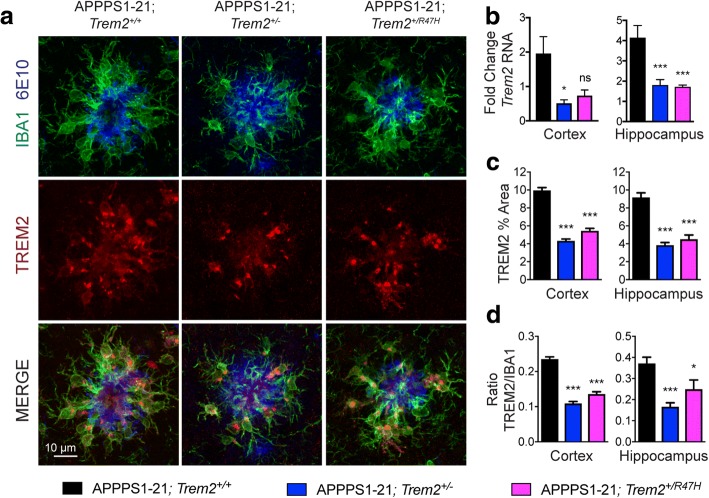
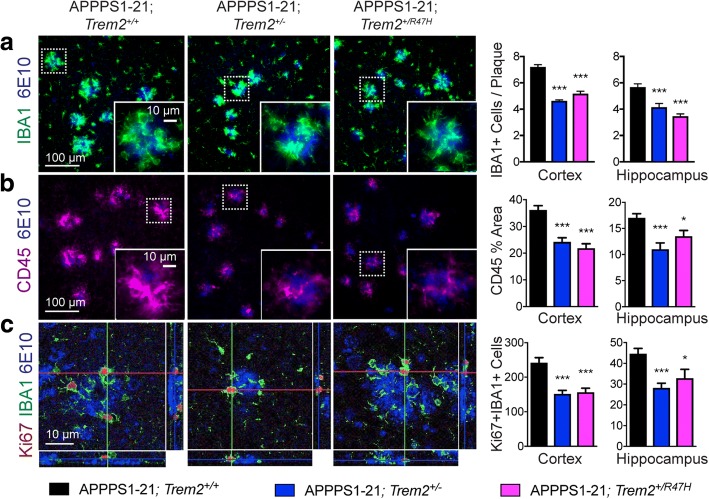
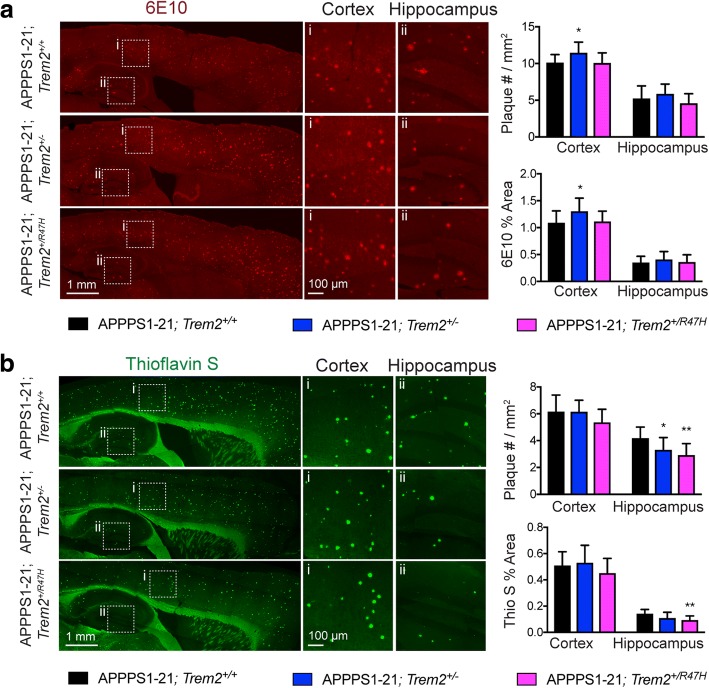
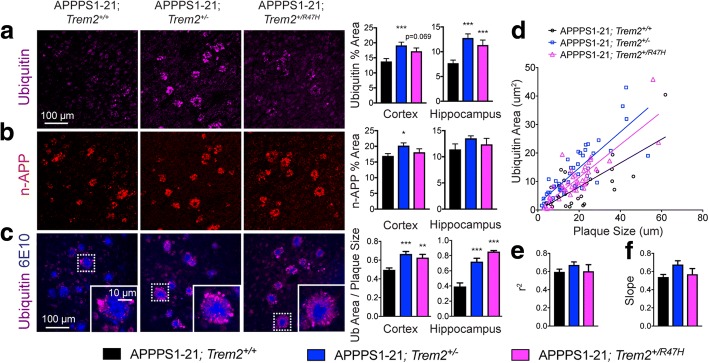
BACKGROUND: The R47H variant of Triggering Receptor Expressed on Myeloid cells 2 (TREM2) confers greatly increased risk for Alzheimer's disease (AD), reflective of a central role for myeloid cells in neurodegeneration. Understanding how this variant confers AD risk promises to provide important insights into how myeloid cells contribute to AD pathogenesis and progression. METHODS: In order to investigate this mechanism, CRISPR/Cas9 was used to generate a mouse model of AD harboring one copy of the single nucleotide polymorphism (SNP) encoding the R47H variant in murine Trem2. TREM2 expression, myeloid cell responses to amyloid deposition, plaque burden, and neuritic dystrophy were assessed at 4 months of age. RESULTS: AD mice heterozygous for the Trem2 R47H allele exhibited reduced total Trem2 mRNA expression, reduced TREM2 expression around plaques, and reduced association of myeloid cells with plaques. These results were comparable to AD mice lacking one copy of Trem2. AD mice heterozygous for the Trem2 R47H allele also showed reduced myeloid cell responses to amyloid deposition, including a reduction in proliferation and a reduction in CD45 expression around plaques. Expression of the Trem2 R47H variant also reduced dense core plaque number but increased plaque-associated neuritic dystrophy. CONCLUSIONS: These data suggest that the AD-associated TREM2 R47H variant increases risk for AD by conferring a loss of TREM2 function and enhancing neuritic dystrophy around plaques.
Overview
The claims and statistics of this paper haven’t been checked yet.
Free: it reads the open-access text and checks the first 5 claims that cite a source we can check. Create a free account to check every claim.
Integrity signals
Registry
Cites
Statistics
Figures
Verification
Claims the paper makes
The claims and statistics of this paper haven’t been checked yet.
Free: it reads the open-access text and checks the first 5 claims that cite a source we can check. Create a free account to check every claim.
Claims other papers make about this one
Each is checked against this paper’s own text: does it say what the citing paper says it does?
The source backs part of the claim, not all of it — or backs it for a different population, condition or comparison.
In the citing paper
“and identified that its expression was strongly increased by amyloid deposition in APP transgenic mice (Guerreiro et al., 2013; Matarin et al., 2015; Cheng-Hathaway et al., 2018; Song et al., 2018).”
From Genetic variability in response to amyloid beta deposition influences Alzheimer’s disease risk (2019) · cites this paper as Cheng-Hathaway et al., 2018
Experimental — accuracy not yet measuredThe source backs part of the claim, not all of it — or backs it for a different population, condition or comparison.
In the citing paper
“TREM2 plays a key and enigmatic role in the progression of AD, acting to drive microglial phagocytosis, survival, lipid homeostasis, and metabolism.”
From PLCG2 modulates TREM2 expression and signaling in response to Alzheimer's disease pathology (2025) · cites this paper as [36]
Experimental — accuracy not yet measuredThe source backs part of the claim, not all of it — or backs it for a different population, condition or comparison.
In the citing paper
“In AD, amyloid pathology induces the expression of TREM2 in microglia. 36 , 37 , 38 , 39 , 40 , 41 , 60”
From PLCG2 modulates TREM2 expression and signaling in response to Alzheimer's disease pathology (2025) · cites this paper as [36]
Experimental — accuracy not yet measuredThe source backs part of the claim, not all of it — or backs it for a different population, condition or comparison.
In the citing paper
“The most characterised variant of TREM2 (p.R47H) shows defects in ligand binding [6, 37, 38, 97], which impacts the ability of TREM2 to recognise damage, and induce microglial changes, resulting in a dampened response to pathological insults such as Aβ deposition.”
From TREM2/PLCγ2 signalling in immune cells: function, structural insight, and potential therapeutic modulation (2021) · cites this paper as [37]
Experimental — accuracy not yet measuredThe cited source says what the claim attributes to it.
In the citing paper
“This effect has been described by Cheng-Hathaway et al. (37) and Xiang et al. (36) studying the same mouse line used here from the Jackson Laboratory, and an independent Trem2 R47H KI mouse line.”
From Trem2 promotes anti-inflammatory responses in microglia and is suppressed under pro-inflammatory conditions (2020) · cites this paper as [37]
10 more claims about this paper
Create a free account to see every claim other papers make about this one.
Self-check
Percentages, sums and reported differences re-computed from the paper’s own numbers.
The self-check needs the paper’s full text.
Citations
Cites
Neuroinflammation in Alzheimer's disease
Heneka, M. T., Carson, M. J., Khoury, J. E., Landreth, G. E., Brosseron, F., Feinstein, D. L., Jacobs, A. H., Wyss-Coray, T., Vitorica, J., Ransohoff, R. M., et al. (2015) · The Lancet Neurology · doi:10.1016/s1474-4422(15)70016-5 · Cited by 6,226 · cited 1×
“Alzheimer’s disease (AD) is accompanied by a robust inflammatory response [1].”
BackgroundSelf-citationA Unique Microglia Type Associated with Restricting Development of Alzheimer’s Disease
Keren-Shaul, H., Spinrad, A., Weiner, A., Matcovitch-Natan, O., Dvir-Szternfeld, R., Ulland, T. K., David, E., Baruch, K., Lara-Astaiso, D., Toth, B., et al. (2017) · Cell · doi:10.1016/j.cell.2017.05.018 · Cited by 5,493 · cited 1×
“Recent work suggests that TREM2 is required for the myeloid cell-mediated inflammatory response in AD [28, 31].”
BackgroundNeuropathological alterations in Alzheimer disease
Serrano-Pozo, A., Frosch, M. P., Masliah, E., & Hyman, B. T. (2011) · Cold Spring Harbor Perspectives in Medicine · doi:10.1101/cshperspect.a006189 · Cited by 3,345 · cited 1×
“Damage to axons and dendrites in the vicinity of plaques, termed neuritic dystrophy, is thought to contribute to cognitive impairment in AD [32] and is reported to be enhanced in AD mice lacking Trem2 and humans carrying an R47H allele [9, 12].”
BackgroundTREM2 Variants in Alzheimer's Disease
Guerreiro, R., Wojtas, A., Bras, J., Carrasquillo, M., Rogaeva, E., Majounie, E., Cruchaga, C., Sassi, C., Kauwe, J. S. K., Younkin, S., et al. (2013) · New England Journal of Medicine · doi:10.1056/nejmoa1211851 · Cited by 3,020 · cited 1×
“The TREM2 R47H variant not only constitutes one of the strongest single allele genetic risk factors for AD [3, 4], but also confers elevated risk for Parkinson’s disease, amyotrophic lateral sclerosis, and frontotemporal dementia [5].”
BackgroundKrasemann, S., Madore, C., Cialic, R., Baufeld, C., Calcagno, N., El Fatimy, R., Beckers, L., O’Loughlin, E., Xu, Y., Fanek, Z., et al. (2017) · Immunity · doi:10.1016/j.immuni.2017.08.008 · Cited by 2,979
Variant of TREM2 Associated with the Risk of Alzheimer's Disease
Jonsson, T., Stefansson, H., Steinberg, S., Jonsdottir, I., Jonsson, P. V., Snaedal, J., Bjornsson, S., Huttenlocher, J., Levey, A. I., Lah, J. J., et al. (2013) · New England Journal of Medicine · doi:10.1056/nejmoa1211103 · Cited by 2,558 · cited 1×
“The TREM2 R47H variant not only constitutes one of the strongest single allele genetic risk factors for AD [3, 4], but also confers elevated risk for Parkinson’s disease, amyotrophic lateral sclerosis, and frontotemporal dementia [5].”
BackgroundHaeussler, M., Schönig, K., Eckert, H., Eschstruth, A., Mianné, J., Renaud, J.-B., Schneider-Maunoury, S., Shkumatava, A., Teboul, L., Kent, J., et al. (2016) · Genome biology · doi:10.1186/s13059-016-1012-2 · Cited by 1,756 · cited 1×
“net) was used to determine potential off-target genes in exonic regions of chromosome 17 [23].”
MethodTREM2 Lipid Sensing Sustains the Microglial Response in an Alzheimer’s Disease Model
Wang, Y., Cella, M., Mallinson, K., Ulrich, J. D., Young, K. L., Robinette, M. L., Gilfillan, S., Krishnan, G. M., Sudhakar, S., Zinselmeyer, B. H., et al. (2015) · Cell · doi:10.1016/j.cell.2015.01.049 · Cited by 1,736
Alzheimer’s Disease Risk Genes and Mechanisms of Disease Pathogenesis
Karch, C. M., & Goate, A. M. (2015) · Biological Psychiatry · doi:10.1016/j.biopsych.2014.05.006 · Cited by 1,357 · cited 1×
“Recent Genome Wide Association Studies have linked single nucleotide polymorphisms (SNPs) in inflammation-related genes to increased AD risk [2], including a SNP encoding the R47H variant in Triggering Receptor Expressed on Myeloid cells 2 (TREM2).”
BackgroundAβ42‐driven cerebral amyloidosis in transgenic mice reveals early and robust pathology
Radde, R., Bolmont, T., Kaeser, S. A., Coomaraswamy, J., Lindau, D., Stoltze, L., Calhoun, M. E., Jäggi, F., Wolburg, H., Gengler, S., et al. (2006) · The EMBO Reports · doi:10.1038/sj.embor.7400784 · Cited by 986 · cited 2×
“Founder lines positive for the SNP were crossed to the APPPS1–21 AD mouse model [26], generating APPPS1–21;Trem2 mice.”
BackgroundMethod
Cited by
Loss of TREM2 function increases amyloid seeding but reduces plaque-associated ApoE
Parhizkar, S., Arzberger, T., Brendel, M., Kleinberger, G., Deussing, M., Focke, C., Nuscher, B., Xiong, M., Ghasemigharagoz, A., Katzmarski, N., et al. (2019) · Nature Neuroscience · doi:10.1038/s41593-018-0296-9 · Cited by 555
New insights into the role of TREM2 in Alzheimer’s disease
Gratuze, M., Leyns, C. E. G., & Holtzman, D. M. (2018) · Molecular Neurodegeneration · doi:10.1186/s13024-018-0298-9 · Cited by 489
Crosstalk Between Astrocytes and Microglia: An Overview
Matejuk, A., & Ransohoff, R. M. (2020) · Frontiers in Immunology · doi:10.3389/fimmu.2020.01416 · Cited by 445
Self-citationMcQuade, A., Kang, Y. J., Hasselmann, J., Jairaman, A., Sotelo, A., Coburn, M., Shabestari, S. K., Chadarevian, J. P., Fote, G., Tu, C. H., et al. (2020) · Nature Communications · doi:10.1038/s41467-020-19227-5 · Cited by 361
Loss of TREM2 function increases amyloid seeding but reduces plaque-associated ApoE
Parhizkar, S., Arzberger, T., Brendel, M., Kleinberger, G., Deußing, M., Focke, C., Nuscher, B., Xiong, M., Ghasemigharagoz, A., Katzmarski, N., et al. (2019) · doi:10.7892/boris.125653 · Cited by 352
TREM2 function impedes tau seeding in neuritic plaques
Leyns, C. E. G., Gratuze, M., Narasimhan, S., Jain, N., Koscal, L. J., Jiang, H., Manis, M., Colonna, M., Lee, V. M. Y., Ulrich, J. D., et al. (2019) · Nature Neuroscience · doi:10.1038/s41593-019-0433-0 · Cited by 332
Impact of TREM2R47H variant on tau pathology–induced gliosis and neurodegeneration
Gratuze, M., Leyns, C. E. G., Sauerbeck, A. D., St-Pierre, M.-K., Xiong, M., Kim, N., Serrano, J. R., Tremblay, M.-È., Kummer, T. T., Colonna, M., et al. (2020) · Journal of Clinical Investigation · doi:10.1172/jci138179 · Cited by 252
Andreone, B. J., Przybyla, L., Llapashtica, C., Rana, A., Davis, S. S., van Lengerich, B., Lin, K., Shi, J., Mei, Y., Astarita, G., et al. (2020) · Nature Neuroscience · doi:10.1038/s41593-020-0650-6 · Cited by 233
Sayed, F. A., Telpoukhovskaia, M., Kodama, L., Li, Y., Zhou, Y., Le, D., Hauduc, A., Ludwig, C., Gao, F., Clelland, C., et al. (2018) · Proceedings of the National Academy of Sciences · doi:10.1073/pnas.1811411115 · Cited by 229
“It is thought to result in a TREM2 loss-of-function phenotype (10, 17, 18).”
BackgroundLiu, W., Taso, O., Wang, R., Bayram, S., Graham, A. C., Garcia-Reitboeck, P., Mallach, A., Andrews, W. D., Piers, T. M., Botia, J. A., et al. (2020) · Human Molecular Genetics · doi:10.1093/hmg/ddaa209 · Cited by 214
“…have also shown that the R47H variant of Trem2 acts by loss-of-function and impairs the microglial response to amyloid pathology by regulating microglial number around plaques and microglial activity, but anti-inflammatory signaling was not studied (Cheng-Hathaway et al. 2018; Song et al. 2018).”
BackgroundResultInfluentialMicroglia in Brain Development, Homeostasis, and Neurodegeneration
Bohlen, C. J., Friedman, B. A., Dejanovic, B., & Sheng, M. (2019) · Annual Review of Genetics · doi:10.1146/annurev-genet-112618-043515 · Cited by 212
Microglial Phagocytosis: A Disease-Associated Process Emerging from Alzheimer’s Disease Genetics
Podleśny-Drabiniok, A., Marcora, E., & Goate, A. M. (2020) · Trends in Neurosciences · doi:10.1016/j.tins.2020.10.002 · Cited by 211
Claes, C., Danhash, E. P., Hasselmann, J., Chadarevian, J. P., Shabestari, S. K., England, W. E., Lim, T. E., Hidalgo, J. L. S., Spitale, R. C., Davtyan, H., et al. (2021) · Molecular Neurodegeneration · doi:10.1186/s13024-021-00473-0 · Cited by 197
“Subsequent in vivo studies of a CRISPR-induced murine TREM2 R47H variant, designed to mimic the most common AD TREM2 mutation within the extracellular ligand-binding domain [24], suggested that this mutation may increase AD risk by conferring a partial loss of TREM2 function [25].”
BackgroundThe Role of APOE and TREM2 in Alzheimer′s Disease—Current Understanding and Perspectives
Wolfe, C. M., Fitz, N. F., Nam, K. N., Lefterov, I., & Koldamova, R. (2018) · International Journal of Molecular Sciences · doi:10.3390/ijms20010081 · Cited by 187
“Recently transgenic mouse models expressing TREM2 R47H variant have been generated that demonstrate a diminished response to amyloid deposition exemplified by the reduced cell number and activation of microglia surrounding the plaques [172,173].”
BackgroundUpdates on mouse models of Alzheimer’s disease
Zhong, M. Z., Peng, T., Duarte, M. L., Wang, M., & Cai, D. (2024) · Molecular Neurodegeneration · doi:10.1186/s13024-024-00712-0 · Cited by 189
Casali, B. T., MacPherson, K. P., Reed-Geaghan, E. G., & Landreth, G. E. (2020) · Neurobiology of Disease · doi:10.1016/j.nbd.2020.104956 · Cited by 186
Self-citationExploiting microglial and peripheral immune cell crosstalk to treat Alzheimer’s disease
Dionisio-Santos, D. A., Olschowka, J. A., & O’Banion, M. K. (2019) · Journal of Neuroinflammation · doi:10.1186/s12974-019-1453-0 · Cited by 184
Therapeutic approaches targeting Apolipoprotein E function in Alzheimer’s disease
Williams, T., Borchelt, D. R., & Chakrabarty, P. (2020) · Molecular Neurodegeneration · doi:10.1186/s13024-020-0358-9 · Cited by 171
Xiang, X., Piers, T. M., Wefers, B., Zhu, K., Mallach, A., Brunner, B., Kleinberger, G., Song, W., Colonna, M., Herms, J., et al. (2018) · Molecular Neurodegeneration · doi:10.1186/s13024-018-0280-6 · Cited by 170
A multi-pronged human microglia response to Alzheimer’s disease Aβ pathology
Mancuso, R., Fattorelli, N., Martinez-Muriana, A., Davis, E., Wolfs, L., Van Den Daele, J., Geric, I., Preman, P., Serneels, L., Poovathingal, S., et al. (2022) · doi:10.1101/2022.07.07.499139 · Cited by 169
“Both genotypes show a strong correlation ( R = 0.66) and a common downregulation of DAM and HLA genes, which is supported by morphological evidence in TREM2 R47H knock-in mice showing a reduction in the number of plaque-associated microglia 38,39 .”
ResultInfluentialHigh‐affinity interactions and signal transduction between Aβ oligomers and TREM 2
Lessard, C. B., Malnik, S. L., Zhou, Y., Ladd, T. B., Cruz, P. E., Ran, Y., Mahan, T. E., Chakrabaty, P., Holtzman, D. M., Ulrich, J. D., et al. (2018) · EMBO Molecular Medicine · doi:10.15252/emmm.201809027 · Cited by 154
“Another group showed that AD mice Trem2 R47H heterozygous reduced myeloid cell responses to amyloid deposition and reduction in proliferation and CD45 expression around plaque (Cheng-Hathaway et al, 2018).”
BackgroundGlial cells in Alzheimer’s disease: From neuropathological changes to therapeutic implications
Uddin, M. S., & Lim, L. W. (2022) · Ageing Research Reviews · doi:10.1016/j.arr.2022.101622 · Cited by 145
Haass, C., & Selkoe, D. (2022) · PLOS Biology · doi:10.1371/journal.pbio.3001694 · Cited by 145
A unifying hypothesis for Alzheimer's disease: from plaques to neurodegeneration
Edwards, F. A. (2019) · Trends in Neurosciences · doi:10.1016/j.tins.2019.03.003 · Cited by 140
“Moreover knockdown of Trem2 expression 136 (together with inclusion of the R47H mutation) in another mouse model had the opposite 137 effect[36].”
BackgroundTransgenic Mouse Models of Alzheimer’s Disease: An Integrative Analysis
Sanchez-Varo, R., Mejias-Ortega, M., Fernandez-Valenzuela, J. J., Nuñez-Diaz, C., Caceres-Palomo, L., Vegas-Gomez, L., Sanchez-Mejias, E., Trujillo-Estrada, L., Garcia-Leon, J. A., Moreno-Gonzalez, I., et al. (2022) · International Journal of Molecular Sciences · doi:10.3390/ijms23105404 · Cited by 129
Teter, B., Morihara, T., Lim, G. P., Chu, T., Jones, M. R., Zuo, X., Paul, R. M., Frautschy, S. A., & Cole, G. M. (2019) · Neurobiology of Disease · doi:10.1016/j.nbd.2019.02.015 · Cited by 124
“, 2011) to plaques that can depend on TREM2 (Cheng-Hathaway et al., 2018; Wang et al., 2016), and stimulates amyloid clearance tracked by multiphoton imaging (Garcia-Alloza et al.”
BackgroundDecoding microglial immunometabolism: a new frontier in Alzheimer's disease research
Jung, E. S., Choi, H., & Mook-Jung, I. (2025) · Molecular Neurodegeneration · doi:10.1186/s13024-025-00825-0 · Cited by 124
“TREM2, a receptor expressed on microglia, influences their metabolic state, lipid handling, and inflammatory responses, and its loss-of-function variants are linked to an increased risk of AD [71].”
Potential Bidirectional Relationship Between Periodontitis and Alzheimer’s Disease
Liccardo, D., Marzano, F., Carraturo, F., Guida, M., Femminella, G. D., Bencivenga, L., Agrimi, J., Addonizio, A., Melino, I., Valletta, A., et al. (2020) · Frontiers in Physiology · doi:10.3389/fphys.2020.00683 · Cited by 157
Leveraging preclinical models for the development of Alzheimer disease therapeutics
Scearce-Levie, K. A., Sanchez, P. E., & Lewcock, J. W. (2020) · Nature Reviews Drug Discovery · doi:10.1038/s41573-020-0065-9 · Cited by 129
Aminophospholipids are signal-transducing TREM2 ligands on apoptotic cells
Shirotani, K., Hori, Y., Yoshizaki, R., Higuchi, E., Colonna, M., Saito, T., Hashimoto, S., Saito, T., Saido, T. C., & Iwata, N. (2019) · Scientific Reports · doi:10.1038/s41598-019-43535-6 · Cited by 116
TREM2-independent microgliosis promotes tau-mediated neurodegeneration in the presence of ApoE4.
Gratuze, M., Schlachetzki, J. C. M., D’Oliveira Albanus, R., Jain, N., Novotny, B., Brase, L., Rodriguez, L., Mansel, C., Kipnis, M., O’Brien, S., et al. (2023) · Neuron · doi:10.1016/j.neuron.2022.10.022 · Cited by 115
TREM2 ectodomain and its soluble form in Alzheimer’s disease
Yang, J., Fu, Z., Zhang, X., Xiong, M., Meng, L., & Zhang, Z. (2020) · Journal of Neuroinflammation · doi:10.1186/s12974-020-01878-2 · Cited by 113
“that the R47H mutation affects ligand binding, thereby altering the proteolysis of TREM2 [50, 110].”
BackgroundMicroglial efferocytosis: Diving into the Alzheimer’s disease gene pool
Romero-Molina, C., Garretti, F., Andrews, S. J., Marcora, E., & Goate, A. M. (2022) · Neuron · doi:10.1016/j.neuron.2022.10.015 · Cited by 111
Genetic variability in response to amyloid beta deposition influences Alzheimer’s disease risk
Salih, D. A., Bayram, S., Guelfi, S., Reynolds, R. H., Shoai, M., Ryten, M., Brenton, J. W., Zhang, D., Matarin, M., Botia, J. A., et al. (2019) · Brain Communications · doi:10.1093/braincomms/fcz022 · Cited by 110
Distinct Signaling Pathways Regulate TREM2 Phagocytic and NFκB Antagonistic Activities
Yao, H., Coppola, K., Schweig, J. E., Crawford, F., Mullan, M., & Paris, D. (2019) · Frontiers in Cellular Neuroscience · doi:10.3389/fncel.2019.00457 · Cited by 110
Augusto‐Oliveira, M., Arrifano, G. P., Delage, C. I., Tremblay, M., Crespo‐Lopez, M. E., & Verkhratsky, A. (2022) · Biological Reviews · doi:10.1111/brv.12797 · Cited by 107
“Expression of loss-of-function isoforms of TREM2 reduces β-amyloid clearance in a β-amyloidosis mouse model, while single nucleotide polymorphisms encoding the lossof function R47H variant of TREM2 are associated with an increased risk of Alzheimer’s disease in humans (Cheng-Hathaway et al., 2018; Parhizkar et al., 20…”
BackgroundTREM2 brain transcript-specific studies in AD and TREM2 mutation carriers
Del-Aguila, J. L., Benitez, B. A., Li, Z., Dube, U., Mihindukulasuriya, K. A., Budde, J. P., Farias, F. H. G., Fernández, M. V., Ibanez, L., Jiang, S., et al. (2019) · Molecular Neurodegeneration · doi:10.1186/s13024-019-0319-3 · Cited by 109
“In 2018, two independent studies [31, 32] generated Trem2 R47H knock-in mice using CRISPR/Cas 9 technology.”
BackgroundMicroglia in Alzheimer’s disease: A target for immunotherapy
Wang, S., & Colonna, M. (2019) · Journal of Leukocyte Biology · doi:10.1002/jlb.mr0818-319r · Cited by 105
Jeong, W., Lee, H. G., Cho, S., & Seo, J. (2019) · PubMed · doi:10.14348/molcells.2019.0200 · Cited by 105
“…with triggering receptor expressed on myeloid cells 2 (TREM2), is shown to be upregulated and mediates microglial phenotypic changes and recruitment to amyloid plaques during the progression of AD (Cheng-Hathaway et al., 2018; Keren-Shaul et al., 2017; Parhizkar et al., 2019; Ulrich et al., 2018).”
BackgroundMicroRNAs in Alzheimer’s Disease: Function and Potential Applications as Diagnostic Biomarkers
Wei, W., Wang, Z.-Y., Ma, L.-N., Zhang, T.-T., Cao, Y., & Li, H. (2020) · Frontiers in Molecular Neuroscience · doi:10.3389/fnmol.2020.00160 · Cited by 103
Microglia and Astrocytes in Alzheimer’s Disease: Significance and Summary of Recent Advances
Deng, Q., Wu, C., Parker, E., Liu, T. C.-Y., Duan, R., & Yang, L. (2023) · Aging and disease · doi:10.14336/ad.2023.0907 · Cited by 102
“However, genetic variation and deletion of TREM2 impair the microglial clustering around plaques and cause the accumulation of extracellular and intraneuronal deposits [103, 104].”
BackgroundSoluble TREM2 is elevated in Parkinson’s disease subgroups with increased CSF tau
Wilson, E. N., Swarovski, M. S., Linortner, P., Shahid, M., Zuckerman, A. J., Wang, Q., Channappa, D., Minhas, P. S., Mhatre, S. D., Plowey, E. D., et al. (2020) · Brain · doi:10.1093/brain/awaa021 · Cited by 99
TREM2 is required for microglial instruction of astrocytic synaptic engulfment in neurodevelopment
Jay, T. R., von Saucken, V. E., Muñoz, B., Codocedo, J. F., Atwood, B. K., Lamb, B. T., & Landreth, G. E. (2019) · Glia · doi:10.1002/glia.23664 · Cited by 97
“, 2018), but does not alter expression of Treml1 or other genes in the Trem locus (Cheng-Hathaway et al., 2018).”
BackgroundSelf-citationTREM2 in Alzheimer’s Disease: Microglial Survival and Energy Metabolism
Zheng, H., Cheng, B., Li, Y., Li, X., Chen, X., & Zhang, Y.-W. (2018) · Frontiers in Aging Neuroscience · doi:10.3389/fnagi.2018.00395 · Cited by 94
Moutinho, M., Puntambekar, S. S., Tsai, A. P., Coronel, I., Lin, P. B., Casali, B. T., Martinez, P., Oblak, A. L., Lasagna-Reeves, C. A., Lamb, B. T., et al. (2022) · Science Translational Medicine · doi:10.1126/scitranslmed.abl7634 · Cited by 92
Self-citationFriend, Foe or Both? Immune Activity in Alzheimer’s Disease
Frost, G. R., Jonas, L. A., & Li, Y.-M. (2019) · Frontiers in Aging Neuroscience · doi:10.3389/fnagi.2019.00337 · Cited by 87
“Presence of the Trem2 R47H allele in an AD mouse model results in reduced TREM2 expression around plaques, a decrease in microglia associated with plaques and an increase in neuritic dystrophy near plaques (Cheng-Hathaway et al., 2018).”
BackgroundPathological mechanisms and treatment progression of Alzheimer’s disease
Zhang, J., Kong, G., Yang, J., Pang, L., & Li, X. (2025) · European journal of medical research · doi:10.1186/s40001-025-02886-9 · Cited by 304
“Genetic studies reveal that loss-of-function mutations in TREM2 (e.g., R47H, R62H, D87N) significantly increase risk for late-onset AD [104, 105].”
Lista, S., Imbimbo, B. P., Grasso, M., Fidilio, A., Emanuele, E., Minoretti, P., López-Ortiz, S., Martín-Hernández, J., Gabelle, A., Caruso, G., et al. (2024) · Journal of Neuroinflammation · doi:10.1186/s12974-024-03163-y · Cited by 81
“The R47H variant is believed to contribute to a loss of TREM2 function, leading to a reduction of microglia and an increase in neuritic dystrophy at the site of Aβ deposition [54].”
BackgroundFruhwürth, S., Zetterberg, H., & Paludan, S. R. (2024) · Journal of Neuroimmunology · doi:10.1016/j.jneuroim.2024.578342 · Cited by 74
APOE4 confers transcriptomic and functional alterations to primary mouse microglia
Machlovi, S. I., Neuner, S. M., Hemmer, B. M., Khan, R., Liu, Y., Huang, M., Zhu, J. D., Castellano, J. M., Cai, D., Marcora, E., et al. (2022) · Neurobiology of Disease · doi:10.1016/j.nbd.2022.105615 · Cited by 73
“, 2015), and the AD risk-increasing R47H TREM2 variant significantly decreases binding affinity (Cheng-Hathaway et al., 2018), suggesting a complex interplay between these two risk genes.”
BackgroundZheng, Y., Zhang, J., Zhao, Y., Zhang, Y., Zhang, X., Guan, J., Liu, Y., & Fu, J. (2021) · International Immunopharmacology · doi:10.1016/j.intimp.2021.107422 · Cited by 76
Application of CRISPR/Cas9 in Alzheimer’s Disease
Lu, L., Xi, Y., Cai, Y., Sun, M., & Yang, H. (2021) · Frontiers in Neuroscience · doi:10.3389/fnins.2021.803894 · Cited by 91
Tsai, A. P., Dong, C., Lin, P. B.-C., Oblak, A. L., Viana Di Prisco, G., Wang, N., Hajicek, N., Carr, A. J., Lendy, E. K., Hahn, O., et al. (2023) · Immunity · doi:10.1016/j.immuni.2023.08.008 · Cited by 71
Self-citation(2022) · doi:10.1101/2022.12.08.519685 · Cited by 71
Trem2 Y38C mutation and loss of Trem2 impairs neuronal synapses in adult mice
Jadhav, V. S., Lin, P. B. C., Pennington, T., Di Prisco, G. V., Jannu, A. J., Xu, G., Moutinho, M., Zhang, J., Atwood, B. K., Puntambekar, S. S., et al. (2020) · Molecular Neurodegeneration · doi:10.1186/s13024-020-00409-0 · Cited by 70
Self-citationInsights into Computational Drug Repurposing for Neurodegenerative Disease
Paranjpe, M. D., Taubes, A., & Sirota, M. (2019) · Trends in Pharmacological Sciences · doi:10.1016/j.tips.2019.06.003 · Cited by 70
“For example, the consortium has already created transgenic mice models expressing mutant forms of ApoE[140], Trem2[141].”
BackgroundWu, M., Liao, M., Huang, R., Chen, C., Tian, T., Wang, H., Li, J., Li, J., Sun, Y., Wu, C., et al. (2020) · Genes & Diseases · doi:10.1016/j.gendis.2020.05.005 · Cited by 77
“Rare variants of TREM2, which increase the risk of developing AD, are thought of as loss of function variants.(25) In this study, we found that both the mRNA and protein levels of TREM2 were upregulated in the hippocampus of mice fed a long-term HFD.”
BackgroundUncovering Disease Mechanisms in a Novel Mouse Model Expressing Humanized APOEε4 and Trem2*R47H
Kotredes, K. P., Oblak, A., Pandey, R. S., Lin, P. B.-C., Garceau, D., Williams, H., Uyar, A., O’Rourke, R., O’Rourke, S., Ingraham, C., et al. (2021) · Frontiers in Aging Neuroscience · doi:10.3389/fnagi.2021.735524 · Cited by 66
Self-citationMagno, L., Bunney, T. D., Mead, E., Svensson, F., & Bictash, M. N. (2021) · Molecular Neurodegeneration · doi:10.1186/s13024-021-00436-5 · Cited by 73
“R47H) shows defects in ligand binding [6, 37, 38, 97], which impacts the ability of TREM2 to recognise damage, and induce microglial changes, resulting in a dampened response to pathological insults such as Aβ deposition.”
BackgroundLiu, T., Zhu, B., Liu, Y., Zhang, X., Yin, J., Li, X., Jiang, L., Hodges, A. P., Rosenthal, S. B., Zhou, L., et al. (2020) · Journal of Experimental Medicine · doi:10.1084/jem.20200474 · Cited by 64
“Indeed, heterozygous expression of Trem2R47H in AD mouse models appeared to phenocopy Trem2 haploinsufficiency, where Trem2R47H expression or Trem2 heterozygous deletion resulted in impaired microglial association with Aβ plaques and reduced plaque burden (Cheng-Hathaway et al., 2018).”
BackgroundTargeting Microglia-Synapse Interactions in Alzheimer’s Disease
Piccioni, G., Mango, D., Saidi, A., Corbo, M., & Nisticò, R. (2021) · International Journal of Molecular Sciences · doi:10.3390/ijms22052342 · Cited by 63
Microglial Function and Regulation during Development, Homeostasis and Alzheimer’s Disease
Casali, B. T., & Reed-Geaghan, E. G. (2021) · Cells · doi:10.3390/cells10040957 · Cited by 79
“• ↓ in microglial-plaque barrier and ↑ neuritic dystrophy in KOs [61,62].”
BackgroundSelf-citationJairaman, A., McQuade, A., Granzotto, A., Kang, Y. J., Chadarevian, J. P., Gandhi, S., Parker, I., Smith, I., Cho, H., Sensi, S. L., et al. (2022) · eLife · doi:10.7554/elife.73021 · Cited by 61
“This assay revealed a deficit of chemotaxis in TREM2 KO microglia ( Figure 7A ), mirroring reports that TREM2 KO microglia are unable to migrate toward amyloid plaques in AD ( Cheng-Hathaway et al., 2018 ; McQuade et al., 2020 ; Meilandt et al., 2020 ).”
Hall-Roberts, H., Agarwal, D., Obst, J., Smith, T. B., Monzón-Sandoval, J., Di Daniel, E., Webber, C., James, W. S., Mead, E., Davis, J. B., et al. (2020) · Alzheimer's Research & Therapy · doi:10.1186/s13195-020-00709-z · Cited by 62
“Namely, there are fewer amyloid plaque-associated microglia, plaques are more diffuse, and microglia exhibit subtle defects in cytokine responses, survival, proliferation, and migration [24].”
BackgroundXu, Y., Au, N. P. B., & Ma, C. H. E. (2022) · Frontiers in Aging Neuroscience · doi:10.3389/fnagi.2022.896852 · Cited by 71
“…homeostatic microglia to DAM involved up-regulation of Trem2 and Apoe (Keren-Shaul et al., 2017; Masuda et al., 2019; Chen et al., 2020; Olah et al., 2020; Srinivasan et al., 2020), which are considered as the major risk factors for AD (Roses, 1996; Cheng-Hathaway et al., 2018; Sudom et al., 2018).”
BackgroundThe Amyloid-Beta Clearance: From Molecular Targets to Glial and Neural Cells
Cai, W., Wu, T., & Chen, N. (2023) · Biomolecules · doi:10.3390/biom13020313 · Cited by 61
Plaque contact and unimpaired Trem2 is required for the microglial response to amyloid pathology
Wood, J. I., Wong, E., Joghee, R., Balbaa, A., Vitanova, K. S., Stringer, K. M., Vanshoiack, A., Phelan, S.-L. J., Launchbury, F., Desai, S., et al. (2022) · Cell Reports · doi:10.1016/j.celrep.2022.111686 · Cited by 58
Ahmed, H., Wang, Y., Griffiths, W. J., Levey, A. I., Pikuleva, I., Liang, S. H., & Haider, A. (2024) · Brain · doi:10.1093/brain/awae028 · Cited by 56
Cosker, K., Mallach, A., Limaye, J., Piers, T. M., Staddon, J., Neame, S. J., Hardy, J., & Pocock, J. M. (2021) · Scientific Reports · doi:10.1038/s41598-021-91207-1 · Cited by 54
Regulation of microglia population dynamics throughout development, health, and disease
Hammond, B. P., Manek, R., Kerr, B. J., Macauley, M. S., & Plemel, J. R. (2021) · Glia · doi:10.1002/glia.24047 · Cited by 65
Biel, D., Suárez‐Calvet, M., Hager, P., Rubinski, A., Dewenter, A., Steward, A., Roemer, S., Ewers, M., Haass, C., Brendel, M., et al. (2023) · EMBO Molecular Medicine · doi:10.15252/emmm.202216987 · Cited by 54
Morató, X., Pytel, V., Jofresa, S., Ruiz, A., & Boada, M. (2022) · International Journal of Molecular Sciences · doi:10.3390/ijms23169305 · Cited by 53
“The R47H partial loss-offunction variant of human TREM2 impairs ligand binding and increases a person’s risk of developing AD [161].”
BackgroundPopescu, A. S., Butler, C. A., Allendorf, D. H., Piers, T. M., Mallach, A., Roewe, J., Reinhardt, P., Cinti, A., Redaelli, L., Boudesco, C., et al. (2023) · Glia · doi:10.1002/glia.24318 · Cited by 49
Modeling the neuroimmune system in Alzheimer’s and Parkinson’s diseases
Balestri, W., Sharma, R., da Silva, V. A., Bobotis, B. C., Curle, A. J., Kothakota, V., Kalantarnia, F., Hangad, M. V., Hoorfar, M., Jones, J. L., et al. (2024) · Journal of Neuroinflammation · doi:10.1186/s12974-024-03024-8 · Cited by 56
“Additionally, several genetic variants of TREM2 (R47H and R62H) have been associated with an increased risk of developing sporadic AD and are being studied in the AD context [202].”
BackgroundPenney, J., Ralvenius, W. T., Loon, A., Cerit, O., Dileep, V., Milo, B., Pao, P., Woolf, H., & Tsai, L. (2024) · Glia · doi:10.1002/glia.24485 · Cited by 52
“Studies examining TREM2 R47H mutations have often reported similar effects to knockout mutations, with R47H microglia in amyloid models exhibiting impaired plaque localization and response (Cheng-Hathaway et al., 2018; Song et al., 2018; Tran et al., 2023).”
BackgroundTran, K. M., Kawauchi, S., Kramár, E. A., Rezaie, N., Liang, H. Y., Sakr, J. S., Gomez-Arboledas, A., Arreola, M. A., Cunha, C. D., Phan, J., et al. (2023) · Molecular Neurodegeneration · doi:10.1186/s13024-023-00598-4 · Cited by 50
“Unfortunately, in all three cases, generation of Trem2R47H mouse models via CRISPR produced unintended cryptic splicing products from the mutant Trem2 allele, resulting in dramatically reduced level of TREM2 protein not observed in human R47H carriers, which confounded alignment of phenotypes observed in mice with tho…”
InfluentialMcFarland, K. N., & Chakrabarty, P. (2022) · Neurotherapeutics · doi:10.1007/s13311-021-01179-3 · Cited by 48
“Though the function of many of these immune genes remains to be characterized, limited data available indicates that the AD-associated TREM2 mutations lead to reduced microglial signaling and activity [36, 37], suggesting that promoting microglial activity may be beneficial.”
BackgroundRong, Z., Cheng, B., Zhong, L., Ye, X., Li, X., Jia, L., Li, Y., Shue, F., Wang, N., Cheng, Y., et al. (2020) · The FASEB Journal · doi:10.1096/fj.202000550rr · Cited by 46
Peroxiredoxin 6 mediates protective function of astrocytes in Aβ proteostasis
Pankiewicz, J. E., Diaz, J. R., Martá-Ariza, M., Lizińczyk, A. M., Franco, L. A., & Sadowski, M. J. (2020) · Molecular Neurodegeneration · doi:10.1186/s13024-020-00401-8 · Cited by 45
“0) for 20 min at 85° C to help the antigen retrieval [29].”
BackgroundInfluentialRaikwar, S. P., Kikkeri, N. S., Sakuru, R. C., Saeed, D., Zahoor, H., Premkumar, K., Mentor, S., Thangavel, R., Dubova, I., Ahmed, M. E., et al. (2019) · Journal of Neuroimmune Pharmacology · doi:10.1007/s11481-019-09849-y · Cited by 54
Neuroinflammation in Alzheimer's disease and beneficial action of luteolin
Delgado, A., Cholevas, C., & Theoharides, T. C. (2021) · BioFactors · doi:10.1002/biof.1714 · Cited by 48
“The R47H variant results in a loss-of-function phenotype associated with reduced expression of TREM2, reduced TREM2 expression around plaques, reduced association of myeloid cells with plaques, reduced microglial response to amyloid deposition, reduced microglial proliferation, and increased plaque associated neuritic…”
BackgroundDas, M., Mao, W., Voskobiynyk, Y., Necula, D., Lew, I., Petersen, C., Zahn, A., Yu, G.-Q., Yu, X., Smith, N., et al. (2023) · Neurobiology of Disease · doi:10.1016/j.nbd.2023.106263 · Cited by 41
“This conclusion is consistent with other lines of evidence supporting a hypofunction mechanism of TREM2 variants that increase the risk of AD or other dementias (Cheng-Hathaway et al., 2018; Sudom et al., 2018).”
The role of TREM2 in Alzheimer's disease; evidence from transgenic mouse models
Karanfilian, L., Tosto, M. G., & Malki, K. (2020) · Neurobiology of Aging · doi:10.1016/j.neurobiolaging.2019.09.004 · Cited by 41
The TREM2 agonistic antibody AL002 in early Alzheimer’s disease: a phase 2 randomized trial
Mummery, C. J., Mayorga, A. J., Simmons, A., Chow, T. W., Burgess, B., Nguyen, T., 高晶晶, Budda, B., Park, L. Q., Gupta, R., et al. (2026) · Nature Medicine · doi:10.1038/s41591-026-04273-1 · Cited by 61
“Patients with AD exhibit diminished microglia plaque coverage and more severe neuritic tau hyperphosphorylation and axonal dystrophy if they also carry the R47H variant 16 , evidently through loss of TREM2 function 13,17 .”
The Emerging Roles and Therapeutic Potential of Soluble TREM2 in Alzheimer’s Disease
Zhong, L., & Chen, X.-F. (2019) · Frontiers in Aging Neuroscience · doi:10.3389/fnagi.2019.00328 · Cited by 40
Boche, D., & Nicoll, J. A. R. (2020) · Neuropathology and Applied Neurobiology · doi:10.1111/nan.12642 · Cited by 42
Li, R., Wang, X., & He, P. (2021) · Experimental and Therapeutic Medicine · doi:10.3892/etm.2021.9778 · Cited by 39
Yang, S., Magnutzki, A., Alami, N. O., Lattke, M., Hein, T. M., Scheller, J. S., Kröger, C., Oswald, F., Yilmazer‐Hanke, D., Wirth, T., et al. (2021) · Cells · doi:10.3390/cells10102669 · Cited by 45
Chen, D., Wang, C., Chen, X., Li, J., Chen, S., Li, Y., Ma, F., Li, T., Zou, M., Li, X., et al. (2025) · Science Translational Medicine · doi:10.1126/scitranslmed.ads6111 · Cited by 43
Microglial phagocytosis in Alzheimer disease
Brown, G. C., St George-Hyslop, P., Paolicelli, R. C., & Lemke, G. (2026) · Nature Reviews Neurology · doi:10.1038/s41582-025-01162-y · Cited by 36
“One prevalent hypothesis is that the R47H variant causes a partial loss of a protective function 187 .”
Immune modulation to treat Alzheimer’s disease
Duggan, M. R., Morgan, D., Price, B. R., Rajbanshi, B., Martín‐Peña, A., Tansey, M. G., & Walker, K. A. (2025) · Molecular Neurodegeneration · doi:10.1186/s13024-025-00828-x · Cited by 49
García‐León, J. A., Cáceres-Palomo, L., Sánchez‐Mejías, E., Mejias‐Ortega, M., Nuñez‐Diaz, C., Fernandez-Valenzuela, J. J., Sanchez-Varo, R. M., Dávila, J. C., Vitórica, J., & Gutiérrez, A. (2020) · International Journal of Molecular Sciences · doi:10.3390/ijms21186867 · Cited by 38
CELF2 regulates the species-specific alternative splicing of TREM2
Yanaizu, M., Washizu, C., Nukina, N., Satoh, J., & Kino, Y. (2020) · Scientific Reports · doi:10.1038/s41598-020-75057-x · Cited by 37
Cui, X., Qiao, J., Liu, S., Wu, M., & Gu, W. (2020) · Brain Research Bulletin · doi:10.1016/j.brainresbull.2020.10.006 · Cited by 38
Genetic Variants and Oxidative Stress in Alzheimer’s Disease
Kowalska, M., Wize, K., Prendecki, M., Lianeri, M., Kozubski, W. P., & Dorszewska, J. (2020) · Current Alzheimer Research · doi:10.2174/1567205017666200224121447 · Cited by 36
TREM2 expression in the brain and biological fluids in prion diseases
Diaz-Lucena, D., Kruse, N., Thüne, K., Schmitz, M., Villar-Piqué, A., da Cunha, J. E. G., Hermann, P., López-Pérez, Ó., Andrés-Benito, P., Ladogana, A., et al. (2021) · Acta Neuropathologica · doi:10.1007/s00401-021-02296-1 · Cited by 32
“Although rare in the population, certain TREM2 variants are associated with increased risk of developing neurodegenerative diseases such as Alzheimer’s disease (AD) [21, 26], frontotemporal dementia [20, 56], Parkinson’s disease [56], and amyotrophic lateral sclerosis [7], presumably as a consequence of TREM2 loss of…”
BackgroundYou, Y., Chen, M., Tang, Y., Yu, W.-X., Pang, X., Chu, Y., Zhang, H., Shang, K., Deng, G., Zhou, L., et al. (2023) · Journal of Neuroinflammation · doi:10.1186/s12974-023-02772-3 · Cited by 39
“This heightened susceptibility is believed to stem from a loss of TREM2 function [39].”
BackgroundLish, A. M., Ashour, N., Pearse, R. V., Galle, P. C., Orme, G. A., Heuer, S. E., Benoit, C. R., Alexander, K. D., Grogan, E. F. L., Terzioglu, G., et al. (2025) · Cell Reports · doi:10.1016/j.celrep.2025.115777 · Cited by 36
“While recent research has begun to clarify how genetic risk factors and transcriptional regulators influence DAM markers, including TREM2 expression, 11,72,73 the role of cellular and environmental factors in modulating these expression patterns remains less understood.”
Roles of Microglia in Neurodegenerative Diseases
Nakaso, K. (2024) · Yonago acta medica · doi:10.33160/yam.2024.02.001 · Cited by 33
Role of TET1-mediated epigenetic modulation in Alzheimer's disease
Armstrong, M. J., Jin, Y., Vattathil, S., Huang, Y., Schroeder, J. P., Bennet, D. A., Qin, Z. S., Wingo, T. S., & Jin, P. (2023) · Neurobiology of Disease · doi:10.1016/j.nbd.2023.106257 · Cited by 35
“Increased expression of the cell surface receptor protein, TREM2, is strongly linked with increased AD pathology as TREM2 functions in the recruitment of microglia to amyloid plaques (Cheng-Hathaway et al., 2018; Colonna and Wang, 2016; Slattery et al., 2014; Wang et al., 2015).”
Metadata
- Authors
- Cheng-Hathaway, P. J., Reed-Geaghan, E. G., Jay, T. R., Casali, B. T., Bemiller, S. M., Puntambekar, S. S., von Saucken, V. E., Williams, R. Y., Karlo, J. C., Moutinho, M., Xu, G., Ransohoff, R. M., Lamb, B. T., & Landreth, G. E.
- Affiliations
- Indiana University Indianapolis (US)
- Case Western Reserve University (US)
- Indiana University School of Medicine (US)
- Cleveland Clinic Research (US)
- Corresponding author
- Landreth, Gary E.
- ORCID
- Venue
- Molecular Neurodegeneration
- Published
- 2018-06-01
- Volume
- 13
- Issue
- 1
- Pages
- 29-29
- ISSN
- 1750-1326 (ISSN-L)
- PMC
- PMC5984804
- OpenAlex
- W2807252917
- Cited by
- 252
- References
- 35
- Citations by year
- 2026: 27 · 2025: 24 · 2024: 24 · 2023: 45 · 2022: 21 · 2021: 29 · 2020: 48 · 2019: 22 · 2018: 11
- FWCI
- 19.54
- Type
- journal article
- Language
- en
- Open access
- gold
- doi.org
- Licence
- cc-by
- creativecommons.org/licenses/by/4.0/ (tdm)
- creativecommons.org/licenses/by/4.0/ (vor)
- Locations
- Molecular Neurodegeneration (publishedVersion, cc-by)
- Europe PMC (PubMed Central) (publishedVersion, other-oa)
- PubMed Central (publishedVersion, cc-by)
- PubMed (publishedVersion)
- DOAJ (DOAJ: Directory of Open Access Journals) (submittedVersion, cc-by-sa)
- IUScholarWorks (Indiana University) (submittedVersion, cc-by)
- Funders
- Alzheimer's Association
- Case Western Reserve University (T32 NS077888, T32 GM725039)
- National Institute on Aging (F30 AG055261, F31 AG048704, R01 AG051495, R01 AG050597)
- Jane & Lee Seidman Fund
- Chet & Jane Scholtz
- Dave & Susan Roberts
- Topics
- Life Sciences › Neuroscience › Cellular and Molecular Neuroscience › Alzheimer's disease research and treatments
- Life Sciences › Neuroscience › Neurology › Neuroinflammation and Neurodegeneration Mechanisms
- Health Sciences › Medicine › Psychiatry and Mental health › Dementia and Cognitive Impairment Research
- Keywords
- TREM2, Alzheimer's disease, loss of function, myeloid cells, amyloid plaques, neuritic dystrophy, CD45, amyloid deposition, mouse model, genetic risk
- MeSH terms
- Alzheimer Disease, Animals, Brain, Membrane Glycoproteins, Phenotype, Receptors, Immunologic, Polymorphism, Single Nucleotide, Mice
About these checks
Registry, retraction, Cites and statistics results are computed, not judged, with one exception: a printed reference that no index lists is read once by a model before it counts as a citation error. Claims are extracted by a model and kept only when their quote appears verbatim in the text; each cited source is then checked, with a model’s help, for whether it says what the claim relies on. Those verdicts can be wrong — read the claim’s quote and the cited source before relying on one.
Statistics and arithmetic are recomputed, not judged.
Confidence bands are shown only for fields calibrated on our annotated test set. None is calibrated yet, so no band is shown.
What counts as a claim ›How we measure confidence ›How we check this ›
Are you an author, or do you see a problem with this page? Request a review
Data sources
Bibliographic data: Semantic Scholar, OpenAlex, Crossref.
Contains information from the Semantic Scholar Academic Graph Datasets, made available under the ODC Attribution License (ODC-BY 1.0).
Semantic Scholar’s data is described in: Kinney, R., et al. (2023). The Semantic Scholar Open Data Platform. arXiv:2301.10140.
